The Complications of Semi-Literacy

I’ve written previously about the myriad ways in which non-verbal communication takes place among our adopted people group. Alongside of this, literacy and orality also represent a crucial spectrum for understanding communication in a culture. This spectrum is fertile ground on which to sit and ponder for those who want to understand our people group – and how their communication relates to gospel ministry.

Turns out that over over 90% of Christian workers present the gospel in highly literate forms – and most are not aware that they are doing so. Those who are highly literate (like me) simply tend to assume that the highly literate way of thinking and communicating is the norm. However, it is actually far from the norm for the locals we are seeking to reach in Central Asia. It’s also far from the norm for thousands of other groups around the world.

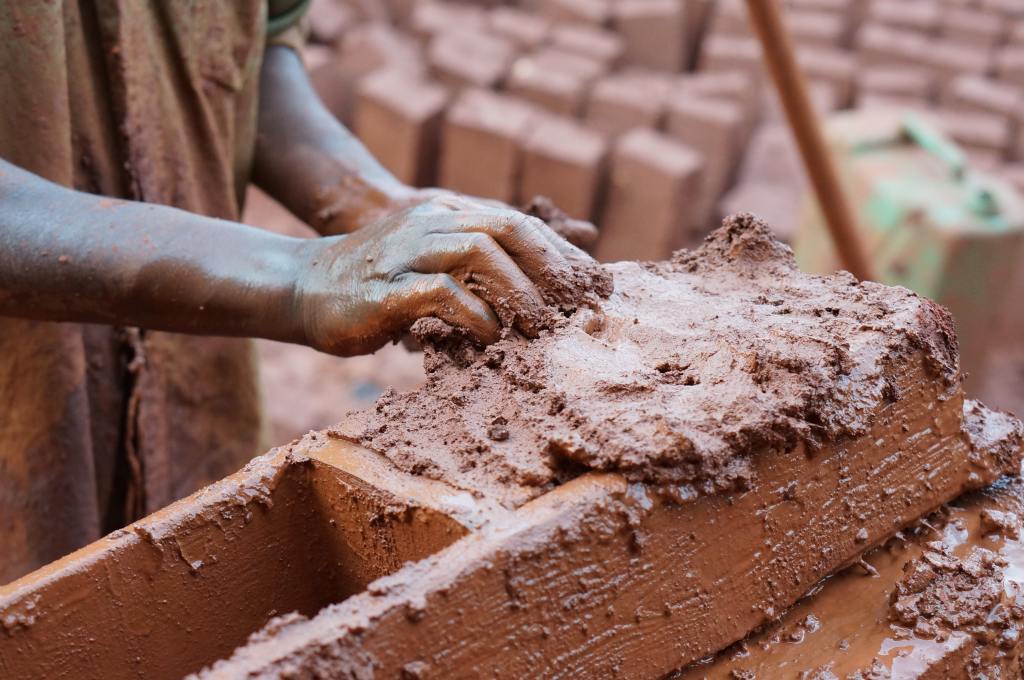
Our people group’s culture can be represented as confoundingly semi-literate, with both minorities that are illiterate and also minorities that are highly literate. Being semi-literate means that the majority of locals have attended more than 10 years of school and are able to read and write, but they continue to learn primarily by oral means. This is evidenced by the fact that most locals do not read for pleasure and many do not read books at all. It’s also evidenced by the ongoing power and use of proverbs in local culture – even in the most progressive cities. Locals generally prefer to get their news from radio, television, and increasingly, social media. Even for university graduates the ability to read a written text, understand it, and summarize it in their own words is a difficult exercise – yet this is the marker which distinguishes the highly literate. Songs are heavily relied upon in the early childhood education and rote memorization dominates the classroom as children progress through the school system. Some of my friends have memorized entire school textbooks in preparation for important exams. All of these are markers of a culture that largely prefers oral means of communication.

A highly literate minority does exist, however, complicating the picture. For our adopted people group in particular this highly literate group makes it difficult to get a clear sense of the true state of literacy. Publishing and print media in the local language have made great strides since the early nineties. Bookstores abound in the bazaars, poets and authors are celebrated and honored, and yet the general literacy rate remains woefully low. University graduates discuss translated copies of Nietzsche yet go home to mothers and aunts who are completely illiterate and learn their money’s value by the color of the bills, not by the numbers printed in the corners.

The causes of this situation are complex. It’s clear that the nearly constant warfare affecting the population over the last century has regularly undermined progress in literacy, as entire generations dropped out of regular schooling due to war, sanctions, and ethnic hostilities. Recent economic crises have also hit the local school system hard, with teachers’ salaries not being paid, public schools sometimes closed, hours reduced, or situations where teachers are present but not providing instruction. The future literacy of today’s school-age children is being once again undermined. Covid-19 lock-downs have only made this situation worse.

Given these realities, Christian workers among our people and similar groups must not rely solely on highly literate means of sharing the gospel and discipling, even though that is often our default. However, neither can purely oral methods be adopted due to the strong minority of literates. Rather, a middle road should be explored where highly literate means are used to engage the literate elite who stand in the ancient Central Asian tradition which values philosophy, poetry, and literature – while partially-oral means are simultaneously used for the majority. The highly literate are in need of solid intellectual content in areas like apologetics and theology. The vast amount of Islamic material and Western 20th century secularist or Marxist material available in print in the local language requires a corresponding body of Christian content. Marx, Freud, Nietzsche, Orwell, Hemingway, and many others have been resonating strongly with highly literate locals for several decades without a Christian challenge – a concerning reality since the highly literates often influence the future trajectory of the population. Even in our most conservatively Islamic towns, it’s acceptable to be a Muslim or to be an atheistic communist, but not to be Christian. And yet as the intellectual elite go, so eventually goes the general populace.

However, for reaching and discipling the majority of locals, their semi-literate, illiterate, or pre-literate status needs to be acknowledged and somehow addressed. This is particularly important for reaching local women, who have much lower literacy rates than men. Narrative teaching, the creation of new proverbs and songs, the use of scripture memorization, and audio and video resources could be developed to serve and equip locals for learning and passing on spiritual truth. This at times may mean that the preferred group discussion format of Western workers, where locals are asked to engage the text critically on the spot, may need to be replaced or supplemented by the more traditional local religious lecture format, or by group discussion based on a narrative presented orally yet still clearly rooted in the written text of the Bible. Social media also presents a promising platform as a medium suited for visual and audio content and short bursts of written content. Over the past decade social media has been eagerly adopted and highly used by the typical local (They know way more about Snap Chat and Instagram than I ever will). While we develop strategies and tools to meet locals where they are on the orality-literacy spectrum, we also need those who will simply devote themselves to the life-changing work of literacy training – just like my mom used to do in Melanesian villages.

Our adopted people group are simply not uniform in the area of literacy and orality. This demands that multiple strategies be pursued at the same time. It’s a both/and. Oral means can supplement the church and its spread as it grows slowly toward greater literacy. This means we will need to get creative and include elements in our church gatherings that can edify both an illiterate grandmother as well as a Zorba-The-Greek-reading masters student. This is, frankly, quite complicated. And yet this is the reality of our people group. The future indigenous church here will need to reach the full spectrum – so we must also strive to do so.


Photo by Aaron Burden on Unsplash
Grandpa’s Tools

Last night we had dinner with a new single gal on our team. In the course of our conversation, her previous service in SE Asia came up. While we talked about the typical rhythms of ministry in our Central Asian context, we also encouraged her to think about her experiences in SE Asia. It may be that some of the ministry tools that she learned there might be surprisingly effective here also – even if our team would never have thought of them. Our people group is a hard nut to crack. Within the spectrum biblically-faithful methods we simply have a lot of experimenting to do in order to find out what kinds of ministry methods are actually effective here. We’ve been quite surprised in the past as efforts that felt very traditional or cliched turned out to really resonate with locals – while some popular and novel methods turned out to be duds. Book clubs turned out to be much better than we thought they would be. But our locals didn’t really resonate with oral Bible storying – even though they’re a largely oral culture. No one saw that one coming.

There are several ways to fall off the proverbial donkey of methodology. The traditional or colonial missionary largely reproduced the traditional Western methodology that he learned in his home country – hymns, pews, collared shirts, catechisms, etc. In other words, he was not very strong in effective contextualization. Yet even though this traditional figure has become the whipping boy of popular missiology, he’s essentially died out on the actual mission field. Far more common now is the opposite error – contemporary workers who are allergic to any methodology or tools that feel traditional or old-fashioned to them. Before even studying their local context to find out what good contextualization might be, we have prematurely decided that we must not import any methods that we ourselves benefited from in our own discipleship back home – not to mention the methods that feel hackneyed or overused. Don’t you dare bring your puppet ministry to the mission field! In reality, until someone has tried it we really have no idea if puppet ministry might be effective or not (Though I admit, I don’t really want to try it!). Such is the distance still between most missionaries and the ability to predict how the local culture will respond to new and different forms. And yet in our fixation with novelty and cutting-edge methodology, it would be just like the Lord to use a “foolish” method to bring about a spiritual awakening.

I remember sharing the gospel one more time with my friend Hama’s wife, Tara, back in the fall of 2008. She kept insisting that she indeed loved Jesus and that she had always believed in him. But it was clear to both Hama and I that she was still on the fence and had not yet trusted in him as her only savior. On a whim, I pulled out an old preacher’s illustration about true faith being like sitting in a chair.

“See that chair over there?” I pointed and Tara nodded. “You might say that it’s a good chair, it’s a nice chair, you respect it and you believe that it will hold your weight.”

Tara waited to hear where this was going. I got up, walked across the room and sat in the chair, cross-legged.

“Well, dear wife-of-my-brother, this is me actually trusting in this chair to hold me, actually having real faith in it. If it breaks, I will be injured. Your faith in Jesus right now is like you sitting across the room saying that you like this chair, but you need to get up and actually sit in it, risk falling down by putting all your weight on it. You need to actually have faith in Jesus like that – risking all, life and death, on him – and until then, it’s not yet true faith.”

Simple and cliched as the example was, that night was the turning point for Tara. A full decade later we visited their family in their new country where they’ve been resettled as refugees. And Tara brought up that chair illustration once again as what God had used to push her over the line of saving faith. Really? Of all the things that Hama and I shared with her, it was a simple and very traditional concrete example that proved to be the breakthrough.

I’m not saying we need to bring over all the silly gimmicks that have made their way into Western evangelicalism. For the love of everything sacred, no fog machines, WWE wrestlers, or Jesus action figures are needed among the unreached people groups of the world. Yet straightforward contextualization is needed, the kind where the most important questions are whether something is biblical and whether it is clear and effective in the local culture. These questions need to trump asking whether something feels old-fashioned or novel to us or not. There may be abandoned methods in church history that prove to be mightily relevant in foreign contexts. The key is to not prematurely rule them out for the wrong reasons. Consider that certain methods were so powerful because of where a certain culture found itself at a given time – things like open air preaching. Is it possible that your adopted culture is in a different “place” than your home culture is is? It’s more than possible. It’s extremely likely.

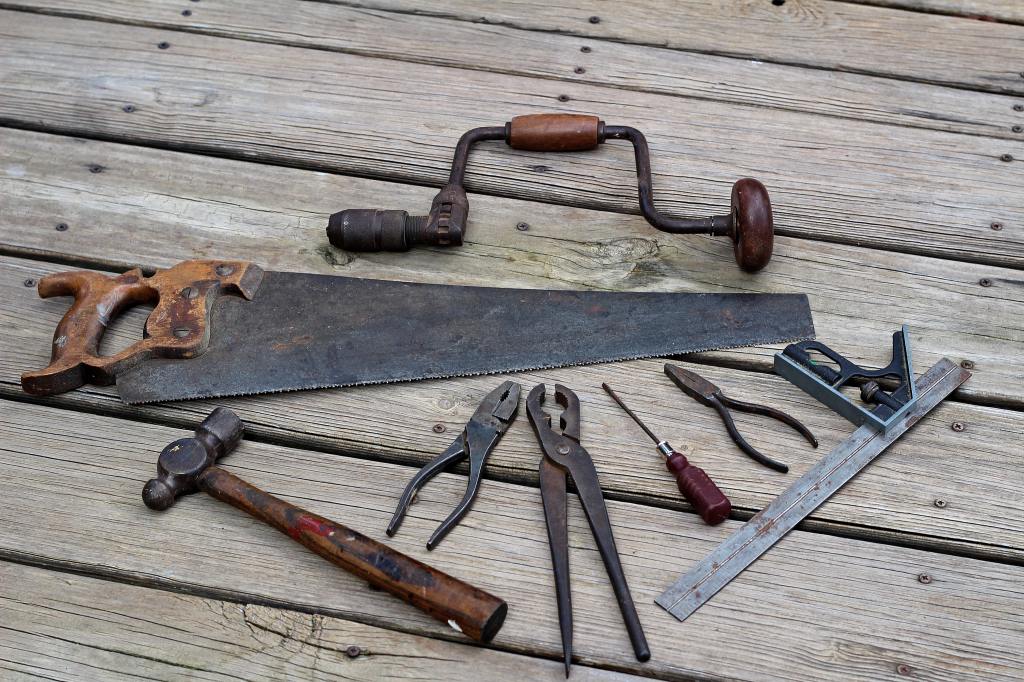
Practically, this will mean giving our teams room to experiment – and room to fail. It will mean moving beyond a reactionary missiology and toward one that is simply and faithfully trying to find the best tools for the job, even if that turns out to be grandpa’s tools. It may be that we design the tools that lead to awakening among our focus people groups. Or it may be that we dig them up in the most unlikely corners of church history. Why should it matter? Tools are tools. And as long as they remain explicitly governed by biblical principles and emphases, then we should feel tremendous freedom to utilize them.

Photo by Hunter Haley on Unsplash

From All Nations To All Nations

Last week a local believer surprised us, asking to spend a couple nights with us as he waited for his university dorm to open. We were heading into a needed slower weekend after a very busy week. So we had to take a minute to wrestle with whether our family could absorb the good cost of overnight hosting in the local fashion – where chai and conversation often last until well after midnight. In the end, my wife and I decided it would be the right kind of sacrificial call to make. We’ve learned the importance of making these kinds of calls together, even though it’s a little weird in local culture for me to tell a friend I’ll call him back rather than just immediately extending gushing invitations of welcome. But ministry can be quite costly to family, and unity between spouses is essential for navigating when and how to absorb those costs.

This particular young man has been a fun example of providence for me. Years ago I met him in a bookshop in our previous city. He shared with me that he and some of his high school buddies ran a philosophy discussion group in their very conservative Islamic city. I had felt keenly that this was the kind of group I should try to visit, but I had never followed up on the opportunity. Nevertheless, his number remained in my phone and his unique name in my mind. A few years later we had returned from six months in the US and had moved to a different city. At our first visit to the international church here, who should walk up to me at the end of the service? This very same young man – now a professing follower of Jesus. I don’t know how, but I knew I would run into you again, I thought to myself.

During my friend’s stay with us we talked a lot about his work with local radio stations – including our only local Christian radio station. He shared with me how our newly completed audio bible in the local language was recorded at their studio. This project is worthy of celebration since so many of the women in our adopted country are illiterate and much of the general population is only functionally literate – meaning they will never read a book for fun or personal interest. Having the whole Bible now freely available via radio or a free smartphone app means access to the word of God just increased exponentially.

“You know what really surprised me?” my friend said to me. “The project was funded by churches in Africa. How can that be?”

I was thrilled to learn about this aspect of the project. How amazing that African churches have just funded an audio bible for my Central Asian Muslim people group! I’ve never heard about this direction of partnership for the work here before, but it seems like an exciting preview of things to come. I proceeded to explain to my friend about the massive Christian presence in sub-Saharan Africa and how I have heard it is set to become a major force and sending base for global missions. This was brand new information for my friend and he leaned in as I explained how the Church in the global south is in many ways the future center of global Christianity. The Church in the West may be declining or plateauing, but God is raising up churches all around the world to fill the gap.

In our previous city we partnered closely with a Mexican family. Their unique strengths were key to our fledgling church plant getting up and off the ground. We were able to lean on them for the areas of working in the local culture where we as Westerners were weaker – and vice versa. When that term came to an end I took a couple seminary classes while in the US. In both of my classes was a student from the very same country in Melanesia where I had grown up. Turns out he had been discipled by a pastor my own dad had discipled before he passed away. Now this man had been sent to get further seminary-level training. His dream is to return and start the first seminary in the country in order to train future pastors and missionaries. I watch with gratitude on social media as Melanesian guys I played volleyball with at Easter Camp are already going out and planting churches locally and even ministering in neighboring nations. Back here in our Central Asian context, it’s not uncommon to hear of cross-cultural workers from Asia and Latin America who have come to also see the Church take root here.

What an exciting time to be a part of global missions. Many countries and people groups that used to receive missionary church planters and Bible translators are now organizing to themselves send workers to the unreached people groups of the world. It’s often messy. We learned some hard lessons about how difficult it can be to have to contextualize to two foreign cultures at once, trying to keep in mind both local Central Asian and partner Hispanic culture. I can only imagine the epic culture clash if someday my Melanesian friends come as workers to Central Asia. “My grandpa was a cannibal” meets “My grandpa was a terrorist.” Sparks will certainly fly at times. And yet the advantages far outweigh the costs. The picture alone which is painted for our local friends is spiritually powerful. I relished every opportunity I had to point to our former partners’ ethnicity and our ethnicity and the locals’ ethnicities, holding up the supra-cultural power of the gospel for every people group of the world. “They’re Mexican, we’re American, you’re Central Asian. Look at the power of Jesus to save us and make us into a new people!”

I don’t know yet which churches from which African country funded our local audio Bible. But I praise God for them. Only the proud feel threatened when new regions of the world get involved in the missionary task. Many of us simply rejoice. Blessed reinforcements with unique strengths and needed experience! The promises of God are coming true. If all the unreached people groups of the world are to be saturated with healthy churches, it will have to be through a combined effort of the global church sending workers to the areas of greatest need. No longer mainly the West to the rest. Instead, all nations to all nations.

Photo by Arpit Rastogi on Unsplash

How Paul Worked Night and Day

Paul worked very hard at Thessalonica at his profession (tentmaking) so that he would not be a financial burden to the church while he was there. The church at Philippi had sent Paul financial assistance when he was working in Thessalonica (Phil 4:15); perhaps the financial assistance from Philippi was at the beginning of his ministry, functioning as “seed money” allowing Paul to rent a shop and purchase raw materials. Although shops sometimes were open in the late afternoon for more leisurely browsing, the average Roman merchant worked intensely in the six hours before noon and then closed the shop. Daylight was the main requirement for conducting business; hours would be longer in the summer and shorter in the winter. Paul reminds the church that he even worked when most places were closed for the evening. By using the plural “we,” he implies that Timothy and Silas worked with him. This would have been a good model of Gentile-Jewish cooperation for Thessalonian believers and may have been part of the reason the Jews in the city were upset with him. He also may have “outworked” the competition, and financial envy perhaps contributed to opposition to the apostle.

ESV Archaeology Study Bible, p. 1779

Living in Central Asia, where the bazaar/market is a prominent feature of every city, Paul keeping his shop open after the others have closed is a vivid picture – and a challenging example. These notes on this passage (1 Thess 2:9) are helpful biblical background when considering the issues of contemporary tent-making and supporting locals.

Photo by Esteban Castle on Unsplash

We Stand on The Shoulders of The Hobbits Gone Before Us

Longevity in one place on the field. An elusive thing for our region of Central Asia. The contemporary missions effort in most of this region really began in earnest in the early 1990s. The fall of the Soviet Union and other dynamics of globalization allowed sustained access for many foreign missionaries. They entered mostly not on religious visas, but as NGO workers, teachers, students, and businessmen. Creative access has indeed allowed some degree of access now for almost thirty years. This is worthy of celebration, even as that access looks increasingly threatened in many areas.

Yet it has proved remarkably difficult for long-term workers to actually stay long-term. Present are all the usual reasons why missionaries leave: team conflict, moral failure, burnout, trauma, health problems, family issues, etc. Added to these would be the difficulty of obtaining steady visas, geopolitical instability, danger from war and terrorism, and the difficulty of doing missions work among hard to access people groups and hard to learn languages. Central Asia just seems to wear workers down, not usually through some catastrophic event (although this occasionally happens) but rather through successive years that all come to feel like one step forward, two steps back.

The work is slow work. The harvest is there, but much work is needed to just gain access to the field and then to remove the rocks. Movements? If you’re enamored with those you will end up moving to a different region. We don’t really have veteran workers who have stayed here for decades that we can lean on. Most got kicked out or left. The average length of a long-term worker here is six to eight years. Just long enough to get really proficient at a new language and culture. Just long enough to get truly disillusioned. I’ve read that six to eight years in is also a very common time period for marriages to fall apart. Perhaps there is a connection in these similar time frames.

It’s said sometimes that we all stand on the shoulders of giants, of those who have gone before us. But here we have no giants. They all got kicked out before they could reach that stature. As one of my friends and colleagues once put it, “It’s more like we stand on the shoulders of the hobbits who have gone before us!” Our forbears had access for a few years, set up a platform, reached basic proficiency in the language, saw some friends come to faith, saw a couple church plant attempts implode, then had to leave. A fresh crop of workers is brought in and the same thing happens on repeat.

Some respond to these realities by calling for a radical reimagination of the role of the missionary and the nature of cross cultural church planting. “We need a new paradigm!” And yet this hasn’t worked either. The new-paradigmers experience the same rate of turnover and disappointment as the rest of us. No, we don’t need some brand new model that hasn’t been present in 2,000 years of church history (though we probably need a great many tweaks). Rather, we need the wisdom of the Holy Spirit, the patience of Job, the endurance of Paul, longevity of John, the true rest found in Jesus. We need the spiritual power to be steadfast, immovable, always abounding in the work of the Lord (1 Cor 15:58). We need prayers for increased faith so that we will not grow discouraged at the hardness of the soil. We need partner churches and leaders who will celebrate the small victories that are to be had and who don’t move on to more high-impact partners.

I was once at a conference for a different region of the world. A missions pastor from a prominent church was presenting. Speaking of how excited he was to hear of the hundreds of churches being planted in this other region, he referenced my focus people group, which his church had adopted ten years previously. “You know, we adopted them, and you can’t really un-adopt someone… but, we are really excited about our partnership with this other group in this other region. It is a high-impact partnership! So many churches are being planted through this exciting methodology!” He didn’t know who I was or where I worked, but it was stunningly blunt and mercenary thing to say. In one sense he was right, my people group looks exciting and romantic in the beginning, but then turns out to be full of a thousand false starts.

In a generation wired for instant gratification, we workers in Central Asia (and our partners) are in need of the historic virtues of loyalty, courage, honor, persistence, and even duty. Our region has not had the hundreds of years of missionary presence that others have. Our Careys, Judsons, and Taylors have not yet emerged. We are many times the first missionaries in millennia to live in a certain city or town. In the mysterious providence of the Spirit, we are seeing slow and steady growth throughout the region – but not yet a true awakening (with the possible exception of Iran). Can we posture ourselves such that we are able to accept this reality of hardness while not letting go of holy ambition? We need to not despise the day of small things (Zech 4:20), yet at the same time have hearts that earnestly believe full-blown awakening is possible (2 Thess 3:1).

We need prayer for these things. Would you pray that if we must be hobbits, that we would be found to have been faithful hobbits? That somehow there would be a window by which some of us could even become giants, old wizened veterans who have lived here for decades on end? We know that the promises of scripture will come true. We trust in the power of the word, the spirit, and the people of God. And yet humanly speaking, unless the people of God are able to stay longer, we will not be able to see healthy churches planted here that last.

And that is our vision – healthy churches planting other healthy churches that last, until our people group and all those in our region are full of indigenous local churches, tenacious and glorious embassies of the kingdom of God.

Therefore, my beloved brothers, be steadfast, immovable, always abounding in the work of the Lord, knowing that in the Lord your labor is not in vain. (1st Corinthians 15:58 ESV)

Photo by Lucas Gruwez on Unsplash

He Identified with His Adopted People Completely

After first-generation Irish Christians are kidnapped and made slaves by a British warlord:

“In sadness and grief, shall I cry aloud. O most lovely and loving brethren and sons whom I have begotten in Christ (I cannot number them), what shall I do for you? I am not worthy to come to the aid of either God or men. The wickedness of the wicked has prevailed against us. We are become as it were strangers. Can it be that they do not believe that we have received one baptism or that we have one God and Father? Is it a shameful thing in their eyes that we have been born in Ireland?”

The British Christians did not recognize the Irish Christians either as full-fledged Christians or as human beings – because they were not Roman. Patrick, whose awkward foreignness on his return to Britain had been the cause of numerous rebuffs, knows in his bones the snobbery of the educated Roman, who by the mid-fifth century had every right to assume that Roman and Christian were interchangeable identities. Patrick, operating at the margins of European geography and of human consciousness, has traveled even further from his birthright than we might expect. He is no longer British or Roman, at all. When he cries out in his pain, “Is it a shameful thing … that we have been born in Ireland?” we know that he has left the old civilization behind forever and has identified himself completely with the Irish.

Cahill, How the Irish Saved Civilization, pp. 112-113

Photo by Yan Ming on Unsplash

So You Really Believe Your Daughter’s Disease Will Result in Good?

Since returning to Central Asia we have been talking about the phrase once said of J.I. Packer, that he lived slowly enough to think deeply about God. What an aim. Connected to this we have also been trying to live slowly enough to see “normal” interactions with locals as opportunities for eternal impact. This might seem like a basic concept, but it’s amazing how easy it is to slip into a mindset where certain types of relationships are ministry and others are just business. Some are very gifted at turning everyday interactions into spiritual conversations – with gas station attendants, neighbors, restaurant servers, etc. That has never been me. I’ve been prone to mostly dismiss many necessary and brief interactions as not really fertile ground for spiritual conversation. We’re hoping to change this orientation of ours toward relationships. It will require leaving enough margin in our days to be able to stop, slow down, visit, and converse in-depth when God opens that door. But so far we have been very encouraged by the conversations God has given through our initial attempts at this more relational pace. In a city where we have struggled to find our “fishing holes” for evangelistic conversations, this has been doubly encouraging.

One surprising outcome has been a new friendship with our local lawyer. I’ve always had difficult interactions with the various local lawyers that help us foreigners acquire our visas. Their task is an unenviable one, navigating a labyrinthine bureaucracy of forms, numbered windows, and changing policies. We are deeply indebted to their tireless efforts to make sure that we can live here legally. And yet most of the local lawyers I’ve interacted with have seemed self-important suited men, hurried and shady individuals who weren’t always completely honest with us and the government. We have been left stranded at times because of faulty legal advice given – not to mention struggling to adjust to the crazy and unpredictable schedules they keep. “Hello? Mister? Were you sleeping? Good morning. I’m on my way to your house with an officer of the secret police. He needs to see your documents. We’ll be there in five minutes.”

But this time around we were set up to show some basic hospitality to our local lawyer during each step of the process. It’s amazing what a small table and chairs in a courtyard with a little bit of chai can do. It’s as if these basic elements (married to a genuine invitation to sit down) snuck past the lawyer identity of this man and tapped into his deeper Central Asian wiring. We’ve actually had a really good time getting to know one another and working together. He came by the other night to drop off the successfully acquired new visas and once again accepted the offer to take a seat. Eventually the conversation turned to our daughter’s type-1 diabetes because of an emergency travel exception he had acquired for us.

“You know,” I said, “we believe that even this kind of illness and suffering is a gift from God, because he loves us.”

“Wait,” responded the lawyer. “What do you mean? Don’t you think that people suffer because they do wrong?”

“Yes,” that is also a common cause of suffering, according to the Bible. “And yet for those who love God and walk with him faithfully, the suffering in their lives is given for a different reason – so that they would know the love of God more deeply. God will teach us more deeply about his love through this suffering and will do many things through my daughter’s illness.”

“So you really believe your daughter’s disease will result in good?”

“Yes! Do you know about the prophet Joseph?” I asked. The lawyer nodded. “After being sold into slavery (by his brothers no less), he became the prime minister of Egypt. In that role he was able to save the whole Middle East from a terrible famine. God used something terrible to do something very good. Joseph says so himself.”

I opened up my phone to show my friend Genesis 50:20 in parallel English and the local language, “you meant evil against me, but God meant it for good.” We then went on to talk about the story of Lazarus, how Jesus had denied a good request – Lazarus’ healing – in order to bring about something better, a resurrection from the dead. I shared with my lawyer friend how this idea is actually at the very heart of Christianity, since the murder of Jesus was meant for evil, but through his death on the cross he made a way for someone like me two thousand years later to have all my sins forgiven.

My lawyer didn’t push back on my claim that Jesus had died on the cross and risen three days later. Instead he listened intently, pulling his face mask up and down as he sipped his chai.

“We trust that God is going to do so many good things through my daughter’s diabetes. We don’t know what they are yet, but we are waiting, like excited children, to see all the good he is going to accomplish.”

I continued in this vein for a little while longer, sharing some more examples, then paused.

As if catching himself, my friend quickly blurted out, “We believe the same thing too.” But it was clear he was thinking deeply about the conversation, perhaps wondering about the suffering in his own life.

In my mind I thought to myself, and here’s one good purpose already, getting to share the gospel with you for the first timea member of an unengaged people group no less! I had recently learned that despite seeming like a member of my focus people group, our lawyer was actually a member of another minority group, four million strong, with zero confirmed believers among them. (This is one reason these groups remain unreached. They get good at blending in and remain “hidden.”)

The visit wrapped up and we said farewell. It was an encouraging conversation. My wife and daughter lit up when I later told them about it. This kind of deep and practical trust in God’s sovereignty doesn’t lessen the reality of the suffering. We still shudder when we look at pictures from seven months ago, when the undetected diabetic ketoacidosis was wreaking quiet havoc on my daughter’s body, bringing her right up to the brink of a diabetic coma and possibly even death. We caught it just in time. After rushing to the hospital, she and I spent a surreal week there together during the first local Covid-19 lockdown as her body was slowly stabilizing. Seeing the same kind of ambulance the other day brought it all rushing back. Most of the time she’s remarkably strong for a six year old going through something like this. Other days, well, that favorite food she’s no longer allowed to have or the jab of yet another needle is just too much for her heart and she breaks down.

A thousand good things. That is what we strive to trust that God is doing through her illness. Like getting to share the gospel with our lawyer. Like teaching us as a family how to add one more weakness to our growing collection, learning once again to lean on God’s power and not our own. Like pointing our kids to the reality of a new heavens and a new earth, where the ever so practical hope of unbroken bodies awaits us if we will love and trust in Jesus. One way or another, glory.

This illness does not lead to death. It is for the glory of God, that the Son of God may be glorified through it.

-John 11:4

Photo by Matt Chesin on Unsplash

God Said No to Their Prayers So You Could Believe

Last night we read 2nd Peter 3 for our bedtime devotions with our kids. Our brief discussion afterward focused on verse nine, “The Lord is not slow to fulfill his promise as some count slowness, but is patient toward you, not wishing that any should perish, but that all should reach repentance.”

As the passage points out earlier (v. 4), scoffers say that Christ is taking too long to return and therefore that his promise is not trustworthy. Even we believers can be tempted to feel that God is slow to fulfill his promise. So Peter helpfully points out first that time is different for God. “one day is as a thousand years, and a thousand years is as one day” (v.8). On the one hand, to God it’s been like a mere two days since Jesus was here on earth. On the other hand it’s been like 728 million years. Clearly, we need to be slow to accuse God of slowness given how little we understand of his existence related to time. In Job-like fashion, we’d be better to put our hand over our mouth here (Job 40:4).

But his second point speaks to God’s motive for his delay. God’s reason for waiting is that he is patient toward his people – “toward you” – and he desires all of them to be saved, that the full number of his sheep throughout history would come into the fold (John 10:16). In this context the any and all in this passage are referring to God’s beloved chosen people, known and set apart for him before the foundation of the world (Eph 1:4). God is waiting until every single chosen one, set apart in his heart from all eternity, has had the chance to exist and to repent and believe.

Now, since the first generation of believers, Christians have been praying that Christ return quickly, “Maranatha!” (Rev 22:20). And yet he has not returned. This delay feels slow to us, yet God has over and over again said “No” to these very good prayers. Why? On our account. So that you might live and believe. So that I might live and believe. So that the chosen ones in the unreached people groups of the world with zero current believers might live and believe. I am so glad that God delayed the end of the world so that I could be born and then born again! I am so glad that he has given my children a chance to live and a chance to believe – and likewise for my dear Central Asian friends. He didn’t have to. Yet out the depths of his patience he delayed for us.

2020 has been a brutal year for the world. Even worse years have happened in the course of the last two millennia. Consider how apocalyptic it must have felt to be a Christian living in the collapse of the Western Roman Empire, the communities of Europe later annihilated by the Vikings, the Central Asian and Middle Eastern cities where the Mongols slaughtered every single inhabitant and piled their heads in giant pyramids. It’s said the Tigris ran red from the slaughter. Consider being a believer during the great plagues, chattel slavery, the world wars, or the horrific famines. In light of such suffering, it’s understandable that believers’ prayers would have been full of pleading and struggle. “Why isn’t Christ coming and setting things right? Where is he?”

Their questions had already been answered in the text of 2nd Peter. There are more yet to be gathered. A little American boy in Melanesia needs to be born in the future and to hear the gospel from his parents. His kids need to be born and hear the gospel (one has so far professed faith – pray for the younger two!), their friends in Central Asia like Hama and Tara, Henry, Darius, and others need to be born so that they can also become followers of Jesus. There are tribes and languages and people groups with as yet no gospel witness whatsoever. And yet they too contain a remnant, lost sheep that belong in Jesus’ fold. For their sake others will need to be born, to believe, to be sent, and to preach.

Have we ever thanked God for Christ’s return not happening sooner? Have we thanked him that for our sake he said “No” to all those prayers prayed by faithful suffering saints in previous eras?

We should pray for Christ to return soon. This is a godly and appropriate prayer. And yet if he continues to delay, we should not scratch our heads as to why that is. There are more yet to be gathered in. And the Lord will wait until he has secured every single one of them.

Photo by Samuel Martins on Unsplash

You Are a Good Teacher Because You Dress Like a Teacher

“You are a good teacher because you dress like a teacher.”

Multiple students communicated this sentiment to me in our previous city. It was a strange statement, the kind that makes you tilt your head and furrow your brow, like a German Shepherd not quite getting the meaning of their master’s command. Yet we foreign English teachers started noticing that local teachers did tend to dress very formally, and not just in the classroom – even when they were shopping in the bazaar. This contrasted strongly with our Western casual or even business casual dress. So, as an experiment I started wearing a blazer or jacket every time I taught, along with dress pants, shoes, and a collared shirt. I never went as far as a tie, but I was curious to see if there would be any kind of different response from my local students. As a new teacher who tends to look much younger than I actually am, I was hoping to also make up for some of my apparent lack of age and experience.

The responses were, if anything, more strongly positive than I would have expected. They actually viewed me as a better teacher because of the way I dressed. What was going on? I was wading into an area of important non-verbal communication in my host culture.

Non-verbal communication refers to aspects of communication apart from verbal speech. These parts of communication account for the majority of actual communication that takes place – some say as much as eighty five percent! Regardless of the culture, when a person’s verbal communication contradicts their non-verbal communication, those on the receiving end tend to believe the non-verbal, emphasizing the power of this kind of non-speaking speech. Think about it. If someone tells you they are fine, but their facial expression tells you otherwise, you believe the face every time.

It’s hard to overstate the importance of nonverbal communication in my adopted Central Asian culture. Bodily gestures and the use of the physical context are crucially important for communicating honor or shame (Others call this a high context culture). When greeting, it’s important to stand, shake hands, or to give repeated cheek kisses for close friends or relatives. Then you must not sit down until the guest has sat down first. For older relatives, male and female, respect and affection is communicated by shaking their hand with both hands, kissing their hand, or kissing their shoulder. A hand on the chest or raised in a slight salute is also very appropriate for greeting men while passing. In general, bodily gestures should be masculine for men and feminine for women – reserved, graceful, and dignified. Sitting straight up with the legs crossed and arms tucked in is viewed as more respectful than sitting slouched and sprawled out. Arms may be crossed, but hands in the pockets communicates disinterest and disrespect. The bottom of the foot is shameful and should not be pointed at any person (Westerners get in trouble with this one a lot!). Other gestures such as picking and blowing one’s nose, or the OK sign, can also be very offensive.

As for my students, they were expressing the fact that clothing also speaks loudly in local culture, communicating respect and propriety toward those one is interacting with. It also reflects one’s position. Professional men such as lawyers, teachers, and managers are expected to dress the part, often with a jacket and tie – with a particular skill for spotlessly shined shoes in spite of the ever-present dust (It’s really quite remarkable). Grooming is also expected to be immaculate and formal. I can’t quite yet bring myself to blow dry my hair like most local men my age do. But I definitely use more hair cream here than I do when I’m in the West. Scruffy is not really mainstream here yet. Think 1950’s.

Other areas of non-verbal communication include positions of seating and standing (like is mentioned in Mark 12:39). These communicate honor – the furthest seat from the door is the most honorable spot – while prominence in position in photos, vehicles, and even groups walking communicates non-verbally who the most respected guest is. Physical touch among good friends of the same gender is also very common, indicating a warm relationship. This can include an arm around the shoulder, hand-holding, an friend’s hand on your leg during conversation (takes a while to get used to), and shoulders brushing while walking side by side. Eye contact, colors of clothing, and silence can all be used with deadly affect to communicate honor or shame as well, along with many other non-verbal actions.

We have our own forms of non-verbal communication in the West, of course. Every culture does. Yet we tend not to think about them and to assume that everyone communicates similarly. Many of our Western middle-class non-verbal forms reflect our high valuing of equality, individualism, and informality. Before living in Central Asia, I never thought about how much American body language is attempting to communicate that each person believes the other views them as an equal. I want you to know by my body language that I don’t think that you think that you are better than me and vice versa. In contrast, much Central Asian non-verbal communication is to demonstrate and reinforce differences in honor and status. Very un-American, yes, but much more in line with the majority of human cultures throughout history.

Non-verbal communication is a minefield, but one that must be navigated if we are to communicate with love, honor, and respect in other cultures – and even in the subcultures of our home countries. Many of the one-another commands of the New Testament will be affected by how we communicate non-verbally. Yet without proactive questions and observations, we can go years unintentionally offending others. On the other hand, by learning the non-verbal communication of our particular host culture well, we can be removing barriers for the gospel message. The gospel will be offensive in one aspect or another. So it’s best that I do what I can to make sure my posture, clothing, and body language are not. Will we get it perfect? No. There’s grace and freedom for our cultural missteps! Yet let’s use that grace and freedom for the sake of love. Let’s learn how to communicate love effectively with our words – and with the other eighty five percent of our communication.

Photo by Heng Films on Unsplash

For more info on non-verbal communication, see Effective Intercultural Communication by Scott A. Moreau

The Scale Versus the Sacrifice

Today a painter friend is doing some touch up work in our house. Leaking water and life with three kids has left their mark on our white on plaster walls. I found out that he hadn’t eaten breakfast before he came, so my wonderfully hospitable wife set us up in the courtyard with some fresh chai, hot bread, walnuts, honey, tahini, cream cheese, and fried eggs. “Your wife is just like a local!” my painter friend proclaimed. Moments like this this missionary husband’s heart glows warm with pride. She has also surpassed me in her knowledge of the local language. Not bad for a homeschooling mom of three! A wife of noble character I have found.

Over breakfast my painter friend asked me if I have read the Qur’an. I shared with him that I have read most of it and am working through a good English translation to finally finish it (I highly recommend The Qur’an by A.J. Droge – so much more readable with lots of helpful footnotes). I was able to share with him the importance of reading the primary sources for ourselves and not just trusting what experts say. Most locals will not even read a translation of the Qur’an for themselves, cannot read the Arabic original, and simply trust that what they’re hearing from their local teachers and the internet apologists is accurate.

“Sometime I will introduce you to my mullah friend,” the painter said. “He is brilliant and can explain everything to you. I’m not a smart book person, just a practicing Muslim.”

I responded, “But every religion and religion and philosophy has brilliant scholars. And they don’t agree with one another! We can’t trust only in what the smart people say. We need to humbly read these books for ourselves and search for the truth.”

Walking inside, my friend stopped at our bookcase to take a look at my Bibles and my Qur’an. He has read some verses from the Bible in his language in the past, thanks to the faithful witness my colleagues. But I also hope to later have the chance to help him download the new audio bible that has been made available in his language on the YouVersion Bible app. So many of our local friends struggle to read books, being functionally but not truly literate in their preferences and ability. Audio can be a real help for the functionally literate like my Central Asia painter friend or my working class relatives in the US. I love audio learning as well, perhaps a side effect of growing up in primarily oral cultures.

Talking about the written sources led to the opportunity to clarify a crucial difference between the Qur’an and the Bible – the way of salvation. I tried to use a sentence that I learned from the Qur’an to summarize its philosophy, “Good deeds take away bad deeds” (Sura 11:114 Hūd). But for some reason my friend wasn’t quite understanding my meaning. So I switched to the image of the scale. Here he nodded with understanding. “That’s right, Islam teaches that there is a scale that weighs your good deeds and your bad deeds.” If the bad outweigh the good, most likely you’ll go to paradise (after a possible time in purgatory). With this image of the scale in mind, we then shifted to talking about how the way of salvation in the Bible is through faith in God’s sacrifice. This was foreshadowed by all of the Old Testament animal sacrifices and fulfilled through Jesus’ death as a substitute on the cross. Instead of being saved by our deeds, we are saved by faith alone in the sacrifice of Jesus. All our sins can be forgiven, pardoned by God if we will trust alone in the blood of his provided sacrifice.

“You can see this difference and understand this, right?” I asked.

“Yes, I can see that they are very different,” my friend responded.

This alone is a small victory. So many of my local friends stubbornly insist that the Bible and the Qur’an have the same message, even after we’ve spent an hour explaining their contradictory messages. My friend ended our conversation by encouraging me to read the Qur’an several more times. He told me that he knows the day of judgment is coming and he’s concerned about me and my family being safe on that day. So he’s not exactly ready to give his life to Jesus. But I do hope that another chance to hear the gospel contrasted with what he is currently trusting in will eventually have its effect. Put another pebble in his shoe, I told myself.

Once again I’m grateful for the contrasting images of the scale and the sacrifice. They consistently help to paint the contrast between true Christianity and Islam (and all works-based religion) in a vibrant yet simple way. My local friends currently treat the scale as a simple, matter-of-fact way that God runs the universe. My hope is that someday they will come to view the scales of God’s justice as a terrifying thing, something that only offers condemnation and death – and that they will on that day remember Jesus and flee to the sacrifice.

Photo by Flavio Gasperini on Unsplash