Not Alone When the Wolf Comes

We leaned over the railing, watching a group of ducks and geese in the park’s man-made lake. It was a warm winter afternoon. Some of the fowl lazily swam around, others took one-legged naps, and one goose attempted to intimidate us by hissing and exposing his strange tongue. My friend and I just laughed at him. *Harry, having grown up in a village, is no city boy, and is quite comfortable with animals and their strange ways.

“You know what we say for liquid soap like this?” he had asked me earlier when we stopped into a mosque to use the facilities (all mosques here offer public restrooms). “We call it cow drool, ha! You know how cows are always drooling, right? See the resemblance when I push the dispenser button?” Apparently the next time I’m in need of someone to hand me some soap from a push wall dispenser, I can simply say, “give me some cow drool, please.”

Harry is the one believer still a part of our church plant that was there at the very beginning, six years ago, when it all started with a Christmas party. For the first few years of the church plant, he was the most promising potential leader. Humble, teachable, and wise, Harry blended a rough tribal village upbringing with an engineer’s education and a surprising array of experiences traveling abroad via couchsurfing. He’s also from the most conservative and violent tribe of our city, but had managed to live out his faith carefully and faithfully.

However, when we were on our first furlough the church suffered its second major implosion at the same time that major persecution ramped up from Harry’s tribe and coworkers. In danger and experiencing severe discouragement, Harry isolated himself, vowing to never gather again with other local believers, only with foreigners (and even that a maybe). His departure was a severe blow to all of us. It took him two and half years to come back around – a return that was one of the miraculous answers to prayer we saw over this past year.

To be honest, both of us are still pursuing healing after the difficulty of the past few years. Another leader in training had betrayed us both during the first implosion. Others we had looked up to and depended on had left. When we had gone on furlough and committed to moving to a different city, we had only done so because we believed we could depend on Harry to persevere in his track of being our first local elder. Trust had been broken, on both sides. But the desire to rebuild is mutual, and we’ve been making some steady strides.

Our long walk together on this particular day through the bazaar and the park was our first chance in a while to deeply invest in each other and reaffirm our friendship.

“Harry,” I said to him, “Can you promise me something?”

Harry looked at me expectantly and nodded.

“The next time you are in trouble, would you tell us right away?”

Harry made a cautious grin. He knew what I was getting at. The fact that we had not done more to help him during his season of intense persecution still stung for him. For our part, we were not told right away what was actually happening, and every time we had asked to help, he had told us to keep our distance so as to not make things worse. We all look back on that season with regrets, though no one is sure what else could have been done.

Harry’s instincts are still to go quiet and isolate when things are hard, and to reemerge when he’s got them under control again. It had happened again with a recent car accident. So my question was to try and help him see the need for him to depend more on the body of Christ when he has problems – a nonnegotiable posture for a healthy church member, let alone a potential leader.

Harry shared some of the reasons he’s afraid to depend on other believers, reasons which are very understandable given his story. He also expressed to me the need for us to have a plan in place before the persecution ramps up. I agreed. This ideal is one we keep bringing up, but given its complexity it has proven remarkably difficult to put any legs to it. I suggested a monthly meeting where we get together to work on it. Harry seemed encouraged by this idea.

“Do you remember what you told me years ago about what your father said about the wolves?” I said, referencing a story Harry had once relayed to me about his upbringing. “He told you that if you were out with the sheep and a wolf came, you were not to run for help. Why?”

“Because by the time I got back with help all the sheep would be dead.”

“Yes, so he told you that you had to stay and fight the wolf alone.”

Harry nodded.

“Well,” I continued, “I want you to know that’s not your situation anymore. Now, it’s like you have a mobile phone on you. When the wolf comes, you can call right away, and we will come and help you fight him. You don’t have to face your difficulties alone anymore.”

Harry looked out at the lake and thought about what I said. I prayed that he would actually believe me.

“You know,” he said, “I have friends who sometimes buy ducks and geese in the market and bring them here. They save them from slaughter and give them freedom.”

“And no one comes and steals them from this park?”

“No, they are safe here,” Harry said.

We turned away from the lake and walked on in the warm winter afternoon sun. I thought of all the difficulties Harry has faced – and will face – as a persecuted believer. His future looks bleak from a human perspective. Who will he marry? Will his tribe let him continue to be publicly known as an infidel? Will he be able to keep his government job? I know he longs to follow Jesus, but he also longs for safety, for marriage, for stability and a life without a crisis always threatened just around the corner.

Yet when Harry has been offered the chance to live in Europe, he has refused to do so. In spite of opportunities to marry Muslim girls, he is still single. In spite of failing and others failing him, he is still persevering in his faith, sharing the gospel, and following Jesus. The new heart in him and the presence of the Spirit keep him coming back, risking again for the sake of Jesus and in the hope of healthy churches someday taking root here.

I am sure that the wolf will come again for Harry. Yet Christ will stand with him, just as he did last time. We know that without a doubt. Our vision is that, somehow, the body of Christ will stand with him also. And that Harry would let us. Pray to this end.

*Names changed for security

Photo by Milo Weiler on Unsplash

The Hazards of Second Language Sermons

Today I preached to our local church plant from John 12:44-50, a passage often titled “Jesus Has Come to Save the World.” Preaching today meant that yesterday I sat down with a local believer, *Harry, to go over the sermon manuscript, checking for language mistakes and smoothing out the grammar. For the dozens and dozens of times that I have now preached in the local language, God has never failed to provide me a local brother to help with this important prep work – and every time that local brother manages to save me from at least a couple proverbial foot-in-mouth situations. Last night was no exception.

“Jesus teaches us here that it is his words that will judge us on the last day,” I read out loud.

“When?” my friend asked, raising an eyebrow.

“The last day,” I repeated.

“A.W.,” Harry continued, “in our language ‘the last day’ means Friday, not the final day of judgement. To communicate your meaning you have to say ‘at the final age.'”

“Ohhh, thank you. I’m definitely not trying to say that Jesus’ words will judge us on Friday!”

“And when you say ‘the final age’ don’t forget that short vowel in the first syllable of ‘age.’ If you forget it you will be saying ‘at the final tongue!'”

We laughed, sipped our hot drinks, and continued. A little later my friend put up his hand again for me to pause.

“Stop,” he said, “Read ‘Jesus Messiah’ out loud for me again.”

“Jesus Messiah,” I repeated.

Harry shook his head. You are saying it too fast and skipping over the final throaty H in Messiah. When you said it just now, it sounded like you were instead saying ‘Jesus of the squeegee.'”

I chuckled. This was not the first time I had made this kind of mistake. Preaching through Ephesians years ago I had publicly proclaimed, “The Squeegee is our peace!” instead of my intended meaning, which was “The Messiah is our peace.” That tricky throaty H is one of the old nemeses of us English speakers attempting to learn this particular Central Asian tongue.

Idioms especially can be like hidden bombs, ambushing the innocent speaker who is merely attempting to speak in literal and clear ways. Just a couple weeks ago I was doing sermon checking with *Darius when I learned that I can’t say “the person and work of Christ” in that simple form.

“‘Person and work of’ together like that,” he told me, “is always an idiom for someone’s closest circle of relatives. You don’t mean to say that we are saved by the relatives of Jesus Christ, am I right?” He laughed. “That sounds kind of Catholic!”

Then there’s those tricky words that are spelled the same and sound the same, but differ in meaning based on the context and construction of the sentence. This kind of similarity between the local words for canary and shore led to one of my more famous blunders, when teaching through the parables of the Kingdom in Matthew.

“And then Jesus sat down in the boat, next to the canary, and began to teach about the kingdom of God.”

The local believers leaned into their Bibles trying to figure out where the song bird I was referencing had suddenly come into the text.

Last night Harry and I finished our editing work together around 9 p.m. I thanked him sincerely for his help, knowing that his investment of a couple hours with me would mean greater clarity for the rest of the church on the following day, Friday, when our church plant is able to meet.

As we parted ways I shook his hand and said to him, “See you on the last day, brother!”

“What?” he said back.

“Tomorrow is Friday. You know, the last day.”

Harry laughed and shook his head. “Right! See you on the last day indeed.”

*Names changed for security

Photo by Angélica Ribeiro on Unsplash

Worth Some Frozen Pipes

“But you have not answered my question,” the workman said as he ate the lunch we had provided of takeout kabab (It’s expected in this culture to provide lunch when workmen are at your house all day). “What do you think of Islam? Is it good or bad?”

I had just concluded sharing how Islam teaches salvation by works – salvation through the scale of good deeds – while the Bible teaches salvation by faith in the sacrifice of Jesus alone. But my friend wasn’t going to let me get away with indirectly pointing out how my faith directly contradicts Islam. The workman and his colleague looked at me expectantly.

“Islam teaches that a man can save himself by his good works,” I said, “so it is bad. Because it is impossible for a man to save himself in this way. It sets men up for despair, or worse.”

It’s rare that I drop that bomb so early in a conversation. Usually if I attack Islam directly early on, then the honor/shame defense mechanisms kick in and the conversation stops being productive. I’ve learned that most of our locals will let me critique Islam in a hundred indirect ways and keep talking with me, all the while increasingly understanding my position that what they believe about ultimate reality is wrong. However, the response from the head workman to my blunt reply was more positive than I had been expecting.

“Good job!” he said. “I think Islam is bad too. For me, humanity is everything. And I can’t stand how we mix Islam with politics all over this region.”

I hadn’t seen this coming. These workmen were from a town four hours to our south, members of one of our unengaged people groups. An unreached unengaged people group (UUPG) is a people group that has no known Christians working to reach it with the gospel. The particular group these men belonged to may be around one million strong, with its own distinct language and identity – and zero known believers or churches. They live in a politically tense area that is hard to access and are so obscure as to barely show up on the unreached people group mapping sites.

Given this background, my assumption was that these men would be rather devout. I had assumed wrong. Sitting in front of me were men whose people group have never had a Christian missionary, but who had already been “converted” away from their native religion and into the lure of an easy humanism. They were Muslims in name only, but in reality would share much in common with progressive Westerners. The difficulty in these kinds of conversations is helping these locals see that the gospel is not just an equivalent religious system to Islam (and therefore to be dismissed as outdated), but to show them that many of the values they so admire in Western humanism – such as human rights and freedom of religion – come from biblical principles – and that these values alone are not enough.

I was encouraged over the course of two lunches to get to share the gospel, the goodness of religious liberty, and a biblical sexual ethic. We agreed to meet up for dinner soon where we’d have lots of time to talk at length about these things.

These lunch break conversations were an encouraging providence in a tough week of frozen pipes, gas shortages, sickness, and below freezing temperatures. Some weeks we spend so much time just staying functional that it can feel like we have nothing left over for the actual work of the ministry. It is especially encouraging then, when the life maintenance brings the ministry conversations to us.

This time we got to share the gospel with UUPG men who have never heard it before. That’s worth some frozen pipes.

Photo by Nadiia Ganzhyi on Unsplash

Seven Factors for Missionary Homes

Whenever new personnel come to the field, we end up discussing the pros and cons of the housing that’s been chosen for them. Usually there’s some concern that it’s too nice compared to how locals live, but sometimes there are concerns that the place is not nice enough. I try to encourage them to settle in to the place they’ve been provided, and to keep their eyes open for the various ways in which locals and foreigners live here. “In a couple years,” I encourage them, “you’ll be in a great spot to find your own posture as far as housing and standard of living.” As we’ve given our colleagues here eventual freedom to choose to live in more modern or traditional places, they’ve felt better able to find their own personal fit regarding this very practical question.

A word of advice to team leaders or church planters out there: insisting on one rigid standard of living for your team doesn’t tend to work out that well. Rather, letting people wrestle with the following factors helps them to balance the different aspects involved, and make a decision with deeper buy-in. We don’t have to all live the same way on the mission field. A variety of housing lifestyles is healthy even for local believers to see. This is another area where we need to be careful not to create laws, even if we have personal convictions regarding what kind of housing is truly strategic.

  1. Access. The most important factor for missionary housing is access. Can workers who live in this house or apartment easily access the people group or the area they are called to focus on? We want to redeem the time and not live in a house that bogs us down in transit or isolation unnecessarily. We are also all creatures who struggle with motivation. When that culture shock is running you over, you want access to your people group to be there with as little resistance as possible. Living next door to (or on top of) your focus people group provides gospel opportunities, even when you might not want them. Easy access is not always possible, but when it is an option, it’s an extremely important factor.
  2. Hospitality. Does that potential home lend itself to gospel hospitality? Will locals feel comfortable visiting you when you invite them? Does your wife find the hosting space efficient or frustrating? Socioeconomic dynamics can have an effect here. If your house seems too fancy or too rough, locals may not feel free to visit you. In our context where apartment towers are a very new thing, many locals are afraid of high buildings, and might not be able to visit an apartment on the 20th floor.
  3. Relatability. Does your house or apartment and the way you live have much overlap with the way that locals live? Or is your house laid out in a foreign way, or lacking important items that locals believe should be in every home (like bathroom shoes)? It’s usually not wise for foreigners to try to live exactly as the locals do, but we should aim for healthy overlap. There should be ways in which our homes feel local, and ways in which they feel Western – especially for rest needs. Our first house in Central Asia was very nice, a surprising step up from where we had been living in refugee apartments in the US. Our second house ended up being a little too small and rough for our family and ministry needs. Our third house? Hoping for the right balance.
  4. Longevity. Is your home restful for you, your roommates, or your family? After spending yourself in local ministry, is your home a place where you’re actually able to recharge? If your house is the biggest cause of stress you have, you likely need to move. Some of our colleagues have moved into communities with 24-hour electricity and have experienced a major decrease in their stress levels now that they don’t have to juggle various fragile electricity systems. Many of us have also lived in homes without adequate natural light, and have learned to prioritize this as a practical way to fight discouragement. My family has moved into an old stone house, but one with green trees and lots of dirt and easy access to the bazaar. Why? Because green and dirt and walking the bazaar are life-giving for us. And it all adds up when it comes to longevity – the ability for workers to actually stay on the field.
  5. Team. Are you close enough to your teammates to be able to function as a healthy team, with regular rhythms of meeting, eating, and working together? One of the costs of our current house is that it is a 30 minute drive from our teammates. But for our first two years on the field, we were neighbors with one set of teammates and lived just up the hill from others. This easy access was crucial in those early days. Sometimes we can prioritize strategy over team and community, and only later realize the deficit that’s been building.
  6. Life Stage. Are you married with small children? Apartment living might not be the best choice, unless you can find a place on the ground floor. You probably don’t want to tell your kids to hush all the time. Are you living in a Muslim context but have teenage daughters? A house in a conservative neighborhood could end up severely limiting your girls’ freedom and end up leading to bitterness. Health problems can also mean needing to live somewhere newer with better utilities. Singles may also not be permitted to live in some neighborhoods because of honor/shame or safety issues. Access to schooling can also be one of the most important factors here.
  7. Beauty. This has been a growing category for me personally. In the past, beauty would not have registered as an important aspect of which house to live in. But we are creators by nature and even in this unstable age we are called to plant gardens in Babylon, as it were. Once again, everything adds up when it comes to longevity. Access to beauty at home, or the potential to create beauty by moving into a fixer-upper – these things could actually make the difference in whether or not that internal stress cauldron boils over or not. My mom used to garden in Melanesia. For years I never understood what the point was. Now I am starting to get it. Our lives are supposed to be little previews of the new heavens and the new earth. Splashes of beauty in or around our physical domiciles contribute to that overall foretaste that we hope to give our local friends. In one sense, investing in the beauty of our homes on the mission field doesn’t feel like a very “pilgrim” thing to do. But we are not merely utilitarian beings, laser-focused on the spiritual while ignoring the physical creation around us. We were gardeners in the beginning. We will one day be part of an eternal garden city. Therefore, as “pilgrim gardeners” we are not foolish to hint at these realities in the here and now, even as we admit that these good previews might be here today and gone tomorrow.

We should be careful not to create laws about missionary housing that stem more from preference than sound principles. These seven factors, however, are worth considering as church planters, missionaries, or really any Christian wrestles with how to live on mission in this needy world. There is no perfectly balanced place to live this side of heaven. But by being intentional in where we choose to live, we can have a home that is an aid to our mission, rather than a hindrance.

To support our family as we head back to the field, click here.

For my list of recommended books and travel gear, click here.

Photo by Marko Beljan on Unsplash

Only Begotten Brother

At lunch yesterday with some colleagues and local believers, Mr. Talent used a unique phrase to call the waiter.

“Only begotten brother! We’d like some more fermented yogurt water!”

Since it was my first time to hear this particular title, I wasn’t sure if I had heard right. Sure enough, he continued to use it to hail our waiter.

The phrase seems to come from the local word for brother combined with a word that we don’t have in English, which means something like “only child” but can also be applied to an only son in a family of daughters, or vice versa. I can use it for my only daughter, but I can’t use it for my sons. Our King James phrase, “Only begotten” is not too far off, and indeed, this is the local word our language’s translation uses for God’s only Son in John 3:16.

This word also carries with it a sense of special honor and affection. Since it’s organized along male kinship lines, it’s not surprising that our Central Asian culture would bestow this kind of title onto an only son, but I’ve been encouraged to see that this unique honor and affection can also be extended to only daughters. These “only begottens” might even end up a little spoiled.

But I had never heard this kind of special familial term extended in this way to someone like a waiter in a restaurant. It was a perfect example of how honorable titles here are regularly proclaimed onto others in the course of daily business and interactions.

“My flower”

“My soul”

“My lion brother”

“My liver”

“My beautiful son”

“My eyes”

“My dear uncle on my mother’s side!”

I’m only scratching the surface here when it comes to the titles that men can use to refer to their neighbors, friends, and shopkeepers.

One of the hardest things for us to learn as Westerners is this constant art of blessing or honorable proclamation – even after we get up the courage to call a man our flower while kissing his cheeks. I still catch myself mumbling respectful phrases when I should be projecting them confidently. At least that seems to be what Central Asian fathers teach their sons, since they all grow up really good at the art of bold title bestowing.

I find myself a little unsure. “What if they don’t want to be called my lion brother?” But my local friends don’t seem plagued by this doubt. It doesn’t seem that the qualification for the title resides in the recipient, but rather in the will of the one bestowing it. Central Asian men are going to call you that honorable thing whether you feel like they should or not.

In this I see a small window into the nature of God, hidden away in our broken local culture. Does God not also proclaim honorable titles over his children, friends, and enemies dependent only on his divine pleasure? And does he not keep on proclaiming them whether we feel worthy of them or not, whether we want them or not on a given day?

“See what kind of love the Father has given to us, that we should be called children of God; and so we are.” 1st John 3:1

“No longer do I call you servants, for the servant does not know what his master is doing; but I have called you friends…” John 15:15

I want to get better at proclaiming respectful titles over my friends and acquaintances here – and not just so that I can become a Central Asian for the sake of reaching Central Asians. I want to become more like God.

In this culture awash with honorable pleasantries, it is not the most skillful orator who will be noticed, but the one whose honorable blessings actually come from the heart. In this case there will be some who truly come to fulfill these titles, to surpass them even. How? As they hear the gospel and are transformed from one degree of glory to another, for all eternity.

Photo by juan pablo rodriguez on Unsplash

Winter Lessons

When you move houses in our region, you have to live through all four seasons in order to find all the new place’s quirks and needed repairs. We are in our first winter in our old stone house and the quirks and issues have certainly kept us busy. As I write this, our house’s conductor for national electricity has burnt up, leaving us without power all day. Hopefully that will be remedied before sundown! The following is a list of lessons I’ve been learning while living through our first winter in this old stone house in the bazaar.

Rats. Rats apparently live in the old underground pipes, and they want to come inside in the winter and they love dry dog food. Not long ago we realized they were getting into the bag of dog food under our sink. Since we plugged all the holes in the walls (we think) they must have come through the kitchen drain. Upon inspection, we found that they had chewed through thick plastic piping in order to get to their coveted doggy chow. Thankfully, they have the same live rat cage-traps here that they had in Melanesia. And dog food proved to be the perfect bait. We caught two monstrous Rattigans and proceeded to dispose of them by drowning them in a bucket. The covering for our drain is now metal, so hopefully that keeps them out going forward.

Mice. We also caught a very cute little mouse. Unfortunately when guests unexpectedly came over, we put the toddler-named “Gus-gus” out on the roof in the cage-trap which caught him. It was a winter rain storm at the time and the little guy didn’t make it because of the wet and the cold, much to my kids’ sadness (and perhaps my wife’s relief).

Drains. The winter rains also cause the drains to stink like soggy-rodent-meets-rotten-eggs. Still working on a permanent fix for this one. Perhaps S-trap piping under the sinks will work.

Natural Gas. We are going through a regional natural gas shortage, which is what locals and we use for cooking and heaters. I realized too late that our neighborhood doesn’t have a good gas bottle exchange system and that we were almost out. In most neighborhoods, gas trucks roam slowly while playing ice cream truck melodies. But these trucks are very rare right now, even in the other neighborhoods where they ply their trade. One of the only remedies is to show up at certain gas supply stores at 6 a.m. to wait with a huge crowd of other men to get one small tank exchanged. I’m no good at the Central Asian crowd shoving thing and I covet my quiet mornings so I haven’t gone to do this yet, but may have to grit my teeth and bear it if our supply runs out before the shortage ends.

Oak Wood, TP, and Silicone. We bought a small aluminum barrel stove for burning wood for $12 so that we could heat a room in the evenings and stretch the natural gas further. We have had big piles of wood in our yard from tree trimmings and other projects. But what the locals say is definitely true. The wood of our mountain scrub oaks burns hotter and way longer than other types of wood. Get yourself some oak wood for your fireplaces, it’s great stuff. Also, stuffing TP rolls with dryer lint makes for a great fire starter! Who knew? However, you can’t seal your village stove chimney pipes with normal silicone. If you do, the whole room will be filled with smoke from the melting silicone, as happened to us on Christmas morning.

Backups of Backups. As I’m reminded every winter, it’s very wise to have backups of backups – and perhaps backups of those. This is because the government cuts way back on electricity in the winter amid the cold and the load put on the system by electric heaters. When national electricity is on, we can run as much as we need to. When it’s off, our neighborhood generator (available 1pm – 1am) is our backup. We can run 16 amps on that. When both are off or broken we have a battery-inverter system for some lights and internet (up to 1 amp). Our gas heaters serve as our back up for heat, and now our wood stove is our backup for when there’s no gas. I’m currently chewing on a backup system for hot water as the electricity hasn’t been enough for hot water in the evenings. The goal is to have enough backup systems so that when things break (as they regularly do) you can schedule a repair, carry on with your work, and it doesn’t have to destroy your schedule or cause much stress.

Long Johns and Thermal Socks. Man, do these make a difference in a Central Asian house in winter! When I first moved to this country with 120 degree F (48 C) summers, I scoffed at the suggestions I got to bring this kind of winter gear. But I have since repented of my youthful folly. I recently had a team bring over some new thermal socks, and my feet are very grateful as they walk on the cold tile.

Well, there’s my list of current winter lessons I’m learning (or relearning). We don’t usually put stuff like this in our prayer letters. And yet depending on the season these kinds of life logistics can end up being a very big part of our lives. Talk with missionaries all over the world and you’ll hear similar stories. One trip to the market is an all-day affair. One simple repair project consumes multiple days. The quest for working systems at home can be all-consuming.

It’s not glorious, but it is one important part of maintaining access and presence among our focus people groups or cities. And though I’m not exactly sure how, even dealing with rodents and the fried electricity boxes will somehow count for all eternity.

Photo by Joshua J. Cotten on Unsplash

Like a Hand With Five Thumbs

If I have the option to join a church overseas made up only of other missionaries or to join with a local or international church, I will choose the latter options every time.

It’s not that I don’t enjoy worshiping and fellowshipping with other cross-cultural workers. I enjoy it very much and the spiritual friendship is often rich. We share so much in common – gifting, calling, passion, interests, etc. These people are very much my tribe. But therein lies the problem. We are so remarkably similar.

Imagine a hand that has five thumbs. Sure, it may come with certain advantages, but it wouldn’t be digit-diverse in the way that hands were created to be. It would be lopsided, unnatural, out of balance.

This is how it feels when I do house church with only other missionaries. In spite of our diversity of personality and background, we are like a hand of thumbs only. Crucial strengths – and weaknesses – that would be present in a more diverse church are missing. This leaves us in danger of serious blindspots, and in danger of being an incomplete portrait of the body of Christ for a world that desperately needs to be exposed to such a community.

Cross-cultural church planters tend to be strong in certain giftings – evangelism, faith, vision, knowledge, strategy. We tend to be from well-educated middle-class backgrounds. We are part of the demographic that has benefited from globalization. We live a transient life by choice, renting and not owning, traveling back and forth from our places of service to our home countries. We do the work of ministry full-time or, like me, have only part-time platform jobs. We deeply feel the need for contextualization and reproducibility and often don’t deeply feel the need for tradition or organization.

Contrast this to an international church I was a part of in a previous city. The elders were from multiple nations and continents. The attendees were migrant laborers from South Asia, refugees from neighbor countries, businessmen from all over, a few locals with good English, and some Western missionaries like us. While this particular international church had a strong vision for local church planting (which is not always the case), they were also able to provide a very different – and grounding – perspective on our cross-cultural work. They didn’t have the same hangups that people like us did, nor did they have the same blind-spots. It was strange – and refreshing.

I am all for devoting my life and my heart to my focus people group. But there was something very healthy about showing up to a service and being greeted by brothers and sisters from very different people groups and walks of life whose language and culture I am not devoted to learning. It was a humbling reminder that our responsibility to be spiritual family in the body of Christ is broader than our individual callings. It was like being stretched on a weekly basis and thrust out of my ministry bubble into a much bigger one, one which had some very different questions, needs, and concerns – one where I was worshiping side by side with believers from “enemy” people groups. I found it profoundly helpful.

Many missionaries around the world have no choice but to worship only with others like them. There are no international churches where they live, and the local churches they seek to plant don’t exist yet. Sometimes the only churches present are false churches or profoundly unhealthy. I have been in similar situations myself. But many missionaries choose to worship exclusively with others like them in an effort to stay focused on their strategy and task. While I understand where they are coming from, I believe they are missing out.

Thumbs need pinky fingers. And missionaries need regular contact with other diverse members of the body of Christ. Whatever you make of the controversies that have swirled in missions in recent decades – insider movements, Muslim idiom translations, movement methodology – each represents perspectives that spread with broad acceptance in the missions community only to later encounter fierce resistance from pastors and theologians.

In our zeal to reach the nations, sometimes we missionaries come up with – or spread – dangerous stuff. If the only input we are getting is from other cross-cultural types, then we are likely to miss the danger and join in on the excitement. And it makes sense that this is the case. We cross-cultural workers are shaped by similar forces. However, were we to run new and exciting methods by wise pastors, brows might quickly furrow.

Pastors tend to think differently than missionaries do. And this is a good thing. We need one another’s perspective. Sometimes the local church gets stuck and needs a missions perspective in order to break out of old wineskins. Sometimes missionaries go off the deep end and need the church to wisely call them back to solid ground.

We also need the perspective of the poor migrant worker, the persecuted and struggling believer, or the man or woman holding down an average career who owns an average home. These “inconvenient” or “not sold out” believers are just as valuable in the eyes of Christ as we are – even if they never plant a church or multiply disciples. To sidestep them is to rob ourselves of sharing in some of the deepest riches of the church. If we isolate ourselves in churches full of only similar type giftings, then our churches are highly likely to be less healthy and less compelling.

Time is a challenge, I get it. The nations desperately need to be reached and very few of us are devoted to the hard work of learning the languages and cultures of unreached people groups. It’s very difficult to be meaningfully involved in one church while trying to plant another one at the same time. The kids can only take so much running around.

Yet we must not forget that missions is not an end-justifies-the-means endeavor. The end of all nations worshiping Christ must happen via the biblical means. That means is the local church, messy, diverse, slow – and beautiful. Full of all members of the body, not just thumbs.

Photo by Muhammad Rizki on Unsplash

A Proverb on Knowing Value

The value of gold is with the goldsmith.

Local Oral Tradition

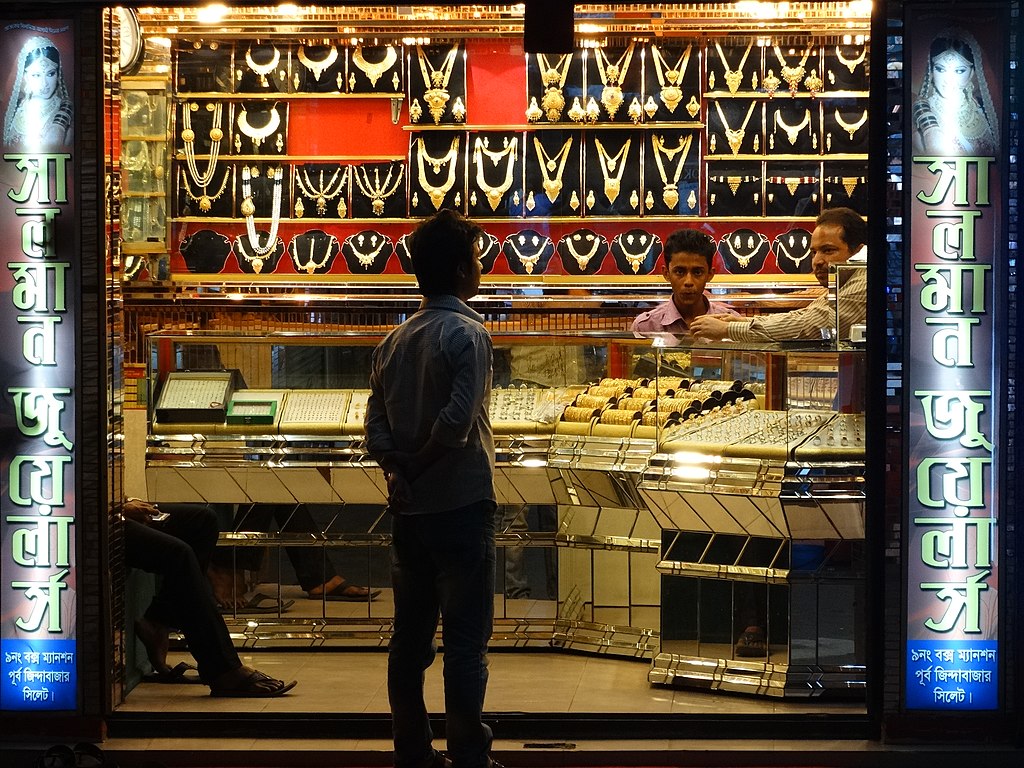
This local proverb speaks to the importance of experience in knowing the value of something. A parent truly knows the value of children. A scholar deeply feels the importance of his area of focus. The goldsmith or gold seller – and we have entire sections of our local bazaar full of gold shops – is the one best able to value gold.

Much missiology is done in reaction to unhealthy churches. Cross-cultural workers who have never been part of a healthy church come overseas confident of what they don’t want to plant, but have no clear positive vision for what they want to see come about. This can mean that church gets radically redefined or even dismissed. These workers are ripe to be swept up in the latest missiological fad which promises amazing results. This is due, in part, to a deficiency in their experience. Perhaps all they have known are churches that are dying due to an unwillingness to change extrabiblical traditions or megachurches awash in seeker sensitive antics.

However, one who has been a part of a healthy church knows the value of a body of believers that pursues the biblical characteristics of a local church. They have been inoculated to the position that “We’ve done church all wrong in the West” because they have seen and tasted the power of a faithful New Testament local church. They know the secret that healthy church principles transcend centuries and cultures, albeit while putting on appropriate aspects of local culture.

Don’t send out missionaries who practice a missiology of reaction and who have a dismissive attitude of Western local churches – all the while being funded by them. Look for those who have lived as healthy church members and who deeply love the local church, even with all its flaws. These workers are in the best position to take New Testament principles for the local church and to seek to plant them across cultures.

Photo by Adam Jones on Wikimedia Commons.

On Not Fighting Like Gauls

I recently had the opportunity to speak to a number of my colleagues on the importance of sustainable sacrifice (a term borrowed from author Christopher Ash in his book, Zeal Without Burnout). Together, we looked at 2nd Timothy 2:1-7, and specifically, Paul’s examples of the soldier, the athlete, and the farmer. Each example would have communicated to the original audience a lifestyle of sacrifice, as well a lifestyle of disciplined pace – long-term labor that requires a long-term posture.

While preparing for this talk I decided to include a historical illustration from Roman military history. Julius Caesar conquered the Gauls (or Celts) of modern day France between the years 58 and 50 BC. These now famous battles, called the Gallic wars, made the Gauls of western Europe (relatives of those Galatians down in Asia minor) Roman subjects. Eventually they would become models of Roman assimilation, more Roman than the Romans as it were. But in the beginning they were something terrifying to behold – particularly in battle.

The warriors of Gaul tended to be much taller than Roman soldiers, with blonde hair (often bleached even blonder) and long mustaches. Sources say they would charge into battle naked – save for a metal band around their neck – and painted in blue war paint. Their preferred way to fight was to charge the enemy line, fearless and screaming, caught up in some kind of battle rage. This would have been a terrifying thing to behold and try to withstand, and much discipline would have been required to hold the line. In the back of a Roman soldier’s mind, they might also be thinking about how the Gauls liked to collect the heads of their defeated enemies and decorate their houses with them. The Roman consciousness was also haunted by the memory of the Gauls who had sacked Rome hundreds of years earlier.

No doubt many a Roman line did not hold in response to a charging hoard of Gauls (You can’t blame them). But Julius Caesar learned one valuable secret. That secret was the importance of pace. The Gauls were using massive amounts of energy in their fanatical charge at the Roman line. If the legions could just hold the line for a little while and save their strength, then the majority of the Gallic warriors’ strength would be spent, and the Romans would be able to get the upper hand – by simply having enough energy left to finish the battle.

Of course, the Romans also employed advanced military tactics and discipline, and no doubt these all played their part. But I was struck by the fact that battles could be won simply by the power of pace.

We have not been very good at pacing ourselves here in our corner of Central Asia. Many limp to the end of their first term and beginning of furlough. Most long-term cross-cultural workers leave here after 4-6 years. Everyone with high-school age kids leaves. We come in with an immense amount of energy, throw ourselves at language learning, evangelism, and discipleship, burn into sleep and family time, and justify it all because it’s ministry. Then one day we wake up realizing there’s suddenly nothing more in the tank.

In short, we have been fighting like Gauls.

My encouragement to my colleagues (and myself) is that we need to learn to fight more like Romans. Let the short-term teams fight like Gauls (but clothed, please). This is because their battle is much briefer, more like a sprint. But for those of us who hope to be here for decades, we need to learn the kind of posture and pace that enables us to endure a very long war full of very long engagements. To jump historical eras, we are in WWII Stalingrad, not in the fall of Paris.

Borrowing categories from Christopher Ash, this means we need to be serious about sleep, sabbaths, friendship, and inner renewal. It also means we need to embrace a posture of grace toward our teammates, so that we might prevent and mitigate the devastating effects of team conflict.

Ultimately, we don’t know how long we will be able to stay on the field. Some factors are beyond our ability to influence, such as geopolitical changes or getting cancer. But we can and should seek a wise, long-term posture, one where we do not fight like Gauls, but instead fight like soldiers who know there’s a lot of battle still to come – and who want to actually be there to see the victory.

Photo by Wikimedia Commons

A Proverb On Going Slow and Steady

He’ll catch a rabbit with a wheelbarrow.

Local Oral Tradition

This is one proverb I am thrilled to have found. For years we have had to defend our slow pace of church-planting, money usage, and leadership development to locals. I even came to start referring to our church as those desiring to be faithful turtles.

Money is the fuel for most governmental, private, and religious organizations here in our corner of Central Asia. Small salaries are expected for participation and loyalty to a group, and many Christian organizations have played right into this. If you hear of exciting results from our area, ask how money is involved. Sadly, many new believers (and some unbelievers) are being paid to share the gospel, lead bible studies, and form groups. And with these small salaries, things develop quickly. But as soon as the money dries up, things fall apart just as quickly.

In reality, money has been used to substitute for godly character. Yet without godly character, those being paid can’t handle the temptations that come from being paid to do the work of ministry. Our approach has been to do the slow work of character formation and to let the multiplication of disciples, groups, and churches be governed by that same slow speed. Money is used sparingly, and only after someone has demonstrated freedom from the love of it.

How can we justify this slow work in an area that is 99.9% lost? Because it is the only work that will last. To plant churches that last – and not merely multiply and die – is our goal. That goal keeps us slower than most, but so be it. By the grace of God, the disciples we make will persevere, the leaders will last, the churches will live beyond a few years. I believe that, given enough time, a small network of churches planted in this fashion will overtake the alleged movements that some have claimed here. 18,000 churches planted is what one man claimed – the problem is, no one who actually lives here has ever seen even one of them!

This local proverb speaks to the surprisingly effective results of slow and steady work. One doesn’t usually catch a rabbit with a wheelbarrow. But with great focus, planning, and perseverance, someone wise with a wheelbarrow just might catch one, when all others have failed. It’s the same principle behind the classic tortoise and hare fable – slow and steady wins the race.

Photo by Gary Bendig on Unsplash