Bilbo Baggins Made Me Brave

Yesterday, on the long drive from New Orleans to Louisville, my family finished listening to The Hobbit audiobook, the version read by Andy Serkis. It was masterfully done. Serkis deserves his reputation as one of the best voice actors out there. If you’ve ever struggled to get into Tolkien’s books of Middle-earth, give this audiobook version another try and see if, like my own wife and daughter, you’re finally hooked.

While listening, I was reminded of just how long Bilbo Baggins’ story has been a part of my life. My parents brought a record player with them to Melanesia in the late 80s. And one of the records they brought with them was the soundtrack for the 1977 Hobbit cartoon. Somehow, this had made it into my dad’s record collection even before he had met my mom. Those songs, along with the cartoon itself, were an early and constant part of my and my brothers’ childhood soundtrack and imagination.

Growing up with this 1977 cartoon adaptation, I never realized just how strange it was. In this project, the fiction of a British professor who was shaped by Norse languages and mythology, as well as the trenches of WWI, meets the music of the hippie singer-songwriters of the 1970s and the odd animation of a group that would go on to become the anime Studio Ghibli. Sadly, my wife finds the whole thing unbearably creepy and, after watching it once with me, has sworn ‘never again.’ Alas, for the sake of marital harmony, I will have to listen to the stirring strains of The Greatest Adventure in my earbuds for the foreseeable future – not to mention much livelier numbers such as Down, Down to Goblin Town.

But I digress. The main point of this post was to tell you how Bilbo Baggins made me brave. Or, at least, how he was one of several good ingredients that made me want to be brave, should I ever be given the chance.

This is exactly what good stories should do. G.K. Chesterton says, “Fairy tales do not tell children the dragons exist. Children already know that dragons exist. Fairy tales tell children the dragons can be killed.” Similarly, CS Lewis says, “Since it is so likely that they will meet cruel enemies, let them at least have heard of brave knights and heroic courage.” We live in a fallen world, so we desperately need good stories where the heroes stand up and defy evil, even risking their lives doing so. The advantage of being exposed to stories like this in childhood is the time they have to marinate and shape the young heart.

One of the major themes of The Hobbit is how an unlikely little hobbit like Bilbo Baggins ends up saving his friends (and many others) through being courageous, even though he is very small and afraid. At many points throughout the book, Bilbo is faced with dangerous choices, but each time he opts to do the right thing, which is also the risky thing. Perhaps his greatest test is towards the end of the book when he is going, alone, down the long tunnel to where the sleeping dragon, Smaug, awaits. Tolkien writes,

It was at this point that Bilbo stopped. Going on from there was the bravest thing he ever did. The tremendous things that happened afterward were as nothing compared to it. He fought the real battle in the tunnel alone, before he ever saw the vast danger that lay in wait.

-The Hobbit, chapter 12

In this passage, Tolkien says that Bilbo fought the true battle in the tunnel alone, before he really knew what facing the dragon would entail, and that his decision to press forward was the bravest thing he ever did. I heard and read this passage over and over again as I was growing up. And every time I did, in my heart, I wanted to be like Bilbo. I hoped that if I were to ever find myself alone in a dark tunnel leading to danger for the sake of good, for the sake of my friends, that I would also choose to keep going.

It makes me wonder, when exactly is the real battle fought for young boys who will one day face their own ‘dragons’? Reflecting on my own childhood, and now observing my own boys, I think it’s less one big decision made in a moment of crisis. More likely, it is countless small desires and resolutions made while listening to stories like The Hobbit, tales where biblical virtues, such as courage unto death, are held up as good and right and worthy of emulation. One small layer at a time, one tiny steeling of the will at a time, and a hard core of courage eventually forms in a boy’s chest – one that will only be revealed in moments of crisis.

They say you can’t know how you will respond in a crisis until you’re in it. Will you move away from danger or toward it? Will your instinct be self-preservation or the safety of others? This may partially be true, but I would contend that one very good sign of what you will do can be discerned from the kinds of stories you have been listening to – and what has been happening in your heart, will, and prayers as you listen.

Of course, Bilbo was only one part of a balanced narrative diet. My childhood and adolescence were also shaped by other good stories, including Narnia, the Rocky movies, and films like Gettysburg. Most importantly, I grew up immersed in those true stories in the Bible that form the substance of which hobbits are only the shadow. I grew up hearing of David defying Goliath, Shadrach, Meshach, and Abednego defying Nebuchadnezzar and his furnace, Stephen being stoned, and Jesus Christ himself willingly passing through death and hell for the sake of his friends.

Along with this, I also saw courage modeled as Melanesians defied the spirits and witch doctors to follow Jesus, as my dad gave up his own life on the mission field, and as my mom later bravely returned as a single mom. I saw these real-life risky decisions made by followers of Jesus, and I wanted to be like them.

Years later, when a friend in high school was attacked by a mugger, I was put to the test. Would my instinct be to wrestle the mugger off of her? In that moment, there was no time for cost analysis. I sprung. And I did my best to fight the guy off my friend. She and I ended up safe in the end, and the mugger in police custody. Where does that kind of an impulse come from? Looking back, I think, in part, from little Bilbo Baggins in the tunnel. The decision to act and help had been made a long time ago. And it had been reaffirmed over and over again.

Courage, I believe, is ultimately a gift from God. It is a gift many are given in a common grace sense, a merciful inheritance still from the first Adam. But it must also be given in a special way to those who have new hearts, to those who know the second Adam. In us, the very courage of the Son of God slowly grows, layer upon layer, and will go on growing forever. This is the kind of courage that can lead to faithful believers from the past like Hugh Latimer, who not only faithfully endured being burned at the stake, but even called out in encouragement to his friend, Nicholas Ridley, also in the flames, “Be of good comfort, Mr. Ridley, and play the man: We shall this day light such a candle, by God’s grace, in England, as I trust never shall be put out.”

How can we encourage the growth of courage in our lives, and in our own kids’ hearts? The word of God must take primary place here, and after it, the example of the faithful we have in the Church Universal and in our own local assemblies.

But along with this, let’s not neglect the power of good stories. God used many means to make me brave. Not least of these was the hobbit, Bilbo Baggins.


We only need to raise 10k ($833 per month) to be fully funded for our second year back on the field. If you have been helped or encouraged by the content on this blog, would you consider supporting this writing and our family while we serve in Central Asia? You can do so here through the blog or contact me to find out how to give through our organization. 

Two international churches in our region are in need of pastors, one needs a lead pastor and one an associate pastor. Our kids’ TCK school is also in need of a math and a science teacher for middle school and high school. If you have a good lead, shoot me a note here.

For my list of recommended books and travel gear, click here.

Photo from Unsplash.com

The Hospitality of God

The Central Asian believers and I leaned forward around our table, holding the earpieces tight against our ears to make sure we understood the assignment. Simultaneous translation meant that our preaching training was being taught in English, yet we were each hearing it in one ear in the local tongue – a complex, yet not impossible way to learn solid principles for teaching and preaching God’s word. Other tables were made up of believers and leaders from a neighboring people group, hearing the translation in yet another language.

Live translation, when the teacher or preacher pauses to let you translate, takes a fair amount of skill. Simultaneous translation, on the other hand, takes an extra special kind of linguistic ability and mental quickness. The local believing gal we usually hired for this kind of translation was in another country for an ultimate frisbee tournament, of all things, so we were trying out a couple of other believers who had traveled up from Poet City to help with the conference. Of the two of them, the teenage gal -whose parents had in recent years been outed as spies for a neighboring regime- was by far doing the better job.

As she translated, I mulled on the riddle of what to do when a teenager shows all the signs of true faith and a solid commitment to gathering with the body, but it seems that her parents are on the payroll of a foreign Islamic government – and likely reporting on things they’re learning through their daughter. So far, the wisest thing seemed to be to trust God and carry on. If they ended up reporting on this particular training, then at least mom and dad and their foreign handlers would be getting some sound homiletics principles.

“What were those foreigners telling people to do?”

“To make sure they could identify the biblical author’s intended message for the original audience.”

“And then what?”

“To find valid connections from that message to the good news of Jesus.”

“And after that?”

“To apply the main ideas to the daily lives of both the Christians and non-Christians who might be listening.”

“No! Those foreign infidels! Is there no end to their schemes? Make sure to report back if they start talking about how to craft effective sermon illustrations.”

I laughed to myself, thinking about what that kind of conversation might sound like.

“Wait, what are we supposed to do?”

This actual question from one of the brothers at my table brought me back to the current moment.

“Oh, right,” I responded. “The trainer asked if we could read Isaiah 25:6-9 and summarize it with a phrase or title that describes the main idea.”

One of the men at the table cleared his throat and then read out the passage in the local language.

	[6] On this mountain the LORD of hosts will make for all peoples
a feast of rich food, a feast of well-aged wine,
of rich food full of marrow, of aged wine well refined.
[7] And he will swallow up on this mountain
the covering that is cast over all peoples,
the veil that is spread over all nations.
[8] He will swallow up death forever;
and the Lord GOD will wipe away tears from all faces,
and the reproach of his people he will take away from all the earth,
for the LORD has spoken.
[9] It will be said on that day,
“Behold, this is our God; we have waited for him, that he might save us.
This is the LORD; we have waited for him;
let us be glad and rejoice in his salvation.”

After the passage was read, the table was quiet for a minute as we each thought about what major themes were present in the passage. Our Central Asian locals are not typically strong in this kind of exercise. Their educational system majors on rote memorization and repetition. It does not equip them to do things like summarizing a passage in their own words and recognizing the main point. But this was year four of this preaching training, and, slowly but surely, these crucial textual analysis skills were getting stronger.

“The hospitality of God!” one man exclaimed.

“Interesting,” I replied, “Where do you see that?”

“Well, what is the main thing happening in this passage? God is hosting all peoples on top of a mountain for a great picnic with the very best food. Look at how this passage overflows with his generosity and hospitality!”

I took another look, and sure enough, there it was, clear as day in verse 6. I had skipped right over this theme to focus on the theme of God destroying death forever (also a major theme in the passage). Leave it to Central Asians to spot what is obviously an eschatological mountain picnic hosted by God himself when the Westerners skip right past it.

It seemed our British trainer did the same thing I did, because he sort of looked confused when the same man raised his hand during the larger group discussion time to mention the theme of God’s salvific hospitality that had jumped out at him.

This is why it’s so helpful to study the Bible with those from other cultures and backgrounds. It’s not that the meaning of the text itself is relative and shifts according to the culture of the interpreter. It’s that each of our cultures gives us eyes for certain things, and blind spots for others. My culture is weaker in hospitality, so I’m less likely to see that when it’s there in the text. But there are other areas where I can see things because of my background that my Central Asia friends are likely to miss.

This is an argument not just for studying the Bible with those from other cultures, but also with those from other ages. Saints from the past are going to be awake to things to which my generation has grown dull and blind. I need their help to more fully understand the Bible, just as future generations will need ours.

The Bible is so rich and so deep. Sometimes I wonder if God’s plan in allowing so many languages and cultures is, in part, so that we might be better equipped to see more aspects of the Scriptures’ richness and beauty.

As for me, I’d like to spend more time looking for the hospitality of God in the Bible. Now that I’m more ‘awake’ to this idea, it seems to pop up just about everywhere.


We only need to raise 14k ($1,166 per month) to be fully funded for our second year back on the field. If you have been helped or encouraged by the content on this blog, would you consider supporting this writing and our family while we serve in Central Asia? You can do so here through the blog or contact me to find out how to give through our organization. 

Two international churches in our region are in need of pastors, one needs a lead pastor and one an associate pastor. Our kids’ TCK school is also in need of a math and a science teacher for middle school and high school. If you have a good lead, shoot me a note here.

For my list of recommended books and travel gear, click here.

Photo from Unsplash.com

First Flight Into Central Asia

Long ago, in late 2007, I took my first flight into Central Asia. I expected it to be significant. All first flights into a new place bring their own excitement and anticipation. But I did not expect it would turn out to be quite as colorful as it turned out to be.

Our motley crew of a team had been sitting on the floor of the old Dubai regional airport, which was not at all like the shiny new international airport we had just flown into. Most of us were signed up for six months of serving in Central Asia. Another couple of single guys and I were considering staying a full year. Our mission was to do relief and development work, along with evangelism and discipleship, hopefully laying the groundwork for a long-term church planting team. However, our coworkers on the ground had recently been chased out of the city we were supposed to serve in, escaping only by hiding underneath a car in a gun battle between terrorist assassins and local security forces. So, we were to land in another city, Poet City* in fact, and to be an ‘office in exile’ as it were. The idea seemed to be to figure it out as we went, and to do our best not to cause problems for the long-term personnel who were already living there.

The year that followed was to be a wild one. I would almost get blown up by tutoring next to a car bomb. Another teammate would almost get blown up by peeing next to a landmine. My friend Hama* would come to faith in part because of bad beer and a Jesus action figure that he got from a Samaritan’s Purse shoebox. It was one of the best years of my life.

However, at this point, we were still sitting on a dirty airport floor, camped out near what was (hopefully this time) our actual gate. Near us was a crowd of men from Bangladesh, also sitting and lying on the tile floor. They looked like they had been there for a while. It also looked like we were going to be on the same flight. In fact, these twenty or thirty men had been stuck in the airport for several days, caught in a deceptive migrant labor scheme. We later learned that they had been told they would be traveling to Mediterranean Greece to work in restaurants. Instead, they were being flown to the deserts of Central Asia to be street sweepers, and their passports by this point had already been confiscated, trapping them into doing a job they had never signed up for. In God’s strange sovereignty, some of these men would later come to faith through the faithful work of another missionary.

After what seemed like a very long time and not a little confusion, our plane was finally ready to be boarded.  

Walking out onto the blazing tarmac, I caught the faded name on the side of the aircraft – the national carrier of a faraway former Soviet Republic. Must be a rental. The inside of the plane did little to reassure me. The plane itself was an older craft. The cream walls were stained brown, and the flimsy legs of the seats seemed like they might snap off if you leaned too strongly to one side. Even the paint on the lit no-smoking signs was cracking, creating an interesting glowing web design that sprawled outward.  

This seemed to be only the second time for many of the Bangladeshi men to be on a plane.  And they were still quite giddy at this new experience – the lights, the seats, and the free snacks.  They kept pushing all the buttons, apparently just to see what they did. The Russian stewardesses, for their part, mostly ignored them. Some of the men, like the guy next to me from Dhaka, were obviously nervous. He didn’t know how to fasten his seat belt, so I leaned over and helped him, asking him questions about his homeland to try and put him at ease.

Soon, the intercom crackled, and the captain came on. But instead of the usual message of welcome and flight information, he informed us that there was something wrong with the plane’s landing gear. For our safety, we would need to disembark and get on another plane. 

Everyone groaned. Our flight was already hours late. 

Ten minutes later, we were still sitting on the plane when our captain came on the intercom again, announcing to everyone that he had, in fact, been mistaken.  

“Ladies and gentlemen, we will be taking off shortly. There is nothing wrong with the plane’s landing gear. Really. There is nothing wrong with the aircraft. Let me just say one more time that everything is perfectly OK. There are no problems with our aircraft… so… don’t be worried… again, our landing gear is… fine. [crackle, crackle, silence].”  

After this very reassuring speech, we all joined the man from Dhaka in being more worried than ever. One Central Asian businessman in the front stood up and demanded to be let off the plane, but it was too late. We had already started taxiing to the runway, and the flight attendants forced him to sit back down. 

The engines roared, and soon we were airborne. We were all in this together now, Americans, Central Asians, Bangladeshis, and even our stern Slavic flight attendants. Scenes flashed in my mind of what it might mean to land on a Central Asian mountain runway with our “perfectly OK” landing gear. But being somewhat accustomed to flying in sketchy aircraft overseas, these thoughts soon faded from my mind.  

Before long, the air in the plane took on a distinct odor, just as the regional flights in Melanesia would, the inevitable result of air travelers whose culture pays no mind to deodorant, and who have been stuck in an airport for several days. This pungent yet natural smell was especially pronounced in the area where I was sitting. At some point mid-flight, our stewardess had had enough.  Stopping in our area, she started shouting in a Russian accent, to no one in particular, that the shoes should be put back on.  

“Poott shooz ohnn! Poott sshhoozz ohnn!”

I stared at my feet. I stared at my neighbors’.  Everyone’s shoes were on… so we all just stared back at the stewardess.  Met with these dozens of blank stares, she let out a frustrated huff, gave up on her remonstrating, and got back to serving drinks. The man from Dhaka and I had some tea. Unlike airplane coffee, surprisingly horrid stuff, I have always found tea at 36,000 feet truly delightful.

Eventually, we began seeing lights dotting the blackness below.  We began our descent, neared the runway, prayed for our landing gear, and then breathed a sigh of relief as the landing gear did indeed perform “perfectly OK.” Praise the Lord. 

To top it all off, upon landing, all of our Bangladeshi friends broke out in rapturous applause. Even the grumpy stewardesses couldn’t help but crack a smile.

Soon, we were off the plane into the chilly air of a Central Asian November night. We got through customs surprisingly quickly, grabbed our bags, and most of the team hopped in a car. This left me and the two other college-age guys standing on a curb, alone, in the dark.  Over to one side, we noticed a man chilling with an AK-47 and a cup of chai.  

Welcome to Central Asia. What had we gotten ourselves into?


If you have been helped or encouraged by the content on this blog, would you consider supporting this writing and our family while we serve in Central Asia? We need to raise 26k to be fully funded for our second year back on the field. You can help us with this here through the blog or contact me to find out how to give through our organization. 

Two international churches in our region are in need of pastors, one needs a lead pastor and one an associate pastor. Our kids’ TCK school is also in need of a math and a science teacher for middle school and high school. If you have a good lead, shoot me a note here.

For my list of recommended books and travel gear, click here.

*Names changed for security

Photo from Unsplash.com

The Hairy Hot Tub Santa Claus

My kids love hot tubs, as do I, for that matter. Whenever we get to stay somewhere that has a pool, that’s a big deal. But if the pool also has a hot tub, and they allow kids in it, well, that’s an even bigger deal.

If we’re in Central Asia and find a place like this, then one more thing has to line up for it to truly be the jackpot. It needs to be a pool that allows for a mixed swimming time, where families and both genders can be in the pool area together. Many of the pools in our region reserve the majority of their time for men exclusively, with some less convenient hours set aside for ladies-only swimming times. But some, especially at nicer hotels, also have one window per week where families can swim together.

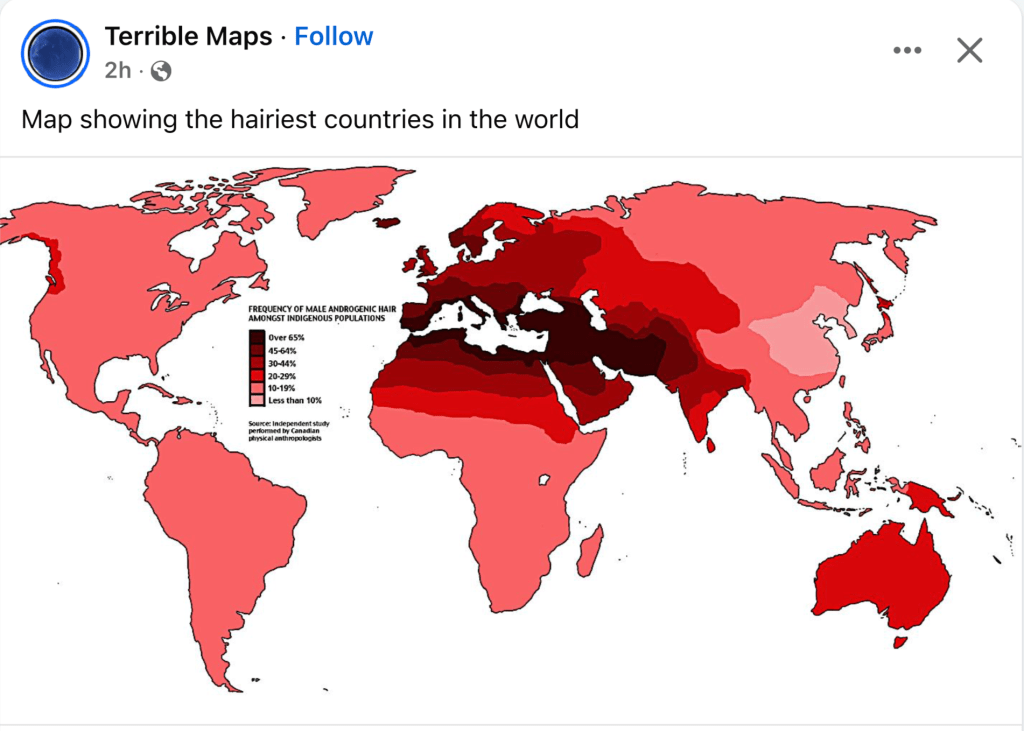
The hotel that features in this story was just such a place. So, on the weekend our family was staying there, we excitedly made our way down to the pool area together. We knew that it would probably still be overwhelmingly men, so my wife was wearing her modest Central Asia swimming outfit, basically an Islamic burkini without the head covering. Unfortunately, this pool was the kind of place where the staff were very insistent on women buying and wearing swim caps to cover their hair. This, even though men with very hairy, carpet-like torsos and backs were paddling around shirtless in the pool without being made to wear anything for their copious amounts of hair (see map below for reference). Alas, all we could do was acknowledge this hairy inconsistency to one another, buy the swim caps, and try to make the best of it.

Credit to ‘Terrible Maps’ on FB for this, um, unique infographic

My wife went off to swim in a part of the pool with fewer men, and my kids and I had fun swimming and horsing around for a while in the pool. But it didn’t take long for the offspring to start asking if we could make our way over to the hot tub. I agreed (it’s almost never too early to hit the hot tub), and we dripped and waddled over toward the inground jacuzzi.

There, sitting in the hot tub, was a hairy giant of a Central Asian man, large stomach protruding out of the water and arms spread out as he reclined like a sultan of old in his royal hamam. He eyed us, expressionless, as the four of us scooted into the hot tub across from him. I couldn’t tell if he was from our people group or from one of the other main ethnicities of the region, and he didn’t engage, so I did my best to politely ignore him and to keep my kids over on our side. I was, after all, no stranger to odd hot tub companions, such as that one seminarian who slid into a hot tub next to my wife and me during a date night, strangely determined to share with us why he was really more of a Thomist rather than a Van Tillian presuppositionalist.

Anyway, our corner of Central Asia has changed drastically in recent decades, such that fancy modern things like hotels and hot tubs paint a deceptive picture over cities that, until recently, were literal war zones. A scruffy middle-aged man, just like the one sitting across from us in the hot tub, might be someone who was once a guerrilla fighter, a military interrogator for a dictator, a prisoner, an exile, or even someone wanted for participating in war crimes. You really never know.

My kids did a good job trying not to make things awkward, but they did shoot the occasional glance at our furry fellow bather, who continued to observe us with his dark eyes and a hard-to-read expression on his face.

Suddenly, he leaned forward, holding up a finger in the universal gesture meaning, “one minute.” He then stood up and lumbered out of the hot tub, the water level of the hot tub decreasing by a truly impressive amount. He walked over toward the showers and quickly returned, hands overflowing with shampoo.

As he eased back into the hot tub (raising the water again by a good six inches), he dumped all of the shampoo he’d collected into a side compartment that fed into the bubbling water. Before long, we were surrounded by small mountains of soap suds as our large friend smiled and chuckled mischievously. My kids also cackled, loving the fact that the hot tub had just been transformed into a giant bubble bath, and following the man’s example of picking up handfuls of the suds and blowing them at each other.

But the best part was when this large, imposing Central Asian man grabbed a bunch of suds, put them on his face to make a big white bubbly beard, and called out to the kiddos,

“Look, Babba Noel!

Babba Noel is, of course, our local name for Santa Claus. My kids were downright belly laughing now, as was ‘Santa.’

I am sure that it was against the rules to put the shampoo into the hot tub like that. But the young pool staff seemed intent on looking the other way. Perhaps they knew better than to confront this burly sasquatch of a man with their little rules. Or, perhaps they knew he really was some kind of general for a former regime, and decided it was best to let him have a little bit of fun with his bubbles.

Whatever the case, for my kids and me, we will always know him as the hairy hot tub Santa Claus, proof that even under the most intimidating of exteriors, there might simply be a man who likes to make kids laugh and play with bubbles.


If you have been helped or encouraged by the content on this blog, would you consider supporting this writing and our family while we serve in Central Asia? We need to raise 28k to be fully funded for our second year back on the field. You can help us with this here through the blog or contact me to find out how to give through our organization. 

Two international churches in our region are in need of pastors, one needs a lead pastor and one an associate pastor. Our kids’ TCK school is also in need of a math and a science teacher for middle school and high school. If you have a good lead, shoot me a note here.

For my list of recommended books and travel gear, click here.

Photo from Unsplash.com

Yes, A Pastor. No, Not The Black Magic Kind

A Peruvian, a Pakistani, a Filipino, a Central Asian, and an American get pulled over at a checkpoint.

No, this is not the start to a bad joke. But it is, in fact, how I learned that locals believe Christian clergy can do black magic.

In truth, you never can predict when these kinds of insights might emerge that reveal what the locals really believe. On this day, our source of cultural illumination surprisingly appeared from one of the least enjoyable parts of living in Central Asia. That is, the inescapable, and often petty, government bureaucracy, military checkpoints on the road being one particularly tedious expression of this.

For this particular trip, I was on an outing with four friends, and we were coming back from a long day of exploring some fascinating ancient sites together. Three of them (Peruvian, Pakistani, and Central Asian) had just finished a year-long pastoral internship under the leadership of the Filipino brother, himself a TCK who now serves as one of our pastors in Caravan City. We had been planning for some time to take this kind of trip together. And the timing of it, coming just a few days after the internship finished, made it a fun and celebratory time.

We knew that our unique carload, itself a sort of mini UN, would likely raise eyebrows at the half dozen checkpoints we’d need to pass through during the day. So, all of us had our documents on us. All of us, that is, except for the Peruvian brother. His documents were with the lawyer for his visa renewal process. However, we weren’t worried. He had pictures of his IDs, something accepted by the guards when the visas and passports of those traveling are tied up in other layers of bureaucracy elsewhere. No ID on you for some random reason? Big trouble. No ID on you because your lawyer is (so you say) getting your visa renewed? No problem! Carry on.

The checkpoints proved seamless all day long, until the very last one, as we were on our way back late at night. Here, as soon as the guard laid eyes on the Peruvian and heard us begin to say that he didn’t have his documents, he ordered him to head inside the station for further questioning. The soldier made this snap judgment and began to walk away without letting us plead our case, so I yelled out as quickly as I could,

“But… respected one… he’s of the people of Peru… his documents are with the lawyer for his visa renewal! Visa renewal!”

Missionaries from Latin American countries have both the advantage and the disadvantage of looking like they are from our region, Central Asia. It was likely that the guard had assumed from appearances that the Peruvian was from a neighboring rival people group – and had therefore plopped him into some sludge-slow process of window and desk hopping seemingly designed to be as convoluted as possible.

This last-minute plea seemed to cause the guard to reconsider and relax a little bit. He turned back to us, still told the Peruvian to go inside to a certain room, but allowed the Central Asian brother to go with him for the sake of interpretation.

The rest of us sat in the car and hoped for the best, barely fending off yet another guard who approached and attempted to send us all inside.

As we waited in the dusty darkness, the Peruvian and the Central Asian made their way into the captain’s office. From a similar situation in the previous weeks, I knew the room’s layout followed the standard formula. Large and pretentious desk facing the door, hard couches lining the walls, plenty of ashtrays and tea tables, a rickety swamp cooler whirring in the window, and photoshopped pictures of benign-looking government strongmen up on the walls.

The captain was not in a good mood, so our friends were not making much headway trying to explain their case. That is, until the Central Asian dropped the fact that the Peruvian was actually a pastor. This was, in fact, true. He had been a pastor in Peru and had originally been sent to pastor a team of Spanish-speaking missionaries before later joining the internship for more training.

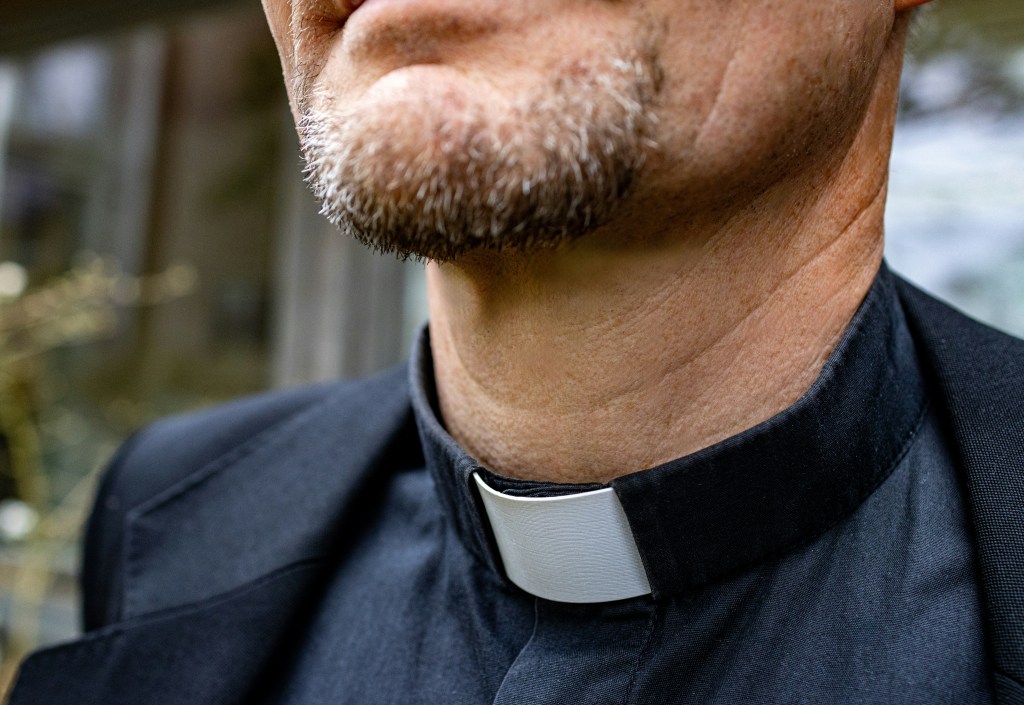
There is something in the wiring of our local Muslim Central Asians, such that once they find out a man is actually a ‘priest,’ their entire bearing towards him changes for the positive. We’ve seen this dynamic so often here over the years that we’ve begun to joke that rather than hiding the pastoral background that many of us have (as is the norm), we should instead start going around wearing protestant clergy collars. At least in government offices, this contextualization of our garments would make a huge difference. In this, Central Asia has proved yet again to be utterly different from our assumptions of how it would be.

Accordingly, the captain decided that, since our Peruvian friend was a priest, there was no issue here whatsoever, and that he could go his way. However, in parting, he also slipped in a joke to the Central Asian brother.

“Ask him if he could do some black magic for me, brother, har har har.”

Finding discretion to be the better part of valor, our friends took the opportunity to smile and leave quickly, rather than staying to correct the captain that, no, as a pastor, our friend most certainly did not and would not do black magic. As no true pastor should.

“Wait,” I asked my friends when they were back in the car, “locals think pastors do black magic?”

“Yes,” the Central Asian brother replied, “I’ve heard it from my older relatives many times. They used to go to some kind of ethnic Christian priest to get him to do spells and charms for them – things having to do with fertility or love, especially.”

Apparently, some of the clergy from the local ethnic Christian communities had, over time, fallen into acting like the local Islamic sheikhs, themselves having fallen into acting like the older mages, shamans, and witch doctors so common all over the world. Appease and manipulate the spirits for your own blessing and the cursing of your enemies. The same demonic strategy used in the Melanesia of my childhood, recycled here with just a smidge of Central Asian monotheistic veneer.

I was reminded of how I’d heard that even one of the few evangelical pastors among our people group had himself started acting weird in these ways, sheikh-ish, making people who asked for healing to drink Bible verses he’d written on little pieces of paper. I wondered if he had also grown up hearing from his relatives of how this was simply what Christian clergy are supposed to do.

I’m very glad this bit of local data emerged, even though it came through something as tedious as a government checkpoint. Who knew that this was something so commonly assumed among our locals, lurking down in the basement shadows of their worldview? Now we know. And now we can proactively teach against it. No, true pastors should not and do not have anything to do with black magic. Yes, they may be involved in the occasional miraculous healing or quiet casting out of a demon. But this is not magic; this is simply the Holy Spirit at work in the normal life of the local church.

No, Mr. Captain of the checkpoint, we won’t do black magic for you. But if you hear us out, we can tell you about something infinitely more powerful.


We need to raise 28k to be fully funded for our second year back on the field. If you have been helped or encouraged by the content on this blog, would you consider supporting this writing and our family while we serve in Central Asia? You can do so here through the blog or contact me to find out how to give through our organization. 

Two international churches in our region are in need of pastors, one needs a lead pastor and one an associate pastor. Our kids’ TCK school is also in need of a math and a science teacher for middle school and high school. If you have a good lead, shoot me a note here.

For my list of recommended books and travel gear, click here.

Photo from Unsplash.com

She Forgot Our Names, But Not Rock of Ages

Grandmom Workman grew up in the mountain hollers* of West Virginia. Her dad was a coal miner, as were most of the men in her family. Most of them would go on to die of black lung – a tragic but common outcome for this kind of employment. There’s a little hilltop cemetery full of crooked gravestones that bears witness to this once numerous clan of hillbillies, though most of the Workmans have now either died or left those mountains.

When she was a young woman, my grandmom fell in love with my poppop, a blue-collar man from Philly who was in the Air Force. After a quick marriage and a brief stint in Myrtle Beach, they moved back to the Philadelphia area, where they soon bought the house they would live in until their deaths, just a few years ago.

As the saying goes, you can take the girl out of the holler, but you can’t take the holler out of the girl. Grandmom remained hillbilly to the core until her dying day, despite the comfortable suburban lifestyle Poppop’s trucking career provided. There was no evidence that my Poppop’s strong Philly accent or that of all her neighbors ever made so much as a dent on grandma’s West Virginia way of speaking. No, she never lost her accent or mannerisms. I grew up being called a “sweet patooty” and hearing farts referred to as “shootin’ bunny rabbits.”

She also never lost her ability to sing the hymns she learned as a girl in the little Pentecostal church her family went to – even after she developed severe dementia.

After my family moved to Central Asia, we would attempt video calls with Grandmom and Poppop. We first noticed that she started forgetting that different members of her family were no longer living. Then, she started forgetting our kids’ names and faces. Eventually, she struggled to remember the names of even her grandkids that she had known for decades, including my name. Through all of this, as Grandmom lost more and more of her mental clarity and physical function, Poppop’s steady gentleness with her was a remarkable thing to behold.

In time, it became challenging to know how to hold a conversation with Grandmom. However, I could always get her to remember and talk clearly about her childhood, even when the dementia seemed to be worse than ever. Often, she would speak of the hymns she sang as a girl. Her favorite was Rock of Ages, “Rock of ayges, cleft for mee… Let me haaad maaself in theeee…” I was amazed at the shift out of mental fog and into crisp clarity that would seem to take place when I would nudge Grandmom to focus on this season of her life and the songs that she had learned at such a young age.

This was doubly encouraging to me because my grandmom had always shut down spiritual conversation. Any mention of God, the Bible, sin, or the gospel would unleash a polite but impenetrable barrage of words declaring Grandmom’s confidence in her own goodness. In all the years before the dementia started, there was no evidence that she ever humbled herself to admit that she was a sinner in need of forgiveness. This was true even though her own son, my dad, had died while proclaiming this message as a missionary in Melanesia.

My dad’s death, of course, devastated his parents. Poppop seems to have eventually come to faith, a changed man, in the years following. But Grandmom was immovable. No conversational tactic could get through her defenses.

However, once she developed dementia, I noticed a willingness to talk about and dwell on hymns, like Rock of Ages, that did contain explicit gospel messages – “Let the water and the blood; from thy wounded side which flowed; be of sin the double cure; wash from sin and make me pure.

Tragically, I do not think that my grandmom ever believed in Jesus. But if there is any hope, it would be found in the fact that hymns like Rock of Ages were a major part of the soundtrack of her final days. When all else was fading away, gospel truths put to a catchy melody and a West Virginia twang were on her mind and on her tongue. Perhaps they found their way into her heart and soul as well. She passed away in 2022.

My grandmom’s story taught me about the power of music for remembering and reproducing truth. The songs that Grandmom learned as a barefoot girl in a little mountain church stayed with her – for eight decades. They stayed with her when almost everything else had been forgotten.

This makes me want to double down on teaching our own children good, gospel-explicit songs. Apparently, they can remain with them until the end, even if they do not embrace the faith of their parents. God has somehow created music to be a thing strong enough that it can hold its own in the labyrinth corridors of memory, even against decades of unbelief, and even against the most formidable mental illness. A woman might forget the names of her own children and grandchildren. But she will remember the words of the songs of her childhood.

This season of ministry in Central Asia has brought with it an unexpected emphasis on local worship music. I suddenly find myself with four eager local guitar students (some of whom are former guerrilla fighters), with other local believers writing new songs and poems and asking for help with them, and with requests from many quarters for local-language songs that are richer and deeper and more congregational. An area of our ministry that has, until now, largely gotten the leftovers now calls for more proactive emphasis. Local believers need to be raised up who can write local songs, hymns, and spiritual songs for the church and then go on to lead and play them skillfully.

Because of my grandmom, I know the potential impact of this kind of work. Through good songs, local believers can unstoppably retain and reproduce truths from God’s word as they go about their daily work in the bazar, if they end up in prison without a Bible, or even if they someday lose their minds and memories.

How amazing is this gift of music that God has given to us? And what a comfort as well. Even in old age, his truth can remain fixed in our minds, and that, by the power of a simple tune.

‘So even to old age and gray hairs, O God, do not forsake me, until I proclaim your might to another generation, your power to all those to come. ‘

-Psalm 71:18


*holler is a Appalachian form of hollow, a small valley.

We need to raise 31.7k to be fully funded for our second year back on the field. If you have been helped or encouraged by the content on this blog, would you consider supporting this writing and our family while we serve in Central Asia? You can do so here through the blog or contact me to find out how to give through our organization. 

Two international churches in our region are in need of pastors, one needs a lead pastor and one an associate pastor. If you have a good lead, shoot me a note here.

For my list of recommended books and travel gear, click here.

Photo from Unsplash.com

The Revenge of The Rotisserie Chicken

Around five years ago, we had just returned to Caravan City after a medical leave in the US. After this absence, plus all the general strangeness of the year 2020, we were eager to get back into some healthy rhythms with our team.

Our people group had mercifully dispensed with the lockdowns after three or four months of going along with the global consensus. But by the summer of 2020, most in our area felt that further lockdowns were something only wealthy countries could afford. The workers and shop owners in the bazaar needed life to get back to normal so that they could survive. So, they threatened protests. The government, to its credit, listened, allowing our area of Central Asia to return to a degree of normalcy much sooner than the rest of the world. Mandatory face masks in malls and airports and bans against big mosque funerals were some of the only restrictions that hung on for another year or so. Other than that, our people group more or less went back to normal life.

This meant that our team could begin face-to-face meetings again, something that I, as the team leader, was very eager to see happen. At that point, we were a year or so into trying to lead a deeply divided team, and only six of those months had been in-person opportunities to build deeper trust and community. Results had been mixed. Some of the team were supportive, some still seemed quite distrustful. So, in addition to planning intentional structured time together, focusing on things like the 12 Characteristics of a Healthy Church, I also wanted us to spend lots of good unstructured time together – ideally while enjoying good food. I had seen in the past how the humble kebab could be a force for team unity. And I was hopeful that by adding a meal to our weekly team meetings, we might all become better friends as well as better teammates.

The challenge is always finding a weekly meal situation that achieves the magic combination of good, reproducible, and affordable. As part of trying to figure this out, a timely conversation with my wife led me to the distinct impression that the ladies on the team were not in the place to take on this added burden.

However, there seemed to be a good option that would check all the boxes – street rotisserie chicken. At the time, we lived in a working-class neighborhood that had its own small bazaar of sorts, centered around a central intersection. Two or three of the small restaurants or fast food places at this intersection proudly displayed outside on the sidewalk slowly-rotating spits of glossy roasting chicken, dripping with sour and salty seasoning and tempting passersby with their wafting aroma. You could buy a whole bird for the equivalent of $6 USD. To me, it seemed like a great solution, especially since a chicken came on a bed of rice, onions, and pickled veggies, all wrapped in fresh flatbread.

When the day came for the next team meeting, I made sure to go a little early to get the roasted chickens. This was earlier in the day than anyone else was buying lunch chicken, but the seller assured me that they were indeed fully cooked, using the same word for roasted that locals use for falling deeply in love. I drove home, rotisserie chickens in hand and optimism in my heart, ready to begin a new season of team life and meals. I had seen in the past the power of solid hospitality paired with studying sound principles together. And I was sure this combination wouldn’t let me down.

What I didn’t know is that these seemingly good-smelling birds would, in the end, turn traitors. Alas, as the sons of the prophets once cried out in alarm, there was ‘death the pot’ – or, at least, food poisoning.

The meeting itself and the following meal went well. But later on that evening, our family started feeling terrible. Kids were lethargic and passing out for naps when they normally wouldn’t. Multiple members of the family started vomiting. And mental fog and physical achiness came over our bodies. Wondering if it had been the food, we texted one member of the team. They said they felt great. So, we turned next to the LPG heaters that had been blazing all day long in our little cement and tile house. It was an unusually cold week, and we were running them more than we normally would. Could it be carbon monoxide poisoning? We googled the symptoms. Alarmingly, they seemed to line up.

I didn’t know much about carbon monoxide poisoning, but I knew it was nothing to mess around with. Every winter there are locals who die from it because they leave their kerosene or LPG heaters on too long during the long winter nights of no electricity. It wasn’t worth waiting around to find out. No, as we had done in previous winters and would do again, it was time for a short-term house evacuation to somewhere with better electricity. While there, we could figure out what was going on and recuperate in a simpler and warmer environment.

Teammates of ours had recently moved into a 24-hour power apartment not too far from us, but they were out of the country for a while to have a baby. We asked if we could stay at their place to recover, and they kindly agreed. So, we packed up our bags and our nauseous and miserable children and drove down the road to the new and shiny apartment towers where their place was. The grass border of the parking lot outside was lined with newly replanted palm and olive trees wrapped in Christmas lights, imports from far away. As soon as we parked and stepped out of the car, one of my sons promptly blessed one of these palm trees with a generous regurgitation of chicken and onions. All we could do was pat him on the back and thank him for not losing it in the car. I was worried the guards would scold us for letting this happen to the pristine landscaping, but thankfully, they didn’t seem to notice. Perhaps they were dads themselves and mercifully chose to let my son puke in peace.

We had just managed to make it up to the 23rd-floor apartment before other members of the family needed to take their turns again. For the rest of the evening, we alternately blessed God for the fact that there were multiple bathrooms and felt bad to be throwing up so much and so often in our friends’ house. We would definitely need to do some deep cleaning when we recovered. Admittedly, there were certain points while lying in the fetal position on the bathroom floor when I wasn’t quite sure I would recover. Over the next day or two, we reacquainted ourselves with the rotisserie chicken lunch in one way or another again and again and again until we were left lamenting that we couldn’t possibly have anything more left in our innerds.

I’ve only had food poisoning a few times in my life, but each time I’ve been struck by the wild intensity of the pain that pulses and stabs in the stomach area. This distinct pain, in fact, is what made me revisit the possibility that it had not been carbon-monoxide poisoning after all, but actually the food. This was a welcome thought, as the latter seemed to be the lesser of the two evils.

After texting a few more teammates, I found out that, sure enough, they were also in a bad way. In fact, at least three-quarters of our team was down with symptoms of food poisoning – almost certainly from the chicken I had bought so cheerfully. Alas, my attempt at blessing my team with good food had gone disastrously wrong.

Eventually, we all recovered our strength. It’s amazing what a few days of rest, hot showers, and 24-hour electricity can do for recovering health in the cold, grey Central Asian winters. Unfortunately, the idea of eating meals together after team meetings was not one that anyone wanted to revisit anytime soon. And the poisonous rotisserie chicken that I had bought became a running joke on the team anytime we spoke of eating food together.

After this, the team continued to stumble on toward better relationships with one another and a better posture toward the church planting work. But we’d have to do so without the help of communal meals with the whole team, something that I continued to regret. It probably wasn’t a make-or-break issue, but to this day, I wonder if certain hard things later on would have gone better had we found a regular time to break bread all together.

My Muslim friends will sometimes tell me how dangerous and unhealthy they believe pork is, as if anyone who eats it is crazy and simply asking to get sick. Often, I will point out to them that they eat something almost daily that is just as (if not more) dangerous when undercooked – poultry, like street rotisserie chicken. That stuff, I will them with all the authority of a wizened old war veteran staring off into painful memories far off, that stuff can kill you.

Of course, that’s no reason to stop eating rotisserie chicken (or pork for that matter). We’re just extra careful now to make sure it’s been cooking on the spit for a good long time. Better to have dry chicken than an entire church planting team taken out for days. And ever since then, we’ve managed to avoid causing any more widespread food poisoning on the different teams we’ve been a part of.

As for my teammates with the apartment, for reasons that don’t come into this tale, they never moved back into that same place. This was probably for the best, considering my family’s days of violent and messy convalescence there. My family also quickly afterward ordered carbon monoxide alarms from the States and made sure to have them on our walls at our house and each place we lived afterward, just in case. We ourselves now live in a 24-hour power apartment. This means when winter comes around, we tell our colleagues who still live in traditional homes that our place is available should they ever need a similar tactical retreat from vengeful poultry, or even just from a house whose systems have collapsed in the coldest week of the year.

We’re now back living in Caravan City, so we occasionally see that same palm tree my son inadvertently fertilized with the remains of his lunch. No joke, it’s looking great, unusually healthy and vibrant for a palm tree in this city of extreme climates. My wife and I chuckle when we point it out to one another, remembering the rotisserie chicken disaster of late 2020. Perhaps our pain at least served to strengthen this one tree, fellow transplant that it was, far away from its native climes.

In the end, I still believe that missionary teams (or any team, really) should eat regular meals together. This is a simple and important way to build the kind of warmth and relationship needed for working well together. But just like any good thing, achieving this is not without its risks, and it can sometimes go unexpectedly wrong. Yes, feed your team. But also, do your best not to poison them.


If you have been helped or encouraged by the content on this blog, would you consider supporting this writing and our family while we serve in Central Asia? You can do so here.

Two international churches in our region are in need of pastors, one needs a lead pastor and one an associate pastor. If you have a good lead, shoot me a note here.

For my list of recommended books and travel gear, click here.

Photo from Unsplash.com

If God Wants A Man to Hear The Gospel

I recently made a short trip back to Poet City with my oldest son and Rocky*, a local believer and pastoral intern here in Caravan City. My oldest son was participating in a 2-day discipleship gathering there for expat teenagers. As for Rocky, he jumps at any chance he gets to visit Poet City. This is because he’s in a serious relationship with one of the single, believing women at our former church. This kind of relationship is a big deal, given how few mature believing singles there are among our people group. We’re all rooting for them and doing what we can to help. For me, this includes long road trips full of relationship counsel that’s mostly along the lines of “Don’t worry, bro. This too is normal, trust Jesus, be humble and steady. Don’t sweat the small stuff, that’s not the kind of thing that matters anyway in a healthy marriage.”

After we dropped off my son at a house completely overrun with excited and awkward teenage TCKs (God bless that volunteer team), we drove across the city for dinner with a Bible translator. There, over pizza, we got updates on the status of the Scriptures in some of our minority languages. Then, we were off to the narrow alleys of our old bazaar neighborhood to secure our lodgings at an old Catholic church. Our plan was to then drop in on the men’s discipleship meeting, now led by my local friends Darius* and Alan*, an elder and elder in training, respectively.

However, this being Central Asia, the day’s schedule didn’t exactly go as planned, so it was 10 pm before we finally made it to Darius’ place. By that time, all the other believers had left. And Darius was once again hosting a crew of six unbelieving friends. This cadre of skeptics has kept coming back, week after week, for Bible study, arguments over the gospel’s claims, and games and chai late into the night. They have become such regulars – and so disruptive to discussions that were supposed to be for believers’ discipleship – that Darius and Alan were forced to divide the evening. 6 – 8 pm is for believers’ discipleship, and 8 pm – late is for rowdy apologetics and card games. This has been going on for quite some time now.

Rocky and I arrived, gave big hugs to Darius and Mohammad the photographer (still somehow not a believer), and respectfully greeted the crew of guests. We settled into what looked to be an evening of catching up with Darius, eating sunflower seeds, and playing card games like Pit, an old stock-exchange-inspired card game that I hadn’t played since I was a kid. This particular game involves so much shouting that we decided the most appropriate name for it in the local language should be “Donkey Bazaar.”

Like that evening long ago when Darius first heard the gospel, I read the room and thought it would be a night mostly given to relationship building, not deep spiritual conversation. I was wrong.

During one lull in the games and conversation, photographer Mohammad walked over to the coffee table with its growing piles of sunflower seed shells and chai cups and made a show of removing a Bible from it, kissing it, and placing it on a nearby bookshelf, higher than all of the other books. This is how local Muslims are taught to respect Qur’ans. Mohammad and I are close, so I thought I would offer him a friendly correction over this behavior.

“Brother Muhammad, what are you doing? That’s not a Qur’an, that’s a Bible! You don’t need to do all that showy religious stuff with it. Remember, it’s not the book itself that is the important thing, it’s the truth the book teaches. We are those who focus on the inside reality, not those who respect the physical exterior while neglecting what really matters.”

No… you should respect both,” responded one of the visitors who was sitting to my left. I turned to him and noticed that he wore a big beard, almost Salafi-style.

And that’s how the next three hours of evangelism, apologetics, and gesticulating conversation got started. I had unintentionally provoked one of my favorite evangelistic topics with Muslims, how it’s not what goes into a man that makes him unclean, but what comes out of him. Starting from that topic, we went all over the place. How can we say the Trinity is a logical belief? Do we really believe these friends deserve a literal eternal hell? How can we say God is perfect if he experiences ‘negative’ emotions like sadness? Wait, Noah and Moses and David all made sacrifices that point to Jesus?

While I opened the door and made some decent contributions in the beginning of the conversations, more and more I sat back and let Rocky and Darius take the lead. What a joy it was to watch them faithfully unpack the gospel and the word of God with conviction, clarity, and winsomeness. This, I thought to myself, is one of the sweetest rewards of being a missionary. Getting to tag-team with faithful local brothers. Getting to see them powerfully sharing God’s Word.

The conversation ended sometime around 2:30 am. Afterward, the three of us debriefed and prayed together for these unbelieving friends. There were points in the conversation where it seemed that at least the bearded one had been wrestling with some very healthy fear and possibly conviction as we spoke about heaven, hell, and the only way of salvation. I learned that a couple months previous, he had finally admitted that Jesus is God, dragged kicking and screaming to this confession by countless hours of Alan’s apologetics. However, this shift within his beliefs had scared him so greatly that he immediately went on pilgrimage to Mecca the week afterward, trying to reground himself in Islam. That’s the kind of thing you only do if you know that you are nearing the point of no return, nearing apostasy.

After praying together for the Word to do its work, Rocky and I took our leave, at last settling into our Catholic lodgings shortly before 4 am. We eventually went to sleep, still feeling energized from the “food to eat you do not know about” of getting to share so much truth together (John 4:32).

Two mornings later, I met up with Alan for coffee and told him about what had happened a couple nights previous. He started laughing.

“Brother!” he said, “I think at last I’m becoming a true Calvinist.”

“Oh yeah? Well… good!”

“Yes, I have been trying my hardest to convince those guys of the gospel for the past few months. And all of my best arguments have come up short. I’ve tried everything. Honestly, if the Spirit doesn’t give understanding, nothing we say can make a difference.”

“Amen,” I said, knowing exactly what Alan was talking about. I think God particularly enjoys demonstrating this to guys like us who are drawn to theology and apologetics – who might be tempted to spend more time speaking of beautifully coherent systems based on God’s word rather than God’s Word itself. Yes, unless the Spirit infuse with power, all our most brilliant arguments are, in the end, impotent. As the song says, All is vain unless the Spirit of the Holy One comes down.

It started snowing outside the cafe as Alan and I continued our conversation.

“The reason I didn’t see you guys that night is because I hadn’t heard you were dropping in,” Alan said. “And unlike every other week, that night I left early. I was so discouraged and so tired from everything seeming to fail, that I just told Darius that I was going home to sleep.”

“But now I know,” he continued, “that even if we’ve given up, if God wants a man to hear the gospel on a given night, he will bring brothers from three hours away to make sure it happens.”

Alan and I laughed together, encouraged at God’s kindness in still choosing to use us even in all our short-sightedness. I encouraged him (and myself) again not to rely on our own logic, wisdom, or words, but on the power of God’s Word. He alone holds the power of salvation. Yet he delights to work through his Word as it is spoken through his people.

If God wants a man to hear the gospel, then that man is going to hear the gospel. One way or another, heaven will arrange earth so the will of the king is carried out.

What an honor to get to be part of this.


[9] Remember the former things of old;
for I am God, and there is no other;
I am God, and there is none like me,
[10] declaring the end from the beginning
and from ancient times things not yet done,
saying, ‘My counsel shall stand,
and I will accomplish all my purpose,’
[11] calling a bird of prey from the east,
the man of my counsel from a far country.
I have spoken, and I will bring it to pass;
I have purposed, and I will do it. (ESV)

Isaiah 46:9–11

If you have been helped or encouraged by the content on this blog, would you consider supporting this writing and our family while we serve in Central Asia? You can do so here.

Two international churches in our region are in need of pastors, one needs a lead pastor and one an associate pastor. If you have a good lead, shoot me a note here.

For my list of recommended books and travel gear, click here.

Photo from Unsplash.com

Being A Christian Has Made You A Better Man

I’ve heard it said that if a believer from our region faithfully endures persecution long enough, his unbelieving family will eventually come to respect him for it – and will even boast about him to their Muslim friends and neighbors.

“This is our son. He became a Christian and for years we were awful to him because of it. But he put up with all of it and is doing better than ever. What a man!”

This past week I heard a testimony where this has actually happened. Now that we’re back in Caravan City*, we are once again fellow church members with Brother Ahmed*, the local believer who once taught me that jihad is the only understanding of covenant in his culture.

Ahmed was testifying because a group of us who were part of the church back in 2020 were spending the evening together, sharing how God has been faithful to us over the past five years.

“You know that things with my family were terrible after I became a Christian,” Ahmed shared. “Especially on my dad’s side. For three years they cut me off and wanted nothing to do with me.”

Shunning like this is one of the more common forms of persecution used against believers here. It’s a pressure mechanism meant to cut them off from their primary support network and publicly shame them back into conformity. In a culture where the family network is everything because there are almost no trustworthy public institutions to rely on, this is often a devastating blow.

Ahmed continued,

“Last year my middle brother came back from abroad and asked to stay with us. We were happy to have him live with us while he was looking for a job. At least, that was the reason he gave us for his visit. He later admitted that our dad had sent him to spy on us.

“My family was convinced that I had become a Christian so that I could live a wild life of sinful freedom. But instead, my brother saw my life, my marriage, and even interviewed a lot of the people I work with.

“After a few weeks, my brother admitted to me why he had really come. Then, he said to me, ‘I now see that becoming a Christian has made you a better man, not a worse one. In fact, you are a much better man than I am!’

“I am so thankful to God because after some very difficult years I now have a good relationship with my family, they respect me a lot, and we can see them all the time.”

I was so encouraged to hear Ahmed’s testimony to God’s faithfulness. Of course, it doesn’t always work out this way. However, my sense is that many more local believers could have healthy and respectful relationships with their families if they just hold on a little longer. The temptation many face is to believe that the broken relationship will be that way forever. But kinship ties go so deep in this culture that even when someone has shamed the family through something as drastic as apostasy, there still remain deep desires for relationship underneath all the persecution.

In the meantime, what local believers need to be reminded of is that faithfully enduring their family’s shaming is a way God has given them to accrue true honor (1 Pet 2:7). And not just in God’s eyes, but that even their unbelieving family may someday come to see their stubborn commitment to Jesus as honorable. Those of us in relationship with local believers can and should encourage them in light of this to remain “steadfast, immovable” knowing that heaven’s approval is sure – and their family’s eventual approval is not as impossible as it might seem today.

It’s interesting also to note his family’s stated concern – “We thought becoming a Christian would make you a bad man.” If this same fear is shared by other families whose children follow Jesus, then perhaps efforts could be made to get word back to these families of local believers – good gossip as it were – about how Christian faith has actually made their shunned family member even more of an upright and honorable person.

As for Ahmed, he was beaming as he sat next to his local believing wife (something he also once felt was impossible), testifying to how kind God has been to him.

Many believers grieve the loss of their families after they come to faith. This tragic outcome is often unavoidable, even for the most winsome of witnesses. Yet it is not impossible for believers from Muslim backgrounds to hold fast to Jesus and to eventually be reconciled to their Islamic families. May we pray and labor accordingly.


If you have been helped or encouraged by the content on this blog, would you consider supporting this writing and our family while we serve in Central Asia? You can do so here.

For my list of recommended books and travel gear, click here.

*Names of places and individuals have been changed for security

Photo from Unsplash.com

How One International Church Actually Planted An Indigenous Church

If you know very much about international churches, then you know that they have a poor track record of planting indigenous churches in the cities and countries where they worship. International churches often meet in English and focus on serving the foreigners, the expats, the migrant workers, and other non-locals. Their culture is often ‘Global-Westernish’ and their mission is usually a simple one – provide spiritual care and community for the foreigners. When they do this well, they can be vibrant and healthy spiritual communities for their members, even if they have very little impact on their host city’s native residents. However, when they do their job poorly, they can function like lowest-common-denominator expat clubs that model neither sound doctrine nor biblical Christian community.

It’s no wonder many missionaries have been taught to stay as far away as possible from international churches – especially if their goal is to learn the local language and culture and plant healthy indigenous churches. The fact is that very few international churches have ever gone on to plant indigenous, local-language churches.

But this may be changing.

In the last twenty years or so something has been happening in the international churches that meet in the unreached cities of the 10/40 window. Starting in the UAE, a handful of these churches committed to becoming healthy, biblical churches. Of course, as this took place they naturally developed a heart for missions and church planting. As these international churches were reformed, they then got involved in planting and reforming other international churches. A small network of related churches took shape and soon began to spread to other countries and continents. Before long, churches were being planted among other non-English-speaking migrant populations as well in the cities where these international churches ministered.

All of this was, of course, encouraging. But it didn’t mean that most missionaries suddenly viewed international churches as having much of a role in reaching the indigenous population. Sure, some locals joined these churches as members and worshipped in English. But there was precious little evidence that these churches were going to be strategic in planting churches for the locals. After all, where could you point to say that this had ever happened, instead of the international church simply sidetracking the missionaries from their difficult task? Because of this, most missionaries held them at arm’s length, despite growing calls from these churches for missionaries themselves to join them and to help them reach the locals. Some missionaries held this posture because of the poor or confused ecclesiology that is all too common among cross-cultural workers. But even missionaries who loved the local church had major concerns regarding contextualization and time investment when it came to this unproven idea that international churches could result in indigenous church planting.

Looking back on my own family’s experience, our concerns were three-fold. First, we were concerned that the international churches in our area were not healthy enough to play a central role in our church planting efforts. This was the case during our first term in Poet City. The international church there during that season chose a squishy pragmatic road when it came to things like expositional preaching, women preaching, gospel clarity in the services, and unbelievers taking the Lord’s supper. We felt we couldn’t be members there and work through this church, but rather had to work around them until they were willing to draw some more biblical lines.

Our second and third concerns had to do with vision and commitment. Would international churches actually embrace a robust vision of planting healthy local-language churches? And would they then be able to make the long-term sacrifices needed to actually pull off such a vision? Planting indigenous churches requires a massive investment of time, sweat, and ongoing problem-solving. It’s complicated enough to care for your own flock in one language and one broadly shared culture, let alone all the complications that come with trying to plant churches in a different language and culture. Noble intentions simply wouldn’t be enough.

At the beginning of our second term, and at that point newly living in Caravan City, we were connected to an international church that was actually healthy. This was deeply encouraging for us, as we were in need of some solid pastoring after a messy first term where we had struggled through language learning, team conflict, and planting a church in the house of a wolf. But what was doubly encouraging to us was that right as we were joining this church, they adopted a specific vision to see local-language churches planted.

It took about five years, but in the last few months they have done it – planted a local-language, indigenous church. As I reflect on how they’ve done this, a number of distinctives stand out. My hope would be that other international churches with a heart to plant indigenous churches can learn from the approach of our church here in Caravan City, not as some rigid methodology, but more as an example of sound principles and practices that can be wisely applied to different international contexts.

First, Caravan City Baptist Church (CCBC, as I’ll call them here) was committed to becoming a healthy, biblical church. Rather than finding its center in a vague mission to ‘provide welcoming community for as many expats as we can,’ this church committed to learning what the Bible had to say about the nature and characteristics of a local church – then they set about implementing it. This meant they focused on the gospel being clear, on a biblical understanding of conversion, and on fleshing out the characteristics of a healthy church. This pursuit of becoming a local church faithful to the scriptures was primary. If this meant certain expats left because they didn’t want to be part of a church that practiced accountable membership and church discipline, then so be it. This kind of posture evidenced a faith that believes a healthy church will, in the long run, be far more powerful and effective than one whose primary commitment is to be nice. It also meant that they would be able to model the kind of healthy church beliefs and corresponding structures strong enough to endure even in a place like Central Asia.

Second, CCBC adopted a specific vision to plant indigenous churches. At least in Central Asia, though I’d warrant just about anywhere, indigenous church planting doesn’t happen naturally. No, church planting requires a specific vision and commitment. CCBC adopted a vision to itself be an English-speaking church that would seek to plant local language-specific churches. This clarity for the church members and leadership meant that they were then remarkably receptive to missionary types like us when we began to talk specifics with them about what this kind of commitment would actually entail. Notice the sequence of what happened here. A clear vision (1) led to the kind of practical posture required (2) to plant churches across linguistic, cultural, and ethnic barriers.

Third, CCBC freed up its members for local language ministry. “As a missionary here, you need to know that we consider your ministry to the locals as your primary service to this church. We’re not going to seek to overload you with other service commitments to the church body because we know that ministering to the locals requires so much. Instead, we want to shepherd you and encourage you in your goal of seeing a local church plant.” We were stunned to hear this early on from the pastors at CCBC. It really is quite hard to be a healthy member of an English-language church and to seek to do local language ministry day in and day out. Trying to be a meaningful part of one church while trying to plant another can easily wear anyone out. If you’ve kids, then this is even harder. So, knowing we had this kind of freedom from the leadership to not be at every church event was deeply helpful.

Fourth, CCBC invested in local language resources and contexts to reach and disciple locals. The church leadership was intentional about getting solid resources translated. For example, back in Poet City, we used CCBC’s translated church covenant as a model for the one we created for the local church plant there, as well as a book on biblical eldership. They purchased ear-piece interpretation devices for the English services, a helpful way to serve locals who have come to faith when no local church in their language exists for them yet. CCBC’s leadership also supported the formation of local language home groups that met during the week, small groups of believers that were crucial for locals who were not able to experience deeper fellowship and encouragement during the English gatherings.

Fifth, CCBC opened up temporary membership for those who didn’t know English. As locals came to faith, they were welcomed into membership in the international church in the same kind of process that foreigners were, albeit facilitated by translation. Often, there were major language barriers, but structures like the local language home groups and in-service interpretation meant that these locals were able to be grafted into the body in a meaningful way even though everyone understood that it was not a viable long-term solution. Because of this, members and leaders who spoke the local language carried a special burden in this season to make sure those locals attending who didn’t speak English were truly being cared for and growing, and not falling through the cracks.

Sixth, CCBC had an elder who learned the local language. This pastor cared for the locals as they were coming to faith, led the home group they were a part of, and has now gone on to pastor the indigenous church plant as they seek to raise up local elders. I view this piece as extremely important. Having an elder, and not merely members, committed to learning the local language and leading a church plant not only provides better shepherding for the locals in the transition period, but it also keeps the indigenous church plant front and center – prioritized – for the busy church leadership and staff.

Seventh, CCBC had elders who continued to make English language pastoral ministry their main focus. While one elder and other members in the church took up the mantle of reaching the indigenous population, the majority of the elders stayed focused on the ministry of word and prayer in English. Just as an international church where no leaders learn the local language is less likely to ever plant an indigenous church, so an international church where all of the pastors are cross-cultural missionaries focused on the locals is also unlikely to do so. The international church must remain a strong and healthy body itself in order to one day become a mother church. At CCBC, this necessary health was greatly helped by the fact that the majority of the elders were not neck-deep in language learning, but in shepherding people in their own language.

Eighth, CCBC was willing to take the slow, proclamation-centric path of church planting. In a city where many were saying that only DMM-style, secretive oikos house churches would work, CCBC instead chose to focus on straightforward evangelism, discipleship, preaching, and modeling to open, mixed groups of locals. They didn’t squirm over foreigners leading, preaching, and baptizing, since for a number of years foreigners were the only ones biblically qualified to do so. Of course, the longterm vision was (and is) to see indigenous churches led by locals. And so far, the local church plant has one local elder in training and one local deacon, both faithful and trustworthy men. This is a remarkable amount of progress compared to most of the church planting work here. CCBC took the slow route, which in the end has proved to be faster than other methods that promised rapid church planting movements. Yes, it took five years from the initial attempts to gather locals together. And those early days were very hit-or-miss. Our family was there for those initial discouraging days, when some weeks no locals would show up to study the Bible in spite of dozens having been invited. But when, after four years, we moved back to Caravan City, we saw the same thing we had seen in Poet City. When the missionaries are willing to do direct Pauline ministry by example, when they are willing to be the stable core of an indigenous church plant for a decade or so, healthy churches get birthed. Churches that last.

Now, there are many missions contexts around the world where international churches are not possible. So I’m not saying that they are the key ingredient to cross-cultural church planting. But I am excited about the emphasis in circles like CrossCon on international churches because I believe the dominant missionary narrative that they are a distraction or even a hindrance to indigenous church planting is wrong. Rather, international churches can and should actually plant indigenous churches, and therefore serve as a strategic part of missionary efforts to plant churches among unreached people groups. It will take some specific commitments and actions for this to happen, the most important of which is a commitment to themselves become a healthy, biblical church that does faithful ministry. But if they do this, then I believe we can see all around the world what we are seeing here in Caravan City, an international church that actually plants an indigenous one.


The international church in Poet City is in need of a pastor. This church is in a much better place than it was during our first term, and eager for a faithful shepherd to lead their English-language church, which includes many members who are cross-cultural church planters. This role is partially funded and partially support-raised. If you have a good lead for a potential pastor, reach out to me for more details.

If you have been helped or encouraged by the content on this blog, would you consider supporting this writing and our family while we serve in Central Asia? You can do so here.

For my list of recommended books and travel gear, click here.

*Names of places and individuals have been changed for security

Photo from Unsplash.com