My first friend in Central Asia, Hama*, was an eclectic fellow. He was a jaded wedding keyboardist who had lived for a number of years in the UK. This made him relatively progressive in relation to his culture. However, he still retained a deep appreciation for some of the most traditional places and experiences in the bazaar, things that most of his peers were distancing themselves from in their quest to be more modern.
For example, Hama was always ready to take me to eat a traditional dish eaten in the middle of the night, called “Head and Foot,” which could in some ways be compared to the Scottish dish called haggis. The base of Head and Foot is spiced rice sewn up in a sheep’s stomach, boiled in a broth made from the sheep’s head and feet. Sides include tongue, brain, and marrow. I usually just stuck with just the stomach rice and the broth. Paired with fresh flatbread this was a little greasy, but not bad. One intern who decided to eat all the sides as well, and record it for social media, ended up in the hospital. To be fair to the local cuisine, it was the middle of the night and it was his first time and he had also insisted on smoking a Cuban cigar immediately after eating brain and marrow. It may have been this peculiar combination of factors that did him in. As for the locals, the younger generation are starting to turn up their nose at Head and Foot, though the more traditional types still love the stuff. One incident several years ago involved a group of disappointed customers shooting up a Head and Foot restaurant with AK-47s because by 2 am they had already sold out.
But Hama was raised in one of the oldest bazaar neighborhoods, and something about things like Head and Foot spoke to his sense of where he came from. Perhaps it was his years living in Europe that awakened this appreciation in him. Or, like me, he was simply an old soul who found himself strangely drawn to the old ways, as if searching there for a hidden joy and wisdom that is almost out of our reach.
After finishing Head and Foot, the proper order of experience was to have a cup or two of sugary black chai, then to head to the traditional bathhouse. As far as I can tell, these bathhouses have their roots in old Roman culture, which eventually led to them spreading across North Africa, the Middle East, and Central Asia, remaining well-used there even when bathing became unpopular in medieval Europe. The most well-known of these distant Roman descendants would be the Turkish bath, but similar types of bathhouses are spread all over the region. In previous generations they served a very important public function: providing an accessible place where locals could get unlimited hot water and get deeply clean.
It’s only been in the last twenty years or so that hot running water at home became common for most of my peers in our corner of Central Asia. Before that, locals relied on visiting the gender-segregated bathhouses to bathe once or a couple times a week. Those as young as their mid-thirties grew up singing a song in grade school that went, “Today is Thursday; How wonderful; We go to the bathhouse!; Grab the soap; It’s on the window sill like someone sticking out his tongue at us.”
Even now the bathhouse provides a more reliable source of piping hot water than most homes, given the unreliability of government electricity. After Hama introduced me to the bathhouse in the fall of 2007, I found myself a frequent customer there that winter, the coldest the city had seen in forty years. With next to no electricity, frozen pipes, and ice-cold cement walls at home, the bathhouse was one of the only places in the city I could actually get warm – and take as long a shower as I liked. The mostly older locals eyed this skinny nineteen-year-old American peculiarly, but eventually got used to me, nodding in understanding at our mutual appreciation for endless hot water in the dead of winter.
The bathhouses of our area are typically made up of three rooms. First, you enter the reception area where the proprietor’s desk is, in a room with cement or plaster bench seating lining the walls. On top of this bench would be carpeting, and up on the wall lockers and hooks. Lots of natural light streams into this first room from upper windows. This room is a pleasant temperature and is designed for rest, drinking chai, and changing. To enter the second room, you need to be changed into your towel and to be wearing the provided toilet shoes. This second tiled room is warmer and contains some showers and an open floor area where an employee gives somewhat violent back massages for a small fee. The third room is the hottest. This room is heated by fire constantly burning underneath the floor, the hottest point being a raised octagonal platform in the center. Lining the walls are small sink areas built into the floor, each with a tap for hot and cold, a metal bowl for pouring the water over your head and body, and a small cement stool to sit on.
Those in the third room can sit at one of the sink areas to wash, stretch out on a part of the hot tile floor, or pace or exercise to work up a healthy sweat. The violent massage man will also aggressively scrub your back here, again for a small fee. Traditionally, most would be completely naked in this room, but undergarment-wearing patrons are now also very common. Most bathhouses also include some private shower rooms in addition to the open bigger room.
In addition to the blessedly hot rooms and water in the dead of winter, I always enjoyed the bathhouse for the reset of sorts I felt physically from the inundation of hot steam and water, contrasted when needed with bowls of cold. I also have fond memories of sitting with Hama in the rest room afterward, contentedly sipping chai and having good conversation. As other workers in Central Asia have found, the traditional bathhouse can be a place very conducive to friendship and spiritual conversation.
The bathhouse also gave me a picture that will forever be etched into my mind’s eye. I’ve never seen anyone scrub as long or as intensely as those older Central Asian men in the third room. At times it seemed as if they were trying to rub their skin off completely – as if they were even trying to get deep down and scrub their soul. Methodically, intensely, even desperately, they would scrub and rinse and scrub and rinse, using copious amounts of the old olive oil soap bars, over and over and over again. As I came to learn more about the nature of Islam, the image of these old men, ceaselessly scrubbing and yet never satisfied, came to serve as a metaphor for the desperation of those trapped in a works righteousness system. Lacking a way to wash the soul, Islam and other man-made religions rely on external cleansing. And yet the consciences of adherents have moments – or places – where the superficiality of this external “purity” takes over, and like Eustace the dragon, they claw at themselves, physically or emotionally, trying in futility to get another layer of scales off.
Those old men would likely have witnessed war, genocide, honor killings, wife-beatings, sexual and physical abuse, betrayal, slander, greed, and hypocrisy. They may have been victims, or they may have taken part in many of these acts of darkness, leading to an ever-lingering odor of guilt and shame. No wonder they scrubbed the way they did, almost trance-like, trying, consciously or unconsciously, to maybe this time find some way to clean the heart. All in vain. No bathhouse can ever bring the cleansing the mosque has also failed to provide.
There’s only one who is pure enough to clean the soul. He starts from the inside out, sovereignly reaching into our souls with his purity and miraculously making the unclean clean. We also use water, yes, even an immersion in it, but not as a means to become clean, but as a sign that he has already made us so. There is only one source of true cleansing for these old Central Asian men, for all of us. They must hear of Christ.
It is an amazing thing to step out of the dark Central Asian winter into the warmth and endless hot water of the traditional bathhouse. It is even more amazing to step out of the dark freezing hell of this present age and into the warmth, cleansing, and salvation provided by faith in Christ. There we will also find the water endless – even eternal.
“I’m gonna invite you guys over for burgers, like I said. I make a mean American burger. But uh… well, you know how kids are always finding stuff?”
“Sure, they do find all kinds of things,” I responded into the phone, not sure what my friend was getting at.
“Well, I lost a hand grenade somewhere in my apartment. Don’t worry though. I duct-taped the pin so it’s not dangerous. But all the same, I’d hate for your kids to find it under the couch or something, you know?”
“Yeah, uh, that makes sense,” I responded, trying to sound normal.
How do you lose a hand grenade? Then again, I reminded myself that my friend Dan* was a mercenary. Everyone misplaces items from the office every now and then. Apparently mercenaries misplace hand grenades.
There are really only a few types of Westerners you run into in our corner of Central Asia. There are the missionaries, like us. The kids, collared shirts, and kind manners are usually dead giveaways here – as well as any proficiency in local language. Then there are some foreigners who are there only for business or adventure, but these tend to be a pretty questionable crew who can’t help but stick out by their awkward and sometimes scandalous conduct in the local culture. There are also the security contractors, the mercenaries. These former military types have their own dead giveaways. Cargo pants, scruffy facial hair, sunglasses, large muscles, and a kind of gnarled weathered look that comes from spending a lot of lot of time in the sun and in the dust.
The cumulative picture of this small foreign community is a bizarre one. Foreigners in Central Asia tend to eye one another warily from a distance, not sure whether they should interact, suspicious by default of what the other is doing in this desert on the other side of the world. One writer compared these expat dynamics to the desert moon of Tatooine in the Star Wars galaxy. Sure, there are some good guys scattered here and there. But most outsiders who end up in our corner of Central Asia are running from something, or are some kind of bounty hunter.
Dan and I met while I was out on a date with my wife at a local mall. He and his wife were at the same mall, spotted us as fellow foreigners, and asked us about the very restaurant that we were going to. Unlike most other expats, Dan didn’t seem standoffish at all. Instead, he was rather forward, even asking if they could join us for dinner. A split-second pivot from my wife and me had our date night quickly turn into an evangelistic opportunity with these new friends who seemed desperate for connection. Pro tip: date nights are hard to come by on the mission field, so only attempt this kind of move if you are absolutely sure you’ll be able to make up for it soon.
We sat down to dinner and began learning about their story. Originally from Portugal, Dan had been a gun-for-hire all over the world and had seen some truly terrible things. A serious injury landed him in Scandinavia, where his future wife nursed him back to health. They had been in our city for less than a year. Dan was working for a leader of one of the local militias, and his wife had gotten a job at an international school.
“I am the only person in the country with a license to open-carry a RPG!” Dan quickly let me know, proudly showing me the license itself. I was legitimately impressed.
As we talked, I learned that Dan swore like a sailor, was very proud of his Catholic military heritage, but really only believed in the power of weapons and the goodness of animals. He hated most people. But for some reason he liked me, and we began a unique friendship. Dan would tell me horrific stories of battle on behalf of corporations in African jungles. I would spiral the conversation in toward the gospel. Dan would eventually catch on, “How did you get me to talk about this again?” he would ask, squinting his eyes at me as if I were enacting some sneaky plan.
Dan would try to convince me that I would only be safe if I was packing adequate firepower. “I get it. You’re a Christian, you don’t want to kill people. How about a good shotgun? You wouldn’t have to kill them, just maim them with bird-shot! I can get you a real nice one at a great price.” I would shake my head and try to convince him that knowing the local language and culture and relying on local friends could get me safely into places Dan could never get into with his weapons. And that ultimately I was in Central Asia under God’s protection.
We got to share the gospel several times with Dan and his wife, including the time we facilitated a small wedding for them in the living room of the international church pastor. Turns out Scandinavian common law marriage is not recognized in Islamic societies that demand a certificate from an approved religious official. They were going to have to live separately, so we threw together a small ceremony for them and used it as another chance to point them to Jesus.
This meant a lot to Dan. And during the next security crisis he was sure to call me up to assure me that he had various options for armored convoys at a great price should our friends in another city need to evacuate. Then later on in the same crisis, he called me from the front lines, telling me that the news media was lying. Open warfare was taking place a couple hours from us, bodies were in the streets, in spite of the international media claims that it was just a “coordinated training exercise.” Now it was my turn to be grateful to Dan for alerting us to what was really happening when our own government and media were lying and trying to cover things up.
“Dan,” I asked him at one point. “There’s a little airstrip outside of town. If things got really bad and the airport were shut down, could you manage to hire some kind of Russian cargo plane to come in and evacuate us?”
“No,” Dan said. “I couldn’t do that… couldn’t do Russian, that is. I could get you an Emirati one though. But that’ll cost you. No friendship discounts there, ha!”
Eventually, though not surprisingly, Dan got kicked out of the country. Anyone with an open-carry license for a RPG is bound to get into serious trouble sooner or later. At the time of his departure Dan hadn’t yet professed faith in Christ. To my knowledge, he still hasn’t. He is one of many friends (though admittedly one of the more colorful ones) that God brought across our path for a short time and that we tried to share faithfully with. Even with our focus of reaching our Central Asian friends, we’ve never wanted to turn a blind eye to the gospel opportunities with others that may come about. Even if those opportunities are with those we never imagined we’d become friends with – like Catholic burger-cooking mercenaries.
Dan never found the grenade. We never had those burgers he promised. But given the strange way our paths crossed, I have a lot of hope that wherever he ends up God will bring him more believing friends who keep spiraling the conversation back to the gospel. And I pray that even mercenary Dan, who hates most people and has seen so much death, will one day be transformed.
Fifteen years ago he was the most gifted evangelist in the city. A passionate, funny, and winsome young man who almost single-handedly filled a house church with new believers, mostly other Central Asian young men. Adam* had come to faith after a discouraged house church pastor had shared the gospel with him in a tea house. That night he’d had a dream where Jesus handed him a white stone with something written on it (he had not yet read Revelation 2:17 at this point). Adam and this house church pastor would go on to reach dozens of other locals together. Adam was the persuasive gatherer, and the pastor the articulate shepherd-teacher.
During my gap year in Central Asia, Adam and I became fast friends, and even brothers. We talked of someday working together to see the gospel spread like wildfire in the region, then settling down as old men in his ancestral village, with our families living next door to one another.
Then I returned to the US to finish university. Adam fled to the UK, claiming death threats and persecution. I wrote a letter to a judge vouching for Adam’s story and his faith, and he was granted asylum status. We stayed in touch off and on during my seven years in the US, but it eventually became clear that he was not doing well. The love of the world and the heady freedoms and prejudices of life in the West began to choke out his faith. For a few years he ran hard after girlfriends, weed, and worldly success. Even from a distance I could tell that he wasn’t gathering regularly with other believers, despite his evasive answers. I chewed on the idea of visiting him in the UK in order to try and influence him back toward spiritual health. But it never materialized.
Eventually I moved back to Central Asia and got back in touch with Adam. At this point I started to notice that something was very wrong with the way that Adam was interpreting reality. He started regularly speaking of being watched, followed, and foiled by secretive government plans designed to keep him from achieving his full potential. He spoke of being someone with the ability to overthrow governments, to lead revolutions if he were only given the chance. And because of this, he suspected that secret agents were all around him, drugging his coffee and trying to drive him insane or cause him to give up on his destiny. Most Central Asians are vulnerable to conspiracy theories, but this was different. This was not just claiming that Israel created ISIS for its own schemes, but rather the kind of beliefs that were starting to make my friend deeply dysfunctional in his daily relationships.
During this time he never denied his faith, and when I would press him strongly he would admit that deep down he still clung to Jesus as his only hope. But it was clear to me that his version of reality had shoved Jesus far into the periphery. I remember a number of conversations where things got pretty heated as I called him on his abandonment of Jesus, and on his abandonment of his brothers. But these conversations never had their desired effect. Over time I noticed that any time we got close to an area where he might feel guilt or shame, the conspiracy talk would come out and take over the conversation.
Eager to help my friend, I tried to connect him with a solid church in the UK. This failed, so I worked to get him back to Central Asia, hoping that face-to-face believing community would help him recover and heal. By borrowing money and calling in favors from strangers and his few remaining friends, Adam eventually returned to his hometown in Central Asia. This return, however, did not have the effect I had hoped for. I’ve seen few with reverse culture shock as bad as Adam had it. For a time, he positively hated everything about his native culture and city. And the locals in turn mocked him and viewed him suspiciously.
My attempts to have him rejoin a family of believers failed also. Adam freaked people out. He had forgotten how to conduct himself respectably in his own culture and then as soon as the conspiracy talk came out people wanted nothing more to do with him. He wore a haunted look of bewilderment in his eyes, a mischievous smile, and a scraggly beard. His jaw regularly locked and tensed and he was losing teeth. This appearance didn’t help matters. He further confused people by telling them that he was actually an American, not a local at all.
My pleas with other believers to help him mostly fell on deaf ears or were met with apologies for not feeling like he was safe enough to have around. It began to dawn on me that Adam wasn’t healthy enough to be a part of a church made up of those from his own culture. He just kept using, burning, and offending the people that I introduced him to. Maybe he could find a home in an international church? Yet even there it became clear he wouldn’t be able to stabilize enough to find the community I was sure he needed.
Even around my own family, he had no discernment about what was not appropriate to talk about around our small children. I remember pleading with him to cut out all the dangerous political talk against the local authorities if he wanted to be able to hang out with my family. In a society where people are disappeared or assassinated for speaking out against the ruling politicians, I couldn’t afford for my family to be collateral damage for his subversive talk. Finally I had to make the decision that he and I could only meet outside the home, one on one.
All of my attempts to help Adam distinguish reality from the reality of his own mind’s making came to naught. The more I pressed directly to help him see he was believing lies, the more he doubled down on his own private reality. Even the indirect approach, where I didn’t push back against his perceptions, only worked until he felt guilt or shame, or until another conflict with his family would send him spiraling. I was one of his last friends left, and the yet the costs of our friendship were mounting. I had a church planting role to be faithful to, and I could precious afford the time it took to walk with a friend with this level of need and mental illness. This was especially so because it needed to be time spent isolated from other believers.
Eventually, we learned that Adam was most likely suffering from paranoid schizophrenia, a diagnosis which if correct meant that there was very little we could do for him. His reality was one in which he was always tracked, always outmaneuvered, always kept down from achieving his destined greatness. No matter what I tried, I couldn’t help him to step outside this mindset, to step back from this view of reality and examine it to see if it was true or not. It was his mind’s experience and I learned what many others before me have also experienced – that it is next to impossible to convince someone that their experiences are sometimes not actually real.
We continued praying for Adam’s healing for years. Sometimes he would come around and seem to be doing better. Other times we wouldn’t communicate for months on end, usually following a hard conversation where I felt like I was losing my friend for good. After a Christmas Eve dinner this past year that went about as well as could be expected, Adam and I didn’t see each other for ten months. I never intended it to go that long. I knew that I was one of his only friends left. But Adam seemed to be beyond my reach, and I was no longer sure that my friendship was indeed helping. I was also tired of the sadness in my heart caused by the degeneration of my friend and brother.
We ran into each other several weeks ago at a hole-in-the-wall kebab place in the bazaar. It was a little awkward, but I was genuinely happy to see him again and asked him if we could hang out soon. I needed to share with him the news that we were leaving the country for some time for medical needs. So we arranged a time to meet up. I went into the meeting expecting the same dynamics – the grandstanding, the talk of big plans, the triggered defensiveness. I had no idea I was about to witness a remarkable answer to prayer.
I met Adam near a park and we walked together into a neighborhood with lots of hip cafes and restaurants. Adam wanted to introduce me to a new sandwich shop, one where he claimed to have had an amazing meal of avocado toast. While I found this amusing (just how did the cliche Millennial avocado toast manage to make it all the way over here?), I went along with Adam. His mental illness had never impaired his skill at finding new food and coffee joints that were, in fact, excellent.
It was while we were standing at the counter, waiting on our sandwiches, that Adam started telling me about how things were much better for him now. I listened, prepping myself for the grandiose plans I expected Adam to share with me next. Instead, he told me he had had a breakdown about a month previous, something he claimed was a psychotic episode. Very dark thoughts of self harm had led to him walking to a coffeeshop to calm down. Then, while drinking an americano he’d started feeling a strange sensation crawling up the back of his brain. His brain started feeling like it was tingling and fizzing all around, and this feeling continued for an entire week. Afterward, he had sought out counsel from a neurologist, had done some research, and was suddenly able to see his mental illness as such for the first time ever.
I started leaning in as Adam shared this story with me. This was different. He was actually able to use one part of his mind to step back and view the other part of his mind, observing its patterns of paranoia and knowing that they weren’t ultimately true. He had never been able to do this before, at least not for the previous 7 years.
As my avocado toast arrived (he was right, it was delicious), Adam kept sharing with me about his new-found self-awareness. He had quit coffee since he realized it had become his substitute for weed and had greatly aggravated his paranoia. He could now see how so many of his grand plans and feared conspiracies were only his mind’s strategies for dealing with deep shame. He was even content to take the trash out for his mom, knowing that even if he lacked the opportunity to do bigger things, something as small as that was still valuable and significant. He was back in a rhythm of daily prayer, telling me that it was only the love of Christ that had sustained him through his long exile from reality. He asked my forgiveness for sometimes believing that I was part of the grand conspiracy against him.
I finished my avocado toast, amazed at what I was hearing. Could I dare hope that God had at last answered prayer and provided some measure of healing to my friend’s mind? Does it ever happen that people with paranoid schizophrenia come back from the brink this side of the future resurrection? Yet it seemed undeniable. Whatever had happened to his mind when it fizzed and popped for a week, Adam was now able to see reality in a clearer way – and to notice the unhealthy pull of his other reality. The sandwich shop had messed up his order, and Adam told me that he noticed his brain wanting him to believe that it had been on purpose, just another part of the plan to foil him at every turn, to keep him down. But remarkably, he had noticed this and had successfully pushed back against that narrative, instead choosing to believe reality, that the mistaken order had been just that – an honest mistake.
Adam and I talked for another hour or so. I encouraged him to gently try to reenter believing community. I decided to take a risk and invite him to my son’s birthday party the next day. Many of the local and foreign believers would be there. I was eager to see if Adam would behave differently in that kind of a group setting than he would have previously. Adam agreed to come. He was eager to bring my wife a gift in recognition for all the food and coffee she had made for him when he was still trapped “in his shell,” as he put it.
Adam came to the party and didn’t freak anyone out. He actually made a lot of people smile and laugh and I caught glimpses of the old Adam, one of my best friends, the most gifted evangelist in the city. It’s not that there isn’t still a strangeness to him. A decade of severe mental illness will leave its scars. But unbelievable as it seems, somehow he has been pulled back from the brink, and God has given him back his mind. I shook my head as I saw him exchanging numbers with other men at the party. I prayed that the change would be lasting, and that healing would continue. Perhaps Adam will once again be an active member of a local church, sharing the gospel in the tea houses, inviting others to follow Jesus with him. Perhaps he will be of sound mind enough so as to be a healthy member again of a spiritual family. That would be a stunning answer to prayer. Even though we shortly afterward left the country and he was on his own, Adam reached out for the info and attended the international church service this past weekend.
I know God doesn’t always bring healing in this life to those facing severe mental illness. Many genuine believers even will be overtaken by the fog before seeing the face of Jesus at their appointed time of death brings sudden light and wholeness. But I feel as if I have just witnessed one of those instances where God reverses the natural order of things. My friend’s paranoid schizophrenia, his partial living in a reality that is not real, has been suddenly robbed of its power and control over his mind. I don’t understand how it happened, but I rejoice nonetheless.
Don’t stop praying for those that you love who are lost in the fog of mental illness. Even as they become risky to be around, work to keep the lines of communication open, if possible. I have just witnessed a brother I had nearly given up on supernaturally rescued, a friend restored. Oh, how I wish it had happened sooner, not right before a long separation like this. Yet I am simply astounded at what God has done for my friend. May our faith be strengthened that he is sovereign – even over schizophrenia.
The year before I got married was the only time I lived on campus at the Southern Baptist Theological Seminary during my studies there. Two single men from my church had an opening for a roommate, and it proved to be a great opportunity for fellowship as well as saving some money for marriage.
At the time, a group of us were attempting to get a Bible study going among Iranian refugees in Louisville. My roommates agreed that we could host the first one. The only problem was that the individual buildings on campus didn’t have separate addresses. This meant that we could only give the main campus address to our Iranian friends for them to navigate their way there. The plan was for them to call us once they arrived somewhere on campus and for us to direct them to our hall.
I was excited for this Bible study to begin, and while we waited I prepped some chai in the coffee maker and fried up some chicken. Soon, a couple of the attendees arrived. We waited to get started until another new friend, Reza*, had arrived. He seemed to be taking longer than he should. Maybe he had gotten lost?
My cell phone rang from a number I didn’t recognize.
“Hello?”
“Hi, this is campus po-lees,” began the thick Kentucky accent. “Are you A.W.?”
“I am. Is everything OK?” I replied, suddenly nervous.
“Well… I got an Eye-rain-eeun here who says he’s comin’ to your place, but I caught him parkin’ in the president’s parking spot.”
I bit my lip so as not to laugh. Anyone who’s been around SBTS knows that the campus police and staff are very serious about guarding Dr. Mohler’s official spaces, parking or otherwise. Of the hundreds of parking spots on campus, how had Reza managed to park in the only one reserved for the seminary president of all people? I shook my head as the guard continued.
“When I approached him, he took off runnin’! But I caught him and he’s tellin’ me a story I’m not sure I believe. You got some kind of Eye-rain-eeun Bible study goin’ on here like he says?”
“Uh, yes sir, we do. You can let him go and send him over to Fuller hall.”
“Alright, then… well, tell him next time not to park in the president’s spot. Have a good day,” the officer concluded, sounding not quite convinced by our story.
Reza arrived, looking relieved and a little winded. We all had a good laugh as he described what happened.
“I just followed the address on the GPS and it took me right there! I didn’t know that was the president’s special spot!”
“But Reza, why did you run from the campus police?”
“I’m a Middle-Easterner and an Iranian! When the police are coming after us, we have learned to run!” To be fair, Reza’s father had been imprisoned in Iran and Reza had himself to flee the country while still in high school.
We all sat down, passed out the chai, and began our time in the word. We ended up in Romans 5 that day, discussing how in Adam, all die, but in Christ, all can be justified. I distinctly remember when our point landed home for Reza.
“So you’re telling me that I am part of the wrong human family, one that is condemned, and I have to join a completely new human family?”
He seemed very surprised and somewhat incredulous.
“Yes, that’s exactly it!” we replied. “You have to become part of a new humanity, to be born spiritually into a new family by believing in Jesus.”
That day may have been the first time Reza had ever clearly understood the claims of the gospel. Unfortunately, that particular Bible study group soon after fell apart as one attendee claimed that another attendee was a spy – a common reason for group implosion among this particular demographic. However, Reza and I continued our friendship. He later came to faith and is still one of my best friends in the whole world.
The next day I was walking down the hallway on the way to class when I overheard one of the missions professors asking a colleague, “Did you hear about the Iranian who parked in Mohler’s parking space?”
I smiled, quietly enjoying the small disruption our little outreach had caused. From the few brief interactions I’ve had with Dr. Mohler over the years, I’m sure that if he did hear of it, he would have smiled as well.
*Names changed for security
To support our family as we head back to the field, click here.
For my list of recommended books and travel gear, click here.
One crisis of this past spring hit our small local church particularly hard. Frank and Patty*, after five years of living in our city as asylum-seekers, were finally kicked out for good. They always had a tenuous set up here, patching together a life with the partial legality of official UN documents that said their case was in process. But five years of UN stalling, under pressure from the local government, itself under pressure from the powerful regime of the country next door, had never produced the official refugee status that international law promises.
What this meant was five years of not being able to legally rent a house, work a job, or send their daughter to school. Like many asylum seekers, they were able to achieve these things sometimes through the connections or goodwill of others, and mostly under the table. But several attempts to secure these basics of life legally also led to attempted deportations, sometimes barely averted by the last minute intervention of UN lawyers. It was not uncommon for us to plan church picnics outside the city accordingly, making plans to minimize the possibility of Patty and Frank getting arrested at government checkpoints on the road. The reality was and is that returning to their country of origin means certain imprisonment, and possibly worse. This is, sadly, normal for many Central Asian believers, the cost of following Jesus in a region where they are a tiny minority.
The final deportation came after Frank and Patty tried to legally rent a different house. The house they had been renting was suffering from rot in the ceiling plaster, which kept collapsing unexpectedly in various rooms. This was both messy and dangerous and the church offered to set up a workday where we’d chip all the plaster off the underside of the cement roof. But Frank and Patty were confident that this time they could get the coveted official permission. In fact they made it to the very last step of security police approval when everything went wrong. Someone high up in the local security apparatus must have had it out for them. A week of encouraging approvals led only to a sudden rejection – and a letter of deportation. “We are deporting this family on suspicion of being spies,” read one not very promising line of this letter.
Another lawyer scramble bought them a week and an option to flee to a neighboring province, to a city in the plains where we had lived for a period prior to moving back here to the mountains. We were actually out of the country at the time of their deportation so it fell to the rest of our team and the church to care for them in this crisis. Goods were sold off at great loss, many tears were shed, emotional discussions took place regarding how much of the church funds should be sent with them. Our role from a distance was to work our connections in our previous city to try to find some kind of a landing place while they waited, once again, to receive legal permission to rent their own place. Wonderfully, it worked out to have them stay with one of the pastors of the international church in that city.
So, Patty and Frank, the only believing local household in our church, the most consistent at attending, central pillars of our fledgling spiritual family, left. They had come to faith and been baptized in our church. We had labored to disciple them faithfully through the messy toddler years of being new believers. They had, at times, made us want to pull our hair out. Yet they had also enriched us greatly. Frank kept us laughing, fixed our electricity, and often led our church in prayer and Bible distribution. Patty served the church tirelessly, often hosting believers with a feast they really couldn’t afford, and she labored hard to memorize Bible verses in spite of being barely literate. Their teenage daughter taught our kids the local language and was one of the most articulate believers when it came to gospel clarity.
We had seen much transformation take place in their lives, but when the final abrupt departure came, it felt too soon. We were hoping they would be much further along in their spiritual maturity before having to leave. But all of the sudden, our time was up. We entrusted them to God and to the community of believers in their new city – and of course, promised to visit often.
Their four months of living with the pastor’s family were akin to Elijah being fed by ravens in the wilderness. God unmistakably provided for them through the sacrificial hospitality extended by this family. And the life-on-life discipleship that took place in those months of living together was worth its weight in gold. Still, they lived in limbo, in a wilderness of not knowing how the UN and the local government would decide, not knowing if in the end they would still end up being trucked across the border and promptly arrested. In the anxiety of this waiting and the trauma of yet another deportation close call, their faith was pressed to the limit, with Patty often expressing despair in tearful calls to my wife. Yet they clung to God and to their new community of believers, until one day the news finally came. They had been granted legal permission to stay.
We recently visited Patty and Frank, a week or two after they had moved into their new legally-rented house. The abundance of answered prayer was unmistakable. In addition to their new rental home, all three had found good work. They had recently become members of the international church and once again served as a pillar household around which other locals were able to gather in the new local-language service/church plant. Frank had begun sharing the local-language preaching load with the pastor they had lived with, who also headed up this ministry. And now their biggest concerns were what to do with all these immature local believers they were meeting!
My wife and I sat at their table nodding as they described their concerns for how few of the local believers they had met knew their Bibles or knew the gospel clearly, and how many seemed mostly interested in money or visas. They expressed concern that the load of discipling so many would be too much for the pastor and his wife. We encouraged them to take responsibility themselves for the discipleship of the other locals around them.
“But it will take years for them to grow as much as they need to! Can’t it happen faster?” Patty exclaimed at one point. I shot my wife a knowing glance, which Frank caught.
“Patty, dear,” he said, laughing, “how long has it taken us to get to where we are? Five years! Let’s not complain about others being slow to grow.”
“That’s not a bad point,” said Patty, thoughtfully.
This perspective was of great encouragement to us. Along with the sweetness of seeing how God works even the hardest seasons of our lives for good. Our two years spent in that city on the plains were not easy ones. Team conflict, culture shock, new-onset diabetes, Covid-19 lockdowns, and a premature departure had all left their mark on us. Yet God had used the love developed between us and other expat believers in that city to create a landing place for Frank and Patty. And more than a landing place. A healthy international church in process of planting a healthy indigenous one. Our seasons of suffering were bearing sweet fruit, as Frank and Patty’s were beginning to also.
As we prepared to leave, Patty and Frank offered to host us for the night, even though they had no extra mattresses. We graciously declined, prayed with them, and pulled our kids away from their 7th episode of Shaun the Sheep – a treat uncle Frank is always happy to bestow, getting a kick as he does from how much our kids cackle at the slapstick humor of claymation farm animals.
Patty and Frank’s departure had left a gaping hole in our small church plant. They will always be a central part of the story of these formative early years. Now they get to be a central part of the formation of another local church. They have, in one sense, been unexpectedly sent. Through their painful deportation they have been called to build up the church in their new city. And they are answering that call. May God grant faithfulness to them, and to any of us who likewise end up suddenly uprooted, involuntarily sent.
This past week Harry* preached for the first time in over two years. One of the only local believers who was present at the very beginning of our church plant, Harry at one point had become a leader in training. Our hopes were high that he would soon become an elder, but he disappeared during a season of church conflict and increased persecution from his tribe. By God’s grace, he’s come back around this past year and has been a steady and positive presence in the church once again. It was a sweet thing to have him preach again, teaching on John 15:12-17, “Friendship with God.” I led worship for the service, playing several of our local worship songs on our beater guitar that sounds half-way ukulele.
Harry is also one of the few locals still around who had met me fourteen years ago when I took a year off from college to come to this particular corner of Central Asia. Somehow the topic of how we first met came up on our ride home after the service.
“So, you remember this song?” I asked as I turned on “Man of Constant Sorrow” by the Soggy Bottom Boys.
Harry clapped his hands and gave a hearty laugh.
“That’s it!” He said. “That’s that ridiculous song you guys sang at the English club.”
My team at that point took part in a weekly English club at the local university. We would typically show a film clip to the hundred or so students gathered in the auditorium and then break up into discussion groups. The problem was the students were mostly very shy and nervous. At that point locals still felt pretty intimidated to be interacting with native English speakers. So we tried various strategies to get them to loosen up, including skits and musical numbers – mostly in vain.
One week for some reason I suggested we do a live rendition of “Man of Constant Sorrow,” from the film, “O Brother Where Art Thou?” Perhaps it was my grandmom’s West Virginia mountain holler genes getting the better of me. I was sent to the bazaar to find grey wigs that we could fashion into hillbilly beards and we scrounged up some floppy hats, flannel shirts, and overalls. I played guitar and another appropriately stocky man on our team would be our main vocalist. Three other teammates would provide the backup vocals and the hoe-down dance moves. The performance went off surprisingly well, especially our flourish – when the redneck dancing seamlessly transitioned into Central Asian line dancing. That was, as I recall, the one point we got a little bit of audience interaction. This was appreciated, as it was likely the first time in history that the dance moves of the Appalachian mountains met those of Central Asia.
We finished the song triumphantly – but were met by a room of awkward silence, then a few hesitant smiles. One student started some lonely clapping and we performers shrugged at one another and transitioned on to the next part of the program. Apparently it was too much, too soon, but at least we had had a good time with it.
The one student who clapped was apparently the only student to have also seen the movie. “Better than the film!” He said as he came up to interact afterwards.
As I was to learn many years later, Harry was also in that room of perplexed students.
“I remember you all showing up dressed very strangely and wearing fake beards. Then the big guy started singing and you were on the guitar. I was the only one of my friends who knew a little English, so they asked me what was being said in the song. I couldn’t understand a thing – until the line, I have no frieeends to help me now. I leaned over to my friends and told them, ‘He says he has no friends.’ ‘What?’ they responded, ‘Of course he has friends, who are those other guys up there with him? What kind of a song is this, anyway?’ I just shook my head.”
Apparently Harry and I briefly met that day for the first time, though it would be seven years before we would meet again. Instead, I ended up connected with one of his good friends who had good English. Amet* and I would spend the next nine months meeting up in city parks, walking and discussing the book of Romans, and sitting on the grass while we munched the rice wrapped in grape leaves that his mom would always send with us. I felt sure that Amet was close to faith, but I returned to the States at the end of my year somewhat disappointed that he never crossed the line into confessing and believing.
Six years later I would return to the same city on a vision trip and hear that Amet was now a language teacher for another expat family – and they were having regular spiritual conversations with him. Amet soon brought Harry along, and then got lapped by Harry, who was the first to believe, finally dragging his friend over the line as well. Amet later became a refugee in the West, but Harry stuck around and became a steady disciple.
Harry and I laugh when we remember that goofy bluegrass performance. It’s an odd contrast with the hard road we’ve walked together since then. A road that’s involved being betrayed together by a wolf in sheep’s clothing, Harry’s ups and downs with the church and with his tribe, and our mutual struggle to trust that all this mess is really going to one day result in a faithful church.
Ironically, one of Harry’s greatest struggles has been to believe the opposite of that line from the song – that he has friends who will help him now. He doesn’t have to isolate when things get hard.
He may have many hardships that fill out his testimony, but in God’s sovereignty he can at least begin his story with something funny. “One day these foreign Christians showed up at my university. They looked utterly absurd. And don’t even get me started on their singing.”
It had been a rough six months back in the US. After a life-changing year in Central Asia, I had returned to the States in order to get back to being a college student. My first semester back was spent at an expensive Christian liberal arts school in the cornfields, where reverse culture shock hit me like a locomotive. In addition to this, a long-distance relationship had fallen through, a mentor had died of cancer, and God had seemed to go silent. A friend studying in Louisville, KY, invited me to come and visit his school. The combination of this close friendship, a more affordable school, and city with Middle Eastern and Central Asian refugees caused me to move to Louisville in the summer of 2009.
Sometimes providence shows off. Circumstances fall into place in such an unlikely or personalized way that we can’t help but feel that God is uniquely caring for us as known and loved individuals. Soon after moving to Louisville, I searched the internet for halal markets. These stores are run by Muslims and sell groceries – and particularly meat – that are ceremonially clean for Muslims to eat, or halal. Most cities in Western nations that have resettled Muslim refugees will have a small network of these markets, as well as halal restaurants. I was sorely missing my Central Asian friends. And I was eager to be studying the Bible with Muslims again. So I scanned the search results, zeroing in on a market and bakery that were only one mile from my school – close enough for a student without a vehicle to walk to. Suddenly I leaned in. The name of the bakery suggested that it was run by refugees from the very same Central Asian people group I had just spent a year with. My heart leapt, and I decided to go as soon as I could.
The day I visited the bakery I met Rand*, a refugee from the same people group I had lived with, albeit from over the border in a neighboring country. He was just as shocked and happy as I was when we found ourselves able to converse in his mother tongue. We excitedly told our stories to one another and Rand gave me a precious gift – a stack of warm flatbread, freshly baked in a tanur oven. The smell was incredible, and transported me immediately back to the the windy streets of the bazaar. Not only did Rand bake the stuff, but he even delivered it! Now I was feeling spoiled. He was heading out to deliver his bread to the Middle Eastern restaurants in town, so we said goodbye and I promised to come and see him soon. I turned out of the bakery section of the building and starting exploring the small market.
The market was run by a kind family from Afghanistan. I had never had any friends from that country, and they became my first. Both my focus people group and Afghans are from the Persian-related swathe of Central Asia, and I was amazed to find how much of their culture and vocab was similar to what I had learned thousands of miles away. I gleefully picked up some looseleaf tea and spices to make the local chai I had learned – half earl grey, half black Ceylon, a little bit of cinnamon and cardamom and plenty of sugar. I stepped out of that market beaming, walking home awash in a sense of God’s kindness toward me. A halal market and bakery only one mile from where I lived! New friends from Central Asia! And a chance to step back into a part of the world I had come to love deeply, and which was beginning to shape me deeply in turn.
Nothing very dramatic ever happened at that halal market and bakery, but several very good things did. I got into conversations about Jesus with the Afghan family. I met some new friends there from my focus people group. I helped support refugee businesses by buying tea, happy cow cheese, and flatbread. I took a cute girl on one of our first dates there (a girl who would one day become my wife). That day it was snowing and we had a lovely walk through the snow to the bakery where I got to introduce her to the wonders of warm Central Asian naan and hot chai.
After only a year or so, Randy and his family moved out of state, and it wasn’t long afterward that the market closed also. There’s a very high turnover rate among small businesses like these. I missed visiting them, though by this time I had also found a dozen other Central Asian-owned businesses within a couple miles of my school – much to the surprise of even the missions professors. Iranians in particular are very good at starting businesses in the West that blend in pretty seamlessly, unless one is specifically looking out for them.
But I will never forget that bakery that felt like it was placed there just for this reverse-culture-shocking broke college student who dearly missed Central Asia. In what continued to be a very hard season, it was a tangible sign of God’s kindness – especially that fresh flatbread.
This past week Darius* invited me to an overnight in the mountains. The particular area we were headed to is known for its walnuts, its natural beauty, as well as its proximity to a dangerous border. Turns out the valley of the property where we were staying was in fact alarmingly close to this border, situated in a little knob or bulge of our host country’s frontier territory. On three sides we could look up the slopes and see border fences and guard towers of the infamous regime next door. Thankfully, we never saw any movement and it’s likely that any border guards that were stationed up there were already quite used to the valley and cabins being full of picnickers and their chai-fueled shenanigans.
Our group was a mix of believers and unbelievers, all pretty young, eager to escape the summer heat of the city and to spend the night in a wooded mountain valley. My wife and kids decided not to come this time, so I was flying solo. We anticipated an evening filled with good picnic food, games, and conversation late into the night. We did not, however, anticipate the local wildlife to be such a large part of the excitement.
Shortly after our arrival we were all put on guard by the discovery of a very large snakeskin poking out from under our cabin. This was a stark reminder that we were indeed up in the mountains where snakes and scorpions just might make an uninvited appearance. The early Islamic historians wrote of the nasty scorpions of these valleys and how many invading Arab soldiers had been killed by them in their jihad invasion of these lands. I have yet to see one of these “two-claws” as locals call them, but one of our group’s fathers had been stung by a scorpion who mistook his shoe for a nice little cave, so we decided to move our shoes inside.
Our dinner of boiled chicken and rice had just been set out on the floor dinner mat. Even on a casual picnic overnight like this the spread was laid out like a feast. Our crew of hungry picnickers all came inside, remarking favorably on the delicious chicken and onion aroma, when suddenly someone spotted a rather large furry spider, just chilling on the wall above the couch.
I recognized it immediately. It was only the second of its kind I have seen here, and about the size of half my palm. Full-grown, these monsters can grow to the size of a small cat. And they are venomous, hairy, Shelob-like stuff of nightmares. Thankfully, they are rare up in the mountains, preferring to hunt in the flat lowland deserts. The locals didn’t recognize it, but I did, and I urgently called them to arms. Several grabbed rubber toilet shoes (the traditional weapon of choice for squashing bugs or swatting disrespectful children) and we went after the arachnid intruder. He successfully darted behind the couch, which meant we had to tip it over, arms tense, ready to swat the big gangly thing in hopes of squishing it. The couch pulled up, the spider made a break for the door. However, he never made it. A quick lunge from one of the local guys with a pink sandal landed with a squishy thwack, and the spider was no more.
He was, however, still composed enough for some postmortem pictures, which I was sure to take, texting them to my wife. To which she responded, “Please don’t die. I can’t raise these hooligans by myself.”
The spider excitement all over, we sat down around the dinner mat. I thanked God for the food and we excitedly began to dish out the chicken and rice. The locals asked me if I was sure that the spider had indeed been dangerous, so I proceeded to google pictures of its giant full-grown relatives. My corner of the food mat leaned in in fascinated horror. Suddenly Darius jumped,
“What’s that!?”
Now, Darius is a bit of a joker. So at first I thought he was pranking us. Then out of the corner of my eye I saw something brownish-gray, about the size of a small cat, skittering across the top of the sofa to our left. The whole group saw it at once and everyone screamed, jumping up from the dinner mat in terror as the beast darted down the couch and across the floor.
“It’s another one! A big one!!! Mud of the world be upon my head!!!” It seemed as if the mother of the spider we killed had come seeking vengeance.
My heart was in my throat as I tried to react to the fast-moving furry blob, which was about the size of a kitten. Suddenly I realized it wasn’t a spider the size of a small cat at all. It was a cat.
“It’s a cat!!!” Someone started screaming. At this point, the collective screaming just kept on coming.
The poor feline was now just as terrified as we were. Having darted toward the staircase it now doubled back, racing down the middle of the dinner mat. Drinks and soup went flying as it stepped in the rice, zig-zagged through the dishes, through our feet, and up and out the window.
Everyone stared at one another in shock – and then doubled over in laughing fits that lasted a long time. The spider cat had made quite the impression. For the next several hours, every time the blinds blew in, every time another mountain bug made its way into the lit cabin, we all jumped and sometimes screamed, expecting to see another dangerous mountain critter making its creepy appearance.
There were plenty of visitors the rest of the night, but nothing worse than a hornet, some grasshoppers, and a praying mantis – or as locals call it, the pilgrim locust.
The rest of the evening consisted of listening to music (Interestingly, young locals are developing a taste for Johnny Cash and sea shanties), playing card games, drinking chai, munching on sunflower seeds, and a 1 am game of football/soccer. Not as young as I used to be, I went to bed at 3 am, one of the earliest of the group. The window just above my head didn’t quite close, leaving a gap just big enough for a desert spider to crawl through, I noticed with some concern. Still, I drifted off pretty quickly, thankfully not dreaming of giant spiders.
If you ever find yourself in a mountainous valley of Central Asia, do keep an eye out for the critters. They are, I have learned, quite bold. And be sure to keep your toilet shoes handy.
Two weeks ago Manuel* sat next to me on the couch, weeping. This semi-secret believer’s brother-in-law had been disappeared by one of the powerful political parties. One week he was an important local official for this same party, the next he was publicly accused by Islamists of misconduct – and summarily disappeared. For two weeks his family had no information about where he was, or even if he was still alive.
I had met this brother-in-law only once. During a particularly stressful intercity move in the fever-heat of August, he had used his connections to get our moving truck through some rival party checkpoints on the road. In the process, he had grilled me rather directly on the nature of my work here, one of the few government officials to press me so hard on my identity that I could feel my face changing color. I answered truthfully regarding my official secular work, and yet also let him know about my personal faith and how, yes, I wouldn’t be here if Jesus hadn’t changed me and given me a heart to serve others. With the help of the alternating shades of my face, I’m pretty sure he figured things out. In spite of this, he helped us – something I was deeply grateful for. Now I learned that he was at least imprisoned, perhaps even dead.
During his visit, Manuel, a respectable local man about ten years my senior, leaned on my shoulder and wept. We read Psalm 23 together, I prayed for him, and I listened as he pleaded with me to do something if at all possible through my political connections, of which I have none. For many local believers the belief runs deep that all Westerners have significant political clout that they could use if they really wanted to. Convincing our local friends that we are merely private citizens of our passport countries and strictly apolitical by choice has proven remarkably difficult. Yes, our home governments might grudgingly intervene if something happened to us – I say grudgingly because they repeatedly warn us not to live in places like this. But we have no such clout as to persuade anyone to intervene on behalf of a local political official who has been abducted, even if we thought such political intervention wise.
However, we pray every week during our church plant’s service for the local government officials. We do this to obey scripture, and because incidents like the disappearance of Manuel’s brother-in-law are stark reminders of the sudden danger that stalks almost anyone in this society should they run afoul of the powers that be. So when we gather, we pray for the government and those who wield political power to act justly, to rule wisely, and to serve their people (Micah 6:8, Romans 13:1-7). We pray for this so that the local believers may live quiet, faithful lives and that peace and stability might be granted for the sake of gospel advance (1st Timothy 2:1-4). The local believers are still getting used to this kind of prayer, regularly taking digs at the corrupt governing elite even as we ask who is ready to pray for them. We empathize, but also remind them of how bad Nero was, and then remind ourselves of the same truths when later that day we see the insane political news coming out of the West.
Tonight Manuel visited me again, requesting ahead of time that we sing some worship songs together. When he arrived, he shared the welcome news that his brother-in-law had been released. He’s much skinnier than he was before, bearing evidence of having been beaten, but alive, and back home with his family. I reminded Manuel that God had answered our prayers, and we spent an encouraging time singing together, studying John 15, and praying.
During our conversation, Manuel shared how just before his previous visit he had come very close to doing something dangerous, but suddenly felt redirected to come to our house instead for comfort and counsel. I’m thankful he did, or else he may have been summarily arrested/abducted as well. It makes me wonder how many close calls like this come down to a barely conscious obedience to subtle nudges from the Spirit. And if those nudges and responses would happen if we were not regularly praying for wisdom, and yes, praying for the corrupt local authorities.
Initially, we thought it was a very good idea. We would hike the third highest mountain in the country, and we would arrange the hike without any adult missionary involvement – just us three high school seniors. Having at that point quite a bit of experience with hiking in our adopted Melanesian country – and the money drama with the locals that always seemed to ensue – we decided we would plan a hike that would be fun, challenging, and culturally appropriate. The absence of an adult Western missionary would save us the trouble of landowners and villagers seeing us as potential cash cows – or so we thought.
Kosta, a local and a native of this particular area, would serve as our hike consultant and guide on the way. Kosta always had a bit of a sketchy demeanor about him, but my mom had had several good years of partnering with him in helping to sell his traditional woven baskets to Westerners, and by and large he had proven himself trustworthy. His crew of basket weavers and sellers even kept an eye out for my mom’s safety whenever she would go into the nearby crime-ridden town. Kosta’s tribal area had a mixed reputation. It was known for its tribal warfare and for the elderly who had died in recent decades with strange smiles frozen on their faces – an unfortunate result of having eaten human brains at cannibalistic feasts when they were children. But the area was also known for its rich natural beauty, including its 12,000 foot mountain.
My companions on this hike would be my close friends and classmates, Caleb* and Will*. These two had proven to be eager participants on many misadventures and were also like spiritual brothers to me, always ready to enter into serious spiritual conversation just as they were always ready for a good laugh. Caleb had grown up on the missionary base where the MK school was, where I had also lived since fifth grade. Will was a dorm kid, whose parents still lived out in a remote tribal area. He had moved into the dorms on the compound in high school and would go back and rejoin his family four times a year during the school breaks. He was also from rural Canada, and this combination of hardy backgrounds resulted in an unusual mixture. Will could tell you how to hunt crocodiles in the lowlands by thrusting your foot through the wet mud above a den in order to feel around with your foot for if the creature was in there (apparently the den is too narrow for the croc to open its jaws and bite off your foot). Will also liked to hike in a pair of bright red onesie long-johns, the old-fashioned kind designed for the winter so that it had a butt flap that unbuttoned. He wore a pair of faded jeans over the bottom of this outfit as well as hiking boots, but let the top of the red long johns function as his shirt. Will was the fastest hiker among the three of us and we would often see his bright red long-john top making its way up the next rise just as we reached the top of the previous ridge. His cool head and natural sense of direction meant he was good at scouting out the way.
We had agreed beforehand with Kosta regarding the price we would pay for his service as a guide – and that we would pay for one guide for each of the three villages. We had also received his confirmation that since his villages and clan were landowners of the mountain, we would not be accosted for extra landowner fees along the hike, a dilemma we had regular faced as random men would appear out the jungle claiming to be “papas of the ground” who deserved their compensation for our hiking privileges. As Westerners, this kind of opportunism drove us crazy, though looking back we also could have done a better job of understanding the cross-cultural misunderstandings going on over something as simple as a hike up a ridge. In the West, hiking is often considered a right of sorts. I’ve even read that in the UK the right to hike across others’ open land is enshrined in law. But I’m certain that Melanesian culture meant that legitimate honor/shame concerns were also mixed with simple greed when it came to this issue of paying to pass a certain portion of jungle trail.
However, we were not cash-laden tourists. We weren’t even adult missionaries. We were seventeen-year-old missionary kids from an hour down the road. We spoke the trade language and our guide was a local whose clan owned the mountain. Surely this time we would sidestep all that frustrating money stuff.
The day of the hike arrived and our party of four caught a ride out to Kosta’s village. After a half hour down the only paved road in the highlands we turned off onto a dirt road and wound our way another forty five minutes or so into the mountains. It was still mid-morning when we arrived and spirits were high. We were greeted by many residents of Kosta’s village, not an unusual development, but the greetings in the trade language soon turned into lively discussion in the tribal tongue – a discussion that lasted a very long time. My MK friends and I became impatient, eager to get on the trail. When the discussion was finally over, I asked Kosta what it was all about.
“We will have eleven men from our three villages come with us as guides,” said Kosta.
“Eleven!” I protested. “We agreed on paying three men from the three respective villages here, plus you.”
Kosta diverted his gaze and shifted his weight uncomfortably.
“We didn’t bring any extra money with us. So if there are twelve of you, you will all split the same amount and each get less. You need to tell them that,” I insisted.
“I will, don’t worry,” said Kosta. And he proceeded to say something to the group in the tribal language. There was some sort of heated discussion that followed, and then some kind of agreement.
I noticed with concern as we finally made our way to the trail that seven local men were still with us, including Kosta. I shook my head, hoping that this would be the last of this sort of surprise we’d have to face.
It was now almost noon and the bright highlands sun had long since melted away the cool morning fog. It beat down on our heads as we made our way up a very difficult ridge. A couple hours later we reached the crest, sweaty and glad that we had seemingly made some progress. But our hearts sank as we looked across a broad valley and saw the mountain we were aiming for, on the far side of the valley, climbing steeply into the clouds. The broad valley in front of us was dotted with villages and gardens – and a road wound around the ridge we were on, arriving at the foot of the mountain.
“Um… Kosta,” I began. “Is that the mountain?”
He nodded an affirmative.
“Isn’t that a road we could have driven to get a lot closer to it?”
He nodded again.
“Are those your clan’s villages then?”
Here he shook his head. I looked at him in confusion.
“Those villages are the ones that have the primary claim of ownership over the mountain. Our villages only have a secondary claim. We didn’t want to split any of the guide money with them, so we decided to climb this ridge and sneak through their gardens. That way we’ll get to keep the guide money. Don’t worry! They’ll never see us.”
My friends and I looked at one another in alarm. Why hadn’t Kosta shared this crucial info with us beforehand? Our well-laid plans were clearly falling through. We were now unwitting participants in petty – and perhaps dangerous – tribal intrigues. And we had just climbed a different mountain unnecessarily, purely to enable Kosta’s and his kinfolks’ sneakery. Our attempts at a protest were too little, too late. The only choice was to continue, to pray, and to hope for the best. Still, the view of the mountain from here was at least a pretty one.
“Quick! Kosta said, “We can’t stand here and gawk. The other clan will see us. Follow us quietly! No talking.”
And with that we began our ill-advised attempt to sneak through the patchwork of coffee, banana, and sweet potato gardens that filled the valley to the left of the villages.
We made it most of the way across the valley before we suddenly came upon a woman in her garden. She eyed us suspiciously and started a series of aggressive sounding challenges in the tribal language. The men with us brushed her off, hurled some tribal speech back at her, and moved along.
“It’s only a woman,” they said to us.
“But won’t she tell the rest of the village about us?” we asked.
“Of course! But by that time we’ll be on our way. Let’s go!”
We made it to the initial ascent of the mountain without any further run-ins. Finally, we would begin the real ascent. By now it was mid-afternoon and as so often happens in that part of the world, the afternoon rain started. This made a steep ascent even trickier, as the packed clay trail turned slick and our clothes got soaked through. At this point, the three of us friends were fighting to stay optimistic about the whole thing. Still, it was not the best start to a hike that we hoped would be simple and fun.
Halfway up the mountain we decided to stop for the night. The late afternoon was fading fast and we had come upon a rock overhang that would provide some protection from the rain. A group of the local men with us scattered into the surrounding jungle and brought back firewood and kindling. It wasn’t long before they had a good fire going – quite the feat of jungle-craft considering how wet everything was.
We ate some supper, the rain tapered off, and everyone seemed to feel better. One of the local men, whom we dubbed “Moe the pirate” due to his beany cap, machete, and sharp features, took us on a short walk to a nearby spur of the mountain. The view was stunning, even in the twilight darkness. The moon and the mist played beautifully off one another as we stared off the alarmingly steep cliffs that ran around the spur, wondering just how far of a drop it might be.
There were times growing up in Melanesia when I was almost able to step outside of myself and look down with a third-person perspective, struck with gratitude or wonder by what a strange or beautiful setting I found myself in. I remember this being one of those moments. Will, Caleb, and I took some night photos together and the group wound our way back to the campsite. I don’t recall much about that night, and we must have slept soundly.
I awoke to the sound of a tribal call, echoing up the sides of the mountain. The highland locals have a particular way of yelling from one mountain top to another, leveraging the echoes and the space to send and receive message across remarkably far distances – a kind of Melanesian yodeling of sorts. Kosta was standing nearby, one foot perched on a rock. He was leaning in and listening hard.
“Kosta,” I said, “What are they saying.”
“They are saying that a group of rich European tourists have trespassed on their mountain… and that they are sending a war party after us.”
Kosta’s voice was surprisingly steady as he told me this.
“A what? A war party? What should we do?”
“Don’t worry,” Kosta said, “We’ve got plenty of time. We’ll reach the summit, then on the way down we’ll come to a place where the trail forks. We’ll take that fork off in a different direction though the jungle, and that will take us to the main road.”
“You sure that will work?” I asked.
“Don’t worry!” Kosta reassured me. “Everything will be fine.”
By now I was coming to have significant doubts about Kosta’s judgement, and his body language was betraying some uncertainty even on his part. But as with the previous day, there wasn’t much we could do other than press on, pray, and hope for the best.
Breakfast on a mountainside is never quite as good as dinner, but we made the best of it, brewing some tea mixed with milk powder and local sugar cane sugar. Before long we were on our way, greeted by a gorgeous morning.
This was the best part of the hike. The jungle around us was now breaking up and becoming patchy grassland. The sun was warm but not too hot. Our progress was obvious as we would mount one spur, look at the amazing view behind us, then descend in order to make our way up the next ascent. Caleb and I fell into good conversation as we walked, chuckling at Will’s red long-johns always one hill ahead of us, guiding the way.
We met several locals on their way down the mountain, having ascended from the other side. Though small in stature, these Melanesian highlanders were all remarkably tough. The women carried huge loads of firewood or garden produce on their backs, often hefting these burdens with the help of a large woven string bag, held to their body by its thick strap which lay across their foreheads. Most carried machetes as a practical tool for traveling jungle paths and doing garden work. All were barefoot. Decades of traversing trails had leathered and broadened their feet until they almost resembled those of hobbits – except that they weren’t very furry. These feet were so tough that local soccer teams would play barefoot and seriously bruise us with them even when they collided with our cleats and shin guards.
At last, around lunchtime, we reached the summit. The view was stunning. Those who have hiked mountains before know the endorphin rush that comes when you finally reach the top – and how much more delicious chocolate tastes at the summit of a mountain. We broke out some chocolate bars in celebration and the three of us friends began taking the sort of posing photos typical of high school boys feeling triumphant. I also snapped a classic shot of Moe the Pirate, smiling mischievously with a backdrop of distant peaks and clouds far below him.
It wasn’t long, however, until we noticed that Kosta and the rest of the guides seemed agitated, discussing something among themselves. Kosta soon made his way over to us where we were seated on the pile of rocks that made up the summit proper.
“I’ve spoken with the other guides, and we’d like you to pay us now, not later as we talked about before.”
I frowned. “Kosta, why do you guys keep changing the plan on us? Didn’t we agree on everything beforehand so that there would be fewer problems? Look at the mess you have gotten us in.”
“Also,” continued Kosta, “The boys didn’t bring enough food with them. They want some of your chocolate.”
We looked over at the crowd of guides who glanced our way hopefully. Sighing, we handed Kosta the guide money and the chocolate.
“This is all we have, other than money for some sweet potato lunch on the way home. I guess you’ll have to divide it seven ways.”
Kosta delivered the chocolate and the small amount of cash to the rest of the guys, who seemed somewhat disappointed. But the chocolate and the straightforwardness of the situation seemed to cheer them up. Now they were sure we really didn’t have any other money, so in one sense they didn’t have to worry about that anymore. I wandered over and did my best to offer them a sincere thanks for their help, and refrained from complaining about the sneakery and its likely consequences, and this seemed to go a long way.
We were a happy bunch as we began the descent. The guides kept assuring us that we’d make the needed turnoff in plenty of time to avoid the war party, and that combined with the beauty of the day and the joy of having achieved our goal kept us in good spirits.
Once again, Will managed to break out in front of the rest of the group. For about an hour and a half we continued like this. Suddenly we realized that for a while we hadn’t seen the red long-johns reappearing on the distant trail below us. As we reentered the thicker tree cover, we soon found the reason why.
Will stood at the junction of the trails, pale-faced and wide-eyed, staring at the war party’s advanced scout, a livid and screaming man with a bow and arrow, sporting blood-red teeth from chewing beetlenut, and a wild head of hair.
We were too late. We had been intercepted at the very junction where we’d hoped to make our escape.
“You!” He yelled at us. “You have committed a great crime! I have come to tell you to come down to the river where we will hold court. The rest of the war party is on the way to take you.”
At this point Caleb, Will, and myself started to get quite worried. Our group of guides started conversing with the wild scout excitedly in the tribal language. Ten minutes passed and the scout calmed down more and more. Kosta kept motioning to the escape trail as he talked and it looked the scout was seriously considering letting us go.
Then the rest of the war party arrived. It was about a dozen men, well-armed with machetes and bows and arrows, all just as livid as the wild scout had originally been. Some had wrapped jungle foliage around their heads as part of their combat attire. As they repeated the same angry demands, Kosta and our guides quickly became submissive and sheepish and motioned for us to forget any thoughts of escape and to do as we were told.
We made our way down to the river a much larger and much more sober party. Caleb came up next to me, whispering.
“I’m worried about what we should say in our defense. If they know we grew up here they might get even angrier with us, since that would mean we’d know the culture. Maybe we should just say we’re tourists so that we can plead ignorance?”
“I don’t know,” I said as I shook my head. “That wouldn’t be true, and it might be that claiming to be tourists would make things more dangerous.”
Caleb sighed nervously.
“We’ll just have to pray and tell the truth,” I continued, “After all, we did try to do right by everyone in this situation, so at least we have that.”
As we descended the final slope we offered up some desperate prayers on our way to the riverside court hearing.
Having arrived at the riverside, the “court” was arranged. The war party stood facing us, brandishing their weapons, with the river on their right. The three of us MKs stood facing them. Behind us and to our right, Kosta and his kinsmen stood huddled sheepishly at the edge of the trees.
The wild scout was appointed spokesman for the war party, which would presumably act as prosecution, judge, and jury.
“You have committed a great and shameful crime!” The scout-spokesman began. “You have come here and climbed our ancestors’ mountain deceitfully, trying to rob us of our rightful guide money. We own this land and you have violated our culture by trying to sneak around us. You are rich, European tourists! And we know that means! Whenever tourists come to climb our mountain they pay us our rightful share.”
Now the scout-spokesman transitioned to the agreed upon sentencing.
“Because you have done this, we have decided that we deserve compensation. So, we will take your money, your cameras, and your clothes!”
I was a bit taken aback by the final part of their demand. Our clothes? I looked at Will and at his bright red long-johns. What in all creation would the local villagers make of such an unusual garment? Would its buttoned butt-flap make it the prized possession of the village, presented to the chief, to be worn by him proudly as the only one like it in perhaps the entire country? I couldn’t help but crack a smile at this image.
A contingency plan was also quickly forming in my mind. If this war party didn’t listen to our defense and proceeded with their verdict, they might actually put us in a very powerful position. No one in these villages had likely ever seen three naked white boys – that would be shocking in and of itself. But missionaries were also held in high esteem in this culture. Missionaries who had died while serving the people of this land were even more highly revered. And my father was buried just an hour and a half up the the road. If we had to, we could march into the village, naked (or wearing banana leaves), calling down a world of shame on the this war party who had disgraced themselves by presumptuously robbing and shaming missionary kids – even those who had lost parents for the sake of these very people. Honor/shame cultures can, in a pinch, be flipped on their head in this way. It all comes down to who has been the more unjustly shamed and can get the crowd on their side. The rest of the villagers might even demand they beat up the war party for the sake of our honor.
It was now our chance to speak. I glanced at Kosta and our guides. They were going to keep their mouths shut, hoping to hold onto the pay they had already received. No help was coming from those guys. I looked at Caleb and Will, and their eyes told me they wanted me to make the defense. Each of us were feeling shaky with fear, and Caleb looked quite pale. I took a deep breath, sent up another desperate prayer, and started speaking in the local language.
“Respected men of this area. You say that we are rich European tourists who have robbed you of your rightful guide money. If this were true, then your anger would be just. But I am sorry, we are not rich, we are not European, and we are not tourists!”
Here a murmur went up among the war party and they exchanged glances.
“No, we are not these things. We are simple children of missionaries who have grown up and live an hour and a half from here. Our parents sacrificed greatly to come to this country to serve your people. For years we have heard of your beautiful mountain. We have desired to come and see it with our own eyes and now we have. It is even more beautiful than we had heard. You have an amazing land.”
Noises of approval and nods came from the war party.
“We came, we climbed your mountain, and we plan to tell all our friends what an amazing place this is. However, you must know, we agreed with these gentlemen (and here I motioned to Kosta and co.) to hire one guide from each village that had a claim to the mountain. When we arrived, they did not allow this to happen. But we three are innocent in this situation. Please let us keep our clothes and our cameras. The only money we have is for some sweet potato for lunch. If you would accept our apology for all of this, we would be very thankful and we will give a good report about you to others where we live. That is all I have to say.”
Kosta and the other guides were looking very uncomfortable at this point, and a lively exchange followed in the tribal language. Finally, an agreement was reached.
“We have agreed,” said the scout-spokesman, “that you are telling the truth and that you are not tourists. We will let you keep your clothes, your cameras, and your money.”
The three of us shot hopeful looks at one another.
“But!” he continued, “Our clan expects us to come back to them with lots of money. They are eagerly awaiting this. So we will let you go, but you must sneak around our villages again and escape. We will tell them that we could not find you!”
Our smiles quickly turned to frowns. Would there be no end to this foolish sneaking about? Another conversation was happening among the war party. Soon the spokesman turned back to us.
“Actually, we changed our mind about one thing. The boys would like to buy some smokes. We’ll take your lunch money after all.”
We handed over the little change we had left and everyone shook hands. Broad smiles came out all around, some white and brightly contrasted against the locals’ dark skin and black beards. Other smiles were blood-red, the tell-tale sign of beetle-nut chewers.
I decided to take a risk with all this newfound goodwill. “Friends! Can I take your picture?” After a brief discussion they all agreed and I snapped a photo of an armed, but smiling, war party – with the very camera they had just threatened to steal.
After this, the war party led us on a winding path through their gardens. I found myself becoming friends with the scout-spokesman. I decided to try to reason with him about his clan’s conduct.
“Do you want more tourists to come to your area?” I asked.
“Yes, of course.”
“What do you think will happen if you rob the tourists that try to climb your mountain like this? Do you think they will spread a good reputation about your people? Do you think you would get more guide money?”
“No, they would tell other people not to come here.”
“Exactly. It’s wrong to treat visitors like that.”
“Yes, it is wrong.”
“It was bad what you tried to do!”
“It was bad what we tried to do.”
“Don’t ever do that to visitors again.”
“We won’t do it again.”
I shook my head at the whole situation and the strange earnestness of these hot-headed tribesmen.
Soon we parted ways as the war party went off to spread their fiction about their failure to find us. We climbed a slope that we thought would lead back to Kosta’s village. Unfortunately, our guides got a little lost and we crested a small ridge in full view of one of the war party’s villages.
“There they are!” we heard the villagers shout as they started scrambling down below us.
“Run!” Yelled Kosta as we turned to flee down the slope to our right. We could see a large flatbed truck coming down the main road in the direction we needed to go. We ran and slid down the slope so that we could catch it in time.
“Get in the truck!” Kosta yelled as we ran up beside it.
“What about you?” I yelled back.
“Everything will calm down once you are out of the area. Now go! I’ll come to see you soon! Oh, and don’t tell your mom about this!”
We threw our bags into the truck and hopped in, yelling farewell to Kosta and his clansmen. There was no way I was not going to tell my mom about this. Let the honor/shame implications for Kosta’s reputation and basket business fall where they may. The truck rumbled down the road, and after some more misadventures involving a baby pig and a rainstorm, we made it safely home.
A couple weeks later Kosta came to visit me and my mom. The two of us sat together on our porch swing, drinking iced tea.
“You told your mom, didn’t you?” he asked.
“Yes,” I admitted.
We swung some more in silence. I could tell Kosta was feeling deeply embarrassed.
“You know, even with all the problems, we still had a great time,” I said. Kosta looked down.
“But I have one question,” I continued. “When we were having court down by the river, and that discussion happened between your group group and the war party, what was being said?”
“Well,” Kosta answered. “They were saying that they liked you – and the one in red – because you were not afraid. But they said that Caleb was afraid, so they should beat him.”
I sat up and stared at Kosta, his hand on his forehead in the traditional sign of feeling embarrassment or shame. Then I started to laugh. How in the world did Will and I not appear afraid? And poor Caleb! Kosta looked confused. What the war party had wanted to do – beat the one who showed fear – appeared perfectly logical to him.
“Kosta, promise me you will not tell Caleb!”
Kosta looked up from under his hand, and shot me a mischievous grin.

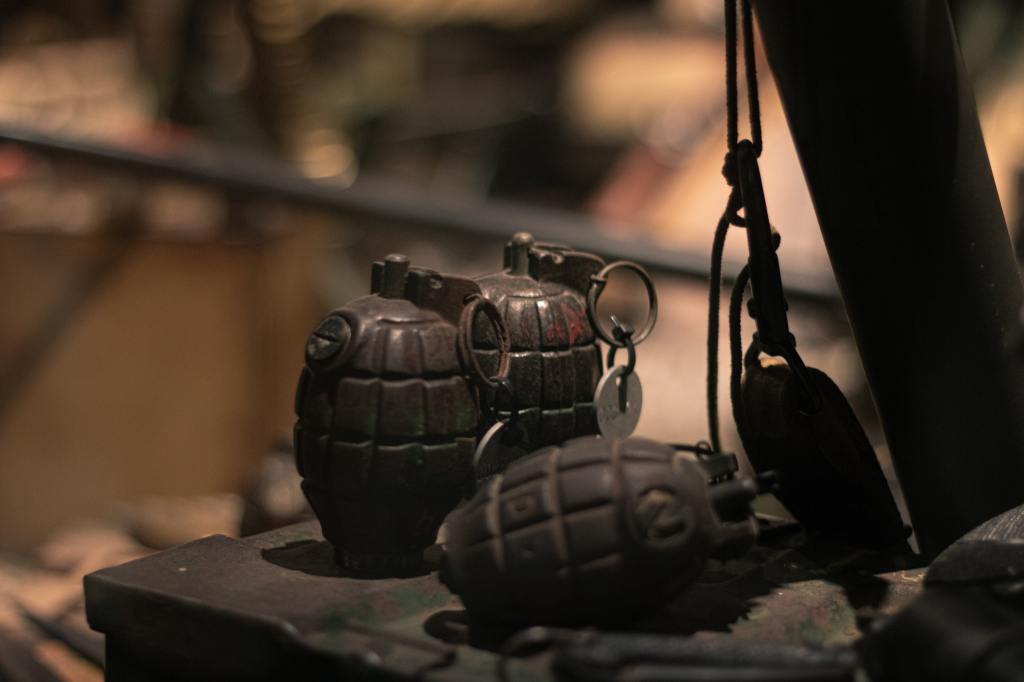


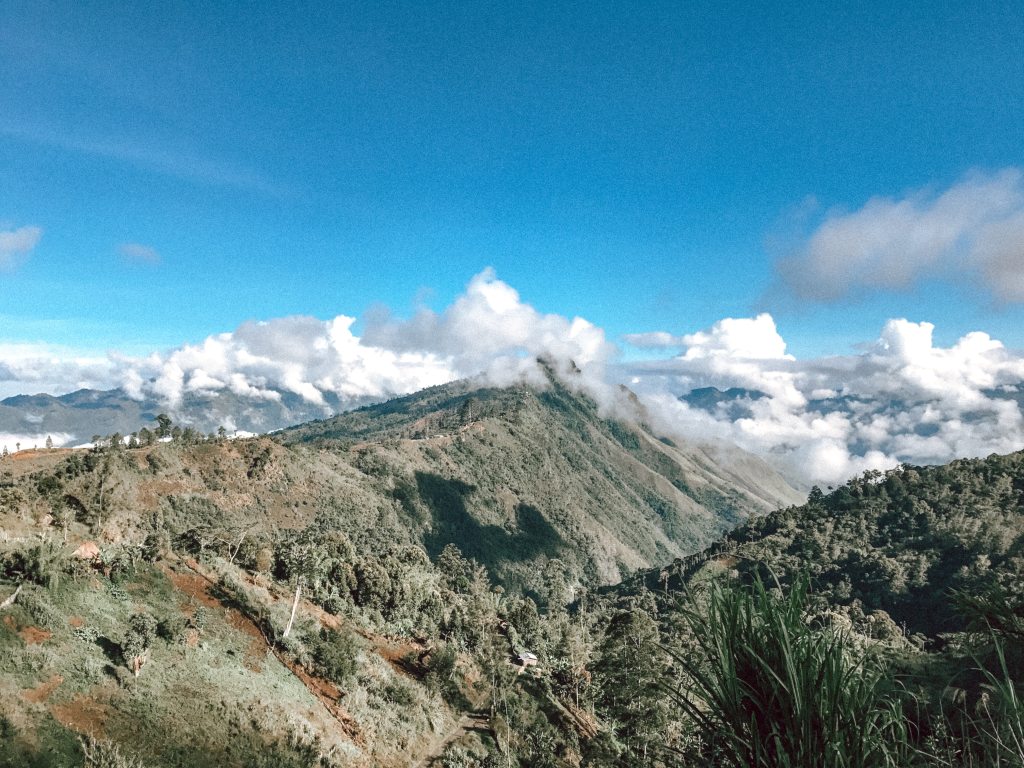
 Entrusted to the Dirt