Two Ways I Want to Be a Better Ministry Dad in 2026

There are many ways I could grow as a ministry dad. But alas, the Lord has not made us able to focus on very many things at the same time. So, here are two ways I’d like to focus on growing this year, based on wisdom that I’ve gleaned from other dads.

The first comes from some wise counsel I once received from a lay elder at our sending church. This brother works a full-time job at a car plant, but also regularly meets with members of the church for counseling and pastoral care. He and his wife also seem to have another new baby every time we go back to visit the US. Needless to say, they have their hands full. I once asked him how he balances these family and ministry commitments that often compete with one another. I found his answer extremely helpful.

“Once I’ve shared that I need to sacrifice some family time after work to care for a church member, my wife and I then agree on what time I’ll be back home. Then, the most loving thing I can do for my family is to keep my word and to be back when I say I will be. This allows my wife and family to share with me in the good sacrifice that I’ve been called to as a pastor, and prevents bitterness against the ministry from growing because they know I’ll be home when I say I will be.”

This pastor’s serious commitment to keep his commitments to his family is how he’s able to also lead them well in a sacrificial ministry lifestyle. It makes sense. How can a wife or family count the cost of a certain sacrifice if they’re never exactly sure what that cost is going to be? Or if a certain cost is agreed to, only to be repeatedly shifted later on? “Sorry, I know I said I’d be home at 7, but…” This is a great way to undermine trust and make space for bitterness to grow. On the other hand, if the cost is made clear (as much as is possible anyway), and the family knows from experience they can trust that dad will be home when he says he will be, that allows them to embrace that cost in a more healthy way and to more easily feel that they are genuinely top priority in dad’s heart. Yes, dad has a role that requires he regularly sacrifice some family time. But he demonstrates his care for us by reliably keeping his word.

Very wise, very practical, and very powerful.

The second way I want to grow has to do with something I want to get back to telling my kids more often. Research and experience have shown that ministry kids, whether missionary kids or pastors kids or others, tend to grow up ingesting the same sort of idea about themselves in relation to their parents’ work, even if their parents’ hearts or lives don’t necessarily correspond to that idea (though, sadly, the lives of some do). That idea is that their parents’ work is more important than they are.

I’m convinced that this belief is so prevalent and so harmful that it needs not only to be refuted in terms of lifestyle but also regularly refuted directly and verbally. As others have said, kids are wonderful observers, but terrible interpreters. We parents need to directly help them interpret what is actually happening in our hearts and lives when the ministry work seems to so often take priority. Again, ministry kids, across the board, tend to observe their parents lives and to come away with the internal message that they do not matter as much as the work does.

What might this kind of direct interpretation look like? Well, at bedtime or mealtimes or even randomly throughout the day, saying things like,

“Remember, you are more important to me than my work is.”

“Even though this is a really busy week, you are always a higher priority for me than my ministry is.”

“Do you ever feel like my work is more important to me than you are? Well, I want you to know that is not true. I would give it all up for your sake if that was what was needed.”

This is different than saying, “I love you.” It’s very possible for ministry kids to hear their parents tell them every day that they love them and to still feel like they are less important than the ministry. They genuinely believe that their parents love them. It just looks to them like their parents love the work even more.

Now that we’ve been back in Central Asia for a year and a half and the pace of our work seems to be significantly ramping up again, I want to get back to saying things to my kids like this more often. Several years ago, when we left the field for a couple of years for the sake of our family’s health, this became a major theme for us. I even wrote a poem for my kids and other parents about this (I’ll include it below). But I recognize that in the past couple years these direct sorts of statements have fallen a bit by the wayside. This year, I hope to bring them back.

I believe that these two things, this one practice and this one affirmation, will make me a better ministry dad in 2026. I welcome your prayers that I would grow in these areas: in keeping my commitments to my family and in explicit affirmations that they are, after God, the most important thing in my life.

If there are any other ministry dads out there (or working dads in general) that would be helped to grow in these areas as well, then I hope that this post might be an encouragement to you as well. Let us strive to keep our commitments to our families. Let us strive to affirm and tell them that they are more important to us than our work or ministry is. And in these ways, let us fight for the hearts of our children.

Here is the poem I mentioned earlier, written for younger children and so that any busy working dad or mom might read it for their kiddos, ministry parents included. You’ll notice that there are some verses, such as verse 6, that contain language getting at the particular costs of the missionary lifestyle.

May this next generation of ministry kids grow up knowing that their dads keep their word, and that they are indeed more important in their parents’ hearts than the ministry is.


My Work Is Never More Important than You

Papas and Mamas have much work to do
The deadlines are many, the hours are few
The bills must be paid and mouths must be fed,
But I’ve got a secret that needs to be said

Hear this deep down now and know that it’s true
My work is never more important than you

At times, yes, I love all this work that I do
It’s important and needed, and helps people too
It can’t fill my heart though, way deep down inside
The way that you can – you’re my real joy and pride

Hear this deep down now and know that it’s true
My work is never more important than you

Sometimes my work starts to make me feel bad
And at dinner I’m quiet and not very glad
But even when work means my forehead is scrunched
I haven’t stopped loving you ever so much

Hear this deep down now and know that it’s true
My work is never more important than you

At times I may shoo you right out of the room
“I’m on a work call!” I might gesture or boom
And though I seem bothered, or though I seem mad
That very same moment, my insides feel sad

Hear this deep down now and know that it’s true
My work is never more important than you

On my days off we can rest, laugh, and play!
But sometimes my work still shows up to invade
A text or an email can pull me away
Interrupting the fun we were planning that day

Hear this deep down now and know that it’s true
My work is never more important than you

My work might cause changes, like leaving our home
And saying goodbye to the friends we have known
I know that these changes can cost you a lot
And how they affect you weighs deep in my thoughts

Hear this deep down now and know that it’s true
My work is never more important than you

If I had to choose between my work and you
The choice would be clear as a cloudless sky blue
I’d surrender my job and give up my career
For the sake of the ones I hold so very dear

Hear this deep down now and know that it’s true
My work is never more important than you

Someday you’ll be big and have work of your own
And projects to do and calls on your phone
Yet when it comes to your kiddos, the same will be true
And you'll say to them, just as I’m telling you

Hear this deep down now and know that it’s true
My work is never more important than you

Papas and Mamas have much work to do
The deadlines are many, the hours are few
Bills must be paid and mouths must be fed,
But I’ve got a secret that needs to be said

Hear this deep down now and know that it’s true
My work is never more important than you


If you have been helped or encouraged by the content on this blog, would you consider supporting this writing and our family while we serve in Central Asia? You can give here through the blog or contact me to find out how to give through our organization. 

One of the international churches in our region is looking for an associate pastor and our kids’ TCK school is also in need of teachers for the 2026-2027 schoolyear. If you have a good lead, shoot me a note here.

Blogs are not set up well for finding older posts, so I’ve added an alphabetized index of all the story and essay posts I’ve written so far. You can peruse that here

For my list of recommended books and travel gear, click here.

My Sun – A Poem by a Local Believer

My Sun
by Shepherd H

They ask why I’m a Christian, ‘What for you has this Christ done?
Has he taken from your shoulders some heavy life burden?’
So I told them, just for once, to open hearts and open eyes
Said I, ‘Read a few verses from the Gospel of the Christ
Then yourselves you’ll sacrifice with both your soul and spirit
And then from all deeds past embrace repentance and regret’
For Jesus Christ is living God of power without end
And everything in heaven and the earth is in his hand
My idol worship thrown away, and my true God I found
I know he is my God, without wav’ring, question, doubt
Now, I’ve comfort worry-free, and Christ, light of my days
The shining strength of Jesus is my sun, my wall, my shade

This is another poem by the late Shepherd H, Central Asian believer and elderly poet-turned-Christian. This poem focuses on how Christ has become the powerful center of Shepherd’s life, its very light and sun. When asked why he’s a Christian, Shepherd points his questioners to Bible, where he claims reading even a few verses is enough to cause radical repentance and self-sacrifice.

My Sun is another poem that exults in Jesus using some very Central Asian imagery. The sun is a major symbol of our people group, something that probably has roots in ancient Zoroastrianism, but which now is mainly expressive of the hope of freedom. What I’ve translated as ‘wall’ in this poem is a garden barrier referring more to privacy, beauty, and rest than to protection from enemies. And although the sun is a beloved symbol here, so is the shade. Our dry, high desert climate means you come to really appreciate the shade and how stepping into it during the summer can provide such instant relief. So much so that I’ve heard locals rank trees according to the quality of shade that they provide.

By calling the shining strength of Jesus his sun, wall, and shade, Shepherd is proclaiming that Jesus is his light, his hope for freedom, his rest, his covering, his beauty, his relief, and his deliverance.


If you have been helped or encouraged by the content on this blog, would you consider supporting this writing and our family while we serve in Central Asia? You can give here through the blog or contact me to find out how to give through our organization. 

Praise God, one of the international churches in our region got a pastor! But there’s still another church looking for an associate pastor and our kids’ TCK school is also in need of teachers for the 2026-2027 schoolyear. If you have a good lead, shoot me a note here.

Blogs are not set up well for finding older posts, so I’ve added an alphabetized index of all the story and essay posts I’ve written so far. You can peruse that here

For my list of recommended books and travel gear, click here.

*Names have been changed for security

Photo from Unsplash

Peace – A Poem by a Local Believer

Peace
by Shepherd H

My God is a God of peace, and he loves his sons
He stands at heart’s door, guest of whosoever wants
His fatherly warm embrace, open to his children
His words are like a joyful flower garden
If any walk in his way, he also will be God’s guest
Two thousand years ago, his blood he sacrificed
Only Christ is God, truth, purity, and generosity
If a disciple of Jesus, you’ll not perish in any difficulty
How happy I am when I hear God’s Word!
The water of faith fills my mind and my heart

This is my translation of another poem by the late local poet, Shepherd H, which focuses on the peace that the Father gives, the sacrifice and exclusivity of Jesus, and the effect of God’s word upon the heart of a believer. The poem also contains several biblical images that are also very Central Asian.

The first is that of hospitality. Central Asian culture highly values warm and lavish hospitality, and, in this poem, God is portrayed as both potential guest and potential host. He is ready to come and honor whosoever would open their heart to host him. And he is ready in turn to host any who would walk in his way. Hospitality in Central Asia is often reciprocal like this. One family hosts another and then gets invited by that same family in turn, in a long-term contest of outdoing one another in showing honor.

This theme connects with passages like Revelation 3, where Christ knocks at the door and offers to come in and eat with the one who would repent. It also echoes the book of Luke and elsewhere, where Christ is portrayed as the great host of God’s kingdom.

The second Central Asian image is that of a joyful flower garden. In the high desert browns of this part of the world, the locals adore their small plots of green grass and bright flowers. They often give lavish care to these little oases of greens and pinks and yellows where they will sit on summer evenings sipping chai and munching on cucumbers and sunflower seeds. The words of God are compared to this kind of garden. A place of joy, life, refreshment, and refuge.

This theme, of course, echoes Eden, which in turn is echoed by the temple and the promised land, and is fulfilled in the new heavens and new earth.

In a similar vein, the word of God is also compared to water, water of faith that fills the poet’s mind and his heart, just as locals might drench their trees’ roots morning and evening to keep them alive, healthy, and even fruitful in the deathly summer heat. The fig trees, for example, eagerly soak up the water and then go on to give the sweetest of fruit even in the hottest part of the year. So the believer delights to soak up God’s word and, in turn, bears the fruit of the Spirit even in the midst of suffering – fruit such as the title of this poem, peace.

This final theme reminds us of Jesus in John 4, the living water. Of this water, Jesus promises, “The water that I will give him will become in him a spring of water welling up to eternal life.”

An internal spring of overflowing eternal life? A gift? No wonder the poet says, “Only Christ is… generosity.” And no wonder he is so happy.


If you have been helped or encouraged by the content on this blog, would you consider supporting this writing and our family while we serve in Central Asia? You can give here through the blog or contact me to find out how to give through our organization. 

Two international churches in our region are in need of pastors, one needs a lead pastor and one an associate pastor. Our kids’ TCK school is also in need of a math and a science teacher for middle school and high school. If you have a good lead, shoot me a note here.

For my list of recommended books and travel gear, click here.
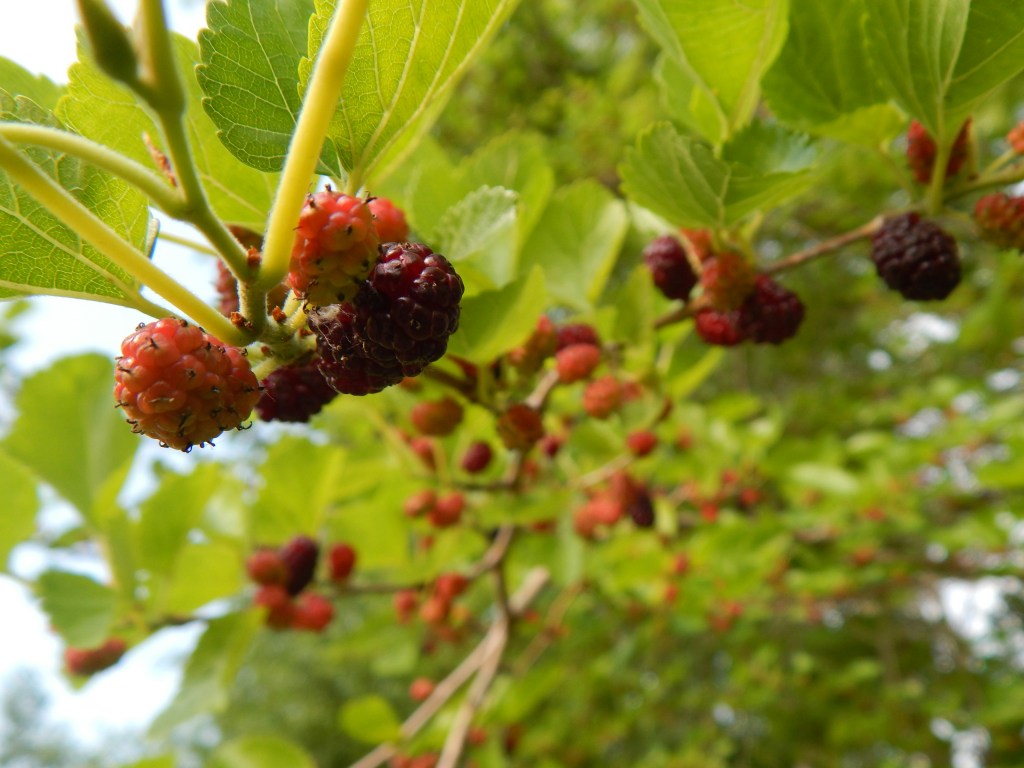
Photo from Unsplash.com

A Fruitful Tree – A Local Believer’s Poem

Here’s another poem I’ve translated, written in our local language by Shepherd*, likely the first Christian poet among our people group.

In this poem, Shepherd starts with a very Central Asian image – that of ripe berry trees generously dropping their fruit when kids throw rocks up into the branches. Shepherd uses this picture to allude to how even when believers are attacked, what comes out of us is the fruit of the Spirit. What a helpful image to illustrate how believers are now able to love even their enemies. The rest of the poem is a walk-through of the remarkable effects in the life of a believer that come from knowing Jesus, the Bible, the Holy Spirit, and the Father’s kingdom and calling.

As with the previous poem of Shepherd’s that I posted, my aim has been to try to do as direct a translation as possible while also seeking to keep the original rhyme scheme and some sense of meter. To read this as a Central Asian would, be sure to slow down and emphasize the last word of each line.

A Fruitful Tree
by Shepherd H

We must be like a tree where fruit is gleaned when stone is cast
We’ve followed Jesus, are assured we will not die in spirit at the last
This body weak, which cannot a virus even forestall
By light of Christ alone can on its shoulders mountains haul
In scheme of life, the Bible is the only true way and artery
The light of the earth and heaven, full of joy and humility
May Jesus’ Holy Spirit be to us as a shield, our protection
If not for the Father’s kingdom, we would not know embrace or affection
Hallelujah for the joy you have given us in these, our lives
You call us as your children, not as strangers, nor as slaves

We need to raise 22k to be fully funded for our second year back on the field. If you have been helped or encouraged by the content on this blog, would you consider supporting this writing and our family while we serve in Central Asia? You can do so here through the blog or contact me to find out how to give through our organization. 

Two international churches in our region are in need of pastors, one needs a lead pastor and one an associate pastor. Our kids’ TCK school is also in need of a math and a science teacher for middle school and high school. If you have a good lead, shoot me a note here.

For my list of recommended books and travel gear, click here.

*Names changed for security

Photo from Unsplash.com

Without Hesitation – A Local Believer’s Poem

Shepherd* was perhaps the first believing poet among our people group. Having come to faith as an older man, Shepherd was able to publish one book of Christian poems in our local language before he passed away in 2022.

I have been hoping to get hold of his book for a few years now. This past month, I finally did. Well, at least I got hold of pictures of the pages of his book. My hope is to steadily work through his poems, selecting the best of them to highlight in our own resources. Our people group is deeply poetic, so there is much potential for poetry to have a prominent place in the churches here. I’m also translating them to English, in hopes that Shepherd’s poems might also be an encouragement to believers in other contexts.

The following is one of the first poems of his that I’ve translated. In this, I’ve been able to preserve the meaning and the rhyme scheme, though not always the meter. When I’ve heard local poetry read, the last word of each line is typically slowed and stressed. So, as you read this poem to yourself, reading the last word in that way will get you closer to the effect of the poem in its original language.

The poem I’ll share today is one that focuses on the persecution and gaslighting that Shepherd faced after coming to faith out of a Muslim background. Rather than stay silent in fear, Shepherd speaks of his determination to boldly speak out about being a Christian, trusting in Christ to protect him.

Without Hesitation
by Shepherd H

I desire no more to twist reason and fact
They make me see black as white, and white as black
I express my heart freely and that without fear
I am proud to be a Christian and this silence tear
I put my faith in Christ as Savior and divine
I'll no longer to illusion's chaos be captive, confined
I put the door of my heart behind me, made Christ owner of my home
Lest I be shaking my head, empty-handed at God's throne
The jewel of the Bible is the capital of my world and life
My guardian is the mighty power of Christ


We need to raise 28k to be fully funded for our second year back on the field. If you have been helped or encouraged by the content on this blog, would you consider supporting this writing and our family while we serve in Central Asia? You can do so here through the blog or contact me to find out how to give through our organization. 

Two international churches in our region are in need of pastors, one needs a lead pastor and one an associate pastor. Our kids’ TCK school is also in need of a math and a science teacher for middle school and high school. If you have a good lead, shoot me a note here.

For my list of recommended books and travel gear, click here.

*Names changed for security

Photo from Unsplash.com

A Poem Laughing at Satan and Death Arguing

Ephrem the Syrian writes this poem as a fictional argument between Satan and Death, where each bicker about who is strongest. Ephrem, like many in church history, advocates laughing at our spiritual enemies as one important piece of spiritual warfare. Martin Luther agrees, “The best way to drive out the devil, if he will not yield to texts of Scripture, is to jeer and flout him, for he cannot bear scorn.” This poem is a call to confidently laugh today at evil, thereby echoing the victorious laughter of the coming resurrection.

Nisibene Hymns, no. 52

I heard Satan and death loudly disputing
which was the strongest of the two amongst men. 

Refrain: Praise to You, Son of the Shepherd of all, who has saved his flock
                from the hidden wolves, the Evil One and Death, who had swallowed it up. 

Death has shown his power in that he conquers all men,  
Satan has shown his guile in that he makes all men sin. 

Death: Only those who want to, O Evil One, listen to you,
             but to me they come, whether they will it or not. 

Satan: You just employ brute force, O Death,
            whereas I use traps and cunning snares. 

Death: Listen, Evil One, a cunning man can break your yoke,
             but there is none who can escape from mine.   

Satan: You, Death, exercise your strength on the sick,
            but I am the stronger with those who are well. 

Death: The Evil One has no control over the person who reviles him,
             but all who have cursed me, in the past or now, still come to me. 

Satan: You, Death, received your power from God,
            but when I make men sin I do it without any outside help. 

Death: You, Evil One, lay snares like a coward,
             but I use my power like a king. 

Satan: You are too stupid, Death, to recognize how great I am,
            seeing that I can capture free will.

Death: You, Evil One, go around like a hooligan,
             whereas I am like a lion, fearlessly crushing my prey. 

Satan: You have no one who serves or worships you, O Death, 
            but me, kings honor with sacrifices, like a god. 

Death: But many address Death as a benefactor, 
             whereas no one ever has or shall call on you as such, O Evil One. 

Satan: Do you not realize, Death, how many 
            call on me in one way or another, and offer me libations? 

Death: Your name is hated, Satan, you cannot remedy it;
             everyone curses your name. Hide your shame. 

Satan: Your ear is dull, Death, for you fail to hear
            how everyone howls out against you. Go, hide yourself. 

Death: I go open-faced among creation, and do not use deceit like you:
            you do not pass a single night without some kind of deceit. 

Satan: You have not found a better lot for all your truth:
            men hate you just as much as they do me. 

Death: Everyone fears me as a master, 
             but you they hate as the evil one. 

Satan: People hate your name and your deeds, O Death;
            my name may be hated, but my pleasures are loved. 

Death: Your sweet taste ends in setting the teeth on edge:
             remorse always accompanies those pleasures of yours. 

Satan: Sheol is hated for there is no chance of remorse there:
            it is a pit which swallows up and suppresses every impulse. 

Death: Sheol is a whirlpool, and everyone who falls in it is resurrected,
             but sin is hated because it cuts off a man's hope. 

Satan: Although it grieves me, I allow for repentance;
            You cut off a sinner's hopes if he dies in his sins. 

Death: With you his hope was cut off long ago; 
             if you had never made him sin, he would have made a good end. 

Chorus: Blessed is he who set the accursed slaves against each other
              so that we can laugh at them just as they laughed at us. 

Our laughing at them now, my brethren, is a pledge 
that we will again be able to laugh, at the resurrection. 

-Ephrem the Syrian, translated by Brock, The Harp of the Spirit: Poems of Saint Ephrem the Syrian, p. 104-107

Photo by Godfrey Nyangechi on Unsplash

A Hymn Sung by Death Defeated

This is one of my favorites pieces so far by Ephrem the Syrian, Christian poet from the 300s. Ephrem writes this hymn largely from the perspective of death, bracketed and interspersed with some narration. Death begins its discourse in verse two, beginning confidently, then shifting to a tone of alarm as Christ enters Sheol and robs it of a “tithe” of its captives, and ending ultimately in a posture of submission, promising to deliver up all its captives in the future resurrection. It is a long poem, but well worth the read for rich biblical allusion and parallelism that Ephrem uses – as well as the enjoyment to be had as Ephrem uses his sanctified imagination to portray death panicking as he realizes just who Jesus is and what he is doing to his domain.

If any singer-songwriters ever read this post, consider this a request for an adapted version of this song by Ephrem. Such a song could be very powerful for the contemporary Church, just as it would have been for the believers in frontier Nisibis 1,700 years ago.

Nisibene Hymns, no. 36

Our Lord subjected His might, and they seized him,
so that through His living death He might give life to Adam.
He gave His hands to be pierced by nails 
to make up for the hand which plucked the fruit; He was struck on His cheek in the judgment room
to make up for the mouth that ate in Eden; and while Adam's foot was free
His feet were pierced; our Lord was stripped that we might be clothed;
with gall and vinegar He sweetened 
the poison of the serpent which had bitten man. 

Refrain: Blessed is He who has conquered me, and brought life to the dead, to His own glory! 

Death: "If you are God, show your might,
and if you are man, make trial of our might!
Or if it is Adam you are wanting, be off:
he is imprisoned here because of his debts; neither cherubim nor seraphim are able 
to secure his release: they have no mortal amongst themselves
to give himself up for him. Who can open the mouth of Sheol, 
dive down and bring him up from thence, 
seeing that Sheol has swallowed him up and holds him tight forever? 

"It was I who conquered all the sages; 
I have got them heaped up in the corners of Sheol.
Come and enter, son of Joseph, and look at the horrors:
the limbs of the giants, Samson's huge corpse,
the skeleton of the cruel Goliath; there is Og, the son of the giants, too,
who made a bed of iron, where he reclined: 
I cast him off it and threw him down,
I levelled that cedar at Sheol's gate.

"I alone have conquered many, 
and now the Only-Begotten seeks to conquer me!
I have led off prophets, priests and heroes,
I have conquered kings with their array, the giants with their hunts,
the just with their fine deeds - rivers full of corpses
I cast into Sheol, who remains thirsty forever however many I pour in! 
Whether a man is near or afar off, 
the final end brings him to Sheol's gate.

"I have spurned silver in the case of the rich
and their presents have failed to bribe me;
owners of slaves have never enticed me
to take a slave in place of his owner, or a poor man in place of a rich,
or an old in place of a child. Sages may be able to win over  
wild animals, but their winning words do not enter my ears.
Everyone may call me 'hater of requests', 
but I simply perform what I am bidden.

"Who is this? Whose son? 
And of what family is this man who has conquered me? 
The book with the genealogies is here with me - 
I have begun and taken the trouble to read all the names from Adam onwards,
and none of the dead escape me; tribe by tribe they are all written down
on my limbs. It is for your sake, Jesus, 
that I have undertaken this reckoning, 
in order to show you that no one escapes my hands.

"There are two men - I must not deceive - 
whose names are missing for me in Sheol:
Enoch and Elijah did not come to me;
I looked for them in the whole of creation, I even went down 
to the place where Jonah went, and groped around, but they were not there; and when I thought
they might have entered Paradise and escaped, there was the fearful cherub guarding it.
Jacob saw a ladder:
perhaps it was by this that they got up to heaven.

"Who has measured out the sea-sand
and only missed two grains? 
As for this harvest, with which illnesses like harvesters
are daily busied, I alone carry
the sheaves and bind them up. Sheaf-binders in their haste
leave sheaves, and grape-pickers forget whole clusters, 
but only two small bunches have escaped me
in the great harvest that I have been gathering in by myself.

"It is I", says Death, "who have made 
all kinds of catches on sea and land: 
the eagles in the sky come to me, 
so do the dragons of the deep, creeping things, birds and beasts,
old, young and babes; all these should persuade you,
Son of Mary, that my dominion reigns over all.
How can your cross conquer me,
seeing that it was through the wood that I was victorious and conquered at the beginning? 

"I should like to say much more 
- for I do not have any lack of words! - 
but there is no need for words, for deeds
cry out close by; I do not, like you, promise
hidden things to the simple, saying that there will be a resurrection;
when, I ask, when? If you are so very strong, 
then give a pledge on the spot
so that your distant promise may be believed." 

Death finished his taunting speech 
and our Lord's voice rang out thunderously in Sheol,
tearing open each grave one by one.
Terrible pangs seized hold of Death in Sheol; where light
had never been seen, rays shone out from the angels who had entered to bring out
the dead to meet the Dead One who has given life to all.
The dead went forth, and shame covered the living 
who had hoped they had conquered Him who gives life to all.

"Would I were back in Moses' time", 
says Death, "he made me a feast day:
for that lamb in Egypt gave me 
the first-fruits from every house; heaps upon heaps of first-born
were piled up for me at Sheol's gate. But this festival Lamb
has plundered Sheol, taken his tithe of the dead and led them off from me. 
That lamb filled the graves for me, 
this one empties the graves that had been full. 

"Jesus' death is a torment to me,
I wish I had chosen to let him live: it would have been better for me than his death.
Here is a dead man whose death I find hateful;
at everyone else's death I rejoice, but at his death I am anxious, 
and I expect he will return to life: during his lifetime he revived and brought back to life
three dead people. Now through his death 
the dead who have come to life again trample me at Sheol's gates
when I go to hold them in. 

"I will run and close the gates of Sheol
before that Dead One whose death has plundered me.
He who hears of it will wonder at my humiliation, 
because I have been defeated by a Dead man outside: all the dead want to go outside,
and he is pressing to enter. The medicine of life has entered Sheol
and brought its dead back to life. Who is it who has introduced for me and hidden
the living fire in which the cold and dark 
wombs of Sheol melt?" 

Death saw angels in Sheol, 
immortal beings instead of mortal,
and he said: "Trouble has entered our abode.
On two accounts I am tormented: the dead have left Sheol, 
and the angels, who do not die, have entered it - one has entered and sat at the head
of his grave, another, his companion, at his feet. 
I will ask and request him  
to take his hostage and go off to his kingdom. 

"Do not reckon against me, good Jesus, 
the words I have spoken, or my pride before you.
Who, on seeing your cross, could doubt 
that you are truly man? Who, when he sees your power, 
will fail to believe that you are also God? By these two indications 
I have learnt to confess you both Man and God. 
Since the dead cannot repent in Sheol,
rise up among the living, Lord, and proclaim repentance. 

"Jesus king, receive my request,
and with my request, take your hostage, 
carry off, as your great hostage, Adam 
in whom all the dead are hidden - 
just as, when I received him, in him all the living were concealed. 
As first hostage I give you
Adam's body. Ascend now and reign over all,
and when I hear your trumpet call, 
with my own hands will I bring forth the dead at your coming." 

Our living King has arisen and is exalted, 
like a victor, from Sheol. 
Woe is doubled for the party of the left, 
dismay for evil spirits and demons, suffering for Satan and Death, 
lamentation for Sin and Sheol, but rejoicing for the party of the right
has come today! On this great day, then, 
let us give great praise to Him
who died and came to life again, so that He might give life and resurrection to all!

-Ephrem the Syrian, translated by Brock, The Harp of the Spirit: Poems of Saint Ephrem the Syrian, pp. 58-65

Photo from Wikimedia Commons

A Poem on Two Lambs

In this poem, Ephrem the Syrian, poet of the ancient church, compares and contrasts the Passover lamb with Christ, the true lamb of God.

Hymns on the Unleavened Bread, no. 3

In Egypt the Passover lamb was slain,
in Sion the True Lamb slaughtered.

Refrain: Praise to the Son, the Lord of symbols
               who fulfilled every symbol at his resurrection.

My brothers, let us consider the two lambs,
let us see where they bear resemblance and where they differ. 

Let us weigh and compare their achievements
- of the lamb that was the symbol, and of the Lamb that is the Truth.

Let us look upon the symbol as a shadow,
let us look upon the Truth as the fulfillment.

Listen to the simple symbols that concern that Passover,
and to the double achievements of this our Passover.

With the Passover lamb there took place for the Jewish people
an Exodus from Egypt, and not an entry.

So with the True Lamb there took place for the Gentiles
an Exodus from error, and not an entry.

With the Living Lamb there was a further Exodus, too,
for the dead from Sheol, as from Egypt;

For in Egypt two symbols are depicted, 
since it reflects both Sheol and Error.

With the Passover lamb, Egypt's greed
learnt to give back against its wont;

With the Living Lamb, Sheol's hunger 
disgorged back the dead, against its nature.

With the True Lamb, greedy Error
rejected and cast up the Gentiles who were saved;

With that Passover lamb, Pharaoh returned the Jewish people
whom, like Death, he had held back.

With the Living Lamb, Death has returned
the just, who left their graves.

With the True Lamb, Satan gave up the Gentiles
whom, like Pharaoh, he had held back.

In Pharaoh two types were depicted;
he was a pointer to both Death and Satan.

With the Passover lamb, Egypt was breached
and a path stretched out before the Hebrews.

With the True Lamb, Satan, having fenced off all paths, 
left free the path that leads to Truth. 

The Living Lamb has trodden out, with that cry which He uttered,
the path from the grave for those who lie buried.

-Ephrem the Syrian, translated by Brock, The Harp of the Spirit: Poems of Ephrem the Syrian, pp. 52-54

Photo by Gemma Evans on Unsplash

Introducing the Poet of the Ancient Church

Ephrem the Syrian (c. 306-373) was a deacon in the Roman border cities of Nisibis and Edessa in the 300s. Though not widely known, he is perhaps the most important poet of the early church. The reason he is not well-known is because he wrote not in Greek or Latin, but in Syriac, a dialect of Aramaic that served as the main language for Christians in the far east of the Roman empire and those who lived across the border in the Parthian, later Sassanian, empire. These eastern cities where Ephrem lived (now in SE Turkey – Nusaybin and Sanilurfa) were extremely diverse religiously during his lifetime. Different sects of Christians mixed in the marketplace with Arians, Jews, polytheists, and Manicheans. Ehphrem wrote theological poetry, composing many hymns which would serve both discipleship as well as evangelistic purposes. Ever since I read that Ephrem would lead evangelistic choirs of women into the marketplace to contend for the truth of the gospel, I have wanted to more about this overlooked ancient poet. Our focus people group, and so many others in the Middle East and Central Asia, continue to be deeply poetic and musical. The idea of doing theology and evangelism via poetry and song, employed by Ephrem so long ago, might still prove to be a very powerful thing in this region.

I’ve finally gotten my hands on a book of Ephrem’s poems and will periodically post some on this blog, as a window into the Christian faith of this ancient Syriac poet and the churches he sought to strengthen. The poem below is about a communion service, and Ephrem calls for the Church to praise its savior, drawing connections to the wedding at Cana in John 2, doing a bit of comparison between Israel’s failure and the Church, and ending by delighting in the nature of Jesus.

Hymns on Faith, no. 14

I have invited You, Lord, to a wedding feast of song, 
but the wine - the utterance of praise - at our feast has failed.
You are the guest who filled the jars with good wine,
fill my mouth with Your praise. 

Refrain: Praise to You from all who perceive your truth.

The wine that was in the jars was akin and related to
this eloquent wine that gives birth to praise,
seeing that that wine too gave birth to praise
from those who drank it and beheld the wonder.

You who are so just, if at a wedding-feast not Your own
You filled six jars with good wine,
do You, at this wedding-feast, fill, not the jars,
but the ten thousand ears with its sweetness.

Jesus, You were invited to the wedding-feast of others, 
here is Your own pure and fair wedding-feast: gladden Your rejuvenated people,
for Your guests too, O Lord, need 
Your songs; let Your harp utter!  

The soul is Your bride, the body Your bridal chamber, 
Your guests are the senses and the thoughts. 
And if a single body is a wedding feast for you,
how great is Your banquet for the whole Church!  

The holy Moses took the Synagogue up on Sinai:
he made her body shine with garments of white, but her heart was dark;
she played the harlot with the calf, she despised the Exalted One, 
and so he broke the tablets, the book of her covenant.

Who has ever seen the turmoil and insult 
of a bride who played false in her own bridal chamber, raising her voice? 
When she dwelt in Egypt she learnt it from 
the mistress of Joseph, who cried out and played false. 

The light of the pillar of fire and of the cloud 
drew into itself its rays
like the sun that was eclipsed 
on the day she cried out, demanding the King, a further crime.

How can my harp, O Lord, ever rest from Your praise? 
How could I ever teach my tongue infidelity? 
Your love has given confidence to my shamefacedness,
-yet my will is ungrateful.

It is right that man should acknowledge Your divinity,  
it is right for heavenly beings to worship Your humanity;
the heavenly beings were amazed to see how small You became, 
and earthly ones to see how exalted! 

-Ephrem the Syrian, translated by Brock, The Harp of the Spirit: Poems of Ephrem the Syrian, pp. 24-26

Photo from Wikimedia Commons

The Lone and Level Sands

Our corner of Central Asia is an ancient place. We had some first-time visitors with us this past week, and while traveling back from another city we took the opportunity to visit some very old ruins – old, as in circa 2,700 years ago. Remarkably, ancient carved script was still clear and legible on dozens of the large limestone blocks.

The few scholars that can read that script say that most of it is typical of the bragging monument-speak of ancient kings. “I’m the king of the world” and all that. If you’ve ever read the poem “Ozymandius” by Shelley, you’ll understand the sad irony felt when that kind of chiseled pride is contrasted with the desolation that inevitably comes with the passage of time – and with death.

I’m reminded of the time I visited the ruins of Ephesus. The site of the temple of Artemis only contained one pillar still standing – and that from a recent German reconstruction – and a whole bunch of grass and grazing sheep. So much for “Great is Artemis of the Ephesians!” (Acts 19). The site in Central Asia we visited was similar. Broken beer bottles littered the site itself, and nearby were tents of nomads, their shuffling flocks, and a lazy guard dog. So much for “the king of the world.”

What’s left of the temple of the great Artemis of the Ephesians

However, I’ve also read that this particular monarch (later murdered by his own sons) may have been privately realistic when it came to his own mortality. In public he may have claimed to be a semi-divine global ruler who would live forever. But scholars say that on the underside of some stones, hidden for centuries, a very different kind of message has been discovered. It’s along the lines of “If you are reading this, then my kingdom has been destroyed, I am no more, and was a mere mortal after all.” That’s quite the time capsule message to leave buried beneath massive limestone blocks. And a rare example of realistic humility for ancient royalty, if these carvings were indeed commissioned by the king himself and not a sneaky dig made against him by the head stone chiseler.

The visitors and I had a great time exploring the site. It’s simply astounding that ruins like this exist and that they have lasted so long – especially the carved script itself. 2,700 years is no small achievement for an ancient mason or scribe shooting for quality work. It was an invigorating place because of the remarkable history, but also a humbling one. Our empires’ greatest public works will one day look just like it, if they even last half as long. A testimony in the desert to glory long gone. It makes one long for the city whose foundation blocks will never fall or waste away.

I found myself wishing the pompous autocrats and politicians of our contemporary scene could visit this historical site, and take away lessons on both the enduring legacy of bold projects and the importance of humility for any powerful – yet oh so temporary – leader. Yes, we may be “crowned with glory and honor” for a day, yet all too quickly it comes to an end. They, and we, would be wise to more often consider these things, and to heed the warnings of Psalm 2:10-12.

Now therefore, O kings, be wise; be warned, O rulers of the earth. Serve the LORD with fear, and rejoice with trembling. Kiss the Son, lest he be angry, and you perish in the way, for his wrath is quickly kindled. Blessed are all who take refuge in him.

Their glory and honor will fade. Only one ruler has a throne and a kingdom that will last forever. If they do not take refuge in him, if they do not give him the kiss of loyalty, they will fade into the sand, just like our local “king of the world.” Just like Ozymandius.

In case you haven’t read it before, here is “Ozymandius” by Shelley.

I met a traveller from an antique land,
Who said—“Two vast and trunkless legs of stone
Stand in the desert. . . . Near them, on the sand,
Half sunk a shattered visage lies, whose frown,
And wrinkled lip, and sneer of cold command,
Tell that its sculptor well those passions read

Which yet survive, stamped on these lifeless things,
The hand that mocked them, and the heart that fed;
And on the pedestal, these words appear:
My name is Ozymandias, King of Kings;
Look on my Works, ye Mighty, and despair!
Nothing beside remains. Round the decay
Of that colossal Wreck, boundless and bare
The lone and level sands stretch far away.

“Ozymandius” by Shelley, from Poetry Foundation

Photo by Juli Kosolapova on Unsplash