Two weeks ago Manuel* sat next to me on the couch, weeping. This semi-secret believer’s brother-in-law had been disappeared by one of the powerful political parties. One week he was an important local official for this same party, the next he was publicly accused by Islamists of misconduct – and summarily disappeared. For two weeks his family had no information about where he was, or even if he was still alive.
I had met this brother-in-law only once. During a particularly stressful intercity move in the fever-heat of August, he had used his connections to get our moving truck through some rival party checkpoints on the road. In the process, he had grilled me rather directly on the nature of my work here, one of the few government officials to press me so hard on my identity that I could feel my face changing color. I answered truthfully regarding my official secular work, and yet also let him know about my personal faith and how, yes, I wouldn’t be here if Jesus hadn’t changed me and given me a heart to serve others. With the help of the alternating shades of my face, I’m pretty sure he figured things out. In spite of this, he helped us – something I was deeply grateful for. Now I learned that he was at least imprisoned, perhaps even dead.
During his visit, Manuel, a respectable local man about ten years my senior, leaned on my shoulder and wept. We read Psalm 23 together, I prayed for him, and I listened as he pleaded with me to do something if at all possible through my political connections, of which I have none. For many local believers the belief runs deep that all Westerners have significant political clout that they could use if they really wanted to. Convincing our local friends that we are merely private citizens of our passport countries and strictly apolitical by choice has proven remarkably difficult. Yes, our home governments might grudgingly intervene if something happened to us – I say grudgingly because they repeatedly warn us not to live in places like this. But we have no such clout as to persuade anyone to intervene on behalf of a local political official who has been abducted, even if we thought such political intervention wise.
However, we pray every week during our church plant’s service for the local government officials. We do this to obey scripture, and because incidents like the disappearance of Manuel’s brother-in-law are stark reminders of the sudden danger that stalks almost anyone in this society should they run afoul of the powers that be. So when we gather, we pray for the government and those who wield political power to act justly, to rule wisely, and to serve their people (Micah 6:8, Romans 13:1-7). We pray for this so that the local believers may live quiet, faithful lives and that peace and stability might be granted for the sake of gospel advance (1st Timothy 2:1-4). The local believers are still getting used to this kind of prayer, regularly taking digs at the corrupt governing elite even as we ask who is ready to pray for them. We empathize, but also remind them of how bad Nero was, and then remind ourselves of the same truths when later that day we see the insane political news coming out of the West.
Tonight Manuel visited me again, requesting ahead of time that we sing some worship songs together. When he arrived, he shared the welcome news that his brother-in-law had been released. He’s much skinnier than he was before, bearing evidence of having been beaten, but alive, and back home with his family. I reminded Manuel that God had answered our prayers, and we spent an encouraging time singing together, studying John 15, and praying.
During our conversation, Manuel shared how just before his previous visit he had come very close to doing something dangerous, but suddenly felt redirected to come to our house instead for comfort and counsel. I’m thankful he did, or else he may have been summarily arrested/abducted as well. It makes me wonder how many close calls like this come down to a barely conscious obedience to subtle nudges from the Spirit. And if those nudges and responses would happen if we were not regularly praying for wisdom, and yes, praying for the corrupt local authorities.
Every culture, in spite of the fall, retains elements of the image of God. For those with eyes to see, these positive elements of a culture quietly point to the wisdom, beauty, and goodness of God, a remnant witness which can’t help but spill out even in cultures that have been cut off from the truth for centuries. Everyone who has ever lived honestly in a foreign culture will find things they simply do better in that foreign culture than in his native one. Sometimes these are noble, serious things. Other times, well, they fall much more in the realm of practical common sense.
Take, for example, what our adopted Central Asian culture does with fruit. This culture is extremely serious about hospitality. “If your enemy comes to your door, you must host him,” is a local saying I’ve recently learned. House architecture, family roles and rhythms, and much of the language itself have been crafted around this ideal of generous and honorable hospitality. It’s not uncommon for long evenings to be spent hosting friends, relatives, or patrons for dinner, progressing through an abundant sequence of snacks, drinks, food, and dessert offerings.
However, no matter how lofty the cultural ideal, practical life needs cannot be ignored. At some point, the guests need to leave, the hosts need to clean up, and the family needs to sleep. This might happen at midnight or later, especially during the summer nights, but somehow an indirect signal needs to be sent to the guests that while it’s been a great time, we need to be wrapping things up. This is where the fruit comes in.
When the women of the household start to sense that it’s time to draw the visit to a close, a final round of food will be brought out and set before the guests. This will usually consist of a platter full of fresh fruit and cucumbers, with a small plate and fruit knife handed to each guest. Right now, being summer, it’s often gorgeous slices of sweet watermelon. Locals don’t begin rushing out the door at this point, but everyone intuits what the fruit means. In the next 15-30 minutes, the kitchen is shutting down and it will be time for a barrage of highly verbal goodbye pleasantries to be exchanged all around.
Once we foreigners started noticing the importance of the serving of the fruit in the traditional culture, we started asking our language tutors and friends about it. Some denied that serving fruit played this role of wrapping up a visit. Others thought about it, then the realization dawned on them for the first time that yes, this was a very real correlation. Still others laughed and told us that our observations were spot on – that was exactly what was going on. Much like Americans getting their keys out of their pockets when they are feeling ready to leave, apparently the fruit serving functions among some locals somewhat subconsciously, while with others it is an explicit and recognized thing. More progressive families are of course mixing things up, serving fruit early on in a visit, which tends to alarm new missionaries here who have recently learned about the “fruit principle.” Alas, culture, like language, is never static, but a continuously morphing thing.
What we have come to appreciate about all of this is the existence in this culture of a simple, polite, indirect signal that serves to conclude a visit. Why don’t we have one of these in Western culture? I’ve heard of American families who, sensing this lack of a signal, have employed their own, such as disappearing and reappearing, having donned their pajamas – a signal only the most out of touch guest would ever miss. Others have allegedly feigned falling asleep. Of course there’s also the risky move of looking conspicuously at your watch or a clock, or exaggerated yawning. Some Christian hosts might ask, “How can we pray for you?” – not a bad way to bless someone and indirectly conclude the visit at the same time.
When we are back in our passport countries we find that that the absence of the fruit leaves a nagging hole of ambiguity as an evening visit gets later. We end up longing for this aspect of our adopted culture and the hospitable open secret that it represents. There are certainly things about my parents’ Western culture that I prefer over my adopted Central Asian one. Greater freedom to ignore texts and phone calls, for example. The tyranny of an immediate answer or reply in order to avoid offense is a frustrating thing. But when it comes to hospitably and clearly wrapping up a visit? I’ll take the fruit signal any day as the superior system.
The next time you are hosting or visiting and the evening is getting later, pay attention to what signals might be being sent. The need to understand a visit is concluding is of course universal, in spite of its cultural variations. Does fruit emerge? Pajamas? A conspicuous lull in the conversation?
My sense is that if Westerners could develop our own equivalent “fruit signal,” we just might be making hosting a little easier for everyone.
I’ve seen it happen many times. A new believer is sharing their testimony and when speaking of a moment of breakthrough gospel understanding, they say things like,
“I had never heard that before.”
“That was the first time I heard the gospel.”
“No one had previously explained Jesus to me in that way.”
Meanwhile, their longtime believing friend is sitting nearby, with an incredulous look on their face or perhaps a perplexed smile, knowing that that moment was definitely not the first time they had had the gospel presented to them clearly. The new believer represents the first time they understood the gospel as the first time they heard the gospel. And this doesn’t seem to be an intentional revision of the historical record, but an honest representation of their experience. In some mysterious way, there seems to be a memory loss effect upon the mind of an unbeliever when they hear, but don’t comprehend, the good news. Things get blocked out. Then all of the sudden, they’re not any more.
Perhaps you’ve never seen this with unbelieving or newly believing friends, but have experienced a parallel with your own offspring. I know a similar dynamic takes place with our kids.
“Ohhh, why have you never said that before? That makes sense.”
How many parents have heard similar sentiments, knowing that that same truth has indeed been repeated dozens, perhaps hundreds, of times in the past? Such moments for the parent are an interesting mixture of perplexity and deep relief that said truth has finally reached its target.
This past week our church plant was studying the person of the Holy Spirit in John 14. In verse 17 it says, “… the Spirit of truth, whom the world cannot receive, because it neither sees him nor knows him. You know him, for he dwells with you and will be in you.” While discussing what this verse means regarding the truth-revealing role of the Holy Spirit, we turned to 1st Corinthians 2:12-14.
Now we have received not the spirit of the world, but the Spirit who is from God, that we might understand the things freely given us by God. And we impart this in words not taught by human wisdom but taught by the Spirit, interpreting spiritual truths to those who are spiritual. The natural person does not accept the things of the Spirit of God, for they are folly to him, and he is not able to understand them because they are spiritually discerned.
These passages are clear. Those who are not yet believers cannot understand the truths of God, because the Holy Spirit and his spiritual understanding have not yet been given to them. The presence of the Spirit in a person is the key that leads to true spiritual understanding and discernment. The natural person cannot understand spiritual things without this key.
I saw it this morning as I shared the gospel with two older men in a money-changing shop – furrowed brows indicating that the message of salvation through the sacrifice of Jesus was not quite making sense to them. I’ve seen it for the last three Tuesday nights as a group of us gathered to field hard questions, including those of Darius’* cousin and another close photographer friend. These two former-Muslims/current agnostics are being treated to some excellent apologetics and biblical answers, especially from Alan*, with his scholarly mind and long experience of himself wrestling to find the truth (What a joy it is to see local believers taking a more prominent role in these kinds of conversations). Yet these unbelieving friends grind the gears of their unregenerate minds, seeming to move mere millimeters in terms of actually understanding and agreeing to what we are saying. They will likely not remember the spiritual answers they have been given at this point if they later become believers. And Alan will shake his head when some other guy later repeats the same point and they claim that it’s the first time they’ve heard it.
So what’s the point? Why sow seed that just seems to get eaten by the birds, rich truths that seem to immediately get suppressed and later forgotten? Simply because this is the only way that spiritual understanding comes about – through the unrelenting sowing of God’s word. The Spirit only comes upon those who have heard the words of truth. He does not work without it or around it. He works through his word, period. And from our perspective we cannot see what is going on behind the scenes, which seed is the one that will take root and burst through the concrete. He sovereignly chooses to strike with life sooner, later, or not at all.
To borrow an analogy from Donald Whitney, we cannot control the lightning, but we can set up lightning rods. Lightning tends to strike metal rods, so we would be foolish to not set them out simply because the actual strike is beyond our control. On the contrary, if you want the lightning to strike, thenput out as many rods as you can.
It really is OK when our newly believing friends remember things inaccurately. God knows the true part that each and every conversation played and the mysterious ways that the spiritually-dead mind represses things. We can sit back and smile when we have played a part that is now forgotten or even distorted. What really matters is that spiritual truth is now understood by our friends, who are now themselves truly spiritual.
In fact, they are not all wrong when they claim to have never heard said truth before. They just never heard it spiritually.
Initially, we thought it was a very good idea. We would hike the third highest mountain in the country, and we would arrange the hike without any adult missionary involvement – just us three high school seniors. Having at that point quite a bit of experience with hiking in our adopted Melanesian country – and the money drama with the locals that always seemed to ensue – we decided we would plan a hike that would be fun, challenging, and culturally appropriate. The absence of an adult Western missionary would save us the trouble of landowners and villagers seeing us as potential cash cows – or so we thought.
Kosta, a local and a native of this particular area, would serve as our hike consultant and guide on the way. Kosta always had a bit of a sketchy demeanor about him, but my mom had had several good years of partnering with him in helping to sell his traditional woven baskets to Westerners, and by and large he had proven himself trustworthy. His crew of basket weavers and sellers even kept an eye out for my mom’s safety whenever she would go into the nearby crime-ridden town. Kosta’s tribal area had a mixed reputation. It was known for its tribal warfare and for the elderly who had died in recent decades with strange smiles frozen on their faces – an unfortunate result of having eaten human brains at cannibalistic feasts when they were children. But the area was also known for its rich natural beauty, including its 12,000 foot mountain.
My companions on this hike would be my close friends and classmates, Caleb* and Will*. These two had proven to be eager participants on many misadventures and were also like spiritual brothers to me, always ready to enter into serious spiritual conversation just as they were always ready for a good laugh. Caleb had grown up on the missionary base where the MK school was, where I had also lived since fifth grade. Will was a dorm kid, whose parents still lived out in a remote tribal area. He had moved into the dorms on the compound in high school and would go back and rejoin his family four times a year during the school breaks. He was also from rural Canada, and this combination of hardy backgrounds resulted in an unusual mixture. Will could tell you how to hunt crocodiles in the lowlands by thrusting your foot through the wet mud above a den in order to feel around with your foot for if the creature was in there (apparently the den is too narrow for the croc to open its jaws and bite off your foot). Will also liked to hike in a pair of bright red onesie long-johns, the old-fashioned kind designed for the winter so that it had a butt flap that unbuttoned. He wore a pair of faded jeans over the bottom of this outfit as well as hiking boots, but let the top of the red long johns function as his shirt. Will was the fastest hiker among the three of us and we would often see his bright red long-john top making its way up the next rise just as we reached the top of the previous ridge. His cool head and natural sense of direction meant he was good at scouting out the way.
We had agreed beforehand with Kosta regarding the price we would pay for his service as a guide – and that we would pay for one guide for each of the three villages. We had also received his confirmation that since his villages and clan were landowners of the mountain, we would not be accosted for extra landowner fees along the hike, a dilemma we had regular faced as random men would appear out the jungle claiming to be “papas of the ground” who deserved their compensation for our hiking privileges. As Westerners, this kind of opportunism drove us crazy, though looking back we also could have done a better job of understanding the cross-cultural misunderstandings going on over something as simple as a hike up a ridge. In the West, hiking is often considered a right of sorts. I’ve even read that in the UK the right to hike across others’ open land is enshrined in law. But I’m certain that Melanesian culture meant that legitimate honor/shame concerns were also mixed with simple greed when it came to this issue of paying to pass a certain portion of jungle trail.
However, we were not cash-laden tourists. We weren’t even adult missionaries. We were seventeen-year-old missionary kids from an hour down the road. We spoke the trade language and our guide was a local whose clan owned the mountain. Surely this time we would sidestep all that frustrating money stuff.
The day of the hike arrived and our party of four caught a ride out to Kosta’s village. After a half hour down the only paved road in the highlands we turned off onto a dirt road and wound our way another forty five minutes or so into the mountains. It was still mid-morning when we arrived and spirits were high. We were greeted by many residents of Kosta’s village, not an unusual development, but the greetings in the trade language soon turned into lively discussion in the tribal tongue – a discussion that lasted a very long time. My MK friends and I became impatient, eager to get on the trail. When the discussion was finally over, I asked Kosta what it was all about.
“We will have eleven men from our three villages come with us as guides,” said Kosta.
“Eleven!” I protested. “We agreed on paying three men from the three respective villages here, plus you.”
Kosta diverted his gaze and shifted his weight uncomfortably.
“We didn’t bring any extra money with us. So if there are twelve of you, you will all split the same amount and each get less. You need to tell them that,” I insisted.
“I will, don’t worry,” said Kosta. And he proceeded to say something to the group in the tribal language. There was some sort of heated discussion that followed, and then some kind of agreement.
I noticed with concern as we finally made our way to the trail that seven local men were still with us, including Kosta. I shook my head, hoping that this would be the last of this sort of surprise we’d have to face.
It was now almost noon and the bright highlands sun had long since melted away the cool morning fog. It beat down on our heads as we made our way up a very difficult ridge. A couple hours later we reached the crest, sweaty and glad that we had seemingly made some progress. But our hearts sank as we looked across a broad valley and saw the mountain we were aiming for, on the far side of the valley, climbing steeply into the clouds. The broad valley in front of us was dotted with villages and gardens – and a road wound around the ridge we were on, arriving at the foot of the mountain.
“Um… Kosta,” I began. “Is that the mountain?”
He nodded an affirmative.
“Isn’t that a road we could have driven to get a lot closer to it?”
He nodded again.
“Are those your clan’s villages then?”
Here he shook his head. I looked at him in confusion.
“Those villages are the ones that have the primary claim of ownership over the mountain. Our villages only have a secondary claim. We didn’t want to split any of the guide money with them, so we decided to climb this ridge and sneak through their gardens. That way we’ll get to keep the guide money. Don’t worry! They’ll never see us.”
My friends and I looked at one another in alarm. Why hadn’t Kosta shared this crucial info with us beforehand? Our well-laid plans were clearly falling through. We were now unwitting participants in petty – and perhaps dangerous – tribal intrigues. And we had just climbed a different mountain unnecessarily, purely to enable Kosta’s and his kinfolks’ sneakery. Our attempts at a protest were too little, too late. The only choice was to continue, to pray, and to hope for the best. Still, the view of the mountain from here was at least a pretty one.
“Quick! Kosta said, “We can’t stand here and gawk. The other clan will see us. Follow us quietly! No talking.”
And with that we began our ill-advised attempt to sneak through the patchwork of coffee, banana, and sweet potato gardens that filled the valley to the left of the villages.
We made it most of the way across the valley before we suddenly came upon a woman in her garden. She eyed us suspiciously and started a series of aggressive sounding challenges in the tribal language. The men with us brushed her off, hurled some tribal speech back at her, and moved along.
“It’s only a woman,” they said to us.
“But won’t she tell the rest of the village about us?” we asked.
“Of course! But by that time we’ll be on our way. Let’s go!”
We made it to the initial ascent of the mountain without any further run-ins. Finally, we would begin the real ascent. By now it was mid-afternoon and as so often happens in that part of the world, the afternoon rain started. This made a steep ascent even trickier, as the packed clay trail turned slick and our clothes got soaked through. At this point, the three of us friends were fighting to stay optimistic about the whole thing. Still, it was not the best start to a hike that we hoped would be simple and fun.
Halfway up the mountain we decided to stop for the night. The late afternoon was fading fast and we had come upon a rock overhang that would provide some protection from the rain. A group of the local men with us scattered into the surrounding jungle and brought back firewood and kindling. It wasn’t long before they had a good fire going – quite the feat of jungle-craft considering how wet everything was.
We ate some supper, the rain tapered off, and everyone seemed to feel better. One of the local men, whom we dubbed “Moe the pirate” due to his beany cap, machete, and sharp features, took us on a short walk to a nearby spur of the mountain. The view was stunning, even in the twilight darkness. The moon and the mist played beautifully off one another as we stared off the alarmingly steep cliffs that ran around the spur, wondering just how far of a drop it might be.
There were times growing up in Melanesia when I was almost able to step outside of myself and look down with a third-person perspective, struck with gratitude or wonder by what a strange or beautiful setting I found myself in. I remember this being one of those moments. Will, Caleb, and I took some night photos together and the group wound our way back to the campsite. I don’t recall much about that night, and we must have slept soundly.
I awoke to the sound of a tribal call, echoing up the sides of the mountain. The highland locals have a particular way of yelling from one mountain top to another, leveraging the echoes and the space to send and receive message across remarkably far distances – a kind of Melanesian yodeling of sorts. Kosta was standing nearby, one foot perched on a rock. He was leaning in and listening hard.
“Kosta,” I said, “What are they saying.”
“They are saying that a group of rich European tourists have trespassed on their mountain… and that they are sending a war party after us.”
Kosta’s voice was surprisingly steady as he told me this.
“A what? A war party? What should we do?”
“Don’t worry,” Kosta said, “We’ve got plenty of time. We’ll reach the summit, then on the way down we’ll come to a place where the trail forks. We’ll take that fork off in a different direction though the jungle, and that will take us to the main road.”
“You sure that will work?” I asked.
“Don’t worry!” Kosta reassured me. “Everything will be fine.”
By now I was coming to have significant doubts about Kosta’s judgement, and his body language was betraying some uncertainty even on his part. But as with the previous day, there wasn’t much we could do other than press on, pray, and hope for the best.
Breakfast on a mountainside is never quite as good as dinner, but we made the best of it, brewing some tea mixed with milk powder and local sugar cane sugar. Before long we were on our way, greeted by a gorgeous morning.
This was the best part of the hike. The jungle around us was now breaking up and becoming patchy grassland. The sun was warm but not too hot. Our progress was obvious as we would mount one spur, look at the amazing view behind us, then descend in order to make our way up the next ascent. Caleb and I fell into good conversation as we walked, chuckling at Will’s red long-johns always one hill ahead of us, guiding the way.
We met several locals on their way down the mountain, having ascended from the other side. Though small in stature, these Melanesian highlanders were all remarkably tough. The women carried huge loads of firewood or garden produce on their backs, often hefting these burdens with the help of a large woven string bag, held to their body by its thick strap which lay across their foreheads. Most carried machetes as a practical tool for traveling jungle paths and doing garden work. All were barefoot. Decades of traversing trails had leathered and broadened their feet until they almost resembled those of hobbits – except that they weren’t very furry. These feet were so tough that local soccer teams would play barefoot and seriously bruise us with them even when they collided with our cleats and shin guards.
At last, around lunchtime, we reached the summit. The view was stunning. Those who have hiked mountains before know the endorphin rush that comes when you finally reach the top – and how much more delicious chocolate tastes at the summit of a mountain. We broke out some chocolate bars in celebration and the three of us friends began taking the sort of posing photos typical of high school boys feeling triumphant. I also snapped a classic shot of Moe the Pirate, smiling mischievously with a backdrop of distant peaks and clouds far below him.
It wasn’t long, however, until we noticed that Kosta and the rest of the guides seemed agitated, discussing something among themselves. Kosta soon made his way over to us where we were seated on the pile of rocks that made up the summit proper.
“I’ve spoken with the other guides, and we’d like you to pay us now, not later as we talked about before.”
I frowned. “Kosta, why do you guys keep changing the plan on us? Didn’t we agree on everything beforehand so that there would be fewer problems? Look at the mess you have gotten us in.”
“Also,” continued Kosta, “The boys didn’t bring enough food with them. They want some of your chocolate.”
We looked over at the crowd of guides who glanced our way hopefully. Sighing, we handed Kosta the guide money and the chocolate.
“This is all we have, other than money for some sweet potato lunch on the way home. I guess you’ll have to divide it seven ways.”
Kosta delivered the chocolate and the small amount of cash to the rest of the guys, who seemed somewhat disappointed. But the chocolate and the straightforwardness of the situation seemed to cheer them up. Now they were sure we really didn’t have any other money, so in one sense they didn’t have to worry about that anymore. I wandered over and did my best to offer them a sincere thanks for their help, and refrained from complaining about the sneakery and its likely consequences, and this seemed to go a long way.
We were a happy bunch as we began the descent. The guides kept assuring us that we’d make the needed turnoff in plenty of time to avoid the war party, and that combined with the beauty of the day and the joy of having achieved our goal kept us in good spirits.
Once again, Will managed to break out in front of the rest of the group. For about an hour and a half we continued like this. Suddenly we realized that for a while we hadn’t seen the red long-johns reappearing on the distant trail below us. As we reentered the thicker tree cover, we soon found the reason why.
Will stood at the junction of the trails, pale-faced and wide-eyed, staring at the war party’s advanced scout, a livid and screaming man with a bow and arrow, sporting blood-red teeth from chewing beetlenut, and a wild head of hair.
We were too late. We had been intercepted at the very junction where we’d hoped to make our escape.
“You!” He yelled at us. “You have committed a great crime! I have come to tell you to come down to the river where we will hold court. The rest of the war party is on the way to take you.”
At this point Caleb, Will, and myself started to get quite worried. Our group of guides started conversing with the wild scout excitedly in the tribal language. Ten minutes passed and the scout calmed down more and more. Kosta kept motioning to the escape trail as he talked and it looked the scout was seriously considering letting us go.
Then the rest of the war party arrived. It was about a dozen men, well-armed with machetes and bows and arrows, all just as livid as the wild scout had originally been. Some had wrapped jungle foliage around their heads as part of their combat attire. As they repeated the same angry demands, Kosta and our guides quickly became submissive and sheepish and motioned for us to forget any thoughts of escape and to do as we were told.
We made our way down to the river a much larger and much more sober party. Caleb came up next to me, whispering.
“I’m worried about what we should say in our defense. If they know we grew up here they might get even angrier with us, since that would mean we’d know the culture. Maybe we should just say we’re tourists so that we can plead ignorance?”
“I don’t know,” I said as I shook my head. “That wouldn’t be true, and it might be that claiming to be tourists would make things more dangerous.”
Caleb sighed nervously.
“We’ll just have to pray and tell the truth,” I continued, “After all, we did try to do right by everyone in this situation, so at least we have that.”
As we descended the final slope we offered up some desperate prayers on our way to the riverside court hearing.
Having arrived at the riverside, the “court” was arranged. The war party stood facing us, brandishing their weapons, with the river on their right. The three of us MKs stood facing them. Behind us and to our right, Kosta and his kinsmen stood huddled sheepishly at the edge of the trees.
The wild scout was appointed spokesman for the war party, which would presumably act as prosecution, judge, and jury.
“You have committed a great and shameful crime!” The scout-spokesman began. “You have come here and climbed our ancestors’ mountain deceitfully, trying to rob us of our rightful guide money. We own this land and you have violated our culture by trying to sneak around us. You are rich, European tourists! And we know that means! Whenever tourists come to climb our mountain they pay us our rightful share.”
Now the scout-spokesman transitioned to the agreed upon sentencing.
“Because you have done this, we have decided that we deserve compensation. So, we will take your money, your cameras, and your clothes!”
I was a bit taken aback by the final part of their demand. Our clothes? I looked at Will and at his bright red long-johns. What in all creation would the local villagers make of such an unusual garment? Would its buttoned butt-flap make it the prized possession of the village, presented to the chief, to be worn by him proudly as the only one like it in perhaps the entire country? I couldn’t help but crack a smile at this image.
A contingency plan was also quickly forming in my mind. If this war party didn’t listen to our defense and proceeded with their verdict, they might actually put us in a very powerful position. No one in these villages had likely ever seen three naked white boys – that would be shocking in and of itself. But missionaries were also held in high esteem in this culture. Missionaries who had died while serving the people of this land were even more highly revered. And my father was buried just an hour and a half up the the road. If we had to, we could march into the village, naked (or wearing banana leaves), calling down a world of shame on the this war party who had disgraced themselves by presumptuously robbing and shaming missionary kids – even those who had lost parents for the sake of these very people. Honor/shame cultures can, in a pinch, be flipped on their head in this way. It all comes down to who has been the more unjustly shamed and can get the crowd on their side. The rest of the villagers might even demand they beat up the war party for the sake of our honor.
It was now our chance to speak. I glanced at Kosta and our guides. They were going to keep their mouths shut, hoping to hold onto the pay they had already received. No help was coming from those guys. I looked at Caleb and Will, and their eyes told me they wanted me to make the defense. Each of us were feeling shaky with fear, and Caleb looked quite pale. I took a deep breath, sent up another desperate prayer, and started speaking in the local language.
“Respected men of this area. You say that we are rich European tourists who have robbed you of your rightful guide money. If this were true, then your anger would be just. But I am sorry, we are not rich, we are not European, and we are not tourists!”
Here a murmur went up among the war party and they exchanged glances.
“No, we are not these things. We are simple children of missionaries who have grown up and live an hour and a half from here. Our parents sacrificed greatly to come to this country to serve your people. For years we have heard of your beautiful mountain. We have desired to come and see it with our own eyes and now we have. It is even more beautiful than we had heard. You have an amazing land.”
Noises of approval and nods came from the war party.
“We came, we climbed your mountain, and we plan to tell all our friends what an amazing place this is. However, you must know, we agreed with these gentlemen (and here I motioned to Kosta and co.) to hire one guide from each village that had a claim to the mountain. When we arrived, they did not allow this to happen. But we three are innocent in this situation. Please let us keep our clothes and our cameras. The only money we have is for some sweet potato for lunch. If you would accept our apology for all of this, we would be very thankful and we will give a good report about you to others where we live. That is all I have to say.”
Kosta and the other guides were looking very uncomfortable at this point, and a lively exchange followed in the tribal language. Finally, an agreement was reached.
“We have agreed,” said the scout-spokesman, “that you are telling the truth and that you are not tourists. We will let you keep your clothes, your cameras, and your money.”
The three of us shot hopeful looks at one another.
“But!” he continued, “Our clan expects us to come back to them with lots of money. They are eagerly awaiting this. So we will let you go, but you must sneak around our villages again and escape. We will tell them that we could not find you!”
Our smiles quickly turned to frowns. Would there be no end to this foolish sneaking about? Another conversation was happening among the war party. Soon the spokesman turned back to us.
“Actually, we changed our mind about one thing. The boys would like to buy some smokes. We’ll take your lunch money after all.”
We handed over the little change we had left and everyone shook hands. Broad smiles came out all around, some white and brightly contrasted against the locals’ dark skin and black beards. Other smiles were blood-red, the tell-tale sign of beetle-nut chewers.
I decided to take a risk with all this newfound goodwill. “Friends! Can I take your picture?” After a brief discussion they all agreed and I snapped a photo of an armed, but smiling, war party – with the very camera they had just threatened to steal.
After this, the war party led us on a winding path through their gardens. I found myself becoming friends with the scout-spokesman. I decided to try to reason with him about his clan’s conduct.
“Do you want more tourists to come to your area?” I asked.
“Yes, of course.”
“What do you think will happen if you rob the tourists that try to climb your mountain like this? Do you think they will spread a good reputation about your people? Do you think you would get more guide money?”
“No, they would tell other people not to come here.”
“Exactly. It’s wrong to treat visitors like that.”
“Yes, it is wrong.”
“It was bad what you tried to do!”
“It was bad what we tried to do.”
“Don’t ever do that to visitors again.”
“We won’t do it again.”
I shook my head at the whole situation and the strange earnestness of these hot-headed tribesmen.
Soon we parted ways as the war party went off to spread their fiction about their failure to find us. We climbed a slope that we thought would lead back to Kosta’s village. Unfortunately, our guides got a little lost and we crested a small ridge in full view of one of the war party’s villages.
“There they are!” we heard the villagers shout as they started scrambling down below us.
“Run!” Yelled Kosta as we turned to flee down the slope to our right. We could see a large flatbed truck coming down the main road in the direction we needed to go. We ran and slid down the slope so that we could catch it in time.
“Get in the truck!” Kosta yelled as we ran up beside it.
“What about you?” I yelled back.
“Everything will calm down once you are out of the area. Now go! I’ll come to see you soon! Oh, and don’t tell your mom about this!”
We threw our bags into the truck and hopped in, yelling farewell to Kosta and his clansmen. There was no way I was not going to tell my mom about this. Let the honor/shame implications for Kosta’s reputation and basket business fall where they may. The truck rumbled down the road, and after some more misadventures involving a baby pig and a rainstorm, we made it safely home.
A couple weeks later Kosta came to visit me and my mom. The two of us sat together on our porch swing, drinking iced tea.
“You told your mom, didn’t you?” he asked.
“Yes,” I admitted.
We swung some more in silence. I could tell Kosta was feeling deeply embarrassed.
“You know, even with all the problems, we still had a great time,” I said. Kosta looked down.
“But I have one question,” I continued. “When we were having court down by the river, and that discussion happened between your group group and the war party, what was being said?”
“Well,” Kosta answered. “They were saying that they liked you – and the one in red – because you were not afraid. But they said that Caleb was afraid, so they should beat him.”
I sat up and stared at Kosta, his hand on his forehead in the traditional sign of feeling embarrassment or shame. Then I started to laugh. How in the world did Will and I not appear afraid? And poor Caleb! Kosta looked confused. What the war party had wanted to do – beat the one who showed fear – appeared perfectly logical to him.
“Kosta, promise me you will not tell Caleb!”
Kosta looked up from under his hand, and shot me a mischievous grin.
This past week we hosted a Q&A time for the local believing men. For a couple hours, we sat in our living room and engaged difficult questions that they have wrestled with. Together, we attempted to first answer these questions from God’s word and then from other experience and logic.
We didn’t make it through very many questions, spending the time primarily engaging several apologetics issues that local Muslims regularly challenge the local believers with. One very common question is what we make of all the alleged miracles that support Islam’s claims.
Islam leans very heavily on claims of the miraculous in order to prove that it is indeed God’s final authoritative religion. The perfection of the Qur’an’s language – written by an illiterate prophet – is one alleged miracle most Muslims would agree to. It’s also very popular to go into detail about how mysterious Arabic phrases in the Qur’an were in fact prophecies of scientific realities only demonstrated in recent centuries (See the book, “Seeking Allah, Finding Jesus” for an in-depth discussion of this kind of Islamic apologetics). Islam is divided over whether Mohammad himself did many miracles. His official biography, written in the 700’s by Ibn Is’haq, describes dozens of miracles he performed. But many conservative Muslims debate this, since the Qur’an seems to suggest that the prophet of Islam did no other miracles other than the recitation of the Qur’an.
However, on a folk level, many Muslims maintain that Mohammad did in fact perform many miracles, such as splitting the moon in half at one point, and that Allah continues to give testifying signs that confirm the truth of Islam. Not unlike a Catholic finding a portrait of the virgin Mary in a piece of burnt toast, I’ve heard serious claims that “Allahu Akbar” has been written in the clouds or in the markings of a watermelon skin. Just last night I saw a post claiming that a Muslim scholar drank rat poison after eating some special dates and was unharmed. This was allegedly a fulfillment of a promise regarding said dates from either the Qur’an or the Hadith.
So, the local believers wanted to know, how should we respond when our friends or relatives we are sharing the gospel with make these claims?
“I always ask them, ‘What, where, when, how?'” said Darius*. “It’s all baseless.”
“But what Bible passages can we turn to to help answer this question,” I asked.
The group sat and mulled silently for a second.
“How about Matthew 7:15-20?” one of the other men suggested. “This talks about how we’ll know false prophets by their fruit. The fruit of Mohammad’s life was bad, so we know that we can’t trust his miracles.”
We read the passage together that begins with, “Beware of false prophets, who come to you in sheep’s clothing but inwardly are ravenous wolves. You will know them by their fruit.”
“Good, and keep reading,” I suggested, “Until verse 23. Notice how it says that many will have prophesied and cast out demons in Jesus’ name, but they don’t actually know Jesus. So there must be another power enabling them to do these signs.”
“The power of Satan?” the group asked. Several of us nodded.
“We have to admit that according to the Bible, it’s possible for people to do real miracles, but with evil power, not with God’s power. Remember Pharaoh’s magicians in Exodus chapter 7, how they copied Aaron’s miracle and their staffs also became snakes?”
“Yes! But then Aaron’s snake swallowed the other snakes,” added Henry*.
“So, miracles done through an evil power really are possible, but we can say they will somehow fall short of God’s true miracles,” I suggested. “The magicians of Egypt are soon unable to duplicate the signs of Moses and Aaron.”
“Here’s a followup question, then. Are miracles even enough to validate the truth of a message?”
The group chewed on the question for a moment before affirming that no, miracles alone are insufficient proof.
“So what else is needed? How about agreement with the message of all God’s revelation that has come before?”
“That sounds like 1st John 4,” said one of my colleagues who was also part of the discussion.
“Beloved, do not believe every spirit, but test the spirits to see whether they are from God, for many false prophets have gone out into the world. By this you know the spirit of God; every spirit that confesses that Jesus Christ has come in the flesh is from God, and every spirit that does not confess Christ is not from God.” (1st John 4:1-3)
Here we spent a little time talking about the false teaching in the passage that denied Jesus’ humanity, and comparing it with Islam, which denies Jesus’ divinity. Even though opposite ends of the heresy spectrum, both are denying key tenets about the person and work of Christ, denying the core of the gospel message.
“So even if false prophets come with powerful signs, if their message denies the gospel taught from Genesis to Revelation, then they are false prophets. Signs must be accompanied by the same message,” we concluded.
“But so many of the miracles claimed by Islam are actually hogwash!” others chimed in.
“Yes, and you can have that discussion if you need to,” I responded. “But you can also just go to these verses (or others like Matthew 24:24 and Galatians 1:8) and show that miracles and signs alone simply aren’t proof of a correct message or religion. And then you can talk about the gospel message.”
The discussion moved on from there to responding to claims that the Bible has been changed and claims that Islam is the final “seal” religion. We ended the night by focusing on the need for God’s word to break down hard hearts, since consistent and clean logic is never enough in these kinds of apologetics conversations.
“Let’s make sure we are responding with God’s word. God promises to use his word in powerful ways, and it is the chosen vehicle of the Holy Spirit, like spiritual explosives. There’s simply no promise that he will use my logic or arguments or experience in the same way.”
The sermon was a rough one. The visiting American pastor never had us turn to a specific text. Instead, his half hour encouragement was a creative string of allusions to bible stories, anecdotes, and illustrations. Everyone in the gathering who had gotten out their bibles eventually put them away.
I sighed and looked around the room. Once again, half a dozen locals were attending the international church service. It was bad enough that the expat community was being served the equivalent of spiritual yogurt water (in case you’re not familiar with yogurt water, it’s not very much by way of sustenance). But locals tend to view Western pastors with a kind of awe, and often accept any content or form of teaching as faithful and worthy of emulation – simply because of the category of person who is delivering it.
I grimaced, seeing that a couple of our church-plant’s English-speaking local guys were in attendance, Darius* and Alan*. They seemed to be focusing intently on the sermon.
My wife and I shifted in our seats uncomfortably and I reminded myself that the mission field is merely a reflection of the state of evangelicalism in the sending countries. It’s not realistic to believe that our corner of Central Asia will somehow be isolated from some of the West’s more unfortunate Christian-ish exports. Joyce Meyer has already been translated into the local language, anti-Trinitarian cults have made their appearance (and are allegedly financing one of our former leaders-in-training), and the satellite TV channels are full of Benny Hinn-styled preachers. At least this sermonette’s main point was to encourage us to not be discouraged in sharing the gospel. Not a bad aim at all. But alas, the method and modeling were definitely lamentable.
After the service was finished, Darius made his way over to me.
“So, what did you think of the sermon?” he asked.
I bit my lip and half-smiled/half-grimaced, not sure what I should say. Darius has not always been the strongest when it comes to discernment, and tends to be quite drawn to the novel and the exciting. But he leaned in.
“That guy didn’t even have a text!” Darius whispered loudly, gesturing wildly with both his arms in the expressive body language of our locals (I have often maintained that our people group’s intonation and hand gestures make them the Italians of Central Asia). “He just told a bunch of stories… and he even added some details that aren’t there!”
My eyebrows rose in welcome surprise. Darius was not taken in by the creative delivery. Instead, his new – but apparently growing – convictions of ministry alarm bells had been going off.
“Darius,” I told him, “I’m very encouraged that you were concerned about that sermon. You’re right. He didn’t have a text he was explaining. He never asked us to open our Bibles. He did mess up some of the details of the Bible stories he told. Take note, when we have an opportunity to feed the people of God, we should attempt to prepare a feast, not merely pass out some snacks.”
Darius smiled and threw up his hands again. “What can I do? I learned from you guys about preaching.” Then he made his way over to the table where the sunflower seeds and chai were set out.
This final comment was particularly encouraging and humbling. My teammate and I who serve as temporary elders of our church plant are not eloquent preachers in the local language. Perhaps we will be five or ten years down the road, but right now we make it our aim to simply be clear, and to model basic expositional preaching in a second language – that is, preaching that makes the main points of the text the main points of the sermon and which seeks to faithfully explain the intent of the author. I’m still too tied to my manuscript. My colleague has more freedom in this way, but faces his own unique challenges while preaching in the local tongue from an English outline to our small group of believers. We often make comical language mistakes.
“We are insane,” instead of “We are not complete yet,” and “What should you do if you have a heart attack when you want want to give an offering?” instead of “What if you have a divided heart…?” have been a couple of our more recent bloopers. May God bless the long-suffering ears of these local believers who sit under our teaching week after week.
We have deeply invested in the simple method of steady, weekly, regular proclamation and explanation of God’s word. No flash, no bling. We sit in a circle of chairs and the preacher sits with another chair in front of him to serve as his pulpit. We took a couple years to get through Matthew and are currently taking a couple years to get through John, interspersed now and then by pressing topics or a recent series on the characteristics of a healthy church.
At times we are tempted to feel as if this steady sowing of God’s word is not accomplishing much. Much contemporary missiology calls into question the act of preaching altogether, alleging that it is a Western form import from the Reformation and not as effective as things such as DBS – Discovery Bible Studies. We don’t really buy those arguments though. Most of them betray a woeful ignorance of global church history (historically, preachers always, always emerge when new peoples are reached or awakenings take place), not to mention an under-baked understanding of the centrality of proclamation throughout the Scriptures.
The hardest doubts to handle have to do simply with how slowly people grow and change. After five years of this kind of unpacking of God’s word, how is it that more has seemingly not sunk in? How is it that character is not maturing more quickly and knowledge taking deeper root? Are we doing something wrong?
In faith, we believe that an unrelenting teaching and preaching ministry will eventually result in faithfulness and fruitfulness. But it sure is encouraging when we get to see a glimmer of that future. Darius noticed some very important things during that English church service. That noticing was evidence of growth in spiritual discernment. And spiritual discernment – that comes from soaking in the Word of God.
Preachers and teachers, keep on preaching and teaching, in season and out. And if by chance you ever get to preach on the mission field, please, for our sake, preach the Word. Don’t dumb it down either for the missionaries or for the locals.
Pass on serving mere yogurt water. Instead, serve them up a feast of some good solid meat.
Hamid* unexpectedly walked in just as the service was beginning. At once I felt anxious chills in the back of my head and neck, my body’s way of telling me that it feels threatened. The last time I had seen this man had been five years previous – and he had been screaming at me in the middle of the street, raging, spitting insults. A friend I had begun to trust had turned into a wild beast. Weeks of horrible text messages had followed. Now, years later, he had walked in on a day when it was my turn to preach, a day when I already felt exhausted and anxious. I silently prayed that the panic symptoms that sometimes overtake me in times like this would be held at bay. Hamid, for his part, seemed relaxed and perhaps even a little self-conscious, a posture which helped to put me somewhat at ease. We extended brief polite greetings to one another, and the small service mercifully progressed without any drama.
After the service, I took a deep breath and went over to welcome Hamid more fully.
“Remember the last time we saw each other?” Hamid asked with a smile.
I noticed that it was not a cynical smile, but a kind one.
“Yes, I do. That was a difficult night.”
“It was 2 a.m.,” Hamid continued, “We had been walking up and down the cafe strip of Peace Street, arguing for hours!”
I remembered it well. What an awful night. Hamid had been one of the first local believers to gather with our fledgling church plant. Though discipled by someone else, he had had no church in the local language to attend, so began joining our efforts. Things began well, until my colleague tried to emphasize the exclusivity of Christ in conversation with him. Hamid completely lost it, blowing up at my teammate and insisting that Jesus would never send honest and good Muslims like his parents to hell. My colleague of course maintained the truth of John 14:6 – no one comes to the Father except through Jesus. Hamid continued to rage, and then followed up this conversation by showering my colleague with scores of abusive text messages.
My personality tends to calm people down, and sometimes this can be of strategic use in ministry. So my colleague and I agreed that it would be good for me to have the followup meeting with Hamid, in hopes of talking some sense into him. This attempt completely failed. As I tried that night to gently press Hamid on his beliefs about the exclusivity of Christ he got more and more agitated, eventually spewing all kinds of heresy and hatred. I began to lose my cool as well, bluntly pressing him to question the genuineness of his faith in light of his current beliefs and his conduct. Everything I said was true, but I was beginning to give into my anger as well. Hamid only got worse and worse, more and more given over to rage and anger. We left on a cold note, both of us utterly fed up with the other. While grateful that Hamid’s inclusivism and character were exposed, it was also a deeply disheartening experience, one of many small betrayals we experienced in those years from local believers that we had such high hopes for.
Hamid continued to send angry text messages for a season. We responded with scripture. This elicited more hatred. Then we stopped responding altogether. I prayed for his repentance regularly for several years to follow, then eventually stopped using the prayer list where his repentance was requested. Eventually, after moving to another city, I heard that he had made some kind of apology to my teammate and had asked about my welfare. I received the news cynically.
Now here we were, casually revisiting the last time we had seen one another, a night that I would have preferred to forget.
“You were very upset with me,” Hamid said, laughing.
“Yes, I’m sorry for any words that I said that night in anger,” I responded.
“You know that I apologized last year to your colleague, right? And I had wanted to talk to you also. But I think you changed your phone number.”
I nodded, one part of me wanting to believe Hamid, and one part deeply skeptical.
“I’m very glad that you came today,” I said, knowing that this was an honest statement even though another part of me was somewhat freaked out in Hamid’s presence. He did seem different, though, seemingly too at peace to have come back with an old axe to grind.
We practice close communion at our church plant, where unbaptized believers are asked to abstain from the Lord’s Supper until they have obeyed through baptism. This is unique in our city, and often acts as a prod for locals to desire to take this difficult step of obedience. Hamid felt this prod during this first service back and approached my colleague immediately afterward, requesting baptism.
“Really?” I asked my colleague when I found out. “You think it’s genuine?”
“Let’s have him come to men’s discipleship this week and share his testimony with us and the local guys, and see if we’re all in agreement about moving forward with it.”
I furrowed my brow. “Some measure of clear repentance for the past is going to be needed before I’d be at all comfortable with moving forward.”
“Same for me,” said my teammate, “but I’ve seen some of that. And I think we might see even more during our men’s meeting.”
Neither of us could have been prepared for the depth, humility, and preciseness of Hamid’s story of repentance that following Tuesday night.
Normally, unbelieving locals never apologize or ask for forgiveness. Local believers have come a long way when they are willing to apologize publicly even in general terms. “If I have sinned against you” comes out much more than we’d like it to. Indirect apologies are still the norm among most believers, even years into their discipleship. Such are the realities of working for reconciliation in an honor/shame culture.
But there was nothing indirect or general about Hamid’s repentance. After detailing how he had initially come to faith, and explaining the gospel in wonderfully biblical terms, he then went on to detail our conflict.
“At that season of my life, my father was hospitalized with a deadly disease. My mind was really messed up because of this. So when these good brothers here, (here he motioned to me and my colleague) spoke to me of Jesus being the only way, I couldn’t accept it. I got so angry with them and I said terrible things. But everything they said to me was right and true. I knew it at the time, and I know it now. Jesus is the only way to be saved. But I got so angry and then I sinned by leaving the church.
“I was still caring for my dad though and so I kept desperately praying for him. One day I learned that the hospital wanted to amputate his leg, but that they had little hope that he would recover at all. For all this they would still charge us an exorbitant sum of money. I despaired, and I begged God to somehow heal my father. That same night I got a call from a friend in another city. He told me of another hospital with a new treatment. If we asked, they might accept my father. We asked, and to my surprise they not only accepted my father as a patient, but they successfully treated him – for free! He completely recovered. I knew that God had graciously answered my prayer, even though I had been so stubborn and angry and sinful. And he just kept on answering my prayers in that season. Even though I didn’t deserve it, he was so merciful to me. It was this mercy that softened my heart and convinced me that I needed to come back to the church and repent. I have apologized in the past, but I want to now repent publicly and in front of these men ask for your forgiveness. Will you forgive me? I was so wrong for what I said and how I left. And you men were faithful to speak truth to me in spite of it all.”
My colleague and I had stopped cracking our pile of sunflower seeds – a snack ever present at men’s discipleship – and were staring wide-eyed at Hamid. We had seldom heard a local repent in such explicit terms. We had certainly never seen it done publicly like this.
I felt any opposition I had to Hamid’s baptism fall away as I extended forgiveness to him. The local brothers followed up with some good questions, including “What took you so long to come back?” A couple weeks later Hamid was baptized in a lake on a scorching summer day – the very last weekend of the picnic season until the heat breaks in September.
I watched Hamid’s baptism from the rocky shore as my colleague and a local brother read him the questions and put him under the water. Years of prayers for his repentance had not been in vain, in spite of my doubts. His faith had been genuine, since the Spirit hadn’t let him go, in spite of his anger and in spite of his rebellion. In spite of me giving up on him.
Now I no longer get nervous when I see Hamid come through the door with his big smile and thick spectacles. Instead, I feel joy. The joy of knowing a brother truly repentant. The joy of true reconciliation.
“If you let them give me an Islamic funeral, I’ll come back and haunt all of you!”
The room burst out in laughter as *Frank made his point with characteristic humor. The laughs came easily because of the heaviness of the gathering and the topic.
A core group of the local believers had gathered to take counsel with *Darius. A young relative had just committed suicide after her parents had refused the marriage proposal from the young man that she loved. Sadly, this type of suicide following an engagement denied is not uncommon in this culture. Darius was reeling, racked with sadness and guilt, wondering if he had somehow contributed to the death of his young cousin.
A little bit at a time, the kind questions of the believers drew the information out of Darius, and the group was able to provide comfort and reassurance for him. In spite of the feelings of guilt, nothing in God’s word suggested that Darius bore any responsibility in the situation. He had conducted himself faithfully. Was mourning appropriate? Yes. False guilt? No.
At some point Frank asked if he could present a related question toward us foreigners, specifically the two of us functioning as temporary elders for the church plant.
“If, God forbid, I die tomorrow, what will you do?”
We looked at the floor, knowing the complexity of the question being asked. Religion and ethnicity are baked into all aspects of culture and law here. To be born to a Muslim father means to be born a Muslim, to have a Muslim ID card, to have an Islamic wedding, to eventually have an Islamic funeral, and to be buried in the Islamic fashion, on a plot of land surrounded by other deceased Muslims.
There is no legal mechanism by which a local Muslim can break out of this track and join another. Minorities can officially become Muslims, but not the other way around. The government and the family insist on Islamic rites of passage for all who were born Muslims, even if that person has become an atheist – or a believer in Jesus. While there are rights of passage and cemeteries for other religious minorities, to qualify for them a person must have been born into that community.
We chewed on how to answer, and Frank followed up his question with his quip about coming back to haunt us. As the laughter died down, I ventured a response.
“The only thing we have the power to do right now is to give you a separate Christian funeral service in the church.”
Disappointed looks came from around the room.
“Things can change if we pray and work for other solutions… maybe in ten or twenty years. But today you can’t even get your government ID card changed. Let alone there being a plot of land for the burial of believers who used to be Muslims.”
“Ten or twenty years!” one believer protested. “Why can’t you change things sooner?”
I sighed. If only we could. Local believers often assume that we, as Westerners, have the ability to influence government policy toward them. The fact is we possess no such power, at least not those of us on the ground laboring to learn language and culture and plant healthy local churches. We are not well-connected, we don’t have the ear of the powerful, and we don’t have the kind of lobbying structures necessary to advocate for the passing of more just laws regarding religious liberty. There’s even a case to be made that the freedom we do possess to do our spiritual work comes from staying off the radar of the political elite.
Yet the long-term rites of passage and persecution issues of our local believing friends regularly reappear, calling for long-term structural change that we can’t help but long for. Freedom for local believers to have engagement and marriage ceremonies that are exclusively Christian, and don’t involve an Islamic mullah. Freedom to not have to put religion on the ID card of a newborn. Freedom for believers to be open about their faith without losing their jobs and their housing. Freedom to run when necessary and know that the government will support freedom of conscience against violent relatives. Freedom to not have to swear on the Qur’an in a court case. Freedom to have a funeral and burial according to the contextualized practices of the believing community.
We are deeply invested in a bottom-up model of change for these issues. Plant healthy churches, and thereby seed the society with change agents who will eventually influence reform. But there are times we wrestle with the deep costs borne by the first generations of believers. Should we also be working for top-down change? Is this kind of change a temptation or an opportunity? If we somehow did influence the government, would it end up being positive thing for the Church, like a Wilberforce? Or a negative thing, like a Constantine? Would we end up compromising our witness and access, or strengthening it? These are not simple issues in a region where our church planting work is technically illegal and only partially tolerated.
That evening we turned to prayer together, both for Darius and for the challenges facing all our local believing friends. Sometimes it is very tempting to go all American-problem-solver on these challenges that keep on rearing their heads. It feels as if someone will have to do some hard long-term work in order for the church to have enough societal oxygen to not suffocate and disappear when the missionaries inevitably leave. Yet we don’t know what God’s chosen solutions are to these stubborn obstacles, nor his timeline, nor his chosen change agents. So we turn to prayer, and we continue making disciples.
Yet the clock is ticking. Local believers will need to marry and bury one another before too long. We hope and pray and trust that when the time comes there will be a path – even if difficult – of clarity and faithfulness.
Most of my prayer walks in the bazaar are an exercise in being alone with God while being surrounded by other people. Strange as it may sound, I enjoy praying quietly to myself while flanked by other pedestrians on a bustling Central Asian sidewalk. I’ve not intentionally sought out opportunities to share the gospel while out praying and walking – that discipline is able to happen elsewhere. But neither am I opposed to hitting an evangelistic softball if one is thrown my way during the course of a walk.
An opportunity like this came along last week, and completely out of nowhere. It was a sunny mid-morning I was walking down a street full of small bakeries, fish stalls, chai houses, and watch repairers, when I decided on a whim to take a left down past the old post office. I had no particular reason for choosing this route, but at the moment of decision it simply felt like this would be a good way to go.
Two-thirds of the way down the post office street I spotted a man standing in front of me and looking at me oddly. Our eyes met.
“You are an English teacher, right?” he asked me.
“Well, I was for some years, yes.” I said as I wondered how he had pegged me so accurately.
“I am a legal translator. And I am stuck. I have been translating registration documents for a Christian organization.”
Internally, I quickly transitioned out of prayer/meditation mode and sought to focus on what was happening in front of me. The ingredients of this situation were not exactly common. I wondered if this might be a divinely-appointed interaction.
“There’s some religious language that I’m not familiar with,” he continued. “Some unique Christian terms that I haven’t heard before. I don’t know what to do…”
“Would you like me to come to your office and see if I can help?” I quickly offered.
“If it’s no trouble, my office is just across the street here,” he motioned to a nearby corner.
We walked over to his small translation shop and stepped inside. The legal translator motioned for me to take a seat, handing me the customary small bottle of cold water. Then he pulled out the documents he had been working on.
“Can you tell me what gospel identity means? And what about reconciliation?” the translator started off, furrowing his brow. “Look at this sentence where they use those terms. I can’t make any sense out of it. I’m a legal translator, not someone familiar with translating religious language.”
He handed me the registration documents and I perused them, smiling internally. The words the translator was the most stuck on were some of the best gospel bridges in the document.
As I read the document, one part of me rejoiced at the spiritual terms present, and another part of me shook my head at the unnecessarily complex language we Westerners tend to write in – and saddle our translators with. “The goal of good writing is to be clear, not impressive.” I don’t know how many times I have said this line while helping a local friend struggling to translate Christian material out of English and into our local language. The translatability of our writing is a virtue not spoken of often enough.
The legal translator and I went back and forth over a number of tough Christian words and phrases, a process which gave me several good opportunities to dive into biblical truth. I shared with him the basic definition of gospel – good news – and then described that good news as “God is holy, we are sinful, Christ is the sacrifice for our sins, and we must respond by repenting and believing in him.” We review this God, Man, Christ, Response outline as a church every time we gather for a service and I was grateful for the gospel fluency this longstanding practice has created, both for the local believers and for us.
We made some good progress on the document, but I could tell that the translation needs would require more time than I had to give that morning. Gospel comprehension would also require more time.
“I have an idea for you,” I shared after a while. “If you download the YouVersion Bible app, you can search for a Christian term and see how it is used in the Bible and see how it’s been translated by scholars into your own language. There’s this great parallel language function that I use all the time.”
“Really? That would be great!”
I showed him how to download the Bible app, search for a term, and compare languages side by side. I also gave him the number of a bilingual local believer in case he got stuck and needed some more assistance.
“You know, you remind me of someone I used to know,” the translator said. “A close friend named Joshua.”
“Joshua?” I smiled. I knew who he was talking about, a believing friend from college who had done a stint in this city of more than a million people a decade ago. I knew that Joshua would have shared the gospel with this man. And yet the lack of easy comprehension on the part of the translator showed that it had never really sunk in, even in terms of intellectual understanding. Or it had long since faded, suppressed by time and an unbelieving mind. Maybe Joshua was still praying for this man. Maybe that’s why we had run into each other on the sidewalk that day.
I took note of the translation office’s location, a spot I walk past most days. This shop would be one to come back to.
We said goodbye and I stepped out into the sunshine. I walked home, continuing to pray and encouraged by this unexpected chance to share the gospel. Even on a meandering prayer walk, there are no unplanned steps, no random encounters. I don’t always pick up on the providential designs beneath my daily encounters. But some days they’re simply on full display. Almost as if providence is showing off.
Many missionaries in the 10/40 window live in what’s been called creative-access countries. In these countries there are no missionary or religious visas available to cross-cultural workers, so they need to have “platforms,” whether business or non-profit, in order to maintain legitimate access. I’ve written in the past about the importance of doing tent-maker/platform work that 1) results in an excellent product that brings value to the community and gives God glory and 2) leads to gospel opportunities and relationships with locals.
You want your platform to be strong and valuable enough to provide some cover when locals start coming to faith and others potentially start complaining about you. Of course, we can’t guarantee we won’t get kicked out even if we have the ideal platform, but we should still do the best we can so as to protect access to the unreached.
Now that I’m some years into the creative-access gig and working under my fourth platform, one other very important principle is emerging – that of a platform’s scalability. This principle is important not because of dynamics among locals, but because of dynamics among us foreign workers.
Ours is a lifestyle of high and costly transition. We’ve recently been joking that we should give up on annual goals in favor of quarterly ones due to the sheer amount of transition that we experience. It feels like we are always saying goodbye to workers leaving the field, or welcoming new ones, adjusting to others who have left for furlough, or taking in the news that others will be significantly delayed in getting back to the field. This can make maintaining a solid core of platform workers quite difficult.
The goal of our platforms is to serve the church planting strategy, not the other way around. But we have also experienced seasons where the needs of the platform are so demanding, often due to staffing shortages, that it very much feels like we are serving the platform – and the church planting work is taking a back seat. This is a tension we live in, hoping that a season of investing in a solid platform can later result in greater freedom for ministry. Sometimes you just have to hold the beachhead until reinforcements arrive.
However, what would happen if we built the reality of worker transience into our platforms from the very beginning? Rather than being blindsided by the next unexpected departure of our staff, what if we anticipated it and planned accordingly? For several years now I have been chewing on the idea of a platform designed to be scalable. On the one hand, one person working part-time could keep it running if he had to. On the other hand, it could scale up to accommodate a raft of new personnel who arrive in need of visas and a legitimate work identity. What kind of businesses and non-profit models might be this flexible?
My current non-profit platform serves as a potential example of this. For the past year, we’ve been providing training several times a week to a small group of students. The teaching load is manageable because we have several staff who share the load. But it would be a lot for only one teacher. On the other hand, the group is too small to justify bringing on many more staff. However, this group of students recently graduated from the program and since then we’ve started experimenting with modular trainings in partnership with other organizations.
Now that we only have a few modular (1-3 day) trainings per month, we are finding ourselves really enjoying the increased time in our schedules for relationships and ministry. We have also stumbled into a model that is unusually scalable. If we have more colleagues join us, we can always increase the number and kind of modular trainings available. If everyone is gone or on furlough and only one worker is left, he can scale the trainings back to a pace that is realistic. This gives us hope for greater sustainability, even as the modular trainings give us access to a broader scope of the community.
Now, the content we are providing is masters-level stuff and our partners are able to gather decent crowds for our modular trainings, so that makes a pared-down schedule doable yet still very respectable. Not everyone will find themselves in this kind of situation.
Yet the transience factor is not going away. As missionaries, churches, and organizations wrestle with how to keep workers in creative-access contexts for the long haul, the scalability of platforms should be considered. Scalability means sustainability because the worker remaining on the field doesn’t have to be crushed by the platform work created by that recently departed or arrived coworker. The platform can grow or shrink according to the needs of personnel and the ministry.
That kind of flexibility may sound idealistic, but the potential is worthy of some experimentation. If platforms became more scalable, that would help assure that they are truly serving the missionaries, and not the other way around.
To support our family as we head back to the field, click here.
For my list of recommended books and travel gear, click here.



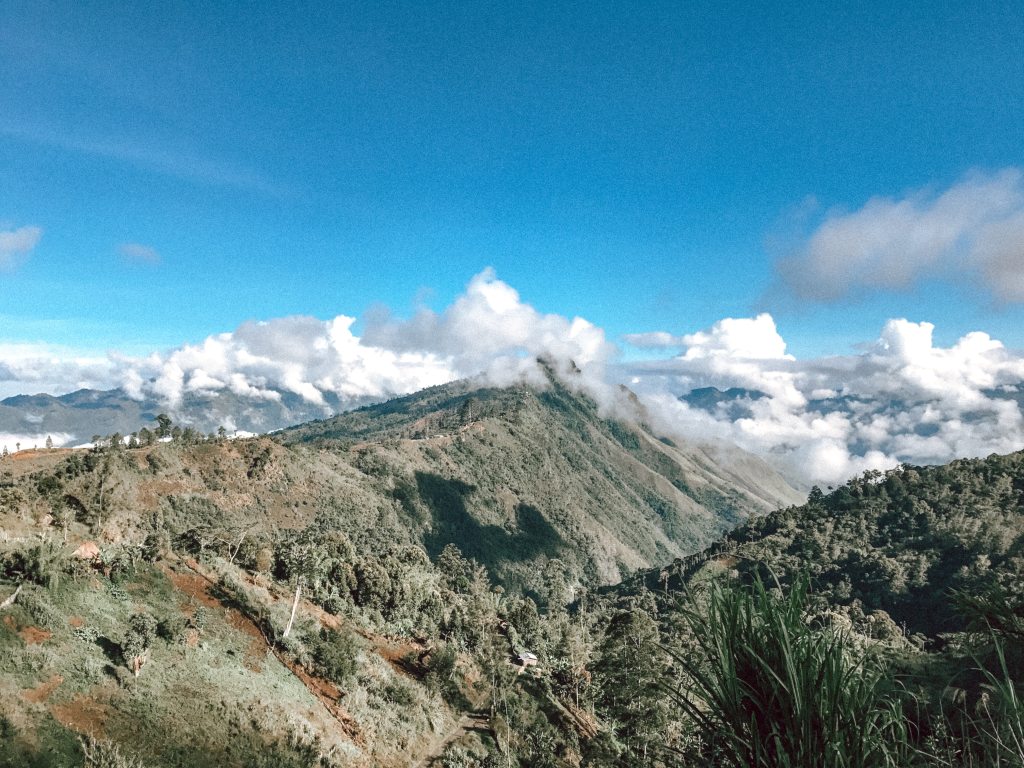



 Entrusted to the Dirt