Yes, the Irish Saved Civilization

Photo by K. Mitch Hodge on Unsplash

For, as the Roman Empire fell, as all through Europe matted, unwashed barbarians descended on the Roman cities, looting artifacts and burning books, the Irish, who were just learning to read and write, took up the great labor of copying all of western literature – everything they could lay their hands on. These scribes then served as conduits through which the Greco-Roman and Judeo-Christian cultures were transmitted to the tribes of Europe, newly settled amid the rubble and ruined vineyards of the civilization they had overwhelmed. Without this Service of the Scribes, everything that happened subsequently would have been unthinkable. Without the Mission of the Irish Monks, who single-handedly re-founded European civilization throughout the continent in the bays and valleys of their exile, the world that came after them would have been an entirely different one – a world without books. And our own world would never have come to be.

Cahill, How the Irish Saved Civilization, pp. 3-4
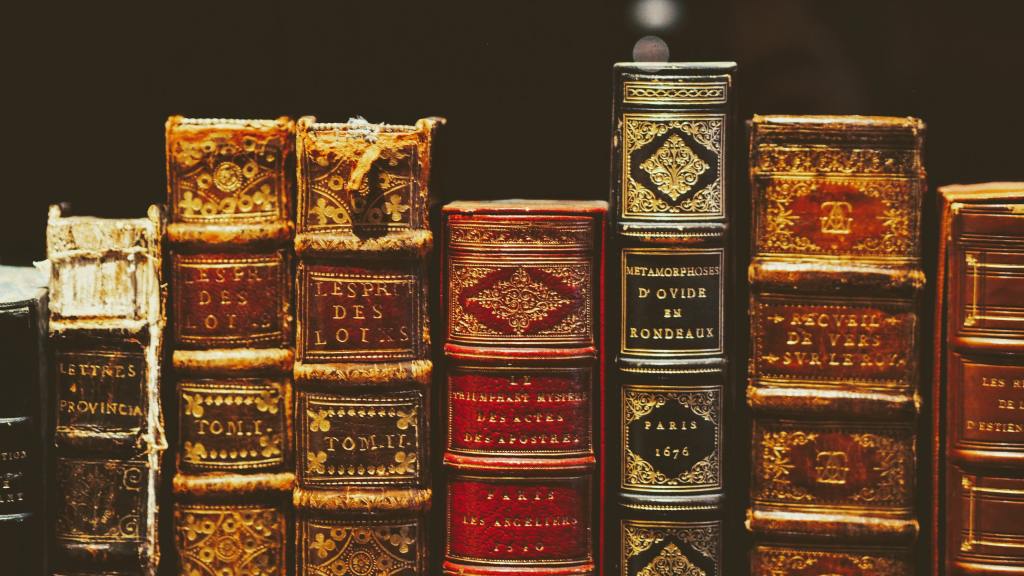
A Very Good Reason to Study History

Photo by Natalia Y on Unsplash

“We may be sure that the characteristic blindness of the twentieth century – the blindness about which posterity will ask, “But how could they have thought that?” – lies where we have never suspected it… None of us can fully escape this blindness, but we shall certainly increase it, and weaken our guard against it, if we read only modern books. Where they are true they will give us truths which we half knew already. Where they are false they will aggravate the error with which we are already dangerously ill. The only palliative is to keep the clean sea breeze of the centuries blowing through our minds, and this can be done only by reading old books.”

CS Lewis, On the Incarnation

Acts 24, Drusilla, and Pompeii

Photo by Marc Szeglat on Unsplash

I have been greatly enjoying the study notes of the ESV Archaeology Study Bible. The notes offer many fascinating glimpses into the broader historical and cultural context of the scriptures. This week I have been finishing up the book of Acts and I learned some new information about Drusilla, Felix’s wife and the daughter of Agrippa I, and her connection to a famous catastrophe of the Roman world. Turns out Drusilla died, along with her son, Agrippa, in the eruption of Mount Vesuvius in AD 79. This event is more commonly known by the name of one of the towns destroyed by the eruption, Pompeii. In Acts 24 she is present with Felix as Paul speaks about “faith in Jesus Christ… righteousness and self-control and the coming judgement” (Acts 24:24-25). Luke records that Felix became alarmed at Paul’s message and sent him away, though he continued to listen to Paul speak over the next two years (while also hoping for a bribe).

No doubt Paul was speaking to Felix and Drusilla about the final judgment. None present could have known that in a few years Drusilla, the Jewish princess, would die in one of the more terrifying previews of the last day – the eruption of Vesuvius. Did she eventually take Paul’s message to heart and repent before the end? Only God knows. Her story serves as a an appropriate warning in these days of pandemic and global crises. If we hear the message of grace offered through Jesus, let’s not delay. Today is the day to turn to God in repentance.

-ESV Archeology Study Bible, pp. 1655-1666