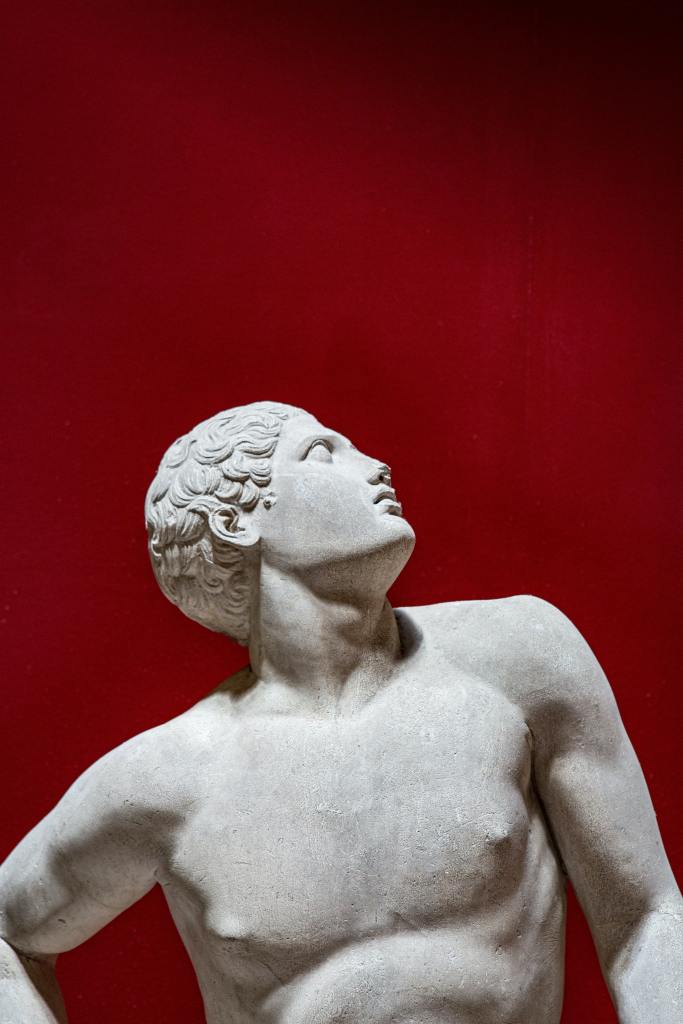
The Glorious Freedom to Change Religions

Yesterday was July 4th, our American Independence Day. It was also our family day of rest, so I chose to not write anything, other than posting a song, my usual practice for Saturdays. But I didn’t want to miss the chance today to write about one freedom I am particularly grateful for now that we live in a part of the world where it barely exists. I am speaking of the freedom to change your religion, to convert to another system of faith based on what you believe in the depths of your soul to be true. In old Baptist terms, this is called Freedom of Conscience. In reality, this freedom is universal and God-given, but in many countries of the world, including ours in Central Asia, the government and the populace do their utter best to prevent people from exercising that freedom, from leaving their religion, especially if that religion is Islam.

When my Central Asian friends come to a conviction in their heart and a confession on their lips that Jesus, instead of Islam, is the way, the truth, and the life, persecution inevitably follows. The first time I had a friend become a believer he and his pregnant wife were kicked out of their family home for six months, in the heat of summer. My friend was then ridiculed by his friends, neighbors, and relatives, who had been content to leave him alone when he was a non-religious drunk musician. After his family came to terms with his Christian faith, his wife’s family (upset about her new faith) took them to court, made death threats, trashed their apartment, and eventually ran them out of the country. Another friend had his father and brother pull knives on him when they found out he was baptized. Yet another was beaten by coworkers with metal rods, then after having his legs dislocated put on trial in front of his tribal leadership. This was after his mother and sisters refused to cook him food for years because he had become “an infidel.” Another friend had a gun held to his head by irate neighbors. Others have lost jobs, marriage prospects, and had to go underground for a season until things calmed down. Many have fled the country. None of my local friends have been killed yet for their faith, but it’s only a matter of time. I’m aware of a few local believers in other circles have already paid for their faith with their lives.

If anyone goes to the police or the courts to report this persecution, these institutions simply reply that this is a family matter and that the government won’t get involved. They will often imply that the persecuted really had this coming to them when they chose to leave Islam. While the government doesn’t usually instigate the persecution in our area, they certainly don’t step in to stop it, and sometimes they make it worse by sending the secret police to track down a believer in hiding. While anyone from a minority religion can convert to Islam in our country, conversion out of Islam is forbidden by the constitution. So the full-force of family, tribal, or mosque persecution can be targeted at an individual, knowing that no one will even try to stop them.

Because of this, I talk often about religious liberty with my local unbelieving friends. I regularly get asked what I like about America and about the West, and I gladly respond by talking about the radical freedom that anyone has to believe anything they want. Then I make a beeline to the source of this stunning freedom: the Bible. I’ll share how the West wasn’t always like this, but as the Protestant Reformation spread and people returned to the text of the Bible for themselves, this beautiful idea was recovered: that a person is responsible to God alone for his faith (2 Cor 5:10). No family, no tribe, no government will be able to speak for an individual on the last day. So why do they have a right to constrain someone’s faith in this world? They have no right whatsoever. Thus the principle of religious freedom spread from the text to the West and now to many parts of the world. It has spread so far that many of my local friends will even agree with me, saying that yes, it would be better to live in a society like that. But the relatives…

There are many ways to think about missionaries. Most of my secular peers in America might think not-so-pleasantly about who we are and what we do. “You convert people? How dare you?!” But drop those same Westerners into a monolithic religious society with no freedom for dissent and they will quickly change their tone. Their critique comes from a place of historic privilege, since they have never lived in a society where you could lose your head for disagreeing with the majority religion. If they lived in these oppressed societies, they would find themselves pining for human rights. Freedom of religion, it turns out, is the foundation stone of human rights. Missionaries are then, in one sense, the foot soldiers of religious freedom, and therefore of human rights. We spread this crazy idea that you should not simply believe what your parents and ancestors believed. You should consider the claims of Jesus for yourself, because you will have to answer for yourself on the last day. As individuals believe in Jesus, communities of religious dissent emerge, and it becomes more and more normal for families, neighborhoods, and people groups to tolerate diverse beliefs, and to even hold this kind of diversity as an ideal. Protestants have been doing this all over the world now for 500 years.

We might not see total freedom of conscience in our area of Central Asia in our lifetimes, but then again, it took the West quite a few years to get there also. Baptists were imprisoned and beaten relatively recently in our own good ol’ America. And religious liberty still faces setbacks every time a group of evangelicals blocks a mosque or a temple being built in their neighborhood (not to mention the threats rumbling from places like the Supreme Court). But to the extent that we have religious liberty in the West, I rejoice. This is a glorious thing, something worth celebrating… and exporting.

The Out-Of-Jointness of the Universe

Augustine’s spirit resonates with the plangent chords of Plato: the restless, exiled soul, looking everywhere for its true home, feasting on sewage while dimly remembering the nectar and ambrosia of high heaven. Plato is right, and his are the most profound descriptions in all the ancient world of the miraculous golden flashes of yearning embedded in the dross of reality – the out-of-jointness of the universe. Who else, Augustine asks himself, even talks of these things? And then the answer comes to him: Saul of Tarsus, the wiry, bald-headed Jew whose awkward, importunate letters, signed “Paul,” the Christians have been using as scripture: “For the flesh lusteth against the Spirit, and the Spirit against the flesh: and these are contrary the one to the other: so that ye cannot do the things that ye would.” Surely this is meaningless coincidence: what could a sweaty little nobody, dashing about the Mediterranean basin, have in common with the loftiest philosopher of all? And yet…

Cahill, How the Irish Saved Civilization, pp. 55-56

Photo by Matthew T Rader on Unsplash

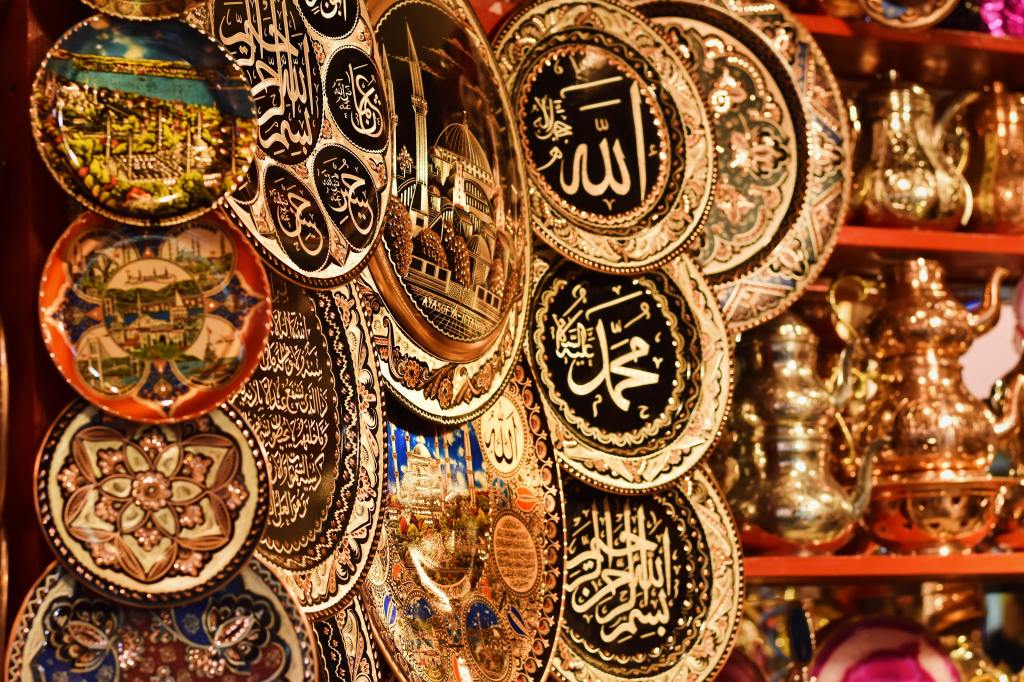
Can the Name of Allah Be Used for the Christian God?

Short answer: It depends.

Long answer:

First, some historical background. There were Arab Christians before the emergence of Islam that used Allah to refer to the Christian God. These were Arab tribes such as the Lakhmids, the Banu Taghlib, and the Ghassanids who lived on the borders of the Byzantine and Sassanian empires. In fact, one of the oldest sources of written Arabic is a monastery inscription written by Hind, mother of the Lakhmid king, Amr, which reads “This church was built by Hind, mother of King Amr and servant of Christ… May the God for whom she built this church forgiver her sins and have mercy on her son.” Arabic Christians have continued throughout history to use the name Allah to refer to the God of the Bible to the present day. The name Allah is linguistically related to the Aramaic name for God, Alaha, and more importantly, to the Hebrew name, El. So in terms of history and etymology, Allah has a strong case. It has been conveying the meaning of the God of Bible’s identity for at least 1,500 years among Arabic-speaking Christians. Its sister languages have been similarly using its cognates for even longer than that.

But what about Islam? What happens when a rival religion emerges and hijacks the name for God the Christians have been using, filling it with unbiblical meaning? The god the Qur’an describes is vastly different from the God the Bible describes. The god of the Qur’an is a simple unity who is transcendent, but not imminent. The God of the Bible is a complex unity, a Trinity, who is both transcendent and imminent. The nature of the former means he cannot become a man to die a shameful death on a cross for the atonement of sins. The latter did, as the eternal Son took on flesh and became the man, Jesus Christ. Despite this and many other differences, Arab Christians throughout history, including our evangelical brothers and sisters, have held onto the name Allah for God. They are the linguistic insiders, the ones best qualified to know whether the biblical meaning of God can still be communicated by the form, Allah. English speakers should defer to native Arabic speakers, agreeing that within the Arabic language, Allah can be used to speak of the Christian God.

As English speakers, a little reflection on our own word, God, can be helpful here. In spite of its polytheistic Indo-European and Germanic baggage, the name God has been redeemed and filled for a millennium and a half with biblical meaning. Therefore, our own experience tells us that names of deities with pagan baggage can become faithful linguistic servants of the true revelation. Let’s say Mormonism, with its own unbiblical views of God, overtakes Christianity in the West and becomes the dominant religion. Would we abandon the name, God? Unlikely. We would probably labor for thousands of years to refill the form with its biblical meaning, not unlike what Arab Christians have done.

But…

The name Allah should not be used to refer to the God of the Bible outside of Arabic-speaking communities. There are at least three reasons for this.

The first is that Christian history and missions history have shown that whenever possible, Christians should seek to redeem the indigenous word for the all-powerful creator God that already exists in that language, if one exists. Again, we English speakers live this reality every day when we say God instead of YHWH or El. Why has redeeming the chief divinity’s name been so effective throughout history in hundreds of languages? My theory is that the name for the all-powerful creator god in a given language represents an ancient remnant of early monotheism, diluted sometime after Babel into polytheism, but still there, waiting like a time-bomb for a Christian missionary to come along and connect that name back to its source. He has not left them without a witness to himself (Acts 14:17).

The second reason for not using Allah in other linguistic contexts is that Allah primarily represents/means the god of Islam in those other languages, making it more harmful than not to communicating the biblical God. Languages other than Arabic don’t have the broader range of meanings of Allah that Arabic has, in which Allah continues to be used also as the God of Arabic Christians and Jews. These languages often have another name for the all-powerful creator god in addition to the more narrowly-understood Allah proclaimed among them by Islam. This is true of the Muslim Central Asian people group that we work among and many others. Our focus people group, interestingly enough, has a name for God that is a very distant cousin-cognate to our English term, God. When they use this indigenous name, it carries a broader sense than Allah does, thus giving us more room to build biblical categories. We sense this even in English. When someone speaks of Allah we understand that that person is speaking of the god of Islam in a narrower sense than we use the term God in English. Words really do carry around meaning-baggage with them, and we need to acknowledge it and carefully judge if a name is already so tied to unbiblical meaning as to be not worth the salvage effort. In other languages, Allah is not worth the effort it would take to redeem it, especially when God has preserved an indigenous name for the all-powerful creator god in that language.

That brings me to my third reason to not use Allah to refer to the biblical God in non-Arabic contexts. Islam teaches that in order to please God, you must pray, worship, and live like a 7th century Arab. It teaches that Arabic is the language of heaven and thus holier than all other languages. This means that all those other people groups who are Muslim have been raised to believe that their language is inferior for praying to Allah and that they will only get the spiritual merit they need to gain paradise if they pray in 7th century Arabic. In a real sense, they must become Arabs or they will go to hell. Why have the Persians, the Turks, the Kurds, the Berbers, the Dari, the Pashtun, the Baloch, the Somalis, and so many others blindly accepted this linguistic and cultural colonialism? It is tragic that no one has taught them that gentiles don’t need to become Jews in order to be saved, and therefore, they do not have to become Arabs. Missionaries run the risk of contributing to this Arab-supremacist heresy when we thoughtlessly or “creatively” use Allah among non-Arab people groups. Instead, we should be proclaiming that the true God knows their language and knows their people, that he loves them and desires for them to worship him in their own language as a unique manifestation of his glory – that he will even preserve worship in their language for all eternity (Rev 7:9). These truths are precious and powerful for oppressed people groups in a way that dominant people groups (like English and Arabic speakers) sometimes struggle to understand. Yes, the gospel will call them to transcend their ethno-linguistic identity as members of the race of Christ, but first it will honor their ethno-linguistic identity. In salvation, God will come to them and will speak to them in their mother tongue. So should we.

So, can Christians use the name of Allah to refer to the God of the Bible? It depends. If it’s in Arabic, absolutely. In other languages, let’s avoid it wherever possible.

Arab Christian History Source: Baumer, The Church of the East, p. 92

Photo by Rumman Amin on Unsplash

The Oldest Poem in the English Language

My wife bought me Leland Ryken’s The Soul in Paraphrase for a Father’s Day gift. It begins with this gem, the oldest extant poem in the English language, which is fittingly about creation.

Now we must praise the Keeper of Heaven's Kingdom, 
The might of the Maker and his wisdom, 
The work of the Glory-Father, when he of every wonder, 
The eternal Lord, the beginning established. 

He first created for the sons of earth 
Heaven as a roof, Holy Creator, 
Then middle-earth the Protector of mankind, 
Eternal Lord, afterwards made, 
The earth for men, the Lord Almighty. 

The poet is Caedmon, an illiterate English farmhand in the 600s who did not know how to sing. When he fell asleep one day in a barn, someone in a dream told him to sing. Caedmon protested that he did not know how, so the voice told him that he should sing about creation. When he awoke, Caedmon was able to sing this song. Ryken says, “The new poetic gift never left Caedmon. English poetry thus began with a miracle of the word.”

I enjoyed the unique titles that Caedmon uses to speak of God, the “Keeper of Heaven’s Kingdom,” the “Glory-Father,” the “Protector of mankind.” This is one of the advantages of being exposed to the worship of God in other languages or in an archaic form of your own language – different kinds of titles are possible and prominent (For example, Acts 1:24 in Greek calls God “Lord Heart-Knower”). I also noticed how the verbs come at the end of some of the sentences, an old trait of Indo-European languages that has also held on in the Indo-European language we are learning in Central Asia. And I always find it interesting whenever I come across an account from church history where the Holy Spirit communicates in dreams, a phenomenon quite common among those who come to faith in Central Asia. Strange as it might seem to us now, dreams are more common in our own spiritual lineage than we might think.

As I read, I wondered if this first poem of the English language also hints at some influence of Celtic Christianity, the main cultural source of English Christianity, with its Patrick-esque emphasis on the goodness of creation (See this post on St. Patrick’s Breastplate). Like creation, English poetry has since been abused and broken in many ways, but it sure had a good and beautiful beginning.

For the linguistically curious, here is “Caedmon’s Hymn” in Old English and in Bede’s Latin translation.

Nū scylun hergan hefaenrīcaes Uard,
metudæs maecti end his mōdgidanc,
uerc Uuldurfadur, suē hē uundra gihwaes,
ēci dryctin ōr āstelidæ
hē ǣrist scōp aelda barnum
heben til hrōfe, hāleg scepen.
Thā middungeard moncynnæs Uard,
eci Dryctin, æfter tīadæ
firum foldu, Frēa allmectig.
Nunc laudare debemus auctorem regni caelestis,
potentiam creatoris, et consilium illius
facta Patris gloriae: quomodo ille,
cum sit aeternus Deus, omnium miraculorum auctor exstitit;
qui primo filiis hominum
caelum pro culmine tecti
dehinc terram custos humani generis
omnipotens creavit.

-Ryken, The Soul in Paraphrase, pp. 19-20

-Marsden, Old English Reader, p. 80

-Photo by Stephanie LeBlanc on Unsplash

So Choose Your Words Carefully

Cicero, born in the century before Christ, exercised his techniques when republican Rome, in all its vigor, welcomed public men. Augustine loved Cicero, as did the whole Latin world, which placed the Roman orator just below Virgil on the divinity charts. (Jerome, the cantankerous translator of the Latin Bible, awoke one night in a frenzied sweat: he had dreamed that Christ had condemned him to hell for being more of a Ciceronian than a Christian.) The ancients held the practical use of words in much higher regard than we do, probably because they were much closer to the oral customs of prehistoric village life – so clearly reflected in Nestor’s speech to the Greek chieftains in the Iliad and in Mark Antony’s speech over Julius Caesar’s body – in which the fate of an entire race may hang on one man’s words.

Cahill, How the Irish Saved Civilization, p. 47

Photo by Eugeniya Belova on Unsplash

A Carsick Piglet and Western Hatred of the Past

In my senior year of high school some friends and I accidentally climbed a mountain without the necessary tribal permissions. We were summarily chased out of the area by a group of tribesmen armed with bows and arrows and machetes. Thankfully, a long flatbed Mazda truck came along just in time for us to hitch a ride out of the offended tribal area and toward the capitol of the province, where we lived. We had made it out and we relaxed, thinking the excitement was over. These flatbed trucks were ubiquitous in the highlands of the Melanesian country I grew up in. They were perfect for transporting sacks of coffee beans or groups of villagers to and from the town markets. The one we had caught was loaded up with maybe twenty villagers, a few sacks of produce, and one piglet. For some reason the piglet’s devoted villager “mama” (pigs are a valuable and often much-loved commodity in this country) decided that it was time for this little piggy to take its first trip to the market.

The ride started out pleasant enough. The thrill of a near-escape, the sun shining down, the tribal melodic chanting rising and falling in ancestral rhythm as we wound down the dirt mountain roads. But then the little piglet started feeling carsick. Unfortunately for me, the piglet and his mama were sitting right next to me, our backs to the metal sidewall of the truck bed and our legs crossed or squatting on the worn wooden planks of the floor. Soon the little pig couldn’t take it any more and promptly vomited his lunch onto the floor of the truck bed. Immediately villagers and missionary kids all grimaced in unison at the foul little clumpy puddle now in front of us. Even with the fresh breeze from the moving truck, the smell was overpowering. Who knew such a small swine-ling could cough up something so horrifically potent? The piglet’s mama, sensing the need to do something, grabbed an empty plastic rice sack and started smearing the vomit in concentric circles on the floor, in a vain attempt to try to clean it up. The rice sack was the kind made from weaving small strands of plastic together, which meant it was basically worthless for soaking up any of the vomit. In fact, this effort likely made things worse, the vomit being merely rubbed into the wooden planks.

It wasn’t long before the little piglet started feeling sick again. Desperate to prevent another throw-up puddle, the piglet’s mama firmly latched her hand around the pig’s little snout, determined to keep it shut. The piglet, alarmed by this development, started screaming and thrashing its head back and forth, and proceeded to vomit into its mouth. Instead of a new puddle on the floor of the truck bed, those of us close by were hit with a spray of flying vomit, machine-gunned across our torsos. Shock and dismay ensued. To make things worse we drove into a rainstorm, which meant the villagers pulled out the customary blue tarp which we held over our heads as a makeshift roof, effectively creating a blue sauna of colorful odors – piglet vomit being the preeminent flavor.

I’ll never forget that scene – there under the blue light of the tarpaulin, the rain pounding on plastic, the piglet’s mama still scrubbing away fruitlessly.

It’s a scene that comes to mind when I read Colossians 2:20-23:

[20] If with Christ you died to the elemental spirits of the world, why, as if you were still alive in the world, do you submit to regulations—[21] “Do not handle, Do not taste, Do not touch” [22] (referring to things that all perish as they are used)—according to human precepts and teachings? [23] These have indeed an appearance of wisdom in promoting self-made religion and asceticism and severity to the body, but they are of no value in stopping the indulgence of the flesh. (ESV)

It is utterly futile to fight the flesh with religious human rules (“Do not handle, taste, touch”), just like a village mama vainly trying to clean pig vomit with a scrunched-up plastic bag. It simply won’t work, and will likely make things worse as the uncleanness gets spread to new areas. No, to fight the flesh we must fight it with a new heart, made alive through faith in Jesus. And once we have that new heart we must fight by continuing to daily “put on” Christ, remembering his promises, believing them, and acting based on them. Only when we persevere in this gospel-powered battle against the flesh will we see lasting victory against the indulgence of the flesh.

[1] If then you have been raised with Christ, seek the things that are above, where Christ is, seated at the right hand of God. [2] Set your minds on things that are above, not on things that are on earth. [3] For you have died, and your life is hidden with Christ in God. [4] When Christ who is your life appears, then you also will appear with him in glory. [5] Put to death therefore what is earthly in you: sexual immorality, impurity, passion, evil desire, and covetousness, which is idolatry. [6] On account of these the wrath of God is coming. [7] In these you too once walked, when you were living in them. [8] But now you must put them all away: anger, wrath, malice, slander, and obscene talk from your mouth. [9] Do not lie to one another, seeing that you have put off the old self with its practices [10] and have put on the new self, which is being renewed in knowledge after the image of its creator. [11] Here there is not Greek and Jew, circumcised and uncircumcised, barbarian, Scythian, slave, free; but Christ is all, and in all. (Col 3:1-11 ESV)

As I listen to the pagan pundits of Western culture, I am also reminded of this futility. The new Western morality continues to be built, law upon law, in an effort to stamp out certain evils. Thus, Westerners are told that they must not be racists, they must not be sexists, they must not be -phobes of any stripe, etc., etc. And some of these line up admirably with biblical morality, depending on the definitions. The problem is that there is no actual power in our pagan Western morality to change the human heart or the flesh’s addiction to indulgence. The flesh loves to indulge in hating others, among other things, but the culture continues to declare more and more segments of humanity off-limits for hate. Yet the culture provides no internal power strong enough to change the source and roots of the hate itself. Thus the only possible outcome is that the hate is smeared around, like so much pig vomit on the floor, and forced to find another outlet, another channel for release.

I believe this is one reason why westerners hate the figures of the past so much. In a world of ever-more specific subcultures that will “cancel” you if you say something that could possibly be interpreted against them, the dead present an easy target. After all, the dead don’t speak, and they certainly can’t shame you on twitter and get you fired. But whereas some might hesitate to dehumanize a contemporary, breathing human, most find it easy to dehumanize the humans who are already six feet under. Moreover, the humans of past ages lived when the popular morality differed significantly from ours. So we can feel morally superior and downplay our own sins under the cover of denunciations for the dead’s blindspots. It’s a massive game of hypocrisy. Everything we are told not to do to our contemporaries we are cheered on for doing against our great-grandparents’ generation.

Scratch a legalist, and you will find hidden and gross immorality. This saying is trustworthy (I may have first heard it from a Paul Washer sermon). Scratch a contemporary Westerner, with all their anti-hate rhetoric, and you will find hidden and gross hatred, especially for the humans of the past. Humans who were just like us, with their own blindspots, their own failings, their own progress. A humanity no more mixed than ours, full of pharisees and lawbreakers and those from both camps who were born again and working hard to advance the kingdom of God. In short, a humanity that can only be understood in light of a biblical anthropology, where all humans have dignity because we are made in the image of God, yet we are broken and capable of horrific evil because of our sinful nature and actions. We are, in the name of the Civil War novel, truly Killer Angels. This Biblical anthropology means Christians can have heroes from the past and openly acknowledge their grievous blindspots. It means we don’t have to take part in some kind of Maoist cultural revolution where we purge society of the memory of anyone associated with certain grievous sins like slavery. It means Christians can be model historians, showing our culture how to hold respect and lament for the actions of our dead heroes in tension. Not white-washing, not demonizing, just honest history that faces the good, the bad, and the ugly, and is open about what we owe our broken forebears.

I am a Baptist by creed, which means that some of my heroes (such as the Protestant reformers), may have wanted to have me drowned in a lake as they drowned the Anabaptists, “like so many puppies.” Does this mean I shouldn’t read and respect Zwingli and Calvin for what they got right? Augustine might have wanted to use the power of the Roman state to arrest me if I were to preach in public. Should I burn The Confessions? The founders of my alma mater may have found me an intolerable Yankee abolitionist. Should I demand we erase their names from campus buildings when every student, white or black, benefits financially from the endowment they fought so hard to establish, not to mention their theological legacy?

Instead of hating the figures of the past for their failings, Christians can model a better way, one which seeks to honor the complexity of fallen humanity soberly, giving honor where honor is due and yes, even adjusting public displays as appropriate. But there is a world of difference between putting a statue in a museum and cutting its head off. A Western culture that demands cleansing of public spaces of problematic names is a culture trying to cleanse pig vomit with a plastic bag. It’s not going to work. The hatred will not be cleansed and satisfied. It will merely be smeared around.

What’s Up With the Male Head Coverings in Corinth?

1st Corinthians 11, with its discussion about head coverings, has been called one of the most confusing chapters in the Bible. Often the discussion about this chapter zeroes in on whether or not women are universally required to wear head coverings in the church, or whether this requirement was a local/historical application of a universal principle. I lean toward the latter, finding the case compelling which advocates that Corinthian female head coverings were a sign of modesty and faithfulness among the married women of the Greco-Roman world. So today, whatever forms communicate that principle of modesty and faithfulness in a contemporary culture would be a good way to apply 1st Corinthians 11 to the ladies of our churches.

But what about the men? Why would men in Corinth desire to cover their heads when praying or prophesying in the church? This is why I love learning about the New Testament background and culture. As L.P. Hartley said, the past is a foreign country; they do things differently there. Check out this revealing note from the ESV Archeology Study Bible:

Roman statuary depicts emperors and senior magistrates as partially covering their heads with fold of their togas when offering a public sacrifice (“praying”) or reading its entrails (“prophesying”). Paul instructs the Corinthian men not to dishonor Christ by praying to him in the same way that others addressed false gods such as Apollo. By praying with their heads uncovered, they show they are praying in a new way and worshiping a different deity than their pagan neighbors.

ESV Archeology Study Bible, p. 1710

That’s right. Roman emperors and other officials covered their heads to pray and prophesy. There’s even a statue from Corinth of Caesar Augustus doing this very thing (pictured above).

So how in the world do you apply this underlying principle of countercultural worship forms to the men of contemporary churches, whether in the west, the global south, or among the unreached people groups of the world? In some contexts it might be simpler than others. Where we serve in Central Asia, we should apply this by raising up men who preach and pray and even dress differently enough from the mullahs and imams of the mosque that it’s clear that they are worshipping different deities. The god of the Qur’an is not the same God of the Bible and the apostle Paul would have that distinction reflected in the public praying and prophesying of men in the church.

How would this be applied in the post-Christian West? I’m not quite sure, and I would welcome help in fleshing this out. Who would be the equivalent of the emperor and other Greco-Roman officials? Perhaps the political, business, and culture leaders. And the equivalent of making a civic religion sacrifice and reading its entrails? Perhaps any false-salvation narrative held up publicly by one of these leaders, whether that be a president promising the answer is revived nationalism, an opposition promising liberation from oppression by means of more government regulation, or a tech titan on stage promising life change through their latest generation technology. Men in the church, do you sound like them when you pray and speak in the gathered assembly of believers? Or is there enough different about your public presentation that it’s clear you serve a different God?

And in the realm of the painfully obvious, don’t wear a toga to church and during prayer drape it over your head. A form that risked gospel clarity in Corinth, for us, would at least risk appropriate gospel gravity.

To support our family as we head back to the field, click here.

For my list of recommended books and travel gear, click here.

Photo: Wikimedia Commons

Divided America Visualized

The above picture shows the population of Louisville, Kentucky, color-coded. God is not mocked; we reap what we sow (Galatians 6:7). Can a nation truly have peace between its different ethnicities if they live this segregated? Some of this ethnic-sorting was institutionalized as late as 1951 in what is known as red-lining. Seventy years later we continue to self-sort, because that is what is easiest. Check out the rest of the US Racial Dot Map here.

Rustic Romans and Greek Snobs

Photo by Wilhelm Gunkel on Unsplash

This provides an interesting angle on intra-Gentile cultural issues forming the backdrop of the New Testament world.

The cultural relation of Roman to Greek was, in many ways, not unlike the cultural relation of Englishman to Frenchman and of American to Englishman: In all three relations, simplicity is the virtue and complexity the vice on one side, while on the other subtlety is prized and (supposedly rustic) straightforwardness can give offense.

Cahill, How the Irish Saved Civilization, p. 44