The Central Asian believers and I leaned forward around our table, holding the earpieces tight against our ears to make sure we understood the assignment. Simultaneous translation meant that our preaching training was being taught in English, yet we were each hearing it in one ear in the local tongue – a complex, yet not impossible way to learn solid principles for teaching and preaching God’s word. Other tables were made up of believers and leaders from a neighboring people group, hearing the translation in yet another language.
Live translation, when the teacher or preacher pauses to let you translate, takes a fair amount of skill. Simultaneous translation, on the other hand, takes an extra special kind of linguistic ability and mental quickness. The local believing gal we usually hired for this kind of translation was in another country for an ultimate frisbee tournament, of all things, so we were trying out a couple of other believers who had traveled up from Poet City to help with the conference. Of the two of them, the teenage gal -whose parents had in recent years been outed as spies for a neighboring regime- was by far doing the better job.
As she translated, I mulled on the riddle of what to do when a teenager shows all the signs of true faith and a solid commitment to gathering with the body, but it seems that her parents are on the payroll of a foreign Islamic government – and likely reporting on things they’re learning through their daughter. So far, the wisest thing seemed to be to trust God and carry on. If they ended up reporting on this particular training, then at least mom and dad and their foreign handlers would be getting some sound homiletics principles.
“What were those foreigners telling people to do?”
“To make sure they could identify the biblical author’s intended message for the original audience.”
“And then what?”
“To find valid connections from that message to the good news of Jesus.”
“And after that?”
“To apply the main ideas to the daily lives of both the Christians and non-Christians who might be listening.”
“No! Those foreign infidels! Is there no end to their schemes? Make sure to report back if they start talking about how to craft effective sermon illustrations.”
I laughed to myself, thinking about what that kind of conversation might sound like.
“Wait, what are we supposed to do?”
This actual question from one of the brothers at my table brought me back to the current moment.
“Oh, right,” I responded. “The trainer asked if we could read Isaiah 25:6-9 and summarize it with a phrase or title that describes the main idea.”
One of the men at the table cleared his throat and then read out the passage in the local language.
	[6] On this mountain the LORD of hosts will make for all peoples
		a feast of rich food, a feast of well-aged wine,
		of rich food full of marrow, of aged wine well refined.
	[7] And he will swallow up on this mountain
		the covering that is cast over all peoples,
		the veil that is spread over all nations.
	[8] 	He will swallow up death forever;
	and the Lord GOD will wipe away tears from all faces,
		and the reproach of his people he will take away from all the earth,
		for the LORD has spoken.
	[9] It will be said on that day,
		“Behold, this is our God; we have waited for him, that he might save us.
		This is the LORD; we have waited for him;
		let us be glad and rejoice in his salvation.”
After the passage was read, the table was quiet for a minute as we each thought about what major themes were present in the passage. Our Central Asian locals are not typically strong in this kind of exercise. Their educational system majors on rote memorization and repetition. It does not equip them to do things like summarizing a passage in their own words and recognizing the main point. But this was year four of this preaching training, and, slowly but surely, these crucial textual analysis skills were getting stronger.
“The hospitality of God!” one man exclaimed.
“Interesting,” I replied, “Where do you see that?”
“Well, what is the main thing happening in this passage? God is hosting all peoples on top of a mountain for a great picnic with the very best food. Look at how this passage overflows with his generosity and hospitality!”
I took another look, and sure enough, there it was, clear as day in verse 6. I had skipped right over this theme to focus on the theme of God destroying death forever (also a major theme in the passage). Leave it to Central Asians to spot what is obviously an eschatological mountain picnic hosted by God himself when the Westerners skip right past it.
It seemed our British trainer did the same thing I did, because he sort of looked confused when the same man raised his hand during the larger group discussion time to mention the theme of God’s salvific hospitality that had jumped out at him.
This is why it’s so helpful to study the Bible with those from other cultures and backgrounds. It’s not that the meaning of the text itself is relative and shifts according to the culture of the interpreter. It’s that each of our cultures gives us eyes for certain things, and blind spots for others. My culture is weaker in hospitality, so I’m less likely to see that when it’s there in the text. But there are other areas where I can see things because of my background that my Central Asia friends are likely to miss.
This is an argument not just for studying the Bible with those from other cultures, but also with those from other ages. Saints from the past are going to be awake to things to which my generation has grown dull and blind. I need their help to more fully understand the Bible, just as future generations will need ours.
The Bible is so rich and so deep. Sometimes I wonder if God’s plan in allowing so many languages and cultures is, in part, so that we might be better equipped to see more aspects of the Scriptures’ richness and beauty.
As for me, I’d like to spend more time looking for the hospitality of God in the Bible. Now that I’m more ‘awake’ to this idea, it seems to pop up just about everywhere.
We only need to raise 14k ($1,166 per month) to be fully funded for our second year back on the field. If you have been helped or encouraged by the content on this blog, would you consider supporting this writing and our family while we serve in Central Asia? You can do so here through the blog or contact me to find out how to give through our organization.
Two international churches in our region are in need of pastors, one needs a lead pastor and one an associate pastor. Our kids’ TCK school is also in need of a math and a science teacher for middle school and high school. If you have a good lead, shoot me a note here.
For my list of recommended books and travel gear, click here.
“No, we didn’t want to join a church, and we didn’t start one. I didn’t come here to plant a church and didn’t want to get pulled into all that would entail. I came here to translate the Bible. And for a number of years, the expat house fellowship that we led every week went great. But in recent years, we’ve had to deal with some serious sin issues among those who attend. And let me tell you, I have spent so much time trying to deal with these problems that I have found myself thinking maybe it would have been more efficient if we had just started a church in the beginning after all!”
I found this confession from an older missionary very insightful.
Here was another admission that one of the primary reasons for so many missionaries sidestepping the local church on the mission field is the Western value of task-driven efficiency. This value is often a strength of Western culture, but when it causes us Westerners to neglect other areas of biblical faithfulness, such as a week-in-week-out commitment to a church in our community, it becomes an idol. In this case, this missionary couple was so focused on their good task of translating the Bible that they decided that joining a local church on the field, or planting one, would take up too much of their time, time that they felt would be better stewarded by a singular focus on the task they’d been sent to do.
A huge number of missionaries overseas are not members of local churches on the field. Nor are they interested in doing the work to transform their team or coalition of missionary partners into an organized church. A few of them will have more advanced reasoning for this, sometimes related to missiologist Ralph Winter’s sodality vs. modality framework (a position to be analyzed in a future post). Other missionaries serve in places with no churches, no churches healthy enough to join, or no team or locals to form into a church. But many coming out of the West simply no longer have the biblical instincts or ecclesiology to feel that they should join or form a church on the field. “Isn’t it enough to meet weekly for bible teaching, songs, and prayer? Wherever two or three are gathered, right? Isn’t my team my church?” Add to this posture that joining or starting a church seems so, well, time-consuming, and it’s no wonder that the Western missionaries who do join churches on the field, or start churches that they then join, are the oddballs.
No, many, many missionaries think that the best thing is to retain their membership in their churches back in the homeland while they perennially sidestep the local church in their actual geographic locale. This all too common posture in the name of stewarding the time is both misguided and shortsighted.
The missionary’s confession I began with is a good example of what can go wrong when missionaries on the field commit themselves to what I’ve dubbed elsewhere, ‘weekly missionary chapel’, instead of joining or starting an actual local church. This family thought things would be simpler with a loosely defined house worship gathering every week with a bunch of other missionaries. Even when a good international church was planted in their city, they chose to stay separate from it and continue their house fellowship.
However, that earlier simplicity disappeared once serious sin arose among the attendees. Why? Well, there were no recognized pastors for this gathering, just a small team of casually-designated ‘leaders.’ There was no real system of membership, just a vague agreement among the missionaries attending about who was allowed to come (no locals, mind you). There was no mechanism for church discipline because from the very beginning, the aim of this group was to not be a church. The missionaries attending this group who ended up in sin were members of their sending churchesback in America, so what kind of spiritual authority could the ‘leaders’ of this group really exert over them?
As wise Central Asians say, “Pray, but tie your camel tight.” And as wise Westerners says, “Fail to plan, plan to fail.” Set out to establish an efficient pseudo-church but haphazardly leave out a bunch of the biblical stuff that feels too time-consuming, and you are asking for trouble. Those biblical structures are there for a reason.
And yet, for most missionaries, it continues to feel simpler, more focused, and more efficient to sidestep the local church on the mission field. However, as we’ve seen, this means that when there are serious problems to deal with, they then have to quickly cobble together new systems to deal with them. Yet because they’re intentionally not a church, they don’t have clear biblical guidance or precedence for the structures and mechanisms they build. Instead, they’re just depending on their own wisdom and on what seems practical. Dealing with conflict and sin is always time-consuming, even in a healthy church, but reinventing the wheel and cobbling together solutions in this way ends up taking so much more time in the end (not to mention how it ends up hurting people).
Consider how coming to an agreement on a doctrinal statement may seem very time-consuming. But that process is far more efficient in the long run than suddenly having to figure out what to do every time a missionary with doctrine quite different from yours wants to join your house group.
Hammering out a church covenant also seems like a laborious process. But it’s far more efficient than having to explain in the middle of mess after mess why certain behaviors and not others justify expulsion from the group when you’ve never mentioned them before.
Taking time away from your main ministry to disciple believers from other people groups – maybe even in English – might seem like a costly side quest. But it’s not nearly as inefficient as your team burning out because you tried to live for a decade on the mission field without truly being connected to the Body.
These are just a few examples of how joining a local church on the field or planting one may seem inefficient in the short term, but in the long run will counterintuitively mean actually going faster. When conflict comes, there are biblical mechanisms to deal with it. When issues arise, clarity on how to navigate them already exists. When your gifts fail, the diversity of the local church comes to the rescue. Investing in the local church always pays off, and often in ways we never could have predicted.
Missionaries, let’s not sidestep the local church on the mission field. Let’s either start one or join one. If we’re in a context where this isn’t possible, we should pray and work for that to eventually change. Let’s not continue to pretend that church membership in a body on another continent is a good long term posture for our families – good stopgap measure though it may be. And please, let’s not hold ourselves aloof from the local church for the sake of efficiency.
After all, we are not called to be efficient above all else. We are called to be faithful. And that will often involve things that, at least initially, feel quite inefficient indeed.
We only need to raise 15k ($1,250 per month) to be fully funded for our second year back on the field. If you have been helped or encouraged by the content on this blog, would you consider supporting this writing and our family while we serve in Central Asia? You can do so here through the blog or contact me to find out how to give through our organization.
Two international churches in our region are in need of pastors, one needs a lead pastor and one an associate pastor. Our kids’ TCK school is also in need of a math and a science teacher for middle school and high school. If you have a good lead, shoot me a note here.
For my list of recommended books and travel gear, click here.
I recently listened to CS Lewis’ address, “The Inner Ring,” for the first time. I was struck by these paragraphs, where he describes the ambiguous ‘inside’ that exists in so many human groupings.
There are what correspond to passwords, but they are too spontaneous and informal. A particular slang, the use of particular nicknames, an allusive manner of conversation, are the marks. But it is not so constant. It is not easy, even at a given moment, to say who is inside and who is outside. Some people are obviously in and some are obviously out, but there are always several on the borderline…
There are no formal admissions or expulsions. People think they are in it after they have in fact been pushed out of it, or before they have been allowed in: this provides great amusement for those who are really inside…
Badly as I may have described it, I hope you will all have recognised the thing I am describing. Not, of course, that you have been in the Russian Army, or perhaps in any army. But you have met the phenomenon of an Inner Ring. You discovered one in your house at school before the end of the first term. And when you had climbed up to somewhere near it by the end of your second year, perhaps you discovered that within the ring there was a Ring yet more inner, which in its turn was the fringe of the great school Ring to which the house Rings were only satellites. It is even possible that the school ring was almost in touch with a Masters’ Ring. You were beginning, in fact, to pierce through the skins of an onion. And here, too, at your University—shall I be wrong in assuming that at this very moment, invisible to me, there are several rings—independent systems or concentric rings—present in this room? And I can assure you that in whatever hospital, inn of court, diocese, school, business, or college you arrive after going down, you will find the Rings—what Tolstoy calls the second or unwritten systems.
Lewis is so helpful here in drawing our attention to the fact that every group of humans has an inside group and an outside. So, when it comes to church membership, the question is not whether a church will have a membership or not. It’s really whether that membership is a defined system, or whether it is “unwritten” and ambiguous. In the real world, it’s either one or the other.
This is such a needed clarification because once we’ve framed the situation in these terms, we’re then able to ask which approach really is the most helpful, kind, and loving. At our current stage of Western culture, clear and formal lines that include some and exclude others tend to feel unkind and unloving, narrow, inauthentic.
But if, because of this, we choose to forgo a clear system of membership in our churches, we are in fact choosing to hand over the authority for drawing the inevitable inside/outside line to the fuzzy, shifting, and often cruel complexities of group social dynamics – returning as it were to the kinds of relational vibes that governed who the cool kids were (and were not) in middle school. I, for one, do not want that kind of system to be the controlling factor in who is considered a ‘real’ member of my spiritual family. Even worse, in places like Central Asia, the inside group is simply defined by who is currently in the good graces of the strongman pastor.
The thing that Westerners are so worried about implementing in their own countries or on the mission field, because it doesn’t initially feel nice or contextual, is the very thing that, in the end, proves to be truly loving and truly contextual. Because when church membership is implemented in a way that applies the Bible’s inside/outside lines, so that there are clear qualifications and a clear process in (and out), then membership is open to so many more kinds of people. It shouldn’t matter what your social background is, what your ethnicity is, what your personality is. It shouldn’t matter what your interests or hobbies are, your personal clothing style, what your political orientation is, or what your age or gender is. All of these differences that naturally sort humans into little cliques at work or school, all of them are put aside in the church, so that the doors to the local kingdom embassy might be thrown wide open to all born-again believers who are ready to obey Jesus.
Western evangelicals need to wake up and realize that church membership is inescapable. Their churches will always have an inside group, whether they realize it or not. In this way, membership is a lot like contextualization; everyone does it, all the time. To be wise and loving, therefore, we must learn to be intentional and biblical about it.
If you have been helped or encouraged by the content on this blog, would you consider supporting this writing and our family while we serve in Central Asia? We need to raise 28k to be fully funded for our second year back on the field. You can help us with this here through the blog or contact me to find out how to give through our organization.
Two international churches in our region are in need of pastors, one needs a lead pastor and one an associate pastor. Our kids’ TCK school is also in need of a math and a science teacher for middle school and high school. If you have a good lead, shoot me a note here.
For my list of recommended books and travel gear, click here.
A Peruvian, a Pakistani, a Filipino, a Central Asian, and an American get pulled over at a checkpoint.
No, this is not the start to a bad joke. But it is, in fact, how I learned that locals believe Christian clergy can do black magic.
In truth, you never can predict when these kinds of insights might emerge that reveal what the locals really believe. On this day, our source of cultural illumination surprisingly appeared from one of the least enjoyable parts of living in Central Asia. That is, the inescapable, and often petty, government bureaucracy, military checkpoints on the road being one particularly tedious expression of this.
For this particular trip, I was on an outing with four friends, and we were coming back from a long day of exploring some fascinating ancient sites together. Three of them (Peruvian, Pakistani, and Central Asian) had just finished a year-long pastoral internship under the leadership of the Filipino brother, himself a TCK who now serves as one of our pastors in Caravan City. We had been planning for some time to take this kind of trip together. And the timing of it, coming just a few days after the internship finished, made it a fun and celebratory time.
We knew that our unique carload, itself a sort of mini UN, would likely raise eyebrows at the half dozen checkpoints we’d need to pass through during the day. So, all of us had our documents on us. All of us, that is, except for the Peruvian brother. His documents were with the lawyer for his visa renewal process. However, we weren’t worried. He had pictures of his IDs, something accepted by the guards when the visas and passports of those traveling are tied up in other layers of bureaucracy elsewhere. No ID on you for some random reason? Big trouble. No ID on you because your lawyer is (so you say) getting your visa renewed? No problem! Carry on.
The checkpoints proved seamless all day long, until the very last one, as we were on our way back late at night. Here, as soon as the guard laid eyes on the Peruvian and heard us begin to say that he didn’t have his documents, he ordered him to head inside the station for further questioning. The soldier made this snap judgment and began to walk away without letting us plead our case, so I yelled out as quickly as I could,
“But… respected one… he’s of the people of Peru… his documents are with the lawyer for his visa renewal!Visa renewal!”
Missionaries from Latin American countries have both the advantage and the disadvantage of looking like they are from our region, Central Asia. It was likely that the guard had assumed from appearances that the Peruvian was from a neighboring rival people group – and had therefore plopped him into some sludge-slow process of window and desk hopping seemingly designed to be as convoluted as possible.
This last-minute plea seemed to cause the guard to reconsider and relax a little bit. He turned back to us, still told the Peruvian to go inside to a certain room, but allowed the Central Asian brother to go with him for the sake of interpretation.
The rest of us sat in the car and hoped for the best, barely fending off yet another guard who approached and attempted to send us all inside.
As we waited in the dusty darkness, the Peruvian and the Central Asian made their way into the captain’s office. From a similar situation in the previous weeks, I knew the room’s layout followed the standard formula. Large and pretentious desk facing the door, hard couches lining the walls, plenty of ashtrays and tea tables, a rickety swamp cooler whirring in the window, and photoshopped pictures of benign-looking government strongmen up on the walls.
The captain was not in a good mood, so our friends were not making much headway trying to explain their case. That is, until the Central Asian dropped the fact that the Peruvian was actually a pastor. This was, in fact, true. He had been a pastor in Peru and had originally been sent to pastor a team of Spanish-speaking missionaries before later joining the internship for more training.
There is something in the wiring of our local Muslim Central Asians, such that once they find out a man is actually a ‘priest,’ their entire bearing towards him changes for the positive. We’ve seen this dynamic so often here over the years that we’ve begun to joke that rather than hiding the pastoral background that many of us have (as is the norm), we should instead start going around wearing protestant clergy collars. At least in government offices, this contextualization of our garments would make a huge difference. In this, Central Asia has proved yet again to be utterly different from our assumptions of how it would be.
Accordingly, the captain decided that, since our Peruvian friend was a priest, there was no issue here whatsoever, and that he could go his way. However, in parting, he also slipped in a joke to the Central Asian brother.
“Ask him if he could do some black magic for me,brother, har harhar.”
Finding discretion to be the better part of valor, our friends took the opportunity to smile and leave quickly, rather than staying to correct the captain that, no, as a pastor, our friend most certainly did not and would not do black magic. As no true pastor should.
“Wait,” I asked my friends when they were back in the car, “locals think pastors do black magic?”
“Yes,” the Central Asian brother replied, “I’ve heard it from my older relatives many times. They used to go to some kind of ethnic Christian priest to get him to do spells and charms for them – things having to do with fertility or love, especially.”
Apparently, some of the clergy from the local ethnic Christian communities had, over time, fallen into acting like the local Islamic sheikhs, themselves having fallen into acting like the older mages, shamans, and witch doctors so common all over the world. Appease and manipulate the spirits for your own blessing and the cursing of your enemies. The same demonic strategy used in the Melanesia of my childhood, recycled here with just a smidge of Central Asian monotheistic veneer.
I was reminded of how I’d heard that even one of the few evangelical pastors among our people group had himself started acting weird in these ways, sheikh-ish, making people who asked for healing to drink Bible verses he’d written on little pieces of paper. I wondered if he had also grown up hearing from his relatives of how this was simply what Christian clergy are supposed to do.
I’m very glad this bit of local data emerged, even though it came through something as tedious as a government checkpoint. Who knew that this was something so commonly assumed among our locals, lurking down in the basement shadows of their worldview? Now we know. And now we can proactively teach against it. No, true pastors should not and do not have anything to do with black magic. Yes, they may be involved in the occasional miraculous healing or quiet casting out of a demon. But this is not magic; this is simply the Holy Spirit at work in the normal life of the local church.
No, Mr. Captain of the checkpoint, we won’t do black magic for you. But if you hear us out, we can tell you about something infinitely more powerful.
We need to raise 28k to be fully funded for our second year back on the field. If you have been helped or encouraged by the content on this blog, would you consider supporting this writing and our family while we serve in Central Asia? You can do so here through the blog or contact me to find out how to give through our organization.
Two international churches in our region are in need of pastors, one needs a lead pastor and one an associate pastor. Our kids’ TCK school is also in need of a math and a science teacher for middle school and high school. If you have a good lead, shoot me a note here.
For my list of recommended books and travel gear, click here.
What do restaurants running out of sheep stomachs, AK-47s, meals on the floor with tribal enemies, and the Islamic pilgrimage to Mecca have to do with Mark 11?
When preaching and teaching, our aim should be, first, to faithfully exposit the text. But second, it should be to helpfully 1) argue for, 2) illustrate, and 3) apply the truths of that text in ways that translate to the minds, hearts, and hands of our audience. Many of us who care deeply about expositional preaching tend to be very strong in the explanation side of things, yet weaker in these three other time-tested elements of preaching and teaching. It is in these three secondary, yet crucial, elements that I attempted this past week to draw local connections with Mark 11.
My current role as a resourcer, researcher, and writer means I’m not preaching in the local language nearly as much as I did when I was a church planter. However, this past week, I did get the opportunity to do so. Afterward, I thought it might be helpful to share a few examples of how I attempted to use local culture and experiences to bring the weight of the text to bear on the audience. I do so, not claiming that I necessarily got everything right, but rather, in hopes of spurring on others to make efforts like this in their preaching and teaching as well. After all, concrete examples from other contexts can be helpful as we wrestle with how to do this in our own churches.
My text was Mark 11:1-25: the triumphal entry, the cursing of the fig tree, the cleansing of the temple, and Jesus’ teaching on the power of believing prayer. From this text, my main sermon idea was that Jesus is the king of peace, the king of judgment, and the king of answered prayer. Each of my three subpoints was an unpacking of one of these three aspects of Jesus’ kingship: 1) the king of peace, 2) the king of judgment, 3) the king of answered prayer.
Now, here’s where the restaurant running out of sheep stomachs came in. I began my sermon by telling a story that happened in Caravan City around five years ago, when a group of local men went down to the bazaar in the middle of the night to eat a beloved traditional dish called head-n-foot. This is a meal consisting of rice sewn up in a sheep’s stomach and boiled in a broth containing the sheep’s head and feet. This unique meal is traditionally eaten in the middle of the night, along with fresh flatbread, and sometimes other side dishes like sheep brain, marrow, tongue, etc. While foreigners get queasy just hearing about eating this kind of thing, many locals can’t get enough of it. However, these particular local men loved it a little too much.
When these guys showed up at the head-n-foot restaurant, it had unexpectedly run out of food. This caused them such disappointment and such anger that they returned to their homes, grabbed their AK-47s, and came back and shot up the restaurant’s tables, counters, and windows in a blaze of lead, broken glass, and bits of sheep. Thankfully, no one was injured. But the story became the stuff of local legend, as well as countless jokes.
Why did I begin my sermon with this illustration? Well, one of the main themes of my passage, Mark 11, is the absence of fruit. The fig tree does not have fruit when Jesus visits it, nor does God’s temple. There is something deeply wrong with this situation, so wrong in fact that it warrants the very curse and judgment of the Son of God. While the men who shot up the head-n-foot restaurant were clearly out of line to do something so drastic, they were not necessarily wrong to be upset. A restaurant that fails to keep its most basic duty – that of providing food when open – has failed in its fundamental purpose. Perhaps these men had the right to be angry, but they had no right to shoot up the restaurant in the way they did. Jesus, on the other hand, had every right to both be angry and to also go on to curse the fig tree and the temple. He was the creator, owner, and rightful recipient of the fruit of both. But, scandalously, when he visited them, he found them utterly barren. And in the temple’s case, even worse than barren, corrupted and oppressive.
Did this attempt at using a local illustration work? I think so. Several of the attendees were nodding and chuckling knowingly as I shared the story. At least the sermon must have made two of them hungry because later that night, they went out to eat head-n-foot at the very establishment that had featured in my introduction. This included sending me video evidence that that night, at least, there was plenty of head-n-foot to go around.
My second attempt to illustrate with local culture was when I was trying to explain the significance of Jesus riding into Jerusalem on a colt, a young donkey. In the ancient Near East, a king who rides into a city on a donkey is signaling both humility and peace. This is in contrast to a king who rides in on a horse, who is signaling power and conquest. However, this meaning has been lost in the 2,000 years that have transpired between Mark 11 and today. In our corner of Central Asia, donkeys are mostly a thing of ridicule, an insult, a symbol of stupidity, and the butt of countless jokes. This is why my favorite Kebab restaurant has donkey-themed pictures covering its walls. Locals find donkeys irresistibly ridiculous, which is why one local believer cautioned me in the past to avoid them in sermons if I can, due to the risk of the congregation descending into fits of giggles. Yet there’s no avoiding donkeys in Mark 11; rather, riding in on a donkey needs to be redefined according to what this would have meant to the original audience.
But before I explained its meaning, I first asked my audience a question. What would it signify to them if their tribal chief or an influential sheikh invited them to dinner at his house, and when they arrived, they also saw their personal enemy seated there on the floor for the meal? The audience responded with confidence – this scene would mean a desire for peace, a desire for reconciliation. Leaders here will invite enemies to share a meal together with them in an attempt to broker peace. In the same way, I explained, a leader riding into a city on a donkey, in first-century Judea, signaled a desire for reconciliation. Once again, heads nodded when the attempted connection was made. Whatever may have been going on internally, at least there were no visible fits of giggles because I had been talking about donkeys.
My third attempt to illustrate from local experience came in my second point, when I was explaining how Jesus is not just the king of peace, but also the king of judgment. In Jesus’ shocking actions in the temple, we see how much he hates religious oppression and corruption. Jesus is furious because not only is the temple worship being used to make a hefty profit off of Jewish pilgrims, those who are stuck with the inflated temple prices and money-changing fees, but this is happening in the only space available in the temple for the Gentiles to worship God. Tragically, all this shows us that instead of the true worship of God taking place (true spiritual fruit), there was religious oppression of the Gentiles, the poor, and the faithful. God will not stand for this kind of thing, as evidenced by Jesus’ temple violence.
To illustrate how all the world’s religions tend to do this – and thus are worthy of God’s curse – I reminded the audience of how the Islamic pilgrimage, the Hajj, has very similar dynamics to the temple corruption seen in Mark 11. See, Muslims are obligated to make this pilgrimage once in their lifetime. And there’s only one place they can go to do this – Mecca. Because of this, the government of Saudi Arabia charges exorbitant prices for plane tickets, hotels, visas, even corner market goods in Mecca itself, all in an attempt to milk the pilgrims for all they’re worth. Pilgrims have no choice. They have to pay up. In this way, elderly locals from our corner of Central Asia will blow tens of thousands of dollars in a misguided attempt to secure forgiveness of sins. This is money that should have gone to caring for them in old age, or to their children’s futures. Instead, it goes straight to the pockets of the Saudi political and religious establishment. This kind of system is deeply wicked and worthy of being cursed by God.
Having drawn the connection in this way between the temple’s religious oppression and that which this room of former Muslims was all too familiar with, I then reminded them that Jesus’ focus here was not some pagan worship of his day. No, it was the corrupted worship of his own people and their leaders. We, therefore, have an obligation to guard the worship of the local church so that the true worship of God is never hijacked for the sake of worldly gain.
My final attempt at using a local illustration attempted to connect with the fact that many in the audience were former guerrilla fighters. Under the point about how Jesus is the king of answered prayer, I borrowed an illustration from Piper about how prayer is not like a hotel phone, where we call the front desk for a softer pillow. Rather, prayer is like a soldier’s walkie-talkie, which he uses to call in air support for the battle. Jesus’ radical promises for answered prayer in this passage are not given so that we might ask and receive anything random we might desire. Instead, they are for prayers directed against anything (mountains included) that stands in the way of his people bearing spiritual fruit. I couldn’t tell how well this one connected. I’m realizing just now, as I write, that guerrilla fighters don’t tend to have air support. Usually, they’re fighting in the mountains with their small arms munitions against the superior ground and air power of whatever regime they’re resisting. But I’m hopeful it still made sense.
Once again, these efforts to use local culture are not the most important thing going on in a sermon. But if the exposition of the text itself is like a good steak, then the argumentation, illustration, and application are like the salt and pepper, the grilled vegetables, and the glass of red wine that accent the steak so well. The steak is more powerfully tasted because of their presence. In the same way, the faithful explanation of God’s word is more powerfully experienced when it is supported by faithful and contextual argumentation, illustration, and application.
How do we find these local examples? We must be continuous learners of whatever culture is currently hosting us. Through curious questions and good listening, we can, over time, stock quite the storehouse of local examples that we can draw from as opportunity arises. Practically, we will also need a way to remember these examples. For me, writing and lists of things to write about are ways that I find I’m able to better hold onto this local knowledge. Did you know, dear reader, that by reading this blog, you are a part of how I’m able to hold onto things so that I might later bring them into a spiritual conversation with a local? For that, I’m very grateful.
Every culture, indeed the whole world, is full of spiritual analogies and metaphors, things that we can leverage to strengthen our presentation of God’s word. As the old hymn, This is My Father’s World, proclaims, “This is my father’s world; He shines in all that’s fair; In the rustling grass I hear him pass; He speaks to me everywhere.” Missionaries of ages past, such as Lilias Trotter, had such good eyes for the spiritual analogies baked into the world all around them. If we follow in their footsteps, recognizing that not just in nature, but even in fallen cultures, God has not left us without a witness, our preaching and teaching (and writing) will be all the more powerful for it.
Don’t just explain, brothers and sisters. But argue, illustrate, and apply as well – even if that means you find yourself preaching about things like sheep stomachs and Kalashnikovs.
We need to raise 28k to be fully funded for our second year back on the field. If you have been helped or encouraged by the content on this blog, would you consider supporting this writing and our family while we serve in Central Asia? You can do so here through the blog or contact me to find out how to give through our organization.
Two international churches in our region are in need of pastors, one needs a lead pastor and one an associate pastor. Our kids’ TCK school is also in need of a math and a science teacher for middle school and high school. If you have a good lead, shoot me a note here.
For my list of recommended books and travel gear, click here.
One of the most curious examples of poor contextualization in Central Asia is how opposed most missionaries are to preaching. By and large, missionaries feel strongly that the indigenous church plants and churches in this part of the world should replace preached sermons with participatory Bible discussions. And they feel even more strongly that if preaching must be present at all, then it should absolutely not be the foreigner doing it.
The reason this is poor contextualization is that these feelings and opinions seem to be based entirely on the missionaries’ own opinions, culture, training, and baggage, and not on that of the locals at all.
Yet very few missionaries seem able to see this.
Most foreign workers here would heartily resonate with the idea that, as I heard it put yesterday, “I didn’t come here to reproduce white guy monologues.” But few are asking themselves why they feel this way – and crucially, whether or not any of their local friends feel the same.
Instead, much of the missionary community has become an echo chamber, reinforcing the idea that preaching, and especially foreigners preaching, is bad contextualization – and therefore to be discarded. As it turns out, however, this is a huge assumption. And one, as I’m increasingly convinced, without any local evidence to back it up.
See, on the level of cultural values and practices, our Central Asian locals highly prize experts and expertise. Whether in the realm of education, government, medicine, art, or religion, when locals want to learn or teach something, they seek out an expert who will proceed to educate the community (often giving out certificates when they’re done). This teacher, ironically, will almost always do this by means of a monologue, a lecture. In fact, the same word is used in our local language for any kind of public teaching like this, whether it be an address, a speech, or a sermon. Every day, all day long, this kind of public oratory is happening here on television, on the radio, on social media, in tribal gatherings, in schools, and in meeting halls. The idea of the wise expert is so prominent and respected here that in our community of Caravan City, one of the most honorable ways to greet a random man on the street is to address him as “Teacher” – whether he actually is a teacher or not.
But perhaps, one might think, it’s different inspiritualsettings. To the contrary, week in and week out for 1,400 years, locals have been going to a mosque to hear a monologue, an Islamic sermon. Well, what about before Islam came? Our area had a strong presence of ancient Christianity. Weekly Christian sermons would have been happening in local churches here for 500 years before Islam arrived, with some of the most famous preachers being originally from other nations in the region. What about before Christianity, then? Turns out our area also had a strong Jewish community, which means that weekly Jewish public reading of the Law & Prophets and teaching based on it would have been taking place in the local synagogues for several hundred years before the coming of Christianity. This is quite the history. We are looking at over 2,000 years of local precedent for preaching of one sort or another.
Not surprisingly, given this precedent, if you were to gather a group of our Central Asians today who want to learn about the Bible and then ask them what they expect that kind of activity to look like, they would tell you that they want to be taught (i.e. lectured) by a religious expert. And if possible, they would prefer that the expert be a credentialed foreigner.
Do most missionaries listen to them when they express these expectations? Do they honor this contemporary local preference, one backed by thousands of years of local precedent? Nope. Instead, they assert that preaching is Western, not actually contextual. And they then proceed to import a form that is radically foreign – informal, inductive group study, casually facilitated by a “coach” or “a trainer of trainers” – someone who is not supposed to have the authority of a teacher or an expert. Then, these missionaries go on to assure themselves that they are, in fact, using methodology that is so much more contextual and effective than previous generations of colonial missionaries with their imported Western methods.
To be clear, our locals do not gather on their own for informal, inductive study of a religious text, facilitated by a “coach” or “trainer” or some other Socratically-minded sort-of-but-not-really-leader. There is no local precedent for this kind of methodology. So, when locals are told over and over again by the foreign Christians that they have to do this in order to be good disciple makers, they initially find it very disorienting. This disorientation leads to questions like, “Why are we awkwardly meeting in a house and not in a church or official space?” “Who is in charge here and why aren’t they taking charge of this time?”, “Why won’t the person who is supposed to be the teacher tell us the correct answer instead of hinting and asking us these unfamiliar questions?”, and “Do you know a real priest or pastor who can actually explain things to us?”
Sadly, our locals are also not trained by their education system in critical thinking. This means they can’t easily jump into reading a text, summarizing it in their own words, and finding its main point. And because they’re from a high context, high power distance culture, they often don’t know how to comfortably navigate these informal, “organic” times of group Bible study. Yes, they can certainly learn how to do these things over time. I myself have trained many local believers in group inductive group Bible study (for reasons I’ll get into below).
But the key thing I want to draw out first is the sheer magnitude of the disconnect going on here. Many missionaries in our region are convinced they are doing something closer to the local culture by choosing informal, inductive group study instead of preaching. And yet in reality, the exact opposite is happening. This can only mean that the missionaries are deceiving themselves, importing a radically foreign form that is far stranger to locals than preaching would be, and all the while believing they are doing the complete opposite.
Once you see how upside down all of this is, you can’t unsee it. It would be like a foreign exchange teacher coming to the US who is convinced that bowing is the more authentic way that Americans greet one another, and that waving or shaking hands are outdated foreign forms. So, he insists on bowing and making all of his American students bow also when they greet him and one another. The American students don’t know why this foreign teacher keeps insisting that they bow to one another, since it’s not something they’ve naturally been brought up to do. This teacher is not operating in the normal cultural code of form and meaning as they understand it. But the teacher tells all his colleagues back home that he has adopted this method of greeting in order to be more American in his relationships, more like the locals. It’s not just that he’s getting it wrong. He’s confident in his take on American culture, when in reality, he’s actually deluded, the one who is, in fact, guilty of importing the foreign method. To make our analogy even more complete, imagine that the vast majority of foreign exchange teachers in the US believe this same thing.
Why is the blind spot regarding preaching so powerful among missionaries among the unreached, especially if it’s not being reinforced by the locals themselves? Here, I think a number of powerful factors are combining. First, there is the place where Western/global evangelical culture currently finds itself – a place of overreaction to the structures and methods of the past. This pendulum-swing away from the methods of our forefathers includes strong negative vibes regarding things like institutions and preaching. Missionaries are misdiagnosing the unhealthy churches they grew up in and placing the blame erroneously on things like preaching and formal organization. They end up on the field, not exactly sure what a healthy church is, but awfully convictional about the fact that they don’t want it to look like the churches back home, the very churches that are funding them.
Second, popular missiology and missions training drill into new and veteran missionaries a false narrative about what is and is not effective and contextual on the field. Even if a missionary personally benefited from preaching and enjoys sitting under it themselves, all the loudest voices from missiology and pre-field training tell them that that 45 minute sermons are something must be left back in the homeland, and not something to introduce among the baby churches of their focus people group – who, it is claimed, deserve the opportunity to do church in a more pure, New Testament manner, unsoiled by modern Western accretions like preaching.
Third, missionaries bring preconceived notions with them about people groups in this part of the world. They carry deeply held assumptions about what is normal for Muslim people groups, such as the belief that they will prefer to meet in house churches and do discussion-based study, if only the foreigners would get out of the way and give the locals the chance to be true to themselves and their culture. Preconceived notions are unavoidable. But they must be tested once we are actually living among a people group, and if necessary, discarded.
In the face of this powerful triad of their own cultural baggage, the voices of the missiologists, and their own assumptions, missionaries can spend years on the field completely blind to the fact that their aversion to white guy monologues is mostly a reflection of themselves, and not really a reflection of the locals at all.
However, preaching is good contextualization. I believe this, yes, because it fits with the desires, expectations, and forms of this particular culture. But that point only matters if the form itself is, first, biblical. I firmly believe it is biblical, although when it comes to this question in particular, the theologians and pastors do not agree with the missiologists. Whenever this happens regarding biblical interpretation, I’ve learned you almost always want to trust the theologians and pastors, not the missiologists. This is because the former group is more gifted and wired to be careful with the text of Scripture, while the latter group is often gifted and wired as passionate pioneers and practitioners. This otherwise good gifting comes with an unfortunate downside – the temptation toward sloppy use of the text to justify mission methods. For example, when mission leaders claim that faithful preaching as we’ve known it in church history is not required because it’s not a method rapid or reproducible enough to “finish the task.” As the logic goes, 1) Our church/disciple multiplication methods must catch up to the rate of lost people going to hell, 2) Preaching isn’t rapidly reproducible enough for this exponential rate of growth, therefore, 3) Preaching must not be biblical and should be replaced with participatory Bible studies not dependent upon a qualified teacher – just like we see in Acts!
In reality, the biblical case for preaching is really not that hard to establish from even a cursory overview of the New Testament. Jesus preached monologues to his disciples and others, such as the sermon on the mount (Matt 5-7). The apostles preached evangelistic monologues, as recorded in the book of Acts, as well as preaching to groups of only believers (Acts 2, Acts 20). The book of Hebrews is a good example of a local church monologue, a sermon for believers, adapted into a written form. The New Testament church found its primary model in the Jewish synagogue, where preaching and teaching – monologues – were taking place weekly in the first century (Acts 13:13-43). Finally, add to all this biblical witness the uniform witness of church history that preaching is an apostolic practice (1 Tim 5:17) handed down to us from generation to generation of God’s people.
Because we can draw clear lines like this connecting preaching to the Bible, and clear lines connecting preaching to the strengths and forms of our local culture, I therefore believe that preaching is sound and important contextualization. Yes, even if it’s a foreigner doing it. That leads me to the position that those on the mission field who reject preaching are, in fact, doing poor contextualization. This is because they are missing, first, that it’s biblical, and second, that it’s locally effective. Good contextualization should be able to see both, but for some reason, many missionaries can’t yet perceive either.
Okay then, since I believe preaching is a sound method, does it then follow that group inductive Bible studies are poor contextualization? Not at all. Inductive Bible study is, in fact, sound and important contextualization as well. First, this is because it can also be easily grounded in the Bible (Acts 8:26-35, 17:11, 18:26). But second, when it comes to how inductive Bible study connects to the culture, the way in which it is good contextualization is different from the way that preaching is good contextualization. Inductive Bible study is good contextualization because it directly connects, not with a strong precedent in the local culture, but with a crippling weakness in the local culture. Remember, good contextualization will not only utilize redeemable inside forms but also introduce outside forms intentionally when there is an area of the local culture that is non-existent or woefully underdeveloped.
This is why, over the years, we have labored to preach and to raise up preachers while also laboring to lead inductive Bible studies and raise up locals who can do the same. Both forms are good contextualization because they are both biblical, though one runs with the grain of the culture while the other runs against it. Both, ultimately, serve the church. They are not meant to be pitted against one another, but to powerfully work hand-in-hand.
To do contextualization well, we must be able to see the local culture for what it actually is. Unfortunately, the scales of our own cultural background, assumptions, and training can blur our vision and prevent this kind of clear-sightedness. This is what seems to be going on given so many missionaries’ opposition to preaching in unreached places.
Today’s missionaries among the unreached overwhelmingly have an aversion to preaching, to white guy monologues, or even local guy monologues, for that matter. Missionary echo chambers keep reinforcing this belief. My hope is that someday they will come to see this for what it truly is – a strange aversion indeed. And one that is not ultimately serving the local believers.
We need to raise 32k to be fully funded for our second year back on the field. If you have been helped or encouraged by the content on this blog, would you consider supporting this writing and our family while we serve in Central Asia? You can do so here through the blog or contact me to find out how to give through our organization.
Two international churches in our region are in need of pastors, one needs a lead pastor and one an associate pastor. If you have a good lead, shoot me a note here.
For my list of recommended books and travel gear, click here.
I recently heard this local proverb for the first time. It points to the wisdom that wishes don’t actually change anything. No, we must live in the world as it actually is, a world that requires work to achieve what we desire. Apparently, we have a saying in English that is similar, “If wishes were horses then beggars would ride.” I’m not familiar with this saying, but it makes sense. Beggars don’t ride horses because wishes don’t actually result in horses. Wishes don’t result in anything – unless they are transformed into action.
Solomon agrees, “The soul of the sluggard craves and gets nothing, while the soul of the diligent is richly supplied” (Prov 13:4). Solomon tells us that wishful thinking is often linked to being a sluggard. And diligence is so important that it makes the difference between a satisfied soul and a soul that gets nothing, a soul that’s fruitless.
We’ve also seen here in Central Asia that it’s not just sloth that can lead to fruitless wishful thinking. This kind of posture can also come from a culture enslaved to fatalism. If a people group doesn’t believe that God actively intervenes in their daily lives, if they don’t believe that their actions can be used by God to make a significant difference, then they are not likely to translate their wishes into action. After all, if everything has already been determined and God is distant, then what’s the point?
Western culture is very active when it comes to trying to turn desires into reality. Sometimes this borders on being naively optimistic. But the underlying belief that we really can change things through our efforts has deeply Protestant (and biblical) roots. In contrast, the culture here has been cut off from the wisdom of God’s word for so long that they’ve largely lost this practical agency and optimism of the book of Proverbs, even though old local proverbs like the one about the tree of wishes still linger. Thankfully, the Bible is now available in our local language. That means that little by little, its wisdom will be leavening the worldview of our people group, especially that of the believers.
Long-term, this will mean much less sitting underneath the wishing tree – and much more planting, pruning, and picking from trees that actually satisfy.
If you have been helped or encouraged by the content on this blog, would you consider supporting this writing and our family while we serve in Central Asia? You can do so here.
Two international churches in our region are in need of pastors, one needs a lead pastor and one an associate pastor. If you have a good lead, shoot me a note here.
For my list of recommended books and travel gear, click here.
Many missionaries assume that contextualization means learning the local culture so that you can do things as the locals would do them – that good contextualization means not introducing outside, foreign forms. But what happens when the local culture and the local ways of doing things actually prevent indigenous believers from obeying the Bible? In this case, contextualization means learning how the local culture is weak and what must be added to it so that Christian faithfulness might result. Yes, there is a time when the good contextualizer intentionally brings in outside forms for the sake of the indigenous church.
We must sometimes import things like structures, forms, and methods from other cultures in order for a locally specific Christian culture to emerge. If our missions paradigm rules this out from the beginning, then our contextualization will be half-baked and we will find ourselves stuck in work that never breaks out of the chains imposed on it by our people group’s particular brand of fallenness. Herein lies another common blindspot of contemporary missions.
The brokenness and beauty of every culture mean that certain biblically-necessary categories and forms remain, ready to be discovered and redeemed – while other necessary things have long since disappeared or been gutted entirely. Take language as one clear example. Some unreached peoples, incredibly, retain a good word for atonement. However, others have no word for grace. The former word/form can often be redeemed, filled, and clarified with biblical meaning. The latter word/form must be introduced – and that from the outside.
Sometimes the issue is not language but what a culture lacks in terms of forms or models of organization. Our locals have the hardest time prioritizing the weekly gathering of believers. Local believers are willing to meet in their own homes for years on end with foreigners, but willnot prioritize the weekly gathering with other locals if left to the structures, models, and motivations of their own background. Without the right kind of contextual intervention, they end up stuck in this disobedience for the long term.
There are several reasons for this problem of gathering that have to do with our local culture. First, when it comes to Islam, mosque attendance is optional, with prayer at home being a ‘good enough’ equivalent. In addition, there is no such thing as mosque membership. Mosque worship, as it turns out, is a surprisingly individualistic and casual affair, despite what it looks like from the outside when we see those rows of bodies bowing in unison. Political party membership does exist locally but it is a purely patron-client relationship, where locals are paid small monthly salaries to secure their loyal vote and occasional attendance at party events (which may include election-time vehicle convoys that honk and dance their way down our street at 1 am).
The one place that locals will show up regularly and religiously is family gatherings. It might be the weekly family picnics that happen in the spring and fall. Or, the weekly family visit to the grave of a sister who tragically died in her youth. But when Mom or Dad say it’s a family gathering, you have to be there. Locals will cancel everything else in order to be in regular, faithful attendance at family events.
All this means locals have no good indigenous models or tools for exercising committed attendance and membership outside of gatherings of blood family. Add to this the massive issues of trust that exist in this culture – and it’s easy to see why locals won’t/can’t gather weekly with the church. That is, unless they are pushed and helped to do so.
The two indigenous churches that we’ve been a part of have largely cleared this hurdle. How? In addition to the steady drip of faithful preaching and discipleship on these topics (“The local church is your true family!”), they have also introduced foreign structures such as church membership, church covenants, and church discipline – all of which helpfully require and reinforce regular attendance. Remember, none of these are structures that could be sourced in the local culture. As I wrote above, there’s no real model for meaningful membership and faithful attendance here outside of physical kinship. As for church discipline, locals are shocked when they learn about Matthew 18 and often swear that it would never work here. And as for covenant, the only local shell left of this crucial concept is the twisted doctrine of jihad.
This lack meant that the missionaries connected with these two churches made the choice to introduce these foreign structures and concepts (which I would contend are universal biblical concepts that always require local expression). This was not because they were ignorant of the local culture or secretly believed in the superiority of Western ways. No, it was because they were working hard to go as deep as possible in the local language and culture. And while they were doing that, they contextualized. They learned that local culture didn’t have the forms and structures necessary for obeying Jesus. So, that practically meant that forms needed to be borrowed, introduced, and adapted as needed.
The ironic thing is that many missionaries initially look at the use of outside structures like this and think it is sloppy colonial-style missions that just wants to copy/paste what’s been done in the West. What they are missing is that good contextualization shouldn’t merely do as the local culture does. Neither should forms or methods be ruled out simply because they feel old-fashioned or Western to us, the missionaries. No, real contextualization learns a local culture so well that it sees where its weaknesses are, and then it responds accordingly. It’s not about us or our baggage or our desire for some kind of pristine and isolated contextualized Christianity. It’s about helping the locals obey the Bible and working with them to find faithful ways to apply biblical principles in their context. If an imported form fills a crucial gap that would not have otherwise been filled, then so be it. Introduce that word for grace or that helpful process for interviewing those who want to be baptized. Trust me, the locals will find a way to make that form their own anyway. They always do.
Yesterday, we heard of some friends who are going to introduce a system of formal membership into the network of believers they’ve been working with for years. Now, these missionaries are some of the most knowledgeable and deferential when it comes to the local language and culture. They are veterans of great skill and experience. But the locals they’ve been discipling, like many of those we’ve worked with, will not of their own initiative prioritize the weekly gathering in the way they should. So, after years of teaching, modeling, and pleading with these locals, our friends are now going to roll out a system of church membership and see if that helps. They are bringing in an outside form in order to free their local friends from their specific cultural weaknesses – so that they might better obey Jesus.
My prediction? It will work. Not only that, but they will find this to be one of the most contextual things they’ve done so far.
If you have been helped or encouraged by the content on this blog, would you consider supporting this writing and our family while we serve in Central Asia? You can do so here.
Two international churches in our region are in need of pastors, one needs a lead pastor and one an associate pastor. If you have a good lead, shoot me a note here.
For my list of recommended books and travel gear, click here.
Recently, something took place here that was so spot-on for our people group that I knew I’d simply have to write about it.
Mr. Hope* – as his name translates in English – is a local believer who reminds me of a gnarled old war veteran. He’s not fought in a literal war himself, but he has been a believer since the 1990s. This means that he’s been a part of four or five local Central Asian churches that have imploded and, eventually, disappeared. Now in his third decade of faith, he has been a direct witness to the brokenness and messiness of the bride of Christ as it has struggled to take root in the difficult soil of Mr. Hope’s people group. No doubt he also contributed to some of these implosions. The difference is that he has, unlike so many others, been willing to give the local church yet one more try. And praise God for that.
Mr. Hope carries himself as a man worn down by trials and by lots of disappointment. He often wears a bit of a scowl on his broad, wrinkled face. He manages to crack a smile and respond with honorable greetings when addressed by others. But you can sense that he’s still wary of trusting the others, especially the other local believers. He also occasionally drops bombs – and does so publicly. He might try to take over a service with some unexpected strong objection, opinion, or warning that leaves the leadership struggling to know how to respond to him respectfully and yet still help the meeting continue in the direction it really should be going.
This happened again at a recent meeting. My wife and I are currently members at the international church, so although we attend all of the services of this local language church plant in order to lend support to our teammates and lead worship, we were not at this members-only meeting. According to the missionary pastor, Mr. Hope stood up in the middle of the meeting and dramatically announced that because of serious and various concerns he had decided to leave the church plant and join another group. Then, he simply left.
The rest of the members present were left somewhat confused. Where had this come from? Even though Mr. Hope had had some friction with other members and the leaders from time to time, most thought things were at a relatively good place, all things considered. Regardless, the member’s meeting needed to continue. Among the important items on the agenda that night was a vote to begin devoting a portion of the church’s giving toward pastoral support – a massive weakness in the churches of this region and a vital form of obedience that would need to be learned in order for this church to one day be truly be healthy.
The day after the meeting, the pastor called Mr. Hope to see what he could find out.
“Is everything okay, Mr. Hope? We weren’t sure what had happened to make you decide that you are leaving the church.”
“Oh yes, everything is fine,” Mr. Hope responded. “I just wanted to know if people truly loved me.”
“But… Really?… What do you mean?”
“Well, I knew that if I left a meeting in that way and no one called me, then that would mean the other church members didn’t really love me. But because you and several others have called to see how I’m doing, now I know that you really love me.”
“So… you’re not leaving the church?”
“No! Of course not.”
Our friend the pastor was left both relieved and likely a little perturbed. I couldn’t help but laugh when he told me the story later that week.
“That is so like our people group!” I laughed, then turned to explain to some of our newer teammates.
“We’ve also had a lot of this kind of thing happen to us. It’s like locals’ somewhat extreme way to fish for affirmation. They might call you up, tell you they’re upset with you and say all kinds of things that feel to us like shaming and blaming. But most of the time they just want to hear that you love and respect them and really value their friendship, even though it’s been a while that you’ve been able to call. Simple affirmation usually defuses most of it.”
It’s true. Our locals have inherited a culture where causing drama is one of the more common responses to feeling a lack of affirmation. To those of us coming from the West, it can feel a bit like we’ve gone back to junior high. Do we really need to resort to these kinds of tactics just because you’re feeling insecure about yourself or our relationship?
While some of this is in fact due to unhealthy – even destructive and exhausting – strategies of communication and relationships, part of it is also due to the fact that our locals live in a culture where friends, relatives, and even mere associates are constantly affirming one another verbally. This clicked for me at a recent Simeon Trust preaching training. Several times during breaks, one of my local friends would come up behind me, squeeze my shoulder, and say something to the tune of, “You lion brother of mine!”
As I thought back on my close friendships with men like Darius* and Mr. Talent*, I realized that they were always doing things like this as well. Spontaneous, poetic verbal affirmation was consistently coming out of them toward those around them, and towards me. Having grown up here, this is now second nature to them.
We’ve long known that our people are hyper-sensitive to criticism or even loving critical feedback. But what I’ve now come to realize is that they are also sensitive to the absence or even decrease of spontaneous verbal affirmation. It seems that one of the primary ways our locals stay encouraged and keep hopelessness at bay is through these kinds of constant verbal exchanges.
Needless to say, Westerners are usually not very good at this kind of on-the-fly poetic affirmation. When I think of those Westerners who are my closest friends and colleagues here, we barely ever compliment and affirm one another directly. Rather, most of our affirmation for one another is implied, understood, indirect. Every once in a while, we’ll come out with some direct affirmation, but it’s not super common, and it’s certainly not second nature.
Alas for the local believer who becomes good friends with a Western Christian. While the local has been programmed by his upbringing to expect heartfelt affection to result in a positive deluge of direct verbal affirmation, he must now learn the hard way that when it comes to his Western mentor, he’ll have to read this, most of the time at least, between the lines. It’s a bit like the classic confused husband who thinks his wife should be able to simply intuit his love for her because he works hard to provide and protect. Wait, she needs me to tell her regularly that I love her? Doesn’t she know that already? The wife, on the other hand, can’t understand why her husband doesn’t love her anymore.
If Central Asian believers need to grow by not creating relational drama in order to get affirmation (and they do), then Western believers need to grow in their willingness to regularly verbalize bold affirmation. I’m not very good at this, but I’ve been experimenting recently, especially with my local friends who work regularly with Westerners here. So far, the results are good. The effect of a spontaneous shoulder squeeze and proclamation of “Ah, my only begotten brother!” seems as if I’m giving them a glass of cold water while they wander in a parched and desert land. They light up.
I don’t know how much of this dynamic played into the situation with Mr. Hope. But now that I know of his recent stunt at that member’s meeting, I’ll be more careful to show verbal appreciation for him in future interactions – and pray that over time, his knowledge of Christ’s affection and stunning statements of love for him will ground him when he’s feeling insecure or unappreciated.
He may be a grumpy and gnarled veteran of church implosions. But in Christ, he is a son, an heir of the kingdom, a royal priest, a beloved brother, and even a future judge of angels. These are stunning titles, rich and even divinely sanctioned. I have the sense that even Mr. Hope would light up were we to spontaneously put an arm around him, and proclaim them over him.
If you have been helped or encouraged by the content on this blog, would you consider supporting this writing and our family while we serve in Central Asia? You can do so here.
For my list of recommended books and travel gear, click here.
*Names of places and individuals have been changed for security
“Where is your ID card, teacher?” demanded the soldier at the checkpoint.
“By the Qur’an, I… I must have left it back in my car at the university. I’m just riding along now to drop these guests off in Caravan City and then returning right away,” responded our host from the front passenger seat, clearly kicking himself for forgetting this important piece of documentation.
“Where are you from?” the guard asked, eyes narrowing.
“I’m from this city. I’m of our people. And I’m a member of the _____ tribe, a well-known and respected tribe, as you know.”
“That’s right,” our driver chimed in. “He’s one of ours, from here, this city. And everyone knows his tribe’s reputation.”
“Elder brother, you need an ID, or I can’t let you through,” the guard said. “Do you at least have a picture of your ID?”
Our host searched his phone frantically for a picture, telling the guard he should have one somewhere.
As the guard waited impatiently, our driver tried a different strategy.
“I know Mr. Muhammad. He used to work here. Is he still around?”
Dropping the name of someone in authority here, I thought to myself, worth a shot.
The guard ignored him.
Unable to find a picture of his ID on his phone, our host tried another approach.
“Can I leave anything with you as a pledge that I will return tonight? My phone? Anything?”
The guard shook his head. Alas, three traditional strategies seemed to have failed – the appeal to tribal reputation, the appeal to a relationship with an authority figure, and the attempt to leave something valuable as a pledge of keeping one’s word. No, at this checkpoint separating regions, ethnicities, and political factions, modernity and its demands for photo IDs seemed to be winning the day. And yet there’s enough of a tug of war between the modern ways and the older ways in this part of the world that you never can quite predict which one is going to prevail.
“Come inside and talk to the captain,” ordered the guard.
Our host, it seemed, had one last shot. If this didn’t work, he’d have to leave us and taxi alone back to the city we had just come from.
A few minutes later, he reemerged, smiling and relieved. Turns out the current authority figure at this checkpoint was willing – after enough honorable haggling, that is – to bend the newer laws in favor of the much older ones. The mustachioed men with AK-47s decided to take a risk on our ID-less host because they were able to socially map him, attaching him to a broader community that they had been taught they could trust. Because our host belonged to a certain group, a certain tribe with a solid reputation, he was extended trust, even though they knew almost nothing about him as an individual.
The ironic thing was that we were all worried we’d face trouble at the checkpoints because two of us were Americans. In the end, the soldiers seemed not to take any notice of us at all, fixated as they were on whether there was still enough credibility in the name of our host’s tribe to let our him through without proper ID.
“Thanks be to God for the reputation of the _____ tribe!” I said. “I think I need a tribe to adopt me.”
Our local friends smiled and chuckled. Of course, I could never really be adopted by a local tribe. The local worldview would never permit it. Bloodlines, fatherlines specifically, are still the be-all and end-all of identity here. Kinship is fixed by biology and viewed as largely unchangeable.
It was a curious thing that I had just that same day given a talk where I’d said this older strategy of tribal trust was actually keeping the country stuck, held back from the kind of trust between diverse individuals that leads to true and healthy progress. But here, this same sort of group trust had just made things easier, unstuck, at least for our little party with its simple mission of dropping us Americans off after a long day of conference activities.
I was reminded that there’s always a context for why a certain culture is the way it is. Even if certain traditions now seem hopelessly counterproductive, at one point they were adopted because they were needed, they worked, or they seemed the wisest of all the available options – perhaps the only option. Not unlike a counselor approaching relational strategies learned in childhood that are now causing havoc in an adult’s life, wise observers of culture should also be careful to give respect where it’s due. There are always reasons why certain habits or customs exist. These reasons may be good or they may be bad. But go deep enough and we will inevitably find that they have a logic to them, and often one that makes some decent sense.
There are reasons why our locals, now an overwhelmingly urban people, are still so tribal in their approach to trust. It was only a generation or two ago that the tribe was still everything, absolutely central to survival, let alone success. Your tribe protected you, arranged your marriage for you, and secured justice for you. Your tribe gave you your identity, an imputed reputation of honor and strength that meant you could navigate life with a name that carried weight, opened doors, and caused rivals to think twice before trying anything.
Of course, along with all of these benefits came solemn obligations. Show up to fight for the tribe when called. Advance the honor of the tribe through your own personal actions. Purge shameful members of the tribe when necessary. And yes, only truly trust those who belong to your tribe or to its close allies – never those who don’t.
Alas, now that our focus people group is 85% city dwellers, this old tribal strategy of trust is proving completely insufficient for the complex needs of 21st century life. Neighborhoods, schools, workplaces, governments, and even churches are now made up of those from different tribes. How do you effectively cooperate with others when the wisdom you’ve inherited is that you should never trust someone who’s not a tribal relative? How can any institution be healthy if you distrust almost everyone from the get-go, when the slightest mistake or sin by others simply proves what you already knew, that all these others are bad, untrustworthy types who are ultimately against you?
No, in spite of occasionally getting you through a government checkpoint, the dominance of the tribal trust approach is daily undermining just about everything in this society, not to mention the establishment of healthy local churches. This problem of trust, when manifested between local believers, is one of the toughest nuts to crack for cross-cultural workers in this part of the world. In general, the local believers are still operating in a default mindset related to tribal trust. “I only trust family and those I grew up with” is a sentiment I’ve heard countless times from local believers, usually in a conversation where I’m trying to convince them to risk by gathering with and trusting other brothers and sisters in the faith.
We’ve learned to leverage a local proverb about trust to push back against this, which usually buys us at least a good conversation about Christian trust and trustworthiness. And we’ve also learned that this is an area where we cannot afford to wait for the locals to feel ready to change. Those who have waited have found that locals’ willingness to trust others (which they pray is just around the corner) never actually materializes on its own. They then end up stuck in an ever-growing network of secret, one-on-one Bible studies with locals afraid of meeting with others. No, this is an area where missionaries need to very proactively lead in terms of modeling, exhorting, and even pushing toward diverse, non-oikos gatherings from the beginning. Practically, this means the believers we invest the most time with should be those who are most willing to risk gathering with others. If locals want to study the Bible with a foreigner, they should mainly be offered opportunities to do this which assume the presence of other locals.
This “throw them in the deep end” trust approach not only fits the messy Jew-Gentile-slave-free composite churches planted by the Apostles, but for us it has also proved unexpectedly effective – if you stubbornly stick with it for a few years. Turns out that once the first solid core of believers emerges (usually after a couple of implosions) that has learned it is possible to build trust with one another, then it becomes so much easier for those who come after them. Yes, it’s a tough ask to make of the locals, but it doesn’t take too long before they come to experience the benefits of something they previously thought impossible – the slow and steady growth of trust between believers who have no natural kinship ties, but are together becoming a new spiritual family. Unfortunately, decades’ worth of movement-driven methods here that make more allowance for locals’ fears of gathering with one another have so far failed to result in actual churches that last. Once again, our corner of Central Asia proves to be where all the popular missionary methods come to die.
Long-term, what is ultimately needed is a biblical renovation of the local worldview when it comes to trust, one that provides better tools for understanding trustworthiness. These tools can lead to Christian flourishing within the local church. Then, as the church leavens its host culture there is also the long-term possibility of broader societal flourishing as even those who don’t believe go on to learn a wiser way to trust others.
We should be wary of the assumption that the biblical understanding of trust is basically synonymous with the Western approach, even though the way Westerners trust one another has undoubtedly been deeply shaped by the Bible. Western trust has some real strengths in its overflowing optimism and risk-taking nature, strengths that do indeed echo biblical ideas of “hoping all things, believing all things.” But Western trust also assumes a general culture of honesty. Again, this assumption is probably there because of the Bible’s long-term influence on the West. But this posture of assumed trustworthiness does not work so well in other cultures that value honor or craftiness over honesty. Western trust defaults can therefore put the local church in other cultures at greater risk of attack from deceivers and wolf-types. No, we do not want Central Asian believers to merely start trusting one another as if they were Westerners. Rather, we want them to trust one another as people of the Word.
For a long time, I have been chewing on the question of where to start when it comes to building a biblical theology of trust. At last, I think I’ve arrived at some initial clarity, or at least spotted a few trailheads, as it were, that can eventually lead to a more biblical understanding of trust.
First, a biblical understanding of trust must begin putting one’s trust ultimately in God, and not in man (Ps 62:5-8). Like many other paradoxes in the Christian life, the best way to learn to trust others is to realize that you can’t ultimately trust them. Only God is worthy of 100% trust. Everyone else will, at some point, let us down. This is because we’re all sinners, and we’re all limited. Only God is perfectly holy and perfectly infinite in his reliability. When we put the weight of our deepest trust on God and not on other humans we’re actually then more free to risk and trust others – because we don’t ultimately depend on them, but on God. The book of Jeremiah goes so far as to say the one who trusts in man is cursed, while the one who trusts in God is blessed (Jer 17:5-7).
Second, a biblical understanding of trust must be shaped by the wisdom literature. Scripture doesn’t often use the term trustworthy for people. But it does use other terms that are related to it, terms such as wise, upright, righteous, and blessed. These are all characteristics that are upstream from trustworthiness. The wisdom literature in particular is full of proverbs and discourses on what it looks like to be this kind of person. For the one on the hunt for what constitutes biblical trustworthiness, the wisdom literature is a goldmine. Consider Psalm 1, “Blessed is the man who walks not in the counsel of the ungodly; nor stands in the way of sinners; nor sits in the seat of scoffers; but his delight is in the Law of the Lord; and on his Law he meditates day and night.” Or, Proverbs 9:8, “Do not reprove a scoffer, or he will hate you; Reprove a wise man, and he will love you.” Or, Matthew 5:7, “Blessed are the merciful, for they shall receive mercy.” From these sample verses from wisdom passages we see that the trustworthy person is one who 1) is shaped by God’s word instead of being shaped by sinners, 2) happily receives correction, and 3) is merciful to others. Do you know someone like this? Chances are good you can trust them.
I also find it very interesting that the wisdom literature is so individualistic in its understanding of wisdom – and therefore trustworthiness. Ancient Israel was a tribal society and had a culture that was more collectivist than individualist, not unlike many Eastern cultures today. It could have very easily fallen into very unhealthy forms of tribal trust. In fact, some of the carnage in the book of Judges may be evidence of this. But whereas blessings and certain obligations are given out tribally, the wisdom literature zeros in not on the group but on the individual when it builds out its understanding of what is means to be wise, upright, righteous, blessed, trustworthy. This means a pivot toward assessing individuals’ trustworthiness rather than tribes’ is not a move toward becoming more Western, but toward becoming more biblical.
Third, a biblical understanding of trust must be shaped by the examples in the Bible’s narratives. Men like Joseph, Daniel, and Nehemiah, and women like Ruth are strong examples of what a trustworthy person looks like. In their stories, we see both competence and character, two key domains of trustworthiness when it comes to individuals. The stories of these faithful saints and others present us with real-life examples of what a trustworthy believer looks like, even under extreme pressure. The apex of all of these biblical examples is of course Jesus, the trustworthy human par excellence.
Fourth, a biblical understanding of trust must be shaped by the New Testament’s qualifications for leaders. The New Testament’s passages on elders and deacons (1 Tim 3, Titus 1, Acts 20, 1 Pet 5, Acts 6) set forward qualifications for leadership in the local church. As many have pointed out, there is nothing exceptional about these qualifications. Rather, they simply paint the picture of a believer who is mature enough to be able to lead God’s people well. As such, they are great standards for all believers to strive toward. But in addition to this, they also make a great framework for trustworthiness. Take the elder qualifications for 1st Timothy 3, for example. You can trust someone who longs to care for God’s people, is faithful to their spouse, sober-minded, self-controlled, respectable, hospitable, able to teach, not a drunkard, not violent but gentle, not a lover of money, who manages their household well, etc.
As I said above, these categories are an initial attempt to outline a biblical approach of trust. There are likely more ‘trailheads’ like these from Scripture that emerge as we dig deeper into this topic. But even starting with these four would help local believers – and let’s be honest, us Western missionaries too – think much more biblically about trust, rather than just going with the flow of our native cultures.
Tribal trust has been undermining the establishment of healthy churches in Central Asia (along with just about everything else in society). Therefore, local believers must learn how to move away from this binary group approach to trusting others where you are either ‘in the group’ and therefore viewed as completely trustworthy or ‘out of the group’ and so viewed basically as a saboteur waiting to pounce.
That being said, even tribal trust is not to be completely discarded according to the Bible. Let’s not forget Paul’s rather blunt generalizations about Cretans. And more importantly, if we observe the reputations of individual congregations in the New Testament (e.g. Col 1:4, Rev 2-3), we see there is still a way in which we can wisely bear a tribal name of sorts. And while belonging to a church with a sound reputation should not be the only or primary filter used for gauging someone’s trustworthiness, it sure is a helpful secondary category to lean on.
Yes, even though I can’t be adopted by a Central Asian tribe, I have over the years been adopted by several local spiritual ones. This reputation will not get me through government checkpoints (not yet, anyway). But, man, does it result in joy and trust with other brothers and sisters who have heard of the faithfulness of the different churches we’ve been members of. “You were members at _____ Baptist Church? We’ve heard of it. Solid preaching! And solid people.”
We may yet have a long way to go in building a biblical theology of trust. But by the grace of God, we are on our way. And once we and the local believers learn how to trust one another according to the Bible, well then, the gates of hell better watch out.
If you have been helped or encouraged by the content on this blog, would you consider supporting this writing and our family while we serve in Central Asia? You can do so here.
For my list of recommended books and travel gear, click here.


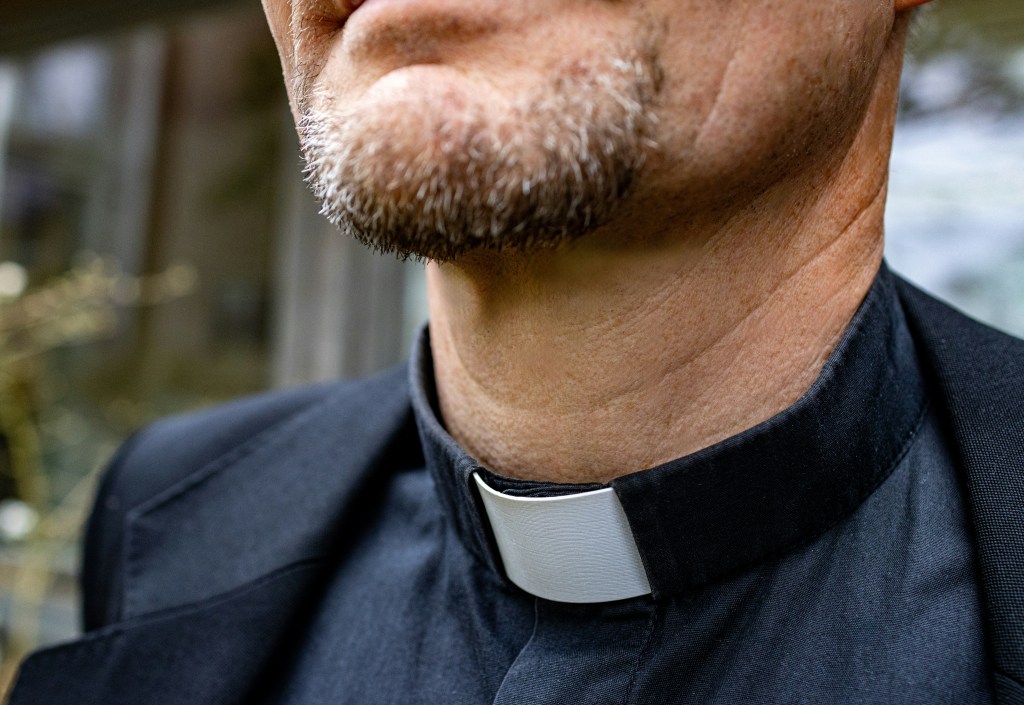




 Entrusted to the Dirt