You're in a place you think you know
Surrounded but you feel alone
You have a place to rest your head, but not a home

Feels like you lost yourself again
Sit in the silence of a friend
'Cause when you are fully known and loved, you have a home

The burden you choose to bear
That keeping yourself from those who care
Problems and pride play hide and seek, you're unaware

That all of the things you keep concealed
One day are bound to be revealed
We paint a picture of ourselves that isn't real

Feels like you lost yourself again
Sit in the silence of a friend
'Cause when you are fully known and loved, you have a home...
But after Patrick the eviler gods shrank in stature and became much less troublesome, became in fact the comical gargoyles of medieval imagination, peering fearfully from undignified nooks, and the belief grew strong that the one thing the devil cannot bear is laughter.
A couple weeks ago we signed up for the local government’s website for foreigners who want to get vaccinated. We need to travel internationally soon, so we hoped for a speedy reply. Our region has until now had more Covid-19 vaccines available than locals willing to take them. However, we waited and heard nothing. And so we waited some more.
Finally, we took a colleague’s advice and walked our family over to the local government vaccine clinic. Armed with the name of the head doctor and our blue passports, we decided we would try to explain our situation, and see if he could make the system work for us.
We arrived to a bit of a madhouse. Locals had not previously been very eager to get the vaccine. But we are currently experiencing record numbers of cases, and people are beginning to panic. Whatever system had been in place was now clearly overwhelmed. So, we braved the wandering crowds holding cotton balls to their shoulders and wandered up to the second floor. We then asked around until we found the room of the head doctor.
It was packed. In one corner the head doctor and his assistant furiously filled out government forms and proof-of-vaccine cards for a jostling crowd that kept shoving their bodies, IDs, and forms right into their immediate space. Of course, it took us a minute to figure out that this was indeed the head doctor, buried as he was in people and papers.
On the main desk across the small room, used syringes and caps lay scattered among stacks of papers. A middle-aged man was rushing to and from this desk and in and out of the room. He quickly spotted us and called us over.
I tried to explain to him that we had registered online but the system didn’t seem to be working, that we needed to talk to the head doctor, etc. He just shook his head, said that wouldn’t be necessary, and told me to lift my sleeve. Then he vigorously stabbed my shoulder with the Pfizer vaccine. I was both shocked and encouraged. I hadn’t expected to get the first dose done today. But there it was. He then did the same thing for my wife, who yelled in protestation at his no-nonsense stabbing technique. Was the method like any other shot we’ve ever gotten? Not exactly. But it was fast.
The next part, however, was anything but fast. We had to figure out how to jostle through or wait out the crowd that was mobbing the doctor and his assistant. We opted to inch slowly forward and wait it out. I’m still not sure how exactly to be both pushy and polite in this culture. Some locals are able to thread this needle very well. Instead, my government office strategy is to be unmistakably visible, but less pushy than those around me. It usually wins you friends in the end, but the wait can take a toll. It is, if nothing else, good stamina training for exercising the fruits of the Spirit. Yep, I’ve been waiting here for an hour, and that guy just jumped the mob/line because he’s a relative or because he’s just pushy. Gritted teeth… Love, joy, peace, patience…
We were provided some brief entertainment by our mustachioed vaccine-stabber, who at one point was in an animated discussion with others in the crowd as he moved back and forth across the room, used needle in hand, point facing out. He was using his hands to gesture dramatically, as Central Asian men are prone to do (I sometimes feel that our local intonation and body language feels somewhat akin to Italian). We watched with concern and fascination and the tip of the needle repeatedly passed just inches from several different shoulders. Eventually it ended up “safely” on the desk as well.
After about an hour and a half of waiting, standing, sweating, squatting, and making “help us” expressions with our eyes above our masks, we finally got our forms filled out. Names here work differently, with most people’s three names being their given name, their father’s name, and their grandfather’s name. That means we have to be vigilant to make sure important forms get written correctly, in the local fashion if needed for a local office, or in the Western given-middle-family name fashion if needed internationally. Today I caught the doctor getting my wife’s last name wrong just in the nick of time.
In the end we waited so long that my wife had to evacuate with the children in order to get our diabetic middle child some sustenance. But being Central Asia, they had no qualms about me as husband signing the place where my wife’s signature was supposed to go. The doctor and I then discussed the relevant information about our family and the second dose.
When we were finished, I thanked him profusely in the local language for our unexpected chance to get vaccinated, “Dear respected doctor, may your hands be blessed. May both of you not grow weary, and may your bodies be whole.”
For that, the doctor gave me a fist-bump. Then he hollered at the next man pushing in to give him his forms. Ah, Central Asia. You wonderful mess of a place.
This week I came across this article by Dr. Charles L Quarles of SEBTS, titled Was New Testament Wine Alcoholic? It contained this interesting trivia: ancient writers and the water to wine dilution rates mentioned in their works.
The article goes on to argue that the most likely water to wine dilution rate of Jews in the New Testament period was 3:1, which was equivalent to a beverage that is only 3% alcoholic. In other words, equivalent to a modern low-alcohol beer. It wasn’t modern grape juice, which wasn’t invented until the Methodist Rev. Welch came along in the 1800s. But neither was it basically the same thing as a contemporary shiraz.
If this is true, then it’s a finding likely unsatisfactory to both sides of the Christians and alcohol debate. The wine consumed by Jesus was actually alcoholic, but in a pretty mild way. You’d have to drink a lot to get drunk. However, you could indeed get drunk from the common wine of the Jews if you wanted to. And there was certainly other wine around that was stronger, judging from the biblical passages addressing the dangers of drunkenness, as well as the testimony of the ancient writers in this Quarle’s article.
While I find the historical context interesting and helpful – these kinds of details really do matter for good interpretation – I’m not at all sure that it changes the biblical principle. Namely, drunkenness is a sin, and any alcohol consumption should be governed by a Christian accordingly (Eph 5:18). This principle seems sound and stable no matter the alcohol content of a given drink.
Just this past week, *Darius was sharing his testimony. It involved his amazement that during our first time hanging out together, I didn’t drink with him and his friends, breaking their expectations of what an American was supposed to be like. But I was then and am still under a no-alcohol covenant required by my organization. Darius wanted to know why I wasn’t partaking of the alcohol they had on hand and that’s what got us into a gospel conversation. That conversation led to more talks, until Darius came to faith.
I smiled as he recounted this story, because in previous years I had had the exact opposite happen. When I was here previously with a different organization, I had felt unexpectedly led to have a beer with my new Muslim friends. That act of partaking led to good gospel conversations, and *Hama ended up coming to faith.
So which is it? Have a beer for the sake of the gospel or abstain for the sake of the gospel? Both, it seems, according to the place where God sovereignly has you. Both can be done for the sake of love. And both postures can bridge to the heart of the matter – that we need new hearts.
“There is nothing outside a person that by going into him can defile him, but the things that come out of a person are what defile him.” (Mark 7:15 ESV)
Wait, can biblical wisdom really leave the door open to both? Won’t that be harmful or confusing?
“For John came neither eating nor drinking, and they say, ‘He has a demon.’ The Son of Man came eating and drinking, and they say, ‘Look at him! A glutton and a drunkard, a friend of tax collectors and sinners!’ Yet wisdom is justified by her deeds.” (Matt 11:18-19 ESV)
To support our family as we head back to the field, click here.
For my list of recommended books and travel gear, click here.
I’ve been spending a lot of time this summer with *Darius, one of the faithful local men who is a part of our church plant. Darius has a wonderful gifting – that of a person who is becoming truly bicultural. People like him are able to function well in two or more very different cultural settings without rejecting either culture. They make great students if their teacher is, like me, from another culture. They also make wonderful teachers themselves, since they still deeply value their home culture and are willing to explain it. It’s no coincidence that 1st Corinthians 9, “becoming all things to all men” has been a passage Darius keeps coming back to lately. All this has made him a lifesaver when it comes to the holes in our cultural knowledge that we still have, even as we approach six years in this context. Here are some of the things we’ve recently learned from him.
Gas Station Attendants. In order to display respect to gas station attendants, it’s honorable for the driver to disembark from his vehicle while being served. Here it’s still the norm for gas station employees to pump the vehicle fuel, not the driver. But to remain seated in the cab is apparently to communicate a certain sense of one’s own superiority over the man pumping the gas. So, just as men should get up (or attempt a half-stand) when another man enters the room, so a driver should get down from his seat and stand on an equal level with the attendant. It’s a small thing, one that we would have likely never spotted had Darius not mentioned it to us. But now that we know we have one more area of daily conduct in which we can act respectfully.
Toilet Shoes. The grossest thing in the world to a local is a home bathroom that has no toilet shoes. These are rubbery slip-on sandals that are worn by locals when they visit the W.C. In order to be a good host, these slippers must always be available, conveniently lined up outside the toilet area. Do they ever get washed? Not that I’ve ever seen. But wearing these toilet slippers communicates cleanliness to locals, and to approach a bathroom while barefoot (outside shoes are never worn indoors) is to be faced with deep horror and dismay. We already had bathroom shoes available most of the time for our guests, but now we have become hyper-vigilant to make sure we always have them at the ready.
Shaving Armpits. And speaking of personal cleanliness, Darius and the other local believers were recently scandalized to learn that Western men don’t shave their armpits on the regular. We foreigners were somewhat shocked to hear that local men do shave their armpits, and that they find it to be a cornerstone of regular personal hygiene. “In our culture that’s really dirty!” our local friends said to us. “In our culture that’s kind of unmanly!” we said to them. Who knew? Apparently we had not gone swimming together quite enough to notice this crucial difference in approaches to body hair. Needless to say, neither side has acted yet on this newfound cross-cultural difference.
If you ever serve cross-culturally, pray for a friend like Darius. Little tips like these are immensely practical as we seek to avoid needless offense and to little-by-little put on the local culture and lifestyle. We won’t always choose to practice these kinds of things ourselves. Local men find it unmanly to wash the dishes, for example. But if we don’t know what the differences are, then we are not free to choose which behavior will best commend ourselves and our message to our local friends.
Sometimes we will not put on the local culture, so as to drive home an important contrast. I will most certainly wash the dishes for my wife, regardless of the locals who might snicker. But most often, we will put on the local culture (and yes, the toilet shoes). This is to be like Paul, so that by any means, we “might save some.”
In the local culture, it’s hard to find a more despised person than a grave robber. That means that if someone is wishing for one, then things have gotten real bad.
Sojourn Music has done it again. This is a song that celebrates what has been called The Great Reversal, how the kingdom of God lifts up those the world despises and brings them full and eternal restoration in God’s presence and house. These things are coming true, imperfectly though truly in this age, but wonderful and complete in the age to come.
Blessed are the ones who will eat the feast in the kingdom of God
Blessed are the blind that will finally see in the kingdom of God
Blessed are the poor, oppressed, and abused
Blessed are the weak, distressed, and accused
When you strike up the band...
Beware what you make fun of. You may someday find yourself having to eat your own words and attitudes – much to the amusement of your observant spouse. There are many things in Christendom I used to judge, things that I ironically now find wise and helpful for my current season of life and ministry. Prayer walking is one of these things.
I don’t know exactly when it became popular to prayer walk in evangelical circles. It first came onto my radar when I was a college student in the late 2000’s. Like many things that have become vogue in missions circles, I felt like I had missed the important initial conversations where everyone hashed things out and demonstrated that this was something biblical, healthy, and strategic. Instead, I started hearing all of the sudden about prayer walking as if it were a long-established Christian tradition that everyone knew how to do. I learned of prayer walking opportunities locally and even short term teams that traveled to other countries mainly to prayer walk the streets. I was a bit skeptical.
Are those people actually praying as they walk? Isn’t that a lot of money being spent on airline tickets for prayer trips when the beauty of prayer is that you don’t have to be geographically present for prayer to be effective? Does prayer walking become an excuse for not sharing the gospel?
Some of these questions still remain. And I still haven’t had that Introduction to Prayer Walking class that everyone else seems to have had. But I have myself stumbled into becoming a prayer walker over this past year. And I have found it remarkably helpful for my spiritual life.
The first step was coming across a one hour prayer plan on The Cripplegate blog. I was intrigued by this practical prayer plan from the 1970’s that I had never heard of. One hour divided up into twelve portions of five minutes, each a different kind of biblical prayer. I knew my prayer life was in need of some fresh structure and vision, so I filed the plan away in hopes of returning to it in the near future.
It was some months before I came back to this plan and decided it was time to actually try it out. As I experimented with it, I tweaked a few of the categories, cutting out some areas that felt like reduplication and adding in some new categories, such as lament. Here are my twelve.
Praise and Worship + honest assessment of my soul.
Waiting on the Lord in silence
Confession of guilt, sin, and shame
Praying Scripture
Lament, Burdens, and Brokenness
Intercession
Petitions
Thanksgiving
Song/Poem
Contemplation/Meditation
Listening/Watching
Praise for what’s true + renouncing lies and unbelief
My former prayer life was heavily weighted in favor of petition, intercession, confession, and thanksgiving. This more holistic prayer structure breathed fresh life into my prayer rhythms and gave me a place to put biblical practices that weren’t really taking place elsewhere – things like lament and silence. Sometimes a new structure is all that’s needed to spur encouraging growth.
This prayer hour worked decently well for me when I was trying to do it alone at home, but eventually I had a hard time staying focused. I was also needing to incorporate more physical activity into my day – and learning that I had a woefully underdeveloped theology of the body. Truth be told, for many years I lived as if I was a disembodied spirit, not an embodied creation with a good, but limited physical body. I pushed hard for the sake of ministry, not really believing it was that important to take care of my physical health. Because of realizing all of this, I was chewing on whether or not there were ways to better glorify God with my body, and not merely with my mind and my relationships.
I had other questions. Why is walking with God the language the scriptures uses to describe Adam and Enoch’s spiritual disciplines? And is this only meant to be a metaphor? What effect would moving feet have upon focus and meditation? And what loss would come by not being able to easily write things down? What about the brutal Central Asian summer heat?
Sometime after returning to our region this past autumn, I decided to pull the trigger and try an hour prayer walk. Armed with my recently purchased Fitbit, I set the countdown for five minutes and walked out my front gate of my Central Asian row home.
The first day saw my soul deeply encouraged, and my body more tired than I had expected. My ability to focus with my eyes open and my feet moving was much better than I had expected. This was extra noticeable in the meditation on scripture portion – a fun surprise. Who knew that some degree of physical movement would be highly compatible with gleaning insights from a Bible verse? To be honest, I find I’m better at meditating on a passage when walking than I am when sitting down.
It’s now been nine months or so that I’ve been seeking to do this almost daily. And I continue to find it good for both soul and body. My current practice is to walk and pray in the bazaar, mixing up the empty streets with the more crowded. Because of the time of year, I try to stay on the shaded sidewalks as much as possible. An hour walk in 110s degrees Fahrenheit (44 degrees Celcius) sun is no joke.
A few practical notes on what each of the twelve sections tends to look like:
Praise and Worship + honest assessment of my soul – This usually starts off sounding like, “I praise you because you are fully alive and the source of life itself… and I do not feel fully alive today.”
Waiting on the Lord in silence – Focusing my mind on the presence of God and on one simple true thought, such as “God is with me” or “I am in Christ.”
Confession of guilt, sin, and shame – Not just sin and guilt, but where am I struggling with shame as well? That also needs to be brought to the cross.
Praying Scripture – This is one of the trickier parts of the prayer walk. Using a Bible app on my phone has been key for this working. But sometimes I will find a spot to sit down so that I can better read scripture and pray it as I do so.
Lament, Burdens, and Brokenness – One of my favorite new additions to my prayer life. It’s a daily chance to bring the things to God that are just hard for me personally (or have been in the past), as well as things like societal sins and tragedies. Five minutes a day of this has been remarkably life-giving.
Intercession – Praying for others.
Petitions – Praying for daily bread and things impossible.
Thanksgiving – Remembering to rejoice in God’s specific and faithful provision.
Song/Poem – A chance to engage my affections with truth put to music or verse, either by singing something myself or by listening to a favorite song.
Contemplation/Meditation – Chewing methodically on a small passage of scripture to see what insights emerge, usually a couple verses at a time as I work through a book.
Listening/Watching – More silence, listening to the sounds of God’s creation and anything else he might impress on soul or mind. Not demanding a certain type of clarity or word. Paying attention to the visible beauty of creation.
Praise for what’s true + renouncing lies and unbelief – A daily chance to recognize the particular lies I’m wrestling with that day, and to apply God’s truth against them. “Lie: I feel like God is disappointed in me. Truth: He delights in me today and for all eternity.”
I decided not to write about this prayer walk rhythm until I had actually done it long enough to know I would stick with it and could vouch for it. Coming up on nine months of this now, I’m happy to commend this prayer structure as one good method among many for carrying out biblical prayers in all their diversity. It’s no silver bullet. You may find prayer walking through a structured hour like this not that helpful for you. But this method has been life-giving for me, so I share it here in hopes that it will be helpful for others also.
I confess that after a year or so of blogging almost daily, I’ve gone dark for the last month or two. What happened? Well, we found out we needed to move again, and that I would be taking on a new leadership role, while still doing my previous role in the interim. This has meant countless trips three hours each way to our previous city over the course of the summer, seeking to be meaningfully involved in two cities and their respective church planting teams. We’ve also had many groups of visitors, sometimes overlapping. Plus fixing up the 75 year old stone house that we now live in. Throw in record temperatures, regular teaching responsibilities, some very hard unexpected things and some very good ones, a puppy and small children.
It has been a bit of a madhouse. Or, as locals say, “It’s become a donkey bazaar.”
Now, sadly we no longer have actual donkey bazaars. This would be a part of the main bazaar where one would go to buy or sell said stubborn beasts of burden. But it’s not very hard to envision the noise, the smell, the absurdity of a whole street or courtyard full of these furry creatures, braying and jostling all together, prospective customers slapping their rumps and inspecting their gums. It’s a local language idiom I was glad to learn, and one that has already proved very useful in daily conversation. One could use it to describe a crazy season, as I am here – or perhaps to describe the current state of Christian Twitter.
However, in spite of the pace and the challenges, we have seen God’s kind provision for us and his active help toward us over the summer. Key lessons have been soaking in. The importance of self-aware humility and the danger of self-deception. The frightening truth that “we become what we tolerate.” The consequences of drinking unfiltered Central Asian well water in the summer. The importance of never again letting battery acid spill all over the interior of my car. The glory of God displayed in coffee and bacon smuggled in from the West. You know, the basics.
Through it all, God has been faithful. And I have missed writing. This season of letting it slip away has cemented my desire to get back into the daily habit. Some creatures just can’t think quite as well until they’ve put things down on paper, or on a screen. Apparently I have been wired in this way. And with the complexities of my particular donkey bazaar, I am frankly not sure I can afford not to write. Or at least I will not be as fully alive without it, which again, is something I’m not sure I can afford. “The glory of God is man fully alive” goes the somewhat mistranslated ancient Irenaeus quote.
To everyone who has read my blog until now, and to those of you who even subscribed during my absence, my sincerest thanks.
“Wow, you have learned our language! That’s great. Those _______ people live here for decades and never learn the language. They are fathers-of-dogs! You know that word, right? Fathers-of-dogs, am I not right? Hahaha!”
The high ranking security police officer was egging me on to join him in his racist jokes. While I appreciated the goodwill built by his appreciation of our language learning, I wasn’t thrilled that the conversation had taken this turn. I didn’t engage, and thankfully, he turned to his supervising officer for affirmation, and then stamped our paperwork.
In other circumstances I’ve sometimes been bold enough to offer a proverb as a rebuke to these kinds of comments. “As your people say, Don’t burn the wet wood with the dry wood.” This day I hesitated, not sure whether to take that route with this high-ranking official, and the moment passed.
Our focus people group, like all people groups in the world, struggles with the sin of racism. In years past, they were the oppressed, and hated their oppressors en masse. Now, the tables have turned in our region, and they still hate with a vengeance that very same people group – who have now become the oppressed.
Our focus people group’s racism has roots in legitimate grievances. Genocide. Betrayal. Blood feuds. War. Enslavement. Now, the formerly dominant people group also carries legitimate grievances from the injustices committed against them more recently by people like the officials we dealt with that day. They even had some legitimate grievances when they were the oppressors. Whichever position a group is currently in, the sins of the oppressed and the oppressor tend to intermingle in a tangled web of historical chicken and egg accusations.
How far back shall we go? If we stop keeping score at a certain point in history, is that not an arbitrary decision? If we stop where the records stop, is that not to naively proclaim the oppressed group at that point uniquely innocent in the history of humanity – that the absence of records proves that they alone did not do the very same things that every temporarily dominant group tends to do? Is not every people group – in the broad lens of history – simply another representative of this great democracy of the damned? For yes, all people groups have sinned grievously against others and fall short of the glory of God.
But these questions are not the main thrust of this post. Instead, I want to highlight a subtle danger faced by missionaries everywhere, and especially by those working with historically oppressed groups. The danger is that in our love for our people group, we will go beyond appropriate empathy, lament, and action – and begin to absorb some of their racist views and attitudes.
It’s very easy to do. As a cross-cultural worker you strive to love your focus people group so much that you actually become like them. You strive to put on their language, culture, and lifestyle to the extent that you are personally and biblically able. The momentum is in the direction of absorbing huge portions of the cultural cake. But here’s the problem. Racism always comes baked into that cake. And sometimes we ingest it.
In our context, we find ourselves starting with a preference for how our focus people group does things (granted that we come out of culture shock alright). Then, that preference starts to mutate into feelings of judgement when we see how the enemy people group does things. Before long we find stereotypes coming true in our own experience and realize that have to check ourselves. If our jokes and our attitudes and our side comments about those people groups begin coming out slanted, it likely means our hearts have already followed our local friends’ into dangerous places.
How can we fight this momentum such that going deep into a certain language and culture doesn’t mean taking on its unique racist tendencies? A few practical suggestions. Believe and preach what the Bible says about how the gospel overcomes racial animosity. Pursue relationships with at least a few members of that “enemy” group. And finally, aim to plant multi-ethnic churches.
The Scriptures are not silent about the power of the gospel to overcome deep-seated hatred between oppressed and oppressor people groups. The fusion of Greco-Roman and Jewish Christians into local churches in the early church is what precipitated and resulted from passages like Ephesians 2, where Paul celebrates how the gospel has torn down “the dividing wall of hostility” between the Gentiles and the Jews. In Acts, the inclusion of the Samaritans in chapter 8 and the Gentiles in chapter 10 is intentional, and would have been a shocking racial development for the mainstream cultures on both sides. And it’s not like they then self-filtered into homogeneous groups. The diverse leaders of the Antioch church in chapter 13 and the ongoing conflicts present in books like Romans tell us otherwise. Jews and Gentiles, oppressed and oppressors, became fellow church members. Believing and preaching these kinds of possibilities for current people groups that hate each other provides the knowledge and passion that can mount an effective defense against absorbed racism taking root.
I was once in a taxi with a group of friends from an international church. When I spoke to the taxi driver in the local language, he went down the typical road of complementing me and proceeding to throw millions from his enemy people group under the bus as idiots who don’t learn the language. “Yet I’m one of them,” a voice piped up from inside the taxi, speaking in the local language. I suddenly remembered that one of the passengers in the car with us was a believer from the enemy people group. I’m not sure what I was about to say in response, but I remember feeling very certain that it would not have been as respectful as it should have been for a member of that group to be in the car with us. This was a bit jarring, realizing that my friendship with this man (and his presence) caused me to alter my response so much for that taxi driver. But it was also very healthy check. Knowing this young man meant I was able to better humanize his people group in that encounter. Knowing him as a brother in the faith meant the family honor was on the line. This is exactly why we need to pursue relationships with the enemies of our focus communities. Their faces and their names will serve as vital safeguards against absorbing our adopted group’s racism.
Finally, the danger of putting on the sinful racial attitudes of our focus people group calls for the long-term goal of planting multi-ethnic churches, where former enemies can worship side by side. Planting language-specific churches is very appropriate. A common language means biblical church order can actually take place. And as a language learner myself, I testify that no one should be forced to worship God in another’s language. Doing so should only be embraced by free choice, as we have done. For groups that have experienced suppression of their language, a language-specific church is even more vital. But if enemy people groups or individuals share significant linguistic overlap, then working toward local churches that display the broken wall of hostility should be our aim. Just like the New Testament church, if we live in a context of diverse groups at enmity with one another, we should strive to be able to verbally and visually proclaim that “Here there is not Greek and Jew, circumcised and uncircumcised, barbarian, Scythian, slave, free; but Christ is all, and in all” (Colossians 3:11).
We don’t have to absorb the prejudice and racism of our adopted people groups. We shouldn’t strive to become like them in that way. Yes, the temptation is real – and subtle. Fear of man, love for our people group, and our own natural tendencies all push us into an unhealthy worldview where other groups are viewed as less human than the one we are called to. But this can, and should be fought. After all, the dividing wall of hostility has been destroyed. And so we are free. Free to love the oppressors. Free to love the oppressed. Free to guard against burning the wet wood with the dry.





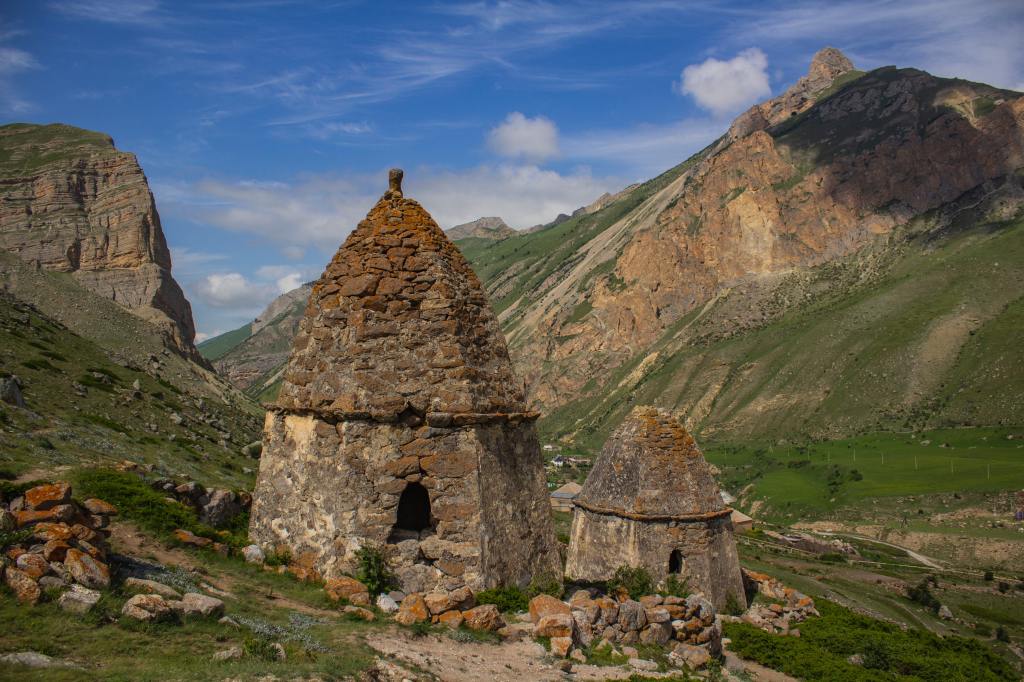


 Entrusted to the Dirt