Seven Factors for Missionary Homes

Whenever new personnel come to the field, we end up discussing the pros and cons of the housing that’s been chosen for them. Usually there’s some concern that it’s too nice compared to how locals live, but sometimes there are concerns that the place is not nice enough. I try to encourage them to settle in to the place they’ve been provided, and to keep their eyes open for the various ways in which locals and foreigners live here. “In a couple years,” I encourage them, “you’ll be in a great spot to find your own posture as far as housing and standard of living.” As we’ve given our colleagues here eventual freedom to choose to live in more modern or traditional places, they’ve felt better able to find their own personal fit regarding this very practical question.

A word of advice to team leaders or church planters out there: insisting on one rigid standard of living for your team doesn’t tend to work out that well. Rather, letting people wrestle with the following factors helps them to balance the different aspects involved, and make a decision with deeper buy-in. We don’t have to all live the same way on the mission field. A variety of housing lifestyles is healthy even for local believers to see. This is another area where we need to be careful not to create laws, even if we have personal convictions regarding what kind of housing is truly strategic.

  1. Access. The most important factor for missionary housing is access. Can workers who live in this house or apartment easily access the people group or the area they are called to focus on? We want to redeem the time and not live in a house that bogs us down in transit or isolation unnecessarily. We are also all creatures who struggle with motivation. When that culture shock is running you over, you want access to your people group to be there with as little resistance as possible. Living next door to (or on top of) your focus people group provides gospel opportunities, even when you might not want them. Easy access is not always possible, but when it is an option, it’s an extremely important factor.
  2. Hospitality. Does that potential home lend itself to gospel hospitality? Will locals feel comfortable visiting you when you invite them? Does your wife find the hosting space efficient or frustrating? Socioeconomic dynamics can have an effect here. If your house seems too fancy or too rough, locals may not feel free to visit you. In our context where apartment towers are a very new thing, many locals are afraid of high buildings, and might not be able to visit an apartment on the 20th floor.
  3. Relatability. Does your house or apartment and the way you live have much overlap with the way that locals live? Or is your house laid out in a foreign way, or lacking important items that locals believe should be in every home (like bathroom shoes)? It’s usually not wise for foreigners to try to live exactly as the locals do, but we should aim for healthy overlap. There should be ways in which our homes feel local, and ways in which they feel Western – especially for rest needs. Our first house in Central Asia was very nice, a surprising step up from where we had been living in refugee apartments in the US. Our second house ended up being a little too small and rough for our family and ministry needs. Our third house? Hoping for the right balance.
  4. Longevity. Is your home restful for you, your roommates, or your family? After spending yourself in local ministry, is your home a place where you’re actually able to recharge? If your house is the biggest cause of stress you have, you likely need to move. Some of our colleagues have moved into communities with 24-hour electricity and have experienced a major decrease in their stress levels now that they don’t have to juggle various fragile electricity systems. Many of us have also lived in homes without adequate natural light, and have learned to prioritize this as a practical way to fight discouragement. My family has moved into an old stone house, but one with green trees and lots of dirt and easy access to the bazaar. Why? Because green and dirt and walking the bazaar are life-giving for us. And it all adds up when it comes to longevity – the ability for workers to actually stay on the field.
  5. Team. Are you close enough to your teammates to be able to function as a healthy team, with regular rhythms of meeting, eating, and working together? One of the costs of our current house is that it is a 30 minute drive from our teammates. But for our first two years on the field, we were neighbors with one set of teammates and lived just up the hill from others. This easy access was crucial in those early days. Sometimes we can prioritize strategy over team and community, and only later realize the deficit that’s been building.
  6. Life Stage. Are you married with small children? Apartment living might not be the best choice, unless you can find a place on the ground floor. You probably don’t want to tell your kids to hush all the time. Are you living in a Muslim context but have teenage daughters? A house in a conservative neighborhood could end up severely limiting your girls’ freedom and end up leading to bitterness. Health problems can also mean needing to live somewhere newer with better utilities. Singles may also not be permitted to live in some neighborhoods because of honor/shame or safety issues. Access to schooling can also be one of the most important factors here.
  7. Beauty. This has been a growing category for me personally. In the past, beauty would not have registered as an important aspect of which house to live in. But we are creators by nature and even in this unstable age we are called to plant gardens in Babylon, as it were. Once again, everything adds up when it comes to longevity. Access to beauty at home, or the potential to create beauty by moving into a fixer-upper – these things could actually make the difference in whether or not that internal stress cauldron boils over or not. My mom used to garden in Melanesia. For years I never understood what the point was. Now I am starting to get it. Our lives are supposed to be little previews of the new heavens and the new earth. Splashes of beauty in or around our physical domiciles contribute to that overall foretaste that we hope to give our local friends. In one sense, investing in the beauty of our homes on the mission field doesn’t feel like a very “pilgrim” thing to do. But we are not merely utilitarian beings, laser-focused on the spiritual while ignoring the physical creation around us. We were gardeners in the beginning. We will one day be part of an eternal garden city. Therefore, as “pilgrim gardeners” we are not foolish to hint at these realities in the here and now, even as we admit that these good previews might be here today and gone tomorrow.

We should be careful not to create laws about missionary housing that stem more from preference than sound principles. These seven factors, however, are worth considering as church planters, missionaries, or really any Christian wrestles with how to live on mission in this needy world. There is no perfectly balanced place to live this side of heaven. But by being intentional in where we choose to live, we can have a home that is an aid to our mission, rather than a hindrance.

To support our family as we head back to the field, click here.

For my list of recommended books and travel gear, click here.

Photo by Marko Beljan on Unsplash

Only Begotten Brother

At lunch yesterday with some colleagues and local believers, Mr. Talent used a unique phrase to call the waiter.

“Only begotten brother! We’d like some more fermented yogurt water!”

Since it was my first time to hear this particular title, I wasn’t sure if I had heard right. Sure enough, he continued to use it to hail our waiter.

The phrase seems to come from the local word for brother combined with a word that we don’t have in English, which means something like “only child” but can also be applied to an only son in a family of daughters, or vice versa. I can use it for my only daughter, but I can’t use it for my sons. Our King James phrase, “Only begotten” is not too far off, and indeed, this is the local word our language’s translation uses for God’s only Son in John 3:16.

This word also carries with it a sense of special honor and affection. Since it’s organized along male kinship lines, it’s not surprising that our Central Asian culture would bestow this kind of title onto an only son, but I’ve been encouraged to see that this unique honor and affection can also be extended to only daughters. These “only begottens” might even end up a little spoiled.

But I had never heard this kind of special familial term extended in this way to someone like a waiter in a restaurant. It was a perfect example of how honorable titles here are regularly proclaimed onto others in the course of daily business and interactions.

“My flower”

“My soul”

“My lion brother”

“My liver”

“My beautiful son”

“My eyes”

“My dear uncle on my mother’s side!”

I’m only scratching the surface here when it comes to the titles that men can use to refer to their neighbors, friends, and shopkeepers.

One of the hardest things for us to learn as Westerners is this constant art of blessing or honorable proclamation – even after we get up the courage to call a man our flower while kissing his cheeks. I still catch myself mumbling respectful phrases when I should be projecting them confidently. At least that seems to be what Central Asian fathers teach their sons, since they all grow up really good at the art of bold title bestowing.

I find myself a little unsure. “What if they don’t want to be called my lion brother?” But my local friends don’t seem plagued by this doubt. It doesn’t seem that the qualification for the title resides in the recipient, but rather in the will of the one bestowing it. Central Asian men are going to call you that honorable thing whether you feel like they should or not.

In this I see a small window into the nature of God, hidden away in our broken local culture. Does God not also proclaim honorable titles over his children, friends, and enemies dependent only on his divine pleasure? And does he not keep on proclaiming them whether we feel worthy of them or not, whether we want them or not on a given day?

“See what kind of love the Father has given to us, that we should be called children of God; and so we are.” 1st John 3:1

“No longer do I call you servants, for the servant does not know what his master is doing; but I have called you friends…” John 15:15

I want to get better at proclaiming respectful titles over my friends and acquaintances here – and not just so that I can become a Central Asian for the sake of reaching Central Asians. I want to become more like God.

In this culture awash with honorable pleasantries, it is not the most skillful orator who will be noticed, but the one whose honorable blessings actually come from the heart. In this case there will be some who truly come to fulfill these titles, to surpass them even. How? As they hear the gospel and are transformed from one degree of glory to another, for all eternity.

Photo by juan pablo rodriguez on Unsplash

Winter Lessons

When you move houses in our region, you have to live through all four seasons in order to find all the new place’s quirks and needed repairs. We are in our first winter in our old stone house and the quirks and issues have certainly kept us busy. As I write this, our house’s conductor for national electricity has burnt up, leaving us without power all day. Hopefully that will be remedied before sundown! The following is a list of lessons I’ve been learning while living through our first winter in this old stone house in the bazaar.

Rats. Rats apparently live in the old underground pipes, and they want to come inside in the winter and they love dry dog food. Not long ago we realized they were getting into the bag of dog food under our sink. Since we plugged all the holes in the walls (we think) they must have come through the kitchen drain. Upon inspection, we found that they had chewed through thick plastic piping in order to get to their coveted doggy chow. Thankfully, they have the same live rat cage-traps here that they had in Melanesia. And dog food proved to be the perfect bait. We caught two monstrous Rattigans and proceeded to dispose of them by drowning them in a bucket. The covering for our drain is now metal, so hopefully that keeps them out going forward.

Mice. We also caught a very cute little mouse. Unfortunately when guests unexpectedly came over, we put the toddler-named “Gus-gus” out on the roof in the cage-trap which caught him. It was a winter rain storm at the time and the little guy didn’t make it because of the wet and the cold, much to my kids’ sadness (and perhaps my wife’s relief).

Drains. The winter rains also cause the drains to stink like soggy-rodent-meets-rotten-eggs. Still working on a permanent fix for this one. Perhaps S-trap piping under the sinks will work.

Natural Gas. We are going through a regional natural gas shortage, which is what locals and we use for cooking and heaters. I realized too late that our neighborhood doesn’t have a good gas bottle exchange system and that we were almost out. In most neighborhoods, gas trucks roam slowly while playing ice cream truck melodies. But these trucks are very rare right now, even in the other neighborhoods where they ply their trade. One of the only remedies is to show up at certain gas supply stores at 6 a.m. to wait with a huge crowd of other men to get one small tank exchanged. I’m no good at the Central Asian crowd shoving thing and I covet my quiet mornings so I haven’t gone to do this yet, but may have to grit my teeth and bear it if our supply runs out before the shortage ends.

Oak Wood, TP, and Silicone. We bought a small aluminum barrel stove for burning wood for $12 so that we could heat a room in the evenings and stretch the natural gas further. We have had big piles of wood in our yard from tree trimmings and other projects. But what the locals say is definitely true. The wood of our mountain scrub oaks burns hotter and way longer than other types of wood. Get yourself some oak wood for your fireplaces, it’s great stuff. Also, stuffing TP rolls with dryer lint makes for a great fire starter! Who knew? However, you can’t seal your village stove chimney pipes with normal silicone. If you do, the whole room will be filled with smoke from the melting silicone, as happened to us on Christmas morning.

Backups of Backups. As I’m reminded every winter, it’s very wise to have backups of backups – and perhaps backups of those. This is because the government cuts way back on electricity in the winter amid the cold and the load put on the system by electric heaters. When national electricity is on, we can run as much as we need to. When it’s off, our neighborhood generator (available 1pm – 1am) is our backup. We can run 16 amps on that. When both are off or broken we have a battery-inverter system for some lights and internet (up to 1 amp). Our gas heaters serve as our back up for heat, and now our wood stove is our backup for when there’s no gas. I’m currently chewing on a backup system for hot water as the electricity hasn’t been enough for hot water in the evenings. The goal is to have enough backup systems so that when things break (as they regularly do) you can schedule a repair, carry on with your work, and it doesn’t have to destroy your schedule or cause much stress.

Long Johns and Thermal Socks. Man, do these make a difference in a Central Asian house in winter! When I first moved to this country with 120 degree F (48 C) summers, I scoffed at the suggestions I got to bring this kind of winter gear. But I have since repented of my youthful folly. I recently had a team bring over some new thermal socks, and my feet are very grateful as they walk on the cold tile.

Well, there’s my list of current winter lessons I’m learning (or relearning). We don’t usually put stuff like this in our prayer letters. And yet depending on the season these kinds of life logistics can end up being a very big part of our lives. Talk with missionaries all over the world and you’ll hear similar stories. One trip to the market is an all-day affair. One simple repair project consumes multiple days. The quest for working systems at home can be all-consuming.

It’s not glorious, but it is one important part of maintaining access and presence among our focus people groups or cities. And though I’m not exactly sure how, even dealing with rodents and the fried electricity boxes will somehow count for all eternity.

Photo by Joshua J. Cotten on Unsplash

Like a Hand With Five Thumbs

If I have the option to join a church overseas made up only of other missionaries or to join with a local or international church, I will choose the latter options every time.

It’s not that I don’t enjoy worshiping and fellowshipping with other cross-cultural workers. I enjoy it very much and the spiritual friendship is often rich. We share so much in common – gifting, calling, passion, interests, etc. These people are very much my tribe. But therein lies the problem. We are so remarkably similar.

Imagine a hand that has five thumbs. Sure, it may come with certain advantages, but it wouldn’t be digit-diverse in the way that hands were created to be. It would be lopsided, unnatural, out of balance.

This is how it feels when I do house church with only other missionaries. In spite of our diversity of personality and background, we are like a hand of thumbs only. Crucial strengths – and weaknesses – that would be present in a more diverse church are missing. This leaves us in danger of serious blindspots, and in danger of being an incomplete portrait of the body of Christ for a world that desperately needs to be exposed to such a community.

Cross-cultural church planters tend to be strong in certain giftings – evangelism, faith, vision, knowledge, strategy. We tend to be from well-educated middle-class backgrounds. We are part of the demographic that has benefited from globalization. We live a transient life by choice, renting and not owning, traveling back and forth from our places of service to our home countries. We do the work of ministry full-time or, like me, have only part-time platform jobs. We deeply feel the need for contextualization and reproducibility and often don’t deeply feel the need for tradition or organization.

Contrast this to an international church I was a part of in a previous city. The elders were from multiple nations and continents. The attendees were migrant laborers from South Asia, refugees from neighbor countries, businessmen from all over, a few locals with good English, and some Western missionaries like us. While this particular international church had a strong vision for local church planting (which is not always the case), they were also able to provide a very different – and grounding – perspective on our cross-cultural work. They didn’t have the same hangups that people like us did, nor did they have the same blind-spots. It was strange – and refreshing.

I am all for devoting my life and my heart to my focus people group. But there was something very healthy about showing up to a service and being greeted by brothers and sisters from very different people groups and walks of life whose language and culture I am not devoted to learning. It was a humbling reminder that our responsibility to be spiritual family in the body of Christ is broader than our individual callings. It was like being stretched on a weekly basis and thrust out of my ministry bubble into a much bigger one, one which had some very different questions, needs, and concerns – one where I was worshiping side by side with believers from “enemy” people groups. I found it profoundly helpful.

Many missionaries around the world have no choice but to worship only with others like them. There are no international churches where they live, and the local churches they seek to plant don’t exist yet. Sometimes the only churches present are false churches or profoundly unhealthy. I have been in similar situations myself. But many missionaries choose to worship exclusively with others like them in an effort to stay focused on their strategy and task. While I understand where they are coming from, I believe they are missing out.

Thumbs need pinky fingers. And missionaries need regular contact with other diverse members of the body of Christ. Whatever you make of the controversies that have swirled in missions in recent decades – insider movements, Muslim idiom translations, movement methodology – each represents perspectives that spread with broad acceptance in the missions community only to later encounter fierce resistance from pastors and theologians.

In our zeal to reach the nations, sometimes we missionaries come up with – or spread – dangerous stuff. If the only input we are getting is from other cross-cultural types, then we are likely to miss the danger and join in on the excitement. And it makes sense that this is the case. We cross-cultural workers are shaped by similar forces. However, were we to run new and exciting methods by wise pastors, brows might quickly furrow.

Pastors tend to think differently than missionaries do. And this is a good thing. We need one another’s perspective. Sometimes the local church gets stuck and needs a missions perspective in order to break out of old wineskins. Sometimes missionaries go off the deep end and need the church to wisely call them back to solid ground.

We also need the perspective of the poor migrant worker, the persecuted and struggling believer, or the man or woman holding down an average career who owns an average home. These “inconvenient” or “not sold out” believers are just as valuable in the eyes of Christ as we are – even if they never plant a church or multiply disciples. To sidestep them is to rob ourselves of sharing in some of the deepest riches of the church. If we isolate ourselves in churches full of only similar type giftings, then our churches are highly likely to be less healthy and less compelling.

Time is a challenge, I get it. The nations desperately need to be reached and very few of us are devoted to the hard work of learning the languages and cultures of unreached people groups. It’s very difficult to be meaningfully involved in one church while trying to plant another one at the same time. The kids can only take so much running around.

Yet we must not forget that missions is not an end-justifies-the-means endeavor. The end of all nations worshiping Christ must happen via the biblical means. That means is the local church, messy, diverse, slow – and beautiful. Full of all members of the body, not just thumbs.

Photo by Muhammad Rizki on Unsplash

A Proverb on Knowing Value

The value of gold is with the goldsmith.

Local Oral Tradition

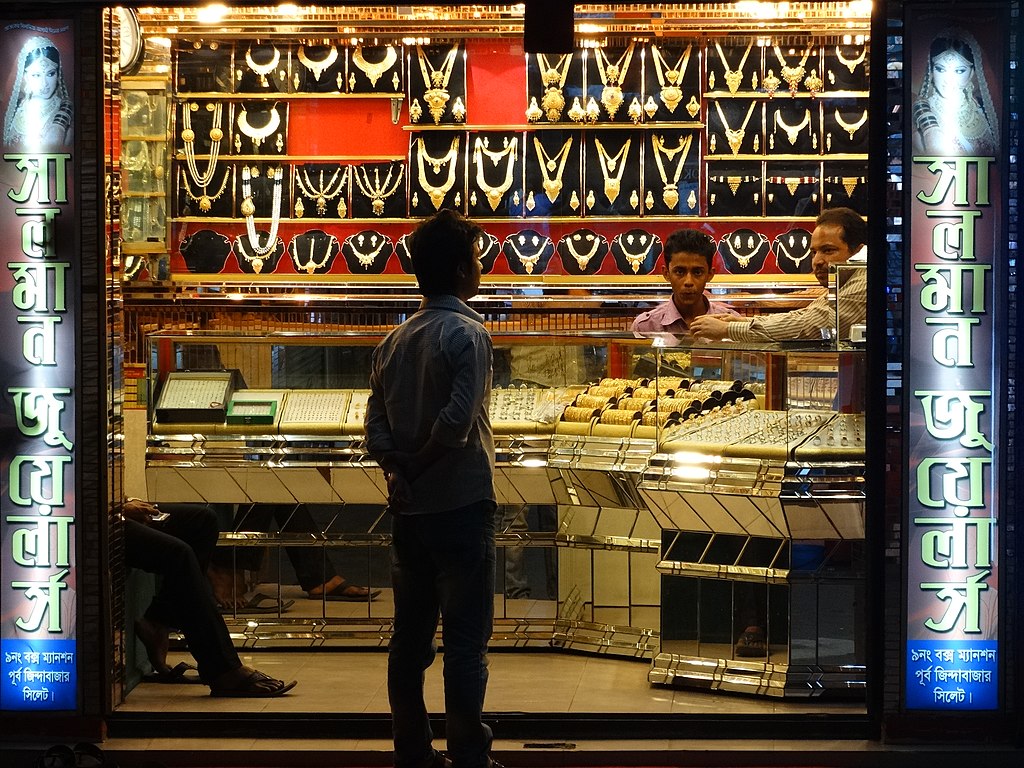
This local proverb speaks to the importance of experience in knowing the value of something. A parent truly knows the value of children. A scholar deeply feels the importance of his area of focus. The goldsmith or gold seller – and we have entire sections of our local bazaar full of gold shops – is the one best able to value gold.

Much missiology is done in reaction to unhealthy churches. Cross-cultural workers who have never been part of a healthy church come overseas confident of what they don’t want to plant, but have no clear positive vision for what they want to see come about. This can mean that church gets radically redefined or even dismissed. These workers are ripe to be swept up in the latest missiological fad which promises amazing results. This is due, in part, to a deficiency in their experience. Perhaps all they have known are churches that are dying due to an unwillingness to change extrabiblical traditions or megachurches awash in seeker sensitive antics.

However, one who has been a part of a healthy church knows the value of a body of believers that pursues the biblical characteristics of a local church. They have been inoculated to the position that “We’ve done church all wrong in the West” because they have seen and tasted the power of a faithful New Testament local church. They know the secret that healthy church principles transcend centuries and cultures, albeit while putting on appropriate aspects of local culture.

Don’t send out missionaries who practice a missiology of reaction and who have a dismissive attitude of Western local churches – all the while being funded by them. Look for those who have lived as healthy church members and who deeply love the local church, even with all its flaws. These workers are in the best position to take New Testament principles for the local church and to seek to plant them across cultures.

Photo by Adam Jones on Wikimedia Commons.

Angler Fish, Howling Mice, and Trusting God With The Excess

I’ve been in a season of more teaching and public speaking than usual. This has been good for me, as presenting or teaching in public – once easy and enjoyable – has been for a long time now a battle against anxiety and panic attacks. That struggle is getting easier, by the grace of God. Though I still long for much greater freedom in this particular area of ministry.

These opportunities to teach have reminded me of one dynamic that teachers know all too well – that the overwhelming majority of your prepared content doesn’t stick in the minds and hearts of your listeners. I find myself praying as I begin, “Lord, by your Spirit, allow those particular truths that we need to actually stick onto our minds and hearts today.”

As a freshman in college, about to embark on an intense yearlong worldview, history, and missions course, I remember John Piper encouraging our cohort in this area. “You’re only going to get five percent – tops – of what I teach or what your other professors teach you in a given lecture. What do we do with this? Should we despair?” The small percentage I remember from his conclusion is that we shouldn’t worry about that ninety-five percent that falls by the wayside. If the affections have been engaged by God’s truth, then that person has momentarily seen more of Christ, and it has been worth it.

That’s quite a sacrifice. Ninety-five percent of prepared and taught content being sacrificed for the five percent that might stick and engage the affections. An entire sermon spent for the sake of that one sermon idea, point, off-hand remark, or illustration that a listener holds onto. Hours and hours of preparation so that a listener might remember a few convicting words and might move a few millimeters toward faithfulness. In the end, the vast majority doesn’t stick. It melts away, like a snow dusting on our Central Asian street as soon as the sun rises.

Thinking of this can be a bit discouraging. It leads some missionaries to scoff at lengthy lessons and sermons as Western and ineffective, not reproducible and a waste of precious time. But does the amount lost – the amount that doesn’t stick – actually mean we are doing something wrong?

I have found encouragement recently in reflecting upon how very “wasteful” God seems to be in his secondary book of revelation – the book of creation.

The heavens declare the glory of God, and the sky above proclaims his handiwork – Psalm 19:1.

Creation – all of it – is preaching about the glory of God. It is constantly doing this. And it is doing it everywhere, whether we are paying attention or not. It simply proclaims and keeps on proclaiming, even when there is no one around – no humans anyway. God, and the creation itself, don’t seem to be bothered by this great “waste.” Rather, it seems as if they revel in it, like it’s some kind of fun secret that we are the poorer for not being in on.

Was it a problem that creatures like the angler fish (horrifyingly fascinating and bio-luminescent) and the grasshopper mouse (eats scorpions, immune to their venom, howls like a wolf after eating) weren’t discovered by humans until 1833? What about all their “sermons” they were preaching in the previous thousands of years about the glory, creativity, and unexpected artistic flourishes of God? Was there an exasperated sigh in heaven when these bizarre creatures were at last discovered? Or… perhaps rejoicing? “Ha! They finally found that one! They never saw that one coming!”

God, it seems, delights in all of this excess. He does not seem concerned that we are getting such a small percentage of the rich homilies pouring out of nature day and night. He is beyond lavish in his sermons, and knows that most are not being retained by our limited minds and attention spans.

Perhaps this is because we were never the primary audience in the first place. Those angler fish and grasshopper mice were intended primarily for the pleasure of the king. The songs of the stars? The same. They exist as an overflow of the love between the Father, Son, and Holy Spirit. Their purpose is first God-ward, and then after that we are invited to listen, learn, and join in.

This then leads to an encouragement for the discouraged teacher or preacher. That sermon or lesson was never meant to be primarily for your hearers. Instead, it was an act of worship to the king of the universe. And the hearers might hold onto that one random sentence for years to come. What a bonus!

I am regularly encouraged by the seemingly random things that do stick. “You took away that from my teaching? Huh.” And I am even learning to find joy in the parts no one seems to remember. Those parts, like some bizarre creature not yet discovered, are a secret between me and heaven.

The king sees and delights in them. And that is a stunning thing.

Photo by Wikimedia Commons

On Not Fighting Like Gauls

I recently had the opportunity to speak to a number of my colleagues on the importance of sustainable sacrifice (a term borrowed from author Christopher Ash in his book, Zeal Without Burnout). Together, we looked at 2nd Timothy 2:1-7, and specifically, Paul’s examples of the soldier, the athlete, and the farmer. Each example would have communicated to the original audience a lifestyle of sacrifice, as well a lifestyle of disciplined pace – long-term labor that requires a long-term posture.

While preparing for this talk I decided to include a historical illustration from Roman military history. Julius Caesar conquered the Gauls (or Celts) of modern day France between the years 58 and 50 BC. These now famous battles, called the Gallic wars, made the Gauls of western Europe (relatives of those Galatians down in Asia minor) Roman subjects. Eventually they would become models of Roman assimilation, more Roman than the Romans as it were. But in the beginning they were something terrifying to behold – particularly in battle.

The warriors of Gaul tended to be much taller than Roman soldiers, with blonde hair (often bleached even blonder) and long mustaches. Sources say they would charge into battle naked – save for a metal band around their neck – and painted in blue war paint. Their preferred way to fight was to charge the enemy line, fearless and screaming, caught up in some kind of battle rage. This would have been a terrifying thing to behold and try to withstand, and much discipline would have been required to hold the line. In the back of a Roman soldier’s mind, they might also be thinking about how the Gauls liked to collect the heads of their defeated enemies and decorate their houses with them. The Roman consciousness was also haunted by the memory of the Gauls who had sacked Rome hundreds of years earlier.

No doubt many a Roman line did not hold in response to a charging hoard of Gauls (You can’t blame them). But Julius Caesar learned one valuable secret. That secret was the importance of pace. The Gauls were using massive amounts of energy in their fanatical charge at the Roman line. If the legions could just hold the line for a little while and save their strength, then the majority of the Gallic warriors’ strength would be spent, and the Romans would be able to get the upper hand – by simply having enough energy left to finish the battle.

Of course, the Romans also employed advanced military tactics and discipline, and no doubt these all played their part. But I was struck by the fact that battles could be won simply by the power of pace.

We have not been very good at pacing ourselves here in our corner of Central Asia. Many limp to the end of their first term and beginning of furlough. Most long-term cross-cultural workers leave here after 4-6 years. Everyone with high-school age kids leaves. We come in with an immense amount of energy, throw ourselves at language learning, evangelism, and discipleship, burn into sleep and family time, and justify it all because it’s ministry. Then one day we wake up realizing there’s suddenly nothing more in the tank.

In short, we have been fighting like Gauls.

My encouragement to my colleagues (and myself) is that we need to learn to fight more like Romans. Let the short-term teams fight like Gauls (but clothed, please). This is because their battle is much briefer, more like a sprint. But for those of us who hope to be here for decades, we need to learn the kind of posture and pace that enables us to endure a very long war full of very long engagements. To jump historical eras, we are in WWII Stalingrad, not in the fall of Paris.

Borrowing categories from Christopher Ash, this means we need to be serious about sleep, sabbaths, friendship, and inner renewal. It also means we need to embrace a posture of grace toward our teammates, so that we might prevent and mitigate the devastating effects of team conflict.

Ultimately, we don’t know how long we will be able to stay on the field. Some factors are beyond our ability to influence, such as geopolitical changes or getting cancer. But we can and should seek a wise, long-term posture, one where we do not fight like Gauls, but instead fight like soldiers who know there’s a lot of battle still to come – and who want to actually be there to see the victory.

Photo by Wikimedia Commons

Which Also Comes From Asia

It is certain that, following his condemnation in Rome around 172, Tatian (c. 110-180) author of the Gospel harmony called the Diatessaron, returned to his homeland of Assyria, probably to Adiabene [modern Erbil, Iraq]. He characterized himself as proud to be an Assyrian and scorned the Hellenistic world. His ‘Address to the Greek’ ends as follows: ‘In every way the East excels and most of all in its religion, the Christian religion, which also comes from Asia and is far older and truer than all the philosophies and crude religious myths of the Greeks.’

Baumer, The Church of the East, p. 21

Photo by Jéan Béller on Unsplash

When the Cows Attacked at Dawn

I grew up as a missionary kid (MK*) in Melanesia, where we lived in a large highland valley where the tall grass and coffee grew well. This valley had just the right elevation to keep pretty ideal temperatures all year round. Go further up and you would hit mountain rain forest, with its mists, moss, and deep shades of blue-green. Go further down and you would come to lowland rain forest, bright green and humid, full of chocolate brown rivers and palm trees. Our valley, however, looked more like pictures you might see of Africa than like a Melanesian island country – this was due to the tall and broad trees that periodically dotted the hilly landscape of shoulder high grass.

As I said, this kind of valley was perfect for growing coffee. It was also good for raising cattle. Many of my adventures growing up happened in the coffee gardens, the hills where the cows roamed, or in the mountains that bordered our valley.

In high school a bunch of us guys started regularly camping out overnight in the grassland areas. A short half hour walk could take us from our compound, past the nearest village, and into the open country only populated by cattle. There we would camp out, sometimes on a hilltop, sometimes beneath a defunct electricity tower, sometimes stringing our camping hammocks in the small groves of trees.

We would stay up late, talking around the fire and cooking hot dogs or munching on beef crackers and tea biscuits. The conversation would inevitably turn to the current crushes we had. But the Spirit was also moving powerfully in my MK school during those years, and many nights we would sit under the stars and have deep conversation about spiritual things – following Jesus, fighting for purity, becoming godly men. Sometimes we would discuss theology such as end the times, spiritual gifts, or Calvinism.

It wasn’t all serious though. Sometimes groups of guys would pretend they couldn’t come on the overnight and then sneak up and prank the campsite. We got very good at making “cough bombs” out of cotton balls and chili peppers, which, if sneakily tossed into a fire, could clear a campsite in minutes. But even with no pranks the conversation would often turn toward the ridiculous.

Some nights we got rained out and had to trudge back home at 2 a.m. through the mud. I’ll never forget the feeling of laying in a soaked sleeping bag hoping against hope that the rain would stop. We didn’t ever bring tents with us, instead trying to predict by the clearness of the night sky whether rain was likely.

The cows in these grasslands almost always kept a respectful distance. They wouldn’t bother us, but would sometimes come right up to the edge of the circle of firelight and stare. This usually wasn’t a problem. A well-aimed piece of firewood would scare them off if they started getting too friendly. One cow in particular got a reputation for being a little threatening. He was a massive black bull with imposing horns and eyes that glowed red in the firelight. Because of his regular visits to the edge of the campfire and seeming ill-intent, he got appropriately nicknamed “Satan.” I recall once throwing some firewood at Satan and not being quite sure that he wouldn’t simply deflect it and charge down this skinny kid who foolishly thought he could scare him off.

There was one time, however, when the cows trespassed the mutually understood borders. I was a junior and had gone on an overnight with two of my senior friends, Jordan and Kees. My two friends had brought a tarp for the ground and two sleeping bags. I had brought a hammock, so we picked a spot close to a few small trees and they set up on the ground nearby.

That night the cows visited the edge of the firelight as usual, but nothing seemed out of the ordinary. We stayed up late into the night, talking and cooking and having a good time. I think this may have been the last time I camped out with these close friends before they graduated and left the country.

That night I had very vivid dreams about cows. Unusually vivid. I recall hearing the sounds of their chewing as if it were real life.

Suddenly my eyes shot open. Cows had entered the camp – and were right on top of us. That chewing sound was not merely in my dream, but was coming from a cow eating the foot of Jordan’s sleeping bag – while he was happily sleeping inside it. I realized I was the only one awake.

“Jordan!” I hissed. “There’s a cow… eating your sleeping bag! Jordan!… Wake up!”

Jordan’s eyes slowly opened. In an instant they turned from relaxed to alarmed as he looked down and saw a cow about to chew on his toes. He sprang into action, leaping out of his sleeping bag and grabbing the nearest projectile at hand – an aluminum camping pot. Jordan, the pitcher for our high school team, then hurled that camping pot with remarkable speed and accuracy for it being so early in the morning.

The pot hit the cow square between the eyes with a metallic clang, then ricocheted off. The cow’s eyes went wide as he reared back from his fabric meal and let out an impassioned “Moooeeoooo!”

The strike was effective. All the cows made a quick exit from our campsite. Jordan stood stunned and Kees and I still lay peeking out from behind our sleeping bags. My hammock swayed in the wind.

What had induced these cows to try to eat us? Or at least to eat our sleeping bags? Had their imposing leader, “Satan” the black bull, put them up to it? Had we somehow violated the terms of our uneasy coexistence? Perhaps they were after our beef-flavored crackers? Did that make them cannibalistic?

Jordan picked up the aluminum pot, now with a large indention in its rim and side. And we began to laugh. We restarted the fire and made some tea. The early morning sun was shining, not yet blocked by the mist that would rise with the warming temperature.

We knew that we wouldn’t get to enjoy misadventures like this together for too much longer. The inevitable goodbyes were coming, when we would graduate and scatter all over the globe, as MKs tend to do. We knew we would dearly miss that place, yes, even miss “Satan” the cow and his brooding stare. We knew – despite what people said back in our passport countries – that we were blessed to get to grow up in that Melanesian country.

I remember times like this when I wonder about the things my own kids are missing by growing up overseas themselves, though in a very different part of the world. I pray they when they grow up, despite the hard things, they will look back with gratefulness at their own misadventures. It may not be grassland campouts and voracious cows, perhaps it will be sketchy border crossings and crabby hedgehogs.

Yes, there is a cost to growing up a MK, but there is also gain. Strange and unexpected gain, but gain nonetheless. I can’t wait to hear the stories they will someday tell.

*When I write I use both the MK and TCK abbreviations. They stand for Missionary Kid and Third-Culture Kid, respectively. Technically, a MK is a type of TCK. TCKs are those who have grown up in a foreign culture different from their parents’. Because of this, they end up developing their own, “third” personal culture. TCKs can also be military kids or the children of other types of expats or migrants. TCKs usually click the best with other TCKs, even if they have grown up in very different parts of the world.

Photo by Daniel Lloyd Blunk-Fernández on Unsplash