I recently listened to CS Lewis’ address, “The Inner Ring,” for the first time. I was struck by these paragraphs, where he describes the ambiguous ‘inside’ that exists in so many human groupings.
There are what correspond to passwords, but they are too spontaneous and informal. A particular slang, the use of particular nicknames, an allusive manner of conversation, are the marks. But it is not so constant. It is not easy, even at a given moment, to say who is inside and who is outside. Some people are obviously in and some are obviously out, but there are always several on the borderline…
There are no formal admissions or expulsions. People think they are in it after they have in fact been pushed out of it, or before they have been allowed in: this provides great amusement for those who are really inside…
Badly as I may have described it, I hope you will all have recognised the thing I am describing. Not, of course, that you have been in the Russian Army, or perhaps in any army. But you have met the phenomenon of an Inner Ring. You discovered one in your house at school before the end of the first term. And when you had climbed up to somewhere near it by the end of your second year, perhaps you discovered that within the ring there was a Ring yet more inner, which in its turn was the fringe of the great school Ring to which the house Rings were only satellites. It is even possible that the school ring was almost in touch with a Masters’ Ring. You were beginning, in fact, to pierce through the skins of an onion. And here, too, at your University—shall I be wrong in assuming that at this very moment, invisible to me, there are several rings—independent systems or concentric rings—present in this room? And I can assure you that in whatever hospital, inn of court, diocese, school, business, or college you arrive after going down, you will find the Rings—what Tolstoy calls the second or unwritten systems.
Lewis is so helpful here in drawing our attention to the fact that every group of humans has an inside group and an outside. So, when it comes to church membership, the question is not whether a church will have a membership or not. It’s really whether that membership is a defined system, or whether it is “unwritten” and ambiguous. In the real world, it’s either one or the other.
This is such a needed clarification because once we’ve framed the situation in these terms, we’re then able to ask which approach really is the most helpful, kind, and loving. At our current stage of Western culture, clear and formal lines that include some and exclude others tend to feel unkind and unloving, narrow, inauthentic.
But if, because of this, we choose to forgo a clear system of membership in our churches, we are in fact choosing to hand over the authority for drawing the inevitable inside/outside line to the fuzzy, shifting, and often cruel complexities of group social dynamics – returning as it were to the kinds of relational vibes that governed who the cool kids were (and were not) in middle school. I, for one, do not want that kind of system to be the controlling factor in who is considered a ‘real’ member of my spiritual family. Even worse, in places like Central Asia, the inside group is simply defined by who is currently in the good graces of the strongman pastor.
The thing that Westerners are so worried about implementing in their own countries or on the mission field, because it doesn’t initially feel nice or contextual, is the very thing that, in the end, proves to be truly loving and truly contextual. Because when church membership is implemented in a way that applies the Bible’s inside/outside lines, so that there are clear qualifications and a clear process in (and out), then membership is open to so many more kinds of people. It shouldn’t matter what your social background is, what your ethnicity is, what your personality is. It shouldn’t matter what your interests or hobbies are, your personal clothing style, what your political orientation is, or what your age or gender is. All of these differences that naturally sort humans into little cliques at work or school, all of them are put aside in the church, so that the doors to the local kingdom embassy might be thrown wide open to all born-again believers who are ready to obey Jesus.
Western evangelicals need to wake up and realize that church membership is inescapable. Their churches will always have an inside group, whether they realize it or not. In this way, membership is a lot like contextualization; everyone does it, all the time. To be wise and loving, therefore, we must learn to be intentional and biblical about it.
If you have been helped or encouraged by the content on this blog, would you consider supporting this writing and our family while we serve in Central Asia? We need to raise 28k to be fully funded for our second year back on the field. You can help us with this here through the blog or contact me to find out how to give through our organization.
Two international churches in our region are in need of pastors, one needs a lead pastor and one an associate pastor. Our kids’ TCK school is also in need of a math and a science teacher for middle school and high school. If you have a good lead, shoot me a note here.
For my list of recommended books and travel gear, click here.
A Peruvian, a Pakistani, a Filipino, a Central Asian, and an American get pulled over at a checkpoint.
No, this is not the start to a bad joke. But it is, in fact, how I learned that locals believe Christian clergy can do black magic.
In truth, you never can predict when these kinds of insights might emerge that reveal what the locals really believe. On this day, our source of cultural illumination surprisingly appeared from one of the least enjoyable parts of living in Central Asia. That is, the inescapable, and often petty, government bureaucracy, military checkpoints on the road being one particularly tedious expression of this.
For this particular trip, I was on an outing with four friends, and we were coming back from a long day of exploring some fascinating ancient sites together. Three of them (Peruvian, Pakistani, and Central Asian) had just finished a year-long pastoral internship under the leadership of the Filipino brother, himself a TCK who now serves as one of our pastors in Caravan City. We had been planning for some time to take this kind of trip together. And the timing of it, coming just a few days after the internship finished, made it a fun and celebratory time.
We knew that our unique carload, itself a sort of mini UN, would likely raise eyebrows at the half dozen checkpoints we’d need to pass through during the day. So, all of us had our documents on us. All of us, that is, except for the Peruvian brother. His documents were with the lawyer for his visa renewal process. However, we weren’t worried. He had pictures of his IDs, something accepted by the guards when the visas and passports of those traveling are tied up in other layers of bureaucracy elsewhere. No ID on you for some random reason? Big trouble. No ID on you because your lawyer is (so you say) getting your visa renewed? No problem! Carry on.
The checkpoints proved seamless all day long, until the very last one, as we were on our way back late at night. Here, as soon as the guard laid eyes on the Peruvian and heard us begin to say that he didn’t have his documents, he ordered him to head inside the station for further questioning. The soldier made this snap judgment and began to walk away without letting us plead our case, so I yelled out as quickly as I could,
“But… respected one… he’s of the people of Peru… his documents are with the lawyer for his visa renewal!Visa renewal!”
Missionaries from Latin American countries have both the advantage and the disadvantage of looking like they are from our region, Central Asia. It was likely that the guard had assumed from appearances that the Peruvian was from a neighboring rival people group – and had therefore plopped him into some sludge-slow process of window and desk hopping seemingly designed to be as convoluted as possible.
This last-minute plea seemed to cause the guard to reconsider and relax a little bit. He turned back to us, still told the Peruvian to go inside to a certain room, but allowed the Central Asian brother to go with him for the sake of interpretation.
The rest of us sat in the car and hoped for the best, barely fending off yet another guard who approached and attempted to send us all inside.
As we waited in the dusty darkness, the Peruvian and the Central Asian made their way into the captain’s office. From a similar situation in the previous weeks, I knew the room’s layout followed the standard formula. Large and pretentious desk facing the door, hard couches lining the walls, plenty of ashtrays and tea tables, a rickety swamp cooler whirring in the window, and photoshopped pictures of benign-looking government strongmen up on the walls.
The captain was not in a good mood, so our friends were not making much headway trying to explain their case. That is, until the Central Asian dropped the fact that the Peruvian was actually a pastor. This was, in fact, true. He had been a pastor in Peru and had originally been sent to pastor a team of Spanish-speaking missionaries before later joining the internship for more training.
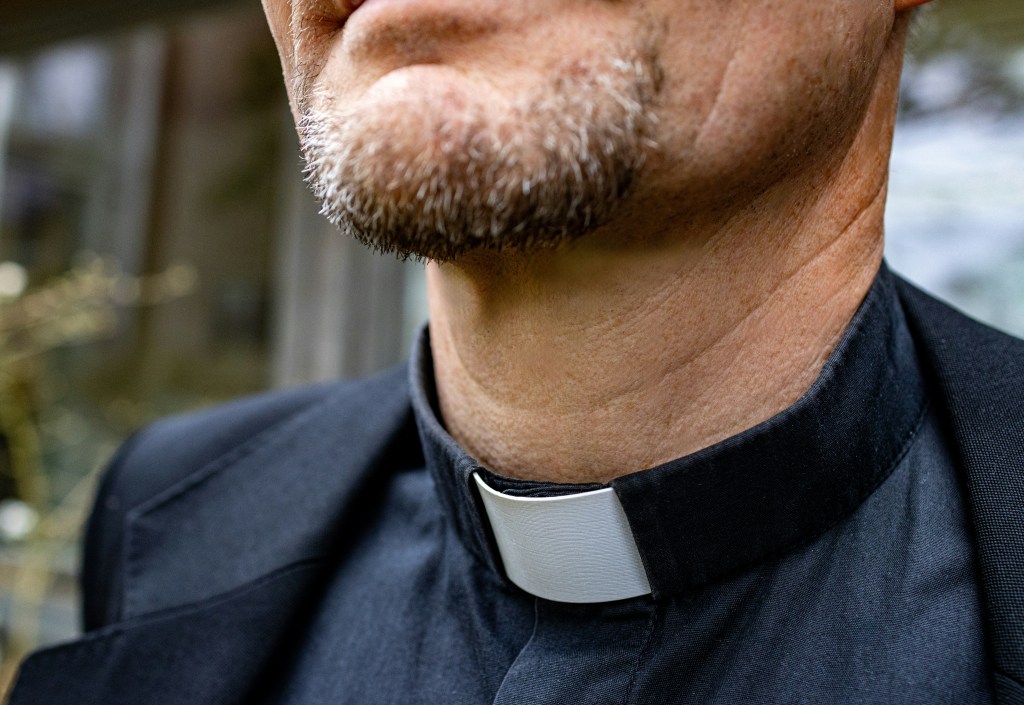
There is something in the wiring of our local Muslim Central Asians, such that once they find out a man is actually a ‘priest,’ their entire bearing towards him changes for the positive. We’ve seen this dynamic so often here over the years that we’ve begun to joke that rather than hiding the pastoral background that many of us have (as is the norm), we should instead start going around wearing protestant clergy collars. At least in government offices, this contextualization of our garments would make a huge difference. In this, Central Asia has proved yet again to be utterly different from our assumptions of how it would be.
Accordingly, the captain decided that, since our Peruvian friend was a priest, there was no issue here whatsoever, and that he could go his way. However, in parting, he also slipped in a joke to the Central Asian brother.
“Ask him if he could do some black magic for me,brother, har harhar.”
Finding discretion to be the better part of valor, our friends took the opportunity to smile and leave quickly, rather than staying to correct the captain that, no, as a pastor, our friend most certainly did not and would not do black magic. As no true pastor should.
“Wait,” I asked my friends when they were back in the car, “locals think pastors do black magic?”
“Yes,” the Central Asian brother replied, “I’ve heard it from my older relatives many times. They used to go to some kind of ethnic Christian priest to get him to do spells and charms for them – things having to do with fertility or love, especially.”
Apparently, some of the clergy from the local ethnic Christian communities had, over time, fallen into acting like the local Islamic sheikhs, themselves having fallen into acting like the older mages, shamans, and witch doctors so common all over the world. Appease and manipulate the spirits for your own blessing and the cursing of your enemies. The same demonic strategy used in the Melanesia of my childhood, recycled here with just a smidge of Central Asian monotheistic veneer.
I was reminded of how I’d heard that even one of the few evangelical pastors among our people group had himself started acting weird in these ways, sheikh-ish, making people who asked for healing to drink Bible verses he’d written on little pieces of paper. I wondered if he had also grown up hearing from his relatives of how this was simply what Christian clergy are supposed to do.
I’m very glad this bit of local data emerged, even though it came through something as tedious as a government checkpoint. Who knew that this was something so commonly assumed among our locals, lurking down in the basement shadows of their worldview? Now we know. And now we can proactively teach against it. No, true pastors should not and do not have anything to do with black magic. Yes, they may be involved in the occasional miraculous healing or quiet casting out of a demon. But this is not magic; this is simply the Holy Spirit at work in the normal life of the local church.
No, Mr. Captain of the checkpoint, we won’t do black magic for you. But if you hear us out, we can tell you about something infinitely more powerful.
We need to raise 28k to be fully funded for our second year back on the field. If you have been helped or encouraged by the content on this blog, would you consider supporting this writing and our family while we serve in Central Asia? You can do so here through the blog or contact me to find out how to give through our organization.
Two international churches in our region are in need of pastors, one needs a lead pastor and one an associate pastor. Our kids’ TCK school is also in need of a math and a science teacher for middle school and high school. If you have a good lead, shoot me a note here.
For my list of recommended books and travel gear, click here.
Shepherd* was perhaps the first believing poet among our people group. Having come to faith as an older man, Shepherd was able to publish one book of Christian poems in our local language before he passed away in 2022.
I have been hoping to get hold of his book for a few years now. This past month, I finally did. Well, at least I got hold of pictures of the pages of his book. My hope is to steadily work through his poems, selecting the best of them to highlight in our own resources. Our people group is deeply poetic, so there is much potential for poetry to have a prominent place in the churches here. I’m also translating them to English, in hopes that Shepherd’s poems might also be an encouragement to believers in other contexts.
The following is one of the first poems of his that I’ve translated. In this, I’ve been able to preserve the meaning and the rhyme scheme, though not always the meter. When I’ve heard local poetry read, the last word of each line is typically slowed and stressed. So, as you read this poem to yourself, reading the last word in that way will get you closer to the effect of the poem in its original language.
The poem I’ll share today is one that focuses on the persecution and gaslighting that Shepherd faced after coming to faith out of a Muslim background. Rather than stay silent in fear, Shepherd speaks of his determination to boldly speak out about being a Christian, trusting in Christ to protect him.
Without Hesitation
by Shepherd H

I desire no more to twist reason and fact
They make me see black as white, and white as black
I express my heart freely and that without fear
I am proud to be a Christian and this silence tear
I put my faith in Christ as Savior and divine
I'll no longer to illusion's chaos be captive, confined
I put the door of my heart behind me, made Christ owner of my home
Lest I be shaking my head, empty-handed at God's throne
The jewel of the Bible is the capital of my world and life
My guardian is the mighty power of Christ
We need to raise 28k to be fully funded for our second year back on the field. If you have been helped or encouraged by the content on this blog, would you consider supporting this writing and our family while we serve in Central Asia? You can do so here through the blog or contact me to find out how to give through our organization.
Two international churches in our region are in need of pastors, one needs a lead pastor and one an associate pastor. Our kids’ TCK school is also in need of a math and a science teacher for middle school and high school. If you have a good lead, shoot me a note here.
For my list of recommended books and travel gear, click here.
What do restaurants running out of sheep stomachs, AK-47s, meals on the floor with tribal enemies, and the Islamic pilgrimage to Mecca have to do with Mark 11?
When preaching and teaching, our aim should be, first, to faithfully exposit the text. But second, it should be to helpfully 1) argue for, 2) illustrate, and 3) apply the truths of that text in ways that translate to the minds, hearts, and hands of our audience. Many of us who care deeply about expositional preaching tend to be very strong in the explanation side of things, yet weaker in these three other time-tested elements of preaching and teaching. It is in these three secondary, yet crucial, elements that I attempted this past week to draw local connections with Mark 11.
My current role as a resourcer, researcher, and writer means I’m not preaching in the local language nearly as much as I did when I was a church planter. However, this past week, I did get the opportunity to do so. Afterward, I thought it might be helpful to share a few examples of how I attempted to use local culture and experiences to bring the weight of the text to bear on the audience. I do so, not claiming that I necessarily got everything right, but rather, in hopes of spurring on others to make efforts like this in their preaching and teaching as well. After all, concrete examples from other contexts can be helpful as we wrestle with how to do this in our own churches.
My text was Mark 11:1-25: the triumphal entry, the cursing of the fig tree, the cleansing of the temple, and Jesus’ teaching on the power of believing prayer. From this text, my main sermon idea was that Jesus is the king of peace, the king of judgment, and the king of answered prayer. Each of my three subpoints was an unpacking of one of these three aspects of Jesus’ kingship: 1) the king of peace, 2) the king of judgment, 3) the king of answered prayer.
Now, here’s where the restaurant running out of sheep stomachs came in. I began my sermon by telling a story that happened in Caravan City around five years ago, when a group of local men went down to the bazaar in the middle of the night to eat a beloved traditional dish called head-n-foot. This is a meal consisting of rice sewn up in a sheep’s stomach and boiled in a broth containing the sheep’s head and feet. This unique meal is traditionally eaten in the middle of the night, along with fresh flatbread, and sometimes other side dishes like sheep brain, marrow, tongue, etc. While foreigners get queasy just hearing about eating this kind of thing, many locals can’t get enough of it. However, these particular local men loved it a little too much.
When these guys showed up at the head-n-foot restaurant, it had unexpectedly run out of food. This caused them such disappointment and such anger that they returned to their homes, grabbed their AK-47s, and came back and shot up the restaurant’s tables, counters, and windows in a blaze of lead, broken glass, and bits of sheep. Thankfully, no one was injured. But the story became the stuff of local legend, as well as countless jokes.
Why did I begin my sermon with this illustration? Well, one of the main themes of my passage, Mark 11, is the absence of fruit. The fig tree does not have fruit when Jesus visits it, nor does God’s temple. There is something deeply wrong with this situation, so wrong in fact that it warrants the very curse and judgment of the Son of God. While the men who shot up the head-n-foot restaurant were clearly out of line to do something so drastic, they were not necessarily wrong to be upset. A restaurant that fails to keep its most basic duty – that of providing food when open – has failed in its fundamental purpose. Perhaps these men had the right to be angry, but they had no right to shoot up the restaurant in the way they did. Jesus, on the other hand, had every right to both be angry and to also go on to curse the fig tree and the temple. He was the creator, owner, and rightful recipient of the fruit of both. But, scandalously, when he visited them, he found them utterly barren. And in the temple’s case, even worse than barren, corrupted and oppressive.
Did this attempt at using a local illustration work? I think so. Several of the attendees were nodding and chuckling knowingly as I shared the story. At least the sermon must have made two of them hungry because later that night, they went out to eat head-n-foot at the very establishment that had featured in my introduction. This included sending me video evidence that that night, at least, there was plenty of head-n-foot to go around.
My second attempt to illustrate with local culture was when I was trying to explain the significance of Jesus riding into Jerusalem on a colt, a young donkey. In the ancient Near East, a king who rides into a city on a donkey is signaling both humility and peace. This is in contrast to a king who rides in on a horse, who is signaling power and conquest. However, this meaning has been lost in the 2,000 years that have transpired between Mark 11 and today. In our corner of Central Asia, donkeys are mostly a thing of ridicule, an insult, a symbol of stupidity, and the butt of countless jokes. This is why my favorite Kebab restaurant has donkey-themed pictures covering its walls. Locals find donkeys irresistibly ridiculous, which is why one local believer cautioned me in the past to avoid them in sermons if I can, due to the risk of the congregation descending into fits of giggles. Yet there’s no avoiding donkeys in Mark 11; rather, riding in on a donkey needs to be redefined according to what this would have meant to the original audience.
But before I explained its meaning, I first asked my audience a question. What would it signify to them if their tribal chief or an influential sheikh invited them to dinner at his house, and when they arrived, they also saw their personal enemy seated there on the floor for the meal? The audience responded with confidence – this scene would mean a desire for peace, a desire for reconciliation. Leaders here will invite enemies to share a meal together with them in an attempt to broker peace. In the same way, I explained, a leader riding into a city on a donkey, in first-century Judea, signaled a desire for reconciliation. Once again, heads nodded when the attempted connection was made. Whatever may have been going on internally, at least there were no visible fits of giggles because I had been talking about donkeys.
My third attempt to illustrate from local experience came in my second point, when I was explaining how Jesus is not just the king of peace, but also the king of judgment. In Jesus’ shocking actions in the temple, we see how much he hates religious oppression and corruption. Jesus is furious because not only is the temple worship being used to make a hefty profit off of Jewish pilgrims, those who are stuck with the inflated temple prices and money-changing fees, but this is happening in the only space available in the temple for the Gentiles to worship God. Tragically, all this shows us that instead of the true worship of God taking place (true spiritual fruit), there was religious oppression of the Gentiles, the poor, and the faithful. God will not stand for this kind of thing, as evidenced by Jesus’ temple violence.
To illustrate how all the world’s religions tend to do this – and thus are worthy of God’s curse – I reminded the audience of how the Islamic pilgrimage, the Hajj, has very similar dynamics to the temple corruption seen in Mark 11. See, Muslims are obligated to make this pilgrimage once in their lifetime. And there’s only one place they can go to do this – Mecca. Because of this, the government of Saudi Arabia charges exorbitant prices for plane tickets, hotels, visas, even corner market goods in Mecca itself, all in an attempt to milk the pilgrims for all they’re worth. Pilgrims have no choice. They have to pay up. In this way, elderly locals from our corner of Central Asia will blow tens of thousands of dollars in a misguided attempt to secure forgiveness of sins. This is money that should have gone to caring for them in old age, or to their children’s futures. Instead, it goes straight to the pockets of the Saudi political and religious establishment. This kind of system is deeply wicked and worthy of being cursed by God.
Having drawn the connection in this way between the temple’s religious oppression and that which this room of former Muslims was all too familiar with, I then reminded them that Jesus’ focus here was not some pagan worship of his day. No, it was the corrupted worship of his own people and their leaders. We, therefore, have an obligation to guard the worship of the local church so that the true worship of God is never hijacked for the sake of worldly gain.
My final attempt at using a local illustration attempted to connect with the fact that many in the audience were former guerrilla fighters. Under the point about how Jesus is the king of answered prayer, I borrowed an illustration from Piper about how prayer is not like a hotel phone, where we call the front desk for a softer pillow. Rather, prayer is like a soldier’s walkie-talkie, which he uses to call in air support for the battle. Jesus’ radical promises for answered prayer in this passage are not given so that we might ask and receive anything random we might desire. Instead, they are for prayers directed against anything (mountains included) that stands in the way of his people bearing spiritual fruit. I couldn’t tell how well this one connected. I’m realizing just now, as I write, that guerrilla fighters don’t tend to have air support. Usually, they’re fighting in the mountains with their small arms munitions against the superior ground and air power of whatever regime they’re resisting. But I’m hopeful it still made sense.
Once again, these efforts to use local culture are not the most important thing going on in a sermon. But if the exposition of the text itself is like a good steak, then the argumentation, illustration, and application are like the salt and pepper, the grilled vegetables, and the glass of red wine that accent the steak so well. The steak is more powerfully tasted because of their presence. In the same way, the faithful explanation of God’s word is more powerfully experienced when it is supported by faithful and contextual argumentation, illustration, and application.
How do we find these local examples? We must be continuous learners of whatever culture is currently hosting us. Through curious questions and good listening, we can, over time, stock quite the storehouse of local examples that we can draw from as opportunity arises. Practically, we will also need a way to remember these examples. For me, writing and lists of things to write about are ways that I find I’m able to better hold onto this local knowledge. Did you know, dear reader, that by reading this blog, you are a part of how I’m able to hold onto things so that I might later bring them into a spiritual conversation with a local? For that, I’m very grateful.
Every culture, indeed the whole world, is full of spiritual analogies and metaphors, things that we can leverage to strengthen our presentation of God’s word. As the old hymn, This is My Father’s World, proclaims, “This is my father’s world; He shines in all that’s fair; In the rustling grass I hear him pass; He speaks to me everywhere.” Missionaries of ages past, such as Lilias Trotter, had such good eyes for the spiritual analogies baked into the world all around them. If we follow in their footsteps, recognizing that not just in nature, but even in fallen cultures, God has not left us without a witness, our preaching and teaching (and writing) will be all the more powerful for it.
Don’t just explain, brothers and sisters. But argue, illustrate, and apply as well – even if that means you find yourself preaching about things like sheep stomachs and Kalashnikovs.
We need to raise 28k to be fully funded for our second year back on the field. If you have been helped or encouraged by the content on this blog, would you consider supporting this writing and our family while we serve in Central Asia? You can do so here through the blog or contact me to find out how to give through our organization.
Two international churches in our region are in need of pastors, one needs a lead pastor and one an associate pastor. Our kids’ TCK school is also in need of a math and a science teacher for middle school and high school. If you have a good lead, shoot me a note here.
For my list of recommended books and travel gear, click here.
If you talk to Muslims about the Bible, or if you read the Qur’an, you’ll very quickly realize that Islam doesn’t teach that there are four gospels. No, the Qur’an, and the vast majority of Muslims, assume that Jesus came and revealed one book, called The Injil, i.e. The Gospel (Surah Al-Ma’ida 5:46). The Qur’an seemingly has no idea about the four separate books of Matthew, Mark, Luke, and John. Why is this?
Some of this seems to be due to the Qur’anic worldview and its assumption that all true prophets bring their own heavenly book revelation with them for their specific people, such as the alleged ‘scrolls of Abraham’ (Surah Al-Ala 87:19). These prophets and their books are said to all contain the same basic message about turning from idolatry toward worship of the one creator God because the day of judgement is coming.
This is the narrative that Mohammad claimed about himself (Al-Ma’ida 5:48). Then, to try to defend his own prophethood when challenged, it’s also a narrative he forced onto the story every other prophet. Of course, everyone who has actually read the Bible knows that this is not true of every prophet, and not even true of many of the prophets the Qur’an is aware of, such as Abraham and Elijah. It’s not even true of Jesus. He didn’t come revealing a book from heaven; rather, he was the revealed Word of God, and his disciples later recorded his life and ministry in the four gospel accounts. This is yet another piece of evidence that Mohammed likely didn’t have access to a Bible he could read, though he does seem to have had access to lots of Jewish, Christian, and heretical oral tradition floating around in seventh-century Arabia.
However, this week I learned that there may be an additional reason why the Qur’an doesn’t seem to know that there are four gospels. This reason has to do with an early church figure named Tatian, who is a rather complex figure. Discipled by Justin Martyr, Tatian later returned to his home area of Adiabene, old Assyria, what is today N. Iraq, and proceeded to write a fiery treatise, “Address to the Greeks,” on why Christianity is superior to Greek beliefs – but also how he believed the East to be vastly superior to the West in general,
In every way the East excels and most of all in its religion, the Christian religion, which also comes from Asia and is far older and truer than all the philosophies and crude religious myths of the Greeks.
Significantly, Tatian seems to have been the first figure in church history to attempt to translate some of the New Testament into another language. Tatian combined the four gospels into one account, translating this work into old Syriac. This book was called the Diatessaron, and for several hundred years it was the primary form of the gospels used in the Syriac-speaking Christian world of the Middle East and Central Asia. A standard translation of the four canonical gospels didn’t take its proper place among the Syriac churches until a few centuries later. Tatian himself eventually drifted into some problematic asceticism and was proclaimed a heretic.
Here’s where Tatian connects with the Qur’an’s ignorance about the existence of four separate gospels. The Diatessaron was very popular in the broader Syriac-speaking region – a region that overlapped considerably with the territory of Arab kingdoms and tribes. Biblical scholar and linguist Richard Brown puts it this way in his paper, “ʿIsa and Yasūʿ: The Origins of the Arabic Names for Jesus,”
For several centuries, the Diatessaron was the standard “Gospel” used in most churches of the Middle East. When the Quran speaks of the book called the “Gospel” (Arabic Injil), it is almost certainly referring to the Diatessaron.
Why doesn’t the Qur’an seem to understand that there are four gospels? There is a good case to be made that this Islamic confusion about the actual makeup of the New Testament goes back to a well-intentioned project of an early church leader.
In this, there is a lesson to be learned about the unintended consequences of pragmatism in mission contexts. It’s not hard to see how those in the early church, like Tatian, might have felt that it would be more practical and helpful to have one harmonized gospel book instead of three very similar synoptic gospels and one very different Gospel of John. For one, it would have been much cheaper to copy and distribute. Books were very costly to produce in the ancient world, often requiring the backing of a wealthy patron. In addition, a single harmonized account would have also seemed simpler to understand, rather than asking the new believers in the ancient Parthian Empire to work through the apparent differences between the timelines and details presented in the four separate gospel accounts.
What could be lost if the Word of God were made more accessible in this fashion? Well, for one, this kind of harmonization loses the unique message and emphasis present in the intentional structure and editorial composition of each book. The authors of the Gospels were not merely out to communicate the events of Jesus’ ministry. They were also seeking to communicate the meaning of those events by how they structured their presentation of them. For example, consider how Mark sandwiches Jesus’ cleansing of the temple in chapter 11 between accounts of Jesus cursing the fig tree. This structure is intended to communicate to the reader that the cursing of the fig tree was a living (and dying) metaphor of the fruitless temple system of the 1st century – and its impending judgment.
Tatian’s pragmatic decision cut off Syriac-speaking believers from so much of this crucial meaning because he did not simply translate the four individual gospels. Further, he also inadvertently contributed to confusion among the ancient Arabs about the nature of the Injil, a confusion that was later codified in Islam and continues to trip up Muslims to this day, creating doubts in their mind about the validity of the four gospels.
If you find yourself in conversations with Muslim friends about this question of why there are four gospels instead of one, knowing this background might prove helpful. The Qur’an itself doesn’t know that there are four gospels. This is because of its own errant understanding of prophethood – an understanding, unfortunately, aided by some ancient and pragmatic missiology.
We need to raise 28k to be fully funded for our second year back on the field. If you have been helped or encouraged by the content on this blog, would you consider supporting this writing and our family while we serve in Central Asia? You can do so here through the blog or contact me to find out how to give through our organization.
Two international churches in our region are in need of pastors, one needs a lead pastor and one an associate pastor. If you have a good lead, shoot me a note here.
For my list of recommended books and travel gear, click here.
Christians, too, were scattered by the catastrophe but with a significant difference. Theirs was a living Messiah who had called them to a world mission and whose good news of the gospel was for all peoples. Instead of turning inward, they moved out across the world. Most of them were Jews, however, and as they went they found that the Jewish communities of the Diaspora were a natural ethnic network for the beginnings of Christian advance. This was particularly true in oriental Asia. The surviving records of the earliest Christian groups in Asia outside the Roman Empire almost always have a strong Jewish-Christian tinge, as we shall see.
–Moffett, A History of Christianity in Asia, vol I, p. 10
The quote above, which refers to the scattering of Jews and Christians after the temple’s destruction in A.D. 70, describes a pattern certainly true of our own area of Central Asia. The earliest Christians here in Caravan City* 1,900 years ago, seem to have been Jews. This is evidenced by the fact that the earliest leader of the Christian community here has a Jewish name, a localized form of Samson.
When locals ask me why the Jews rejected Jesus and his message, I am always quick to point out that that simply isn’t the whole picture. Early Christianity was majority ethnically Jewish for its first generations, even though Gentiles eventually came to outnumber their Jewish brethren. The early church was very much a community characterized by what Moffett calls a “strong Jewish-Christian tinge” for a very long time (as an aside, this is yet another reason why any form of Christian anti-Semitism is so absurd).
This passage also reminds me of a pattern that keeps emerging in the church planting efforts among our focus people group. That pattern is that it’s often communities of displaced locals that are more open to the gospel and who provide the first foothold for communities of faith. Our people group is divided by multiple national borders. Those who live outside of the region/country where they grew up are almost always quicker to come to faith and bolder and more open when it comes to living out their faith when compared to those living in their original community.
I recently visited a nearby country where some of the most encouraging fruit among our people group is emerging. There, I saw that God seems to be significantly using this dynamic of displacement. Displaced members of our people group are coming to faith in surprising numbers and taking risks that allow others displaced like them, as well as the actual local locals, to see the love and power of the new birth and the local church. As these others see these things, they are then won by and to them and also then able to reproduce them. Here in Caravan city, we are seeing a similar dynamic in the church plant we are connected to – a church plant now reaching those of this city, but whose initial core was made up of foreigners and members of our people group from a neighboring country.
Much of this is because the power of tribe, family, and patronage network can be a suffocating thing. But when locals are given just a degree or two of freedom from those systems of social control (often through geographical distance or economic independence), this can free them up to more easily become a good core member for a church plant, which can go on to later reach and integrate those native to a given city or area.
Some missionaries might be concerned about this kind of method, since churches are being started primarily with transplants that aren’t fully indigenous, according to how most would understand that term. But both in early Christianity and in our own corner of Central Asia, it’s these very transplants who are providing the foothold that leads to the locals being reached. It’s an indirect investment, yes, but one that very much seems to be worth the risk in the long run.
We need to raise 31k to be fully funded for our second year back on the field. If you have been helped or encouraged by the content on this blog, would you consider supporting this writing and our family while we serve in Central Asia? You can do so here through the blog or contact me to find out how to give through our organization.
Two international churches in our region are in need of pastors, one needs a lead pastor and one an associate pastor. If you have a good lead, shoot me a note here.
For my list of recommended books and travel gear, click here.
Grandmom Workman grew up in the mountain hollers* of West Virginia. Her dad was a coal miner, as were most of the men in her family. Most of them would go on to die of black lung – a tragic but common outcome for this kind of employment. There’s a little hilltop cemetery full of crooked gravestones that bears witness to this once numerous clan of hillbillies, though most of the Workmans have now either died or left those mountains.
When she was a young woman, my grandmom fell in love with my poppop, a blue-collar man from Philly who was in the Air Force. After a quick marriage and a brief stint in Myrtle Beach, they moved back to the Philadelphia area, where they soon bought the house they would live in until their deaths, just a few years ago.
As the saying goes, you can take the girl out of the holler, but you can’t take the holler out of the girl. Grandmom remained hillbilly to the core until her dying day, despite the comfortable suburban lifestyle Poppop’s trucking career provided. There was no evidence that my Poppop’s strong Philly accent or that of all her neighbors ever made so much as a dent on grandma’s West Virginia way of speaking. No, she never lost her accent or mannerisms. I grew up being called a “sweet patooty” and hearing farts referred to as “shootin’ bunny rabbits.”
She also never lost her ability to sing the hymns she learned as a girl in the little Pentecostal church her family went to – even after she developed severe dementia.
After my family moved to Central Asia, we would attempt video calls with Grandmom and Poppop. We first noticed that she started forgetting that different members of her family were no longer living. Then, she started forgetting our kids’ names and faces. Eventually, she struggled to remember the names of even her grandkids that she had known for decades, including my name. Through all of this, as Grandmom lost more and more of her mental clarity and physical function, Poppop’s steady gentleness with her was a remarkable thing to behold.
In time, it became challenging to know how to hold a conversation with Grandmom. However, I could always get her to remember and talk clearly about her childhood, even when the dementia seemed to be worse than ever. Often, she would speak of the hymns she sang as a girl. Her favorite was Rock of Ages, “Rock of ayges, cleft for mee… Let me haaad maaself in theeee…” I was amazed at the shift out of mental fog and into crisp clarity that would seem to take place when I would nudge Grandmom to focus on this season of her life and the songs that she had learned at such a young age.
This was doubly encouraging to me because my grandmom had always shut down spiritual conversation. Any mention of God, the Bible, sin, or the gospel would unleash a polite but impenetrable barrage of words declaring Grandmom’s confidence in her own goodness. In all the years before the dementia started, there was no evidence that she ever humbled herself to admit that she was a sinner in need of forgiveness. This was true even though her own son, my dad, had died while proclaiming this message as a missionary in Melanesia.
My dad’s death, of course, devastated his parents. Poppop seems to have eventually come to faith, a changed man, in the years following. But Grandmom was immovable. No conversational tactic could get through her defenses.
However, once she developed dementia, I noticed a willingness to talk about and dwell on hymns, like Rock of Ages, that did contain explicit gospel messages – “Let the water and the blood; from thy wounded side which flowed; be of sin the double cure; wash from sin and make me pure.“
Tragically, I do not think that my grandmom ever believed in Jesus. But if there is any hope, it would be found in the fact that hymns like Rock of Ages were a major part of the soundtrack of her final days. When all else was fading away, gospel truths put to a catchy melody and a West Virginia twang were on her mind and on her tongue. Perhaps they found their way into her heart and soul as well. She passed away in 2022.
My grandmom’s story taught me about the power of music for remembering and reproducing truth. The songs that Grandmom learned as a barefoot girl in a little mountain church stayed with her – for eight decades. They stayed with her when almost everything else had been forgotten.
This makes me want to double down on teaching our own children good, gospel-explicit songs. Apparently, they can remain with them until the end, even if they do not embrace the faith of their parents. God has somehow created music to be a thing strong enough that it can hold its own in the labyrinth corridors of memory, even against decades of unbelief, and even against the most formidable mental illness. A woman might forget the names of her own children and grandchildren. But she will remember the words of the songs of her childhood.
This season of ministry in Central Asia has brought with it an unexpected emphasis on local worship music. I suddenly find myself with four eager local guitar students (some of whom are former guerrilla fighters), with other local believers writing new songs and poems and asking for help with them, and with requests from many quarters for local-language songs that are richer and deeper and more congregational. An area of our ministry that has, until now, largely gotten the leftovers now calls for more proactive emphasis. Local believers need to be raised up who can write local songs, hymns, and spiritual songs for the church and then go on to lead and play them skillfully.
Because of my grandmom, I know the potential impact of this kind of work. Through good songs, local believers can unstoppably retain and reproduce truths from God’s word as they go about their daily work in the bazar, if they end up in prison without a Bible, or even if they someday lose their minds and memories.
How amazing is this gift of music that God has given to us? And what a comfort as well. Even in old age, his truth can remain fixed in our minds, and that, by the power of a simple tune.
‘So even to old age and gray hairs, O God, do not forsake me, until I proclaim your might to another generation, your power to all those to come. ‘
-Psalm 71:18
*holler is a Appalachian form of hollow, a small valley.
We need to raise 31.7k to be fully funded for our second year back on the field. If you have been helped or encouraged by the content on this blog, would you consider supporting this writing and our family while we serve in Central Asia? You can do so here through the blog or contact me to find out how to give through our organization.
Two international churches in our region are in need of pastors, one needs a lead pastor and one an associate pastor. If you have a good lead, shoot me a note here.
For my list of recommended books and travel gear, click here.
One of the most curious examples of poor contextualization in Central Asia is how opposed most missionaries are to preaching. By and large, missionaries feel strongly that the indigenous church plants and churches in this part of the world should replace preached sermons with participatory Bible discussions. And they feel even more strongly that if preaching must be present at all, then it should absolutely not be the foreigner doing it.
The reason this is poor contextualization is that these feelings and opinions seem to be based entirely on the missionaries’ own opinions, culture, training, and baggage, and not on that of the locals at all.
Yet very few missionaries seem able to see this.
Most foreign workers here would heartily resonate with the idea that, as I heard it put yesterday, “I didn’t come here to reproduce white guy monologues.” But few are asking themselves why they feel this way – and crucially, whether or not any of their local friends feel the same.
Instead, much of the missionary community has become an echo chamber, reinforcing the idea that preaching, and especially foreigners preaching, is bad contextualization – and therefore to be discarded. As it turns out, however, this is a huge assumption. And one, as I’m increasingly convinced, without any local evidence to back it up.
See, on the level of cultural values and practices, our Central Asian locals highly prize experts and expertise. Whether in the realm of education, government, medicine, art, or religion, when locals want to learn or teach something, they seek out an expert who will proceed to educate the community (often giving out certificates when they’re done). This teacher, ironically, will almost always do this by means of a monologue, a lecture. In fact, the same word is used in our local language for any kind of public teaching like this, whether it be an address, a speech, or a sermon. Every day, all day long, this kind of public oratory is happening here on television, on the radio, on social media, in tribal gatherings, in schools, and in meeting halls. The idea of the wise expert is so prominent and respected here that in our community of Caravan City, one of the most honorable ways to greet a random man on the street is to address him as “Teacher” – whether he actually is a teacher or not.
But perhaps, one might think, it’s different inspiritualsettings. To the contrary, week in and week out for 1,400 years, locals have been going to a mosque to hear a monologue, an Islamic sermon. Well, what about before Islam came? Our area had a strong presence of ancient Christianity. Weekly Christian sermons would have been happening in local churches here for 500 years before Islam arrived, with some of the most famous preachers being originally from other nations in the region. What about before Christianity, then? Turns out our area also had a strong Jewish community, which means that weekly Jewish public reading of the Law & Prophets and teaching based on it would have been taking place in the local synagogues for several hundred years before the coming of Christianity. This is quite the history. We are looking at over 2,000 years of local precedent for preaching of one sort or another.
Not surprisingly, given this precedent, if you were to gather a group of our Central Asians today who want to learn about the Bible and then ask them what they expect that kind of activity to look like, they would tell you that they want to be taught (i.e. lectured) by a religious expert. And if possible, they would prefer that the expert be a credentialed foreigner.
Do most missionaries listen to them when they express these expectations? Do they honor this contemporary local preference, one backed by thousands of years of local precedent? Nope. Instead, they assert that preaching is Western, not actually contextual. And they then proceed to import a form that is radically foreign – informal, inductive group study, casually facilitated by a “coach” or “a trainer of trainers” – someone who is not supposed to have the authority of a teacher or an expert. Then, these missionaries go on to assure themselves that they are, in fact, using methodology that is so much more contextual and effective than previous generations of colonial missionaries with their imported Western methods.
To be clear, our locals do not gather on their own for informal, inductive study of a religious text, facilitated by a “coach” or “trainer” or some other Socratically-minded sort-of-but-not-really-leader. There is no local precedent for this kind of methodology. So, when locals are told over and over again by the foreign Christians that they have to do this in order to be good disciple makers, they initially find it very disorienting. This disorientation leads to questions like, “Why are we awkwardly meeting in a house and not in a church or official space?” “Who is in charge here and why aren’t they taking charge of this time?”, “Why won’t the person who is supposed to be the teacher tell us the correct answer instead of hinting and asking us these unfamiliar questions?”, and “Do you know a real priest or pastor who can actually explain things to us?”
Sadly, our locals are also not trained by their education system in critical thinking. This means they can’t easily jump into reading a text, summarizing it in their own words, and finding its main point. And because they’re from a high context, high power distance culture, they often don’t know how to comfortably navigate these informal, “organic” times of group Bible study. Yes, they can certainly learn how to do these things over time. I myself have trained many local believers in group inductive group Bible study (for reasons I’ll get into below).
But the key thing I want to draw out first is the sheer magnitude of the disconnect going on here. Many missionaries in our region are convinced they are doing something closer to the local culture by choosing informal, inductive group study instead of preaching. And yet in reality, the exact opposite is happening. This can only mean that the missionaries are deceiving themselves, importing a radically foreign form that is far stranger to locals than preaching would be, and all the while believing they are doing the complete opposite.
Once you see how upside down all of this is, you can’t unsee it. It would be like a foreign exchange teacher coming to the US who is convinced that bowing is the more authentic way that Americans greet one another, and that waving or shaking hands are outdated foreign forms. So, he insists on bowing and making all of his American students bow also when they greet him and one another. The American students don’t know why this foreign teacher keeps insisting that they bow to one another, since it’s not something they’ve naturally been brought up to do. This teacher is not operating in the normal cultural code of form and meaning as they understand it. But the teacher tells all his colleagues back home that he has adopted this method of greeting in order to be more American in his relationships, more like the locals. It’s not just that he’s getting it wrong. He’s confident in his take on American culture, when in reality, he’s actually deluded, the one who is, in fact, guilty of importing the foreign method. To make our analogy even more complete, imagine that the vast majority of foreign exchange teachers in the US believe this same thing.
Why is the blind spot regarding preaching so powerful among missionaries among the unreached, especially if it’s not being reinforced by the locals themselves? Here, I think a number of powerful factors are combining. First, there is the place where Western/global evangelical culture currently finds itself – a place of overreaction to the structures and methods of the past. This pendulum-swing away from the methods of our forefathers includes strong negative vibes regarding things like institutions and preaching. Missionaries are misdiagnosing the unhealthy churches they grew up in and placing the blame erroneously on things like preaching and formal organization. They end up on the field, not exactly sure what a healthy church is, but awfully convictional about the fact that they don’t want it to look like the churches back home, the very churches that are funding them.
Second, popular missiology and missions training drill into new and veteran missionaries a false narrative about what is and is not effective and contextual on the field. Even if a missionary personally benefited from preaching and enjoys sitting under it themselves, all the loudest voices from missiology and pre-field training tell them that that 45 minute sermons are something must be left back in the homeland, and not something to introduce among the baby churches of their focus people group – who, it is claimed, deserve the opportunity to do church in a more pure, New Testament manner, unsoiled by modern Western accretions like preaching.
Third, missionaries bring preconceived notions with them about people groups in this part of the world. They carry deeply held assumptions about what is normal for Muslim people groups, such as the belief that they will prefer to meet in house churches and do discussion-based study, if only the foreigners would get out of the way and give the locals the chance to be true to themselves and their culture. Preconceived notions are unavoidable. But they must be tested once we are actually living among a people group, and if necessary, discarded.
In the face of this powerful triad of their own cultural baggage, the voices of the missiologists, and their own assumptions, missionaries can spend years on the field completely blind to the fact that their aversion to white guy monologues is mostly a reflection of themselves, and not really a reflection of the locals at all.
However, preaching is good contextualization. I believe this, yes, because it fits with the desires, expectations, and forms of this particular culture. But that point only matters if the form itself is, first, biblical. I firmly believe it is biblical, although when it comes to this question in particular, the theologians and pastors do not agree with the missiologists. Whenever this happens regarding biblical interpretation, I’ve learned you almost always want to trust the theologians and pastors, not the missiologists. This is because the former group is more gifted and wired to be careful with the text of Scripture, while the latter group is often gifted and wired as passionate pioneers and practitioners. This otherwise good gifting comes with an unfortunate downside – the temptation toward sloppy use of the text to justify mission methods. For example, when mission leaders claim that faithful preaching as we’ve known it in church history is not required because it’s not a method rapid or reproducible enough to “finish the task.” As the logic goes, 1) Our church/disciple multiplication methods must catch up to the rate of lost people going to hell, 2) Preaching isn’t rapidly reproducible enough for this exponential rate of growth, therefore, 3) Preaching must not be biblical and should be replaced with participatory Bible studies not dependent upon a qualified teacher – just like we see in Acts!
In reality, the biblical case for preaching is really not that hard to establish from even a cursory overview of the New Testament. Jesus preached monologues to his disciples and others, such as the sermon on the mount (Matt 5-7). The apostles preached evangelistic monologues, as recorded in the book of Acts, as well as preaching to groups of only believers (Acts 2, Acts 20). The book of Hebrews is a good example of a local church monologue, a sermon for believers, adapted into a written form. The New Testament church found its primary model in the Jewish synagogue, where preaching and teaching – monologues – were taking place weekly in the first century (Acts 13:13-43). Finally, add to all this biblical witness the uniform witness of church history that preaching is an apostolic practice (1 Tim 5:17) handed down to us from generation to generation of God’s people.
Because we can draw clear lines like this connecting preaching to the Bible, and clear lines connecting preaching to the strengths and forms of our local culture, I therefore believe that preaching is sound and important contextualization. Yes, even if it’s a foreigner doing it. That leads me to the position that those on the mission field who reject preaching are, in fact, doing poor contextualization. This is because they are missing, first, that it’s biblical, and second, that it’s locally effective. Good contextualization should be able to see both, but for some reason, many missionaries can’t yet perceive either.
Okay then, since I believe preaching is a sound method, does it then follow that group inductive Bible studies are poor contextualization? Not at all. Inductive Bible study is, in fact, sound and important contextualization as well. First, this is because it can also be easily grounded in the Bible (Acts 8:26-35, 17:11, 18:26). But second, when it comes to how inductive Bible study connects to the culture, the way in which it is good contextualization is different from the way that preaching is good contextualization. Inductive Bible study is good contextualization because it directly connects, not with a strong precedent in the local culture, but with a crippling weakness in the local culture. Remember, good contextualization will not only utilize redeemable inside forms but also introduce outside forms intentionally when there is an area of the local culture that is non-existent or woefully underdeveloped.
This is why, over the years, we have labored to preach and to raise up preachers while also laboring to lead inductive Bible studies and raise up locals who can do the same. Both forms are good contextualization because they are both biblical, though one runs with the grain of the culture while the other runs against it. Both, ultimately, serve the church. They are not meant to be pitted against one another, but to powerfully work hand-in-hand.
To do contextualization well, we must be able to see the local culture for what it actually is. Unfortunately, the scales of our own cultural background, assumptions, and training can blur our vision and prevent this kind of clear-sightedness. This is what seems to be going on given so many missionaries’ opposition to preaching in unreached places.
Today’s missionaries among the unreached overwhelmingly have an aversion to preaching, to white guy monologues, or even local guy monologues, for that matter. Missionary echo chambers keep reinforcing this belief. My hope is that someday they will come to see this for what it truly is – a strange aversion indeed. And one that is not ultimately serving the local believers.
We need to raise 32k to be fully funded for our second year back on the field. If you have been helped or encouraged by the content on this blog, would you consider supporting this writing and our family while we serve in Central Asia? You can do so here through the blog or contact me to find out how to give through our organization.
Two international churches in our region are in need of pastors, one needs a lead pastor and one an associate pastor. If you have a good lead, shoot me a note here.
For my list of recommended books and travel gear, click here.
“We Long for That Day” by 20Schemes Music/His Estate
This is a new song for me, but one I’m very thankful to have learned from our international church here in Caravan City. Like we see in this song, I really appreciate the way that 20Schemes Music/His Estate blends stirring melody with blunt and biblical lyrics. How many worship songs do you know that include lines like, “Nowhere left to hide for the abuser?”
Last week, I was at a small conference with a couple dozen cross-cultural workers also engaged in reaching our people group in this region and in the global diaspora. The most open segment of our people group and the one with the most churches is also the one who has witnessed the most wartime atrocities in this past decade. Over the days we met, we heard tragic testimony from several believers of all of the evil they’ve witnessed, yet how in the midst of it God is powerfully building his church.
Since we were singing songs in both English and our local language, I was asked to lead a couple of the worship times. Reflecting on what we had heard from these local believers, I chose this song as one of the English ones we sang. It was new for maybe everyone there, but, I hope, well worth the learning curve.
This is the chorus:
We long for that day when Jesus comes again
When sorrow and pain will all come to an end
When justice is done and evil cast away
Oh, may we all be found in Christ that day
We need to raise 32k to be fully funded for our second year back on the field. If you have been helped or encouraged by the content on this blog, would you consider supporting this writing and our family while we serve in Central Asia? You can do so here through the blog or contact me to find out how to give through our organization.
Two international English-speaking churches in our region are in need of pastors, one needs a lead pastor and one an associate pastor. If you have a good lead, shoot me a note here.
For my list of recommended books and travel gear, click here.
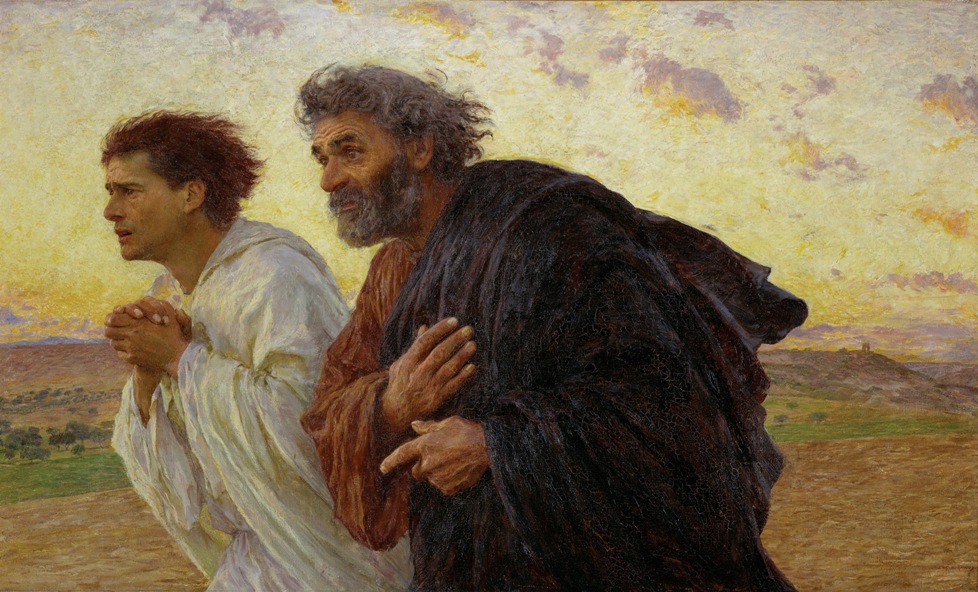
In recent years, I’ve heard increasing references to the apostle John’s comments that he outran Peter as they ran to see what had happened at Jesus’ tomb (John 20:3-6). Often, these comments are focusing on the potential humor in that John, now writing as an old man, still seems to point out that he really was faster than Peter – even when Peter had a head start. If true, there is a relatable humanity in this that is, in fact, funny. It seems to remind us that John was a dude just like the rest of us who enjoyed some good competition. But one preacher I heard a few years ago went as far as to say that John was actually sinning here in pridefully inserting these lines into his account. I was taken aback by this suggestion made from the stage to a megachurch of several thousand. Did this preacher really believe that inspired scripture contains a narrator making comments of sinful and petty one-upmanship?
As I’ve chewed on these brief details included in John’s Gospel, I think we have an explanation that makes a lot more sense than either of the above. See, the gospel of John was written much later than the other three gospels, even decades later. Because of this timing, it is apparent that some of what John is doing in his different accounts is clearing up misunderstandings that had taken root in the early church in the decades following Jesus’ ascension.
Consider John 21:20-23:
Peter turned and saw the disciple whom Jesus loved following them, the one who also had leaned back against him during the supper and had said, “Lord, who is it that is going to betray you?” When Peter saw him, he said to Jesus, “Lord, what about this man?” Jesus said to him, “If it is my will that he remain until I come, what is that to you? You follow me!” So the saying spread abroad among the brothers that this disciple was not to die; yet Jesus did not say to him that he was not to die, but, “If it is my will that he remain until I come, what is that to you?”
In this account of Jesus’ post-fish-breakfast conversation with Peter, John gives us details that are not included in any of the other gospels. Why? Well, his overall purpose of the book is evangelism and assurance. He wants his unbelieving readers to know that Jesus is the Messiah, the Son of God, so that they will have faith in his name (John 20:30). Likewise, he wants his believing readers to be strengthened in their confidence in this gospel. But in this passage from John 21, we also see one of John’s other purposes in writing. People in the early church were saying stuff that wasn’t accurate. So, John was out to clear things up. The Christians of John’s day commonly believed that Jesus had said John wouldn’t die. John wants us to know that this is not an accurate understanding of what Jesus actually said.
This brings us back to the curious details that John includes regarding his footrace with Peter to the empty tomb. Given that the resurrection of Jesus is the absolute center of the faith, a core component of the gospel itself, without which everything falls apart, it makes sense that the early believers would want to know with confidence the play-by-play details of its earliest witnesses. Now, it’s clear that some of the believing women, like Mary Magdalene, were the first witnesses. But which apostle, which of the twelve, was the first one to witness the empty tomb?
What if a disagreement existed in the early church based on different oral traditions, with some insisting that it was John and others insisting that it was Peter who first saw that the body of Jesus was missing? In this case, this is where John helpfully steps in and provides the needed clarification. Was John first, or was Peter first? Yes.
John outran Peter. So, he technically made it to the tomb first. However, for whatever reason, he did not go inside. Instead, Peter, true to form, charged right in. So John was first to the tomb. But Peter was first inside the tomb. Both oral traditions would have been true when understood correctly.
If there were indeed dueling ancient accounts about which apostle was the first witness to the empty tomb, this account would have cleared all that up. And this motive for including these details, to me, seems to fit much better with the rest of the book of John, where John seems extra careful to not draw attention to himself. For example, John refers to himself in the third person as “the disciple whom Jesus loved” rather than simply using “I” or even his own name.
Why does this matter? Well, even though it may cause us to chuckle to imagine John getting in one last dig at Peter, that kind of view doesn’t fit very well with a high view of scripture. If John did this, it would not be him writing honestly and repentantly about things he had done wrong in the past, like Peter writing through Mark about his denial of Jesus. Rather, it would be him somehow gloating while writing inspired scripture. As if while being carried along by the Holy Spirit, he would have been able to write, “Ahem,I just want you to know that I was really the faster man.”
No, in my opinion, this kind of interpretation of these details says far more about our own age and how we read ourselves into the text than it tells us about John’s actual purpose and context. Instead of this, I suggest that we consider this passage to be one of several where John intentionally includes details that helpfully clear up things that in his day were becoming muddled among the believing community.
Thankfully, whatever John’s original intention in including these details, the overall point of the passage couldn’t be more clear. The tomb was empty. Jesus had risen. Nothing would ever be the same.
Today, we celebrated that truth at a mountainside picnic service with dozens of Central Asian believers. They sang, preached, prayed, and danced, proclaiming that the resurrection has made them new – made them members of God’s forever household. Mary, John, and Peter’s surprising message is still spreading 2,000 years later, still transforming all who believe it. Even in the Islam-dominated mountains of Central Asia.
Happy Easter, dear friends. He is risen.
If you have been helped or encouraged by the content on this blog, would you consider supporting this writing and our family while we serve in Central Asia? You can do so here.
Two international churches in our region are in need of pastors, one needs a lead pastor and one an associate pastor. If you have a good lead, shoot me a note here.
For my list of recommended books and travel gear, click here.






 Entrusted to the Dirt