Residents stand in front of a collapsed building following an earthquake in the town of Jandaris, in the countryside of Syria’s northwestern city of Afrin in the rebel-held part of Aleppo province, on February 6, 2023. – Hundreds have been reportedly killed in north Syria after a 7.8-magnitude earthquake that originated in Turkey and was felt across neighbouring countries. (Photo by Rami al SAYED / AFP) (Photo by RAMI AL SAYED/AFP via Getty Images)
Most of you have likely heard of the devastating earthquake that hit Turkey and Syria this past week. As of today, the death toll is above 30,000. I have been in a sizable earthquake in Central Asia in the past and can only begin to guess the terror and trauma that so many millions have experienced as cement buildings came suddenly crashing down while they slept. Now, as we enter the second week after the earthquake, it’s likely to fade out of the news cycle. However, praying and supporting the relief work going on is just as important as ever.
Send Relief is a trustworthy Christian organization that we have partnered closely with in the past, even for this very thing, providing relief in the aftermath of devastating earthquakes. Financial support through them will get to those in need, through their trusted partners on the ground. I have seen firsthand how their work can result not only in caring for the suffering after a disaster but can also lead to chances for the suffering to also hear the gospel. If you’ve been unsure about where or how to give, consider giving through Send Relief here.
They’ve also listed some pressing prayer needs on their website, which I will list here as well. May God answer these prayers, be merciful to so many who are grieving, and shine the light of the gospel even through this tragedy.
Pray for the millions of people displaced from their homes and sleeping in the streets across Southeast Turkey and Northern Syria. Pray for the people who have no place to go and weathering the cold in search of shelter. Pray that the Lord would be their stronghold in times of trouble (Psalm 9:9).
Three major airports were damaged in the earthquakes, which has severely limited international rescue and relief efforts. Pray that roads and runways would be opened soon so that help can arrive swiftly.
In Syria, the areas impacted were already experiencing severe shortages of food, water, electricity and heat. With over four million internally displaced peoples in the affected region of Syria, the casualties are expected to be great. Pray for the few believers in this area to show the love of Christ to their neighbors.
In Turkey, pray for the local churches and believers to respond as the hands and feet of Christ. Pray for Turks who are feeling lost and hopeless—that the God who Sees would meet them where they’re at and reveal the unending love of Christ.
Pray for one church in Southeast Turkey whose building was destroyed by the earthquake. Praise the Lord that the church is not a building, but the people of God! Pray that God strengthens them as they rebuild and that the body of Christ would grow in numbers and strength.
Once again, here is the link to Send Relief’s website where you can give or access more resources for prayer.
It was our first trip to a village since our family had moved to Central Asia. One of my English students – a vivacious and persistent fellow named Rahim* – had convinced us to come stay with his family for several nights in the village of Underhill. Our hope in going was to learn more about the language and culture through this immersion experience, and to try to share some gospel truth. Rahim was probably hoping to bring honor to his family and himself by hosting us, since everyone in the village would know that they had Americans staying with them, and his family would get to show us off.
This is not to say that any motivation for honor-accrual made them poor hosts. On the contrary, the locals in our area of Central Asia view guests as a gift from God, and elaborate and generous hospitality as the primary way to gain any honor from a hosting situation. So geese were slaughtered, the chai flowed, the TVs were left constantly on, and I was invited to go fishing with the men on the lake at 5 a.m.
Apparently the men of the family liked to fish either with small explosives or by using a car battery and cables to electrocute any fish close to the boat. Both methods sounded slightly dangerous, but worth observing at least, so I actually woke up at 5 – a very rare occurrence for a night owl like myself. Alas, none of the men of the household woke up with me, so I eventually went back to sleep.
“I called the fish this morning,” Rahim later told me at breakfast, cracking a wry smile, “They said they were still asleep, so I decided to stay in bed also.”
To make up for not going fishing, Rahim offered to give me a walking tour of the village later that morning. The village of Underhill was a newer village in a very ancient area. The hill that overshadowed it and gave it its name was crowned with the ruins of an ancient Zoroastrian fortress. The valley behind it contained villages where not only Zoroastrians and Muslims had lived, but also Jews and Christians in centuries past. Like many areas of Central Asia, it was now one hundred percent Muslim, and proudly so.
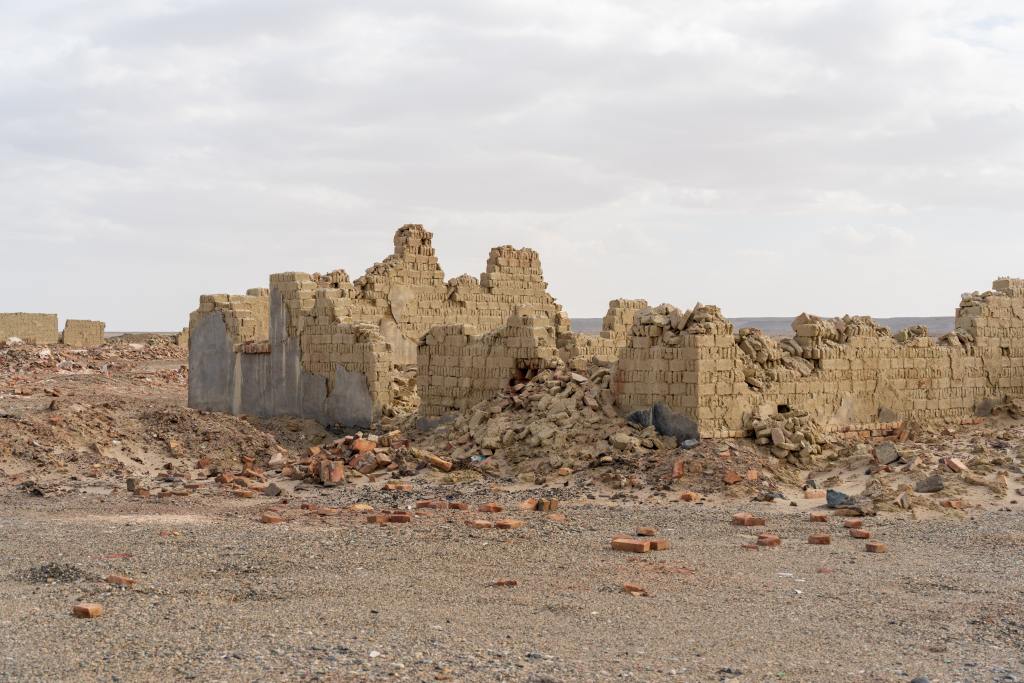
Underhill village had been built a couple decades previous, as families were resettled whose original homes had been destroyed by a genocidal dictator. Surrounding the village and in the pastures where the goats and sheep grazed, broken down stone outlines of homes could be easily seen scattered here and there, sad reminders of the terrible things that had taken place when Rahim’s generation were still toddlers.
As we walked in the spring sunshine, I shared with Rahim that I was trying to learn the words in the local language that would help me explain the big story of my faith. I asked if I could run them by him to see if it made sense. Rahim, an observant Muslim who was not at all shy to discuss spiritual things, eagerly agreed.
So I started with the word I had recently learned for creation, and explained that we believed that God had created the universe and made it very good. So far, so good. Rahim agreed with both the content I was sharing as well as the word I used to summarize it. Next, I shared the word I had learned for fall, telling Rahim that our first parents had sinned and had broken both our our good human natures and our relationship with God. Rahim agreed with the word I used, but it was clear he wasn’t very familiar with what I was saying about the devastating consequences of sin for humanity. Islam believes in a watered down concept of sin where it is more like an external mistake, and not an internal corruption. Because of this, they believe that humans are still freely capable to choose good anytime they want to. Given this difference in theology, I wasn’t too surprised that Rahim’s brow furrowed as I tried to explain our doctrine of the fall.
We stepped over some goat droppings and passed some chewing cows on our left. I could sense that Rahim was good with me continuing to share, so I told him the word I had learned for redemption, and explained the good news to him that Jesus is God-become-man who made the perfect sacrifice for our sins and rose from the dead to break the power of death. Rahim listened respectfully, surprisingly not pushing back with the normal objection that Muslims have – such as the belief that Jesus never really died on the cross, because God would never allow his prophet to be shamed like that.
I got to the last word, restoration, as we turned a corner and started going uphill again. I explained how the Bible teaches that when Jesus returns evil will be finally defeated, all who believe in him will be resurrected with new spiritual bodies, and that even the heavens and the earth will be resurrected and new. Heaven and earth will be completely reconciled. Rahim seemed to be thinking hard about what I was saying.
“You’ve got the wrong word for that one,” he said.
I was surprised, the word I had learned seemed a pretty straight forward translation of “to make new again,” a good way, I thought, to communicate restoration.
“We use that word for when someone is renovating their house,” Rahim continued. “You know, new paint, new windows, new drop ceilings. No, there’s another word that I think would fit better, one we use for rebuilding a house that has been completely destroyed, like these houses here.”
Rahim motioned off to his left where more crumbling stone walls rose up out of the bright green grass.
“If you were going to make these houses new, you need a stronger word. One that means a complete restoration after destruction. At least to me that sounds a lot closer to what you are describing.”
Rahim proceeded to teach me the appropriate word, one which carries the sense of restoration from the ruins, rather than mere renovation. As I later checked these terms with local believers, they agreed with Rahim. I’ve used the term he taught me ever since when explaining the big story of the Bible in its four parts of Creation, Fall, Redemption, and Restoration.
Rahim was more correct than he knew. Renovation of humanity, of this world, would never be enough. Our spiritual and material substance needs a lot more than a fresh coat of paint and some new shiny light fixtures. We’ve got problems deep down in the foundation, in the plumbing, in the wiring, and in the walls and beams. Our metaphorical structure has been condemned, and rightly so. No, to live in a world with no more suffering, sin, or death, we need a complete rebuilding from the ground up. Who could ever afford such a rebuilding? The cost would be staggering.
We walked back to Rahim’s house and my light-hearted friend was a lot quieter than usual. It was probably the first time in his life he had ever heard of the need for a costly redemption and restoration of his own heart – and of the entire universe. I prayed that this new message would go deep within, and puncture the whitewashed Islamic veneer of goodness that he was trusting in.
To this day we still don’t know of any believers in Underhill village, though there are a few Bibles there now. Bibles, and memories of many conversations – conversations that we hope will long linger as witnesses, like those bombed out shells of ruined homes. Renovation is not enough. We need restoration.
This Central Asian proverb is equivalent to, “Where there’s smoke, there’s fire.” Certain things only happen as effects or symptoms, meaning there is necessarily a cause somewhere. Smoke doesn’t appear unless something is burning. Trees (excepting those in Narnia and Middle Earth) do not visibly move unless something else is moving them – usually the wind.
This category of wisdom is important for dealing with people who might be gifted in deception. They may present to us in a certain positive way, but have a curious trail of broken relationships behind them or a cloud of troubling interactions with others around them. We should pay attention when our personal interactions with someone don’t seem to match the questions regularly raised about them or the consistent negative reputation they have with others. While we’d like to think that we are special and can uniquely activate this person’s potential, usually this is not the case. And we are likely to ourselves get burned soon enough. Is there smoke? Are the branches moving? This means something.
This proverb could also be applied to the sins we regularly struggle with. Sins always have context, a story, behind them. They have not arisen out of nowhere, they have roots, and often function as symptoms of deeper struggles going on. This is why we often don’t make progress against them. We end up focusing on the smoke instead of the fire, the branches instead of the wind. Anger is one sin that is almost always a symptom. If we dig for its roots of sadness, fear, or otherwise, we may be very surprised to see what has been functioning as its fuel.
Treating symptoms has its place, but we should be wise to recognize that symptoms point to something deeper that is also present, and seek to understand and treat the cause. Let us be people who seek to read the signs wisely, neither ignoring them nor mistaking them to be the main thing.
The words were spoken in a soft voice. The speaker, a silver-haired older man with deep blue eyes, sat just as calm and hospitable as ever in his armchair as he spoke them. But the effect of these words was like a bomb – some kind of vacuum grenade that sucked all the noise out of the room and shut the mouths of a room-full of arguing twenty-somethings.
Well, not all the mouths were shut. Barham’s* mouth was hanging open, cut off in angry mid-sentence. The change coming over him was quite remarkable. His red face was returning to his natural Central Asian olive tone, the deep creases in his forehead were relaxing, and a softness seemed to return to his eyes and even his entire posture.
Somehow, our older host had known just the right words to say to defuse our explosive situation. The words he uttered cut to Barham’s heart, tapping deeply into Central Asian values of honoring the elderly and being a gracious guest. I sat back and exhaled slowly. Our host, pastor Dave*, had once again proven the power of a wise and soft tongue.
Barham, a new believer and a refugee, had moved in with his girlfriend, an American who was also professing to be a new believer. As their friend and community group leader, I had called them to repent and stop living together. When this counsel was rebuffed, we had brought a couple other believers into the situation. This only led to more angry opposition. Finally, we informed them we would be bringing their situation to the whole community group as a step on the way to informing the entire church. Not known to shy away from a fight, Barham and his girlfriend had decided to come to the meeting where we would inform the group in order to defend themselves and to tell us off for our self-righteousness.
In this season our community group was a motley crew of young Bible college students, newlyweds, internationals, and new believers. We were all very young and things were often very messy. We jokingly nicknamed our group Corinth because of the way the Spirit was working powerfully to save and sanctify even as sin messes spilled out on the regular, setting things on fire. This group was where I first cut my teeth in leadership in our sending church, and I was often overwhelmed and very much in over my head.
Wisely, each of the community groups was overseen by one of the elders of the church, who also served as a mentor to the group leader. These pastors would sometimes attend the groups themselves, often rotating between the several they oversaw. Dave was our appointed elder, but every week he was also at our group meetings (perhaps it was clear that we really needed this), though he seldom spoke during the meeting itself. He seemed content to let me do most of the leading, while he and his wife brought a welcome measure of age and gentle wisdom to our very young group.
The day that Barham and his girlfriend showed up to challenge us over step 2.5 of the Matthew 18 discipline process, we were meeting at Dave’s house. This proved to be providential, setting up Dave to remind Barham of this crucial point after the conversation had gotten out of hand. Earlier, I had done my best to handle the awkwardness of Barham and his girlfriend showing up and had also tried hard to be clear, kind, and firm as we responded to their accusations. But things had escalated, and it had practically become a shouting match as I and other believers present tried to speak sense to our friends who were running headlong into sin and ignoring all counsel.
But Dave’s wise word had evaporated all the anger in the room, and opened the door for spiritual sense to prevail. Barham hadn’t been willing to listen to us, his believing peers. But he softened under the gaze and the truth spoken lovingly by Dave, his fatherly host. That day proved to be a turning point, and Barham and his girlfriend did end up living separately again until they were eventually married.
This wasn’t the first or the last time that I saw pastor Dave drop a wisdom bomb, though it was one of the most dramatic. I had begun to see this also happen in elders meetings, where a group of us leaders-in-training were permitted to attend and observe. While other personalities were stronger or more charismatic, the room hushed every time Dave had something to say. There seemed to be several reasons for this. First, he didn’t speak up that often, so when he did, everyone was curious to hear what he was thinking. Second, he was the eldest of the elders present, having spent many years ministering to rural Kentucky churches, having experienced the death of his first wife, and living now with the heartbreak of adult children who were not believers. He had a wealth of experience gained through sorrow, earned on a long road of faithful service. And finally, when he did speak, the presence of spiritual wisdom in his words was unmistakable. Younger men like us who were mainly drawn to the words of the more dynamic leaders in the room watched and learned as those same dynamic men hung on every quiet thing that Dave had to say.
I remember a small prayer meeting from around this time, where Dave was giving a brief encouragement to the ten or so people present. In a season where I was tempted to equate busyness with faithfulness, he told us, “Our Lord led a busy life, but he didn’t have a busy heart… he didn’t have a busy heart.” As Dave paused thoughtfully, I remember wrestling with this small, yet weighty comment, knowing that I for sure had a busy heart, but realizing that my Lord indeed did not. Dave didn’t seem to have a busy heart either.
Proverbs 25:15 says, “With patience a ruler may be persuaded, and a soft tongue will break a bone.” In other words, do not be deceived, there is tremendous strength in gentle and wise words spoken at the right time. When this takes place, a soft tongue can break even hardest bone – or the hardest heart. I am reminded of Jesus’ gentle words to the Samaritan woman in John 4:17-18, “You are right in saying, ‘I have no husband’; for you have had five husbands, and the one you now have is not your husband. What you have said is true.” These gentle words of the Messiah proved extremely powerful – they brought about not only this woman’s repentance, but the awakening of her village also through her.
I have seen this proverb lived out among very few men. But there are some, like Dave, who know and model the power of a gentle tongue. That tense evening with Barham in Dave’s living room, and every time I have seen him use it since, I have longed to someday have a tongue like that, to be able to break the hard and brittle with a soft word of truth fitly spoken. Like some kind of struggling apprentice trying to learn a new skill, I have tried my hand at it over the years. It’s not usually had the same effect. But there are times where it has seemed to at least not make things worse, and a very few times where someone’s entire demeanor has changed because I responded with gentleness rather than matching their combativeness.
It’s easy to feel like men like Dave are a different breed, some higher rank of Christian who have found the secret skills of wisdom. But then I remember that all wisdom comes from the same source, and that it is not selectively and secretly handed out to a special class of Christian. No, wisdom stands on the street corners, inviting all who would to come and learn from her (Prov 1:20). It is given generously by our God to all who are in need of it and dare to ask again for more of it (James 1:5). There is a trustworthy path to one day having a gentle tongue that can break a bone. And that is the path of asking our Father for wisdom again and again and again – and learning to watch those to whom the gift has already been given in abundance.
Yes, there is power in dynamic, charismatic speech. The Spirit does gift some in this way. But let us not forget the power of a gentle tongue, also gifted by the same Spirit of wisdom. Let us lean in and seek to learn when its softness silences a room and pierces hard hearts. When we are in its house, let us put our hands over our hasty mouths. For there is a power in a gentle tongue that is often overlooked, but is not to be underestimated.
This post is part four in a series on Jesus and the suffering of his people from John 11. Here you can read part one, part two, and part three.
As we continue our trek through John 11, we have come to the point in the story where Jesus is now in person in Bethany, interacting face to face with those who are suffering. We have seen how he has said no to their good request, has hinted at his purposes of love, faith, and glory, and has boldly drawn near to the suffering. In all of this, we should continue to keep in mind that Jesus reveals the Father to us (John 1:18). His conduct toward his suffering friends in this chapter is a window for us into how God relates to his suffering people.
In this post we’ll focus on how in the midst of suffering, Jesus invites focus and faith in his character. Here is the relevant portion of John 11, where Jesus interacts with the grieving Martha:
[17] Now when Jesus came, he found that Lazarus had already been in the tomb four days. [18] Bethany was near Jerusalem, about two miles off, [19] and many of the Jews had come to Martha and Mary to console them concerning their brother. [20] So when Martha heard that Jesus was coming, she went and met him, but Mary remained seated in the house. [21] Martha said to Jesus, “Lord, if you had been here, my brother would not have died. [22] But even now I know that whatever you ask from God, God will give you.” [23] Jesus said to her, “Your brother will rise again.” [24] Martha said to him, “I know that he will rise again in the resurrection on the last day.” [25] Jesus said to her, “I am the resurrection and the life. Whoever believes in me, though he die, yet shall he live, [26] and everyone who lives and believes in me shall never die. Do you believe this?” [27] She said to him, “Yes, Lord; I believe that you are the Christ, the Son of God, who is coming into the world.”
John 11:17-27, ESV
This conversation between Jesus and Martha is remarkable. Martha, often viewed as the busy earthly-minded one compared to her more spiritual sister, truly shines in this interaction as a genuine believer of deep faith. She begins by being brutally honest with Jesus, bringing him the question that has been tormenting her soul. “If you had been here, my brother would not have died” (11:21). In other words, “Where were you? This doesn’t make sense to me given what we know, what at least we thought we knew of your love for us.” This kind of honesty might seem disrespectfully forward to some, but it shows the presence of trust even in the midst of severe trial. That desperate trust is communicated by her second statement. “But even now I know that whatever you ask from God, God will give you” (11:22). The disorientation of Jesus not agreeing to heal her brother means Martha’s faith in Jesus is under assault. Her circumstances do not fit with the loving and powerful Jesus that she knows. But she is still holding on, confessing that she knows something truer than what her experience and feelings may be preaching to her. There is a lot present in those words, “even now…” True faith has been put into the fire, and though it is painfully tested it is glowing white hot, genuine.
Jesus responds to Martha with a statement of double meaning, or a prophecy with a double fulfillment, one near and one far. He says that Lazarus will rise again, speaking seemingly of both the miracle he is about to perform as well as the future resurrection of the just, in which Lazarus will be a participant. Martha seems to understand only the latter part about the final resurrection of God’s people. Or perhaps she is afraid to risk hoping that Jesus might be speaking of the present. Her statement about God granting whatever Jesus asks hints that she may harbor a secret hope that this is indeed what will take place. But if it’s there, she doesn’t risk asking it directly. Instead, Martha focuses on the ultimate hope of the suffering faithful – that one day resurrection is coming and suffering and death will be forever reversed. Even in the midst of crushing grief and disappointment, she reaffirms her belief that God will on that final day raise her brother from the dead, “I know that he will rise again in the resurrection on the last day” (11:24).
But Jesus does not leave things here, satisfied that Martha has remained orthodox even in the face of death. He pivots, directing her focus to his own character, and uttering one of the most important statements in the gospel of John, “I am the resurrection and the life. Whoever believes in me, though he die, yet shall he live, and everyone who lives and believes in me shall never die. Do you believe this?” (11:25-26). In the midst of her suffering, Jesus invites Martha to focus on his identity and to reaffirm her faith in who he is. Jesus is revealing to Martha that he not only has power to give resurrection and life, he is the resurrection and the life. He is the source of all life, and he is the source of not only the created life we know now that ultimately leads to death, but also of the coming new creation life that reverses the order of things, bursting out of death and lasting forever. This fifth of Jesus’ seven “I am” statements in the book of John communicates his divinity, for only God is the source of life itself. Whoever believes in Jesus will be united with him who is life, and therefore will not only have life after death, but because of this, will in a real sense never really die.
Resurrection and the reality of eternal life really do transform the nature of death for believers. While still painful and grievous, the ultimate sign that things are not the way they’re supposed to be, death has been gutted of its deepest darkness, it has been robbed of its ultimate weapon – eternal death in separation from God. As I have shared countless times with believers in Central Asia, death for believers is now merely the door to God’s presence, a temporary state of our bodies being entrusted to the dirt, knowing that the dirt will one day give its charge back, new and shining with eternal glory.
By asking Martha to focus on who he is, Jesus is not yet explaining all of his purposes to her. There are some very big pieces that do not yet make sense. But by calling her to believe in his character, in his identity, he is helping her to have assurance that the one who is life will somehow bring life out of even this. To do otherwise would be to go against his very nature. Wherever Jesus is, ultimately, will also be life and resurrection – no matter how much suffering and death we currently see around us.
Martha responds by courageously confessing her faith in Jesus’ character and identity, “She said to him, ‘Yes, Lord; I believe that you are the Christ, the Son of God, who is coming into the world’” (11:27).
The words of Jesus to Martha help us understand what God’s purposes are so often in the progression of our own suffering. He will often invite us to first remember who he is, and to fight to believe yet again in his character, before he will show us how he is working all things for good. Like Martha, this sequence is painful and yet revelatory – it reveals the presence of genuine faith in a way few other things can. Consider the logic of 1st Peter 1:6-7:
[6] In this you rejoice, though now for a little while, if necessary, you have been grieved by various trials, [7] so that the tested genuineness of your faith—more precious than gold that perishes though it is tested by fire—may be found to result in praise and glory and honor at the revelation of Jesus Christ.
There are kinds of necessary suffering we must encounter. Why? So that our faith can be proved as genuine, just as Martha’s was. And so that when this happens, Jesus will receive more praise and honor and glory – just as he does when Martha confesses him as Christ and Son of God.
Why doesn’t God just get on with it and explain what he is doing? Why does he leave us confused in extended seasons of suffering? Well, in part so that we will wrestle with the messages preached by our circumstances and find grounding once again in a settled faith in his character and identity. True faith in God’s character does not fail based on our temporary, visible circumstances. Rather, it is fixed on what is unseen and eternal, it is based on faith in God’s word and character (2 Cor 4:16-18). Suffering is often God’s servant by which he reveals which kind of faith we have. And it is his means of helping us find the only thing solid enough to carry us through the darkness.
This past autumn it became increasingly clear that our family would have to come back to the US for an extended season of medical leave. I remember eventually feeling settled that it was necessary, but wrestling greatly to feel at all that it was good. So many things didn’t make sense given all that we had invested, and I wrestled greatly with the costs my family, my team, and our little church plant would incur if we stepped away. The uncertainty of our return also introduced a level of grieving into our departure that I wasn’t prepared for. Now, three months into our medical leave, we still don’t have very much clarity on our future. But my wrestling in the season of our departure did lead to a greater measure of peace in the midst of the fog. It came while learning about the patron-client logic baked into the book of Hebrews. So many of the arguments for perseverance made in that book could be summarized as, “Consider what a superior and trustworthy patron you have in Jesus Christ. And he graciously has evenmore in store for you, so how could you even think of leaving him and shamefully falling away? Keep going!” Somehow, the book of Hebrews brought me back to once again focus on the trustworthiness of my God. And my faith in his character was renewed. This has held me fast in the greatest season of uncertainty we’ve had for many years.
In John 11, Jesus invites his friends to focus and faith in his character. He is the resurrection and the life, even when we can’t yet square how this fits with the death we see around us. As we lean into his revealed character and identity we will find that our faith is proved to be genuine, and that this vision of him will be enough for us. It will help us to persevere until the coming resurrection – no matter how long that takes.
In this poem, Ephrem the Syrian, poet of the ancient church, compares and contrasts the Passover lamb with Christ, the true lamb of God.
Hymns on the Unleavened Bread, no. 3

In Egypt the Passover lamb was slain,
in Sion the True Lamb slaughtered.

Refrain: Praise to the Son, the Lord of symbols
               who fulfilled every symbol at his resurrection.

My brothers, let us consider the two lambs,
let us see where they bear resemblance and where they differ.

Let us weigh and compare their achievements
- of the lamb that was the symbol, and of the Lamb that is the Truth.

Let us look upon the symbol as a shadow,
let us look upon the Truth as the fulfillment.

Listen to the simple symbols that concern that Passover,
and to the double achievements of this our Passover.

With the Passover lamb there took place for the Jewish people
an Exodus from Egypt, and not an entry.

So with the True Lamb there took place for the Gentiles
an Exodus from error, and not an entry.

With the Living Lamb there was a further Exodus, too,
for the dead from Sheol, as from Egypt;

For in Egypt two symbols are depicted,
since it reflects both Sheol and Error.

With the Passover lamb, Egypt's greed
learnt to give back against its wont;

With the Living Lamb, Sheol's hunger
disgorged back the dead, against its nature.

With the True Lamb, greedy Error
rejected and cast up the Gentiles who were saved;

With that Passover lamb, Pharaoh returned the Jewish people
whom, like Death, he had held back.

With the Living Lamb, Death has returned
the just, who left their graves.

With the True Lamb, Satan gave up the Gentiles
whom, like Pharaoh, he had held back.

In Pharaoh two types were depicted;
he was a pointer to both Death and Satan.

With the Passover lamb, Egypt was breached
and a path stretched out before the Hebrews.

With the True Lamb, Satan, having fenced off all paths,
left free the path that leads to Truth.

The Living Lamb has trodden out, with that cry which He uttered,
the path from the grave for those who lie buried.
-Ephrem the Syrian, translated by Brock, The Harp of the Spirit: Poems of Ephrem the Syrian, pp. 52-54
A couple days ago I got coffee with a missionary who has served in East Asia. During one part of our conversation, we discussed a subtle issue we’ve noticed even in otherwise-healthy churches – that internationals and those from other cultures are often overlooked when it comes to both their care as well as investment in their potential. Similar to what I addressed in my post earlier this week, leadership and fellow church members don’t always “see” this particular class of the lowly or the seemingly-unimportant in the same way they “see” those who are same-culture individuals.
This is only natural. Humans gravitate toward those who are most similar to them and with whom they have the most in common. These sorts of people get more of our attention because relating to them is simply much easier – there are fewer barriers to communication and friendship. But therein lies the problem. The Church is not a natural institution, but a supernatural one, a new family built not on shared natural affinities, but on the spiritual affinity of a new birth into a new family where God is our Father and Christ is our older brother.
It’s makes sense that the Jewish Hellenistic widows were neglected in Acts 6. There were pretty significant cultural and linguistic barriers between them and the Judean/Galilean believers that prevented their needs from being as visible to the apostles. But the apostles and the early church didn’t shrug this off as some kind of natural dynamic that should be embraced (“Let’s just plant First Hellenistic Church, shall we?”). Instead, they created the forerunner of an entirely new office in the local church that would focus on the needs of the needy and marginalized. They recognized that they had a major crisis on their hands, that the credibility and faithfulness of the believing community was at stake if its members who were essentially foreign widows – foreigner and widow both being major categories of concern in the Old Testament – got neglected. So, they went and created the diaconate so that this kind of oversight might never happen again. Or, so that when it happens, there are leadership resources devoted to it.
Neglecting the needs of those from other cultural and linguistic backgrounds can still happen, even in our healthiest churches – though this neglect is often unintentional. In some churches, care for internationals and those from other cultures gets essentially delegated to a select few who have themselves served in the past as missionaries. When those cross-culturally-skilled believers then go back overseas or otherwise are no longer around, the body at large hasn’t learned to care for internationals, and they can very easily slip through the cracks. Care and investment can be neglected, which looks like international students getting forgotten during holidays, older refugees getting targeted by scammers, and promising young leaders with a vision for their home country being left to figure it out on their own. Again, this is so often unintentional.
What would proactive steps look like in building a church culture that cares well for the internationals among us? Many churches in the West and in global cities will continue to have members who are either refugees, immigrants, students, or business professionals. And this does not seem to be slowing down. Here I want to offer some initial suggestions, though I offer these thoughts feeling that this is merely the beginning of a conversation on how we can all do this better in our various contexts.
First, in our churches we need to be serious about appointing wise, spirit-filled deacons who can be lead servants for the body in caring for the marginalized, including any internationals among us. After all, the origin story of deacons is explicitly tied to fixing issues of cross-cultural neglect in a local church. Do we insist that our deacons have their radars finely tuned for those in the body who come from different linguistic or cultural backgrounds, the contemporary equivalent of the Hellenistic widows? What in their deacons meetings and ministry rhythms keeps this demographic regularly before them? Without this kind of intentional focus, again, the danger is that the marginalized from our own culture will accidentally take priority, because there are fewer barriers toward them being seen and heard.
The text of scripture highlights being of good repute, spirit-filled, and wisdom-filled as the primary qualifications for the men chosen in Acts 6:3. These qualifications, along with those laid out in 1st Timothy 3 should be our top priorities when appointing qualified deacons. These are the kind of men who have the character needed to see the lowly, and that is the most important thing. However, many have pointed out that all seven proto-deacons of Acts 6 have Hellenistic names. It’s therefore likely that they themselves were more Hellenistic than Hebrew in their cultural background, and thus chosen as those well-positioned to care for the Hellenistic widows. So, while natural affinity is not the foundation of the church’s unity, here we see that it may be important for mercy ministry to the marginalized. This is because we are simply much better observers of those things in which we also have some experience.
My daughter has type-1 diabetes and uses Omnipod and Dexcom systems for diabetes management. When others walk by us with these devices sticking to their skin, or when we hear their distinctive beeping noises, we instinctively notice, when we would not have noticed before. Why? We now have experience with diabetic devices and are deeply invested in them as a way to care for our daughter. It follows that those with experience and investment in other languages and cultures are going to more intuitively notice those from these backgrounds, and also notice their needs.
Given these realities, it seems wise to appoint deacons from diverse cultures or with missions experience as those with naturally stronger radars for spotting those international members most likely to be overlooked. If you have Spanish-speaking members in your congregations, consider prioritizing the development of Spanish-speaking deacons. If you South Asian members, then likewise. Or, perhaps that retired missionary might make an excellent addition to the team of deacons.
Other than appointing and directing lead-servants, what else can be done to strengthen the skill and gifting in the body for caring for internationals? For this I really only have one tried and true method: get people overseas. Create pathways for both leadership and members to spend extended time immersed in a foreign culture, ideally alongside of missionaries or churches that you know and trust. Again, people notice what they have experience or investment in. It’s remarkable the kind of effect that several months or several years on the mission field can have on someone’s ministry outlook for the rest of their life.
We should get creative about finding ways to get church leadership overseas, and not just for short-term trips. My missionary friend serving in East Asia shared about a house swapping arrangement he had with one of his former pastors. Before the pandemic derailed things, this pastor and missionary were coordinating their sabbatical and furlough so that the missionary family would have housing in the US and the pastor’s family would get to spend six months living in a foreign context. What a great idea! What would it look like for churches to free up their pastors for mission sabbaticals like this? The impact of getting church leadership on the field for extended periods could be tremendous. Whenever I encounter a student whose dream it is to be a pastor, I challenge them to spend a couple years on the mission field first. This is because their perspective on ministry and the church will be dramatically affected by spending time in frontier missions contexts – and yes, they will be more likely to have eyes that see the internationals in their congregation.
But it’s not just – or even mainly – up to the leadership. After all, the work of the ministry primarily belongs to the congregation (Eph 4:12). So, there is a great need to equip the body to care for those from other cultural and linguistic backgrounds. Want to create a church strong in mercy ministry? Make sure there are many accessible pathways for your church members to spend extended time in mission contexts. Short-term trips are a start, but much more profound changes are going to come about by spending several months or longer overseas. They need to be there long enough to experience some negative things, and for the initial shine to wear off. They need to experience what it’s like to be a minority in a strange land, not just a tourist.
What can we do to foster a culture in our churches that cares well for the marginalized from other cultures? I think that pressing into our deacons and getting church leadership and members overseas are some sound ways to start. And let’s not forget the outcome of caring well for the Hellenistic widows in Acts 6 – “And the word of God continued to increase, and the number of the disciples multiplied greatly in Jerusalem, and a great many of the priests became obedient to the faith” (Acts 6:7).
Caring well for those often overlooked leads to evangelistic power. Of course it does. Spiritual unity among those without natural affinities is a stunning thing.
Many missionaries experience the honor of being renamed by those in their host culture. This is often a kind act of respect and acceptance on the part of the locals. And, depending on the name itself, it can be a gift the missionary holds onto for years to come.
It’s a peculiar thing, the way we humans rename one another. The name itself is often a reflection of some characteristic already present in the person, although naming can also be reflective of the giver, where they project their hopes onto the recipient in the form of a new name. I’m struck by how much mileage these names often get, sometimes becoming a key part of our identity even when the name emerged as a nickname in jest.
During our local trade language class in high school, we were amused one day by some of the older obscure terms we were learning, such as the word for fine hair on plants, mosong. One of the boys in our class, named Ryan, had short, fine, spiky blonde hair both on the top of his head and poking out of his chin. Someone during that class period saw the correlation and dubbed him Mosong. We all (including Ryan, a good sport) laughed at how well the name fit, and it stuck. By the end of high school, no one called him Ryan anymore. He had become Mosong. Now almost two decades later, I would probably still call him Mosong if I saw him again.
This past week as we marked the anniversary of my dad’s death, my mom reminded my brothers and me about the tribal names we were given during our first term in Melanesia. She remarked that they were peculiarly well-given, still seeming to reflect what we are like even decades later. The names were given by new believers in remote village areas where my parents served, my dad providing interim leadership for small congregations while local pastors were being trained up and my mom teaching women and literacy.
My dad was named Kamtai, which means thunder. This was fitting, as he was bold and strong, a former marine and natural leader. My oldest brother was named Kampok, which means lightning. This was because everywhere my dad went, my brother went also – just as lightning and thunder always come in a pair. The middle brother who was always climbing trees was named Kamp, which means cuscus. For those not versed in obscure Melanesian marsupials, a cuscus is basically a cute jungle possum of sorts that is an expert climber. My name was Kilmanae, which translates as parrot. This is because when I was a child I did not have a blog, so all my ruminations about the world around me came out verbally – apparently striking a strong resemblance to a chattering bird. I’ve currently got a four-year-old of my own who could be given the same name. Some days there is an astounding stream of words that comes unceasingly out of that boy’s mouth.
My mom was given a name that she was initially not very excited about: Dogor, which means cicada. Cicadas are big ugly flying bugs with beady eyes and large claws that leave their larval exoskeletons hanging all over jungle tree trunks like little brown insect zombies. They shriek/sing in unison throughout the day, their loud “REEEEEEEE…. REEEEEEEE” filling many of my childhood memories. Curious and a little disappointed with this name, my mom asked her friend why she had chosen to name her after a bug. “Because you brought the light,” she responded, “just as cicadas sing and bring the sunrise.” After that, my mom was pretty happy with her tribal name.
These names still describe us well. My mom continues to bring the light, serving in counseling and cross-cultural roles here in the US. My oldest brother has always had a bold leader side to him, which can’t help but echo our dad. The middle brother has always been good with tactile work, whether climbing trees, fixing up cars, or remodeling houses. As for me, I still love good conversation. Tonight I’ll be getting together with some Central Asian friends just to enjoy talking with one another while sipping on some tea. While I may not be quite the verbalizer that I used to be, the flow of ideas and words these days comes out through the keyboard. The parrot has learned to write.
Of course, giving new names is quite a biblical concept. God renames Abram as Abraham, Sarai as Sarah, and Jacob as Israel. God promises to give Israel a new name in Isaiah 62:2, on the day of her salvation. Simon is renamed Peter, though Saul is not renamed Paul (this was just his parallel Greek name). Others like Joseph also get a new name tied to their new identity that sticks: Barnabus, Son of Encouragement. And of course in Revelation 2:17 Jesus promises a new name to every believer who conquers, written on a white stone.
Our names given by wise tribal believers have proven to be strangely accurate over the decades. Even nicknames like Mosong have power. I can’t wait to know what meaning will be reflected by our new names given in eternity. Undoubtedly they will reflect us and shape us uniquely as no other name has. On that day we’ll be the same, and yet we’ll also be different – like a cicada that has shed the crawling exoskeleton of its youth, and now can fly. Our new names will surely be a part of this, somehow strangely familiar, somehow wonderfully new.
Not only are the Roman provinces gone, the whole subtle substructure of Roman political organization and Roman communication had vanished. In its place have grown the sturdy little principalities of the Middle Ages, Gothic illiterates ruling over Gothic illiterates, pagan or occasionally Arian – that is, following a debased, simpleminded form of Christianity in which Jesus was given a status similar to that of Mohammad in Islam.
The Irish did not especially mean to be deviant, but their world hardly abounded in models of Christian orthodoxy. After Patrick, they experienced an influx of anchorites and monks fleeing before the barbarian hordes, and these no doubt provided them with some finer points on eremitical and conventual life. “All the learned men on this side of the sea,” claims a note in a Leyden mansuscript of this time, “took flight for transmarine places like Ireland, bringing about a great increase of learning” – and, doubtlessly, a spectacular increase in the number of books – “to the inhabitants of those regions.” But not a few of these men were bone-thin ascetics from such Roman hinterlands as Armenia, Syria, and the Egyptian desert. The Ulster monastery of Bangor, for instance, claimed in its litany to be “ex Aegypto transducta” (“translated from Egypt”); and the convention of using red dots to adorn manuscript initials, a convention that soon became a mark of Irish manuscripts, had first been glimpsed by the Irish in books that the fleeing Copts brought with them.
My wife has always maintained that those going into ministry should first work a few years in food service. Her main point in this claim is that you will never treat that server, barista, or otherwise unimpressive worker the same after you’ve known what it’s like to be in their shoes. My wife worked her way through college, picking up countless shifts in the campus cafe, serving at banquets, and working in the cafeteria. She finished her undergrad with no debt at all, a feat that her future husband was unfortunately not able to replicate.
Most of my wife’s jobs were on the campus of Southern seminary, where she attended Boyce college. Over the four years she worked on campus, her brief or repeated service interactions with students, staff, and visiting leaders gave her a unique window into the character of each. This is because the way we treat those with supposedly unimportant jobs always says something about our humility. Seminary can be a heady place. World-renowned scholars are teaching and being made. Current leaders rub shoulders with future leaders. Famous pastors preach in chapel and visit to give prestigious lectures. In other words, the temptations of fear of man and showing partiality are regularly present, made all the more slippery in that everything is set in a context of preparation for ministry. After all, why slow down and engage the college kid behind the counter in a black apron when standing right over there is the author of your favorite theology book?
These dynamics meant that my wife and others working service jobs always noticed the ones who would indeed slow down and truly engage them as people and fellow heirs of the kingdom. And of course, they would also notice when students or leaders didn’t extend even basic Christian courtesy. Now, everyone has bad days where we are lost in our thoughts or discouraged and forget to make eye contact or interact genuinely with the person behind the cash register. The issue is not what happens as a one-off, but what is the pattern of our lives and interactions with those in everyday or lowly roles around us? Do we truly see and value those around us whom the world deems unimportant? Do we ever slow down and genuinely engage them, seeking even to delight in them? Pay attention to those who do this well, for they are the kind of leaders worth following.
In the field of leadership training, some authors speak of the “waiter principle,” the idea that how a leader treats a server speaks to whether that leader is truly a leader of integrity or not. A true leader will understand that every role in their organization or company matters, and this will affect how they treat those in even the lowest roles. In Central Asia, it’s not so much the restaurant servers who get treated poorly, but the cleaners or the chai boys. When we’ve taught leadership seminars in local universities, we’ve learned to slow down and focus on this principle, because in a patron-client hierarchical society, the culture says that it’s actually shameful for leaders to treat the unimportant with respect. While Western culture is a little stronger on this point, the temptations toward showing favoritism toward the important are really universal. No matter where you live, our sin natures want to judge by appearances, honoring the rich, talented, and important, and belittling or ignoring the poor or average among us.
Somewhere like seminary can illustrate why it can be downright foolish to judge by appearances. That foreign exchange student making your sandwich might in a few years be leading a thriving church overseas and show up on a 9 Marks podcast (as took place in my earbuds this week). The guy doing landscaping may end up planting a church in one of the hardest cities in North America. The gal making your coffee may become a well-known author, or, in my wife’s case, serve faithfully on a frontier church-planting team in a region overseas where many others would never even consider raising their families. Basic wisdom tells us to honor even the lowly because we cannot predict if or when they will be lifted up to a place higher than ours – and if that someday happens, then our honor or shame is tied to how we treated them before.
But this strategic wisdom really shouldn’t be our primary motivation to show respect to those who appear unimportant among us. It still assumes that it’s the potentially-powerful who are worthy of more honor. Instead, the deeper motivation should be that God has welcomed the lowly, honored them, and even delights in them. We need to remember the upside-down logic of the kingdom of God, “many who are first will be last, and the last first” (Matt 19:30). Jesus welcomes little children and rebukes those who don’t (Mark 10:14). He befriends the outcasts (Mark 2:16). He pronounces blessing on the poor and pronounces woe upon the rich (Luke 6:20, 24). Not many of God’s chosen are rich, powerful, and important in this world (1 Cor 1:26-31). The sick and the poor are the true treasures of the church, and every person we interact with has a fascinating story that overflows with God’s glory, and the potential to themselves be eternally glorious – to even be a judge over angels (1 Cor 6:3).
Being reminded of the nature of God’s kingdom can help us live in such a way that we become believers and leaders who truly see the lowly. Picturing that service worker resurrected and remembering that we are to consider others as more important than ourselves (Phil 2:3) can transform our everyday interactions with those around us – and give life to those who often feel invisible. And if seeing and delighting in those deemed unimportant becomes a pattern in our lives, then we are well on our way to developing this character trait of a true and trustworthy leader ourselves.
While I didn’t have too many jobs in food service (Stints at Jamba Juice and Jimmy Johns showed me my hands could never seem to move fast enough), I have often experienced a similar dynamic because I don’t present as physically or interpersonally impressive. I have a pretty average appearance and bearing and I find myself not very good at first impressions in a Western context. This means that those I’m briefly introduced to often quickly move on to those who appear more interesting. I can’t help but notice that there’s often a very different sort of interest shown later – once they learn about my ministry and story. This means that those who show a kind engagement before they know about my background and ministry accomplishments truly stand out. Their posture toward an unimpressive person has shone a light on their character. Without knowing it, they have outed themselves as humble and trustworthy.
I’ll never forget the time I met a very well-known pastor and author during my first week as a green, 25-year-old missions pastor. This leader was a regular speaker at T4G. He had published numerous books and spoken to tens of thousands. He was at our church for an important meeting with our senior leadership, and I was somehow invited to sit in, even though I was the brand new kid on staff. Yet in the hallway, as we made cursory introductions, this leader didn’t quickly move on to talk with the more dynamic leaders like I was used to. Instead, he slowed down and turned to me, deeply interested in the couple of details that my lead pastor had told him about me. Looking me in the eyes, he seemed to be fascinated by what he had heard. He put his hand on my shoulder and said, “Brother, I hear you’re just beginning a new role as a missions pastor. I am so excited about your ministry.” I was so taken aback by this kind of focus that I have no idea what I said in response. It was qualitatively different to be seen in that way. And it made me desire to be the kind of leader who would see others around me, even when they haven’t achieved enough to “deserve” that kind of focus. It also made me want to repent for the times I was guilty of ignoring the unimpressive.
Leaders who see the lowly and unimpressive are the kind of leaders worth following – and the kind of leaders we should want to become. This is because how we treat the lowly is truly a window into our character. Let’s keep that in mind the next time we meet someone who doesn’t appear that important. And if God is calling you to go into ministry, then follow a wise woman’s advice and consider first working some years in food service.









 Entrusted to the Dirt