These two local sayings are used interchangeably for the same kinds of situations. Locals might proclaim one, or both of them, when they are expressing delight at seeing someone dear to them, or when they see a cute child. They might also use them as a very warm affirmative to a request, such as if you ask them if they would mind helping you understand how to pay your water bill. And when you see your mother’s third cousin’s teacher walking through the bazaar and you engage in the expected blast of honorable words to “outdo the other in showing honor,” these phrases will also then undoubtedly come out.
The first one about being your sacrifice is dramatic, for sure, but understandable. The person is using this hyperbolic saying to proclaim that they would (hypothetically) do anything for you, even die for you. There are still animal sacrifices in our Islamic context, mainly connected to religious feasts. Some would understand them as securing some kind of forgiveness of sin, but most see it simply as a religious tradition meant to bring joy to the family (through feasting on the meat) and care for the poor (since a portion of the sacrificed meat must be given away to the less fortunate). Unlike Christians in the West, every local has experience with what an animal sacrifice actually looks, feels, and smells like. They’ve seen their grandpa or uncle ritually slit the cow or sheep’s throat and seen its blood spill out all over the courtyard tiles. Many have also ceremonially stepped over the blood as it drains away in the street gutters. So even though they don’t mean it literally when they say they’ll be your sacrifice, it’s still a saying that can carry some real weight, depending on how it’s being used.
The second saying about being your alcohol waiter is a bit more mysterious. How did this come to be such a common and respectful saying in an Islamic context where alcohol is supposed to be forbidden? First, alcohol was definitely around over the centuries (and still is today) even if it’s supposed to be off-limits for good Muslims. A historic presence of Jews and ethnic Christians meant that Muslims could, and did, often buy alcohol from these communities. Second, quite the drinking culture emerged among the men during the second half of the twentieth century when our region was heavily influenced by secularism and modernity. Third, there’s always been areas of uneasy tension between the older indigenous culture of our people and certain Islamic laws and customs. Alcohol seems to be an area where some locals view the mainstream Islamic policy of teetotaling as a foreign imposition at odds with the traditional freedoms of their people.
But how did offering to be someone’s alcohol waiter come to be a proclamation of respect, service, and affection? This is quite the mystery, both to me and to my local friends. Regardless, I have seen old Muslim women who would never drink nor condone anyone else doing so saying this to my children as they kiss their cheeks. The resulting irony is hard to miss. A Muslim grandma is offering to be the alcohol waiter for an underaged child whose family is with a Christian missions organization with a no-alcohol policy – yet everyone is smiling and feels valued and respected. Language is such a strange thing sometimes.
All of this means that if Chick-Fil-A ever opens a branch in our area, their workers will have quite the range of local equivalents for their required response of “my pleasure.” And some of most polite among these would be, “I will be your sacrifice” and “I will be your alcohol waiter.”
To support our family as we head back to the field, click here.
For my list of recommended books and travel gear, click here.
Our home church in Kentucky is quite diverse. Over the years, there has been in-service translation in a number of different languages. Currently, we have a crew of Afghan believers who sit up in the balcony. One of them with good English translates the sermon for his friends sitting around him. Occasionally, a brother preaching will use a particularly confusing idiom and I will glance up at their section, wondering if the translator will even make an attempt at that one or just let it go. There are times where he doesn’t seem to know what to do with a given phrase, and even from far away I can see the struggle. Should he try to translate it, and risk communicating the wrong meaning, or just let it go and hope it wasn’t too important of a point?
The same thing that makes idioms so useful (and even fun) is what also makes them so dangerous. Idioms are phrases that vividly communicate a package of meaning in their local language context, but a meaning that can’t be understand from the direct sense of the words themselves. Because they are missing the cultural and historical context, an outsider listening isn’t able to understand that the meaning of the whole is completely different from the meaning of the parts. Consider English idioms such as “break a leg” or “shoot the breeze.” If you were an English learner, how would you ever guess that these phrases mean “good luck” and “casual conversation,” respectively?
This can be true even in the same language, as I have I sometimes learned the hard way. “Shotgun wedding” did not mean what I thought it did. And yes, I learned this by using it in the wrong way around my future in-laws. Growing up as an American in Melanesia with missionaries from other English-speaking countries, we also found out that there were certain phrases of everyday American English that had very problematic meanings in other dialects of English. “Say I had a nose-bleed, not what you would say in America,” is one of these early lessons that I remember receiving from an Australian auntie.
But if idioms can be problematic even from one dialect of a language to another, they are exponentially more problematic when it comes to translation from one language to another. I’ve written before about the hazards of second-language sermons, where you think that saying “we trust in the person and work of Christ” means, simply, trusting in who Jesus is and what he did. But your trusty local-believer-sermon-checker just laughs and tells you that you just said we trust in the relatives of Jesus, since “person and work of” is a local idiom for someone’s kinfolk. Never mind when you offhandedly say things like “on fire for Jesus.”
When preaching in another language, one learns quickly to purge your English manuscript from as many idioms as possible, since the idioms of your language almost never translate directly – and even seemingly-direct phrases can prove to be local idioms. But if you are not preaching in another language, and instead preaching in your own tongue, it’s all too easy to forget about your idioms. If any of your congregation are non-native English speakers, or if there is any translation going on in your service, then for the sake of clarity, you’ve got to watch your idioms.
If you want to pay more attention to clarity in this area, here are some practical ways to do this:
Know your audience. Watching your idioms is very helpful if your audience is linguistically diverse. But if you are speaking (or writing, as I am here) primarily to native English speakers or those with very high levels of English, this is not as much of a concern.
Make sure your main points are not expressed in idiomatic language. This ensures that everyone present is at least able to understand the main outline of your teaching. Instead of “Christian, Jesus calls the shots,” say, “Christian, Jesus is our leader.”
Scan your manuscript beforehand for any idioms that could be replaced with simpler, more direct language. Then, replace as many of them as possible.
If you really like a given idiom, you can still use it, just be sure to define it when you use it. A simple half-sentence definition following the idiom means you can (ahem) have your cake and eat it too.
Regularly ask your translators or non-native English speaking attendees if there are phrases you use that are hard to understand. If you have a regular rhythm of sermon review, this could fit well into that time. If you have not learned another language, you might be unaware of what is idiomatic speech versus literal. In this case, believers from other language groups can help you learn how to “see” the idioms your language is full of.
Americans, watch your sports idioms. This is a very common area where American preachers, preachers, and writers assume common understanding when it’s often not there.
Pray for interpreters and translators. Their job is not easy and they often have limited time to weigh the pros and cons of a more meaning-based translation vs. word for word. Strive to make their job easier, not harder.
Preachers, our goal is clarity. Paul asks for prayer that he might make his proclamation of Christ clear, which is how he knows he ought to speak (Col 4:3-4). If Paul needed help with this, then so do we. Paying attention to our idioms can be one part of how we strive for greater clarity.
I’ll leave you with a classic video that highlights what can happen if you are preaching through translation. While it’s rarely ever this bad, many a missionary can indeed resonate with what is parodied here.
To support our family as we head back to the field, click here.
For my list of recommended books and travel gear, click here.
Here’s a leadership skill we don’t speak of very often: how to shut someone down who’s trying to take over your meeting or church service. Everyone in ministry who has tried to lead meetings has seen the need for this ability at least once or twice. A participant has their own agenda, and whether its conscious or not, they are going to assert themselves and try to overrule the leadership’s plans for this particular gathering. As I’ve mentioned in previous posts, the smaller your church, the easier this can be to do. When this happens, it’s a particular test of both the leader’s wisdom and spine.
I’ve seen some pastors who are very gifted at this. Some divisive brother stands up in a member’s meeting and the leader knows he’s going to try to platform something he’s been arguing about with the pastors. So, the pastor issues a quick rebuke and command to sit down. And amazingly, the man obeys.
Needless to say, I do not have this particular manifestation of the Spirit. I lack the force of personality and charisma to respond in this way. Yet I have still faced my own share of others trying to hijack meetings I’m supposed to be leading. One week, a visiting Central Asian believer started a heated debate in our church service, claiming that we were unfaithful for serving grape juice instead of wine for communion – and this in an Islamic context. Another man aggressively tried to change the language of our Bible study mid-meeting to one that served him better. Never mind it was the weaker language for everyone else in the group. Yet another man (a visiting leader no less) forcefully coopted the man with the guitar and made our church vigorously sing several more worship songs at the end of the service because “that was what would please Jesus.”
We learned the hard way to never mention a church picnic until the very end of our meetings because the ensuing heated discussion about where to go, what food to prep, how to buy such food, and who should be invited would inevitably get out of hand. If you are new to this blog, you need to understand one thing about our Central Asians. They take their picnicsvery seriously.
As I said, I’m not very gifted in publicly shutting down disruptive people and getting the meeting back on track. But as with any act of service to the church, sometimes you need to do it anyway, regardless of gifting. In all of the situations above, I did my best to muddle through it, trying to balance gentleness and respect on the one hand, and firmness and authority on the other. Knowing that I lack natural authority in these settings, I’ve learned that much of the work needs to done outside of the meetings to build spiritual authority – via grace-based respect, trust, and loyalty with the other believers. This is so that they will follow a gentle leader in a tense moment when a strong charismatic leader would seem to be more effective. It’s also very helpful to have established the purpose and agenda of the meeting clearly and publicly beforehand so that you can more easily head off any unexpected attempt to take over.
Sometimes attempted hijackings are unintentional, and simply come from the toddling faith of new believers. My wife and I were laughing about one of these situations just the other day, a situation that involved (of all things) a song by the late Canadian singer-songwriter, Leonard Cohen.
Our church plant had gathered in a nearby cabin to hold a Christmas service. Gathering like this allowed us to have an “indoor picnic” as it were, even though the weather outside was frigid. As part of this half-day gathering, we also held our weekly service, in which we would take the Lord’s supper.
My teammate and fellow temporary elder had preached, focusing on the Magi’s visit to Jesus, so that meant it was my week to lead the service. As I introduced the communion time, and walked through our three conditions for participation (faith, baptism, a heart ready to repent), one of the ladies from our team and one of the local ladies got up, getting ready to distribute the torn flatbread and chai cups containing grape juice.
Sitting to my right was Timothy*, one of the believers who only gathered with us once a month or so due to security fears. He and his wife had been regular attenders during their first year, but after the church had been visited by the security police, they had come around a lot less. However, they could almost always come to any sort of picnic event we held, since they felt that these kinds of social events gave them greater cover if questioned by their Islamic cleric relatives.
Timothy and his wife were still pretty young in their faith, certainly lacking in discernment, but the genuineness of their faith and affections was apparent. One time we visited them only to find out that Timothy’s wife was very excited because some kind of a local spiritualist woman had told her that she could discern that Timothy’s wife had been a Christian in a previous life. She was thrilled, feeling that this was a validation of her faith now in Jesus. We of course had to tell her that reincarnation is not biblical. Thankfully, she accepted this correction with humility in spite of her previous excitement.
When we practiced communion at this church plant, we would first explain it, then pass out the elements, then take a minute of silent prayer together. This time of silence was so that we would all have a chance to examine our hearts and confess sin to God as necessary. This was often followed by believers getting up and quietly repenting to one another before they then partook of the bread and juice. Most weeks, whether that was taking place or not, whoever was leading the service would end the time of silence by praying out loud, then lead the group in eating the bread and remembering Christ’s body broken for us, and drinking the juice and remembering Christ’s blood shed for us.
During this Christmas service, I remember being encouraged by how things were progressing. “Fencing the table,” excluding some present from communion, had been so hard for the local believers in the beginning. But they were truly taking ownership of it now, skillfully explaining in hushed tones to nonbelievers present and unbaptized believers why it was better for them wait to partake in communion until they could meet all three of the conditions I had laid out.
The elements were distributed and the time came for the minute of silent prayer. As I bowed my head I suddenly heard a song playing loudly from a smartphone. I peeked to my right. It was coming from Timothy’s phone. His head was bowed, but he was holding his phone up, clearly playing it for the benefit of the group in this moment of self-examination. Right away, I realized I knew those guitar chords. I knew those lyrics “It goes like this, the fourth, the fifth, the minor fall, the major lift.” I had known them ever since the movie Shrek had popularized the song for my generation. It was Leonard Cohen’s Hallelujah.
In spite of its hauntingly beautiful melody and use of the term Hallelujah, this song is not a spiritual one. It is, at best, about the dark side of love. But it also contains lyrics that hint at darker sexual themes. The tricky thing is that it’s written with clear allusions to the biblical stories of David and Samson. So, many in the West play it at weddings and funerals, hearing these biblical allusions and Hallelujah repeated over and over and think that it must be some kind of spiritual love song. Timothy, with his intermediate English, had made the same mistake. And through him, Leonard Cohen was hijacking the service, taking it in a direction it did not need to go.
Timothy, to his credit, was just trying to serve the body in this simple way. He had found a beautiful song that he thought was a Christian one. But I knew that one of those “save the meeting” moments was upon us. Here we were, in the middle of communion, and I realized that we were about to be serenaded by “You saw her bathing on the roof; her beauty in the moonlight overthrew you” – and other lyrics that get even more awkward. Even if most of the locals would miss it, at least a third of our group were native English-speaking teammates and kids.
It was time to pivot. Bold leadership was called for. So, our silent prayer ended extra early that night. I’m sure it wasn’t this bad, but I remember awkwardly clearing my throat and belting out an extra loud prayer right before the whole roof-bathing part of the song. The group seemed to jolt awake, interrupted in the middle of their prayers of confession by a service leader who seemed unusually twitchy. An intentional glance from me at Timothy’s phone meant he got the message, and duly tapped off the music mid Hallelu–
Hijacking averted.
The rest of the evening went well. The fellowship was sweet, the food was celebratory, the gospel was shared, the electricity stayed on. Timothy did come over at one point to see if he had made some kind of mistake with the song. I assured him that I knew his heart was to serve the other believers as they were praying, and not to worry about it. I knew he was sensitive enough to not try that again without talking about it beforehand.
My wife and I laugh whenever we remember this incident. You really can’t predict the kind of things you’re going to face in the messiness of local church or church planting ministry. But meeting hijackings are not always this innocent, nor always so easily averted. Paul speaks of the importance of order in the church service and calls for quick action against the divisive man (1 Cor 14:40, Titus 3:10). Jesus models this as well with a number of his sharp, public rebukes and redirections (Luke 13:15, Luke 11:27-28, Matt 16:23). Faithful leaders need to do likewise.
For those who are leaders or who aspire to be so, we need to be ready to intervene against hijackers. Some of them will be wolves, dangerously trying to mislead the flock. Some will merely be misguided believers with good intentions. Wise leadership will be willing to guard against any and all attempts to take over – even if they come from dead Canadian musicians on a Central Asian’s smartphone.
To support our family as we head back to the field, click here.
For my list of recommended books and travel gear, click here.
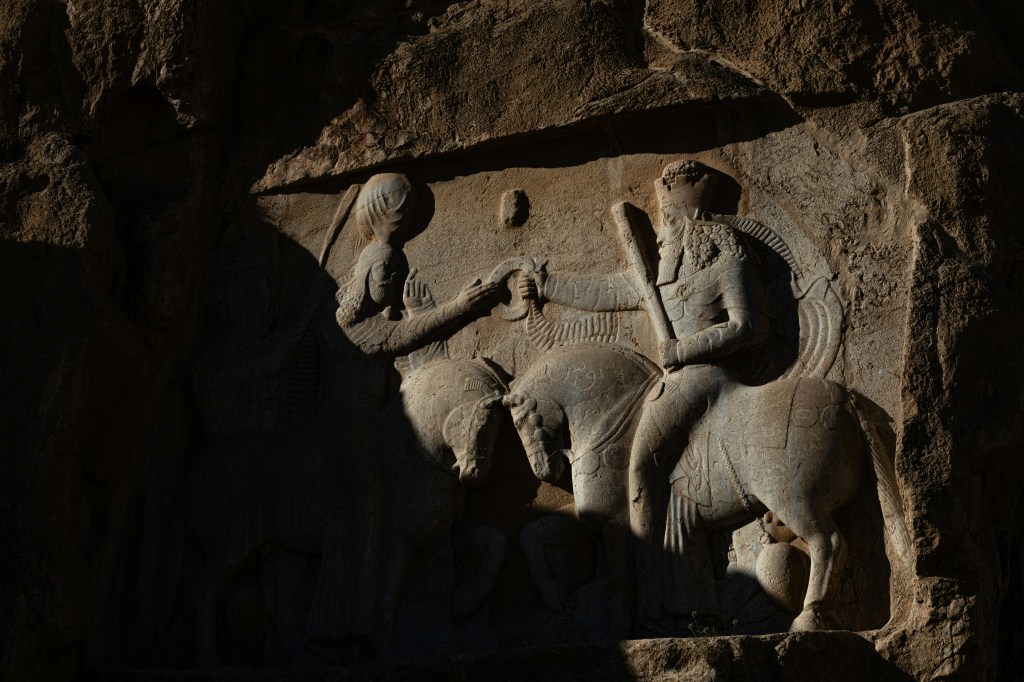
Before the end of the first century the Christian faith broke out across the borders of Rome into “Asian” Asia. Its first roots may have been as far away as India or as near as Edessa in the tiny semi-independent principality of Osrhoene just across the Euphrates. From Edessa, according to tradition, the faith spread to another small kingdom three hundred miles farther east across the Tigris river, the kingdom of Adiabene, with its capital at Arbela, near ancient Nineveh. By the end of the second century, missionary expansion had carried the church as far east as Bactria in what is now northern Afghanistan, and mass conversions of Huns and Turks in central Asia were reported from the fifth century onward. By the end of the seventh century Persian missionaries had reached the “end of the world,” the capital of T’ang-dynasty China.
Moffett, A History of Christianity in Asia, vol. 1, pp. xiv-xv
If you want to look up these locations on a map, their contemporary names are as follows:
Edessa, capital of Osrhoene – Şanliurfa, Turkey
Arbela, captial of Adiabene – Erbil, Iraq
Bactria – Region including Kunduz, Afghanistan, Dushanbe, Tajikistan, and Samarkand, Uzbekistan
Chang’an, Capital of the T’ang dynasty – Xian, China
To support our family as we head back to the field, click here.
For my list of recommended books and travel gear, click here.
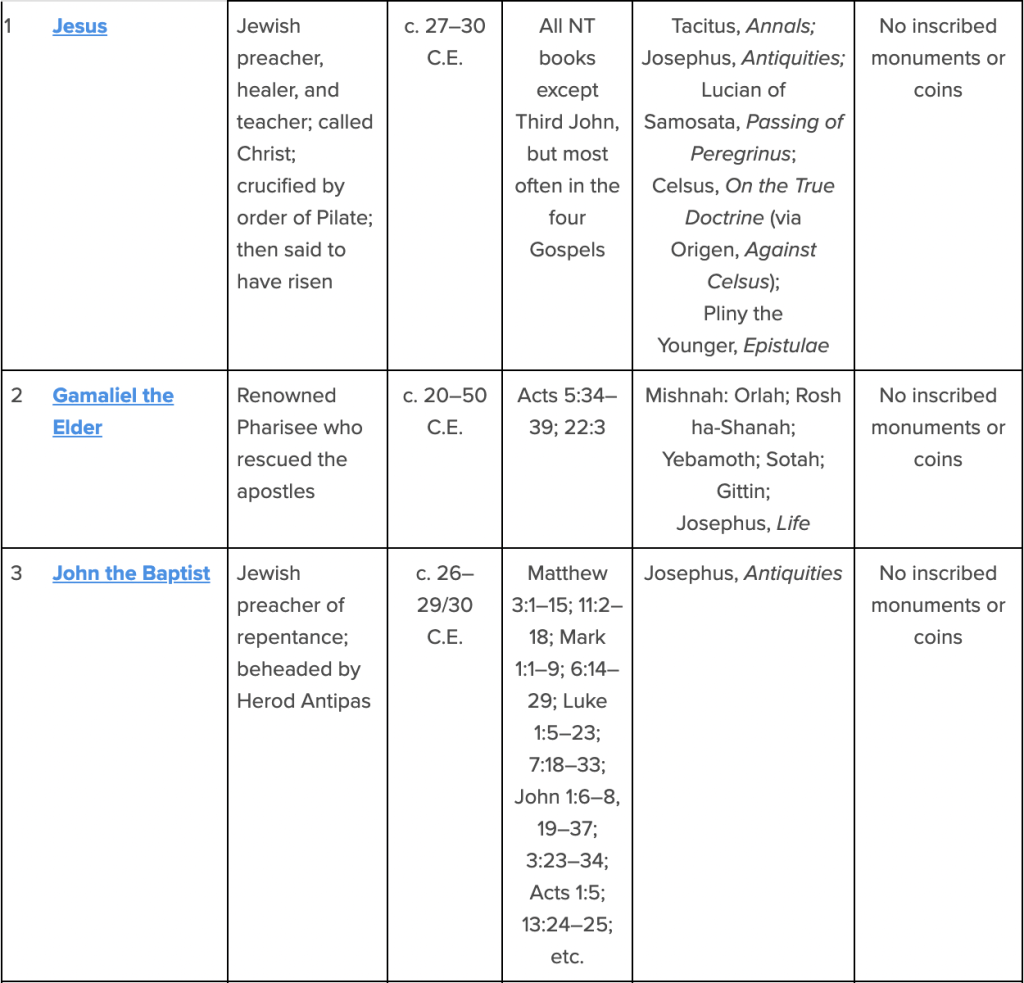
Here’s a helpful list over at Biblical Archaeology Society of the 30 New Testament people that have also been found mentioned in other sources from the period. Those other sources are letters, books, inscriptions, and coins. Here are a few takeaways from this list:
Jesus is mentioned in five contemporary sources other than the New Testament. I wasn’t aware that it was that many.
Josephus! It’s surprising just how many New Testament figures are confirmed by this Jewish writer, and only by him. We owe this strange figure a debt of gratitude.
The New Testament is clearly careful and accurate with its historical information. The tendency to dismiss it as unreliable for historical data because of its theological agenda is muddle-headed.
I can’t wait for more figures to be confirmed as more sources are discovered and deciphered. If you think that’s unlikely, consider the fact that the Herculaneum scrolls are just now being deciphered for the first time in history. Could they contain references to other figures mentioned in the New Testament, but not yet found elsewhere?
Here’s a sample of the chart. Check out the full one here.
To support our family as we head back to the field, click here.
For my list of recommended books and travel gear, click here.
Floor mosaic from Byzantine church in Capernaum, built on top of a 1st century house that may have been Simon Peter’s
Last week I wrote on some fundamental struggles inherent in the house church and “big” church models; namely, house churches struggle to organize naturally and big churches struggle to multiply naturally. Today, I want to address two common fears present when Christians or missionaries move from one model to the other, either from house church to big church (i.e. churches that meet in other dedicated facilities), or from big church to house church. My hope is that awareness of these fears and concerns will lead to greater freedom among missionaries or other believers who might need to shift models for good reasons.
For our context in Central Asia, both models of church are truly helpful and needed. We were surprised by this, having assumed that the house church model would be the only one possible and strategic. But we eventually learned that for many in the cities, and especially those with any kind of government salary, they were far more willing to meet in more traditional big church settings than in homes. This has been the majority of the believers we’ve been personally in relationship with during our time on the field. Believers from the villages, however, or those with more conservative relatives, have proved far more willing to meet in security-conscious house church gatherings.
The posture that led to freedom was realizing that we could plant healthy New Testament churches in either model. It was not an either/or. We and our colleagues could faithfully plant a more open big church in the city or plant a semi-open house church in the village, depending on the ministry context God placed us in. These models were helpful with the particular fears of locals regarding persecution. Those more at risk of government persecution were helped to meet in a more “respectable and sanctioned” setting. Those more at risk of family persecution were helped to meet in a more private setting. For any readers concerned that this sounds like pragmatism, I would contend that this is instead simply a way to apply Jesus’ command to be “wise as serpents and innocent as doves” in a context where local believers are like sheep among the wolves (Matt 10:16). Different contexts will bring their own reasons, but I continue to contend that both house church and big church models are helpful and needed just about everywhere.*
What are the fears that missionaries struggle with when switching from a big church to a house church, or from a house church to a big church? Here, I’ve seen two primary concerns emerge in my own heart and in the hearts of others as we’ve had to go back and forth over the years. When moving from a big church to a house church, we fear that house churches are not spiritually safe. And when moving from house church to a big church, aside from concerns about reproducibility, we fear that big churches are not spiritually authentic.
When moving from a big church model to a house church model, many doubt if the house church approach is spiritually safe. Here’s what I mean by that. Believers might doubt that the house church model can adequately protect against heresy. How can adequate pastoral oversight exist in a group which seems so small and informal? Or they might doubt that such intimate gatherings can happen without being hijacked by immature or deviant people who are present. There may also be fears that without the same kinds of institutional structures there is no guarantee of longevity – the house church could simply dissolve and disappear over night. Or, that house churches are particularly prone to domineering-leader rule.
These fears are not illogical, but rather quite natural for someone who has come from a big church background. Such a believer is used to the structures and size culture of a bigger church providing a measure of safety against these possibilities. More pastors and more centralization can indeed mean better protection against false teaching. The way big churches tend to run their services, and even the size of the congregation, makes it harder for an individual to hijack the meeting. Big church formal organization and even buildings are aids to longevity. Bigger congregations can indeed balance pastoral power. But if we are honest, none of these things have protected countless big churches from heresy, hijacking, dissolution, or dictatorial leaders. The benefits of a certain size culture are helpful aids, but they are not the main thing that protects a church from these dangers.
Yes, all of the above dangers can indeed befall a house church – and I’ve seen all four – but that doesn’t mean they are inevitable. If the planters, leaders, and members of a house church are committed to becoming a healthy New Testament church, then they can fend off these dangers just as effectively as any big church can. It starts with the commitment to obey the Scriptures in everything commanded regarding the structures and life of a local church – even in those areas that feel less natural given the small size of the group, like intentional and organized leadership, membership, giving, discipline, etc. From that core conviction, faithful leaders and members then combat heresy, rebuke divisive people, hold their pastors accountable, and continue to gather as a church for the long-term – just like any other church would.
Remember that all of the churches in the New Testament that we know of were house churches. The majority of churches in the first three centuries continued to be house churches. And in many contexts of persecution and mission throughout history (even in the West) have seen periods of faithful house churches and house church networks. There is good precedent for faithfulness in this model, and for the potential for house churches to be spiritually safe. It’s not about the model, it’s about the faith and obedience of the believers within it.
However, the missionary who goes the other direction, who moves from steeping in house church Christianity to attending a big church, will be faced with a very different fear – that big church is not spiritually authentic. I remember wrestling with a lot of cynicism when attending big churches after a year and a half in house church contexts. How was I to know that the worship team (with their smooth, planned transitions) was truly worshipping and not just putting on a show? There seemed to be so much room in a group that size to fake it, to wear masks, and to just go through the motions. How could I know what the other believers were really going through when the group was not ten, but two hundred strong? The majority of the room was just passively receiving, and not actively using their spiritual gifts. These were things that were much less likely given the size culture of the house churches I had been attending.
These fears make a lot of sense when you consider the perspective of someone coming from a house church background. But once again, honesty compels us to say that there are plenty of house churches that also struggle with believers faking it, hiding what’s really going on, and sitting passively instead of using their gifts to build up the body. Their smaller size has not made them immune to these dangers, even though it makes it somewhat easier to combat them. Again, it’s not the model, it’s the faith and obedience of the believers within it.
In a big church where the planters, leaders, and members are committed to being a New Testament church, they will labor to build structures and a culture that promotes spiritual authenticity, transparency, and as many members using their gifts as possible – even when these things feel less natural for a church of their size. This is why so many big churches are committed to having things like small groups, ministries focused on particular demographics within the church, and discipleship classes. They are seeking to create house-church-like structures within the broader body that can account for those things that can’t take place in the large corporate gathering.
We should remember that very early on, Christians, many of whom were raised in the synagogue model, renovated homes into larger dedicated worship spaces. One very early example of this is in Capernaum and may have been the very house where Simon Peter once lived. Certainly, for the past 1,700 years, when believers have had the chance to worship publicly and become a big church, most have chosen to do so. The sheer number of believers in the Jerusalem church and their temple porch gatherings (Acts 5:12-14) show us that larger worship gatherings do not automatically cancel out spiritual authenticity – or at least the apostles didn’t believe so.
God is the God of both small and big churches. There can be a beautiful redeemed simplicity to a healthy, organized house church, just as there can be a beautiful redeemed complexity to a healthy, multiplying big church. Both can be spiritually safe, both can be spiritually authentic. We need to be aware of our own fears and making sure that we are not relying merely on the strengths of certain size cultures, even those strengths are are present and helpful. Instead, we need to rely on the power of God’s word to build his church, whether we meet in a house or in a building with a steeple.
Rather than a posture of skepticism or fear, we need to embrace a posture of humility and service. If you feel the big church service is lacking authenticity, then model it yourself so that others might also enter into it. If you feel the house church is lacking in spiritual safety, then get to work putting the things in place that will better guard the church. Remember, it’s not ultimately about the model, it’s about the faith and obedience of the believers within it.
*Even in the West, consider the advantages the house church model could provide for those less able to benefit from larger services – those struggling with substance abuse, the disabled, those with sensory issues, etc.
To support our family as we head back to the field, click here.
For my list of recommended books and travel gear, click here.
This is another good song from Chris Renzema. It deals with some sobering themes, such as manipulative revival services and mega pastors and mentors failing. But the author, a believer who struggles with skepticism, humbly notes, “That through crooked teeth the gospel’s preached/ Then maybe there’s hope for someone like me.” There is a refreshing sense of “Lord, to whom should would we go? You have the words of eternal life” in this song – a stubborn faith that keeps believing because of the faithful “haunting” of the Holy Spirit that remains no matter what happens to the faith of those around us.
“Mr. Talent* was taken into custody by airport police.”
“What? Why?” I rubbed my bleary eyes in the hotel room bathroom, trying to understand what my wife was saying on the other end of the line.
“They found the AirTag in the rug and thought it was a spy device.”
“Oh no.” I tried to keep a low voice since my brother was still asleep in the hotel room.
“He came to pick up the rug today, just like you asked him to. But then they detained him. Mark* kept trying to get ahold of you, but couldn’t reach you, so he called me. I didn’t really know what was going on either and I also couldn’t get through to you. Where have you been?”
“Oh no. I’m so sorry. We’ve been passed out in a hotel room in Doha. We missed our connecting flight and they put us up in a hotel in the city. We didn’t get any sleep last night, so we got to the room and have been sleeping like dead men for the last four or five hours.”
“You’d better call Mark.”
I rang my teammate Mark right away, still standing in the hotel room bathroom. A similar conversation ensued with Mark, but with the welcome news that Mr. Talent had been released, though only after much haggling and persuasion on the part of Mark.
“They thought the AirTag was a spy tracker of some sort. I pulled up the Apple website and insisted that it’s a normal consumer device that lots of people use. But they’d never seen one and didn’t want to believe me. Why did you have one in the rug again?”
“Well, last time we flew back they lost two of our suitcases for good. I didn’t want that to happen this time around. I didn’t think it would cause any issues though. Don’t lots of people use them now to keep their bags from getting lost? They really thought it was a spy device?”
“Apparently they’ve never heard of them in our city. And you know how sensitive they are about spy stuff here. They were pretty freaked out, gave Mr. Talent a very hard time about it. I was able to talk us out of it eventually, but we’ll need your help to resolve things.”
“Understood.”
I shook my head. All this for a rug.
Poor Mr. Talent, our servant-hearted, ever-loyal friend. Then again, there was that time he had gotten me and Mark detained when he took us on a surprise outing with AK-47s.
So, how had we gotten here? Well, a number of months into our medical leave in the US, it was looking like we’d need to resettle in Kentucky for the long-term. A friend and former missionary had given me some good advice before I took a trip back to Central Asia to sell everything.
“Even if it’s costly, bring back whatever household items are special for your family. Trust me, it’ll be worth it, because it will mean a lot to your wife and kids.”
We didn’t have too many household items that were special for our family. But we did have a beautiful blue Persian rug. We had bought it at the beginning of our second term and for a number of years it had been a central piece of our family’s hosting and spending time with one another. It carried sweet memories of chai visits from neighbors, Covid lockdown dance parties with the kids, Bible studies with local believers, and nights where we all slept on the rug because the living room was the only room warm enough or cool enough to sleep in. Yes, it’s normal for missionaries to have to liquidate their households over and over again. But, I decided that if I could, I would try to save this rug.
However, at the end of our surprisingly successful five day trip (quite possibly the most efficient five days of my life), this rug stood out as a very problematic outlier. First, we had had to do research to make sure it wasn’t illegal to bring an Iranian-made rug into the US. It wasn’t technically illegal, but none of the shipping companies would touch it. We knew that some visitors had successfully brought back rugs on planes before. So then we decided to get it specially cleaned, folded, and plastic-wrapped for air travel, a process that wasn’t complete until late on our final night. We thought we would simply pay a little extra for the weight and size of the rug, but that it wouldn’t be too bad.
When we checked in, however, the counter staff informed us that the rug was six kilos too heavy to be allowed as oversize baggage. It would have to be sent as airfreight, but only if the airline approved it – and this wasn’t for certain.
An anxious conversation in a side office and a new plan gave us a bit of hope that everything might still work out. If the airline agreed, they would hold the rug for us, the following day Mr. Talent would come get the rug from the airline office, find out the price to ship it as air cargo, get approval from me via WhatsApp, and transfer the rug to air freight. They wouldn’t be able to send it to Kentucky, but they could get it to Philadelphia, the city where my brother lives. Then somehow from there we’d figure out getting it halfway across the country.
The next day, our plan B worked reasonably well – until the rug was scanned upon exiting the departure area. That’s when the scanner found the AirTag, and the airport police proceeded to detain Mr. Talent.
A number of hours later, after Mark had successfully sprung Mr. Talent from airport jail, my brother and I walked around Doha. I was eager to hear from Mr. Talent about the possibility and cost of air freighting the rug.
When he eventually called, I did my best to make amends for the fact that I had just gotten him arrested, making sure to pepper the conversation with multiple respectful titles like “my only-begotten brother.” But I could tell from his voice that even Mr. Talent’s enthusiasm for helping was wearing thin. Still, we had come so far, and I didn’t want to give up now. Would that not mean that Mr. Talent’s detention and all our efforts so far would have been in vain?
Mr. Talent then told me the price they were asking. I had to take a minute. It would cost more than the price of the rug itself to send it via airfreight. Yes, Persian rugs in Central Asia cost only a fraction of what they do in the West, but the air freight fee was still no sum to sneeze at. Yet there wasn’t time to hesitate, a decision needed to be made. I sighed and bit the bullet. If we were to live in the West for years to come, I really wanted to have that rug around to remind us of our beloved Central Asia. I told Mr. Talent to pay the hefty fee, and told him I’d reimburse him from our furniture sale money. Finally, it looked like all would be well. In several weeks, the rug would arrive in Philadelphia and my brother would pick it up for me.
The weeks passed quickly and one day my brother got a call from the air freight department of the Philly airport. The rug needed to be processed by customs, so he’d need to come in to fill out some forms.
Unfortunately, once he arrived at customs they told him there was a $180 per day fee to hold the rug, and that they had no way of telling him how many days it would take them to complete their processes. It could be weeks they might have to hold the rug until they got around to it.
“Please give us your license and sign these forms,” the customs guy said.
My brother absorbed the bad news, did the paperwork, but in the process also managed to joke around and make friends with the customs guy. This natural ability of my brother’s has always impressed me. It’s a gift he got from my dad and grandfather, a genuine delight in people that leads to spontaneous friendship – something that can also come in handy in a tight spot.
As he drove away from the airport, my brother filled me in on the ever-mounting cost of this whole rug endeavor. No one could say how many days they would hold it, nor what the total charge might be. But it was likely to be in the thousands of dollars. After my brother hung up, I slumped in my chair, processing the bad news. I should have just sold the rug with our other stuff and been done with it. Was I just stubborn and foolish to keep going like I had? And was there even a way out now? How do you balance the intangible value of keeping something like your family’s favorite rug with the very real fiscal costs that just seem to keep mounting?
An hour later I got another call from my brother. He was laughing.
“You won’t believe what just happened. When I was at the airport earlier, they forgot to give me back my license. I was laughing and talking about our trip with the customs guy and so neither of us noticed that I didn’t have my license when I left. I’m halfway back to my house when my new friend calls me up, horrified that he had caused me to drive without my license, and he tells me to come back right away. He felt so bad for his mistake that he said they would expedite things and process the rug right away. I’ve got it with me now in the car!”
I smiled and shook my head. Praise God the rug saga was finally coming to an end. And my brother – what a champ.
The rug sat folded up in my brother’s basement for a few months until he could make a trip to Kentucky, when he brought it to the little parsonage where we were staying. Sadly, it was too big for the living room, so once again we had to put it in a basement, still folded up and plastic-wrapped.
But at least we had it now in the US to remind us for years to come of our life in Central Asia. And once we found a long-term house to live in, the beautiful Persian rug would once again be one of our favorite places in the home.
But… then we decided we weren’t staying in the US after all, but moving back to Central Asia. And now I don’t know what I’m going to do with that blasted rug.
p.s. We did at last get to unfold and use the rug for an event with a partner church (pictured above). As soon as my wife suggested the idea, I was all over it. “Yes! Must use that rug for something!!!”
To support our family as we head back to the field, click here.
For my list of recommended books and travel gear, click here.
One of the greatest surprises we experienced during our first term on the field was discovering that most of our locals did not want to meet in homes for Bible study or church. All our training, all the books, and all our expectations said that house church methodology was going to be the most effective form of church planting. We bristled at locals’ suggestions that we meet somewhere “real” for spiritual activities, like a church building. We cringed at how excited they seemed by all the trappings of Western church – sound systems, worship teams, pastors wearing collars, church budgets, even church buildings.
What took us quite a while to realize was that for our particular people group, this attraction to “official” Christianity was simply the result of where God had sovereignly brought their culture. As a newly post-tribal culture full of corruption and nepotism, and one exposed to the ravages of terrorism, they longed for order and healthy organization. They hungered for institutions that would balance strongmen, and the kind of solid, public Christianity that did not feel like a secretive ISIS Qur’an study. Our locals, the ones we were commissioned to reach, were deeply drawn to what to us felt like traditional, Western Christianity. And they found our ideas about house church movements unconvincing, even dumb. Even worse, none of their desires were technically unbiblical.
We were faced with an unexpected choice. Either we ignore the overwhelming feedback of the local believers, or we shift to a church planting strategy that risked looking very traditional and very Western, which missiology said was doomed to fail in an Islamic context. By God’s grace, our team eventually came around to the idea that the wiser thing was to contextualize to our actual people group, rather than what the books had told us was supposed to happen. We surrendered to the mysterious providence of God that had ordained that, for our people group, the most contextual and effective methods would feel, to us, like the most traditional and the least effective. This was the right call. When we let go of our fear of cultural contamination and started doing more traditional church planting ministry, the work finally began to get traction.
The missionary who believes his Bible knows that God is utterly sovereign over the trajectories of the world’s people groups and nations (Acts 17:26, Deut 32:8). There is no development which God has not ordained – and this includes developments of cultural transmission. After a missionary has labored hard to make the gospel the only stumbling block, yet still finds that the locals have adopted some of his home culture, he can rest in the sovereignty of God. The power of the indigenous church has not been forever ruined because the missionary (or someone else) introduced a certain service order which the locals have eagerly taken ownership of. No, God is sovereign, even over cultural transmission. In fact, the transmission that he ordains may become one of the particular strengths of the new indigenous church, such as when Middle Eastern believers gain a witness because Jesus (and emulating their missionary mentor) has made them more direct and honest in their speech.
Looking to missions history, we see many examples of how the sovereignty of God was working through the very culture the missionary introduced along with his gospel work. The missionary Bruce Olsen, in his book, Bruschko, writes of the farming improvements he introduced to South American tribes, which greatly improved their crop yields. The Lisu people of China became known as a singing people for Christ because the missionary who reached them, J.O. Fraser, was an accomplished pianist. And the illiterate, pagan Irish surprisingly became the great scribes and missionaries of Europe in the centuries after the fall of Rome. Why? Because Patrick had taught them of the love of Christ – and the love of books.
As in any area of practical theology, the sovereignty of God is no excuse for laziness or carelessness. Missionaries should be conscious of the ways local believers are adopting Western versus local forms, and act as mentors who try to guide this messy process. But we must embrace a deep trust in the sovereignty of God as we seek to plant healthy indigenous churches. Their cultures exist in their unique historical positions for God-ordained reasons. They are drawn to certain things and repelled by other things for God-ordained reasons. “The secret things belong to the Lord,” but we know that at least some of those reasons of providence are so that many will hear the gospel message, understand it, believe it, and become the indigenous church.
God is sovereign, even when one culture bleeds into another. Our approach to the fear of cultural contamination begins with the Bible’s call for direct ministry in word and deed and call to guard against false gospels. It ends with a deep trust in the sovereignty of God. Alongside these truths we draw from cross-cultural common sense, which invites us to take a realistic view of how cultures and relationships actually function. And we also lean into personal humility, which asks us to remember our equality as well as our limitations.
When missionaries are shaped by these truths, they are helped to keep the danger of cultural “contamination” in its place – as a real, but secondary danger. Gospel workers should keep a wise eye on it, but not let it be a primary driver of their missiology or become a fear that keeps them from the timeless task of preaching the gospel, making disciples, and planting churches.
This post is part of a series. Total series posts are:
The number of languages you know, the number of persons you are.
Local Oral Tradition
I learned this popular proverb early on when I was studying our Central Asian language. This saying presents the fascinating idea, common in the multilingual world of the Central Asia, that there is an expansive power inherent in language learning. According to our locals (and the neighboring people groups, who have an equivalent proverb in their languages also), there is some kind of astounding addition to your life that happens when you learn another language – an addition significant enough to grant you some kind of extra personhood.
Many years later I would find out that this proverb does not actually originate in Central Asia, but in medieval Europe. It was Charlemagne, Charles the Great, king of France and Emperor of much of western Europe who said, “To have a second language is to possess a second soul.” That’s quite the claim from Big Charlie, a king who was actually illiterate, though apparently gifted in speaking and understanding multiple languages. What was it that Charlemagne experienced that would cause him to make such an outlandish (and potentially heretical) claim? And how can you square this with the couple years of foreign language study you may have been forced to do in high school that made you feel not like you had gained an extra soul, but rather like you no longer had any soul left at all?
If you’ve never learned another language, or if your initial dabblings were as dry as saltine crackers baking on a North African sand dune, you’re going to have trust Charlemagne. You’re going to have to trust our Central Asian friends. You’re going to have to trust me. Or at least hear us out. Something expansive happens in your life, both inside you and around you, when you learn another language. And it makes all of the hard work absolutely worth it.
It’s not uncommon for polyglots, those who have learned many languages, to speak of having a different personality for each language that they speak. I only speak three languages, but I get what they are talking about. My parents are Americans, so I am a native American English speaker. But I was raised mostly in Melanesia, where I learned the Pidgin trade language as a toddler, and thus grew up bilingual. Then in college I spent a year volunteering in Central Asia, where I began to learn my third language. I would later return to the same region for seven years and eventually become an advanced speaker of that language. It’s a subtle thing, but yes, I think and I act differently depending on which language I’m operating in. I have, in some sense, gained a different side to myself, or rather found something that only that unique language and culture can draw out.
The author C.S. Lewis wrote something very similar in The Four Loves about the effect that different friends have on drawing out the unique facets of someone’s personhood, “In each of my friends there is something that only some other friend can fully bring out. By myself I am not large enough to call the whole man into activity; I want other lights than my own to show all his facets.” I would contend that languages have a similar effect on us. No one language is large enough to “call the whole man into activity.” Learning another language is like gaining another true friend, the kind who can bring you to life in unique, funny, and fascinating ways.
Have you ever considered that there may be facets to who you are that you can only discover by learning another language? No, not a second soul – but perhaps a part of your soul you’ve yet to become acquainted with.
To support our family as we head back to the field, click here.
For my list of recommended books and travel gear, click here.







 Entrusted to the Dirt

