May the skewer not be burned, neither the kebab.
Local Oral Tradition
For the past six months I haven’t been able to blog as much. I’ve been committed full-time to some online education projects for our Central Asian people group, a season which is now coming to an end as we prepare to go back overseas. At some point I’ll write a post reflecting on this very unexpected online tentmaker-type experience that I dove into while we’ve been in the US on this long medical leave. But not now. For now, I just want to get back to writing more often. And what better way to do so than with a new Central Asian proverb? And a proverb about something delicious, no less – kebab!
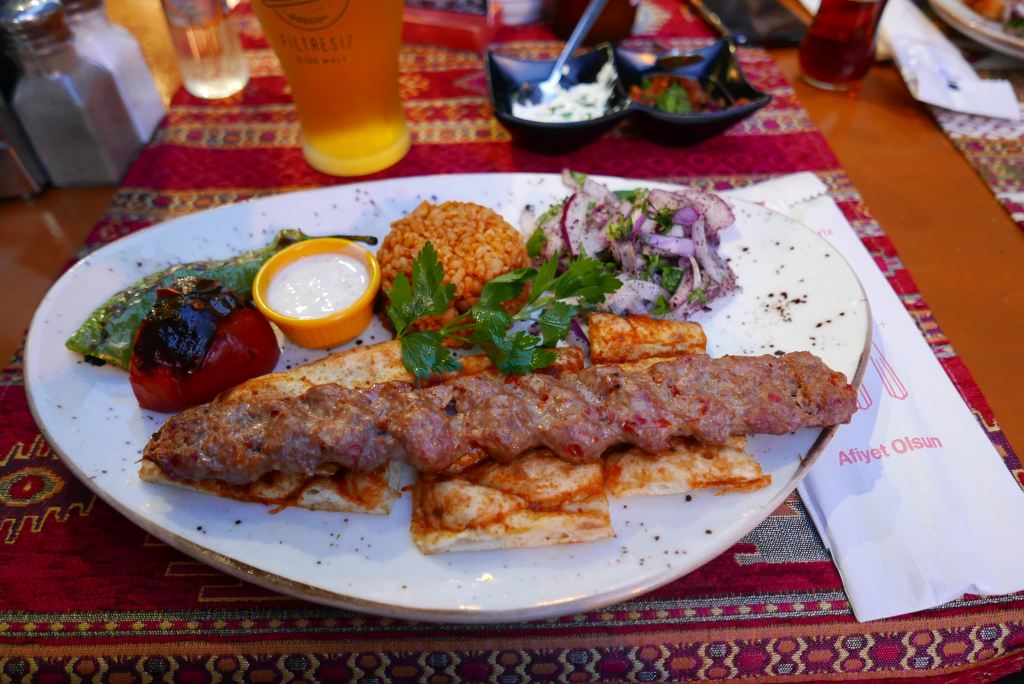
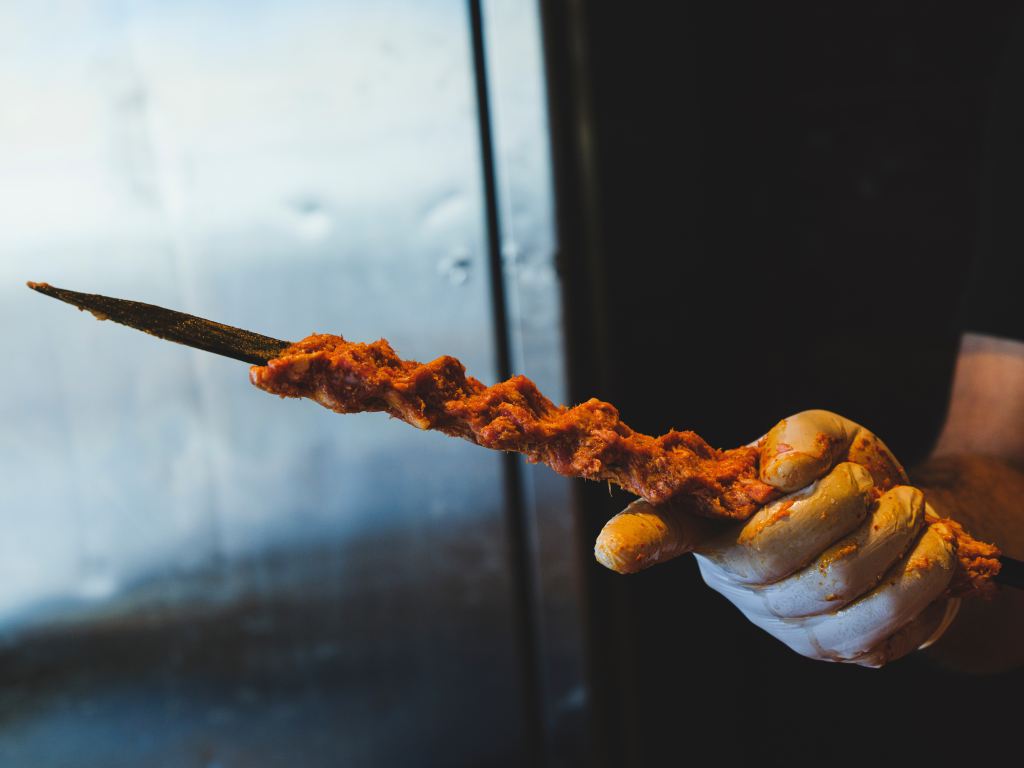
But first, there is a lost-in-translation issue that needs to be cleared up. When most of the world speaks of kebab, they are speaking of ground beef or lamb hand-pressed around a long, flat metal blade of sorts, which is called a shish. The long rectangular raw meat, pressed around the blade-skewer is then placed on top of coals and roasted. This is a shish of kebab, which has come into English as shish kebab. But wait, isn’t a shish kebab chunks of meat and vegetable skewered on a long metal or wooden thing and grilled? Well, kind of. That’s still a shish because it contains a skewer, but the actual word for the chunks of meat would be another word, tikka in our region. So what we call shish kebab is actually a shish tikka (with chunks of chicken, beef, lamb, liver, fat, male animal reproductive organs, etc.)
Why is this important? Well, because when most English speakers visualize a kebab, they are visualizing something that is related, but is not actually a kebab as its original cultures would know it. Please see the above picture for what a kebab is in the regions from where it originates. And now compare that to what North Americans call a shish kebab, below.

Now, since I’m a not at all a language purist, I point this out in order to clear up any confusion, not to tut-tut about how we’ve ruined the word shish kebab or anything like that. No, the word shish kebab has come into English, has taken on a life of its own, and has been a happy part of family barbecues for decades now. May it be blessed.
And in case you were wondering, this kind of word borrowing and mutation happens all the time, in both directions. The English word blouse has been co-opted by our Central Asian language and now is used (in the form blus) for what Americans call a sweater and Brits call a jumper. This is simply the nature of words. It can get confusing, but at least it keeps us on our toes.
Now that we’ve cleared that up, let’s get back to the actual proverb, “May the skewer not be burned, nor the kebab.” This proverb is equivalent to our English sayings, “To walk a tightrope” or “To walk a fine line.” Essentially, this proverb is used when there are two important things that need to be balanced or held in tension in a given situation. As I said above, Central Asian kebabs are cooked on a long metal blade-like skewer. This is important because the metal heating up helps to cook the kebab on the inside, while the outside is being cooked by the coals. So, being the good Central Asian chef that you are, you don’t want the outside to burn while the inside is still raw, and vice-versa. You need them to be cooking at the same rate, so you attempt to position your shish of kebab so that it’s just right.
There is wisdom is this proverb, the kind that recognizes that much of what is good and true must be held in balance and tension in order to not be distorted and become bad. Parents should listen to their children so that they feel heard and loved. But parents must not give their children authority such that they end up deciding things for the family. Christians should emphasize the sovereignty of God in all things, yet they must not stop sharing the gospel because of this truth. Solomon’s proverbs are full of the tensions inherent in the pursuit of wisdom. As we recently shared with our kids regarding restaurant food on vacation, “If you have found honey, eat only enough for you, lest you have your fill of it and vomit it” (Prov 25:16). We still had at least two nights of offspring vomiting up restaurant food late at night.
It’s been a very strange 14 months waiting for clarity and wisdom about the future, trying to make decisions that left the door open to both staying the US and returning overseas. I don’t know that I always got it right. There were some investments of time and treasure that may have resulted in some burned kebab.
However, I trust that the coming resurrection will account for all investments made out of a desire to be faithful, even the ones that prove to be a bit misguided when the fog clears. It’s good to be here, feeling like the path before us is somewhat visible again. And by the grace of God, that path will involve some good kebab again, and not just the proverbial kind.
To support our family as we head back to the field, click here.
For my list of recommended books and travel gear, click here.
Photos are from Unsplash.com

 Entrusted to the Dirt
Praise God for guiding you. May you enjoy many more kebabs!
LikeLiked by 2 people
Thanks!
LikeLike