All My Plans up in Smoke

Early on in my 11th-grade year, an older TCK in his twenties, an alumnus of our school, came back to visit. In the years since he had graduated and left Melanesia, he had joined the US military and become a member of Marine Recon. These are specialized Marines who carry out reconnaissance and combat missions similar to those of the US special forces.

During his visit to our missionary base, he met with me and several others who were getting close to graduating, telling us stories from his different missions and sharing how growing up as a missionary kid had been such an advantage for him in his overseas deployments. He told us how he had specifically thrived in the missions where they had been tasked to work alongside militia units from other countries like Yemen and Afghanistan, as well as how hungry many of his fellow soldiers were for spiritual truth. Because of this, he advised us to seriously consider whether or not God might want us to try to join elite units such as the Army Rangers, where we could maximize our cross-cultural skills, serve our country, and, after proving ourselves good soldiers, powerfully share the gospel with our brothers in arms.

One of the high school seniors and I, in particular, were seriously drawn to this idea. After this older TCK left, we continued to discuss it and to pray about it for several months. While the enthusiasm of this other student eventually cooled, I began to feel a deep conviction that this was exactly what the Lord wanted me to do. I had a natural love for adventure and a desire to overcome difficult challenges. I thrived in cross-cultural settings. I wanted to be in some kind of setting where I could be an evangelist. And my dad had been a Marine. In fact, this is where he had come to faith. The discipline, camaraderie, and mission focus he had learned in the military had deeply shaped his Christian faith and ministry. Looking back, I’m sure a large part of my motivation was also that I simply wanted to be like my dad, who had passed away when I was still very young.

But there was one problem. I had, and still have, exercise-induced asthma. The older TCK veteran had told me that this can sometimes be a disqualifying problem, but that he also knew soldiers who carried inhalers with them. So that I could be sure of the official line, I reached out to a recruiter via email. To my relief, the recruiter reassured me that my asthma would not be an issue at all.

This, I would later find out, was a lie. I didn’t yet know that US military recruiters have a reputation for saying all kinds of things in order to meet their quotas of new recruits, even things that are completely untrue (a friend who later joined the Navy also found out after he was in that a bunch of the promises he had been made were completely bogus). Not knowing this, however, I settled in my conviction that this was the path I was supposed to pursue, instead of going to university or Bible college like almost all of my classmates would. One practical upside of this, I claimed, was that I’d be able to use the GI Bill to pay for my college degree afterward.

The next year was spent going on long runs through the surrounding banana and coffee gardens, doing pyramid-style workouts, reading up on CS Lewis’ support for Christians joining the military, and arguing with many of my classmates, and even some of the adult missionaries, who disagreed with this vision for my future.

“My last job before I left the army was driving around the countryside in a jeep picking up kids like you who broke their legs after jumping out of planes in Airborne training,” one missionary uncle said, pointedly.

Even some of my closest TCK friends were deeply opposed to me pursuing this path. As was my older brother, who was a college student back in the US. He had serious questions about the morality of the US conflicts at the time that I would be called to participate in. But I was unshaken. God, whom I believed was leading me, was sovereign. And CS Lewis, after all, was on my side (although Jim Eliot was not), as were my Melanesian friends. I also had a sense that this path powerfully combined many aspects of my story and how God had wired me.

This being the case, I pursued this plan single-mindedly until it was the final semester of my senior year, and all the deadlines for college scholarships had passed. It was at this point that, for some reason, I emailed a different recruiter. This man was the one who told me the truth. Asthma was absolutely a deal breaker. No one who openly admitted to having asthma, even mild asthma, would be accepted into the US military. I had two options, he said. I could lie about it on my application. Or, I recall him writing, “If you still really want to serve your country, you can always join the State Department.”

The State Department? I had no interest whatsoever in joining that boring-sounding entity, whatever it was. And I definitely wasn’t going to lie. How could I claim to be going into the military to be a faithful Christian witness, yet willingly sin to get into the military in the first place? No, I had been utterly misled, and the path I had been wholeheartedly pursuing for over a year had suddenly come to a dead end. Perhaps I had been naive and full of youthful idealism. Perhaps I should have figured out the lie sooner. Whatever the case, I felt a growing numbness in my head and a sinking in my stomach as all my plans suddenly went up in a plume of smoke and darkness. I had been so sure. And now? I had absolutely no idea what I was supposed to do.

For the next several days, I walked around in a fog of disappointment and disorientation. My friends and teachers were kind about it, but many also, understandably, seemed relieved. One of the hardest parts of it all was wrestling with what had seemed so clearly to be God’s leading. If it had been God, why had the door he seemingly pointed to been abruptly slammed in my face? Had I completely misread what I’d thought had been God’s will? What if it had been simply my desires masquerading as God’s leading the whole time? Had God tricked me?

One afternoon, I sat at our dining room table, sifting through a pile of the promotional college material I had received. It was all too expensive, and all too late. I threw one glossy brochure after another into a pile, when I suddenly came across a simple paper flyer I had completely forgotten about. It described a new freshman year program being started at Bethlehem Baptist, John Piper’s church. It was called INSIGHT, which stood for “Intensive Study of Integrated Global History and Theology.” Basically, it was a Christian worldview program that would emphasize history, theology, and missions.

As I sat there looking at this piece of paper, I recalled when my Government class teacher had passed out these flyers. I had turned to my close friend, Calvin, with whom I would exchange CDs of Piper sermons, and said, “If I weren’t going into the military, this is exactly the kind of thing I might like to join.”

That moment and that conversation had been filed away in my brain for eventual deletion. But it came back to me as I wondered if Bethlehem might still be receiving applications. We inquired, and sure enough, they were still taking students for their inaugural year. It was remarkably affordable, always a plus for a missionary family like ours. It was connected to a ministry I was beginning to be deeply shaped by. And while Minneapolis might not be quite as exciting as jumping out of airplanes, I did find a year of intensive reading and discussion about history, theology, and missions to be an exciting prospect of another sort.

It wasn’t long before I was Minneapolis-bound, still reeling a bit from all my plans having gone up in smoke, but genuinely excited about what my freshman year would have in store. Little did I know that year in Minneapolis would be one of the most formative of my life. There, my long combat with the doctrines of grace would finally be settled. It was there that I would make my first Muslim friends and receive a calling to work among unreached Muslims. And it was in Minneapolis where I first heard about a particular corner of Central Asia, and how they needed young people to go spend six months to a year there, doing development work, making friends, and telling people about Jesus.

Truth be told, I still wondered sometimes about that military road not taken, and what would have happened had I been able to join the Army Rangers after all.

One day, early on in Poet City, I had the chance to talk to some members of the US military who were deployed in the region. Somehow, we found out that a couple of them were believers, and they found out that we were not just relief workers, but missionaries. I’ll never forget when one of them told me how badly he wished he could be in my place – free to mingle, to make friends, and to share the gospel. It struck me because there was still a large part of my heart that wished I could be in his place.

The Lord knew exactly the roles that soldier and I needed to be in. And my role, apparently, was not to share the gospel while jumping out of airplanes. Rather, it was to live in one of those very same regions where I might have served as a soldier, but sharing the gospel with a chai cup, rather than a rifle, in my hand, jumping in and out of cigarette smoke-filled taxis rather than C-130s.

As the proverb says, “The heart of man plans his way, but the Lord establishes his steps.” To this day, I still maintain that my initial plans had been good. But clearly, God’s plans had been better.

Friends, if all your good plans have similarly gone up in smoke, take heart. It really is a blow when this happens. But in it, God is painfully revealing to you his better plans. One day, you will wake up to suddenly find your steps mysteriously and wonderfully established – and then you’ll marvel at the goodness of God in blowing it all up.


If you have been helped or encouraged by the content on this blog, would you consider supporting this writing and our family while we serve in Central Asia? You can give here through the blog or contact me to find out how to give through our organization. 

Two international churches in our region are in need of pastors, one needs a lead pastor and one an associate pastor. Our kids’ TCK school is also in need of a math and a science teacher for middle school and high school. If you have a good lead, shoot me a note here.

Blogs are not set up well for finding older posts, so I’ve added an alphabetized index of all the story and essay posts I’ve written so far. You can peruse that here.

For my list of recommended books and travel gear, click here.

Photo from Unsplash.com

Stop Worrying About the Percentage of Foreigners

Sometimes the missionary community is very concerned about something that, in the end, is simply not that big of a deal. I’m becoming more and more convinced that the foreigners-to-locals ratio in church plants and ministry groups on the mission field is one of these things being given undue weight.

The logic of this concern initially makes a lot of sense. The idea is that if locals are outnumbered by foreigners, then locals will sense that this gathering does not really belong to them, and they will not take the ownership needed for true long-term indigeneity. If too many foreigners are there, the thinking goes, it will somehow contaminate or undermine even the spiritual power of a particular gathering.

Hence, missionaries (at least in our corner of Central Asia) bring up this ratio quite often when discussing whether or not they or others should be a part of a particular church service or Bible study. Just this week, I had a friend tell me he’d like to come to an evangelistic discussion we’ve started hosting at our home, but only if there weren’t already too many foreigners.

But here’s the issue with this assumption about ratios. Too many foreigners only seems to be a problem if those foreigners present keep on using English and letting Western culture dictate the rules of the gathering. Yes, of course, if that is happening, then many locals will intuit that this gathering is a foreign thing, and it will likely only serve the minority of locals who already want to put on Western culture and use English. This may be a fine start for an international, English-speaking church. But this sort of gathering will, in all likelihood, fail to be very effective with the majority of locals and fail to ever transition to a truly indigenous group.

But what happens when the foreigners in a gathering like this are committed to using the local language and following the local culture as much as possible? And if they constantly vision cast for a day when that church or gathering will be majority-local and local-led? In that case, a large ratio of foreigners doesn’t seem to negatively affect a long-term trajectory toward indigeneity. In fact, it may even be a help toward this end.

Our church plant in Poet City had a foreign majority at most of its gatherings for the first five years or so of its existence. This was true even though, from the very beginning, we were all committed to learning the local language and culture and seeking to model faithfulness to Jesus within these local expressions. For years, we were somewhat disheartened and concerned about the fact that so many church meetings had more Americans in the room than Central Asians.

What we didn’t realize was that we were simply providing the needed core around which local believers would eventually be able to stabilize and mature. Then, a couple of years ago, some kind of threshold was passed, perhaps related to a large enough contingent of mature local members and our first local elder. Now, the locals in every service easily outnumber the foreigners by a large majority.

Because of the serious spiritual instability of our locals who come to faith out of a Muslim background, as well as their deep need to see faithfulness concretely modeled over the long term, I might even go as far as to say it was an advantage to have our previous church plant be majority-foreigner for so long. This seemingly less-likely path toward indigeneity has, in the end, gotten closer to its goal than other attempts that tried to protect indigeneity by not allowing other foreigners to take part.

Many missionaries would have looked at that church five or six years ago and doubted that it was really on its way toward becoming an indigenous church. There were simply too many foreigners present. But visit one of their services today, and it becomes clear that this body has matured to the point where it will keep faithfully humming along, even if no foreigners are present anymore. In fact, this summer, that very thing took place.

Is this merely anecdotal evidence? Well, I find it curious that instead of focusing on ethnic ratios, the Bible seems more concerned about the use of a common language (and translation when needed) when it comes to church plant order and health (1 Cor 14). Nowhere are we commanded to make sure that Jews remain a small minority, for example, in the churches in Gentile regions, or vice versa. Instead, believers are pointed to Paul’s example of becoming all things to all men (1 Cor 9:19-23), instructed to love one another in similar ways (1 Cor 13), and told to make sure everyone in the service can understand what is going on (1 Cor 14). Our assumption that the ethnic optics of the room are what really matter seems to be out of touch with the New Testament here. We should ask ourselves where these beliefs about the visuals are coming from.

Who cares if the room looks majority White Westerner for a while? Are locals being edified in their mother tongue? Are they coming to faith and growing in spiritual maturity? Are the foreigners seeking to model and mentor how to navigate the local culture as Christians, and pursuing genuine spiritual friendships with the local believers? These are the kinds of factors that make the difference, not policing some kind of optics ratio.

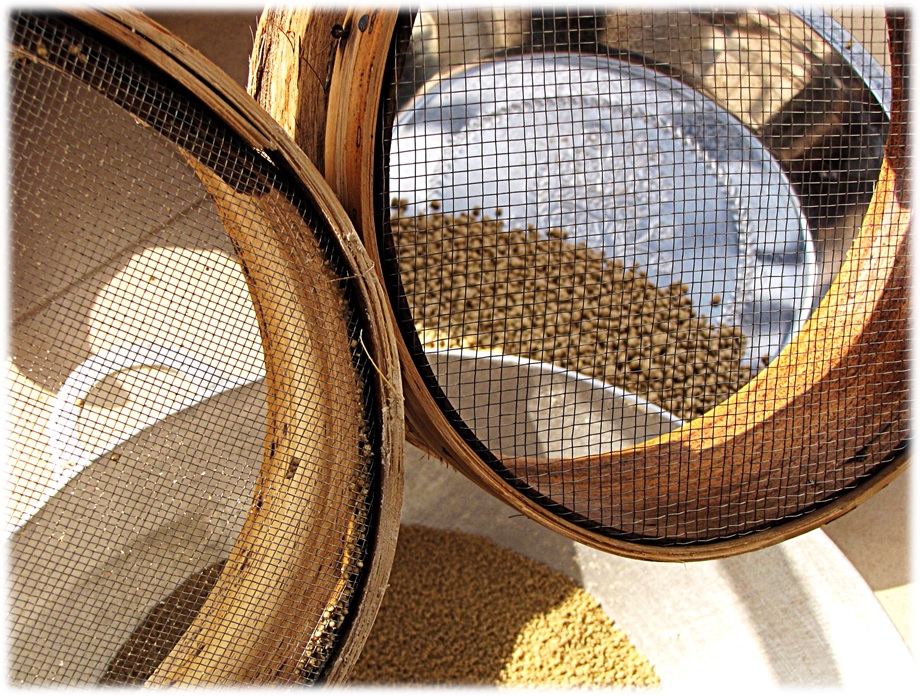
Is there wisdom in gauging whether a majority of foreign Christians is undermining future indigeneity? Yes, of course. But I would contend that the real issue is not the mere presence of foreigners, but rather what kind of posture those missionaries are taking. Our locals say, “You can’t block out the sun with a sieve.” Faithful spiritual work will, in time, bear good fruit, even if that work is done by those who are visually different from the locals. The superficial optics of a room where there are more foreigners than locals might feel quite significant, but in the end, it’s more like a thin sieve. The light will get through.

Friends, let’s stop worrying so much about the percentage of foreigners in local church plants and ministries on the mission field. This is a concern that is given far too much weight in our missionary conversations about strategy and tactics. Instead, let’s focus on all foreigners involved serving the locals by putting on the local language and culture. Let’s strive to model biblical faithfulness, authority, and friendship, and see, in the end, what might grow from this.

It may look odd, or even awkward, for a while. “Why are we all operating in the local language and culture when only two locals came today?” However, let’s not forget that all of us mature adults were once awkward and gangly teenagers. We know that looking or feeling odd for a season is no indicator that maturity isn’t coming.

In fact, it’s a sign that maturity is on its way.


If you have been helped or encouraged by the content on this blog, would you consider supporting this writing and our family while we serve in Central Asia? You can give here through the blog or contact me to find out how to give through our organization. 

Two international churches in our region are in need of pastors, one needs a lead pastor and one an associate pastor. Our kids’ TCK school is also in need of a math and a science teacher for middle school and high school. If you have a good lead, shoot me a note here.

Blogs are not set up well for finding older posts, so I’ve added an alphabetized index of all the story and essay posts I’ve written so far. You can peruse that here

For my list of recommended books and travel gear, click here.

Photo from Wikimedia Commons

A Proverb on the Ultimate Loneliness

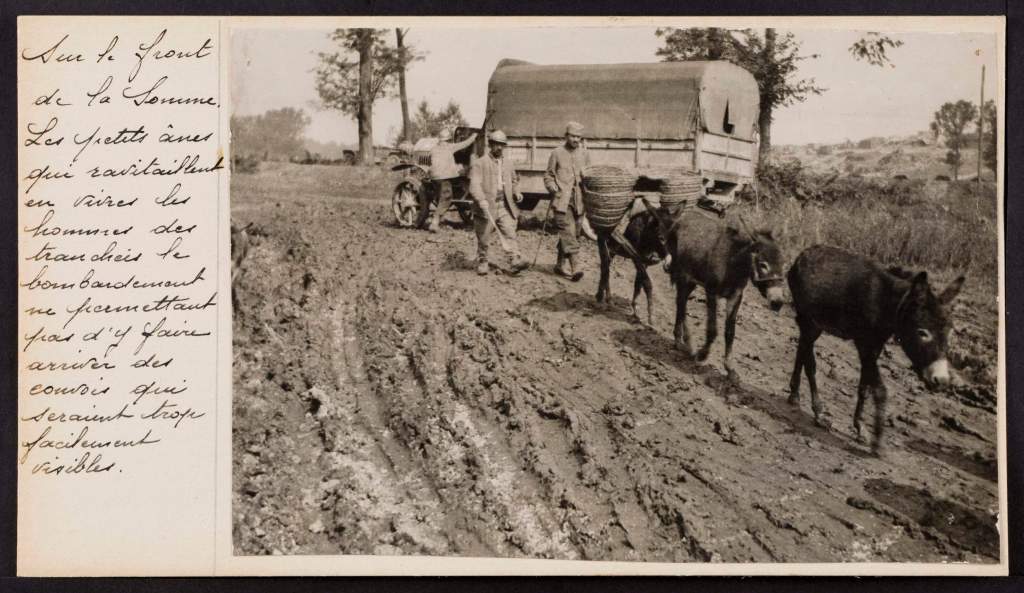
There was no one to say to me, “How much is that donkey?”

Local oral tradition

How might your culture and language paint a picture of utter loneliness and isolation? In Central Asia, apparently, being utterly alone means there’s not even anyone making inquiries about donkeys. Talk about being left out in the cold.

We were on a trip back to Poet City this week when we heard this proverb used for the first time, when a young preacher was describing how lonely middle school had been for him. Most of us have been there. Middle school can be a very rough time. The Bible has its own imagery describing these anguished depths of isolation, the strongest of which is probably Psalm 88:18, “Darkness is my only friend.”

Darkness makes sense, but why donkeys? Well, on the one hand, our Central Asians find donkeys so ludicrous, so hilarious, that they seem eager to fit them into their proverbs whenever they can. Another working theory is that because donkeys are viewed as very base, dumb, and dirty, it may be that ‘donkey business’ functions as a kind of shorthand for the lowest and most menial of human interactions. In this sense, it means sometimes you’re so alone that no one even bothers to interact with you even on these most base and even embarrassing fronts.

Though sometimes unavoidable, and even temporarily beneficial, the Bible consistently teaches that it’s not good for us to be alone. In fact, this is the first thing in the created world described as “not good,” such a bad situation, in fact, that it led to the glorious creation of woman. The preacher in Ecclesiastes elaborates further, stating that being with others means a better return for your labor, help back up after a fall, staying warm at night, and self defense (Ecc 4:9-12).

That’s a lot of benefits that come from not being on your own. Our Central Asian friends would add one more. Turns out it’s also better for donkey business.


If you have been helped or encouraged by the content on this blog, would you consider supporting this writing and our family while we serve in Central Asia? You can give here through the blog or contact me to find out how to give through our organization. 

Two international churches in our region are in need of pastors, one needs a lead pastor and one an associate pastor. Our kids’ TCK school is also in need of a math and a science teacher for middle school and high school. If you have a good lead, shoot me a note here.

Blogs are not set up well for finding older posts, so I’ve added an alphabetized index of all the story and essay posts I’ve written so far. You can peruse that here.

For my list of recommended books and travel gear, click here.

Photo from Unsplash.com

Bilbo Baggins Made Me Brave

Yesterday, on the long drive from New Orleans to Louisville, my family finished listening to The Hobbit audiobook, the version read by Andy Serkis. It was masterfully done. Serkis deserves his reputation as one of the best voice actors out there. If you’ve ever struggled to get into Tolkien’s books of Middle-earth, give this audiobook version another try and see if, like my own wife and daughter, you’re finally hooked.

While listening, I was reminded of just how long Bilbo Baggins’ story has been a part of my life. My parents brought a record player with them to Melanesia in the late 80s. And one of the records they brought with them was the soundtrack for the 1977 Hobbit cartoon. Somehow, this had made it into my dad’s record collection even before he had met my mom. Those songs, along with the cartoon itself, were an early and constant part of my and my brothers’ childhood soundtrack and imagination.

Growing up with this 1977 cartoon adaptation, I never realized just how strange it was. In this project, the fiction of a British professor who was shaped by Norse languages and mythology, as well as the trenches of WWI, meets the music of the hippie singer-songwriters of the 1970s and the odd animation of a group that would go on to become the anime Studio Ghibli. Sadly, my wife finds the whole thing unbearably creepy and, after watching it once with me, has sworn ‘never again.’ Alas, for the sake of marital harmony, I will have to listen to the stirring strains of The Greatest Adventure in my earbuds for the foreseeable future – not to mention much livelier numbers such as Down, Down to Goblin Town.

But I digress. The main point of this post was to tell you how Bilbo Baggins made me brave. Or, at least, how he was one of several good ingredients that made me want to be brave, should I ever be given the chance.

This is exactly what good stories should do. G.K. Chesterton says, “Fairy tales do not tell children the dragons exist. Children already know that dragons exist. Fairy tales tell children the dragons can be killed.” Similarly, CS Lewis says, “Since it is so likely that they will meet cruel enemies, let them at least have heard of brave knights and heroic courage.” We live in a fallen world, so we desperately need good stories where the heroes stand up and defy evil, even risking their lives doing so. The advantage of being exposed to stories like this in childhood is the time they have to marinate and shape the young heart.

One of the major themes of The Hobbit is how an unlikely little hobbit like Bilbo Baggins ends up saving his friends (and many others) through being courageous, even though he is very small and afraid. At many points throughout the book, Bilbo is faced with dangerous choices, but each time he opts to do the right thing, which is also the risky thing. Perhaps his greatest test is towards the end of the book when he is going, alone, down the long tunnel to where the sleeping dragon, Smaug, awaits. Tolkien writes,

It was at this point that Bilbo stopped. Going on from there was the bravest thing he ever did. The tremendous things that happened afterward were as nothing compared to it. He fought the real battle in the tunnel alone, before he ever saw the vast danger that lay in wait.

-The Hobbit, chapter 12

In this passage, Tolkien says that Bilbo fought the true battle in the tunnel alone, before he really knew what facing the dragon would entail, and that his decision to press forward was the bravest thing he ever did. I heard and read this passage over and over again as I was growing up. And every time I did, in my heart, I wanted to be like Bilbo. I hoped that if I were to ever find myself alone in a dark tunnel leading to danger for the sake of good, for the sake of my friends, that I would also choose to keep going.

It makes me wonder, when exactly is the real battle fought for young boys who will one day face their own ‘dragons’? Reflecting on my own childhood, and now observing my own boys, I think it’s less one big decision made in a moment of crisis. More likely, it is countless small desires and resolutions made while listening to stories like The Hobbit, tales where biblical virtues, such as courage unto death, are held up as good and right and worthy of emulation. One small layer at a time, one tiny steeling of the will at a time, and a hard core of courage eventually forms in a boy’s chest – one that will only be revealed in moments of crisis.

They say you can’t know how you will respond in a crisis until you’re in it. Will you move away from danger or toward it? Will your instinct be self-preservation or the safety of others? This may partially be true, but I would contend that one very good sign of what you will do can be discerned from the kinds of stories you have been listening to – and what has been happening in your heart, will, and prayers as you listen.

Of course, Bilbo was only one part of a balanced narrative diet. My childhood and adolescence were also shaped by other good stories, including Narnia, the Rocky movies, and films like Gettysburg. Most importantly, I grew up immersed in those true stories in the Bible that form the substance of which hobbits are only the shadow. I grew up hearing of David defying Goliath, Shadrach, Meshach, and Abednego defying Nebuchadnezzar and his furnace, Stephen being stoned, and Jesus Christ himself willingly passing through death and hell for the sake of his friends.

Along with this, I also saw courage modeled as Melanesians defied the spirits and witch doctors to follow Jesus, as my dad gave up his own life on the mission field, and as my mom later bravely returned as a single mom. I saw these real-life risky decisions made by followers of Jesus, and I wanted to be like them.

Years later, when a friend in high school was attacked by a mugger, I was put to the test. Would my instinct be to wrestle the mugger off of her? In that moment, there was no time for cost analysis. I sprung. And I did my best to fight the guy off my friend. She and I ended up safe in the end, and the mugger in police custody. Where does that kind of an impulse come from? Looking back, I think, in part, from little Bilbo Baggins in the tunnel. The decision to act and help had been made a long time ago. And it had been reaffirmed over and over again.

Courage, I believe, is ultimately a gift from God. It is a gift many are given in a common grace sense, a merciful inheritance still from the first Adam. But it must also be given in a special way to those who have new hearts, to those who know the second Adam. In us, the very courage of the Son of God slowly grows, layer upon layer, and will go on growing forever. This is the kind of courage that can lead to faithful believers from the past like Hugh Latimer, who not only faithfully endured being burned at the stake, but even called out in encouragement to his friend, Nicholas Ridley, also in the flames, “Be of good comfort, Mr. Ridley, and play the man: We shall this day light such a candle, by God’s grace, in England, as I trust never shall be put out.”

How can we encourage the growth of courage in our lives, and in our own kids’ hearts? The word of God must take primary place here, and after it, the example of the faithful we have in the Church Universal and in our own local assemblies.

But along with this, let’s not neglect the power of good stories. God used many means to make me brave. Not least of these was the hobbit, Bilbo Baggins.


We only need to raise 10k ($833 per month) to be fully funded for our second year back on the field. If you have been helped or encouraged by the content on this blog, would you consider supporting this writing and our family while we serve in Central Asia? You can do so here through the blog or contact me to find out how to give through our organization. 

Two international churches in our region are in need of pastors, one needs a lead pastor and one an associate pastor. Our kids’ TCK school is also in need of a math and a science teacher for middle school and high school. If you have a good lead, shoot me a note here.

For my list of recommended books and travel gear, click here.

Photo from Unsplash.com

Idioms for Mullets

Top for Allah, bottom for Abdallah

(or)

Top for Ramazan, bottom for Tarazan

Local Oral Tradition

As with so many other American kids of the late 80s and early 90s, I once sported a mullet. And a curly-haired mullet at that. But hairstyles, as with fashions in general, are surprisingly global in their spread. Just go back and look at pictures of university students in Afghanistan in the 1960s and you’ll see what I mean. This means that mullets also made their way to many of the countries of Central Asia in past decades and are popping up once again, even as they enjoy their controversial return in the West.

I don’t think I’ll ever go back to the haircut I had as a 3-year-old, but I still laughed out loud when I recently heard the local equivalents of the English “Business in the front, party in the back” idiom about this particular hairstyle. The local sayings quoted above are getting at the same thing, though in a very Central Asian way.

In the first saying, the short hair on top and in the front is dubbed “For Allah,” meaning it’s respectful and presentable, even for a religious setting. But the back hair at the bottom of the head is “For Abdullah,” who is probably a 14-year-old working-class kid who has already started smoking and likes to ride on his Chinese motorbike as his mullet trails majestically behind him in the wind.

The first part of the second saying, “For Ramazan” is a local way of referring to Ramadan, the Islamic holy month of fasting and religious rededication. But the second part, “For Tarazan,” refers to none other than the vine-swinging jungle man we know in the West as Tarzan. This carries with it not only the carefree, somewhat rebellious sense of a teenager, but also that there is something hinting at the wild, the barbarian, in the mullet hairstyle. Which is, of course, one reason why young men like it. I remember reading how leather trousers became fashionable at some point among the teenagers of Rome, since only barbarians wore trousers while ‘respectable’ Romans wouldn’t be caught dead in them. A similar thing is going on here, it seems.

I find it hilarious that not only are mullets a global thing, but so is the opinion that they are a most uncanny hairstyle, a mix of things that probably should not have been mixed. The conservative middle class of the West and Central Asia may not agree on everything, but in their quips about mullets, they have surprising common ground.


We only need to raise 12k ($1,000 per month) to be fully funded for our second year back on the field. If you have been helped or encouraged by the content on this blog, would you consider supporting this writing and our family while we serve in Central Asia? You can do so here through the blog or contact me to find out how to give through our organization. 

Two international churches in our region are in need of pastors, one needs a lead pastor and one an associate pastor. Our kids’ TCK school is also in need of a math and a science teacher for middle school and high school. If you have a good lead, shoot me a note here.

For my list of recommended books and travel gear, click here.

Photo by annmteu on Pexels.com

Should I Keep Sharing the Gospel With Someone Who Has Repeatedly Rejected It?

Every believer who shares the gospel has a relationship or two with unbelievers that they don’t quite know what to do with. This might be a family member, a friend, or a coworker, someone who has heard the gospel many times, yet has not embraced it. Their bearing toward the gospel can run the spectrum from super friendly to somewhat hostile, but for whatever reason, they still want to be in regular contact with you. Or, in the case of family or coworkers, they are somewhat stuck in a relationship with you.

For my American readers, today is July 4th, Independence Day. That means you may even today find yourself at a cookout with just the sort of person I’m describing.

The question is, what should our posture be toward these sorts of people? Should we go on sharing the gospel when they seem so, well, hardened? Should we keep investing precious time and relational energy into those who have rejected the gospel so many times, especially when there are others who have never heard?

The answer, I believe, is a nuanced yes. In this post, I want to share how I have tried to navigate this over the years, in hopes that these principles and practical suggestions might prove helpful to others also wrestling with this.

First, we should aim to be sure that the gospel these individuals have rejected is actually the gospel, and not a misunderstanding of it. Far too often, we think someone has rejected the gospel when they’re actually rejecting a caricature of it. Remember, lost people are spiritually dead. Dead people do not naturally and easily comprehend the meaning of the good news you are sharing with them. They misconstrue what we are saying constantly. It often takes a lot of repetition before it becomes clear that they are rejecting the gospel from a place of having firmly grasped its message. Even Paul asks for prayer that he might make his gospel message clear (Col 4:4). But lost people can reach a place of rejection from understanding. As one of my Central Asian friends recently said to me when discussing how Jesus takes our curse upon himself, “I’m a Muslim and not a Christian, but wow, I can see how this is the heart of the Bible right here.”

He sees and understands the heart of the Bible. But he doesn’t believe it. Since that’s the case, what do I do with him?

This brings me to my second point. If this person is still open to spiritual conversation, then from here, I’m still going to aim to regularly seed my conversation with biblical truth. If, at this point, my friend has heard the message of the gospel clearly a good number of times, I will often back off from repeatedly pressing to the center of the gospel itself, instead looking for opportunities to inject all kinds of other aspects of the truth into our conversations. My hope in doing this is to impress upon my friend how the gospel affects and transforms everything else. I want to focus on the fruit of the gospel, the power and change that the gospel and the rest of God’s truth bring, in hopes that my friend will then want to revisit the gospel itself from one of these different angles.

Paul reminds the Romans that God’s kindness is meant to lead them to repentance (Rom 2:4). It may be that some simple but genuine remarks upon God’s kindness in a conversation are what lead to breakthrough. Or, it may be talking about how the faith transforms marriage and parenting. Or, how eternity and resurrection give us an answer for the countless desires we have that in this life will never be fulfilled. Sometimes it feels unnatural or redundant to revisit God, Man, Christ, Response yet again, but there are a thousand other angles of truth I can touch on in conversation that can strengthen and support that central refrain.

Injecting my conversation with spiritual truth also gives me a sense of whether or not my friend or relative wants to get into the claims of the gospel in this particular moment or setting. Believers can, with practice, learn how to naturally and tactfully fold spiritual truth into our everyday conversations. And every time we do that, it functions like an indirect invitation. If we are continually and graciously opening the door like this, there is no need to force unbelievers through it. If they are ready and willing, they will often take the conversation to the next step – and sometimes even reveal the specific questions they are wrestling with. This approach is a great way to not only see if unbelievers are open to spiritual conversation but also to keep the conversations in a place where our friend or relative feels that they consented to once again discussing these weighty and personal things.

For long-term relationships, this sense of consenting to the spiritual conversation is very important. We want to avoid being seen as the person at work or family gatherings who forces gospel conversation on others against their will. In the long run, this type of posture will serve more to close doors than open them. Rather, we want others to see us as those who genuinely care for them, genuinely believe the gospel, and truly enjoy speaking about Jesus.

Third, when someone has repeatedly rejected the gospel through my words, I want to double down on winning them with my life. As Peter says about wives married to unbelievers,

Likewise, wives, be subject to your own husbands, so that even if some do not obey the word, they may be won without a word by the conduct of their wives, when they see your respectful and pure conduct.

1 Peter 3:1-2

We must use words to make sure that the unbelievers in our lives have clearly understood the gospel. But after that point, there are times when it is not only appropriate, but even faithful to focus on displaying the gospel to them ‘without a word.’ Similar to seeding our conversations with other aspects of biblical truth, we can show by our lives and actions the power and the difference that the gospel makes.

One refugee friend who came to faith when I was a newlywed told me that observing my marriage was a big part of how the gospel came to make sense for him. I was surprised by this, since we were so new at the whole marriage thing, but I praised God for it nonetheless. This brother and I had argued about the gospel for months on end. At times, I was convinced we were getting nowhere. But the whole time, he was not just arguing, but also watching.

This point helps us know what to focus on when we’re not sure what to do next with an unbelieving friend who has rejected the gospel. But it’s also particularly helpful for family and friends who have made it clear to us that the door is closed for any conversation about spiritual things. What do we do with that kind of relationship? In spite of all the pushback against that “preach the gospel, when necessary use words,” quote, the fact is that our lives do, in fact, ‘preach’ something. At least in the fact that they powerfully illustrate, apply, and argue for what we’ve already verbalized and would like to verbalize again.

Fourth, we should consider how to stay in relationship with unbelievers who have rejected the gospel, even while we prioritize others who are more open. We are called to redeem the time and untold numbers Jesus’ sheep are out there, just waiting to hear his voice (Col 4:3, John 10:16). We should not be spending all our time on those who have clearly heard and clearly rejected the gospel. At the same time, we do not want to cut off those who have heard and rejected and who are still open to relationship with us. How should we thread this needle?

One practical way to do this is to have regular gatherings that are open to all. These sorts of gatherings are places where you can always invite that stubborn or seemingly hard-hearted unbelieving friend, even if most of your time is spent elsewhere investing in those who are showing a genuine openness. When we were doing refugee ministry in the US, we hosted weekly community meals together with our community group. This was a time when we could invite all of our unbelieving friends for a no-expectations gathering of food and community. Similarly, when I was an English teacher in Central Asia, we had a weekly conversation cafe. If I didn’t feel I should prioritize a certain friend who had heard and rejected the gospel, I nevertheless had a time when the relationship could be maintained, and we could see each other.

Because the Holy Spirit is sovereign over salvation, not me, I want to keep the relationship going in the chance that, defying expectations, this person really is seeking the truth. Regular gatherings of this sort mean I have a place to invite all of them to, even while the bulk of my time goes to prioritizing those friends who are responsive to the truth.

The other advantage of having regular ‘bucket times’ like this is that unbelievers can, in this way, be exposed to believing community. This could have been a point by itself, since there is great power and wisdom in getting our unbelieving friends and family into places where they can see Christian friendships displayed. The Bible says our love for one another proves the incarnation and proves that we are Jesus’ disciples (John 13:35, 17:21). That’s one powerful apologetic. Also, we never know if exposure to some other believer with very different gifts than we have might be the key that leads to breakthrough for that unbeliever we’ve made so little progress with.

Fifth, we can continue to pray for those unbelievers who have repeatedly rejected the gospel, those whom we just don’t know what to do with. I remember reading how George Müller prayed for decades for one of his friends’ sons to believe. He didn’t give up praying for this young man, even after so many years had passed. Decades later, he repented and believed. There is great power in persistent prayer, even for those for whom we see no hope that they will ever believe. Spiritually, they are no harder to the gospel than we were before we believed. One sovereign word from God is all that is needed to break their resistance and to flood their hearts with the love of Christ. We might not know if we can or should say another word about the gospel to certain individuals. But we can keep praying for them. If they are still alive, the verdict is not yet out on their soul.

Sixth, and last, there is a category in scripture for unbelievers who reject the gospel and are therefore to be cut off by us, though still in hopes that they might be open at some point in the future. Jesus calls them ‘pigs’ and ‘dogs’ and in other places commands the disciples to wipe the dust off their feet in protest against their rejection (Matt 7:6, 10:14). It seems that there is a kind of evil and violent rejection of the gospel message that can occur, one that responds to pearls of gospel glory with fangs and violence or scandalously shameful rejection. The points I’ve made above are not for this kind of person, perhaps with the exception of persevering prayer. No, the purpose of this post has been to help us with those unbelievers who want to or have to stay in some kind of peaceful relationship with us.

For long-term relationships with unbelievers, seek to make sure the gospel is clearly understood. Seek to saturate your conversations with all kinds of spiritual truth. Seek to win them with your lives. Seek to invite them into community even when you can’t prioritize them. And pray for them with perseverance.

I am deeply troubled about my unbelieving friends who have heard the gospel so many times yet have not bowed the knee to Jesus. Like my Central friend who can pinpoint the heart of the Bible, I know that their situation is a very dangerous one. They have been exposed to so much light, and if they ultimately reject it, their fate will be worse than that of Sodom and Gomorrah. And I will have been to them the aroma of death (2 Cor 2:15-16).

And yet, at the same time, I’m so thankful for my unbelieving friends who keep coming back around, even though they’ve rejected the gospel so many times. I desperately hope that if they are still open to friendship with me, then there may be some part of them that is also open to friendship with Jesus. The verdict on their soul is not out yet.

No, if they’re still living, there’s still hope.


If you have been helped or encouraged by the content on this blog, would you consider supporting this writing and our family while we serve in Central Asia? We need to raise 26k to be fully funded for our second year back on the field. You can help us with this here through the blog or contact me to find out how to give through our organization. 

Two international churches in our region are in need of pastors, one needs a lead pastor and one an associate pastor. Our kids’ TCK school is also in need of a math and a science teacher for middle school and high school. If you have a good lead, shoot me a note here.

For my list of recommended books and travel gear, click here.

*Names changed for security

Photo from Unsplash.com

The Earliest Painting of a Biblical Scene

The earliest known painting of a biblical scene comes from a house in Pompeii, the Roman vacation town destroyed in a volcanic eruption in A.D. 79. Just as wisdom is one of the emphases of this blog, this first known biblical painting also focuses on wisdom, depicting one of the most well-known scenes where its power is put on display. The painting (which you can see here) is unmistakable to anyone who knows their Old Testament. It shows King Solomon discovering the identity of the true mother by shrewdly calling for the baby in dispute to be cut in two, which is recounted in 1st Kings 3:16-28.

In an unexpected addition, it seems the artist also painted Socrates and Aristotle into the bottom left-hand corner of the painting. These two foundational Greek philosophers are observing the scene from the margins, looking on in admiration or astonishment as the elevated Solomon dispenses his wise judgment.

What this curious painting seems to tell us is that the Bible and its teaching were present even in this holiday town beloved by the Empire’s rich and influential citizens. The fact that it was painted on the wall of a home like this likely means that there were well-to-do Jews, proselytes, or God-fearers who lived in Pompeii, perhaps even early Christians. I think it likely that whoever commissioned this painting was from a Greek or Roman gentile background, hence the inclusion of Socrates and Aristotle. Viewed in this light, the painting is a kind of apologetic, arguing that the apex of Greco-Roman philosophy points, from the margins as it were, to the superior wisdom found in the revealed Word of the God. This would echo the kind of approach that Paul takes when preaching in Athens at the Areopagus – “As some of your own poets have said” (Acts 17:28).

If a gentile was the one who had this scene painted so prominently in his home, it could be a way of him arguing that his believing in the God of the Jews was not, in fact, a betrayal of the Western pursuit of wisdom, but rather, its unexpected and true fulfilment.

You can read more about this fascinating painting here at Biblical Archaelogy Society.


If you have been helped or encouraged by the content on this blog, would you consider supporting this writing and our family while we serve in Central Asia? We need to raise 26k to be fully funded for our second year back on the field. You can help us with this here through the blog or contact me to find out how to give through our organization. 

Two international churches in our region are in need of pastors, one needs a lead pastor and one an associate pastor. Our kids’ TCK school is also in need of a math and a science teacher for middle school and high school. If you have a good lead, shoot me a note here.

For my list of recommended books and travel gear, click here.

Photo from Wikimedia Commons

Why The Bible Is Against Bad Calendars and Time Travel

Humans are not the only rulers or vice-regents created by God in Genesis chapter one. This fact jumped out at me this year when rereading Genesis again – more proof that no matter how well I might think I know a text, there are almost always things that I’ve missed. No, there are rulers other than humans in Genesis 1 that are created and given authority. These rulers are none other than the sun, moon, and stars.

[14] And God said, “Let there be lights in the expanse of the heavens to separate the day from the night. And let them be for signs and for seasons, and for days and years, [15] and let them be lights in the expanse of the heavens to give light upon the earth.” And it was so. [16] And God made the two great lights—the greater light to rule the day and the lesser light to rule the night—and the stars. [17] And God set them in the expanse of the heavens to give light on the earth, [18] to rule over the day and over the night, and to separate the light from the darkness. And God saw that it was good. [19] And there was evening and there was morning, the fourth day. 

Gen 1:14-19

This text says that God created the sun, moon, and stars to:

  1. Separate the day from the night, the light from the darkness
  2. Be for signs and for seasons, and for days and years
  3. Give light upon the earth
  4. Rule the day and rule the night

These entities in the heavens are created to be separators, signs, givers, and rulers. These roles that God himself carries out directly in the first verses of chapter one, he will now do vicariously through his appointed rulers, similar to how he will rule through mankind.

As an aside, this shows the silliness of the objection that holds that Genesis 1 is in error because the creation of light comes before the creation of the sun and stars. Of course, the God who is able to create a light-giving star is also able to create and give light directly without that star. The order of events simply shows a logical movement from direct ruling and giving to mediated ruling and giving. Throughout history, great emperors in Central Asia tended to rule our mountain peoples through emirates, client kingdoms that ruled in the name of the great shah or pasha far away. To govern well, any emperor who conquered our area would, for a period, rule directly, but then quickly raise up representative kings who would exercise his rule locally. This is a helpful metaphor for what we see going on in the Genesis creation account.

Also, what a fascinating window this account gives us into what the sun, moon, and stars actually are, as opposed to merely what they are made of.

“In our world,” said Eustace, “a star is a huge ball of flaming gas.”
Even in your world, my son, that is not what a star is, but only what it is made of.”

-CS Lewis, The Dawn Treader

The sun is a separator, a sign, a giver, a ruler – one in the form of a giant ball of flaming gas.

The necessary implication of all of this is that there are things that fall under the creation mandate of the sun, moon, and stars that do not fall under the creation mandate of mankind. Yes, humans are tasked with multiplying and filling the earth, subduing it, and having dominion over the plants and animals (Gen 1:26-30). We are charged with tending and guarding Eden (2:15), and through it, eventually the whole earth. But it seems that this dominion does not trespass into the dominion given to the heavenly lights. They have rightful rule over some parts of creation. We have rightful rule over others. We have neighboring, yet distinct, client kingdoms.

Fallen man is, of course, going to attempt to usurp their rightful place and to take dominion in ways and spheres which do not belong to them, just like our first parents did. And this will somehow lead to disaster, just like it always does. In light of this, it seems like it would be helpful to have a better understanding of what those areas of creation are that are not part of our rightful dominion. True humility and freedom so often come down to simply being honest about what God has or has not given, and then seeking to live within those good, sovereign lines.

First, it seems that we must not attempt to rule the separation of day and night, their light and their darkness. This is one we are actually flirting with, at least in one direction. Advances in technology and the unprecedented affordability of artificial light in our modern age mean that humans are increasingly chipping away at the natural darkness, the nightness of night. This is allegedly resulting in greater economic productivity and physical safety, but it’s also playing havoc with our sleep, health, and happiness. No, the darkness of night is a good part of creation from before the fall. We ignore its importance or set out to conquer it at our own peril.

I have often thought about the fact that the generations living today are likely the first in the history of the world to be largely unable to see the stars in the night sky. Humanity is overwhelmingly an urban race now, living in cities and towns where light pollution means that, when we look up, we simply do not see what every other age of humans before us has seen – stars too many to number. What kind of effect might this be having on us? What happens to a humanity unable to feel how small it is because, when it looks up, all it sees is the haze created by its own electric creations? Does this mean we are losing one of the primary ‘preachers’ of the glory of God in creation (Psalm 19:1)?

To live wisely in this created world, we need to submit to the sun, moon, and stars’ separation of day and night.

Second, we must not attempt to usurp the sun, moon, and stars’ roles as the primary signs of the passage of seasons, days, and years. They set the rhythms of time, and we (and our calendars) are wise to honor that. Civilizations that have attempted to organize their time in different ways, which to them seem more convenient or efficient, have discovered this to be either impossible, illogical, or at least extremely inconvenient. Thus, the Soviet Union’s attempts to replace the seven-day week with a ten-day week, the Nepreryvka, ended in abject failure. Similarly, in order to better ambush his enemies, Mohammad did away with the sacred days that served every year to sync the Arab lunar calendar with the solar year. By doing this, he foolishly untethered the Islamic calendar from the solar year, meaning calendar dates were no longer reliably fixed to agricultural seasons, and events like Ramadan rotate through the entire year on a confusing 33-year cycle. In the opposite direction, our modern Western calendars contain evidence of a time when our months needed to be changed so that the West could better align with the rule of the celestial spheres. September, October, November, and December originally meant “seven, eight, nine, ten,” but the Romans had to insert July and August in there because they found their harvest festivals increasingly taking place further and further away from the actual harvest – something they correctly felt to be foolish and unsound. These ancient Westerners wisely sought to align their annual calendar with absolutely crucial things like harvest time.

In contrast to the annual calendar, one of the odd things about being a Westerner living in Central Asia is realizing that my Central Asian friends are still living in daily rhythms closer to the patterns of creation than I am. Their closing up shop and family dinner times are still attached to sunset, not to a fixed 24-hour clock. They know that the appearance of a certain star on the horizon means the hottest part of summer has come to an end. All of the mothers sense at once when the weather is saying it’s time to bring out the rugs for the annual autumn cleaning. In all of this, I can’t help feeling like they know and sense things about the heavens that I should also know and sense, were it not for the culture I hail from, with its relentless impulse to act like nature is irrelevant.

To live wisely in this created world, we need to submit to the sun, moon, and stars’ signs regarding the seasons, days, and years.

Third, it seems we must not attempt to usurp the heavenly bodies’ role as the primary givers of light. This is related to the first point, but it’s worth restating that even though cheap, artificial light is a great blessing, it needs to be stewarded carefully. It is not a good replacement for natural sunlight. Things like vitamin D deficiency, poor sleep, and depression are some of the more obvious consequences that come from pretending like LEDs or fluorescent lighting can replace the good old-fashioned light of our patron star. Our teams in Central Asia learned this the hard way as many of the houses we rented early on were like dark cement caves that only increased the mental health challenges otherwise faced on the mission field.

To live wisely in this created world, we need to submit to the sun, moon, and stars as the primary givers of light on the earth.

Fourth, we must not attempt to rule day and night, to rule time itself. What might this look like? Well, I like a time travel story as much as the next guy, but it would seem that Genesis 1 makes a case against humans seeking to manipulate time in ways like this. We may not be as far along in invading the heavenly lights’ dominion of time as we are invading their dominion of light and darkness, but stories of time travel continue to captivate our popular culture just as stories of artificial intelligence captivated it half a century ago – and look what’s happening with AI. No, it’s only a matter of time before humanity figures out how to mess with time itself. And when that happens, Christians will need to know and maintain that this is out of bounds, not a part of our creation mandate, the kind of thing that is sure to get very bad, very fast.

Just to clarify, I’m not speaking here about human efforts to organize time and to seek to redeem and steward it well. That is very much a part of our mandate (Col 4:4). But those efforts are attempts to measure and record and live according to something that is governed by another (see point 2). They are not efforts to take over its governance, to mess with the fabric of time itself. Governance of that fabric belongs to God and to some of his other vice regents, the heavenly lights.

No, to live wisely in this created world, we need to submit to the sun, moon, and stars as the primary rulers of time.

Strange as it may seem, and should Christ tarry, we may increasingly face ethical dilemmas that involve invading the rightful domain of the sun, moon, and stars. It seems, therefore, to face this kind of future, we will need to go back to the beginning, back to Genesis 1, to think carefully about what exactly is part of our mandate, and what is not. Yes, we are client kings, vice regents of creation – but so are those shining rulers in the sky.


If you have been helped or encouraged by the content on this blog, would you consider supporting this writing and our family while we serve in Central Asia? We need to raise 27k to be fully funded for our second year back on the field. You can help us with this here through the blog or contact me to find out how to give through our organization. 

Two international churches in our region are in need of pastors, one needs a lead pastor and one an associate pastor. Our kids’ TCK school is also in need of a math and a science teacher for middle school and high school. If you have a good lead, shoot me a note here.

For my list of recommended books and travel gear, click here.

Photo from Unsplash.com

A Proverb On Something Simply Impossible

I’m sayin’ it’s a male, he still says to milk it.

– local oral tradition

This local proverb is used when someone insists that you must do something, but that thing simply can’t be done. The farm/nomad logic here is straightforward. You can’t milk male animals, only females. Perhaps a similar saying in English would be “trying to fit a square peg into a round hole.” It can’t be done.

Our Central Asian locals can be quite persistant when they believe you can and should do something for them, but are perhaps holding out on them. This proverb seems like the kind that comes out after multiple rounds of trying to explain that you really are not able to oblige a given request. It’s a sort of appeal to a third party to side with you in the impossibility of the request.

I haven’t had the pleasure of using this particular local proverb yet, but am hoping that I will have the chance to do so at some point.

“No, elder brother, I’m telling you the truth. There is no way I can possibly acquire an American wife for you. Seriously. It can’t be done!”

“But dear teacher, I’m sure you know someone. Does your wife have any unmarried sisters?”

“Mud of the world upon my head. No. I’m saying it’s a male, he still says to milk it!”


If you have been helped or encouraged by the content on this blog, would you consider supporting this writing and our family while we serve in Central Asia? We need to raise 28k to be fully funded for our second year back on the field. You can help us with this here through the blog or contact me to find out how to give through our organization. 

Two international churches in our region are in need of pastors, one needs a lead pastor and one an associate pastor. Our kids’ TCK school is also in need of a math and a science teacher for middle school and high school. If you have a good lead, shoot me a note here.

For my list of recommended books and travel gear, click here.

Photo from Unsplash.com

How Sheep Stomachs and Kalashnikovs Can Lead to Better Preaching

What do restaurants running out of sheep stomachs, AK-47s, meals on the floor with tribal enemies, and the Islamic pilgrimage to Mecca have to do with Mark 11?

When preaching and teaching, our aim should be, first, to faithfully exposit the text. But second, it should be to helpfully 1) argue for, 2) illustrate, and 3) apply the truths of that text in ways that translate to the minds, hearts, and hands of our audience. Many of us who care deeply about expositional preaching tend to be very strong in the explanation side of things, yet weaker in these three other time-tested elements of preaching and teaching. It is in these three secondary, yet crucial, elements that I attempted this past week to draw local connections with Mark 11.

My current role as a resourcer, researcher, and writer means I’m not preaching in the local language nearly as much as I did when I was a church planter. However, this past week, I did get the opportunity to do so. Afterward, I thought it might be helpful to share a few examples of how I attempted to use local culture and experiences to bring the weight of the text to bear on the audience. I do so, not claiming that I necessarily got everything right, but rather, in hopes of spurring on others to make efforts like this in their preaching and teaching as well. After all, concrete examples from other contexts can be helpful as we wrestle with how to do this in our own churches.

My text was Mark 11:1-25: the triumphal entry, the cursing of the fig tree, the cleansing of the temple, and Jesus’ teaching on the power of believing prayer. From this text, my main sermon idea was that Jesus is the king of peace, the king of judgment, and the king of answered prayer. Each of my three subpoints was an unpacking of one of these three aspects of Jesus’ kingship: 1) the king of peace, 2) the king of judgment, 3) the king of answered prayer.

Now, here’s where the restaurant running out of sheep stomachs came in. I began my sermon by telling a story that happened in Caravan City around five years ago, when a group of local men went down to the bazaar in the middle of the night to eat a beloved traditional dish called head-n-foot. This is a meal consisting of rice sewn up in a sheep’s stomach and boiled in a broth containing the sheep’s head and feet. This unique meal is traditionally eaten in the middle of the night, along with fresh flatbread, and sometimes other side dishes like sheep brain, marrow, tongue, etc. While foreigners get queasy just hearing about eating this kind of thing, many locals can’t get enough of it. However, these particular local men loved it a little too much.

When these guys showed up at the head-n-foot restaurant, it had unexpectedly run out of food. This caused them such disappointment and such anger that they returned to their homes, grabbed their AK-47s, and came back and shot up the restaurant’s tables, counters, and windows in a blaze of lead, broken glass, and bits of sheep. Thankfully, no one was injured. But the story became the stuff of local legend, as well as countless jokes.

Why did I begin my sermon with this illustration? Well, one of the main themes of my passage, Mark 11, is the absence of fruit. The fig tree does not have fruit when Jesus visits it, nor does God’s temple. There is something deeply wrong with this situation, so wrong in fact that it warrants the very curse and judgment of the Son of God. While the men who shot up the head-n-foot restaurant were clearly out of line to do something so drastic, they were not necessarily wrong to be upset. A restaurant that fails to keep its most basic duty – that of providing food when open – has failed in its fundamental purpose. Perhaps these men had the right to be angry, but they had no right to shoot up the restaurant in the way they did. Jesus, on the other hand, had every right to both be angry and to also go on to curse the fig tree and the temple. He was the creator, owner, and rightful recipient of the fruit of both. But, scandalously, when he visited them, he found them utterly barren. And in the temple’s case, even worse than barren, corrupted and oppressive.

Did this attempt at using a local illustration work? I think so. Several of the attendees were nodding and chuckling knowingly as I shared the story. At least the sermon must have made two of them hungry because later that night, they went out to eat head-n-foot at the very establishment that had featured in my introduction. This included sending me video evidence that that night, at least, there was plenty of head-n-foot to go around.

My second attempt to illustrate with local culture was when I was trying to explain the significance of Jesus riding into Jerusalem on a colt, a young donkey. In the ancient Near East, a king who rides into a city on a donkey is signaling both humility and peace. This is in contrast to a king who rides in on a horse, who is signaling power and conquest. However, this meaning has been lost in the 2,000 years that have transpired between Mark 11 and today. In our corner of Central Asia, donkeys are mostly a thing of ridicule, an insult, a symbol of stupidity, and the butt of countless jokes. This is why my favorite Kebab restaurant has donkey-themed pictures covering its walls. Locals find donkeys irresistibly ridiculous, which is why one local believer cautioned me in the past to avoid them in sermons if I can, due to the risk of the congregation descending into fits of giggles. Yet there’s no avoiding donkeys in Mark 11; rather, riding in on a donkey needs to be redefined according to what this would have meant to the original audience.

But before I explained its meaning, I first asked my audience a question. What would it signify to them if their tribal chief or an influential sheikh invited them to dinner at his house, and when they arrived, they also saw their personal enemy seated there on the floor for the meal? The audience responded with confidence – this scene would mean a desire for peace, a desire for reconciliation. Leaders here will invite enemies to share a meal together with them in an attempt to broker peace. In the same way, I explained, a leader riding into a city on a donkey, in first-century Judea, signaled a desire for reconciliation. Once again, heads nodded when the attempted connection was made. Whatever may have been going on internally, at least there were no visible fits of giggles because I had been talking about donkeys.

My third attempt to illustrate from local experience came in my second point, when I was explaining how Jesus is not just the king of peace, but also the king of judgment. In Jesus’ shocking actions in the temple, we see how much he hates religious oppression and corruption. Jesus is furious because not only is the temple worship being used to make a hefty profit off of Jewish pilgrims, those who are stuck with the inflated temple prices and money-changing fees, but this is happening in the only space available in the temple for the Gentiles to worship God. Tragically, all this shows us that instead of the true worship of God taking place (true spiritual fruit), there was religious oppression of the Gentiles, the poor, and the faithful. God will not stand for this kind of thing, as evidenced by Jesus’ temple violence.

To illustrate how all the world’s religions tend to do this – and thus are worthy of God’s curse – I reminded the audience of how the Islamic pilgrimage, the Hajj, has very similar dynamics to the temple corruption seen in Mark 11. See, Muslims are obligated to make this pilgrimage once in their lifetime. And there’s only one place they can go to do this – Mecca. Because of this, the government of Saudi Arabia charges exorbitant prices for plane tickets, hotels, visas, even corner market goods in Mecca itself, all in an attempt to milk the pilgrims for all they’re worth. Pilgrims have no choice. They have to pay up. In this way, elderly locals from our corner of Central Asia will blow tens of thousands of dollars in a misguided attempt to secure forgiveness of sins. This is money that should have gone to caring for them in old age, or to their children’s futures. Instead, it goes straight to the pockets of the Saudi political and religious establishment. This kind of system is deeply wicked and worthy of being cursed by God.

Having drawn the connection in this way between the temple’s religious oppression and that which this room of former Muslims was all too familiar with, I then reminded them that Jesus’ focus here was not some pagan worship of his day. No, it was the corrupted worship of his own people and their leaders. We, therefore, have an obligation to guard the worship of the local church so that the true worship of God is never hijacked for the sake of worldly gain.

My final attempt at using a local illustration attempted to connect with the fact that many in the audience were former guerrilla fighters. Under the point about how Jesus is the king of answered prayer, I borrowed an illustration from Piper about how prayer is not like a hotel phone, where we call the front desk for a softer pillow. Rather, prayer is like a soldier’s walkie-talkie, which he uses to call in air support for the battle. Jesus’ radical promises for answered prayer in this passage are not given so that we might ask and receive anything random we might desire. Instead, they are for prayers directed against anything (mountains included) that stands in the way of his people bearing spiritual fruit. I couldn’t tell how well this one connected. I’m realizing just now, as I write, that guerrilla fighters don’t tend to have air support. Usually, they’re fighting in the mountains with their small arms munitions against the superior ground and air power of whatever regime they’re resisting. But I’m hopeful it still made sense.

Once again, these efforts to use local culture are not the most important thing going on in a sermon. But if the exposition of the text itself is like a good steak, then the argumentation, illustration, and application are like the salt and pepper, the grilled vegetables, and the glass of red wine that accent the steak so well. The steak is more powerfully tasted because of their presence. In the same way, the faithful explanation of God’s word is more powerfully experienced when it is supported by faithful and contextual argumentation, illustration, and application.

How do we find these local examples? We must be continuous learners of whatever culture is currently hosting us. Through curious questions and good listening, we can, over time, stock quite the storehouse of local examples that we can draw from as opportunity arises. Practically, we will also need a way to remember these examples. For me, writing and lists of things to write about are ways that I find I’m able to better hold onto this local knowledge. Did you know, dear reader, that by reading this blog, you are a part of how I’m able to hold onto things so that I might later bring them into a spiritual conversation with a local? For that, I’m very grateful.

Every culture, indeed the whole world, is full of spiritual analogies and metaphors, things that we can leverage to strengthen our presentation of God’s word. As the old hymn, This is My Father’s World, proclaims, “This is my father’s world; He shines in all that’s fair; In the rustling grass I hear him pass; He speaks to me everywhere.” Missionaries of ages past, such as Lilias Trotter, had such good eyes for the spiritual analogies baked into the world all around them. If we follow in their footsteps, recognizing that not just in nature, but even in fallen cultures, God has not left us without a witness, our preaching and teaching (and writing) will be all the more powerful for it.

Don’t just explain, brothers and sisters. But argue, illustrate, and apply as well – even if that means you find yourself preaching about things like sheep stomachs and Kalashnikovs.


We need to raise 28k to be fully funded for our second year back on the field. If you have been helped or encouraged by the content on this blog, would you consider supporting this writing and our family while we serve in Central Asia? You can do so here through the blog or contact me to find out how to give through our organization. 

Two international churches in our region are in need of pastors, one needs a lead pastor and one an associate pastor. Our kids’ TCK school is also in need of a math and a science teacher for middle school and high school. If you have a good lead, shoot me a note here.

For my list of recommended books and travel gear, click here.

Photo from Unsplash.com