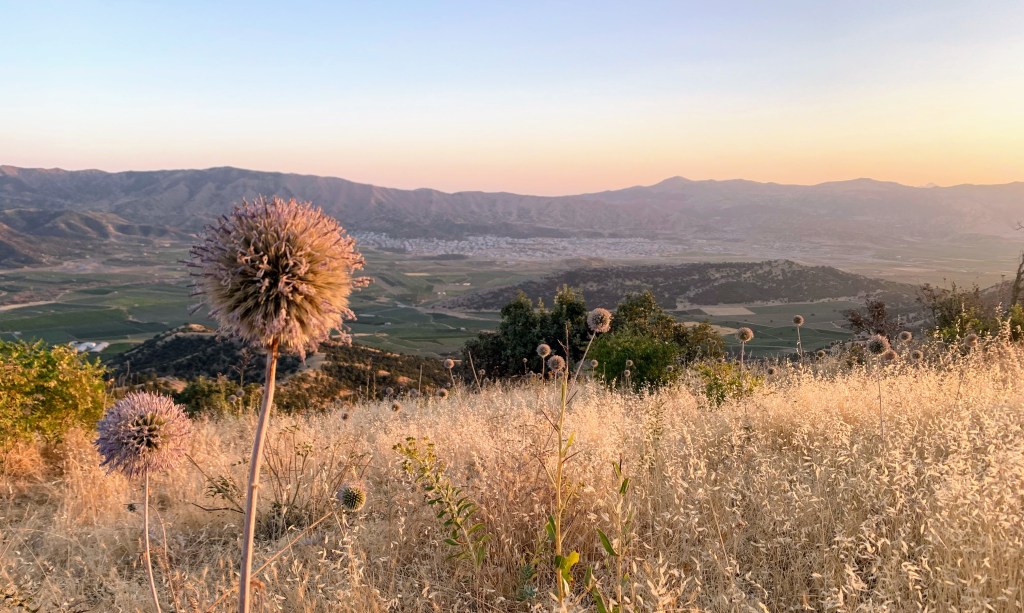
It was on a trip to Underhill village where I first learned that thistles are edible. It was late summer. The mountains had turned brown from the summer heat. But they were not completely colorless. Amazingly, certain hard-scrabble plants chose the height of these rainless months to bloom. Their colors were not the bright shades of spring, like the gold and white of the small narcissus flowers or the blood-red poppies. No, they were much more subtle – pale violets, aloe greens, dusty yellows. Late summer in the high desert was a different theme, and brought with it its own unique color scheme. I was reminded of Lilias Trotter, the missionary artist to Algeria who would comment on God’s artistry in pairing understated colors together in the Sahara, an environment where bright shades would come across as gaudy and ill-fitting.
Our guide was Zoey*, a longtime friend of my wife’s. Zoey was very proud of the village lore she had inherited and delighted to teach us things like how to make village cuisine, how to handle farm animals, and how to eat what grew wild on the mountainsides. This is an entire category of food in our local culture, one that to us initially looks like eating weeds. I remember once being on a spring picnic and observing an older couple as they pulled out knives and began to cut the grasses next to their picnic blanket, popping them into their mouths and chewing like a pair of happy elderly goats. Before long they had cut a decent-sized swathe out of the hillside behind their blanket, and, satisfied, lain down for a nap. There seem to be dozens of edible grasses, herbs, and other small plants that grow wild on the slopes of our corner of Central Asia. And a skilled local will be able to snack on the bounty of the mountains on any given picnic or day of shepherding on the slopes.
Zoey was taking us to an ancient swimming hole tucked into a nearby valley where Zoroastrians, Jews, Christians, and Muslims had all once lived side by side. We were descending a dusty trail when Zoey motioned for us to pay attention. Grabbing two flat rocks, she snapped off the head of a nearby thistle, a spiky ball still partially covered in tiny violet flowers. Setting it on one of the rocks on the ground, she then proceeded to use the other rock to smash the sharp spikes off of the core of the bud. What emerged was a cream-colored ball, pock-marked like the center of a dandelion when you’ve blown all the wispy things off, and about the size of a marble. She gave it to us to eat and proceeded to harvest several more.
The thistle core had a nutty taste, similar to the flavor of an almond, but with grassy notes. I had the sense that if it were roasted and salted, it could make for quite the yummy snack. As I munched, I looked around the dry hillsides. Thistles were everywhere, growing wild and swaying in the wind. I thought to myself that this was very useful knowledge if one ever found themselves on the run in the mountains, as so many generations of local freedom fighters had once been forced to do. In a season where the green grasses of spring and fruits like loquats were all gone, yet it was too early for pomegranates or olives, it was good to know the humble thistle could provide some sustenance if necessary.
I enjoyed thinking about the curious nature of this plant. Here was something that grew wild and needed no tending. It matured in the worst part of the summer heat. It armed itself with fiercely sharp spikes. And yet a secret edible treasure was hidden in the middle of its imposing crown. Apparently, even in a world overrun with thorns, common grace means that some of these thorns can provide food for the needy. And though the knowledge of edible wild plants is increasingly an obscure field of study, they are still out there, growing and blooming just in case. How very kind of the creator to populate our world with so many thousands of these small acts of care.
Several years later I was out driving in the mountains with some teammates and local believers. We had come to see a waterfall, but it was a drought year and it had unfortunately all but dried up. I did find some baby toads in the mud to bring back for my kids, but for a while our crew just wandered around in the rocks trying to figure out what we should do now, with Mr. Talent* guiltily trying to explain how yet another outing he had planned had gone awry. We were several hours into the mountains, it was getting toward supper time, and we were starting to get hungry. As it was once again late summer, I noticed all the spiky balls poking up out of the dry grass. My edible mountainside lessons from Underhill village suddenly came back to me.
“Hey guys! Anyone want a snack?” I said as I started gingerly plucking off the heads of several thistles by the side of the road. I looked around for some good rocks to serve as my hammer and anvil. Rocks are never hard to come by in the stony limestone terrain of that region, so I soon had my own setup going similar to what Zoey had once showed us. The foreigners with me were perplexed, but to my surprise, so were all of the local guys.
“They’re thistles, we can eat these!” I said, expecting nods of comprehension from the local men. But these were city boys, and apparently the gap between village knowledge and city folk was wider than I had expected. True, eighty five percent of our people group now live in the cities and only fifteen percent in the villages, the direct opposite of forty years ago. A lot of traditional knowledge was bound to be lost in this kind of huge demographic shift. But I was still surprised that I was the only one in the group who didn’t seem weirded out by the concept of eating a thistle nut.
I beat the barbs off of a small pile of thistle cores and popped one in my mouth, and once again enjoyed the nutty, grassy flavor. But my audience of skeptics was a hard crowd to win over. In the end, only one TCK and one local brother was willing to try my wilderness snack. The reviews were mixed, but not entirely bad. And I consoled myself that if any of these brothers did ever find themselves stuck in the mountains without food, perhaps they would remember, as I had remembered through Zoey, that they could indeed eat the spiky painful plants growing wild all over the mountainsides.
The same goes for you, dear reader. Should you ever happen to be stranded in a Central Asian wilderness, or other similar terrain where thistles grow wild (Scotland?), know that with the aid of a couple good rocks you too can eat the hillsides.
Mr. Talent* had been on Mark* and me for a long time about going on an outing with him. A soldier with a retired four-star general for a father, our local friend kept laughing and telling us he had a surprise for us. Even though we weren’t quite sure what to make of all this, Mark and I knew that going would mean a lot to Mr. Talent, a new believer at the time. So, after a considerable amount of nagging, we finally got it on the calendar.
The day began by driving out of the city into a valley to the north, past the military academy where Mr. Talent had studied instead of going to university. Shortly after passing the academy, we pulled off the road for an early lunch at a large restaurant.
“Alright, I wanted you to try the kebabs at this place. They are exceptional! … and well-price too.” he said as our vehicle crunched into the gravel parking lot. There were many other military-looking men walking in or already seated at the tables. The thick black mustaches of the seated men were bouncing as they chewed, and they repeatedly made half-standing movement, raising their right hands to greet other men they knew who were entering. Several men did this for Mr. Talent, and he responded in kind with his right hand raised toward each of them, phrases such as “My lord, my soul, my elder brother,” effortlessly flowing off his tongue in rapid-fire succession.
“Aha,” I thought to myself, “This must be his surprise.” After all, Mr. Talent and Mark shared a mutual passion for excellent food, especially local kebab. Mark had even structured Mr. Talent’s early discipleship around a weekly local restaurant crawl. Study a chapter of John during the week. Meet up at a new restaurant each week to discuss it. Not a bad strategy, as far as discipleship plans go. Together they were becoming quite the authority on the local restaurant scene. Mr. Talent must have wanted to introduce us to one of his favorite places outside the city, a regular haunt of his academy days.
But Mr. Talent knew what I was thinking as we sat down and sipped the customary appetizer of creamy mushroom soup. “Just so you know, this is not my surprise. Just wait, you’ll see. It’s going to be fun.”
As was my custom when eating out with Mark and Mr. Talent, I let them pick my entree for me. When accompanying two such food aficionados, I had learned the benefits of trusting their expertise. And once again I wasn’t disappointed. The spicy kebab they ordered for me was indeed delicious – a rich and savory mixture of ground lamb, spices, and hot green peppers. I sprinkled the kebab with some salty and sour spice ate it in the local fashion, by pinching a bit of meat in a small piece of hot flatbread, and shoving both together into my mouth.
Over lunch we discussed Mr. Talent’s reading of the book of John and fielded some of his questions about theology and Christian living. He hadn’t been a believer for that long, but he was growing, realizing more and more of what it practically meant to be part of a tiny minority of Jesus-followers in a society dominated by Islam. I was glad to see his passion growing, and his willingness to speak about it so openly with us in a public setting.
Eventually we drank our respective cups of post-meal chai, rose to wash the kebab smell off our hands, fought over who would pay the bill (Mr. Talent forcefully insisting on paying the whole thing), and made our way back out to the car.
After a short drive through the foothills, Mr. Talent seemed to find the place he was looking for. We pulled off the side of the road into a yellow field flanked by low brown hills, Mr. Talent looking at us with a mischievous grin.
“Now for my surprise!”
He moved to the back of his car and opened up the trunk, pulling out an AK-47 and several empty glass bottles.
“Surprise! Ever shot one of these before? We are going to do some target practice,” he laughed, enjoying our uncertain expressions.
“Don’t worry!” he continued, “I used to come out here all the time to practice shooting. No one will bother us. I wanted to see if your aim is as bad as I think it is. Ha!”
I didn’t grow up with guns, but the adventurous part of me didn’t want to pass up the opportunity to try shooting a Kalashnikov, the most popular rifle in the world – favorite of terrorists and freedom fighters everywhere. Allegedly, you can even predict conflict in a given region solely by the price of an AK-47 on the black market.
Mr. Talent walked twenty paces or so into the field, setting up one of the green glass bottles on a small stump.
“That should do it,” he said, as he walked back to us. “And make sure someone films each of us shooting. I need proof to show your wives!”
So we began, each shooting several rounds in turn, attempting to hit the little glass bottle. It proved to be much harder than Mark and I were expecting. I had heard once that AK-47’s are notorious for the bullet following an unpredictable curving path after it’s shot, but even accounting for that, something seemed to be off. Even Mr. Talent – a trained soldier – was not hitting the bottle. And while I have little faith in my marksmanship, I felt that this time around I was shooting even worse than usual. We moved the target considerably closer, but continued to fail to make contact. We had almost used all our bullets when Mr. Talent finally hit the first bottle, glass shards shattering in a bright satisfying sound.
“There it is!” he shouted, “But I think something must really be off with this rifle’s sight. I knew you guys would be bad, but I’m never this bad of a shot. Yes, must be the sight… maybe my brother messed with it. Okay, one last shot for each of us!”
We had just finished our final shots (missing again) when we noticed two vehicles pulling off the road and driving toward us across the dusty field. I noticed, suddenly alarmed, that each was a tan military Land Cruiser truck, their beds full of armed soldiers. They pulled to a stop close to us, sending dust clouds wafting past us. All the soldiers hopped out of the truck. Their commander, wearing sunglasses, walked over to us.
“You are to come with us to the local security station. Nearby villagers reported a bunch of illegal shooting coming from this field. Clearly, we have found the culprits.” He said this looking unimpressed, staring at Mr. Talent, the AK-47 still in his hands.”
Mr. Talent was incredulous. “I have shot here many times in the past. What do you mean, illegal shooting? Since when did this become illegal? Was it that house far away over there? I’ll show them illegal shooting!”
“Sir, it became illegal when terrorists nearly took over our country a couple years ago, remember? Many laws about firearms have been tightened since then,” the commander said, still looking nonplussed.
“But I’m a soldier! Look at my ID. Surely it’s not a problem for me to do target practice in an empty area like this? With respect, what are we coming to in this country?”
The officer continued to hold his ground, and Mr. Talent kept getting more and more animated. “Do you know who my father is? This is shameful, I tell you! And I have these Americans here with me and all. Shameful!”
I grimaced, not sure how these armed men would respond to Mr. Talent playing his various cards. And would the mention of Americans help, or make our situation worse? At least we could all plead ignorance and hope that they would go easy on us. Though unavoidable, finding out for the first time about a law by breaking it is not one of my favorite cross-cultural experiences, though it has happened many, many times.
The officer was finished listening to Mr. Talent’s protestations. He held up a hand, indicating that he had had enough. “Get in your car now and follow us to the station. We’ll figure out there what to do with you.”
So we piled back in our vehicle and followed the trucks of armed men down the road to a small cement building, painted orange-ish tan. The country’s and regional flags flew from its flat rooftop. In its driveway was another tan Land Cruiser, this one with a mounted machine gun in its bed.
We were escorted inside. Mark and I sat in the reception room, a typical room of uncomfortable gaudy couches that lined the walls and faced the large desk of the station’s commanding officer. Mr. Talent was ushered into a back room, already back at his animated references to his father and insistence that we had done no wrong.
Soon the commanding officer of the security station walked in. He was a heavyset man, a veteran of past guerilla campaigns against the former dictator. He wore a suspicious look, and I wondered if he was a little worried that his men had arrested some CIA agents. Mark, built like a linebacker, can sometimes give this impression. But I am far too skinny and history-nerd looking for most to worry too much about if I’m a spy or not – unless they’re the sort that say, “Well, that’s just what a good spy would look like, isn’t it? Unassuming, just what you wouldn’t expect, eh?”
The commander looked back and forth at Mark and me, trying to put the pieces together. Eventually we started talking, beginning in English according to the speak-English-to-the-men-with-guns security practice most of us had adopted by that point. But the commander’s English was atrocious, so we quickly switched to the local language. This helped things a great deal as we were able to explain ourselves more fully. And soon the commander seemed more at ease, complementing our knowledge of the language, ordering chai for us, and adopting the posture of a man who has to rebuke some teenagers, but doesn’t really want to because he quietly finds their prank amusing.
“We can’t have people randomly shooting guns anymore. It frightens the villagers, you know. What with the close call we had with those terrorists. They thought you were radical Islamists! Good thing they couldn’t tell from a distance you were Americans either. Definitely would have reported you as CIA. Either way, dangerous for you.”
Mark and I nodded empathetically, trying to look appropriately sobered by our misdeeds.
“Where did you learn your English, sir? It’s very good.” said Mark. I’m pretty sure I impulsively shot him a look of confusion and surprise. The commander’s English was many things, but it was definitely not very good. Mark was apparently trying to butter him up in hopes of making our release quicker. The commander, for his part, looked charmed, and started going on about the inadequacies of his English education. I had never seen Mark, the straight-talking linebacker, adopt this tactic before, and made a note to tease him about it later.
Soon another soldier came in the room and handed a phone to the commander. It was Mr. Talent’s father, the four star general. We listened in on the commander’s side of the conversation.
“Peace to you, respected one. Is your son Mr. Talent? … He is, huh? … Well, you know he was illegally shooting guns in a village field… yes… with some Americans too… yes… We rounded them up… Not the same since the terrorists came, no, new laws and such… I see… well, I suppose because of our long friendship… yes, understood… kids these days… yes, of course, I am at your service… We’ll release them right way… Yes, my elder brother… my lord… respected one… God be with you, God protect you, you are my eyes, goodbye, goodbye, farewell, goodbye, bye now.
The commander finished his long chain of phone farewell pleasantries and hung up, motioning for the soldier to bring Mr. Talent back into our room. Mr. Talent’s dad had indeed bailed us out, leveraging his prestige to get us a welcome exception. Everyone was relaxed now and even exchanging contact info. The commander was asking about English classes and the soldiers wanted to get some selfies with us.
“You are all free to go now,” the commander said, “Is there anything else we can do for you?”
“Well, sir,” I asked, smiling, “I wonder if it would be OK to have your men handcuff us just for a minute, just so we can get a picture. You know, for the wives. If we really did get arrested today then we should go all the way, you know, make it official with photographic proof and all. Might make for some fun reactions.”
The soldiers laughed, thinking this was a great idea. But then someone mentioned how this kind of thing tends to end up on Facebook and Instagram, and might then lead to awkward conversations with superiors, and ultimately they decided against it.
“It was worth an ask,” I shrugged, grinning at Mark and Mr. Talent.
We said our warm farewells to the soldiers and the commander, and promised to visit again if we were ever in the neighborhood. Then we headed off down the valley for some mountain roads that Mr. Talent wanted to show us.
“So,” I said once we were back in the car. “That was some surprise, brother. I knew it would be exciting, but getting arrested! You have outdone yourself.”
Mr. Talent laughed. “Oh no! Don’t say that! That was not my surprise. Don’t think that will always happen if you accept my invitations – getting arrested, ha! No, I plan fun stuff! I’m a fun guy! That was… well, thankfully my dad bailed us out… if not… well, anyway, what a shame though, what are we coming to around here? Can’t even shoot a gun in an empty field anymore…”
And with that we sped off into the mountains. We had avoided getting arrested for illegal shooting. Now, I quickly realized, the next step of surviving Mr. Talent’s surprise was going to be avoiding puking kebab all over his nice car. The man was driving like he was in a Formula One race, whipping around hairpin turns and gunning the acceleration.
“OK,” I thought to myself, clamping my eyes shut. “Maybe I’ll wait a while before taking Mr. Talent up on any more of his surprises.”
In the summer before 12th grade, a group of us high school friends decided to camp out on a small uninhabited island for one week. This island was just off the coast of the Melanesian mainland and was reachable by a short ride on a banana boat, which is a narrow fiberglass boat propelled by a rear outboard motor, and usually featuring a few planks for seating. The family of one of my classmates – who was also a trip member – lived in the nearby coastal town, and they had agreed to arrange the transport for us.
The seven of us who had decided to come agreed ahead of time to bring no food with us, other than a one kilogram bag of rice for each person. The plan was to live off the land, supplementing our rice with only what we could catch or find on the island, or in the surrounding ocean. We didn’t have very much experience hunting for our protein like this, but we were sure it couldn’t be that hard. We brought plenty of fresh water, however, along with hammocks to sleep in and supplies for island camping such as machetes, homemade spear guns, fishing line, and camping pots.
Our crew of brave campers numbered seven. Five of us missionary kids (MKs) were from the same class, just about enter our senior year (we were three Americans, one Canadian, and one Belgian). Calvin, my close friend and theological inquiry partner-in-crime, was one of these. One of my older brothers also accompanied us, since he was back in Melanesia visiting us for the summer. The final member of our crew was Philip, a local orphan who had practically been adopted by my family when I was in junior high. Philip did not go to our MK school, but worked and lived at the gas station across the street as he saved up money to try to return to school (which he later did, with great distinction). During these years, Philip was a regular fixture in our home and joined us for many adventures, including the Easter camp fiasco where I ended up unknowingly dating several local girls at once. A generous soul and hard worker, Philip also had a quiet playful side to him, and had decided to bring a dreadlocks wig with him in his pack, just for kicks. He seemed to have found this in a tote we had of costumes and dress-up clothing.
The drive down from the highlands took about five hours. After an hour and a half we were stopped by other drivers and warned of a criminal roadblock just up ahead. Deciding to try and run it (what could go wrong?), my brother drove up the hill as fast as he could, up toward the crest of the slope, where just beyond the robbers were said to lurk, allegedly with bows and arrows and a couple home-made shotguns. Thankfully, we never saw any sign of the criminals as we nervously flew over the summit and around the curves in our Nissan Patrol SUV. Perhaps we were going too fast and they opted to hide out for an easier victim? We didn’t stop to find out. After two more hours we reached the pass, where by a series of slow hairpin turns we descended several thousand feet in a matter of minutes, leaving the cooler highlands weather for the heavy humidity of the tropical lowlands. An hour of driving through sugarcane fields brought us to another set of smaller mountains, and just on the other side was our destination, a lovely coastal town that had once served as a Japanese base during World War II.
We spent some time buying supplies in town and enjoyed some fast food, our last kitchen-cooked meal for a while, and were off to the island by early afternoon. One of the adult missionaries, the dad of one of the campers, accompanied us to the dock and to the island drop-off. As our banana boat sped over the waves we passed other similar craft that carried village fishermen, the occasional wooden outrigger canoe, and several larger islands on our right. Before long we saw it, a small, flat island with a dense cover of palm and coconut trees and a sandy lagoon facing the mainland. Under the transparent water, coral reefs spread out in their dull purple clusters, flecked with bright colors here and there from darting fish or waving anemones.
In all, the island was probably several acres in size, a place too small for a village. Its only structure was a thatched-roof, open-walled hut close to the lagoon. This pavilion of sorts would become our campsite. It was sheltered from the strong sea breezes, which we thought would make for better sleep since our hammock sides wouldn’t be whipping around loudly. And it would have, had it not been for the mosquitoes. These attacked certain members of our group so intensely that they even overwhelmed my brother’s anti-malarial meds, meaning he later traveled back to the US with a bad case of malaria.
A short walk through the palm trunks and dry leaves led to the back side of the island, which looked out on the endless Pacific. Large trees grew out horizontally over the water, giving shade to the shoreline of razor-sharp coral rock. There was no sand on this side of the island, just rock that was ceaselessly beaten by the incoming waves into little sharp craters and ridges that bordered tidal pools. Back here the sea breeze was always blowing, swaying the palms as it smashed wave after wave against the coral rock.
We set up camp and decided to get hunting. Unfortunately, we found fishing with our homemade spear guns quite a bit harder than we’d expected. Even when we could get close to a fish, they would often casually slip aside a centimeter just as the spear shot toward them, seeming to mock us as we swam past them to try to save our spear from getting lost in the depths. I remember one clown fish in particular that liked to look straight at me as I repeatedly tried and failed to shoot him. I eventually gave up and left him to gloat in his smug little orange and white way. That first afternoon we caught nothing, but we comforted ourselves with the knowledge that at least crab meat would be easier to come by once the darkness came.
Darkness fell, our stomachs rumbled, and five of us set out with flashlights and our metal spear-darts, which had proven pretty useless for securing us any fish. But Calvin and I had learned how to hunt crab from a previous trip the year before. At night, hundreds of crabs will emerge from their little caves in the rocky shoreline and come into the island interior to hunt. As they move, they rustle the dry leaves on the island floor. So, lights off we would walk slowly into the trees, waiting for any rustling noise. When we heard one, we would quickly shine a flashlight at it. And if it was a crab that was moving, the light would paralyze it. We could then simply walk up to it, assess if it were big enough to eat, and then skewer it on a spear. Within a half hour we had two spears’ worth of skewered crab, most still moving, some about the size of a palm, but most sadly a good deal smaller.
Returning to camp, we found an unpleasant surprise. The two who had not come with us to hunt crab (an American and the Belgian) were sitting by the fire, eating hot beef stew out of cans. They looked a little guilty as we approached with the still-clawing spoils of our hunt.
“I thought we agreed to not bring any food other than one kilo of rice per person?” we asked, confronting them.
“Well,” spoke up the Belgian, “We decided we didn’t want to do that, since our parents didn’t think it was wise, so we brought ourselves some food.”
The rest of us were hardly satisfied by this response, and somehow felt this would be a damper on the whole trip. But what was to be done? Frowning, some got to work boiling rice and others tore off crab legs to be boiled in a separate pot.
The end result of the crab boil left much to be desired. The legs were so small that it took quite a long time to finagle the meat out of the little armored appendages. And then once it was in your mouth it wasn’t even enough to chew. Still, it had good flavor. However, our appetites passed long before we had even a portion of what we’d normally eat. When we were finished we sat around a pile of mangled crab parts, shooting glances at our two renegade friends who were now eating chocolate bars and drinking tea, looking very satisfied that that they had made the right decision. This might be a long week, we thought to ourselves. Still, it was only the beginning, and we had barely begun to explore our various food options on what we were sure was an island of plenty.
We had a decent night’s sleep and woke up, as planned, to go watch the sunrise on the back side of the island. This morning practice became one of my favorite parts of the trip. Every morning we would all manage to roll out of our hammocks just a few minutes before the sun came up. We would then shuffle through the small palm forest to the ocean-facing side of the island, and watch the sun come up out of the Pacific ocean. The wind seemed to pick up and shift as the hint of a red disk crept out, becoming an orange orb just barely kissing the horizon. Then it launched up into the sky, growing smaller with increased height, brighter and more yellow. We never spoke while we sat and watched this island sunrise. There seemed no need to.
After this, we would split up with our Bibles and find secluded places around the island to read and pray. I picked the fat trunk of a tree that grew out horizontally over the water before it arched up into a crown of broad and glossy green leaves. The trunk was huge, wide enough for me to sit comfortably cross-legged on it. It faced East, so I could continue watching the sunrise as I read my Bible, prayed, and chewed on the day’s devotional from My Utmost For His Highest. As far as idyllic places to have a quiet time, I don’t think I’ve ever found one that tops that tree leaning out over the waves, stretching out toward the morning sun.
Breakfast, however, was an increasingly sad affair as the trip went on. There was cold leftover rice, perhaps some cold crab meat if you could be bothered to pick at the shells, but not much else – at least until we scored some coconuts. Green coconuts, the ones still on the tree, are not good for eating. They are good for drinking, if you fancy some clear warm liquid that tastes somewhat fermented, mildly sweet with just a hint of old sock. But at this drinking stage the coconut flesh is mushy and not ready to eat. No, the good coconuts for eating are those that fall from the tree and hit the forest floor with a thud.
As the week went on, Philip took to sitting in the camp with a dazed look on his face and the dreadlocks wig on his head, head cocked for any cracking and thudding noises that might indicate a dry coconut had fallen. When he heard a thud in the jungle, he would bolt up, grab a machete, and run into the trees shouting, “Dry one! Dry one! Dry one!” When it actually was a dry coconut, the camp would be filled with much rejoicing at Philip’s return and we’d eagerly pull off the thick bark, crack the inner nut itself, and distribute the sweet flesh, broken into triangle-shaped portions. Fresh coconut made a good breakfast. Though coconut boiled in rice didn’t really work out. Coconut roasted on the fire turned out to be a wonderful surprise, tasting of butter and toasted marshmallow.
As far as other edible fruits on the island, we only managed to find one unripe papaya, which we ate anyway. And while our two friends continue to eat their meals in what seemed ever-growing extravagance (canned fruit in syrup?), we sought out other sources of meat. Fishing continued to prove elusive, though I did manage to spear a small bottom-feeding fish the size of a banana which had a large underbite full of sharp teeth. He had been lounging on the sand, quite still, and I mercilessly shot him from a very near distance above. Nevertheless, after all the clown fish mockery, this felt like a great victory.
Then there were the eels. The island crabs liked to lounge in the warm tidal pools of the late afternoon, and muscular brown eels liked to hunt them there. The eels would ride in on a wave, plopping into a tidal pool and begin their hunt. If there were no crabs there for the taking, the eel would leap and slither over the rocks to the nearest pool, and keep hunting. Armed with machetes and our short metal spears, we learned to spot these eels on the hunt, rushing one when spotted and attempting to pin it down with a machete while others tried to spear it. Eel skin is amazingly slippery and tough, and they wriggled and writhed something awful, but we managed to eventually get a couple. We then proceeded to chop them into segments that resembled sushi. Our pot of boiled eel caused much excitement in the camp, although the experience of eating it was rather anticlimactic. Very mushy, very fishy, and lots of little bones.
Ultimately, our best haul of protein came from some locals that visited the island to fish, felt sorry for us, and left us with five big plump reef fish. This was four days in or so, and it was a Godsend.
Other than hunting for food, we spent our days snorkeling in the lagoon, finding brightly colored starfish, reading in our hammocks, and goofing off with our cameras. We had brought a video camera with us and used it to make a mock preview for a scary movie, based on our island experience. “Stay out of the water,” the trailer began, with a shot of my brother swimming into the lagoon and suddenly being pulled under. “Stay out of the jungle,” it continued, with shots of Calvin running scared among the coconut trees, looking over his shoulder. “Stay out of the dark,” it went on, as a dry coconut resembling a head was rolled into a circle of firelight and MKs went scurrying and screaming. A montage of several other cliche thriller scenes followed, with the final shot being of Philip, in his dreadlocks wig, emerging out of the darkness to take a swing at the camera with his machete. Alas, this visionary film never made it to a public viewing.
The only actual creepy thing we experienced happened late one night as we sat around the fire. In the midst of the rhythmic sounds of the waves, somebody heard the sound of a human cough come from down near the beach. As we were all sitting around the campfire, it couldn’t have been one of us. A nervous search in the dark didn’t yield any results, and we all tried to reassure ourselves the one who heard it must have been mistaken. It wasn’t quite as easy falling asleep that night.
However, apart from the creepiness of that one night, most of our nights there were wonderful. I remember laying out on the beach, staring up together at the night sky, where the southern cross and countless other stars shone brilliantly, and the pinkish-purple band of the milky way was visible to the naked eye. It was one of the clearest night skies I have ever seen. But it wasn’t the only thing shining. The waves themselves would flash with a neon green color when they crashed, evidence of tiny bioluminescent algae that had flowed into the lagoon. It was too good to pass up the chance to swim in glowing sea water, and soon we had all jumped in, laughing and splashing around in the lagoon, hardly able to believe we got to experience such beauty. As I recall, the conversation that night turned easily toward spiritual things. How could it not when we were surrounded by such lights and colors of creation?
At last, the final morning of our island stay dawned. We were very crusty by this point. Layers of sunscreen, sunburn, bug spray, salt, and dirt had left splotchy patterns on our backs – maps of strange continents as it were. There was a thick crust of salt on all of our scalps. Saltwater dips can be refreshing, but they don’t necessarily leave you clean. So we were looking forward to some hot showers – and some good, hot food.
The five of us who went through with the food challenge had made it. We had survived on rice and what we could wrest from the island alone, with only a little bit of help. Hungry and sugar-starved though we were, it felt good to have done it. For boys trying to become men, it was an experience that built some tenacity and gritty creativity. And now we knew of the glories of fresh coconut roasted on the fire, and the not-quite-glories of boiled eel and island crab.
And though our bodies had been somewhat deprived, our souls left that island full. Consecutive mornings of communing with God as the sun rose over the ocean. Days and nights spent talking with brothers in Christ about things that truly mattered as the ocean wind blew and the stars shone. It was a week I am still very grateful for having experienced. For I was not just alone with God in a beautiful place, but alone there together with this group of friends. Such places of easy communion with God and with others are not always easy to come by. A week like the one we spent on Crab Island drove home to us the privilege of being raised on the mission field, one not earned by us at all, but enjoyed because of the sacrifices of others.
At last the banana boat and my friend’s dad pulled into the harbor. We took some final pictures, clambered aboard, and started bouncing away on the waves. One of the moms had sent a cooler of ice-cold Cokes, (manufactured in that country with cane sugar and thus superior to the US flavor). I cracked open one of them and took a sip of sweet bliss. After having no sugar for the entire week, it tasted incredible. Calvin was giddy with the anticipation of hotel pizza for supper. My brother sat next to me on the side of the boat, happy and thoughtful, not yet aware of the malaria pumping through his veins. Philip still had on his dreadlocks wig, now blowing in the wind as if he were some farsighted Melanesian pirate.
The sky was a rich blue and cottony clouds floated past us as we made our way through the spray of the waves. Behind us Crab Island slowly drifted out of sight.
I was twenty, sitting in a tea house in a far-flung desert town. It was summer, so the temperature hovered around 120 degrees (48 C) in the dusty bazaar. My friend suggested that we stop for some tea as he gave me a tour of the marketplace of his hometown, famous for its castle, its hard workers, and its heat. “Welcome to hell,” another local friend had quipped earlier as we drove into town, wiping the sweat off his brow.
Always one to prefer heat to cold, I had been eager to see if the summer weather in this town was as bad as everyone made it out to be. Rising early our first morning, shortly after sunrise, I had stepped out of the house and into the sunlight. Immediately, I was hit by a rush of blasting, hot wind, and oppressive radiant heat, as if the entire sky were a giant hair dryer aimed right at me. Mind you, it was only 6:30 am. I quickly stepped back into the protective shade of the cement house. If I had ever doubted before why so many desert cultures wore so much protective fabric, now I understood. At a certain level of heat, you do whatever you can to keep the sun’s rays off your skin, even if it means going around covered in many folds of cloth.
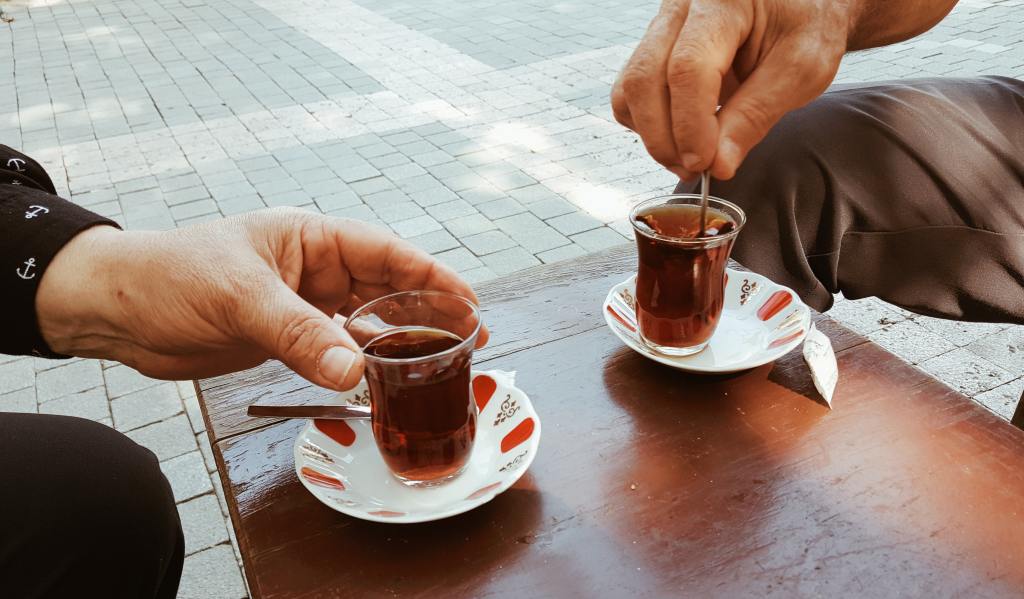
As we later made our way through the bazaar and then found our seats at the tea house, I was beginning to adjust somewhat to the constant feelings of living in an oven and clothing always soggy from sweat. I gratefully received a bottle of cold water alongside my scalding black chai. I chugged the water eagerly.
“Are you hot, my son?” asked a mustachioed older man, sitting across from me and smiling in his turban and flowy local robes.
“Yes, I’ve been told about the summer heat here, but now I see how true it is!” I responded, gulping.
“You know how we stay cool?” he asked me, raising his small steaming chai cup and saucer. “We drink this all day!” he said, laughing.
I looked at him, a little puzzled, wondering if he was joking or serious. He picked up on my expression and explained further.
“We drink the hot chai and it makes us sweat. And our sweat cools us down. That is how it works,” he said, seemingly satisfied that he had just handed down an important life lesson to this young foreigner.
I could tell he believed what he was telling me, but I wasn’t sure if I believed him or not. My love for local chai was intense, and so I was willing to drink it all year round, even in the fever heat of summer. But surely hot chai doesn’t actually cool you down in the desert. Maybe it was just a trick of the mind, a placebo of sorts that these desert men had learned to tell themselves in order to justify downing so many cups of sugary caffeinated goodness seasoned with cardamom and cinnamon. The logical thing to believe is that hot drinks raise your core body temperature and cold drinks cool it down. I left our interaction mostly sure that I was right and the locals mistaken. But a part of me has always wondered if there was something to what the old man was saying.
Then this week I came across an article in The Smithsonian that would make the old desert man crack a big smile, exposing all of the teeth he’s missing because of his chai habit. Turns out that a hot drink on a hot day really does cool you down. And this has now been scientifically verified with the help of a bunch of scientists and cyclists. Somehow, the cooling effect of the sweat produced by a hot drink on a hot dry day is actually greater than the warming effect the drink has on the body, making it a net win for a cooling effect. The article gets into the likely biological process for those interested.
So now I know. Hot drinks warm you up in the winter. They also cool you down in summer. How strange and wonderful. No wonder I like them so much.
There is one big caveat in all of this, however. In order for a hot drink to cool you down, you must be in an area of dry heat, not one of humidity. Since a humid environment prevents sweat from evaporating, the hot drink will actually raise your body temp, not decrease it. But as long as you are in some kind of desert or low-humidity setting (and able to sweat), the trick should work.
All of this reminded me of what a tricky thing it is to interact with local lore and tradition. By default, we want to dismiss local knowledge that seems bizarre to us as superstition or old wives tales. But quite often there is something to it after all. Not in every case, but often enough that we ought to reserve judgment on local claims until we’ve looked into them somewhat. As Tolkien wrote in The Lord of the Rings, “Pay heed to the tales of old wives. It may well be that they alone keep in memory what it was once needful for the wise to know.” Oral tradition should not be dismissed out of hand, simply because it initially strikes us as absurd.
A missionary friend in Cameroon shared with me this past week about a volcanic lake in that country. At some point in the 80s, large amounts of toxic gas were released from the lake, killing all who lived in the villages around its shores. However, all of those villages had been founded and populated by newcomers to the area. The long-time residents did not live close to the lake, since they had an oral tradition that it was spiritually deadly to dwell too close to the water. Apparently, this lake is prone to this kind of toxic gas release every 150 years or so, meaning that the indigenous villagers had an oral tradition that preserved a deadly historical event from the distant past, although it had become clothed in their animistic worldview.
I remember another story from my childhood in Melanesia, where a village pastor, eager to prove the local traditions wrong, had decided to cook and eat a bird locally believed to be poisonous and used in witchcraft. The pastor ate the bird – and almost died as a result. Turns out this black and orange bird is the only poisonous bird known in all of nature. Local oral tradition wins again.
Why do we so often assume that local tradition is untrustworthy and bogus? Because sometimes it really is, and it keeps locals in bondage to empty and dangerous lies. Consider the Middle Eastern and Central Asian belief in patrogenesis, the idea that offspring one hundred percent comes from the father, and the mother is merely a carrier, a vessel. All kinds of bad stuff have come from this cultural belief, including laws that disadvantage the mother when it comes to custody of her children – even if the man is abusive. Or, the cultural belief that the honor of the extended family is most dependent upon the sexual purity of the women in the household, resulting in honor killings that almost exclusively target erring female family members. In Melanesia, tribes until recently believed that if your enemy was strong in something, you could kill them and eat their corresponding body part for that ability, thereby getting stronger in that ability yourself. This local tradition led to widespread cannibalism and all of the dark effects associated with it.
However, what often happens is that Christians of the reformed camp approach culture with eyes only for these cultural lies. We often have a default posture of Christ-against-culture when it comes to local knowledge and traditions. We know that all cultures, like all people, are fallen and under the curse of sin. We know that this affects every aspect of a person, and every aspect of the culture – that total depravity is not just individual, but corporate as well. The mirror that once reflected the image of God so well has been shattered, and gross distortion has resulted. And yet a shattered mirror has not ceased reflecting entirely. No, if you lean in close and focus on small individual shards, a somewhat accurate, limited reflection can sometimes be found. The fact that the fall has damaged every aspect of a culture does not mean that the image of God is no longer present at all, shining out – sometimes dim, sometimes bright – through the distortion. Just as the restoration of the image of God in believers will not be perfected until the age to come, so the utter loss of that image in unbelievers and their cultures will not be complete until that same coming age.
This means that we cannot approach the culture of an unreached people group only prepared for the gospel to begin rejecting and discarding local beliefs and culture. We must be prepared for much of this, but not only this. We must also be ready to discover local beliefs and customs that fit quite well with a biblical worldview – that at times fit even better than those of our own culture. In these cases, the local cultural practice or belief is to be retained, but filled with a new motive, that of the glory of God and love for neighbor.
Few contemporary missionaries are at much risk of the kind of overt cultural pride present in the colonial era. In fact, we are more often at risk of the opposite, an unbiblical open denigration of our own cultures as we seek to embrace the local one. But pride is a slippery thing, and if our only setting is Christ-against-culture, then we will find ourselves prematurely scoffing at local wisdom that will eventually prove to be just that – wisdom. And scoffers don’t win trust. Those who sneer at local methods of chai drinking are less likely to find a hearing when it comes to the bigger questions of life and death and eternity.
Such is the challenge of engaging local lore and tradition. You may find lies straight from the pit of hell. Or, you may find truth that has been marvelously preserved, against all odds. We must learn to anticipate both and to humble ourselves when we get it wrong. We should listen carefully to the old men of the desert, ready both to learn and to stubbornly upend the traditions of ancestors when needed. We are tasked with this great untangling, with the laborious task of seeking to glue the shattered mirror back together. It will take a long time and countless conversations. And hopefully, lots of cups of chai. Even when it’s hot outside.
To support our family as we head back to the field, click here.
For my list of recommended books and travel gear, click here.
We had been living in Central Asia as a family for seven months. At last, I was hanging out regularly again with my dear friends from my gap year, Hama* and Tara*. This fun-loving couple had come to faith back in 2008 as we studied the book of Matthew, saw God miraculously answer prayer, and as they experienced God’s faithfulness during their six month ostracism from their family. When their son was born at the end of that year, they had named him Memory, so that they would never forget all that God had done for them.
I had done my best to try to hand off my relationship with them to others when I had returned to the States for seven years, but this can be a tricky thing. While one believing European friend stayed close with Tara, no one had been able to regular invest in discipling this couple, in spite of the fact that a believing husband and wife are a rare and wonderful thing in a people group where nine out of ten believers are single men. This lack of steady discipleship meant they had never been baptized, something I was eager for them to pursue.
Somehow, on that summer evening in their apartment the topic of baptism came up. As I shared how important it is, and showed them passages like Matthew 28 and Romans 6, Hama and Tara were suddenly convinced.
“Let’s do it then!” said Hama, “How about tomorrow?” Tara was beaming as well.
I was a bit taken aback by this spontaneous decision, and observed that when it comes to areas of difficult obedience, our people group have an interesting long-term resistance that suddenly breaks into a desire for immediate action – which often catches us westerners a little unprepared. Given all of the hesitancy around baptism and its costs in an Islamic society, my sense was to try to help Hama and Tara move fast, now that they were at last ready to move. I did not want the spiritual clarity and excitement for obedience they were currently experiencing to fade away again. Plus, this was a long time coming, seven years without taking that first crucial step of discipleship. This was an answer to prayer.
“Can we do it at your house?” they asked.
“Well,” I replied, “I’d have to figure some things out for that to work. Are you sure you don’t want to drive to a lake or river? The weather is nice and hot.”
“No, somewhere like your house makes sense. It would be private and clean. And we could do it fast, without having to plan a whole picnic.”
Our locals take their picnics very seriously. And no baptism outing to a lake or river would be permitted without some kind of a half day or full day picnic program also happening, which takes a lot of work and planning. There are picnic sites to argue over, food responsibilities to be debated, and logistics to be hammered out. Knowing how exhausting even just planning these local picnics could be, and that it was still too early for the cooler autumn picnic weather, I was happy to agree to something simpler and within the city. Plus, at that point we didn’t have a natural location that we knew could work well for baptism, and this would take some research.
“Right, then,” I continued, wanting to make sure they were OK with some other believers (my teammates) being present, “Let me see if I can make it work for tomorrow evening, and connect with some of my colleagues that you know. I’ll text you in the morning if it will work.”
This plan agreed to, I left Hama and Tara’s apartment full of excitement. My dear friends were ready to follow Jesus in costly obedience. And our team would get to experience their first baptisms with locals. I couldn’t wait to tell them. But first, I had to figure out if we could even pull this off in the living room of our second floor duplex home.
I had seen inflatable kiddie pools for sale on the sides of the road in recent weeks. I had also seen cheap hand-pumped siphons for sale in most neighborhood stores. A plan began to come together. I would buy a kiddie pool, inflate it in our spacious living room, fill it up with water from the porch hose, then afterward be able to drain it out to the porch drain with that same house and a siphon. We had no bathtub, something that is quite rare in our area, and I had read that some Muslim cultures have negative reactions to something representing cleanliness, baptism, happening in an area of the house that also has a toilet, or a squatty potty. No, I thought to myself, to get both privacy and respectability something like a kiddie pool is the way to go.
The next morning I embarked on a mission to find my needed supplies. Not too far from my house I bought a large inflatable rectangular pool, long enough for an adult to lay down in and deep enough to make sure they could get fully immersed, if they began by sitting down. I took the pool home and used my wife’s hair dryer to inflate it. So far so good. It fit perfectly in our living room alcove, backed by windows that looked out on the southern mountain range. It felt like it a took a very long time to fill the pool up with the slow stream of water from the porch hose, and it was early afternoon before I had achieved proof of concept. But there it was, a functional baptismal in my living room. This could actually work.
Now it was time to share the good news with the team. I sent them a picture of the pool and a pecked out a message with my thumbs.
“Last night Hama and Tara told me they are finally ready to be baptized! And they asked if we could do it at my house. I wasn’t sure if it would work, so I got a pool to test it out. But look, it works, and they said they’d be ready as soon as tonight! What do you think?”
The message I got from our team leader was not at all what I was expecting.
“We need to talk. This is not happening. I’m coming over.”
I was stunned. What was going on? Where did this kind of response come from? Clearly I was missing something big.
My team leader came over to our place and we proceeded to have a pretty tense conversation, one where I was scrambling to figure out where I had gone wrong. I had clearly stepped in something. It had all seemed so simple to me. We were there to make disciples, baptize them, and form churches in a city where there was no healthy church. What was the holdup? Why the resistance?
It quickly became clear that I had to contact Hama and Tara and tell them that we couldn’t move forward with their baptism. Our team, for some reason, was not on board. Over the proceeding weeks I began to figure out what gone wrong. The issues really boiled down to a failure of contextualization, both me toward my team and my team toward our local context. By contextualization here I mean using methods that are both faithful and appropriate for a given context and culture, taking universal biblical principles and implementing them skillfully with particular people and in particular places.
My team had responded to me so negatively because I had failed to operate within our culture as a team and organization, which was still very new to me. When I had been in the same city on my gap year, I had served with a different organization, and on a very disjointed team where we more-or-less coordinated on platform projects, but had a lot of autonomy as far as ministry decisions. But the new team and organization I was with was very different. Leadership of the team and strategy in church-planting were taken much more seriously. Ministry decisions were not rushed or autonomous, but approved by the team leader and hammered out over a long period of (hopefully) consensus-building conversations.
Comparing things to my previous season serving as a church elder in the States, I remembered once hearing the principle of “never surprise your fellow elders.” But this is exactly what I had done. I had very much surprised my teammates and my team leader, and not in a good way. In fact, they felt that the timing of my communication, after having set everything up, was somewhat manipulative, put them in a bind, and was at the very least out of order. They were stunned that I would proceed in this manner. For my part, I was struggling to understand why this kind of decision would be controversial at all.
Turns out our team had been at an impasse regarding local baptisms for a year or more before we had even arrived. A few single men had come to faith and desired baptism, but the team couldn’t agree on whether or not it was appropriate to baptize these men if they were not yet ready to tell their immediate families about their faith. Nor could the team decide on how to baptize them into a church if no healthy local church yet existed. They were also committed to westerners not doing the baptisms. Tensions had run very high around these conversations, unbeknownst to us. And into the simmering tension surrounding these ongoing debates, I, the new guy, had quite suddenly inserted myself and Hama and Tara.
Understanding this context wisely, both of team culture and of team conflict, should have led to a very different process as far as how I approached the whole baptism conversation. But in my excitement for my local friends, I had failed to contextualize well toward my team.
But there was an unintentional upside to my mistakes. I had forced the conversation. Two local believers were eager and ready to go under the water. A baptismal kiddie pool was sitting there in my living room. Nothing was stopping us from moving forward other than our own inability to agree with one another as a team. And so we found ourselves in the unfortunate position of delaying locals from obeying Jesus until we could get our stuff together. Though sometimes necessary, this is the kind of place any missionary should want to avoid. When the locals are ready to obey Jesus, we need to make sure that we are ready to facilitate this – though this is often easier said than done.
But the team, still all pretty new to Central Asia, had also failed to contextualize well to our specific situation.
The team was committed to no missionaries doing baptisms, because missionaries in Somalia had found this could result in baptisms performed by locals being viewed as second-rate by local believers. And missionaries in Latin America had found that barring foreigners from doing baptisms was an important principle in what is called shadow-pastoring. In shadow-pastoring, the missionary is never seen actually leading, but is always coaching a local leader from the background. But we weren’t in Somalia or Latin America. We were our unique city in Central Asia – which had no mature local believers able to do these baptisms. And where we had no local data yet to suggest that locals would elevate baptisms by foreigners as somehow superior, or that they would respond negatively to a foreigner directly modeling local church leadership in this way.
The team was also committed to baptism being done into the local church, a sound biblical principle. But once again, in our particular unreached context we had no local church for Hama and Tara to be baptized into. They would have to be the first local believers that would become the church for others to be baptized into it in the future.
Finally, the team was committed to baptisms not happening in kiddie pools in our homes, but in more idyllic natural settings. This final commitment seemed to be more of a personal preference or idealism, one which curiously went directly against the desires of the actual local believers we were working with. The sense among the team was really that it would be a bit of a tacky precedent to set.
In all of these things, it was not merely the biblical principles, but also their foreign applications and expressions that were being asked of our local friends. In this sense, things were backwards. Yes, good contextualization should be informed by how the global and historical church has expressed biblical principles, but it must also ask the important questions of what certain choices and expressions mean in their unique, local focus culture and people group. As far too often happens, our team was taking expressions and methodologies developed elsewhere, and imposing them upon our locals as some kind of inflexible missiological law. Hama and Tara were excited about being baptized in a kiddie pool, by me, in my living room. We were saying no to this. Why? Because of Somalia, Latin America, and our own personal baggage with indoor baptismals. Just as I was failing to contextualize to my team, my team was failing to contextualize to our local believers.
Biblically, there is nothing wrong with a foreign missionary baptizing local believers in a kiddie pool in their living room, in a private setting with a small crowd of believing witnesses. There is nothing wrong with those who are the first baptized becoming the church that others will be baptized into because no church yet exists. In fact, there is no way around this latter reality when planting the first church in what is sometimes called a zero-to-one context. But methodological commitments were prematurely denying us some of our biblical options – and doing this without any local evidence for it.
Thankfully, the ensuing conversations as a team were fruitful, and we were able to find a good compromise for Hama and Tara. The team had come around to us baptizing Hama, as long as he joined us to baptize his wife afterward. But the kiddie pool in the living room was still something they couldn’t bring themselves to agree to. It just felt tacky, and it would take many more local believers insisting that it was fine and respectable for it to become an option that all of us were OK with. Hama and Tara humbly decided to go ahead and plan a half-day picnic and for our sake to be baptized in a slow-moving greenish stream.
“The Bible says I need to go under the water, but does it say it has to be such dirty water?” Hama joked with me at one point as we surveyed the slime at the edge of the stream. I smiled at him sympathetically, wishing I could tell him about all the dynamics that had led us finally to be permitted to dunk them in that lazy stream in late summer.
As for the kiddie pool, it remained filled up in our living room for the next several weeks. “Might as well let the kids enjoy it!” I said to my wife. Plus, having the kids use it actually helped us deflect our language tutor’s repeated questions as to why exactly we had a pool set up in our living room (The picture at the top of this article is of two of our kiddos very much enjoying a splash on a summer afternoon with no electricity).
Though it quickly developed leaks, we actually got to use the same controversial kiddie pool for several baptisms the following year, one in a local’s courtyard and one in a local’s garage. It was still too soon for the whole team to be comfortable doing it in our houses. But by the end of our first term, Darius* was being baptized in a kiddie pool in our team leader’s kitchen, dunked by a local on one side and a foreigner on the other, and into what was now a fledgling local church. Considering the level of tension around baptism a few years earlier, the symbolism of this event was not lost on me.
What had changed? I had learned how to contextualize to our team, and all of us on the team had learned how to better contextualize to the locals. God had answered a lot of prayer, and all of us had shifted significantly in how we understood what methods were both biblically faithful and locally appropriate. We were more committed than ever to biblical principles, but some very good adjusting had taken place as we sought to wisely express them for the unique people and culture around us. We were still informed by missiology from the outside, but it had become the servant to local contextualization, not the law.
Study your unique team and leadership. Study your unique local friends and their culture. You’ll likely find you have to make some significant adjustments in your assumptions, approaches, and your methods. But this is what good missions work looks like. One hand holding on tightly to fixed, unchanging biblical principles. The other hand with a looser grip, tweaking, prodding, and poking at your methods, striving for the best way to apply and express those principles in a way that is faithful, wise, clear, and compelling.
“Don’t laugh too much at me!” I have sometimes warned our team overseas, while chuckling with them about yet another piece of American culture I’ve somehow never known until that point. “I am a vision of your children in the future! Teach them well… or else!” At this point our teammates who are parents usually laugh a little less heartily and shoot nervous glances at their kids, knowing that what I am saying is only too true.
When you are raised between two cultures – your parents’ and the foreign country’s where you are living – there are bound to be important things that you miss. Returning to your family’s homeland can be fun, but it’s also always loaded with potentially embarrassing exposure of these inevitable knowledge gaps. A third-culture kid (TCK) must do his best to plug these gaps in ways that lead to as little red-facedness as possible. Learning to laugh at yourself is key, the only real path for survival.
When I was sixteen I believed that spaghetti was grown on large watery farms, similar to rice. Thankfully, this emerged around my family’s dinner table, and not while on a youth group outing on a furlough. As I recall, it took quite some time for my family to convince me that spaghetti was indeed made in factories, and not in some kind of noodle paddy.
Then there was the time as a new college freshman where I ate at a Subway for the first time, freezing like a deer in the headlights when the man behind the counter asked me what kind of bread I wanted for my sandwich. And it wasn’t just the bread, but the meat, the cheese, everything. Even though he was the one who worked at the restaurant, he demanded that I choose item after item for my sandwich. A snickering classmate bailed me out of that one.
Then later in college, I joked around with my fiance’s dad that we might need a shotgun wedding – not actually knowing what a shotgun wedding was for. “What?!” I remember saying, mortified. “That doesn’t just mean like a quick wedding?”
Be kind to those TCKs that you know. It’s a steep learning curve. Culture is usually learned by absorbing it over many years, in a kind of relational osmosis. But when you have been living in another culture, you end up absorbing different things. Sure, those things are very important for that culture, but they don’t always equip you to navigate the cultural waters of the passport country.
To this day, I rely heavily on my patient wife to debrief social situations. “Wait, do we say that in America?” “Do you think I used that phrase right? They looked at me a little funny.” But now that we’ve been seven years overseas – and are now heavily shaped by Central Asian culture – even she’s starting to experience similar dynamics. Admittedly, I don’t always successfully hide my joy at now having a companion in my cultural perplexity.
One more story from college stands out as an illustration how local use of vocab can lead to profound, and humorous, confusion for a TCK who is scrambling to try to figure things out. I offer it as a lesson to all those parents and “aunts and uncles” of TCKs out there. You’ve got quite the job on your hands. To any TCKs out there, may God help you.
For a couple of years I worked doing furniture delivery two days a week. It was a great job for a college student. I could take classes the other three days in the week, and work long days twice a week for good pay.
But it was hard work, arguably the most physically demanding job I’ve ever had. Lugging reclining sofas or king mattresses up multiple stories or jamming them through narrow basement doors is no joke. Most customers failed to measure their door frames and hallways to make sure the new furniture they had bought would actually fit. The two of us manning the delivery truck would do our best to put up with customers’ foibles, but sometimes things would tend to build up.
One day my boss and I were sitting in the truck on a nice suburban street. He was fuming. We had a heavy day of deliveries, all carefully planned out, and the next customer was not home when he said he would be. I could see my boss’s jaw clenching as he sat and stewed, periodically spitting his chewing tobacco juice into a bottle unfortunately placed on the console between us.
At last, the customer’s car pulled up behind us. It was a police car.
“You go out and talk to him,” my boss said, staring straight ahead. “I need a few minutes to cool down.”
“Uh… OK,” I said, putting on my smelly rubber work gloves.
As I stepped down from the cab of the box truck, the customer walked toward me. He was a very tall, well-built, African American man, probably in his forties. He was wearing his police uniform, but even without this, he had a commanding, stern presence. “Like a drill seargant,” I thought to myself.
“Hi!” I ventured, showing some friendliness that I hoped would counteract my boss’s angry words earlier on the phone, “We’ve got your furniture. You can show me where you’d like us to take it.”
The officer did not acknowledge my greeting. Instead, he walked up, put his hands on his hips, and stared down at me. I waited, unsure of what was coming next.
“D’yall have a problem with booties?” he asked.
I stared at the officer, not understanding at all why that particular combination of words had just come out of his mouth.
“Um… sorry… what?” Surely I had misheard something.
“D’yall have a problem with booties?” he asked again, stern and commanding.
I continued staring at him, confused. An internal monologue started running through my brain, flashing through in a matter of seconds. It went something like this,
“Once again, an American has completely ignored giving a greeting, which always throws me off. No matter. Time to figure out what’s going on. What is this? Some kind of attempt to get a laugh? Some weird way to connect? There’s no hint of a smile on the officer’s chiseled face. No, he isn’t joking, unless he has an amazing deadpan. What am I missing? Something inside me is starting to panic. There’s got to be some meaning to his strange question I’m missing. I mean, I know that booty can be used for pirates, and well, for human anatomy, but neither meaning is fitting this context at all. Maybe some kind of cultural reference? American culture? Black culture? Police culture? Furniture delivery culture? Is there even such a thing? You’re running out of time! Oh look. There’s his gun.”
The officer had cocked his head at me now, still staring.
“He’s on to me,” the internal dialogue continued, “He knows I’m a fraud, not really from around here at all. Booties? Why booties? Why now? Someone help! I’m just a kid from Melanesia. How did I end up here, on this suburban street, trapped between this imposing officer and an angry boss, trying to untangle the semantic range of the word booty?”
I simply had nothing to say in return. My brain had run its form and meaning programs through all the archives and had come back with absolutely zero results. So I stood there, mouth half open, having no idea what to do next.
“C’mere,” said the officer in his booming voice, shaking his head at me, and motioning for me to follow him into his garage.
We walked into the garage and he stooped down to pick up a small box. He pulled something out of it. It was some kind of opaque white fabric thing, which he put on one of his hands and stretched open with his fingers.
“Booties. For your feet.” He said to me, measured and slow, as if bearing with a very slow student.
Suddenly it dawned on me. Booties must be some kind of fabric thing you put over your shoes in order to protect the carpet when walking in and out. Booties as in boots! Things for your boots. A rush of relief washed over me. Form and meaning had come together at last.
“Right! Booties. For our feet. Sure. That’s, uh, that’s fine,” I said, trying to smile.
The officer was still looking at me, seeming concerned. Thankfully my boss just then walked into the garage, his face back to a normal shade of pink. He grabbed a pair of booties from the officer, apparently knowing full well what they were, and went inside to see where the furniture was to be placed.
I was left alone in the garage with my thoughts. “Man, how have I never heard about booties? Oh well,” I shrugged, “TCK issues.” And I went to begin unloading the truck.
It was our first trip to a village since our family had moved to Central Asia. One of my English students – a vivacious and persistent fellow named Rahim* – had convinced us to come stay with his family for several nights in the village of Underhill. Our hope in going was to learn more about the language and culture through this immersion experience, and to try to share some gospel truth. Rahim was probably hoping to bring honor to his family and himself by hosting us, since everyone in the village would know that they had Americans staying with them, and his family would get to show us off.
This is not to say that any motivation for honor-accrual made them poor hosts. On the contrary, the locals in our area of Central Asia view guests as a gift from God, and elaborate and generous hospitality as the primary way to gain any honor from a hosting situation. So geese were slaughtered, the chai flowed, the TVs were left constantly on, and I was invited to go fishing with the men on the lake at 5 a.m.
Apparently the men of the family liked to fish either with small explosives or by using a car battery and cables to electrocute any fish close to the boat. Both methods sounded slightly dangerous, but worth observing at least, so I actually woke up at 5 – a very rare occurrence for a night owl like myself. Alas, none of the men of the household woke up with me, so I eventually went back to sleep.
“I called the fish this morning,” Rahim later told me at breakfast, cracking a wry smile, “They said they were still asleep, so I decided to stay in bed also.”
To make up for not going fishing, Rahim offered to give me a walking tour of the village later that morning. The village of Underhill was a newer village in a very ancient area. The hill that overshadowed it and gave it its name was crowned with the ruins of an ancient Zoroastrian fortress. The valley behind it contained villages where not only Zoroastrians and Muslims had lived, but also Jews and Christians in centuries past. Like many areas of Central Asia, it was now one hundred percent Muslim, and proudly so.
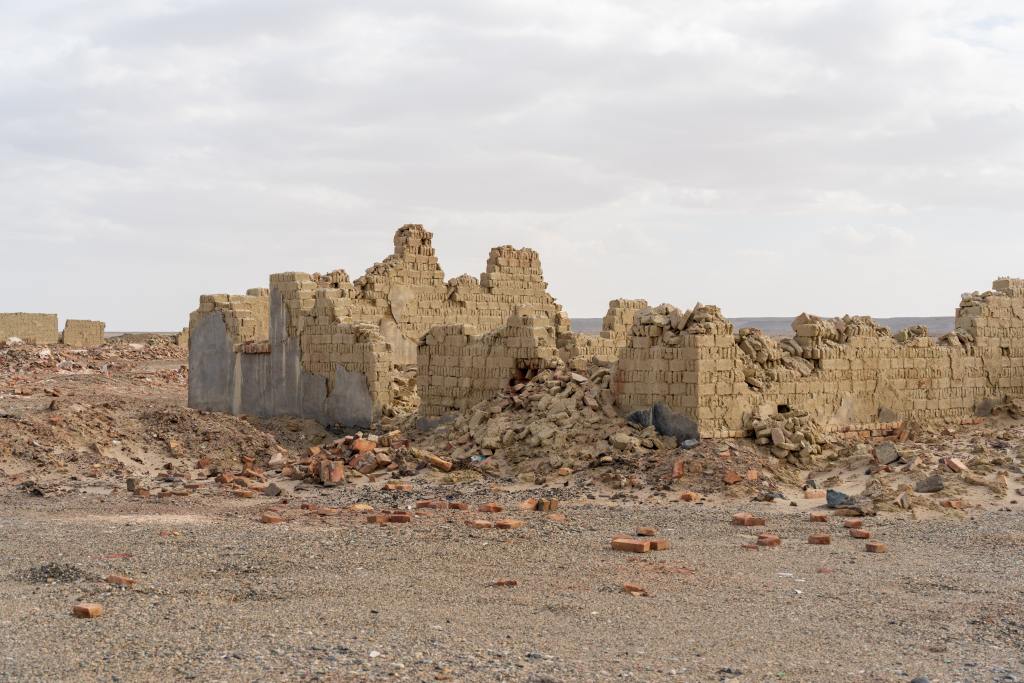
Underhill village had been built a couple decades previous, as families were resettled whose original homes had been destroyed by a genocidal dictator. Surrounding the village and in the pastures where the goats and sheep grazed, broken down stone outlines of homes could be easily seen scattered here and there, sad reminders of the terrible things that had taken place when Rahim’s generation were still toddlers.
As we walked in the spring sunshine, I shared with Rahim that I was trying to learn the words in the local language that would help me explain the big story of my faith. I asked if I could run them by him to see if it made sense. Rahim, an observant Muslim who was not at all shy to discuss spiritual things, eagerly agreed.
So I started with the word I had recently learned for creation, and explained that we believed that God had created the universe and made it very good. So far, so good. Rahim agreed with both the content I was sharing as well as the word I used to summarize it. Next, I shared the word I had learned for fall, telling Rahim that our first parents had sinned and had broken both our our good human natures and our relationship with God. Rahim agreed with the word I used, but it was clear he wasn’t very familiar with what I was saying about the devastating consequences of sin for humanity. Islam believes in a watered down concept of sin where it is more like an external mistake, and not an internal corruption. Because of this, they believe that humans are still freely capable to choose good anytime they want to. Given this difference in theology, I wasn’t too surprised that Rahim’s brow furrowed as I tried to explain our doctrine of the fall.
We stepped over some goat droppings and passed some chewing cows on our left. I could sense that Rahim was good with me continuing to share, so I told him the word I had learned for redemption, and explained the good news to him that Jesus is God-become-man who made the perfect sacrifice for our sins and rose from the dead to break the power of death. Rahim listened respectfully, surprisingly not pushing back with the normal objection that Muslims have – such as the belief that Jesus never really died on the cross, because God would never allow his prophet to be shamed like that.
I got to the last word, restoration, as we turned a corner and started going uphill again. I explained how the Bible teaches that when Jesus returns evil will be finally defeated, all who believe in him will be resurrected with new spiritual bodies, and that even the heavens and the earth will be resurrected and new. Heaven and earth will be completely reconciled. Rahim seemed to be thinking hard about what I was saying.
“You’ve got the wrong word for that one,” he said.
I was surprised, the word I had learned seemed a pretty straight forward translation of “to make new again,” a good way, I thought, to communicate restoration.
“We use that word for when someone is renovating their house,” Rahim continued. “You know, new paint, new windows, new drop ceilings. No, there’s another word that I think would fit better, one we use for rebuilding a house that has been completely destroyed, like these houses here.”
Rahim motioned off to his left where more crumbling stone walls rose up out of the bright green grass.
“If you were going to make these houses new, you need a stronger word. One that means a complete restoration after destruction. At least to me that sounds a lot closer to what you are describing.”
Rahim proceeded to teach me the appropriate word, one which carries the sense of restoration from the ruins, rather than mere renovation. As I later checked these terms with local believers, they agreed with Rahim. I’ve used the term he taught me ever since when explaining the big story of the Bible in its four parts of Creation, Fall, Redemption, and Restoration.
Rahim was more correct than he knew. Renovation of humanity, of this world, would never be enough. Our spiritual and material substance needs a lot more than a fresh coat of paint and some new shiny light fixtures. We’ve got problems deep down in the foundation, in the plumbing, in the wiring, and in the walls and beams. Our metaphorical structure has been condemned, and rightly so. No, to live in a world with no more suffering, sin, or death, we need a complete rebuilding from the ground up. Who could ever afford such a rebuilding? The cost would be staggering.
We walked back to Rahim’s house and my light-hearted friend was a lot quieter than usual. It was probably the first time in his life he had ever heard of the need for a costly redemption and restoration of his own heart – and of the entire universe. I prayed that this new message would go deep within, and puncture the whitewashed Islamic veneer of goodness that he was trusting in.
To this day we still don’t know of any believers in Underhill village, though there are a few Bibles there now. Bibles, and memories of many conversations – conversations that we hope will long linger as witnesses, like those bombed out shells of ruined homes. Renovation is not enough. We need restoration.
The words were spoken in a soft voice. The speaker, a silver-haired older man with deep blue eyes, sat just as calm and hospitable as ever in his armchair as he spoke them. But the effect of these words was like a bomb – some kind of vacuum grenade that sucked all the noise out of the room and shut the mouths of a room-full of arguing twenty-somethings.
Well, not all the mouths were shut. Barham’s* mouth was hanging open, cut off in angry mid-sentence. The change coming over him was quite remarkable. His red face was returning to his natural Central Asian olive tone, the deep creases in his forehead were relaxing, and a softness seemed to return to his eyes and even his entire posture.
Somehow, our older host had known just the right words to say to defuse our explosive situation. The words he uttered cut to Barham’s heart, tapping deeply into Central Asian values of honoring the elderly and being a gracious guest. I sat back and exhaled slowly. Our host, pastor Dave*, had once again proven the power of a wise and soft tongue.
Barham, a new believer and a refugee, had moved in with his girlfriend, an American who was also professing to be a new believer. As their friend and community group leader, I had called them to repent and stop living together. When this counsel was rebuffed, we had brought a couple other believers into the situation. This only led to more angry opposition. Finally, we informed them we would be bringing their situation to the whole community group as a step on the way to informing the entire church. Not known to shy away from a fight, Barham and his girlfriend had decided to come to the meeting where we would inform the group in order to defend themselves and to tell us off for our self-righteousness.
In this season our community group was a motley crew of young Bible college students, newlyweds, internationals, and new believers. We were all very young and things were often very messy. We jokingly nicknamed our group Corinth because of the way the Spirit was working powerfully to save and sanctify even as sin messes spilled out on the regular, setting things on fire. This group was where I first cut my teeth in leadership in our sending church, and I was often overwhelmed and very much in over my head.
Wisely, each of the community groups was overseen by one of the elders of the church, who also served as a mentor to the group leader. These pastors would sometimes attend the groups themselves, often rotating between the several they oversaw. Dave was our appointed elder, but every week he was also at our group meetings (perhaps it was clear that we really needed this), though he seldom spoke during the meeting itself. He seemed content to let me do most of the leading, while he and his wife brought a welcome measure of age and gentle wisdom to our very young group.
The day that Barham and his girlfriend showed up to challenge us over step 2.5 of the Matthew 18 discipline process, we were meeting at Dave’s house. This proved to be providential, setting up Dave to remind Barham of this crucial point after the conversation had gotten out of hand. Earlier, I had done my best to handle the awkwardness of Barham and his girlfriend showing up and had also tried hard to be clear, kind, and firm as we responded to their accusations. But things had escalated, and it had practically become a shouting match as I and other believers present tried to speak sense to our friends who were running headlong into sin and ignoring all counsel.
But Dave’s wise word had evaporated all the anger in the room, and opened the door for spiritual sense to prevail. Barham hadn’t been willing to listen to us, his believing peers. But he softened under the gaze and the truth spoken lovingly by Dave, his fatherly host. That day proved to be a turning point, and Barham and his girlfriend did end up living separately again until they were eventually married.
This wasn’t the first or the last time that I saw pastor Dave drop a wisdom bomb, though it was one of the most dramatic. I had begun to see this also happen in elders meetings, where a group of us leaders-in-training were permitted to attend and observe. While other personalities were stronger or more charismatic, the room hushed every time Dave had something to say. There seemed to be several reasons for this. First, he didn’t speak up that often, so when he did, everyone was curious to hear what he was thinking. Second, he was the eldest of the elders present, having spent many years ministering to rural Kentucky churches, having experienced the death of his first wife, and living now with the heartbreak of adult children who were not believers. He had a wealth of experience gained through sorrow, earned on a long road of faithful service. And finally, when he did speak, the presence of spiritual wisdom in his words was unmistakable. Younger men like us who were mainly drawn to the words of the more dynamic leaders in the room watched and learned as those same dynamic men hung on every quiet thing that Dave had to say.
I remember a small prayer meeting from around this time, where Dave was giving a brief encouragement to the ten or so people present. In a season where I was tempted to equate busyness with faithfulness, he told us, “Our Lord led a busy life, but he didn’t have a busy heart… he didn’t have a busy heart.” As Dave paused thoughtfully, I remember wrestling with this small, yet weighty comment, knowing that I for sure had a busy heart, but realizing that my Lord indeed did not. Dave didn’t seem to have a busy heart either.
Proverbs 25:15 says, “With patience a ruler may be persuaded, and a soft tongue will break a bone.” In other words, do not be deceived, there is tremendous strength in gentle and wise words spoken at the right time. When this takes place, a soft tongue can break even hardest bone – or the hardest heart. I am reminded of Jesus’ gentle words to the Samaritan woman in John 4:17-18, “You are right in saying, ‘I have no husband’; for you have had five husbands, and the one you now have is not your husband. What you have said is true.” These gentle words of the Messiah proved extremely powerful – they brought about not only this woman’s repentance, but the awakening of her village also through her.
I have seen this proverb lived out among very few men. But there are some, like Dave, who know and model the power of a gentle tongue. That tense evening with Barham in Dave’s living room, and every time I have seen him use it since, I have longed to someday have a tongue like that, to be able to break the hard and brittle with a soft word of truth fitly spoken. Like some kind of struggling apprentice trying to learn a new skill, I have tried my hand at it over the years. It’s not usually had the same effect. But there are times where it has seemed to at least not make things worse, and a very few times where someone’s entire demeanor has changed because I responded with gentleness rather than matching their combativeness.
It’s easy to feel like men like Dave are a different breed, some higher rank of Christian who have found the secret skills of wisdom. But then I remember that all wisdom comes from the same source, and that it is not selectively and secretly handed out to a special class of Christian. No, wisdom stands on the street corners, inviting all who would to come and learn from her (Prov 1:20). It is given generously by our God to all who are in need of it and dare to ask again for more of it (James 1:5). There is a trustworthy path to one day having a gentle tongue that can break a bone. And that is the path of asking our Father for wisdom again and again and again – and learning to watch those to whom the gift has already been given in abundance.
Yes, there is power in dynamic, charismatic speech. The Spirit does gift some in this way. But let us not forget the power of a gentle tongue, also gifted by the same Spirit of wisdom. Let us lean in and seek to learn when its softness silences a room and pierces hard hearts. When we are in its house, let us put our hands over our hasty mouths. For there is a power in a gentle tongue that is often overlooked, but is not to be underestimated.
Many missionaries experience the honor of being renamed by those in their host culture. This is often a kind act of respect and acceptance on the part of the locals. And, depending on the name itself, it can be a gift the missionary holds onto for years to come.
It’s a peculiar thing, the way we humans rename one another. The name itself is often a reflection of some characteristic already present in the person, although naming can also be reflective of the giver, where they project their hopes onto the recipient in the form of a new name. I’m struck by how much mileage these names often get, sometimes becoming a key part of our identity even when the name emerged as a nickname in jest.
During our local trade language class in high school, we were amused one day by some of the older obscure terms we were learning, such as the word for fine hair on plants, mosong. One of the boys in our class, named Ryan, had short, fine, spiky blonde hair both on the top of his head and poking out of his chin. Someone during that class period saw the correlation and dubbed him Mosong. We all (including Ryan, a good sport) laughed at how well the name fit, and it stuck. By the end of high school, no one called him Ryan anymore. He had become Mosong. Now almost two decades later, I would probably still call him Mosong if I saw him again.
This past week as we marked the anniversary of my dad’s death, my mom reminded my brothers and me about the tribal names we were given during our first term in Melanesia. She remarked that they were peculiarly well-given, still seeming to reflect what we are like even decades later. The names were given by new believers in remote village areas where my parents served, my dad providing interim leadership for small congregations while local pastors were being trained up and my mom teaching women and literacy.
My dad was named Kamtai, which means thunder. This was fitting, as he was bold and strong, a former marine and natural leader. My oldest brother was named Kampok, which means lightning. This was because everywhere my dad went, my brother went also – just as lightning and thunder always come in a pair. The middle brother who was always climbing trees was named Kamp, which means cuscus. For those not versed in obscure Melanesian marsupials, a cuscus is basically a cute jungle possum of sorts that is an expert climber. My name was Kilmanae, which translates as parrot. This is because when I was a child I did not have a blog, so all my ruminations about the world around me came out verbally – apparently striking a strong resemblance to a chattering bird. I’ve currently got a four-year-old of my own who could be given the same name. Some days there is an astounding stream of words that comes unceasingly out of that boy’s mouth.
My mom was given a name that she was initially not very excited about: Dogor, which means cicada. Cicadas are big ugly flying bugs with beady eyes and large claws that leave their larval exoskeletons hanging all over jungle tree trunks like little brown insect zombies. They shriek/sing in unison throughout the day, their loud “REEEEEEEE…. REEEEEEEE” filling many of my childhood memories. Curious and a little disappointed with this name, my mom asked her friend why she had chosen to name her after a bug. “Because you brought the light,” she responded, “just as cicadas sing and bring the sunrise.” After that, my mom was pretty happy with her tribal name.
These names still describe us well. My mom continues to bring the light, serving in counseling and cross-cultural roles here in the US. My oldest brother has always had a bold leader side to him, which can’t help but echo our dad. The middle brother has always been good with tactile work, whether climbing trees, fixing up cars, or remodeling houses. As for me, I still love good conversation. Tonight I’ll be getting together with some Central Asian friends just to enjoy talking with one another while sipping on some tea. While I may not be quite the verbalizer that I used to be, the flow of ideas and words these days comes out through the keyboard. The parrot has learned to write.
Of course, giving new names is quite a biblical concept. God renames Abram as Abraham, Sarai as Sarah, and Jacob as Israel. God promises to give Israel a new name in Isaiah 62:2, on the day of her salvation. Simon is renamed Peter, though Saul is not renamed Paul (this was just his parallel Greek name). Others like Joseph also get a new name tied to their new identity that sticks: Barnabus, Son of Encouragement. And of course in Revelation 2:17 Jesus promises a new name to every believer who conquers, written on a white stone.
Our names given by wise tribal believers have proven to be strangely accurate over the decades. Even nicknames like Mosong have power. I can’t wait to know what meaning will be reflected by our new names given in eternity. Undoubtedly they will reflect us and shape us uniquely as no other name has. On that day we’ll be the same, and yet we’ll also be different – like a cicada that has shed the crawling exoskeleton of its youth, and now can fly. Our new names will surely be a part of this, somehow strangely familiar, somehow wonderfully new.
Several years ago we found ourselves on vacation in Istanbul, Turkey. I have always loved Istanbul, the city that spans two continents and is overflowing with history, culture, kabab, and – crucially – very good coffee. Very few places in the world feel so Western and so Eastern at the same time, depending on which direction you are coming from.
For some reason I was on my own that sunny spring morning walking through the hip neighborhood of Kadiköy, a colorful part of Istanbul full of little cafes, restaurants, and shops. I was on the hunt for a coffee shop that had come highly recommended from a friend who knew way more about coffee than I did. I followed google maps to the small intersection where the coffee shop was supposed to be. The square was paved with grey flagstones, with a small metal statue of a crocodile in the center. Most of the traffic through it was shoppers on foot, with the occasional cart or miniature van.
I didn’t see the coffee shop, so I double-checked the map. I was in the right spot. Maybe it had closed? Eventually I glanced up and realized that the coffee shop was a second floor establishment, perched above a cell phone accessories store, with a balcony that looked down on the square. I ambled over to the cell phone store and found the narrow staircase tucked beside it that led up to the cafe.
Once there, I was convinced by the kind barista to try a Japanese cold brew. It was the first time I had ever had one of these beverages. During hot summer visits to Istanbul I had already come to appreciate Istanbul baristas and their cold brew skills. I was on vacation, after all. Why not try a Japanese cold brew while in Turkey, made with beans from Ethiopia? I knew that once we returned to our region of Central Asia, I’d be back to only being able to get coffee that sometimes tastes of moldy dirt and often hits the palate like a bitter slap to the face.
As it would take a few minutes to brew, the barista encouraged me to go and find a spot on the sunny balcony. I sat down at the counter seating right on the edge of the balcony, got out my Bible and journal, and observed the square down below. I noticed a strip of white-grey marble running down the center of the street and found myself reading a curious name carved into it, Khalkedon. The name seemed familiar to me, bearing a striking resemblance to what I knew as Chalcedon, the location of the great church council of 451, where the ancient church hammered out how to articulate the nature of Christ. Surely, this wasn’t where that took place, was it? My tourist mobile data was acting up, but once I got it working again I looked it up. Sure enough, Chalcedon used to be a village outside of Constantinople, now Istanbul, and was eventually absorbed by the city, now forming a part of the Kadiköy neighborhood. This was indeed the location of one of the most important councils in Christian history.
I scanned the square for any kind of historical marker or monument that might alert passersby to this hugely significant history. I didn’t see anything. The crocodile statue, while a decent piece of artwork, did not seem to have any connection to christology or creeds. The businesses around the square and the people shopping there didn’t seem to show any awareness of this history either. This made sense, since Istanbul is an overwhelmingly Islamic city now. But still, surely they must know something about it. I decided to put the barista to the test. After all, he did work in Chalcedon.
The square of Khalkedon, ancient Chalcedon
My cold brew was ready, so I went back inside the cafe to pick it up.
“Can I ask you a question?” I asked as I held the cold brew up to my nose, enjoying the sharp rich aroma as I swished it around.
“Sure,” he answered, smiling.
“How long have you worked here?”
“Several years.”
“Do you know about the history of this place, Khalkedon?”
“No, not really.”
“Well, right here, right in this neighborhood, one of the most important meetings in the history of Christianity took place, about 1,500 years ago.”
The barista gave me an inquisitive look.
“At that council they debated how Jesus could be both fully man and fully God!” I continued.
The barista continued to stare at me.
“Have you ever heard this before?” I asked. He shook his head.
“Well, when you get home, look up the council of Khalkedon, or Chalcedon. If you work here, you’ve gotta know the amazing history of this place. It’s really significant.”
“Thanks… I will,” he responded. Then, seeming a little perplexed, he turned to work on someone else’s drink.
I went back out to the balcony and enjoyed the cold brew and some Bible reading, imagining what Khalkedon must have looked like back in the year 451, when the emperor Marcian and 520 leaders of the ancient church gathered to debate the oneness and the twoness of Christ, and how in human language we might best summarize what the Bible has revealed of this great mystery. It’s from this council’s creed that we have received the orthodox formulation of the nature of Christ as one person, two natures. This council rejected the teachings on the one hand that Christ had only one nature (Monophysitism), and on the other hand that he had two persons (Nestorianism). Christ was one united person in two natures, fully human, fully divine. Sadly, Chalcedon was the theological occasion for the eventual break between the churches of the East – those outside the Roman empire – and those in the West. These churches had already been significantly divided by language, political borders, and culture. But the controversy over Chalcedon made the split official, one that has lasted to this day.
Istanbul is not the only place to have a hidden historical witness to Christian faith. Many parts of the 10/40 window used to have a significant presence of Christians in antiquity or in the middle ages. Just forty five minutes outside of our Central Asian city is a ruined monastery-citadel complex from the 400 or 500s. Locals know nothing about it, and it took tracking down an archeologist in Texas to get confirmation that this is indeed an ancient Christian site. Since then we’ve been able to take groups of local believers out to the site so that they might marvel at the evidence that their own ancestors may have had access to the gospel 1,500 years ago. Of course, this is a tremendous encouragement to them.
All over what is now the Muslim world, there are mosques that have been built on the foundations of ancient churches, abandoned chapels and monastaries in remote areas, tombstones, and even carpet patterns that reflect this lost history. There is a sadness to these silent witnesses. Persecution has often meant that Christianity has been almost or entirely snuffed out in regions where it was once strong. And like the Chalcedonian barista, the locals have no idea of the significance of what they are walking past every day. How did this happen? How could God have allowed the Church to lose areas that used to be strong enough to be sending bases of ancient missionaries?
Yet there is also encouragement to be found in the presence of these ancient stones. They are silent witnesses – but only until a believer comes along who is able to interpret for them. When this happens they begin to cry out. God has been active in the history of this people and this place. Your ancestors have not been left without a witness. Christianity is no Western religion foreign to your soil – it was here long before Europe was Christianized. To follow Jesus is for some an opportunity to return to the faith of their fathers before they succumbed to the sword and choking caste system of Islam. Like the tide, the gospel may recede for a season, but it will be back – unstoppably so. As Zane Pratt famously said at the tomb of Tamerlane, the Mongol Muslim ruler most responsible for the extermination of Central Asian Christianity: “We’re back… and you’re dead.”
If the West becomes even more post-Christian, we will undoubtedly have more of these silent witnesses ourselves, flagstones, monuments, and ruins that speak of our decline. We must remember that they also point forward to our return. And that no matter how dark it gets, God will somehow preserve a witness. Someday, a Central Asian Christian may just find himself pointing a Western pagan barista to the Christian truth present in the very stones around him.
Therefore, following the holy fathers, we all with one accord teach men to acknowledge one and the same Son, our Lord Jesus Christ, at once complete in Godhead and complete in manhood, truly God and truly man, consisting also of a reasonable soul and body; of one substance with the Father as regards his Godhead, and at the same time of one substance with us as regards his manhood; like us in all respects, apart from sin; as regards his Godhead, begotten of the Father before the ages, but yet as regards his manhood begotten, for us men and for our salvation, of Mary the Virgin, the God-bearer; one and the same Christ, Son, Lord, Only-begotten, recognized in two natures, without confusion, without change, without division, without separation; the distinction of natures being in no way annulled by the union, but rather the characteristics of each nature being preserved and coming together to form one person and subsistence, not as parted or separated into two persons, but one and the same Son and Only-begotten God the Word, Lord Jesus Christ; even as the prophets from earliest times spoke of him, and our Lord Jesus Christ himself taught us, and the creed of the fathers has handed down to us.
The Chalcedonian Creed, Chalcedon, Asia Minor, AD 451
To support our family as we head back to the field, click here.
For my list of recommended books and travel gear, click here.