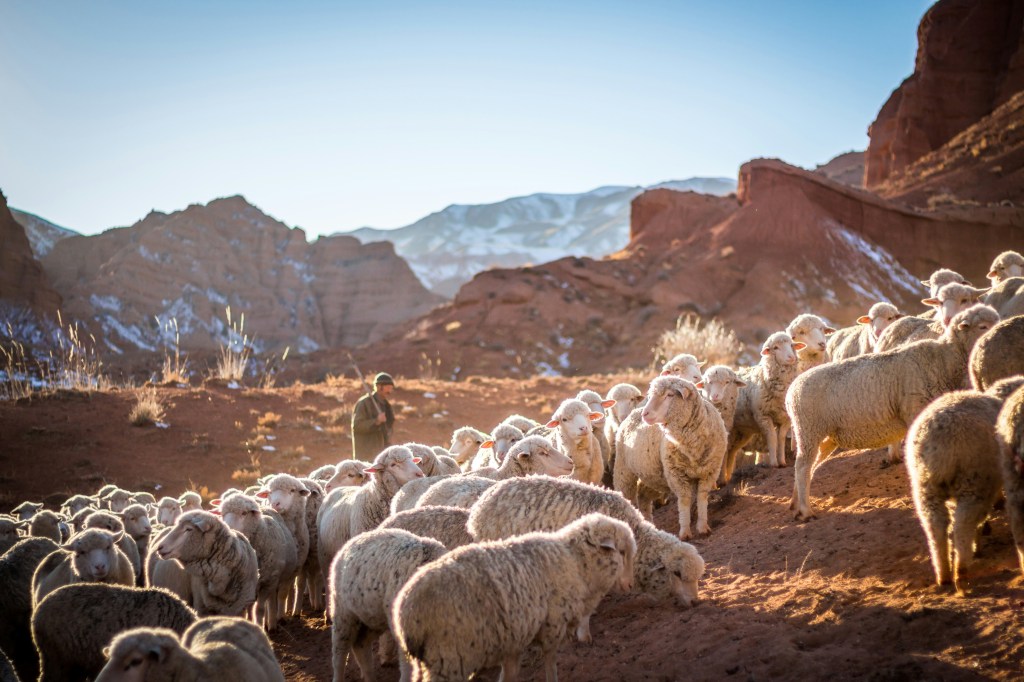
When Mom and Dad Quietly Cast Out a Demon

This is the story of the one and only exorcism that my parents performed while they were Baptist missionaries in Melanesia – at least the only one that they were aware of. We’ll have to wait til heaven to find out what other spirits may have been driven off unawares as my parents went about their normal missionary work of sharing the gospel and strengthening young churches in the Melanesian highlands. Given how dark and pervasive the worship of the spirits is in that part of the world, I for one would not be surprised to learn in eternity that much more of this kind of warfare was going on than was obvious and visible at the time. 

One of the areas my parents worked in was about a half hour’s muddy drive up a mountain from where we lived – when the road was open and clear, that is. At one point, tribal fighting had broken out. In a bid to keep the police from burning down the warring parties’ grass homes, the locals had burned enough of the planks in the one bridge that crossed the river into their area to make it virtually impassable.  

For a while, my dad went into the area on his own, to avoid putting our family at risk. He’d ford the river on his motorbike in order to still be able to preach Sunday mornings in the church plant. The river was just shallow enough to do this, although it was full of large river boulders – just as the road itself was shot through with large boulders, rocks, and ruts. 

After the fighting settled down, I clearly remember us fording the river as a family in our 1980s Hilux truck and often getting stuck in the orange clay-mud on the far bank. We were regularly dug out by crews of kind villagers who placed large stones and grass clods under our spinning tires and pushed, laughing and knee-deep in mud, until our truck sprang free. This kind of thing could turn a thirty-minute trip into one that took two hours. 

At times, my parents would bring their own wooden planks to lay across the bridge’s steel beams so that they could make two temporary tracks for our pickup to drive across. Eventually, the rainy season washed away all the soil on the bank attached to our end of the bridge, and we were back to fording the river.

This area of the highlands was deeply animistic. The people were still largely in bondage to the fear of the spirits of nature and of their deceased relatives, but a veneer of Christianity had been painted over all this by different groups. The Catholics and Seventh-day Adventists had claimed this particular area as their territory. At one point, an aggressive crowd of “Skin Christian” (so-called by the local believers because their Christianity was only skin-deep) Catholics and SDAs surrounded my dad, angry that the Baptists would dare to do ministry on their turf. 

One of the regular attendees at the church plant was herself from one of these Catholic families. She went by the Western name of Janet and she was so faithful in her participation that my parents thought she had likely come to faith under their teammates who had begun the church plant.

One day, my parents had stopped to pick up Janet on the way to the church when her family told them she was ill and not able to get out of bed. Janet’s family had requested my parents to come see her on our way back from church.  Unalarmed, they continued up the mountain to the church.  

Once there, Janet’s friends at church told my parents how scared they were for her. Janet wasn’t just ill. Evil spirits had taken away her ability to speak. For some reason, one evening she had gone down to what was believed to be a dangerously spirit-infested part of the river, at the forbidden time of dusk. This was the same time of day and part of the river where her grandmother had also been attacked by spirits, losing her ability to speak and also to eat. Janet’s grandmother had quickly died afterward. The terrified church folks believed that Janet would suffer the same fate. The Catholic prayers and exorcism with ‘holy water’ had accomplished nothing. The other traditional tribal remedies had also been for naught. Could my parents – the Baptists – do anything to save Janet’s life?

My parents hadn’t been in the country long and had never faced a situation like this.  They had thought Janet was a believer. How was this possible? Over the next several hours while the jungle cicadas screamed and my dad tried to preach over them, my mom prayed fervently. Afterward, we all drove part way down the mountain to the hut where Janet was living. My parents, not sure of what they would encounter inside, left us kids in the truck with some other local believers who were getting rides back to the area where we lived. 

Going inside, my mom and dad saw Janet and began to try to speak with her. Janet could understand them but confirmed through nods and signs that she was completely unable to speak.

So, my dad got out his Bible. Not completely sure of what was going on, but knowing that evil spirits have no power over those who believe the gospel, my dad turned to one passage after another that proclaimed the good news about Jesus and about those who believe in him. He finished with 1st John 4:4, “Little children, you are from God and have overcome them, for he who is in you is greater than he who is in the world.”

My dad asked Janet if she truly believed the gospel message that he had been reading to her from the Bible. She nodded yes. So, my dad told her that if that was the case, then according to 1st John 4, the Holy Spirit now in her was more powerful than any evil spirit that had caused her inability to speak. He told her that he was going to pray and that he wanted her to repeat after him. Janet nodded a willingness to try this. 

The small group together in the hut bowed in prayer. My dad prayed the first sentence and waited. 

Then, Janet repeated it after him. 

As my dad continued to pray, Janet was able to repeat every line of the prayer after him. The power that had stopped her from being able to speak was now broken. She belonged to Jesus, so the river spirits no longer had any claim on her. My parents, the Baptist missionaries, had seemingly just cast out a demon. 

Later, when Janet shared her testimony in front of the church, she shared that this was when she had truly repented and believed. Previously, she had not yet been a true Christian. If this was the case, then it makes sense that the spirits would have previously had the authority to cause her muteness – and that they would have lost that authority the moment she was indwelt by the Spirit of God.

I’ve always appreciated this story from my parents’ ministry because I believe it’s a good example of the simple power of the gospel over the demonic. My parents didn’t do anything flashy or fancy to try to release this woman from demonic oppression. They showed her Bible verses and prayed with her.

It reminds me of one time in college when I heard pastors John Piper and Tom Steller talking about one of the few times they’d been asked to intervene on behalf of someone who seemed to be demon-oppressed. As I recall, they said it involved a lot of praying, a lot of singing, and a lot of sitting together with her until she was released. These kind of activities seem so, well, normal. Yet in the spiritual realm, in the real world so often hidden from us, they must have remarkable power. 

I believe that a straightforward reading of Scripture and church history shows us particular seasons of concentrated miracles and visible battles with the demonic. Corresponding to this, we see other long seasons where these things are much ‘quieter,’ much more subtle, going on in the background as it were. 

Christians should trust the sovereignty of God regarding which kind of season and context they find themselves living in. You may find yourself in a setting where demonic oppression is much more prevalent than anything you ever saw back home. Or, it may be, like my parents, that you’re only ever asked once in your life to pray for someone who has been attacked by demons. God is in charge of the particular subtlety or in-your-face-ness of our spiritual battles. Our role is simply to trust his power and to fight faithfully where he has placed us. 

Will we be ready if we are faced with a situation like Janet’s? Will we throw up our hands because the spiritual need in front of us doesn’t fit with our experience or theological framework? Hopefully, we won’t fall into the trap of thinking that we need some kind of special methodology or training in order to help someone who is oppressed by demons. We have the Holy Spirit, the one who is greater than the spirit that is in the world. We have the powerful word of God. We have direct access to the throne room of heaven. When we sing, the demons shudder.

I’ve not yet been asked to pray for someone who’s been attacked by a demon. But if I am, I plan to do what my parents did – pray, open up my Bible, and simply do what Christians do.

If 26 more friends join us as monthly supporters, we should be 100% funded and able to return to the field! If you would like to join our support team, reach out here. Both monthly and one-time gifts are very helpful right now. Many thanks!

For my list of recommended books and travel gear, click here.

Photos are from Unsplash.com

The Pregnant Street Dog Ate Your House

The Spring of 2018 was a wild time. Our region’s airports had been shut down by the surrounding powers. Militias funded by foreign regimes lurked at many of our borders, meaning Mercenary Dan would occasionally call me up trying to sell me armored convoys. There were rumors the only land border still open to us would soon be taken over by the hostile central government. And all the while I was trying to manage an earthquake relief project while also co-leading a young and messy church plant.

In the midst of all of this, we had a family wedding to attend in the US. We decided to go and take the risk of getting stuck out of the country, given the fact that we had been stuck in for so long. Adam*, who was recently back in his homeland after a decade in the UK, and struggling with some of the most intense reverse culture shock I’ve ever seen, had recently decided his calling was to start an NGO focused on caring for the street dogs of our city. Right as we were leaving, he texted me to ask if he could use our courtyard as temporary housing for a pregnant street dog he had found.

My answer was an unequivocal no. We were living that year in another missionary’s furnished home, which they in turn were renting from a fiery older feminist landlady. “I would go down and join the protests, but I’m too old now to run once the bullets start flying,” she had growled once while hosting us for tea. Needless to say, we wanted to stay in this woman’s good graces.

Now, our cities do have the scrawny little street dog types so common all over the world. But we also have street dogs that are the descendants of the enormous mastiffs that have been the working dogs of our Central Asian mountains from time immemorial. These yellowish-tan dogs can get massive, sometimes as big as donkeys, with huge, solid heads and jaws you’d never want to feel the force of. They were bred to guard sheep and fend off wolves, after all.

The pregnant mama dog that Adam had decided to rehabilitate was one of these mastiffs. But as I had clearly told him no, I left town and didn’t think anything more of it. Little did I know that while we were trying our best to cross a bottle-necked land border without being turned into cigarette smugglers, Adam had decided he would risk it anyway and lodge his pregnant canine project in our courtyard. After all, he thought, what could go wrong? It would only be for a few nights until a better situation could be found. The poor girl was pregnant and needed to be taken care of.

A couple of weeks later, we were wrapping up our short trip to the US and scheming for how to get back in-country when I got the message from Adam.

“Hey, bro! Glad you’re coming back soon. Hey… I have some bad news. The pregnant street dog ate your house… Sorry.”

I read the message and understood the individual words, but did not understand the actual meaning of the sentence. The pregnant street dog ate my house???

I got Adam on the phone as soon as I could. It was then that I learned that he had put the dog in our courtyard even though I had told him not to. That was bad enough. But apparently, the dog had been either really hungry or really frustrated at being cooped up because she had proceeded to scratch and gnaw two huge holes in the house’s front siding. The external walls of the house were made of cinder blocks covered in a thick layer of styrofoam, itself covered by a small layer of hard coating. This kind of siding was a newer attempt in our area to keep the cement blocks from absorbing so much of the summer heat and turning the house into one large oven for humans.

As Adam did his best to drum up sympathy for his trespassing and destructive guest, I remembered from a random childhood experience that styrofoam was technically edible. Perhaps the dog had gotten some pretty crazy pregnancy cravings, and, unable to satisfy these, had gone for the only somewhat-edible thing around. The size of the dog meant it had no problem breaking through the few millimeters of hard coating so that it could get at the styrofoam underneath. What its ravenous activity left in its wake were two large round areas of exposed cement – scarred with massive claw marks – framed by a bright white border of crumbling styrofoam. From the pictures Adam sent me, it was like someone had taken a shotgun to the front facade of our house and left two big holes the size of small doorways.

The landlady was going to kill me.

However, there was nothing to do other than begin the long trek home. After three flights, two overnight layovers, a four-hour bus ride across the border, and a seven-hour drive back to our city, we finally rolled up to our house. My wife and I surveyed the damage.

In the midst of what had been bright tan-colored siding, two roundish, dark grey cement scars glared out at us. As we stared, the wind blew, causing the courtyard to swirl with little styrofoam bead tornados. A plastic yard toy of the kids was over in one corner, mangled beyond all recognition. Dogzilla had indeed left her mark.

The following week was spent searching the bazaar trying to find the exact same kind of siding and color of paint so we could do a patch job. We never found an exact match (the sun fades paint and building products disappear from the market quickly) but we got pretty close. Our elderly landlady seemed disgruntled by it all, but since we paid for everything ourselves, she put up with it rather better than I expected. I did hear that after we moved out she may have been a little more open with others about her true feelings. Not at all that I blame her. A giant pregnant dog had taken large bites out of her property.

Adam, appearing very sorry for what he had done, promised to make it up for me by building us a doghouse for free some time. He kept his word when a few years later he built us a doghouse for our little black German shepherd puppy. However, Adam’s NGO for street dogs never exactly took off. Some ideas just aren’t meant to be.

As for the pregnant mama dog, Adam used wooden pallets to build her a dog house on an empty lot – which she then promptly abandoned. Alas, she was wild and free, a descendant of the great mountain dogs of old. Even though she was with child, she would not be constrained to human notions of domesticity. She would do what was necessary to maintain her freedom – even eating chunks out of the sides of houses.

There are many sentences I never expected to hear as a missionary. But among the most surprising has to be the one Adam sent me that Spring morning:

“The pregnant street dog ate your house.”

We will be fully funded and headed back to the field when 29 more friends become monthly or annual supporters. If you would like to join our support team, reach out here. Many thanks!

For my list of recommended books and travel gear, click here.

*Names changed for security

Photos are from Unsplash.com

The First and Worst and Best Sermon I Ever Preached

The first sermon I ever preached was to a bunch of Melanesian inmates serving time for murder.

Uncle Mike, a missionary friend from a charismatic evangelical background, had a ministry at a nearby prison, the one the provincial government designated for hardened killers. Although, you’d never know this from visiting these prisoners and worshipping alongside them at the services that Uncle Mike conducted. On the contrary, in spite of their hardened muscles and cut jawlines, the inmates seemed kind and respectful and even humble. Yet each person there who wore the faded blue and red uniform had murdered other human beings – crimes that were most often carried out with machetes, homemade shotguns, or more powerful weapons smuggled in from neighboring countries.

However, I learned from Uncle Mike that a small group of these prisoners had professed faith and a new church of sorts was forming within the prison. In addition, many others were also willing to gather for a service. This was prison in Melanesia, after all, so there wasn’t that much to do anyway.

I visited this prison with Uncle Mike and his family several times during my senior year of high school. I was glad to tag along, to observe the ministry, and to try to get into gospel conversations with the inmates who were willing to talk. But I never expected to preach. So Uncle Mike’s request came as quite a surprise.

“Hey, A.W.! Would you like to preach when we visit the prison on Easter Sunday?”

“Um… preach?”

“Yes! Preach. Preach a short sermon. I think you’d do great.”

“Uh… okay. But I’ve never preached before.”

“Don’t worry about it, it’s Easter! Just preach the gospel.”

And just like that, I had accepted my very first preaching engagement. I decided on 1st Corinthians 15, verses 12-28 if I remember correctly. Uncle Mike had told me to preach the gospel, and it was Easter Sunday, so I thought a straightforward text on the reality and importance of Jesus’ resurrection would be a good way to go.

I remember very little about the content of the sermon itself. I know that at that point I hadn’t received any training yet on how to study for, organize, and then actually preach a sermon. But I took to my task with all the gusto of a confident 18-year-old who has been filling his head with Passion sermons and missionary biographies.

I do remember including a bizarre illustration that I had recently read in the local newspaper. Some farmer in our region had successfully performed mouth-to-mouth resuscitation on a chicken (so, technically mouth-to-beak?) and the chicken had – amazingly – come back to life. I included this illustration in an attempt to contrast near-death experiences and resuscitations with the resurrection of Jesus. “The resurrection of Jesus is categorically different from what happened to this chicken!”

Needless to say, the lackluster response from my audience of convicts did leave me wondering if perhaps they didn’t find the story about the chicken CPR quite as funny as I did.

As I wrapped up my sermon in the local trade language, I leaned on my Baptist upbringing to transition to an altar call of sorts.

“With every head bowed and every eye closed, I want you to think about the good news you heard today about the death and resurrection of Jesus. And if anyone here wants to believe and be born again (literally “to turn your soul/stomach” in the local language), then just raise your hand. No one is watching you, every head bowed and every eye closed, just raise your hand.”

At this point, Uncle Mike thought it best to intervene. With all the fire of a veteran charismatic preacher, he cued the worship leader to begin banging the guitar, strode up next to me, and proceeded to bellow to the crowd,

“Jesus didn’t suffer and die in private! Jesus suffered and died in public! So, if you want to repent and follow Jesus, you need to do so publicly! Don’t be ashamed of Jesus! No! You stand up in front of everyone and give your life to Jesus! Open your eyes and come up here and follow Jesus!”

As the believers began singing and Uncle Mike kept hollering, I just stood there, a bit taken aback, though not at all upset that Uncle Mike had deemed it best to take over the invitation part of the service. In fact, at that point a full dozen men suddenly stood up, came to the front, and were now being prayed for by Uncle Mike as he laid hands on their heads, shouting out his confident prayers. He motioned for me to do something similar with a couple of the other men who were now kneeling on the packed dirt floor in front of me. I wasn’t exactly sure what was going on, but if these men wanted to pray to follow Jesus, then I was all in to try and help them do so. I kneeled down next to them, walked them through a basic gospel outline, and prayed with them.

Afterward, the inmate who was the leader of the prison believers came up and thanked me publicly for preaching.

“And I think,” he continued, “this was maybe the first time Brother A.W. has ever preached.” He said this last part with a hint of a smile, just enough for me to pick up on the fact that it was probably a pretty rough sermon to listen to, all things considered.

I left the prison that day very encouraged. Not necessarily that my sermon had been good or powerful, but that God had used it in spite of it all. How had it happened that after a haltering, first-time, chicken-CPR, second-language sermon from a scrawny white kid, twelve hardened murderers had wanted to give their lives to Jesus? The answer, I realized, must be in the gospel itself, in the power of the Word of God.

After lunch at Uncle Mike’s that day, I picked up a missions magazine from his coffee table. There was an advertisement inside it for Christians to spend six months to a year in an Islamic Central Asian country, sharing the gospel.

“Huh,” I thought to myself, “Now that sounds really radical. Maybe someday I could share the gospel somewhere like that. Although, Muslims kind of freak me out.”

Little did I know that two years after that sermon, I would be in that very Central Asian country, taking part in the same program I saw advertised in the magazine that day. And just like in the prison, I would see God take some very imperfect evangelism and do something with it that was downright astonishing.

I’m so thankful Uncle Mike gave me a chance to preach in the prison that Easter. That first sermon may have been the worst one I’ve ever preached. But it’s the only one where I’ve seen a dozen men stand up and want to give their lives to Jesus.

We will be fully funded and headed back to the field when 31 more friends become monthly or annual supporters. If you would like to join our support team, reach out here. Many thanks!

For my list of recommended books and travel gear, click here.

Photos are from Unsplash.com

The Healed Will Heal Others Also

“Workman!!!”

I turned around, knowing exactly whose voice and contagious laugh that was.

It was Adam*, my very first believing friend in Central Asia, plaster wall visionary, goofball, and dear brother embattled with mental illness. We gave one another a big laughing bear hug in the middle of all the other arriving campers.

This past week I was on a short setup trip to Central Asia and towards the end of the trip I left my apartment-hunting to join a bunch of the local believers for one night in an ancient valley in between our two cities. This came about because my trip had just happened to coincide with the annual camping trip that one of my former teammates leads for a sports outreach he conducts. A good number of the local believers in our previous city, like Darius*, have also been regularly involved with this sports group from the beginning. It’s been a great opportunity for them to do relational evangelism with the unbelieving participants – as well as a chance to learn about mortifying anger when it gets stirred up by the fierce combat otherwise known as ultimate frisbee.

“A.W., what should I do? The other player I’ve been struggling with said ‘Good job’ to me when I scored. Outwardly, I said, ‘Thanks,’ but in my heart, I said, ‘You father of a dog!’ …Do you think I need to repent?'”

Out of the twenty or so men who ended up coming on this camping trip, I was glad to see it was about half believers and half not. In the midst of a trip focused on logistics, I was hopeful that this night would make for some encouraging conversations. I was not to be disappointed. Most of us were up past 3 am. And the conversations ranged all over the place – apologetics, philosophy, linguistics, as well as just catching up and cutting up. Needless to say, my rusty local language skills got put to work. At one point, I wondered what in the world my jet-lagged self was doing trying to discuss Hegelian philosophy in another language at 2 am with a new believer.

Perhaps the most encouraging conversation of the night was with Adam and his friend, Dr. Troy*. I had heard recently that Adam, my dear friend who for the last couple of years has been on the mend from paranoid schizophrenia, had led one of his friends to faith. This friend was Dr. Troy. And this is how it happened.

Dr. Troy had grown up in a family that taught him the way to get ahead was to appear outwardly unimpressive and foolish, but to secretly work harder than all your peers, resulting in the end in a great upset when you came out ahead of all of them. Needless to say, this approach to life did not win Dr. Troy many friends. He grew up isolated, angry, and hating most others around him.

“I was like this all the time,” he said, pulling up a picture of a hissing cobra which was for some reason wearing a seat belt.

But though he was isolated and angry, he succeeded in getting high marks in school, was accepted to medical college, and eventually became a new doctor. One day, a trip to the bathroom at the hospital where he was doing his residency meant that he missed the person who came by to mark down employee attendance. So, Dr. Troy went down to the first floor to find him. Notice here how eternity can sometimes hinge on such seemingly mundane events.

While downstairs, Dr. Troy was approached by a bearded man in his late 30s who wore a mischievous grin and looked at him with bright eyes that carried a hint of either brilliance or insanity – or perhaps both. This was, of course, Adam. Dr. Troy was somewhat confused and offended that this obviously local man began the conversation in English, rather than in their native tongue. Nevertheless, he heard him out and answered his questions about a friend that he was there to see. When asked about his good English and strange insistence on using it, Adam replied by telling Dr. Troy that he was an English tutor and handing him his business card. If the good doctor was interested in IELTS tutoring, then Adam told him he could contact him.

A little while later, Dr. Troy did just that. For quite some time, Dr. Troy had been struggling with major depression, anxiety, and hopelessness. All of his meds only seemed to be making things worse. He wanted to do something that might boost his self-esteem, and so he thought passing the IELTS English test might be just the thing. In the beginning, their relationship was purely focused on English. But one day something shifted. Dr. Troy broke down and told Adam about his deep despair. He told him that things had gotten so bad that he had even become suicidal.

Adam proceeded to share his own story with Dr. Troy, how he had grown up in a deeply dysfunctional local family, how he had found Jesus as a young man, how he had then wandered from Jesus during his sojourn in Europe, falling into drugs and mental illness. He then described how his friends had helped him get back to Central Asia, how that had failed to bring any improvement, but how one day God had unexpectedly freed him from so much of his mental suffering. In the days since, Adam told him about his steady trajectory of healing that included regular church attendance, serving others, cutting way back on meds and stimulants, and seeking to deal honestly with the costs of his unhealthy upbringing.

Dr. Troy was compelled by the testimony of his quirky English tutor and decided to see if a similar path might help him as well. He decided to trust Adam and follow his advice. And Adam provided Dr. Troy with that ingredient of healing so transformative for the human heart and mind – a loyal Christian friend who will simply stick with you, even in the blackest night.

But I was curious as I listened to this tale. Was Dr. Troy really now a believer? It’s one thing to identify with a new group of friends because they’ve shown you kindness in your suffering. It’s another thing to believe in Jesus and apostatize from everything you were taught growing up in an Islamic society.

“Jesus is all about love,” Dr. Troy said to me, “This was remarkable to me. He’s so different from Muhammad.”

Okay, I thought to myself, getting a bit closer

“The thing is,” Dr. Troy continued, “He’s the only one without our human failures. The only one. Everyone else is so broken, so messed up, does so many wrong things… like me. He’s the only one without… without…”

“Without sin?”

“Yes, that’s the word, without sin. The only one. That’s how it’s so clear that he must be the Son of God. Not like all the other prophets. All of them sin. But not Jesus.”

Dr. Troy shook his head and stared at the tea kettle, now steaming on top of a bed of coals.

“A.W.,” my former teammate said, joining the conversation, “Have you heard the good news? Dr. Troy is going to get dunked soon,” he said with a smile and a cautious look at the other campers milling around.

“Wow, may you be holy!” I said to the good doctor, which is the local language equivalent of ‘congratulations.’ That phrase always feels extra appropriate for occasions such as this. I knew that if things had reached this point, then Dr. Troy must be showing strong signs of the new birth. My former teammates and the mature local brothers are trustworthy soul doctors.

“I don’t know what I would have done had I not randomly met Adam that day,” Dr. Troy said, “I mean, yes, he’s a very strange man, you know how he does the — and the —-”

Here, Dr. Troy, with a clear gift for imitation, made several of the bizarre expressions and body movements that Adam tends to make. This, of course, set Adam laughing like the good sport he is, so I felt free to chuckle as well. The impressions were spot on.

“But my life has changed so much since I’ve been following his advice. I took him to visit my family and my parents and sisters thanked him over and over for all the ways they’ve seen my life change because of his influence.”

Adam beamed awkwardly as Dr. Troy said this latter part. I looked at him and remembered what a hard road he’s had. Back in 2008, he was the most gifted evangelist I had ever seen. But then he had wandered for a very long time. In fact, Dr. Troy was the first person he had led to faith in fifteen years. It seemed that perhaps the gift he had been given as a new believer, the gift of evangelism, was at last being fanned into flame again. What an answer to prayer. I had so long hoped that Adam’s mind would turn away from fixation on the shadowy figures he thought were drugging and tracking him, and turn back to Jesus and to telling others about him. Now I was staring at evidence that it was actually happening.

Later that night Adam and I had more heartfelt conversation together. I told him how proud I was of him, and how thankful I was to see him continuing to gather with believers and now even serving others as well. I reminded him that God has made us to heal in community, that God himself gives us a relationship of complete safety and acceptance through Christ, and thus we can invite others into the community of the church where they can find true healing now – and complete healing in the resurrection.

“Adam, Jesus has granted you a measure of healing in this life. I’m so glad to see it. But don’t forget that this is just a taste. In the coming resurrection, you won’t just have a mind partially restored, but a mind and a whole body perfected and healed, forever.”

“Thank goodness for that!” Adam said, laughing and running a hand over his tired face and through his rapidly graying hair.

Adam went on to humbly ask forgiveness for all the trouble he had put my family through during his darker years. And to ask me to please buy some flowers for my wife on his behalf – since she was the only woman who still showed him kindness and hospitality during that time. He wanted to know what he could do for me, anything at all.

“Adam, you know we will always be brothers and friends, no matter what. Just don’t forget that. But you also know we’ll need to live in another city when we come back in a couple months. So I would ask that you keep on serving this young church that we love so much – and keep on sharing the gospel with others, just like you did with Dr. Troy.”

“You got it, bro,” Adam said, giving me a fist bump. And I knew he meant it.

At that point, Darius snuck up behind me and gave me a big strangling bear hug. And from there, the night continued on with more rich conversations with believers, challenging questions from unbelievers, games, and ultimately a few hours of very uncomfortable sleep.

I have so missed this kind of setting. This past year and a half in the States has been good in so many ways. God has provided rest, refreshment, healing, and help above and beyond what we could have asked for.

But I have to be honest. I can’t wait to be living in Central Asia again. And I can’t believe we’ll actually get to do so.

We will be fully funded and headed back to the field when 35 more friends become monthly or annual supporters. If you would like to join our support team, reach out here. Many thanks!

For my list of recommended books and travel gear, click here.

*Names changed for security

Photos are from Unsplash.com

From Leprous Plaster to Gleaming Stone

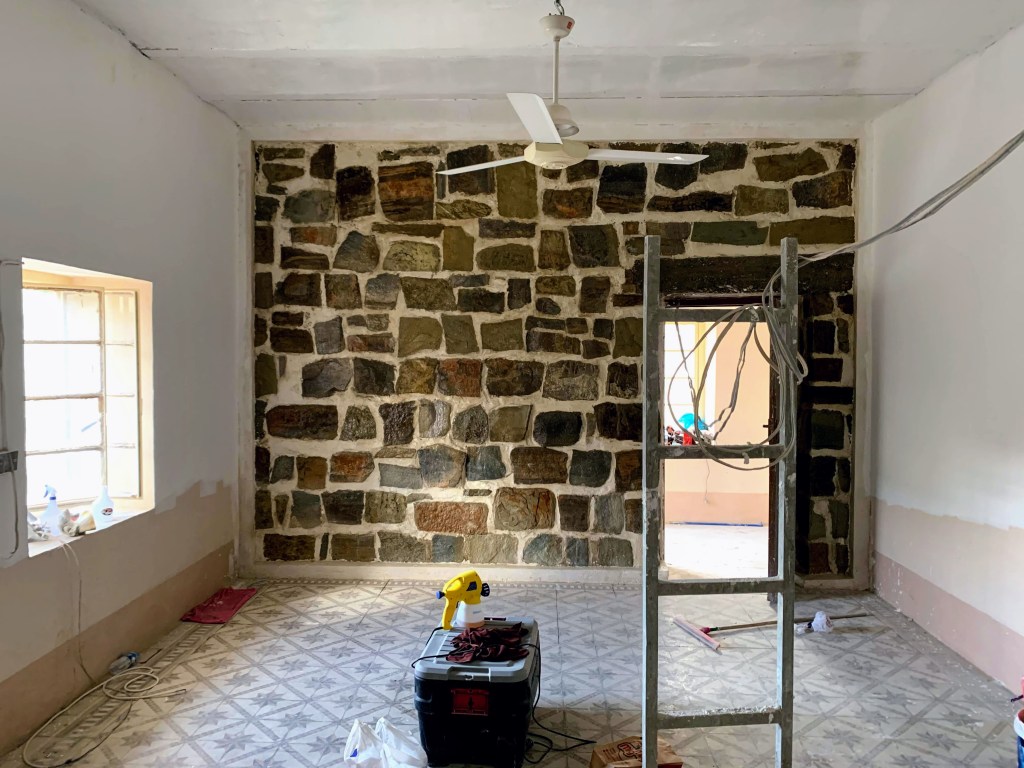
The wall of what would become the homeschool room, nearing completion

Our previous home in Central Asia was an old stone house right on the edge of the bazaar. It was very beat up when we agreed to rent it. Much of the wiring and light fixtures were still from the 1950s. The garden courtyard was an overrun mess of brambles and dust. All the water tanks were rusted out and useless. And two internal walls showed extensive water damage.

At the time, there were only two of us who really believed in the potential of this run-down, dusty old house. Me – and Adam*, my good friend who suffered from paranoid schizophrenia. Most of my local friends and colleagues understandably said I was crazy for taking on a project like this. But Adam, my one believing friend who technically was crazy, was adamant that we had to get this place. That in itself probably confirmed that the others were right. Nevertheless, I sided with my schizophrenic friend and went for it. My wife (who was nervous about the whole thing, yet bravely willing to follow her husband) and I had always wanted to live within walking distance of the bazaar and here was our chance. Surely, bringing a house back from the dead couldn’t be that hard.

In particular, Adam was captivated by the potential of the thick stone walls of this house, and especially the two internal water-damaged walls. Because of what to me looked like leprous wall spots of Levitical proportions, we would definitely have to replace the plaster, as well as patch the roof cracks. But, instead of then simply replastering the walls, Adam wanted me to let him get rid of all the plaster, polish and varnish the stones, and then put fresh white plaster in the seams of the rocks. The finishing touch would be framing the whole wall with a sharp plaster border. This labor would draw out the natural colors of the large stones, contrasting richly against the white of the plaster.

In this season, Adam wasn’t doing so well and wasn’t yet willing to gather with other believers again. He also needed work. And work, creative work, in particular, seemed to ground his mind and make him less prone to believe that the spy agencies of various Western nations were after him and trying to turn me against him. I thought a big project like this might be a chance for us to spend some time together as friends – and also get him around other local believers like Frank*, who was responsible for the painting and replacing the old wiring.

Some of these hopes turned out better than others. Adam’s enthusiastic work stripping the plaster off the walls filled the entire house with clouds of plaster dust for weeks on end. This meant that Frank was often kept from doing his electrical and painting work because of the conditions inside the house. I would be working on some ministry email or something, barricaded in one of the only rooms safe from the dust when Frank would walk in, fresh from an encounter with Adam.

“How you doing, Frank?” I would ask.

“Great!” he would say with an exaggerated smile, right before silently giving me an “I’m losing my mind and can’t possibly go on like this” face.

So much for the work building camaraderie. Even worse, the dust was covering the floors so thick that to get it out we had to bust holes in some of the walls so that we could use a hose to flush it all out. We’re supposed to be fixing this place up, I thought to myself as we drilled a fist-sized hole at the base of the homeschool room wall, not punching more holes in it. Maybe my bleeding-heart, idealistic, risk-prone tendencies had gotten the better of me in agreeing to let Adam do it in the first place. In the end, the work took three times longer than we thought it would.

But the walls. The stones. They came to life.

The two ugly bubbling and disintegrating plaster walls had been transformed into the most beautiful parts of the entire house. They were now two accent walls consisting of stones that shone in grays, rusty reds, pale oranges, and slate blues. The larger of them graced one side of our homeschool room, a perfect addition to a space that was soon to be overflowing with kids, books, Legos, and artwork. Adam and I loved that my kids would get to learn math and reading and Bible around that big, solid, colorful, stone wall.

When it was finished, everyone loved the end result. Even those who thought the whole project was crazy, even those who couldn’t bear to work with Adam and made fun of him because of his quirks and crazy ideas. You couldn’t deny it. The walls were stunning. Each of us had to admit that the one with the mind that wasn’t completely working correctly had been the only one able to look at something so ugly and see its true potential. And not only see its potential, but also realize its potential with long, sweaty, dusty hours chipping, grinding, and polishing.

I enjoy reflecting on what Adam did with those walls. Even when his mind was in a dark and confused place, the possibility of bringing beauty out of brokenness brought him to life and gave him purpose and focus. It brought him back to his friends for a short time. It even got him some money so he could do the honorable Central Asian adult son thing and help his parents (whom he lives with) pay some bills. In that dusty project, the image of God in a very broken believer shone briefly but powerfully, like a shaft of light unexpectedly breaking through a towering Kentucky storm front.

And it’s no overstatement to say that Adam’s work on the walls reflected the image of God. God is, after all, in the process of resurrecting – not broken down and decrepit walls and houses, but a whole world in this condition. His mind sees what the rest of us so often fail to see, how sinners can be transformed into saints through the mess of sanctification, how the beauty of the coming resurrection will make all of the suffering and sweat required to get there worth it. In our lives, he’s chipping off the old, leprous plaster, restoring a beauty in us that we lost long ago – and making it even more stunning than it was in the beginning.

I’m so glad I took the risk and let my friend tear up those walls. He claimed he could see something in them, what they could become. He was right. I’m so glad that God sees something in us, in me, what we can become. And that he relentlessly keeps up his transforming work.

p.s. Adam is doing great these days. After the initial breakthrough a couple years ago, God mercifully continues to give him a measure of healing from his paranoid schizophrenia. Adam has recently led a doctor friend of his to the Lord and has been bringing him to church with him regularly. Keep praying for him.

We will be fully funded and headed back to the field when 40 more friends become monthly or annual supporters. If you would like to join our support team, reach out here. Many thanks!

For my list of recommended books and travel gear, click here.

*names changed for security

Who Stepped in The Baptism Cake?

Manuel* was ready to be baptized. And since it was late Spring, the church opted to plan a baptism picnic. From where we were living, a short trip into the mountains would take us to a nice lake area created by a large dam. This is a favorite picnic area for locals since the lake and the river proceeding from the dam mean opportunities for swimming and even the occasional rental jet-ski. Hence why it can also be a good fit for baptisms. Some readers may recall that this is the same area where once, during the worst dust storm in decades, we had to buy our kids marijuana-themed underpants.

Beforehand, the women had divided the food responsibilities amongst themselves. My wife was assigned the unenviable task of bringing what in the local language is called the “sweety,” i.e. the cake. Now, locals tend to prefer cakes that look like they are on their way to prom but taste like cardboard. We Westerners don’t care as much about how fancy the cake looks, but we like it to have lots of delicious icing, which locals say makes it way too sweet. This is a bit confusing to us since they like to eat baklava with Coke, which we find way too sweet. In any case, turns out the happy middle ground is sweet-ish desserts like banana bread, carrot cake, and other breads/cakes of this genre. So, my wife had made a carrot cake of this variety (with no icing) in a large glass casserole dish. It was stashed in the back of our family’s Kia SUV, along with some other food and picnic supplies.

As usual, we all met up at a gas station on the edge of town in order to buy any needed supplies and to rearrange the food and passengers in whatever vehicles we had. In all of the mixing and matching, Patty* and her teenage daughter ended up with us, and this somehow meant that our two young kids were asked to clamber up into our vehicle through the back hatch of the SUV. This had them climbing over the food. So, of course, one of them stepped directly in the middle of the baptism cake. The cake had been covered in a layer of plastic wrap, but the imprint of a little foot in the middle of the cake was unmistakable. Oh well, we thought, we’ll deal with that later. It was now almost lunch time and we still had an hour’s drive ahead of us.

To find a good baptism location, we’d need to consider several factors. First, the water would need to be deep enough, slow enough, and easy enough to get in and out of. Second, the spot would need to be both private enough and public enough for a Christian baptism in a context of moderate Islamic persecution. Third, its picnic potential would need to satisfy the majority of the locals – who by then we’d learned love to argue ad nauseam about the pros and cons of various picnic locations. American men pride themselves on their superior opinions about barbecuing, road trip methodology, thermostat settings, and the like. Central Asian men pride themselves on their superior opinions about being able to find the perfect picnic spot.

The first location that we drove to was a picnic house of sorts right up alongside the river. It had been vouched for by Mr. Talent* as an ideal location. Next to the small house, there was a large covered cement veranda for the picnic meal, complete with metal stairs that led down into the current. But one look over the railing down at the fast-moving water had Manuel shaking his head. Like most locals, Manuel was not a great swimmer – and that current was fast and strong, freezing, several feet deep, and running over slick rocks. Even though I had grown up swimming in the rivers of Melanesia, I also wasn’t confident that it would be safe to put a big man like Manuel under the water in a place like that.

Much debate ensued with Mr. Talent vigorously defending his chosen location. At last, we all decided to pile back in the vehicles to go to a spot that Frank* claimed had nice and slow-flowing water and lots of greenery. By now it was past lunchtime. Another fifteen minutes of driving brought us to the picnic spot that Frank suggested. It seemed to have been some kind of smaller river created by an overflow pipe from the dam. It also seemed like it had been very popular this season because it was trashed. Watermelon rinds, flies, sunflower seed shells, and evidence of hookah smoking were everywhere. The water itself was slow enough, but it was quite dirty, even stagnant. The whole place smelled of rotten eggs, plus there was no longer any good ground for our picnic mats that had not yet been trampled into mud. Once again, heated debate ensued.

By this time, Patty was starving. Patty, a foodie and quite the impressive chef herself, decided that it was no longer logical for her and her daughter to wait for these men to make up their minds. She needed to eat something. So, she opened up the back of our vehicle to start rummaging through the food. This is when Patty made a noise and held up the cake to show it to us. To our great frustration, we saw that there were now two little footprints in the baptism cake. We assumed this would make the cake inedible, but while we lectured our offspring about watching where they were stepping, Patty simply grabbed a disposable fork and started eating the cake directly from the dish – though carefully avoiding the areas with the little footprints.

At some point, Manuel spoke up, telling the crowd of haggling and gesticulating men that he had a spot that he knew at the upper part of the lake which would do just fine, at least for the baptism. Everyone seemed good to defer to the actual person getting baptized, so a decision was made that a smaller group of us men would drive up to this spot. Once we were finished the dunking we would all meet back at the original location that Mr. Talent had chosen. The women greeted this news with nonplussed expressions. The kids were starting to lose it, it was getting hot, and all of us were getting hungry. Patty and her daughter, for their part, were hiding behind our vehicle, making good work of the baptism cake.

Thankfully, this third baptism location seemed like it would work. The water of the lake was warm, still, and deep enough. The only issue was the depth of the mud. As you stepped into the water, your feet sank down into many inches of brown muck which sent little chocolate clouds billowing up around you. I double-checked with Manuel that this really was okay. But he insisted that this would do just fine. So, one of the local brothers and I waded out and flanked Manuel in waste-deep water. We asked him the baptism questions, then, based on his profession of faith, together put him under the water in the name of the Father, the Son, and the Holy Spirit. He came up out of that muddy water beaming with joy. I was reminded that, imperfect though our day had been, baptism is still an amazing thing.

We were a happy vehicle driving back down to the picnic house, where we knew hours of drinking chai, eating skewered meat, singing worship songs, and fellowshipping awaited us. To my great amazement, when we arrived, my wife and Patty were passing out little cubes of baptism cake. I raised my eyebrows and gave my wife a questioning look.

“There was a little bit left between the footprints and what Patty had scarfed down,” she said, “so we just cut around those parts.”

I stared down suspiciously at my little chunk of “sweety” that had been through so much already that day.

“Just eat it,” my wife said with a sly smile. “Nobody has to know.”

So I did. I ate my little piece of baptism cake. And it was downright tasty.

We will be fully funded and headed back to the field when 42 more friends become monthly or annual supporters. If you would like to join our support team, reach out here. Many thanks!

For my list of recommended books and travel gear, click here.

Photos are from Unsplash.com

*Names have been changed for security

First Dates and Fire Alarms

I seem to have a lot of stories to tell about fires. There was that time I blew up our kitchen. Then the time when our electric box decided to self-immolate at 2 am. This story, however, is only incidentally about fire, especially since there actually was no fire. It was a false alarm. No, this story is really about my first date with the girl who would one day become my wife. There is a fire alarm which plays a prominent part in how things go down. But we’ll get to that in due time.

True, we didn’t call our first date a ‘date’ per se. I had enough sense about me to leave that title out of it and to let things proceed in the category of ‘open secret.’ Every culture has this category somewhere or other in their interpersonal interactions. And since my wife and I are Westerners, we stayed true to our people and used this category at the beginning of our relationship in order to decrease awkwardness and to protect an easy out for either party involved, should that turn out to be needed. In this way, I was also trying not to be like some of the other guys who were serenading girls on campus with Calvinistic hymns and telling them far too much about their intentions, far too soon. I knew that the girl I was interested in had had her fair share of that sort of pursuit, so my hope was to keep things very casual, low-pressure, and in good taste.

Instead, I chose to ask her, tongue-in-cheek, if she’d be up for getting tea together and talking some more about the Holy Spirit. Yes, it was still very much a cheesy Bible college invitation, but not one without context. See, I had only recently returned from a gap year in the Middle East. And some pretty wild things had happened during that year. Friends had had dreams about Bible verses they’d never read, one woman was miraculously healed, I had narrowly survived a car bomb, and multiple friends had left Islam and risked everything to follow Jesus. I had become a cautious continuationist the year before that while a freshman at John Piper’s church. But even if that theological shift hadn’t taken place, the things I had seen the Holy Spirit do right in front of my eyes in the Middle East had left me convinced that the Spirit was more actively involved in day-to-day life and ministry than I had previously counted on. All of it left me eager to talk with other believers about what I had seen, and also about what they had seen and were learning.

The strange thing was, I initially had the hardest time finding other Bible college students who wanted to discuss these things in good faith. Sure, people wanted to debate theological positions. But very few seemed interested in conversations about how God was working overseas and what in the world it meant for us to practically ‘be being filled with the Spirit’ in our day-to-day walks with Jesus. Some were more interested in smoking pipes and playing board games. One guy I remember wanted to argue with me that it was not possible that God was sending dreams to Muslims. Another guy maintained that the Great Commission was actually fulfilled by the original Apostles, so modern missions was basically unnecessary. This latter student waxed eloquent about this while inconveniently sitting between me and the pretty missions major that I had been hoping to get a chance to talk with.

At last, an opportunity came to talk with this girl. I had been told by close mutual friends that she had grown up in a sort of ‘Bapticostal’ background and had a heart to work among Muslim women. I had noticed from afar that she was a keen thinker who didn’t engage in the sort of theological banter that was often more like a competition of intellectual prowess than a genuine conversation. Now, lest you get the wrong idea about the school I went to, I have not seen this sort of culture among the undergrads to be the norm over the years. I think I just kept running into the wrong guys or simply found myself among a very peculiar crop of students who loved to talk theology, but didn’t really want to talk about Jesus as if he were a real person involved in our lives. Don’t get me wrong. I loved to talk about theology – just not when it seemed like a decapitated head whose body had gone AWOL. My friends had risked their lives for Jesus in the Middle East. This stuff mattered.

A friend had set up an early morning prayer meeting for the nations. And it was right after this that I found myself having breakfast in the cafeteria and finally able to have a good conversation with the girl I had been hoping to connect with for several months. To my great joy, she seemed engaged and just as relieved as I was by the tenor of our conversation. We had to rush off to class but I felt that, at last, I had a good and non-creepy opportunity to pursue further conversation.

For her part, rather than being put off by my follow-up message about tea and conversation about the Holy Spirit, it made her smile. We made a plan to meet at her dormitory on a Saturday afternoon. From there, we would walk to the nearest off-campus coffee shop, a small Heine Bros. Coffee on Frankfort Avenue.

It was a pleasantly warm October afternoon when I found myself walking up the steep hill on the back side of the SBTS campus, heading to the girls’ dormitory. As I slowly made my way up the hill, I told myself to be calm and to keep things fun, casual, and low-key. I was nervous since this was my first time asking a girl out for conversation like this in quite some time. But how bad could it be? She and I would just take a simple walk to a coffee shop, talk, sip tea, and get to know one other. Hopefully, we could at least build a new friendship without any of the unnecessary college rumors or drama.

But as I came to the top of the hill I was met with a terrifying sight. Seated in the parking lot between me and the dormitory door was what amounted to a sea of young women. It seemed that every single college girl who lived on campus was there, sitting on the ground. There had to be sixty or seventy of them – and every single head turned to stare at me as I cautiously approached the edge of their giant half circle.

Thoroughly confused and feeling my face cycling through various shades and temperatures, I frantically scanned the mass of sitting women to see if I could spot the girl I was supposed to be going out with. The following moments were probably only a few seconds long, but what it actually felt like was perhaps put best by Gandalf the White: “Darkness took me, and I strayed out of thought and time. The stars wheeled overhead and every day was as long as a life age of the earth.”

What was this, some kind of intimidation technique? Did the girls at this school have some kind of wolf pack agreement with one another that when a new guy asked one out for coffee, the sisterhood must make a show of intimidating force? I mean, I knew that the girl I was interested in was well-known, well-liked, and well-respected on campus. Everyone seemed to know her. The terrors of a third culture kid who has stumbled upon some unknown context in their home culture – and doesn’t know what it means and what the rules are – were fast taking over.

At last, my date-not-date turned her head and recognized me. It seemed that she had been the only girl in the crowd who had not noticed me walking up. She stood up. Now, we were two lonely towers standing as it were in a great field of undergraduates, staring up at us like so many wide-eyed sunflowers.

“Hi,” I said, awkwardly.

“Hi,” she said, just as awkwardly.

The two of us stood there. Sixty or seventy college girls squinted up at me, then squinted up at her.

“What’s going on?” I asked, motioning around at all of the girls sitting on the pavement.

“Fire alarm,” she said.

“Oh,” I said. “There was a fire?”

“No,” she said. “False alarm.”

“Oh.”

I’m pretty sure at this point that I could no longer see, that I had gone utterly snow blind from embarrassment. Somewhere, a bird chirped. One of the girls cleared her throat.

“Well… uh… you ready to go?” I asked.

“Yeah. Let’s go.”

She picked her way through the crowd and the two of us walked away, trying desperately to make small talk – and trying in vain not to feel sixty or seventy pairs of eyes boring into the back of our heads. Whatever hopes I’d had for our little outing to be casual, cool, and low-key were by this point completely dashed. Everyone would now know that that new guy who had been in the Middle East or something had taken their beloved friend and classmate out for a date. Welp, at least it wasn’t some sort of intentional intimidation. The unintentional kind was rough enough.

As you can imagine, from there our don’t-call-it-a-date could only get better. By the time we had made it to the coffee shop, we had recovered our ability to converse like normal human beings. We both ordered tea. I got an unusually smoky black tea called Trans-Siberian something. It reminded me of Melanesian sweet potato cooked over the fire. I think she ordered something fruity and herbal. Then for the next couple of hours, we walked up and down Frankfort Avenue, talking and sipping our tea, interrupted every now and then by the trains that roared by on the other side of the street.

I did most of the talking, telling her story after story. I kept waiting for her to jump in. I found out later that she kept waiting for me to stop talking. I was able to pick up that she was not only a good listener but also sharp and humble. As any returned missionary will testify, a part of my soul was so refreshed that she actually wanted to hear stories of the gospel breaking through overseas.

Most importantly, she clearly had a heart to know Jesus more. We learned that we were in similar places in terms of our spiritual journey, though having approached from different directions – that place being somewhere in the intersection of missions and reformed theology and a spiritual dry patch and a desire to know more of the Holy Spirit. She told me that she had seen an emphasis on spiritual gifts abused in some of the churches she’d grown up in and that she was trying to make sense of those experiences in light of the rich theology she was encountering in class every day. She too wanted to speak more about these things but in contexts safe from the kind of theological smackdowns that could sometimes typify those conversations among students on campus.

Having survived the initial deluge of awkwardness, there were no more overpowering emotions that night. We both came away glad we had met up, intrigued, and hoping for more conversation. It seemed that at the very least, we had both found a friend we could confide in, someone else who was not interested in theology for its own sake, but because of the one it might reveal. Someone else who couldn’t help but come a little more alive when hearing some good Jesus stories.

So, we kept on talking. And the rest is history. We’ve now been married for thirteen winding and wonderful years.

It’s fun to think back on that sunny October afternoon and to tell the story of our first pseudo-date. But man, as they say in Central Asia – mud of the earth be upon my head. That fire alarm. What a way to start your first date.

We will be fully funded and headed back to the field when 43 more friends become monthly or annual supporters. If you would like to join our support team, reach out here. Many thanks!

For my list of recommended books and travel gear, click here.

Photos are from Unsplash.com
The Red Snapper Fishing Disaster

In the summer before my seventh-grade year, we went on vacation down to the Melanesian coast with some of our longtime family friends. They were missionaries also and had known us way back during our first term on the field when my dad was still alive. He and Uncle Joe had become fast friends, in part because of their shared experience of being in the US Marine Corps. They also hit it off because both were extroverted leaders who were always up for a good laugh or an adventure. Even after my dad passed away, Uncle Joe always honored that friendship by looking out for me and my brothers. He and my dad were examples of how the Marine commitment to Semper Fi is only deepened when those Marines are followers of Christ.

Note: missionary kids tend to call the other adult missionaries “aunt” and “uncle” rather than using other titles. Whatever the origin of this practice, it’s now a global thing and part of missionary culture everywhere. Since adult missionaries are not in fact biological aunts and uncles, this can lead to some temporary confusion among the kiddos, as it did when each of my kids got old enough to work it out. “Dad, why do we have so many aunts and uncles?”

Anyway, as a twelve-year-old I found myself the youngest member of our two-family convoy, happily descending 4,000 feet on switchback roads to the sugarcane fields and the tropical beaches beyond. Uncle Joe had promised to take us boys on a night fishing expedition – and I was excited. I had never been night fishing on the ocean before, and this was likely to be a lot of fun.

The night finally came when we had planned to do the midnight fishing. Our two families enjoyed dinner together, with each of us kids eating generous amounts of beef burrito. Only five of us would go fishing together: Uncle Joe, his seventeen-year-old daughter, my two older brothers, and me. My mom, quite the adventurer herself, was a little envious that she didn’t get to come.

Our group set out from the beach cabins where we were staying, full of anticipation. But as is so often the case in island culture, the plans Uncle Joe thought were set in stone with locals were not exactly understood as such by those same locals. So, when we drove to the home of the boat owner and pilot, he was nowhere to be found.

In the age before cell phones, this meant we had to wait a long time until he showed up. At last, he appeared. But then he informed us that there was no gas for the boat. So, we waited another hour or so until gas could be procured. After that, he also told us that he didn’t have an anchor. Yet another long process of borrowing an anchor from someone else led to even more delay.

Even though we had all lived in Melanesia for a long time, culture clashes like this between the plan-oriented Westerners and the take-it-as-it-comes locals still came up on the regular. These sorts of misunderstandings would years later contribute to me and my friends being chased down a mountain by a tribal war party. But on that summer night, it just meant that we sat for a couple of hours in the humid evening air, bored, and wishing we had brought more burritos. But at last, we had a boat, a pilot, gas for the boat, and an anchor. Now the adventure could begin.

Our vessel was what is known as a banana boat. This is a long open fiberglass vessel with several benches spanning its width, propelled by one outboard motor on the back. Along with outrigger canoes, it’s a pretty standard craft for local fishermen who make their living from the abundance of the coral reefs and tropical seas in that part of the world.

We all piled into the boat, five of us Westerners and three local men. Almost as soon as we got onto the water, a light, warm rain started. We couldn’t see any stars due to the thick clouds that had rolled in – not a good sign. Then, the wind picked up, which meant the waves quickly became too choppy for us to stay in place over the reef. A few initial fishing attempts only produced some small bait fish, which were tossed into the boat to flop around on the floor for a disturbingly long time.

Things were not off to a great start, but Uncle Joe was on a mission. He commanded the boat’s pilot to make for deeper seas. At about this point, we started to regret the burritos. As our banana boat bounced off one wave and then another, first, one of my older brothers lost his supper over the side. Then, the other followed suit. From the churning of my stomach, I knew that I would not be far behind them. I tried my best to keep my supper down, but it was in vain. Dutifully following birth order, I puked as well. At least we might draw some more fish this way.

After a little while we finally come to a stop and the men were attempting to fish again, this time in deeper water. Uncle Joe’s daughter, for her part, was laughing at us weak-bellied boys. She appeared to be fine. Suddenly, one of the men had a bite. It seemed to be something sizable. He fought with whatever it was on the other end of the line and steadily reeled it in. All at once, it seemed to give up the fight. We understood what had happened once he fully reeled in his line. On it was the massive head of a fish that looked like a red snapper (The only reason we knew this was because of the ridiculous Weird Al movie, UHF, and its Wheel of Fish scene). But the rest of the fish’s body was gone. It had been bitten clean off on the way up, likely by a barracuda. The disappointed fisherman unhooked the decapitated fish head and unceremoniously tossed it into the bottom of the boat, right down by our feet. There it lay, staring into oblivion, surrounded by the still flailing and gasping bait fish.

At this point, my brothers and I started round two of blessing the ocean in birth order with regurgitated burrito. We realized that night that we each have distinctive styles of throwing up. My oldest brother seemed to be the most normal-sounding. Overall, he had pretty balanced heaving noises. The middle brother sounded like he was either giving birth or dying. I’m sure that he was in pain, but he was also quite painful to listen to. As for me, they claimed I had a very strange style. I didn’t seem to heave or grunt, but merely opened my mouth and closed it in a very nonchalant fashion. Allegedly, it sounded like someone turning a tap on full blast, then turning it off – or like someone pouring a gallon of milk onto a cement floor. That’s gross, A.W., move on already from the puking styles.

We felt miserable. But at least Uncle Joe’s daughter had joined us in our misery. No longer snickering, she was in the back by the motor trying to throw up as discreetly as she could. Worn out though we were, we still felt the justice in this. By now, the rain and storm had picked up and we were starting to shiver. My oldest brother gave me his jacket (a very good big brother thing to do, by the way). But it wasn’t long before we were all soaked and the growing puddles in the bottom of the boat were breathing fresh life into the flip-flopping bait fish.

It was now past midnight. Uncle Joe was at the helm, laughing in the rain and thunder, like some kind of Viking giving out orders, telling us all to steady on and be men. But even the locals were starting to get grumpy. It was a terrible night for fishing, even for men of their skill. Still, we soldiered on, taunted by the staring decapitated head of the red snapper – and the evil barracuda who had denied us our one good catch.

The last thing I remember is curling up on one of the hard benches, drenched and exhausted, and trying to get some sleep. I remember seeing my middle brother curled up in a puddle in the bottom of the boat, seemingly in a glazed staring contest with the red snapper. Why is he trying to sleep in that puddle? I wondered to myself. Somehow, I drifted off into a strange sleep.

We made it back to the beach cabins after 2 am. Once my mom heard what had happened, her envy at not being able to come quickly turned to relief. She and the other ladies who had stayed behind had a lovely evening – and still held down their burrito supper. Out of us Westerners in the fishing party, Uncle Joe was the only one able to pull off that kind of feat of iron stomach.

I was just messaging with Uncle Joe the other day, telling him that my brothers and I were recently laughing about our epic night fishing trip. “What an adventure that was!” I told him.

“Adventure? It was a disaster!” wrote back Uncle Joe.

Indeed, it was a disaster, for us humans anyway. Other than some bait fish and that red snapper’s head, we hadn’t caught a thing.

But I imagine there were at least a few fish who had a good night. Certainly, those who enjoyed the doomed burritos. And of course, one very happy barracuda.

We will be fully funded and headed back to the field when 45 more friends become monthly or annual supporters. If you would like to join our support team, reach out here. Many thanks!

For my list of recommended books and travel gear, click here.

Photos are from Unsplash.com

Even Wolves Must Serve the Church

The sovereignty of Jesus is so complete that even wolf attacks ultimately serve the church. Of course, for the king who turned the enemy’s greatest weapon, death, against him, this is par for the course. Wolves aim to serve themselves by causing great carnage, “tearing the prey, shedding blood, destroying lives to get dishonest gain” (Ez 22:27). But in the end, even they serve the advance of the Church.

What is one way that they do this? By exposing who is a true shepherd – and who is a hired hand.

I am the good shepherd. The good shepherd lays down his life for the sheep. He who is a hired hand and not a shepherd, who does not own the sheep, sees the wolf coming and leaves the sheep and flees, and the wolf snatches them and scatters them. He flees because he is a hired hand and cares nothing for the sheep.

-John 10:11–13

Jesus tells us here that his willingness to lay his life down for his sheep is the proof that he is the Good Shepherd. He cares so much for the sheep that he is not only willing but will in fact give up his life for them. This differentiates Jesus from the other self-serving religious leaders who run when faced with wolves because they don’t truly love the sheep, but themselves. Even when the wolves in sheep’s clothing (Judas, the authorities, and Satan through them) attack Jesus, he will not flee. He will face the wolf, even though it means losing his life.

Pastors of the Church, undershepherds, are called to walk in the footsteps of this Good Shepherd.

… shepherd the flock of God that is among you, exercising oversight, not under compulsion, but willingly, as God would have you; not for shameful gain, but eagerly; not domineering over those in your charge, but being examples to the flock. And when the chief Shepherd appears, you will receive the unfading crown of glory.  

-1 Peter 5:2–4

This means that just as wolves served to differentiate the Good Shepherd from the hired hands, so they also now expose who is a true undershepherd and who is, at the end of the day, merely in it for personal gain.

The first time I realized this I was trying to respond to a tough question from a believing Iranian refugee who was visiting our church in Kentucky. He had questions about the fact that we had a number of pastors on staff who were paid full-time salaries.

“How do I know that they’re not just in it for the money? We have a lot of problems with this and the religious leaders in our culture.”

I had recently been teaching on evangelism from John chapter 10, so the Good Shepherd passage was fresh in my mind during this conversation. But the unexpected question shone the light on an aspect of the passage I had never noticed before. (Sidenote: I love it when this happens. Unexpected questions so often serve to be a goldmine for new insights into the Word.)

“Well, you’ll see that they’re not just in it for the money when things get hard, when the church gets attacked. True pastors will stay and defend the flock, like Jesus the Good Shepherd. Men who are just in it for the money will run. So, you just need to stick around long enough to see what they do when the church comes under attack.”

I stood by this answer, confident that our pastors were the kind of men who would indeed lay down their lives for the sheep if necessary. I didn’t know that in just a few years, I’d have to face a wolf attack myself. And I’d have to wrestle with whether I would stand my ground or run like a kid who’s really only watching these bleaters for the pocket money.

In addition to learning a lot about the nature of wolves during Ahab’s* sneak attack on our church plant, I was also learning about the nature of leaders. My own heart as a leader was being put to the test. Was I a hired hand? Would I stand and fight rather than seek to save my own skin? What about my fellow leaders, would they run? We had suddenly found ourselves in a crucible that would expose us, one way or the other.

I will say this. Everyone who is a Christian leader should strive and pray to be like the Good Shepherd when the wolf comes. We should all pray that on that day we will not turn out to be hired hands. And we should also strive to not be alone but to have a few others with us who will stand back to back, encouraging us to stand our ground, swinging their staffs into the teeth of the predator when it lunges, and pulling it off of us when it’s got its jaws clamped around our thigh.

My fellow leaders and I were caught unprepared when we faced our own wolf. But by the grace of God, eventually, when the deceptions cleared away and the fangs came out, most of us somehow managed to stand our ground and fight. We were tested – and found to not be hired hands, but undershepherds who cared enough for the sheep to at least go down swinging. God is good.

There is a particular kind of trust that develops when you’ve seen a man stand his ground against a wolf. The natural impulse of a believer is to move toward those who defended the sheep even when it was costly. This must be because they remind us of the Chief Shepherd. I do not delight in the carnage of a wolf attack. I get no high from the thrill of a predator suddenly revealed. But I do love seeing a true shepherd’s heart revealed. And the kind of camaraderie that follows when you know you have a brother who will walk with you through the very jaws of death.

Wolves, it turns out, have a particular ministry of exposure. They appeared and exposed the true nature of Jesus. And when they appear in our churches they will in turn expose our own hearts and those of our leaders. This is part of their purpose, seemingly part of why they are allowed to threaten the people of God.

They may think they are out to kill and fill their bellies. But the word of God is clear – even wolves will serve their purpose. Even wolves must the Church.

To support our family as we head back to the field, click here.

For my list of recommended books and travel gear, click here.

*Names changed for security

Photos are from Unsplash.com

Healing in this Age and Fresh Octopus in the Next

In recent months we have been witnesses to a quiet miracle. One of the deacons of our home church almost died when a car hit him while he was riding his bike to work. But God has not only brought him back from the brink of death but also stunned the doctors with the speed of his recovery.

Initially, things didn’t look good. Bryan* suffered dozens of fractures, brain swelling, and lots of internal bleeding. For several weeks it wasn’t clear if he was going to pull through. Bryan was one of the co-leaders of the home group we’ve been a part of during this season, so we had a close-up perspective of how everything was developing.

First, I must say that it is times like this when you truly witness the power of the local church. Our church immediately rallied to provide meals, childcare, and other help for Bryan’s family. The meal schedule was completely filled up for weeks on end within just a couple of hours of it being sent out. And brothers and sisters from the church regularly came by to visit and encourage Bryan and his wife, who was spending most days by her husband’s side in the ICU. Those who doubt the love and power of a local church need to see it in action when there’s some kind of emergency like this.

I was able to visit the ICU several days after the accident. Bryan was mostly under sedation, had a trach in his throat, and was covered in bandages, bruises, dried blood, and splints. At that point he was showing some response to male voices, so his wife encouraged those of us visiting to talk with him and to sing a hymn. I didn’t notice any response during that first visit, but we prayed hard that he would soon be able to breathe on his own as well as fight off the pneumonia that was getting worse. His wife, for her part, was remarkably steady and joyful, clearly being sustained by the prayers of God’s people.

The next time I visited was about a week and a half later. He still had the trach in his throat and looked largely in the same condition, but he was a little more alert. He was off and on able to make eye contact, squeeze hands, and give a thumbs-up. It was heartening to have even this level of basic communication with him again. Amazingly, it seemed like he had pulled through and was going to make it. But he would need many weeks, if not months, of slow recovery.

I came back to see Bryan again one week later. I was stunned. It was his first day sitting up in a recliner chair next to his bed. And he was fully and remarkably conversant, even though it was clear that his injuries were affecting his memory somewhat. Sometimes he would ask the same question he had asked earlier, or get confused about certain details. But the two of us spoke in depth for about an hour and a half. Most of the time was Bryan telling me how encouraged he was by God’s goodness toward him and his family.

Bryan is a chef by profession and in previous seasons we had spoken of this passion of his, how he felt like God had given him a particular delight in making amazing food and serving others in this way. We had even spoken before of how these things might be reflected in the New Heavens and New Earth. How might a chef occupy himself in the new creation? I decided to turn the conversation back toward this topic and to ask Bryan about the first thing he would do in the New Jerusalem after spending time with Jesus face to face. I couldn’t help but laugh at his answer.

“Fresh octopus! I’m going to cook the freshest and most amazing octopus.” Bryan’s blue eyes gleamed and his head shook as he said it. “There’s nothing like it.”

Why not? Who’s to say the New Heavens and New Earth won’t have fresh octopus for those the king has called to be the chefs of his kingdom? And if it can be stunningly delicious in this age, then just imagine the festival of flavors to come with it in the next. I told Bryan that I would gladly take a break from perusing the New Jerusalem library’s history section to join him for this particular seafood of the resurrection.

Just a couple weeks later Bryan was out of the hospital and back home. This past month he’s been able to attend our home group again and we’ve been able to talk about what he remembers about his time in the hospital. He can’t recall most of it, including our conversation about fresh octopus in the resurrection. But he did have a good laugh when I told him about what his answer had been to my question.

The doctors are stunned. Bryan’s body naturally should not have healed in the time that it did. It seems that God responded to the countless prayers being made on his behalf by allowing his healing to take place at 1.5 or 2x speed.

We who are Christians should be overjoyed by this, but we should not be surprised by it. As Lewis points out in his book, Miracles, the creator has certain rights over his creation which means he is free to alter the speed, scale, or direction of the processes he has created whenever he wants to. So water becomes wine instantly, rather than this needing the many months normally required. Storms are calmed at a word, rather than slowly dissipating as the weather system moves on. And the broken bodies of bike-riding deacons heal themselves at rates that confound modern medicine.

One day death itself will move in reverse direction and dry bones will put on flesh and come alive. On that day, it is said that there will be a feast. As for me and Bryan, we’ll be keeping an eye out for a particular dish – freshly prepared octopus.

To support our family as we head back to the field, click here.

For my list of recommended books and travel gear, click here.

*Names have been changed for privacy

Photos are from Unsplash.com