I’ve heard it said that if a believer from our region faithfully endures persecution long enough, his unbelieving family will eventually come to respect him for it – and will even boast about him to their Muslim friends and neighbors.
“This is our son. He became a Christian and for years we were awful to him because of it. But he put up with all of it and is doing better than ever. What a man!”
This past week I heard a testimony where this has actually happened. Now that we’re back in Caravan City*, we are once again fellow church members with Brother Ahmed*, the local believer who once taught me that jihad is the only understanding of covenant in his culture.
Ahmed was testifying because a group of us who were part of the church back in 2020 were spending the evening together, sharing how God has been faithful to us over the past five years.
“You know that things with my family were terrible after I became a Christian,” Ahmed shared. “Especially on my dad’s side. For three years they cut me off and wanted nothing to do with me.”
Shunning like this is one of the more common forms of persecution used against believers here. It’s a pressure mechanism meant to cut them off from their primary support network and publicly shame them back into conformity. In a culture where the family network is everything because there are almost no trustworthy public institutions to rely on, this is often a devastating blow.
Ahmed continued,
“Last year my middle brother came back from abroad and asked to stay with us. We were happy to have him live with us while he was looking for a job. At least, that was the reason he gave us for his visit. He later admitted that our dad had sent him to spy on us.
“My family was convinced that I had become a Christian so that I could live a wild life of sinful freedom. But instead, my brother saw my life, my marriage, and even interviewed a lot of the people I work with.
“After a few weeks, my brother admitted to me why he had really come. Then, he said to me, ‘I now see that becoming a Christian has made you a better man, not a worse one. In fact, you are a much better man than I am!’
“I am so thankful to God because after some very difficult years I now have a good relationship with my family, they respect me a lot, and we can see them all the time.”
I was so encouraged to hear Ahmed’s testimony to God’s faithfulness. Of course, it doesn’t always work out this way. However, my sense is that many more local believers could have healthy and respectful relationships with their families if they just hold on a little longer. The temptation many face is to believe that the broken relationship will be that way forever. But kinship ties go so deep in this culture that even when someone has shamed the family through something as drastic as apostasy, there still remain deep desires for relationship underneath all the persecution.
In the meantime, what local believers need to be reminded of is that faithfully enduring their family’s shaming is a way God has given them to accrue true honor (1 Pet 2:7). And not just in God’s eyes, but that even their unbelieving family may someday come to see their stubborn commitment to Jesus as honorable. Those of us in relationship with local believers can and should encourage them in light of this to remain “steadfast, immovable” knowing that heaven’s approval is sure – and their family’s eventual approval is not as impossible as it might seem today.
It’s interesting also to note his family’s stated concern – “We thought becoming a Christian would make you a bad man.” If this same fear is shared by other families whose children follow Jesus, then perhaps efforts could be made to get word back to these families of local believers – good gossip as it were – about how Christian faith has actually made their shunned family member even more of an upright and honorable person.
As for Ahmed, he was beaming as he sat next to his local believing wife (something he also once felt was impossible), testifying to how kind God has been to him.
Many believers grieve the loss of their families after they come to faith. This tragic outcome is often unavoidable, even for the most winsome of witnesses. Yet it is not impossible for believers from Muslim backgrounds to hold fast to Jesus and to eventually be reconciled to their Islamic families. May we pray and labor accordingly.
If you have been helped or encouraged by the content on this blog, would you consider supporting this writing and our family while we serve in Central Asia? You can do so here.
For my list of recommended books and travel gear, click here.
*Names of places and individuals have been changed for security
If you know very much about international churches, then you know that they have a poor track record of planting indigenous churches in the cities and countries where they worship. International churches often meet in English and focus on serving the foreigners, the expats, the migrant workers, and other non-locals. Their culture is often ‘Global-Westernish’ and their mission is usually a simple one – provide spiritual care and community for the foreigners. When they do this well, they can be vibrant and healthy spiritual communities for their members, even if they have very little impact on their host city’s native residents. However, when they do their job poorly, they can function like lowest-common-denominator expat clubs that model neither sound doctrine nor biblical Christian community.
It’s no wonder many missionaries have been taught to stay as far away as possible from international churches – especially if their goal is to learn the local language and culture and plant healthy indigenous churches. The fact is that very few international churches have ever gone on to plant indigenous, local-language churches.
But this may be changing.
In the last twenty years or so something has been happening in the international churches that meet in the unreached cities of the 10/40 window. Starting in the UAE, a handful of these churches committed to becoming healthy, biblical churches. Of course, as this took place they naturally developed a heart for missions and church planting. As these international churches were reformed, they then got involved in planting and reforming other international churches. A small network of related churches took shape and soon began to spread to other countries and continents. Before long, churches were being planted among other non-English-speaking migrant populations as well in the cities where these international churches ministered.
All of this was, of course, encouraging. But it didn’t mean that most missionaries suddenly viewed international churches as having much of a role in reaching the indigenous population. Sure, some locals joined these churches as members and worshipped in English. But there was precious little evidence that these churches were going to be strategic in planting churches for the locals. After all, where could you point to say that this had ever happened, instead of the international church simply sidetracking the missionaries from their difficult task? Because of this, most missionaries held them at arm’s length, despite growing calls from these churches for missionaries themselves to join them and to help them reach the locals. Some missionaries held this posture because of the poor or confused ecclesiology that is all too common among cross-cultural workers. But even missionaries who loved the local church had major concerns regarding contextualization and time investment when it came to this unproven idea that international churches could result in indigenous church planting.
Looking back on my own family’s experience, our concerns were three-fold. First, we were concerned that the international churches in our area were not healthy enough to play a central role in our church planting efforts. This was the case during our first term in Poet City. The international church there during that season chose a squishy pragmatic road when it came to things like expositional preaching, women preaching, gospel clarity in the services, and unbelievers taking the Lord’s supper. We felt we couldn’t be members there and work through this church, but rather had to work around them until they were willing to draw some more biblical lines.
Our second and third concerns had to do with vision and commitment. Would international churches actually embrace a robust vision of planting healthy local-language churches? And would they then be able to make the long-term sacrifices needed to actually pull off such a vision? Planting indigenous churches requires a massive investment of time, sweat, and ongoing problem-solving. It’s complicated enough to care for your own flock in one language and one broadly shared culture, let alone all the complications that come with trying to plant churches in a different language and culture. Noble intentions simply wouldn’t be enough.
At the beginning of our second term, and at that point newly living in Caravan City, we were connected to an international church that was actually healthy. This was deeply encouraging for us, as we were in need of some solid pastoring after a messy first term where we had struggled through language learning, team conflict, and planting a church in the house of a wolf. But what was doubly encouraging to us was that right as we were joining this church, they adopted a specific vision to see local-language churches planted.
It took about five years, but in the last few months they have done it – planted a local-language, indigenous church. As I reflect on how they’ve done this, a number of distinctives stand out. My hope would be that other international churches with a heart to plant indigenous churches can learn from the approach of our church here in Caravan City, not as some rigid methodology, but more as an example of sound principles and practices that can be wisely applied to different international contexts.
First, Caravan City Baptist Church (CCBC, as I’ll call them here) was committed to becoming a healthy, biblical church. Rather than finding its center in a vague mission to ‘provide welcoming community for as many expats as we can,’ this church committed to learning what the Bible had to say about the nature and characteristics of a local church – then they set about implementing it. This meant they focused on the gospel being clear, on a biblical understanding of conversion, and on fleshing out the characteristics of a healthy church. This pursuit of becoming a local church faithful to the scriptures was primary. If this meant certain expats left because they didn’t want to be part of a church that practiced accountable membership and church discipline, then so be it. This kind of posture evidenced a faith that believes a healthy church will, in the long run, be far more powerful and effective than one whose primary commitment is to be nice. It also meant that they would be able to model the kind of healthy church beliefs and corresponding structures strong enough to endure even in a place like Central Asia.
Second, CCBC adopted a specific vision to plant indigenous churches. At least in Central Asia, though I’d warrant just about anywhere, indigenous church planting doesn’t happen naturally. No, church planting requires a specific vision and commitment. CCBC adopted a vision to itself be an English-speaking church that would seek to plant local language-specific churches. This clarity for the church members and leadership meant that they were then remarkably receptive to missionary types like us when we began to talk specifics with them about what this kind of commitment would actually entail. Notice the sequence of what happened here. A clear vision (1) led to the kind of practical posture required (2) to plant churches across linguistic, cultural, and ethnic barriers.
Third, CCBC freed up its members for local language ministry. “As a missionary here, you need to know that we consider your ministry to the locals as your primary service to this church. We’re not going to seek to overload you with other service commitments to the church body because we know that ministering to the locals requires so much. Instead, we want to shepherd you and encourage you in your goal of seeing a local church plant.” We were stunned to hear this early on from the pastors at CCBC. It really is quite hard to be a healthy member of an English-language church and to seek to do local language ministry day in and day out. Trying to be a meaningful part of one church while trying to plant another can easily wear anyone out. If you’ve kids, then this is even harder. So, knowing we had this kind of freedom from the leadership to not be at every church event was deeply helpful.
Fourth, CCBC invested in local language resources and contexts to reach and disciple locals. The church leadership was intentional about getting solid resources translated. For example, back in Poet City, we used CCBC’s translated church covenant as a model for the one we created for the local church plant there, as well as a book on biblical eldership. They purchased ear-piece interpretation devices for the English services, a helpful way to serve locals who have come to faith when no local church in their language exists for them yet. CCBC’s leadership also supported the formation of local language home groups that met during the week, small groups of believers that were crucial for locals who were not able to experience deeper fellowship and encouragement during the English gatherings.
Fifth, CCBC opened up temporary membership for those who didn’t know English. As locals came to faith, they were welcomed into membership in the international church in the same kind of process that foreigners were, albeit facilitated by translation. Often, there were major language barriers, but structures like the local language home groups and in-service interpretation meant that these locals were able to be grafted into the body in a meaningful way even though everyone understood that it was not a viable long-term solution. Because of this, members and leaders who spoke the local language carried a special burden in this season to make sure those locals attending who didn’t speak English were truly being cared for and growing, and not falling through the cracks.
Sixth, CCBC had an elder who learned the local language. This pastor cared for the locals as they were coming to faith, led the home group they were a part of, and has now gone on to pastor the indigenous church plant as they seek to raise up local elders. I view this piece as extremely important. Having an elder, and not merely members, committed to learning the local language and leading a church plant not only provides better shepherding for the locals in the transition period, but it also keeps the indigenous church plant front and center – prioritized – for the busy church leadership and staff.
Seventh, CCBC had elders who continued to make English language pastoral ministry their main focus. While one elder and other members in the church took up the mantle of reaching the indigenous population, the majority of the elders stayed focused on the ministry of word and prayer in English. Just as an international church where no leaders learn the local language is less likely to ever plant an indigenous church, so an international church where all of the pastors are cross-cultural missionaries focused on the locals is also unlikely to do so. The international church must remain a strong and healthy body itself in order to one day become a mother church. At CCBC, this necessary health was greatly helped by the fact that the majority of the elders were not neck-deep in language learning, but in shepherding people in their own language.
Eighth, CCBC was willing to take the slow, proclamation-centric path of church planting. In a city where many were saying that only DMM-style, secretive oikos house churches would work, CCBC instead chose to focus on straightforward evangelism, discipleship, preaching, and modeling to open, mixed groups of locals. They didn’t squirm over foreigners leading, preaching, and baptizing, since for a number of years foreigners were the only ones biblically qualified to do so. Of course, the longterm vision was (and is) to see indigenous churches led by locals. And so far, the local church plant has one local elder in training and one local deacon, both faithful and trustworthy men. This is a remarkable amount of progress compared to most of the church planting work here. CCBC took the slow route, which in the end has proved to be faster than other methods that promised rapid church planting movements. Yes, it took five years from the initial attempts to gather locals together. And those early days were very hit-or-miss. Our family was there for those initial discouraging days, when some weeks no locals would show up to study the Bible in spite of dozens having been invited. But when, after four years, we moved back to Caravan City, we saw the same thing we had seen in Poet City. When the missionaries are willing to do direct Pauline ministry by example, when they are willing to be the stable core of an indigenous church plant for a decade or so, healthy churches get birthed. Churches that last.
Now, there are many missions contexts around the world where international churches are not possible. So I’m not saying that they are the key ingredient to cross-cultural church planting. But I am excited about the emphasis in circles like CrossCon on international churches because I believe the dominant missionary narrative that they are a distraction or even a hindrance to indigenous church planting is wrong. Rather, international churches can and should actually plant indigenous churches, and therefore serve as a strategic part of missionary efforts to plant churches among unreached people groups. It will take some specific commitments and actions for this to happen, the most important of which is a commitment to themselves become a healthy, biblical church that does faithful ministry. But if they do this, then I believe we can see all around the world what we are seeing here in Caravan City, an international church that actually plants an indigenous one.
The international church in Poet City is in need of a pastor. This church is in a much better place than it was during our first term, and eager for a faithful shepherd to lead their English-language church, which includes many members who are cross-cultural church planters. This role is partially funded and partially support-raised. If you have a good lead for a potential pastor, reach out to me for more details.
If you have been helped or encouraged by the content on this blog, would you consider supporting this writing and our family while we serve in Central Asia? You can do so here.
For my list of recommended books and travel gear, click here.
*Names of places and individuals have been changed for security
It took me a long time to remember the local word for speed bump. This word, like thousands of others in our Central Asian language, is a loan word from a larger regional language. The words borrowed from this particular larger tongue simply won’t stick as easily in my brain as the native words of our local Indo-European one, or those borrowed from other related languages. This is because this other language is from a different language family altogether, so when I hear this kind of new word I feel like I’ve got nothing to connect it to, nothing in the broader structure of language forms and meaning that I can hang it on. It feels like random syllables of sound floating in space that I just have to memorize with no help from context whatsoever. It would be like learning English if English were infused with thousands of random Chinese words. The sound and meaning clues of these Chinese words would be from an entirely different system than the rest of the English language being learned.
No, I eventually learned the word for speed bump because it was shouted at me over and over again on a drive with Hakkan*, a former guerilla fighter and father of Zoey*, one of my wife’s good village friends. Hakkan, a strutting and mustachioed patriarch in Underhill village, is the kind of character who believes that foreigners can understand your language better if you say everything more slowly – and much louder.
“A.W.!”
“Yes, elder brother Hakkan?”
“WE’RE EATING GOOSE TODAY!”
“Wow, why are you all troubling yourselves so much on our behalf?”
“NO! YOU ARE OUR GUESTS! SO WE WILL EAT THE FAT GOOSE! LOOK AT THIS HUGE KNIFE I WILL BEHEAD IT WITH!”
Hakkan always got a kick out of showing off his huge knife, especially when my wife was around, whose name he could never quite remember. Instead, he called her a mashup of Islamic names that, if tortured enough, bore a slight resemblance to my wife’s name.
“SAIF-ADI! I’M BEHEADING A GOOSE! A FAT GOOSE, EH?! HAHA!”
Anyway, during one of our many trips to visit his household, the family planned an outing to a nearby city. Something was wrong with their vehicle, so they asked me to drive us all in our SUV. In true village style, nine or ten of us piled into our seven-seater as we began the drive to this nearby city. First, we drove about a half hour down a road with ancient and modern village ruins on our right and melon fields and a large lake on our left. Then, at the end of the lake, we turned right and began to zig-zag our way up a mountain. Our destination was on the other side, in the next valley over from Underhill village. I had once looked down on this city from a different mountaintop with my friend, the Sufi Mullah.
As it turned out, this road was full of unmarked speed bumps. In recent years, traffic speed cameras have begun popping up in the larger cities and even some of the popular intercity roads. But for decades, and still to this day in most places, the most effective method of combating the maniacal driving tendencies of the local men is to force them to drive over dozens and dozens of punishing speed bumps.
Now, I consider myself a pretty good driver. But, for the life of me, I have the hardest time registering an oncoming speed bump, especially if it’s the same color as the road and otherwise relatively unmarked. It’s so bad I’ve sometimes gotten actual airtime from hitting speed bumps way too fast. Yes, dear reader, say a prayer for the poor suspension system of our family vehicle.
Hakkan was in the front seat with me that day as I drove this particular mountain road for the first time. And every time that I managed not to see a speed bump in time (which was quite often), Hakkan would brace himself and yell,
“TASA!!!” which, of course, is the local word for speed bump.
On that drive, I heard, “TASA! A.W.! TASAAA!!!” so many times that the blasted loanword finally stuck in my brain.
Eventually, we made it down the other side of the mountain and to our destination. I thought I had driven pretty slowly overall, but I distinctly remember Hakkan’s younger teenage daughter in the backseat moaning from carsickness,
“I have died, ohhh, I have died!”
Hakkan, as always, was somehow scowling and smiling at the same time, looking like he could kill you but like he’d rather make you laugh and show you some large knives.
It’s been years since that day when the word for speed bump finally stuck. But today, as my family once again drove into the mountains, anytime my wife spotted a speed bump for me she would impersonate Hakkan from that outing long ago,
“TASAAA!!!”
As for Hakkan, I haven’t heard from him ever since he tried to recruit me to help him get a second wife without his first wife or daughters knowing about it. He had somehow met a migrant African worker in a nearby hospital who knew English but not much of the local language. So, Hakkan called me up to get me to translate for their secret plans for polygamous matrimony. For my part, I was very disappointed in Hakkan and told him I wanted nothing to do with it. That seems to have put a damper on our relationship.
However, this being Central Asia, sooner or later I’ll hear from Hakkan again and he’ll pretend like nothing ever happened. And when that day comes, I’ll tell him how thankful I am that because of his help, I finally learned the word for speed bump – and that every time we hit one in a bad way, we think of him.
If you have been helped or encouraged by the content on this blog, would you consider supporting this writing and our family while we serve in Central Asia? You can do so here.
For my list of recommended books and travel gear, click here.
*Names of places and individuals have been changed for security
As the weather gets wintery in our corner of Central Asia, I’m reminded of my first winter here back in late 2007. Like many, I had wrongly assumed that because this area was some kind of desert, it wouldn’t really be that cold in the winter. After all, I was coming from having just spent a year in Minneapolis. So, I laughed off the suggestions that I bring serious winter gear like long johns. This was a mistake.
Our first few weeks on the ground did seem surprisingly mild for November. But then the rains started. And with the rains, the city suddenly got very cold. Overnight, the ACs and swamp coolers were switched off and the kerosene and LPG heaters turned on. To this day, the abrupt shift to winter weather still surprises us. Here in Caravan City, it just happened this past week.
This will be our first winter living in a 24-hour electricity apartment. But for that winter of ’07-’08 in Poet City, we were living in a typical cement, plaster, and tile local home. These traditional homes have a peculiar ability to absorb and radiate the cold such that the inside of the house often feels colder than the outside. Add to this the drastic power cuts that are normal during the winter and the fact that you can’t safely keep kerosene and LPG heaters on overnight, and the winters of this high desert region end up feeling much colder than those in the US, even though it doesn’t technically get as cold or have as much snowfall as our home city in Kentucky.
No, the issue is that in Central Asia, your house is freezing. All the time. I learned quickly that the ability to reliably get truly warm at home during the winter has quite the effect on how severe you feel the season to be. Add to all this the fact that the winter of ’07-’08 was the coldest one on record here in forty years and that our hodge-podge group of Western dude roommates didn’t really know how to handle a Central Asian house in winter, and you can see why we were very much in need of finding some kind of refuge of warmth and comfort.
For me, one of these oases was the Central Asian bathhouse. My jaded musician friend, Hama*, had introduced me to this glorious descendant of Roman bathhouses, tucked away in the alleyways of the bazaar. The traditional pillar of community hygiene offered as much steam, hot water, and sweet chai as one could handle. But because the bathhouse was frequented mostly by elderly local men who tended to bathe naked, no one seemed to want to come with me. Not even when I told them about the giant hairy man in a Speedo who would scrub your back and give you a painful massage for a mere $3.
Thankfully, there was one oasis of warmth that we could all go to together. And that was The First Coffee Shop in Poet City. That winter, this establishment became like our second home.
The history of coffee shops here is an interesting one. Coffee was more popular than tea in this region during the Middle Ages and for most of the Western Age of Exploration. But according to one source I found, it was actually the American War of Independence that shifted our region’s preferred source of caffeine. The Americans famously boycotted British tea, turning instead to Brazilian coffee for their patriotic caffeination. And so America has been a majority coffee-drinking nation ever since. But the loss of the American market meant that the Brits were in need of new customers for all of their product. They turned to Central Asia, specifically, Persia. This caused all kinds of religious dilemmas for the Persian Islamic clerics, who scrambled to proclaim fatwas declaring how drinking the infidel-supplied tea in this way was sinful and haram, but drinking it in this way was fine and halal.
Eventually, the forces of the marketplace (and the fact that black spiced chai with lots of sugar is delicious) overwhelmed whatever strong opposition there may have been in the beginning. And so the residents of Central Asia have now become majority tea drinkers, swapping places with those rebellious American colonists. However, as recently as 100 years ago, travelers to our area still spoke of coffeehouses instead of teahouses. The beverage had changed, but the older name still stuck. But by the time I came around in 2007, even the name of these traditional establishments had shifted to be teahouses, chaihouses to give a direct translation.
Yet until 2007, there were no coffee shops, at least not in the modern Western sense of the term. However, some enterprising local who had spent time as a refugee in Europe came back to his home city and decided he would change that. This was just in time for our team, who would retreat to this coffee shop on the long dark days with no electricity so that we could get some hot coffee, use some internet, and even use a Western toilet instead of a squatty potty. One should not underestimate how refreshing this particular combination can be.
On dark evenings we would meet up there as well, enjoying fingir, the local form of french fries, plus local pizza – which comes without tomato sauce and instead with a criss-crossed drizzle of mayonnaise and ketchup on top. Adam* would often join us, entertaining us with hilarious stories from his childhood and encouraging us by recounting opportunities he’d recently had to share the gospel.
We Westerners are funny when it comes to our coffee shops. Like a moth to a flame, if you build it, we will come. We really do love ourselves some coffee, internet, and a cozy-productive atmosphere. In fact, if anyone ever wanted to collect serious intel on those Westerners (or missionaries) that live in a given city, setting up a coffee shop could be quite the effective method. Especially if said coffee shop also had its own generator so that it has power when the other neighborhoods have gone dark on winter evenings. Needless to say, we were very loyal customers and became very fond of that place. I wrote not a few emails there to a girl I (mistakenly) thought I was supposed to marry. And it was there that I tried to wax eloquent during my first attempt at blogging.
Today, the cities of our region are positively overflowing with Western-style coffee shops. The owner of the beloved First Coffee Shop in Poet City was truly ahead of the curve. Unfortunately, his groundbreaking business ended up eventually overshadowed by the newer, hipper, and shinier Coffee Shops of those who followed in his footsteps. The First Coffee Shop was still around during my vision trips with my wife during the 2010s, but it was noticeably emptier. Then, at some point during our first term, it closed for good.
These days I’ve been frequenting a legit third-wave Coffee Shop here in Caravan City, the first place where you can get not only decent espresso drinks but also offerings like good filter coffee, pour-overs, and bottled cold brew. As far as I know, it’s the first one to be opened in our region that truly operates at international standards of quality (or coffee snobbery, depending on your perspective). They’ll soon be opening a branch back in Poet City as well, meaning it took eighteen years to get from the first Coffee Shop of any kind there to the kind of place where you can saunter in and order a Chemex.
But I was there, long ago in the cold and dark winter of 2007, to witness the first one. Seeing these shiny new establishments the newbies take for granted I feel a bit like Elrond – “I was there, Gandalf… I was there… 3,000 years ago,” sipping a bitter and musty Americano as the black wind from the mountains moaned outside, thankful that any kind of Coffee Shop existed at all, that I could get warm, get online – and that they had a Western toilet.
The First Coffee Shop in Poet City is now long gone. But today, on American Thanksgiving, I raise a toast, a metaphorical cup of very bad coffee, to that pioneering establishment. You were an oasis of warmth during a brutal winter that was, in the words of an Irish teammate, “positively Baltic.” By sitting at your tables we were refreshed and strengthened in a season when we were new missionaries who were very much in over our heads – and freezing to boot. And for that, I will always be very grateful.
If you have been helped or encouraged by the content on this blog, would you consider supporting this writing and our family while we serve in Central Asia? You can do so here.
For my list of recommended books and travel gear, click here.
*Names of places and individuals have been changed for security
It was the first time I’d ever been asked this question. And it wasn’t asked in jest, but in earnest. My new friend, Jonah*, really meant it.
“Of course!” I replied, “When Jesus forgives you he forgives you of all your sin, all your shame, all your mistakes, and all your background and past. His blood even covers all the sins you’re going to do in the future.”
Jonah took in my response. Then told me he was getting goosebumps.
This past Friday was Jonah’s first time attending a church, first time getting his hands on a Bible, and first time hearing the gospel. One day a foreigner on the bus next to him asked him to help him figure out how to pay. That foreigner was a Christian and a member of our international church. That was how Jonah showed up at the church that morning, and how he and I were then able to talk at the fellowship lunch that followed.
Like many here, Jonah is trilingual. His father is from our focus people group, his mother from a neighboring people group, and he also has decent English. Here, they don’t believe people can be biracial, so Jonah identifies fully with his father’s people group, even though he’s fluent in both tongues. While talking, he and I did the dance where we tried to figure out whether communication would be smoother and more natural in English or in the local language. We used both languages interchangeably for a while, but when we got to spiritual things we moved mostly into his ‘father tongue.’
After the post-service fellowship meal, held at a member’s house, the pattern here is to go around the room and to have everyone share one or two things they found encouraging from the service. I leaned over Red*, who was sitting between us, and whisper-explained the format to Jonah, who then scribbled some notes in Engish and passed them to me. He nervously wanted to make sure that what he had to share was appropriate.
He shared three things with the group. First, that this was his first time attending a church. Second, that he loved the joyful singing. “Sometimes there’s a kind of singing in the mosque, but it’s not happy, more like mourning.” And third, that he was shocked by a sentence he’d heard during the service – that Jesus died so that we might live.
Imagine being a thirty-something-year-old man and hearing this idea for the very first time. This was Jonah’s situation. When he heard this truth it left him stunned. Jonah then concluded his sharing by telling the group that he was ready to become a Christian and wanted to go as deep as possible in learning about Jesus.
“Well, first, start by reading your New Testament carefully,” I told him when he later expressed to me the same desire to become a Christian and go as deep in as he could.
I asked Jonah about his story and why he was so ready to follow Jesus despite knowing almost nothing about him. He told me that even as a child he had always felt that Islam was wrong. Then, one day during work he fell off of a three-storey building. This had somehow not killed him, despite the doctors believing he was done for. Here, he showed me the scars on his neck from where he had been intubated in a desperate effort to keep him alive.
“I know that Jesus saved my life,” Jonah said to me matter-of-factly.
I didn’t press him on how he knew this, instead deciding to press into the gospel. Like so many locals, Jonah seemed to have had some kind of experience of Jesus’ merciful power. In the beginning, they tend to think this makes them Christians. We know that it does not. What it does do is blast open a wide door for gospel proclamation.
I proceeded to walk through a basic God-Man-Christ-Response outline with Jonah, which he listened to with rapt attention. When I was talking about the need for repentance is when Jonah dropped his unexpected question about if Jesus was willing to forgive him for being a Muslim.
The way that Jonah listened to me as I shared the gospel reminded me of the first time Darius* heard the gospel years ago. Some need to hear the gospel a dozen times before they begin to feel its beauty and power. Others? They feel it right away. As if the thing they have been searching for all their life has suddenly and wonderfully been set before them. Initial response isn’t everything, but neither is it nothing. The natural man doesn’t find the gospel message compelling. Something is happening in Jonah.
I pray that this encouraging early response to the gospel is genuine, good-soil faith. Importantly, he’s agreed to meet up weekly with one of the leaders of our church who is a native speaker of his mother’s tongue. They’ll be walking through the book of Mark together.
Pray for Jonah to be faithful in this commitment to Bible study. The Lord knows where his heart is. If I had to guess, he may have just this week entered the kingdom. Or, he may be right on border, right on the cusp of the new birth. Yet these thing are mysterious, so it might turn out that he needs another six months. Pray regardless. If he does turn out to be a new brother, then I’ll be sure to let you know.
If you have been helped or encouraged by the content on this blog, would you consider supporting this writing and our family while we serve in Central Asia? You can do so here.
For my list of recommended books and travel gear, click here.
*Names of places and individuals have been changed for security
The rental car employee behind the desk looked strangely like a Central Asian Laurence Fishburne. And he spoke with a similar self-assurance. I half expected him to pull out some colored pills and start telling me about the nature of reality.
“But I need my passport to travel between cities,” I countered.
“Inshallah they will accept your residency card instead. But in order to rent a car, you must leave your passport with us here. Otherwise, the police will penalize us. You’ll get it back next week when you bring the car back.”
I shot a questioning look at my wife. She shrugged with resignation and sipped her chai, signaling that she’d be happy to let me make the call on this one.
Leaving your passport overnight with someone else is never a good idea in a region like ours. The normally stable security situation might suddenly spiral out of control, calling for a quick evacuation. In fact, even as we sat in the car rental office on that sunny afternoon, missiles had just the previous week cut through the sky directly above our city, en route from one country to another as they took turns hitting each other in another round of geopolitical saving face.
But all indications on the ground were that our security status quo would continue. And we needed to get our son to his first ever Discipleship Now gathering happening for expat teens several hours away in Poet City*. Worst case scenario, my family could fly out of the country without me while I tracked down rental car Morpheus to get my passport back as the country melted down.
In this whole exchange, I couldn’t help but be reminded of the time I’d been required to leave my passport overnight in order to check out a library book. Yes, a library book. If you’ve never thanked God for the common grace that causes people to return rental cars and library books, you probably should. Because when this common grace is absent from a society, they will go to extreme measures to guarantee you bring their stuff back.
Years ago, the government of our region conducted a rather controversial referendum when every other government told them not to. So, to punish them for going ahead with it, the rest of the other governments did their best to lock our region down. Airports were closed, borders sealed, and Shia militias massed nearby preparing for a potential invasion. One border crossing remained open, plus one air route through an unfriendly airport that included a substantial fine. So, we still technically had two ways out if needed (when it gets down to only one way out, that’s usually the trigger for an evac). Things went on like this for a good several months, and thankfully, never got any worse. The Shia militia, for example, never came to town, in spite of Mercenary Dan’s* dire predictions and attempts to sell me armed evacuation transport.
In the end, diplomacy seems to have worked out an uneasy resolution. Its effect was such that ever since that time our region has been weaker, less prosperous, and less functional, but still mostly free and peaceful. Compared to war or invasion, that’s not a bad outcome. However, during the crisis itself, things got pretty sketchy there for a while. It was not a time to go without your passport – especially not for a library book.
But here was my dilemma. I had to write a term paper for a class I was taking online called History and Religion of Islam. It was an excellent class, even though it had a very heavy workload. For example, we had to read Ibn Ishaq’s massive official biography of Muhammad in only one week. I would not recommend this. If you’re working with Muslims, this is an important book to be familiar with, but please, be kind to yourself and read it over the course of several weeks or months.
For my term paper, I had settled on the topic of the Islamic conquest of our people group. Search as I might, I could not find a single book or even article in English that addressed this historical event. Much of this has to do with the identity of our people group. Even though they were definitely around back then, and in great numbers, they were a seminomadic mountain people. Authors tend to write history about the civilized cities in the plains and the majority people groups, not the nomadic minorities. No, the sources were almost nonexistent, so to put together a narrative of the conquest I would need to find a sentence in a chapter here, a paragraph in a book there. To do this, I would need to make use of Poet City’s public library.
Poet City is known as a city of writers. And in fact, the culture of writing, selling, buying, and discussing books is strong. But this does not mean that it has a good library. Something has gone wrong in the culture such that the same locals who would never steal cash from the overflowing money changers’ tables in the bazaar would steal a book from the library. Perhaps it is because the library is viewed as an impersonal institution rather than an entity connected to one’s relational network (thus requiring more honorable conduct). Because of this, the library is a neglected, distrustful place.
However, I had heard that there was a small English section, one which might include books about our area’s history. Upon visiting one afternoon, I found it. It was dusty, tucked away in a side area that few seemed to visit. But I couldn’t have been more excited. There were several books written by local historians that had been translated into English. These were books you couldn’t find online. The only way to read them was the old-fashioned way, by getting ahold of a rare physical copy. I had found gold.
It was when I went to figure out the checkout process that I discovered they wanted to confiscate my passport.
“No one is allowed to check out a book unless they leave us their national ID card or passport.”
“Uh, really? Why is that?”
“So that the books don’t get stolen.”
“I’m not going to steal the books. Isn’t there anything else I can leave? My phone number, my address?”
“No, dear, we will only accept your passport.”
“But you know we are in a security crisis. We are foreigners. We might be told to leave the country at any moment. And for that, I’ll need my passport.”
The librarian stared at me, not impressed with my argument.
“OK,” I continued, “where is the passport kept?”
“Here, in the library.”
“What if we are told to leave at night after the library is closed? Could I come and get my passport?”
“No, you would have to wait until the next morning to get it back.”
“I’m so surprised by all of this. There must be another way.”
“You can talk to the library director,” the librarian said, “but he will not agree to let you take a book out unless you give us your passport as a pledge.”
In the end, the library director and I were able to work out a compromise. He would keep my passport in his personal briefcase and take it home with him at night. We would exchange phone numbers. In case of emergency, I could call him in the middle of the night to return the books to him and get my passport back. This arrangement might seem even more sketchy to a Westerner than leaving it in the library. But in Central Asian culture, I sensed that making this kind of personal arrangement with the director actually moved things into more reliable honor-shame obligation territory, and out of the territory of institution and policy where locals might excuse themselves from any responsibility if it happened to be inconvenient.
Still, it was far from ideal. And I was pretty sure that if my teammates were in the country, they would never go for it. But we were on our own for this stretch of the crisis, so we would need to muddle along through the different risks as best we could.
Now, it probably says something about how much of a history nerd I am that I would take this kind of risk. But I have to say, it was totally worth it. How so? Well, one of those books contained the only local account of the Islamic conquest ever discovered.
The Arabs devastated the valley*
Abducted girls and women
Massacred the heroes
Extinguished the fire altars
This stanza of a longer poem of lament was discovered about a hundred years ago on a pottery shard in a farmer’s field. Written in an older form of our people group’s language, and using an old Christian alphabet, it’s the only known source from our people group from the period when they were conquered by the Islamic invasions of the mid-600s. All the other sources are written by the victors in official Islamic histories of the conquest a couple hundred years later, such as the accounts of the famous Islamic historian Al-Tabari. But this source that I stumbled upon was not only local, written by the conquered, but it was probably written much closer to the events themselves as well.
In contrast to the common narrative among our people group that they converted to Islam peacefully, these lines of verse tell a different story. According to this source, the Islamic invasions resulted in the devastation of their home areas. Women and girls were carried off as sex slaves. Defending soldiers were slaughtered. And the local Zoroastrian fire temples were destroyed.
The existence of this kind of local witness is quite a remarkable thing. It confirms what the Islamic sources later say. The conquest wasn’t peaceful. It was jihad. It was a bloodbath. And there it was, hidden away in an obscure book in a neglected library.
I spent that evening at home skimming the books I had checked out and taking pictures of the pages that I needed for my paper. Then, first thing in the morning, I rushed back to the library to return the books and get my passport back. The library director seemed surprised that I was back for it so soon. But for my part, I was not wanting to extend our risky arrangement any more than was absolutely necessary. Having accomplished the goal of the risk, it was now time to return to safer ground.
It was not too long after this that we found ourselves suddenly crossing the last remaining land border and making good use of those passports. A family wedding provided a good reason to get out of the pressure cooker, even if only temporarily.
Among our other activities during our three weeks in the US, we quickly applied for second passports. The laws in our host country were shifting and it looked like we’d have to send off our passports for a month or two to get a new kind of residency visa. But having two passports for each member of our family would mean we could do this and still be able to travel at a moment’s notice if needed.
And, just in case, if we needed to safely check out a library book or rent a car? Well, then we could do that too.
If you have been helped or encouraged by the content on this blog, would you consider supporting this writing and our family while we serve in Central Asia? You can do so here.
For my list of recommended books and travel gear, click here.
*Names of places and individuals have been changed for security
“I cannot go on. You must leave me…. A.W., you know the way. Lead them to the summit. Follow the painted rocks. I… must… go back!”
The four of us stood there in the 1 a.m. fog, listening to our guide deliver his dramatic monologue as he slumped down on a wet clump of alpine grass.
Even though this local man and security guard at our missionary compound had climbed this mountain a dozen times in the past, he had suddenly been hit with severe altitude sickness. To be fair, we were almost ten thousand feet higher than the green valley full of coffee gardens where we lived and where our MK school was located. Still, we were surprised that this veteran guide would come down with altitude sickness and the rest of us would be fine. Typically, the local highlanders would beat us in almost any form of physical endurance.
(Side note: Here’s a principle that you can bank on. Mountain peoples, whether in Melanesia, Central Asia, or anywhere else, are almost always remarkably tough.)
We stood there and considered our plight. We had come so far. It had been a risky idea from the start, attempting to hike the highest mountain in the country during rainy season. But one member of our group was a classmate whose family had unexpectedly moved back to the US a year previously. He had flown all the way back to Melanesia, in part to do this hike. So, both in his honor and also because the rest of us wanted another crack at the mountain before graduation, we had made the attempt.
Up to this point, it had been tough going. Dirt roads melted into knee-deep mud and landslides had rendered portions of the road that led to the base of the mountain almost impassible for the vehicles we had hitched rides in. We’d only just barely made it through, courtesy of a Land Cruiser that appeared at just the right moment. “That’s the first vehicle to get through in over two weeks,” we’d been told. Then, our several hour hike on foot up to the base camp had been a long, wet, sloshy, and cheerless affair.
Because of all this, two of our classmates had decided to remain at base camp and not attempt the middle of the night climb to the summit. They assured us they would be content with some sleep and a slow morning at the stunning alpine lake next to the base camp. But four of us opted to get only a few hours of sleep and then press on to the top. It was me, Ross*, the one who had come back from the US to visit, Will*, our Canadian classmate who liked to hike in the bright red long johns of his homeland, and Van*, our young Belgian soccer coach who was a pretty cool guy even if he would sometimes lose patience and holler at our team, “Fife yea ollds in Belgium play betta socca zan you guyss!”
To be fair to Van, this critique was probably true.
“What do you think, A.W.?” asked one of the guys, “Do you remember the path?”
“Well,” I answered, “It was three and a half years ago. And it was the middle of the night, just like now. But like he said, the trail is marked by painted rocks, so we should be able to follow them up without too much trouble. I’m up for if you guys are!”
“Let’s do it!” the group agreed.
Oh, the boundless optimism of adventurous and idealistic eighteen-year-olds. The world was our oyster. Or, at least it was our beef cracker and tea biscuit, hardy local snacks that we carried an abundance of in our packs. Van, to his credit, did not use his role as the only grown man among us to tell us that we would not be allowed to make the attempt.
Having made our decision, we left our guide to stagger back down to base camp and began plodding slowly uphill again through the tufts of mountain grass and stubby palm things that looked like they belonged in a book about dinosaurs. No more rainforest up here, just strange and mysterious grassland gradually fading into rock.
Initially, spotting the rocks that marked the trail didn’t prove too difficult. Although, it had probably been as far back as the 1970s that someone had splashed these small boulders with white paint. Still, on my previous hike as a ninth-grader, we’d been able to spot them in the starlight. One crucial difference was that tonight there were no stars.
Not long after we separated from our guide, the fog rolled in even thicker. Suddenly, we could only see about ten feet in front of us – and the rocks that marked the trail were placed maybe thirty to forty feet apart.
To make matters worse, the fog also took away our ability to orient via sound. Normally, the roaring waterfall down at base camp provided a constant point of reference. You might not always know the exact way forward but if you were moving toward the distant sound of falling water, then you at least knew you were going in the wrong direction. Now, the waterfall echoed at us from all directions.
Undaunted, we trekked on. We eventually realized that we had lost the main trail altogether. But since by this point we were mostly trekking over rock, we figured we might as well keep going up, hoping to come across the trail later on. We continued on like this for several hours, our eyes and ears playing tricks on us. Is that the same or a different cliff there? A potential dropoff there? A painted rock! Nope, just white lichen. As hopeful confidence faded to uncertainty and then to frustration, we began to identify with Frodo and Sam, endlessly walking circles in the Emyn Muil, “Because we’ve been here before. We’re going in circles!”
We finally lost hope of finding the main trail when we came across large pieces of old metal scattered over the slope we were climbing. We quickly realized what this was. Way back in WWII, an American bomber had tragically crashed on this mountainside while doing a flight celebrating America’s victory over Japan. Large pieces of the aircraft remain scattered on the mountain to this day. But the part of the mountain the bomber is on is not the part of the mountain that leads up toward the summit. Somehow, we had ended up way off track.
Disheartened and exhausted, we turned around and started making our way back down the slope. Sometime around 5 am, we reached a grassy area and plopped down for a little bit of sleep and sustenance. There was no sense continuing on in darkness when the summit was out of reach. The dawn’s light would make the descent easier. Whatever adrenaline we’d had left was now long gone, killed off when we saw the bomber and realized just how far we had wandered in the fog.
I remember reclining, pack on, against the wet slope, munching on an Arnott’s tea biscuit. I could see a dropoff not far below me. But in the fog, there was no way of knowing if it was only a few feet high to the bottom or hundreds of feet. And I was so tired that I felt a curious lack of fear at this potential threat. I drifted off to the sound of a thousand waterfalls, steadily humming at me from all directions.
It’s quite impressive that the human body can actually sleep in such conditions. But sleep we did, waking up strangely refreshed in spite of the cold and wet all around us. That little bit of sleep and the fog beginning to clear brought with them a remarkable lifting of the spirits. Our crew of four groggy hikers passed around some more tea biscuits as well as some hot tea mixed with milk powder and cane sugar we had brought in our thermoses. Then we proceeded to have an extremely enjoyable descent down the mountain – even though the daylight revealed that at many points we’d been much closer to plummeting to our deaths than we’d ever realized.
Perhaps it was a little bit like feeling well again after a long sickness, when simply feeling normal is so new and different that normal actually feels amazing. But there was something about the ability to see again and to hear the direction that blasted waterfall. Or, perhaps we were just a bit tipsy from exhaustion and altitude. Whatever it was, I remember having a lot of fun hiking down the mountainside with these friends. And with the pressure of summiting no longer on us, we took the time to slow down and notice the beauty all around us. In fact, the picture at the top of this post is from one of the many lovely wildflowers lining the path of our descent that morning.
When we got back to base camp, our better-rested friends greeted us with cheers, even after they found out we had failed to reach the top. They were cooking breakfast, doing their devotions by the lake, and drying off soggy clothes by the fireside. We happily joined them in these activities, with Will proceeding to accidentally melt his shoes on the fire. This was an unfortunate and undeserved development for my hardy Canadian friend, but least he hadn’t burnt a hole in his legendary red long johns. We also spent some time comforting our guide, who was feeling a bit embarrassed at how everything had gone down.
Looking back, there are a couple of lessons I’ve drawn from this particular misadventure. First, it’s of absolute importance to be able to orient so that you know where you’re going. I actually used this story as an introduction to a lecture I gave on the importance of vision at one of our regional retreats a few years ago. I was presenting our vision as a group of teams working with the same people group, which was, “To see networks of healthy churches among the _______ (our people group), raising up their own qualified leaders and sending out their own cross-cultural workers.” I told this story of my friends and me getting lost on our hike to illustrate what happens when you do not have fixed points of reference to guide your way. As in hiking, so in missions. A lack of clear vision sends many a poor missionary wandering off trail in the metaphorical fog.
Second, this particular hike reminds me that anything worth doing is also worth failing at. Failure can be, in fact, a good thing depending on the reasons you made the attempt in the first place and the sort of experience you get out of it. We had gone on this particular hike as a way to encourage our friend who was struggling deeply with his family’s move back to the US. We had also gone to do something hard, to summit the highest mountain in the country during rainy season. We’d gone to be more fully alive by experiencing the beauty of God’s creation and having an adventure with our friends. These were all good reasons to do something risky.
True, we had failed to summit. But we had made it to the mountain in spite of serious obstacles. We had pressed on, even when our guide turned back. We had stumbled upon the wreckage of a WWII bomber in a rocky wasteland 14,000 feet high. We had munched on midnight tea biscuits with the fog dripping off our frigid noses while scaling cliff trails worthy of Central Asia’s nimblest donkeys and mountain goats. It had been a hike to remember. Perhaps even more so because we had failed.
Failure can be good, necessary even. “Do I have the freedom to fail?” is a question I’ve learned to ask my various supervisors over the years. God has made me a risk-taker. And the gospel work in Central Asia is a lot like a foggy and rocky mountain range where we know where we want to go but it’s often not clear at all how to get there. This means much failure is likely necessary in order to find the paths that actually wind toward the summit. And when failure does happen, it doesn’t always mean that the attempt was wrong-headed from the start. I’d go as far as to say that faithfulness sometimes means failing – at least failing as seen from our perspective.
Looking back, I’m grateful we had the chutzpah to keep going even without a guide. Would my middle-aged self make the same decision I did as a high school senior? I’m not sure. I have tasted the costs of failure so much more since then. But is there still a part of me that wants to charge off into the fog in hopes of finding a summit that we know is out there somewhere? Yes. Most definitely – especially if I have a crew of friends willing to take that risk together (and maybe some tea biscuits).
If you have been helped or encouraged by the content on this blog, would you consider supporting this writing and our family while we serve in Central Asia? You can do so here.
Our kids’ Christian school here in Central Asia has an immediate need for a teacher for the combined 2nd and 3rd grade class. An education degree and some experience is required, but the position is salaried, not requiring support raising. If interested, reach out here!
For my list of recommended books and travel gear, click here.
Sometimes the way the Son sets you free is by first sending you to prison. This is what happened to Red*, a Central Asian friend whose path keeps intersecting with mine in ways both curious and unpredictable. Finding out that he is now born again, a new man, has been one of the best surprises of our return so far.
The first time I met Red I was perusing a bookshop in the heart of the bazaar. This was back in Poet City*, during our first term. I was scanning the shelves when a young bespectacled man approached me, maybe seventeen or eighteen years old. He asked, in English, if I was a foreigner. I responded in the local language that yes, I was. He was delighted I could speak his language and introduced himself as Red, telling me that he lived an hour and a half to the east, in one of the most conservative cities in our region.
Red told me that he led a weekly philosophy group with some of his peers and that he wanted me to come and visit the group sometime. I was fascinated. This was the same city that had lost 500 of its young men a few years earlier. They had been radicalized by an extremely violent terrorist group and had gone off to die in Jihad. What was going on with Red and these other students such that rather than go along with the dominant religious culture of their city, they instead gathered to discuss philosophy? Chances were, some of them were genuinely searching for the truth. We exchanged numbers and I fully intended to visit Red’s group. But for some reason, I never made it out to visit those high school students. Recalling this when we were preparing for our first furlough, it felt like I had missed something that I had been supposed to pursue.
For our second term, we were asked to relocate to the Caravan City*, three hours away, where we planned to form a church planting partnership with the international church. And who should approach me after the very first service we attended? Red, of all people. It had been a couple of years since our bookshop encounter, but we recognized one another right away. I was thrilled to see him attending this solid, gospel-preaching church. Red explained to me that he was now going to university in Caravan City and that he had developed a deep love for Jesus – an affection fostered by his discovery, of all things, of “Positive, Encouraging!” American Christian Radio online.
Inwardly, I chuckled at myself. I was not a huge fan of mainstream American Christian radio music. I felt most of the songs were too shallow, too individualistic, too generic, and too “Jesus is my boyfriend.” This kind of disillusionment with Christian pop worship music had even led me to give up on Christian music outside of church settings for about a decade. But just like action figure Jesus or the song, I Have Decided to Follow Jesus, God seemed to enjoy taking parts of American Christian culture that made me cringe and using them to draw Central Asians to himself.
Red was not yet a believer. But he was clearly drawn to Jesus and also to the church community. Though he would often attend the English-language service over the next six months, he didn’t seem interested in attending our local language Bible study. This trend was not uncommon among young men, but it did make it harder to tell if they were genuinely drawn to Jesus versus English and friendships with Americans. Then the Covid lockdowns came, universities shut down, and Red was stuck back in his hometown. It was at this point that he asked me if we could study the Bible together over the Internet. I happily agreed.
Normally, I start in the Book of Matthew with my Muslim friends. Matthew’s concrete language, regular takedowns of pharisaical religion, and slow and steady case for Jesus’ divinity have meant multiple Central Asian friends have come to faith somewhere in the middle of the book. But, remembering that Red was drawn to philosophy, I decided to read the book of John with him. For the next couple of months, we walked through the first half of John together. It seemed like Red’s mind and heart were being engaged by the Word, but it was still not clear that he understood the gospel.
After a short period, our video call Bible studies came to an end. I can’t recall exactly why, but it was right around when my family was suddenly plunged into crisis when my daughter got terribly sick from what we soon learned was new-onset diabetes. By God’s grace, her life was spared. But this meant the next six months were spent, first, in trying to get out of the country at a time when international air travel was almost completely shut down, and then, trying to figure out in the US if we could stabilize enough to come back.
When we finally did return in the fall of 2020, Red had a unique proposition for me. What if we started an English-language radio station together? Red’s father was the owner of dozens of radio towers in our region. Because of this, he had a good relationship with one of the major media networks here. His son had inherited his father’s knack for all things radio, and so with a few good words from Dad, Red had been invited to pitch a new English-language radio station, focused on the youth of our region.
The pitch had gone well, in part due to the executives’ surprise at this cocky 20-year-old who didn’t seem fazed at all to be interviewing with some of the more powerful media men in the country – including the network CEO, the president’s cousin. Red was very confident in his vision for this new English radio station and in his own abilities to form a solid team. In this, he was not wrong. He was extremely smart, a visionary, and able to form a great team. But Red had no idea how to manage his team or how to break down his vision into a practical plan. As a fellow visionary-type myself (at the time trying to lead my own deeply divided team), I could relate. Unfortunately, this weakness as a manager would ultimately spell the doom of Red’s grand radio plans.
I was brought onto the team to do short, engaging content on the history of our region. Because our locals really value concrete, visual proof of competence, I showed up to the next interview in my nicest teacher jacket, carrying a huge stack of history books. When the president’s cousin and the other radio executives asked me what I was doing with all these books, I was able to tell them that they were full of fascinating stories about their past that none of them had ever heard before. Holding up my chai cup as an example, I shared with them how the American revolutionaries’ boycott of British tea eventually led to tea becoming the reigning hot beverage in our region, replacing coffee. The British needed a market for all their excess tea now that the American market was closed, so they pivoted hard to Central Asia. “And that’s why you drink chai so much,” I concluded. Apparently, my little demonstration had the intended effect and I was officially dubbed a history expert fit for national radio.
In the following weeks, we made it as far as visiting a fancy new tower under construction to give our input on the blueprints for our new studio. This step made it seem like it was really going to happen.
There were six of us on the team: Red, myself, a local who had grown up in Canada and was now a gifted trilingual DJ, and several other young men and women who were in charge of running other fun or educational shows. Since I was in my early 30s, I was the old experienced guy among this crew of 20-somethings. I was hoping to leverage my ‘old man’ status to help hold the team together since serious signs of dysfunction were already showing.
Good questions about timing, expectations, and compensation were dismissed by Red as people not being optimistic enough or not truly understanding the vision. Consistently, Red was able to describe the end goal, but not what we needed to do to practically get there. And though he was brilliant in some ways, he was also very young and often unreliable. He might go dark for days at a time, leaving the rest of us to text each other to figure out what was actually happening. When the team found out he had merely been preoccupied with a new girlfriend, for example, tempers flared.
In the end, the new radio station never came to fruition. There was no clear announcement, just longer and longer periods of silence from Red until eventually the rest of us concluded that the thing must have been killed for some reason behind the scenes. The others moved on to other projects. My family found ourselves suddenly asked to move back to Poet City. And the whole radio thing became a strange unfinished story that only came out unexpectedly with friends. “Weren’t you supposed to be doing history stuff on the radio? Whatever happened to that?”
That was the last I heard of Red – until this month, that is. Upon our return to Caravan City, I learned that not only had Red been around, but he was now a beloved new believer. He had recently moved back to Poet City and everyone in the church here seemed to miss his presence. Could this be the same Red that I knew? This past week he visited Caravan City again and shared with me what happened.
Last year, Red had traveled to another country in our region. There, for some reason, he took a selfie in front of the Mexican embassy. Apparently, this is a big no-no. Red was arrested and ended up in prison for two whole months before being extradited back to his home country. While this all sounds like overkill to me, it must have been some kind of providential overkill. This is because while in prison, Red came to the end of himself. For the first time, he knew himself to be a sinner. He came under conviction for his different addictions, for his womanizing, for his pride. His Bible came alive to him as he read it for hours every day in his cell. And for the first time, he experienced the indwelling presence of the Holy Spirit.
“The Bible is so clear and rich to me now,” he told me. “I could never understand it when we would read it before. But now I feel like I can finally understand it and like I could study it forever.”
Red’s physical demeanor even seemed different to me. True, he had aged a bit. There were now hints of grey showing up in his beard and hair. But he also seemed more at peace than he had before, humble even. He told me excitedly about how he’s hoping to get baptized soon and trying to figure all that out now that he’s going to be joining the international church in Poet City. Because he’s been discipled as a new believer here in Caravan City, the two churches may end up doing a baptism picnic together to celebrate.
Red and I hugged as we said goodbye and laughed about all the ways we keep running into one another over the years, from the bookshop to our season as prospective radio hosts, to the brotherhood we now finally share together. If our future paths are anything like what our past paths have been, then I’m sure I’ll see him again soon.
I now see that same fancy tower where our radio studio was supposed to be every time I look out my bedroom window. It’s a good reminder to pray for Red. In years past, we had prayed a lot for Red to be set free. For that to happen, God had to first send him to prison. An unexpected means of answering prayer? Yes. But Red, for his part, doesn’t seem to mind at all.
If you would like to help us purchase a vehicle for our family as we serve in Central Asia (only 3k currently needed), you can reach out here.
Our kids’ Christian school here in Central Asia has an immediate need for a teacher for the combined 2nd and 3rd grade class. An education degree and some experience is required, but the position is salaried, not requiring support raising. If interested, reach out here!
For my list of recommended books and travel gear, click here.
In the season just before we found out that Ahab* was a wolf in sheep’s clothing, I was trying to help him start a small business. Ahab was a sharp man with many skills, but he had strangely gone without work for quite some time. Looking back, this should have been another warning sign. What was really going on was that Ahab was unwilling to work another real job since he believed he deserved a ministry salary – especially now that our church plant was meeting in his house. But it took some time for this to come out.
In the meantime, I tried to help him start an illegal pig meat business. At the time, I wasn’t really thinking through the legality of everything, just trying to see if the concept would work. But yes, afterward we found out that we were indeed violating a number of Islamic social and import/export laws. Alas, it was for a good cause.
I was eager to see if I could help this potential elder start a small business that would provide for his family’s needs in a climate where outspoken believers often face many hurdles to gainful employment. At that time, most locals only lived on $500 a month or less. So, a small business only needed to bring in several hundred dollars a month in profit to be significantly helpful for a family like Ahab’s.
During this first term of ours overseas, my mind was aflame with dozens of business ideas that locals could start. Many of these ideas came from noticing what wasn’t yet available in our area compared to much of the developed world. And one product that was simply nowhere to be found was pork or pig meat of any kind.
This is not too hard to understand since we live in an Islamic country. Yet I was surprised that there was almost no infrastructure whatsoever for selling pork products to the growing population of foreigners. I remember once seeing a store section in Dubai labeled, PORK – NOT FOR MUSLIMS! Our grocery stores had no such sections with intimidating signage. Every once in a while an alcohol store would sell some canned spam of some sort. But even this was a rarity.
Some of our colleagues had decided not to eat pork for the sake of witness. But since eating pork didn’t lead to any loss of relationships in our local culture, others of us decided that we would occasionally partake as a way to point toward gospel freedom, bless local believers, and simply enjoy one of God’s good gifts. But those of us who partook had to content ourselves with precooked bacon or packages of pepperoni occasionally carried over in suitcases. Once, I won an American canned ham in a white elephant Christmas game. That was a good Christmas.
However, I knew that there were abundant wild pigs up in the mountains. Many locals would hunt them for sport. Some would even cook what they killed, bragging to close friends about eating something that had been forbidden to them all their lives.
Putting two and two together, one day I asked Ahab if he knew anyone who regularly went pig hunting.
“Yes, my son-in-law who lives just over the border.”
Like many families, and like our people group as a whole, Ahab’s kinfolk treated international borders much more casually than Westerners would. After all, their people group had been living in these mountains for millennia. Empires rose, kingdoms fell, borders changed – and their people group was still there, fighting rival tribes, marrying women from those same tribes, herding livestock, robbing caravans, and trading between ancestral areas as they pleased. In fact, because of this arbitrary imposition of borders by outsiders, smuggling is still viewed as an honorable trade here. The modern state in all its rigidity continues to gain power and permanence, but for now, the older tribal and semi-nomadic ways still regularly violate its borders and thereby call its legitimacy into question.
“Brother Ahab, could your son-in-law ever bring us pig meat to sell to the foreigners here?”
“Yes… Yes, he could do that. He goes hunting all the time and then comes to visit us or we go to visit them at least once a month.”
“Well,” I continued, “I’m not sure yet, but there might be enough interest among the foreigners such that there would be a monthly demand for fresh pig meat.”
Later that night, I posted a question on one of the expat Facebook pages. “Would anyone be interested in buying fresh wild pig meat were we to start selling it?”
Now, I tend to be an optimist when it comes to business ideas, but the response I got surprised even me. Dozens of expats from at least two big cities said they would be eager to buy wild pig meat from us were we to start selling it. All of a sudden, a plan was coming together.
A few weeks later, we had our first batch of fresh mountain boar meat. These cuts of meat were for us to cook, in hopes that we could develop a good recipe to recommend to buyers.
“Did they give your son-in-law any trouble at the border?” I asked Ahab, worried about what the Islamic border guards might do if they discovered someone transporting haram (Islam’s term for defiling) meat across the border.
“No trouble at all! They asked what it was and he truthfully said, ‘Meat.’ Look at it,” he said, pointing into the cooler full of rich red slabs of mountain pig, “It looks red like cow meat, so they let them right on through.”
Here, our local language did us a favor. The most common term for animal meat in daily usage is a generic one that doesn’t distinguish what animal that meat is coming from. It could be cow, lamb, goat – or pig. The listener doesn’t know unless he asks a specific follow-up question. Even then, the common answer might be given as ‘beast meat’ as opposed to ‘bird meat,’ and the specific beast still might not be named. So, we had at least two levels of linguistic cover.
My wife and I looked up a recipe online for cooking wild pig meat and decided to try one that involved cooking the meat in a slow cooker with garlic, onions, salt and pepper, and red wine. I went down the street to the same liquor store where I had once bought vodka to try and treat a mold infestation.
“I need some red wine for cooking pig meat!” I said, the clerks shaking their heads at these wild excuses I kept giving them for why I was buying alcohol.
For the taste test meal, we invited two other local believers to come and try it with us, serving it with Dijon mustard and barbecue sauces for dipping. Even after soaking in its slow cooker brew, the meat still proved to taste much gamier than normal pork would. Yet it was tender, juicy, and still contained rich flavors that hinted at this wild porker’s distant relation to the pink farm swine so long domesticated in the West.
The foreigners would enjoy this. The local believers? Hit or miss. One of our guests liked it. The other one, unfortunately, pledged afterward to never eat pork again – a vow I believe he has kept to this day. In his defense, when you’ve been told your whole life that pork is the most disgusting and unclean thing you can possibly eat, this can be quite the hurdle to overcome. Regardless of what his tastebuds told him, his mind was convinced it would make him sick. In hindsight, we really should have started him out with bacon, not roast of feral pig. Every local believer we’ve introduced to bacon first has afterward joined us in a long-term enjoyment of this delicious meat of the new covenant.
Having found a recipe we were mostly satisfied with, we then began advertising to the expat Facebook community. The first orders were placed and fulfilled. More cross-border trips took place without any issues. New orders came in. Things were looking promising.
Unfortunately, right about this time is when other local believers started approaching us with very concerning things that Ahab was saying to them behind closed doors. So naturally, our small business efforts halted and then came to an end in parallel to our hopes for Ahab’s future leadership in the church. In the following weeks and months, it became apparent that Ahab was not who he seemed to be, but that we had a very skillful deceiver on our hands. Among many more serious things, this meant that the fledgling pig meat business would also have to come to an end.
In the years since we’ve not attempted it again. Yes, the later revelations that it was technically illegal were one part of this. But the concept still comes up every now and then. Just last week I was talking to our kids’ school director about small business ideas for the students as they learn about entrepreneurship.
“We need a decent sausage business here!” I told her. “There are no good sausages or hot dogs available whatsoever. Even if it’s only some good beef and chicken franks, I’m convinced there’s a market here for it among the expats and locals who have come back from Europe.”
“And…” I continued, “Maybe you could have a secret menu of pork sausages.”
I do know it’s not illegal here for Christians to sell pork products to other Christians, so we may yet have a sausage company here someday. But yes, this time we’d be careful to do some legal research ahead of time. We’ll also keep things simple by sourcing our feral pigs domestically. No international smuggling required – just a trusty local hunter with a good rifle and decent cooler.
And if, in the good providence of God, our illegal pig meat operation with Ahab somehow eventually contributes to a solid small business for some missionary kids, then that would be worth celebrating. All things for good. Even ill-conceived pig meat smuggling operations.
If you would like to help us purchase a vehicle for our family as we serve in Central Asia (4k currently needed), you can reach out here.
Our kids’ Christian school here in Central Asia has an immediate need for a teacher for the combined 2nd and 3rd grade class. An education degree and some experience is required, but the position is salaried, not requiring support raising. If interested, reach out here!
For my list of recommended books and travel gear, click here.
The fall rains started today. If you’ve ever enjoyed the smell of rain as it’s just about to fall, you should smell what it’s like when it’s the first rain after five long cloudless months. Simply glorious.
The fall rains, or the ‘early rains’ as they’re called in the Bible, usher in a very brief autumn in our part of the world. This typically means a month or two of pleasant temperatures and a mini, second spring for some plants. But things get downright wintery by the time the rains are done. In a very brief period, everyone goes from sitting in front of their ACs or swamp coolers to sitting in front of their heaters.
Say you happened to be a cute little mouse. The beginning of these rains would be a warm and pleasant experience. But were you to be caught in them by the end of the season, they could be deadly. The latter is what happened to Gus Gus, a family ‘pet’ for a few days and the unfortunate victim of impromptu visitors.
But before we get to GusGus’ sad demise, we must first discuss something far more disturbing – R.O.U.S.s. If you haven’t seen or read The Princess Bride, you may not be familiar with this acronym which stands for Rodents Of Unusual Size. While the rats that visited us in our old stone house in the bazaar were not quite the size of those in the fire swamps of Westley and Buttercup’s world, they were still some of the largest we’d ever seen.
They lived in the old sewers and underground pipes of our neighborhood. To be fair, one of our local friends had warned us about them when we decided to rent such an old property. “You’ll have rats in the pipes,” she said to us. “Beware!”
She was right. We knew we had a problem when we repeatedly heard loud crunching noises coming from under the sink where we kept the dry dog food. Sure enough, some large rodent had chewed through the dog food bag and was regularly helping themselves to quite the banquet. Determined to put a stop to this burglary, I installed a sturdy plastic drain cover over the open piping in the floor where our sink drained and the rats were clearly gaining access to our kitchen.
Not long after, we heard the same loud crunching. I snuck into the kitchen and hovered outside the cabinet door, listening to the rhythmic crunch, crunch, shuffle, crunch, of a large rodent that had clearly somehow made it past our defenses. I flung open the door to the cabinet. But the beast somehow evaded being spotted. Quick little rascal.
As I examined where the forced entry had taken place, I saw a large hole chewed clean through the thick plastic of the drain cover I’d installed. Impressive. We’d have to up our game and use metal instead. The exact kind of drain cover we’d need for this might take some time to track down in the bazaar. In the meantime, I knew exactly where I could buy the box wire traps that catch small animals alive. I had often passed them for sale while prayer-walking and wandering through the many alleyways of the old marketplace.
The next day, I returned from my prayer walk with one of these traps in hand. And now that we knew that the rats loved dry dog food, we had the perfect bait. We set the trap with one piece of dog food and put the rest of it up and out of reach. That very evening we caught our first trespasser. It was massive, the kind of monster rodent I remember seeing on occasion emerging from our walls in Melanesia when I was a kid – that is, before we had an escaped python that took care of that problem.
I called my wife over to take a horrified look, then realized that I hadn’t thought of exactly how I would dispose of an R.O.U.S. were I to actually catch one. I decided I didn’t dare remove it from its trap, so I’d need to somehow kill it while it was still inside. Eventually, I decided a watery death would be the most humane method of execution.
I filled up a painter’s bucket with water and carried it and the condemned rat up to our flat roof. There, I placed the trap inside the water. But the dimensions of the bucket and the trap meant that if I let it simply sit there in the water, there was about a centimeter of air left at the top of the trap. So, the rat could easily keep breathing by poking its big furry nose and teeth up out of the water. He could probably float like that for days. After all, rats are quintessential survivors. No, there would be no walking away from the necessary deed. The only way it would work would be if I sat there and held the trap under the water for several minutes while the rat frantically tried to stay alive.
I genuinely felt bad for the R.O.U.S. as he succumbed to his watery death. Yes, he was a nasty giant rat that had invaded my home. Yes, my Christian and manly duty was to kill it. But still, it was a sobering deed. And now I had a dead waterlogged rat on my hands. What should be done with the body? After staring at it as it lay on our flat concrete rooftop, I decided the best option would be to fling it by the tail into the empty lot behind our house for the benefit of the neighborhood street cats. Perhaps this could be a peace offering after our recent feuds over their early-morning antics.
The next day, we caught our second one. Another massive hairy thing, another watery death, another peace offering to the feral cats. How many would I have to dispose of like this?
A week or so passed and we had no more R.O.U.S.s. I began to hope that we had dealt with the two primary villains and that there would be peace going forward. Then, one evening we heard the trap under the sink suddenly slam shut. But this time it was no R.O.U.S. Instead, it was a tiny, quivering, cute brown mouse.
I can’t exactly explain why we humans respond so differently to mice versus rats. They’re essentially the same sort of creature. But one registers as cute and cuddly and the other, well, as the stuff of nightmares. Needless to say, the kids and I really liked the mouse a lot and wanted to keep it. My wife wasn’t so sure, thinking that cute though he was, he was likely carrying nasty diseases.
As we tried to figure out if we should keep him or not, the kids gave him a name: Gus Gus. And as any parent knows, once you name an animal, you really can no longer kill it without finding yourself with a mutiny on your hands. For several days, Gus Gus lived in limbo, hanging out in his trap/cage and being fed and admired by the kids while my wife and I waited for a chance to talk in earnest about whether we should or should not try to keep a pet Central Asian mouse.
This situation came to a tragic end one day when we were paid an unexpected visit by some neighbors. As so often happens when the realization dawns that guests are suddenly at the gate, we straightened up the central areas of the house in a somewhat rushed and haphazard manner. My wife, not wanting to mortify our guests at the sight of a rodent, put Gus Gus’ trap/cage outside the door to our flat roof.
However, as the visit dragged on, a late autumn rainstorm started. Poor Gus Gus was exposed to the elements for perhaps two hours. By the time the guests left and we brought him back inside, he was weak and shivering and clearly not doing well.
I wrapped Gus Gus up in a soft hand towel and placed him in front of a small electric heater. For a while, it looked like he might rally. His breathing stabilized and his normal coloring returned. I carefully repositioned him in front of the heater’s warmth every so often. But it was not to be. After a day or so of attempting to revive him, Gus Gus was gone, the victim of the frigid rain and unintentional mouseslaughter. The kids, of course, were not to be consoled. Gus Gus had been murdered.
Gus Gus was buried in our garden, not unceremoniously flung over the back wall like the R.O.U.S.’s. And to this day, the kids still make pitiable noises when he is remembered. Even my wife, no fan of rodents in general, feels bad about the whole affair.
I soon found a metal drain cover in the bazaar. From then on, we had no more problems with any Rodents Of Unusual Size. We did eventually get another mouse though. Another tiny little guy, Gus Gus’ cousin perhaps, took up residence in a gap in our house’s old stone walls. But we didn’t mind. We let him scurry back and forth from his little hole in peace.
As we prepared to move back to Central Asia this past summer, my kids had many questions. But one of them was, “Do you think we’ll have another cute mouse that lives in our walls?! That would be so great!”
Given that we now live in a very modern apartment building, I doubt it. But if that means we won’t have to battle any more R.O.U.S.s either, then I am perfectly okay with that.
If you would like to help us purchase a vehicle for our family as we serve in Central Asia (10k currently needed), you can reach out here.
For my list of recommended books and travel gear, click here.


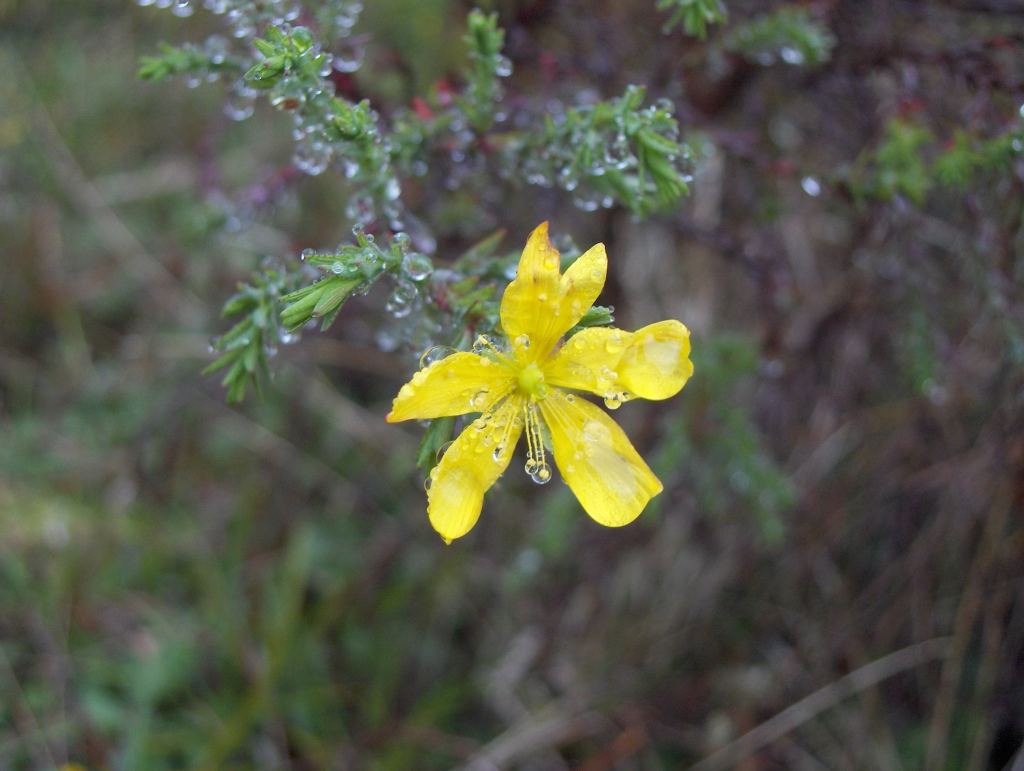


 Entrusted to the Dirt
