Gum Trees, Graves, and Genocide

We wound our way slowly up the mountain’s dirt road, carefully choosing tracks for the tires that avoided the worst of the ruts caused by the spring rains. It was only the two of us taking this outing to the top of the mountain, myself and my peculiar friend, a village Sufi mystic who was missing many teeth and who was at least twenty years my senior. My friend, a mullah (teacher) of sorts, had aggressively befriended me in the way only a villager in an honor-shame culture can, hoping, I later found out, that I would be his ticket to America. But on this day all I knew was that he wanted to take me somewhere special.

Sufism is the experiential ‘denomination’ of Islam, roughly analogous to Pentecostalism within Christianity. The focus of Sufi Islam is on achieving a mystical union with God, thereby experiencing his power and his love. But this is accomplished through good works, prayers, mantras, etc. It’s my opinion that the Sufis borrowed heavily from mystical Middle Eastern Christianity and that they came the closest to the Christian idea of God as they strayed further from orthodox Islam and into “heretical” ideas, such as the belief that God could become a man incarnate. The Sufis reached their zenith in medieval Islam, but in the last hundred years or so have lost much of their influence as Saudi-funded Wahabiism seeks to return Islam to its own interpretation of the faith’s original form and sources. If you’ve ever heard of the whirling dervishes, then you’ve heard of one expression of Sufi Islam. Sufism is declining, but it holds on in contexts like ours, where it once ruled.

As we traveled up the mountain we passed a few shepherds with their sheepdogs, goats, and sheep, as well as a man on an ambling tractor. The temporary vibrant green grass and flowers of spring complimented the view as we climbed higher and higher above the village, its valley, and its flashing lake. Many other mountain peaks were now in view and I soaked in the beauty of this ancient region. After about twenty minutes of driving we arrived at the end of the road. On our left, we could now look down over the other side of the mountain where we could see a large town and the soaring peaks beyond it, home to local guerrilla fighters who are, of course, regularly bombed by neighboring countries. The town in the valley below us had its own tragic history of genocidal bombing at the hand of a former dictator. Just in front of us was a shepherd’s hut, but we turned and walked up the slope to our right toward a small grove of wild gum trees.

My friend reached for a cut made in the trunk of one of these gum trees and handed me a glob of cloudy white sap, encouraging me to chew it. Its consistency was surprisingly like chewing gum, but the only flavor was bitter pine needle, without any sweetness whatsoever. I forced a smile and kept chewing it for politeness, but looked for a good opportunity to discretely spit it out. In spite of my deep desire to “go native,” I just haven’t been able to understand the delights of chewing on Pine Sol-flavored sticky tack. Next, we came to a natural spring, from which I was genuinely happy to have a drink. The way that God causes springs of water to gush up out of the tops of mountains is simply magical and delightful, especially in a land that turns into a desert for nine months of the year.

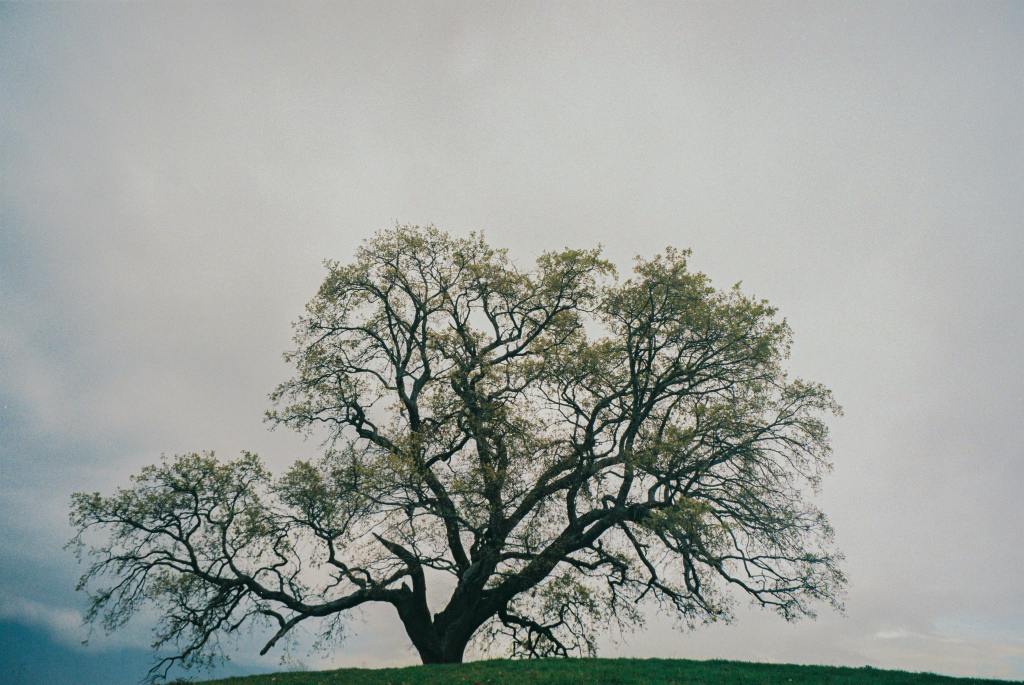
Now we came to the main attraction, an ancient oak tree, squat and bordered by a small fence. Hundreds of small colored cloths hung from its branches and swayed in the wind. And in the middle of the fenced area was a grave.

“This man was the son of the caliph, Umar,” my friend announced. “They came here with their armies and my ancestors gave them a bloody resistance. We killed so many of the invading Arabs that they still call those of us from this area ‘The Killers of the Disciples.’ Ha!”

“This man,” he went on, “killed thousands upon thousands of my people.”

It was a poignant scene. In front of us was the grave of a man who took part in religiously motivated genocide. In the valley below us lay a town where thousands of the same people group had died by genocide, once again, but as recently as the year I was born. Just beyond that town lay the mountains where jets continue to drop their bombs to this day. What came out of my friend’s mouth next left me speechless.

“This is a holy man. This is a holy place. We should pray here.”

It was then I fully understood the horrific irony of this place. The locals understood this man’s grave to be a shrine. That’s why the little colored cloths were tied to the branches of the old gnarled oak, Asian-style, to represent a prayer. Somehow my friend could not see the awful contradictions of his words, his ethnicity, his history, and his religious beliefs. Two plus two did not equal four. The son of the caliph of Islam could kill thousands of his ancestors in the name of Islam and his grave could still be considered a holy shrine. And just that morning my friend had reassured me that ISIS’ violent actions did not represent true Islam. Yet here we were.

My friend entered the enclosure and lifted his hands to pray, in Arabic, the language of his people’s conquerors.

For my part, I turned and walked away. I did pray, but not to the shrine of a killer. Rather, I prayed to the God who made the mountains, the wild gum trees, and the mountain springs, the only one who hears prayer, the one who has called us to love our enemies, and the one who alone can open the eyes of the blind. Even one so blind as my friend.


If you have been helped or encouraged by the content on this blog, would you consider supporting this writing and our family while we serve in Central Asia? You can do so here.

For my list of recommended books and travel gear, click here.

Photos are from Unsplash.com

Are You Sure They Are Rejecting the Gospel?

Photo by Fahrul Azmi on Unsplash

The gospel, the good news of Jesus Christ, is a heavenly message. As such, it often takes a little while until earthly ears can actually understand it to the point of rejecting it for what it is. Many who reject the gospel reject it without having actually understood the message. Very often, and in spite of our best efforts, unbelievers initially hear another message of “do good in my way so that God will accept you.” When possible, acknowledging this dynamic means that we should labor to present the gospel multiple times to a given friend before we conclude that they have actually rejected the gospel.

Years ago, when I was here in Central Asia as a single, I spent the night in a friend’s college dormitory. Many of the students there were from a conservative village area and they spent the whole night trying to convert me to Islam. I graciously returned the favor, in turn spending the whole night trying to explain the gospel to them. Some hours into the night, I remember realizing that these students simply weren’t understanding what I was actually saying. They were processing everything I was sharing with them about faith and the forgiveness of sins through a works-righteousness framework. I had recently received some training on how to share the gospel with Muslims through a series of Old Testament sacrifice stories, culminating in the presentation of Jesus as the final sacrifice for our sins, “Behold the lamb of God who takes away the sin of the world (John 1:29).” So I gave this approach a shot.

The ringleader of the students was a young man whose father was a mullah (an Islamic religious teacher) back in the village. I’ll never forget when this student turned to me early in the morning and announced, “I will never allow Jesus to be the sacrifice for my sins. I will be the sacrifice for my own sins!” While grieved by this young man’s self-righteousness and hardness of heart, I was at the same time encouraged. He got it. He understood that we were no longer in a discussion about “my rules are better than your rules,” but that I was presenting was a completely different system of salvation – salvation accomplished by faith in the sacrifice of the God-man. The shift from speaking in more abstract theological categories to speaking in more concrete categories (guilty and forgiven vs. accepted by a sacrifice) seemed to be part of the breakthrough in clarity in this situation.

It is vitally important that we share the gospel to the point where we can see that our friends are actually understanding what we are saying. I fear that rejection of the gospel stemming from misunderstanding is probably more common than we think. Differences, in language, culture, background, and just plain old fallenness usually keep people from being able to really hear us in our first gospel presentation. Even when someone rejects the gospel having clearly understood it, that does not always mean we move on. If I regularly speak of Jesus, and my friend is still open to hanging out with me, then this can mean that in some way my friend might be open to Jesus after all.

I’ve Done This Before… With Jesus

Photo by James Coleman on Unsplash

September, 2008. It was the first time for my friend, *Hama, to take part in communion. And I was excited. Five or six months after Hama had professed faith in Jesus we had driven several hours to another city in order to pick up a box of Bibles in the local language. The timing of our trip coincided with the Friday service of one of the first churches to organize and meet openly among Hama’s people group. So we had dropped in, inviting along one of Hama’s musician friends who was interested in learning more about Jesus. Or so we thought. This friend quickly excused himself after observing the first fifteen minutes of the service, clearly feeling awkward and skeptical. Hama, however, was spellbound. Multiple men from a neighboring country were being baptized in front of a packed room, proclaiming Jesus as Lord and savior. Everyone present, with the exception of myself, were open seekers or former Muslims now professing faith in Jesus. While we had attended a local house church in our city off and on together, the openness and size of this meeting (maybe 80 strong) was having a powerful effect on Hama.

The time came in the service for communion. As they passed around the grape juice and naan flatbread – from which we tore off a piece and passed it along – Hama leaned over to me.

“I’ve done this before.”

His statement surprised me. “No, Hama, this is the first time you’ve done this. I know because I’ve been with you every time you’ve attended the house church. I’ve been looking forward to this for a long time.”

“No,” Hama said. “I’ve done this before… with Jesus.”

I shot Hama a furrowed-brow sideways glance. “What?”

Hama continued, “Remember that day when you told me that according to what I had told you, you thought that I had become a true Christian? Well, that night I had a dream. In my dream Jesus came to me and gave me some bread to eat and something red to drink.”

Hama was looking down now at the elements in his hands. Though we had done regular Bible study together, this was the first time he had heard the meaning of communion explained in his mother tongue… and the pieces were coming together. I must have still had a confused look on my face because Hama went on to clarify.

“You didn’t think I became a Christian because of you, did you? No, I became a Christian because of Jesus. That night with the dream, after that is when I truly believed.” Hama grinned in his typical mischievous way. “My friend, I am a Christian because of Jesus, not because of you.”

“Well,” I replied. “Thank God for that!” And we ate the bread and drank the cup, remembering what Jesus had done for us.