That Are Not of This Fold

Yesterday I got to preach to our small local church plant on John 10:16 – “And I have other sheep that are not of this fold. I must bring them also, and they will listen to my voice. So there will be one flock, one shepherd.”

We simply walked phrase by phrase through this verse, seeking to understand, wrestle with the importance, illustrate, and apply each line. The phrase that got the most audible reactions was “that are not of this fold.”

I shared with the attendees that Jesus was here communicating to the Jews that the people of God would be gathered from unexpected peoples and places – namely, the gentile nations. “Not of this fold” meant not of ethnic Israel. One of the great mysteries revealed in the New Testament is that God had chosen a holy spiritual nation, comprised of those from every nation, tribe, and tongue. Ethnic Israel wasn’t the ultimate Israel.

This part wasn’t very provocative. After all, my listeners were Central Asians, not first century Jews. However, we then discussed why this point is important for us today. We, like Jesus’ initial Jewish followers, tend to believe that there are certain types of people who believe, and certain types of people who really don’t. Those similar to us almost always fall into the category of “likely open to belief.” And groups we are naturally opposed to often end up in the category of “unlikely to believe.”

This has a practical effect on our evangelism. We end up sharing with those we have pre-filtered, and we remain tight-lipped with others. But what has occurred is that our own experience and cultural categories (or prejudice?) have become the filter, rather than the gospel message itself. Given the logic of Jesus in this passage, this is a mistake.

“If we see a person in Western clothes, young, and educated, we are likely to believe they’d be open to a spiritual conversation about the gospel,” I said to the group. “But if we see someone with a big Islamic beard and their pants cut short in the Salafi style, then we are likely to avoid speaking with them about Jesus, right?”

“Oh, for sure!” the group responded.

“And what do we do with the elderly, the tribal, the illiterate, members of enemy people groups, or our own relatives? Do we avoid sharing with groups like these also?”

“Yup, all of them!” the group responded. People were shaking their heads and laughing, but they were being very open and honest and genuinely wrestling with this difficult point of application.

“Friends,” I continued, “I think we need to repent. And seek to share the gospel even with those who seem like the type very unlikely to respond. Jesus has other sheep that are not of this fold.”

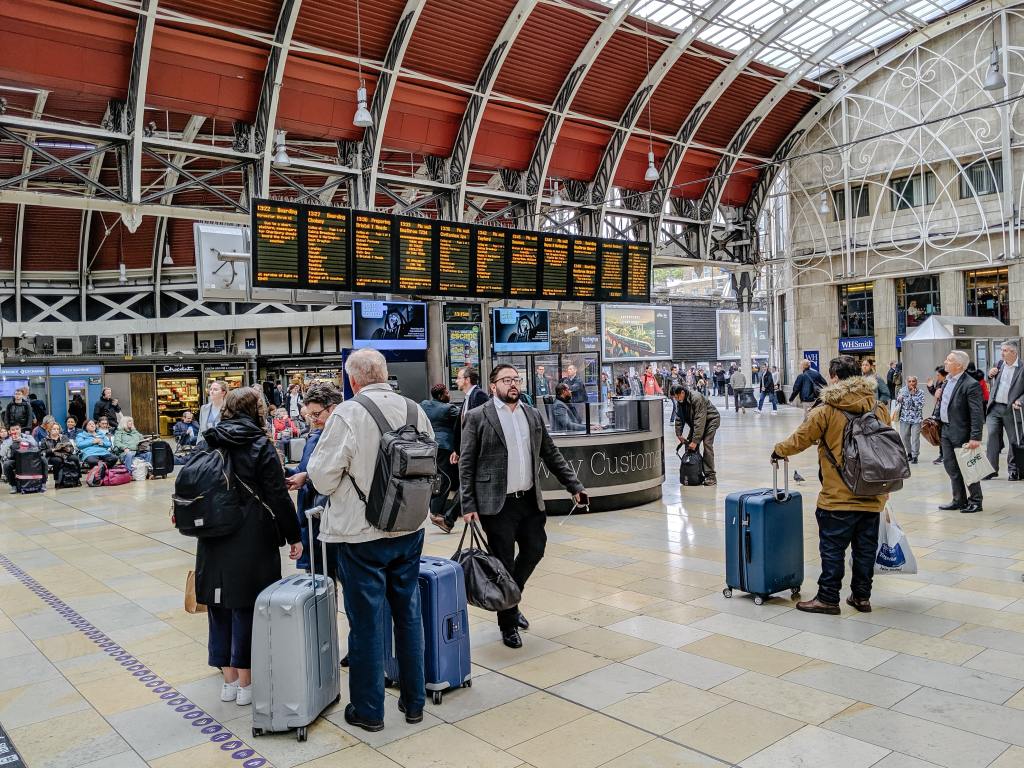
It was not lost on me that our small circle of local believers represented those that many in the West would categorize as “not the kind that believes in Jesus,” as I used to. All of the local believers present grew up as Central Asian Muslims. Their passports and physical features are of the sort that qualify them to get extra “random” screenings in Western airports. And yet here they were, now believing, wrestling with the same kind of temptation as they thought about categories of people they really didn’t believe could follow Jesus. It reminded me of the time a local brother was wrestling with “the man on the island” problem. “Brother,” we told him. “You literally are the man on the island!”

But I am just as guilty as any of these local followers in this regard. Too often I also have held back from sharing with that Salafi-looking man, that elderly local, or that secular Westerner. I have used my own filters instead of using the gospel message itself as the filter.

Thank God that the voice of the good Shepherd effectively calls those from among groups we are tempted to avoid. Thank God for his grace toward us weak evangelists with our own faulty assumptions.

The good shepherd has been calling his sheep from other, unexpected, folds for 2,000 years now. My own Anglo-Saxon and Celtic genes are evidence of this. The hardest to reach demographics and people groups have and will continue to surrender a remnant at the power of the shepherd’s voice. The flock – in all its unexpected diversity – will be complete. “And there will be one flock, one shepherd.”

Photo by Samuel Toh on Unsplash

River Cliffs and Reformed Theology

The two of us walked, single file, through the coffee gardens. We were seventeen years old, barefoot, wearing swim trunks, and with inflated tire inner-tubes slung over our shoulders. The coffee cherries were ripening and we occasionally reached out, plucked one, and popped it in our mouths. The clear jelly between the red skin and the green coffee bean itself was deliciously sweet. Then the slippery bean itself could be pinched between forefinger and thumb, and launched at distant targets with surprising accuracy.

Tall sprawling trees spaced at regular intervals provided speckled shade for the short coffee trees below. We followed our dirt path naturally, having trekked it hundreds of times since we were in elementary school. We were, once again, on our way to inner-tube down the river. The horseshoe twists and turns of the main river of our Melanesian valley were such that we could walk ten minutes down trails on one side to a particular cliff to begin our trip, leisurely float down the river bends for forty five minutes, then get out at a different spot only five minutes from the compound where we lived. The trip included two sand bars, several set of rapids, two cliffs for jumping, whirlpools, deadwater, and the occasional abandoned raft made of banana tree stalks. One time we saw the carcass of a massive dead python. Thankfully, we never saw a live one.

Sometimes lots of missionaries and missionary kids would all take a big inner-tube trip together. Other times, groups of guys would go to make campfires on the sandbars and roast hot dogs, or challenge each other in “mud wars,” where soft clay harvested from the river banks was shaped into small round projectiles that splattered with satisfaction on your opponent’s torso (At which point he was temporarily “dead” and had to make his way back to wash in the river, hollering “I am a new man!!!” as he emerged from the water to enter the fray again.)

This particular sunny day it was just me and my close friend, *Calvin, going to float, talk, and perhaps pick up some hot fried skon flour balls on the way home. A simple river trip on a nice afternoon, like so many others. But our minds were not merely carefree that day, enjoying the familiar stroll through the coffee and banana gardens. Instead, they were chewing on some deep questions of the faith.

Calvin and I had been working out regularly together and while doing so, listening to John Piper sermons. Calvin had also been secretly devouring commentaries in our mission school library. While raised in dispensationalist circles, the two of us were beginning to wrestle earnestly with the claims of what was still a scary term for us: Calvinism. We were still in the early stages of our theological journeys, very much looking into something that we were sure couldn’t be true, but which had a much stronger case than we had ever realized.

The adult missionaries we spoke to about this particular theology generally discouraged us from looking into it. This of course only added fuel to the fire. We began to try to hash it out on our own, armed with CD sermons, library commentaries stealthily checked out, and our friendship. This river trip was one of many similar discussions we had during those final two years of high school.

This particular river trip stands out to me though. I remember it as a bit of a turning point, not because my convictions necessary changed that day, but because I admitted something out loud to myself for the first time. Something not contrary to, but consistent with, the God I knew from the Bible and my own experience – that if God is who he says he is, then in a contest of wills, He is the one who must ultimately win.

We had arrived at the small cliff that marked the point we embarked on our inner-tube journey, usually by jumping off of said cliff twenty feet into the river below. We sat down on the edge to survey the water, making sure we couldn’t spot any trees that had been pulled in during rains that might pose a hidden danger under the water. One of our schoolmates had a leg impaled one time jumping off this very cliff.

“So what do you think about irresistible grace?” I asked Calvin, as we scanned the brown water.

“Well, it seems like it would fit with passages like Romans 9 and Paul’s story, right? But I’m not sure, what about the passages that talk about people rejecting God? Doesn’t that count as resisting?”

“Yeah, like what Stephen says to the Jews before they kill him. They always resist the Spirit. How can you really name a point irresistible if there’s such clear examples of people in the Bible actually resisting?”

“Though actually,” Calvin countered, “As I remember, I don’t think it means we can’t ever resist, I think it might mean God will break that resistance for the ones he’s chosen.”

“Oh. But what does that mean, then our resistance isn’t real? That it’s a sham?”

“No, of course not, that would mean we couldn’t be responsible for unbelief, right?”

“Right…”

We sat in silence at the top of the small cliff, legs dangled over. I popped in one last coffee cherry I had saved, and spat out the skin.

“I dunno though,” I continued. “Something tells me that if my will and God’s will gets into a contest, God should be the one who wins. God should win. I don’t know how exactly that’s right with free will and all, but that’s what seems right in this universe. He should win in any contest against a little human like me… shouldn’t he?”

We sat and looked out over the river and the banana gardens on the other side of it. The question lingered. The cicadas hummed their rhythms in the trees.

We both sensed it was time to get moving. We spun our T-shirts and tied them around our foreheads like bandanas, preparing for the cliff jump. Throwing our inner-tubes off the cliff we made a running start for the edge, hollering as we jumped off, and plunged into the chocolately-brown jungle water below.

I didn’t realize it as I hit the water that day, but the Calvins had led me to admit an important point. God wins. He overcomes our resistance whenever he wants to. My mind wasn’t ready to concede that fully yet, but deep down inside, I knew it.

*this is his real name, and a fitting one for the topic of our discussion that day

Photo by Andres Hernandez on Unsplash

The Right Words For Airport Security

Our trip back to the US a few days ago went pretty well. The security personnel at our Central Asian city’s airport gave us some trouble due to our daughter’s diabetic supplies and devices. But it wasn’t too bad. I was reminded of the last time we had flown out of that same airport. That time I had a suitcase full of Bibles in the local language.

There’s a city in the US which contains a large immigrant population of our focus people group. A new church plant had been started there among them, the first one in all of North America that we are aware of. But they couldn’t get ahold of Bibles in the correct language. The updated Bible translation had recently been printed in Korea and the only available copies were now stored and distributed in our corner of Central Asia. Hence the request for us to bring back a suitcase full of Bibles.

We made it through a couple layers of security without any trouble, but at the final suitcase scanner I got nervous. The officer had indicated that I was to open the particular bag full of Bibles and a few homeschool books. And while it’s not illegal to possess Bibles in the local language or to distribute them in some limited ways, the laws are vague enough that an Islamic – or simply grumpy – official could decide on a whim to confiscate them or to get us in trouble.

“What are these?” the officer asked me, making a sweeping gesture at the large pile of books in the suitcase.

I chuckled nervously, “We love books, as you can see… Um, these are books for our kids’ education… and… those… are Bibles in your language.” There was no hiding it. He could clearly see the dozens of books with Holy Injil (Gospel) printed on their spines.

I held my breath as the official picked up one of the Bibles and flipped through it. I couldn’t read his expression.

Suddenly, I blurted out, “You want to know something crazy? We’re traveling to America and bringing all these Bibles from here to there. The members of your people group there who want to find them or buy them there can’t find any at all – they’re simply not available anywhere! So we’re hauling all these over to help them. Isn’t that crazy that you can’t find a Bible in your language in America? That’s not right. Thankfully we can get them here and can help them out by bringing these to them.”

The officer grunted and nodded, setting the Bible back in the suitcase.

“You tell them when you get to America,” he said in a serious tone and with a look of conviction, “you tell them that that’s not right. They should be printing and selling these Bibles there as well! Bless your hands for carrying these over to our people there. Can you believe that, guys?” He said, shifting from me to his colleagues. “You can’t buy these Bibles in America, so we have to send them from here over to there. What a world!”

And with that he motioned for me to zip up the suitcase and be on our way.

We gathered up our various bags and children and made our way to the check-in counter. I was relieved that security hadn’t give us any real trouble. I reflected on the conversation and smiled. How kind of the Lord to put those particular comments into my brain at just the right time. The conversation could have gone very differently. I only regretted forgetting to offer a Bible to the security officer on the spot.

In passages like Matthew 10:16-20, Jesus promises that we shouldn’t be anxious about what we’ll say when we’re dragged before governors and kings for his sake – that the Holy Spirit would give us the words to say. I haven’t yet had to go before governors or kings for Jesus’ sake. But I do wonder about conversations like that one with the airport security officer. The right words came at just the right time, without planning beforehand what I would say. Perhaps this was a small taste of the Holy Spirit’s particular help in these kinds of situations.

I tend to get very nervous while speaking under pressure. So this promise from Matthew 10 is very relevant for me. My natural self under questioning is likely to kick into fight, flight, or freeze mode – most likely the latter two. The color will drain from my face and the language part of my brain is likely to shut down. And yet I won’t have to rely on my natural self if I am ever brought in front of the authorities for questioning. The Holy Spirit will give me the words to say. He will give my local brothers and sisters the words to say.

What an encouraging and practical promise.

Photo by Tomek Baginski on Unsplash

Of Immersion and Umbilical Cords

Tonight we came to the end of a whirlwind eleven months. We’ll be heading out of the country for a few weeks of rest and family events. But what an ending it was.

This evening *Alan was baptized. He’s the new believer who recently came out of nowhere, having come to faith through YouTube videos while isolated from knowing any other believers.

The initial time of singing and exhortation tonight proved to be a very sweet time. Baptisms are always soul-stirring, but in this part of the world they feel especially weighty. The Islamic society here views going under the water as the point of no return. It means apostasy has been committed. Even though Alan had explored other religions before and even was an atheist for a season, his act of baptism will be viewed with a special kind of hatred by his Muslim friends and relatives.

For their part, the local believers were eager to follow up the exhortation from Romans 6 with their own personal encouragements. One word was regarding ongoing repentance. This prompted spontaneous and public repentance from two of the other brothers present – a particularly life-giving thing for me to witness having recently walked with them through the very messy conflict they were repenting of. This was a tremendous example for Alan to witness, the kind of thing that should be a regular part of a healthy church’s life together.

*Patti also spoke up, exhorting Alan to put off the culture he has known and to put on the new culture of Jesus Christ. Patti is the least-literate of the group of believers, so her clear and biblical contribution was especially meaningful.

Then we took a group photo together (only the one being baptized is allowed to request pictures and use their camera for this kind of event) and headed up to the roof where a kiddie pool was ready. One of us the expats and one of the local brothers flanked Alan as they stood together in the water. Not only does this two person dunking make the physical act of immersing the third person easier, it also helps avoid any false elevation of baptism-by-foreigner while still honoring the locals’ desire to respect us by having one one of us do the actual baptizing. Another local brother read the questions, received Alan’s affirmative replies, and then made the Trinitarian proclamation.

And Alan went under. All but the very tips of his knees. Total immersion continues to be quite hard to actually accomplish! Thankfully, this doesn’t mean he will be raised in the new heavens and new earth without any kneecaps.

The rest of the evening was spent laughing and sharing chai and supper together. And yet in this season we can’t seem to stop uncovering deeply-ingrained aspects of culture that we’ve never heard of before, and which seem somewhat concerning. Sure enough, we had another surprising lesson waiting for us tonight.

During dinner, one of the local moms asked my wife if we could bring her daughter’s something back to the US with us. The word she used sounded an awful lot like belly button. Confused, my wife sought clarification. It wasn’t belly button, it was umbilical cord. She wanted us to bring her teenage daughter’s umbilical cord back to the US with us. If you are anything like us, at this point you’d be thinking, “Why on earth would we ever do such a thing?”

Apparently one of our regional cultures saves the baby’s umbilical cord and places it somewhere in the world that would portend a good future for that child, connected to that particular place. In our case, the mother wanted us to bring the remains of the umbilical cord in our luggage to the US and leave it there so that the power of the cord (?) would enable her daughter to reach the US and find success there.

My wife fumbled for words and reminded this sister of what we had been talking about earlier – that following Jesus means we put on a new redeemed culture. Plus, what in the world would we tell customs?

“Anything to declare?”

“Just our friends’ daughter’s umbilical cord.”

“Um… what?!”

Needless to say, we won’t be carrying any umbilical cords with us this time. Nor in the future, at least until we learn a lot more about what is actually going on with this local practice.

But it’s not just the Central Asians. This confused TCK also learned tonight that even some Westerners keep their child’s umbilical cord for sentimental reasons. Again, I had never heard of this before. Western friends, is this a thing? Culture is fascinating. And sometimes just downright strange.

But putting aside all talk of physical cords that have been cut and their reasons for global travel, Alan himself is very much now spiritually alive and part of the family. Though he started his walk with Jesus as an isolated young man watching apologetics videos, he has a community of brothers and sisters now. He will need them, and they will need him.

As for us, we need to get some sleep. Twenty hours of flight time with multiple small children awaits us. And though we’re getting on that plane tired and spent, we are also getting on it happy and thankful.

The church is repenting, new believers like Alan are taking costly steps of obedience, deeper worldview issues are coming out and getting addressed. He is working. Keep the prayers coming.

Photo by Egor Myznik on Unsplash

*Names changed for security

He Would Have Come With Me

The summer after my freshman year of college I moved back to the Philadelphia area in order to work and save up for a gap year in Central Asia.

I ended up finding steady part-time work with an elderly cancer patient named Mr. Joe. Because of his age and the weakness brought on by chemotherapy, Mr. Joe needed a lot of help around his suburban property. He paid me a very generous hourly wage to help him with random projects, even paying me for the time it took to go to long lunches with him at a local Jewish diner. He also loaned me one of his cars so that I could easily commute to his place from the mission house where my mom and I were living at that point.

Mr. Joe was a character. He spoke with a New York accent, loved to tell long funny stories, and could never seem to actually finish a project – or even let the young guy working for him finish one. This understandably drove his wife crazy. The yard especially was a minefield of almost-finished projects that Mr. Joe had moved on from. She did her best to keep the house inside well kept-up as her refuge from the various project zones. Alas, at this she was only moderately successful. May God reward her faithful endurance with a project-free abode in the age to come.

“He’s payin’ you to be his friend and listen to bad jokes, tuhts!” his wife would sometimes say, laughing. This wasn’t entirely untrue.

Mr. Joe and his wife knew my parents from years ago where they had overlapped at the same church. This was the church where my dad had come to faith, married my mom, served as an associate pastor, and was eventually sent to the mission field. Mr. Joe and his wife were part of a large contingent that eventually left the church after a long and fruitful season, “the glory years,” came to an end with a pastoral leadership transition that never seemed to stop transitioning. What had been a strong and more traditional Baptist church led by a gifted pastor through the 80’s and 90’s later struggled in the confused church growth movement of the late 90’s and early 2000s.

I hope that Mr. Joe indeed had genuine faith, and he particularly emphasized the importance of finding joy in God. But he was also a contrarian who enjoyed theological provocation, so he would say lots of edgy things to get a rise out of people – or at least to get a laugh. He was originally from a Catholic background, as many of the evangelicals in that part of the Philly area tend to be. But like many from our former church, he never settled again in one local church after the transition fallout.

In one way Mr. Joe was a very traditional older white American man of the mid-2000s. He despised Muslims. And for the life of him he could not wrap his mind around why I wanted to move to Central Asia in order to befriend Muslims and share the gospel with them. The question would come up over and over again as we sat down and enjoyed hoagies, reuben sandwiches, and coffee at his favorite Jewish diner. Why would you ever want to give your life for them?

We had countless conversations over the course of that summer where Mr. Joe tried to square what I was sharing with him about God’s heart for Muslims with what he was watching on TV and reading from the “Clash of Civilizations” literature of that period. To be honest, I didn’t think these talks – heavily interspersed with Mr. Joe’s rabbit trails and stories – were having any effect on him. I was, after all, a 19-year-old kid who hadn’t even grown up in the US, an idealist who could talk a lot about reformed theology and missions but who couldn’t seem to stop ruining Mr. Joe’s yard and doing my fair share of botching his admittedly quixotic list of projects. He was about 50 years my senior. And we had frankly lived in very different worlds.

At that point I was fresh from a year of studying at Bethlehem, John Piper’s church, so we found some common ground when discussing the pleasures of walking with God. And of course we developed other common ground as I learned about the pleasures of long lunches at Jewish diners. But Mr. Joe knew that I was saving the money he paid me so that I could afford my year overseas in Central Asia. And from the beginning he told me he was absolutely against the idea of me going – and that he thought I was crazy and foolish. Apparently his need for help was greater than his opposition to what I planned to do with the money.

But God was at work over the course of those several months where we started countless projects together and even managed to finish a few. As summer transitioned to fall, one day we went out for a final lunch together at his favorite diner. And there Mr. Joe, with tears in his eyes, told me something I will never forget.

“A.W., you know I think you’re crazy for wanting to go over there. But I’ll tell ya what, if I were a younger man and weren’t about to die from cancer, I’d go with ya… You be safe over there and ya tell them about Jesus and how he loves ’em.”

I nearly choked on my cottage cheese.

It was, for me, one of the more miraculous heart changes I had ever seen. I remember thinking to myself, “If God can change this old man’s hatred toward Muslims, and replace it with love, well then maybe I’m not crazy for thinking God can change Muslims’ hearts as well.”

Mr. Joe sent me off with a very generous gift of financial support, asked to be on my update list, and that was the last we ever saw of each other. He passed away shortly thereafter from cancer.

God changes hearts. He did it for me. He did it for Mr. Joe. He can do it for any person in our lives who seems absolutely unchangeable.

The king’s heart is a stream of water in the hand of the LORD; he turns it wherever he will.

(Proverbs 21:1 ESV)

Photo by Ezra Jeffrey-Comeau on Unsplash

The Spiritual Uses of Eczema

For a while now I’ve had eczema outbreaks on my hands. It started in earnest after my daughter developed diabetes in the middle of spring 2020 Covid lockdowns. Which followed a decade of a pretty intense ministry lifestyle on my part. Apparently an auto-immune disease like eczema can develop in response to massive stress or experiencing trauma. These things don’t get fully dealt with and can come out in the body. Makes sense, given the season and background.

The eczema itself hasn’t been terrible, but along with some other small health things that won’t go away it has been a regular and sobering reminder of my own brokenness. A chance to lament with a deathbed line from M’Cheyne, that God gave me a message and a horse (a body). I have preached the message – and I have been killing the horse. My eczema reminds me that I am a limited creature, with a limited body and mind. When I push beyond the good boundaries baked into my created nature, things tend to break. And they might stay broken for a long time.

As such, eczema keeps me humble. It reminds me of the importance of living at a God-honoring pace. It itches and breaks open in seasons of increased stress. When it does, it reminds me of the ways my pride has contributed to that load of stress. God uses it as a kind reminder of hard truths that I am prone to ignore.

However, tonight I heard of a very different spiritual use of eczema. *Alan came for the first time to our discipleship meeting tonight in order to share his testimony with the other believing local men. He had shown up out of nowhere a couple weeks ago, professing faith and desiring baptism. Normally we’d be pretty skeptical, waiting for the tell-tale question about baptism certificates that indicates a young man is looking to “convert” in order to craft a religious persecution case for the UN. But Alan’s story was very different. After years of studying different religions, he had immersed himself in a study of Christianity during those same lockdowns of 2020. After many months and thousands of hours of study, he seems to have been born again, in isolation, this past January. And right around that time, God healed him of his severe eczema.

Alan had struggled all his life with terrible eczema on his arms, in spite of trying countless treatments. The dryness of our local climate, the severity of the sun, and the extent of his outbreaks meant bandaged up arms and plenty of limitations. Alan is also brilliant, training to be a dentist, with the mind of a young scholar. So a lack of research was not the problem.

But in the mysteries of God’s providence, right as Alan came under conviction that the gospel is true, his eczema completely disappeared. He is convinced it was a miracle of God’s healing power, one which emphasized God’s love and care for him personally. I am prone to believe him.

Just a couple weeks ago I was encouraging some new personnel as they shared about a friend who seems painfully close to faith, but who just won’t yet take the plunge. “I don’t understand. She sees and mentally agrees with the gospel when we study together, but she’s just not quite believing it yet,” my colleague said, shaking her head. I shared with her that this phase is not uncommon at all among our local friends. They come to the place where they know the gospel is true in their minds. But they often get stuck there, seeming unable or unwilling to fully believe it for a season. Those that make it through this season often do so because of a demonstration of spiritual power and/or presence.

I’m not talking about anything too crazy here. But to not notice this trend in the work here one would have to be willfully blind. The majority of our Muslim Central Asian friends who follow Jesus experience something like a dream, a healing, or a powerful indication of God’s care for them as one of their final steps towards believing (Yes, even those being led to faith by us Baptists). This event often confirms for them experientially the truths they’ve been seeing in God’s word. It’s so commonplace – especially dreams – that those who don’t experience one sometimes wonder if they’ve done something wrong. We of course assure them that they haven’t.

The salvation of an individual has been the same since the beginning – counted righteous by faith in God’s promises. Confirmation of the truth of the gospel or the new birth may vary considerably, and we are unwise if we get overly-narrow and demand the optional confirmatory workings of the Spirit look the same every time. No, keep it simple and biblical. A credible gospel profession with the mouth. A life that, even if only in seed-form, evidences the transforming power of the Spirit. After that, the Spirit is free to show off if and how He wants to. And yes, He tends to do so differently in fear/power and honor/shame cultures than he does in the cognitive-heavy West. If in doubt, please consult some classic missionary biographies. Or some of our local church members. Or 1st Corinthians chapter one. Greeks seek wisdom. Jews seek a sign. The Spirit saves both and demonstrates the gospel to be the true power and true wisdom of God.

If God indeed miraculously healed Alan’s eczema, what might be the point of that particular healing? If we study the ways the Holy Spirit has tended to work here, it would likely have to do with the category of confirmation and assurance. Yes, you are about to go against your entire society and follow Jesus, but this is not just some philosophy, this is actually and powerfully true. Yes, your body may be broken someday by persecution, but resurrection is coming – and here is a little preview of death working in reverse. Take courage. Yes, your relatives might call you an unclean infidel, but you have found the source of true cleansing. Everything that Jesus touches becomes clean.

For another reason I am very thankful for this experience that Alan has had. He is very intellectually-wired and has already consumed thousands of hours of YouTube apologetics. There is great danger that his heady faith will misfire if not grounded in experience, affection, and a messy local church. Brilliant minds like his can be shaken by subtle or powerful anti-gospel arguments and they can fall into a continual search for truth, one which never ultimately lands anywhere. But what about the eczema? What scholarly argument could convince him that that never happened, that the timing was purely coincidental? It may serve as a safeguard in the future when his faith is shaken, as experiences of God’s faithful kindness serve to stabilize so many of us when we begin to doubt.

If Alan is right, and this was a healing, then how very fitting it is. That Jesus might make someone clean from a skin disease as a metaphor for what he is doing to their very nature.

Regardless, Jesus has truly reached out and touched this young man’s unclean soul. And once again, Jesus did not become unclean. Instead, Alan is now truly and forever healed and whole.

And us? We are making plans for a baptism.

To support our family as we head back to the field, click here.

For my list of recommended books and travel gear, click here.

*names changed for security

Photo by Bogomil Mihaylov on Unsplash

A Day in My Life in Central Asia

Ever wondered what a typical day looks like for missionaries like us serving in places like Central Asia? I can’t exactly say what a “normal” day is, since life here tends to be pretty fluid and not super structured, both due to the culture and the nature of our role. But as I thought through this particular day which is now wrapping up, I realized many of its parts give a window into key themes and challenges of this season of ministry. So, here it is. A day in the life of this particular cross-cultural church planter.

Today I slept past my alarm.

Drank coffee and read 30 minutes in a book about power and abuse in the Church.

Tried to counsel my seven-year-old through a bad attitude about her homeschool work.

Messed for a while with the internet only to realize the government had shut if off again to prevent cheating during university exams. Mobile data as well.

Listened to an audiobook while I got ready in order to keep preparing for the fall semester at the NGO where I teach part-time as my platform work.

Went for an hour prayer walk in the bazaar and stayed in the shade as much as possible.

Stopped for a cold blended melon drink on my way back to catch up on some texts. Updated colleagues on crisis counseling happening among local believing friends.

Went to the vet for tick medicine, and then back at home removed about 40 ticks off my poor dog. Drowned them in apple cider vinegar. Ordered a flea and tick collar from the US so that I never have to do that again.

Lunch with the family on the floor together, local style.

Talked with a student about a picnic house which he saw for rent. We are trying to find better local options for rest and sabbath.

Set up a friend who came to finish an overdue house project.

Led an update call with several coworkers in other cities.

Wrote out an English outline of the message this Friday and began the local language manuscript.

Made plans to go to a believing friend’s picnic house tomorrow night so my wife can connect with some of his unbelieving female coworkers who are also coming.

Dinner on the floor with the family.

Attended an engagement party for a believing attendee of our church plant who went against counsel and got engaged to an unbeliever. There was the normal line dancing but also a traditional dance involving a large knife.

Got my sleepy and sugar-crashing family back home, watered the garden trees, and threw away a pigeon carcass. Made plans for checking the local language sermon manuscript, sometime tomorrow.

Getting to bed probably around 1 a.m.

There it is. One random day in my life here. Overall not too abnormal, other than the tick apocalypse (grimacing even now as I recall it). During my prayer walk I was meditating on the end of the book of Jude, particularly verse 21, “keep yourselves in the love of God, waiting for the mercy of our Lord Jesus Christ that leads to eternal life.”

I look back on a normal day like this one and am honestly a bit daunted by the trials and dubious of my ability to keep myself in the love of God. Keep myself? But that next line gives me courage. I am called to do this by waiting on Jesus’ mercy. Ok. Waiting. I think I can do that. I might not always have the faith to laugh at the future when there are some really hard things going on in the present. But I do have faith that He can help me wait. I trust that he will, one day at a time.

Photo by Boudewijn Huysmans on Unsplash

He Really is On the Move

“So we’re the first Christians that you have met in person?”

“That’s right,” our new friend replied.

“And how long has it been since you believed in Jesus?” I asked.

“Since January… I had been studying the Bible and listening to theology and apologetics for six hours every day. Before that I had been searching for the truth for years. My family is Muslim, but I became an atheist, then a Buddhist. But none of them had answers for suffering, nor for my desire to be loved by God.”

We sipped our coffees and chai in the mall food court and marveled at what this young man was telling us in his near-fluent English. He continued.

“But now I know it’s not a weakness to desire to be loved by God, as all my friends say it is. It is the Holy Spirit who was working in me.”

“You know,” we told him, “there are several small churches of believers in this city from your people group. We’re so glad you were able to find us.”

“I thought I was alone,” he said shaking his head. “I would really like to meet other believers like me, from a Muslim background. If I don’t come to your meeting tomorrow, I will definitely be there next week.”

I recalled my recent desperate prayer. Please show us that you are indeed working here. It feels like strife and failure everywhere we turn. Where is the power of the truth?

Then all of the sudden, today I am introduced to a new believer brought to faith completely in isolation, through the witness of YouTube apologetics channels and a few good books like Seeking Allah, Finding Jesus. None of us were involved whatsoever. And yet now we get to introduce him to the body and bride of Christ, the local church.

Yes, I know in my head that the Spirit must be working here in countless ways we cannot see. But oh what it does for the heart when this secret work is revealed. He really is here. He really is on the move. It really isn’t dependent on us.

It really isn’t dependent on us. What a truth to rest in.

And I have other sheep that are not of this fold; I must bring them also, and they will listen to my voice. John 10:16

Photo by Azamat E on Unsplash

How to Get Vaccinated in Central Asia

A couple weeks ago we signed up for the local government’s website for foreigners who want to get vaccinated. We need to travel internationally soon, so we hoped for a speedy reply. Our region has until now had more Covid-19 vaccines available than locals willing to take them. However, we waited and heard nothing. And so we waited some more.

Finally, we took a colleague’s advice and walked our family over to the local government vaccine clinic. Armed with the name of the head doctor and our blue passports, we decided we would try to explain our situation, and see if he could make the system work for us.

We arrived to a bit of a madhouse. Locals had not previously been very eager to get the vaccine. But we are currently experiencing record numbers of cases, and people are beginning to panic. Whatever system had been in place was now clearly overwhelmed. So, we braved the wandering crowds holding cotton balls to their shoulders and wandered up to the second floor. We then asked around until we found the room of the head doctor.

It was packed. In one corner the head doctor and his assistant furiously filled out government forms and proof-of-vaccine cards for a jostling crowd that kept shoving their bodies, IDs, and forms right into their immediate space. Of course, it took us a minute to figure out that this was indeed the head doctor, buried as he was in people and papers.

On the main desk across the small room, used syringes and caps lay scattered among stacks of papers. A middle-aged man was rushing to and from this desk and in and out of the room. He quickly spotted us and called us over.

I tried to explain to him that we had registered online but the system didn’t seem to be working, that we needed to talk to the head doctor, etc. He just shook his head, said that wouldn’t be necessary, and told me to lift my sleeve. Then he vigorously stabbed my shoulder with the Pfizer vaccine. I was both shocked and encouraged. I hadn’t expected to get the first dose done today. But there it was. He then did the same thing for my wife, who yelled in protestation at his no-nonsense stabbing technique. Was the method like any other shot we’ve ever gotten? Not exactly. But it was fast.

The next part, however, was anything but fast. We had to figure out how to jostle through or wait out the crowd that was mobbing the doctor and his assistant. We opted to inch slowly forward and wait it out. I’m still not sure how exactly to be both pushy and polite in this culture. Some locals are able to thread this needle very well. Instead, my government office strategy is to be unmistakably visible, but less pushy than those around me. It usually wins you friends in the end, but the wait can take a toll. It is, if nothing else, good stamina training for exercising the fruits of the Spirit. Yep, I’ve been waiting here for an hour, and that guy just jumped the mob/line because he’s a relative or because he’s just pushy. Gritted teeth… Love, joy, peace, patience…

We were provided some brief entertainment by our mustachioed vaccine-stabber, who at one point was in an animated discussion with others in the crowd as he moved back and forth across the room, used needle in hand, point facing out. He was using his hands to gesture dramatically, as Central Asian men are prone to do (I sometimes feel that our local intonation and body language feels somewhat akin to Italian). We watched with concern and fascination and the tip of the needle repeatedly passed just inches from several different shoulders. Eventually it ended up “safely” on the desk as well.

After about an hour and a half of waiting, standing, sweating, squatting, and making “help us” expressions with our eyes above our masks, we finally got our forms filled out. Names here work differently, with most people’s three names being their given name, their father’s name, and their grandfather’s name. That means we have to be vigilant to make sure important forms get written correctly, in the local fashion if needed for a local office, or in the Western given-middle-family name fashion if needed internationally. Today I caught the doctor getting my wife’s last name wrong just in the nick of time.

In the end we waited so long that my wife had to evacuate with the children in order to get our diabetic middle child some sustenance. But being Central Asia, they had no qualms about me as husband signing the place where my wife’s signature was supposed to go. The doctor and I then discussed the relevant information about our family and the second dose.

When we were finished, I thanked him profusely in the local language for our unexpected chance to get vaccinated, “Dear respected doctor, may your hands be blessed. May both of you not grow weary, and may your bodies be whole.”

For that, the doctor gave me a fist-bump. Then he hollered at the next man pushing in to give him his forms. Ah, Central Asia. You wonderful mess of a place.

Photo by Diana Polekhina on Unsplash

The First Church Discipline in 1,000 Years

Locals have a very aggressive way of pruning their fruit trees. At the very end of fall, the old men with their sickle sticks make their rounds again – and leave the trees naked for the winter. We were not in our current house this past winter, but we saw the effects of the lack of pruning on our loquat tree. Yes, this late spring it had several weeks of the yellow/orange fruit. It was fun while it lasted. One morning I triumphantly plucked my breakfast straight from the tree. But the neighbors’ trees had four times as much fruit for twice as long! Next winter, I’m getting an old man to come prune my trees. I will endure the sad loss of branches and leaves for the hope of the coming harvest.

Two months ago we gathered for the last time as members with the international church in our previous city. As we prepared to move, leaving this dear body of believers was one of the hardest parts. Seldom have I heard of another international church like this one. It is both serious about becoming a healthy biblical church and at the same time practical and devoted to serving cross-cultural missionaries like us in planting language-specific churches. Many international churches do not embrace a robust church planting vision for the local population in their host countries. Or, in the name of serving the broader expat community, many others settle for lowest common denominator doctrine and ecclesiology. But not all. There is a small but encouraging movement afoot, begun in the UAE twenty years or so ago, that is dotting this region of the world with a different breed of international churches. In my opinion as a cross-cultural missionary, this is one important part of a broader strategy to reach regions like ours with the gospel.

When we were new members at this church, we got to be a part of their first church discipline vote. Now, this is not at face value a very encouraging thing. Though commanded in scripture in passages like Matthew 18, church discipline is hard, messy, and costly. As such, it is largely absent from the evangelical missions world – despite being practiced by William Carey, Adoniram Judson, and others of our forerunners.

How exactly church discipline should get worked out in church planting situations is complicated, and there is a great need for research and thinking to be done about how to actually do this. As with many areas of ecclesiology, it’s gets muddy when you are seeking to plant the first healthy church ever among a certain people group – in situations that we call “zero to one.” How do you do church discipline when you haven’t been able to raise up local pastors/elders, and the church plant is led by temporary-apostolic-planter-pastor types like us? How do you discipline when you haven’t had a chance yet to teach on church membership and roll out a size and culture-appropriate expression of the inside-outside principle for biblical congregations? Yet the complications don’t erase the biblical commands nor the realities on the ground. For a tree to be healthy and fruitful, it must be pruned. The same is true of the local church – and church plants. After all, Paul’s letters were written to situations not too different from ours, to first generation believers who worshiped in church planting contexts.

In our first term we got burned by these very complexities. A local leader-in-training turned out to be a very divisive and deceitful man, who was bribing and dangerously misleading new believers. When our team wanted to move against him in order to protect the church plant, we were undermined by our conservative evangelical partners who didn’t feel that church discipline would “work” in this culture. Turns out the line of those who will actually do church discipline and who won’t is another crucial one which, in terms of practice, divides Bible-believing evangelicals. When it comes down to it, many biblical innerantists on the mission field won’t actually obey the Bible on this front. When you are dealing with a wolf, this is deadly.

Even among those of us who felt that we were dealing with a Titus 3 “divisive man,” we were very unsure of how to proceed in a new church plant that was not yet quite a church. We were caught flat-footed, and this skilled manipulator had lots of room to run circles around us, at great cost. Just the other day I was exploring the bazaar and happened to find the tailor shop of a new believer who fell away in that season, one of the first victims of that whole debacle. I don’t know if he’s open to relationship with us again, but now that we know where his shop is we can try to rekindle that connection.

All of this context is why were were both grieved and encouraged that the international church was moving forward to discipline one of their few local members. This young man had stopped coming to the church gathering for about a year and was unrepentant in the face of earnest counsel to return to his spiritual family. Hiking was more important than his church, and it appeared that his faith had been like the seed sown on shallow soil. He was simply over Jesus, and he was OK with that. We prayed for him to repent and waited patiently, but when the members meeting arrived we sought to be faithful to Jesus by declaring this man an unbeliever and no longer a member of our body.

As we reflected on what happened that day, we realized that this local man may have been the first person in our focus people group to be church disciplined for a thousand years. Or perhaps ever. There was a significant presence of ancient Christians in this area, and they did practice excommunication at times, so I can’t positively say he was the first. But likely the first for a millennium. A tragic distinction for him. But a courageous step for the international church. It would have been so easy to excuse away patterned unrepentant sin because as a local he was coming from an unchurched background, because locals are more resistant to the gospel, because their culture means they don’t understand church discipline, etc. But instead of going these routes, the church leadership and body stepped out in faith, obeyed the Scriptures, and pruned the tree.

The aim of healthy church discipline is always restoration – that those disciplined would wake up and respond in true repentance and faith. We pray that this young man would do this. But we also know that healthy church planting here will involve many more situations like this one. Every time will be a challenge. Will we believe and obey the Scriptures when both our culture and our adopted culture find it unpalatable? When local believers and other evangelicals tell us not to? We must. This is simply what faithfulness in church planting looks like. Holding fast to the commands of Christ, come what may.

We must model for the local believers how to prune the church as they model for us how to prune our fruit trees. To be faithful gardeners, we must endure the sadness of the pruning for the hope of the abundant fruit that will result.

Next spring I hope for many more loquats. And next decade? Many more brothers and sisters in the faith.

Photo by Paul Hanaoka on Unsplash