Please Pass the Meat

The sermon was a rough one. The visiting American pastor never had us turn to a specific text. Instead, his half hour encouragement was a creative string of allusions to bible stories, anecdotes, and illustrations. Everyone in the gathering who had gotten out their bibles eventually put them away.

I sighed and looked around the room. Once again, half a dozen locals were attending the international church service. It was bad enough that the expat community was being served the equivalent of spiritual yogurt water (in case you’re not familiar with yogurt water, it’s not very much by way of sustenance). But locals tend to view Western pastors with a kind of awe, and often accept any content or form of teaching as faithful and worthy of emulation – simply because of the category of person who is delivering it.

I grimaced, seeing that a couple of our church-plant’s English-speaking local guys were in attendance, Darius* and Alan*. They seemed to be focusing intently on the sermon.

My wife and I shifted in our seats uncomfortably and I reminded myself that the mission field is merely a reflection of the state of evangelicalism in the sending countries. It’s not realistic to believe that our corner of Central Asia will somehow be isolated from some of the West’s more unfortunate Christian-ish exports. Joyce Meyer has already been translated into the local language, anti-Trinitarian cults have made their appearance (and are allegedly financing one of our former leaders-in-training), and the satellite TV channels are full of Benny Hinn-styled preachers. At least this sermonette’s main point was to encourage us to not be discouraged in sharing the gospel. Not a bad aim at all. But alas, the method and modeling were definitely lamentable.

After the service was finished, Darius made his way over to me.

“So, what did you think of the sermon?” he asked.

I bit my lip and half-smiled/half-grimaced, not sure what I should say. Darius has not always been the strongest when it comes to discernment, and tends to be quite drawn to the novel and the exciting. But he leaned in.

“That guy didn’t even have a text!” Darius whispered loudly, gesturing wildly with both his arms in the expressive body language of our locals (I have often maintained that our people group’s intonation and hand gestures make them the Italians of Central Asia). “He just told a bunch of stories… and he even added some details that aren’t there!”

My eyebrows rose in welcome surprise. Darius was not taken in by the creative delivery. Instead, his new – but apparently growing – convictions of ministry alarm bells had been going off.

“Darius,” I told him, “I’m very encouraged that you were concerned about that sermon. You’re right. He didn’t have a text he was explaining. He never asked us to open our Bibles. He did mess up some of the details of the Bible stories he told. Take note, when we have an opportunity to feed the people of God, we should attempt to prepare a feast, not merely pass out some snacks.”

Darius smiled and threw up his hands again. “What can I do? I learned from you guys about preaching.” Then he made his way over to the table where the sunflower seeds and chai were set out.

This final comment was particularly encouraging and humbling. My teammate and I who serve as temporary elders of our church plant are not eloquent preachers in the local language. Perhaps we will be five or ten years down the road, but right now we make it our aim to simply be clear, and to model basic expositional preaching in a second language – that is, preaching that makes the main points of the text the main points of the sermon and which seeks to faithfully explain the intent of the author. I’m still too tied to my manuscript. My colleague has more freedom in this way, but faces his own unique challenges while preaching in the local tongue from an English outline to our small group of believers. We often make comical language mistakes.

“We are insane,” instead of “We are not complete yet,” and “What should you do if you have a heart attack when you want want to give an offering?” instead of “What if you have a divided heart…?” have been a couple of our more recent bloopers. May God bless the long-suffering ears of these local believers who sit under our teaching week after week.

We have deeply invested in the simple method of steady, weekly, regular proclamation and explanation of God’s word. No flash, no bling. We sit in a circle of chairs and the preacher sits with another chair in front of him to serve as his pulpit. We took a couple years to get through Matthew and are currently taking a couple years to get through John, interspersed now and then by pressing topics or a recent series on the characteristics of a healthy church.

At times we are tempted to feel as if this steady sowing of God’s word is not accomplishing much. Much contemporary missiology calls into question the act of preaching altogether, alleging that it is a Western form import from the Reformation and not as effective as things such as DBS – Discovery Bible Studies. We don’t really buy those arguments though. Most of them betray a woeful ignorance of global church history (historically, preachers always, always emerge when new peoples are reached or awakenings take place), not to mention an under-baked understanding of the centrality of proclamation throughout the Scriptures.

The hardest doubts to handle have to do simply with how slowly people grow and change. After five years of this kind of unpacking of God’s word, how is it that more has seemingly not sunk in? How is it that character is not maturing more quickly and knowledge taking deeper root? Are we doing something wrong?

In faith, we believe that an unrelenting teaching and preaching ministry will eventually result in faithfulness and fruitfulness. But it sure is encouraging when we get to see a glimmer of that future. Darius noticed some very important things during that English church service. That noticing was evidence of growth in spiritual discernment. And spiritual discernment – that comes from soaking in the Word of God.

Preachers and teachers, keep on preaching and teaching, in season and out. And if by chance you ever get to preach on the mission field, please, for our sake, preach the Word. Don’t dumb it down either for the missionaries or for the locals.

Pass on serving mere yogurt water. Instead, serve them up a feast of some good solid meat.

*names changed for security

Photo by DJ Johnson on Unsplash

From Rage to Repentance

Hamid* unexpectedly walked in just as the service was beginning. At once I felt anxious chills in the back of my head and neck, my body’s way of telling me that it feels threatened. The last time I had seen this man had been five years previous – and he had been screaming at me in the middle of the street, raging, spitting insults. A friend I had begun to trust had turned into a wild beast. Weeks of horrible text messages had followed. Now, years later, he had walked in on a day when it was my turn to preach, a day when I already felt exhausted and anxious. I silently prayed that the panic symptoms that sometimes overtake me in times like this would be held at bay. Hamid, for his part, seemed relaxed and perhaps even a little self-conscious, a posture which helped to put me somewhat at ease. We extended brief polite greetings to one another, and the small service mercifully progressed without any drama.

After the service, I took a deep breath and went over to welcome Hamid more fully.

“Remember the last time we saw each other?” Hamid asked with a smile.

I noticed that it was not a cynical smile, but a kind one.

“Yes, I do. That was a difficult night.”

“It was 2 a.m.,” Hamid continued, “We had been walking up and down the cafe strip of Peace Street, arguing for hours!”

I remembered it well. What an awful night. Hamid had been one of the first local believers to gather with our fledgling church plant. Though discipled by someone else, he had had no church in the local language to attend, so began joining our efforts. Things began well, until my colleague tried to emphasize the exclusivity of Christ in conversation with him. Hamid completely lost it, blowing up at my teammate and insisting that Jesus would never send honest and good Muslims like his parents to hell. My colleague of course maintained the truth of John 14:6 – no one comes to the Father except through Jesus. Hamid continued to rage, and then followed up this conversation by showering my colleague with scores of abusive text messages.

My personality tends to calm people down, and sometimes this can be of strategic use in ministry. So my colleague and I agreed that it would be good for me to have the followup meeting with Hamid, in hopes of talking some sense into him. This attempt completely failed. As I tried that night to gently press Hamid on his beliefs about the exclusivity of Christ he got more and more agitated, eventually spewing all kinds of heresy and hatred. I began to lose my cool as well, bluntly pressing him to question the genuineness of his faith in light of his current beliefs and his conduct. Everything I said was true, but I was beginning to give into my anger as well. Hamid only got worse and worse, more and more given over to rage and anger. We left on a cold note, both of us utterly fed up with the other. While grateful that Hamid’s inclusivism and character were exposed, it was also a deeply disheartening experience, one of many small betrayals we experienced in those years from local believers that we had such high hopes for.

Hamid continued to send angry text messages for a season. We responded with scripture. This elicited more hatred. Then we stopped responding altogether. I prayed for his repentance regularly for several years to follow, then eventually stopped using the prayer list where his repentance was requested. Eventually, after moving to another city, I heard that he had made some kind of apology to my teammate and had asked about my welfare. I received the news cynically.

Now here we were, casually revisiting the last time we had seen one another, a night that I would have preferred to forget.

“You were very upset with me,” Hamid said, laughing.

“Yes, I’m sorry for any words that I said that night in anger,” I responded.

“You know that I apologized last year to your colleague, right? And I had wanted to talk to you also. But I think you changed your phone number.”

I nodded, one part of me wanting to believe Hamid, and one part deeply skeptical.

“I’m very glad that you came today,” I said, knowing that this was an honest statement even though another part of me was somewhat freaked out in Hamid’s presence. He did seem different, though, seemingly too at peace to have come back with an old axe to grind.

We practice close communion at our church plant, where unbaptized believers are asked to abstain from the Lord’s Supper until they have obeyed through baptism. This is unique in our city, and often acts as a prod for locals to desire to take this difficult step of obedience. Hamid felt this prod during this first service back and approached my colleague immediately afterward, requesting baptism.

“Really?” I asked my colleague when I found out. “You think it’s genuine?”

“Let’s have him come to men’s discipleship this week and share his testimony with us and the local guys, and see if we’re all in agreement about moving forward with it.”

I furrowed my brow. “Some measure of clear repentance for the past is going to be needed before I’d be at all comfortable with moving forward.”

“Same for me,” said my teammate, “but I’ve seen some of that. And I think we might see even more during our men’s meeting.”

Neither of us could have been prepared for the depth, humility, and preciseness of Hamid’s story of repentance that following Tuesday night.

Normally, unbelieving locals never apologize or ask for forgiveness. Local believers have come a long way when they are willing to apologize publicly even in general terms. “If I have sinned against you” comes out much more than we’d like it to. Indirect apologies are still the norm among most believers, even years into their discipleship. Such are the realities of working for reconciliation in an honor/shame culture.

But there was nothing indirect or general about Hamid’s repentance. After detailing how he had initially come to faith, and explaining the gospel in wonderfully biblical terms, he then went on to detail our conflict.

“At that season of my life, my father was hospitalized with a deadly disease. My mind was really messed up because of this. So when these good brothers here, (here he motioned to me and my colleague) spoke to me of Jesus being the only way, I couldn’t accept it. I got so angry with them and I said terrible things. But everything they said to me was right and true. I knew it at the time, and I know it now. Jesus is the only way to be saved. But I got so angry and then I sinned by leaving the church.

“I was still caring for my dad though and so I kept desperately praying for him. One day I learned that the hospital wanted to amputate his leg, but that they had little hope that he would recover at all. For all this they would still charge us an exorbitant sum of money. I despaired, and I begged God to somehow heal my father. That same night I got a call from a friend in another city. He told me of another hospital with a new treatment. If we asked, they might accept my father. We asked, and to my surprise they not only accepted my father as a patient, but they successfully treated him – for free! He completely recovered. I knew that God had graciously answered my prayer, even though I had been so stubborn and angry and sinful. And he just kept on answering my prayers in that season. Even though I didn’t deserve it, he was so merciful to me. It was this mercy that softened my heart and convinced me that I needed to come back to the church and repent. I have apologized in the past, but I want to now repent publicly and in front of these men ask for your forgiveness. Will you forgive me? I was so wrong for what I said and how I left. And you men were faithful to speak truth to me in spite of it all.”

My colleague and I had stopped cracking our pile of sunflower seeds – a snack ever present at men’s discipleship – and were staring wide-eyed at Hamid. We had seldom heard a local repent in such explicit terms. We had certainly never seen it done publicly like this.

I felt any opposition I had to Hamid’s baptism fall away as I extended forgiveness to him. The local brothers followed up with some good questions, including “What took you so long to come back?” A couple weeks later Hamid was baptized in a lake on a scorching summer day – the very last weekend of the picnic season until the heat breaks in September.

I watched Hamid’s baptism from the rocky shore as my colleague and a local brother read him the questions and put him under the water. Years of prayers for his repentance had not been in vain, in spite of my doubts. His faith had been genuine, since the Spirit hadn’t let him go, in spite of his anger and in spite of his rebellion. In spite of me giving up on him.

Now I no longer get nervous when I see Hamid come through the door with his big smile and thick spectacles. Instead, I feel joy. The joy of knowing a brother truly repentant. The joy of true reconciliation.

*names changed for security

Photo by engin akyurt on Unsplash

Not Alone When the Wolf Comes

We leaned over the railing, watching a group of ducks and geese in the park’s man-made lake. It was a warm winter afternoon. Some of the fowl lazily swam around, others took one-legged naps, and one goose attempted to intimidate us by hissing and exposing his strange tongue. My friend and I just laughed at him. *Harry, having grown up in a village, is no city boy, and is quite comfortable with animals and their strange ways.

“You know what we say for liquid soap like this?” he had asked me earlier when we stopped into a mosque to use the facilities (all mosques here offer public restrooms). “We call it cow drool, ha! You know how cows are always drooling, right? See the resemblance when I push the dispenser button?” Apparently the next time I’m in need of someone to hand me some soap from a push wall dispenser, I can simply say, “give me some cow drool, please.”

Harry is the one believer still a part of our church plant that was there at the very beginning, six years ago, when it all started with a Christmas party. For the first few years of the church plant, he was the most promising potential leader. Humble, teachable, and wise, Harry blended a rough tribal village upbringing with an engineer’s education and a surprising array of experiences traveling abroad via couchsurfing. He’s also from the most conservative and violent tribe of our city, but had managed to live out his faith carefully and faithfully.

However, when we were on our first furlough the church suffered its second major implosion at the same time that major persecution ramped up from Harry’s tribe and coworkers. In danger and experiencing severe discouragement, Harry isolated himself, vowing to never gather again with other local believers, only with foreigners (and even that a maybe). His departure was a severe blow to all of us. It took him two and half years to come back around – a return that was one of the miraculous answers to prayer we saw over this past year.

To be honest, both of us are still pursuing healing after the difficulty of the past few years. Another leader in training had betrayed us both during the first implosion. Others we had looked up to and depended on had left. When we had gone on furlough and committed to moving to a different city, we had only done so because we believed we could depend on Harry to persevere in his track of being our first local elder. Trust had been broken, on both sides. But the desire to rebuild is mutual, and we’ve been making some steady strides.

Our long walk together on this particular day through the bazaar and the park was our first chance in a while to deeply invest in each other and reaffirm our friendship.

“Harry,” I said to him, “Can you promise me something?”

Harry looked at me expectantly and nodded.

“The next time you are in trouble, would you tell us right away?”

Harry made a cautious grin. He knew what I was getting at. The fact that we had not done more to help him during his season of intense persecution still stung for him. For our part, we were not told right away what was actually happening, and every time we had asked to help, he had told us to keep our distance so as to not make things worse. We all look back on that season with regrets, though no one is sure what else could have been done.

Harry’s instincts are still to go quiet and isolate when things are hard, and to reemerge when he’s got them under control again. It had happened again with a recent car accident. So my question was to try and help him see the need for him to depend more on the body of Christ when he has problems – a nonnegotiable posture for a healthy church member, let alone a potential leader.

Harry shared some of the reasons he’s afraid to depend on other believers, reasons which are very understandable given his story. He also expressed to me the need for us to have a plan in place before the persecution ramps up. I agreed. This ideal is one we keep bringing up, but given its complexity it has proven remarkably difficult to put any legs to it. I suggested a monthly meeting where we get together to work on it. Harry seemed encouraged by this idea.

“Do you remember what you told me years ago about what your father said about the wolves?” I said, referencing a story Harry had once relayed to me about his upbringing. “He told you that if you were out with the sheep and a wolf came, you were not to run for help. Why?”

“Because by the time I got back with help all the sheep would be dead.”

“Yes, so he told you that you had to stay and fight the wolf alone.”

Harry nodded.

“Well,” I continued, “I want you to know that’s not your situation anymore. Now, it’s like you have a mobile phone on you. When the wolf comes, you can call right away, and we will come and help you fight him. You don’t have to face your difficulties alone anymore.”

Harry looked out at the lake and thought about what I said. I prayed that he would actually believe me.

“You know,” he said, “I have friends who sometimes buy ducks and geese in the market and bring them here. They save them from slaughter and give them freedom.”

“And no one comes and steals them from this park?”

“No, they are safe here,” Harry said.

We turned away from the lake and walked on in the warm winter afternoon sun. I thought of all the difficulties Harry has faced – and will face – as a persecuted believer. His future looks bleak from a human perspective. Who will he marry? Will his tribe let him continue to be publicly known as an infidel? Will he be able to keep his government job? I know he longs to follow Jesus, but he also longs for safety, for marriage, for stability and a life without a crisis always threatened just around the corner.

Yet when Harry has been offered the chance to live in Europe, he has refused to do so. In spite of opportunities to marry Muslim girls, he is still single. In spite of failing and others failing him, he is still persevering in his faith, sharing the gospel, and following Jesus. The new heart in him and the presence of the Spirit keep him coming back, risking again for the sake of Jesus and in the hope of healthy churches someday taking root here.

I am sure that the wolf will come again for Harry. Yet Christ will stand with him, just as he did last time. We know that without a doubt. Our vision is that, somehow, the body of Christ will stand with him also. And that Harry would let us. Pray to this end.

*Names changed for security

Photo by Milo Weiler on Unsplash

Like a Hand With Five Thumbs

If I have the option to join a church overseas made up only of other missionaries or to join with a local or international church, I will choose the latter options every time.

It’s not that I don’t enjoy worshiping and fellowshipping with other cross-cultural workers. I enjoy it very much and the spiritual friendship is often rich. We share so much in common – gifting, calling, passion, interests, etc. These people are very much my tribe. But therein lies the problem. We are so remarkably similar.

Imagine a hand that has five thumbs. Sure, it may come with certain advantages, but it wouldn’t be digit-diverse in the way that hands were created to be. It would be lopsided, unnatural, out of balance.

This is how it feels when I do house church with only other missionaries. In spite of our diversity of personality and background, we are like a hand of thumbs only. Crucial strengths – and weaknesses – that would be present in a more diverse church are missing. This leaves us in danger of serious blindspots, and in danger of being an incomplete portrait of the body of Christ for a world that desperately needs to be exposed to such a community.

Cross-cultural church planters tend to be strong in certain giftings – evangelism, faith, vision, knowledge, strategy. We tend to be from well-educated middle-class backgrounds. We are part of the demographic that has benefited from globalization. We live a transient life by choice, renting and not owning, traveling back and forth from our places of service to our home countries. We do the work of ministry full-time or, like me, have only part-time platform jobs. We deeply feel the need for contextualization and reproducibility and often don’t deeply feel the need for tradition or organization.

Contrast this to an international church I was a part of in a previous city. The elders were from multiple nations and continents. The attendees were migrant laborers from South Asia, refugees from neighbor countries, businessmen from all over, a few locals with good English, and some Western missionaries like us. While this particular international church had a strong vision for local church planting (which is not always the case), they were also able to provide a very different – and grounding – perspective on our cross-cultural work. They didn’t have the same hangups that people like us did, nor did they have the same blind-spots. It was strange – and refreshing.

I am all for devoting my life and my heart to my focus people group. But there was something very healthy about showing up to a service and being greeted by brothers and sisters from very different people groups and walks of life whose language and culture I am not devoted to learning. It was a humbling reminder that our responsibility to be spiritual family in the body of Christ is broader than our individual callings. It was like being stretched on a weekly basis and thrust out of my ministry bubble into a much bigger one, one which had some very different questions, needs, and concerns – one where I was worshiping side by side with believers from “enemy” people groups. I found it profoundly helpful.

Many missionaries around the world have no choice but to worship only with others like them. There are no international churches where they live, and the local churches they seek to plant don’t exist yet. Sometimes the only churches present are false churches or profoundly unhealthy. I have been in similar situations myself. But many missionaries choose to worship exclusively with others like them in an effort to stay focused on their strategy and task. While I understand where they are coming from, I believe they are missing out.

Thumbs need pinky fingers. And missionaries need regular contact with other diverse members of the body of Christ. Whatever you make of the controversies that have swirled in missions in recent decades – insider movements, Muslim idiom translations, movement methodology – each represents perspectives that spread with broad acceptance in the missions community only to later encounter fierce resistance from pastors and theologians.

In our zeal to reach the nations, sometimes we missionaries come up with – or spread – dangerous stuff. If the only input we are getting is from other cross-cultural types, then we are likely to miss the danger and join in on the excitement. And it makes sense that this is the case. We cross-cultural workers are shaped by similar forces. However, were we to run new and exciting methods by wise pastors, brows might quickly furrow.

Pastors tend to think differently than missionaries do. And this is a good thing. We need one another’s perspective. Sometimes the local church gets stuck and needs a missions perspective in order to break out of old wineskins. Sometimes missionaries go off the deep end and need the church to wisely call them back to solid ground.

We also need the perspective of the poor migrant worker, the persecuted and struggling believer, or the man or woman holding down an average career who owns an average home. These “inconvenient” or “not sold out” believers are just as valuable in the eyes of Christ as we are – even if they never plant a church or multiply disciples. To sidestep them is to rob ourselves of sharing in some of the deepest riches of the church. If we isolate ourselves in churches full of only similar type giftings, then our churches are highly likely to be less healthy and less compelling.

Time is a challenge, I get it. The nations desperately need to be reached and very few of us are devoted to the hard work of learning the languages and cultures of unreached people groups. It’s very difficult to be meaningfully involved in one church while trying to plant another one at the same time. The kids can only take so much running around.

Yet we must not forget that missions is not an end-justifies-the-means endeavor. The end of all nations worshiping Christ must happen via the biblical means. That means is the local church, messy, diverse, slow – and beautiful. Full of all members of the body, not just thumbs.

Photo by Muhammad Rizki on Unsplash

A Proverb on Knowing Value

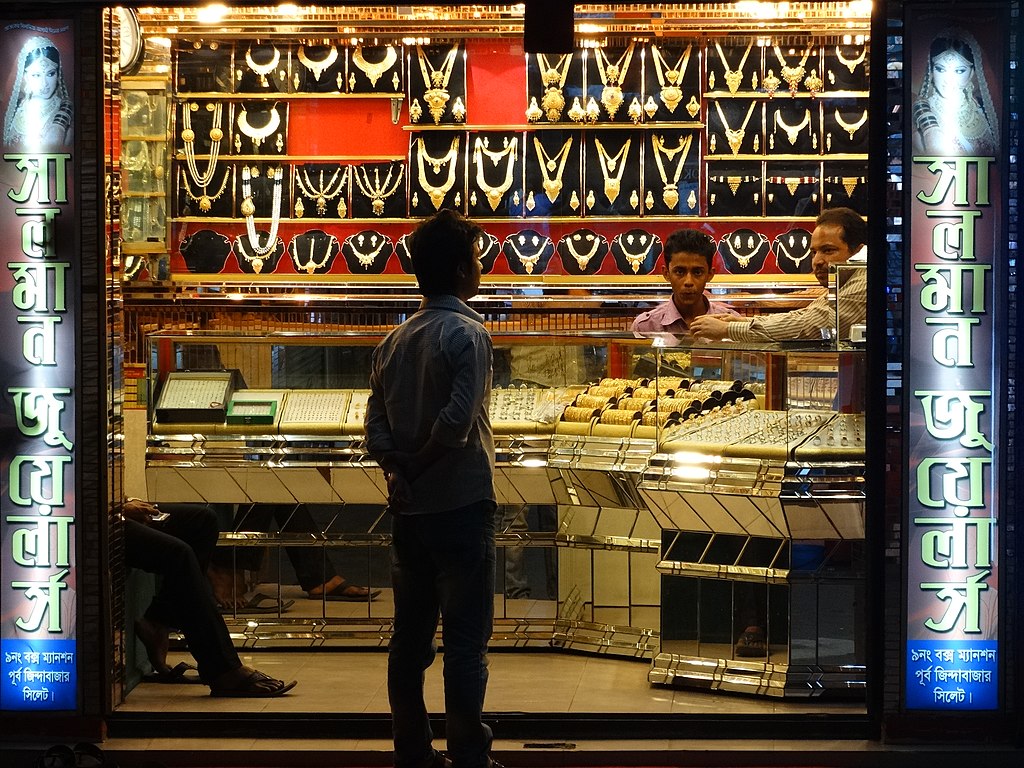
The value of gold is with the goldsmith.

Local Oral Tradition

This local proverb speaks to the importance of experience in knowing the value of something. A parent truly knows the value of children. A scholar deeply feels the importance of his area of focus. The goldsmith or gold seller – and we have entire sections of our local bazaar full of gold shops – is the one best able to value gold.

Much missiology is done in reaction to unhealthy churches. Cross-cultural workers who have never been part of a healthy church come overseas confident of what they don’t want to plant, but have no clear positive vision for what they want to see come about. This can mean that church gets radically redefined or even dismissed. These workers are ripe to be swept up in the latest missiological fad which promises amazing results. This is due, in part, to a deficiency in their experience. Perhaps all they have known are churches that are dying due to an unwillingness to change extrabiblical traditions or megachurches awash in seeker sensitive antics.

However, one who has been a part of a healthy church knows the value of a body of believers that pursues the biblical characteristics of a local church. They have been inoculated to the position that “We’ve done church all wrong in the West” because they have seen and tasted the power of a faithful New Testament local church. They know the secret that healthy church principles transcend centuries and cultures, albeit while putting on appropriate aspects of local culture.

Don’t send out missionaries who practice a missiology of reaction and who have a dismissive attitude of Western local churches – all the while being funded by them. Look for those who have lived as healthy church members and who deeply love the local church, even with all its flaws. These workers are in the best position to take New Testament principles for the local church and to seek to plant them across cultures.

Photo by Adam Jones on Wikimedia Commons.

An Independent Christian Community

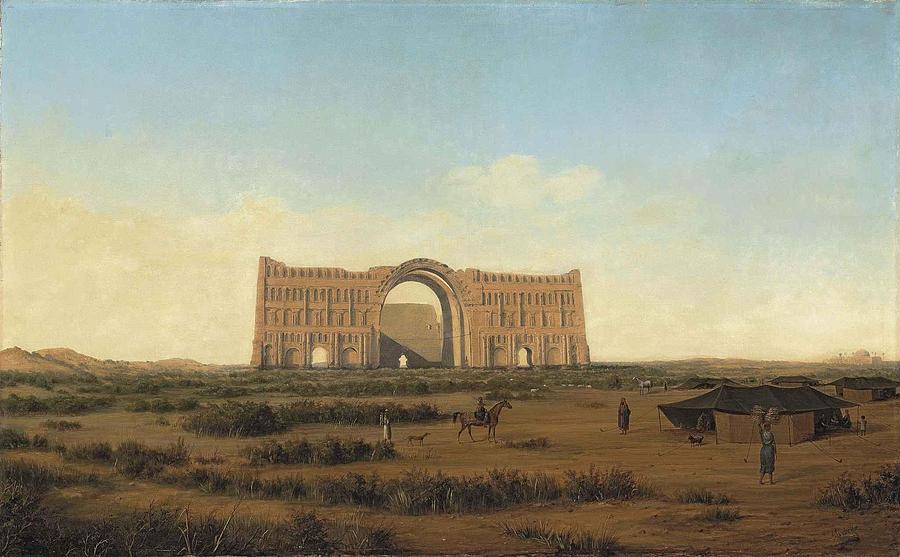
The acts [of Mar Mari] represent an obvious attempt to portray the Christianization of the Nestorian heartland as the work of an apostle. They cannot be taken at face value, although the historian J. M. Fiey believes that the church of Kokhe was in fact founded at the time of Mari. On account of the description of Mari’s chapel and the fact that, between 79 – 116, the Tigris altered its course, he concludes that Mari must have laid the cornerstone before 79/116. However, the first historically certain bishop of Seleucia-Ctesiphon was Papa, who served from c. 290 to 315 and died in 327. We can be assured that, beginning in the second century, there existed in Seleucia-Ctesiphon an independent Christian community, which showed evidence of an episcopalian structure in the third century. Already around 315 Bishop Papa tried to gain primacy over the other dioceses of the Church and to impose on them disciplined administration. Although Papa himself failed to achieve this, the other bishops soon accepted that the bishop of the capital should take over the administrative leadership of the Church. In any case, it is certain that the diocese of Seleucia-Ctesiphon – that is – the nascent church of the East – was never subordinated to Antioch.

Baumer, The Church of the East, p. 20

A few key points to note from this excerpt:

  1. There is a possibility that this Christian chapel near Baghdad (Seleucia-Ctesiphon) was built between the years 79-116. This would be one of the earliest Christian worship structures that we know of anywhere in the world.
  2. The eventual movement toward centralization and hierarchy that occurred in the churches of the Greco-Roman world was mirrored by those in the Parthian empire, and the church of the capital city here also claimed primacy.
  3. The church of Seleucia-Ctesiphon was never subordinated to Antioch – nor to Rome. This is a point for early local/city church autonomy. In fact, it was hundreds of years before these more autonomous relationships of ancient churches gave way to the centralized hierarchy now practiced – and claimed as apostolic – by the older Christian communions.

Photo by Wikimedia Commons.

That Are Not of This Fold

Yesterday I got to preach to our small local church plant on John 10:16 – “And I have other sheep that are not of this fold. I must bring them also, and they will listen to my voice. So there will be one flock, one shepherd.”

We simply walked phrase by phrase through this verse, seeking to understand, wrestle with the importance, illustrate, and apply each line. The phrase that got the most audible reactions was “that are not of this fold.”

I shared with the attendees that Jesus was here communicating to the Jews that the people of God would be gathered from unexpected peoples and places – namely, the gentile nations. “Not of this fold” meant not of ethnic Israel. One of the great mysteries revealed in the New Testament is that God had chosen a holy spiritual nation, comprised of those from every nation, tribe, and tongue. Ethnic Israel wasn’t the ultimate Israel.

This part wasn’t very provocative. After all, my listeners were Central Asians, not first century Jews. However, we then discussed why this point is important for us today. We, like Jesus’ initial Jewish followers, tend to believe that there are certain types of people who believe, and certain types of people who really don’t. Those similar to us almost always fall into the category of “likely open to belief.” And groups we are naturally opposed to often end up in the category of “unlikely to believe.”

This has a practical effect on our evangelism. We end up sharing with those we have pre-filtered, and we remain tight-lipped with others. But what has occurred is that our own experience and cultural categories (or prejudice?) have become the filter, rather than the gospel message itself. Given the logic of Jesus in this passage, this is a mistake.

“If we see a person in Western clothes, young, and educated, we are likely to believe they’d be open to a spiritual conversation about the gospel,” I said to the group. “But if we see someone with a big Islamic beard and their pants cut short in the Salafi style, then we are likely to avoid speaking with them about Jesus, right?”

“Oh, for sure!” the group responded.

“And what do we do with the elderly, the tribal, the illiterate, members of enemy people groups, or our own relatives? Do we avoid sharing with groups like these also?”

“Yup, all of them!” the group responded. People were shaking their heads and laughing, but they were being very open and honest and genuinely wrestling with this difficult point of application.

“Friends,” I continued, “I think we need to repent. And seek to share the gospel even with those who seem like the type very unlikely to respond. Jesus has other sheep that are not of this fold.”

It was not lost on me that our small circle of local believers represented those that many in the West would categorize as “not the kind that believes in Jesus,” as I used to. All of the local believers present grew up as Central Asian Muslims. Their passports and physical features are of the sort that qualify them to get extra “random” screenings in Western airports. And yet here they were, now believing, wrestling with the same kind of temptation as they thought about categories of people they really didn’t believe could follow Jesus. It reminded me of the time a local brother was wrestling with “the man on the island” problem. “Brother,” we told him. “You literally are the man on the island!”

But I am just as guilty as any of these local followers in this regard. Too often I also have held back from sharing with that Salafi-looking man, that elderly local, or that secular Westerner. I have used my own filters instead of using the gospel message itself as the filter.

Thank God that the voice of the good Shepherd effectively calls those from among groups we are tempted to avoid. Thank God for his grace toward us weak evangelists with our own faulty assumptions.

The good shepherd has been calling his sheep from other, unexpected, folds for 2,000 years now. My own Anglo-Saxon and Celtic genes are evidence of this. The hardest to reach demographics and people groups have and will continue to surrender a remnant at the power of the shepherd’s voice. The flock – in all its unexpected diversity – will be complete. “And there will be one flock, one shepherd.”

Photo by Samuel Toh on Unsplash

He Gave Gifts So That We Will Not Die

We recently had a mini team retreat where we looked into the spiritual gifting and personality wiring of the different members on our team. At one point, one of my teammates quoted me as once telling him, “You have the strengths you do for a good reason. Sooner or later, they will save the day. We need your gifts, honestly, so that we won’t die!”

While we had a good laugh together about this particular melodramatic wording, I honestly stand by these words. Not only do I recognize the goodness of the diverse natural and spiritual gifts on my team, I need them. Even if we weren’t engaged in church planting somewhere like Central Asia. My belief in the sovereignty of God is such that I know that he has brought these particular teammates, for this particular season, because their gifts and strengths will be the key to making it through tricky and terrible situations. When I will not know how to thread the needle, when I simply won’t know what to do or what to say – somehow, one of them will. And it will make all the difference.

Consider this quote by Corrie Ten Boom: “This is what the past is for! Every experience God gives us, every person He puts in our lives is the perfect preparation for the future that only He can see.”

I don’t think this is only true for experience and persons in our lives, but also for the natural personalities that God has given us as well as the supernatural gifts he has bestowed.

This is nothing other than a practical outworking of the sovereignty of God and theology of spiritual gifts. This is “To each is given the manifestation of the Spirit for the common good” meets “all things work together for good” (1 Cor 12:7, Rom 8:28).

Persecution is coming. Wolves in sheep’s clothing are coming. Suffering, awakening, complexity, breakthrough. How can I wish that you be just like me when I know that our differences are divinely ordained in order that we might face these challenges faithfully?

No, if everyone on my team was wired just like me, we would all die prematurely – metaphorically, and perhaps even literally.

This is true in general, but also true of my specific wiring. I have been created an ideas/vision guy. My brain gets flooded with hundreds of possible futures for the work here, most of which we can never pursue, and some that should never pursue. The problem is, in the beginning all of these ideas make a stunning and powerful rush on my brain, as if dazzlingly bright and accompanied by the Hallelujah chorus and rows of Central Asian picnic line dancers. And yet, they often turn out to be duds, or at least to be decent ideas that have not yet found their proper time. (Idea people out there, please find a place to store your ideas so that you can manage this issue, for everyone’s sake. I use the app, Trello. Time to marinate is key here.)

Should we quietly develop a legal network of friendly lawyers and judges in anticipation of coming persecution? Yes. Good idea, but premature timing. We don’t have the capacity or know-how yet for this. Should we start an illegal pork-smuggling operation in order to support local believers who have lost their jobs? Um… better take that one back to the drawing board.

My team (and my spouse) are my invaluable friends who help me know how to wisely move forward, in all kinds of situations, because Christ has ascended and has given them gifts (Eph 4:8).

Whatever our cooperative situation with other believers – be it church membership, ministry, the workplace, the family – let’s strive to more often view others through the lenses of sovereign gifts that might at some point save the day.

And who knows? Perhaps even our very lives.

Photo by Spencer Davis on Unsplash

Not Burning the Wet Wood With the Dry

“Wow, you have learned our language! That’s great. Those _______ people live here for decades and never learn the language. They are fathers-of-dogs! You know that word, right? Fathers-of-dogs, am I not right? Hahaha!”

The high ranking security police officer was egging me on to join him in his racist jokes. While I appreciated the goodwill built by his appreciation of our language learning, I wasn’t thrilled that the conversation had taken this turn. I didn’t engage, and thankfully, he turned to his supervising officer for affirmation, and then stamped our paperwork.

In other circumstances I’ve sometimes been bold enough to offer a proverb as a rebuke to these kinds of comments. “As your people say, Don’t burn the wet wood with the dry wood.” This day I hesitated, not sure whether to take that route with this high-ranking official, and the moment passed.

Our focus people group, like all people groups in the world, struggles with the sin of racism. In years past, they were the oppressed, and hated their oppressors en masse. Now, the tables have turned in our region, and they still hate with a vengeance that very same people group – who have now become the oppressed.

Our focus people group’s racism has roots in legitimate grievances. Genocide. Betrayal. Blood feuds. War. Enslavement. Now, the formerly dominant people group also carries legitimate grievances from the injustices committed against them more recently by people like the officials we dealt with that day. They even had some legitimate grievances when they were the oppressors. Whichever position a group is currently in, the sins of the oppressed and the oppressor tend to intermingle in a tangled web of historical chicken and egg accusations.

How far back shall we go? If we stop keeping score at a certain point in history, is that not an arbitrary decision? If we stop where the records stop, is that not to naively proclaim the oppressed group at that point uniquely innocent in the history of humanity – that the absence of records proves that they alone did not do the very same things that every temporarily dominant group tends to do? Is not every people group – in the broad lens of history – simply another representative of this great democracy of the damned? For yes, all people groups have sinned grievously against others and fall short of the glory of God.

But these questions are not the main thrust of this post. Instead, I want to highlight a subtle danger faced by missionaries everywhere, and especially by those working with historically oppressed groups. The danger is that in our love for our people group, we will go beyond appropriate empathy, lament, and action – and begin to absorb some of their racist views and attitudes.

It’s very easy to do. As a cross-cultural worker you strive to love your focus people group so much that you actually become like them. You strive to put on their language, culture, and lifestyle to the extent that you are personally and biblically able. The momentum is in the direction of absorbing huge portions of the cultural cake. But here’s the problem. Racism always comes baked into that cake. And sometimes we ingest it.

In our context, we find ourselves starting with a preference for how our focus people group does things (granted that we come out of culture shock alright). Then, that preference starts to mutate into feelings of judgement when we see how the enemy people group does things. Before long we find stereotypes coming true in our own experience and realize that have to check ourselves. If our jokes and our attitudes and our side comments about those people groups begin coming out slanted, it likely means our hearts have already followed our local friends’ into dangerous places.

How can we fight this momentum such that going deep into a certain language and culture doesn’t mean taking on its unique racist tendencies? A few practical suggestions. Believe and preach what the Bible says about how the gospel overcomes racial animosity. Pursue relationships with at least a few members of that “enemy” group. And finally, aim to plant multi-ethnic churches.

The Scriptures are not silent about the power of the gospel to overcome deep-seated hatred between oppressed and oppressor people groups. The fusion of Greco-Roman and Jewish Christians into local churches in the early church is what precipitated and resulted from passages like Ephesians 2, where Paul celebrates how the gospel has torn down “the dividing wall of hostility” between the Gentiles and the Jews. In Acts, the inclusion of the Samaritans in chapter 8 and the Gentiles in chapter 10 is intentional, and would have been a shocking racial development for the mainstream cultures on both sides. And it’s not like they then self-filtered into homogeneous groups. The diverse leaders of the Antioch church in chapter 13 and the ongoing conflicts present in books like Romans tell us otherwise. Jews and Gentiles, oppressed and oppressors, became fellow church members. Believing and preaching these kinds of possibilities for current people groups that hate each other provides the knowledge and passion that can mount an effective defense against absorbed racism taking root.

I was once in a taxi with a group of friends from an international church. When I spoke to the taxi driver in the local language, he went down the typical road of complementing me and proceeding to throw millions from his enemy people group under the bus as idiots who don’t learn the language. “Yet I’m one of them,” a voice piped up from inside the taxi, speaking in the local language. I suddenly remembered that one of the passengers in the car with us was a believer from the enemy people group. I’m not sure what I was about to say in response, but I remember feeling very certain that it would not have been as respectful as it should have been for a member of that group to be in the car with us. This was a bit jarring, realizing that my friendship with this man (and his presence) caused me to alter my response so much for that taxi driver. But it was also very healthy check. Knowing this young man meant I was able to better humanize his people group in that encounter. Knowing him as a brother in the faith meant the family honor was on the line. This is exactly why we need to pursue relationships with the enemies of our focus communities. Their faces and their names will serve as vital safeguards against absorbing our adopted group’s racism.

Finally, the danger of putting on the sinful racial attitudes of our focus people group calls for the long-term goal of planting multi-ethnic churches, where former enemies can worship side by side. Planting language-specific churches is very appropriate. A common language means biblical church order can actually take place. And as a language learner myself, I testify that no one should be forced to worship God in another’s language. Doing so should only be embraced by free choice, as we have done. For groups that have experienced suppression of their language, a language-specific church is even more vital. But if enemy people groups or individuals share significant linguistic overlap, then working toward local churches that display the broken wall of hostility should be our aim. Just like the New Testament church, if we live in a context of diverse groups at enmity with one another, we should strive to be able to verbally and visually proclaim that “Here there is not Greek and Jew, circumcised and uncircumcised, barbarian, Scythian, slave, free; but Christ is all, and in all” (Colossians 3:11).

We don’t have to absorb the prejudice and racism of our adopted people groups. We shouldn’t strive to become like them in that way. Yes, the temptation is real – and subtle. Fear of man, love for our people group, and our own natural tendencies all push us into an unhealthy worldview where other groups are viewed as less human than the one we are called to. But this can, and should be fought. After all, the dividing wall of hostility has been destroyed. And so we are free. Free to love the oppressors. Free to love the oppressed. Free to guard against burning the wet wood with the dry.

Photo by Timon Wanner on Unsplash

The First Church Discipline in 1,000 Years

Locals have a very aggressive way of pruning their fruit trees. At the very end of fall, the old men with their sickle sticks make their rounds again – and leave the trees naked for the winter. We were not in our current house this past winter, but we saw the effects of the lack of pruning on our loquat tree. Yes, this late spring it had several weeks of the yellow/orange fruit. It was fun while it lasted. One morning I triumphantly plucked my breakfast straight from the tree. But the neighbors’ trees had four times as much fruit for twice as long! Next winter, I’m getting an old man to come prune my trees. I will endure the sad loss of branches and leaves for the hope of the coming harvest.

Two months ago we gathered for the last time as members with the international church in our previous city. As we prepared to move, leaving this dear body of believers was one of the hardest parts. Seldom have I heard of another international church like this one. It is both serious about becoming a healthy biblical church and at the same time practical and devoted to serving cross-cultural missionaries like us in planting language-specific churches. Many international churches do not embrace a robust church planting vision for the local population in their host countries. Or, in the name of serving the broader expat community, many others settle for lowest common denominator doctrine and ecclesiology. But not all. There is a small but encouraging movement afoot, begun in the UAE twenty years or so ago, that is dotting this region of the world with a different breed of international churches. In my opinion as a cross-cultural missionary, this is one important part of a broader strategy to reach regions like ours with the gospel.

When we were new members at this church, we got to be a part of their first church discipline vote. Now, this is not at face value a very encouraging thing. Though commanded in scripture in passages like Matthew 18, church discipline is hard, messy, and costly. As such, it is largely absent from the evangelical missions world – despite being practiced by William Carey, Adoniram Judson, and others of our forerunners.

How exactly church discipline should get worked out in church planting situations is complicated, and there is a great need for research and thinking to be done about how to actually do this. As with many areas of ecclesiology, it’s gets muddy when you are seeking to plant the first healthy church ever among a certain people group – in situations that we call “zero to one.” How do you do church discipline when you haven’t been able to raise up local pastors/elders, and the church plant is led by temporary-apostolic-planter-pastor types like us? How do you discipline when you haven’t had a chance yet to teach on church membership and roll out a size and culture-appropriate expression of the inside-outside principle for biblical congregations? Yet the complications don’t erase the biblical commands nor the realities on the ground. For a tree to be healthy and fruitful, it must be pruned. The same is true of the local church – and church plants. After all, Paul’s letters were written to situations not too different from ours, to first generation believers who worshiped in church planting contexts.

In our first term we got burned by these very complexities. A local leader-in-training turned out to be a very divisive and deceitful man, who was bribing and dangerously misleading new believers. When our team wanted to move against him in order to protect the church plant, we were undermined by our conservative evangelical partners who didn’t feel that church discipline would “work” in this culture. Turns out the line of those who will actually do church discipline and who won’t is another crucial one which, in terms of practice, divides Bible-believing evangelicals. When it comes down to it, many biblical innerantists on the mission field won’t actually obey the Bible on this front. When you are dealing with a wolf, this is deadly.

Even among those of us who felt that we were dealing with a Titus 3 “divisive man,” we were very unsure of how to proceed in a new church plant that was not yet quite a church. We were caught flat-footed, and this skilled manipulator had lots of room to run circles around us, at great cost. Just the other day I was exploring the bazaar and happened to find the tailor shop of a new believer who fell away in that season, one of the first victims of that whole debacle. I don’t know if he’s open to relationship with us again, but now that we know where his shop is we can try to rekindle that connection.

All of this context is why were were both grieved and encouraged that the international church was moving forward to discipline one of their few local members. This young man had stopped coming to the church gathering for about a year and was unrepentant in the face of earnest counsel to return to his spiritual family. Hiking was more important than his church, and it appeared that his faith had been like the seed sown on shallow soil. He was simply over Jesus, and he was OK with that. We prayed for him to repent and waited patiently, but when the members meeting arrived we sought to be faithful to Jesus by declaring this man an unbeliever and no longer a member of our body.

As we reflected on what happened that day, we realized that this local man may have been the first person in our focus people group to be church disciplined for a thousand years. Or perhaps ever. There was a significant presence of ancient Christians in this area, and they did practice excommunication at times, so I can’t positively say he was the first. But likely the first for a millennium. A tragic distinction for him. But a courageous step for the international church. It would have been so easy to excuse away patterned unrepentant sin because as a local he was coming from an unchurched background, because locals are more resistant to the gospel, because their culture means they don’t understand church discipline, etc. But instead of going these routes, the church leadership and body stepped out in faith, obeyed the Scriptures, and pruned the tree.

The aim of healthy church discipline is always restoration – that those disciplined would wake up and respond in true repentance and faith. We pray that this young man would do this. But we also know that healthy church planting here will involve many more situations like this one. Every time will be a challenge. Will we believe and obey the Scriptures when both our culture and our adopted culture find it unpalatable? When local believers and other evangelicals tell us not to? We must. This is simply what faithfulness in church planting looks like. Holding fast to the commands of Christ, come what may.

We must model for the local believers how to prune the church as they model for us how to prune our fruit trees. To be faithful gardeners, we must endure the sadness of the pruning for the hope of the abundant fruit that will result.

Next spring I hope for many more loquats. And next decade? Many more brothers and sisters in the faith.

Photo by Paul Hanaoka on Unsplash