How Do We Even Know that We Lack True Happiness?

Photo by Tony Reid on Unsplash

They have known it then, I know not how, and so have it by some sort of knowledge, what, I know not, and am perplexed whether it be in the memory, which if it be, then we have been happy once; whether all severally, or in that man who first sinned, in whom also we all died, and from whom we are all born with misery, I now enquire not; but only, whether the happy life be in the memory? For neither should we love it, did we not know it. We hear the name, and we all confess that we desire the thing; for we are not delighted with the mere sound. For when a Greek hears it in Latin, he is not delighted, not knowing what is spoken; but we Latins are delighted, as would he too, if he heard it in Greek; because the thing itself is neither Greek nor Latin, which Greeks and Latins, and men of all other tongues, long for so earnestly. Known therefore it is to all, for they with one voice be asked, “would they be happy?” they would answer without doubt, “they would.” And this could not be, unless the thing itself whereof it is the name were retained in their memory.

Augustine, Confessions, Book 10.29

How do we all have some sort of inner knowledge of the happy life, enough to know that we do not have it and are always secretly longing for it? Perhaps, Augustine says, we have all inherited the memory of true happiness, the memory of Eden, from Adam. I have read that research shows the effects of trauma can be passed on to generations of those who have not themselves experienced that trauma. What a powerful thing then, Eden, and its loss, must have been such that seven billion humans, when they are honest with themselves, still feel it in their bones. 
A Hundred-Fold Homes

Photo by Cindy Chen on Unsplash

We have lived with rich and poor

In places some will not or can’t.

And found there joy, and doors

To life, and friends, and won’t 

Forget the promise, one hundred-fold.

We need it dearly every time 

We move again and say goodbye

And home becomes a house – again.

We do it all for Him.

And yet we know the cost is real,

That mingled joy of rootlessness.

But I have heard the king has rooms 

And rooms and rooms and worlds.

Perhaps a place where mountains meet 

The sea, a house with orchards on a hill.

Where there’s porch and pen and table 

And paper and books, maybe some tea.

A pipe! And fire.   

Yes, room to host and reminisce 

(With friends and of course the King himself)

The glory that we saw 

In our hundred fleeting homes. 

Children born and born again,

The needy fed, the lost redeemed, 

The straying won, the faithful trained.

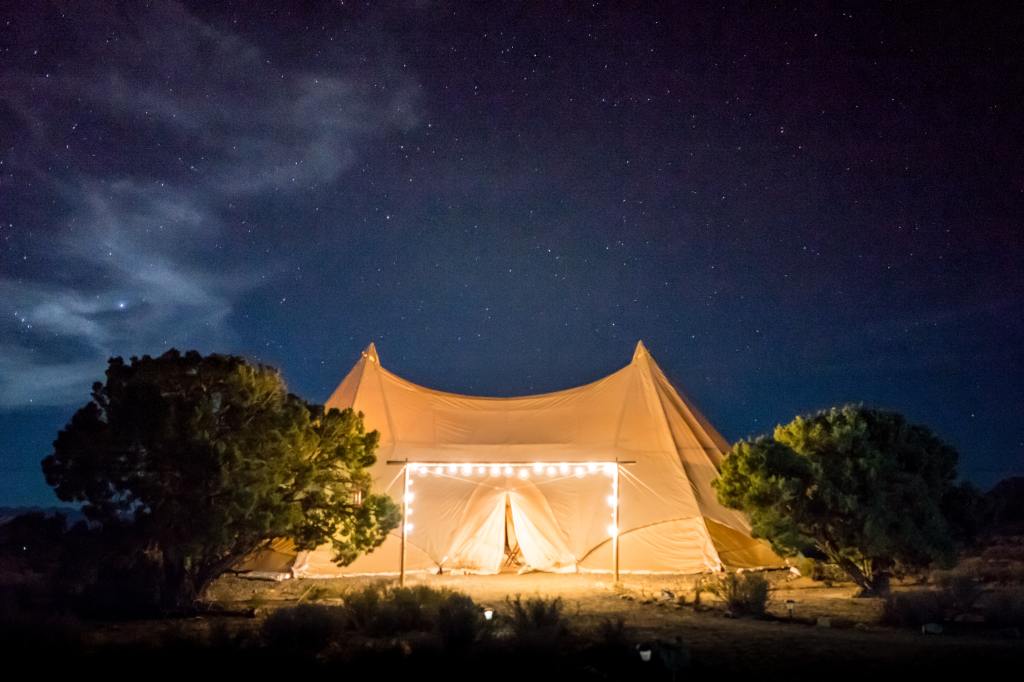
A hundred tents of light

Soon dismantled yet again.

For the world was ours, but not quite yet. 

We don’t yet know the fullness of

The joy, although we know the taste.

For each new place a portion sings

And each new move the old refrain:

The promises are coming true

Before our eyes – a hundred-fold!

And new creation, forever home.

Is coming, coming, like the dawn. 

So let us drink and to the full

The joy of each new set of walls.

For it is fleeting like the fall 

And shines unique, eternal.

Remember the talk of camels and tents? 

And Shelby Park, and Kingston’s rooms 

And Sarkenar or St James Court? 

Yes, more to come, if grace allows

And we shall thank the king for each,

With faith and joy await to see 

The next of our one hundred homes

That really are not ours at all.

The glory – they are forever ours, 

Yet really are not ours at all.