Daddy Dates and The Kindness of God in a Keto Restaurant

A few years ago, my kids and I began a weekly daddy date rhythm. The idea is a simple one. Each Saturday, one of my kiddos gets to go out to lunch or dessert with dad, to a restaurant or cafe of their choosing (within reason, that is).

Somewhere in the past, I read a Christian blogger who recommended touching base on three F’s during this kind of outing: friends, fears, and faith. I’ve found this to be a helpful framework, and most weeks will try to ask questions in these categories, even if we don’t spend the bulk of our time discussing them. Some weeks, my kids don’t have much to say on any of these fronts. But other weeks, really fruitful conversations ensue, for example, about things they’re feeling anxious about.

I’ll also often ask my kids if there’s anything practical they need right now. With how fast kids grow and wear out or break their stuff, it seems there’s almost always some item of clothing, footwear, backpack, or glasses-related thing that it’s time to replace again, but which mom and dad didn’t yet have on their radar. Of course, this part of the conversation often turns to things a given kiddo wants rather than needs, which usually gets gently punted, but which also provides valuable data for future gift ideas or surprises.

I know that this kind of outing, once every three weeks or so, is not as important as the daily rhythms, such as meals together, spontaneous affirmation, consistent affection and training, and bedtime devotions. But I hope that over the years, these dates will contribute to our kids feeling seen, heard, delighted in, known, and loved well by their dad.

To be honest, it’s also good for my heart to make sure I have a structure like this built in, where I slow down and give individual attention to each of my kids. It’s far too easy for me to be merely present as a dad, but not really engaged.

An added bonus in all this is that we end up discovering places to eat that become family favorites. One such place is our local Keto restaurant. Yes, even here in our corner of Central Asia, Keto is a thing. For those who might not be familiar with this approach to food, a Keto meal is high in good fat and protein with low or no sugars or carbs. Many will adopt a Keto diet because when you eat like this consistently, it pushes the body to burn fat for its fuel instead of sugars, which, when done wisely, can lead to healthy weight loss.

But our family appreciates Keto food for a different reason. Our daughter has Type 1 diabetes. That means that every single meal or even snack involves calculating how many carbs she’ll eat and giving her just the right amount of insulin so that her blood sugar neither dangerously plummets nor heads off careening into the glucose stratosphere. Those familiar with diabetes know the low-grade toll that doing this every day, every single meal, can take, life-saving work though it is.

But there is one restaurant in Caravan City that I can take my daughter to, where she can rest from this otherwise mandatory work. Yes, all the meals and even the ice cream at our local Keto place are designed so that the carbs are so low as to be negligible. Add to this that the food is actually also extremely flavorful, and you can see why it’s one of her (and my) favorite places to go for a daddy lunch date.

This father’s heart delights to see his daughter simply free to order anything she wants from the menu, something that is almost never the case for her. Even with the correct amount of insulin, we’ve learned the hard way that certain kinds of carbs simply play havoc with her blood sugar, which means we end up carefully rationing (or saying no to) much of the food that kids her age are naturally drawn to. She bears with these limitations well most of the time. But the grief at not being able to eat like all her friends do does build up, and sometimes overflows. As it should.

Kids were not meant to have their pancreases killed by their own immune systems so that they could no longer make their own insulin. This is not the way it was supposed to be. Sometimes, on a particularly hard day, my daughter will cry out through her tears, “I hate diabetes!” So do we, love, so do we.

Because of this, it’s such a joy to see her free in this way, laughing and munching on a Keto burger or getting cheesecake-flavored ice cream all over her face. It’s a small preview of what one day we know will be true of her if she continues to wrestle with her faith and is truly born again, that she will be given a resurrected body, one that includes a brand new, eternally perfect pancreas. Yes, in the feasts of the New Jerusalem, there will be no toilsome carb counting and insulin calculating, knowing that even if we get it ‘right’, some curveball of hormones or device failure or who knows what could still lead to a high or a 2 am emergency low treatment. No, there will be none of this. Just freedom. Freedom and holy enjoyment of God’s good provision.

I know that the owner of this Keto restaurant did not open his restaurant just for us, just for my daughter. But it sure feels that way when we eat there. Who could have guessed that we would be so spoiled as to have this kind of place in Central Asia, and in the very neighborhood where we work and school and worship? No, the Islamic restaurant owner is probably just passionate about health and making a profit. May his business be blessed, and he someday come to know Jesus.

But I also know that the sovereignty of God is detailed enough, complex enough, that one of the many reasons he would ordain a Muslim man to open up a Keto restaurant in Caravan City is for my daughter’s and my encouragement. How very kind. How very much like a good and generous father.

The kind of father I long to be.


If you have been helped or encouraged by the content on this blog, would you consider supporting this writing and our family while we serve in Central Asia? You can give here through the blog or contact me to find out how to give through our organization. 

Two international churches in our region are in need of pastors, one needs a lead pastor and one an associate pastor. Our kids’ TCK school is also in need of a math and a science teacher for middle school and high school. If you have a good lead, shoot me a note here.

For my list of recommended books and travel gear, click here.

Photo from Unsplash.com

Bilbo Baggins Made Me Brave

Yesterday, on the long drive from New Orleans to Louisville, my family finished listening to The Hobbit audiobook, the version read by Andy Serkis. It was masterfully done. Serkis deserves his reputation as one of the best voice actors out there. If you’ve ever struggled to get into Tolkien’s books of Middle-earth, give this audiobook version another try and see if, like my own wife and daughter, you’re finally hooked.

While listening, I was reminded of just how long Bilbo Baggins’ story has been a part of my life. My parents brought a record player with them to Melanesia in the late 80s. And one of the records they brought with them was the soundtrack for the 1977 Hobbit cartoon. Somehow, this had made it into my dad’s record collection even before he had met my mom. Those songs, along with the cartoon itself, were an early and constant part of my and my brothers’ childhood soundtrack and imagination.

Growing up with this 1977 cartoon adaptation, I never realized just how strange it was. In this project, the fiction of a British professor who was shaped by Norse languages and mythology, as well as the trenches of WWI, meets the music of the hippie singer-songwriters of the 1970s and the odd animation of a group that would go on to become the anime Studio Ghibli. Sadly, my wife finds the whole thing unbearably creepy and, after watching it once with me, has sworn ‘never again.’ Alas, for the sake of marital harmony, I will have to listen to the stirring strains of The Greatest Adventure in my earbuds for the foreseeable future – not to mention much livelier numbers such as Down, Down to Goblin Town.

But I digress. The main point of this post was to tell you how Bilbo Baggins made me brave. Or, at least, how he was one of several good ingredients that made me want to be brave, should I ever be given the chance.

This is exactly what good stories should do. G.K. Chesterton says, “Fairy tales do not tell children the dragons exist. Children already know that dragons exist. Fairy tales tell children the dragons can be killed.” Similarly, CS Lewis says, “Since it is so likely that they will meet cruel enemies, let them at least have heard of brave knights and heroic courage.” We live in a fallen world, so we desperately need good stories where the heroes stand up and defy evil, even risking their lives doing so. The advantage of being exposed to stories like this in childhood is the time they have to marinate and shape the young heart.

One of the major themes of The Hobbit is how an unlikely little hobbit like Bilbo Baggins ends up saving his friends (and many others) through being courageous, even though he is very small and afraid. At many points throughout the book, Bilbo is faced with dangerous choices, but each time he opts to do the right thing, which is also the risky thing. Perhaps his greatest test is towards the end of the book when he is going, alone, down the long tunnel to where the sleeping dragon, Smaug, awaits. Tolkien writes,

It was at this point that Bilbo stopped. Going on from there was the bravest thing he ever did. The tremendous things that happened afterward were as nothing compared to it. He fought the real battle in the tunnel alone, before he ever saw the vast danger that lay in wait.

-The Hobbit, chapter 12

In this passage, Tolkien says that Bilbo fought the true battle in the tunnel alone, before he really knew what facing the dragon would entail, and that his decision to press forward was the bravest thing he ever did. I heard and read this passage over and over again as I was growing up. And every time I did, in my heart, I wanted to be like Bilbo. I hoped that if I were to ever find myself alone in a dark tunnel leading to danger for the sake of good, for the sake of my friends, that I would also choose to keep going.

It makes me wonder, when exactly is the real battle fought for young boys who will one day face their own ‘dragons’? Reflecting on my own childhood, and now observing my own boys, I think it’s less one big decision made in a moment of crisis. More likely, it is countless small desires and resolutions made while listening to stories like The Hobbit, tales where biblical virtues, such as courage unto death, are held up as good and right and worthy of emulation. One small layer at a time, one tiny steeling of the will at a time, and a hard core of courage eventually forms in a boy’s chest – one that will only be revealed in moments of crisis.

They say you can’t know how you will respond in a crisis until you’re in it. Will you move away from danger or toward it? Will your instinct be self-preservation or the safety of others? This may partially be true, but I would contend that one very good sign of what you will do can be discerned from the kinds of stories you have been listening to – and what has been happening in your heart, will, and prayers as you listen.

Of course, Bilbo was only one part of a balanced narrative diet. My childhood and adolescence were also shaped by other good stories, including Narnia, the Rocky movies, and films like Gettysburg. Most importantly, I grew up immersed in those true stories in the Bible that form the substance of which hobbits are only the shadow. I grew up hearing of David defying Goliath, Shadrach, Meshach, and Abednego defying Nebuchadnezzar and his furnace, Stephen being stoned, and Jesus Christ himself willingly passing through death and hell for the sake of his friends.

Along with this, I also saw courage modeled as Melanesians defied the spirits and witch doctors to follow Jesus, as my dad gave up his own life on the mission field, and as my mom later bravely returned as a single mom. I saw these real-life risky decisions made by followers of Jesus, and I wanted to be like them.

Years later, when a friend in high school was attacked by a mugger, I was put to the test. Would my instinct be to wrestle the mugger off of her? In that moment, there was no time for cost analysis. I sprung. And I did my best to fight the guy off my friend. She and I ended up safe in the end, and the mugger in police custody. Where does that kind of an impulse come from? Looking back, I think, in part, from little Bilbo Baggins in the tunnel. The decision to act and help had been made a long time ago. And it had been reaffirmed over and over again.

Courage, I believe, is ultimately a gift from God. It is a gift many are given in a common grace sense, a merciful inheritance still from the first Adam. But it must also be given in a special way to those who have new hearts, to those who know the second Adam. In us, the very courage of the Son of God slowly grows, layer upon layer, and will go on growing forever. This is the kind of courage that can lead to faithful believers from the past like Hugh Latimer, who not only faithfully endured being burned at the stake, but even called out in encouragement to his friend, Nicholas Ridley, also in the flames, “Be of good comfort, Mr. Ridley, and play the man: We shall this day light such a candle, by God’s grace, in England, as I trust never shall be put out.”

How can we encourage the growth of courage in our lives, and in our own kids’ hearts? The word of God must take primary place here, and after it, the example of the faithful we have in the Church Universal and in our own local assemblies.

But along with this, let’s not neglect the power of good stories. God used many means to make me brave. Not least of these was the hobbit, Bilbo Baggins.


We only need to raise 10k ($833 per month) to be fully funded for our second year back on the field. If you have been helped or encouraged by the content on this blog, would you consider supporting this writing and our family while we serve in Central Asia? You can do so here through the blog or contact me to find out how to give through our organization. 

Two international churches in our region are in need of pastors, one needs a lead pastor and one an associate pastor. Our kids’ TCK school is also in need of a math and a science teacher for middle school and high school. If you have a good lead, shoot me a note here.

For my list of recommended books and travel gear, click here.

Photo from Unsplash.com

Parents as Parables of the Gospel

“But what if I grow up and go to prison?” my daughter asked, not for the first time.

“Even if you go to prison, Mama and I will still love you, be there for you, and be your mom and dad.”

“How can you keep loving me if I was really bad though and did terrible things? Wouldn’t that change your love for me?”

“Nope. Our love for you and our relationship with you will always be there, no matter what. You’ll always be our girl. We will come and visit you even in prison and remind you that we love you.”

“Doesn’t that mean it doesn’t matter what we do then?” piped up one of my sons, always looking for the holes and exceptions in our parental proclamations.

“No, it still matters. That steady love for you will be there no matter what. But if you live wisely, then that love will be mixed with more joy. And if you live foolishly, then it will be mixed with more sadness. By your actions you can bring us more joy or more sadness. But you can never lose your relationship with us as our son or our daughter.”

“And guess what?” I continued, “This is the kind of relationship you can have with God too, if you become one of his children through believing in Jesus.”

We’ve had this conversation a half a dozen times or so during bedtime devotions over the last year or two. I don’t think my kids are forgetting the previous conversations. Rather, I think they want to hear it again, one more time, that dad and mom will love them no matter what – even if they become felons. For my part, I’m happy to come back to this topic as often as they want to.

It’s common for us to speak of marriage as a parable of the gospel, and with good warrant. Paul explicitly says in Ephesians 5 that husbands and wives are a picture of Christ and the Church. But we don’t speak as often of parents as parables of the good news. Yet as I gain more experience as a dad I am realizing more and more what an opportunity I have to model for my kids the kind of love they are invited to have with God the Father through the gospel.

Yes, my father-love for them is a small and imperfect shadow of the reality of God’s father-love for his children. But such is the nature of shadows. They flicker, contort, and sometimes disappear altogether. But their very existence is evidence of something very real, concrete, and solid. Parental love exists because God is the Father whose very nature is love.

We often know of this relationship between parental love and one’s understanding of God’s love from the negative side of things. Countless believers struggle to rest in God’s love and grace because of bad experiences with their parents. Dig into why someone’s cognitive theology isn’t translating into their emotional theology and you’re likely to find some ‘daddy issues.’ And though they needn’t stay stuck there, this is how things naturally tend to go. Parents are meant to model for their children, in some limited but real way, what God is like. What a weighty calling.

The parallels are real. Our children are born into our families, not by their own will, but by the will of their parents. In the same way, believers are born again into God’s family not by their own will, but by the will of their Father (John 1:13). This birth brings with it a permanent identity that cannot be lost. Parents in this world may try to disown their children but they can never actually erase the reality of the relationship. God’s children are his forever. In some sense, so are ours.

We don’t have an Ephesians 5 type of passage directly telling parents to love their children as God loves the Church, that their love for their children is a metaphor of the gospel. Yet the clues are all over the Bible. God chooses to reveal himself, especially in the New Testament, as Father to his people, his spiritual children. This is one of his primary titles he wants us to understand him by (Eph 3:14-15, John 20:17, Matt 6:9). Indeed, even when we discipline our children, the Bible says we are pointing to God the good Father who does the same (Heb 4:4-11). And let’s not forget one of Jesus’ parables that perhaps more than any other displays the heart of the gospel – that of the father and the two lost sons (i.e. the prodigal son, Luke 15).

And although he never uses a maternal title, God is also not embarrassed to use maternal imagery to speak of his love for his people (Isaiah 66:13, 1 Peter 2:2-3, Matt 23:37). After all, both men and women are made in the image of God, so the natures of fatherly love and motherly love must ultimately find their source in God himself.

I said earlier that we most commonly speak of the connection between God’s love and parenting when it has gone wrong. In this, we can be comforted that God’s love is powerful to overcome even the worst parenting a person may have received. And for parents, the gospel is powerful to wash away even the worst of failures. But this possibility of healing and cleansing should make Christian parents even more eager to carry out their role as a living parable as best as they possibly can. Amazingly, our parenting may be the way in which the gospel comes to one day make sense for our kids. As we assure them and show them that they have our love, no matter what, that they can never lose their place as our sons and daughters – in this way they may come awake to the stunning offer of spiritual sonship offered to them in Christ.

“You are loved. You are safe. You are accepted. You are delighted in. You will be mine forever. You can never do anything bad enough to lose my love.” These kinds of statements from moms and dads preach through a physical parable something even more true in the spiritual realm – something that our kids may not yet be a part of, but which they are invited into.

For I am sure that neither death nor life, nor angels or rulers, nor things present nor things to come, nor powers, nor height nor depth, nor anything else in all creation, will be able to separate us from the love of God in Christ Jesus our Lord.

-Romans 8:38-39

May our parenting not be a stumbling block towards our little ones delighting in God’s grace and love. Instead, may they look back at how they came to know the good news was true and find in that story the steadfast love of mom and dad – a parable pointing them to the gospel.

If you would like to help us purchase a vehicle for our family as we serve in Central Asia (5.5k currently needed), you can reach out here.

Our kids’ Christian school here in Central Asia has an immediate need for a teacher for the combined 2nd and 3rd grade class. An education degree and some experience is required and the position is salaried, not requiring support raising. If interested, reach out here!

For my list of recommended books and travel gear, click here.

Photos are from Unsplash.com

Eleven Expressions of Gastronomic Humility

“Can you guess the secret ingredient in this white sauce?” my wife asked our kids as we finished eating our dinner of rice pasta.

Different kids guessed various foods that mom had snuck into dishes in the past.

“Nope. Out of guesses? It was cauliflower. Orange cauliflower.”

My daughter, who had been enjoying her pasta, immediately pushed her plate away from her, noodles unfinished. “Blech!”

“Hey, now,” I said, “you were enjoying it until you knew what was in it. Do you see the power your mind can have over your tastebuds? Your tastebuds liked it, but because you’ve decided in your mind that cauliflower is gross, you stopped being able to enjoy it.”

“It’s important that we regularly try new forms of food that we don’t like,” I continued, switching into teachable moment mode. “You might be surprised at how much you can enjoy food in one form even when you don’t like it in another. I really don’t like green peas or celery. But I really enjoy green pea soup (especially with bacon in it) and cream of celery soup.”

“Mom, do you think you could hide food that we don’t like in our dinners once a week? So that we could trick our brains into liking it?” said one of our sons, playing the compliant child and overcompensating for his sister.

My wife shook her head and wisely refused to commit to some kind weekly system for this. My daughter, to her credit, started finishing her pasta.

Keeping up with our kids’ ever-shifting food preferences, on top of their health issues, has been a difficult dynamic of this season. We talk a lot about food at this stage of our family life. This is partially because we have lived cross-culturally and have had the privilege of enjoying foods from many different cultures – an experience that may explain why we have one child who wants to grow up to be a chef.

But we also talk about food a lot because we have a lot of food issues spread across our family, including type-1 diabetes, gluten intolerance, dairy intolerance, stomachs that can’t eat after 7:30 pm without throwing up later in bed, and stomachs that can only handle a very limited amount of oily or rich food without triggering Montezuma’s revenge. Finally, we end up talking about food a lot because we are somewhat of a foodie family. We really like food, sometimes too much so. Hot drinks, sweets, crunchy chips, or fancy restaurant food can all too easily become a place our family retreats to for comfort or refuge.

“I think it comes down to humility,” I said to my wife later that night, as we processed the dinner cauliflower conversation. “Just like we want to enter a discussion open to there being some aspect of truth or wisdom that we might be missing, we also want to partially doubt ourselves when it comes to foods that we think we don’t enjoy. It may be that we try something again and something has changed. Or that there’s a new way to eat it, or some new way to pair it, that transforms a food from gross to delicious. We want to stay open to that. In this way, there can be a kind of posture of humility when it comes to food.”

“Could you call that gastronomic humility?” she asked.

“I guess we could,” I laughed, “Gastrumility? Gastro-humility?”

The more we talked and the more I’ve since thought about it, there really is an important link between humility and a wise posture toward food as Christians. What follows are eleven expressions of this kind of gastronomic humility. I’m sure this list is not exhaustive, but these are principles and practices that have been helpful for our family as we wrestle with faithful living and parenting in this area.

  1. We confess that our food is a good gift provided by God and others. We are not entitled to our food. Rather, it is generously given to us by a kind God who is careful to feed his sparrows as well as children. This kind provision is mediated. Many have labored to grow or raise the food, process it, sell it, and prepare it. This should make us thankful and joyful when it comes time to eat, and those who continue to pause to give thanks before we eat. (Matt 6:11, 6:26, Acts 27:35)
  2. We try new foods and new forms of foods we don’t like. When we make a practice of trying new foods, we admit that our preferences are not final nor fixed, but fickle things that can flex and change with time and experience. There is real wisdom in the saying, “Don’t knock it ’til you’ve tried it.” An openness to new foods and new forms of foods correlates to a more joyful life, since the spectrum of God’s good creation that we can enjoy is larger. (Gen 1:31, 1 Cor 10:26)
  3. We eat within the boundaries given to our particular bodies. We acknowledge the health limitations that God has allowed for our particular bodies as a result of the fall. As we find these boundaries (often the hard way), we embrace humility by honoring them, even though we grieve that this is not the way things were supposed to be. In this way, we are good stewards of the imperfect bodies we have been given. We also learn to recognize the areas where we are free to partake and others are not, and instead of grumbling, give thanks for them. (Gen 1:29, 1 Tim 5:23, Phil 2:14-15)
  4. We confess that food is inherently good, even if our own bodies react negatively to it. The fact that my body rejects rich melted cheese does not mean that rich melted cheese is inherently bad or unclean. Rather, God has created every food to be good when it is enjoyed in the proper amounts and ways. I may find that even within these boundaries, the brokenness of my body means I am not free to enjoy it. But this does not then make the food itself bad. I will not let myself call something bad or unclean that God calls good, but seek to accurately name the brokenness in my own body (and sometimes in the ways a good food has been processed destructively). (Gen 1:31, Acts 10:15)
  5. We feast and we fast. Following the commands and examples of the Scriptures, we see that God is honored both by his people sometimes feasting, and sometimes fasting. Both can be holy, both can be beneficial, both should be present in the life of a believer (Matt 6:16, John 2:1-11).
  6. We do not judge those who do not eat certain foods, neither do we unduly admire them. The Bible is clear that some Christians will abstain from certain foods because of their conscience, and that it’s wrong of those who partake to then disdain them. This would also apply to those who abstain from certain foods because of strong opinions about health. We should guard against feeling superior to them. On the other hand, this abstention should not mean that we put them on a pedestal or treat them as if they are living on some higher plane of the Christian life (Rom 14:13-23).
  7. We do not boast or find our identity in the foods we don’t like or can’t eat. Our dietary restrictions and preferences are not meant to be a central part of our identity or our conversation. They do not make us more special nor usually more interesting in conversation. They are the result of the fall and human limitation. While we should feel free to acknowledge and name them, they are cause for sober conversation and even lament, not celebration. If I don’t like green peas or can’t process rich melted cheese, that means I am missing out on good things that others are able to enjoy. The way I speak of these things should reflect this and the fact that food and drink is not central to the kingdom of God. (Rom 14:17)
  8. We are careful with foods that tempt us toward gluttony or addiction. We should notice which foods tempt us to push past the boundaries of wise and healthy consumption, and which foods we want to turn to when we are sad, tired, or anxious. We will need to exercise caution with how we eat these foods and may need to consider abstaining entirely or for a season. (Prov 23:20, 1 Cor 6:12, Phil 3:19)
  9. We use food as a way to love others. God has created food as a central part of human relationships. Jesus models this for us in how he intentionally ate food with sinners and tax collectors. Giving and receiving hospitality is an important way to love others and an important picture of the peace we have with God. Food is good in and of itself, but it’s also to be used to win the lost, help the needy, and bless the saints. (Mark 2:16, 1 Pet 4:9, 1 Cor 9:22)
  10. We strive to glorify God and serve others by enjoying as great a variety of his foods as possible. God made a world full of countless combinations of foods, flavors, and spices. These are put here for our joy and for his glory. There’s also a huge variety of how different human individuals and cultures partake of these vast riches. With an intentional, flexible, omnivorous posture, we put ourselves in a better position to enjoy diverse foods with others and to give God glory for each and every flavor we encounter. (1 Cor 10:26, 1 Cor 9:22)
  11. We look forward to the perfected foods and stomachs of the resurrection. Foods and stomachs are flawed in this age – good, yet broken in many ways. We use this knowledge to actively anticipate the world to come, where we will be given resurrected taste buds and stomachs and will be able to enjoy the full range of God’s good food and drink. In this way, each of our limitations now can be a means of strengthening our longing in the coming resurrection, where we will feast will Jesus. (1 Cor 15:35-53, Is 25:6-8)

Consider these eleven expressions of gastro-humility. Are there others that need to be added to this list? A proper posture toward food is such a difficult thing to find. And judging by the amount of New Testament passages dealing with food, it was difficult for the New Testament believers also. Thankfully, into this tricky discussion the Scriptures give us a ballast, a solid and clear compass we can come back to over and over again, even when we disagree with other believers about what to about food:

“So, whether you eat or drink, or whatever you do, do all to the glory of God.” (1 Cor 10:31)

To support our family as we head back to the field, click here.

For my list of recommended books and travel gear, click here.

Photos are from Unsplash.com

Why My Family Traveled in Luxury Soccer Tracksuits

When travel goes wrong, you might find yourself in all kinds of unexpected situations. This was true even when I was a single. But when travel goes wrong and you’ve got small children in tow, this changes the calculus even more. When this happens, never underestimate the lengths parents will go to keep their children warm, fed, and rested enough to hold back the I-am-so-exhausted-I-will-make-the-universe-feel-my-pain meltdowns. As we regularly see in the news, even adults can reach their limits when it comes to the constrictions and indignities of modern air travel. So, I don’t blame the little ones for showing on the outside what most of us big people are feeling on the inside. But for everyone’s sake, we have found it best to keep our kids away from that point of no return whenever possible.

Speaking of indignities, most airlines don’t count our region of Central Asia important enough to warrant flights during waking hours. The vast majority of our flights come and go between 2 and 5 am. This is of course to line up with the morning flight schedules in the “important” airports of the region. And yes, it’s brutal for small children. Mind you, this is how almost every trip to or from our region either begins or ends, standing in airport lines with bleary-eyed offspring at an ungodly hour of the night.

So, this was the typical beginning of a trip back to the US two summers ago. But something had delayed our first flight, which meant we sat an extra two hours in our departure airport, which meant we missed our connecting flight in Doha, Qatar. Having traveled through Doha before I was hopeful that they might simply put us on another flight, or in case of a lengthy delay, put us up in the hotel inside the airport.

Unfortunately, we landed and were informed that for the second of the three legs of our journey, they’d have to put us on a much longer flight (to Dallas, sixteen hours in the air), and that we’d have to wait inside the airport for another seventeen hours. And sorry, the airport hotel was full. And since we only had our vaccination cards, but not a valid PCR test, we were not allowed to enter the city to make our own accommodations. One very thoughtful member of airport staff tried to convince us that we had a decent chance of making it through immigration illegally, but we thanked her and decided that would probably make our situation go from bad to worse. Plus it was illegal. After all, the Doha airport is relatively new and clean. Surely we could figure something out.

We texted our teammates to let them know our situation and to call in some prayer support. One of them reminded me that we carried a travel credit card with trip delay coverage, up to $500 per person. I had not remembered this detail, so I thanked him profusely and tried to put a plan together as we sat on the floor and my kids played UNO. There was a quieter lounge with semi-private couch areas where we could get some sleep. We had been given access to it once before while traveling during the height of the Covid-19 travel shutdowns, when the massive Doha airport was eery and abandoned. Now that things were getting back to normal the lounge charged a lot for entry, but with all the hotel options closed off I thought we had a good chance of getting reimbursed for it through our card. If we got in for six hours’ access, that would mean fresh food and hopefully a few hours of sleep for the family before figuring out the next ten hours in the airport, and then the sixteen hour flight.

But there was one other problem. It was summer and so we hadn’t packed warm clothes in our carryons. And the airport was freezing. At the time, our kids were three, eight, and ten. They’ve always been on the smaller side and tend to get cold easily. This is especially true of our daughter who has type-1 diabetes. So, part two of my mission needed to be finding some kind of warm garments or blankets. This would make sleep more likely, and hopefully also keep them from getting sick.

Blessedly, the lounge we were hoping for wasn’t full and we managed to claim one of the semi-private couch areas. So far, so good. Thinking the more difficult part of the plan accomplished, I headed back out into the duty free area of the airport to find some warm sweatshirts or blankets. The airport had dozens of stores selling clothing, so I didn’t think it would take too long to find something reasonable.

I waved and smiled at the attendant in the first store I walked into and I went over to look at a rack of sweatshirts. My smile vanished as I looked at the tag – $450. Wide-eyed, I quickly exited that store and went into the one next to it. But the sweatshirts there were $300 apiece. In store after store I had the same experience. It seemed that luxury clothing was the only kind for sale in this airport. Where were the smart yet affordable Central Asian brands like LC Waikiki? There were no blankets or other warm things for sale anywhere. Just clothing roughly the price of a kidney.

The best option I could find were tracksuits/sweatsuits in the store of a football/soccer club, Paris Saint-Germain. These were warm, they had them in the various sizes we needed, and they ran just below $100 for the kids sizes and a little above $100 for the adults. After several rounds of the duty free area, I kept coming back to the PSG store as I slowly resigned myself to the truth that dropping over $500 on tracksuits was the cheapest option available to me. But would I be able to convince the credit card insurance to reimburse these? It was a gamble.

I thought of my kids shivering, curled up, and trying to sleep on airport couches. I thought of the dark patches beneath my wife’s eyes and the very long way we still had to go to even begin the second leg of our journey. I gritted my teeth, and bought the matching tracksuits.

I shook my head as I walked away and back toward the lounge, loaded with bags of PSG merchandise. My family didn’t even follow professional sports. Apart from a season in high school in Melanesia where I followed the Australian National Rugby League, I’ve never made the time nor had the desire to follow either American sports or those more popular globally, like football/soccer. In fact, one of the quickest ways to make my or my wife’s eyes glaze over is to turn a group conversation to professional sports.

But now, I told my wife as I returned to the lounge, now we would need to become soccer fans. Not because I had a sudden affinity for the team or for some guy named Messi who apparently played for them. No, simply because we were now financially invested in the Paris Saint-Germain Football Club. So invested, we would in fact travel the world as a family in matching luxury track suits. The kids, having been told that they were now officially fans of a French soccer team, put on the warm tracksuits, and promptly fell asleep. My wife liked hers also, though her eyes nearly popped out of her head when I whispered the price to her.

There have been times over the years when we’ve eaten at some very sketchy places, because that was what was required to keep the family going while on the road. Apparently, this was the other end of the spectrum. Sometimes you eat dodgy kebabs. Sometimes you don rich kid tracksuits.

During the rest of our time in Doha and even on the plane, fans of PSG said hi to us, gave us fist bumps, or otherwise complimented our sporty-seeming family and our matching outfits. We did our best to smile and play the part – and then shoot one another sideways glances. We were frauds, but at least we were warm frauds.

After what felt like days later, we finally made it to Dallas, where one last layover – at a hotel this time – would get us to our final flight the next day. At least being back in America meant people didn’t really know about professional soccer and would stop commenting on our wardrobe.

We walked into the lobby and were immediately greeted with a cheer by the man behind the counter.

“You fans of PSG?! That’s my team, bro!”

p.s. Thankfully, months later, the travel insurance did indeed reimburse the tracksuits.

To support our family as we head back to the field, click here.

For my list of recommended books and travel gear, click here.

Timely Provision of an Unlikely Kind

Every parent knows of the dicey situations you might find yourself in when you’re away from home and your kid has a clothing crisis. Here I recall walking down the sidewalk in Queens, New York, carrying my one-and-a-half-year-old. It’s a freezing December evening, and she is swaddled up in her mom’s Middle Eastern scarf. But apart from that she’s only wearing a diaper. This is because she had an epic blowout while we were eating at a Turkish restaurant with a friend. And while we had an extra diaper, we did not have extra clothes. So after dinner, we shuffled back to the hotel as quickly as we could, hoping the meanface worn by most passersby was just typical New York, and not because our daughter’s bare chubby legs were sticking out into the winter wind.

I was helping change my youngest son into his pajamas the other day when I was reminded of yet another similar incident. While lending this bedtime assistance, I saw that my son was wearing a pair of blue briefs with a bright red, yellow, and green band. On the band is a repeated pattern of the word Wonderful and a black print of what is clearly a cannabis leaf.

“Hey love, we still have the marijuana undies?” I called to my wife down the hall.

“Yep! Hand-me-downs,” she replied, matter-of-factly.

These particular briefs had actually belonged to my son’s older sister, though this is no fault of her own. Well, not entirely.

At some point your kids start desiring to pack for themselves when the family goes on trips. This will eventually be a wonderful thing, I’m sure. But for a good number of years it introduces just as much trouble as any potential time it might save.

It was about a year ago that we found ourselves packing for a team retreat at a mountain lake town. Our previous team-building sessions with some new teammates had been sabotaged by local ministry crises, so we were going to try again, but this time we planned to get out of town to make the interruptions at least a little less likely. There’s almost no acceptable reason for not answering your phone in our local culture, but one of the few exceptions to this tyrannical rule is if you are out of the city. So, we packed up and drove an hour through the mountains to a nice lakeside hotel. We were all looking forward to a few days of encouragement, getting to know one another better, and some measure of rest. Even the biggest dust storm in decades didn’t dampen our spirits.

After the first evening of sessions, our family arrived back at our room. The plan was for each of the kids to get a quick shower before bed. Well, somewhere in the course of this process my wife discovered that our daughter had forgotten to pack any undergarments. In spite of her best packing intentions, our daughter had simply forgotten to pack any of this crucial form of clothing. My wife and I both deflated when my she told me the bad news. It was now 9 p.m. and neither of us wanted to head out into the dusty night to problem-solve this kind of issue at the end of a day of travel and meetings. We just wanted to get the kids in bed and get some rest ourselves.

But maybe, just maybe, some of the stores in the little tourist town’s bazaar would still be open and have something that could work. We decided I should try to go hunt down some children’s undergarments. If I found some, then I wouldn’t have to make the drive down to our city and back the next day and miss a half day of the retreat. We remembered passing a few women’s clothing stores as we drove through the bazaar, but it was a very small town with a marketplace that focused mostly on swimming and picnic supplies for tourists. I figured I had maybe a 50/50 chance of accomplishing my mission.

Girding up my loins, I drove down the mountain road to the little town and began weaving my car systematically through the streets of the small bazaar. Most of the stores were closed, with the exception of tea houses, shawarma shops, and alcohol stores. I had just about given up hope when I made it to the very last street. One narrow closet of a store remained to be checked.

Proclaiming my peace upon the store attendant, I entered and did a quick scan. Hair dryers, makeup, adult pajama sets, and other similar items filled the shelves from floor to ceiling. These were good signs. I tried to look casual as I made my way to the very back of the store. And there I spotted a thing of glory. A dusty bin on the floor full of a random assortment of kids briefs.

“There it is!” I said to my self in the local language, much more loudly than I had been meaning to. As other missionaries can attest, there is a special kind of victorious joy that floods one’s soul when the very item you have been searching for is suddenly found in the bowels of a foreign market. Providence cares for us in many ways, and these oh-so-practical provisions in unexpected places certainly count as one of them.

However, I soon I realized that the trick would be finding something the right size. Most of these undergarments were for apparently massive children and my daughter was a very skinny seven-year-old at the time. After I had picked through the entire dusty box, I found three pair that would have to do. One was neutral, and probably too big. Two seemed to be a better size. Of these two, one was clearly for girls, and illustrated with flowers and goofy Asian cartoon characters. Passable, I thought to myself. And the third pair, which was the one I was most confident would actually fit, was none other than the pair of boys’ Rastafarian-themed underwear which I have described above.

I squatted on the dirty tile floor of the shop considering the best path forward. Was I a bad dad for considering buying my child an undergarment emblazoned with cannabis leaves, self-proclaimed as Wonderful? However, since they might be the only ones that truly fit, the more practical side of me soon won out. Clean undies trump many things. I would get my daughter at least two pair that should fit, and if any uncomfortable questions are raised about the nature of said plant emblazoned on its band, we could always use it as a teachable moment. It’s never too early for a little Christian worldview formation, right?

Having made my decision, I couldn’t not spend a moment chewing on certain unanswerable questions. Who in their right mind had decided to design such a garment for kids? Why had their supervisor at the clothing factory approved this idea? What country and continent had this pair of briefs originally come from? Jamaica? And what kind of strange and Wonderful journey had brought them to this dusty bin in an obscure mountain town in Central Asia? Alas, there are no answers to questions such as these, so I rose, attempted to purchase them with a nonchalant demeanor, and stepped back out into the hazy night air.

Much relieved to have actually found something, I celebrated by buying myself a late night chicken shawarma sandwich (to be consumed immediately), and some Snickers bars (to be consumed in the hotel room). It may have been a needle in a haystack, but by the grace of God I had found something passable at the very last store I could have checked. Our children would be fully clothed. The team retreat was saved.

I definitely had to stifle a laugh the other day when I realized that these marijuana undies had made it all the way to America with us. The many adventures of the traveling cannabis underpants continue. Indeed, they are being put to good use as a hand-me-down for a missionary kid, so they have found a noble use in the end, despite their murky beginnings.

“What is real missionary life like?” many ask. Well, there are the days when you find someone divinely prepared to hear the gospel message. And those are good days. And then there are the days when all you can find is some cannabis-themed underwear for your kids when they’ve forgotten to pack any of their own. And those are good days too. Turns out the small graces of laughter and timely provision can be a mighty thing amidst the many ups and downs of missionary life.

No, I will not scoff at the timely gift of even these pagan underpants – but yes, I will laugh. And someday, when they’re old enough, I think our kids will too.

Photo by David Gabrić on Unsplash

*Just in case it isn’t clear, I would like to say that I do not support the recreational use of cannabis plant/marijuana for Christians or anyone. Though I hear it was used to make some decent parachutes during WWII.

A Proverb on the Rewards of Work

Work!

It’s a chicken.

Local Oral Tradition (NASB-style translation)

or…

Don’t be shirkin’ to work hard,

Get a chicken as reward.

Local Oral Tradition (The Message-style translation)

This local proverb is a very short rhyming couplet, making up only two words in total. The first part is a one-word command to work, the second part is a one-word statement about the reward of work – in this case, earning a chicken (Our local language can smash the noun, the article, and the be verb into one word.) My first attempt above at rendering it into English is a wooden, direct translation, but it loses its rhyme and its meaning is obscure. The second attempt, more of a paraphrase, keeps some rhyme but also adds a number of words to spell out what’s implied in the original. Such are the choices presented to those who attempt to translate from one tongue to another. There are very few direct one-to-one translations of words, never mind structure, and getting over this expectation is an important step for any language learner.

Another local proverb gets at a similar meaning. It goes, “A tired hand on a full belly.” Both of these sayings speak to the crucial connection between work and food so common for most humans throughout history. Work hard, get food. Slack off, go hungry. Of course, food here is representative of all good results that come from hard work, and also of those lost if one embraces laziness. This is a lesson many a dad has attempted to get through to his children. “Boys are born with a lazy bone,” one friend once said to me while we talked about trying to parent our sons well.

Solomon may have been the second wisest human to ever live, but he was still a dad. A recent read-through of proverbs at bedtime devotions with my kids (ten verses at a time) seemed to hit on this theme almost every night. “Whoever works his land will have plenty of bread, but he who follows worthless pursuits lacks sense” (Proverbs 12:11).

Hard work results in chickens (or bread). Solomon agrees with our peoples’ ancestral proverb. Or, rather, they agree with Solomon. This is how the universe works. Ignore this wisdom and you won’t get any chickens, bread, gas money, etc. Follow it and you may have tired hands, but they will rest on a belly full of good food, maybe even some kantaki.

Photo by Max Kleinen on Unsplash

A Tale of Two Pythons

If you happen to be growing up in a place like Melanesia, then you want to have a mother as adventurous as mine. My mom allowed us to have all kinds of unique pets over the years, and enjoyed them right along with us. In addition to seasons with dogs and cats, we also at times cared for snakes, tree frogs, owls, parrots, tree kangaroos, rabbits, lizards, turtles, praying mantises, and a baby bat. I would bring my pets proudly to school for show and tell, where they would wow my classmates and inevitably manage to relieve themselves on the classroom floor. Only one pet (a tree kangaroo) ever bit a classmate. Poor guy’s parents made him get a rabies shot. Do tree kangaroos even get rabies? Anyway, I digress.

When I was in junior high we purchased* our first emerald tree python from a local who was selling him on the street of the small government town nearby our missionary compound. These snakes are beautiful creatures, sporting bright yellow scales when they are young, which fade to a bright emerald green as they mature. They are small to medium constrictor snakes that like to eat birds and small mammals when they are in the wild. While newspaper flashbacks to the mid-twentieth century regularly included reports of giant pythons dropping out of the trees to attack an unsuspecting villager, we never saw any get to that size – with the exception of one terrifying carcass I saw at the river where we regularly swam. But the pythons that we owned were still adolescents, so only about a meter long, with a body diameter about the size of the hole made by a finger and thumb making the OK sign.

The first snake was as friendly and gentle as you could hope for. He never tried to bite us, and he enjoyed coiling up on my oldest brother’s laptop or on our shoulders, nestling in to get access to body heat. I have no idea what happened to him earlier in his serpentine life to give him such a pleasant disposition, but he was great, a true pal. Unfortunately, he managed to escape one day. An enterprising local caught him nearby our property and tried to resell him to us, in spite of our insistance that we were the rightful owners. But finders-keepers prevailed and we decided on principle not to buy him back. This was probably the wrong decision.

Some time later we saw another similar-sized python for sale for a good price. Fresh off such a positive experience with our first snake, we decided to get him. Unfortunately, while the first snake was a kindly soul, the second python proved to be very mean and aggressive. I remember staring through the glass terrarium walls with my brothers as the angry thing repeatedly lunged at the glass, trying to bite our faces. He would even snap at us when we attempted to feed him. Whatever we had named him in the beginning, we began to call him Demon Snake. Needless to say, Demon Snake did not get any snuggle time on our shoulders. He did, however, also manage to escape.

In the end, this was probably the best outcome for all parties. Like many pets taken from the jungle after a certain age, our second snake was wild and unlikely to get accustomed to relationships with humans. He needed his freedom where he could live out his grumpy ways in peace. But it seemed he didn’t desire complete independence from humans. One day my mom walked out onto our downstairs patio area where we had clotheslines hung under the roof for when it rained. Above the lines on the wooden rafters lounged the python, snoozing and looking fatter than usual.

Our former pet had managed to find himself a pretty good living situation. The rafters from the patio disappeared into a gap in between the upper and lower floors – a gap that apparently made for nice snake lodging, and one where big rats also lived. It seemed that he had learned to spend his days hunting the scratching rodents in between the floors and then lounging on the patio rafters where he could soak up the heat from the corrugated metal roof directly above him. Not a bad gig.

We developed quite the complementary relationship in the end. We let him be, and attracted the rats – presumably just by living normal life and eating delicious food, like fried and salted Asian sweet potatoes. He in turn hunted and ate the ROUS’s* which we had been until that point largely unable to trap or catch. We actually grew quite comfortable seeing him up above our heads taking his naps, and just had to make sure he wasn’t around to create any surprise appearances when we were hosting locals, most of whom were completely petrified of snakes.

We moved on from snakes after this experience, purchasing instead a gorgeous green and red Eclectus parrot who was one of our longer-lasting pets, managing in the end to very effectively confuse passersby with the whistles and unique phrases he had learned in the voice of each member of the family.

I’m not sure what became of the Demon Snake python in the end. We came back to the US for furlough for my eight grade year and never heard of him again. But I am grateful for all those rats he ate. Melanesian rats are no joke. I hope he lived out the remainder of his snake days a happier serpent than he had been, full of rodent, warm from corrugated metal roofing, and free from any more missionary kids hoping to snuggle with him.

*Correction: My mom has informed me that we did not actually buy the first snake. He was given to us as a gift from a colleague who heard that our dad had wanted to get us one before he passed away. This then was a very kind gift of a very kind snake.

*For those who haven’t seen The Princess Bride, ROUS stands for Rodent of Unusual Size, which inhabit the Fire Swamp, as well as the walls of my childhood in Melanesia.

Photo by David Clode on Unsplash

Waiting For the Ice to Melt

Back in 2007 I was a student in Minneapolis and able to attend the Desiring God Pastors Conference. William Mackenzie, the director of Christian Focus Publications, was one of the speakers that year. During one of the sessions he shared an analogy that has continued to be of help to me over the years. To preface his illustration, this question was asked: What are we doing when we share biblical truth with our unbelieving children? If they do not have hearts of flesh, but hearts of stone, are our efforts to teach them the truth of the Bible pointless or making them hypocrites?

Then he shared this image, which I have recounted here in paraphrase:

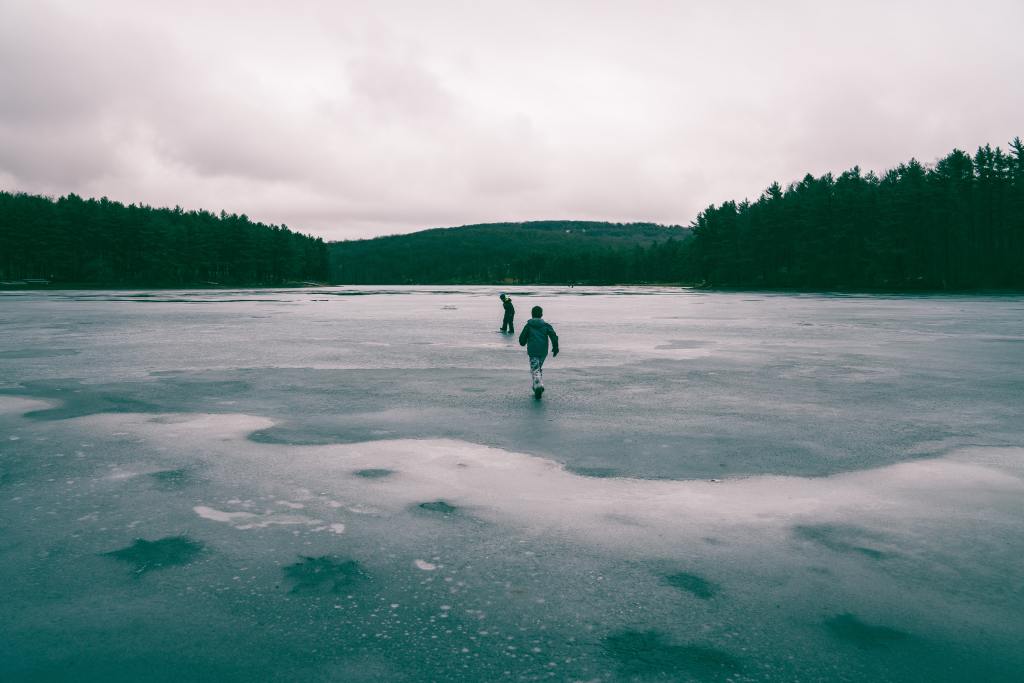
Imagine a frozen lake [which was not very hard to do in Minneapolis in January]. When we teach our children God’s truth, it’s like we are sliding frozen rocks out onto the ice. True, we have no power to break the ice ourselves, but we slide the rocks out onto the ice nonetheless. We know that when the sun eventually melts the ice, all those rocks will sink all the way to the bottom of the lake. The sun is the Holy Spirit. When he melts the ice of our children’s hearts, all of those lessons we have imparted will sink in. It will not have been in vain.

As a father of three now, I’ve often remembered this image as we plod through yet another bedtime routine of reading the word, singing, and prayer. Will my children ever have soft hearts to these things that we have shared with them a thousand times? It’s not uncommon for these times to feel like we are spinning our wheels, or for homeschooling to be the most stressful and frustrating part of my wife’s day.

We also have Central Asian friends like this. The sheer amount of believing friends and gospel conversations these individuals have had is, frankly, ridiculous. We keep bringing up Jesus to them, they keep not becoming believers, yet they keep coming around. What should we do with these types of friends? We need to prioritize those who are open to the gospel, yet we also don’t want to cut off these relationships, unresponsive though they seem. We hold out hope that in some way, if we keep sharing the gospel with them and they keep being open to our friendship, then they may be open to Jesus after all. Our practice has usually been to have some kind of regular communal/relational time where we can invite friends like this. That way we can prioritize meeting with those who are responding to the word throughout the week, but still stay in touch with those whose metaphorical lakes are still frozen, yet brimming with rocks. “I’m sorry this week I’m so busy, but why don’t you come to this open meal/coffee-tea gathering we have every week? I’d love to see you there and catch up.”

My dad came to faith as an adult and he used to tell us how grateful he was that we were being raised in a Christian home. “You’ll be so much further along than I was.” My dad was raised almost completely unchurched and I think he was getting at the dynamics I’m discussing here. He longed for his children to be raised knowing the word of God. True, we do not know when (or ultimately, if) the wind of the Spirit will blow and produce the miracle of the new birth. But when the word of God has been relentlessly imparted to the children or friends of believers, it waits, dormant and ready for the life-giving touch of the Spirit, like some kind of sleeper cell, waiting for the signal to overthrow the corrupt illegitimate tyrant with a new government of justice and truth – with the true king returned.

What are we to do with the hard hearts in our children or unbelieving friends? Keep teaching and keep praying. Keep sliding those rocks. We keep going in patience and faith, believing that the spring sun will come and melt the ice, sooner or later. And when he does, it is our intention for those frozen lakes to be positively covered with rocks.

Photo by Michael Aleo on Unsplash

A Second Verse to The Gospel Song

My family, like so many others, are indebted to Drew Jones, Bob Kauflin, and Sovereign Grace Music for “The Gospel Song.” It was the first song our firstborn learned to sing and it has been a steady gospel presence in our family times of worship for the past eight years. There is tremendous power in simple memorable songs that can be sung anytime, anywhere, and without musical accompaniment. If you are not familiar with the lyrics, here they are:

Holy God in love become
Perfect man to bear my blame 
On the cross he took my sin
By his death I live again 

Many a bedtime in Central Asia we have sung this song with our kids, sometimes alongside of Central Asian friends who were visiting when it was time for our kids to hit the hay. As an aside, bedtime bible reading, songs, and prayer as a family present a great chance to model family worship for new believers or to proclaim the gospel to unbelieving friends. Most who have joined us for this time have expressed that it was the first time they had seen something like it. And our family rhythm of read, sing, pray is very simple… and sometimes a little chaotic now that we have three kids.

Over time we desired to incorporate the resurrection of Jesus also into “The Gospel Song.” So we wrote a second verse for our kids and it stuck. Here it is:

On the third day he arose
Christ defeated all our foes
Satan, sin, and death can't win
By his life I die to sin

We wanted to stick to the song’s original AA BB rhyme as well as include the life/death contrast in the final line. In terms of content, we wanted to include Christ’s victory over our enemies through the cross and resurrection as important aspects of the gospel that go hand-in-hand with Christ being our sin-bearer. Growing up in tribal Melanesia, I remember the radical power of the idea that Jesus has defeated Satan, so we no longer have to be afraid of the spirits. As a young man fighting lust, I clung to the truth that I was now dead to sin through Jesus. I remember also being a pastor in the US and seeing that most prospective members of our church forgot to mention the resurrection of Jesus when asked to share what the gospel is. Now we serve in Central Asia, where the fear of persecution and death often cripple local believers from faithful obedience. These and many other reasons are why we want to build in wherever we can a steady emphasis on the resurrection alongside of our emphasis on the cross, for our kids and for our lost friends.

Though I am no songwriter by by trade, nor the son of a songwriter, I humbly commend this unofficial second verse of “The Gospel Song” to any families or teachers out there that may find it helpful.