
As for those Rich in Books in this Present Age

How can we in the West justify our embarrassing riches of good books in light of the global theological famine?

I remember first wrestling with this question as an undergrad student at Southern Seminary. Financially speaking, I was a broke college student. But when it came to my personal theological library, when it came to my riches measured in books, I was fast becoming a millionaire.

In addition to the many good books I was required to own for classes and those that I chose to acquire, I also had easy access to a great bookstore on campus and a massive theological library. And I lived in a city that was positively chock-full of other bookstores and public libraries.

Having grown up in Melanesia and having already served a year among the unreached in Central Asia, I knew that this was not normal for most Christians around the world and throughout history. At the time, the believers I knew in Central Asia had less than ten Christian books available to them in their language. I knew that most pastors around the world served without what we could consider the most basic tools of pastoral ministry – access to good commentaries and books on theology and Christian living.

I wondered if we were engaging in some kind of gluttony, living as we were in a continual feast of the printed word when so many of our brothers and sisters around the world were starving. Were we guilty for our continual accumulation, for our full bookshelves lined with authors like Calvin, Hoekema, Augustine, Piper, Lewis, Dever, Goldsworthy, Keller, Stott, and so many others?

Ultimately, the Bible’s instructions for the rich in this present age provided the answer. Essentially, it is not wrong to be a rich Christian. But it is wrong to be a rich Christian who is not generous, who does not seek to leverage their relative wealth to love others.

As for the rich in this present age, charge them not to be haughty, nor to set their hopes on the uncertainty of riches, but on God, who richly provides us with everything to enjoy. They are to do good, to be rich in good works, to be generous and ready to share, thus storing up treasure for themselves as a good foundation for the future, so that they may take hold of that which is truly life.

-1 Timothy 6:17–19

According to this passage and others, those of us who were rich in Christian books are to not take pride in them, to not set our hopes on them (but instead on God), and to be generous and ready to share our book wealth with others. The presence of wealth is not unChristian, but the presence of idolatry is – and the absence of generosity.

There may be some Christians out there whose hope and pride are so bound up in their theological libraries that they need to give it all away. But just as with monetary wealth, for most of us, this is not the best way to love others. Most Christians are not called to “sell all we have and give to the poor,” but rather to steward our wealth through sacrificial giving. Vows of poverty are worthless if they are not for the sake of love (1 Cor 13). Love is the determining factor in whether or not we keep or give away our wealth. Even itinerant Paul owned a personal library of parchments (2 Tim 4:13).

Can you love and serve your family, your friends, and your church by keeping your books? Then keep them, and with a good conscience. But also, remember those who are starving. An active involvement in helping those in famine is an important way that we can continue to feast with a good conscience.

These conversations back in college eventually led some of my friends to set up a bookshelf in our campus bookstore where students and others could donate books for Bible colleges in other countries. Other efforts, such as the ESV’s Global Study Bible were also taking off in those years. I’ve always loved seeing the Western church get serious about resourcing the global church with printed gold.

For me, this passion has never fully gone away, as even my new role in Central Asia is going to focus on translating and creating good articles, books, and other resources for local-language churches. I am also reminded of these things as I once again sort through my books and try to decide which I will haul with me to the other side of the world, which I will store, and which I will give away.

Are you also rich in books in this present age? Want to know of a good opportunity to be generous with that particular kind of wealth? Today I read of the opportunity to send 30,000 good books for a groundbreaking African theological library. Central Africa Baptist University has been gifted a shipping container that can hold 30,000 books. These books will help establish the Paul Kasonga Theological Library, a vital resource for a continent awash in the prosperity gospel.

We can send our gently-used theology books to help stock this library or give funds directly for them to purchase the books they need. What a great opportunity for us who are so wealthy in books to be “generous and ready to share.”

We are not the first generation of Christians to be so book wealthy when much of the world lives in theological famine. The Irish Christians of the early Middle Ages faced a similar predicament. Their answer was a missionary one. Once considered the ends of the earth, they now possessed the vast majority of the books, libraries, and scholars of the Western Christian world. So, they left their shores and brought Christianity and its books back to a Europe overrun with paganism and illiteracy. In the process, they forever changed the future of Christianity and even Western civilization.

When it comes to our own fabulous wealth of good books, may we be like those old Irish monks. We are rich in books in this present age. Let’s leverage those riches.

To support our family as we head back to the field, click here.

For my list of recommended books and travel gear, click here.

Photos are from Unsplash.com

Trojan Horses and Proverbs on Trust

“Beware of Greeks bearing gifts.”

This proverb comes from Virgil’s Aeneid, referring to that infamous Trojan horse incident. I’m sure this proverb was true enough once, at least back in the day when Greeks were a dominant power in the Mediterranean world. Even now, when a military power leads with a gift, it’s wise to think twice before receiving it. You never know how that gift (or development loan) might be turned against your people – or at least what strings may be attached. This is just as true of today’s global powers as it was 2,500 years ago.

When it comes to missions, it could also be said, “Beware of missionaries wielding proverbs.” This is because, as we’ve come to see, local proverbs can be a great way to smuggle biblical truth past the defensive walls that might exist in the local pagan worldview. The difference is the intent of the incursion. The Greeks snuck in to conquer. We sneak in to serve.

As we’ve been sharing in front of different groups about heading back to Central Asia, I’ve repeatedly told the story of how finding a local proverb on trust greatly helped our team overseas. You see, the local believers in our corner of Central Asia have major trust issues. “We don’t trust any locals we didn’t grow up with” is the typical position. Local believers will hold firm on this, even when it comes to interacting with others who profess Christ. Often an introduction of one local believer to another will later be followed by each separately approaching us, quietly warning us not to trust the person we just introduced them to because they are likely a “bad” person. This dynamic makes church planting and even small group Bible study formation next to impossible, unless it’s made up of people who grew up together.

In these areas, the worldview of our people group is very rigid and binary. People are either good or bad, trustworthy or not. If you grew up with them or somehow otherwise know in great detail that they come from a “good” and trustworthy extended family, you can trust them. Otherwise, you can never trust them. Trustworthiness is something you either have or don’t have. It’s not understood as something that can be granted or lost in degrees or something that can be incrementally built. At least this is how most locals think and behave in their day-to-day lives.

However, this is where a local proverb has proved so incredibly helpful. “Travel and business are a gold appraisal tool.” Paraphrased, this means “Through travel and business a person’s character is revealed.” In this proverb, we see the ancestral wisdom of our people saying you can come to trust someone by going on a long trip with them or by going into business with them. When we started using this proverb in response to a local believer insisting he’d never trust another local believer, the conversations noticeably changed.

Before, it was like we hit a wall, a locked gate. But when we used this proverb by way of appeal, it was like we were somehow smuggled in behind the defenses – and were then able to turn the conversation to how the Bible speaks of trustworthiness. As the local believer then scratched their chin and admitted, “We do say that, don’t we?” we could tell them that the Bible’s questions for ‘trustworthy or not’ sound like, “Does someone confess the gospel? Does their life exhibit the fruit of the Spirit? Are they a member of a healthy church?” In this way, this local proverb became our Trojan Horse by which we smuggled in biblical categories that were otherwise being rejected out of hand. Today, a local church exists of believers who did not grow up together – yet who have come to trust one another (at least the core members, anyway).

This miracle is, of course, a work of the Spirit. And yet the Spirit uses means. And one of the surprising means that he used was a proverb that our local friends knew and believed, but which they were mostly forgetting about in favor of a more prominent idea. We had somehow stumbled on a place of inconsistency in the local culture where one area of inherited wisdom contradicted another area of inherited wisdom. When in response to “Don’t trust anyone you didn’t grow up with,” we countered with “Travel and business builds trust,” this seemed to produce a worldview short-circuit of sorts. These crossed wires created just enough space to shift the conversation into the creation of new, biblical categories.

It doesn’t always work, of course. Cultural beliefs and habits go deep, even if you’ve got some punchy proverbs on your side. But for me, this story illustrates the potential of this kind of work. We’ve not really ever laid out an organized biblical theology of trust and trustworthiness for local believers. We’ve only made very initial attempts to do this, somehow gaining far more ground from this lone proverb and brief references to Scripture than we ever thought we could. Imagine what might result if we were to lay out for local believers, on the one hand, a detailed picture of what their culture believes about trust; and then on the other hand, the big picture of what the Bible has to say. Then after comparing and contrasting, thanking God for the overlap and lamenting the deficiencies, we break it all down into new, biblically-faithful proverbs that they can carry with them and use in their daily lives.

All of this reminds me of Paul in Acts 17 and Titus 1. In both places, he uses the pagan poet Epimenides of Crete to illustrate and create space for his difficult biblical message. The line “For we are indeed his offspring” is used to prepare Paul’s Athenian audience for his point that God is not an idol, but a living being who demands repentance. And “Cretans are always liars, evil beasts, lazy gluttons” is used to strengthen Titus’ hand in shutting down all the insubordinate, empty, and deceitful talk going on among the churches in Crete. Some Areopagites would be helped to hear Paul because he appealed to a poet they respected from a nearby nation. And hopefully, some Cretans might likewise hear Paul/Titus referencing the same man, their native poet, and stop being such blockheads.

Even Jesus appeals to local oral tradition when it agrees with and supports his teaching. “For here the saying holds true, ‘One sows and another reaps.’ I sent you to reap that for which you did not labor. Others have labored, and you have entered into their labor.” (John 4:37-38)

The takeaway from all of this is that there will often be some local wisdom that is on our side – sayings or proverbs or poets that can function as Trojan horses for gospel servants who hope to get in behind the defenses and gain a hearing for biblical truth. We have found proverbs like “travel and business” to be immensely helpful in gaining a hearing for biblical truth. Perhaps even deeper and more thorough work in these directions could yield even more encouraging fruit.

Beware missionaries wielding proverbs? Well, if you are a servant of the enemy, then yes. Whether proverbs, poets, or otherwise, it seems that God has planted Trojan horses like these that can get through even the thickest of walls.

To support our family as we head back to the field, click here.

For my list of recommended books and travel gear, click here.

Photo by Wikimedia Commons

Even Wolves Must Serve the Church

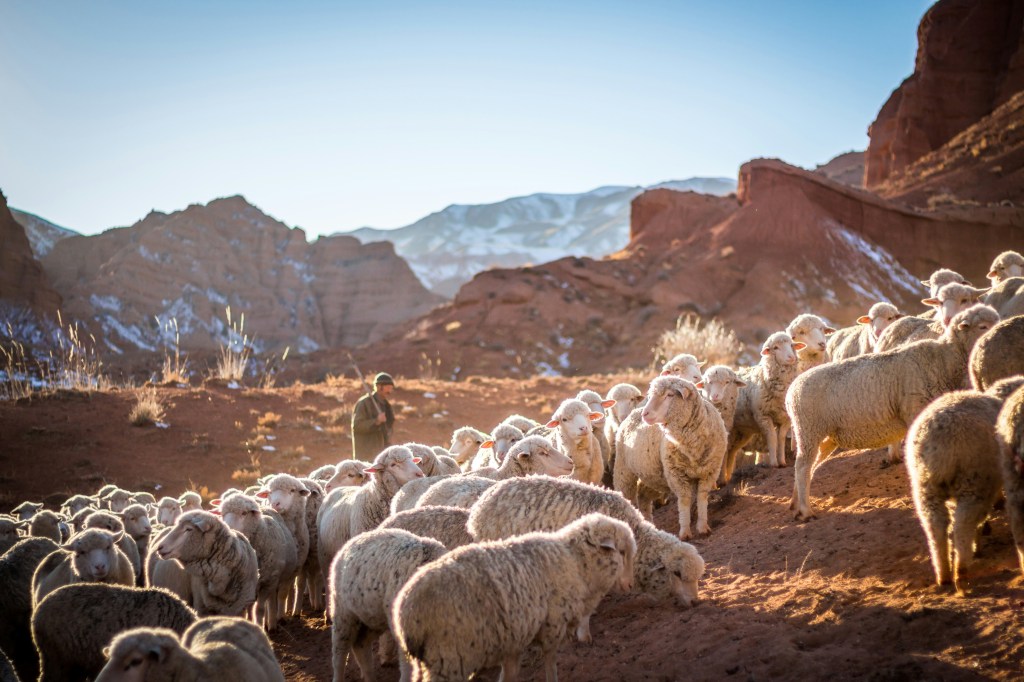
The sovereignty of Jesus is so complete that even wolf attacks ultimately serve the church. Of course, for the king who turned the enemy’s greatest weapon, death, against him, this is par for the course. Wolves aim to serve themselves by causing great carnage, “tearing the prey, shedding blood, destroying lives to get dishonest gain” (Ez 22:27). But in the end, even they serve the advance of the Church.

What is one way that they do this? By exposing who is a true shepherd – and who is a hired hand.

I am the good shepherd. The good shepherd lays down his life for the sheep. He who is a hired hand and not a shepherd, who does not own the sheep, sees the wolf coming and leaves the sheep and flees, and the wolf snatches them and scatters them. He flees because he is a hired hand and cares nothing for the sheep.

-John 10:11–13

Jesus tells us here that his willingness to lay his life down for his sheep is the proof that he is the Good Shepherd. He cares so much for the sheep that he is not only willing but will in fact give up his life for them. This differentiates Jesus from the other self-serving religious leaders who run when faced with wolves because they don’t truly love the sheep, but themselves. Even when the wolves in sheep’s clothing (Judas, the authorities, and Satan through them) attack Jesus, he will not flee. He will face the wolf, even though it means losing his life.

Pastors of the Church, undershepherds, are called to walk in the footsteps of this Good Shepherd.

… shepherd the flock of God that is among you, exercising oversight, not under compulsion, but willingly, as God would have you; not for shameful gain, but eagerly; not domineering over those in your charge, but being examples to the flock. And when the chief Shepherd appears, you will receive the unfading crown of glory.  

-1 Peter 5:2–4

This means that just as wolves served to differentiate the Good Shepherd from the hired hands, so they also now expose who is a true undershepherd and who is, at the end of the day, merely in it for personal gain.

The first time I realized this I was trying to respond to a tough question from a believing Iranian refugee who was visiting our church in Kentucky. He had questions about the fact that we had a number of pastors on staff who were paid full-time salaries.

“How do I know that they’re not just in it for the money? We have a lot of problems with this and the religious leaders in our culture.”

I had recently been teaching on evangelism from John chapter 10, so the Good Shepherd passage was fresh in my mind during this conversation. But the unexpected question shone the light on an aspect of the passage I had never noticed before. (Sidenote: I love it when this happens. Unexpected questions so often serve to be a goldmine for new insights into the Word.)

“Well, you’ll see that they’re not just in it for the money when things get hard, when the church gets attacked. True pastors will stay and defend the flock, like Jesus the Good Shepherd. Men who are just in it for the money will run. So, you just need to stick around long enough to see what they do when the church comes under attack.”

I stood by this answer, confident that our pastors were the kind of men who would indeed lay down their lives for the sheep if necessary. I didn’t know that in just a few years, I’d have to face a wolf attack myself. And I’d have to wrestle with whether I would stand my ground or run like a kid who’s really only watching these bleaters for the pocket money.

In addition to learning a lot about the nature of wolves during Ahab’s* sneak attack on our church plant, I was also learning about the nature of leaders. My own heart as a leader was being put to the test. Was I a hired hand? Would I stand and fight rather than seek to save my own skin? What about my fellow leaders, would they run? We had suddenly found ourselves in a crucible that would expose us, one way or the other.

I will say this. Everyone who is a Christian leader should strive and pray to be like the Good Shepherd when the wolf comes. We should all pray that on that day we will not turn out to be hired hands. And we should also strive to not be alone but to have a few others with us who will stand back to back, encouraging us to stand our ground, swinging their staffs into the teeth of the predator when it lunges, and pulling it off of us when it’s got its jaws clamped around our thigh.

My fellow leaders and I were caught unprepared when we faced our own wolf. But by the grace of God, eventually, when the deceptions cleared away and the fangs came out, most of us somehow managed to stand our ground and fight. We were tested – and found to not be hired hands, but undershepherds who cared enough for the sheep to at least go down swinging. God is good.

There is a particular kind of trust that develops when you’ve seen a man stand his ground against a wolf. The natural impulse of a believer is to move toward those who defended the sheep even when it was costly. This must be because they remind us of the Chief Shepherd. I do not delight in the carnage of a wolf attack. I get no high from the thrill of a predator suddenly revealed. But I do love seeing a true shepherd’s heart revealed. And the kind of camaraderie that follows when you know you have a brother who will walk with you through the very jaws of death.

Wolves, it turns out, have a particular ministry of exposure. They appeared and exposed the true nature of Jesus. And when they appear in our churches they will in turn expose our own hearts and those of our leaders. This is part of their purpose, seemingly part of why they are allowed to threaten the people of God.

They may think they are out to kill and fill their bellies. But the word of God is clear – even wolves will serve their purpose. Even wolves must the Church.

To support our family as we head back to the field, click here.

For my list of recommended books and travel gear, click here.

*Names changed for security

Photos are from Unsplash.com

Flying Solo but Not Alone: Supporting Singles on the Field

This is a very helpful piece from the Great Commission Council on how sending churches and missionaries can better support single missionaries.

Why an article about caring for the single missionary? After all, saints in the church are defined not by marital status, but by their identity as immortal image-bearers of God (Genesis 1:27) and sinners redeemed by Christ for his glory. Since their primary identity is not in being single, why must churches and sending agencies pay particular attention to the needs of single missionaries as a demographic?

Singles represent approximately one-third of missionaries on the field; of these, the majority are women. This means that approximately a quarter of all missionaries are single women. Since God continues to give single missionaries to the church, supporting these workers well is essential to the flourishing of our brothers and sisters and the Church’s mission.

Every missionary and field context is different, but the experience of overseas service has implications in the lives of single missionaries which differ from those who are married. These implications are less visible, so leaders in their local church and mission agency must give careful attention to them, ask good questions, and listen well. Leaders do well to understand the unique experience of single missionaries because doing so serves the church in significant ways.

Read the whole article here and learn about the unique realities singles face on the field, the hindrances to their care, and what it can look like when it’s done well.

I’ve written in the past about some of the reasons why I love having singles on our missionary teams. The church – and the church planting team – is simply stronger and more gifted when Aquilas and Priscillas are working alongside Timothys and Silases.

To support our family as we head back to the field, click here.

For my list of recommended books and travel gear, click here.

Photos are from Unsplash.com

How We Snuck

They would never see it coming. No class would sneak off for their senior trip during the festive and lucrative Independence Day celebration. Yet that was exactly our plan, at least the first part of it. There were layers to our sneakiness. We would indeed skip out on Independence Day, but then we’d also pass the whole thing off as what was known as a fake senior sneak. Once everyone was convinced it wasn’t the real thing and that we were just spending the night somewhere nearby, we’d get on a plane and be gone for real. It was, in the language of Dune, “a feint within a feint within a feint.”

At our missionary kid school in Melanesia, the senior sneak was a proud annual tradition. Eleventh graders would work hard all year long hosting skate nights, cafe and restaurant nights, selling frozen burger patties, and doing other fundraisers in order to afford one secret and epic senior trip. Since we were living in Melanesia, the options were either to leave our school in the highlands to fly to one of the tropical coastal cities or even to take a trip to Australia. My class opted to stay in-country and go to a beautiful area none of us had ever been to, one famous not only for its peaceful and beautiful beaches but also for a historic WWII naval battle that took place nearby.

We planned to sneak during our school’s Independence Day festival because that was the one day no one would ever suspect. During the festival, each class set up booths and games to raise money for their class projects – picture fundraising activities like grease poles, dunking booths, and fake wedding booths where you could pay to have two very embarrassed classmates “married.” I remember one year cracking up as two mortified students were ceremoniously dressed up in ridiculous costumes and my older brother (the “reverend” that year) pronounced them man and wife, followed by a mournful tune on his trombone.

Anyway, the assumption would be that we’d need to work on Independence Day in order to raise more funds for our class trip. But we must have done a good job in our junior year’s work because these funds weren’t necessary for us to pull off a combined fake sneak and real sneak in one.

Our parade float was the first thing that gave any clue of our intentions that morning. Our float vehicle was a pickup truck. But instead of members of our class riding it in float-themed costumes, the truck bed had a bunch of life-sized cardboard cutouts waving out at the crowd. Each cardboard stand-in was wearing one of our class shirts and had the face of someone from our class glued onto it, grinning mischievously. On the sides and the back of the truck were large signs that read simply, “We Snuck!”

Layer one. The crowd saw the float going around and chuckled. “Clever! But surely they wouldn’t sneak, today of all days.” Slowly, the crowd realized that there were no twelfth graders anywhere. “Did they actually sneak?” By that time we, along with our class advisors, had been smuggled out of the base in big vans, heads down and giggling, trying to make sure that no one who just happened to be on the wrong side of the base that morning would spot our getaway.

Layer two. Once we escaped unnoticed, our destination was the one nice hotel in the nearby provincial capital town, named after the national bird. We would spend the day at “The Bird,” swimming at the pool and enjoying burgers and milkshakes. Meanwhile, our co-conspirators back at the base would spread the word that the seniors had been spotted at the hotel, clearly enjoying an overnight fake sneak. Everyone would laugh and assume that we would be back on base the next morning. But we had packed our bags for an entire week.

Layer three. The next morning, rather than drive back to the base, we drove to the airport and boarded a small Dash 8 plane to make our way to the nation’s capital city. We’d spend a day and a night there. While there, we visited a gold refinery, toured the one TV station in the whole country, and had dinner at a posh seaside restaurant. I remember ordering a massive mud crab for dinner, just for kicks. Its bright red color matched my gaudy red button-up and red lens sunglasses. Alas, the things we do when we are seventeen.

Layer four. The next morning we boarded another small plane to travel to our final destination. I was class president and I was thoroughly pleased at how well we had tricked everyone. Surely, how we snuck would long be spoken of in our school lore. The plans had gone off without a hitch and I for one didn’t think that there were any surprises left.

We were all settled into our seats but the plane seemed to be waiting for one last passenger. Someone stepped onto the plane. It was another American high school kid. That’s strange, I thought to myself. He looked oddly familiar. Suddenly I jumped up, realizing who it was. He came down the aisle, beaming, and we gave one another a huge bear hug – and then we cried a little.

It was one of my best friends. His family had left unexpectedly during our junior year, his dad suddenly caught in ministry-ending scandal. When they had left we’d all wept together at the airport, not thinking we’d see each other for years to come. It was terrible. Another close friend was unexpectedly gone, our friendship cut off by some of the hardest of circumstances.

Somehow, our class advisors had managed to be even sneakier than we were. They had arranged for him to come all the way from the States to join us for our senior trip. Now he would get to be with us during the trip we’d worked so hard for together.

It was one of the best surprises of my life.

To support our family as we head back to the field, click here.

For my list of recommended books and travel gear, click here.

Photos are from Unsplash.com

Shall We Meet Up?

One advantage of being based in Louisville, KY, is that we are only a day’s drive away from 3/4 of those who live in the US. I heard once that this was one reason for the T4G conferences being held here.

I’ve been chewing on this fact of geography as we’ve been knee-deep in support raising to return to Central Asia this August. Currently, an amazing network of friends from different seasons of life and ministry has brought us to just under 50%.

But at this point, it doesn’t seem like we’re going to be able to make our goal with only our current network of relationships. This means we’ll need to find several dozen new partners who are open to partnering with us on a monthly or annual basis.

One way this could happen is if some of you, the readers of this blog, are willing to meet up face to face or via video call to explore partnership in both gospel and treasure. It’s one thing to know someone only through their pen name and their writing and stories that have to stay strategically vague for security reasons. But it’s another thing to know someone face to face and in the kinds of life and ministry details that can’t be published on the internet. This would also give me the chance to get to know many of you who have been so kind as to regularly read about my family’s work and many misadventures.

Yes, we’d have to vet you just a little bit to make sure you’re not some kind of Salafi on a mission to expose missionary bloggers. But once we established that you do indeed love Jesus and are not a misguided pharisaical short-pant wearer desperately in need of a patient Christian friend, then I could meet up with many of you who are based in the continental US. Think roughly between Oklahoma City and New York. Of course, when it comes to video calls, these can happen regardless of state or country. It’s as easy as figuring out the timezone differences.

The work we are going back to do is that of resource creation for the local church. We want to create and translate resources that are both robustly biblical and that also communicate deeply to the heart, mind, and culture of those from our region. We have the Bible now, the most important resource, but we don’t yet have Christian resources in our local languages about everyday topics like biblical parenting and giving to your local church. Nor do we have anything yet that helps Christians take on deeply ingrained evils like wife-beating, female circumcision, and honor killings. We want to research, translate, write, record, and distribute the kinds of resources that are going to build up the fledgling churches in our region – and equip the local believers, missionaries, and leaders who are fighting for every millimeter of growth in a very difficult place.

Want to be part of this work of stocking the spiritual arsenal of brothers I’ve written about like Darius*, Mr. Talent, and Alan? Want to help us find the metaphorical basement of the culture and get to shining some much-needed light down there? We’d love to have your help in this.

If this is something you (or your church) would be open to, send an email here and we can work to find a time to meet up.

I’m truly thankful for everyone who reads this blog, whether you’re able to partner with us financially or not. It’s been an honor to pass on stories and essays that dive into things like missions, wisdom, history, and resurrection. No writer or missionary can succeed without the backing of many, many friends. As they say in another part of Central Asia, “One flower doesn’t bring the spring.”

Finally, would you pray even as you read this post that God would provide the support we need to return this August? He is most certainly able to do this. For Him, it’s not an airplane at all.

Grateful for each of you,

A.W. Workman

*Names have been changed for security

For my list of recommended books and travel gear, click here.

Photos are from Unsplash.com
Seven and a Half Years – and Every Bit Worth It

The Achilles heel of the church planting efforts in our corner of Central Asia has been the absence of faithful and qualified local leaders. Many missionaries have handed over leadership too quickly and men who might have eventually become faithful pastors instead fell into “puffed up conceit and the condemnation of the devil” (1st Tim 3:6). Other local men grew impatient and seized power, position, and ministry money before they were ready. All too often, promising leaders that long-term missionaries were faithfully discipling got lured away when an outside organization showed up looking to hire a local to head up their imported formulas for disciple-making movements. Persecution and burnout have also played their role in running off local leaders.

Were you to diagram it, you’d see four stages local believing men go through. First, there’s the new believer stage. This is the stage with the highest numbers. Next is the maturing disciple stage. A good number make it from stage one to stage two. Then, you have the potential leader stage. There’s a smaller number of men in this stage, but they are very encouraging men of vision and potential. But the fourth stage is that of a qualified and faithful leader. Almost no one has passed that last threshold.

This week Darius* was voted in as the first local elder of our church back in Central Asia. According to one of our colleagues there, the local believers were engaged, asked thoughtful questions of the elder candidates, then prayed hard for the two new pastors after voting them in. Darius and one of our other teammates have been in an elder-in-training season for about a year and a half, a development partially prompted by my family’s unexpected departure from the field. Now they are the very first elders to be tested and voted in congregationally. It’s taken seven and a half years for this to happen, seven and a half years for us to at last see a local man raised up for pastoral ministry.

This church was birthed at a Christmas party in December of 2016. Frustrated that none of the isolated local believers were willing to attend the house church services we were offering in their language, we experimented by inviting them to a Christmas party – one that involved teaching from the word, worship songs, and some prayer. Some of the very same believers who refused to come to a house church service told us how much they had enjoyed the teaching, songs, and prayer at the Christmas party. We invited them back for another gathering the week after – and at some point broke the news to them that what they were enjoying were in fact the basic elements of church. Once they had tasted it, they weren’t nearly as reticent to come back.

But that first group didn’t exactly result in a church. Hama and Tara soon fled the country. One man lived too far away to attend more than quarterly and another proved not to be a believer. We had a very explosive falling out with Hamid after we held firm on the exclusivity of Christ, so as far as we knew he was gone for good. Only a single gal who would later turn out to be the daughter of a spy and Harry would gather with us somewhat regularly – and Harry inconsistently because of pressure from his violent and conservative tribe. Six months into every other week producing no local attendees, and we almost pulled the plug on the whole thing.

Thankfully, we just barely decided on continuing to meet, believing that if the locals didn’t know how to gather in a steady, weekly fashion, then we’d just have to model for them what that looks like. Every week we’d all text and call our own small networks of isolated local believers and seekers we were studying the Bible with. And every week our team would wait anxiously, chai and sunflower seeds set out and ready, hoping for maybe two or three locals to show up this week.

The turning point came when Ahab’s family started attending regularly. Finally, we gained some momentum and averaged about six to ten locals joining us every week in Ahab’s house, where we had moved the meeting. Unfortunately, as I’ve recently written about, Ahab proved to be a very dangerous wolf in sheep’s clothing. Yet God was still working even as that danger lurked. During that season Mr. Talent and Patty and Frank came to faith and went under the water on a freezing January day. By spring 2018, we were seeing several dozen locals gathering every week, Harry and Ahab were seen as potential elders-in-training, and we thought we were in the clear – a church was being born before our eyes.

Then Ahab almost blew it all up. We extracted the church from his house and moved the meetings into the international church building. Only five or six of the believers stuck with us, but we were encouraged that there was still any church left at all. It was in this season of damage control that we met Darius and he came to faith and was baptized. He was, amazingly, captivated by the beauty of the church – the traumatized group of local believers and foreigners who had just barely survived a wolf attack.

This was when my family transitioned to the States for a season and then back to a different city in Central Asia. But during the two years that we were gone, the church continued to grow under the leadership of our colleagues, in spite of serious opposition. During this time, it was raided once by the security police and then later experienced another implosion due to another attendee who was some kind of spy from the militant regime to our East. Harry had been appointed a formal elder in training in this season and we had high hopes that he would be our first local leader. Sadly, this implosion and its relational fallout led to his leaving the church for the next year and a half.

When we eventually moved back to help this church in 2021, the church had once again entered a period of steady growth. Alan and others came to faith and Adam was rescued from his crippling schizophrenia. Our team realized that it was time to go official. We had been a church with informal membership and other structures for a few years by that point. Now it was time to step into the fulness of the Bible’s vision for a local church. And that meant formalizing membership and drafting a Central Asian church covenant. Shortly before we once again left in late 2022, the church had covenanted together and was openly committed to pursuing all twelve characteristics of a healthy church.

One of those characteristics is biblical leadership. This means seeing local elders and deacons raised up who are qualified according to passages like 1st Timothy 3 and Titus 1. A few other men and I have functioned as temporary lowercase-A-apostolic elders for this church body up until now. But the goal was always to work ourselves out of a job. It just took much longer than we thought it would. I once heard a local pastor in a neighboring country say that in their context it took about seven years for a man who has come to faith from a Muslim background to be discipled and mature enough to lead in the church. So far this fits with our experience as well.

For several years we had been hoping that Darius would be the first local pastor of our church. But just like every other man who makes it into the potential leader phase, the attacks came – potent and often. He was approached by other organizations asking him why his church wasn’t making him a leader yet, why they weren’t paying him a ministry salary yet, and why he didn’t consider aligning with someone else who would recognize his clear leadership gifts. It was a hard fight, but Darius resisted these enticements one after another. He also hung in there through numerous bouts of cross-cultural conflict with us, his mentors. By God’s grace, he was able to see our heart for him, that we would be delighted for him to lead – but only at the right time and in the right way. And unlike so many other potential leaders, Darius chose the harder and healthier path, the path of humility (1 Pet 5:6).

My family’s departure in late 2022 sped things up a little bit, as it left only one teammate pastoring a still messy and growing church on his own. We knew this was going to be too much, so the plan was hatched to bring Darius and another newer teammate into official elder-in-training roles. The past year and a half have demonstrated that God has indeed given these brothers the knowledge, the gifts, and especially the character to be spiritual shepherds. This was joyfully and soberly affirmed this week by the members of the church.

It took seven and a half years for the first qualified local pastor to be raised up. But we truly believe that this is one of the most important keys to seeing healthy local churches planted that endure – and that go on to reach their own people and others with the gospel. So, even though seven and a half years has been quite the messy and costly investment, it has been, without a doubt, entirely worth it.

Darius is the first. May countless others come after him.

To support our family as we head back to the field, click here.

For my list of recommended books and travel gear, click here.

Photos are from Unsplash.com

*Names changed for security

Of Pilgrim’s Progress and Honor Killings

Have your church’s discipleship classes ever focused on what it means to be a faithful Christian patron? Or on how to restore a household’s honor when a daughter has brought shame on the family through sexual impropriety? Or on how to shape the future destiny of your child, including whether buried umbilical cords have any influence on this?

For most, if not all of my readers, the answer would be no. But I’ll bet your church has had classes or studies on the Bible’s view of gender and sexuality, how Christians should engage in politics, and how Christians should think about retirement.

It’s no surprise that the first topics I listed haven’t featured in the classes your church has offered or in the Christian books you’ve read. They’re simply not pressing issues for the Church in the West – if they are even on the radar at all. And there’s nothing wrong with that. It’s merely a reflection of the particular slice of history and culture where Western Christians find themselves. But Western Christians are living in a time and culture where there’s widespread gender confusion, Christian participation and influence in elections, and individualistic retirement planning. Accordingly, our Christian resources reflect these issues.

When we move back to Central Asia this summer, my new role will be focused on creating and translating solid resources in our people group’s languages. The aim is for these resources to be both robustly biblical and deeply contextual, and in this way to serve local believers, their leaders, and the missionaries who are working among them. We now have a full or partial Bible in several of our languages, and there also are a good number of evangelistic resources both in print and online. What is lacking is content that focuses on building up the church.

In general, I’ve been chewing on two broad categories of resources: global vs. local. There are resources that every Christian in every age and culture needs. These would be universal or global resources. For example, resources in systematic or biblical theology that help Christians to understand what the Bible teaches about God, about the gospel, about the Church, and about God’s plan of redemption throughout the ages. There are also the universally-relevant areas of practical theology that help Christians apply the Bible to things like parenting, marriage, and work. These resources are, to a large extent, timeless, even if the examples and applications used might be more culture-specific.

Think of how impactful the Westminster catechism has been on global Christianity. Or, the broad appeal a book like Pilgrim’s Progress has had over the centuries and around the world. It’s been easy for Christians for four centuries to identify with Christian and his journey toward the Celestial City and the many common struggles that he faces, such as sin, doubt, complacency, despair, and death.

Every people group needs these kinds of global resources. But every people also needs local resources, resources that take aim at the unique strengths, weaknesses, and questions of a given culture. These resources greatly serve believers because their applications are so specific to the world of their target audience.

Our focus people group is very strong in hospitality. But their hospitality is done from the wrong motives – and only extended to those who are existing or possible patrons or clients. This means that local believers need resources that will explicitly point out how biblical hospitality should be done from a gospel motivation and extended toward even those who cannot repay the hospitality through some kind of future loyalty or other service. We have some great resources in the West that lay out a practical theology of hospitality. But how many of them will engage this activity through the lens of a society that relies on hospitality to build its patronage network and social safety net?

Our focus people group also oppresses women in some very dark ways. The oppression of women may be a global issue, but our local believers need resources that will argue directly against its local forms, such as female circumcision of babies, wife-beating on the marriage night to establish a husband’s authority, and honor killings as a response to sexual misconduct. Translated Western resources on biblical manhood and womanhood will cover the principles that oppose practices like these but will not address the practices themselves directly.

The need is to pursue both kinds of resources at the same time. All local churches need universal resources that teach them timeless doctrine and universal principles of Christian conduct. But all local churches also need local resources that will help them wrestle with the particular spirit of their age.

Sometimes these resources end up doing both very well. Augustine’s City of God, for example, was written to argue that it was not Christianity’s fault that Rome had been sacked by the barbarians. This was a particular question hotly debated in the late Roman world. But in doing this, Augustine went on to write about the theology of the City of God and the City of Man and how they are entangled and in conflict in all societies in this age. Augustine’s understanding of the spiritual city of God and its peculiar relationship with the City of Man still serves me very well in early 21st-century America, even though I am so far removed from Augustine’s culture and world.

I think this should be the goal of all serious Christian resources. We cannot escape culture-specific applications in the resources we create. In fact, we must get specific for the sake of our audience. But we can try to write, record, or film in such a way that the biblical exposition and reasoning we employ might also apply to audiences on the other side of the world – or in some future century. You never know how a faithful book written in past centuries might be the key to unlocking the future church’s way forward in some seemingly unrelated controversy.

God’s truth is universal, there’s nothing new under the sun, and yet every generation of believers is also unique. So, we will aim for both – universal and local. And trust that if a resource serves the church well for a decade, then that is good. And if it serves it well for 1,500 years, then that is good as well.

To support our family as we head back to the field, click here.

For my list of recommended books and travel gear, click here.

Photos are from Unsplash.com

Dysfunction and Drivers at the UN

“A.W.? How are ya? Daniel* here. Listen, I’ve got a job offer I want you to consider. Can you come by my office for some tea?”

Daniel was the middle-aged British manager of a five-star hotel in our Central Asian city. He had recently come to faith while attending the international church. I didn’t really know him very well, but I loved his story. It was just like God to bring this British man all the way to our corner of Central Asia for a hotel job so that he could hear the gospel and be born again.

I was not looking for a new job. I was happy and busy working as an English teacher while also engaged in cross-cultural church planting. But I was always on the lookout for good jobs for local believers or for other foreign believers who might move to our city in order to be Christian tentmakers.

After I arrived at the hotel, Daniel greeted me enthusiastically and offered me a chair and a cup of tea. Then he began to explain the situation.

“Right. So our hotel has a close partnership with the UN, given that their office is right next door.”

He indicated out his window to the unmarked building which was nestled into the hillside next to the hotel. So that’s where the UN offices are. I took note, thinking that I might need to visit them at some point if things got bad for certain local believers – something that did eventually prove necessary.

“Their foreign staff live here at the hotel during their six-month assignments. And we take good care of them. So they trust me and occasionally ask for my help with some of their internal workings.”

I nodded, sipping my Earl Grey and wondering where all this was going.

“Well, last month one of the vice presidents for the UN came to visit the UN office here. Problem was, someone dropped the ball at the local office so no driver was sent to pick up this VP – who then had to wait hours before finally being picked up. Well, as you can imagine, she was positively livid and gave the foreign and local staff quite the talking to. Do you know how the UN staff operate?”

I shook my head. In spite of seasons of doing relief and development work, I’d never been directly connected to the UN.

“Well, there’s a complete turnover of the foreign staff every six months. This means that just as the new foreign staff are learning how things are done, they are shipped off to another part of the world. Terrible way to run an organization if you ask me.”

I nodded in agreement.

“So it’s the local long-term staff who really know what’s needed, but of course, they’re the ones without any power to make decisions. Meanwhile, the foreign staff don’t even have time to get their heads on straight. Anyway, after the VP left our city, it was decided among the higher-ups that this type of mistake must never happen again.”

Daniel gave me a look as if he wasn’t sure if I’d believe what he was about to say next.

“They’ve created a new position for a long-term foreign employee to organize their airport pickups – and they’re going to pay this person $10,000 – $12,000 a month. Can you believe that?”

I sat back in my chair. “Wow, why would they pay that much?”

David threw up his hands. “It’s the UN. Who knows? Either way, that VP must have been very angry. But listen, they want me to send them recommendations for this job. It’s fantastic pay, of course. But the work is very very simple. They want someone to stay on top of the UN airport arrivals and oversee a team of local drivers so that all visitors are picked up and dropped off in a timely fashion. And that’s all they want them to do. They seem to be very serious on this point because they kept telling me that whoever they hire needs to completely ignore everything going on with projects and cases and such.”

“They’re even going to test people on this front during the interview,” Daniel continued, “which is why I wanted to meet with you. When you sit down with them they’ll ask you about your interest in the UN’s projects in the city. But you have to act like you know nothing and care nothing about any of it. ‘I don’t really care about food for refugees’ and all that. They’ll probably stage a phone call interruption and then ask you afterward what you overheard in the conversation. You’ll need to ignore it or pretend to ignore it. They’ll use it as a test. They told me if anyone shows the slightest bit of interest in anything other than airport pickups and drop-offs, they’ll absolutely not get hired. Once hired and the driving schedule is set, you’ll have most of the day to read, watch telly, take a nap, whatever. Just don’t poke your nose in anything else going on in the office, and you’ll be all set.”

On hearing this condition, I knew this kind of setup would never work for me, even if I had been interested. I would be way too curious about the different projects going on and way too bored if all I had to do was make sure the airport runs were happening on schedule. But what about solid believing friends back in the US still trying to pay down their student loans? Could be a Godsend for them. Maybe they could use all the extra time to learn the local language and build solid relationships with the local staff?

“It has to be a foreigner? They’re not open to hiring a local?”

He shook his head. “Has to be a foreigner.”

Listen,” Daniel continued, “I wanted to tell you in case you were interested. Or if not, maybe you could give me some good leads. They are really hoping I can help them find someone reliable.”

I thanked Daniel and told him I’d keep in touch if I had some friends who were interested. He promised to keep me updated.

“Just don’t forget,” he told me as I stood to say goodbye. “If you go for the interview, play dumb and uninterested in everything else UN-related – but don’t let them know I told you that,” he said with a wink.

I stood up to go. “See you in church this weekend?”

“Wouldn’t miss it for the world.”

The actual interview process kept getting delayed over the following months, much to the disappointment of those back in the States I’d texted about the job. In the end, it was too good to last. Someone with some sense and power in the UN must have found out about this wildly overpaid new position and shut it down. Good for them. When local staff were only being paid $500 a month to work for the UN, paying a foreigner $12,000 a month to merely arrange airport pickups would have been a stunning example of resource mismanagement – even if we had been able to leverage it for other believers.

Bizarre situations like this remind me that at the end of the day, secular organizations – including the UN – are just collections of people – and people are nothing if not flawed and inconsistent. People make mistakes, get angry, overreact, underpay some people, wildly overpay others, and yet somehow still manage to do important work. A couple of years later, UN lawyers were key in keeping Patty and Frank from getting deported back to the country they’d originally fled from. God can certainly use large international bureaucracies like the UN for his purposes. And they can also be bloated, foolish, and corrupt. They’re not quite the evil entities anti-globalist Christians make them out to be. But neither are they exactly agents of light like my Central Asian friends expect them to be. Rather, they’re somewhere in between.

That means they can at times be leveraged for the kingdom. A well-placed believer working on UN refugee cases in our part of the world can make all the difference for a Christian family needing to flee the country or fight deportation. I’d bet that even a believer organizing airport runs could make a difference.

Who knows? God brought Daniel all the way to Central Asia to be a hotel manager so that he could save him. He just might bring you over so you could do wildly overpaid airport runs. If you were faithful to use that money for the kingdom, then that could be a pretty great story in itself.

To support our family as we head back to the field, click here.

For my list of recommended books and travel gear, click here.

*Names have been chaged for security

Photos are from Unsplash.com

Fire and Flour at 02:00

Someone must have been praying for us. It was 2 am and I was strangely and suddenly wide awake. The house was silent and cold, so I rolled over to go back to sleep.

Suddenly, I heard the slam of the national electricity turning on and hitting our breaker box. Normally this would be followed by the cheerful chirp of our electric heater unit turning on. It used too many amps to run on the neighborhood generator and so was wired to only work when the limitless government power came on. But this time there was a distinct popping and fizzing noise. There could only be one explanation. Electrical fire.

We can’t predict how we’ll respond in crisis moments like this. When we’re suddenly faced with an emergency we are at the mercy of reflex, reaction, whatever random prep we may have received for said crisis, and the sovereignty of God. Somehow, I had the presence of mind to spring out of bed and into action. I sprinted to our little half kitchen next to the house’s light shaft (a feature in many local homes built to provide more natural light given all the power outages).

On top of the fridge, we had a little imported fire extinguisher covered in Persian script. I grabbed it, pulled the pin as I ran to the breaker box, and let it blast all over the small multicolored fire coming out of our wall. This was the first time I discovered just how messy fire extinguishers are. As the extinguisher sputtered out its final hiss, half the house had been covered with yellowish-grey dust. Yet the fire wasn’t completely out.

I peered into the breaker box and saw small flames still flickering in the innards behind the breakers. Plastic melted and oozed and the little flames flickered and threatened to grow larger again. Suddenly a random bit of trivia came into my mind. Somewhere in the distant past, perhaps while scrolling Facebook circa 2007, I had read that you could use cooking flour to put out kitchen fires. Well, I figured, if it works for cooking fires, it just might work for electrical fires too.

I quickly moved back to the kitchen and rummaged around in the darkness in the cabinet where we kept the flour. But how to get the flour into the intestines of our electrical box? It would need to be propelled somehow. I reached over to the dish drainer and snatched a spoon.

Our electricity was somehow still working and we didn’t dare try to touch the melted and smoking breakers now to turn it off, so we flipped on a couple of lights so that we could see what we were dealing with. We saw a large black scorch mark surrounding the breaker box and trailing up the formerly white plaster wall. I also saw the spoon I had grabbed – it was a little blue plastic toddler spoon.

Suddenly doubting the quality of my tools, I scooped the little spoon down into the flour bag, bit my tongue in concentration, and tried to accurately fling powder through into the gaps between the breakers and wires and back into the little flames in the innards. It was a messy job, but before long I had emptied the small bag of flour and the flames were finally out.

I looked over at my wife, smiling. It had worked. She was crossing her arms and judging me for some reason. Was it the spoon?

“You had to use the expensive American flour instead of the cheap local stuff?”

For the first time, I looked at the flour bag itself. Sure enough, I had grabbed the expensive American import flour, the kind my wife and a teammate had been so excited to find in the local grocery store and which she was probably saving for birthday cakes. The flour that wasn’t resting on the mangled wires like so much dirty snow was in a little pile at the base of the wall.

“Oops… well… the house didn’t burn down!” I said, making my point by smiling and pointing the toddler spoon at her. We stood there in our bedheads, bare feet, and pajamas, looking around through the dusty air, surveying the damage. It certainly could have been much worse. The unlikely trio of the Iranian fire extinguisher, the American flour, and the toddler spoon had successfully extinguished the fire before it had spread to anything else.

Of all the things most likely to kill us while living in Central Asia, I’d rank the electricity as number one. This was in fact the first of several electrical fires we’d have in the following years.

The causes of these fires came in layers. There was the issue of the inconsistent and aging government electricity supply. There were the supplemental neighborhood generators with their fluctuating voltage and parallel wiring systems that electricians often mixed up with the government wires. Then there were the locals who would hook up illegal power cables wherever they wanted like so many strands of a spider web, usually an attempt to get out of paying a bill. The quality of the hardware was lamentable – cheap wires, breakers, conductors, and wall sockets that melted and fried often enough for the missionaries to learn to rank them by most to least likely to burn up during a power surge. Finally, there was the construction of the houses themselves, where rebar inside of cement touched electrical wires and somehow caused even things like tile floors to conduct electrical current.

One American electrician came over on a short-term team and spent a whole three days trying to figure out why our house had live walls and floors and mysteriously dead outlets. In the end, he threw his hands up in defeat. Even now I can remember the feeling of sticking my hand into the washing machine and feeling a small current coming through the soggy clothes. One of our colleagues was even thrown across his roof as he tried to repair his swamp cooler (Praise God, he was okay).

When people hear about our corner of Central Asia they want to ask us about the dangers posed by wars, terrorism, crime, and persecution. They’d never guess that all of these dangers are not really that bad compared to that posed by the dodgy electricity.

Future missionaries, take heed. Learn some electrical skills while you can. Keep fire extinguishers on hand wherever you’re living in the world. And when all else fails, pull out the flour.

Just try not to use the fancy American kind.

***Update: I’ve been advised by someone who has been trained as a firefighter: Do NOT use flour to try to put out a fire like I did or you may experience a flour fireball. Instead, use baking soda/ bicarbonate of soda/ sodium bicarbonate or even salt or dirt as a safer option. Apparently flour can’t burst into flame if it’s not compact enough. Yikes!

To support our family as we head back to the field, click here.

For my list of recommended books and travel gear, click here.

Photos are from Unsplash.com