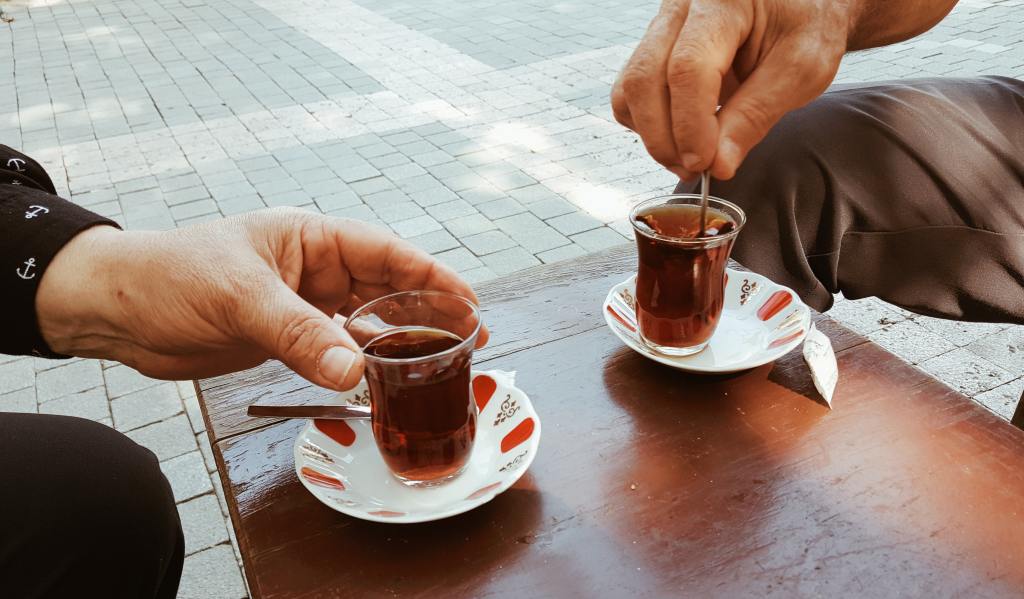
Drinking Hot Tea in the Desert Actually Cools You Down

I was twenty, sitting in a tea house in a far-flung desert town. It was summer, so the temperature hovered around 120 degrees (48 C) in the dusty bazaar. My friend suggested that we stop for some tea as he gave me a tour of the marketplace of his hometown, famous for its castle, its hard workers, and its heat. “Welcome to hell,” another local friend had quipped earlier as we drove into town, wiping the sweat off his brow.

Always one to prefer heat to cold, I had been eager to see if the summer weather in this town was as bad as everyone made it out to be. Rising early our first morning, shortly after sunrise, I had stepped out of the house and into the sunlight. Immediately, I was hit by a rush of blasting, hot wind, and oppressive radiant heat, as if the entire sky were a giant hair dryer aimed right at me. Mind you, it was only 6:30 am. I quickly stepped back into the protective shade of the cement house. If I had ever doubted before why so many desert cultures wore so much protective fabric, now I understood. At a certain level of heat, you do whatever you can to keep the sun’s rays off your skin, even if it means going around covered in many folds of cloth.

As we later made our way through the bazaar and then found our seats at the tea house, I was beginning to adjust somewhat to the constant feelings of living in an oven and clothing always soggy from sweat. I gratefully received a bottle of cold water alongside my scalding black chai. I chugged the water eagerly.

“Are you hot, my son?” asked a mustachioed older man, sitting across from me and smiling in his turban and flowy local robes.

“Yes, I’ve been told about the summer heat here, but now I see how true it is!” I responded, gulping.

“You know how we stay cool?” he asked me, raising his small steaming chai cup and saucer. “We drink this all day!” he said, laughing.

I looked at him, a little puzzled, wondering if he was joking or serious. He picked up on my expression and explained further.

“We drink the hot chai and it makes us sweat. And our sweat cools us down. That is how it works,” he said, seemingly satisfied that he had just handed down an important life lesson to this young foreigner.

I could tell he believed what he was telling me, but I wasn’t sure if I believed him or not. My love for local chai was intense, and so I was willing to drink it all year round, even in the fever heat of summer. But surely hot chai doesn’t actually cool you down in the desert. Maybe it was just a trick of the mind, a placebo of sorts that these desert men had learned to tell themselves in order to justify downing so many cups of sugary caffeinated goodness seasoned with cardamom and cinnamon. The logical thing to believe is that hot drinks raise your core body temperature and cold drinks cool it down. I left our interaction mostly sure that I was right and the locals mistaken. But a part of me has always wondered if there was something to what the old man was saying.

Then this week I came across an article in The Smithsonian that would make the old desert man crack a big smile, exposing all of the teeth he’s missing because of his chai habit. Turns out that a hot drink on a hot day really does cool you down. And this has now been scientifically verified with the help of a bunch of scientists and cyclists. Somehow, the cooling effect of the sweat produced by a hot drink on a hot dry day is actually greater than the warming effect the drink has on the body, making it a net win for a cooling effect. The article gets into the likely biological process for those interested.

So now I know. Hot drinks warm you up in the winter. They also cool you down in summer. How strange and wonderful. No wonder I like them so much.

There is one big caveat in all of this, however. In order for a hot drink to cool you down, you must be in an area of dry heat, not one of humidity. Since a humid environment prevents sweat from evaporating, the hot drink will actually raise your body temp, not decrease it. But as long as you are in some kind of desert or low-humidity setting (and able to sweat), the trick should work.

All of this reminded me of what a tricky thing it is to interact with local lore and tradition. By default, we want to dismiss local knowledge that seems bizarre to us as superstition or old wives tales. But quite often there is something to it after all. Not in every case, but often enough that we ought to reserve judgment on local claims until we’ve looked into them somewhat. As Tolkien wrote in The Lord of the Rings, “Pay heed to the tales of old wives. It may well be that they alone keep in memory what it was once needful for the wise to know.” Oral tradition should not be dismissed out of hand, simply because it initially strikes us as absurd.

A missionary friend in Cameroon shared with me this past week about a volcanic lake in that country. At some point in the 80s, large amounts of toxic gas were released from the lake, killing all who lived in the villages around its shores. However, all of those villages had been founded and populated by newcomers to the area. The long-time residents did not live close to the lake, since they had an oral tradition that it was spiritually deadly to dwell too close to the water. Apparently, this lake is prone to this kind of toxic gas release every 150 years or so, meaning that the indigenous villagers had an oral tradition that preserved a deadly historical event from the distant past, although it had become clothed in their animistic worldview.

I remember another story from my childhood in Melanesia, where a village pastor, eager to prove the local traditions wrong, had decided to cook and eat a bird locally believed to be poisonous and used in witchcraft. The pastor ate the bird – and almost died as a result. Turns out this black and orange bird is the only poisonous bird known in all of nature. Local oral tradition wins again.

Why do we so often assume that local tradition is untrustworthy and bogus? Because sometimes it really is, and it keeps locals in bondage to empty and dangerous lies. Consider the Middle Eastern and Central Asian belief in patrogenesis, the idea that offspring one hundred percent comes from the father, and the mother is merely a carrier, a vessel. All kinds of bad stuff have come from this cultural belief, including laws that disadvantage the mother when it comes to custody of her children – even if the man is abusive. Or, the cultural belief that the honor of the extended family is most dependent upon the sexual purity of the women in the household, resulting in honor killings that almost exclusively target erring female family members. In Melanesia, tribes until recently believed that if your enemy was strong in something, you could kill them and eat their corresponding body part for that ability, thereby getting stronger in that ability yourself. This local tradition led to widespread cannibalism and all of the dark effects associated with it.

However, what often happens is that Christians of the reformed camp approach culture with eyes only for these cultural lies. We often have a default posture of Christ-against-culture when it comes to local knowledge and traditions. We know that all cultures, like all people, are fallen and under the curse of sin. We know that this affects every aspect of a person, and every aspect of the culture – that total depravity is not just individual, but corporate as well. The mirror that once reflected the image of God so well has been shattered, and gross distortion has resulted. And yet a shattered mirror has not ceased reflecting entirely. No, if you lean in close and focus on small individual shards, a somewhat accurate, limited reflection can sometimes be found. The fact that the fall has damaged every aspect of a culture does not mean that the image of God is no longer present at all, shining out – sometimes dim, sometimes bright – through the distortion. Just as the restoration of the image of God in believers will not be perfected until the age to come, so the utter loss of that image in unbelievers and their cultures will not be complete until that same coming age.

This means that we cannot approach the culture of an unreached people group only prepared for the gospel to begin rejecting and discarding local beliefs and culture. We must be prepared for much of this, but not only this. We must also be ready to discover local beliefs and customs that fit quite well with a biblical worldview – that at times fit even better than those of our own culture. In these cases, the local cultural practice or belief is to be retained, but filled with a new motive, that of the glory of God and love for neighbor.

Few contemporary missionaries are at much risk of the kind of overt cultural pride present in the colonial era. In fact, we are more often at risk of the opposite, an unbiblical open denigration of our own cultures as we seek to embrace the local one. But pride is a slippery thing, and if our only setting is Christ-against-culture, then we will find ourselves prematurely scoffing at local wisdom that will eventually prove to be just that – wisdom. And scoffers don’t win trust. Those who sneer at local methods of chai drinking are less likely to find a hearing when it comes to the bigger questions of life and death and eternity.

Such is the challenge of engaging local lore and tradition. You may find lies straight from the pit of hell. Or, you may find truth that has been marvelously preserved, against all odds. We must learn to anticipate both and to humble ourselves when we get it wrong. We should listen carefully to the old men of the desert, ready both to learn and to stubbornly upend the traditions of ancestors when needed. We are tasked with this great untangling, with the laborious task of seeking to glue the shattered mirror back together. It will take a long time and countless conversations. And hopefully, lots of cups of chai. Even when it’s hot outside.

To support our family as we head back to the field, click here.

For my list of recommended books and travel gear, click here.

Photo by Zeynep Sümer on Unsplash

The Justifications of Polygamists

“Now that I have have this comprehensive power of attorney for you, I can legally get you a second wife – even without you knowing. Better watch out, when you come back from out of the country you may have a second wife, ha!”

Mr. Talent* conveniently dropped this news after several of us on the team had finished the POA process with him, meaning that he could now hold this over each of our heads. Thankfully, being a believer, Mr. Talent understands now that polygamy is a sin, despite his joking. Even before coming to faith, his first marriage had been difficult and had fallen apart, and he is also of the local demographic that would resonate with the ancestral proverb that “a man with two wives has a liver full of holes,” i.e. become a polygamist and embrace a life of pain.

And yet polygamy continues in our corner of Central Asia as a relatively normal thing among a sizeable minority of the population. Why does it still happen when polygamy is technically illegal in our area and when the culture itself has proverbs that speak to its danger? For something that is so foreign to us in the West (at least for now), it’s helpful to understand the justifications used by other societies for polygamy so that we can more skillfully oppose it with biblical truth.

The overwhelming majority of locals in our area are Muslims, and this means that a religious motivation is ready at hand for anyone who desires to marry an additional wife – even if this religious reason serves as a thin veneer for the true motivation. After all, the founding figure of Islam, Muhammad, had around twelve wives (there’s some disagreement about the actual number, and our local imams say thirteen). Being the supposed prophet and founder, Muhammad is held up as the ideal Muslim. So if a Muslim man wants to live like the prophet, and thereby be blessed, he will traditionally consider polygamy as a logical way to do this. However, only the prophet is allowed a dozen wives. Normal Muslims are limited to four.

Justifications in Islam for this polygamy in Muhammad’s life vary, but the most common one that I’ve heard is that it was an act of social justice, since so many wives had become widows in the holy wars that led to Islam’s founding. This doesn’t explain why Muhammad married seven-year-old Aisha, his favorite wife. Nor does it explain why he took his adopted son’s wife to be his own, conveniently receiving a divine revelation declaring adoption an un-Islamic concept in order to make it seem like he was not actually marrying his son’s wife (thereby making adoption among most Muslims a shameful thing to this day). But I digress, the logic for this first reason for polygamy among Muslims skirts these issues and simply maintains that Allah has blessed polygamy in the life of the prophet, and thereby in the life of faithful Muslims who commit to caring for each wife equally.

This Islamic sanctioning of polygamy means it often takes place in spite of the laws of the country where the couple resides – laws often viewed as Western and infidel-influenced. Polygamy is illegal only in the region of the country where we’ve been residing, but it is legal in other regions. So, local men who desire an additional wife will travel down south and work things out there, often with a wink from their local Islamic authorities, who are supposed to be abiding by the law and not encouraging polygamy at all. This dynamic is also present among some Islamic refugees in the West, where a man might fill out his paperwork as having one wife and one “sister” in order to bring both his wives with him to the West. He’ll set up two households in his new country, and live as a polygamist under the radar.

Another very common reason for polygamy among the Muslims in our area is infertility. Similar to stories of the Old Testament patriarchs, a man will often take a second wife if his first wife has proven unable to conceive after a given length of time. This is because children, and male heirs specifically, are so highly prized in the culture. We knew a village family in this situation, where a new wife had recently been acquired because the first wife seemed to be infertile. Again, similar to the stories of Rachel or Hannah, the public shame the first wife experiences in this kind of situation is almost unbearable. The presence of the second wife would serve as an excruciating daily reminder of her shame and and failure. If the medical issue resides with the man, he may keep taking on new wives, blaming each one in turn for what is actually his biological problem. Thankfully, modern medicine is making this kind of situation less common, as long as the man isn’t too proud to accept what the doctors are saying.

Surprisingly, it can sometimes be the first wife who pushes for the husband to take a second. This is because the first wife is often given a promotion of sorts when a second wife is taken on. The veteran wife will often get to hand off the more difficult housework and cooking to the second wife. Or the first and second wives give the hard labor to the third, etc. This could be viewed as compensation of sorts for the embarrassment of the husband taking on another wife, but can also be pursued in a sadly practical way for a marriage that’s unhealthy anyway. If the relationship is already cold and practical, why not get some help around the house? Similarly, one of my wife’s close friends desires her husband to take on a second wife primarily so that she can be free of his sexual demands. Having an additional wife might even provide some relational connection for a lonely wife who is disliked by her husband and his extended family. Just as the wives of a polygamist can often be bitter rivals, they can also become friends who support one another when both are stuck in the same situation, married to a bad man.

Polygamy can also be pursued by extended families in order to increase the standing of each. A poorer family might want one of their daughters to marry a wealthy or powerful patron. The patron’s standing as a holy, powerful, and apparently desirable man is thus increased, and the family of the girl gets a boost in honor and the brideprice money, which would be considerably more in this situation than if she were the sole wife of a man with less status. For example, one aged mullah in our country recently took on a third wife who is thirty-four years his junior. This kind of family status arrangement is likely what is going on here.

A final category of justification for polygamy is often simply the whims and desires of the man. If he is unhappy with how things are going sexually, or in terms of the cooking, or even if he just wants to flaunt his power as the domestic strongman, he might take on another wife. The first wife (or wives) cannot stop him from doing this, though in their own ways they can make him pay for it, hence the proverb about having a liver full of holes. Sadly, much polygamy takes place for no other reason than an already-married man takes a liking to another woman he has seen and decides that he simply must have her. I had to cut off contact with one village friend because he kept calling me, insisting that I translate for him as he flirted with a migrant worker, trying make her his second wife without the knowledge of the rest of his family.

The Bible is not silent on polygamy, though the case made against it is an indirect one. The first polygamist we see in Genesis is Lamech, a domineering and violent man. Then, in the stories of the patriarchs, both Abraham and Jacob become polygamists because of sin – Abraham’s doubting God’s promise and Laban’s deception of the inebriated Jacob. What ensues is a terrific mess, with rival wives, warring children, and men who must repeatedly eat the bitter fruit of their polygamous households. The kings of Israel are then expressly forbidden from taking on many wives in the style of the harems of the other nations, and we see the destruction of polygamy in both David’s and Solomon’s stories, even turning their hearts away from God. As the Old Testament period winds on, it becomes clear that God shows grace to polygamous households in spite of the institution, not because of it. The narratives of scripture are all consistent in their painting polygamy in a negative, worldly light.

At last, in the New Testament, Jesus calls the religious leaders back to God’s creation pattern for marriage – a man shall leave his father and mother and hold fast to his wife, and they shall become one flesh. Two become one, just like Adam and Eve in the beginning. In this passage as well as Paul’s insistence upon leaders being one-women men, monogamy is clearly assumed and polygamy thereby understood to be out of bounds. It may have been tolerated under the Old Covenant, but the New Covenant has come, where Christ has one holy bride, not multiple. And this relationship now serves as the pattern for all Christian marriages.

Whatever the justifications of polygamists, God’s word has come to silence them with its indirect yet forceful case. To have multiple wives is to lie about the nature of God’s covenant-keeping love, to lie about the nature of God himself. Believers in Christ are to live in such a way that their marriages are imperfect yet genuine metaphors of Christ and the Church – and as in the recent Western order, to influence society such that the injustice of polygamy is no longer tolerated.

For polygamy is unjust, both to the women whose dignity and agency are violated in polygamous marriage, as well as to poorer and younger and even average men, for whom marriage in a polygamous society becomes less and less attainable. A case could even be made that polygamous societies lead to greater violent conflict, as there is a clear connection in history between nations with a shortage of brides and nations that try to conquer their neighbors. And polygamous societies will always lead to many more available single men than available single women. How can it be otherwise when having multiple wives becomes a status symbol of the religious, the wealthy, and the powerful?

The justifications of polygamists are mixed. Some are good desires, such as the desire to have children, or to get some relief from the never-ending household labor. Christians can recognize the good in these desires and point toward better ways to pursue these goals and to respond when they are denied. Other, selfish, desires that lead to polygamy are to be rejected outright. Hence, knowing what the underlying motivation is for taking on another wife will be key to responding both biblically and skillfully. Why skillfully? Because in polygamous societies, you are the crazy one who thinks that monogamy is the only way to go. For them, polygamy is simply normal, perhaps even good, the way the world is. Helping locals to turn against their own polygamous heritage will be no easy task, but speaking to their underlying motivations will only help in this effort. I’ve laid out here the main motivations for polygamy in our context, but other polygamous contexts will bring with them their own unique justifications that will require understanding and appropriate response.

Polygamy has been around an awfully long time, and no doubt it will continue to pop up various human societies into the future. As it decreases in Central Asia, it may stage a comeback in the post-Christian West. The Church will need to confront it wherever it finds polygamy, lovingly but boldly calling men and women to a faithful monogamy that points back to Eden, and forward to the coming marriage supper of the Lamb.

To support our family as we head back to the field, click here.

For my list of recommended books and travel gear, click here.

*Names changed for security

Photo by zelle duda on Unsplash

Lessons Learned: Living Room Baptisms

We had been living in Central Asia as a family for seven months. At last, I was hanging out regularly again with my dear friends from my gap year, Hama* and Tara*. This fun-loving couple had come to faith back in 2008 as we studied the book of Matthew, saw God miraculously answer prayer, and as they experienced God’s faithfulness during their six month ostracism from their family. When their son was born at the end of that year, they had named him Memory, so that they would never forget all that God had done for them.

I had done my best to try to hand off my relationship with them to others when I had returned to the States for seven years, but this can be a tricky thing. While one believing European friend stayed close with Tara, no one had been able to regular invest in discipling this couple, in spite of the fact that a believing husband and wife are a rare and wonderful thing in a people group where nine out of ten believers are single men. This lack of steady discipleship meant they had never been baptized, something I was eager for them to pursue.

Somehow, on that summer evening in their apartment the topic of baptism came up. As I shared how important it is, and showed them passages like Matthew 28 and Romans 6, Hama and Tara were suddenly convinced.

“Let’s do it then!” said Hama, “How about tomorrow?” Tara was beaming as well.

I was a bit taken aback by this spontaneous decision, and observed that when it comes to areas of difficult obedience, our people group have an interesting long-term resistance that suddenly breaks into a desire for immediate action – which often catches us westerners a little unprepared. Given all of the hesitancy around baptism and its costs in an Islamic society, my sense was to try to help Hama and Tara move fast, now that they were at last ready to move. I did not want the spiritual clarity and excitement for obedience they were currently experiencing to fade away again. Plus, this was a long time coming, seven years without taking that first crucial step of discipleship. This was an answer to prayer.

“Can we do it at your house?” they asked.

“Well,” I replied, “I’d have to figure some things out for that to work. Are you sure you don’t want to drive to a lake or river? The weather is nice and hot.”

“No, somewhere like your house makes sense. It would be private and clean. And we could do it fast, without having to plan a whole picnic.”

Our locals take their picnics very seriously. And no baptism outing to a lake or river would be permitted without some kind of a half day or full day picnic program also happening, which takes a lot of work and planning. There are picnic sites to argue over, food responsibilities to be debated, and logistics to be hammered out. Knowing how exhausting even just planning these local picnics could be, and that it was still too early for the cooler autumn picnic weather, I was happy to agree to something simpler and within the city. Plus, at that point we didn’t have a natural location that we knew could work well for baptism, and this would take some research.

“Right, then,” I continued, wanting to make sure they were OK with some other believers (my teammates) being present, “Let me see if I can make it work for tomorrow evening, and connect with some of my colleagues that you know. I’ll text you in the morning if it will work.”

This plan agreed to, I left Hama and Tara’s apartment full of excitement. My dear friends were ready to follow Jesus in costly obedience. And our team would get to experience their first baptisms with locals. I couldn’t wait to tell them. But first, I had to figure out if we could even pull this off in the living room of our second floor duplex home.

I had seen inflatable kiddie pools for sale on the sides of the road in recent weeks. I had also seen cheap hand-pumped siphons for sale in most neighborhood stores. A plan began to come together. I would buy a kiddie pool, inflate it in our spacious living room, fill it up with water from the porch hose, then afterward be able to drain it out to the porch drain with that same house and a siphon. We had no bathtub, something that is quite rare in our area, and I had read that some Muslim cultures have negative reactions to something representing cleanliness, baptism, happening in an area of the house that also has a toilet, or a squatty potty. No, I thought to myself, to get both privacy and respectability something like a kiddie pool is the way to go.

The next morning I embarked on a mission to find my needed supplies. Not too far from my house I bought a large inflatable rectangular pool, long enough for an adult to lay down in and deep enough to make sure they could get fully immersed, if they began by sitting down. I took the pool home and used my wife’s hair dryer to inflate it. So far so good. It fit perfectly in our living room alcove, backed by windows that looked out on the southern mountain range. It felt like it a took a very long time to fill the pool up with the slow stream of water from the porch hose, and it was early afternoon before I had achieved proof of concept. But there it was, a functional baptismal in my living room. This could actually work.

Now it was time to share the good news with the team. I sent them a picture of the pool and a pecked out a message with my thumbs.

“Last night Hama and Tara told me they are finally ready to be baptized! And they asked if we could do it at my house. I wasn’t sure if it would work, so I got a pool to test it out. But look, it works, and they said they’d be ready as soon as tonight! What do you think?”

The message I got from our team leader was not at all what I was expecting.

“We need to talk. This is not happening. I’m coming over.”

I was stunned. What was going on? Where did this kind of response come from? Clearly I was missing something big.

My team leader came over to our place and we proceeded to have a pretty tense conversation, one where I was scrambling to figure out where I had gone wrong. I had clearly stepped in something. It had all seemed so simple to me. We were there to make disciples, baptize them, and form churches in a city where there was no healthy church. What was the holdup? Why the resistance?

It quickly became clear that I had to contact Hama and Tara and tell them that we couldn’t move forward with their baptism. Our team, for some reason, was not on board. Over the proceeding weeks I began to figure out what gone wrong. The issues really boiled down to a failure of contextualization, both me toward my team and my team toward our local context. By contextualization here I mean using methods that are both faithful and appropriate for a given context and culture, taking universal biblical principles and implementing them skillfully with particular people and in particular places.

My team had responded to me so negatively because I had failed to operate within our culture as a team and organization, which was still very new to me. When I had been in the same city on my gap year, I had served with a different organization, and on a very disjointed team where we more-or-less coordinated on platform projects, but had a lot of autonomy as far as ministry decisions. But the new team and organization I was with was very different. Leadership of the team and strategy in church-planting were taken much more seriously. Ministry decisions were not rushed or autonomous, but approved by the team leader and hammered out over a long period of (hopefully) consensus-building conversations.

Comparing things to my previous season serving as a church elder in the States, I remembered once hearing the principle of “never surprise your fellow elders.” But this is exactly what I had done. I had very much surprised my teammates and my team leader, and not in a good way. In fact, they felt that the timing of my communication, after having set everything up, was somewhat manipulative, put them in a bind, and was at the very least out of order. They were stunned that I would proceed in this manner. For my part, I was struggling to understand why this kind of decision would be controversial at all.

Turns out our team had been at an impasse regarding local baptisms for a year or more before we had even arrived. A few single men had come to faith and desired baptism, but the team couldn’t agree on whether or not it was appropriate to baptize these men if they were not yet ready to tell their immediate families about their faith. Nor could the team decide on how to baptize them into a church if no healthy local church yet existed. They were also committed to westerners not doing the baptisms. Tensions had run very high around these conversations, unbeknownst to us. And into the simmering tension surrounding these ongoing debates, I, the new guy, had quite suddenly inserted myself and Hama and Tara.

Understanding this context wisely, both of team culture and of team conflict, should have led to a very different process as far as how I approached the whole baptism conversation. But in my excitement for my local friends, I had failed to contextualize well toward my team.

But there was an unintentional upside to my mistakes. I had forced the conversation. Two local believers were eager and ready to go under the water. A baptismal kiddie pool was sitting there in my living room. Nothing was stopping us from moving forward other than our own inability to agree with one another as a team. And so we found ourselves in the unfortunate position of delaying locals from obeying Jesus until we could get our stuff together. Though sometimes necessary, this is the kind of place any missionary should want to avoid. When the locals are ready to obey Jesus, we need to make sure that we are ready to facilitate this – though this is often easier said than done.

But the team, still all pretty new to Central Asia, had also failed to contextualize well to our specific situation.

The team was committed to no missionaries doing baptisms, because missionaries in Somalia had found this could result in baptisms performed by locals being viewed as second-rate by local believers. And missionaries in Latin America had found that barring foreigners from doing baptisms was an important principle in what is called shadow-pastoring. In shadow-pastoring, the missionary is never seen actually leading, but is always coaching a local leader from the background. But we weren’t in Somalia or Latin America. We were our unique city in Central Asia – which had no mature local believers able to do these baptisms. And where we had no local data yet to suggest that locals would elevate baptisms by foreigners as somehow superior, or that they would respond negatively to a foreigner directly modeling local church leadership in this way.

The team was also committed to baptism being done into the local church, a sound biblical principle. But once again, in our particular unreached context we had no local church for Hama and Tara to be baptized into. They would have to be the first local believers that would become the church for others to be baptized into it in the future.

Finally, the team was committed to baptisms not happening in kiddie pools in our homes, but in more idyllic natural settings. This final commitment seemed to be more of a personal preference or idealism, one which curiously went directly against the desires of the actual local believers we were working with. The sense among the team was really that it would be a bit of a tacky precedent to set.

In all of these things, it was not merely the biblical principles, but also their foreign applications and expressions that were being asked of our local friends. In this sense, things were backwards. Yes, good contextualization should be informed by how the global and historical church has expressed biblical principles, but it must also ask the important questions of what certain choices and expressions mean in their unique, local focus culture and people group. As far too often happens, our team was taking expressions and methodologies developed elsewhere, and imposing them upon our locals as some kind of inflexible missiological law. Hama and Tara were excited about being baptized in a kiddie pool, by me, in my living room. We were saying no to this. Why? Because of Somalia, Latin America, and our own personal baggage with indoor baptismals. Just as I was failing to contextualize to my team, my team was failing to contextualize to our local believers.

Biblically, there is nothing wrong with a foreign missionary baptizing local believers in a kiddie pool in their living room, in a private setting with a small crowd of believing witnesses. There is nothing wrong with those who are the first baptized becoming the church that others will be baptized into because no church yet exists. In fact, there is no way around this latter reality when planting the first church in what is sometimes called a zero-to-one context. But methodological commitments were prematurely denying us some of our biblical options – and doing this without any local evidence for it.

Thankfully, the ensuing conversations as a team were fruitful, and we were able to find a good compromise for Hama and Tara. The team had come around to us baptizing Hama, as long as he joined us to baptize his wife afterward. But the kiddie pool in the living room was still something they couldn’t bring themselves to agree to. It just felt tacky, and it would take many more local believers insisting that it was fine and respectable for it to become an option that all of us were OK with. Hama and Tara humbly decided to go ahead and plan a half-day picnic and for our sake to be baptized in a slow-moving greenish stream.

“The Bible says I need to go under the water, but does it say it has to be such dirty water?” Hama joked with me at one point as we surveyed the slime at the edge of the stream. I smiled at him sympathetically, wishing I could tell him about all the dynamics that had led us finally to be permitted to dunk them in that lazy stream in late summer.

As for the kiddie pool, it remained filled up in our living room for the next several weeks. “Might as well let the kids enjoy it!” I said to my wife. Plus, having the kids use it actually helped us deflect our language tutor’s repeated questions as to why exactly we had a pool set up in our living room (The picture at the top of this article is of two of our kiddos very much enjoying a splash on a summer afternoon with no electricity).

Though it quickly developed leaks, we actually got to use the same controversial kiddie pool for several baptisms the following year, one in a local’s courtyard and one in a local’s garage. It was still too soon for the whole team to be comfortable doing it in our houses. But by the end of our first term, Darius* was being baptized in a kiddie pool in our team leader’s kitchen, dunked by a local on one side and a foreigner on the other, and into what was now a fledgling local church. Considering the level of tension around baptism a few years earlier, the symbolism of this event was not lost on me.

What had changed? I had learned how to contextualize to our team, and all of us on the team had learned how to better contextualize to the locals. God had answered a lot of prayer, and all of us had shifted significantly in how we understood what methods were both biblically faithful and locally appropriate. We were more committed than ever to biblical principles, but some very good adjusting had taken place as we sought to wisely express them for the unique people and culture around us. We were still informed by missiology from the outside, but it had become the servant to local contextualization, not the law.

Study your unique team and leadership. Study your unique local friends and their culture. You’ll likely find you have to make some significant adjustments in your assumptions, approaches, and your methods. But this is what good missions work looks like. One hand holding on tightly to fixed, unchanging biblical principles. The other hand with a looser grip, tweaking, prodding, and poking at your methods, striving for the best way to apply and express those principles in a way that is faithful, wise, clear, and compelling.

*Names changed for security

What Are You Calling a Church?

In the words of renowned theologian Inigo Montoya, “You keep using that word. I do not think it means what you think it means.”

The word I am referring to here is church. And when it comes to communication between missionaries and Christians back in their supporting churches, this word is used often, but almost never defined. What often results is a failure in communication that leaves both parties feeling good, but ultimately failing to serve one another well.

Let’s say a missionary or organization reports on a certain number of churches that have been planted. This receives much applause and leads to much rejoicing. And yet what those reporting on the field mean by that little word, church, can sometimes be nothing like what the supporters back home are thinking of when they hear that same word.

Perhaps a Christian or pastor back in the home country hears a missionary report that 1,000 churches have been planted. In his mind, he envisions 1,000 smallish congregations, each maybe several dozen strong, containing diverse believers from a given community who now form a new spiritual family for one another. He projects his image of small church plants which he has encountered in his home country onto the report he hears about this overseas region. The missionary, on the other hand, influenced by a movement missiology, counts a gathering as a church if there’s merely a believing husband and wife who read the Bible weekly with their unbelieving teenage son. Or, he reports a church when two cousins who are secret believers meet up monthly to read, pray, and whisper-sing some songs together. Or perhaps a group of five college students who meet regularly with a local pastor for a time of Bible study.

None of these gatherings are bad at all. Each is worthy of celebration. But that doesn’t mean we can assume they are churches. What is lacking is agreement upon what standard is used to call something a church.

The missionary might report 1,000 churches planted and the home audience in one sense hears that 1,000 churches have been planted. Yet they are not actually communicating with one another, because they are not using the word church in the same way. This means that what one envisions in their mind when those words are spoken is wildly different from what the other sees in their respective mind’s eye. The missionary knows that if all the groups of 3 or 4 people meet, this represents somewhere around 3,000 – 4,000 people, a mix of believers and unbelievers, most of whom gather only with those of the same natural household or family. However, the home audience is assuming something more like 20,000 – 30,000 people total, all believers meeting with others from different households. The missionary means 3,000 not leaving the natural bounds of their own network. The crowd understands him to mean 30,000 forming new spiritual families. This is, at best, a failure of communication. At worst, it is downright deception.

This entire interaction can take place without either party acknowledging the great divide in their definitions of the word church. And as long as this goes unaddressed, both sides can leave feeling pretty good about things. But it must be addressed. Missionaries and their sending churches are accountable to one another. This even applies to reporting. If missionaries mean something wildly different from their senders when they use the term church, then this needs to be made public. And for the good of the mission, common definitions and parameters must be agreed upon for when it is appropriate to call a group a church.

This is the point where most Christians realize that they are operating out of experience and assumptions rather than a thought-out ecclesiology. So step one is to examine the scriptures to see what they says about the necessary ingredients by which we can call something a church. So far, so good. All church-planting missionaries and all pastors should be able to readily articulate what constitutes a potential church, a true but immature church, a healthy church, or a false church. Please, don’t send anyone to the mission field who can’t do this.

For example, our group of five college students represents a potential or formative church. Despite what certain methodologies might claim, I do not believe that they can biblically call themselves a church even though they regularly meet with a pastor to receive teaching, to worship, and to pray together. Several key ingredients are missing, such as the biblical self-identification as a church (covenanting) and the Lord’s supper and baptism. Now, if they had these elements in place, but no elders, giving, or mission, then they could be a true but immature church. A healthy church is simply one that is well on its way to implementing all of the Bible’s characteristics of a church.

We like to summarize these biblical characteristics into a list of twelve: Discipleship, Worship, Leadership, Membership, Fellowship, Giving, Evangelism, Teaching/Preaching, Accountability/Discipline, Mission, Ordinances, and Prayer.

A useful exercise is to list out these twelve characteristics (or a comparable list that summarizes the data differently) and to try to discern which elements can be present without a group actually being a church. Then try to figure out from scripture and church history where the line is that separates a potential church from an actual church. When I do this, I end up first with a formative church section full of a bunch of elements that could take place in a college ministry, such as teaching and fellowship, separated by the ordinances from a cluster of organized church elements such as membership and accountability/discipline that take place in a true – if still maturing – church. I personally like to then make a third division which separates what I call an organized church from a sending church, since so many churches end up implementing eleven of these twelve characteristics, without ever getting involved in church planting and missions. Again, I’d define a healthy church as one committed to implementing all twelve. A false church would be a church where in either the teaching or the practice a false gospel is proclaimed. Here is a basic diagram of how I have tried to chart things out.

Earlier I mentioned that step one is to examine the scriptures to see what they say about the necessary ingredients by which we can call something a church. Step two is simply to then adjust your language accordingly. Don’t call something a church that is not a church. Be intentional in when you make the shift in terminology from group to church. Communicate your biblical rationale for when and why you start calling a group a church so that people understand what you mean by the term. If, like me, you believe that a mere three people could sometimes actually constitute a true church, then explain the biblical and situational rationale for this.

Step three then is to hold your ground. No matter the pressure you might feel to report higher numbers. No matter what the missiology gurus say about how good or bad this is for multiplication. Call things what the Bible calls them, and hold your ground. Sometimes this will mean surprising supporters back home who have projected church buildings, pastors with theological degrees, and certain size congregations onto the biblical meaning of church. Other times this will mean running afoul of the current trend in missiology that your leadership is so excited about. But the way the Bible uses a term is our truest window into the real, eternal meaning of that word. So let’s stick with that, and not deal in the more temporary definitions.

Finally, we must not be shy to ask others how they are defining that word, church. We cannot truly serve one another if massively different understandings of this term are simultaneously taking place while we all clap for the report of thousands of “churches” that have been planted. My sense is that many denominations and pastors would be scandalized to hear what their missionaries are actually calling churches if they would only press for detailed definitions.

Some missionaries will not want you to press. This is a warning sign. It may mean these missionaries feel that they are superior to the Church back home or that they operate in what could be called a missiology of reaction, where their goal is above all to not do church as they have experienced it back home. Lots of weird missiology is the result of this kind of posture, but not healthy churches that last.

Trustworthy missionaries, however, won’t mind you asking. In fact, they may find your questions downright encouraging. After all, faithful missionaries have thought carefully about these things. Why? Because the front lines force them to wrestle with these things and to examine their Bibles. But even more so, because they love the local church, and so they honor her with their language.

Photo by Rosie Sun on Unsplash

No Word For Grace

“Our people group has no word for grace or gift.”

One missionary couple shared this fact at the gathering of a church planting network this past week. The comment landed with sobering weight, since the preaching at the conference was working through the book of 2nd Timothy. We all realized that without the word or concept for grace, you would get stuck at only the second verse of the book.

How do you preach the gospel in a tribe where there is no word for grace?

At lunch the next day, a couple of us asked these missionaries and bible translators some further questions about this problem of missing vocabulary. Thinking of the sermon on the mount, I was curious about how this people group viewed the blessings of rain and sun, which they don’t work for, but receive freely despite how righteous or not they are.

“Do they view these blessings of nature as gifts somehow, or as entitlements?”

“Our people group, sadly, is a very entitled one,” my friends responded with a frown. “Even with things like these.” Dead end there. Earlier they had shared how even a father building a house for his son would expect payment for this labor.

When faced with a lack of spiritual vocabulary like this, a missionary has three primary options. The ideal one is to dig deeper into the language and culture to find a word or phrase that might be there – though currently hidden – that can in fact do the job. A second option is to make up a new word within that language, ideally by combining other words or word parts that already exist. Finally, you can introduce a loan word from another language. With these latter two options you have to teach the meaning over and over again to make sure the new word created or introduced gets paired with the right meaning. But even with the first option of finding an indigenous word, constant teaching might be needed to make sure the word grows into an accurate, biblical meaning.

Our friends could pursue any of these options as they move forward. This is one reason they are focusing first on bible storying before they begin Bible translation. It gives them more time to iron out these thorny linguistic issues.

As we tossed around the problem at our lunch table, they shared that there is one indigenous word they need to explore further, a word which they had recently learned in the marketplace. Their locals will often sell a batch of produce, such as a small pile of tomatoes, for a set price. But once the customer has agreed to purchase, the seller might throw in a couple extra pieces, and then use a specific local word to describe these extra tomatoes that are apparently functioning as some kind of gift. Initially, this seems to me to suggest a meaning more like a bonus, which is still earned in a sense because of the initial purchase. But it does at least show the culture is not entirely absent of the concept of something being given for free-ish. And that could be a beginning.

Or, since they work as Bible translators and are gifted linguists, this couple could end up just making up a new word with the help of their translation team. But again, this path is not without its risks. There is no guarantee the word will gain traction and actually be used enough to be understood. However, sometimes this can indeed work. Another missionary shared how this has taken place in Indonesian. A word for grace was created a couple hundred years ago, and it is now well-known and widely used among the Christians there. 

Borrowing the word from French – their country’s trade language – could also be the way these missionaries decide to go. But again, the risk is that this loan word could end up being used without understanding or even that grace itself could thereby be understood as a foreign concept, not really something that belongs to this unique tribal group. But this option can also work at times, as it has among the Central Asian people group where we’ve been laboring. A term for grace was borrowed from the historically-dominant language of a neighboring people group, yet is now used freely and without baggage among local believers.  

It is a sobering thing to realize that some societies have fallen so far as to not even have a term for grace or gift. A lack of a word means that since the fall, that category of truth has been almost completely destroyed in that people or culture. Given the nature of God’s law written upon our hearts, I don’t think a spiritual category can ever be utterly destroyed. Yet it seems possible that a concept can become so foreign to a people group long-separated from the truth that it now lingers in the soul only as a shadow of a distant memory – something barely present as a form of intuition, something perhaps felt, but not “known” in a cognitive, linguistic sense.

At times like this the role of the missionary is a stunning and vital one. They are in a sense raising a dead concept back to life, by clothing it in an old, new, or borrowed “robe” of a word. In time, and with the help of the Spirit, this word will become a vital part of the spread of the gospel in this language and the life of the new indigenous Church. This being the case, in the words of 3rd John 8, we really ought to support people such as these. The stakes are very high, and we need to pray for wisdom for those tasked with this kind of high responsibility to make the truth clear in long-lost languages.

I am so grateful for these friends laboring among this tribe, and for all in similar roles. May their labors over specific words and meaning someday bear fruit such that their focus people praises God’s wonderful grace – and both knows and loves what that priceless word means.

Photo by Chinh Le Duc on Unsplash

Restoration, Not Renovation

It was our first trip to a village since our family had moved to Central Asia. One of my English students – a vivacious and persistent fellow named Rahim* – had convinced us to come stay with his family for several nights in the village of Underhill. Our hope in going was to learn more about the language and culture through this immersion experience, and to try to share some gospel truth. Rahim was probably hoping to bring honor to his family and himself by hosting us, since everyone in the village would know that they had Americans staying with them, and his family would get to show us off.

This is not to say that any motivation for honor-accrual made them poor hosts. On the contrary, the locals in our area of Central Asia view guests as a gift from God, and elaborate and generous hospitality as the primary way to gain any honor from a hosting situation. So geese were slaughtered, the chai flowed, the TVs were left constantly on, and I was invited to go fishing with the men on the lake at 5 a.m.

Apparently the men of the family liked to fish either with small explosives or by using a car battery and cables to electrocute any fish close to the boat. Both methods sounded slightly dangerous, but worth observing at least, so I actually woke up at 5 – a very rare occurrence for a night owl like myself. Alas, none of the men of the household woke up with me, so I eventually went back to sleep.

“I called the fish this morning,” Rahim later told me at breakfast, cracking a wry smile, “They said they were still asleep, so I decided to stay in bed also.”

To make up for not going fishing, Rahim offered to give me a walking tour of the village later that morning. The village of Underhill was a newer village in a very ancient area. The hill that overshadowed it and gave it its name was crowned with the ruins of an ancient Zoroastrian fortress. The valley behind it contained villages where not only Zoroastrians and Muslims had lived, but also Jews and Christians in centuries past. Like many areas of Central Asia, it was now one hundred percent Muslim, and proudly so.

Underhill village had been built a couple decades previous, as families were resettled whose original homes had been destroyed by a genocidal dictator. Surrounding the village and in the pastures where the goats and sheep grazed, broken down stone outlines of homes could be easily seen scattered here and there, sad reminders of the terrible things that had taken place when Rahim’s generation were still toddlers.

As we walked in the spring sunshine, I shared with Rahim that I was trying to learn the words in the local language that would help me explain the big story of my faith. I asked if I could run them by him to see if it made sense. Rahim, an observant Muslim who was not at all shy to discuss spiritual things, eagerly agreed.

So I started with the word I had recently learned for creation, and explained that we believed that God had created the universe and made it very good. So far, so good. Rahim agreed with both the content I was sharing as well as the word I used to summarize it. Next, I shared the word I had learned for fall, telling Rahim that our first parents had sinned and had broken both our our good human natures and our relationship with God. Rahim agreed with the word I used, but it was clear he wasn’t very familiar with what I was saying about the devastating consequences of sin for humanity. Islam believes in a watered down concept of sin where it is more like an external mistake, and not an internal corruption. Because of this, they believe that humans are still freely capable to choose good anytime they want to. Given this difference in theology, I wasn’t too surprised that Rahim’s brow furrowed as I tried to explain our doctrine of the fall.

We stepped over some goat droppings and passed some chewing cows on our left. I could sense that Rahim was good with me continuing to share, so I told him the word I had learned for redemption, and explained the good news to him that Jesus is God-become-man who made the perfect sacrifice for our sins and rose from the dead to break the power of death. Rahim listened respectfully, surprisingly not pushing back with the normal objection that Muslims have – such as the belief that Jesus never really died on the cross, because God would never allow his prophet to be shamed like that.

I got to the last word, restoration, as we turned a corner and started going uphill again. I explained how the Bible teaches that when Jesus returns evil will be finally defeated, all who believe in him will be resurrected with new spiritual bodies, and that even the heavens and the earth will be resurrected and new. Heaven and earth will be completely reconciled. Rahim seemed to be thinking hard about what I was saying.

“You’ve got the wrong word for that one,” he said.

I was surprised, the word I had learned seemed a pretty straight forward translation of “to make new again,” a good way, I thought, to communicate restoration.

“We use that word for when someone is renovating their house,” Rahim continued. “You know, new paint, new windows, new drop ceilings. No, there’s another word that I think would fit better, one we use for rebuilding a house that has been completely destroyed, like these houses here.”

Rahim motioned off to his left where more crumbling stone walls rose up out of the bright green grass.

“If you were going to make these houses new, you need a stronger word. One that means a complete restoration after destruction. At least to me that sounds a lot closer to what you are describing.”

Rahim proceeded to teach me the appropriate word, one which carries the sense of restoration from the ruins, rather than mere renovation. As I later checked these terms with local believers, they agreed with Rahim. I’ve used the term he taught me ever since when explaining the big story of the Bible in its four parts of Creation, Fall, Redemption, and Restoration.

Rahim was more correct than he knew. Renovation of humanity, of this world, would never be enough. Our spiritual and material substance needs a lot more than a fresh coat of paint and some new shiny light fixtures. We’ve got problems deep down in the foundation, in the plumbing, in the wiring, and in the walls and beams. Our metaphorical structure has been condemned, and rightly so. No, to live in a world with no more suffering, sin, or death, we need a complete rebuilding from the ground up. Who could ever afford such a rebuilding? The cost would be staggering.

We walked back to Rahim’s house and my light-hearted friend was a lot quieter than usual. It was probably the first time in his life he had ever heard of the need for a costly redemption and restoration of his own heart – and of the entire universe. I prayed that this new message would go deep within, and puncture the whitewashed Islamic veneer of goodness that he was trusting in.

To this day we still don’t know of any believers in Underhill village, though there are a few Bibles there now. Bibles, and memories of many conversations – conversations that we hope will long linger as witnesses, like those bombed out shells of ruined homes. Renovation is not enough. We need restoration.

*Names changed for security

Photo by 李大毛 没有猫 on Unsplash

On Not Neglecting the Internationals in Our Churches

A couple days ago I got coffee with a missionary who has served in East Asia. During one part of our conversation, we discussed a subtle issue we’ve noticed even in otherwise-healthy churches – that internationals and those from other cultures are often overlooked when it comes to both their care as well as investment in their potential. Similar to what I addressed in my post earlier this week, leadership and fellow church members don’t always “see” this particular class of the lowly or the seemingly-unimportant in the same way they “see” those who are same-culture individuals.

This is only natural. Humans gravitate toward those who are most similar to them and with whom they have the most in common. These sorts of people get more of our attention because relating to them is simply much easier – there are fewer barriers to communication and friendship. But therein lies the problem. The Church is not a natural institution, but a supernatural one, a new family built not on shared natural affinities, but on the spiritual affinity of a new birth into a new family where God is our Father and Christ is our older brother.

It’s makes sense that the Jewish Hellenistic widows were neglected in Acts 6. There were pretty significant cultural and linguistic barriers between them and the Judean/Galilean believers that prevented their needs from being as visible to the apostles. But the apostles and the early church didn’t shrug this off as some kind of natural dynamic that should be embraced (“Let’s just plant First Hellenistic Church, shall we?”). Instead, they created the forerunner of an entirely new office in the local church that would focus on the needs of the needy and marginalized. They recognized that they had a major crisis on their hands, that the credibility and faithfulness of the believing community was at stake if its members who were essentially foreign widows – foreigner and widow both being major categories of concern in the Old Testament – got neglected. So, they went and created the diaconate so that this kind of oversight might never happen again. Or, so that when it happens, there are leadership resources devoted to it.

Neglecting the needs of those from other cultural and linguistic backgrounds can still happen, even in our healthiest churches – though this neglect is often unintentional. In some churches, care for internationals and those from other cultures gets essentially delegated to a select few who have themselves served in the past as missionaries. When those cross-culturally-skilled believers then go back overseas or otherwise are no longer around, the body at large hasn’t learned to care for internationals, and they can very easily slip through the cracks. Care and investment can be neglected, which looks like international students getting forgotten during holidays, older refugees getting targeted by scammers, and promising young leaders with a vision for their home country being left to figure it out on their own. Again, this is so often unintentional.

What would proactive steps look like in building a church culture that cares well for the internationals among us? Many churches in the West and in global cities will continue to have members who are either refugees, immigrants, students, or business professionals. And this does not seem to be slowing down. Here I want to offer some initial suggestions, though I offer these thoughts feeling that this is merely the beginning of a conversation on how we can all do this better in our various contexts.

First, in our churches we need to be serious about appointing wise, spirit-filled deacons who can be lead servants for the body in caring for the marginalized, including any internationals among us. After all, the origin story of deacons is explicitly tied to fixing issues of cross-cultural neglect in a local church. Do we insist that our deacons have their radars finely tuned for those in the body who come from different linguistic or cultural backgrounds, the contemporary equivalent of the Hellenistic widows? What in their deacons meetings and ministry rhythms keeps this demographic regularly before them? Without this kind of intentional focus, again, the danger is that the marginalized from our own culture will accidentally take priority, because there are fewer barriers toward them being seen and heard.

The text of scripture highlights being of good repute, spirit-filled, and wisdom-filled as the primary qualifications for the men chosen in Acts 6:3. These qualifications, along with those laid out in 1st Timothy 3 should be our top priorities when appointing qualified deacons. These are the kind of men who have the character needed to see the lowly, and that is the most important thing. However, many have pointed out that all seven proto-deacons of Acts 6 have Hellenistic names. It’s therefore likely that they themselves were more Hellenistic than Hebrew in their cultural background, and thus chosen as those well-positioned to care for the Hellenistic widows. So, while natural affinity is not the foundation of the church’s unity, here we see that it may be important for mercy ministry to the marginalized. This is because we are simply much better observers of those things in which we also have some experience.

My daughter has type-1 diabetes and uses Omnipod and Dexcom systems for diabetes management. When others walk by us with these devices sticking to their skin, or when we hear their distinctive beeping noises, we instinctively notice, when we would not have noticed before. Why? We now have experience with diabetic devices and are deeply invested in them as a way to care for our daughter. It follows that those with experience and investment in other languages and cultures are going to more intuitively notice those from these backgrounds, and also notice their needs.

Given these realities, it seems wise to appoint deacons from diverse cultures or with missions experience as those with naturally stronger radars for spotting those international members most likely to be overlooked. If you have Spanish-speaking members in your congregations, consider prioritizing the development of Spanish-speaking deacons. If you South Asian members, then likewise. Or, perhaps that retired missionary might make an excellent addition to the team of deacons.

Other than appointing and directing lead-servants, what else can be done to strengthen the skill and gifting in the body for caring for internationals? For this I really only have one tried and true method: get people overseas. Create pathways for both leadership and members to spend extended time immersed in a foreign culture, ideally alongside of missionaries or churches that you know and trust. Again, people notice what they have experience or investment in. It’s remarkable the kind of effect that several months or several years on the mission field can have on someone’s ministry outlook for the rest of their life.

We should get creative about finding ways to get church leadership overseas, and not just for short-term trips. My missionary friend serving in East Asia shared about a house swapping arrangement he had with one of his former pastors. Before the pandemic derailed things, this pastor and missionary were coordinating their sabbatical and furlough so that the missionary family would have housing in the US and the pastor’s family would get to spend six months living in a foreign context. What a great idea! What would it look like for churches to free up their pastors for mission sabbaticals like this? The impact of getting church leadership on the field for extended periods could be tremendous. Whenever I encounter a student whose dream it is to be a pastor, I challenge them to spend a couple years on the mission field first. This is because their perspective on ministry and the church will be dramatically affected by spending time in frontier missions contexts – and yes, they will be more likely to have eyes that see the internationals in their congregation.

But it’s not just – or even mainly – up to the leadership. After all, the work of the ministry primarily belongs to the congregation (Eph 4:12). So, there is a great need to equip the body to care for those from other cultural and linguistic backgrounds. Want to create a church strong in mercy ministry? Make sure there are many accessible pathways for your church members to spend extended time in mission contexts. Short-term trips are a start, but much more profound changes are going to come about by spending several months or longer overseas. They need to be there long enough to experience some negative things, and for the initial shine to wear off. They need to experience what it’s like to be a minority in a strange land, not just a tourist.

What can we do to foster a culture in our churches that cares well for the marginalized from other cultures? I think that pressing into our deacons and getting church leadership and members overseas are some sound ways to start. And let’s not forget the outcome of caring well for the Hellenistic widows in Acts 6 – “And the word of God continued to increase, and the number of the disciples multiplied greatly in Jerusalem, and a great many of the priests became obedient to the faith” (Acts 6:7).

Caring well for those often overlooked leads to evangelistic power. Of course it does. Spiritual unity among those without natural affinities is a stunning thing.

Photo by Gyan Shahane on Unsplash

The Barista of Chalcedon

Several years ago we found ourselves on vacation in Istanbul, Turkey. I have always loved Istanbul, the city that spans two continents and is overflowing with history, culture, kabab, and – crucially – very good coffee. Very few places in the world feel so Western and so Eastern at the same time, depending on which direction you are coming from.

For some reason I was on my own that sunny spring morning walking through the hip neighborhood of Kadiköy, a colorful part of Istanbul full of little cafes, restaurants, and shops. I was on the hunt for a coffee shop that had come highly recommended from a friend who knew way more about coffee than I did. I followed google maps to the small intersection where the coffee shop was supposed to be. The square was paved with grey flagstones, with a small metal statue of a crocodile in the center. Most of the traffic through it was shoppers on foot, with the occasional cart or miniature van.

I didn’t see the coffee shop, so I double-checked the map. I was in the right spot. Maybe it had closed? Eventually I glanced up and realized that the coffee shop was a second floor establishment, perched above a cell phone accessories store, with a balcony that looked down on the square. I ambled over to the cell phone store and found the narrow staircase tucked beside it that led up to the cafe.

Once there, I was convinced by the kind barista to try a Japanese cold brew. It was the first time I had ever had one of these beverages. During hot summer visits to Istanbul I had already come to appreciate Istanbul baristas and their cold brew skills. I was on vacation, after all. Why not try a Japanese cold brew while in Turkey, made with beans from Ethiopia? I knew that once we returned to our region of Central Asia, I’d be back to only being able to get coffee that sometimes tastes of moldy dirt and often hits the palate like a bitter slap to the face.

As it would take a few minutes to brew, the barista encouraged me to go and find a spot on the sunny balcony. I sat down at the counter seating right on the edge of the balcony, got out my Bible and journal, and observed the square down below. I noticed a strip of white-grey marble running down the center of the street and found myself reading a curious name carved into it, Khalkedon. The name seemed familiar to me, bearing a striking resemblance to what I knew as Chalcedon, the location of the great church council of 451, where the ancient church hammered out how to articulate the nature of Christ. Surely, this wasn’t where that took place, was it? My tourist mobile data was acting up, but once I got it working again I looked it up. Sure enough, Chalcedon used to be a village outside of Constantinople, now Istanbul, and was eventually absorbed by the city, now forming a part of the Kadiköy neighborhood. This was indeed the location of one of the most important councils in Christian history.

I scanned the square for any kind of historical marker or monument that might alert passersby to this hugely significant history. I didn’t see anything. The crocodile statue, while a decent piece of artwork, did not seem to have any connection to christology or creeds. The businesses around the square and the people shopping there didn’t seem to show any awareness of this history either. This made sense, since Istanbul is an overwhelmingly Islamic city now. But still, surely they must know something about it. I decided to put the barista to the test. After all, he did work in Chalcedon.

The square of Khalkedon, ancient Chalcedon

My cold brew was ready, so I went back inside the cafe to pick it up.

“Can I ask you a question?” I asked as I held the cold brew up to my nose, enjoying the sharp rich aroma as I swished it around.

“Sure,” he answered, smiling.

“How long have you worked here?”

“Several years.”

“Do you know about the history of this place, Khalkedon?”

“No, not really.”

“Well, right here, right in this neighborhood, one of the most important meetings in the history of Christianity took place, about 1,500 years ago.”

The barista gave me an inquisitive look.

“At that council they debated how Jesus could be both fully man and fully God!” I continued.

The barista continued to stare at me.

“Have you ever heard this before?” I asked. He shook his head.

“Well, when you get home, look up the council of Khalkedon, or Chalcedon. If you work here, you’ve gotta know the amazing history of this place. It’s really significant.”

“Thanks… I will,” he responded. Then, seeming a little perplexed, he turned to work on someone else’s drink.

I went back out to the balcony and enjoyed the cold brew and some Bible reading, imagining what Khalkedon must have looked like back in the year 451, when the emperor Marcian and 520 leaders of the ancient church gathered to debate the oneness and the twoness of Christ, and how in human language we might best summarize what the Bible has revealed of this great mystery. It’s from this council’s creed that we have received the orthodox formulation of the nature of Christ as one person, two natures. This council rejected the teachings on the one hand that Christ had only one nature (Monophysitism), and on the other hand that he had two persons (Nestorianism). Christ was one united person in two natures, fully human, fully divine. Sadly, Chalcedon was the theological occasion for the eventual break between the churches of the East – those outside the Roman empire – and those in the West. These churches had already been significantly divided by language, political borders, and culture. But the controversy over Chalcedon made the split official, one that has lasted to this day.

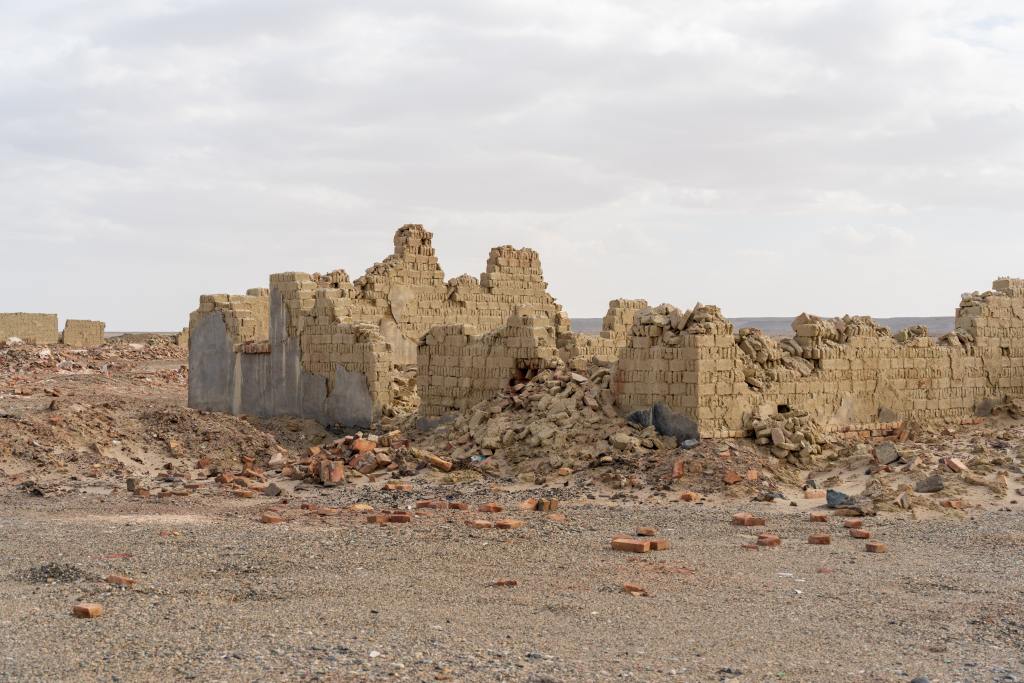
Istanbul is not the only place to have a hidden historical witness to Christian faith. Many parts of the 10/40 window used to have a significant presence of Christians in antiquity or in the middle ages. Just forty five minutes outside of our Central Asian city is a ruined monastery-citadel complex from the 400 or 500s. Locals know nothing about it, and it took tracking down an archeologist in Texas to get confirmation that this is indeed an ancient Christian site. Since then we’ve been able to take groups of local believers out to the site so that they might marvel at the evidence that their own ancestors may have had access to the gospel 1,500 years ago. Of course, this is a tremendous encouragement to them.

All over what is now the Muslim world, there are mosques that have been built on the foundations of ancient churches, abandoned chapels and monastaries in remote areas, tombstones, and even carpet patterns that reflect this lost history. There is a sadness to these silent witnesses. Persecution has often meant that Christianity has been almost or entirely snuffed out in regions where it was once strong. And like the Chalcedonian barista, the locals have no idea of the significance of what they are walking past every day. How did this happen? How could God have allowed the Church to lose areas that used to be strong enough to be sending bases of ancient missionaries?

Yet there is also encouragement to be found in the presence of these ancient stones. They are silent witnesses – but only until a believer comes along who is able to interpret for them. When this happens they begin to cry out. God has been active in the history of this people and this place. Your ancestors have not been left without a witness. Christianity is no Western religion foreign to your soil – it was here long before Europe was Christianized. To follow Jesus is for some an opportunity to return to the faith of their fathers before they succumbed to the sword and choking caste system of Islam. Like the tide, the gospel may recede for a season, but it will be back – unstoppably so. As Zane Pratt famously said at the tomb of Tamerlane, the Mongol Muslim ruler most responsible for the extermination of Central Asian Christianity: “We’re back… and you’re dead.”

If the West becomes even more post-Christian, we will undoubtedly have more of these silent witnesses ourselves, flagstones, monuments, and ruins that speak of our decline. We must remember that they also point forward to our return. And that no matter how dark it gets, God will somehow preserve a witness. Someday, a Central Asian Christian may just find himself pointing a Western pagan barista to the Christian truth present in the very stones around him.

Therefore, following the holy fathers, we all with one accord teach men to acknowledge one and the same Son, our Lord Jesus Christ, at once complete in Godhead and complete in manhood, truly God and truly man, consisting also of a reasonable soul and body; of one substance with the Father as regards his Godhead, and at the same time of one substance with us as regards his manhood; like us in all respects, apart from sin; as regards his Godhead, begotten of the Father before the ages, but yet as regards his manhood begotten, for us men and for our salvation, of Mary the Virgin, the God-bearer; one and the same Christ, Son, Lord, Only-begotten, recognized in two natures, without confusion, without change, without division, without separation; the distinction of natures being in no way annulled by the union, but rather the characteristics of each nature being preserved and coming together to form one person and subsistence, not as parted or separated into two persons, but one and the same Son and Only-begotten God the Word, Lord Jesus Christ; even as the prophets from earliest times spoke of him, and our Lord Jesus Christ himself taught us, and the creed of the fathers has handed down to us.

The Chalcedonian Creed, Chalcedon, Asia Minor, AD 451

To support our family as we head back to the field, click here.

For my list of recommended books and travel gear, click here.

First photo by Paul Hanaoka on Unsplash

To Reach the Unreached, Start More Schools

A Christian leader was once asked by a ruler of one of the Arab gulf states what his government should do in order to help expats stay longer in his country. The answer this Christian leader gave was threefold: churches, schools, and hospitals. If this infrastructure were in place, the leader explained, expats would be able to remain in that country for the long-term.

What is true of expats in general is also true of missionaries. We like to romanticize missionaries as rugged frontier types who have the secret spiritual gift of being able to function as a healthy church with their lone family or small team, who treat all their medical needs with a dog-eared copy of Where There Is No Doctor, and who can homeschool their kids on the back of a camel – all while learning language and planting churches. But missionaries are mostly ordinary people with ordinary needs. They need healthy churches, decent medical care, and schooling options that will work for their kids. The lack of this kind of infrastructure is a major factor in missionary attrition, one reason why people can’t stay on the field long enough to reach the remaining unengaged people groups.

Infrastructure isn’t everything, but neither is it nothing. As has been said among those who study combat, amateurs talk strategy, professionals talk logistics. Even the best soldiers on the front lines will ultimately have to retreat if the supply and logistics system backing them up fails.

In this post, I want to highlight the vital missions infrastructure of workable schooling options for missionary kids. During our time on the field we’ve seen over and over again how deeply impacted families are when they can’t figure out good enough education options for their offspring – and the twin problem of their kids struggling to have a healthy peer group, or any peer group at all. Many of these families end up leaving the field, or relocating to other countries where there is a MK school. They were able to work through the elementary years with a year-at-a-time cocktail approach of homeschool, internet school, local government school, and maybe a local private school. But the junior high and high school years start exposing some very concerning dynamics among their kids. Academically, they’re falling seriously behind, or they’re struggling and depressed because they have so few friends their own age. Suddenly it becomes clear that the options that worked out for younger kids are no longer workable for teens. This often occurs just as the parents are really hitting their stride in language, culture, and ministry.

Why not just send kids to boarding schools, the classic missionary response to the education problem? Well, without discussing the pros and cons of this option, there seems to be a clear shift where missionary families are simply less and less willing to go this route. At the boarding school where I attended – not as a dorm kid myself, since my mom was a teacher so we lived near the school – my class was the last one to have kids arrive in the dorms as young as 1st grade. We noticed in the 2000s that classes were getting smaller, largely because families were choosing to keep their kids at home longer. I don’t sense this trend turning around any time soon. What may have been expected of earlier generations – sending the kids to a boarding school – is among younger generations of parents becoming at least undesirable, and for others, even unthinkable. Some will continue to pursue this option, but it will likely be a shrinking minority. I say this with much love for the school that I attended, and with great respect for all the families that have sacrificed to make this option work.

Is homeschooling not the obvious answer then? Not necessarily. While homeschooling continues to grow in popularity and accessibility, there is one wildcard factor involved that can sink this otherwise good option – the wiring of the child themself. I loved the years we were homeschooled while growing up, but had siblings that struggled with it. It’s the same with my own kids. We are coming to understand that at least one of our kiddos is flat out incompatible with the homeschooling environment, despite the valiant efforts of her mother, herself a gifted teacher. No matter what homeschool advocates claim, not everyone can homeschool, and homeschool may not be a good fit for every child.

Local schools might be great for language acquisition and making friends, but the academics can mean hours of remedial work once school is over, which still may not prove to be enough. School online brings better academics, but can isolate the child or leave them with only a digital group of peers.

Missionaries might be some of the most adaptable people on the planet, yet in spite of this the dual goal of a good enough education and healthy group of peers for teens continues to be a very thorny and elusive thing. So what should be done so that missionary families can have better options for their kids’ education and remain on the field longer? I would contend that sending churches and agencies need to help start dozens of new small or mid-sized Christian international schools. These schools should be placed in strategic cities or towns where there is still access to unreached or unengaged people groups. Priority should be placed upon high school grades, and then middle school, as the ages most difficult for homeshchool and most in need of strong peer friendships.

What if there are not that many missionary families in the area? Well, to quote a classic baseball movie, “if you build it they will come.” The presence of a trustworthy school will automatically draw other missionary families to that area. One of the cities we used to live in just got a new school, one that’s beginning as a robust co-op for elementary students that plans to become a full blown school in coming years. They were worried they might not have enough interested families. As it turned out, all of their available spots were snatched up right away. There are many families out there that would happily move to an unreached city, if only the schooling piece made sense. Find me a global city with good schooling options for MKs and TCKs, and I will show you a city with dramatically-improved longevity among the missionaries – and a ton of missionaries who have relocated there. For any colleagues reading this in Central Asia, one or two of these specific cities should immediately come to mind.

But it takes a whole lot of investment to start a school! Yes, it does. As the son of a MK teacher, I grew up with an inside view of how hard it was just to keep a school staffed and running, never mind the trouble of starting one from scratch. But we must wrestle with the tremendous costs of not having this kind of infrastructure more available for missionaries serving in hard places. Given the rate of turnover and attrition, it may in the end prove to be less costly to go big from the beginning and just start a school. And there is always the option of ramping up, starting with sending homeschool teachers, transitioning to launching a co-op, and finally launching a full-blown school.

Along with the cost, the potential reward also needs to be kept in mind. Let’s say long-term missionaries – who currently average around ten years on the field with some orgs – are able to double their years on the field, returning to the home country after twenty years instead. Think of the impact these second decade veterans could make in the lives of the locals and their colleagues, think of the wisdom and experience that they would bring to the table. Our region of Central Asia has very few who have made it to their second decade. Often, this is due to the fact that the first decade concludes with kids struggling in their teenage years. But if we can serve these families through starting schools, we just may be able to double missionary longevity in strategic areas. What an outcome.

The key is for gifted Christians with a passion for education to understand the great need and to embrace this kind of vision. And then for sending churches and agencies to fully back their risky goal. Previous generations of missionaries started schools like it was as easy as keeping tequila plants alive (which is shockingly easy, even for bad gardeners like myself). It almost seems second nature to them when you read about how often Christians and missionaries invested in starting educational institutions in the 1800s. Perhaps our contemporary fears of mission drift and “colonial” missions have kept us from investing in the very supply lines the mission truly needs.

Years ago I heard Tim Keller make a similar point about cities and schools when discussing how Catholic and Jewish communities had been able to thrive in American cities when evangelicals largely hadn’t. He also pointed to infrastructure, noting that Jewish and Catholic families with children have stayed in the cities when there have been schools, community centers, and hospitals accessible to their distinct community. If the infrastructure is lacking and it’s been hard for evangelical families to remain in American cities, how much more so when it comes to the cities and towns where the world’s hardest to reach people groups live? This will require some serious vision, investment, and commitment.

Christians and churches who are passionate about education may never have considered the vital role they could play in reaching the world’s unreached people groups. Their experience, their connections, even their classroom management skills, these are as valuable as gold, and could be the crucial piece that allows missionaries to remain on the field – and new peoples and tribes to have the chance to follow Jesus. We should challenge them to use these precious gifts for the sake of the nations.

If we want to reach the unreached, we’ve got to start more schools. To keep the front lines strong, we’ve got to strengthen our supply lines.

Photo by Kenny Eliason on Unsplash

Introducing the Poet of the Ancient Church

Ephrem the Syrian (c. 306-373) was a deacon in the Roman border cities of Nisibis and Edessa in the 300s. Though not widely known, he is perhaps the most important poet of the early church. The reason he is not well-known is because he wrote not in Greek or Latin, but in Syriac, a dialect of Aramaic that served as the main language for Christians in the far east of the Roman empire and those who lived across the border in the Parthian, later Sassanian, empire. These eastern cities where Ephrem lived (now in SE Turkey – Nusaybin and Sanilurfa) were extremely diverse religiously during his lifetime. Different sects of Christians mixed in the marketplace with Arians, Jews, polytheists, and Manicheans. Ehphrem wrote theological poetry, composing many hymns which would serve both discipleship as well as evangelistic purposes. Ever since I read that Ephrem would lead evangelistic choirs of women into the marketplace to contend for the truth of the gospel, I have wanted to more about this overlooked ancient poet. Our focus people group, and so many others in the Middle East and Central Asia, continue to be deeply poetic and musical. The idea of doing theology and evangelism via poetry and song, employed by Ephrem so long ago, might still prove to be a very powerful thing in this region.

I’ve finally gotten my hands on a book of Ephrem’s poems and will periodically post some on this blog, as a window into the Christian faith of this ancient Syriac poet and the churches he sought to strengthen. The poem below is about a communion service, and Ephrem calls for the Church to praise its savior, drawing connections to the wedding at Cana in John 2, doing a bit of comparison between Israel’s failure and the Church, and ending by delighting in the nature of Jesus.

Hymns on Faith, no. 14

I have invited You, Lord, to a wedding feast of song, 
but the wine - the utterance of praise - at our feast has failed.
You are the guest who filled the jars with good wine,
fill my mouth with Your praise. 

Refrain: Praise to You from all who perceive your truth.

The wine that was in the jars was akin and related to
this eloquent wine that gives birth to praise,
seeing that that wine too gave birth to praise
from those who drank it and beheld the wonder.

You who are so just, if at a wedding-feast not Your own
You filled six jars with good wine,
do You, at this wedding-feast, fill, not the jars,
but the ten thousand ears with its sweetness.

Jesus, You were invited to the wedding-feast of others, 
here is Your own pure and fair wedding-feast: gladden Your rejuvenated people,
for Your guests too, O Lord, need 
Your songs; let Your harp utter!  

The soul is Your bride, the body Your bridal chamber, 
Your guests are the senses and the thoughts. 
And if a single body is a wedding feast for you,
how great is Your banquet for the whole Church!  

The holy Moses took the Synagogue up on Sinai:
he made her body shine with garments of white, but her heart was dark;
she played the harlot with the calf, she despised the Exalted One, 
and so he broke the tablets, the book of her covenant.

Who has ever seen the turmoil and insult 
of a bride who played false in her own bridal chamber, raising her voice? 
When she dwelt in Egypt she learnt it from 
the mistress of Joseph, who cried out and played false. 

The light of the pillar of fire and of the cloud 
drew into itself its rays
like the sun that was eclipsed 
on the day she cried out, demanding the King, a further crime.

How can my harp, O Lord, ever rest from Your praise? 
How could I ever teach my tongue infidelity? 
Your love has given confidence to my shamefacedness,
-yet my will is ungrateful.

It is right that man should acknowledge Your divinity,  
it is right for heavenly beings to worship Your humanity;
the heavenly beings were amazed to see how small You became, 
and earthly ones to see how exalted! 

-Ephrem the Syrian, translated by Brock, The Harp of the Spirit: Poems of Ephrem the Syrian, pp. 24-26

Photo from Wikimedia Commons