Mullah Mahmoud Mullah Salim* had left us downright speechless – quite the feat considering the rest of us had stayed up all night arguing.
The setting was that I’d been invited to spend the night in the university dormitory. But instead of getting any sleep, a group of local students and I had stayed up, engaged in rigorous but friendly debate about the claims of Islam vs. the claims of the gospel. The most vocal and passionate of these students, Job and Robert*, were from a rural area about an hour and a half northwest of Poet City.
I had recently learned a new way to share the gospel with Muslims, one that focused on telling a sequence of stories about Old Testament prophets and their sacrifices. This story set built and built until the climax where John the Baptist sees Jesus and cries out, “Behold the lamb of God who takes away the sins of the world!” In this way, I pressed the case that all the true prophets agreed that Jesus had to die as the final sacrifice and rise from the dead in order for there to be forgiveness of sins.
This was a new line of reasoning for these young Muslim men, one they had never encountered before. I could tell that a lot of them were struggling to answer the logic that came from hearing story after story, many of which Islam shared, that clearly pointed to Jesus being God’s promised sacrifice. The Qur’an says that its message agrees with the previous holy books. So why did it seem there was such central disagreement when it came to this theme of salvation by sacrifice alone?
But Job and Robert, in particular, weren’t going to give in. Robert’s father was a mullah, an Islamic preacher, so he knew his Islamic orthodoxy and apologetics very well.
“I will never let Jesus be the sacrifice for my sins! I will be the sacrifice for my own sins!” he eventually proclaimed.
It was sobering to hear Robert say this after a whole night of debate, but at least he was rejecting the gospel from a place of clarity. Far too often, our unbelieving friends reject the gospel without actually understanding what we’re trying to say.
At some point before sunrise, Job had called a mullah friend that he knew from back home. After he had woken him up and explained the situation to him, he had somehow convinced him to get on a bus and come to our city. This man, I was assured, would be able to show me the errors of my thinking.
The sun was up and shining by the time Mullah Mahmoud Mullah Salim arrived, looking a bit sick from his early morning bus ride but otherwise ready to jump into the fray. The students then asked me to explain my case to the good mullah. I did so, once again laying out the sequence of the eight or so stories that built the case for Jesus’ being God’s one true sacrifice for the sins of the world. Then, we waited for his response.
“Everything you have said is true, according to the Holy Qur’an,” Mullah Mahmoud said when I was done, much to everyone’s surprise, including mine.
“It is?” I said, somewhat confused.
“But… but Islam teaches that Jesus didn’t die on the cross!” Job protested.
“Wrong!” said Mullah Mahmoud. Then, he broke off into a nasal melodic chant:
“Dh qaala llaahu yaa ‘Iesaa innii mutawaffeeka wa raafi’uka ilayya wa mutahhiruka minal ladheena kafaruu, wa jaa’ilul ladheenat taba’ooka fawqal ladheena kafaruu ilaa yawmil qiyaamah; thumma ilayya marji’ukum fa ahkumu baynakum feemaa kuntum feehi takhtalifuun!”
It’s always bothered me when local Muslims quote the Qur’an in Arabic during religious conversations. I understand why they do it, since Islam teaches that Qur’anic translations into local languages don’t actually count as the word of Allah (they call them commentaries instead). But since so few locals actually know classical Arabic, this often just seems a tactic designed to shut down any objections from the plebes who don’t speak the alleged ‘language of paradise.’
As usual, the rest of us just sat there while the Mullah did his recitation, waiting for him to get to the point and explain things in a language the rest of us could understand.
Enjoying a dramatic pause, Mullah Mahmoud, at last, went on to explain. He had just quoted Surat Ali ‘Imran 3:55.
In English, it can be translated as, “Remember when Allah said, “O Jesus! I will take you and raise you up to Myself. I will deliver you from those who disbelieve, and elevate your followers above the disbelievers until the Day of Judgment. Then to Me you will all return, and I will settle all your disputes.”
However, the mullah contended, there is a translation issue in the Arabic word mutawaffeeka. In Qur’anic Arabic, he contended, it means, “I will cause you to die.” Not “I will take you.”
“Jesus the Messiah died on the cross!” the mullah proclaimed triumphantly.
This is what left the rest of us stunned and quite unsure of what to say next. The poor, sleep-deprived university students looked somewhat gutted. They had argued all night long, brought in the backup they had thought would deal the final blow against the Christian message, only to have the mullah agreeing with the Christian!”
“Of course,” he added, clearing his throat, “that doesn’t mean he’s the Son of God or anything. Just that he did die on the cross and then ascended to paradise. There’s always been a stream of sound Muslim scholars who have believed this way.”
Job was clearly surprised and perplexed at what his friend had done. Robert looked like he had discovered a traitor in the ranks, and a leader at that. I, for my part, got the good mullah’s phone number. If he really believed that Jesus died on the cross, then we needed to be friends.
This was the beginning of one of the oddest friendships I would have during that first year on the field as a single. Mullah Mahmoud Mullah Salim was tall and lanky young mullah, with large ears, a pointy chin, and wide, energetic eyes. He had a broad toothy smile that contrasted with his short dark beard. He, like his father before him (hence the two Mullahs in his full name), was in charge of the small mosque in a village so small it was named Matches, i.e. as small as a matchbox. When Mullah Mahmoud sat down cross-legged on the floor, his process of folding up his long pointy limbs resembled the migratory storks native to his area that built huge nests on top of the electricity towers, birds the local language has colorfully named the ‘leggy pilgrims.’
But Mullah Mahmoud was an odd bird in other ways as well. I soon learned that he loved to craft flowery lines of over-the-top poetic affection – and to quote them to me in our conversations.
“You are my brother! And your mother is my aunt! And you are in the garden of my heart! And I will put a chair in that garden and you will sit there! And there will be flowers! And little butterflies will fly around you! Ahahaha-ha!”
Now, our people group are known for their highly verbal culture of respect. They say all kinds of things to one another in daily interactions that seem odd or over-the-top to Westerners. But Mullah Mahmoud was taking things to another level of weird (though thankfully, still platonic as far as I could tell). I’ll often try to respond back to my Central Asian with a few appropriate phrases like “You are a respectable one,” or “You are my big brother,” etc. But when Mullah Mahmoud would go on one of his flowery monologues I would often find myself pretty much unable to respond at all,
“Um… thanks? So then…”
This never seemed to deter him, however, so over time, I came to dread the long flowery calls from Mullah Mahmoud more and more. But I kept the friendship going, one, to be polite, but two, because Mullah Mahmoud was genuinely open to serious Bible study.
I don’t think he’d ever known a true Christian before, so when he would visit he was fascinated to sit down with me and my teammates and to pore over the Bible together. First, we got him a Bible in his native language. Then he asked for one in English as well, and then later one in Arabic. We were more than happy to oblige.
During one visit, we pulled an all-nighter of our own, staying up until the dawn answering question after question by taking him to various passages of scripture.
“This message of the good news is so beautiful, so amazing. That God become a man like this to save us from our sins…” I remember him saying this as we sat at the kitchen table, sipping tea in the early morning sunlight.
For several months, Mullah Mahmoud seemed like he might be getting close to genuine faith. He was careful not to show this when we were having discussions together with other Muslims, such as when we visited Job and his relatives together, who lived just a couple villages down the road from the mullah. Instead, he would even publicly attack Christianity and the Bible. This initially surprised me, but I learned that in an honor-shame context it’s not uncommon for someone who is genuinely open to only reveal that in private, while in public they maintain a robustly pro-Islam appearance. For a mullah with public religious responsibilities, this was even more understandable.
However, a day came when the questions began to shift, moving away from questions of substance toward pointing out alleged contradictions in the Biblical text like the number of Solomon’s chariot stables. This seemed to be evidence that Mullah Mahmoud had started listening to Islamic apologists like Zakr Naik, figures that excel in taking Bible verses out of context and in keeping Muslims fixated on tangential things and distracted from considering the more important questions at stake.
Before I went back to the US, I visited Mullah Mahmoud and stayed with him for a couple nights at his home in Matches village. On this visit, I remember pressing him hard when we were alone on the fact that he had gone back to maintaining that the Bible had been changed. I insisted that if he truly believed this, then he was admitting he held that men were stronger than God, that some group of Jews or Christians somewhere could somehow altar the eternal word of God which God has promised multiple times to protect forever. His response was to claim that the ‘true Bible’ had actually been preserved by God, but must have hidden in a mosque in Yemen or somewhere like that.
In the face of silly arguments like that, it was clear to me that the window of genuine openness had closed. I was sad that this odd friend of mine would, after months of serious study, settle for the status quo instead of eternal life. Yes, had he followed Jesus his life would have been completely upended, perhaps even forfeit. His wife would probably have left him. The villagers of his area would at least run him out if not try to kill him, such would be the threat they’d feel from an Islamic leader that becomes a Christian. It’s likely that Mullah Mahmoud Mullah Salim had counted the cost, and found it to be simply too high.
But as far as I know, he never went back on his earlier belief that Jesus had indeed died on the cross. And he never got rid of his Bibles in three different languages. This means that the Word of God is sitting there in little Matches village, like a spiritual time bomb waiting to go off, either in Mullah Mahmoud’s heart or in someone else’s.
It’s never worked out to reconnect with him. Part of me is not sure I can bear enduring the awful poetic phone calls were we to get back in touch. And part of me is not sure of revisiting a high-intensity relationship where so much sowing seemed to demonstrate, in the end, shallow soil. There are so many others who have not yet the chance to hear the good news.
So, for now, I’ve put Mullah Mahmoud Mullah Salim in the category of “If God wants us back in touch, he’ll providentially cause our paths to cross.” Over the years I’ve found this to be a helpful category to have for complicated past relationships where good investment didn’t necessarily lead to good fruit.
But I will never forget the bomb that Mullah Mahmoud dropped that morning in that university dorm room. An Islamic mullah who actually believed that Jesus really did die on the cross. What an unexpected thing to find in the wild. And what a good reminder that sometimes the most unlikely of people might, in fact, be those closest to the kingdom.
If you have been helped or encouraged by the content on this blog, would you consider supporting this writing and our family while we serve in Central Asia? You can give here through the blog or contact me to find out how to give through our organization.
One of the international churches in our region is looking for an associate pastor and our kids’ TCK school is also in need of teachers for the 2026-2027 schoolyear. If you have a good lead, shoot me a note here.
Blogs are not set up well for finding older posts, so I’ve added an alphabetized index of all the story and essay posts I’ve written so far. You can peruse that here
For my list of recommended books and travel gear, click here.
We’ve never been this close to a war before. We’ve had near brushes with terrorism, yes, and we’ve been through our fair share of unpredictable geopolitical crises. But thirteen consecutive days of missiles and drones being (mostly) intercepted and exploding in the skies around our city? This is a qualitatively new experience.
We are learning some interesting things. Here are a few of them:
The sound of certain incoming or intercepted missiles is just like that of a normal low-flying plane being suddenly interrupted by a distant firework.
Other weapons, such as ballistic missiles or C-RAM air defense systems, sound a lot scarier.
The smell of missiles and drones intercepted nearby is just like that of fireworks or cheap firecrackers.
The line between wide-eyed curiosity and genuine fear is a fine one, crossed at different places for different individuals, and often unpredictable even for oneself.
X (formerly Twitter) is a powerful resource for both real-time security updates (I’m talking even seconds after an explosion is heard) as well as lots of misleading photoshopped or AI images.
Having contacts with access to detailed intelligence and analysis is far more helpful than relying on official government communication.
Knowing the local language and having lots of local friends is priceless when it comes to risk assessment and situational awareness.
Iranians, God bless them, when backed into a corner, will not respond the way Westerners expect them to. One of my best friends back in the West is an Iranian, so I have seen this on an interpersonal level, and am now seeing it play out on the international level. Exhibit A: None of us would have ever expected our friends in Dubai to receive so many more attacks than we have here.
Humor is important for processing times like this. We may or may not have used AI to insert Godzilla into one fake photoshopped image that claimed to show our city going up in flames, then sent it to a certain subset of friends that we knew would appreciate it.
It’s good to have an internal room without windows set up with mattresses and 72 hours of water and food, just in case.
It’s also important to make sure that if the boys play with Legos in said safe room, they clean them up. During an attack in the predawn darkness the other day, I heard my wife call out, “Gah! The only thing worse than a drone attack is stepping on Legos during a drone attack!”
It’s far too easy to get lost in doom-scrolling for hours during crises like these, and to lose sight of important daily disciplines. It is stunning how the brain can turn to mush and motivation utterly evaporate when wars and rumors of wars take over our social media feeds.
Community, especially Christian community, is utterly essential. Wise precautions sometimes need to be taken, but nothing comforts and encourages the heart in wartime like gathering with other believers to sit under the word, pray, laugh, and lament together. Isolation leads to trauma. Face-to-face community leads to courage and resilience.
1st Peter is a great book to preach during times like this. This is what the local language church just started preaching through at the beginning of the war, having planned beforehand to do so – something that was very obviously God’s timing. Last week, we started hearing the ‘fireworks’ in the distance while the pastor was preaching an overview of the book and expounding chapter 4 verse 8, “Beloved, do not be surprised at the fiery trial when it comes upon you to test you, as though something strange were happening to you.” After half a dozen muted explosions, the congregation was getting nervous. Wisely, the pastor paused to acknowledge what was happening and to pray. Then, he got back to the sermon. The congregation calmed down, then leaned into the remarkably applicable texts we were hearing. For our context, this was a good way to respond. Civilian infrastructure has not yet been targeted in our city, so we were just as safe sitting in the church gathering as anywhere else we could have gone. And if some stray crashing drone had somehow found us there, then what better way to go? After the sermon, we took communion and sang together. I, for one, was deeply thankful that we had chosen to gather.
Last lesson for now: There is an interesting place that is neither feeling compelled to stay nor compelled to go, but simply feeling free – free to stay and serve until something big changes or the war comes to an end. That’s where we currently find ourselves. We hope to steward this season and freedom well, as long or as short as it may be.
May God grant peace and a swift and just end to this war. And may its end result in greater access for the gospel. Pray with us to that end.
If you have been helped or encouraged by the content on this blog, would you consider supporting this writing and our family while we serve in Central Asia? You can give here through the blog or contact me to find out how to give through our organization.
One of the international churches in our region is looking for an associate pastor and our kids’ TCK school is also in need of teachers for the 2026-2027 schoolyear. If you have a good lead, shoot me a note here.
Blogs are not set up well for finding older posts, so I’ve added an alphabetized index of all the story and essay posts I’ve written so far. You can peruse that here
For my list of recommended books and travel gear, click here.
I was excited to see that Josh Garrels has recently put out a song based on the ancient prayer, Saint Patrick’s Breastplate. While aspects of this prayer have made its way into a number of worship songs, this song from Garrels contains some solid chunks from the long prayer. Still, I found myself wishing he had written another verse working in some of the more ancient and, to us, strange lyrics of this old missionary prayer. But overall it is a really good song, the kind of which I hope we get more of. There are some very powerful lyrics passed down to us from the ancient church. Put them together with melodies we can sing and hum now and that’s one lovely fusion.
Here’s what I wrote about this fascinating prayer more than five years ago when I first posted about it:
This ancient Irish prayer was written either by Patrick or by one of his early Irish disciples. Notice how Trinitarian this prayer is. Notice how Christ-centered it is. Notice also how holistic it is – there is no sense in which the spiritual realm and the physical creation are against one another. Both belong to God and are on the side of the Christian. Notice the clues that show how real the persecution and danger still were when this prayer was written. The author reminds himself that he is not alone, but that he stands in a long and honorable line of spiritual beings and faithful believers. He constantly reminds himself that the true reward that matters is that which comes on the last day. As he preaches God’s word, he calls on all the power of God to protect him from enemies within and enemies without, among whom were the still-dangerous Celtic druids. The author doesn’t pretend their power isn’t real, but contends that the power of God is greater. Ultimately, the author trusts in the presence of Christ in the midst of the many dangers he faces. This is the kind of prayer we need to be writing in today’s contexts of persecution.
I arise today; Through a mighty strength, the invocation of the Trinity; Through a belief in the threeness; Through confession of the oneness; Of the Creator of Creation.
I arise today; Through the strength of Christ’s birth with his baptism; Through the strength of his crucifixion with his burial; Through the strength of his resurrection and his ascension; Through the strength of his descent for the judgment of Doom.
I arise today; Through the strength of the love of Cherubim; The obedience of angels; In the service of archangels; In hope of resurrection to meet with reward; In prayers of patriarch; In predictions of prophets; In preaching of apostles; In faith of confessors; In innocence of holy virgins; In deeds of righteous men.
I arise today; Through the strength of heaven: Light of sun; Radiance of moon; Splendor of fire; Speed of lightning; Swiftness of wind; Depth of Sea; Stability of earth; Firmness of rock.
I arise today; Through God’s strength to pilot me; God’s might to uphold me; God’s wisdom to guide me; God’s eye to look before me; God’s ear to hear me; God’s word to speak for me; God’s hand to guard me; God’s way to lie before me; God’s shield to protect me; God’s host to save us; From snares of devils; From temptation of vices; From everyone who shall wish me ill; Afar and near; Alone and in multitude.
I summon today all these powers between me and those evils; Against every cruel merciless power that may oppose my body and soul; Against incantations of false prophets; Against black laws of pagandom; Against false laws of heretics; Against craft of idolatry; Against spells of witches and smiths and wizards; Against every knowledge that corrupts man’s body and soul.
Christ to shield me today; Against poison, against burning; Against drowning, against wounding; So that there may come to me abundance of reward. Christ with me, Christ before me, Christ behind me; Christ in me, Christ beneath me, Christ above me; Christ on my right, Christ on my left; Christ when I lie down, Christ when I sit down, Christ when I arise; Christ in the heart of every man who thinks of me; Christ in the mouth of everyone who speaks of me; Christ in the eye that sees me; Christ in the ear that hears me.
I arise today; Through a mighty strength, the invocation of the Trinity; Through belief in the threeness; Through confession of the oneness; Of the Creator of Creation.
Patrick or one of his spiritual descendants; translated by Cahill, How the Irish Saved Civilization, pp. 116-119
If you have been helped or encouraged by the content on this blog, would you consider supporting this writing and our family while we serve in Central Asia? You can give here through the blog or contact me to find out how to give through our organization.
One of the international churches in our region is looking for an associate pastor and our kids’ TCK school is also in need of teachers for the 2026-2027 schoolyear. If you have a good lead, shoot me a note here.
Blogs are not set up well for finding older posts, so I’ve added an alphabetized index of all the story and essay posts I’ve written so far. You can peruse that here
For my list of recommended books and travel gear, click here.
Yesterday, I saw a claim made by an American pastor-missionary-trainer that he was heading to a nearby country to do some training with leaders from our region. Among other things, he said that one of the ‘streams’ this network of leaders represents has 100 churches in one of our sister unreached people groups. This is a group that shares the same ethnic name as our focus people group, but speaks a different related language.
100 churches! Amazing, right? The Spirit must really be on the move in this part of the world!
Here’s the problem. The long-term workers on the ground who have actually learned the language to an advanced level only know of one church among that language group, and that a very unhealthy one. Some of our dear friends have labored for years in this unreached language and are finally on the cusp of planting a church – the first healthy church in that language group. And it’s not like some political border means we can’t easily go and verify either. The entirety of this language group’s homeland is right here in the country where we and these other missionaries live, only a short drive from where we live in Caravan City.
So, who’s right? The international trainer with the exciting claims or the missionaries on the ground who can speak the locals’ mother tongue and are neck-deep in direct discipleship relationships?
Sadly, this is not an uncommon occurrence in global missions. While it usually takes place in other regions of the world, with South Asia in particular being notorious for its wild claims of movements to Christ, every once in a while, I’ll hear of some organization making similar claims for our people group or those related to it. I cannot say much about South Asia or the fantastical claims made about what is happening there. But when it comes to our corner of Central Asia, I can testify that these claims are almost always smoke and mirrors.
“I’m immediately skeptical of whoever this is.”
This was my response when I heard this week about this leader and his trainings and his claims of 100 churches among our sister people group. This is because the different factors in this sort of claim combine to make a particular sort of smell, the smell of someone taking advantage of the people of God. The odor of someone doing the kind of work that soon disappears into the wind like so much chaff, while they then move on to some other work with an even better ROI.
Here’s a formula of sorts that tends to hold up pretty well here in Central Asia, and likely across the broader missions world:
A foreigner, more often than not non-residential, who doesn’t learn the language
+ short-term translated “trainings,” often in third countries or online
+ reports of amazing numbers of disciples and churches planted
+ ministry done solely and indirectly through paid local partners
+ claims that simple New Testament methods are being rediscovered and used
+ assurances that “God is moving in an unprecedented way among ______ !”
+ lots of appeals for money
_______________________
= someone is getting played
There are variations of the above formula, of course, but the fact that someone is getting played tends to stay constant across the board when you have a combination of the above ingredients. And by someone, I primarily mean generous believers back in the West who give to the trainer’s organization because they genuinely care about the advance of the gospel. These believers back in the homeland are deceived both into giving and into thinking that God is working in ways he is not actually working. Both are terrible ways to deceive people. But I would argue the second is probably more evil than the first. Tricking people out of their money is bad, of course, but relatively mainstream as far as sin goes. But Jesus said some terrifying things about those who attribute the work of the Holy Spirit to Beelzebul (Matthew 12:31-32). What might that mean about those who deceive others into thinking something is a work of the Spirit when it’s actually a work of Mammon?
Not only that, but the effect on believers on either side of the world when they find they’ve been duped is awful. I have seen this effect firsthand among locals. For those who were unfortunate enough to first be exposed to Christianity in one of these evangelical missions money hustles, if they’re not successfully seduced into the hustle, there is a terrible moment when they realize that the leaders in this Jesus thing are just like those in Islam – hypocrites out for selfish gain. The light seems to fade from their face, and their whole demeanor sinks back into a guarded skepticism. After this, they are often unwilling to gather with believers again for years to come, if ever. Again, Jesus says terrifying things about those who cause little ones, such as new believers, to stumble (Luke 17:2). Some who are lauded as inspirational missionaries in this world will be wearing millstones in the next.
If you look again at the above formula, you’ll notice that each of the parts on its own, except for the end result, is not necessarily bad. In fact, each part can be done faithfully. For example, there are some countries where missionaries can’t get visas. It’s not always necessary or possible for someone to learn the local language in order to do solid training. Genuine movements of God have happened in church history, such as the first Great Awakening or the Korean Pentecost. Sometimes ministry needs to be done primarily through local partners, and sometimes those local partners should be paid. There are times to return to simpler NT methods when good extra-biblical traditions have become too cumbersome. And appeals for money are good when made by faithful workers, as even Paul himself modeled. Yet there’s something about combining all of these ingredients together in our current era of evangelical missions that tends to be evidence that something poisonous is taking place. Bleach is a good household tool. So is vinegar. Put them together, and you get a deadly chlorine gas.
There are three ways I’ve observed in which the foreign-trainer figure is complicit or not in the overall deception. First, there are situations where the foreign leader is himself fully deceived by the local partners, though the foreigner is a faithful Christian trying to do good work. I once knew of a solid Reformed pastor who would visit our region every year in order to partner with a local leader up in the mountains. Sadly, I would later learn this local brother he was partnering with was a textbook wolf. Like all wolves in sheep’s clothing, he was very good at deception, so he managed to secure lots of funding and visits from this faithful pastor through things like strategic photos, compelling stories, and crowded house church services full of mobilized ‘believers’ that would suddenly appear whenever this pastor happened to be in town. But this local man was the same one who was making sure that all of the residential missionaries got reported to the secret police and run out of town. This faithful pastor unfortunately died before we had the chance to expose how he was being deceived.
For non-residential leaders who want to avoid this first kind of situation, the best thing to do is to befriend trustworthy long-term missionaries or local pastors on the ground who can help you vet potential partners. These need to be missionaries or pastors who know the language and who can verify, in-person whenever possible, that your local partners are really who they say they are. For those living on the field, the best course of action to avoid this is to go ahead and learn the language and culture yourself, or to make sure that some on your team do. It’s shocking how much can be missed when partnership is happening through translation.
The second category is when the foreigner-trainer is aware that the reality of things is not exactly the same as what is being presented when they send out their newsletters. But because they feel that so much good is being done through this ministry or movement, or because they just don’t want conflict, they choose to turn a blind eye to the billows of black smoke filling the sky that seem to suggest that there is a fire somewhere around here. Those who choose this path are guilty of deceiving themselves, of people-pleasing, of foolishness, and maybe even of cowardice. Rather than continuing to listen to the voice of naivete or fear, leaders or trainers in this category need to get clarity on what is really happening in the ministry they are partnering with. Again, those in this category have no better allies than those long-termers on the ground. Then, they need to take courage, repent of their part, confront those doing the deception, and make a clean break. Yes, even if that means they are the Western guy telling the indigenous pastors that they are in sin.
The third category belongs to the actual hustlers. These are the missionary-trainer types who are fully complicit in the deception. They have learned how to tell stories, share stats, and manipulate well-meaning believers so that the money flows for the projects themselves, for their local partners, for their own dopamine hits, and for their own pockets. I hate that this is actually happening on the mission field, but it is. It’s happening even in our own corner of Central Asia. These hustler types tend to be great communicators, amazing fundraisers, skillful project managers – and wickedly good at all kinds of gaslighting and deception. Their amazing level of travel, projects, and output shields them from criticism. As does the radical-seeming nature of their work, usually being connected to some country or region that is known as militantly anti-Christian. Who wants to question the work of someone who claims to be facilitating church-planting movements in regions that have been devastated by ISIS, for example?
Those in this category are playing a very dangerous game. At best, if they are believers, then they risk making it into the kingdom by the skin of their teeth, while all their work is exposed as chaff and burned up (1 Cor 3:13-15). At worst, they are false believers whose entire lives and ministries are built around using the Great Commission for the sake of personal gain. Based on God’s wrath against those like Simon the sorcerer, Ananias and Sapphira, and Judas, I’m confident there is a special part of hell for people like this.
No particular kind of methodology is fully immune to these sorts of predatory missionaries. But some methodologies are, by their very philosophy and structure, much more compatible with deception. I’ve not often come out in my writing directly against DMM (disciple making movements) and movement methodology practitioners. I know that there are some out there who are careful believers who are trying to use these methodologies in ways that are faithful to scripture. I respect these workers’ motives, even as I disagree with them about their work. But after a couple of decades now, the evidence is mounting that the results of these methodologies are often highly questionable and concerning. At the very least, a DMM-type approach provides the perfect cover for someone who wants deceive God’s people for the sake of financial gain, whether that be a local who is deceiving his foreign partner, or locals and foreigners who are in on it together.
Every part of the above formula for someone getting played is compatible with the way DMM is often carried out on the field. Missionary ‘facilitators’ or ‘trainers’ are encouraged to be non-residential, or to not invest costly years in direct language and culture learning, but instead to increase their ROI by leaning fully on locals, who are, as is often pointed out, much cheaper to fund. Instead of long decades of direct evangelism, discipleship, and modeling by example, DMM tends to advocate short trainings where the trainees are then responsible to go out and implement what they’ve learned without any direct involvement of the missionary. DMM practitioners make all kinds of claims about astounding numbers of disciples made and churches planted, often in the parts of the world that are most resistant to the gospel. And these claims go hand in hand with claims of recovering New Testament methodology where ‘everyone is a disciple maker’ and where there are ‘no experts,’ emphases that tend to gut any real spiritual authority for the good guys, while creating all kinds of space for little tyrants to take over.
And then there’s money. Perhaps DMM practitioners in other parts of the world don’t do it this way. But here in our corner of Central Asia, DMM and lots of money changing hands absolutely go together. Of course they do. Amazing reports of gospel breakthrough in hard places inspire God’s people to give generously. And money, at least temporarily, is a wonderful lubricant to make sure a large network of locals falls in line with your particular silver-bullet methods.
Tangentially, many DMM emphases, such as its ‘no experts’ approach and dislike of formal organization and preaching, are terrible contextualization for our Central Asian culture. This means that locals will, temporarily, do what they need to in order to secure their monthly funding – or at least take enough pictures and videos to make it appear so. But once the money dries up, the locals don’t continue with their ‘disciple making.’ After all, these methods have been cooked up among Western missiologists who are stuck in their own post-institutional, egalitarian, results-driven cultural moment. Even if we don’t talk about their biblical merits or lack thereof, these approaches don’t make any sense to our Central Asian neighbors. Once the money is gone, one of my favorite old adages comes out again,
“Welcome to Central Asia, where all the methodologies come to die.”
Friends, watch out for the above formula. It is often the case that these ingredients together are a recipe for deception in missions, or at least for poor work that won’t stand the test of time. The advocates of this sort of work often sound so good. But just like grandma said, if it sounds too good to be true, it usually is. And as is the case when I heard about these 100 churches in our area (that don’t exist), when these ingredients are combined, someone is getting played.
Note: I followed up and did some research on the leader making these claims. Sadly, all indications are that he’s a category 3 hustler type. “Borderline criminal” is how one faithful long-time worker among that people group put it. Lord, have mercy. May God grow his church here and protect the local believers as well as those back in the West from those who would use them for selfish gain.
If you have been helped or encouraged by the content on this blog, would you consider supporting this writing and our family while we serve in Central Asia? You can give here through the blog or contact me to find out how to give through our organization.
One of the international churches in our region is looking for an associate pastor and our kids’ TCK school is also in need of teachers for the 2026-2027 schoolyear. If you have a good lead, shoot me a note here.
Blogs are not set up well for finding older posts, so I’ve added an alphabetized index of all the story and essay posts I’ve written so far. You can peruse that here
For my list of recommended books and travel gear, click here.
Back in 2008, my fellow single teammates and I were invited to help with some English clubs that Ron*, an older missionary veteran, had set up at various universities. One of these clubs was the setting for that one time when a few of us donned overalls and fake hillbilly beards and tried to lead an auditorium of very perplexed Central Asian students in a rousing rendition of Soggy Bottom Boys’ Man of Constant Sorrow.
I also started traveling with Ron once a month to a university in a city three hours south of us. This city was down in the desert flatlands, and much hotter than Poet City, the kind of place where after a five-minute walk in the bazaar your shirt is already soaked through with sweat.
I remember making this drive one time with Ron when he pointed out the old ruins of Zoroastrian fire towers up on a nearby peak.
“A.W.,” he said in his Texan accent, “Next time we do this drive, we should stop and climb up to those towers, lay hands on them, and pray down Chemosh! Pretty sure he’s the territorial spirit still in charge of this land.”
I turned to see if Ron was joking. Nope. He was dead serious. I did my best to answer diplomatically. Ron was, after all, an older veteran missionary who had served in multiple countries. He regularly published articles in well-known missions periodicals and had been in leadership positions probably longer than I had been alive. But I was pretty sure then, and still am now, that Ron and I laying hands on Zoroastrian ruins and attempting to rebuke an ancient Babylonian god would have little effect on the power that Islam currently exerted over our local friends. Not that the same cadre of demons can’t be behind these three very different evil religious systems. And not that prayer is ineffective. But more because the Bible seems to have us taking on demonic rulers, powers, and principalities asymmetrically, primarily as we engage other humans with gospel proclamation, pray for them, and plant healthy churches. As well as, of course, the occasional exorcism.
Even then, as a newly continuationist twenty-year-old, something felt very off about the way that certain missions circles turn casting down territorial spirits and doing spiritual mapping into their own kinds of pseudo-science, theories that they discuss and act on so confidently with so little actual biblical grounding.
But I digress. This is not a post about territorial spirits and spiritual mapping. This is a post about evangelism gone wrong.
Ron was leaving the country. Like other missionaries at the time, he looked at the young network of indigenous house churches that had been planted across our region and assumed that it was high time for the Westerners to “trust the Spirit” and “get out of the way.” This kind of assumption would, of course, lead to the tragic implosion of most of these house churches just a couple of years later. Their leaders weren’t even close to being ready for their mentors to leave them on their own. And most of the young local believers, like my friend Adam*, would be scattered to the wind.
But in the summer of 2008, things were looking so promising that our people group was being held up by some organizations as a good example of how missionaries among Muslim people groups could get it right. And pioneering types like Ron were itching to move on and to hand off the projects they had started. That was the intention for this trip. Ron was going to say his goodbyes in this desert city and try to set things up so that my team (which was three college dudes at that point) could take over the English club.
After the meetings were finished, a group of us went out to dinner together to celebrate over some good local food. Ron, his wife, and a single gal who was on their team were all flying out that week. So, this was their final meal with Muhammad*, a young local man who had been working as their project facilitator/translator for some time.
These young local fixer-types are absolutely crucial for so many of the NGOs operating in our corner of Central Asia. They help us expats navigate government processes, serve as our culture advisors, interpret for us when needed, and do all sorts of practical intern work, whether it’s vehicles or offices or even just knowing where to find things in the endless alleys of the bazaar. If they are working for a Christian NGO, then they usually end up hearing the gospel a lot. Some of them come to faith. Others of them stay stuck in a weird long-term posture of being pro-Western, Christianity-friendly, and very much still committed to Islam.
Apparently, the latter was Muhammad’s posture. But seeing that this was his last chance, Ron was determined to press him hard on the gospel. So, at some point toward the end of the meal, Ron suddenly called Muhammad out, asking him if he was ready to leave Islam and believe in Jesus. The abruptness of this pivot in the middle of the meal we’d been having caught us all a bit off-guard, Muhammad included. But Muhammad was a respectful and tactful guy from a culture not as uncomfortable as ours is with direct questions about religion. So, he recovered quickly, finding an honorable way to tell his boss, a much older man, that no, he was not going to do what he was suggesting.
Ron, however, didn’t take the way out of the conversation that Muhammad had just extended to him. Instead, he pressed harder. Muhammad, sensing that he now needed to defend his beliefs which were being publicly challenged, starting pushing back more himself, bringing up many of the typical objections Muslims have against Christianity: Jesus isn’t the Son of God, Jesus didn’t die on the cross, the Bible’s been changed, the Trinity is illogical, and of course man can get to paradise by doing enough good deeds.
This is where I came in. For some months, I had been engaged in almost daily evangelistic and apologetic conversations with my Central Asian friends. And I had been loving it. I had developed a strong arsenal of biblical, logical, and cultural responses to all of the typical Islamic objections to the gospel. One by one, I began to dismantle everything Muhammad was saying.
This went on for some time. Ron would press. Muhammad would defend. I would dismantle. I was downright energized at how quickly my mind was working and how effectively the arguments seemed to be rolling off my tongue. I knew the case I was building was a powerful one. I didn’t know Muhammad super well, but surely, he would sense the truth in what we were saying and come around. I could clearly see that Muhammad’s claims were being destroyed, one by one, and I was encouraged by this. That is, until I looked up and noticed Rachel*, the single gal on Ron’s team, sitting off to the side of the table and looking at Muhammad with a look of pain on her face.
What does that mean? I wondered to myself.
I followed her gaze to Muhammad’s face, and that’s when I also noticed. Muhammad’s expression had become defensive, his eyes dark and hurt. It was the face of someone who had been trapped by those he thought were his friends, someone whose trust had been betrayed in the middle of a meal meant to honor his departing coworkers. It was the demeanor of someone who had been shamed by those he had been loyal to, not the look of someone being won by the beauty of the gospel at all. No, I suddenly realized, it was the look of someone who had been driven further away from Jesus by evangelism – evangelism done in truth, but not in love.
Muhammad left that night very upset, not even wanting to say goodbye to Ron. Rachel left grieved. I left confused. But Ron left with a confident smile on his face, seemingly feeling like he had done his duty. Later on, he complimented me on how well I had done in the conversation.
“You were on fire tonight, A.W.”
But I didn’t feel very happy about how things had gone. Yes, my arguments had been great. But something had gone very wrong in the whole relational dynamic of the evening. I had participated in some sort of evangelism that was so right it was wrong. We had won the argument, but lost the relationship. We had pinned Muhammad to the wall. In doing so, we had inadvertently communicated to him that he was only valuable to us if he believed in Jesus in the end.
I don’t know what ever became of Muhammad. I’ve never run into him in the years that have passed since that summer evening back in ’08. But I’ve thought of him many times over the years, regretting how things went down. It’s easy for evangelistic conversations to get emotional and even heated. To some extent, this is only natural when humans are debating things that are so personal and weighty. However, I’ve become convinced that faithful evangelism is just as much about the how as it is about the what.
Sure, some people will get offended and upset even if the evangelist’s demeanor remains loving and relational. But it is the duty of the evangelist, as much as it depends on them, to communicate grace and gentleness right alongside the bright and sharp truths of their words. The wise evangelist keeps a constant eye on the body language of the hearer, watching out for evidence that the tenor of the conversation is pushing them too far. And if it comes down to winning the argument or losing the relationship, the wise evangelist puts the argument aside for now and protects the relationship.
Again, this is not always possible. Some people will blow up at you or cut you off, even if your demeanor clearly communicates that you value them regardless of whether they accept your message or not. But far too often, Christians are only focused on winning the argument in the short-term. And they forget that a long-term friendship that revisits the gospel again and again is far more powerful than a one-time gospel smackdown that makes that unbeliever never want to see you again.
Is what I’m saying biblical? Consider Paul’s advice on evangelism in Colossians 4:5-6, “Walk in wisdom toward outsiders, making the best use of the time. Let your speech always be gracious, seasoned with salt, so that you may know how you ought to answer each person.”
Or, his advice to Timothy about how to navigate arguments, “And the Lord’s servant must not be quarrelsome but kind to everyone, able to teach, patiently enduring evil, correcting his opponents with gentleness. God may perhaps grant them repentance leading to a knowledge of the truth, and they may come to their senses and escape from the snare of the devil, after being captured by him to do his will” (2 Timothy 2:24-26).
The Bible has a category for prioritizing the relationship over the argument. That doesn’t mean we don’t speak the truth. But it does mean we need to pay careful attention to how we speak the truth. It’s possible to say the most offensive things with a demeanor that communicates care. That needs to be our goal. We want our unbelieving friends to be shocked by the hard truths we believe about them, and at the same time, shocked by how much we clearly love and care for them. This bizarre contrast should, in some ways, disturb them.
“How can they believe I deserve an eternal hell when they are the same ones who show me more genuine love than anyone else does?”
When our unbelieving friends are wrestling with these kinds of questions, we know we’ve gotten the posture right.
These days, most of my evangelism is taking place in my living room. Every week, we partner with some local believing friends by opening up our home for a long evening of chai, snacks, and spiritual conversation. About half of the fifteen or so men who come are believers, and about half are not. Many of these young unbelievers are post-Islamic angsty philosopher types, but a few mainstream Muslim guys come too. The conversations range all over the place, but every week a good number of us believers get to go deep into gospel truths.
As I’ve reflected on what exactly God is doing in these largely unstructured gatherings that leave our living room trashed every week and my wife and me with a ministry hangover the next morning, I think much of it might have to do with modeling relational evangelism for the local believers. Some of them, like a certain twenty-year-old I remember well, tend to get caught up in the emotion and the intensity of the discussions. One young believer, a passionate cage-stage Calvinist who is reading the Institutes via Google Translate, will often physically shake and have to excuse himself early because he’s gotten so worked up in an argument with an unbeliever about the gospel (or with a believer about TULIP).
However, the hope is that week in and week out, these brothers will continue to share the gospel even as they also show hospitality and steady friendship to the many unbelieving guys who are also coming. Yes, I delight to see these believers’ answers and arguments becoming more sound, biblical, and compelling. But just as much, I delight to see them light up with genuine joy when Mahmoud*, the stubborn taxi driver philosopher, arrives at the door after not coming around for a few weeks.
As with so many aspects of evangelism, it’s resting in the Spirit’s sovereignty that means that bold evangelism and genuine relational love need not be at odds with one another. Faithful evangelists can put the argument aside in order to care for the heart of the one they’ve been arguing with. How? Because they know that it’s not ultimately up to them to win. If Ron and I had leaned better on this truth all those years ago, we may still have shared the gospel with Muhammad that night. But once we sensed that he wasn’t yet open to Jesus, we could have put the conversation on pause, trusting that the Spirit would later open the door. It wasn’t necessary for us to force it. It wasn’t necessary for us to pin him against the wall and to publicly defeat him as we did.
Looking back, I’m sorry for the way things went down that night, even though I trust that God can sovereignly use even that aggressive conversation to draw Muhammad to himself. Who knows? He may already be a believer, wherever he is out there.
But I am also determined that, as much as it depends on me, I want to faithfully share the gospel, being willing to sometimes lose the argument. Why? To win the relationship. And that, perhaps forever.
If you have been helped or encouraged by the content on this blog, would you consider supporting this writing and our family while we serve in Central Asia? You can give here through the blog or contact me to find out how to give through our organization.
One of the international churches in our region is looking for an associate pastor and our kids’ TCK school is also in need of teachers for the 2026-2027 schoolyear. If you have a good lead, shoot me a note here.
Blogs are not set up well for finding older posts, so I’ve added an alphabetized index of all the story and essay posts I’ve written so far. You can peruse that here
*Names changed for security
For my list of recommended books and travel gear, click here.
There are many ways I could grow as a ministry dad. But alas, the Lord has not made us able to focus on very many things at the same time. So, here are two ways I’d like to focus on growing this year, based on wisdom that I’ve gleaned from other dads.
The first comes from some wise counsel I once received from a lay elder at our sending church. This brother works a full-time job at a car plant, but also regularly meets with members of the church for counseling and pastoral care. He and his wife also seem to have another new baby every time we go back to visit the US. Needless to say, they have their hands full. I once asked him how he balances these family and ministry commitments that often compete with one another. I found his answer extremely helpful.
“Once I’ve shared that I need to sacrifice some family time after work to care for a church member, my wife and I then agree on what time I’ll be back home. Then, the most loving thing I can do for my family is to keep my word and to be back when I say I will be. This allows my wife and family to share with me in the good sacrifice that I’ve been called to as a pastor, and prevents bitterness against the ministry from growing because they know I’ll be home when I say I will be.”
This pastor’s serious commitment to keep his commitments to his family is how he’s able to also lead them well in a sacrificial ministry lifestyle. It makes sense. How can a wife or family count the cost of a certain sacrifice if they’re never exactly sure what that cost is going to be? Or if a certain cost is agreed to, only to be repeatedly shifted later on? “Sorry, I know I said I’d be home at 7, but…” This is a great way to undermine trust and make space for bitterness to grow. On the other hand, if the cost is made clear (as much as is possible anyway), and the family knows from experience they can trust that dad will be home when he says he will be, that allows them to embrace that cost in a more healthy way and to more easily feel that they are genuinely top priority in dad’s heart. Yes, dad has a role that requires he regularly sacrifice some family time. But he demonstrates his care for us by reliably keeping his word.
Very wise, very practical, and very powerful.
The second way I want to grow has to do with something I want to get back to telling my kids more often. Research and experience have shown that ministry kids, whether missionary kids or pastors kids or others, tend to grow up ingesting the same sort of idea about themselves in relation to their parents’ work, even if their parents’ hearts or lives don’t necessarily correspond to that idea (though, sadly, the lives of some do). That idea is that their parents’ work is more important than they are.
I’m convinced that this belief is so prevalent and so harmful that it needs not only to be refuted in terms of lifestyle but also regularly refuted directly and verbally. As others have said, kids are wonderful observers, but terrible interpreters. We parents need to directly help them interpret what is actually happening in our hearts and lives when the ministry work seems to so often take priority. Again, ministry kids, across the board, tend to observe their parents lives and to come away with the internal message that they do not matter as much as the work does.
What might this kind of direct interpretation look like? Well, at bedtime or mealtimes or even randomly throughout the day, saying things like,
“Remember, you are more important to me than my work is.”
“Even though this is a really busy week, you are always a higher priority for me than my ministry is.”
“Do you ever feel like my work is more important to me than you are? Well, I want you to know that is not true. I would give it all up for your sake if that was what was needed.”
This is different than saying, “I love you.” It’s very possible for ministry kids to hear their parents tell them every day that they love them and to still feel like they are less important than the ministry. They genuinely believe that their parents love them. It just looks to them like their parents love the work even more.
Now that we’ve been back in Central Asia for a year and a half and the pace of our work seems to be significantly ramping up again, I want to get back to saying things to my kids like this more often. Several years ago, when we left the field for a couple of years for the sake of our family’s health, this became a major theme for us. I even wrote a poem for my kids and other parents about this (I’ll include it below). But I recognize that in the past couple years these direct sorts of statements have fallen a bit by the wayside. This year, I hope to bring them back.
I believe that these two things, this one practice and this one affirmation, will make me a better ministry dad in 2026. I welcome your prayers that I would grow in these areas: in keeping my commitments to my family and in explicit affirmations that they are, after God, the most important thing in my life.
If there are any other ministry dads out there (or working dads in general) that would be helped to grow in these areas as well, then I hope that this post might be an encouragement to you as well. Let us strive to keep our commitments to our families. Let us strive to affirm and tell them that they are more important to us than our work or ministry is. And in these ways, let us fight for the hearts of our children.
Here is the poem I mentioned earlier, written for younger children and so that any busy working dad or mom might read it for their kiddos, ministry parents included. You’ll notice that there are some verses, such as verse 6, that contain language getting at the particular costs of the missionary lifestyle.
May this next generation of ministry kids grow up knowing that their dads keep their word, and that they are indeed more important in their parents’ hearts than the ministry is.
My Work Is Never More Important than You

Papas and Mamas have much work to do
The deadlines are many, the hours are few
The bills must be paid and mouths must be fed,
But I’ve got a secret that needs to be said

Hear this deep down now and know that it’s true
My work is never more important than you

At times, yes, I love all this work that I do
It’s important and needed, and helps people too
It can’t fill my heart though, way deep down inside
The way that you can – you’re my real joy and pride

Hear this deep down now and know that it’s true
My work is never more important than you

Sometimes my work starts to make me feel bad
And at dinner I’m quiet and not very glad
But even when work means my forehead is scrunched
I haven’t stopped loving you ever so much

Hear this deep down now and know that it’s true
My work is never more important than you

At times I may shoo you right out of the room
“I’m on a work call!” I might gesture or boom
And though I seem bothered, or though I seem mad
That very same moment, my insides feel sad

Hear this deep down now and know that it’s true
My work is never more important than you

On my days off we can rest, laugh, and play!
But sometimes my work still shows up to invade
A text or an email can pull me away
Interrupting the fun we were planning that day

Hear this deep down now and know that it’s true
My work is never more important than you

My work might cause changes, like leaving our home
And saying goodbye to the friends we have known
I know that these changes can cost you a lot
And how they affect you weighs deep in my thoughts

Hear this deep down now and know that it’s true
My work is never more important than you

If I had to choose between my work and you
The choice would be clear as a cloudless sky blue
I’d surrender my job and give up my career
For the sake of the ones I hold so very dear

Hear this deep down now and know that it’s true
My work is never more important than you

Someday you’ll be big and have work of your own
And projects to do and calls on your phone
Yet when it comes to your kiddos, the same will be true
And you'll say to them, just as I’m telling you

Hear this deep down now and know that it’s true
My work is never more important than you

Papas and Mamas have much work to do
The deadlines are many, the hours are few
Bills must be paid and mouths must be fed,
But I’ve got a secret that needs to be said

Hear this deep down now and know that it’s true
My work is never more important than you
If you have been helped or encouraged by the content on this blog, would you consider supporting this writing and our family while we serve in Central Asia? You can give here through the blog or contact me to find out how to give through our organization.
One of the international churches in our region is looking for an associate pastor and our kids’ TCK school is also in need of teachers for the 2026-2027 schoolyear. If you have a good lead, shoot me a note here.
Blogs are not set up well for finding older posts, so I’ve added an alphabetized index of all the story and essay posts I’ve written so far. You can peruse that here
For my list of recommended books and travel gear, click here.
This week, I witnessed a part of the local culture I had never seen before. A poetry battle.
About twelve of us were sitting around a campfire on a mountainside that overlooked the distant lights of Caravan City. It was coming toward the end of the evening. We had grilled and eaten skewered pieces of chicken, munched on sunflower seeds, and drunk our chai and Nescafé. Already, some of the men, thinking of work in the morning, were asking if it would be time to go soon.
A request by one of the men present to swap riddles and jokes had ultimately foundered upon the rocks of attempted translation from one language to another, something this particular group of guys keeps trying, even though the results are usually rather anticlimactic. Nothing like dropping what you think is a strong punchline only to be met with blank or confused looks, silence, or worse, a few polite chuckles.
I did make one successful joke in the course of the evening, when the men had started up a hearty rendition of a favorite childhood song here, which goes something like,
I’m a pig; you’re a pig; hey, all of us are pigs!
I told them to hold on and start over because I wanted to record the song for the sake of ‘the future generations.’ This caused a surprising outburst of laughter among all the men.
“For the sake of future generations! That’s a good one! Hahahaha!’
Alas, my funniest joke of the evening wasn’t even one I was really attempting to make. But when the proverbial blind squirrel finds a nut, he is proud of himself nevertheless.
Shortly after this, one man, a young journalist, told us he’d like to read us a poem he’d written.
He pulled it up on his phone as the rest of the circle of men quieted down and leaned in. Unlike much of Western culture, our Central Asian locals are still very awake to the beauty and power of poetry, especially the men. But what I was about to witness highlighted this for me in a whole new way.
Still seated, our cookout poet sat up as straight as he could in his camping chair and puffed out his chest. With one hand holding his phone out so he could read it and the other hand partially lifted in front of him, he began dropping rhythmic lines about his people’s history and long struggle for freedom. His raised hand moved up and down to emphasize the rhyming end of each line, a gesture that was followed by growing affirmations from the circle of men, a sort of ‘amening’ of each statement made.
The intensity, emotion, and volume of the poem and the affirmations grew as the poem progressed, finishing with a climactic final rhyme and chorus of applause. Even though I had only gotten half of the meaning of the poem, it was easy to feel the powerful effect of this kind of poetic oratory.
But it wasn’t over. Another man on the other side of the circle cleared his throat and shifted in his camping chair,
“Friends,” he announced, “I have an answer to that!”
What proceeded from those present was the sort of noises men in all cultures make when a challenger is announced, plus more applause.
Apparently, the first poem had not only been patriotic, but also colored with loyalty to one of the two dominant political parties/families of our region. This other man was loyal to the other party/family and was about to drop some partisan lines of his own.
His poem progressed much the way the first one had. Similar authoritative body language. Similar expressions of approval after particularly good rhythms and rhymes, and a climactic crash of louder verse and applause at the end.
The two of them went back and forth like this four or five times. Like a rap battle, the volume of the crowd’s response to each poem seemed to be the gauge of which one was winning. In the end, to me, it looked like a draw.
The atmosphere of our little campfire was now more alive than it had been all evening, and the rest of us now had the opportunity to share any favorite lines of verse that we had either written or memorized. I was thankful that one of the local believers bravely shared some lines of Christian poetry he’d recently written, since many of those present were not believers. I shared the one verse of local poetry I’ve ever memorized, one I’d once learned back in Poet City from a taxi driver.
A wish for the days of homemade naan
In a thousand homes, a pilgrim only one
Now for all, "pilgrimmy pilgrim" is claimed
But pilgrims they're not, nor their bread e'en homemade
Once again, the applause I received for this very small segment of a poem against Islamic pharasaism was very warm, and probably much more than my lackluster delivery deserved.
As we drove home, I asked one of the local believers with us about the poetry exchange we had witnessed that night. I told him that was the first time I’d seen it.
“Oh yes,” he said, “We have that in our culture, though we don’t do it as much anymore. Poetry battles. We also have proverb battles. And song battles too.”
I had once seen some YouTube videos of some local song battles, but I found it curious that, after almost a decade living in this culture, I had never seen a poetry battle like this before. I asked the other foreigner who was with us that night, and he hadn’t either. It seemed to be yet another gap in our knowledge of the local culture.
Over the last number of months, I’ve continued to chew on how most missionaries here think that preaching, monologues by leaders, and skillful, authoritative oratory are foreign, Western things. As I’ve written before, this couldn’t be farther from the truth. Our local culture has great respect for and takes great pleasure in skillful public oratory of all kinds. Yet this great disconnect persists, somehow, and the majority of missionaries remain convinced that informal group discussions are the thing that is truly local and contextual, and preaching and an old-fashioned and ineffective Western form.
I mused on this as we drove down the mountain at midnight. As it turns out, locals recite even their poems as if they’re preaching. No, recite is the wrong verb. What I saw during the poetry battle was not recitation, it was proclamation. Each poet was aiming to persuade the minds and hearts of his hearers of the truth and beauty of his message. The tone and posture of these poets were that of crafted conviction. Or, as Martin Lloyd Jones once said of preaching – logic on fire.
Through local eyes, it makes the way we Westerners casually lead our Bible discussions look limp, spineless, like we don’t really believe what we’re saying. Why do we missionaries persist in presenting the word of God like we do when locals present even their private poems with so much more authority and conviction?
So much for preaching being a foreign thing. No, once again, I must conclude that, here in Central Asia, preaching is everywhere. After all, even their poets are preachers.
If you have been helped or encouraged by the content on this blog, would you consider supporting this writing and our family while we serve in Central Asia? You can give here through the blog or contact me to find out how to give through our organization.
Two international churches in our region are in need of pastors, and our kids’ TCK school is also in need of teachers for the 2026-2027 schoolyear. If you have a good lead, shoot me a note here.
Blogs are not set up well for finding older posts, so I’ve added an alphabetized index of all the story and essay posts I’ve written so far. You can peruse that here
For my list of recommended books and travel gear, click here.
Early on in my 11th-grade year, an older TCK in his twenties, an alumnus of our school, came back to visit. In the years since he had graduated and left Melanesia, he had joined the US military and become a member of Marine Recon. These are specialized Marines who carry out reconnaissance and combat missions similar to those of the US special forces.
During his visit to our missionary base, he met with me and several others who were getting close to graduating, telling us stories from his different missions and sharing how growing up as a missionary kid had been such an advantage for him in his overseas deployments. He told us how he had specifically thrived in the missions where they had been tasked to work alongside militia units from other countries like Yemen and Afghanistan, as well as how hungry many of his fellow soldiers were for spiritual truth. Because of this, he advised us to seriously consider whether or not God might want us to try to join elite units such as the Army Rangers, where we could maximize our cross-cultural skills, serve our country, and, after proving ourselves good soldiers, powerfully share the gospel with our brothers in arms.
One of the high school seniors and I, in particular, were seriously drawn to this idea. After this older TCK left, we continued to discuss it and to pray about it for several months. While the enthusiasm of this other student eventually cooled, I began to feel a deep conviction that this was exactly what the Lord wanted me to do. I had a natural love for adventure and a desire to overcome difficult challenges. I thrived in cross-cultural settings. I wanted to be in some kind of setting where I could be an evangelist. And my dad had been a Marine. In fact, this is where he had come to faith. The discipline, camaraderie, and mission focus he had learned in the military had deeply shaped his Christian faith and ministry. Looking back, I’m sure a large part of my motivation was also that I simply wanted to be like my dad, who had passed away when I was still very young.
But there was one problem. I had, and still have, exercise-induced asthma. The older TCK veteran had told me that this can sometimes be a disqualifying problem, but that he also knew soldiers who carried inhalers with them. So that I could be sure of the official line, I reached out to a recruiter via email. To my relief, the recruiter reassured me that my asthma would not be an issue at all.
This, I would later find out, was a lie. I didn’t yet know that US military recruiters have a reputation for saying all kinds of things in order to meet their quotas of new recruits, even things that are completely untrue (a friend who later joined the Navy also found out after he was in that a bunch of the promises he had been made were completely bogus). Not knowing this, however, I settled in my conviction that this was the path I was supposed to pursue, instead of going to university or Bible college like almost all of my classmates would. One practical upside of this, I claimed, was that I’d be able to use the GI Bill to pay for my college degree afterward.
The next year was spent going on long runs through the surrounding banana and coffee gardens, doing pyramid-style workouts, reading up on CS Lewis’ support for Christians joining the military, and arguing with many of my classmates, and even some of the adult missionaries, who disagreed with this vision for my future.
“My last job before I left the army was driving around the countryside in a jeep picking up kids like you who broke their legs after jumping out of planes in Airborne training,” one missionary uncle said, pointedly.
Even some of my closest TCK friends were deeply opposed to me pursuing this path. As was my older brother, who was a college student back in the US. He had serious questions about the morality of the US conflicts at the time that I would be called to participate in. But I was unshaken. God, whom I believed was leading me, was sovereign. And CS Lewis, after all, was on my side (although Jim Eliot was not), as were my Melanesian friends. I also had a sense that this path powerfully combined many aspects of my story and how God had wired me.
This being the case, I pursued this plan single-mindedly until it was the final semester of my senior year, and all the deadlines for college scholarships had passed. It was at this point that, for some reason, I emailed a different recruiter. This man was the one who told me the truth. Asthma was absolutely a deal breaker. No one who openly admitted to having asthma, even mild asthma, would be accepted into the US military. I had two options, he said. I could lie about it on my application. Or, I recall him writing, “If you still really want to serve your country, you can always join the State Department.”
The State Department? I had no interest whatsoever in joining that boring-sounding entity, whatever it was. And I definitely wasn’t going to lie. How could I claim to be going into the military to be a faithful Christian witness, yet willingly sin to get into the military in the first place? No, I had been utterly misled, and the path I had been wholeheartedly pursuing for over a year had suddenly come to a dead end. Perhaps I had been naive and full of youthful idealism. Perhaps I should have figured out the lie sooner. Whatever the case, I felt a growing numbness in my head and a sinking in my stomach as all my plans suddenly went up in a plume of smoke and darkness. I had been so sure. And now? I had absolutely no idea what I was supposed to do.
For the next several days, I walked around in a fog of disappointment and disorientation. My friends and teachers were kind about it, but many also, understandably, seemed relieved. One of the hardest parts of it all was wrestling with what had seemed so clearly to be God’s leading. If it had been God, why had the door he seemingly pointed to been abruptly slammed in my face? Had I completely misread what I’d thought had been God’s will? What if it had been simply my desires masquerading as God’s leading the whole time? Had God tricked me?
One afternoon, I sat at our dining room table, sifting through a pile of the promotional college material I had received. It was all too expensive, and all too late. I threw one glossy brochure after another into a pile, when I suddenly came across a simple paper flyer I had completely forgotten about. It described a new freshman year program being started at Bethlehem Baptist, John Piper’s church. It was called INSIGHT, which stood for “Intensive Study of Integrated Global History and Theology.” Basically, it was a Christian worldview program that would emphasize history, theology, and missions.
As I sat there looking at this piece of paper, I recalled when my Government class teacher had passed out these flyers. I had turned to my close friend, Calvin, with whom I would exchange CDs of Piper sermons, and said, “If I weren’t going into the military, this is exactly the kind of thing I might like to join.”
That moment and that conversation had been filed away in my brain for eventual deletion. But it came back to me as I wondered if Bethlehem might still be receiving applications. We inquired, and sure enough, they were still taking students for their inaugural year. It was remarkably affordable, always a plus for a missionary family like ours. It was connected to a ministry I was beginning to be deeply shaped by. And while Minneapolis might not be quite as exciting as jumping out of airplanes, I did find a year of intensive reading and discussion about history, theology, and missions to be an exciting prospect of another sort.
It wasn’t long before I was Minneapolis-bound, still reeling a bit from all my plans having gone up in smoke, but genuinely excited about what my freshman year would have in store. Little did I know that year in Minneapolis would be one of the most formative of my life. There, my long combat with the doctrines of grace would finally be settled. It was there that I would make my first Muslim friends and receive a calling to work among unreached Muslims. And it was in Minneapolis where I first heard about a particular corner of Central Asia, and how they needed young people to go spend six months to a year there, doing development work, making friends, and telling people about Jesus.
Truth be told, I still wondered sometimes about that military road not taken, and what would have happened had I been able to join the Army Rangers after all.
One day, early on in Poet City, I had the chance to talk to some members of the US military who were deployed in the region. Somehow, we found out that a couple of them were believers, and they found out that we were not just relief workers, but missionaries. I’ll never forget when one of them told me how badly he wished he could be in my place – free to mingle, to make friends, and to share the gospel. It struck me because there was still a large part of my heart that wished I could be in his place.
The Lord knew exactly the roles that soldier and I needed to be in. And my role, apparently, was not to share the gospel while jumping out of airplanes. Rather, it was to live in one of those very same regions where I might have served as a soldier, but sharing the gospel with a chai cup, rather than a rifle, in my hand, jumping in and out of cigarette smoke-filled taxis rather than C-130s.
As the proverb says, “The heart of man plans his way, but the Lord establishes his steps.” To this day, I still maintain that my initial plans had been good. But clearly, God’s plans had been better.
Friends, if all your good plans have similarly gone up in smoke, take heart. It really is a blow when this happens. But in it, God is painfully revealing to you his better plans. One day, you will wake up to suddenly find your steps mysteriously and wonderfully established – and then you’ll marvel at the goodness of God in blowing it all up.
If you have been helped or encouraged by the content on this blog, would you consider supporting this writing and our family while we serve in Central Asia? You can give here through the blog or contact me to find out how to give through our organization.
Two international churches in our region are in need of pastors, one needs a lead pastor and one an associate pastor. Our kids’ TCK school is also in need of a math and a science teacher for middle school and high school. If you have a good lead, shoot me a note here.
Blogs are not set up well for finding older posts, so I’ve added an alphabetized index of all the story and essay posts I’ve written so far. You can peruse that here.
For my list of recommended books and travel gear, click here.
Sometimes the missionary community is very concerned about something that, in the end, is simply not that big of a deal. I’m becoming more and more convinced that the foreigners-to-locals ratio in church plants and ministry groups on the mission field is one of these things being given undue weight.
The logic of this concern initially makes a lot of sense. The idea is that if locals are outnumbered by foreigners, then locals will sense that this gathering does not really belong to them, and they will not take the ownership needed for true long-term indigeneity. If too many foreigners are there, the thinking goes, it will somehow contaminate or undermine even the spiritual power of a particular gathering.
Hence, missionaries (at least in our corner of Central Asia) bring up this ratio quite often when discussing whether or not they or others should be a part of a particular church service or Bible study. Just this week, I had a friend tell me he’d like to come to an evangelistic discussion we’ve started hosting at our home, but only if there weren’t already too many foreigners.
But here’s the issue with this assumption about ratios. Too many foreigners only seems to be a problem if those foreigners present keep on using English and letting Western culture dictate the rules of the gathering. Yes, of course, if that is happening, then many locals will intuit that this gathering is a foreign thing, and it will likely only serve the minority of locals who already want to put on Western culture and use English. This may be a fine start for an international, English-speaking church. But this sort of gathering will, in all likelihood, fail to be very effective with the majority of locals and fail to ever transition to a truly indigenous group.
But what happens when the foreigners in a gathering like this are committed to using the local language and following the local culture as much as possible? And if they constantly vision cast for a day when that church or gathering will be majority-local and local-led? In that case, a large ratio of foreigners doesn’t seem to negatively affect a long-term trajectory toward indigeneity. In fact, it may even be a help toward this end.
Our church plant in Poet City had a foreign majority at most of its gatherings for the first five years or so of its existence. This was true even though, from the very beginning, we were all committed to learning the local language and culture and seeking to model faithfulness to Jesus within these local expressions. For years, we were somewhat disheartened and concerned about the fact that so many church meetings had more Americans in the room than Central Asians.
What we didn’t realize was that we were simply providing the needed core around which local believers would eventually be able to stabilize and mature. Then, a couple of years ago, some kind of threshold was passed, perhaps related to a large enough contingent of mature local members and our first local elder. Now, the locals in every service easily outnumber the foreigners by a large majority.
Because of the serious spiritual instability of our locals who come to faith out of a Muslim background, as well as their deep need to see faithfulness concretely modeled over the long term, I might even go as far as to say it was an advantage to have our previous church plant be majority-foreigner for so long. This seemingly less-likely path toward indigeneity has, in the end, gotten closer to its goal than other attempts that tried to protect indigeneity by not allowing other foreigners to take part.
Many missionaries would have looked at that church five or six years ago and doubted that it was really on its way toward becoming an indigenous church. There were simply too many foreigners present. But visit one of their services today, and it becomes clear that this body has matured to the point where it will keep faithfully humming along, even if no foreigners are present anymore. In fact, this summer, that very thing took place.
Is this merely anecdotal evidence? Well, I find it curious that instead of focusing on ethnic ratios, the Bible seems more concerned about the use of a common language (and translation when needed) when it comes to church plant order and health (1 Cor 14). Nowhere are we commanded to make sure that Jews remain a small minority, for example, in the churches in Gentile regions, or vice versa. Instead, believers are pointed to Paul’s example of becoming all things to all men (1 Cor 9:19-23), instructed to love one another in similar ways (1 Cor 13), and told to make sure everyone in the service can understand what is going on (1 Cor 14). Our assumption that the ethnic optics of the room are what really matter seems to be out of touch with the New Testament here. We should ask ourselves where these beliefs about the visuals are coming from.
Who cares if the room looks majority White Westerner for a while? Are locals being edified in their mother tongue? Are they coming to faith and growing in spiritual maturity? Are the foreigners seeking to model and mentor how to navigate the local culture as Christians, and pursuing genuine spiritual friendships with the local believers? These are the kinds of factors that make the difference, not policing some kind of optics ratio.
Is there wisdom in gauging whether a majority of foreign Christians is undermining future indigeneity? Yes, of course. But I would contend that the real issue is not the mere presence of foreigners, but rather what kind of posture those missionaries are taking. Our locals say, “You can’t block out the sun with a sieve.” Faithful spiritual work will, in time, bear good fruit, even if that work is done by those who are visually different from the locals. The superficial optics of a room where there are more foreigners than locals might feel quite significant, but in the end, it’s more like a thin sieve. The light will get through.
Friends, let’s stop worrying so much about the percentage of foreigners in local church plants and ministries on the mission field. This is a concern that is given far too much weight in our missionary conversations about strategy and tactics. Instead, let’s focus on all foreigners involved serving the locals by putting on the local language and culture. Let’s strive to model biblical faithfulness, authority, and friendship, and see, in the end, what might grow from this.
It may look odd, or even awkward, for a while. “Why are we all operating in the local language and culture when only two locals came today?” However, let’s not forget that all of us mature adults were once awkward and gangly teenagers. We know that looking or feeling odd for a season is no indicator that maturity isn’t coming.
In fact, it’s a sign that maturity is on its way.
If you have been helped or encouraged by the content on this blog, would you consider supporting this writing and our family while we serve in Central Asia? You can give here through the blog or contact me to find out how to give through our organization.
Two international churches in our region are in need of pastors, one needs a lead pastor and one an associate pastor. Our kids’ TCK school is also in need of a math and a science teacher for middle school and high school. If you have a good lead, shoot me a note here.
Blogs are not set up well for finding older posts, so I’ve added an alphabetized index of all the story and essay posts I’ve written so far. You can peruse that here
For my list of recommended books and travel gear, click here.
When it comes to today’s Western missionaries, we are very aware of the handicaps of our forbears. That is, we know all too well what the weaknesses and blind spots were for Western missionaries in past eras. They often conflated Western culture with Christianity, they built massive missionary compounds, they held onto church power too long, they didn’t contextualize, etc. You can go and read Roland Allen if you want a deep dive into the problems of the Western missions movement in the early 1900s. The problem is that we’re often unaware of our current handicaps, how contemporary Western missionaries bring their own unique weaknesses and blind spots to the field, and then proceed to do missions work that is, well, handicapped by these postures.
The following is a list of handicaps that, in our experience, most Western missionaries bring with them to the mission field. Yes, there are exceptions to these trends out there. Yes, most of these weaknesses also correspond to a particular strength of Western culture. And yes, this list is in some places shaped by our particular context in Central Asia. But I think many of these handicaps continue to show up globally as Westerners are sent out to fulfill the Great Commission. It’s because I care so deeply about that holy calling that I want other Western missionaries to have a greater self-awareness of these handicaps – and to pivot accordingly. If we remain unaware of these forces acting upon us from our own cultural background, these default postures, as it were, we will be unable to effect the kind of change we so hope for.
This is a longer post, so buckle up. Or, if helpful, you can scan the headings below and read the points that stick out to you.
We come to the field and leave as radical individualists. A typical prospective missionary will announce to his pastors that he has been called to the mission field and then expect their blessing. Then, when leaving the field, he will likewise announce to his colleagues and the local believers that God has called him elsewhere. Often, these decisions are made in private, with the hard-to-refute claim that God has spoken, and without the counsel of the broader believing community. Instead, we should be carefully involving faithful pastors and our church community in these momentous and costly decisions.
We treat locals as projects rather than genuine friends. Westerners are very goal and task-oriented. Often, this means we treat locals on the mission field more like projects than as actual spiritual peers and friends. They can’t help but sense this, and, long-term, it impedes our work’s effectiveness. We need to embrace a posture of spiritual equality and genuine friendship with locals. Yes, we are called to make disciples, but those disciples should also be becoming some of our very best friends.
We trust in our expertise instead of in the power of the Word and the Spirit. We Westerners are good at planning, preparing, studying, and strategizing. The problem is we often put our trust in these efforts, rather than pursuing them with our trust rooted in the power of God’s Word and God’s Spirit. This might seem like a subtle thing, but it makes all the difference. At the end of the day, do we work hard and trust in our expertise or trust in God’s power? The secret is that trusting in God’s power often means we’ll work even harder.
We are terrified of contaminating the local believers with our Western culture. We are desperate to not repeat the mistakes of the old colonial missionaries, which means deep down we are very afraid that we will ruin the indigenization or local ownership of our work with our own cultural imports or upfront presence. This fear is so strong that it will often keep Western missionaries from obeying clear biblical commands, such as the commands to do ministry by example, to teach, preach, baptize, and form churches. The better posture is to recognize that some cultural mixing is inevitable, so we should simply be aware and proactive in it, putting it always under the microscope of what is loving and faithful to scripture.
We prioritize culture over the Bible. Again, because we are so afraid of changing local culture, we will often shrink back when local culture clashes with the Bible. This is especially tempting in areas of costly obedience, such as church discipline, bold witness, churches that mix members of enemy people groups, etc. But every culture is fallen. And that means that when any aspect of culture goes against the Bible, we go with the Bible, come what may. This is vitally important for modeling for local believers how they can transform their own culture over the long haul.
We prioritize the shallow areas of culture while remaining ignorant of the deeper areas of culture. The ironic thing is that, for how much we Westerners talk about the importance of contextualization, we’re not very good at it. Instead, many missionaries fixate on the external, shallow aspects of culture while failing to recognize the deeper aspects of the culture where contextualization is truly needed. In our context, way too many missionaries are worried about locals sitting in chairs rather than on the floor when they should be worried about what to do about things like the deep patron-client and honor-shame commitments and assumptions that our locals have. While still prioritizing the Bible over culture, we Westerners also need to push much deeper into understanding local cultures and worldviews, and learning the local language well.
We dismiss certain practices or methodologies simply because they feel old-fashioned, traditional, or foreign. Good contextualization has nothing to do with how a certain form feels to us and whether it reminds us or not of uncomfortable things from our history or upbringing. Good contextualization is about making biblical principles and practices clear and compelling in a local language and culture. We Westerners have our own cultural and religious baggage, but we need to do our best to put that aside so that we don’t dismiss certain forms out of hand when they are both biblically permissible and locally effective. I may not like pews or cross necklaces. But that has everything to do with my background, and is, in fact, irrelevant when it comes to good local contextualization.
We don’t understand how forms carry meaning. Not every word, cultural ritual, or religious practice can be redeemed. First, the Bible outright prohibits certain forms, such as idols. In addition, some forms in a local culture simply carry too much anti-biblical meaning, such that locals will not be able to embrace a new meaning given to them, no matter how compelling a case we foreigners make. Other forms can be contested, and perhaps redeemed over time. Some are ripe for redemption. In our context, the term Muslim cannot be redeemed, even though its original meaning in Arabic is simply one who submits to God. However, the old Central Asian New Year holiday (Nawroz) is currently being contested by local believers and filled with Christian meaning. And the local word for the all-powerful creator God has already been redeemed and redefined biblically by the local believers.
We are drawn to silver bullet methodologies rather than the slow and steady path of healthy growth. Western culture programs us to be drawn to the new, the big, and the fast. This means that Western missionaries are vulnerable to methodologies that promise unprecedented results in record time. I believe much of the popularity of insider movement and movement methodologies like DMM is playing into this handicap of Western culture. But similar to how monetary investments grow, the healthiest long-term growth is in the slow, steady investment that brings in exponential returns after decades, not in a matter of a few short months or years. By way of analogy, we should want our work to be like forests of oak that cover the mountainsides, not grass on the rooftops. This is the kind of healthy work that we see in the New Testament, as well as in church history, punctuated though it is with occasional periods of miraculous growth.
We are dogmatic about our methodology and casual about our dogma. Human beings will be dogmatic about something. It’s inescapable. Western missionaries, reacting to the past again, tend to hold their dogma with a loose hand, while holding their methodologies with a dogmatic fervor. This belies a common mistake where we confuse principles with strategy, and go on to treat locally-specific strategy and tactics (methodology) as fixed and universally applicable, while forgetting about universally applicable principles undergirding the methodologies. A wiser way forward is to hold our methodologies with a looser hand, while holding to our Biblical principles and dogma with more conviction. The art of theological triage is especially helpful here.
We are anti-institutional. Popular Western culture is jaded when it comes to institutions and is experiencing an era of post-institutional ferment. That means Western missionaries are not naturally drawn to things like organizing, building, and institutionalizing. In fact, many methodologies tell us that it’s these specific things that will kill movements of the Spirit. We need to realize that much of the pull of organic, casual, low-hierarchy, house church-style Christianity for us is because of our own cultural moment, and not necessarily because it is effective locally or even biblical. Yes, house church is a good biblical option, but the way many Western missionaries go about it often leads to contextual ineffectiveness and spiritual compromise.
We have problems with authority. Many Westerners have been raised with this as one of our primary maxims: “Question Authority.” As a culture, we have lots of baggage with the concept of authority, and, because of this, we tend to not think very clearly about it. But one thing we do know about authority, we distrust it. However, whether we like it or not, we live in a world where authority exists. God created the universe to be a hierarchical one; healthy societies are those that honor just and proper authority, and even in the most natural of friendships, someone will always take the lead. Authority itself is fundamentally good, not bad, even though it is fallen. But Western culture tends to reverse this, or to pretend that authority isn’t really needed. Not only has this infiltrated much of our thinking about society, and men’s and women’s roles in the home and the church, but it’s also seeped into our missiology and our bearing on the mission field. Practically, this is a major factor in why we are drawn to certain methodologies and why we fumble so badly in societies that view authority more positively.
We cannot easily define a biblical church. Many Western missionaries on the field practice a missiology of reaction. We don’t know exactly what kind of churches we are trying to plant, but we know that we don’t want them to be like the churches back home. Often, this is a sign that we haven’t had the chance to truly develop a biblical ecclesiology. We also come from a culture that has, because of its radical individualism, lost most of its good instincts when it comes to church. Because of this, we can’t easily define what a biblical church is. In truth, every missionary should be able to easily describe a healthy biblical church, even in their sleep. Somehow, something so central to the work of missions has become one of the most common handicaps of Western workers on the field. We desperately need to learn frameworks that summarize the Bible’s teaching on this subject, such as 9 Marks or 12 characteristics of a healthy church.
We make the mission field a laboratory for our church fantasies. Because most of us don’t have a biblical ecclesiology, we can fall into making the mission field a laboratory for our personal fantasies about church. If we’ve had bad experiences with authority, we might try to plant churches that have no official leaders or teachers. If we feel like church membership or preaching are really Western accretions, then we might try to plant churches without them. If we have ideas about what authentic, pure, New Testament Christianity was really like, we can turn local believers into our guinea pigs. No, churches on the mission field shouldn’t look exactly like the churches back home do, but they are not our personal laboratories. The underlying elements should be the same, even if they are clothed in a different language and culture.
We think we are above the local church on the mission field. Many Western missionaries do not become accountable members of churches on the mission field. Instead, we prefer to keep our membership in our sending churches, even after faithful churches are planted in their context. This is often because joining a local or international church feels like it will be such a time commitment, and missionaries know their time is precious. The problem is that, because of this, many of us missionaries inevitably move out beyond any real spiritual accountability, which, long-term, must be local accountability. Zoom calls and a visit every few years will not cut it. We might live like this for decades, assuming that we are a special category of Christian who exists for the local church but not under the local church. But such spiritual free agents fail to model for local believers what faithful membership looks like, as well as dangerously expose themselves to great spiritual risk.
We use truisms to avoid exercising our legitimate spiritual authority. “I don’t want to build my own kingdom.” “I want to stay out of the way.” “Let’s trust the Holy Spirit.” “Locals are really the ones who need to take charge, after all.” We Western missionaries will commonly use phrases like these to excuse ourselves from taking spiritual leadership in missions contexts. The thing about all of these statements is that they seem so humble. But often they serve to cloak the fact that, because of our post-colonial angst, or our methodological commitments, or our simple insecurity, we don’t want to exercise the legitimate spiritual authority that we have as ambassadors of Christ. These statements often cloak a false humility and keep us from modeling spiritual leadership for local believers, leaving them to depend on the fallen leadership models they have from their own cultural background. We Westerners need to understand that our current issue is not that we love leading or being upfront. It’s that we are terrified of it.
We hold up our personal church size preference as the ideal. Everyone has a personal church size preference, whether we recognize it or not. And each church size has its own size culture that comes with its own positives and negatives. The problem is that we missionaries often latch on to our favorite size church and start thinking that this size is the biblically faithful way to do church. I once fell into this kind of thinking, back when I was a house-church-only advocate. As with methodology, so with church sizes. The underlying characteristics of a healthy church are universal and scalable. They can be implemented in a Philippian house or in a Jerusalem congregation of 3,000.
We have arbitrary definitions of reproducibility. Reproducibility is all the rage in popular Western missiology. And for what it’s worth, reproducibility is a biblical concept. But Westerners often throw this term around without defining it and without recognizing that their own understanding of what is reproducible is very arbitrary. 2 Timothy 2:2 speaks of four generations of believers, but it does not give us a timeline in which this multiplication is supposed to take place. We like to stick our own preferred timelines onto the text, but that not only leaves us importing our own ideas into the Bible, but also poorly prepares us to discern what sort of timelines are truly needed in our local context. Again, what are we going for? Oak forests or grass on the rooftops? And should that affect how we think about reproducibility?
We rely on salaried positions for raising up leaders rather than waiting for the slow and steady work of character growth. The quickest way to see ministry results and see leaders emerge in Central Asia is to hand out salaried positions. Unfortunately, most of these results will prove to be short-lived. The hard truth is that believers are not ready to handle salaried leadership positions in any culture until they have a proven track record of leading regardless of the money. But we Westerners are so eager to show results in our work that we are often tempted to skip the long, slow path of character development by means of salaried positions. This is made all the easier by the fact that the Western church has such a culture of generosity, where funds for this kind of thing are so easily come by.
We are hyper-focused on our people group to the exclusion of others God brings into our circle. Many Western missionaries have intentionally set their sights on an unreached people group. This is admirable, for without this kind of specific focus, many of these populations will continue to be without gospel access. The question is whether or not this kind of focus should be an inclusive or an exclusive one. Many of us will neglect to care for other believers or seekers around us, even if God puts them right in our path, because they are not from our people group. God forbid, they might even be other foreigners who require some of our time. Instead of this, we would be wise to maintain a determined focus on our main people group, while also trusting that if God brings us believers from other groups, he has a good reason for that. This past year, we befriended a believing family from Zimbabwe who had moved to Caravan City for a job opportunity. One year on, they had to unexpectedly move to Poet City, where they are now attending our previous church plant and encouraging our dear friends there. We had no idea when we invested time in them that they would later go on to invest in local friends like Darius and his church. We should not let a specific people group focus prevent us from caring for the broader body of Christ as well.
We are afraid to own the strengths of Western culture. Even though this is a post largely about the current weaknesses of Western culture, I would be remiss to not mention that one of those weaknesses is refusing to admit the strengths of Western culture. Western culture, like all cultures, truly if imperfectly reflects the image of God. It has also been deeply shaped by the Bible and by Christianity. This means Western culture has both real natural strengths and real Christian strengths. We missionaries from the West need to realize that we can be honest and thankful for these strengths without getting anywhere near sinful ethnocentrism or racism. I love how Western culture is so full of hopeful optimism, how it emphasizes hard work and honesty, how it dignifies the individual, and how it advocates for freedom of religion. I hope that Central Asian culture becomes more Western in these ways, without losing its distinctive strengths. We Western missionaries don’t serve our local friends by pretending our culture is all bad. Rather, we should model for them a humble and honest posture towards our native cultures.
We over-prioritize physical safety. Westerners are safer than ever, yet we continue to be more and more fixated on physical safety. This means we are often the first to bolt in case of security crises and the first to recommend our local friends flee in the face of serious persecution. There is often wisdom in fleeing danger, but we Western missionaries need to be aware of what we are modeling for local believers. Are we teaching them how to be afraid, or how to trust God in the face of danger? These are difficult calls and require much wisdom. But part of that wisdom is knowing that we come from a culture positively obsessed with physical safety.
We give up if something doesn’t seem to work quickly. We Westerners tend to start strong and optimistic. But if our work doesn’t prove fruitful relatively quickly, we tend to lose heart and move on to greener pastures. What this means in difficult contexts like Central Asia is that Westerners give up after the first or second implosion of their church plant, feeling that this must mean they have been doing something wrong. This is often accompanied by a dramatic conversion toward a different kind of methodology as well, usually one where the Westerner is insulated from the same kind of disappointment. Often, if the missionary had simply kept pushing and plodding a little longer, their church plant would have stabilised. The key here is to understand that Western culture, with its expectations of quick formulaic success, doesn’t often set us missionaries up for the kind of stubborn faithfulness truly needed on the field.
We trust others naïvely. When it comes to other people, we Westerners tend to view everyone as trustworthy until proven otherwise. But in cultures saturated with deception, betrayal, and hypocrisy, many people are simply not naturally trustworthy. Just as we have been trained by our culture with a bent toward authenticity and trust, others have been trained with a bent toward duplicity and distrust. And while this can make for lots of cross-cultural misunderstandings in normal relationships, it can spell disaster when a divisive person, abuser, or wolf comes to prey on the church. These predator types will run circles around us Westerners if we do not learn to be more shrewd and discerning in how we extend trust and responsibility to others. A good way to compensate for this weakness is to extend trust in small ways until someone’s trustworthiness can be proven over time – and to be ready to move quickly and with unity when a predator is revealed.
We confuse niceness for love. It’s been said that the first ‘commandment’ for Western evangelicals is “Thou shalt be nice.” But often, biblical faithfulness requires doing and saying things that do not feel nice, at least not on the surface. Pointing out sin and the need for repentance doesn’t feel nice. Neither does church discipline, nor standing up for women not preaching in church, nor telling someone they shouldn’t take the Lord’s supper because they’re not a believer. But each of these things is, in fact, loving. Something in Western culture has primed us to confuse niceness with love. We would do well to define love biblically and to know that that is true kindness.
We try to pretend we’re not rich. We Western missionaries are often much wealthier than our local friends. Sometimes this is true across the board. Sometimes, it may not be true in material wealth, but it is true in terms of connections, opportunities for upward mobility, or even things like books. Western culture emphasizes how we are all equal, so we are uncomfortable acknowledging these differences in wealth. We try to ignore them, but this doesn’t fool our local friends. A better way forward is to follow the Bible’s specific encouragements for the rich. We who are rich in this age are to glory in how the gospel humbles us, and makes us beggars just like it does every other sinner. We are to be rich in good works, generous, and eager to help others with the wealth we’ve been entrusted with. It’s not sinful to be rich, which is good, because in some of these ways, we are stuck with our wealth. But it is sinful to not seek to be faithful stewards of what we’ve been given.
We prioritize a vague Christian ‘unity’ over defined partnership. Most of us Western Christians have drunk deeply of the Kool-Aid that says ‘doctrine divides, Jesus unites.’ We care deeply about unity in the body of Christ, but the way we pursue that unity is by downplaying or sidestepping our very real differences and convictions. This is not the kind of unity that can really hold together when things get hard. Instead, it’s far better to define our unity, acknowledging where we have common ground, where we have serious differences, and what kinds of partnerships that frees us up for. This kind of posture not only equips me to partner in some way with (almost) anyone, but it also keeps me from the mistaken position that I should only partner with those who think exactly as I do. Again, the practice of theological triage here makes all the difference.
We don’t understand the importance of infrastructure for long-term impact. If previous generations of Western missionaries got sidetracked by having to maintain massive missionary infrastructure, recent generations have swung to the opposite extreme. The reality is that missionary families and local believers, after local churches have been established, need things like schools, employment, Christian marriages and burials, theological education, and decent healthcare in order to stay and establish a solid long-term presence. Even owning property instead of renting can mean a greater ability to withstand persecution. With church planting remaining as the vital core of missions, we need to recognize the importance of infrastructure for more effective long-term Christian presence and witness in a given context.
We try to erase those we’ve fallen out with. When Western missionaries part ways because of conflict, as we so often do, we try to memory-hole our former colleagues. We fail to mention the key part they played on our team or in our ministry, instead preferring to avoid mentioning them altogether. Instead, we should honor them as Luke honors Barnabas in the book of Acts. We can be honest about the fact that we parted ways because of conflict. But we should also be honest and grateful for how God used these brothers and sisters in our work.
We make saving people from hell our central motivation. I’m thankful that so many Western missionaries on the mission field still believe in hell. This is a courageous posture that shows real theological spine. However, some very bad things happen when we make saving people from hell our central motivation in missions. First, we come under immense pressure because of the crushing weight of the multitudes around us every day, headed to a Christless eternity. I’ve heard missionaries say that they can’t sleep at night because of this pressure. Second, this pressure leads to the development of unhealthy, rapid methodologies that try to do the math to see how many people need to hear the gospel in X amount of time, given things such as the current population growth rate and death rate. Turns out a hell-centered motivation is still a man-centered motivation. Instead, the glory of God and his future words of approval, “Well done, good and faithful servant,” should be our primary motivation.
We get offended when others disagree with our methods. We Westerners really struggle with the concept that someone can truly be for us, or love us, while deeply disagreeing with our lifestyle or methods. Christians understand how this is possible when we consider that homosexual friend or relative we have. But when it comes to our practices on the mission field, we missionaries feel that other missionaries or pastors back home should not be critiquing our work if they are truly for us. Rather, we need to realize that others being concerned that our work isn’t healthy or biblical is, in fact, one very important way they can show us Christian love.
We are not aware of why we respond to conflict or suffering the way we do. Many Western missionaries arrive on the field without going through the kind of counseling that helps them understand how they respond to conflict and suffering, and why. Without this sort of wisdom, when conflict or suffering comes, we often fall into old, sinful patterns or blow up all over our colleagues. The fact is that there are deeply personal patterns of sin and unbelief and aspects of suffering in our stories that shape how we respond when things get hard. We need to carefully bring the word of God to bear on our stories so that we can recognize wrong responses to conflict and suffering, remember where those things come from in our story, and choose to now walk in the light.
We signal to our spouses and kids that our work is more important than they are. Countless missionary kids grow up with the sense that their parents’ work is more important than they are. Their parents never tell them this, but in so many ways, that is the signal that is sent. We need to be aware of this message that goes hand-in-hand with our Western approach to work and ministry, and to directly combat it, both in word and deed. May the next generation of Western MKs grow up knowing deep down that while their parents often had to sacrifice family time for ministry, they were always more important to mom and dad than the ministry was.
I’m sure this long list is not conclusive, but these are some of the common and major handicaps that we have seen Western missionaries bring with them to the mission field. For the sake of the nations, we need to be aware of these default ways that we have been shaped by our culture and to seek to reform our approach accordingly. The weaknesses of Western missionaries a hundred years ago are mostly very different from our weaknesses today, and in some cases, on the opposite end of the pendulum.
What then should we Western missionaries do to compensate for these handicaps? Here again, in summary, is what I recommend:
Come to the field and leave the field with the careful counsel of the believing community.
Build deep and rich friendships of spiritual equality with local believers.
Trust ultimately in the power of God’s Word and Spirit rather than your expertise.
Don’t let fear of contaminating culture paralyze you, but be intentional in the culture mixing that will inevitably take place.
Prioritize the Bible over culture, especially when it seems costly.
Go as deep in language and culture as possible.
For good contextualization, be open to all of your biblical options, even the ones that feel old-fashioned or foreign.
Carefully assess cultural forms and their meanings to see if they should be redeemed, contested, or rejected.
Remember that healthy work is often slow, small, and time-tested, and don’t be pulled in by the silver bullet methodologies.
Hold firmly and graciously to your convictions and beliefs, but hold your methodologies loosely.
Organize effectively and build institutions.
Embrace the goodness of authority and seek to exercise it and submit to it biblically.
Learn how to easily define and explain what a biblical church is.
Instead of making the mission field the lab for your church fantasies, reproduce sound churches that have the same core ingredients as all healthy churches everywhere.
Whenever possible, become an accountable member of a church on the mission field.
Exercise your legitimate spiritual authority as an ambassador of Christ by leading, teaching, baptizing, and in general modeling Christian faithfulness by example.
Embrace all the Bible’s options for church sizes and enjoy each season of church that God gives you.
Define reproducibility as broadly as the Bible does, and be aware of any arbitrary personal timelines for this that you may be bringing with you.
Make godly character and its development the strategy for raising up leaders, not salaried positions.
Stay committed to reaching your focus people group without neglecting the other believers and seekers God brings your way while you do this.
Be open, honest, and thankful for the strengths of Western culture.
Take wise risks and beware of the West’s infatuation with physical safety.
Keep going, even if faithful work takes decades to bear fruit.
Trust others wisely and shrewdly test for trustworthiness, knowing that some are enemies of the cross
Love others faithfully, even when that means you’re accused of not being ‘nice.’
If you are a Western missionary, you are wealthy; seek to steward it well.
Pursue defined partnership and clarified unity.
Invest in infrastructure for the future of the local believers.
Honor those you’ve fallen out with.
Make God’s glory and affirmation your central motivation, rather than hell.
Be open to others’ concerns about your missionary work.
Learn how you respond to conflict and suffering and why.
Make sure your kids know they are more important than your ministry.
Embrace this kind of posture, Western missionary friends, and we will have, by God’s grace, compensated for many of our cultural handicaps. And I believe our lives and work will show the difference.
If you have been helped or encouraged by the content on this blog, would you consider supporting this writing and our family while we serve in Central Asia? You can give here through the blog or contact me to find out how to give through our organization.
Two international churches in our region are in need of pastors, one needs a lead pastor and one an associate pastor. Our kids’ TCK school is also in need of a math and a science teacher for middle school and high school. If you have a good lead, shoot me a note here.
Blogs are not set up well for finding older posts, so I’ve added an alphabetized index of all the story and essay posts I’ve written so far. You can peruse that here.
For my list of recommended books and travel gear, click here.
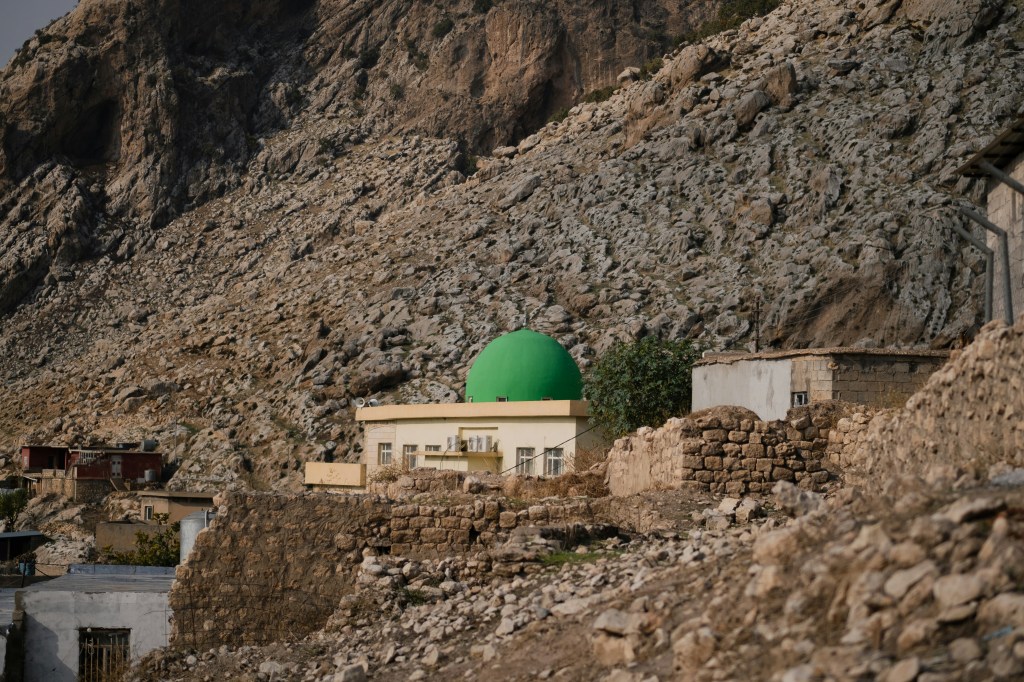
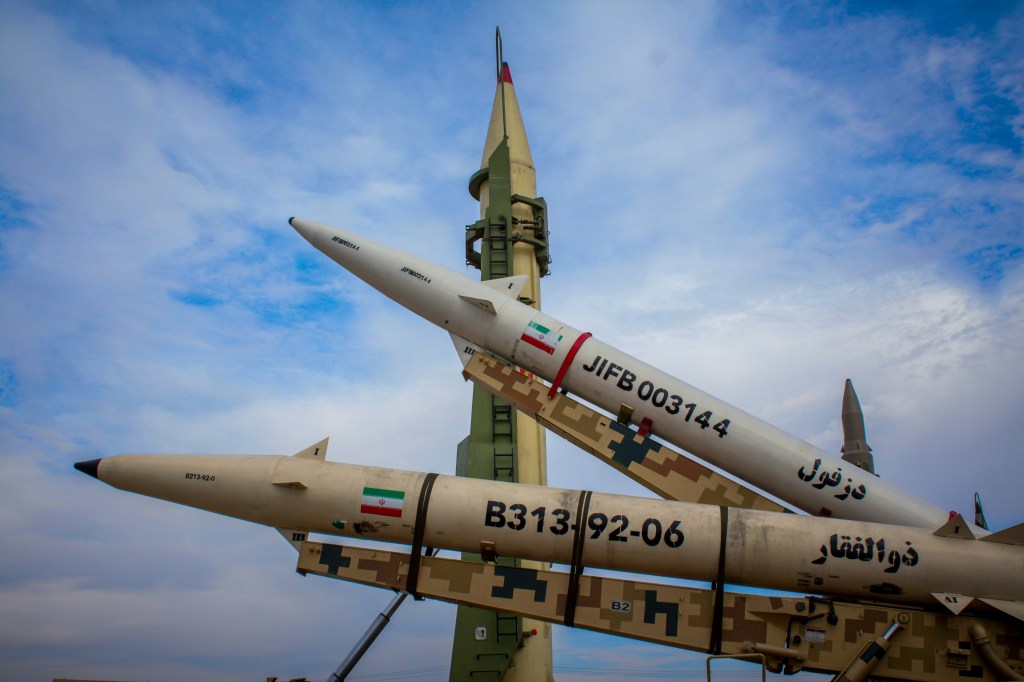





 Entrusted to the Dirt
