Mics in The Water And Other Baptism Blunders

This may sound odd, but if you ever plan on baptizing someone – meaning you yourself are the one to put them under the water – then you would be wise to get some practice beforehand.

All kinds of things can go wrong when immersing someone in the name of the Father, Son, and Holy Spirit. Just to mention a few of the mishaps that have occurred when I’ve baptized others, there was that one time when we baptized someone in moving water but didn’t think about how she was facing upstream. This meant that the river water not only went up right up her nose but, she claimed, all the way up into her brain.

Then there was the time we planned a baptism service in January with the assurance that the host would heat the water in the kiddie pool outside. After we arrived, he informed us there had been no electricity all morning. That meant the new believers coming up so symbolically out of the icy water also came up shrieking like Nazgul.

Another time, we failed to get a local believer’s kneecaps under the water when we dunked him. Hopefully, that doesn’t mean he’ll be raised without these crucial joints in the new heavens and new earth.

Neither am I alone in committing these kinds of baptism blunders. It’s not uncommon for the baptizer to botch the trinitarian formula in the excitement of the moment and suddenly find himself sounding like a modalist. Nor is it uncommon for the baptizee to forget to plug their nose and bend their knees, the latter of which means their legs fly up as their torso goes down, while the baptizer scrambles to not themself get pulled under. Even worse, baptizees who wear white garments experience a real-life version of that terrible dream where, for some reason, you’re in front of the church wearing only your skivvies.

All of this is exactly why my pastoral ministry professor in college took our class out to a local church so we could practice ‘baptizing’ each other. He warned us of many of the common blunders, taught us a tried-and-true technique for the actual physical dunking itself, then had us practice on one another. This was solid training, if somewhat unorthodox, the kind of hands-on activity that ends up serving you very well in ministry when you have to baptize someone for real.

No, we didn’t actually say the trinitarian formula when practicing, so we were careful in that way to not be disrespectful toward this weighty and beautiful ceremony. But yes, it was also a lot of fun. I think I got ‘baptized’ by my classmates five times that day. I am a Baptist after all, so I know that there’s only one dunking that actually counts. All the others before (or after) the one-and-done sign of the new birth are merely the equivalent of a rather short bath.

But you know one thing that training didn’t talk about? What to do with the microphone.

Turns out, my very first baptism blunder was dropping the microphone in the baptismal water. Thanks be to God (and to whatever deacon or sound guy set it up); it was a cordless mic. Here’s how it happened.

Reza*, my refugee friend, had at long last agreed to be baptized. As with his journey to faith, this involved lots of intense discussions. In the end, we got an exception from the elders so that a pastor could do a membership meal with him instead of an official interview. And Reza would also be free to swear by the church covenant and statement of faith orally, rather than signing them. Both of these decisions were, I felt, wise and kind concessions given the fact that ‘interviews’ and signing ‘confessions’ were so closely related to secret police interrogations in my friend’s culture and family background.

The Sunday night of the baptism finally came, and Reza and I found ourselves alone in the old stone church basement. Reza was wearing a poofy white baptism robe with dark clothing underneath. I was also wearing a similar robe, but underneath I had on a borrowed set of one of the elders’ big rubber waders.

I was excited. Reza had come such a long way. His sustained resistance to church membership had been much more of a struggle than I had expected. But he was clearly born again. So, he needed to follow Jesus in step one of discipleship: go under the waters of baptism.

Since he was the first person I’d ever baptized, I was mentally running through the steps I’d learned from my class. Reza, for his part, was freaking out.

He knew that once news of this step reached his dad, there would be blowback. Even though his dad was an agnostic leftist refugee on another continent, it would still bring shame on the family for Reza to do something so drastic as leave his sophisticated cultural identity to become a Christian – and a Baptist at that. Sure enough, soon after the baptism, his dad did cut off all his financial support for Reza.

I did my best to reassure Reza that he was doing the right thing, that any time we follow Jesus in risky obedience, joy and freedom follow. It didn’t seem like he fully believed me.

However, before we knew it, time was up. We were being summoned up the little winding stairs into the old baptismal. Reza’s resolve seemed to strengthen as he walked up the stairs, nervous but seemingly determined to go through with it.

The little tank we waded into was from the early 1900s. It was a hexagonal shape, with the front half of the hexagon facing the congregation. It had a foot or so of a glass railing at waist height, and two white wooden pillars at the front hexagon corners that held up the roof. The back wall of the hexagon was an old painting that attempted to portray a Jordan River scene of reeds and flowing water in faded blues, greens, and browns.

Reza was handed the cordless mic first. He took the manuscript of his testimony in his hand, gripped the mic in the other, and looked up at the crowd. Then he started reading.

Steadily, and with growing conviction and volume, Reza read of how he had been raised by his political and irreligious family, how he had gone deep into fundamentalist Islam as a teenager, how he had experimented with Hinduism and Buddhism in college, and how he had at last fallen into a hedonistic lifestyle after arriving in the US. Systematically, he laid out how all of these other paths had led to utter emptiness. Then he shared how he had learned about Jesus, how he had come to realize that the gospel was not only completely different from all other religious or philosophical systems, but true, and powerfully so.

When Reza ended his testimony, the room erupted in loud applause. A huge grin broke out on his face. Any sense of double-mindedness was now gone. He was ready.

I took the microphone, looking at my friend with deep affection and respect, and said,

“Reza, because of your profession of faith, I now baptize you in the name of the Father, the Son, and the Holy Spirit.”

Then I turned, set the mic on the small ledge at the back of the baptismal, and turned to position myself correctly for the dunking.

Noises and shouts of alarm from the audience suddenly interrupted me. Before I could figure out what people were yelling about, I heard a loud PLOP.

I shot a glance down toward our feet and there was the mic, bubbling and slowly rotating on the bottom of the tank.

Oh no! I realized, I’ve dropped the mic!

Turns out that the little ledge behind me that I had set the mic on was not flat after all, but slightly sloped so that any water could find its way down and off of it and back into the tank. As with water, so with microphones, apparently. The mic had rolled in a quick semicircle and right into the drink.

Reza shrugged toward the crowd and shouted, “Eh, it happens!”

The crowd laughed, and I found myself both thankful for Reza’s charisma and struggling to bend over in my stiff rubber waders to get the mic. Snatching it, I quickly placed it somewhere more secure.

I was somewhat embarrassed but also laughing. It was simply too much of a joyous event to let a little mishap like that get in the way. So, I called out again, this time without the mic,

“Reza, because of your profession of faith, I now baptize you in the name of the Father, the Son, and the Holy Spirit!”

Reza put his left hand on his nose and gripped that arm’s wrist with his right hand so that I’d have a good handhold, just as we’d practiced. I put my other hand behind his back and set my stance so as not to drop him. He bent his knees and went under, white robes splaying and flowing out in the water. After what seemed to me a long moment, I pulled him back out.

Once more, there was thunderous applause. As well as more laughter. Then the congregation started singing a rousing a cappella Doxology.

Reza and I hugged and went, dripping, down to the basement, where we hugged again. He was beaming.

“Brother,” he said, “I have never been this happy in all my life. I am so happy right now, I am so alive. Obeying really does lead to joy! I’m so glad I did this. I love Jesus so much!”

It was one of those moments I will always remember. Every time I give the same kind of counsel to some other Central Asian believer who is afraid that obeying Jesus won’t be worth it, I’m transported back to that old stone church basement and to that scene of soggy Reza beaming in his big goofy baptismal robe. Yes, following Jesus in risky obedience will always lead to greater joy and greater freedom. Always.

The microphone, alas, did not make it. One of our pastoral assistants later informed me that this rather expensive mic could not be salvaged. Although they apparently held onto it for a while in hopes of framing it for me.

And, of course, it was a good many years before I could be involved in baptism conversations at that church without somebody getting in a joke about how I dropped the microphone into the baptismal water. As a young leader, it was good for my humility.

Should you, dear reader, ever find yourself needing to baptize someone, and suddenly feeling quite unprepared, here are a few very important and practical questions to keep in mind.

First, are they a true believer who can proclaim the gospel through their testimony?

Second, under the leadership of their pastor or missionary, are they being joined by baptism to a church or are they themselves the start of a new one?

Third, do they know how to plug the nose and bend the knees, and to not wear white clothes?

Fourth, are they facing downstream and in water that is somewhat warmer than a Siberian lake and deep enough to get all of them under?

Fifth, have you practiced the trinitarian formula enough so that you don’t end up baptizing like a heretic?

And finally, if mics are involved, do you have a plan for keeping them fully out of the water?

There are, of course, other important considerations for baptisms in general as well as on a case-by-case basis. But hopefully this list can get you started as well as highlight a few common and not-so-common blunders.

Go then, and baptize those new disciples. And don’t worry if you end up making some baptism blunders of your own. One way or another, get them under the water and pull them out again, and they’ll come up beaming, ready to risk for Jesus.


We only need to raise 3k ($250 per month) to be fully funded for our second year back on the field. If you have been helped or encouraged by the content on this blog, would you consider supporting this writing and our family while we serve in Central Asia? You can do so here through the blog or contact me to find out how to give through our organization. 

Two international churches in our region are in need of pastors, one needs a lead pastor and one an associate pastor. Our kids’ TCK school is also in need of a math and a science teacher for middle school and high school. If you have a good lead, shoot me a note here.

For my list of recommended books and travel gear, click here.

*Names changed for security

Photo by Nate Neelson on Unsplash
Yes, A Pastor. No, Not The Black Magic Kind

A Peruvian, a Pakistani, a Filipino, a Central Asian, and an American get pulled over at a checkpoint.

No, this is not the start to a bad joke. But it is, in fact, how I learned that locals believe Christian clergy can do black magic.

In truth, you never can predict when these kinds of insights might emerge that reveal what the locals really believe. On this day, our source of cultural illumination surprisingly appeared from one of the least enjoyable parts of living in Central Asia. That is, the inescapable, and often petty, government bureaucracy, military checkpoints on the road being one particularly tedious expression of this.

For this particular trip, I was on an outing with four friends, and we were coming back from a long day of exploring some fascinating ancient sites together. Three of them (Peruvian, Pakistani, and Central Asian) had just finished a year-long pastoral internship under the leadership of the Filipino brother, himself a TCK who now serves as one of our pastors in Caravan City. We had been planning for some time to take this kind of trip together. And the timing of it, coming just a few days after the internship finished, made it a fun and celebratory time.

We knew that our unique carload, itself a sort of mini UN, would likely raise eyebrows at the half dozen checkpoints we’d need to pass through during the day. So, all of us had our documents on us. All of us, that is, except for the Peruvian brother. His documents were with the lawyer for his visa renewal process. However, we weren’t worried. He had pictures of his IDs, something accepted by the guards when the visas and passports of those traveling are tied up in other layers of bureaucracy elsewhere. No ID on you for some random reason? Big trouble. No ID on you because your lawyer is (so you say) getting your visa renewed? No problem! Carry on.

The checkpoints proved seamless all day long, until the very last one, as we were on our way back late at night. Here, as soon as the guard laid eyes on the Peruvian and heard us begin to say that he didn’t have his documents, he ordered him to head inside the station for further questioning. The soldier made this snap judgment and began to walk away without letting us plead our case, so I yelled out as quickly as I could,

“But… respected one… he’s of the people of Peru… his documents are with the lawyer for his visa renewal! Visa renewal!”

Missionaries from Latin American countries have both the advantage and the disadvantage of looking like they are from our region, Central Asia. It was likely that the guard had assumed from appearances that the Peruvian was from a neighboring rival people group – and had therefore plopped him into some sludge-slow process of window and desk hopping seemingly designed to be as convoluted as possible.

This last-minute plea seemed to cause the guard to reconsider and relax a little bit. He turned back to us, still told the Peruvian to go inside to a certain room, but allowed the Central Asian brother to go with him for the sake of interpretation.

The rest of us sat in the car and hoped for the best, barely fending off yet another guard who approached and attempted to send us all inside.

As we waited in the dusty darkness, the Peruvian and the Central Asian made their way into the captain’s office. From a similar situation in the previous weeks, I knew the room’s layout followed the standard formula. Large and pretentious desk facing the door, hard couches lining the walls, plenty of ashtrays and tea tables, a rickety swamp cooler whirring in the window, and photoshopped pictures of benign-looking government strongmen up on the walls.

The captain was not in a good mood, so our friends were not making much headway trying to explain their case. That is, until the Central Asian dropped the fact that the Peruvian was actually a pastor. This was, in fact, true. He had been a pastor in Peru and had originally been sent to pastor a team of Spanish-speaking missionaries before later joining the internship for more training.

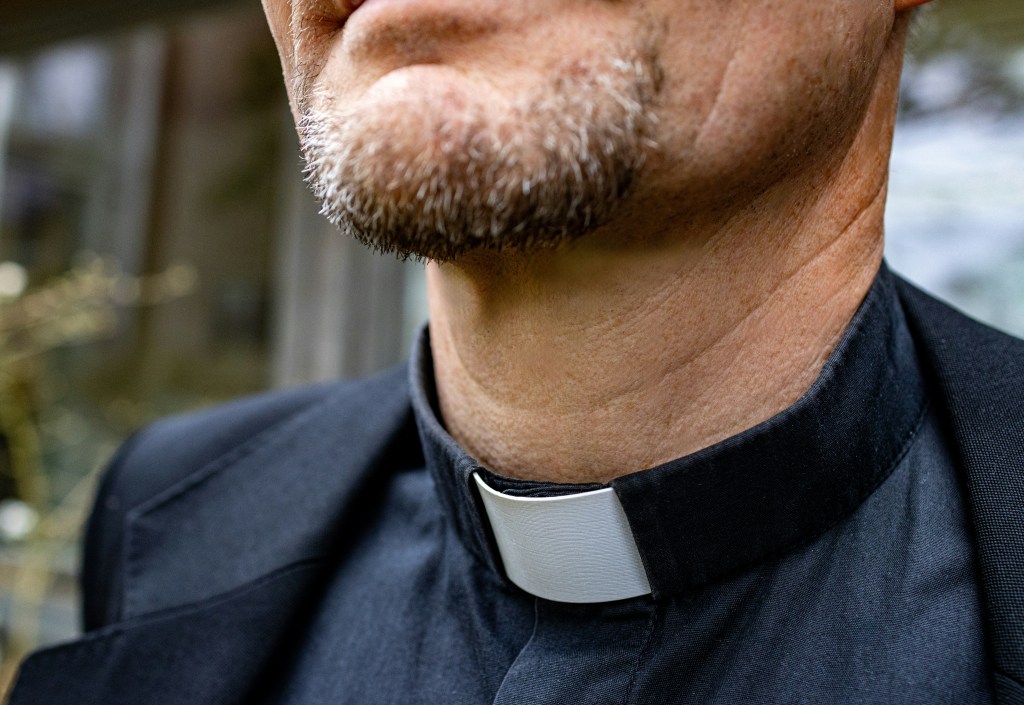
There is something in the wiring of our local Muslim Central Asians, such that once they find out a man is actually a ‘priest,’ their entire bearing towards him changes for the positive. We’ve seen this dynamic so often here over the years that we’ve begun to joke that rather than hiding the pastoral background that many of us have (as is the norm), we should instead start going around wearing protestant clergy collars. At least in government offices, this contextualization of our garments would make a huge difference. In this, Central Asia has proved yet again to be utterly different from our assumptions of how it would be.

Accordingly, the captain decided that, since our Peruvian friend was a priest, there was no issue here whatsoever, and that he could go his way. However, in parting, he also slipped in a joke to the Central Asian brother.

“Ask him if he could do some black magic for me, brother, har har har.”

Finding discretion to be the better part of valor, our friends took the opportunity to smile and leave quickly, rather than staying to correct the captain that, no, as a pastor, our friend most certainly did not and would not do black magic. As no true pastor should.

“Wait,” I asked my friends when they were back in the car, “locals think pastors do black magic?”

“Yes,” the Central Asian brother replied, “I’ve heard it from my older relatives many times. They used to go to some kind of ethnic Christian priest to get him to do spells and charms for them – things having to do with fertility or love, especially.”

Apparently, some of the clergy from the local ethnic Christian communities had, over time, fallen into acting like the local Islamic sheikhs, themselves having fallen into acting like the older mages, shamans, and witch doctors so common all over the world. Appease and manipulate the spirits for your own blessing and the cursing of your enemies. The same demonic strategy used in the Melanesia of my childhood, recycled here with just a smidge of Central Asian monotheistic veneer.

I was reminded of how I’d heard that even one of the few evangelical pastors among our people group had himself started acting weird in these ways, sheikh-ish, making people who asked for healing to drink Bible verses he’d written on little pieces of paper. I wondered if he had also grown up hearing from his relatives of how this was simply what Christian clergy are supposed to do.

I’m very glad this bit of local data emerged, even though it came through something as tedious as a government checkpoint. Who knew that this was something so commonly assumed among our locals, lurking down in the basement shadows of their worldview? Now we know. And now we can proactively teach against it. No, true pastors should not and do not have anything to do with black magic. Yes, they may be involved in the occasional miraculous healing or quiet casting out of a demon. But this is not magic; this is simply the Holy Spirit at work in the normal life of the local church.

No, Mr. Captain of the checkpoint, we won’t do black magic for you. But if you hear us out, we can tell you about something infinitely more powerful.


We need to raise 28k to be fully funded for our second year back on the field. If you have been helped or encouraged by the content on this blog, would you consider supporting this writing and our family while we serve in Central Asia? You can do so here through the blog or contact me to find out how to give through our organization. 

Two international churches in our region are in need of pastors, one needs a lead pastor and one an associate pastor. Our kids’ TCK school is also in need of a math and a science teacher for middle school and high school. If you have a good lead, shoot me a note here.

For my list of recommended books and travel gear, click here.

Photo from Unsplash.com

The Revenge of The Rotisserie Chicken

Around five years ago, we had just returned to Caravan City after a medical leave in the US. After this absence, plus all the general strangeness of the year 2020, we were eager to get back into some healthy rhythms with our team.

Our people group had mercifully dispensed with the lockdowns after three or four months of going along with the global consensus. But by the summer of 2020, most in our area felt that further lockdowns were something only wealthy countries could afford. The workers and shop owners in the bazaar needed life to get back to normal so that they could survive. So, they threatened protests. The government, to its credit, listened, allowing our area of Central Asia to return to a degree of normalcy much sooner than the rest of the world. Mandatory face masks in malls and airports and bans against big mosque funerals were some of the only restrictions that hung on for another year or so. Other than that, our people group more or less went back to normal life.

This meant that our team could begin face-to-face meetings again, something that I, as the team leader, was very eager to see happen. At that point, we were a year or so into trying to lead a deeply divided team, and only six of those months had been in-person opportunities to build deeper trust and community. Results had been mixed. Some of the team were supportive, some still seemed quite distrustful. So, in addition to planning intentional structured time together, focusing on things like the 12 Characteristics of a Healthy Church, I also wanted us to spend lots of good unstructured time together – ideally while enjoying good food. I had seen in the past how the humble kebab could be a force for team unity. And I was hopeful that by adding a meal to our weekly team meetings, we might all become better friends as well as better teammates.

The challenge is always finding a weekly meal situation that achieves the magic combination of good, reproducible, and affordable. As part of trying to figure this out, a timely conversation with my wife led me to the distinct impression that the ladies on the team were not in the place to take on this added burden.

However, there seemed to be a good option that would check all the boxes – street rotisserie chicken. At the time, we lived in a working-class neighborhood that had its own small bazaar of sorts, centered around a central intersection. Two or three of the small restaurants or fast food places at this intersection proudly displayed outside on the sidewalk slowly-rotating spits of glossy roasting chicken, dripping with sour and salty seasoning and tempting passersby with their wafting aroma. You could buy a whole bird for the equivalent of $6 USD. To me, it seemed like a great solution, especially since a chicken came on a bed of rice, onions, and pickled veggies, all wrapped in fresh flatbread.

When the day came for the next team meeting, I made sure to go a little early to get the roasted chickens. This was earlier in the day than anyone else was buying lunch chicken, but the seller assured me that they were indeed fully cooked, using the same word for roasted that locals use for falling deeply in love. I drove home, rotisserie chickens in hand and optimism in my heart, ready to begin a new season of team life and meals. I had seen in the past the power of solid hospitality paired with studying sound principles together. And I was sure this combination wouldn’t let me down.

What I didn’t know is that these seemingly good-smelling birds would, in the end, turn traitors. Alas, as the sons of the prophets once cried out in alarm, there was ‘death the pot’ – or, at least, food poisoning.

The meeting itself and the following meal went well. But later on that evening, our family started feeling terrible. Kids were lethargic and passing out for naps when they normally wouldn’t. Multiple members of the family started vomiting. And mental fog and physical achiness came over our bodies. Wondering if it had been the food, we texted one member of the team. They said they felt great. So, we turned next to the LPG heaters that had been blazing all day long in our little cement and tile house. It was an unusually cold week, and we were running them more than we normally would. Could it be carbon monoxide poisoning? We googled the symptoms. Alarmingly, they seemed to line up.

I didn’t know much about carbon monoxide poisoning, but I knew it was nothing to mess around with. Every winter there are locals who die from it because they leave their kerosene or LPG heaters on too long during the long winter nights of no electricity. It wasn’t worth waiting around to find out. No, as we had done in previous winters and would do again, it was time for a short-term house evacuation to somewhere with better electricity. While there, we could figure out what was going on and recuperate in a simpler and warmer environment.

Teammates of ours had recently moved into a 24-hour power apartment not too far from us, but they were out of the country for a while to have a baby. We asked if we could stay at their place to recover, and they kindly agreed. So, we packed up our bags and our nauseous and miserable children and drove down the road to the new and shiny apartment towers where their place was. The grass border of the parking lot outside was lined with newly replanted palm and olive trees wrapped in Christmas lights, imports from far away. As soon as we parked and stepped out of the car, one of my sons promptly blessed one of these palm trees with a generous regurgitation of chicken and onions. All we could do was pat him on the back and thank him for not losing it in the car. I was worried the guards would scold us for letting this happen to the pristine landscaping, but thankfully, they didn’t seem to notice. Perhaps they were dads themselves and mercifully chose to let my son puke in peace.

We had just managed to make it up to the 23rd-floor apartment before other members of the family needed to take their turns again. For the rest of the evening, we alternately blessed God for the fact that there were multiple bathrooms and felt bad to be throwing up so much and so often in our friends’ house. We would definitely need to do some deep cleaning when we recovered. Admittedly, there were certain points while lying in the fetal position on the bathroom floor when I wasn’t quite sure I would recover. Over the next day or two, we reacquainted ourselves with the rotisserie chicken lunch in one way or another again and again and again until we were left lamenting that we couldn’t possibly have anything more left in our innerds.

I’ve only had food poisoning a few times in my life, but each time I’ve been struck by the wild intensity of the pain that pulses and stabs in the stomach area. This distinct pain, in fact, is what made me revisit the possibility that it had not been carbon-monoxide poisoning after all, but actually the food. This was a welcome thought, as the latter seemed to be the lesser of the two evils.

After texting a few more teammates, I found out that, sure enough, they were also in a bad way. In fact, at least three-quarters of our team was down with symptoms of food poisoning – almost certainly from the chicken I had bought so cheerfully. Alas, my attempt at blessing my team with good food had gone disastrously wrong.

Eventually, we all recovered our strength. It’s amazing what a few days of rest, hot showers, and 24-hour electricity can do for recovering health in the cold, grey Central Asian winters. Unfortunately, the idea of eating meals together after team meetings was not one that anyone wanted to revisit anytime soon. And the poisonous rotisserie chicken that I had bought became a running joke on the team anytime we spoke of eating food together.

After this, the team continued to stumble on toward better relationships with one another and a better posture toward the church planting work. But we’d have to do so without the help of communal meals with the whole team, something that I continued to regret. It probably wasn’t a make-or-break issue, but to this day, I wonder if certain hard things later on would have gone better had we found a regular time to break bread all together.

My Muslim friends will sometimes tell me how dangerous and unhealthy they believe pork is, as if anyone who eats it is crazy and simply asking to get sick. Often, I will point out to them that they eat something almost daily that is just as (if not more) dangerous when undercooked – poultry, like street rotisserie chicken. That stuff, I will them with all the authority of a wizened old war veteran staring off into painful memories far off, that stuff can kill you.

Of course, that’s no reason to stop eating rotisserie chicken (or pork for that matter). We’re just extra careful now to make sure it’s been cooking on the spit for a good long time. Better to have dry chicken than an entire church planting team taken out for days. And ever since then, we’ve managed to avoid causing any more widespread food poisoning on the different teams we’ve been a part of.

As for my teammates with the apartment, for reasons that don’t come into this tale, they never moved back into that same place. This was probably for the best, considering my family’s days of violent and messy convalescence there. My family also quickly afterward ordered carbon monoxide alarms from the States and made sure to have them on our walls at our house and each place we lived afterward, just in case. We ourselves now live in a 24-hour power apartment. This means when winter comes around, we tell our colleagues who still live in traditional homes that our place is available should they ever need a similar tactical retreat from vengeful poultry, or even just from a house whose systems have collapsed in the coldest week of the year.

We’re now back living in Caravan City, so we occasionally see that same palm tree my son inadvertently fertilized with the remains of his lunch. No joke, it’s looking great, unusually healthy and vibrant for a palm tree in this city of extreme climates. My wife and I chuckle when we point it out to one another, remembering the rotisserie chicken disaster of late 2020. Perhaps our pain at least served to strengthen this one tree, fellow transplant that it was, far away from its native climes.

In the end, I still believe that missionary teams (or any team, really) should eat regular meals together. This is a simple and important way to build the kind of warmth and relationship needed for working well together. But just like any good thing, achieving this is not without its risks, and it can sometimes go unexpectedly wrong. Yes, feed your team. But also, do your best not to poison them.


If you have been helped or encouraged by the content on this blog, would you consider supporting this writing and our family while we serve in Central Asia? You can do so here.

Two international churches in our region are in need of pastors, one needs a lead pastor and one an associate pastor. If you have a good lead, shoot me a note here.

For my list of recommended books and travel gear, click here.

Photo from Unsplash.com

A Proverb on The Power of Slow Work

Work gradually done is a king upon his throne

local oral tradition

This local proverb speaks of the power and efficacy of slow, steady, diligent work. This kind of work is compared to a king enthroned – weighty, authoritative, influential. It reminds me of Proverbs 12:24, “the hand of the diligent will rule, while the slothful will be put to forced labor.” According to both our local oral wisdom and Solomon, authority is the natural result of long-term labor that has proven wise, fruitful, and effective.

One of the very interesting things about this season in our area of Central Asia is that we are now seeing the good fruit that has come from missionaries who years ago chose the slow and steady route to church planting. In multiple cities now, church plants that both locals and movement-driven missionaries said would never work are actually thriving. And, wonder of wonders, they are raising up faithful, humble, qualified local leaders. Yes, their road has been very messy and involved much suffering. But they have kept their hand to the plow and kept going, one plodding step at a time.

I heard this past week about a local pastor who has approached our former team in Poet City to ask them for help in leadership development. As is modeled by most foreign organizations, this local leader has relied on ministry programs and salaried positions to raise up other leaders. But this approach keeps failing him. This is because ministry salaries and positions cannot create faithful character, though they sure can wreck the character of young and immature potential leaders. However, this pastor has seen from afar as young men like Darius* and Alan* have been raised up over a number of years to now be a faithful elder and faithful elder-in-training, respectively. And this evidence of slow labor speaks with a kind of authority all its own.

The slow route of faithful shepherding will always lap the seemingly fast route of exciting methods. And when rushed and shallow work inevitably collapses due to an inadequate foundation, other work will suddenly be elevated, enthroned as it were. If this newfound authority is then accompanied by a humility based on the fact that the principles and methods employed were not really our own at all but merely an attempt to be faithful to God’s word – then that newfound influence can be put to good, even eternal, use.


If you have been helped or encouraged by the content on this blog, would you consider supporting this writing and our family while we serve in Central Asia? You can do so here.

For my list of recommended books and travel gear, click here.

*Names of places and individuals have been changed for security

Photo from Unsplash.com

Reflections on Failure in The Fog

“I cannot go on. You must leave me…. A.W., you know the way. Lead them to the summit. Follow the painted rocks. I… must… go back!”

The four of us stood there in the 1 a.m. fog, listening to our guide deliver his dramatic monologue as he slumped down on a wet clump of alpine grass.

Even though this local man and security guard at our missionary compound had climbed this mountain a dozen times in the past, he had suddenly been hit with severe altitude sickness. To be fair, we were almost ten thousand feet higher than the green valley full of coffee gardens where we lived and where our MK school was located. Still, we were surprised that this veteran guide would come down with altitude sickness and the rest of us would be fine. Typically, the local highlanders would beat us in almost any form of physical endurance.

(Side note: Here’s a principle that you can bank on. Mountain peoples, whether in Melanesia, Central Asia, or anywhere else, are almost always remarkably tough.)

We stood there and considered our plight. We had come so far. It had been a risky idea from the start, attempting to hike the highest mountain in the country during rainy season. But one member of our group was a classmate whose family had unexpectedly moved back to the US a year previously. He had flown all the way back to Melanesia, in part to do this hike. So, both in his honor and also because the rest of us wanted another crack at the mountain before graduation, we had made the attempt.

Up to this point, it had been tough going. Dirt roads melted into knee-deep mud and landslides had rendered portions of the road that led to the base of the mountain almost impassible for the vehicles we had hitched rides in. We’d only just barely made it through, courtesy of a Land Cruiser that appeared at just the right moment. “That’s the first vehicle to get through in over two weeks,” we’d been told. Then, our several hour hike on foot up to the base camp had been a long, wet, sloshy, and cheerless affair.

Because of all this, two of our classmates had decided to remain at base camp and not attempt the middle of the night climb to the summit. They assured us they would be content with some sleep and a slow morning at the stunning alpine lake next to the base camp. But four of us opted to get only a few hours of sleep and then press on to the top. It was me, Ross*, the one who had come back from the US to visit, Will*, our Canadian classmate who liked to hike in the bright red long johns of his homeland, and Van*, our young Belgian soccer coach who was a pretty cool guy even if he would sometimes lose patience and holler at our team, “Fife yea ollds in Belgium play betta socca zan you guyss!”

To be fair to Van, this critique was probably true.

“What do you think, A.W.?” asked one of the guys, “Do you remember the path?”

“Well,” I answered, “It was three and a half years ago. And it was the middle of the night, just like now. But like he said, the trail is marked by painted rocks, so we should be able to follow them up without too much trouble. I’m up for if you guys are!”

“Let’s do it!” the group agreed.

Oh, the boundless optimism of adventurous and idealistic eighteen-year-olds. The world was our oyster. Or, at least it was our beef cracker and tea biscuit, hardy local snacks that we carried an abundance of in our packs. Van, to his credit, did not use his role as the only grown man among us to tell us that we would not be allowed to make the attempt.

Having made our decision, we left our guide to stagger back down to base camp and began plodding slowly uphill again through the tufts of mountain grass and stubby palm things that looked like they belonged in a book about dinosaurs. No more rainforest up here, just strange and mysterious grassland gradually fading into rock.

Initially, spotting the rocks that marked the trail didn’t prove too difficult. Although, it had probably been as far back as the 1970s that someone had splashed these small boulders with white paint. Still, on my previous hike as a ninth-grader, we’d been able to spot them in the starlight. One crucial difference was that tonight there were no stars.

Not long after we separated from our guide, the fog rolled in even thicker. Suddenly, we could only see about ten feet in front of us – and the rocks that marked the trail were placed maybe thirty to forty feet apart.

To make matters worse, the fog also took away our ability to orient via sound. Normally, the roaring waterfall down at base camp provided a constant point of reference. You might not always know the exact way forward but if you were moving toward the distant sound of falling water, then you at least knew you were going in the wrong direction. Now, the waterfall echoed at us from all directions.

Undaunted, we trekked on. We eventually realized that we had lost the main trail altogether. But since by this point we were mostly trekking over rock, we figured we might as well keep going up, hoping to come across the trail later on. We continued on like this for several hours, our eyes and ears playing tricks on us. Is that the same or a different cliff there? A potential dropoff there? A painted rock! Nope, just white lichen. As hopeful confidence faded to uncertainty and then to frustration, we began to identify with Frodo and Sam, endlessly walking circles in the Emyn Muil, “Because we’ve been here before. We’re going in circles!”

We finally lost hope of finding the main trail when we came across large pieces of old metal scattered over the slope we were climbing. We quickly realized what this was. Way back in WWII, an American bomber had tragically crashed on this mountainside while doing a flight celebrating America’s victory over Japan. Large pieces of the aircraft remain scattered on the mountain to this day. But the part of the mountain the bomber is on is not the part of the mountain that leads up toward the summit. Somehow, we had ended up way off track.

Disheartened and exhausted, we turned around and started making our way back down the slope. Sometime around 5 am, we reached a grassy area and plopped down for a little bit of sleep and sustenance. There was no sense continuing on in darkness when the summit was out of reach. The dawn’s light would make the descent easier. Whatever adrenaline we’d had left was now long gone, killed off when we saw the bomber and realized just how far we had wandered in the fog.

I remember reclining, pack on, against the wet slope, munching on an Arnott’s tea biscuit. I could see a dropoff not far below me. But in the fog, there was no way of knowing if it was only a few feet high to the bottom or hundreds of feet. And I was so tired that I felt a curious lack of fear at this potential threat. I drifted off to the sound of a thousand waterfalls, steadily humming at me from all directions.

It’s quite impressive that the human body can actually sleep in such conditions. But sleep we did, waking up strangely refreshed in spite of the cold and wet all around us. That little bit of sleep and the fog beginning to clear brought with them a remarkable lifting of the spirits. Our crew of four groggy hikers passed around some more tea biscuits as well as some hot tea mixed with milk powder and cane sugar we had brought in our thermoses. Then we proceeded to have an extremely enjoyable descent down the mountain – even though the daylight revealed that at many points we’d been much closer to plummeting to our deaths than we’d ever realized.

Perhaps it was a little bit like feeling well again after a long sickness, when simply feeling normal is so new and different that normal actually feels amazing. But there was something about the ability to see again and to hear the direction that blasted waterfall. Or, perhaps we were just a bit tipsy from exhaustion and altitude. Whatever it was, I remember having a lot of fun hiking down the mountainside with these friends. And with the pressure of summiting no longer on us, we took the time to slow down and notice the beauty all around us. In fact, the picture at the top of this post is from one of the many lovely wildflowers lining the path of our descent that morning.

When we got back to base camp, our better-rested friends greeted us with cheers, even after they found out we had failed to reach the top. They were cooking breakfast, doing their devotions by the lake, and drying off soggy clothes by the fireside. We happily joined them in these activities, with Will proceeding to accidentally melt his shoes on the fire. This was an unfortunate and undeserved development for my hardy Canadian friend, but least he hadn’t burnt a hole in his legendary red long johns. We also spent some time comforting our guide, who was feeling a bit embarrassed at how everything had gone down.

Looking back, there are a couple of lessons I’ve drawn from this particular misadventure. First, it’s of absolute importance to be able to orient so that you know where you’re going. I actually used this story as an introduction to a lecture I gave on the importance of vision at one of our regional retreats a few years ago. I was presenting our vision as a group of teams working with the same people group, which was, “To see networks of healthy churches among the _______ (our people group), raising up their own qualified leaders and sending out their own cross-cultural workers.” I told this story of my friends and me getting lost on our hike to illustrate what happens when you do not have fixed points of reference to guide your way. As in hiking, so in missions. A lack of clear vision sends many a poor missionary wandering off trail in the metaphorical fog.

Second, this particular hike reminds me that anything worth doing is also worth failing at. Failure can be, in fact, a good thing depending on the reasons you made the attempt in the first place and the sort of experience you get out of it. We had gone on this particular hike as a way to encourage our friend who was struggling deeply with his family’s move back to the US. We had also gone to do something hard, to summit the highest mountain in the country during rainy season. We’d gone to be more fully alive by experiencing the beauty of God’s creation and having an adventure with our friends. These were all good reasons to do something risky.

True, we had failed to summit. But we had made it to the mountain in spite of serious obstacles. We had pressed on, even when our guide turned back. We had stumbled upon the wreckage of a WWII bomber in a rocky wasteland 14,000 feet high. We had munched on midnight tea biscuits with the fog dripping off our frigid noses while scaling cliff trails worthy of Central Asia’s nimblest donkeys and mountain goats. It had been a hike to remember. Perhaps even more so because we had failed.

Failure can be good, necessary even. “Do I have the freedom to fail?” is a question I’ve learned to ask my various supervisors over the years. God has made me a risk-taker. And the gospel work in Central Asia is a lot like a foggy and rocky mountain range where we know where we want to go but it’s often not clear at all how to get there. This means much failure is likely necessary in order to find the paths that actually wind toward the summit. And when failure does happen, it doesn’t always mean that the attempt was wrong-headed from the start. I’d go as far as to say that faithfulness sometimes means failing – at least failing as seen from our perspective.

Looking back, I’m grateful we had the chutzpah to keep going even without a guide. Would my middle-aged self make the same decision I did as a high school senior? I’m not sure. I have tasted the costs of failure so much more since then. But is there still a part of me that wants to charge off into the fog in hopes of finding a summit that we know is out there somewhere? Yes. Most definitely – especially if I have a crew of friends willing to take that risk together (and maybe some tea biscuits).

If you have been helped or encouraged by the content on this blog, would you consider supporting this writing and our family while we serve in Central Asia? You can do so here.

Our kids’ Christian school here in Central Asia has an immediate need for a teacher for the combined 2nd and 3rd grade class. An education degree and some experience is required, but the position is salaried, not requiring support raising. If interested, reach out here!

For my list of recommended books and travel gear, click here.

*names changed for privacy

Even Wolves Must Serve the Church

The sovereignty of Jesus is so complete that even wolf attacks ultimately serve the church. Of course, for the king who turned the enemy’s greatest weapon, death, against him, this is par for the course. Wolves aim to serve themselves by causing great carnage, “tearing the prey, shedding blood, destroying lives to get dishonest gain” (Ez 22:27). But in the end, even they serve the advance of the Church.

What is one way that they do this? By exposing who is a true shepherd – and who is a hired hand.

I am the good shepherd. The good shepherd lays down his life for the sheep. He who is a hired hand and not a shepherd, who does not own the sheep, sees the wolf coming and leaves the sheep and flees, and the wolf snatches them and scatters them. He flees because he is a hired hand and cares nothing for the sheep.

-John 10:11–13

Jesus tells us here that his willingness to lay his life down for his sheep is the proof that he is the Good Shepherd. He cares so much for the sheep that he is not only willing but will in fact give up his life for them. This differentiates Jesus from the other self-serving religious leaders who run when faced with wolves because they don’t truly love the sheep, but themselves. Even when the wolves in sheep’s clothing (Judas, the authorities, and Satan through them) attack Jesus, he will not flee. He will face the wolf, even though it means losing his life.

Pastors of the Church, undershepherds, are called to walk in the footsteps of this Good Shepherd.

… shepherd the flock of God that is among you, exercising oversight, not under compulsion, but willingly, as God would have you; not for shameful gain, but eagerly; not domineering over those in your charge, but being examples to the flock. And when the chief Shepherd appears, you will receive the unfading crown of glory.  

-1 Peter 5:2–4

This means that just as wolves served to differentiate the Good Shepherd from the hired hands, so they also now expose who is a true undershepherd and who is, at the end of the day, merely in it for personal gain.

The first time I realized this I was trying to respond to a tough question from a believing Iranian refugee who was visiting our church in Kentucky. He had questions about the fact that we had a number of pastors on staff who were paid full-time salaries.

“How do I know that they’re not just in it for the money? We have a lot of problems with this and the religious leaders in our culture.”

I had recently been teaching on evangelism from John chapter 10, so the Good Shepherd passage was fresh in my mind during this conversation. But the unexpected question shone the light on an aspect of the passage I had never noticed before. (Sidenote: I love it when this happens. Unexpected questions so often serve to be a goldmine for new insights into the Word.)

“Well, you’ll see that they’re not just in it for the money when things get hard, when the church gets attacked. True pastors will stay and defend the flock, like Jesus the Good Shepherd. Men who are just in it for the money will run. So, you just need to stick around long enough to see what they do when the church comes under attack.”

I stood by this answer, confident that our pastors were the kind of men who would indeed lay down their lives for the sheep if necessary. I didn’t know that in just a few years, I’d have to face a wolf attack myself. And I’d have to wrestle with whether I would stand my ground or run like a kid who’s really only watching these bleaters for the pocket money.

In addition to learning a lot about the nature of wolves during Ahab’s* sneak attack on our church plant, I was also learning about the nature of leaders. My own heart as a leader was being put to the test. Was I a hired hand? Would I stand and fight rather than seek to save my own skin? What about my fellow leaders, would they run? We had suddenly found ourselves in a crucible that would expose us, one way or the other.

I will say this. Everyone who is a Christian leader should strive and pray to be like the Good Shepherd when the wolf comes. We should all pray that on that day we will not turn out to be hired hands. And we should also strive to not be alone but to have a few others with us who will stand back to back, encouraging us to stand our ground, swinging their staffs into the teeth of the predator when it lunges, and pulling it off of us when it’s got its jaws clamped around our thigh.

My fellow leaders and I were caught unprepared when we faced our own wolf. But by the grace of God, eventually, when the deceptions cleared away and the fangs came out, most of us somehow managed to stand our ground and fight. We were tested – and found to not be hired hands, but undershepherds who cared enough for the sheep to at least go down swinging. God is good.

There is a particular kind of trust that develops when you’ve seen a man stand his ground against a wolf. The natural impulse of a believer is to move toward those who defended the sheep even when it was costly. This must be because they remind us of the Chief Shepherd. I do not delight in the carnage of a wolf attack. I get no high from the thrill of a predator suddenly revealed. But I do love seeing a true shepherd’s heart revealed. And the kind of camaraderie that follows when you know you have a brother who will walk with you through the very jaws of death.

Wolves, it turns out, have a particular ministry of exposure. They appeared and exposed the true nature of Jesus. And when they appear in our churches they will in turn expose our own hearts and those of our leaders. This is part of their purpose, seemingly part of why they are allowed to threaten the people of God.

They may think they are out to kill and fill their bellies. But the word of God is clear – even wolves will serve their purpose. Even wolves must the Church.

To support our family as we head back to the field, click here.

For my list of recommended books and travel gear, click here.

*Names changed for security

Photos are from Unsplash.com

Seven and a Half Years – and Every Bit Worth It

The Achilles heel of the church planting efforts in our corner of Central Asia has been the absence of faithful and qualified local leaders. Many missionaries have handed over leadership too quickly and men who might have eventually become faithful pastors instead fell into “puffed up conceit and the condemnation of the devil” (1st Tim 3:6). Other local men grew impatient and seized power, position, and ministry money before they were ready. All too often, promising leaders that long-term missionaries were faithfully discipling got lured away when an outside organization showed up looking to hire a local to head up their imported formulas for disciple-making movements. Persecution and burnout have also played their role in running off local leaders.

Were you to diagram it, you’d see four stages local believing men go through. First, there’s the new believer stage. This is the stage with the highest numbers. Next is the maturing disciple stage. A good number make it from stage one to stage two. Then, you have the potential leader stage. There’s a smaller number of men in this stage, but they are very encouraging men of vision and potential. But the fourth stage is that of a qualified and faithful leader. Almost no one has passed that last threshold.

This week Darius* was voted in as the first local elder of our church back in Central Asia. According to one of our colleagues there, the local believers were engaged, asked thoughtful questions of the elder candidates, then prayed hard for the two new pastors after voting them in. Darius and one of our other teammates have been in an elder-in-training season for about a year and a half, a development partially prompted by my family’s unexpected departure from the field. Now they are the very first elders to be tested and voted in congregationally. It’s taken seven and a half years for this to happen, seven and a half years for us to at last see a local man raised up for pastoral ministry.

This church was birthed at a Christmas party in December of 2016. Frustrated that none of the isolated local believers were willing to attend the house church services we were offering in their language, we experimented by inviting them to a Christmas party – one that involved teaching from the word, worship songs, and some prayer. Some of the very same believers who refused to come to a house church service told us how much they had enjoyed the teaching, songs, and prayer at the Christmas party. We invited them back for another gathering the week after – and at some point broke the news to them that what they were enjoying were in fact the basic elements of church. Once they had tasted it, they weren’t nearly as reticent to come back.

But that first group didn’t exactly result in a church. Hama and Tara soon fled the country. One man lived too far away to attend more than quarterly and another proved not to be a believer. We had a very explosive falling out with Hamid after we held firm on the exclusivity of Christ, so as far as we knew he was gone for good. Only a single gal who would later turn out to be the daughter of a spy and Harry would gather with us somewhat regularly – and Harry inconsistently because of pressure from his violent and conservative tribe. Six months into every other week producing no local attendees, and we almost pulled the plug on the whole thing.

Thankfully, we just barely decided on continuing to meet, believing that if the locals didn’t know how to gather in a steady, weekly fashion, then we’d just have to model for them what that looks like. Every week we’d all text and call our own small networks of isolated local believers and seekers we were studying the Bible with. And every week our team would wait anxiously, chai and sunflower seeds set out and ready, hoping for maybe two or three locals to show up this week.

The turning point came when Ahab’s family started attending regularly. Finally, we gained some momentum and averaged about six to ten locals joining us every week in Ahab’s house, where we had moved the meeting. Unfortunately, as I’ve recently written about, Ahab proved to be a very dangerous wolf in sheep’s clothing. Yet God was still working even as that danger lurked. During that season Mr. Talent and Patty and Frank came to faith and went under the water on a freezing January day. By spring 2018, we were seeing several dozen locals gathering every week, Harry and Ahab were seen as potential elders-in-training, and we thought we were in the clear – a church was being born before our eyes.

Then Ahab almost blew it all up. We extracted the church from his house and moved the meetings into the international church building. Only five or six of the believers stuck with us, but we were encouraged that there was still any church left at all. It was in this season of damage control that we met Darius and he came to faith and was baptized. He was, amazingly, captivated by the beauty of the church – the traumatized group of local believers and foreigners who had just barely survived a wolf attack.

This was when my family transitioned to the States for a season and then back to a different city in Central Asia. But during the two years that we were gone, the church continued to grow under the leadership of our colleagues, in spite of serious opposition. During this time, it was raided once by the security police and then later experienced another implosion due to another attendee who was some kind of spy from the militant regime to our East. Harry had been appointed a formal elder in training in this season and we had high hopes that he would be our first local leader. Sadly, this implosion and its relational fallout led to his leaving the church for the next year and a half.

When we eventually moved back to help this church in 2021, the church had once again entered a period of steady growth. Alan and others came to faith and Adam was rescued from his crippling schizophrenia. Our team realized that it was time to go official. We had been a church with informal membership and other structures for a few years by that point. Now it was time to step into the fulness of the Bible’s vision for a local church. And that meant formalizing membership and drafting a Central Asian church covenant. Shortly before we once again left in late 2022, the church had covenanted together and was openly committed to pursuing all twelve characteristics of a healthy church.

One of those characteristics is biblical leadership. This means seeing local elders and deacons raised up who are qualified according to passages like 1st Timothy 3 and Titus 1. A few other men and I have functioned as temporary lowercase-A-apostolic elders for this church body up until now. But the goal was always to work ourselves out of a job. It just took much longer than we thought it would. I once heard a local pastor in a neighboring country say that in their context it took about seven years for a man who has come to faith from a Muslim background to be discipled and mature enough to lead in the church. So far this fits with our experience as well.

For several years we had been hoping that Darius would be the first local pastor of our church. But just like every other man who makes it into the potential leader phase, the attacks came – potent and often. He was approached by other organizations asking him why his church wasn’t making him a leader yet, why they weren’t paying him a ministry salary yet, and why he didn’t consider aligning with someone else who would recognize his clear leadership gifts. It was a hard fight, but Darius resisted these enticements one after another. He also hung in there through numerous bouts of cross-cultural conflict with us, his mentors. By God’s grace, he was able to see our heart for him, that we would be delighted for him to lead – but only at the right time and in the right way. And unlike so many other potential leaders, Darius chose the harder and healthier path, the path of humility (1 Pet 5:6).

My family’s departure in late 2022 sped things up a little bit, as it left only one teammate pastoring a still messy and growing church on his own. We knew this was going to be too much, so the plan was hatched to bring Darius and another newer teammate into official elder-in-training roles. The past year and a half have demonstrated that God has indeed given these brothers the knowledge, the gifts, and especially the character to be spiritual shepherds. This was joyfully and soberly affirmed this week by the members of the church.

It took seven and a half years for the first qualified local pastor to be raised up. But we truly believe that this is one of the most important keys to seeing healthy local churches planted that endure – and that go on to reach their own people and others with the gospel. So, even though seven and a half years has been quite the messy and costly investment, it has been, without a doubt, entirely worth it.

Darius is the first. May countless others come after him.

To support our family as we head back to the field, click here.

For my list of recommended books and travel gear, click here.

Photos are from Unsplash.com

*Names changed for security

Lessons Learned From a Wolf Attack

Some of the most painful lessons of ministry are learned when a wolf in sheep’s clothing infiltrates your church. We had a wolf once, a local man I’ll call Ahab*, and it has taken me years to know how to write about it. The things we learned from exposing him, trying to counter him, and then responding to the carnage he caused have been forever branded on my soul. Wolf attacks leave scars, along with tragic losses among the true sheep. Pray that you never have to fight off a wolf in sheep’s clothing, but if you do, may these lessons we learned from dealing with Ahab help you to spot and deal with your own wolves with both wisdom and courage.

Wolves make excellent first impressions

The first time Ahab and his family visited our new church plant, we were thrilled. Here was a local believing husband and wife who also had believing teenage children – a true rarity in our corner of Central Asia. They were veteran believers, having come to faith nine years previous at a house church I had attended with Adam*, and later were members of another church when they’d lived in a different city. Ahab presented as a humble, happy, and wise middle-aged man from a more traditional background. But the most encouraging thing of all was how well he knew his Bible. To this day I’m not sure I’ve met another local man as well-versed in the scriptures as Ahab is. In spiritual conversation, Ahab demonstrated a deep knowledge of the Word. He had a thoughtful, serious personality, but he was also very fatherly, especially with small children. Our kids adored him with his affectionate greetings and gifts of cookies and pomegranate flowers.

Ahab’s sheep costume was (almost) flawless. Wolves will indeed show up wearing very convincing disguises (Matt 7:15).

Wolves come with mixed reputations

As soon as another missionary heard that Ahab and his family were attending our group, he warned us about him, telling us that Ahab and his wife had in previous years recanted their faith and returned to Islam, in order to receive financial gain. Apparently, there were pictures of them embracing a Qur’an next a smiling Islamic leader that proved this. This missionary also said that the family’s relationship with the Christians in their previous city had broken down completely and they had deceived and burned lots of people. The problem with this intel was that that generation of local believers was positively shot through with division and broken relationships and we also didn’t trust this missionary’s theological discernment. He had recently written off male-female roles in ministry as something that didn’t really matter, among other theological and ministry positions that felt so, well, “evangellyfish.” And we were newly partnering with another missionary who seemed to have more of a theological spine. He had been recently investing in Ahab’s family – and claiming to see evidence of true repentance and growth.

Our mistake here was assuming that a lack of theological likemindedness meant a lack of character discernment on the part of this other missionary – and that better alignment with our new partner meant he was correctly discerning Ahab’s character. These assumptions were dead wrong.

A wolf’s character cannot be hidden indefinitely. Their predatory heart will periodically emerge in predatory actions (Matt 7:16). This means that, like Ahab, wolves will tend to have a controversial past.

Wolves get deeply involved in the ministry and show great potential

We confronted Ahab about these claims of past apostasy and you couldn’t ask for a more (seemingly) humble and genuinely repentant response than the one he gave us. He admitted that the apostasy was true, but short-lived, and claimed to have already repented to everyone of this dark season in their life, and that he was willing to do whatever it took to demonstrate that repentance to us. Given our biases about the missionaries involved, we took Ahab at his word and pressed forward, encouraged.

Ahab soon became deeply invested in our house church. His family were the most faithful and some of the most engaged attendees. They introduced Frank and Patty to our group and even led them to faith. We were so encouraged to finally have some local believers who were committed to gathering weekly with the saints. Ahab soon offered his own home for our house church services and we quickly took him up on his offer. Our team leader was on furlough and pushing us to get the church meetings out of our own homes and into locals’ as soon as possible. This was viewed as one key toward reproducibility. So, all parties involved were thrilled when we moved the weekly service into Ahab’s home. It didn’t take long for Ahab to begin helping us with leading the prayer time and for us to invite him to join our weekly sermon-prep study with Harry*, the other local brother showing leadership potential. This was a weekly gathering that served as a place to invest in men who could be future leaders of the church.

Wolves tend to have a solid season of deep investment in the local church. This is how they build trust and gain influence.

Wolves are unpredictably harsh and judgmental

Every once in a while, Ahab would lash out in harsh and judgmental language when speaking of other local believers, pastors, or missionaries. These statements seemed inconsistent with his measured, wise speech that we typically observed. The tone of these outbursts seemed like it didn’t match the level of the offense nor the grace of the gospel that Ahab professed to be walking in. We took note of this, but viewed it as a discipleship issue that we’d need to help him with over time. In hindsight, it was evidence of secret sin brewing.

Like Judas lashing out at the woman’s gift of pure nard (John 12:5), wolves will sometimes let their true character show via harsh and surprisingly judgmental takes on other believers. This is evidence that there are some very bad things going on in their hearts.

Wolves are followed by lots of smoke, but expertly hide the fire

Ahab and his family’s mixed reputation seemed to follow them like a cloud of gnats they could never quite get rid of. Regularly, we’d hear serious concerns expressed by other missionaries or local believers that just didn’t seem to match what we were seeing with our own eyes. Ahab was one of our promising leaders in training, and nothing that we had witnessed ourselves gave us any solid evidence for the claims being regularly made by those outside of our church plant. But the claims just kept on coming. Surely, Ahab couldn’t be deceiving us so effectively. It must be the other missionaries and believers from other local groups. After all, they were unclear and squishy when it came to the gospel, true conversion, and healthy church, so they must have been confused about Ahab also.

As the wisdom of our forbears says, where there’s smoke, there’s fire. Wolves can’t hide all the smoke they generate, but for a time they can expertly conceal the fire from those that they are focused on deceiving. Wise gospel laborers will keep an eye on men whose lives generate an unusual amount of proverbial smoke.

Wolves secretly divide the flock and the leadership for personal gain

“Is Ahab a good man?”

“Yes, he is a faithful member of our church. Why do you ask this?”

“Well, he approached me this week and told me to keep my distance from all you foreigners. He told me not to trust you, but to trust him. Listen, I left Islam to get away from this kind of petty division. If Christianity is no different, then I don’t think I want to be involved with you all.”

This conversation over dinner with a new believer was a turning point for me and my wife. We had been hearing of a lot of smoke, but here at last was something solid, and very concerning. Ahab had allegedly approached a promising new believer in secret and sought to sow division in the church. This new believer didn’t seem to have any advantage in mentioning this to us, but rather to be honestly asking about something that concerned him. Soon other evidence emerged that Ahab was secretly building personal loyalty with other new believers in the church, creating a faction of sorts. He seemed to be doing this by telling the new believers that we foreigners (and me in particular) were receiving fabulous amounts of money for baptisms and that we were withholding funds that were sent for local believers. He was making promises to the other locals that he knew how to get them access to ministry salaries, Christian conferences, and visas to Western countries.

As I looked into things, I learned that Ahab was also involved in slandering me to the other two missionaries who formed our three man church plant leadership until we could raise up local elders. To my great alarm, Ahab’s whispers that I was secretly out for power and control were being somewhat entertained by my gospel colaborers. Ahab’s desire in all of this was to be eventually in charge of the church so that he could receive a good ministry salary from groups in the West, along with funds he could use to set up a patronage network within the church.

When wolves feel secure in their position, they will begin to sow division among the saints and even among the leadership. They are very good at sniffing out existing tensions and then exploiting these (Titus 3:9-11). Their end goal in all these things is their own personal gain.

Wolves are gifted at twisting reality

There were several times that seemingly concrete charges were brought against Ahab. But whenever we would bring up these concerns, Ahab was able to expertly sow doubt in the informant, in the data itself, or even in our own experiences. After this season, I would learn that this kind of behavior has come to be called gaslighting in the West. A gaslighter is able to make you doubt that something really happened, and even able to make you doubt your own senses. We would go into face-to-face meetings with Ahab with clarity and conviction and come away feeling like we weren’t sure anymore what was really true or real. After Ahab had later been exposed, one local brother called him “an artist of lies.” In a culture given to lots of pervasive deception, this was quite the title. After upending reality, Ahab was then able to insert his own narratives into the confusion, with great effect. I remember meeting with my team leader and Harry, desperately trying to unravel the narrative Ahab was pushing on them about me. These two godly men knew me much better than they knew Ahab, and yet he was almost effective in convincing them that in the end, I was the real problem in this whole situation – and the true manipulator. It was terrifying.

Like the serpent in Genesis 3, wolves are able to create doubts about things that once seemed so simple and so clear, about reality itself.

Wolves turn good faith exhortations against those who make them

I remember meeting with Ahab and pleading with him from my heart to turn away from his divisiveness, that the church might not survive what he was doing. I poured out my heart to this man I thought was a brother, sharing very personal things with him and even areas where I had failed or could have done better. I was pulling out all of the stops to try to pull him back from the brink. While his response to me in person was good, he immediately took many of the things I had told him and weaponized them with others. Sometimes this happened even on the same day. I would gave him pearls, truths from God’s word and things from my heart, but he not only despised these, but then used them to attack. As each leader and local believer began to realize what Ahab was up to, he’d proceed to do this with them as well. We had trusted him with our hearts and he was now adeptly using all of this as ammunition to undermine us.

Wolves can be like the swine that Jesus describes in Matthew 7:6, who take precious truths and good-faith exhortations and instead of repenting, use them against you.

When exposed, wolves go on the attack

Humble men respond gently and reasonably when accusations are made against them. Wolves, when accused – or even as soon as they sense someone is beginning to suspect them – go on the attack. This stage is dangerous, but helpful. At last, the true nature of the wolf is being revealed to the broader community. In our church plant, Ahab started by attacking me. My grasp of the local language was stronger, so that meant I was spotting things sooner than my fellow leaders. Ahab picked up on the change in my posture toward him and did what he could to turn the others against me. There was a period where even the other leaders sided with him, but one by one their honest questions and desire to pursue things with fairness meant that Ahab turned on them as well. When this happened, it was like a spell was broken. All of the cobwebs of deceit that had been sewn were suddenly dissolved as the sheep turned on its erstwhile friends – and revealed its fangs.

When wolves in sheep’s clothing are recognized for what they are, they will not run. They will attack. In this attack stage, they will seek to cash in on whatever schemes of division, personal loyalty, and personal gain they have been working on.

Westerners are at a disadvantage when dealing with wolves

Ahab ran circles around us. The other missionaries and I were often caught flat-footed, unable to respond proactively to Ahab, instead reacting as he always seemed one step ahead of us. There are several reasons why I believe this to be the case. First, Westerners operate from a trustworthy-unless-proven-otherwise mindset in their relationships. We are extremely optimistic (some would say naive) in our approach to trusting others. This often works out well for us as that trust extended becomes the thing that actually inspires and creates trustworthiness in the other. But when we are dealing with a wolf, they are easily able to take advantage of this default posture of trust – and to turn it to their advantage. Because of our own cultural background, we just don’t have much experience dealing shrewdly with deceptive and manipulative people.

Second, Western missionaries will often default to trusting a local believer over a Western colleague because of the Western cultural guilt we can carry, plus the emphasis in much of missiology that the locals are always right and foreigners are unwitting contaminators and colonialists. This definitely proved true in our situation, and teammates later apologized to me for their default assumption that in cross-cultural conflict, somehow it is always the Westerner who has screwed things up. Finally, we receive little theological preparation for dealing with those the Bible calls wolves, pigs, dogs, and divisive men – even though these opponents of the gospel feature heavily in the New Testament’s description of ministry.

Wolves and other gifted deceivers are able to take advantage of individuals – and cultures – that operate from a default of extending trust. Westerners especially need to be aware of this and seek to grow in wise defense.

Wolves must be dealt with more swiftly and firmly than other types of sinners

One reason we were so stuck in our response to Ahab is that we didn’t agree on how the Bible would have us respond to someone like him. My teammates and I were at least on the same page that some form of church discipline was needed, but our missionary partner surprised us by saying that he didn’t believe that church discipline would be effective in the local culture. I learned from this experience that even among theological conservatives, it’s important to find out beforehand who is and who isn’t willing to exercise church discipline when the Bible calls for it. If, like we did, you find this out in the midst of dealing with a wolf, then its too late.

I’ve heard it said that some reformed churches have broken church discipline down into an extended process with dozens of steps, often stretched out over months or years. This can be a faithful application of passages like Matthew 18, where the sin is private and interpersonal. But there are other church discipline passages in the New Testament that call for much quicker action. These cases would involve situations such as public scandalous sin (1 Cor 5) and that of the man who sows division (Titus 3:9-11). Because of the danger of great harm to the church, these situations need firm and quick responses from the church’s leadership and members. Someone sowing division and slander in the body needs a quick, united, and firm rebuke. If they don’t repent and change after a first and second warning, then they need a quick excommunication. The danger to the body is simply too great as wolves are able to use extra time to turn the sheep and undershepherds against one another.

When division, deception, or manipulation is exposed in the body, these call for united and quick action. If these things indicate the presence of a wolf, then this swift and firm action is even more crucial.

Wolves cause tragic damage to the flock

We eventually learned that Ahab had begun receiving a secret ministry salary from another evangelical group in our region for having a church in his house. “The workman is worthy of his wages” was the justification for the deceptive claims he’d made to this group that he was the pastor of a separate church. When this emerged, we finally had unity among us leaders to move the church out of his house. When we announced this move at the end of a service (and still in such a way to try to help Ahab save face), Ahab publicly responded by announcing the formation of a new church. Several of the new believers then indicated that they’d already agreed to join Ahab in this breakaway group. They had been seduced by his promises of salaries, conferences, and visas.

Of these local believers, many then proceeded to fall away and to this day are still not gathering with any church, nor growing in their faith. The local brother who first shared with me about Ahab’s secret division is one of these. He washed his hands of us, and to this day is an isolated baby believer. The house church had grown to the point where 20-30 locals were gathering with us on a weekly basis. After this implosion, only 6 continued to gather with us as we changed our location and extracted ourselves from the wolf’s house. Our partnership with the other conservative missionary didn’t survive this season either. Amazingly, even though his eyes were now opened he decided to keep working with Ahab’s family – until he too was irreparably burned by him a couple of years later.

Wolves will seek to devour the flock (Acts 20:29). And the damage they cause can last for generations.

Wolves are inevitable as the gospel advances

Our natural impulse after everything imploded was to use the benefit of hindsight to blame ourselves. There were so many places where we should have, could have, would have done things differently could we go back in time. But one of the truths that comforted me in the wake of the Ahab mess was that wolves are promised as a part of faithful New Testament ministry. Even Jesus had a wolf among his closest followers. Perhaps not every local church will have to fend off a wolf, but many will. When sheep are being gathered and fed, sooner or later, wolves will come around looking to fill their stomachs. When this happens, we can fall back on the fact that we have not only been warned, but the Word of God even equips us to fight off the predators that would seek to devour the flock.

Wolves are inevitable as the gospel advances. Jesus had Judas, the believers in Ephesus had their own fierce wolves emerge after Paul was gone (Acts 20:29). Many of us will face our own “Ahabs.” Wise believers will seek to prepare for this common danger to the church – and act when the wolves are exposed.

God turns even wolf attacks for good

It took a long time to heal from what happened with Ahab. My wife and I had nightmares about the man for about two years afterward. Many of the local believers were scattered, but some eventually came back, now sobered and on the lookout for other “artists of lies” who might try to divide with promises of worldly gain. Our relationships with the other missionaries involved were largely strengthened by the horrible ordeal we’d gone through together, even though apologies needed to be said and trust cautiously built again. And we learned vital lessons that will hopefully serve us and others in many other contexts. In short, God was faithful to use for good what the enemy intended for evil. The costs were real. But so were the ways in which God’s grace and faithfulness shone throughout and after that whole season.

God can even turn wolf attacks into opportunities for the display of his power and glory (Rom 8:28, 2 Cor 8:9). I see this now in part in everything that happened with Ahab, and I look forward to seeing it more fully in the light of eternity.

To support our family as we head back to the field, click here.

For my list of recommended books and travel gear, click here.

*Names have been chaged for security

Photos are from Unsplash.com

Preachers, Watch Your Idioms

Our home church in Kentucky is quite diverse. Over the years, there has been in-service translation in a number of different languages. Currently, we have a crew of Afghan believers who sit up in the balcony. One of them with good English translates the sermon for his friends sitting around him. Occasionally, a brother preaching will use a particularly confusing idiom and I will glance up at their section, wondering if the translator will even make an attempt at that one or just let it go. There are times where he doesn’t seem to know what to do with a given phrase, and even from far away I can see the struggle. Should he try to translate it, and risk communicating the wrong meaning, or just let it go and hope it wasn’t too important of a point?

The same thing that makes idioms so useful (and even fun) is what also makes them so dangerous. Idioms are phrases that vividly communicate a package of meaning in their local language context, but a meaning that can’t be understand from the direct sense of the words themselves. Because they are missing the cultural and historical context, an outsider listening isn’t able to understand that the meaning of the whole is completely different from the meaning of the parts. Consider English idioms such as “break a leg” or “shoot the breeze.” If you were an English learner, how would you ever guess that these phrases mean “good luck” and “casual conversation,” respectively?

This can be true even in the same language, as I have I sometimes learned the hard way. “Shotgun wedding” did not mean what I thought it did. And yes, I learned this by using it in the wrong way around my future in-laws. Growing up as an American in Melanesia with missionaries from other English-speaking countries, we also found out that there were certain phrases of everyday American English that had very problematic meanings in other dialects of English. “Say I had a nose-bleed, not what you would say in America,” is one of these early lessons that I remember receiving from an Australian auntie.

But if idioms can be problematic even from one dialect of a language to another, they are exponentially more problematic when it comes to translation from one language to another. I’ve written before about the hazards of second-language sermons, where you think that saying “we trust in the person and work of Christ” means, simply, trusting in who Jesus is and what he did. But your trusty local-believer-sermon-checker just laughs and tells you that you just said we trust in the relatives of Jesus, since “person and work of” is a local idiom for someone’s kinfolk. Never mind when you offhandedly say things like “on fire for Jesus.”

When preaching in another language, one learns quickly to purge your English manuscript from as many idioms as possible, since the idioms of your language almost never translate directly – and even seemingly-direct phrases can prove to be local idioms. But if you are not preaching in another language, and instead preaching in your own tongue, it’s all too easy to forget about your idioms. If any of your congregation are non-native English speakers, or if there is any translation going on in your service, then for the sake of clarity, you’ve got to watch your idioms.

If you want to pay more attention to clarity in this area, here are some practical ways to do this:

  1. Know your audience. Watching your idioms is very helpful if your audience is linguistically diverse. But if you are speaking (or writing, as I am here) primarily to native English speakers or those with very high levels of English, this is not as much of a concern.
  2. Make sure your main points are not expressed in idiomatic language. This ensures that everyone present is at least able to understand the main outline of your teaching. Instead of “Christian, Jesus calls the shots,” say, “Christian, Jesus is our leader.”
  3. Scan your manuscript beforehand for any idioms that could be replaced with simpler, more direct language. Then, replace as many of them as possible.
  4. If you really like a given idiom, you can still use it, just be sure to define it when you use it. A simple half-sentence definition following the idiom means you can (ahem) have your cake and eat it too.
  5. Regularly ask your translators or non-native English speaking attendees if there are phrases you use that are hard to understand. If you have a regular rhythm of sermon review, this could fit well into that time. If you have not learned another language, you might be unaware of what is idiomatic speech versus literal. In this case, believers from other language groups can help you learn how to “see” the idioms your language is full of.
  6. Americans, watch your sports idioms. This is a very common area where American preachers, preachers, and writers assume common understanding when it’s often not there.
  7. Pray for interpreters and translators. Their job is not easy and they often have limited time to weigh the pros and cons of a more meaning-based translation vs. word for word. Strive to make their job easier, not harder.

Preachers, our goal is clarity. Paul asks for prayer that he might make his proclamation of Christ clear, which is how he knows he ought to speak (Col 4:3-4). If Paul needed help with this, then so do we. Paying attention to our idioms can be one part of how we strive for greater clarity.

I’ll leave you with a classic video that highlights what can happen if you are preaching through translation. While it’s rarely ever this bad, many a missionary can indeed resonate with what is parodied here.

To support our family as we head back to the field, click here.

For my list of recommended books and travel gear, click here.

Photos are from Unsplash.com

When Leonard Cohen Tried to Hijack Communion

Here’s a leadership skill we don’t speak of very often: how to shut someone down who’s trying to take over your meeting or church service. Everyone in ministry who has tried to lead meetings has seen the need for this ability at least once or twice. A participant has their own agenda, and whether its conscious or not, they are going to assert themselves and try to overrule the leadership’s plans for this particular gathering. As I’ve mentioned in previous posts, the smaller your church, the easier this can be to do. When this happens, it’s a particular test of both the leader’s wisdom and spine.

I’ve seen some pastors who are very gifted at this. Some divisive brother stands up in a member’s meeting and the leader knows he’s going to try to platform something he’s been arguing about with the pastors. So, the pastor issues a quick rebuke and command to sit down. And amazingly, the man obeys.

Needless to say, I do not have this particular manifestation of the Spirit. I lack the force of personality and charisma to respond in this way. Yet I have still faced my own share of others trying to hijack meetings I’m supposed to be leading. One week, a visiting Central Asian believer started a heated debate in our church service, claiming that we were unfaithful for serving grape juice instead of wine for communion – and this in an Islamic context. Another man aggressively tried to change the language of our Bible study mid-meeting to one that served him better. Never mind it was the weaker language for everyone else in the group. Yet another man (a visiting leader no less) forcefully coopted the man with the guitar and made our church vigorously sing several more worship songs at the end of the service because “that was what would please Jesus.”

We learned the hard way to never mention a church picnic until the very end of our meetings because the ensuing heated discussion about where to go, what food to prep, how to buy such food, and who should be invited would inevitably get out of hand. If you are new to this blog, you need to understand one thing about our Central Asians. They take their picnics very seriously.

As I said, I’m not very gifted in publicly shutting down disruptive people and getting the meeting back on track. But as with any act of service to the church, sometimes you need to do it anyway, regardless of gifting. In all of the situations above, I did my best to muddle through it, trying to balance gentleness and respect on the one hand, and firmness and authority on the other. Knowing that I lack natural authority in these settings, I’ve learned that much of the work needs to done outside of the meetings to build spiritual authority – via grace-based respect, trust, and loyalty with the other believers. This is so that they will follow a gentle leader in a tense moment when a strong charismatic leader would seem to be more effective. It’s also very helpful to have established the purpose and agenda of the meeting clearly and publicly beforehand so that you can more easily head off any unexpected attempt to take over.

Sometimes attempted hijackings are unintentional, and simply come from the toddling faith of new believers. My wife and I were laughing about one of these situations just the other day, a situation that involved (of all things) a song by the late Canadian singer-songwriter, Leonard Cohen.

Our church plant had gathered in a nearby cabin to hold a Christmas service. Gathering like this allowed us to have an “indoor picnic” as it were, even though the weather outside was frigid. As part of this half-day gathering, we also held our weekly service, in which we would take the Lord’s supper.

My teammate and fellow temporary elder had preached, focusing on the Magi’s visit to Jesus, so that meant it was my week to lead the service. As I introduced the communion time, and walked through our three conditions for participation (faith, baptism, a heart ready to repent), one of the ladies from our team and one of the local ladies got up, getting ready to distribute the torn flatbread and chai cups containing grape juice.

Sitting to my right was Timothy*, one of the believers who only gathered with us once a month or so due to security fears. He and his wife had been regular attenders during their first year, but after the church had been visited by the security police, they had come around a lot less. However, they could almost always come to any sort of picnic event we held, since they felt that these kinds of social events gave them greater cover if questioned by their Islamic cleric relatives.

Timothy and his wife were still pretty young in their faith, certainly lacking in discernment, but the genuineness of their faith and affections was apparent. One time we visited them only to find out that Timothy’s wife was very excited because some kind of a local spiritualist woman had told her that she could discern that Timothy’s wife had been a Christian in a previous life. She was thrilled, feeling that this was a validation of her faith now in Jesus. We of course had to tell her that reincarnation is not biblical. Thankfully, she accepted this correction with humility in spite of her previous excitement.

When we practiced communion at this church plant, we would first explain it, then pass out the elements, then take a minute of silent prayer together. This time of silence was so that we would all have a chance to examine our hearts and confess sin to God as necessary. This was often followed by believers getting up and quietly repenting to one another before they then partook of the bread and juice. Most weeks, whether that was taking place or not, whoever was leading the service would end the time of silence by praying out loud, then lead the group in eating the bread and remembering Christ’s body broken for us, and drinking the juice and remembering Christ’s blood shed for us.

During this Christmas service, I remember being encouraged by how things were progressing. “Fencing the table,” excluding some present from communion, had been so hard for the local believers in the beginning. But they were truly taking ownership of it now, skillfully explaining in hushed tones to nonbelievers present and unbaptized believers why it was better for them wait to partake in communion until they could meet all three of the conditions I had laid out.

The elements were distributed and the time came for the minute of silent prayer. As I bowed my head I suddenly heard a song playing loudly from a smartphone. I peeked to my right. It was coming from Timothy’s phone. His head was bowed, but he was holding his phone up, clearly playing it for the benefit of the group in this moment of self-examination. Right away, I realized I knew those guitar chords. I knew those lyrics “It goes like this, the fourth, the fifth, the minor fall, the major lift.” I had known them ever since the movie Shrek had popularized the song for my generation. It was Leonard Cohen’s Hallelujah.

In spite of its hauntingly beautiful melody and use of the term Hallelujah, this song is not a spiritual one. It is, at best, about the dark side of love. But it also contains lyrics that hint at darker sexual themes. The tricky thing is that it’s written with clear allusions to the biblical stories of David and Samson. So, many in the West play it at weddings and funerals, hearing these biblical allusions and Hallelujah repeated over and over and think that it must be some kind of spiritual love song. Timothy, with his intermediate English, had made the same mistake. And through him, Leonard Cohen was hijacking the service, taking it in a direction it did not need to go.

Timothy, to his credit, was just trying to serve the body in this simple way. He had found a beautiful song that he thought was a Christian one. But I knew that one of those “save the meeting” moments was upon us. Here we were, in the middle of communion, and I realized that we were about to be serenaded by “You saw her bathing on the roof; her beauty in the moonlight overthrew you” – and other lyrics that get even more awkward. Even if most of the locals would miss it, at least a third of our group were native English-speaking teammates and kids.

It was time to pivot. Bold leadership was called for. So, our silent prayer ended extra early that night. I’m sure it wasn’t this bad, but I remember awkwardly clearing my throat and belting out an extra loud prayer right before the whole roof-bathing part of the song. The group seemed to jolt awake, interrupted in the middle of their prayers of confession by a service leader who seemed unusually twitchy. An intentional glance from me at Timothy’s phone meant he got the message, and duly tapped off the music mid Hallelu–

Hijacking averted.

The rest of the evening went well. The fellowship was sweet, the food was celebratory, the gospel was shared, the electricity stayed on. Timothy did come over at one point to see if he had made some kind of mistake with the song. I assured him that I knew his heart was to serve the other believers as they were praying, and not to worry about it. I knew he was sensitive enough to not try that again without talking about it beforehand.

My wife and I laugh whenever we remember this incident. You really can’t predict the kind of things you’re going to face in the messiness of local church or church planting ministry. But meeting hijackings are not always this innocent, nor always so easily averted. Paul speaks of the importance of order in the church service and calls for quick action against the divisive man (1 Cor 14:40, Titus 3:10). Jesus models this as well with a number of his sharp, public rebukes and redirections (Luke 13:15, Luke 11:27-28, Matt 16:23). Faithful leaders need to do likewise.

For those who are leaders or who aspire to be so, we need to be ready to intervene against hijackers. Some of them will be wolves, dangerously trying to mislead the flock. Some will merely be misguided believers with good intentions. Wise leadership will be willing to guard against any and all attempts to take over – even if they come from dead Canadian musicians on a Central Asian’s smartphone.

To support our family as we head back to the field, click here.

For my list of recommended books and travel gear, click here.

*Names changed for security

Photos are from Unsplash.com