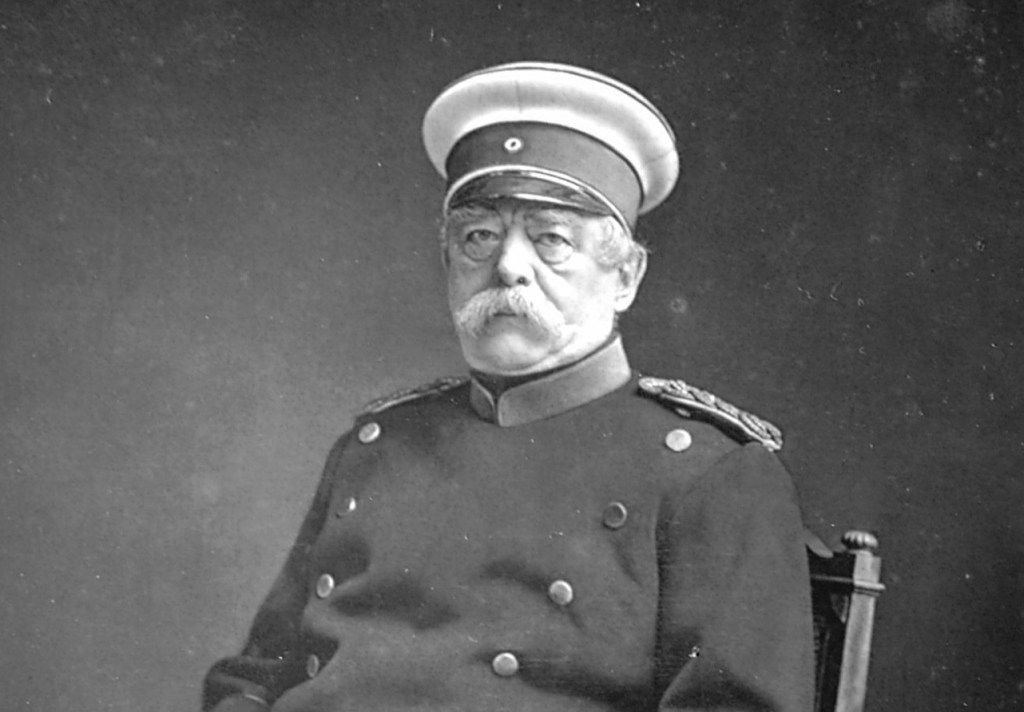
Asked in 1898 to choose a single defining event in recent history, the German chancellor Bismarck replied, ‘North America speaks English’. He was right, as the twentieth century showed. Twice the major powers of North America stepped in to determine the outcome of struggles that started in Europe, each time on the side of the English-speaking forces. Even more, the twentieth century’s technological revolutions in communications, telephones, films, car ownership, television, computing and the internet, were led overwhelmingly from English-speaking America, projecting its language across the world, to parts untouched even by the British Empire. It seems almost as if a world language revolution is following on, borne by the new media.
But though the spread of a language is seldom reversible, it is never secure. Even a language as broadly based as English is in the twenty-first century cannot be immune. It is still threatened by those old causes of language succession: changes in population growth, patterns of trade and cultural prestige. For all the recent technical mastery of English, nothing guarantees long-term pre-eminence in publishing, broadcasting or the World Wide Web. Technology, like the jungle, is neutral.
Ostler, Empires of the Word, xxi
One of the surprises found in the language history of the US is that because of immigration, German once stood a decent chance of taking over as the dominant language. To this day, the most common ethnic heritage of Americans is not English, but German. I wonder if the chancellor’s remark betrayed an awareness that masses of the German-speaking community were in fact being absorbed into another one – and that shifting allegiances would follow such a realignment.
To support our family as we head back to the field, click here.
For my list of recommended books and travel gear, click here.
Since 2011, our people group have had the complete Bible in their language – both Old and New Testaments. This is an amazing thing. The translation and publication of the Bible into any language is usually a long tale with many different players. Someday, I’d like to put that more detailed story together. For now, this is the summarized version that I’ve managed to piece together through various conversations over the years. So, consider this a rough draft of the tale, not yet history in the carefully-researched sense.
The story begins with Kamal*, a prolific writer and educator among our people group during the turbulent 1970s. Kamal was a short man who always wore a distinctive floppy scarf-hat and had a passion for his people group’s suppressed language. In spite of this politically dangerous interest, Kamal’s reputation as a scholar and writer was so strong that he was put in charge of the education department of his province. However, it didn’t take much to fall foul of the ever-changing governments of the country during that era. Kamal seems to have written something or to have held a position that put him in hot water with whichever military dictator was in charge at that point. He was imprisoned in the south of the country, far away from the mountainous homeland of his people.
Many years later, when I attended his memorial service, I learned that it was while he was imprisoned and not yet a believer that he first committed to translating the Bible for his people. Apparently, Kamal had a dream where Jesus straight up told him to translate the Bible into his language. Kamal, wisely, agreed that he would. But he was in prison. How was he to accomplish this enormous project? God provided the means through a new cellmate, a Syriac priest – who had an old Syriac Bible with him. Kamal and the priest could communicate in the trade language of the country, so it seems that the priest would translate from Syriac into the trade language and then Kamal would craft each verse into his native tongue.
By the time he was let out of prison, Kamal seems to have come to faith and to have written a manuscript of the gospel of Luke, made up of loose papers. He moved back to his home city and neighborhood, just a few alleyways down from where my family recently lived in our old stone stone. There, he continued to write and teach, unsure of what to do with the Gospel of Luke manuscript that he kept in secret. Given the political and religious climate of the time, it was much too dangerous to attempt to work on it or publish it openly.
Just a few weeks ago at Cross Con ’24, I learned that this is where a Lebanese ministry leader enters the story. This now elderly leader told me that he had come to visit Kamal’s country, having independently developed a desire to see the Bible translated into Kamal’s language. This was a time of political intrigue, assassinations, and guerrilla warfare, so this ministry leader had to be very cautious as he asked around to see if there were any believers who would help him begin the translation. Somehow, he was directed to Teacher Kamal’s house, where a relieved Kamal handed him his precious stack of papers and told him to take them back to Lebanon to keep the translation moving along. At least at that point, the project was too dangerous to conduct inside the country.
Over the next couple decades, an international coalition of believers worked on the New Testament translation together. From what I understand, these were believers in Lebanon, Germany, France, and eventually back in Kamal’s country also. At this point much of the translation was being done from German, though later work was to be done directly from Greek and Hebrew. By the time the 90’s came, a British Bible translator, Alex* was living in a different city of Kamal’s region, and took on leadership of the project. Alex put together a translation team, including Kamal, and in the late 1990’s the New Testament was published. Although there were many revisions to come, the involvement of writers and poets like Kamal from the beginning gave the text a rich literary beauty in the local tongue.
By the time I was on the ground in 2007 as a green 19-year-old, this New Testament had been updated and had been eagerly adopted by the the community of local believers. The next year, Hama*, one of my close friends and a new believer, also managed to get his hands on one of the few early drafts of the complete Old Testament. I remember opening the massive three-ring binder with him and gazing together for the first time on Genesis and Psalms in his mother tongue. Hama treasured and studied this early text for years to come.
In 2011, the complete Bible was published for the first time. Decades of work by Alex, Kamal, the ministry leader from Lebanon, and others had led to the complete word of God now being available in our people’s heart language. Some communities of believers loved this 2011 text so much that they flat-out refused to use later revised editions, and started circulating illegally printed 2011 Bibles for their house churches – thus proving that KJV-only-style controversies are unfortunately not unique to the west.
The political and religious climate, while never calm, had grown much calmer since the 70’s. This has meant long stretches when this complete Bible can be spotted for sale in the bazaar’s book shops. To this day, someone on our teams might snap a picture when we see one prominently on display and send it to each other, “Look what I spotted in the bazaar today.” The government has even allowed a local church to set up at a huge annual book fair to sell these Bibles and other Christian books.
In spite of this measure of freedom, we still have many locals who don’t know that the Bible exists in their language. I’ve always loved asking if a given local knew that God’s word was available in their language. When they said no (as they often did) I would pull a print Bible out of my bag or open up a Bible app on my phone and show them a text like John 1:1, one of my favorite texts for explaining the divinity of Jesus. “You believe the eternal word of God became a physical book, right? Well, this verse says that the eternal word of God became a man.”
As I referred to earlier, I got to attend the memorial service for Kamal a few years ago, led by Alex and others. This was a public event, where hundreds of locals came out to honor the great writer. Few, however, knew of his role as the first Bible translator of their people. To my great delight, this part of Kamal’s story was told publicly, and a plea made for the attendees to read this book to which Kamal had devoted so many years of his life.
Kamal was obedient to the work that God gave him to do. So was the leader from Lebanon, and Alex, and many others. This has meant that as a church planter I have had the most important of all tools available to me – a Bible in the local tongue. It has meant that when I find a verse that seems a bit off in the word choice or grammar I have the privilege of simply emailing Alex for it to be considered for a future update. Sadly, most of the feedback these men get these days is suggestions and complaints from foreigners and locals for places where the the text needs to be revised!
Yet when we come to our senses we all realize what a great debt we owe these men. They have done something that is foundational for everything workers like myself try to accomplish. Cliche as it might seem, we really do stand on their shoulders. Many are aging fast and looking to hand off their work. Some of them are no longer with us, like Kamal. But I thank God for each of them, and someday I hope to write more of their stories.
Because of Kamal, the prisoner-scholar, his people now have a Bible. And that changes everything.
To support our family as we head back to the field, click here.
For my list of recommended books and travel gear, click here.
Far more than princes, states, or economies, it is language-communities who are the real players in world history, persisting through the ages, clearly and consciously perceived by their speakers as symbols of identity, but nonetheless gradually changing, and perhaps splitting or even merging as the communities react to new realities. This interplay of languages is an aspect of history that has too long been neglected.
Ostler, Empires of the Word, xix.
While we know that the true “real players” in world history are spiritual forces, it’s wise to acknowledge the massive role that language communities have and continue to play as secondary movers in world history. As is the case with languages like Greek, Arabic, or English, a language “empire” can outlast the original political one that led to its rise, and continue to exert tremendous influence while wearing multiple new sets of political or national clothing.
For my list of recommended books and travel gear, click here.
To support our family as we head back to the field, click here.
Jesus says that the angels rejoice when even one sinner comes to repentance (Luke 15:7). What then might take place in the heavens when that sinner is the first in the history of the world to worship God from a particular language or culture? What kind of angelic rejoicing might result when not just an individual but a congregation from hitherto-alienated people, at last, join the great choir of tongues and nations worshiping the lamb? This is not a hypothetical situation. We live in an age when the Church of Christ continues to advance steadily, bringing gospel light to even the hardest-to-reach people groups on the planet – although thousands of these groups still await the coming of their very first ambassador. These groups are the unengaged, the people for whom there is not yet even a single team committed to church planting among them.
Revelation 21:22-27 speaks of the kings of the earth bringing the glory and honor of the nations into the new Jerusalem. This implies that there are distinctive kinds of honor, unique forms of glory for different groups of human peoples, IE ethnic groups – and that these glorious differences will somehow be present even in eternity (c.f. Rev7:9). These verses in Revelation 21 would have painted initially the picture of rich and diverse royal caravans bringing the material goods of the nations into New Jerusalem (e.g., the queen of Sheba visiting Solomon). Yet any primary survey of the world’s peoples will quickly observe that their unique strengths, their particular beauty, also consist of their distinct cultures and languages. And these deeper characteristics of what it means to be a given people group represent some of their most genuine riches.
Central Asians, for example, are natural at extravagant hospitality. Americans stand out for their optimistic, problem-solving approach to life. East Asians model respect for elders such that Koreans may not even call their older siblings by their names but by the respectful titles of older brothers and sisters. Languages also have inherent strengths, with each tongue having a rich vocabulary corresponding to its culture’s emphases. Some languages excel in communicating the abstract or technical (looking at you, English). Yet others, in the beauty of the poetic. Some have given birth to intricate grammar systems so complex it is said that no one over forty can learn them. Yet other languages stand out for their simplicity and efficiency, as is seen in the wondrous flexibility of the world’s pidgins and creoles.
Where do these various cultural-linguistic strengths come from in the different people groups of the world? They come from the presence of the image of God among the individual members of that language or culture (Gen 1:27). For even in unengaged people groups that have had no gospel access whatsoever, the image of God given at the creation of Adam and Eve continues to linger. It is present in each new generation, though marred and broken by the effects of sin and death. The presence of this broken image among these peoples still speaks as a witness to the reality of the creator. Together with creation, this image reflects(although dimly) aspects of who he is and what he is like (Acts 14:17). But it also gives gifts, areas of strength in each person, language, and culture. These are places where the goodness of God’s creation still generously overflows even after millennia of sin and death.
Sadly, in the unengaged people groups of the world, these strengths are primarily used in the service of the enemy. Without the presence of a believing community, these gifts are a window of God’s glory only in their witness to his common grace and to His coming judgment. However, when a missionary engages this kind of people group, when the first individual or group of locals are born again, what has been concealed or latent is suddenly revealed. It’s as if a long-buried treasure is suddenly exposed to the sunlight. Or, torches that have not been lit from the birth of that culture and language are suddenly set ablaze. The result is glory, the real beginning of the glory of the nations, now at last truly reflecting the glory of God. The unique strengths and honor of a people group, whether great or small, can now be used for the first time in praise of the King.
Extravagant hospitality can now be offered from a motive of gospel love, even to the poor who cannot extend an invitation in return (Luke 14:13). Western optimism can now be grounded in the sobriety of the wisdom literature and matured by an unshakeable faith in God’s promises. Eastern respect for elders can now be done “as unto the Lord” and no longer out of mere cultural duty or fear of shame (Col 3:22). Languages suddenly become vehicles for psalms, hymns, and spiritual songs – for the eternal word of God itself as it is preached and as it is translated. In all these things, God’s universal truth and beauty are displayed through the unique facets of local expression.
There are multiple biblical motivations for missions, for going to the most challenging and remote corners of the earth to bring the gospel to those who have never heard the name of Christ. Hell is real (Rev 20:15). The love of Christ compels us (2 Cor 5:14). The glory of God calls for universal proclamation (Ps 96). Yet among these motivations, we may forget that missions is also a chance to take part in revealing hidden beauty, the unleashing of latent glory. Every missionary who risks the costs and dangers of going to the unengaged also has a chance to play a part in, even to be there to witness, the glory of the unengaged, finally unveiled to the praise of God.
Undoubtedly there is a special kind of joy in heaven when a given language and culture becomes a vehicle for the praise of God for the very first time. Who can tell with what anticipation the angels await the sound of new hymns sung in the language of the Luri, the power of preaching in Shabaki, and mission endeavors planned and carried out in the style of the Hawrami? And it’s not only heaven that will taste this joy. No, it will also be present in the hearts and tears of the missionaries who are honored to witness this glory unveiled and in the gatherings of their sending and supporting churches as they hear the incredible news from afar.
Revelation 21 is going to come to pass. God’s eternal glory and beauty will be reflected in the unique honor and glory of each of the nations, in each of the world’s remaining unengaged people groups. The costs of reaching these groups will be high, and the losses dear. But as we send and go, let us keep this vision of this coming joy before us. In eternity we will see the glory of the nations flowing into the new Jerusalem. And we will see the beginnings of this hidden glory even now by going to the unengaged.
The events which took place at Babel most definitely fall into the category of judgment. Genesis eleven describes how the early peoples of the earth all shared one language. And contrary to God’s desires, they did not spread out and fill the earth, but decided they would band together, build a city in the land of Shinar, and construct a tower to challenge the heavens. In this way, they would “make a name” for themselves. You don’t have to be from an honor-shame culture to understand that making a name for yourself essentially means working to build up your own honor and reputation. It was pride, pure human pride – and that accelerated because everyone knew the same words, the same language.
God, not in the least threatened by this little rebellion, comes down to see what the residents of this city of Babel are up to. There’s some rich irony in the text here – the tower builders are not nearly as high up as they think they are. After seeing how the linguistic unity is enabling their prideful building campaign, God decides to instantly scramble their languages by means of a miraculous act of judgment. Once this has been accomplished, everything falls apart. Faced with mass communication confusion, the building of the city stops and the peoples end up spreading out over the face of the earth after all. Their dispersion is largely involuntary, a forced obedience of sorts thrust upon them by their dysfunctional language situation. Babel was judgment. Judgment for human pride. Judgment for neglecting the creation mandate to go forth, multiply, and fill the earth.
Yet Babel was not only an act of judgment. It was also an act of creation. Creation through judgment. Apparently, when God acted, dozens of languages burst into existence instantly and then began to live and move and have stories and descendants of their own. These languages would be the first ancestors of the language families in our world today, with language families meaning simply groups of related languages. For example, English, Latin, Farsi, and Hindi all come from the Indo-European family of languages. While Arabic, Hebrew, and Aramaic come from a different family, the Semitic. However, while languages within a given family are clearly related to one another, separate language families don’t seem to share any common descent. Historical linguists can try to reconstruct ancient languages like Proto-Indo-European and Proto-Semitic, but they can’t seem to find any links suggesting these early languages emerged from a common ancestor. Similar to the problem facing speciation in Darwinian evolution, what seems to emerge from the data is not one connected tree from which all the descendants are traced back to a single ancestor, but rather a forest of trees that seem to have been there at the beginning. Like subspecies, languages branch back toward these early independent trunks, but not further, posing a great mystery for historical linguists. Christians of course have a good answer. We believe in a humanity created in the image of a speaking God, and in Babel, the source of this world’s incredible language diversity.
It’s curious to note that the result of this judgment – a world of linguistic diversity – is never promised to disappear. The restoration of all things does not seem to include a future where we are restored to being a monolingual species. Revelation 5:9 and 7:9 instead suggest that noticeable language differences are actually preserved in eternity. John can tell that the great multitude before the throne is made up of those from every tongue. “After this I looked, and behold, a great multitude that no one could number, from every nation, from all tribes and peoples and languages, standing before the throne and before the Lamb, clothed in white robes, with palm branches in their hands, and crying out with a loud voice, ‘Salvation belongs to our God who sits on the throne and to the Lamb!'” (Revelation 7:9, 10). Our unique languages don’t seem to melt away into some heavenly tongue, like cast off vestiges of a divided past. Rather, God’s plan from the beginning seems to be the redemption of humanity’s diverse languages, a restoration where they are finally free to perfectly glorify God in a great multilingual choir of the saints.
We see hints of this plan in God’s choice to reveal the Scriptures in multiple languages: Hebrew, Aramaic, and Greek. At various points in history, these multiple fallen languages are given the honor of being the vehicle by which God reveals his eternal word. Even Persian gets a bunch of loan words in the Bible. Then, when the Spirit comes at Pentecost, what does he choose to do? To empower the apostles to preach and worship in the foreign languages of pilgrims who had come to the feast from dozens of far-flung lands. Put together with the visions of Revelation, the picture we get is that both at the birth and at the final destination of the Church, the many languages of the world do not fade away to be replaced by some heavenly tongue, or some chosen earthly tongue like Hebrew. No, instead we see the languages of the nations transformed, employed in the praise of God.
It seems as if, as he so often does, God has chosen to bring beauty through judgment, a greater grace and glory than would have existed had the judgment never taken place. After all, this is the logic of the cross and salvation history. Yes, judgment falls. Yet amazingly God’s grace shines even brighter for it. Should we be surprised that God delights to also do this with the arc of language history? It reminds me of how God gave a king to Israel in 1st Samuel chapter eight. Being granted a monarch was a judgment, a consequence of Israel wanting to be like all the other nations, and their rejection of God as king. And yet we know that God’s plan was, through this rebellion, to raise up David – and eventually the eternal son of David. God’s forever king for his people was the plan from the beginning. And yet an initial hint of this mystery’s unveiling was a story of human failure, and divine judgment.
What might God be up to in his plan to redeem the languages of Babel and their many descendants? Here I’m helped to remember the limitations of a single language. Languages are good, wonderful even, but they are limited. Everyone who has learned another language has experienced the frustration of a perfectly descriptive term existing in one tongue, but not in another. In my home we have terms from Melanesia as well as from Central Asia that have made their way into our daily household English. This is because English lacks a word for those particular situations or feelings. If languages are thus limited to describe everyday realities, then how much more limited are they to describe eternal realities? To describe the Godhead?
In Greek, and my adopted Central Asian language, God can be called Lord Heart-Knower (Acts 1:24), and yet this title simply doesn’t work in my mother tongue, English. On the other hand, English has so many wonderfully-succinct terms for God’s attributes like omniscient and omnipresent and omnipotent that require multiple words – or even a whole sentence – to communicate in many other languages. Alas, as with the sons of Adam, so every language has also fallen short of the glory of God. No, when it comes to the task of glorifying the Trinity for all eternity, a single language was apparently not enough. Rather, God seems to have desired thousands of them, all working together to leverage their unique strengths and beauty for his eternal praise – and the enjoyment of his people.
For surely languages will also be redeemed and preserved for the sake of our enjoyment. While polyglots delight in the freedom that comes from being able to speak and think in a dozen different ways, even my four-year-old cracks up when a good pun is made (and scripture is full of witty puns and wordplay). Language was created for our enjoyment, and even in this broken age we get small tastes of the fun that is coming to us beyond the resurrection. Perhaps in eternity the Spirit will give us a supernatural ability to speak and understand all languages, in a sort of permanent Pentecost. Or, perhaps we will use the time provided by eternity (plus a resurrected mind) to learn all of the many tongues spoken by our brothers and sisters. We simply don’t know yet. I tend to hope we’ll get to learn them the old-fashioned way, maybe a little easier, but still getting to make funny mistakes.
What we do know is that God wanted a universe with thousands of unique languages. And so, even though Babel is a reminder of human pride and God’s just judgment, it is also the start of something which will ultimately become an amazing tapestry reflecting God’s glory. There are eternal upsides to the shattering of humanity’s united language. In Babel there is beauty, unexpected, but even more wonderful for it.
Language learning. It’s the 500-pound gorilla that first term missionaries everywhere must learn to dance with. Though often, this experience feels less like a dance and more like our metaphorical gorilla is simply sitting on your head.
I had the advantage of growing up a bilingual TCK, which does help. The shift from two to three languages seems to be easier for the brain than the shift from one to two – something about the mind having already learned once to express reality in an alternative system of thought/speech forms makes it that much easier to do it again. A second or third language gives your brain additional categories, more hooks on which to hang the grammatical concepts or vocab of whatever language you’re learning next. For example, my high school Spanish got me familiar with verb conjugation based on person and number, a category that served me well when I started learning our local Central Asian tongue. But no matter how much experience you have with languages, it always takes a lot of time and hard work to master another one – and this often requires two to five years. Therefore, anything that makes it somewhat easier is extremely valuable.
I’m no trained linguist, but as a language-learning practitioner (and one who has worked closely with many others) I’ve observed two main kinds of language learners, two main patterns of wiring when it comes to learning an additional tongue. There may be technical terms for these language learning styles out there, but for the purposes of this post I’ll call them the Analytical and the Intuitive language learning styles. Essentially, every language-learner I’ve engaged with on this topic seems to fall into one of these two camps, creating something like a 50/50 divide.
These styles or preferences differ from one another in how they relate to the structure – the grammar – of the language. The mind of an Analytical learner craves and needs understanding of the language’s structure very early on, often proving unable to absorb vocab and dialogue without it. If required to learn and reproduce phrases without this structure, the mind of an Analytical learner protests and complains – “How am I supposed to learn this if I don’t understand what these parts of speeches’ roles are, what they are doing in the sentence, the rules that govern them, and how it all fits together?!” An Analytical learner needs a map of the language, a blueprint of sorts, and only when they have this can they begin to truly learn the individual parts. It’s as if the mind then relaxes and is free to learn because it now knows where to place the hitherto-disjointed pieces. These pieces are then no longer felt to be disembodied and random, but part of a logical system, part of a whole.
The mind of an Intuitive learner functions in the complete opposite way. An intuitive learner’s mind cannot take in or understand the language’s structure, its grammar, without a large foundation of listening, phrases, and dialogue. If presented with grammar lessons at the beginning of language learning, their mind will tend to reject the information, since it feels like it has nothing concrete on which to hang these abstract rules and systems. These learners crave jumping in headfirst and using the language, getting conversational with practical, everyday language. Only after a solid season of this will their brains start to desire and accept the Why behind the words and phrases they have been hearing and using. They need to feel out the rules first, and only directly study them later. Rather than needing a map, these learners need to go and explore the streets on foot as it were. After they have done this they will then be able to rightly orient themselves with the big picture.
All human beings learn their first language as Intuitive learners. Our brains naturally absorb the structure of our mother tongue by constant observation and trial and error. We absorb the rules naturally and indirectly. Then, once we are in school, we are directly and explicitly taught the structure of our language. We approach grammar study in school in an Analytical way. This means that for everyone who has studied grammar in school, we all have at least some experience learning our own language in both styles. But whether because of brain plasticity or something genetic, around half of us develop an Analytical learning preference, while the other half continues to prefer Intuitive learning.
How do we know which wiring fits us? Even without learning another language, there may be some clues that you already have. First, how did (and do) you feel about studying the grammar of your own language? Does this feel good to your mind, or more akin to the angst of getting a cavity filled – necessary, but definitely not enjoyable? Does “seeing” the invisible structure of your language bring you joy or make you want to go to sleep? If grammatical concepts make your mind tingle pleasantly, chances are you are an Analytical learner. If you’d really rather get back to what you feel is the real language, then you’re probably Intuitively-wired.
These categories tend to flow over into other areas of learning as well. A friend who works as a chef told me this week that he has always loved learning the why, the science, behind what is happening in cooking. Knowing this makes him feel more free and equipped to create and enjoy cooking food. This means there is a very good chance that my friend would be an Analytical language learner. Get that man some grammar early on, and he will feel so much more free and equipped to persevere in language learning. Paying attention to how you prefer learning in other areas is another clue to how God has wired your brain to learn language.
Why are these categories are so important to understand? Because enjoyment and perseverance in language learning are on the line here, and this because language learning programs tend to favor one style or another. Put a language learner in a program that favors the other kind of mind, and they will very quickly want to pull their hair out, and/or quit. Put a learner in a program that fits with their respective Intuitive or Analytical style, and greatly increase their chances of actually learning that language. Too often learners are handicapped by the wrong approach, and mistakenly come away thinking they are not really gifted to learn language at all.
Several dynamics mean that language learners continue to get placed in programs that lead to deep frustration. The first issue is simple ignorance of these learning preferences. The learner, teacher, or facilitator might not know that these variations exist, so how can they know which style the student best aligns with? Second, it is a lamentable human tendency to project our own wiring onto others. So, if we successfully learned a language in a certain way, we naturally feel that everyone else should be able to learn in this same way also. We might even go on to publish and distribute our favored method, making big claims about the universality of our approach. And this leads to the third issue, that of methodological rigidity. Just as missionaries might latch onto a silver-bullet church-planting strategy, so they tend to latch onto a language learning methodology as the way to do it, rather than a way. Here the same common sense logic applies to both church planting and language learning – it’s a very hard job and people are very diverse, so we should want to keep all of our healthy options on the table. Sadly, many new missionaries on the field are locked into a language learning approach that is given the weight of law, when it should really only be treated as a helpful option, one that very well may need to be tweaked or even discarded.
My wife and I are wired as Intuitive language learners. This meant that we wanted to jump in right away into collecting phrases and doing conversational practice. I remember having some grammar lessons in the US before going to Central Asia, but almost nothing from those lessons was retained by my brain. Instead, six months into an Intuitive learning approach (GPA), I suddenly found my mind unexpectedly hungry for some rules for things like the way that near/far and singular/plural demonstratives were acting in my new adopted language. A grammar summary from a teammate on the logic of how to say “these bananas, those bananas, this banana, etc.,” made all the difference here. And even though we found ourselves in a learning program that mostly fit our style, we were also crucially allowed a great degree of flexibility to pursue more Analytical lessons as needed. And we made generous use of this freedom, changing up our program significantly every few months. I believe that this flexibility is what allowed us to reach the advanced level of language in the time frame that we did. Because for us, flexibility to pivot when needed meant we were able to continue (mostly) enjoying the language learning process.
And yet many of our colleagues have found the same programs we used, the same lightly-structured approach favoring Intuitive learning, to be positively life-sucking. They dream of having an official language school, where an Analytical approach to the language could result, for them, in greater freedom and joy in language learning. And I wish the same for them, because God has apparently wired our minds differently. Why should they be compelled to learn in the same way that I did? No indeed, get those folks some grammar, and fast! But please don’t make me study it until I’m ready. In this way we may all learn to get that 500-pound gorilla off our heads, and perhaps even begin to dance with it.
In the words of renowned theologian Inigo Montoya, “You keep using that word. I do not think it means what you think it means.”
The word I am referring to here is church. And when it comes to communication between missionaries and Christians back in their supporting churches, this word is used often, but almost never defined. What often results is a failure in communication that leaves both parties feeling good, but ultimately failing to serve one another well.
Let’s say a missionary or organization reports on a certain number of churches that have been planted. This receives much applause and leads to much rejoicing. And yet what those reporting on the field mean by that little word, church, can sometimes be nothing like what the supporters back home are thinking of when they hear that same word.
Perhaps a Christian or pastor back in the home country hears a missionary report that 1,000 churches have been planted. In his mind, he envisions 1,000 smallish congregations, each maybe several dozen strong, containing diverse believers from a given community who now form a new spiritual family for one another. He projects his image of small church plants which he has encountered in his home country onto the report he hears about this overseas region. The missionary, on the other hand, influenced by a movement missiology, counts a gathering as a church if there’s merely a believing husband and wife who read the Bible weekly with their unbelieving teenage son. Or, he reports a church when two cousins who are secret believers meet up monthly to read, pray, and whisper-sing some songs together. Or perhaps a group of five college students who meet regularly with a local pastor for a time of Bible study.
None of these gatherings are bad at all. Each is worthy of celebration. But that doesn’t mean we can assume they are churches. What is lacking is agreement upon what standard is used to call something a church.
The missionary might report 1,000 churches planted and the home audience in one sense hears that 1,000 churches have been planted. Yet they are not actually communicating with one another, because they are not using the word church in the same way. This means that what one envisions in their mind when those words are spoken is wildly different from what the other sees in their respective mind’s eye. The missionary knows that if all the groups of 3 or 4 people meet, this represents somewhere around 3,000 – 4,000 people, a mix of believers and unbelievers, most of whom gather only with those of the same natural household or family. However, the home audience is assuming something more like 20,000 – 30,000 people total, all believers meeting with others from different households. The missionary means 3,000 not leaving the natural bounds of their own network. The crowd understands him to mean 30,000 forming new spiritual families. This is, at best, a failure of communication. At worst, it is downright deception.
This entire interaction can take place without either party acknowledging the great divide in their definitions of the word church. And as long as this goes unaddressed, both sides can leave feeling pretty good about things. But it must be addressed. Missionaries and their sending churches are accountable to one another. This even applies to reporting. If missionaries mean something wildly different from their senders when they use the term church, then this needs to be made public. And for the good of the mission, common definitions and parameters must be agreed upon for when it is appropriate to call a group a church.
This is the point where most Christians realize that they are operating out of experience and assumptions rather than a thought-out ecclesiology. So step one is to examine the scriptures to see what they says about the necessary ingredients by which we can call something a church. So far, so good. All church-planting missionaries and all pastors should be able to readily articulate what constitutes a potential church, a true but immature church, a healthy church, or a false church. Please, don’t send anyone to the mission field who can’t do this.
For example, our group of five college students represents a potential or formative church. Despite what certain methodologies might claim, I do not believe that they can biblically call themselves a church even though they regularly meet with a pastor to receive teaching, to worship, and to pray together. Several key ingredients are missing, such as the biblical self-identification as a church (covenanting) and the Lord’s supper and baptism. Now, if they had these elements in place, but no elders, giving, or mission, then they could be a true but immature church. A healthy church is simply one that is well on its way to implementing all of the Bible’s characteristics of a church.
We like to summarize these biblical characteristics into a list of twelve: Discipleship, Worship, Leadership, Membership, Fellowship, Giving, Evangelism, Teaching/Preaching, Accountability/Discipline, Mission, Ordinances, and Prayer.
A useful exercise is to list out these twelve characteristics (or a comparable list that summarizes the data differently) and to try to discern which elements can be present without a group actually being a church. Then try to figure out from scripture and church history where the line is that separates a potential church from an actual church. When I do this, I end up first with a formative church section full of a bunch of elements that could take place in a college ministry, such as teaching and fellowship, separated by the ordinances from a cluster of organized church elements such as membership and accountability/discipline that take place in a true – if still maturing – church. I personally like to then make a third division which separates what I call an organized church from a sending church, since so many churches end up implementing eleven of these twelve characteristics, without ever getting involved in church planting and missions. Again, I’d define a healthy church as one committed to implementing all twelve. A false church would be a church where in either the teaching or the practice a false gospel is proclaimed. Here is a basic diagram of how I have tried to chart things out.
Earlier I mentioned that step one is to examine the scriptures to see what they say about the necessary ingredients by which we can call something a church. Step two is simply to then adjust your language accordingly. Don’t call something a church that is not a church. Be intentional in when you make the shift in terminology from group to church. Communicate your biblical rationale for when and why you start calling a group a church so that people understand what you mean by the term. If, like me, you believe that a mere three people could sometimes actually constitute a true church, then explain the biblical and situational rationale for this.
Step three then is to hold your ground. No matter the pressure you might feel to report higher numbers. No matter what the missiology gurus say about how good or bad this is for multiplication. Call things what the Bible calls them, and hold your ground. Sometimes this will mean surprising supporters back home who have projected church buildings, pastors with theological degrees, and certain size congregations onto the biblical meaning of church. Other times this will mean running afoul of the current trend in missiology that your leadership is so excited about. But the way the Bible uses a term is our truest window into the real, eternal meaning of that word. So let’s stick with that, and not deal in the more temporary definitions.
Finally, we must not be shy to ask others how they are defining that word, church. We cannot truly serve one another if massively different understandings of this term are simultaneously taking place while we all clap for the report of thousands of “churches” that have been planted. My sense is that many denominations and pastors would be scandalized to hear what their missionaries are actually calling churches if they would only press for detailed definitions.
Some missionaries will not want you to press. This is a warning sign. It may mean these missionaries feel that they are superior to the Church back home or that they operate in what could be called a missiology of reaction, where their goal is above all to not do church as they have experienced it back home. Lots of weird missiology is the result of this kind of posture, but not healthy churches that last.
Trustworthy missionaries, however, won’t mind you asking. In fact, they may find your questions downright encouraging. After all, faithful missionaries have thought carefully about these things. Why? Because the front lines force them to wrestle with these things and to examine their Bibles. But even more so, because they love the local church, and so they honor her with their language.
“Don’t laugh too much at me!” I have sometimes warned our team overseas, while chuckling with them about yet another piece of American culture I’ve somehow never known until that point. “I am a vision of your children in the future! Teach them well… or else!” At this point our teammates who are parents usually laugh a little less heartily and shoot nervous glances at their kids, knowing that what I am saying is only too true.
When you are raised between two cultures – your parents’ and the foreign country’s where you are living – there are bound to be important things that you miss. Returning to your family’s homeland can be fun, but it’s also always loaded with potentially embarrassing exposure of these inevitable knowledge gaps. A third-culture kid (TCK) must do his best to plug these gaps in ways that lead to as little red-facedness as possible. Learning to laugh at yourself is key, the only real path for survival.
When I was sixteen I believed that spaghetti was grown on large watery farms, similar to rice. Thankfully, this emerged around my family’s dinner table, and not while on a youth group outing on a furlough. As I recall, it took quite some time for my family to convince me that spaghetti was indeed made in factories, and not in some kind of noodle paddy.
Then there was the time as a new college freshman where I ate at a Subway for the first time, freezing like a deer in the headlights when the man behind the counter asked me what kind of bread I wanted for my sandwich. And it wasn’t just the bread, but the meat, the cheese, everything. Even though he was the one who worked at the restaurant, he demanded that I choose item after item for my sandwich. A snickering classmate bailed me out of that one.
Then later in college, I joked around with my fiance’s dad that we might need a shotgun wedding – not actually knowing what a shotgun wedding was for. “What?!” I remember saying, mortified. “That doesn’t just mean like a quick wedding?”
Be kind to those TCKs that you know. It’s a steep learning curve. Culture is usually learned by absorbing it over many years, in a kind of relational osmosis. But when you have been living in another culture, you end up absorbing different things. Sure, those things are very important for that culture, but they don’t always equip you to navigate the cultural waters of the passport country.
To this day, I rely heavily on my patient wife to debrief social situations. “Wait, do we say that in America?” “Do you think I used that phrase right? They looked at me a little funny.” But now that we’ve been seven years overseas – and are now heavily shaped by Central Asian culture – even she’s starting to experience similar dynamics. Admittedly, I don’t always successfully hide my joy at now having a companion in my cultural perplexity.
One more story from college stands out as an illustration how local use of vocab can lead to profound, and humorous, confusion for a TCK who is scrambling to try to figure things out. I offer it as a lesson to all those parents and “aunts and uncles” of TCKs out there. You’ve got quite the job on your hands. To any TCKs out there, may God help you.
For a couple of years I worked doing furniture delivery two days a week. It was a great job for a college student. I could take classes the other three days in the week, and work long days twice a week for good pay.
But it was hard work, arguably the most physically demanding job I’ve ever had. Lugging reclining sofas or king mattresses up multiple stories or jamming them through narrow basement doors is no joke. Most customers failed to measure their door frames and hallways to make sure the new furniture they had bought would actually fit. The two of us manning the delivery truck would do our best to put up with customers’ foibles, but sometimes things would tend to build up.
One day my boss and I were sitting in the truck on a nice suburban street. He was fuming. We had a heavy day of deliveries, all carefully planned out, and the next customer was not home when he said he would be. I could see my boss’s jaw clenching as he sat and stewed, periodically spitting his chewing tobacco juice into a bottle unfortunately placed on the console between us.
At last, the customer’s car pulled up behind us. It was a police car.
“You go out and talk to him,” my boss said, staring straight ahead. “I need a few minutes to cool down.”
“Uh… OK,” I said, putting on my smelly rubber work gloves.
As I stepped down from the cab of the box truck, the customer walked toward me. He was a very tall, well-built, African American man, probably in his forties. He was wearing his police uniform, but even without this, he had a commanding, stern presence. “Like a drill seargant,” I thought to myself.
“Hi!” I ventured, showing some friendliness that I hoped would counteract my boss’s angry words earlier on the phone, “We’ve got your furniture. You can show me where you’d like us to take it.”
The officer did not acknowledge my greeting. Instead, he walked up, put his hands on his hips, and stared down at me. I waited, unsure of what was coming next.
“D’yall have a problem with booties?” he asked.
I stared at the officer, not understanding at all why that particular combination of words had just come out of his mouth.
“Um… sorry… what?” Surely I had misheard something.
“D’yall have a problem with booties?” he asked again, stern and commanding.
I continued staring at him, confused. An internal monologue started running through my brain, flashing through in a matter of seconds. It went something like this,
“Once again, an American has completely ignored giving a greeting, which always throws me off. No matter. Time to figure out what’s going on. What is this? Some kind of attempt to get a laugh? Some weird way to connect? There’s no hint of a smile on the officer’s chiseled face. No, he isn’t joking, unless he has an amazing deadpan. What am I missing? Something inside me is starting to panic. There’s got to be some meaning to his strange question I’m missing. I mean, I know that booty can be used for pirates, and well, for human anatomy, but neither meaning is fitting this context at all. Maybe some kind of cultural reference? American culture? Black culture? Police culture? Furniture delivery culture? Is there even such a thing? You’re running out of time! Oh look. There’s his gun.”
The officer had cocked his head at me now, still staring.
“He’s on to me,” the internal dialogue continued, “He knows I’m a fraud, not really from around here at all. Booties? Why booties? Why now? Someone help! I’m just a kid from Melanesia. How did I end up here, on this suburban street, trapped between this imposing officer and an angry boss, trying to untangle the semantic range of the word booty?”
I simply had nothing to say in return. My brain had run its form and meaning programs through all the archives and had come back with absolutely zero results. So I stood there, mouth half open, having no idea what to do next.
“C’mere,” said the officer in his booming voice, shaking his head at me, and motioning for me to follow him into his garage.
We walked into the garage and he stooped down to pick up a small box. He pulled something out of it. It was some kind of opaque white fabric thing, which he put on one of his hands and stretched open with his fingers.
“Booties. For your feet.” He said to me, measured and slow, as if bearing with a very slow student.
Suddenly it dawned on me. Booties must be some kind of fabric thing you put over your shoes in order to protect the carpet when walking in and out. Booties as in boots! Things for your boots. A rush of relief washed over me. Form and meaning had come together at last.
“Right! Booties. For our feet. Sure. That’s, uh, that’s fine,” I said, trying to smile.
The officer was still looking at me, seeming concerned. Thankfully my boss just then walked into the garage, his face back to a normal shade of pink. He grabbed a pair of booties from the officer, apparently knowing full well what they were, and went inside to see where the furniture was to be placed.
I was left alone in the garage with my thoughts. “Man, how have I never heard about booties? Oh well,” I shrugged, “TCK issues.” And I went to begin unloading the truck.
One missionary couple shared this fact at the gathering of a church planting network this past week. The comment landed with sobering weight, since the preaching at the conference was working through the book of 2nd Timothy. We all realized that without the word or concept for grace, you would get stuck at only the second verse of the book.
How do you preach the gospel in a tribe where there is no word for grace?
At lunch the next day, a couple of us asked these missionaries and bible translators some further questions about this problem of missing vocabulary. Thinking of the sermon on the mount, I was curious about how this people group viewed the blessings of rain and sun, which they don’t work for, but receive freely despite how righteous or not they are.
“Do they view these blessings of nature as gifts somehow, or as entitlements?”
“Our people group, sadly, is a very entitled one,” my friends responded with a frown. “Even with things like these.” Dead end there. Earlier they had shared how even a father building a house for his son would expect payment for this labor.
When faced with a lack of spiritual vocabulary like this, a missionary has three primary options. The ideal one is to dig deeper into the language and culture to find a word or phrase that might be there – though currently hidden – that can in fact do the job. A second option is to make up a new word within that language, ideally by combining other words or word parts that already exist. Finally, you can introduce a loan word from another language. With these latter two options you have to teach the meaning over and over again to make sure the new word created or introduced gets paired with the right meaning. But even with the first option of finding an indigenous word, constant teaching might be needed to make sure the word grows into an accurate, biblical meaning.
Our friends could pursue any of these options as they move forward. This is one reason they are focusing first on bible storying before they begin Bible translation. It gives them more time to iron out these thorny linguistic issues.
As we tossed around the problem at our lunch table, they shared that there is one indigenous word they need to explore further, a word which they had recently learned in the marketplace. Their locals will often sell a batch of produce, such as a small pile of tomatoes, for a set price. But once the customer has agreed to purchase, the seller might throw in a couple extra pieces, and then use a specific local word to describe these extra tomatoes that are apparently functioning as some kind of gift. Initially, this seems to me to suggest a meaning more like a bonus, which is still earned in a sense because of the initial purchase. But it does at least show the culture is not entirely absent of the concept of something being given for free-ish. And that could be a beginning.
Or, since they work as Bible translators and are gifted linguists, this couple could end up just making up a new word with the help of their translation team. But again, this path is not without its risks. There is no guarantee the word will gain traction and actually be used enough to be understood. However, sometimes this can indeed work. Another missionary shared how this has taken place in Indonesian. A word for grace was created a couple hundred years ago, and it is now well-known and widely used among the Christians there.
Borrowing the word from French – their country’s trade language – could also be the way these missionaries decide to go. But again, the risk is that this loan word could end up being used without understanding or even that grace itself could thereby be understood as a foreign concept, not really something that belongs to this unique tribal group. But this option can also work at times, as it has among the Central Asian people group where we’ve been laboring. A term for grace was borrowed from the historically-dominant language of a neighboring people group, yet is now used freely and without baggage among local believers.
It is a sobering thing to realize that some societies have fallen so far as to not even have a term for grace or gift. A lack of a word means that since the fall, that category of truth has been almost completely destroyed in that people or culture. Given the nature of God’s law written upon our hearts, I don’t think a spiritual category can ever be utterly destroyed. Yet it seems possible that a concept can become so foreign to a people group long-separated from the truth that it now lingers in the soul only as a shadow of a distant memory – something barely present as a form of intuition, something perhaps felt, but not “known” in a cognitive, linguistic sense.
At times like this the role of the missionary is a stunning and vital one. They are in a sense raising a dead concept back to life, by clothing it in an old, new, or borrowed “robe” of a word. In time, and with the help of the Spirit, this word will become a vital part of the spread of the gospel in this language and the life of the new indigenous Church. This being the case, in the words of 3rd John 8, we really ought to support people such as these. The stakes are very high, and we need to pray for wisdom for those tasked with this kind of high responsibility to make the truth clear in long-lost languages.
I am so grateful for these friends laboring among this tribe, and for all in similar roles. May their labors over specific words and meaning someday bear fruit such that their focus people praises God’s wonderful grace – and both knows and loves what that priceless word means.
Before we moved overseas we lived in an apartment complex full of refugees, immigrants, and low-income Americans. By that point I had become aware of the power of proverbs among those from the Middle East and Central Asia. What surprised us was finding that proverbs and truisms also functioned centrally in the speech and relationships of the low-income Americans around us.
While proverbs didn’t really feature much in the speech of my middle class, highly-literate peers, or only functioned in an ironic way, I found that my black or white Kentuckian neighbors from difficult backgrounds dropped them on the regular. They were not always helpful proverbs. I can’t tell you how many times we tried to engage someone with the gospel and were met with opaque responses such as someone’s commitment to “let go and let God” or insistence that “God helps those who help themselves.” But other times they contained biblical wisdom, such as “Y’all reap what y’all sow.”
What we were experiencing was a curious similarity between the cultures of our Arab and Sudanese neighbors fleeing war and our American neighbors trying not to get arrested for dealing drugs. It seemed that every culture in our apartment complex – other than ours – was considerably more oral in its ways of thinking and speaking. Being primarily oral might mean that someone is illiterate, but it often means that someone knows how to read and write, but only does so when necessary, and not for pleasure or for organizing their life. It means that someone’s use of language is largely independent of the written word, and the corresponding ways that the written word shapes how we think and speak. Instead, it is the memorized and spoken word that come to dominate an oral person’s use of language. This has nothing to do with degrees of intelligence, though it can often reflect a person’s level of education.
There is a significant communication barrier between those who are highly literate and those who are from an oral culture, even if they are from the same country and speak the same language. This is because the ways we use language and the ways our brains have been shaped by that usage are so very different from one another – and this is a reality that is often invisible. An oral communicator relies heavily on stories and proverbs. They end up with a kind of language that is less direct and more full of symbolism and concrete metaphor. A highly-literate communicator relies more on argument and logic and ends up with speech that is more direct and abstract.
Often this communication barrier can result in a situation such as highly-literate communicator asking an oral communicator about a concept such as sin. The oral communicator responds to the question by telling a winding story, one which might be interspersed with several proverbs or truisms. When the story is finally over, the highly-literate communicator is left unable to discern what kind of point or answer has just been made. So he tries to get back to the abstract concept he was asking about, only to be met by another confusing story. Both leave the interaction not confident that they have been heard or understood.
For about ten years I have been chewing on this communication barrier between those who are highly literate and those who are oral communicators. This is one reason I have been on my long-term experiment to learn and employ Central Asian proverbs as we’ve ministered overseas. The challenge of orality is a serious one, since it limits our effectiveness in communicating the gospel cross-culturally or to huge portions of our own societies that are poor or working-class. This is likely one reason why reformed evangelicalism is so homogeneous when it comes to our socioeconomic status and educational backgrounds. We are, if anything, an extremely literate tribe of Christianity. There are amazing strengths that come along with this, but one weakness is that we are no longer naturals in communicating with those who are oral thinkers and speakers. It’s as if we speak a different dialect than huge chunks of our own fellow countrymen, especially those who are working class or coming out of backgrounds of poverty.
If this is true, then what can we do to become better oral communicators of the gospel? First, we need to recognize that this communication barrier exists. It does us no good to continue thinking that the rest of society is just as literate as we are. If you are reading this post, that likely means you are in the top literacy bracket of your nation (for the US, this is only 12 percent of the population). This means that the vast majority of our neighbors are less literate than we are. And literacy profoundly impacts how we think, speak, and comprehend others. Have we been assuming that our communication with others is being truly understood? Perhaps it’s time to reexamine that assumption. As George Bernard Shaw wrote, “the problem with communication is the illusion that it has been accomplished.”
Second, let’s learn how to employ proverbs and truisms. We might feel like those that are still in circulation in English are cliche or unhelpful. But let’s redeem what we can and set about crafting some new ones if we have to. The key to a good proverb is its ability to condense complex truth into a short, catchy statement that can easily be memorized. For oral communicators, these memorized moral statements provide a ready framework for navigating the complexities of life. What would it look like to build a discipleship curriculum around key biblical proverbs? Or an evangelism strategy? Just as you would give a literate friend a good book, consider how to give away a good proverb to a friend who is an oral communicator.
Third, let’s not be afraid to tell stories. Sometimes those of us in the reformed camp can complain about illustrations, as if this part of the sermon is really only fluff. But a good illustration or story may be one of the most important components of a sermon for oral communicators. Even for those who are highly-literate, the illustration often remains in our brains long after the outline has faded. In a sermon that is largely abstract language, a good illustration provides some helpful concrete imagery. Stories also engage our affections in important ways. And after all, our Bible is three-fourths narrative, so we should think seriously about how story functions in our own efforts to communicate God’s truth.
Music also has a huge part to play in engaging and discipling oral learners. Again, the idea is to have truth that can be memorized and carried around, ready to be engaged without the help of a written resource. To serve oral communicators, some of our songs need to be of the sort that can be memorized and sung without any instrumentation, much as was the case with the great hymns of the past. Good songs can be an incredible tool for oral cultures.
Finally, let’s stay curious about the communication breakdowns that are happening around us. I am not saying that we abandon our highly-literate forms of communication, as if we should replace all outline-based preaching and bible studies with stories, proverbs, and songs. But rather, what can we do to meet oral communicators half-way? Can we learn to become bilingual as it were, able to communicate the same truth orally to those with only an 8th grade education as well as in highly-literate fashion to someone with a PhD? These are complex, invisible dynamics. It will take some chewing and curiosity to make any changes here and to not just revert to our defaults.
Proverbs still matter. In fact, most of the world’s population still employ them as a key part of their primarily oral engagement with reality. Actually using them may seem strange, or cliche, to us. And yet learning how to use these and other oral tools may allow our churches to break out of our highly-educated, middle-class strata, and finally communicate well with the poor, the immigrant, and the hard-working laborer. And that seems a goal worth striving toward.







 Entrusted to the Dirt
