How I Finally Learned the Word for Speed Bump

It took me a long time to remember the local word for speed bump. This word, like thousands of others in our Central Asian language, is a loan word from a larger regional language. The words borrowed from this particular larger tongue simply won’t stick as easily in my brain as the native words of our local Indo-European one, or those borrowed from other related languages. This is because this other language is from a different language family altogether, so when I hear this kind of new word I feel like I’ve got nothing to connect it to, nothing in the broader structure of language forms and meaning that I can hang it on. It feels like random syllables of sound floating in space that I just have to memorize with no help from context whatsoever. It would be like learning English if English were infused with thousands of random Chinese words. The sound and meaning clues of these Chinese words would be from an entirely different system than the rest of the English language being learned.

No, I eventually learned the word for speed bump because it was shouted at me over and over again on a drive with Hakkan*, a former guerilla fighter and father of Zoey*, one of my wife’s good village friends. Hakkan, a strutting and mustachioed patriarch in Underhill village, is the kind of character who believes that foreigners can understand your language better if you say everything more slowly – and much louder.

“A.W.!”

“Yes, elder brother Hakkan?”

“WE’RE EATING GOOSE TODAY!”

“Wow, why are you all troubling yourselves so much on our behalf?”

“NO! YOU ARE OUR GUESTS! SO WE WILL EAT THE FAT GOOSE! LOOK AT THIS HUGE KNIFE I WILL BEHEAD IT WITH!”

Hakkan always got a kick out of showing off his huge knife, especially when my wife was around, whose name he could never quite remember. Instead, he called her a mashup of Islamic names that, if tortured enough, bore a slight resemblance to my wife’s name.

“SAIF-ADI! I’M BEHEADING A GOOSE! A FAT GOOSE, EH?! HAHA!”

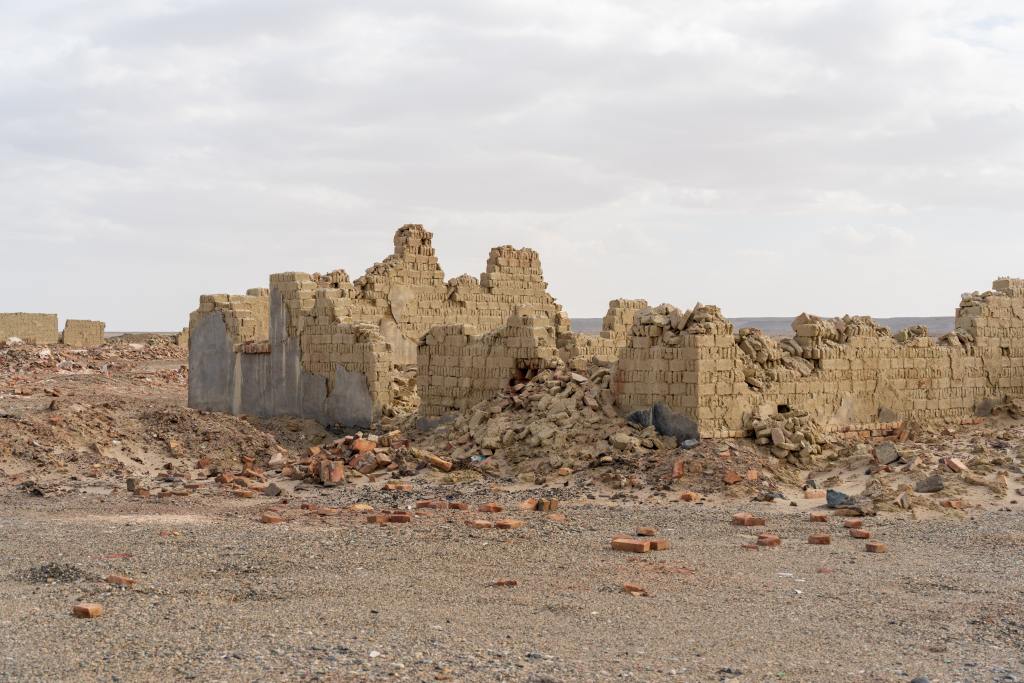
Anyway, during one of our many trips to visit his household, the family planned an outing to a nearby city. Something was wrong with their vehicle, so they asked me to drive us all in our SUV. In true village style, nine or ten of us piled into our seven-seater as we began the drive to this nearby city. First, we drove about a half hour down a road with ancient and modern village ruins on our right and melon fields and a large lake on our left. Then, at the end of the lake, we turned right and began to zig-zag our way up a mountain. Our destination was on the other side, in the next valley over from Underhill village. I had once looked down on this city from a different mountaintop with my friend, the Sufi Mullah.

As it turned out, this road was full of unmarked speed bumps. In recent years, traffic speed cameras have begun popping up in the larger cities and even some of the popular intercity roads. But for decades, and still to this day in most places, the most effective method of combating the maniacal driving tendencies of the local men is to force them to drive over dozens and dozens of punishing speed bumps.

Now, I consider myself a pretty good driver. But, for the life of me, I have the hardest time registering an oncoming speed bump, especially if it’s the same color as the road and otherwise relatively unmarked. It’s so bad I’ve sometimes gotten actual airtime from hitting speed bumps way too fast. Yes, dear reader, say a prayer for the poor suspension system of our family vehicle.

Hakkan was in the front seat with me that day as I drove this particular mountain road for the first time. And every time that I managed not to see a speed bump in time (which was quite often), Hakkan would brace himself and yell,

“TASA!!!” which, of course, is the local word for speed bump.

On that drive, I heard, “TASA! A.W.! TASAAA!!!” so many times that the blasted loanword finally stuck in my brain.

Eventually, we made it down the other side of the mountain and to our destination. I thought I had driven pretty slowly overall, but I distinctly remember Hakkan’s younger teenage daughter in the backseat moaning from carsickness,

“I have died, ohhh, I have died!”

Hakkan, as always, was somehow scowling and smiling at the same time, looking like he could kill you but like he’d rather make you laugh and show you some large knives.

It’s been years since that day when the word for speed bump finally stuck. But today, as my family once again drove into the mountains, anytime my wife spotted a speed bump for me she would impersonate Hakkan from that outing long ago,

“TASAAA!!!”

As for Hakkan, I haven’t heard from him ever since he tried to recruit me to help him get a second wife without his first wife or daughters knowing about it. He had somehow met a migrant African worker in a nearby hospital who knew English but not much of the local language. So, Hakkan called me up to get me to translate for their secret plans for polygamous matrimony. For my part, I was very disappointed in Hakkan and told him I wanted nothing to do with it. That seems to have put a damper on our relationship.

However, this being Central Asia, sooner or later I’ll hear from Hakkan again and he’ll pretend like nothing ever happened. And when that day comes, I’ll tell him how thankful I am that because of his help, I finally learned the word for speed bump – and that every time we hit one in a bad way, we think of him.


If you have been helped or encouraged by the content on this blog, would you consider supporting this writing and our family while we serve in Central Asia? You can do so here.

For my list of recommended books and travel gear, click here.

*Names of places and individuals have been changed for security

Why Majority Language Ministry Isn’t Reaching Minority Groups

In the 1800s, most missionaries who worked in the Muslim world worked among the ethnic Christians of the region. The theory was if these spiritually-dead ‘Christian’ communities were reawakened and genuinely came to faith in Jesus, then the gospel would flow from them and penetrate the majority Muslim community. Sadly, this compelling theory proved to be completely wrong. The historic animosity and barriers between the minority Christians and the majority Muslims instead prevented the gospel and church plants from flowing from one community into the other. This was true even though the minority community was fluent both in their native Christian languages (Armenian, Syriac, etc.) and in the language of the Muslim majority (Persian, Turkish, Arabic). There were encouraging exceptions now and then, but largely, the original theory was based on a wrong assumption, that missionary engagement with a minority language group would lead to the majority language group also being reached.

Today, a kind of reversal of this story is taking place. Many are assuming that our unengaged minority people groups can be reached by missionaries focusing on the majority language groups.

Specifically, the unengaged people groups of our region keep getting passed over by both large organizations who want to ‘maximize their impact’ as well as by the small number of specialized missionaries explicitly trained to learn two languages in order to church plant among such minority groups. On paper, it makes sense. Most, if not all, of the members of our area’s minority language groups can clearly understand the gospel in one of the more dominant regional languages. This is because they have grown up as minorities needing to be fluent in a national or regional language in order to go to school, do business, and navigate government processes. Were someone from these minority groups to come to faith, the thought is that they could then join a church that worships in one of the majority languages that they know.

With this kind of bilingualism or trilingualism being the long-term situation on the ground, our minority language groups get categorized as having access to the gospel – and therefore not as urgently in need of missionaries as those minority groups that cannot clearly understand the gospel in the languages of their neighbors. There is a clear logic to this ‘triage of lostness’ that I do not completely disagree with. Those who can understand the gospel in another language because they are bilingual or trilingual are not in the same situation as those who cannot currently hear the gospel in any language they can understand.

However, I believe there is a faulty assumption that comes along with this valid distinction. And that assumption is that because the minority group can speak the majority language(s), the gospel and even church plants will then actually flow from the majority group and into the minority communities. Essentially, the assumption is that fluency or near-fluency in a dominant language means the primary barrier to the gospel for these minority groups has been removed. So, if missionaries are present planting churches in the majority language, then the outworking of this assumption is that this is sufficient for passing over these minority language groups. They will be reached, eventually, through the dominant languages.

It’s a sound theory, but alas, it doesn’t hold up on the ground. At least not in our corner of Central Asia. I wish this weren’t the case. But we must work with the lost as they are, and not with the lost as we wish they would be, nor as we thought they would be back when we were in training.

Unfortunately, the witness of decades of gospel work here has shown that apparent access to the gospel through majority languages itself doesn’t remove the necessary barriers keeping churches from taking root among these minority groups. It removes one barrier, yes, but there are apparently other barriers in place that keep the gospel from penetrating these minority groups in a significant way. This means that the ability to clearly understand the gospel in a majority language should not be used as the only or primary filter for considering whether certain groups should receive missionaries who learn their language or not.

What will it take to reach these minority groups? The same thing it has taken to plant churches among our focus people group (itself a minority group in its country, but big enough to be a dominant language group compared to these smaller language communities I’m discussing). What is needed is a long-term commitment to engage a people group in the language that is closest to its identity. This helps answer the objection that some of these groups are functioning as if they have two heart languages. Sure, they may be fluent in two or three languages. But only one of them bears their name. And for most of these members of minority language groups, the language that bears their name is still the language they dream in, talk to their spouse in, curse in, and pray desperate prayers in.

The missionary who does the hard thing and learns that tongue (often in addition to learning one of the majority languages – probably 6-8 years of labor) will find himself doing ministry with greater power, skill, and trust than were he to simply do ministry in the majority language. Yes, to learn someone’s mother tongue when no one from the outside has ever learned it before gives you serious power in conversation, and I use that term intentionally. This is a natural power in communication that the Spirit can then also infuse with spiritual power when he sees fit. If you have ever learned even a phrase or two in a minority tongue then you know what I am talking about (or if you’ve ever been stuck in a foreign land and experienced the immense relief that comes over you when someone addresses you in good English). Along with power comes skill, the ability to speak clearly and compellingly in the intimate language a person uses with their parents, their lover, and their children. And with all of this comes trust. After all, by learning this tongue no one else will take the time to learn you have led with an incredible display of honor, respect, even love – and that for a language that is usually ignored, suppressed, or mocked. The locals will come to trust you and share their secrets with you in a different way than if your relationship was only in the majority language. You have learned their heart language, so they’re more likely to entrust their heart to you. This is simply the way humans work.

So, what are the barriers preventing the gospel from naturally flowing from our majority language groups to our minority language groups? Well, as we’ve established already, it’s not the lack of a shared language. The minority groups are fluent in the majority languages. Rather, there seems to be a complex web of factors that prevent our good theory from working in reality, that prevent the gospel and churches from taking root in these communities. These interlocking barriers would be things like majority-minority identity preservation, distrust and animosity between communities, and the fact that seeing a church in your neighbor’s language and culture might not actually convince you that this Jesus thing is actually an option for people like you.

If none of your ancestors have ever believed in Jesus, then this last barrier often requires a peculiar kind of demonstration. Often, it requires a Jesus follower from the outside entering into your language and culture and awkwardly attempting to model all this for you. “God knows your language and he knows and loves your people, my friend,” they will try to tell you in your mother tongue, while probably butchering the grammar of that sentence. This, believe it or not, can have a similar effect to having witnessed some kind of miracle.

We may feel like we can cross minority language groups off the list if they can hear the gospel in the majority languages of their country. But at least for our area of Central Asia, this would be a tragic mistake. These groups have been bilingual or trilingual for hundreds of years and not lost their distinct ethnic and linguistic (and sometimes religious) identities. They aren’t going away anytime soon. And they aren’t being reached ‘downstream’ from the work being done in the majority languages. No, it’s going to take something much more proactive, intentional, and downright stubborn for churches to be planted among these minority groups.

We need gospel laborers. We need trailblazers. Those who are willing to question missiological laws and ask the hard questions about why solid theories aren’t actually proving true on the ground. Eight years of your life to learn two languages is totally worth it if it means churches planted among a language group that has never before had gospel witness in its own culture and tongue.

Unreached language groups can be reached. But the best way to do this is by preaching the gospel to them in their own language, not in the language of their more powerful neighbors. This is true even if they are bilingual and even if they say you don’t have to. Learn that unknown tongue. See what the Lord does with that sacrificial labor. It will be so hard. And it will be so worth it.


If you have been helped or encouraged by the content on this blog, would you consider supporting this writing and our family while we serve in Central Asia? You can do so here.

For my list of recommended books and travel gear, click here.

Photos are from Unsplash.com

An Idiom for The Demystified

The magic has been emptied.

-local oral tradition

“What’s the infinitive form of that verb?” I asked my local friend.

“Aha! You are smart to look for the infinitives. Once you know the infinitives of our language then the magic has been emptied.”

“Come again?”

This conversation is how I learned this new saying this past week. Essentially, this local idiom can be used for any situation where something previously incomprehensible now suddenly makes sense because you’ve found the key to understanding it. It would be equivalent to our English ‘pulling back the curtain,’ something being ‘unraveled,’ or ‘lifting the veil.’ This idiom seems to reference the universal “so that’s how!” exclamation of understanding when you find out how a magic trick is really done.

My friend was using this idiom to communicate that once a foreigner learns the infinitives of the local language’s verbs, then the whole system of verbs and their many perplexing forms will make so much more sense. Finding keys like this that bring order to a foreign language (or culture) that initially feels like chaos is usually a moment of significant breakthrough for a weary learner. Every language has its own logic, its own keys. Find them and it will be demystified and suddenly logical and accessible. Its ‘magic’ of inaccessible mystery may be emptied, but the magic of getting to understand and use the language well will have just begun.


If you have been helped or encouraged by the content on this blog, would you consider supporting this writing and our family while we serve in Central Asia? You can do so here.

Our kids’ Christian school here in Central Asia has an immediate need for a teacher for the combined 2nd and 3rd grade class. An education degree and some experience are required, but the position is salaried, not requiring support raising. If interested, reach out here!

For my list of recommended books and travel gear, click here.

Photos are from Unsplash.com

Every Language Has a Chance at Immortality

Every language is learnt by the young from the old, so that every living language is the embodiment of a tradition. That tradition is in principle immortal. Languages change, as they pass from the lips of one generation to the next, but there is nothing about this process of transmission which makes for decay or extinction. Like life itself, each new generation can receive the gift of its language afresh. And so it is that languages, unlike any of the people who speak them, need never grow infirm, or die.

Every language has a chance at immortality, but this is not to say that it will survive for ever. Genes too, and the species they encode, are immortal; but extinctions are a commonplace of palaeontology. Likewise, the actual lifespans of language communities vary enormously. The annals of language history are full of languages that have died out, traditions that have come to an end, leaving no speakers at all.

Ostler, Empires of the Word, pp. 7-8

Even more than the linguist, the Christian knows that every language has a chance at immortality. The presence of the world’s diverse languages in the Son of Man vision of Daniel 7 and the heavenly throne room vision of Revelation 7 imply that many languages will indeed be immortal, living forever on the lips of their redeemed speakers. This makes practical sense since no one human language is sufficient on its own to describe God in all his wonder. In fact, we may need to invent some new ones to account for the new experiences of finally seeing God face to face, having friends who are angels, possessing spiritual bodies, etc.

What do we make of the languages that have gone extinct in world history? If we take the promises of “all languages” literally, then we would need to insist that there were believers somehow present in all of those language groups in time past. More likely, the “all” of these passages is symbolic, meaning that the vast majority of the world’s languages will indeed be represented in heaven. A third intriguing possibility would be that of language resurrection, where there is a return in the new heavens and the new earth of languages long dead, just as my kids and I hope for a return of dinosaurs, wooly mammoths, and giant sloths.

After all, if we’ve got billions and billions of years to enjoy, I would certainly sign up for a class on old Sumerian were the library of New Jerusalem to offer such a course.

To support our family as we head back to the field, click here.

For my list of recommended books and travel gear, click here.

Photos are from Unsplash.com

A Proverb on the Expansive Power of Language

The number of languages you know, the number of persons you are.

Local Oral Tradition

I learned this popular proverb early on when I was studying our Central Asian language. This saying presents the fascinating idea, common in the multilingual world of the Central Asia, that there is an expansive power inherent in language learning.  According to our locals (and the neighboring people groups, who have an equivalent proverb in their languages also), there is some kind of astounding addition to your life that happens when you learn another language – an addition significant enough to grant you some kind of extra personhood.

Many years later I would find out that this proverb does not actually originate in Central Asia, but in medieval Europe. It was Charlemagne, Charles the Great, king of France and Emperor of much of western Europe who said, “To have a second language is to possess a second soul.” That’s quite the claim from Big Charlie, a king who was actually illiterate, though apparently gifted in speaking and understanding multiple languages. What was it that Charlemagne experienced that would cause him to make such an outlandish (and potentially heretical) claim? And how can you square this with the couple years of foreign language study you may have been forced to do in high school that made you feel not like you had gained an extra soul, but rather like you no longer had any soul left at all?

If you’ve never learned another language, or if your initial dabblings were as dry as saltine crackers baking on a North African sand dune, you’re going to have trust Charlemagne. You’re going to have to trust our Central Asian friends. You’re going to have to trust me. Or at least hear us out. Something expansive happens in your life, both inside you and around you, when you learn another language. And it makes all of the hard work absolutely worth it.

It’s not uncommon for polyglots, those who have learned many languages, to speak of having a different personality for each language that they speak. I only speak three languages, but I get what they are talking about. My parents are Americans, so I am a native American English speaker. But I was raised mostly in Melanesia, where I learned the Pidgin trade language as a toddler, and thus grew up bilingual. Then in college I spent a year volunteering in Central Asia, where I began to learn my third language. I would later return to the same region for seven years and eventually become an advanced speaker of that language. It’s a subtle thing, but yes, I think and I act differently depending on which language I’m operating in. I have, in some sense, gained a different side to myself, or rather found something that only that unique language and culture can draw out.

The author C.S. Lewis wrote something very similar in The Four Loves about the effect that different friends have on drawing out the unique facets of someone’s personhood, “In each of my friends there is something that only some other friend can fully bring out. By myself I am not large enough to call the whole man into activity; I want other lights than my own to show all his facets.” I would contend that languages have a similar effect on us. No one language is large enough to “call the whole man into activity.” Learning another language is like gaining another true friend, the kind who can bring you to life in unique, funny, and fascinating ways.

Have you ever considered that there may be facets to who you are that you can only discover by learning another language? No, not a second soul – but perhaps a part of your soul you’ve yet to become acquainted with.

To support our family as we head back to the field, click here.

For my list of recommended books and travel gear, click here.

Photos are from Unsplash.com

The Unexpected Beauty of Babel

The events which took place at Babel most definitely fall into the category of judgment. Genesis eleven describes how the early peoples of the earth all shared one language. And contrary to God’s desires, they did not spread out and fill the earth, but decided they would band together, build a city in the land of Shinar, and construct a tower to challenge the heavens. In this way, they would “make a name” for themselves. You don’t have to be from an honor-shame culture to understand that making a name for yourself essentially means working to build up your own honor and reputation. It was pride, pure human pride – and that accelerated because everyone knew the same words, the same language.

God, not in the least threatened by this little rebellion, comes down to see what the residents of this city of Babel are up to. There’s some rich irony in the text here – the tower builders are not nearly as high up as they think they are. After seeing how the linguistic unity is enabling their prideful building campaign, God decides to instantly scramble their languages by means of a miraculous act of judgment. Once this has been accomplished, everything falls apart. Faced with mass communication confusion, the building of the city stops and the peoples end up spreading out over the face of the earth after all. Their dispersion is largely involuntary, a forced obedience of sorts thrust upon them by their dysfunctional language situation. Babel was judgment. Judgment for human pride. Judgment for neglecting the creation mandate to go forth, multiply, and fill the earth.

Yet Babel was not only an act of judgment. It was also an act of creation. Creation through judgment. Apparently, when God acted, dozens of languages burst into existence instantly and then began to live and move and have stories and descendants of their own. These languages would be the first ancestors of the language families in our world today, with language families meaning simply groups of related languages. For example, English, Latin, Farsi, and Hindi all come from the Indo-European family of languages. While Arabic, Hebrew, and Aramaic come from a different family, the Semitic. However, while languages within a given family are clearly related to one another, separate language families don’t seem to share any common descent. Historical linguists can try to reconstruct ancient languages like Proto-Indo-European and Proto-Semitic, but they can’t seem to find any links suggesting these early languages emerged from a common ancestor. Similar to the problem facing speciation in Darwinian evolution, what seems to emerge from the data is not one connected tree from which all the descendants are traced back to a single ancestor, but rather a forest of trees that seem to have been there at the beginning. Like subspecies, languages branch back toward these early independent trunks, but not further, posing a great mystery for historical linguists. Christians of course have a good answer. We believe in a humanity created in the image of a speaking God, and in Babel, the source of this world’s incredible language diversity.

It’s curious to note that the result of this judgment – a world of linguistic diversity – is never promised to disappear. The restoration of all things does not seem to include a future where we are restored to being a monolingual species. Revelation 5:9 and 7:9 instead suggest that noticeable language differences are actually preserved in eternity. John can tell that the great multitude before the throne is made up of those from every tongue. “After this I looked, and behold, a great multitude that no one could number, from every nation, from all tribes and peoples and languages, standing before the throne and before the Lamb, clothed in white robes, with palm branches in their hands, and crying out with a loud voice, ‘Salvation belongs to our God who sits on the throne and to the Lamb!'” (Revelation 7:9, 10). Our unique languages don’t seem to melt away into some heavenly tongue, like cast off vestiges of a divided past. Rather, God’s plan from the beginning seems to be the redemption of humanity’s diverse languages, a restoration where they are finally free to perfectly glorify God in a great multilingual choir of the saints.

We see hints of this plan in God’s choice to reveal the Scriptures in multiple languages: Hebrew, Aramaic, and Greek. At various points in history, these multiple fallen languages are given the honor of being the vehicle by which God reveals his eternal word. Even Persian gets a bunch of loan words in the Bible. Then, when the Spirit comes at Pentecost, what does he choose to do? To empower the apostles to preach and worship in the foreign languages of pilgrims who had come to the feast from dozens of far-flung lands. Put together with the visions of Revelation, the picture we get is that both at the birth and at the final destination of the Church, the many languages of the world do not fade away to be replaced by some heavenly tongue, or some chosen earthly tongue like Hebrew. No, instead we see the languages of the nations transformed, employed in the praise of God.

It seems as if, as he so often does, God has chosen to bring beauty through judgment, a greater grace and glory than would have existed had the judgment never taken place. After all, this is the logic of the cross and salvation history. Yes, judgment falls. Yet amazingly God’s grace shines even brighter for it. Should we be surprised that God delights to also do this with the arc of language history? It reminds me of how God gave a king to Israel in 1st Samuel chapter eight. Being granted a monarch was a judgment, a consequence of Israel wanting to be like all the other nations, and their rejection of God as king. And yet we know that God’s plan was, through this rebellion, to raise up David – and eventually the eternal son of David. God’s forever king for his people was the plan from the beginning. And yet an initial hint of this mystery’s unveiling was a story of human failure, and divine judgment.

What might God be up to in his plan to redeem the languages of Babel and their many descendants? Here I’m helped to remember the limitations of a single language. Languages are good, wonderful even, but they are limited. Everyone who has learned another language has experienced the frustration of a perfectly descriptive term existing in one tongue, but not in another. In my home we have terms from Melanesia as well as from Central Asia that have made their way into our daily household English. This is because English lacks a word for those particular situations or feelings. If languages are thus limited to describe everyday realities, then how much more limited are they to describe eternal realities? To describe the Godhead?

In Greek, and my adopted Central Asian language, God can be called Lord Heart-Knower (Acts 1:24), and yet this title simply doesn’t work in my mother tongue, English. On the other hand, English has so many wonderfully-succinct terms for God’s attributes like omniscient and omnipresent and omnipotent that require multiple words – or even a whole sentence – to communicate in many other languages. Alas, as with the sons of Adam, so every language has also fallen short of the glory of God. No, when it comes to the task of glorifying the Trinity for all eternity, a single language was apparently not enough. Rather, God seems to have desired thousands of them, all working together to leverage their unique strengths and beauty for his eternal praise – and the enjoyment of his people.

For surely languages will also be redeemed and preserved for the sake of our enjoyment. While polyglots delight in the freedom that comes from being able to speak and think in a dozen different ways, even my four-year-old cracks up when a good pun is made (and scripture is full of witty puns and wordplay). Language was created for our enjoyment, and even in this broken age we get small tastes of the fun that is coming to us beyond the resurrection. Perhaps in eternity the Spirit will give us a supernatural ability to speak and understand all languages, in a sort of permanent Pentecost. Or, perhaps we will use the time provided by eternity (plus a resurrected mind) to learn all of the many tongues spoken by our brothers and sisters. We simply don’t know yet. I tend to hope we’ll get to learn them the old-fashioned way, maybe a little easier, but still getting to make funny mistakes.

What we do know is that God wanted a universe with thousands of unique languages. And so, even though Babel is a reminder of human pride and God’s just judgment, it is also the start of something which will ultimately become an amazing tapestry reflecting God’s glory. There are eternal upsides to the shattering of humanity’s united language. In Babel there is beauty, unexpected, but even more wonderful for it.

Photo via Wikimedia Commons.

Two Types of Language Learners

Language learning. It’s the 500-pound gorilla that first term missionaries everywhere must learn to dance with. Though often, this experience feels less like a dance and more like our metaphorical gorilla is simply sitting on your head.

I had the advantage of growing up a bilingual TCK, which does help. The shift from two to three languages seems to be easier for the brain than the shift from one to two – something about the mind having already learned once to express reality in an alternative system of thought/speech forms makes it that much easier to do it again. A second or third language gives your brain additional categories, more hooks on which to hang the grammatical concepts or vocab of whatever language you’re learning next. For example, my high school Spanish got me familiar with verb conjugation based on person and number, a category that served me well when I started learning our local Central Asian tongue. But no matter how much experience you have with languages, it always takes a lot of time and hard work to master another one – and this often requires two to five years. Therefore, anything that makes it somewhat easier is extremely valuable.

I’m no trained linguist, but as a language-learning practitioner (and one who has worked closely with many others) I’ve observed two main kinds of language learners, two main patterns of wiring when it comes to learning an additional tongue. There may be technical terms for these language learning styles out there, but for the purposes of this post I’ll call them the Analytical and the Intuitive language learning styles. Essentially, every language-learner I’ve engaged with on this topic seems to fall into one of these two camps, creating something like a 50/50 divide.

These styles or preferences differ from one another in how they relate to the structure – the grammar – of the language. The mind of an Analytical learner craves and needs understanding of the language’s structure very early on, often proving unable to absorb vocab and dialogue without it. If required to learn and reproduce phrases without this structure, the mind of an Analytical learner protests and complains – “How am I supposed to learn this if I don’t understand what these parts of speeches’ roles are, what they are doing in the sentence, the rules that govern them, and how it all fits together?!” An Analytical learner needs a map of the language, a blueprint of sorts, and only when they have this can they begin to truly learn the individual parts. It’s as if the mind then relaxes and is free to learn because it now knows where to place the hitherto-disjointed pieces. These pieces are then no longer felt to be disembodied and random, but part of a logical system, part of a whole.

The mind of an Intuitive learner functions in the complete opposite way. An intuitive learner’s mind cannot take in or understand the language’s structure, its grammar, without a large foundation of listening, phrases, and dialogue. If presented with grammar lessons at the beginning of language learning, their mind will tend to reject the information, since it feels like it has nothing concrete on which to hang these abstract rules and systems. These learners crave jumping in headfirst and using the language, getting conversational with practical, everyday language. Only after a solid season of this will their brains start to desire and accept the Why behind the words and phrases they have been hearing and using. They need to feel out the rules first, and only directly study them later. Rather than needing a map, these learners need to go and explore the streets on foot as it were. After they have done this they will then be able to rightly orient themselves with the big picture.

All human beings learn their first language as Intuitive learners. Our brains naturally absorb the structure of our mother tongue by constant observation and trial and error. We absorb the rules naturally and indirectly. Then, once we are in school, we are directly and explicitly taught the structure of our language. We approach grammar study in school in an Analytical way. This means that for everyone who has studied grammar in school, we all have at least some experience learning our own language in both styles. But whether because of brain plasticity or something genetic, around half of us develop an Analytical learning preference, while the other half continues to prefer Intuitive learning.

How do we know which wiring fits us? Even without learning another language, there may be some clues that you already have. First, how did (and do) you feel about studying the grammar of your own language? Does this feel good to your mind, or more akin to the angst of getting a cavity filled – necessary, but definitely not enjoyable? Does “seeing” the invisible structure of your language bring you joy or make you want to go to sleep? If grammatical concepts make your mind tingle pleasantly, chances are you are an Analytical learner. If you’d really rather get back to what you feel is the real language, then you’re probably Intuitively-wired.

These categories tend to flow over into other areas of learning as well. A friend who works as a chef told me this week that he has always loved learning the why, the science, behind what is happening in cooking. Knowing this makes him feel more free and equipped to create and enjoy cooking food. This means there is a very good chance that my friend would be an Analytical language learner. Get that man some grammar early on, and he will feel so much more free and equipped to persevere in language learning. Paying attention to how you prefer learning in other areas is another clue to how God has wired your brain to learn language.

Why are these categories are so important to understand? Because enjoyment and perseverance in language learning are on the line here, and this because language learning programs tend to favor one style or another. Put a language learner in a program that favors the other kind of mind, and they will very quickly want to pull their hair out, and/or quit. Put a learner in a program that fits with their respective Intuitive or Analytical style, and greatly increase their chances of actually learning that language. Too often learners are handicapped by the wrong approach, and mistakenly come away thinking they are not really gifted to learn language at all.

Several dynamics mean that language learners continue to get placed in programs that lead to deep frustration. The first issue is simple ignorance of these learning preferences. The learner, teacher, or facilitator might not know that these variations exist, so how can they know which style the student best aligns with? Second, it is a lamentable human tendency to project our own wiring onto others. So, if we successfully learned a language in a certain way, we naturally feel that everyone else should be able to learn in this same way also. We might even go on to publish and distribute our favored method, making big claims about the universality of our approach. And this leads to the third issue, that of methodological rigidity. Just as missionaries might latch onto a silver-bullet church-planting strategy, so they tend to latch onto a language learning methodology as the way to do it, rather than a way. Here the same common sense logic applies to both church planting and language learning – it’s a very hard job and people are very diverse, so we should want to keep all of our healthy options on the table. Sadly, many new missionaries on the field are locked into a language learning approach that is given the weight of law, when it should really only be treated as a helpful option, one that very well may need to be tweaked or even discarded.

My wife and I are wired as Intuitive language learners. This meant that we wanted to jump in right away into collecting phrases and doing conversational practice. I remember having some grammar lessons in the US before going to Central Asia, but almost nothing from those lessons was retained by my brain. Instead, six months into an Intuitive learning approach (GPA), I suddenly found my mind unexpectedly hungry for some rules for things like the way that near/far and singular/plural demonstratives were acting in my new adopted language. A grammar summary from a teammate on the logic of how to say “these bananas, those bananas, this banana, etc.,” made all the difference here. And even though we found ourselves in a learning program that mostly fit our style, we were also crucially allowed a great degree of flexibility to pursue more Analytical lessons as needed. And we made generous use of this freedom, changing up our program significantly every few months. I believe that this flexibility is what allowed us to reach the advanced level of language in the time frame that we did. Because for us, flexibility to pivot when needed meant we were able to continue (mostly) enjoying the language learning process.

And yet many of our colleagues have found the same programs we used, the same lightly-structured approach favoring Intuitive learning, to be positively life-sucking. They dream of having an official language school, where an Analytical approach to the language could result, for them, in greater freedom and joy in language learning. And I wish the same for them, because God has apparently wired our minds differently. Why should they be compelled to learn in the same way that I did? No indeed, get those folks some grammar, and fast! But please don’t make me study it until I’m ready. In this way we may all learn to get that 500-pound gorilla off our heads, and perhaps even begin to dance with it.

Photo by Patrice Audet on Unsplash

Restoration, Not Renovation

It was our first trip to a village since our family had moved to Central Asia. One of my English students – a vivacious and persistent fellow named Rahim* – had convinced us to come stay with his family for several nights in the village of Underhill. Our hope in going was to learn more about the language and culture through this immersion experience, and to try to share some gospel truth. Rahim was probably hoping to bring honor to his family and himself by hosting us, since everyone in the village would know that they had Americans staying with them, and his family would get to show us off.

This is not to say that any motivation for honor-accrual made them poor hosts. On the contrary, the locals in our area of Central Asia view guests as a gift from God, and elaborate and generous hospitality as the primary way to gain any honor from a hosting situation. So geese were slaughtered, the chai flowed, the TVs were left constantly on, and I was invited to go fishing with the men on the lake at 5 a.m.

Apparently the men of the family liked to fish either with small explosives or by using a car battery and cables to electrocute any fish close to the boat. Both methods sounded slightly dangerous, but worth observing at least, so I actually woke up at 5 – a very rare occurrence for a night owl like myself. Alas, none of the men of the household woke up with me, so I eventually went back to sleep.

“I called the fish this morning,” Rahim later told me at breakfast, cracking a wry smile, “They said they were still asleep, so I decided to stay in bed also.”

To make up for not going fishing, Rahim offered to give me a walking tour of the village later that morning. The village of Underhill was a newer village in a very ancient area. The hill that overshadowed it and gave it its name was crowned with the ruins of an ancient Zoroastrian fortress. The valley behind it contained villages where not only Zoroastrians and Muslims had lived, but also Jews and Christians in centuries past. Like many areas of Central Asia, it was now one hundred percent Muslim, and proudly so.

Underhill village had been built a couple decades previous, as families were resettled whose original homes had been destroyed by a genocidal dictator. Surrounding the village and in the pastures where the goats and sheep grazed, broken down stone outlines of homes could be easily seen scattered here and there, sad reminders of the terrible things that had taken place when Rahim’s generation were still toddlers.

As we walked in the spring sunshine, I shared with Rahim that I was trying to learn the words in the local language that would help me explain the big story of my faith. I asked if I could run them by him to see if it made sense. Rahim, an observant Muslim who was not at all shy to discuss spiritual things, eagerly agreed.

So I started with the word I had recently learned for creation, and explained that we believed that God had created the universe and made it very good. So far, so good. Rahim agreed with both the content I was sharing as well as the word I used to summarize it. Next, I shared the word I had learned for fall, telling Rahim that our first parents had sinned and had broken both our our good human natures and our relationship with God. Rahim agreed with the word I used, but it was clear he wasn’t very familiar with what I was saying about the devastating consequences of sin for humanity. Islam believes in a watered down concept of sin where it is more like an external mistake, and not an internal corruption. Because of this, they believe that humans are still freely capable to choose good anytime they want to. Given this difference in theology, I wasn’t too surprised that Rahim’s brow furrowed as I tried to explain our doctrine of the fall.

We stepped over some goat droppings and passed some chewing cows on our left. I could sense that Rahim was good with me continuing to share, so I told him the word I had learned for redemption, and explained the good news to him that Jesus is God-become-man who made the perfect sacrifice for our sins and rose from the dead to break the power of death. Rahim listened respectfully, surprisingly not pushing back with the normal objection that Muslims have – such as the belief that Jesus never really died on the cross, because God would never allow his prophet to be shamed like that.

I got to the last word, restoration, as we turned a corner and started going uphill again. I explained how the Bible teaches that when Jesus returns evil will be finally defeated, all who believe in him will be resurrected with new spiritual bodies, and that even the heavens and the earth will be resurrected and new. Heaven and earth will be completely reconciled. Rahim seemed to be thinking hard about what I was saying.

“You’ve got the wrong word for that one,” he said.

I was surprised, the word I had learned seemed a pretty straight forward translation of “to make new again,” a good way, I thought, to communicate restoration.

“We use that word for when someone is renovating their house,” Rahim continued. “You know, new paint, new windows, new drop ceilings. No, there’s another word that I think would fit better, one we use for rebuilding a house that has been completely destroyed, like these houses here.”

Rahim motioned off to his left where more crumbling stone walls rose up out of the bright green grass.

“If you were going to make these houses new, you need a stronger word. One that means a complete restoration after destruction. At least to me that sounds a lot closer to what you are describing.”

Rahim proceeded to teach me the appropriate word, one which carries the sense of restoration from the ruins, rather than mere renovation. As I later checked these terms with local believers, they agreed with Rahim. I’ve used the term he taught me ever since when explaining the big story of the Bible in its four parts of Creation, Fall, Redemption, and Restoration.

Rahim was more correct than he knew. Renovation of humanity, of this world, would never be enough. Our spiritual and material substance needs a lot more than a fresh coat of paint and some new shiny light fixtures. We’ve got problems deep down in the foundation, in the plumbing, in the wiring, and in the walls and beams. Our metaphorical structure has been condemned, and rightly so. No, to live in a world with no more suffering, sin, or death, we need a complete rebuilding from the ground up. Who could ever afford such a rebuilding? The cost would be staggering.

We walked back to Rahim’s house and my light-hearted friend was a lot quieter than usual. It was probably the first time in his life he had ever heard of the need for a costly redemption and restoration of his own heart – and of the entire universe. I prayed that this new message would go deep within, and puncture the whitewashed Islamic veneer of goodness that he was trusting in.

To this day we still don’t know of any believers in Underhill village, though there are a few Bibles there now. Bibles, and memories of many conversations – conversations that we hope will long linger as witnesses, like those bombed out shells of ruined homes. Renovation is not enough. We need restoration.

*Names changed for security

Photo by 李大毛 没有猫 on Unsplash

In Need of a Harvest Collective

The first neighborhood my family lived in when we moved to Central Asia had two names, the formal name and the name everyone used. I first came upon the formal name when I learned to read the street signs (which everyone ignored). It was not a word I heard anyone using, nor was it a term every local was familiar with. Eventually, I found a friend who was able to translate it for me. Even then I realized that there was no direct English equivalent. This is true of many individual words when learning a new language – you can translate them with a descriptive phrase but not with an individual equivalent word. In fact, releasing the assumption that every word must have a direct translation is an important step in the language learning process.

The name of the neighborhood translated to something like “harvest collective.” It was a village term, hence some of my city friends not knowing it. The villages in our corner of Central Asia are wise enough to know that no household can handle harvest time all on their own. Or perhaps wise enough to know that even if they can, they really shouldn’t. So, there is a rotation, a harvest collective, when on an appointed day the whole village shows up in a specific household’s field in order to provide them with the needed manpower and motivation to gather in the crops.

I liked the concept as soon as I heard of it. It reminded me of our newborn days when I realized that my young wife and I really couldn’t handle that season of postpartum and exhaustion on our own – and yet the very way society around us was structured encouraged isolation and often prevented receiving help from extended family or community. I remembered when our oldest two were toddlers and the never-ending household work my wife struggled to get to unless another mom in our community group came over to lend a hand. Or more recently, as most of my peers have become home owners, hearing about the difficulty these dads are having in fixing up their homes on their own.

While healthy churches in the West and community group structures are providing an avenue for some of this kind of collective help to happen organically (and praise God for this), my sense is that more robust structure and schedule is needed in order to push back against the overwhelming isolating tendencies of life in the individualistic West. We may have good and godly intentions to help that struggling young mom or that busy working dad, but those intentions may need an actual structure in order to translate into reality. Or to provide the kind of help that is less a one-off and actually serves for the long-term.

The idea would be for healthy church communities to borrow some cultural wisdom and implement “harvest collective” structures, where they recognize the kinds of labor a household can’t or shouldn’t do alone, and seek to regularly share that labor together. For example, a group of six men from the same church agree to become a collective together. One Saturday a month they agree to all show up at one man’s house in order to help him make some solid headway on his repair or renovation projects. That would mean twice a year each man is receiving help from five other brothers. Even if only for one day, that kind of help could go a long way. Young moms struggling with loneliness, fatigue, and the never-ending needs at home could set up a collective where they are regularly showing up to help one another, helping with not only the labor but also with the discouragement so prevalent in that season.

Westerners faced with this idea might feel an internal objection along the lines of “but we’re supposed to be able to handle this stuff on our own.” Yes, that is the overwhelming message communicated by Western culture, one which we have ingested from our youth. And it comes with a quiet side of shame for those who wrestle with why they can’t seem to figure it out – which happens to be the majority. An honest look at the loneliness, overwork, and rates of depression in Western culture just might indicate that we have some structural problems that require creative structural solutions. Non-Westerners might respond with, “But that’s the job of the extended family.” Yes, the extended family has played this role in many parts of the world. Yet the world is rapidly urbanizing, and with that comes the breakdown of the extended family’s ability to provide the same kind help it has in the past. Even more important than this is the fact that the Church is supposed to be the household of God, the new extended family for those kicked out of theirs because of their faith – or for those raised in a culture in which only a shell of the extended family remains. My Central Asian friends are the former. Many of my friends in the West are the latter. I would not be surprised if this kind of a group even lent the church an evangelistic power. “Wow, look at how those Christians take care of each other in the areas I feel so very alone in.”

The expressions may look very different than I have suggested here, but I believe the principle is sound. Like Central Asian villagers, believers would be wise to collectively serve one another in those kinds of labor which a single household can’t or shouldn’t be allowed to handle on its own. In societies that relentlessly drive towards an individualistic life, this will require intentional structures. And some humility to ask for help in ares the culture says we should be able to handle on our own.

After all, it’s not like the harvest collective in Central Asian culture has been there forever. At some point some exhausted farmer was probably sitting around drinking fermented yogurt water with his buddies and blurted out an honest confession that the harvest was simply too much for him and his kids to handle. At which point his fellow villagers must have come up with a wise plan. The kind of plan which just may be due for a revival of sorts.

Photo by Mathieu Bigard on Unsplash

A Proverb on Mustaches and Backwards Hospitality

Do you put my own oil on my own mustache?

Local Oral Tradition

This proverb appeared last week as Darius* was over at our place, helping me with sermon checking, right around the time where I tried to make a point saying “that doesn’t mean it’s destiny!” and instead said, “That doesn’t mean it’s a nut!”

Yes, if you ever preach in another language, I highly recommend checking your sermons beforehand to catch these foot-in-mouth sentences. It just may save your life – or at least your face.

Anyway, around this point Darius offered me some of the cookies my wife had set out for him. Then he started laughing and told me that he was offering me my own oil for my own mustache. As is usually the case when I hear a local proverb for the first time, I responded with a “What?”

This proverb is apparently used when a guest offers the host food or drink that actually belong to the host. Or other similar situations where a person is offered assistance by means of his own resources. It’s the sort of ironic hospitality situation that locals get a kick out of because usually such grandiose and over the top offers of hospitality are made. Another equivalent saying is, “I would like to invite you… for falafel!” Falafel being the very cheapest sandwich you can purchase in the bazaar. Delicious, yes, but costing the host practically nothing. Hence the joke.

Mustaches are a traditional sign of manhood in this culture that carry a respect of their own. And apparently oiling your mustache was/is a thing, though I have not gone deep enough yet into the local facial hair culture – or my Western peers’ for that matter – to know much about mustache oil. I either need to spend some more time with some old men in the tea houses or do more reading on the Art of Manliness website.

Some proverbs are used for tactful rebukes. And this one may be useful in that way, given the right situation. But I anticipate it being much more useful for the art of relationship building and the kind of banter that communicates friendship and trust are indeed growing – growing as surely as a Central Asian man’s mustache.

*names changed for security

Photo by Shoeib Abolhassani on Unsplash