A Proverb on the Expansive Power of Language

The number of languages you know, the number of persons you are.

Local Oral Tradition

I learned this popular proverb early on when I was studying our Central Asian language. This saying presents the fascinating idea, common in the multilingual world of the Central Asia, that there is an expansive power inherent in language learning.  According to our locals (and the neighboring people groups, who have an equivalent proverb in their languages also), there is some kind of astounding addition to your life that happens when you learn another language – an addition significant enough to grant you some kind of extra personhood.

Many years later I would find out that this proverb does not actually originate in Central Asia, but in medieval Europe. It was Charlemagne, Charles the Great, king of France and Emperor of much of western Europe who said, “To have a second language is to possess a second soul.” That’s quite the claim from Big Charlie, a king who was actually illiterate, though apparently gifted in speaking and understanding multiple languages. What was it that Charlemagne experienced that would cause him to make such an outlandish (and potentially heretical) claim? And how can you square this with the couple years of foreign language study you may have been forced to do in high school that made you feel not like you had gained an extra soul, but rather like you no longer had any soul left at all?

If you’ve never learned another language, or if your initial dabblings were as dry as saltine crackers baking on a North African sand dune, you’re going to have trust Charlemagne. You’re going to have to trust our Central Asian friends. You’re going to have to trust me. Or at least hear us out. Something expansive happens in your life, both inside you and around you, when you learn another language. And it makes all of the hard work absolutely worth it.

It’s not uncommon for polyglots, those who have learned many languages, to speak of having a different personality for each language that they speak. I only speak three languages, but I get what they are talking about. My parents are Americans, so I am a native American English speaker. But I was raised mostly in Melanesia, where I learned the Pidgin trade language as a toddler, and thus grew up bilingual. Then in college I spent a year volunteering in Central Asia, where I began to learn my third language. I would later return to the same region for seven years and eventually become an advanced speaker of that language. It’s a subtle thing, but yes, I think and I act differently depending on which language I’m operating in. I have, in some sense, gained a different side to myself, or rather found something that only that unique language and culture can draw out.

The author C.S. Lewis wrote something very similar in The Four Loves about the effect that different friends have on drawing out the unique facets of someone’s personhood, “In each of my friends there is something that only some other friend can fully bring out. By myself I am not large enough to call the whole man into activity; I want other lights than my own to show all his facets.” I would contend that languages have a similar effect on us. No one language is large enough to “call the whole man into activity.” Learning another language is like gaining another true friend, the kind who can bring you to life in unique, funny, and fascinating ways.

Have you ever considered that there may be facets to who you are that you can only discover by learning another language? No, not a second soul – but perhaps a part of your soul you’ve yet to become acquainted with.

To support our family as we head back to the field, click here.

For my list of recommended books and travel gear, click here.

Photos are from Unsplash.com

Three Things Missionaries Should Be Able to Talk About in Their Sleep

Every trade has certain areas of knowledge that a respectable worker in that trade should be able to teach on the spot. These areas of knowledge would be the fundamentals of that kind of work, the basic frameworks, principles, and formulas that lead to good work being done in that field. Imagine an electrician being unable to easily respond to a question about how electricity works, or a doctor who’s not able to provide an overview of the body’s main systems. We rightly expect that professionals should be able to respond to impromptu questions about the core of their respective fields – and that they would even be able to do this in their sleep. If they can’t, we are right to question the quality of their work.

Three things every church planting missionary should be able to teach on the spot are 1) What is the gospel?, 2) What is a true believer, and 3) What is a healthy church?

If a missionary is not able to provide a biblical summary on the spot for each of these fundamental questions, then how are the locals – with the added difficulties of different language, culture, and background religion – ever going to grasp these concepts as clearly as they need to? I’m not arguing against long sermon series, bible studies, books, or seminars on each of these topics. These are absolutely needed. Mainstream missiology might discount the importance of this kind of deep teaching, but it will continue to be essential for effective frontier church planting, just as it’s always been in the past.

We reformed-healthy-church types, however, sometimes provide the theological treatise and forget to equip our teams and disciples with the practical tools needed to both remember and then faithfully summarize that truth with anyone, anywhere, and at any time. We might differ with missionaries who espouse movement methodology, but they have understood one principle extremely well – if you can’t put your ecclesiology on a napkin, your disciples are highly unlikely to be able to remember it and pass it on to others.

Over the years, here are the three basic frameworks that I’ve used to summarize the Bible’s teaching on 1) What is the gospel?, 2) What is a true believer? And 3) What is a healthy church? All of these are borrowed from others, sometimes with a slight reworking here or there.

First, what is the gospel? Here, I’ve long used the four word summary of God, Man, Christ, Response to summarize the heart of the good news.

God is the holy and good creator. Man, created good, rebelled and is now cursed with death and hell. Christ is the God-become-man who was the perfect sacrifice for our sins on the cross and who rose from the dead, conquering death, and who now reigns forever. Anyone who responds to this message with repentance for their sins and faith in Jesus will be saved now and for all eternity. I’ve written previously on how we’ve used this 4-word framework as a regular part of our church plant’s services, with encouraging results.

Second, what is a true believer? Here I’ve used a simple two-point framework. A true believer is someone who 1) confesses the gospel message and their faith in it, and 2) shows evidence in their life of the new birth.

A true believer must confess with his mouth that Christ is Lord (Rom 10:9). So, if someone tells me they believe the gospel, but they can’t tell me what the gospel is (even in the basic spiritual language of baby believers), then I’m not ready to say true faith is present. An accurate verbal confession must be present, though verbal confession is not enough. They must also believe it in their heart. And since we can’t see their heart, we must look for clear evidence of the new birth, evidence of the Holy Spirit’s transforming work in their life (The book of 1st John is a great place to explore this). When both are present, even in seed or sapling form, then I’m ready to affirm that person’s faith and to start discussing baptism.

Third, what is a healthy church? Here, I’ve leaned heavily on the IMB’s 12 characteristics of a healthy church framework, which itself seems to have leaned on the 9 Marks framework. The problem is it’s very hard to remember 12 characteristics. So, as a new team leader a number of years ago I worked to try and find an acronym that would be unique/absurd enough to remember. The best I could do was “5 ships get a mop.” The five ships are Discipleship, Worship, Leadership, Membership, Fellowship. And GET A MOP stands for Giving, Evangelism, Teaching/Preaching, Accountability/Discipline, Mission, Ordinances, and Prayer.

This framework for remembering the characteristics of a healthy church is the most cumbersome of the three, but I have seen teams effectively trained in it and able to then reproduce it with others. This involved a good long season of running through this framework in each team meeting, until the team members were sick of it – which meant they now knew it well enough to write in on a napkin when their local friend asked them what a church was supposed to be like. What I’ve not done yet for this framework is find a way to make it memorable not just in English, but in our local language.

Each of these frameworks is a practical tool for ministry. If I’m interacting with a Muslim or with a local who thinks the gospel is “do more good than bad,” then I can rely on the four words gospel summary in that conversation with them. If a local thinks he is a Christian, but has merely made a shift of mental and emotional allegiance because he hates Islam, I can use the two points of the true believer framework to help him see he’s not yet a true Christian. If I’m sitting down with a first-generation local pastor who has never seen a healthy church, I can bring up the 12 characteristics of a healthy church and ask him how he envisions applying the Bible’s vision for the local church in his own congregation.

But they’re not just convenient tools. They are trustworthy summaries of the rich biblical teaching on each of these topics, which believers should be hearing taught in the normal life of the church. In this way, they can serve local believers in their struggle for the truth just like that peculiar hand gesture of the ancient church served them – pointer finger and middle finger extended to acknowledge the two natures of Christ, thumb, ring, and pinky finger touching to confess the Trinity (see photo above). We should learn from the ancient church that truths that are constantly under attack and at risk of misunderstanding or twisting call for faithful, reproducible ways of holding onto them.

These tools themselves are meant to serve the saints so that they are better equipped to remember and share the inspired Word of God. That means these tools are not themselves the main thing, but rather merely a pointer to the main thing. Therefore, we shouldn’t hold too rigidly to any of these tools or frameworks. The point is, like a good tradesman, to be able to remember and give a helpful answer on the spot for the core areas of knowledge in your field. These three frameworks, or other solid ones that you might come up with, serve to do that for the particular labor of church planters and missionaries – a field where eternity itself is at stake.

These kinds of tools also equip us to serve all believers, regardless of their literacy level. Many of the unreached and unengaged people groups of the world – not to mention many of the poor and working class in the West – are primarily oral in their abilities and preferences. Or they’re only functionally literate, meaning they can read and write when needed, but they don’t choose to do so for pleasure. When we train believers in memorable oral frameworks, we equip all the saints, regardless of their literacy level.

Test yourself. Could you, right now, summarize for a friend the message of the gospel? The difference between a true Christian and a false one? Those elements that characterize a healthy church? If you find yourself unsure of your ability to do this, consider memorizing one of these frameworks, or other good equivalents. Doing so will not only lead to greater clarity in your own mind, but also equip you to lead others also into a better understanding of these fundamental truths.

All Christians should desire fluency in these topics. But missionaries especially need to be “skilled master-builders” when it comes to the gospel, conversion, and the local church (1 Cor 3:10). After all, if they do not have mastery in these central truths, they will not be able to entrust them to local believers. We can guard the gospel and right doctrine by making sure those we send, those we train, and we ourselves know these three things deeply – deep enough to be able to talk about them in our sleep.

To support our family as we head back to the field, click here.

For my list of recommended books and travel gear, click here.

Photo from Wikimedia Commons.

Those Old Causes of Language Succession

Asked in 1898 to choose a single defining event in recent history, the German chancellor Bismarck replied, ‘North America speaks English’. He was right, as the twentieth century showed. Twice the major powers of North America stepped in to determine the outcome of struggles that started in Europe, each time on the side of the English-speaking forces. Even more, the twentieth century’s technological revolutions in communications, telephones, films, car ownership, television, computing and the internet, were led overwhelmingly from English-speaking America, projecting its language across the world, to parts untouched even by the British Empire. It seems almost as if a world language revolution is following on, borne by the new media.

But though the spread of a language is seldom reversible, it is never secure. Even a language as broadly based as English is in the twenty-first century cannot be immune. It is still threatened by those old causes of language succession: changes in population growth, patterns of trade and cultural prestige. For all the recent technical mastery of English, nothing guarantees long-term pre-eminence in publishing, broadcasting or the World Wide Web. Technology, like the jungle, is neutral.

Ostler, Empires of the Word, xxi

One of the surprises found in the language history of the US is that because of immigration, German once stood a decent chance of taking over as the dominant language. To this day, the most common ethnic heritage of Americans is not English, but German. I wonder if the chancellor’s remark betrayed an awareness that masses of the German-speaking community were in fact being absorbed into another one – and that shifting allegiances would follow such a realignment.

To support our family as we head back to the field, click here.

For my list of recommended books and travel gear, click here.

Photo from Wikimedia Commons

A Proverb on Bygones

Don’t go after yesterday’s hat.

Local Oral Tradition

This local proverb is roughly the equivalent of “Let bygones be bygones” and perhaps “Don’t beat a dead horse.” Its main point is that it’s foolish to bring up problems from the past that have already been addressed. To do so is a great way to stir up trouble unnecessarily.

Why does the proverb use the imagery of going after a hat? On this front, I’m not completely sure. It may be referring to the impossibility of wearing the traditional headgear the exact same way as yesterday, since this involves a skull cap with a scarf wrapped into a turban around it. Or it may simply mean that if you lost your hat, it’s not worth investing much to find it. Just move on and get another one. I can say that wearing hats was until recently very important in local culture when it came to honor and respectability. And not just locally. When you look at photos from the first half of the 20th century, even in the West, almost everyone is wearing hats.

The disappearance of hats or turbans as an expected part of respectable daily clothing is something I’ve never heard discussed. But something clearly happened. For hundreds and hundreds of years almost everyone wears them everyday. Then somewhere in the mid 20th century, they stop. Maybe the increasing availability of indoor plumbing meant that hair was able to be made presentable much more easily, and therefore hats were no longer as necessary? In this theory, styled hair is the new hat. Or, perhaps the disappearance of hats is a reflection of the global workforce and even domestic life moving more and more indoors and out of the sun. It’s one of the great unsolved mysteries of history, and something that a time traveler from a hundred years ago would find most peculiar about our present time.

Anyway, back to the meaning of the proverb. Bringing up problems from the past that have already been covered or resolved is a kind of destruction. Solomon agrees, “Whoever covers an offense seeks love, but he who repeats a matter separates close friends” (Prov 17:9). This is the kind of foolishness or malice that is powerful enough to ruin even close friendships.

There is a great deal of wisdom required in knowing when to cover an offense, and when it’s necessary to explicitly address the sin and pursue clear apologies and forgiveness. But either way, after we have decided to cover it in love or have had the reconciliation conversation, then wisdom would have us to truly release it – and no longer go after yesterday’s hat.

To support our family as we head back to the field, click here.

For my list of recommended books and travel gear, click here.

Photo by Wikimedia Commons.

A Christianity Unashamedly Asian

It is too often forgotten that the faith moved east across Asia as early as it moved west into Europe. Western church history tends to follow Paul to Philippi and to Rome and on across Europe to the conversion of Constantine and the barbarians. With some outstanding exceptions, only intermittently has the West looked beyond Constantinople into Asia and given attention to the long, proud traditions of a Christianity that chose to look neither to Rome nor to Constantinople as its center. It was a Christianity that has for centuries remained unashamedly Asian.

… [Christianity’s] earliest history, its first centers were Asian. Asia produced the first known church building, the first New Testament translation, perhaps the first Christian king, the first Christian poets, and even arguably the first Christian state. Asian Christians endured the greatest persecutions. They mounted global ventures in missionary expansion the West could not match until after the thirteenth century. By then the Nestorian church (as most of the early Asian Christian communities came to be called) exercised ecclesiastical authority over more of the earth than either Rome or Constantinople.

Moffett, A History of Christianity in Asia, vol 1, p. xiii

To support our family as we head back to the field, click here.

For my list of recommended books and travel gear, click here.

Photos are from Unsplash.com

Don’t Rule Out a Burning in the Bosom

My wife and I had the honor of serving at the recent Cross conference in Louisville, KY. As members of the Great Commission Council, we were there to interact with students who had questions about missions and to attempt to provide them with wise and experienced counsel. Overall, we loved the conference. Over three days, 11,000 students and leaders sat under preaching, breakouts, and panels that focused on local church-centered missions. If there are students in your church or ministry interested in missions, I’d highly recommend they attend Crosscon ’25. Sadly, many that we trust in missions circles have serious concerns about theological drift at Urbana, but Cross aims to be a student missions conference that loves missions, loves sound theology, and loves the local church.

One of the days featured a panel on Decisions and Calling. As with much of the content, this panel session was rich in wisdom and practical, biblical guidance for young people wrestling with whether or not God might be calling them to the mission field. The framework presented focused on discerning the will of God through pursuing what is clearly revealed in scripture for a holy life, recognizing what our personal opportunities are, and submitting to what our church thinks we should do. Sound counsel for an age of radical and subjective individualism.

As my wife and I debriefed afterward, there were only two things that we would would have added to this important discussion (These are things I believe the panelists would agree to as well, but you can only say so much in a given session). The first would have been mentioning that skill is also an important part of discerning if someone should be heading toward the mission field or not. While character is the foundation, and knowledge is essential, there are some abilities that really need to be present for a good potential missionary.

Not least among these is what has sometimes been called cultural intelligence. Practically, this is the ability to make deep friendships across cultural and linguistic lines. If someone wants to reach the nations for Jesus but all of their friends here in the West look just like them, something doesn’t quite line up. Since most in the West now live in areas with some level of access to cultural and linguistic diversity, it’s not unreasonable for churches to look for these kinds of friendships as one marker of whether or not God is calling someone into missions.

There are other skills as well, but here I’ll just mention that the vast majority of missionaries also need to be able to teach. This might seem blatantly obvious, but a surprising number of missionaries end up on the field with very little actual teaching experience in their local church. Please, make sure that your missionary can do a decent job teaching and/or preaching in his own language and culture before you send him to teach or preach in a foreign one. If you are sending missionaries as church planters, then evidence of this skill is absolutely essential (1 Tim 3:2). Don’t neglect to train women missionaries in this skill also since so many of the unreached peoples around the world are also highly gender-segregated.

In addition to this, I felt that the Decisions and Calling panel should have left more room for the supernatural work of the Holy Spirit in giving holy ambitions on an individual level. The panel pushed back against what was too much of an emphasis on a “burning in the bosom” in generations past. But I think we should be careful that we don’t rule out a kind of specific passion personally received which compels someone to reach the nations for Christ. It is not the only way to have a “real” missionary calling. But biblical example and church history show that this kind of individual calling really happens sometimes.

Paul had a holy ambition to preach the gospel where Christ had not been named (Rom 15:20). Timothy had a gift (perhaps connected to evangelism) uniquely imparted to him by the laying on the hands, which he was to fan into flame (2 Tim 1:6-8, 4:5). St. Patrick experienced dreams that convinced him he was to return to Ireland as a missionary. Hudson Taylor and Adoniram Judson also experienced personal calls to missions soon after coming to faith.

Yes, there are some like Nik Ripken, author of The Insanity of God, who simply read the great commission and decide that they are supposed to be a missionary. That’s one side of the spectrum. Then there are people like me. As a freshman in college, I was hypothetically open to missions, but definitely not open to working among Muslims. Then I found myself sitting in a Baptist church presentation where a missionary played a video of a night baptism in the Middle East. As I watched, my heart burned and I heard these words clearly spoken to my soul, “Go to the [people group name], go to the Muslims.” And there are countless experiences in between.

Just like we see in the Scriptures, God rarely calls anyone into ministry in the same way. The burning bush wasn’t repeated for anyone else. Neither was the Damascus road experience. Jesus’ calling of Peter and Andrew was very different from Nathaniel’s. Sometimes people go into missions in a style more akin to the authorship of the book of Luke. They do a lot of careful research and build a very good case that they are called to be a missionary. Other times it’s more like the Apocalypse (Revelation) of John. No research there, but instead rapt attention paid to some very unexpected things that have been seen and heard. Will we really say that one is more spiritual or valid than the other? And what would be our biblical grounds for doing so?

The very understandable position in reformed circles is to dial down the talk of missionary callings and burnings in the bosom. But we need to be careful lest we rule out valid ways in which the living Spirit works, lest we get pulled into an experience of following God that is only cognitive and not also open to the way the Spirit mysteriously leads through our affections. We also must be careful of a posture where we hypothetically believe that God can clearly communicate specific callings to his people, but where we assume that will never actually happen in our circles. We must know our own tribe and place in history and these particular ditches we tend to fall into.

A personal calling to the mission field must always be submitted to the wise counsel of local church leadership and put through the filters of character, knowledge, skill, and opportunity. But along with that, we need to have a category for a spectrum of calling experiences. Like our personal testimonies, some will seem more natural, others will seem more dramatic. Both are supernatural.

Why did I experience a calling to the mission field that was more like a burning in the bosom? Who knows? Maybe it was because of weakness, and the Lord knowing that I in particular would need that crystal clarity when things got hard. Perhaps others are steadier than I am and so their holy ambition was clarified through simple circumstances or logic. It’s hard to say.

I love wisdom, the pursuit of it, and I love frameworks built upon it. I love missions that is infused with sound theology and rooted in healthy church emphases. But I do not want to rely so heavily on these things that I discount the possibility of the clear, personal, affective guidance of the Holy Spirit in the life of a believer. To do so would be to deny things I have seen and heard, yes, but more importantly, things that are in church history and in the word itself.

To support our family as we head back to the field, click here.

For my list of recommended books and travel gear, click here.

Photos are from Unsplash.com
The Real Players in World History

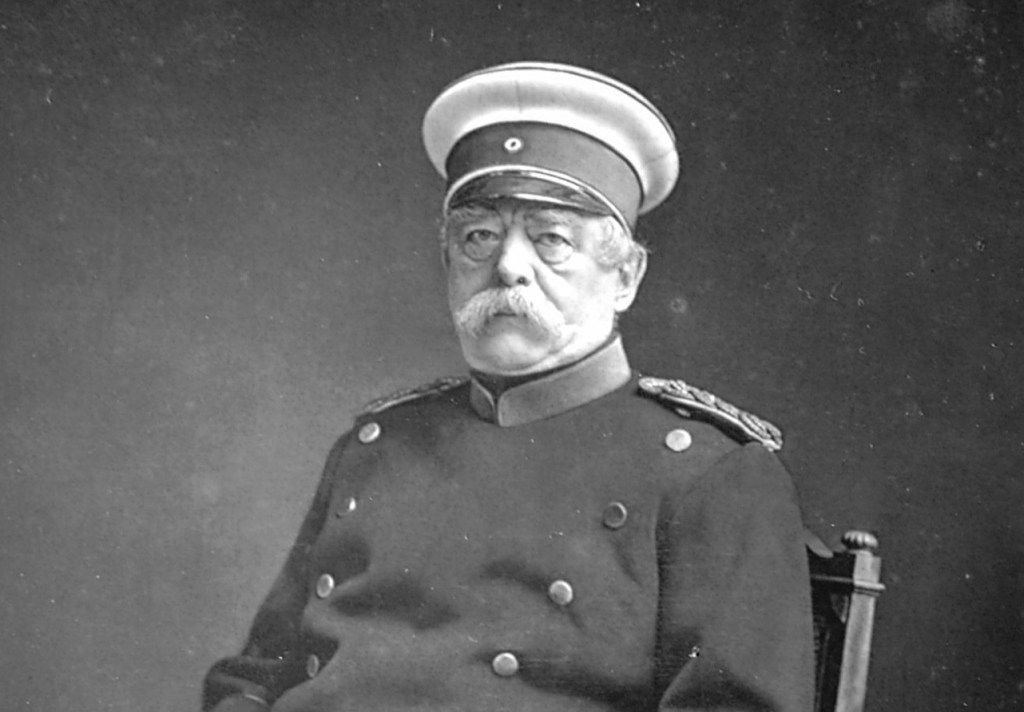
Far more than princes, states, or economies, it is language-communities who are the real players in world history, persisting through the ages, clearly and consciously perceived by their speakers as symbols of identity, but nonetheless gradually changing, and perhaps splitting or even merging as the communities react to new realities. This interplay of languages is an aspect of history that has too long been neglected.

Ostler, Empires of the Word, xix.

While we know that the true “real players” in world history are spiritual forces, it’s wise to acknowledge the massive role that language communities have and continue to play as secondary movers in world history. As is the case with languages like Greek, Arabic, or English, a language “empire” can outlast the original political one that led to its rise, and continue to exert tremendous influence while wearing multiple new sets of political or national clothing.

For my list of recommended books and travel gear, click here.

To support our family as we head back to the field, click here.

Photos are from Unsplash.com

The Transformation of JJ the Bully: An Addendum

So my mom fact-checked my story about JJ the bully. And rather than just editing a few places in the article for historical accuracy, I thought I’d write a separate post about the differences between my memory and my mom’s in order to explore the nature of memory and memoir a bit, as well as to include an ending to the story that I had forgotten about, but which even further emphasizes the effect that unexpected kindness had on him.

First, my mom informed me that the details of the second scene of my story weren’t quite right. This was the part where I wrote that she took us to 7-Eleven in order to buy a slurpee for JJ, and that we had chosen to buy him a blueberry one. In fact, she told me that we first drove to JJ’s house, where my mom told him that we were going to Rita’s Water Ice, and asked him if he’d like to come along. Rita’s is a warm-weather staple of the area northeast of Philadelphia, now branded Rita’s Italian Ice, but back then in the regional dialect it was known as Rita’s Wooder Ice. Italian ice is sort of like a snow cone, but with much finer ice, and it has a denser consistency than a smoothie or slurpee. However, JJ couldn’t come with us, so we asked him what flavor we could bring back for him. He chose lemon.

Rita’s, and not 7-Eleven. Lemon, and not blueberry. An initial visit to his house and return, rather than one surprising visit. Assuming that mom’s recollections are the correct ones – which is a good assumption since she was thirty seven and I was seven – it’s worth asking how and why my mind remembered things the way that it did.

I only remembered standing at JJ’s door once, and not the initial time that we had stopped by. Why might that be? Well, our brains do tend to remember situations in piecemeal fashion, “deleting” the vast majority of our memories that don’t seem significant, while holding onto the parts that had some kind of emotional significance. Fear, for example, is one of the strongest “cementers” of memory. If you have ever been unexpectedly put on the spot by a teacher, and that situation made your nervous system kick into high gear, then you will likely remember that scene for the rest of your life. Therefore, it’s likely that my mind deleted the first visit, categorizing it as not that significant, whereas it remembered the second time we were at JJ’s door. Why? Because of the emotion on JJ’s face. Human minds mirror one another’s emotions, so when I saw JJ’s expression I also felt his emotion. And this was significant enough that it was categorized under scenes to be archived for future reflection.

Why then did my mind swap 7-Eleven for Rita’s, and blueberry for lemon? Here we probably have a case of the mind naturally filling in the gaps in a memory from other similar memories of that same season (Perhaps I chose blueberry for myself at Rita’s that day). This freedom the mind feels to cut and paste certain details of stories, to mix memories together, and to remember things that didn’t really happen is what makes an individual’s memory alone less than rock-solid evidence of the actual history.

While there is always a certain kind of validity to the details of one’s memories – your mind remembers things in a certain way for a reason, meaning there is a true story being told about you even in memories that are not quite factual – human memory is not exactly a copy/paste of the historical situation. This is why having multiple witnesses is so important for a legal case. It’s also why it can be so helpful to compare our memories with others who were there. Even in situations where everyone recalls things accurately (as with the supernaturally-enabled writers of the gospels), each human brain involved is remembering only partial details of that scene, meaning that the combination of true stories leads to a fuller story overall. Alas, only the mind of God is perfectly and comprehensively aligned with the historical record for any given event.

All this means we should read or write memoir with a grain of salt, knowing that even the recollections of an honest author will come with some inevitable gaps, additions, or personal interpretations mixed in. But the fact that all natural memoir is like this means that once this is understood as a given, then we can engage in the genre with freedom, enjoyment, and humility. We try our best, and neither author nor reader need get bent out of shape when it comes out that certain details were a little off. It’s simply the nature of the genre, the nature of memory. As with biblical hermeneutics, knowing what genre we are in is key for proper interpretation and response, even for proper enjoyment. Memoir is the genre of significant true experiences that are remembered by the brain in a mostly-true, limited-perspective kind of way. And these very limitations of memoir are what make it so much fun.

No matter how good the story, the reader knows that there’s always more detail that might be unveiled, things that even the author missed. Sometimes the discovery of an omission makes the story even better. All of our favorite true stories conceal fascinating details that we have yet to learn – even the biblical ones. I would not be surprised if significant time is spent in eternity filling in these gaps. “Okay, Matthew, I invited you over for chai because I’ve simply got to know a little bit more about those dead saints who got out of their graves and wandered around Jerusalem after the crucifixion. What exactly was going on there?”

When I talked to my mom this week, she told me that I had ended the story of JJ the bully prematurely. As it went down, sometime later my mom was jogging in their neighborhood when she came across JJ again. She asked him if he had enjoyed his lemon water ice. JJ’s response?

“I didn’t drink it. I put it in my freezer because I wanted to keep it… I’ve never had anyone do something that nice for me before.”

Maybe someday I’ll meet JJ again. Because now I want to know – Did he ever drink it? How long did it stay in the freezer? Did his mom eventually throw it away? Does he still have it in his freezer? How does it end?!

At this point, only God knows, the author of all authors, storyteller of all storytellers. Good thing we’ll get to spend eternity with him. I can’t wait to hear more of his stories.

Photo via Wikimedia Commons

Golden Chains Gladly Accepted

In 312, after his victory in the battle of the Milvian Bridge, Emperor Constantine I (ruled 312 – 337) declared himself a Christian; in the following year he proclaimed the Edict of Milan, which guaranteed religious freedom. Since the emperor pronounced the Christian god as his god, this god was elevated, eo ipso, to the god of the empire. With Emperor Theodosius I (ruled 379-395), the process of the Christianization of the Roman state, begun with Emperor Constantine, led to a nationalization of the Church when, in 381, he forbade the conversion from Christianity to another religion and then, ten years later, put an end to all pagan worship within the empire and had the pagan temples destroyed or turned into churches. However, Constantine’s successors had already banned pagan sacrifices in 341, and in 346 had decreed the closing of pagan temples, although in 361 Emperor Julian the Apostate (ruled 361 – 363) undertook the last, unsuccessful, attempt to create a Christian-pagan synthesis and had the closed temples reopened.

It is hardly surprising that the Christian Church first expressed thanks for its sudden recognition as the state religion with a certain submissiveness and gladly accepted ‘golden chains’ in the form of financial support from the state.

Baumer, The Church of the East, p. 38

Notice how after only a few short decades of religious freedom, the Church in the Roman empire found itself no longer in the frying pan of persecution, but now in the fire of being the official religion of state power – and financially-dependent on that state.

Photo by Chris Czermak on Unsplash

Did the Jews Really Borrow Certain Doctrines From the Zoroastrians?

“You know the Jews only got their belief in a fiery hell from the Zoroastrians in Babylon, right?”

This argument from my atheistic aunt was a new one for me. We had traveled to the Philly area to celebrate my engagement, when one morning my aunt opened up an apologetics conversation by asking me if I believed there would be free will in heaven. Somehow the conversation had veered into the territory of Zoroastrianism, which my aunt was putting forward as a point to undermine the authority of the Scriptures. After all, if central ideas like the nature of life after death had been borrowed from other religions, this would cast serious doubt on the Bible’s authority as God’s true revelation.

I chewed on her claim and considered how to respond.

“Well, I don’t know a lot about Zoroastrianism. But I don’t think you should say that there was no concept of a fiery judgment until after the exile. The ending of Isaiah (66:24) speaks of the wicked being judged by a fire that will never be quenched. And he predated the exile by a generation or so.”

That conversation may have been the first time I heard the argument that Judaism (and Christianity through it) borrowed heavily from Zoroastrianism. But it certainly wasn’t the last. This position is held as fact by many scholars, and even shows up in some pretty good Christian textbooks and resources. In addition, Zoroastrianism is enjoying a quiet revival in Central Asia and also has some good PR in the West with claims of being “The first monotheistic religion” and the first to teach a final judgment and resurrection.

So, how should Christians respond to the claim that much of our doctrine has been borrowed from the teachings of Zarathustra/Zoroaster, the ancient prophet who founded Zoroastrianism?

First, it helps to have a basic understanding of the history of this religion. Because that story alone leaves a lot to be desired in terms of statements of historical certainty. As best we can tell, Zarathustra was an influential religious teacher sometime around 1,200 BC to 500 BC who sought to reform the polytheism of ancient Persia into something approaching monotheism. But even here, we should be cautious calling calling it monotheism, since early Zoroastrianism teaches a temporary dualism, where even though there was only one God (Ahura Mazda), now there is a second, his evil enemy (Angra Mainyu), who is a god that must be battled both in creation and in the souls of humans. But later, when Zoroastrianism was codified and organized under the Sassanians in the AD 200s, its sacred text, the Avesta, presents an eternal dualism, or even an eternal tri-theism. Even Mithra, the God of war from the Persian pantheon who became so popular among the Roman legions, is thrown into the mix. The goal of the religion remains the same, to help Ahura Mazda, the god of light, overcome the darkness through good thoughts, good words, and good deeds. But the nature of Ahura Mazda as the one true God is not even settled within the history and texts of Zoroastrianism itself. And even if it were, Moses predates Zarathustra by 400 years, at least. So, the claim that Jewish monotheism was borrowed from Zoroastrianism? It doesn’t hold water.

How about the claims that the concepts of a fiery hell and resurrection were borrowed? Here there a couple of big problems, as I see it. First, the later possible dates for Zarathustra’s life could place him as a contemporary of Daniel, Ezekiel, and the other writers of the exile period. A number of scholars maintain that Zarathustra was active during the lifetime of Cyrus the great. So, when the concept of resurrection shows up in Ezekiel and Daniel (Ez 37, Dan 12), why should the assumption be that they borrowed from the Zoroastrians they encountered in Babylon and Susa, when it’s just as likely that Zarathustra borrowed from them? Don’t forget what an influential figure Daniel was for decades in both the Babylonian and the Persian empires. He was not only prime minister, political second-in-command, but also head of the wise men of Babylon – essentially the priestly class. It’s not an unreasonable theory to propose that it is Daniel who is influencing the religion of the Persian empire, and not the other way around.

Further, how do you establish what Zoroastrianism was actually teaching during the time of the exile when its sacred texts were not collected and compiled until 700 years later, during the first generation of the Sassanian empire in the 200s? This is the seriousness of the problem if Zarathustra was a contemporary of Daniel. But if he lived much earlier, say around 1,200 BC, then that makes for a period of 1,400 years between the life of Zarathustra and the compilation of his book of teachings, the Avesta. That would be like the Qur’an only being compiled today, when Muhammad lived and taught in the 600s. Given these huge periods of time, it seems like quite the stretch to read things in the Avesta and to say with confidence that these were indeed the teachings of Zarathustra, therefore they predate the biblical authors, therefore they must be the source for Jewish doctrine. Given this murkiness of the history of Zarathustra and Zoroastrianism, it seems that scholars are not really holding this ancient Persian religion to the same level of skepticism and criticism which they apply to Judaism and Christianity.

Ah, but you can’t find resurrection anywhere earlier than Ezekiel and Daniel, can you? Well, Jesus did, in the Torah, in Exodus 3:6. “And as for the resurrection of the dead, have you not read what was said to you by God: ‘I am the God of Abraham, and the God of Isaac, and the God of Jacob’? He is not God of the dead, but of the living” (Matthew 22:31–33). And if we turn to Isaiah, once again we see this supposedly borrowed concept being taught a generation before the exile, “Your dead shall live; their bodies shall rise. You who dwell in the dust, awake and sing for joy! For your dew is a dew of light, and the earth will give birth to the dead” (Isaiah 26:19). For more evidence of resurrection in the Old Testament, check out this great article by Mitch Chase.

Over the years, I have heard these claims of borrowing from Zoroastrianism coming from my relatives, from Christian scholars, from online documentaries, and from Central Asian Zoroastrians trying to return to their roots. But when I dig around in the actual history of Zoroastrianism, of its founder and its beliefs, it doesn’t seem like these claims are coming from an examination of Zoroastrianism itself. Rather, it feels like some scholar made these claims once, everyone believed him, and now it’s just a big echo chamber where all accept these ideas as fact without knowing where they came from and if they were indeed sound in the first place.

Keep an eye out for Zoroastrianism in your evangelistic or apologetic conversations, and even in your resources. It tends to show up more than you might expect, claiming some pretty big things without the historical warrant to do so. A basic understanding of the story of Zoroastrianism – and how much really is debatable – can help provide a surprising answer, and get the conversation back on more profitable ground.

For my list of recommended books and travel gear, click here.

Photo by Shino on Unsplash