The phrase “the violent bear it away” fascinated the twentieth-century Irish-American storyteller Flannery O’Connor, who used it as the title of one of her novels. O’Connor’s surname connects her to an Irish royal family descended from Conchobor (pronounced “Connor”), the prehistoric king of Ulster… In the western world, the antiquity of Irish lineages is exceeded only by that of the Jews.
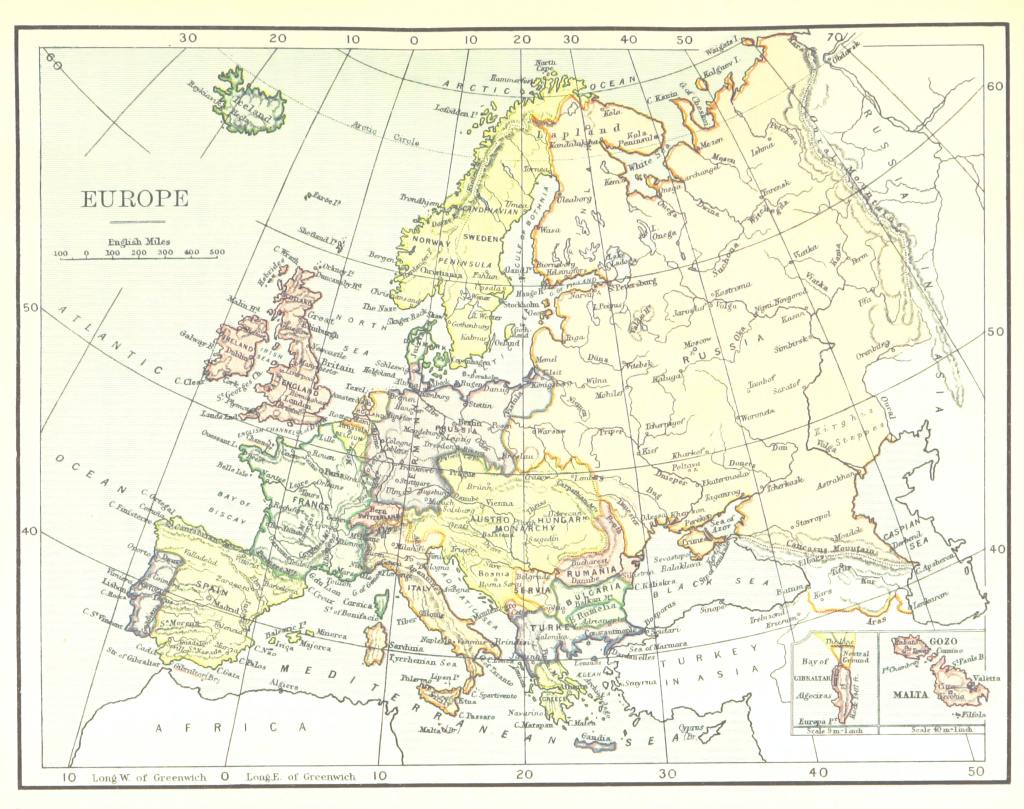
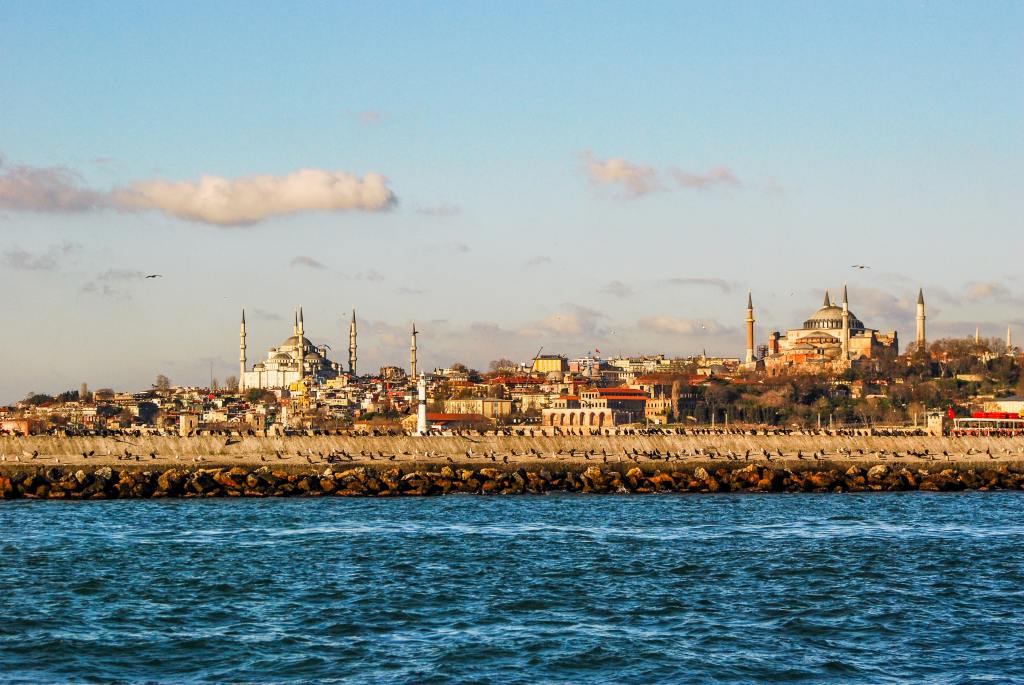
Rome remained the sole capital of the empire until Emperor Constantine I (ruled 312-337), for strategic reasons, made the city of Byzantium on the Bosporus into a second, new capital, thus shifting the imperial centre of gravity to the east. Constantine I took this step for two reasons. First, increasing military pressure from the Goths and Sarmatians on the Danube and the Sassanians on the Euphrates called for the presence of the emperor and the organs of government close to the threatened eastern border. Second, the new capital controlled the maritime trade with Egypt and the Middle East, as well as the continental trade routes that linked Europe with Asia.
Baumer, The Church of the East, p. 11
Better profit and fear of the barbarians, plus a leader not afraid of upsetting the traditionalists. Remember, this is the same Constantine who also called for the council of Nicaea and made Christianity legal and then later the official religion of the empire. The man was obviously OK with shaking things up.
Patrick devoted the last thirty years of his life – from, roughly, his late forties to his late seventies – to his warrior children, that they might “seize the everlasting kingdoms” with all the energy and intensity they had lately devoted to killing and enslaving one another and seizing one another’s kingdoms. When he used that phrase in his open letter to the British Christians, he was echoing the mysterious saying of Jesus, which seems almost to have been uttered with the Irish in mind: “From the days of John the Baptist until now, the kingdom of heaven suffereth violence, and the violent bear it away.” In the gospel story, the passionate, the outsized, the out-of-control have a better shot at seizing heaven than the contained, the calculating, and those of whom this world approves. Patrick, indeed, seems to have been attracted to the same kinds of oddball, off-center personalities that attracted Jesus, and this attraction alone makes him unusual in the history of churchmen.
The cultural policy of the Parthians was, until the start of the Common Era, hellenophile. In addition to the Parthian language of Arcasid Pahlavi, Greek and Aramaic remained in use. In the realm of religion, Greco-Roman deities were popular with the ruling family, until a nationalistic resistance movement from the Persian heartland led to a revival of the old Iranian beliefs of Zoroastrianism and Mithraism. The Parthians then fostered the building of fire temples and began to collect the the Zoroastrian traditions that were later codified in the Avesta.
While the spread of Zoroastrianism was confined to the Parthian-Iranian cultural sphere, the cult of the ancient Indo-Iranian god Mithra, widespread in Iran, crossed the cultural boundary of the Euphrates and won over so many followers in the Roman Empire that in the second and third centuries it was one of the chief rivals of early Christianity. Mithra was the chief deity of the pre-Zoroastrian Iranian pantheon. He was worshiped as the god of justice and the patron of treaties. In Zoroastrianism, he supported Ahura Mazda in his battle against evil. In the Hellenistic context he was identified with the sun god Helios, and in Roman belief with Sol Invictus, which made him the favourite god of the army. The goal of the Mithra mysteries, widely popular in the Roman Empire, was to free the soul, which had been born in heaven, from the constraints of the body and to return it, via the seven cosmic spheres, to its origin. On the whole, a spirit of religious tolerance predominated among the Parthians, which helped enable the rapid spread of Christianity.
Baumer, The Church of the East, pp. 10-11
It’s interesting to note that for the first several centuries of Christianity, Christians experienced greater toleration in the Parthian East than in the Roman West. This situation would dramatically reverse in the 300s.
Is there evidence that other ancient civilizations believed in a past where the world had one language, as Genesis 11 teaches? Yes, apparently.
11:1 one language. A text from Mesopotamia called the Enmerkar Epic indicates that the people in that culture also believed that the earth had previously had a single language. The tablet reads in part:
“Man had no rival.
In those days the lands of Shubar (and) Hamazi,
Harmony-tongued (?) Sumer,
the great land of the decrees of princeship,
Uri, the land having all that all is appropriate (?),
the land Martu, resting in security,
The whole universe, the people in unison (?),
To Enlil in one tongue…”
ESV Archaeology Study Bible, p. 27
Like the better-known parallels to the great flood (e.g. Gilgamesh), it appears that language disaster of Babel was also remembered and passed down in other Ancient Near Eastern traditions. Fascinating.
This is a fascinating documentary showing how recent archaeology in Central Asia is expanding our knowledge of the nature of ancient and medieval Christianity in this part of the world. I’m convinced the more research that can be done, the more we will learn that Christianity spread far earlier and further than we ever expected.
Even Patrick’s great prayer in Irish – sometimes called “Saint Patrick’s Breastplate” because it was thought to protect him from hostile powers, sometimes called “The Deer’s Cry” because it was thought to make him resemble a deer to the eyes of those seeking to do him harm – cannot be definitely ascribed to him. Characteristics of its language would assign it to the seventh, or even to the eighth, century. On the other hand, it is Patrician to its core, the first ringing assertion that the universe itself is the Great Sacrament, magically designed by its loving Creator to bless and succor human beings. The earliest expression of European vernacular poetry, it is, in attitude, the work of a Christian druid, a man of both faith and magic. Its feeling is entirely un-Augustinian; but it is this feeling that will go on to animate the best poetry of the Middle Ages. If Patrick did not write it (at least in its current form), it surely takes its inspiration from him. For in this cosmic incantation, the inarticulate outcast who wept for slaves, aided common men in difficulty, and loved sunrise and sea at last finds his voice. Appropriately, it is an Irish voice.
Some day, I hope the East will be strong again and develop its own civilization, not imitate ours, and then perhaps it will teach us a few things we once learnt from it and have now forgotten, to our great loss.
The first Roman advance across the Euphrates ended in catastrophe in 53 BCE. The Roman triumvir Crassus sought for himself the same glory that his co-rulers Julius Caesar and Pompey had achieved. Instead, at Carrhae, south of Edessa, Rome suffered one of its most humiliating defeats, and Crassus lost his life. Three decades later Emperor Augustus and King Phraates IV ended a war neither could win and, in 20 BCE, recognized the Euphrates as the border, thus beginning the Pax Romana. The river became the place where East met West – whether in friendship or in rivalry. For the spread of Christianity and for the history of the Church of the East, this border took on a fateful significance. Although Roman armies crossed the river repeatedly in the second and third centuries and conquered Seleucia-Ctesiphon, they had to retreat every time. Politically and culturally, Mesopotamia remained part of Asia.
Jacob calling Rachel his wife prior to the wedding followed common practice – a betrothed woman had the status of a wife (Deut. 20:7; 22:23-24). The Mesopotamian Code of Hammurabi attests to this custom in laws 130 and 161.
ESV Archaeology Study Bible, p. 52
I took note of this information on Genesis 29:21 because this custom is still carried out among our focus people group. Early on, I ended up in thoroughly confusing English conversations with local friends after they told me they now had a wife. I would respond with hearty congratulations and ask them when the wedding had taken place. When they would respond in the negative, that the wedding had not yet taken place, I would insist that they must have meant they had a fiance, not a wife. But they would insist that no, they meant wife.
Clarity eventually came when we realized that the local language often refers to a woman as a wife from the moment of engagement. Even though they are not living together and there hasn’t been a wedding, she is still considered officially the wife of her betrothed. My local friends were carrying this aspect of their language into English, much to my confusion. Turns out our sequential understanding of male-female romantic relationships in the West is quite different from how these things are spoken of in Central Asia. But their way of doing things probably has stronger precedent than ours, going all the way back to the time of the patriarchs and even Hammurabi!
Another linguistic surprise was how families would speak of brides. An elderly man once told me that he had four brides, one of them new. But it wasn’t polygymy that was going on. Sometimes that does happen among our people group, leading to this very un-Islamic but honest experience-based proverb: A man with two wives is a man with a liver full of holes (i.e. he leads a painful life). However, in this situation, this man’s son had just gotten married. In the communal (rather than individualistic) thinking of this man, the brides who married his sons were obviously the family’s brides. He could even accurately say they were his brides. The mother-in-law could say this also. It is said in the West that you don’t just marry an individual, you also marry their family. Well, in the Middle East and Central Asia, that concept has been taken to a whole new level and is communicated even by the languages themselves as they speak about who the brides belong to.
After a successful proposal, a man in the West might say, “This is my fiance and my future bride.” In Central Asia, during the same stage you’re just as likely to hear him say, “This is my wife and our bride. Want to come to the wedding in six months?”






 Entrusted to the Dirt
