
“You’ve got to save me, sir.”
“What’s the issue, my brother?” the politician said over the phone.
“I was driving from desert city to mountain city with my chickens for sale. I had all the official paperwork ready. I passed the last checkpoint for desert city without a problem, but they wouldn’t permit me through the first checkpoint of mountain city.”
“I see.”
“I asked them why and they just said, ‘We’re not letting you through.’ So I turned around to go back to desert city, but now they wouldn’t allow me through that checkpoint either! Now I’m stuck in no-man’s-land, me and my chickens, between these two blasted parties. What can I do?”
“Well,” responded the politician, “The only thing you can do is try to get some barbecue supplies, and start roasting those birds for lunch.”
That is a real conversation that happened recently, as reported by the politician. He was on a show TV show ranting about the absurdity of our region’s checkpoint system and the indignities it thrusts upon the normal people of the region who are just trying to live and make a living. My friend, Adam*, told me this story yesterday, then later sent me the clip.
“Bro,” he said, laughing on the line, “One time I was in a bus going through that same checkpoint. When they stopped us, I was the only one they made get out. You know, ‘Come with us, Mr. Adam,’ and all that. Anyway, they took me over to their little plastic shed and sat me down to ask me some questions. They made me empty out all the contents of my bag and kept asking me if I had any guns on me, trying to act very concerned about security. Then the guard talking to me up and leaves the room – and leaves his AK-47 on the chair right next to me!”
“He gets back to the room and tells me they didn’t find any gun after all. So I said to him, ‘Well, I found a gun for you, the one you left for me right here on this chair!'”
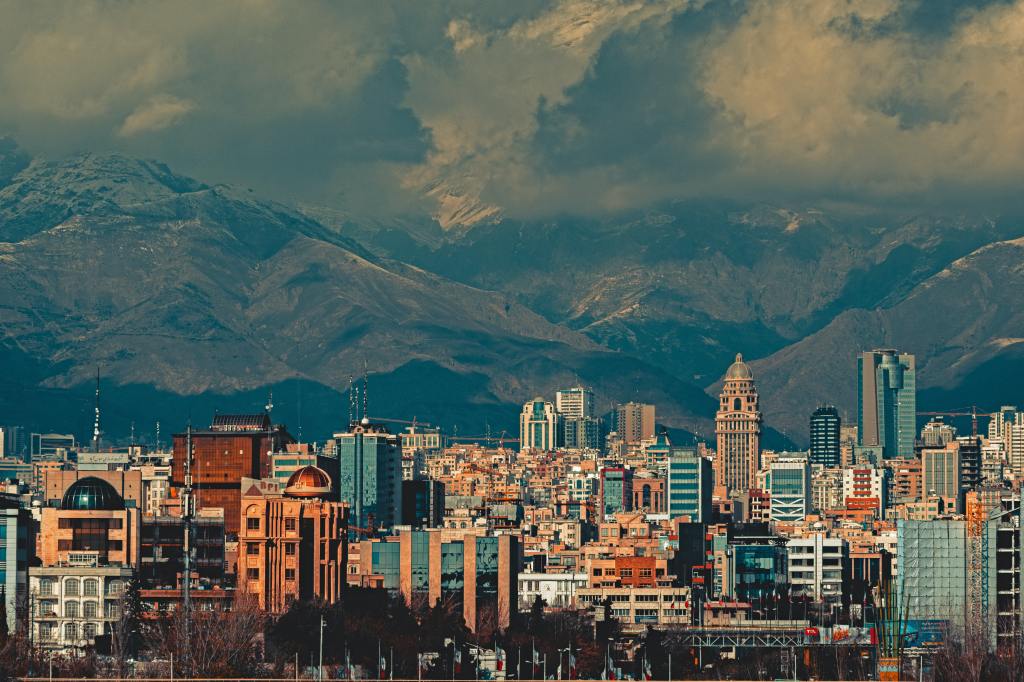
These checkpoints didn’t used to be there. After all, these two cities and the surrounding areas they control belong to the same people group. But in previous decades there was a civil war between the two parties that control these cities, and the checkpoints went up. There are now around eight of them on the two-and-a-half hour drive from one city to the other. Any time tensions flare up between the political parties, the checkpoints get more onerous, the politicians and bureaucrats using them to enact their personal vendettas against one another.
The particular checkpoint area Adam was telling me about is where the front lines of these two tribal-mafia-style political parties meet. In between them is a no-man’s-land, perhaps half a mile long. There’s a small cement mosque in this area intentionally painted in the colors of both of the political parties, but it’s not fooling anyone. This is no longer technically a war zone, but it could become one at the drop of a hat. In the meantime, it seems designed to just make things harder for everyone.
You’ll probably be waived through the last checkpoint as you leave one territory, but then be greeted with at least the suspicious body language of a soldier leaning in your window wanting your ID, what you were doing in that other city, and just what exactly you plan on doing in our city. There’s even a linguistic element to this, with both cities having different dialects, perhaps comparable to a Scottish vs. Texan accent. They seem to enjoy placing guards at these checkpoints that emphasize these dialect differences for some kind of Shibboleth effect. In the beginning it was very confusing for me, but after a while it became a sort of challenge to see if I could not only understand their questions but even respond in the right dialect. When we got it right the guards would be so charmed by these goofy Americans attempting their dialect that they would usually just wave us through. We eventually found this even more effective than the otherwise sound principle of “speak English to the men with guns.”
“Our moving truck was stuck in that no-man’s-land for hours one time as well,” I told Adam. “When we moved from mountain city to desert city we had a lawyer who told us not to worry about the paperwork, because he’s got patronage.”
“Oh no, you had a zombie lawyer!” Zombie is one of Adam’s favorite terms for someone who is essentially an inside member of the very corrupt bureaucracy of his country.
“Yes, well this zombie lawyer told us that because his sister was so important in the government, instead of paperwork, we should just give him a call and he’d work his magic to get us through the checkpoint. Well, he was wrong. They let our moving truck through one of them, but not through the other, and it was stuck there for hours.”
“In the end, the only way we got through was by calling in a favor from Ahab*. Remember him?”
“No! The snake?”
“Yep, the super deceptive guy who split the church. Well, someone called him because his brother is somebody important in the secret police. So, with the help of both of these very shady men we finally got our stuff through. It was a nightmare.”
“Bro, the zombie lawyer and the snake, that’s a bad day. Maybe it would have better to just have a barbecue, like the chicken guy!”
I am so grateful for friends like Adam who can help me laugh at the absurdity of it all.
I have also become more thankful for the common grace of open roads within the same country. My local friends are amazed to hear that you could drive for hours and hours in the US and through multiple states and never have to stop for a checkpoint. I remember hearing the bad news during the Covid culture wars that blue states were talking of putting up vaccine checkpoints at the borders of red states, and suddenly blurting out to the radio, “No, no, no, you do not want to start that game!”
We laugh about our checkpoints, but they can be an expression of the banality of evil. Sin makes people fools. And evil uses systems full of fools to make things complex and annoying that should be simple and easy. It’s like a system-wide equivalent of the demon-possessed man, Weston, in Perelandra, when he decides to wear Ransom down by simple repetition of his name over and over again.
“Ransom… Ransom… Ransom… Ransom… Ransom… Ransom…”
“What!?”
“Nothing…”
“Ransom… Ransom… Ransom.”
But foolish systems like this don’t stop at mere nuisance. They can actually contribute to oppression of the poor and of hard-working laborers. Why should that chicken farmer be prevented like that from doing work that serves his family and serves his neighbor? It can even hinder gospel work. As Westerners, we navigate these checkpoints relatively easily. But our Latin American colleagues are given a much harder time since they physically resemble those from an enemy people group. We’ve even had to factor the risks of these checkpoints into contingency conversations with local believers, in the chance that they would someday need to flee from one city to another.
One Christmas, we decided to try to use the checkpoint system to do some simple seed sowing. We got a bunch of small, fancy chocolate boxes, one for each checkpoint. The plan was to give one out with a small portion of scripture each time we were stopped and to tell them that today was the day we celebrate the birth of Jesus Christ, our savior. As is customary on any big holiday, we would hand over the gift with a hearty “Congratulations!” Or, literally-translated, “May you be holy!”
The Muslim checkpoint guards really didn’t know what to do with us, but we at least succeeded in providing them with something unusual to talk about later, some chocolate to eat, and perhaps some scripture that would sit on their shelves like a spiritual time bomb. Most don’t know that Dec 25th is Christmas, thinking that New Year’s Day and Christmas are the same thing. The guards didn’t give us a hard time that day, instead smiling bemusedly as they waved us through.
Perhaps my favorite checkpoint story came late one afternoon. We pulled up to the checkpoint, the kids asleep in the back seat, my wife nodding off in the front.
The guard leaned in, looked at me, looked at my wife, and then squinted hard at me.
“Tell me, brother, what exactly are you doing with that foreign woman?”
I couldn’t help smiling as I explained to him that that foreign woman was actually my wife, that we were both foreigners, et cetera, et cetera. To this day, it’s a line my wife and I will recite to each other, one way the absurd checkpoint system has now contributed to our family’s lore and oral tradition.
So I guess the checkpoint system hasn’t been all bad. But it’s mostly bad. And I hope they do away with it all someday – and that they didn’t make that poor guy have to barbecue his chickens.
To support our family as we head back to the field, click here.
For my list of recommended books and travel gear, click here.
*Names changed for security
Photos are from Unsplash.com

 Entrusted to the Dirt