They ask why I’m a Christian, ‘What for you has this Christ done? Has he taken from your shoulders some heavy life burden?’ So I told them, just for once, to open hearts and open eyes Said I, ‘Read a few verses from the Gospel of the Christ Then yourselves you’ll sacrifice with both your soul and spirit And then from all deeds past embrace repentance and regret’ For Jesus Christ is living God of power without end And everything in heaven and the earth is in his hand My idol worship thrown away, and my true God I found I know he is my God, without wav’ring, question, doubt Now, I’ve comfort worry-free, and Christ, light of my days The shining strength of Jesus is my sun, my wall, my shade
This is another poem by the late Shepherd H, Central Asian believer and elderly poet-turned-Christian. This poem focuses on how Christ has become the powerful center of Shepherd’s life, its very light and sun. When asked why he’s a Christian, Shepherd points his questioners to Bible, where he claims reading even a few verses is enough to cause radical repentance and self-sacrifice.
My Sun is another poem that exults in Jesus using some very Central Asian imagery. The sun is a major symbol of our people group, something that probably has roots in ancient Zoroastrianism, but which now is mainly expressive of the hope of freedom. What I’ve translated as ‘wall’ in this poem is a garden barrier referring more to privacy, beauty, and rest than to protection from enemies. And although the sun is a beloved symbol here, so is the shade. Our dry, high desert climate means you come to really appreciate the shade and how stepping into it during the summer can provide such instant relief. So much so that I’ve heard locals rank trees according to the quality of shade that they provide.
By calling the shining strength of Jesus his sun, wall, and shade, Shepherd is proclaiming that Jesus is his light, his hope for freedom, his rest, his covering, his beauty, his relief, and his deliverance.
If you have been helped or encouraged by the content on this blog, would you consider supporting this writing and our family while we serve in Central Asia? You can give here through the blog or contact me to find out how to give through our organization.
Praise God, one of the international churches in our region got a pastor! But there’s still another church looking for an associate pastor and our kids’ TCK school is also in need of teachers for the 2026-2027 schoolyear. If you have a good lead, shoot me a note here.
Blogs are not set up well for finding older posts, so I’ve added an alphabetized index of all the story and essay posts I’ve written so far. You can peruse that here
For my list of recommended books and travel gear, click here.
My God is a God of peace, and he loves his sons He stands at heart’s door, guest of whosoever wants His fatherly warm embrace, open to his children His words are like a joyful flower garden If any walk in his way, he also will be God’s guest Two thousand years ago, his blood he sacrificed Only Christ is God, truth, purity, and generosity If a disciple of Jesus, you’ll not perish in any difficulty How happy I am when I hear God’s Word! The water of faith fills my mind and my heart
This is my translation of another poem by the late local poet, Shepherd H, which focuses on the peace that the Father gives, the sacrifice and exclusivity of Jesus, and the effect of God’s word upon the heart of a believer. The poem also contains several biblical images that are also very Central Asian.
The first is that of hospitality. Central Asian culture highly values warm and lavish hospitality, and, in this poem, God is portrayed as both potential guest and potential host. He is ready to come and honor whosoever would open their heart to host him. And he is ready in turn to host any who would walk in his way. Hospitality in Central Asia is often reciprocal like this. One family hosts another and then gets invited by that same family in turn, in a long-term contest of outdoing one another in showing honor.
This theme connects with passages like Revelation 3, where Christ knocks at the door and offers to come in and eat with the one who would repent. It also echoes the book of Luke and elsewhere, where Christ is portrayed as the great host of God’s kingdom.
The second Central Asian image is that of a joyful flower garden. In the high desert browns of this part of the world, the locals adore their small plots of green grass and bright flowers. They often give lavish care to these little oases of greens and pinks and yellows where they will sit on summer evenings sipping chai and munching on cucumbers and sunflower seeds. The words of God are compared to this kind of garden. A place of joy, life, refreshment, and refuge.
This theme, of course, echoes Eden, which in turn is echoed by the temple and the promised land, and is fulfilled in the new heavens and new earth.
In a similar vein, the word of God is also compared to water, water of faith that fills the poet’s mind and his heart, just as locals might drench their trees’ roots morning and evening to keep them alive, healthy, and even fruitful in the deathly summer heat. The fig trees, for example, eagerly soak up the water and then go on to give the sweetest of fruit even in the hottest part of the year. So the believer delights to soak up God’s word and, in turn, bears the fruit of the Spirit even in the midst of suffering – fruit such as the title of this poem, peace.
This final theme reminds us of Jesus in John 4, the living water. Of this water, Jesus promises, “The water that I will give him will become in him a spring of water welling up to eternal life.”
An internal spring of overflowing eternal life? A gift? No wonder the poet says, “Only Christ is… generosity.” And no wonder he is so happy.
If you have been helped or encouraged by the content on this blog, would you consider supporting this writing and our family while we serve in Central Asia? You can give here through the blog or contact me to find out how to give through our organization.
Two international churches in our region are in need of pastors, one needs a lead pastor and one an associate pastor. Our kids’ TCK school is also in need of a math and a science teacher for middle school and high school. If you have a good lead, shoot me a note here.
For my list of recommended books and travel gear, click here.
Which attribute of God is it that saves us? All of them, in fact. All of God’s attributes and character are involved in salvation. For example, we are saved by his goodness and loving kindness, as it says in Titus 3:4-5. In Romans 3:21-26, we are saved by his justice, because he is “just and the justifier of the one who has faith in Jesus.”
This song by John Mark McMillan celebrates that we are also saved by the beauty of the Lord. In what sense is it God’s beauty that saves us? I would contend that it is in the sense that salvation is an act of revelation, where our sin-blind eyes are at last opened so that we are able to see the King’s beauty (Ps 27:4, Is 33:17). And no one who sees that beauty will be able or willing to resist it. This song also draws on the fact that it is this experience of the beauty of the Lord that keeps on saving us, as we remember it on our dark days, and as we look forward to seeing his beauty for all eternity.
I want to live, I want to exist In the sight of your fire and splendor And on dark days my heart will remember
That I’ve seen Your holy colors Felt the cracking of Your thunders If I’ve been born again into a house of many wonders I’ve been saved by the beauty of the Lord I’ve been saved by the beauty of the Lord
We only need to raise 9k ($750 per month) to be fully funded for our second year back on the field. If you have been helped or encouraged by the content on this blog, would you consider supporting this writing and our family while we serve in Central Asia? You can do so here through the blog or contact me to find out how to give through our organization.
Three English-language international churches in our region are in need of faithful pastors. Our kids’ TCK school is also in need of a math and a science teacher for middle school and high school. If you have a good lead, shoot me a note here.
For my list of recommended books and travel gear, click here.
Here’s another poem I’ve translated, written in our local language by Shepherd*, likely the first Christian poet among our people group.
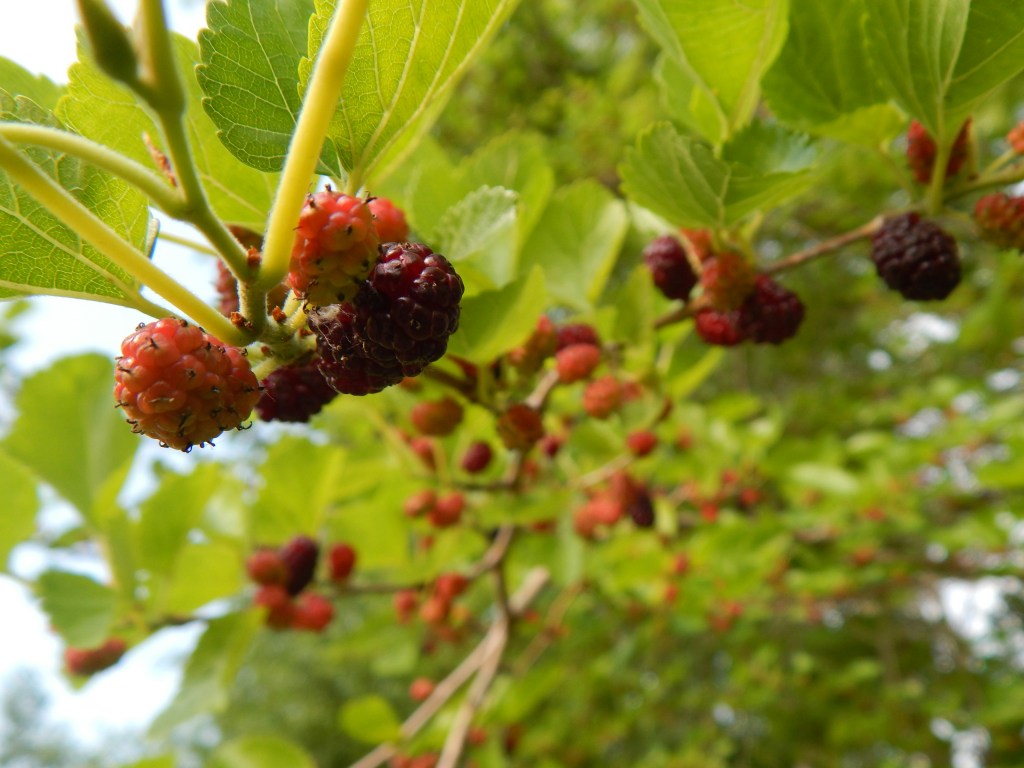
In this poem, Shepherd starts with a very Central Asian image – that of ripe berry trees generously dropping their fruit when kids throw rocks up into the branches. Shepherd uses this picture to allude to how even when believers are attacked, what comes out of us is the fruit of the Spirit. What a helpful image to illustrate how believers are now able to love even their enemies. The rest of the poem is a walk-through of the remarkable effects in the life of a believer that come from knowing Jesus, the Bible, the Holy Spirit, and the Father’s kingdom and calling.
As with the previous poem of Shepherd’s that I posted, my aim has been to try to do as direct a translation as possible while also seeking to keep the original rhyme scheme and some sense of meter. To read this as a Central Asian would, be sure to slow down and emphasize the last word of each line.
A Fruitful Tree
by Shepherd H

We must be like a tree where fruit is gleaned when stone is cast
We’ve followed Jesus, are assured we will not die in spirit at the last
This body weak, which cannot a virus even forestall
By light of Christ alone can on its shoulders mountains haul
In scheme of life, the Bible is the only true way and artery
The light of the earth and heaven, full of joy and humility
May Jesus’ Holy Spirit be to us as a shield, our protection
If not for the Father’s kingdom, we would not know embrace or affection
Hallelujah for the joy you have given us in these, our lives
You call us as your children, not as strangers, nor as slaves
We need to raise 22k to be fully funded for our second year back on the field. If you have been helped or encouraged by the content on this blog, would you consider supporting this writing and our family while we serve in Central Asia? You can do so here through the blog or contact me to find out how to give through our organization.
Two international churches in our region are in need of pastors, one needs a lead pastor and one an associate pastor. Our kids’ TCK school is also in need of a math and a science teacher for middle school and high school. If you have a good lead, shoot me a note here.
For my list of recommended books and travel gear, click here.
“We Long for That Day” by 20Schemes Music/His Estate
This is a new song for me, but one I’m very thankful to have learned from our international church here in Caravan City. Like we see in this song, I really appreciate the way that 20Schemes Music/His Estate blends stirring melody with blunt and biblical lyrics. How many worship songs do you know that include lines like, “Nowhere left to hide for the abuser?”
Last week, I was at a small conference with a couple dozen cross-cultural workers also engaged in reaching our people group in this region and in the global diaspora. The most open segment of our people group and the one with the most churches is also the one who has witnessed the most wartime atrocities in this past decade. Over the days we met, we heard tragic testimony from several believers of all of the evil they’ve witnessed, yet how in the midst of it God is powerfully building his church.
Since we were singing songs in both English and our local language, I was asked to lead a couple of the worship times. Reflecting on what we had heard from these local believers, I chose this song as one of the English ones we sang. It was new for maybe everyone there, but, I hope, well worth the learning curve.
This is the chorus:
We long for that day when Jesus comes again
When sorrow and pain will all come to an end
When justice is done and evil cast away
Oh, may we all be found in Christ that day
We need to raise 32k to be fully funded for our second year back on the field. If you have been helped or encouraged by the content on this blog, would you consider supporting this writing and our family while we serve in Central Asia? You can do so here through the blog or contact me to find out how to give through our organization.
Two international English-speaking churches in our region are in need of pastors, one needs a lead pastor and one an associate pastor. If you have a good lead, shoot me a note here.
For my list of recommended books and travel gear, click here.
This is a new hymn by Psallos that we’ve recently been introduced to. It has a beautiful singable melody and the lyrics walk through the great drama of the gospel, pivoting between different aspects of God’s character as the divine king and the kind of response each in turn should provoke in us, his people. It seems likely to become a favorite of the saints here at our international church in Caravan City and my family has been humming it constantly over the last couple of weeks. So, I wanted to commend it to you as well.
The Lord is a mighty King: the King of all nations,
The Maker of everything, let His handiwork say,
“I am His, I am His! Creator owns creation.”
See what power there is in the Sov'reign who reigns.

The Lord is a holy King: the Judge rules from heaven;
His wrath He will surely bring on the man who rebels.
O my sin, O my sin! How can I be forgiven?
There is justice in Him; is there mercy as well?

The Lord is a gracious King: for those who believe Him,
His Son is an offering for their sins to atone;
I’m redeemed, I’m redeemed! By grace I have received Him,
By His death on the tree I have peace at His throne.

The Lord is a faithful King: He never will leave us;
His children will ever sing of His glorious love.
O my soul, O my soul is safely bound in Jesus;
All His virtues extol, for the Lord reigns above.
credits

- "The Lord is a Mighty King" by Psallos
The international church in Poet City is in need of a pastor. This church is eager for a faithful shepherd to lead their English-language church, which includes many members who are cross-cultural church planters. This role is partially funded and partially support-raised. If you have a good lead for a potential pastor, reach out to me for more details.
If you have been helped or encouraged by the content on this blog, would you consider supporting this writing and our family while we serve in Central Asia? You can do so here.
For my list of recommended books and travel gear, click here.
*Names of places and individuals have been changed for security
We were in a discussion with some other believers about the sovereignty of God in salvation when one of them said,
“But if God is completely sovereign over salvation, then wouldn’t that mean I’d stop praying for others’ salvation or sharing the gospel? If it’s all up to him then it seems like I wouldn’t obey like I should.”
The believer that made this comment seemed genuinely worried, afraid even, that if salvation is ultimately up to God’s free choice and will, then they would not have the motivation they needed to obey faithfully when it came to their unbelieving friends and family.
What jumped out at me was how similar this logic is to that of Muslims when we tell them that we are completely saved by faith in the sacrifice of Christ, and not by our own merit. Muslims tend to respond by saying, “Well, if that were true, then I would just live a sinful life because there would be no motive powerful enough to compel my obedience. We need to be afraid of not being good enough on the last day so that we will do what is right and not do what is wrong.”
In this kind of evangelistic conversation with a Muslim friend, I’d normally try to help them understand how grateful love and the new birth are actually more powerful forces for obedience than fear. The free son will, in the end, always do more than the slave. But I’ve seldom thought that this conversation I’ve had hundreds of times might also apply to my Christian friends who struggle with the doctrines of grace.
Muslims are afraid of God’s free grace in justification because they feel like it would lead to an immoral “let’s sin that grace might increase” lifestyle. Our Christian friend, on the other hand, is afraid of God’s free grace in election for similar reasons. Both are nervous that if it’s ultimately up to God’s effort and not human effort, then they will not live as they should.
Even though our Muslim friends are not regenerate and our Christian friend is, both are falling into a similar error – the belief that God’s grace undermines human obedience rather than empowering it. Both are convinced, afraid even, of what they would do (or not do) were they to believe that salvation is in God’s hands. For the Muslim, this error is completely consistent with the rest of their doctrine. For the Christian, it is a curious inconsistency. Having begun by grace through faith, they feel they must now continue (at least in their evangelism and evangelistic prayers) by some other principle. Alas, the human heart is deeply afraid of the implications of a God who saves. We are much more comfortable when it depends, at least in part, on ourselves.
These fearful implications go in two directions. One, the heart is afraid of itself, as we’ve already been discussing. But two, as my wife so helpfully pointed out in our conversation, the heart is also afraid of trusting God with that much power. To believe that he is absolutely sovereign is to risk believing that he will in fact use that power in good and just ways. It is to risk trusting him with our suffering, with our mistakes and others’, and with our prayers for unbelieving family and friends that go unanswered for decades.
I remember my own struggle in high school and college to surrender to the doctrines of grace. At one point, I realized that I believed that God was sovereign in everything except for the will of individuals. I have long chalked that up to pride, that my heart still wanted one tiny piece of credit in my salvation. God did everything, yes, but once he had perfectly set the stage I chose to follow Jesus. No doubt, there was some pride in my struggle. But I wonder if there was fear also. Fear of a God that is utterly sovereign. Fear of my own flesh’s response to a truth this radical.
It seems we would be wise to look for fear underneath a Christian’s resistance to the doctrine of God’s sovereignty in salvation. Perhaps behind a combative response is a heart that is simply scared to trust that God is truly good. Is he good enough to really love us even if he doesn’t need us? Is he good enough to honor and use our decisions and actions even if everything is also, somehow, ordained? Is he good if he can save my parents but he doesn’t?
Scripture is clear and consistent regarding the good character of God. But it’s also clear about the wiles of the human heart, making fears about our propensity to abuse truths about God’s sovereignty not completely unwarranted. Hyper-Calvinists really were and are a thing. I have a grandparent who dismisses their own sin by appealing to God’s sovereignty. But the Bible anticipates and answers these objections. “Are we to continue in sin that grace may abound? By no means!” (Rom 6:1-2).
Paul shows us that the way out of this error is to embrace that the gospel doesn’t just make us clean, it also makes us new (Rom 6:3-14). And that new nature means that obedient fruit now naturally sprouts out of us just as certainly as green and purple clusters weigh down Central Asian olive trees in Autumn. The new nature that keeps us from sinning that grace may increase is the same new nature that will also empower obedience.
We don’t need to be afraid that we will obey less if God is sovereign over salvation. The great secret is that we actually end up obeying more once we find out it’s not up to us in the end. There is mystery here, for sure. But what should become increasingly clear to us is that fear is only effective for short-term obedience. For obedience in the long-term, freedom is a much deeper source of power. That freedom is the reason we need not be afraid of God’s sovereignty in salvation.
The free son will, after all, always do more than the slave.
The Lord has provided all the funds we need for our vehicle and our first year on the field! Thank you to all of you who have prayed for us, encouraged us, and given to us during these past nine months of support raising!
Our kids’ Christian school here in Central Asia has an immediate need for a teacher for the combined 2nd and 3rd grade class. An education degree and some experience is required, but the position is salaried, not requiring support raising. If interested, reach out here!
For my list of recommended books and travel gear, click here.
“But what if I grow up and go to prison?” my daughter asked, not for the first time.
“Even if you go to prison, Mama and I will still love you, be there for you, and be your mom and dad.”
“How can you keep loving me if I was really bad though and did terrible things? Wouldn’t that change your love for me?”
“Nope. Our love for you and our relationship with you will always be there, no matter what. You’ll always be our girl. We will come and visit you even in prison and remind you that we love you.”
“Doesn’t that mean it doesn’t matter what we do then?” piped up one of my sons, always looking for the holes and exceptions in our parental proclamations.
“No, it still matters. That steady love for you will be there no matter what. But if you live wisely, then that love will be mixed with more joy. And if you live foolishly, then it will be mixed with more sadness. By your actions you can bring us more joy or more sadness. But you can never lose your relationship with us as our son or our daughter.”
“And guess what?” I continued, “This is the kind of relationship you can have with God too, if you become one of his children through believing in Jesus.”
We’ve had this conversation a half a dozen times or so during bedtime devotions over the last year or two. I don’t think my kids are forgetting the previous conversations. Rather, I think they want to hear it again, one more time, that dad and mom will love them no matter what – even if they become felons. For my part, I’m happy to come back to this topic as often as they want to.
It’s common for us to speak of marriage as a parable of the gospel, and with good warrant. Paul explicitly says in Ephesians 5 that husbands and wives are a picture of Christ and the Church. But we don’t speak as often of parents as parables of the good news. Yet as I gain more experience as a dad I am realizing more and more what an opportunity I have to model for my kids the kind of love they are invited to have with God the Father through the gospel.
Yes, my father-love for them is a small and imperfect shadow of the reality of God’s father-love for his children. But such is the nature of shadows. They flicker, contort, and sometimes disappear altogether. But their very existence is evidence of something very real, concrete, and solid. Parental love exists because God is the Father whose very nature is love.
We often know of this relationship between parental love and one’s understanding of God’s love from the negative side of things. Countless believers struggle to rest in God’s love and grace because of bad experiences with their parents. Dig into why someone’s cognitive theology isn’t translating into their emotional theology and you’re likely to find some ‘daddy issues.’ And though they needn’t stay stuck there, this is how things naturally tend to go. Parents are meant to model for their children, in some limited but real way, what God is like. What a weighty calling.
The parallels are real. Our children are born into our families, not by their own will, but by the will of their parents. In the same way, believers are born again into God’s family not by their own will, but by the will of their Father (John 1:13). This birth brings with it a permanent identity that cannot be lost. Parents in this world may try to disown their children but they can never actually erase the reality of the relationship. God’s children are his forever. In some sense, so are ours.
We don’t have an Ephesians 5 type of passage directly telling parents to love their children as God loves the Church, that their love for their children is a metaphor of the gospel. Yet the clues are all over the Bible. God chooses to reveal himself, especially in the New Testament, as Father to his people, his spiritual children. This is one of his primary titles he wants us to understand him by (Eph 3:14-15, John 20:17, Matt 6:9). Indeed, even when we discipline our children, the Bible says we are pointing to God the good Father who does the same (Heb 4:4-11). And let’s not forget one of Jesus’ parables that perhaps more than any other displays the heart of the gospel – that of the father and the two lost sons (i.e. the prodigal son, Luke 15).
And although he never uses a maternal title, God is also not embarrassed to use maternal imagery to speak of his love for his people (Isaiah 66:13, 1 Peter 2:2-3, Matt 23:37). After all, both men and women are made in the image of God, so the natures of fatherly love and motherly love must ultimately find their source in God himself.
I said earlier that we most commonly speak of the connection between God’s love and parenting when it has gone wrong. In this, we can be comforted that God’s love is powerful to overcome even the worst parenting a person may have received. And for parents, the gospel is powerful to wash away even the worst of failures. But this possibility of healing and cleansing should make Christian parents even more eager to carry out their role as a living parable as best as they possibly can. Amazingly, our parenting may be the way in which the gospel comes to one day make sense for our kids. As we assure them and show them that they have our love, no matter what, that they can never lose their place as our sons and daughters – in this way they may come awake to the stunning offer of spiritual sonship offered to them in Christ.
“You are loved. You are safe. You are accepted. You are delighted in. You will be mine forever. You can never do anything bad enough to lose my love.” These kinds of statements from moms and dads preach through a physical parable something even more true in the spiritual realm – something that our kids may not yet be a part of, but which they are invited into.
For I am sure that neither death nor life, nor angels or rulers, nor things present nor things to come, nor powers, nor height nor depth, nor anything else in all creation, will be able to separate us from the love of God in Christ Jesus our Lord.
-Romans 8:38-39
May our parenting not be a stumbling block towards our little ones delighting in God’s grace and love. Instead, may they look back at how they came to know the good news was true and find in that story the steadfast love of mom and dad – a parable pointing them to the gospel.
If you would like to help us purchase a vehicle for our family as we serve in Central Asia (5.5k currently needed), you can reach out here.
Our kids’ Christian school here in Central Asia has an immediate need for a teacher for the combined 2nd and 3rd grade class. An education degree and some experience is required and the position is salaried, not requiring support raising. If interested, reach out here!
For my list of recommended books and travel gear, click here.
My son recently asked me who my best friends are. I took a moment to think, then said, “My best friend in the U.S. is Reza* and my best friend in Central Asia is Darius*.” I smiled as I said it, realizing these two brothers from Muslim backgrounds—one a refugee and one a new pastor in his home city—really are two of my closest friends.
Humanly speaking, we shouldn’t be friends at all. But the gospel has done something remarkable in us, such that we now love one another with a deep and happy loyalty. For this, I’m indebted to these brothers who’ve so often pursued the relationship. I’m also indebted to my parents who modeled a deep love and friendship for the local believers they served as missionaries in Melanesia. When I eventually became a missionary, I naturally followed in their footsteps.
Yet when it comes to missions, few speak explicitly about the centrality of friendship. Of course, we might have close friends back home, our own Andrew Fullers who hold the ropes for us. Or we might value the close fellowship and camaraderie of teammates on the field. But we seldom consider how affectionate friendships of equality with locals are one of the primary goals and rewards of a life spent proclaiming the gospel among the nations.
Friendship with God
One way to describe the missionary’s goal is to see others become friends with the eternal God and his Son, Jesus Christ. This is the vertical side of friendship in missions. We shouldn’t lose sight of the scandal of this invitation. How can it be that rebellious sinners, lifelong enemies of God, are welcomed into friendship with the holy God they’ve so long spurned? Yet this is the language of the Bible.
Abraham, the father of all who are saved by faith, is called a friend of God (James 2:23). Jesus was known as the friend of sinners (Matt. 11:19). He explicitly tells his disciples they’re no longer only servants but friends (John 15:13–15).
As a missionary, I have the privilege of seeing Central Asians befriended by God. That’s my goal. It’s also my reward.
Befriending Locals
In faithful cross-cultural ministry, we invite the nations into friendship with God. However, by virtue of their new relationship with Christ, they should also become friends with us. This is the horizontal side of friendship in missions; not only does God gain new and eternal friends but so do we. At least we will if we follow in the footsteps of Paul, whose ministry overflowed with affectionate friendship toward those who believed the gospel.
Paul didn’t only give the gospel to local believers; he shared his life with them (1 Thess. 2:8). He didn’t limit himself to ministry relationships or even task-focused partnerships. In addition to being their loving father in the faith, he became their devoted friend (Acts 24:23).
We see this friendship through Paul’s constant, thankful, joyful prayers for local believers. We see it in his unembarrassed professions of affection and longing to spend time with them (Phil. 1:3–4, 8; 1 Thess. 3:6, 10). Paul truly held these believers in his heart, delighting in them in person while also doing his best to stay in touch with them from a distance (Phil. 1:7; 4:21–22; 1 Cor. 16:7). He lived sacrificially for them and allowed them to care for his needs (Phil. 2:17; 4:16). He treated them as equals, calling them brothers. He was proud of them, calling them his crown (4:1). Paul and his friends even wept with and for one another (Acts 20:37).
Problem of Self-Protection
But we must be honest about something. When you talk to local believers in many missions contexts, they’ll tell you missionaries seem hesitant to enter into this kind of close friendship with them. Many try to keep a safer relational distance from locals.
Why is that? Maybe it’s because missionaries know they’re transient. This is perhaps an act of self-protection in a lifestyle given to so many costly goodbyes. Others may struggle to befriend locals out of confusion about what healthy boundaries are. Sadly, some may quietly despise the culture or even unconsciously look down on locals. Whatever the reason, missionaries should try to understand why they’re keeping locals at arm’s length—then repent.
As one of my pastors in Central Asia recently told me, the diversity of our friendships is meant to display the gospel’s beauty. Wealthy local friends should marvel that you also befriend the street cleaner. And your fellow countrymen back home should be surprised by the depth of your friendships with local believers whose backgrounds are so different from your own.
Worth the Risk
Missionaries may be effective in many aspects of their ministry with locals. They may have solid partnerships, even a level of trust. But that’s not the same as risking the vulnerability and equality that characterizes true spiritual friendship. It’s not the same as the shared delight that missionaries have with those from their own culture. And locals can tell the difference.
However, the most beloved (and hence effective) missionaries are genuine friends with the local believers. Yes, this will make missions more costly. Sin, betrayal, and abandonment will break your heart when you’ve entrusted it to local believers. I’ve gone through seasons when I dared not risk such friendships. Too many had left, had failed, had turned on us when we needed them most. Yet I’m so glad the Lord didn’t leave me in that place but gently brought my heart back to a posture of vulnerability—and I once again tasted the sweet rewards of affection.
Some of my fondest moments as a missionary have been when my Central Asian friends and I dream together about the new heavens and earth. We talk about how much we look forward to being there together with Jesus, telling stories, and sipping New Jerusalem chai. If our friendship now with one another and with Jesus is such a kind gift—such an undeserved reward—then just imagine what it’ll be like in the resurrection.
Go Make Friends
The Scottish missionary John Paton knew the costs and rewards of friendship on the mission field. He also anticipated the joys of those friendships perfected in glory. Recounting the death of his friend Chief Kowia, he writes,
Thus died a man who had been a cannibal Chief, but by the grace of God and the love of Jesus changed, transfigured into a character of light and beauty. I lost, in losing him, one of my best friends and most courageous helpers; but I knew that day, and I know now, that there is one soul at least from Tanna to sing the glories of Jesus in Heaven—and, oh, the rapture when I meet him there!
Friendship is one of the primary goals and richest rewards of missions. I’m convinced faithful missionaries should exhibit a posture of humility and vulnerability, pursuing affectionate and mutual love with local believers. Because we don’t go to the ends of the earth only to make disciples. We also go to make friends.
I just learned this one this week and I’m so glad I did. Allegedly, it’s a saying all our locals know well. However, it does require some explanation.
In our Central Asian culture, there are a lot of honorable and repeated refusals of generous offers of hospitality. Now, when these offers are made in the honorable-hypothetical way, turning down an invitation is exactly what you are supposed to do. But when it’s a genuine offer from a friend, something clearly good and helpful, or something you would simply be foolish to refuse, that’s when this saying comes out.
The logic of this saying is that, given the choice, everyone would rather sit and eat sweet juicy melons than go out into the heat of the late summer fields and pick them. A clearer way to phrase these sentiments in English might be, “Are you actually choosing to go out and harvest melons when I’m offering to serve them to you? I’ve already done the work. Why are you denying yourself something good that I’m clearly ready to bless you with?”
There are times when self-denial and refusing others’ service or help is good, right, and noble. And then there are times when it’s just silly – or even a form of pride. True humility not only avoids taking advantage of others’ hospitality and generosity but is also willing to receive it. Sometimes we need to swallow our pride and just enjoy that good gift that is being genuinely extended to us.
I can easily picture a Central Asian mama, hands on her hips, scolding her brother who’s come for a visit, but is for some reason refusing to sit and take a minute to rest.
“Don’t be dumb. It’s 111 degrees outside. Sit and eat some cold melon for a minute.”
While this is a more informal proverb, I’m curious if it might also work for those who object that the free gift of salvation in Jesus is simply way too easy. Many here feel that salvation through faith in God’s promises is not a difficult enough road for them. They would rather walk the anxiety-ridden path of works righteousness than rest in the free gift of salvation being offered them in Jesus. Why? Because the gift is all of grace – and therefore it means they can’t feel proud of themselves for having earned it.
Don’t be a melon picker. Be a melon eater. Receive the good gifts of God.
If you would like to help us afford a solid set of wheels for driving around our corner of Central Asia (11k needed), you can reach out here.
For my list of recommended books and travel gear, click here.




 Entrusted to the Dirt