Daddy Dates and The Kindness of God in a Keto Restaurant

A few years ago, my kids and I began a weekly daddy date rhythm. The idea is a simple one. Each Saturday, one of my kiddos gets to go out to lunch or dessert with dad, to a restaurant or cafe of their choosing (within reason, that is).

Somewhere in the past, I read a Christian blogger who recommended touching base on three F’s during this kind of outing: friends, fears, and faith. I’ve found this to be a helpful framework, and most weeks will try to ask questions in these categories, even if we don’t spend the bulk of our time discussing them. Some weeks, my kids don’t have much to say on any of these fronts. But other weeks, really fruitful conversations ensue, for example, about things they’re feeling anxious about.

I’ll also often ask my kids if there’s anything practical they need right now. With how fast kids grow and wear out or break their stuff, it seems there’s almost always some item of clothing, footwear, backpack, or glasses-related thing that it’s time to replace again, but which mom and dad didn’t yet have on their radar. Of course, this part of the conversation often turns to things a given kiddo wants rather than needs, which usually gets gently punted, but which also provides valuable data for future gift ideas or surprises.

I know that this kind of outing, once every three weeks or so, is not as important as the daily rhythms, such as meals together, spontaneous affirmation, consistent affection and training, and bedtime devotions. But I hope that over the years, these dates will contribute to our kids feeling seen, heard, delighted in, known, and loved well by their dad.

To be honest, it’s also good for my heart to make sure I have a structure like this built in, where I slow down and give individual attention to each of my kids. It’s far too easy for me to be merely present as a dad, but not really engaged.

An added bonus in all this is that we end up discovering places to eat that become family favorites. One such place is our local Keto restaurant. Yes, even here in our corner of Central Asia, Keto is a thing. For those who might not be familiar with this approach to food, a Keto meal is high in good fat and protein with low or no sugars or carbs. Many will adopt a Keto diet because when you eat like this consistently, it pushes the body to burn fat for its fuel instead of sugars, which, when done wisely, can lead to healthy weight loss.

But our family appreciates Keto food for a different reason. Our daughter has Type 1 diabetes. That means that every single meal or even snack involves calculating how many carbs she’ll eat and giving her just the right amount of insulin so that her blood sugar neither dangerously plummets nor heads off careening into the glucose stratosphere. Those familiar with diabetes know the low-grade toll that doing this every day, every single meal, can take, life-saving work though it is.

But there is one restaurant in Caravan City that I can take my daughter to, where she can rest from this otherwise mandatory work. Yes, all the meals and even the ice cream at our local Keto place are designed so that the carbs are so low as to be negligible. Add to this that the food is actually also extremely flavorful, and you can see why it’s one of her (and my) favorite places to go for a daddy lunch date.

This father’s heart delights to see his daughter simply free to order anything she wants from the menu, something that is almost never the case for her. Even with the correct amount of insulin, we’ve learned the hard way that certain kinds of carbs simply play havoc with her blood sugar, which means we end up carefully rationing (or saying no to) much of the food that kids her age are naturally drawn to. She bears with these limitations well most of the time. But the grief at not being able to eat like all her friends do does build up, and sometimes overflows. As it should.

Kids were not meant to have their pancreases killed by their own immune systems so that they could no longer make their own insulin. This is not the way it was supposed to be. Sometimes, on a particularly hard day, my daughter will cry out through her tears, “I hate diabetes!” So do we, love, so do we.

Because of this, it’s such a joy to see her free in this way, laughing and munching on a Keto burger or getting cheesecake-flavored ice cream all over her face. It’s a small preview of what one day we know will be true of her if she continues to wrestle with her faith and is truly born again, that she will be given a resurrected body, one that includes a brand new, eternally perfect pancreas. Yes, in the feasts of the New Jerusalem, there will be no toilsome carb counting and insulin calculating, knowing that even if we get it ‘right’, some curveball of hormones or device failure or who knows what could still lead to a high or a 2 am emergency low treatment. No, there will be none of this. Just freedom. Freedom and holy enjoyment of God’s good provision.

I know that the owner of this Keto restaurant did not open his restaurant just for us, just for my daughter. But it sure feels that way when we eat there. Who could have guessed that we would be so spoiled as to have this kind of place in Central Asia, and in the very neighborhood where we work and school and worship? No, the Islamic restaurant owner is probably just passionate about health and making a profit. May his business be blessed, and he someday come to know Jesus.

But I also know that the sovereignty of God is detailed enough, complex enough, that one of the many reasons he would ordain a Muslim man to open up a Keto restaurant in Caravan City is for my daughter’s and my encouragement. How very kind. How very much like a good and generous father.

The kind of father I long to be.


If you have been helped or encouraged by the content on this blog, would you consider supporting this writing and our family while we serve in Central Asia? You can give here through the blog or contact me to find out how to give through our organization. 

Two international churches in our region are in need of pastors, one needs a lead pastor and one an associate pastor. Our kids’ TCK school is also in need of a math and a science teacher for middle school and high school. If you have a good lead, shoot me a note here.

For my list of recommended books and travel gear, click here.

Photo from Unsplash.com

How I Became A Yogurt Water Drinker

It was a hot and dusty August seventeen years ago when I became a yogurt water drinker. For my first nine months in Central Asia, I had steered clear of the stuff. Like most Westerners, I couldn’t quite figure out what to do with the concept of drinking yogurt, complete with ice chunks, dill, and a pungent, smoky-sour-salty flavor.

But we do not live in a world where our tastes or dislikes are forever fixed and unchangeable. No, all it takes is the right mysterious combination of factors and, suddenly, we love something we used to hate. I never cared for eggplant, for example. But a Lebanese restaurant I once ate at grilled it so perfectly crisp, so expertly salted and spiced, placed on top of a salad itself bursting with flavor, that I found myself really enjoying that bite of eggplant. After that experience of tasting the delights of what English speakers in other lands call aubergine, I was a changed man. Now, I even enjoy the mushy stuff. The same thing happened to me with mushrooms the first time I had them on top of pizza.

It seems there’s something about experiencing a thing in just the right context that can pull a 180 for the mind, affections, and taste buds, and unlock previously unknown delights.

The context that made me a yogurt water drinker was a miserable one. It was mid-August, well above 100 degrees Fahrenheit (38 °C), and I was taking an intercity bus trip. I was on my way from Poet City to a tiny village with a name that translates as ‘Matches’ (the kind that come in a box) to visit a strange mullah friend I had there. This man was strange because he was the only devout Muslim I had ever met who subscribed to a minority view that the Qur’an teaches that Jesus actually did die on the cross. He was also strange because of his over-the-top poetic proclamations he would make in place of normal conversation or even the normal Central Asian honorable verbosity.

“You are my brother and your mother is my aunt and I will plant a garden for you in my heart and place a chair in the garden where you will sit and little butterflies will fly around youuuu, ahaha!”

Like I said, this friend was strange. But after I gave him a Bible in his language on his previous visit and we pulled an all-nighter discussing its contents, he requested I bring him one in Arabic and English also. I was willing to endure the cringy proclamations of his affection for me if it meant getting to talk more with this mullah about Jesus.

In order to get to Matches village, I first needed to go to the bus terminal, where drivers would holler out the name of their destination city repeatedly in a sort of chant. “Philly-Philly-Philly-Philly-Philly-Phillyyy!” for example. I boarded the bus for the city closest to my destination, paid $5 or so, and went to sit while the driver waited for the bus to fill up with other passengers.

It only took a half hour or so for the bus to fill up enough to justify the trip, but by that time the backs of all of our shirts were drenched with sweat. The bus rumbled and groaned onto the simmering intercity roads, and we were off. There was no AC in this bus, so most of us kept our windows cracked open. Even the hot blaze of the summer afternoon wind was better than no air at all. It was not long before all of us in that bus became, as I once told the story to my kids and their classmates, the human equivalents of soggy dumplings.

The drive was about two hours long. On the way, we passed melon and sunflower fields, little rivers, parched brown mountainsides, and the muted greens of their squat scrub oaks. I spotted numerous storks as well, the leggy pilgrims, as the locals call them, and the massive nests they build this time of year on top of the electricity towers. Even in the fever heat of summer, this high desert land was not without its beauty.

About halfway through the drive, we pulled over at a little dusty rest stop in an area where dry reeds lined the sides of the road.

Some things feel the same no matter what culture you’re in. Whether getting off a midnight Greyhound in Milwaukee or an old Toyota Coaster bus in Central Asia, the body language of passengers thankful for a break is the same. Slowly but surely, all of us soggy human dumplings ambled off the bus, off to the squatty potties, and into the plastic chairs set up on a cement patio nearby. This porch area was shaded by a roof made of woven reeds, a criss-cross pattern that I noticed looked just like those used for the village house walls in the Melanesia of my childhood. There were also a few ceiling fans, nobly doing their duty to shove the hot air around a little bit, in spite of the tremendous odds stacked against them,

I glanced around at the other passengers, mustachioed men in collared shirts and parachute pants and women in their head coverings and long, modest attire. We were cooked, no way around it. And there seemed to be nothing we could do about it.

Then, and without being asked, small plastic buckets were set on the little chai tables in front of each of us. The buckets were pink or blue, and each had its own little ladle. Inside the buckets was ice-cold yogurt water, sloshing around a big frozen chunk in the middle. As I’ve already said, I was at this point not a fan of yogurt water. But it was at least cold, perhaps the only cold thing for hundreds of miles…

So, I dipped the ladle in the creamy substance and put it to my lips.

Bliss.

Sweet, icy, creamy, sour bliss!

I drained my little bucket quickly, as did all the other happily slurping passengers. Every sip of that ice-cold yogurt water was like a little sip of heaven.

You know that Bible story from 1st Samuel where Jonathan eats wild honey during a battle and his eyes brighten? That’s a very good description of what that yogurt water did to me in my soggy dumpling state. My eyes (and my mood) certainly brightened. Even more, my taste buds were converted. What before had not been appetizing was now, because of a surprising yet effective context, suddenly and ever afterward delicious. I got back on that bus a changed man.

And that’s how I became a yogurt water drinker.

I often think back to that little roadside patio when I take a sip of yogurt water and still find myself enjoying it. How interesting that our natural tastes can be so thoroughly transformed and reversed. It gives me hope that someday I may be able to enjoy those good foods in God’s creation that I can’t yet endure. I’d love to be able to really enjoy super spicy foods, for example, though so far this hope has been in vain. Yes, I am one of those guys who needs to ask for the lowest level of spiciness when eating Indian or Thai food. I’m doing my best, but alas, I can’t seem to will my taste buds to do anything other than burn and protest.

However, it’s not just our natural senses that harbor this potential. We live in a world where our spiritual tastes can also be reversed. What to the natural man is bitter, the man with a new heart finds deliciously refreshing. If the power of a sweltering desert road trip can change me so that I enjoy something I had previously hated, how much more can the power of the Holy Spirit take sinners who deeply hate the aroma of the truth and make them into those who “taste and see that the Lord is good?”

I don’t lose hope for all my Western friends who still can’t stand the taste of yogurt water. Nor do I lose hope for my unbelieving friends who can’t stand the taste of God’s justice and grace. Turns out the taste buds of our tongues can be radically changed. So can the taste buds of our souls.


We are now fully funded for this next year on the field! We’re so thankful for so many who have given and prayed and sent us encouraging notes in this season of support raising. Of course, if you’d still like to contribute to our work, that is still helpful and you can do so here through the blog or contact me to find out how to give through our organization. Would you join us in thanking God for his generous provision?

Two international churches in our region are in need of pastors, one needs a lead pastor and one an associate pastor. Our kids’ TCK school is also in need of a math and a science teacher for middle school and high school. If you have a good lead, shoot me a note here.

For my list of recommended books and travel gear, click here.

The Revenge of The Rotisserie Chicken

Around five years ago, we had just returned to Caravan City after a medical leave in the US. After this absence, plus all the general strangeness of the year 2020, we were eager to get back into some healthy rhythms with our team.

Our people group had mercifully dispensed with the lockdowns after three or four months of going along with the global consensus. But by the summer of 2020, most in our area felt that further lockdowns were something only wealthy countries could afford. The workers and shop owners in the bazaar needed life to get back to normal so that they could survive. So, they threatened protests. The government, to its credit, listened, allowing our area of Central Asia to return to a degree of normalcy much sooner than the rest of the world. Mandatory face masks in malls and airports and bans against big mosque funerals were some of the only restrictions that hung on for another year or so. Other than that, our people group more or less went back to normal life.

This meant that our team could begin face-to-face meetings again, something that I, as the team leader, was very eager to see happen. At that point, we were a year or so into trying to lead a deeply divided team, and only six of those months had been in-person opportunities to build deeper trust and community. Results had been mixed. Some of the team were supportive, some still seemed quite distrustful. So, in addition to planning intentional structured time together, focusing on things like the 12 Characteristics of a Healthy Church, I also wanted us to spend lots of good unstructured time together – ideally while enjoying good food. I had seen in the past how the humble kebab could be a force for team unity. And I was hopeful that by adding a meal to our weekly team meetings, we might all become better friends as well as better teammates.

The challenge is always finding a weekly meal situation that achieves the magic combination of good, reproducible, and affordable. As part of trying to figure this out, a timely conversation with my wife led me to the distinct impression that the ladies on the team were not in the place to take on this added burden.

However, there seemed to be a good option that would check all the boxes – street rotisserie chicken. At the time, we lived in a working-class neighborhood that had its own small bazaar of sorts, centered around a central intersection. Two or three of the small restaurants or fast food places at this intersection proudly displayed outside on the sidewalk slowly-rotating spits of glossy roasting chicken, dripping with sour and salty seasoning and tempting passersby with their wafting aroma. You could buy a whole bird for the equivalent of $6 USD. To me, it seemed like a great solution, especially since a chicken came on a bed of rice, onions, and pickled veggies, all wrapped in fresh flatbread.

When the day came for the next team meeting, I made sure to go a little early to get the roasted chickens. This was earlier in the day than anyone else was buying lunch chicken, but the seller assured me that they were indeed fully cooked, using the same word for roasted that locals use for falling deeply in love. I drove home, rotisserie chickens in hand and optimism in my heart, ready to begin a new season of team life and meals. I had seen in the past the power of solid hospitality paired with studying sound principles together. And I was sure this combination wouldn’t let me down.

What I didn’t know is that these seemingly good-smelling birds would, in the end, turn traitors. Alas, as the sons of the prophets once cried out in alarm, there was ‘death the pot’ – or, at least, food poisoning.

The meeting itself and the following meal went well. But later on that evening, our family started feeling terrible. Kids were lethargic and passing out for naps when they normally wouldn’t. Multiple members of the family started vomiting. And mental fog and physical achiness came over our bodies. Wondering if it had been the food, we texted one member of the team. They said they felt great. So, we turned next to the LPG heaters that had been blazing all day long in our little cement and tile house. It was an unusually cold week, and we were running them more than we normally would. Could it be carbon monoxide poisoning? We googled the symptoms. Alarmingly, they seemed to line up.

I didn’t know much about carbon monoxide poisoning, but I knew it was nothing to mess around with. Every winter there are locals who die from it because they leave their kerosene or LPG heaters on too long during the long winter nights of no electricity. It wasn’t worth waiting around to find out. No, as we had done in previous winters and would do again, it was time for a short-term house evacuation to somewhere with better electricity. While there, we could figure out what was going on and recuperate in a simpler and warmer environment.

Teammates of ours had recently moved into a 24-hour power apartment not too far from us, but they were out of the country for a while to have a baby. We asked if we could stay at their place to recover, and they kindly agreed. So, we packed up our bags and our nauseous and miserable children and drove down the road to the new and shiny apartment towers where their place was. The grass border of the parking lot outside was lined with newly replanted palm and olive trees wrapped in Christmas lights, imports from far away. As soon as we parked and stepped out of the car, one of my sons promptly blessed one of these palm trees with a generous regurgitation of chicken and onions. All we could do was pat him on the back and thank him for not losing it in the car. I was worried the guards would scold us for letting this happen to the pristine landscaping, but thankfully, they didn’t seem to notice. Perhaps they were dads themselves and mercifully chose to let my son puke in peace.

We had just managed to make it up to the 23rd-floor apartment before other members of the family needed to take their turns again. For the rest of the evening, we alternately blessed God for the fact that there were multiple bathrooms and felt bad to be throwing up so much and so often in our friends’ house. We would definitely need to do some deep cleaning when we recovered. Admittedly, there were certain points while lying in the fetal position on the bathroom floor when I wasn’t quite sure I would recover. Over the next day or two, we reacquainted ourselves with the rotisserie chicken lunch in one way or another again and again and again until we were left lamenting that we couldn’t possibly have anything more left in our innerds.

I’ve only had food poisoning a few times in my life, but each time I’ve been struck by the wild intensity of the pain that pulses and stabs in the stomach area. This distinct pain, in fact, is what made me revisit the possibility that it had not been carbon-monoxide poisoning after all, but actually the food. This was a welcome thought, as the latter seemed to be the lesser of the two evils.

After texting a few more teammates, I found out that, sure enough, they were also in a bad way. In fact, at least three-quarters of our team was down with symptoms of food poisoning – almost certainly from the chicken I had bought so cheerfully. Alas, my attempt at blessing my team with good food had gone disastrously wrong.

Eventually, we all recovered our strength. It’s amazing what a few days of rest, hot showers, and 24-hour electricity can do for recovering health in the cold, grey Central Asian winters. Unfortunately, the idea of eating meals together after team meetings was not one that anyone wanted to revisit anytime soon. And the poisonous rotisserie chicken that I had bought became a running joke on the team anytime we spoke of eating food together.

After this, the team continued to stumble on toward better relationships with one another and a better posture toward the church planting work. But we’d have to do so without the help of communal meals with the whole team, something that I continued to regret. It probably wasn’t a make-or-break issue, but to this day, I wonder if certain hard things later on would have gone better had we found a regular time to break bread all together.

My Muslim friends will sometimes tell me how dangerous and unhealthy they believe pork is, as if anyone who eats it is crazy and simply asking to get sick. Often, I will point out to them that they eat something almost daily that is just as (if not more) dangerous when undercooked – poultry, like street rotisserie chicken. That stuff, I will them with all the authority of a wizened old war veteran staring off into painful memories far off, that stuff can kill you.

Of course, that’s no reason to stop eating rotisserie chicken (or pork for that matter). We’re just extra careful now to make sure it’s been cooking on the spit for a good long time. Better to have dry chicken than an entire church planting team taken out for days. And ever since then, we’ve managed to avoid causing any more widespread food poisoning on the different teams we’ve been a part of.

As for my teammates with the apartment, for reasons that don’t come into this tale, they never moved back into that same place. This was probably for the best, considering my family’s days of violent and messy convalescence there. My family also quickly afterward ordered carbon monoxide alarms from the States and made sure to have them on our walls at our house and each place we lived afterward, just in case. We ourselves now live in a 24-hour power apartment. This means when winter comes around, we tell our colleagues who still live in traditional homes that our place is available should they ever need a similar tactical retreat from vengeful poultry, or even just from a house whose systems have collapsed in the coldest week of the year.

We’re now back living in Caravan City, so we occasionally see that same palm tree my son inadvertently fertilized with the remains of his lunch. No joke, it’s looking great, unusually healthy and vibrant for a palm tree in this city of extreme climates. My wife and I chuckle when we point it out to one another, remembering the rotisserie chicken disaster of late 2020. Perhaps our pain at least served to strengthen this one tree, fellow transplant that it was, far away from its native climes.

In the end, I still believe that missionary teams (or any team, really) should eat regular meals together. This is a simple and important way to build the kind of warmth and relationship needed for working well together. But just like any good thing, achieving this is not without its risks, and it can sometimes go unexpectedly wrong. Yes, feed your team. But also, do your best not to poison them.


If you have been helped or encouraged by the content on this blog, would you consider supporting this writing and our family while we serve in Central Asia? You can do so here.

Two international churches in our region are in need of pastors, one needs a lead pastor and one an associate pastor. If you have a good lead, shoot me a note here.

For my list of recommended books and travel gear, click here.

Photo from Unsplash.com

International Pig Meat Smugglers, Inc.

In the season just before we found out that Ahab* was a wolf in sheep’s clothing, I was trying to help him start a small business. Ahab was a sharp man with many skills, but he had strangely gone without work for quite some time. Looking back, this should have been another warning sign. What was really going on was that Ahab was unwilling to work another real job since he believed he deserved a ministry salary – especially now that our church plant was meeting in his house. But it took some time for this to come out.

In the meantime, I tried to help him start an illegal pig meat business. At the time, I wasn’t really thinking through the legality of everything, just trying to see if the concept would work. But yes, afterward we found out that we were indeed violating a number of Islamic social and import/export laws. Alas, it was for a good cause.

I was eager to see if I could help this potential elder start a small business that would provide for his family’s needs in a climate where outspoken believers often face many hurdles to gainful employment. At that time, most locals only lived on $500 a month or less. So, a small business only needed to bring in several hundred dollars a month in profit to be significantly helpful for a family like Ahab’s.

During this first term of ours overseas, my mind was aflame with dozens of business ideas that locals could start. Many of these ideas came from noticing what wasn’t yet available in our area compared to much of the developed world. And one product that was simply nowhere to be found was pork or pig meat of any kind.

This is not too hard to understand since we live in an Islamic country. Yet I was surprised that there was almost no infrastructure whatsoever for selling pork products to the growing population of foreigners. I remember once seeing a store section in Dubai labeled, PORK – NOT FOR MUSLIMS! Our grocery stores had no such sections with intimidating signage. Every once in a while an alcohol store would sell some canned spam of some sort. But even this was a rarity.

Some of our colleagues had decided not to eat pork for the sake of witness. But since eating pork didn’t lead to any loss of relationships in our local culture, others of us decided that we would occasionally partake as a way to point toward gospel freedom, bless local believers, and simply enjoy one of God’s good gifts. But those of us who partook had to content ourselves with precooked bacon or packages of pepperoni occasionally carried over in suitcases. Once, I won an American canned ham in a white elephant Christmas game. That was a good Christmas.

However, I knew that there were abundant wild pigs up in the mountains. Many locals would hunt them for sport. Some would even cook what they killed, bragging to close friends about eating something that had been forbidden to them all their lives.

Putting two and two together, one day I asked Ahab if he knew anyone who regularly went pig hunting.

“Yes, my son-in-law who lives just over the border.”

Like many families, and like our people group as a whole, Ahab’s kinfolk treated international borders much more casually than Westerners would. After all, their people group had been living in these mountains for millennia. Empires rose, kingdoms fell, borders changed – and their people group was still there, fighting rival tribes, marrying women from those same tribes, herding livestock, robbing caravans, and trading between ancestral areas as they pleased. In fact, because of this arbitrary imposition of borders by outsiders, smuggling is still viewed as an honorable trade here. The modern state in all its rigidity continues to gain power and permanence, but for now, the older tribal and semi-nomadic ways still regularly violate its borders and thereby call its legitimacy into question.

“Brother Ahab, could your son-in-law ever bring us pig meat to sell to the foreigners here?”

“Yes… Yes, he could do that. He goes hunting all the time and then comes to visit us or we go to visit them at least once a month.”

“Well,” I continued, “I’m not sure yet, but there might be enough interest among the foreigners such that there would be a monthly demand for fresh pig meat.”

Later that night, I posted a question on one of the expat Facebook pages. “Would anyone be interested in buying fresh wild pig meat were we to start selling it?”

Now, I tend to be an optimist when it comes to business ideas, but the response I got surprised even me. Dozens of expats from at least two big cities said they would be eager to buy wild pig meat from us were we to start selling it. All of a sudden, a plan was coming together.

A few weeks later, we had our first batch of fresh mountain boar meat. These cuts of meat were for us to cook, in hopes that we could develop a good recipe to recommend to buyers.

“Did they give your son-in-law any trouble at the border?” I asked Ahab, worried about what the Islamic border guards might do if they discovered someone transporting haram (Islam’s term for defiling) meat across the border.

“No trouble at all! They asked what it was and he truthfully said, ‘Meat.’ Look at it,” he said, pointing into the cooler full of rich red slabs of mountain pig, “It looks red like cow meat, so they let them right on through.”

Here, our local language did us a favor. The most common term for animal meat in daily usage is a generic one that doesn’t distinguish what animal that meat is coming from. It could be cow, lamb, goat – or pig. The listener doesn’t know unless he asks a specific follow-up question. Even then, the common answer might be given as ‘beast meat’ as opposed to ‘bird meat,’ and the specific beast still might not be named. So, we had at least two levels of linguistic cover.

My wife and I looked up a recipe online for cooking wild pig meat and decided to try one that involved cooking the meat in a slow cooker with garlic, onions, salt and pepper, and red wine. I went down the street to the same liquor store where I had once bought vodka to try and treat a mold infestation.

“I need some red wine for cooking pig meat!” I said, the clerks shaking their heads at these wild excuses I kept giving them for why I was buying alcohol.

For the taste test meal, we invited two other local believers to come and try it with us, serving it with Dijon mustard and barbecue sauces for dipping. Even after soaking in its slow cooker brew, the meat still proved to taste much gamier than normal pork would. Yet it was tender, juicy, and still contained rich flavors that hinted at this wild porker’s distant relation to the pink farm swine so long domesticated in the West.

The foreigners would enjoy this. The local believers? Hit or miss. One of our guests liked it. The other one, unfortunately, pledged afterward to never eat pork again – a vow I believe he has kept to this day. In his defense, when you’ve been told your whole life that pork is the most disgusting and unclean thing you can possibly eat, this can be quite the hurdle to overcome. Regardless of what his tastebuds told him, his mind was convinced it would make him sick. In hindsight, we really should have started him out with bacon, not roast of feral pig. Every local believer we’ve introduced to bacon first has afterward joined us in a long-term enjoyment of this delicious meat of the new covenant.

Having found a recipe we were mostly satisfied with, we then began advertising to the expat Facebook community. The first orders were placed and fulfilled. More cross-border trips took place without any issues. New orders came in. Things were looking promising.

Unfortunately, right about this time is when other local believers started approaching us with very concerning things that Ahab was saying to them behind closed doors. So naturally, our small business efforts halted and then came to an end in parallel to our hopes for Ahab’s future leadership in the church. In the following weeks and months, it became apparent that Ahab was not who he seemed to be, but that we had a very skillful deceiver on our hands. Among many more serious things, this meant that the fledgling pig meat business would also have to come to an end.

In the years since we’ve not attempted it again. Yes, the later revelations that it was technically illegal were one part of this. But the concept still comes up every now and then. Just last week I was talking to our kids’ school director about small business ideas for the students as they learn about entrepreneurship.

“We need a decent sausage business here!” I told her. “There are no good sausages or hot dogs available whatsoever. Even if it’s only some good beef and chicken franks, I’m convinced there’s a market here for it among the expats and locals who have come back from Europe.”

“And…” I continued, “Maybe you could have a secret menu of pork sausages.”

I do know it’s not illegal here for Christians to sell pork products to other Christians, so we may yet have a sausage company here someday. But yes, this time we’d be careful to do some legal research ahead of time. We’ll also keep things simple by sourcing our feral pigs domestically. No international smuggling required – just a trusty local hunter with a good rifle and decent cooler.

And if, in the good providence of God, our illegal pig meat operation with Ahab somehow eventually contributes to a solid small business for some missionary kids, then that would be worth celebrating. All things for good. Even ill-conceived pig meat smuggling operations.

If you would like to help us purchase a vehicle for our family as we serve in Central Asia (4k currently needed), you can reach out here.

Our kids’ Christian school here in Central Asia has an immediate need for a teacher for the combined 2nd and 3rd grade class. An education degree and some experience is required, but the position is salaried, not requiring support raising. If interested, reach out here!

For my list of recommended books and travel gear, click here.

*Names of locals changed for security

Photos are from Unsplash.com

Pray for Missionaries to Enjoy The Culture

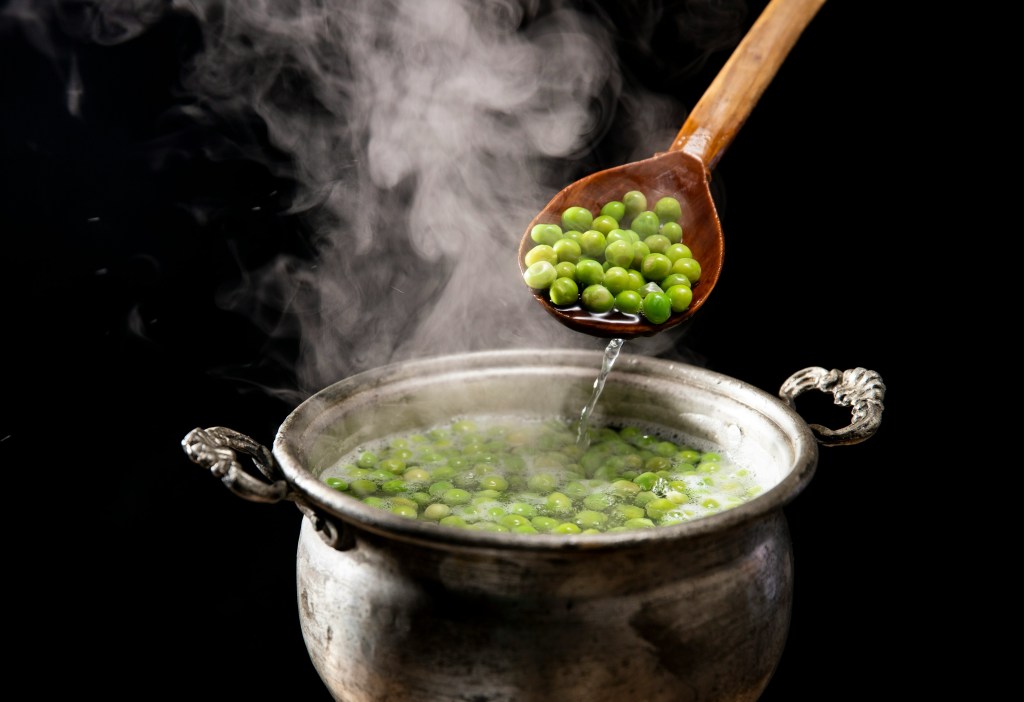
Try as I might, I simply cannot enjoy the taste of cooked peas. I like pea soup. I like snap peas. I like those dehydrated pea pods that are allegedly a healthier option than potato chips. But there’s just something about the taste of cooked green peas that makes my tastebuds twang and my body shudder.

This, in spite of the fact that I am, if anything, too convictional about the importance of being able to enjoy every good edible gift that God has given for our sustenance. When my kids call a certain food disgusting there is a part of my soul that registers that as a major problem and a worrying portent of a less joyful future for them. My wife, thankfully, is always on hand to remind me that disliking certain foods is quite normal and not something that always needs to be addressed as if it’s a great injustice against the Creator and against us, the vice-regent parentals he has appointed for these particular offspring.

Yes, the humble cooked pea reminds me that even when we have tried our best, the freedom to enjoy something is, at the end of the day, a gift from God. In this fallen world, we simply cannot always bring our bodies to enjoy everything that is, in fact, made for our enjoyment. There will always be some things that are fundamentally good that our bodies will register as bad, that we just won’t like. Sometimes we can change this. Often, we can’t.

When it comes to missionaries enjoying the local culture of their people group, these dynamics are also present. Missionaries are only partially responsible for their ability to enjoy the good parts of the local culture. But much of that ability is simply the mysterious gift of God.

It’s a grace and a help when a missionary is able to enjoy the good aspects of the local culture. Missionaries labor in what some studies have shown to be the most stress-inducing roles on the planet. Along with the normal troubles of life and ministry, they must also constantly reject and navigate the dark, twisted parts of a foreign culture – and there’s often much of this in a place that’s been cut off from God’s word and his people from time immemorial. These dark and distressing parts of culture are present in all kinds of unreached contexts and seem to be especially highlighted in isolated, tribal cultures.

Yet every culture retains aspects that still, somehow, beautifully reflect the image of God. These might be the outer layers of the culture, things like food and clothing and customs. They might be the inner layers, things like values and preferences and what is understood to be real. These are the aspects of the culture that point back to a good creation in the beginning and point forward to the strengths of the future Indigenous church. These parts of the culture are worthy of delight, even if they are significantly different from the good parts of the native culture of the missionary. When a missionary is able to delight in them, his life and work will be easier. When he’s not, it’s an extra burden that he must carry.

Now, I’m persuaded that missionaries should earnestly seek to appreciate and even enjoy the good in their focus culture. I believe that the effort to do this is the natural outworking of mature missionary love and humility. If a missionary does not even try to taste and see the goodness of a culture that is, for example, more people-oriented than time-oriented, then something is likely going wrong at the level of the heart.

But I also concede that this mature posture and effort of a given missionary may not produce the desired result. A missionary may try his hardest to enjoy the local music or local cuisine and, after years, still find himself barely able to keep it down. They may labor to know and understand the upsides of impromptu house visits, but still only feel them as incredibly stressful intrusions. When this happens, a missionary has come up against the wall of God’s mysterious sovereignty as it applies to our freedom or lack thereof to enjoy his good gifts.

This is why you need to pray for your missionaries to be able to enjoy the local culture. Because a significant part of their ability to do this is not in their hands at all, but in God’s. I have a good friend who served in a neighboring country in Central Asia. This friend, a godly brother, simply hated tea, yogurt, and olives – all major staples of his region’s diet. He tried his best, but nothing he did could change these preferences. On the other hand, I have known missionaries who were strangely drawn to the cultures of a different part of the world from the time they were children. What accounts for the difference? Certainly, nothing that they did. It was a gift given or not, plain and simple.

I genuinely enjoy many aspects of our Central Asian culture. Some of this is the result of intentional effort, tastes that have been acquired as it were. But some of it I can’t explain. Why should my heart come alive in the Central Asian bazaar when some of my expat friends hate the crowded, loud, and smelly nature of it? Why should I enjoy fizzy fermented yogurt water sprinkled with dill when it makes so many want to gag? I can’t explain these things other than they are gifts that I must learn to steward well. Perhaps someone has been praying for me.

Missionaries’ lives are full of so many things that are hard, that are draining. Small as it might seem, when they are able to find some measure of delight, joy, and even refreshment in aspects of the local culture, this makes a difference in their ability to remain on the field. When they don’t just know that something is technically good, but they are free to also feel its goodness, this is a real grace. And it’s encouraging to the locals as well.

So, pray for missionaries to be able to enjoy the local culture. Pray that they would be able to appreciate and delight in all of the good aspects, even if they’re wildly different from the good aspects of their own culture. Pray for me and my family in this area as we get ready to head back to the more culturally difficult of the two cities we’ve lived in in Central Asia.

And, while you’re at it, pray for me to be able to enjoy cooked peas. If God has created something good, then I want to be free to taste it as such.

If only 27 more friends join us as monthly supporters, we should be 100% funded! If you would like to join our support team, reach out here. Both monthly and one-time gifts are very helpful right now. Many thanks!

For my list of recommended books and travel gear, click here.

Photos are from Unsplash.com

Who Stepped in The Baptism Cake?

Manuel* was ready to be baptized. And since it was late Spring, the church opted to plan a baptism picnic. From where we were living, a short trip into the mountains would take us to a nice lake area created by a large dam. This is a favorite picnic area for locals since the lake and the river proceeding from the dam mean opportunities for swimming and even the occasional rental jet-ski. Hence why it can also be a good fit for baptisms. Some readers may recall that this is the same area where once, during the worst dust storm in decades, we had to buy our kids marijuana-themed underpants.

Beforehand, the women had divided the food responsibilities amongst themselves. My wife was assigned the unenviable task of bringing what in the local language is called the “sweety,” i.e. the cake. Now, locals tend to prefer cakes that look like they are on their way to prom but taste like cardboard. We Westerners don’t care as much about how fancy the cake looks, but we like it to have lots of delicious icing, which locals say makes it way too sweet. This is a bit confusing to us since they like to eat baklava with Coke, which we find way too sweet. In any case, turns out the happy middle ground is sweet-ish desserts like banana bread, carrot cake, and other breads/cakes of this genre. So, my wife had made a carrot cake of this variety (with no icing) in a large glass casserole dish. It was stashed in the back of our family’s Kia SUV, along with some other food and picnic supplies.

As usual, we all met up at a gas station on the edge of town in order to buy any needed supplies and to rearrange the food and passengers in whatever vehicles we had. In all of the mixing and matching, Patty* and her teenage daughter ended up with us, and this somehow meant that our two young kids were asked to clamber up into our vehicle through the back hatch of the SUV. This had them climbing over the food. So, of course, one of them stepped directly in the middle of the baptism cake. The cake had been covered in a layer of plastic wrap, but the imprint of a little foot in the middle of the cake was unmistakable. Oh well, we thought, we’ll deal with that later. It was now almost lunch time and we still had an hour’s drive ahead of us.

To find a good baptism location, we’d need to consider several factors. First, the water would need to be deep enough, slow enough, and easy enough to get in and out of. Second, the spot would need to be both private enough and public enough for a Christian baptism in a context of moderate Islamic persecution. Third, its picnic potential would need to satisfy the majority of the locals – who by then we’d learned love to argue ad nauseam about the pros and cons of various picnic locations. American men pride themselves on their superior opinions about barbecuing, road trip methodology, thermostat settings, and the like. Central Asian men pride themselves on their superior opinions about being able to find the perfect picnic spot.

The first location that we drove to was a picnic house of sorts right up alongside the river. It had been vouched for by Mr. Talent* as an ideal location. Next to the small house, there was a large covered cement veranda for the picnic meal, complete with metal stairs that led down into the current. But one look over the railing down at the fast-moving water had Manuel shaking his head. Like most locals, Manuel was not a great swimmer – and that current was fast and strong, freezing, several feet deep, and running over slick rocks. Even though I had grown up swimming in the rivers of Melanesia, I also wasn’t confident that it would be safe to put a big man like Manuel under the water in a place like that.

Much debate ensued with Mr. Talent vigorously defending his chosen location. At last, we all decided to pile back in the vehicles to go to a spot that Frank* claimed had nice and slow-flowing water and lots of greenery. By now it was past lunchtime. Another fifteen minutes of driving brought us to the picnic spot that Frank suggested. It seemed to have been some kind of smaller river created by an overflow pipe from the dam. It also seemed like it had been very popular this season because it was trashed. Watermelon rinds, flies, sunflower seed shells, and evidence of hookah smoking were everywhere. The water itself was slow enough, but it was quite dirty, even stagnant. The whole place smelled of rotten eggs, plus there was no longer any good ground for our picnic mats that had not yet been trampled into mud. Once again, heated debate ensued.

By this time, Patty was starving. Patty, a foodie and quite the impressive chef herself, decided that it was no longer logical for her and her daughter to wait for these men to make up their minds. She needed to eat something. So, she opened up the back of our vehicle to start rummaging through the food. This is when Patty made a noise and held up the cake to show it to us. To our great frustration, we saw that there were now two little footprints in the baptism cake. We assumed this would make the cake inedible, but while we lectured our offspring about watching where they were stepping, Patty simply grabbed a disposable fork and started eating the cake directly from the dish – though carefully avoiding the areas with the little footprints.

At some point, Manuel spoke up, telling the crowd of haggling and gesticulating men that he had a spot that he knew at the upper part of the lake which would do just fine, at least for the baptism. Everyone seemed good to defer to the actual person getting baptized, so a decision was made that a smaller group of us men would drive up to this spot. Once we were finished the dunking we would all meet back at the original location that Mr. Talent had chosen. The women greeted this news with nonplussed expressions. The kids were starting to lose it, it was getting hot, and all of us were getting hungry. Patty and her daughter, for their part, were hiding behind our vehicle, making good work of the baptism cake.

Thankfully, this third baptism location seemed like it would work. The water of the lake was warm, still, and deep enough. The only issue was the depth of the mud. As you stepped into the water, your feet sank down into many inches of brown muck which sent little chocolate clouds billowing up around you. I double-checked with Manuel that this really was okay. But he insisted that this would do just fine. So, one of the local brothers and I waded out and flanked Manuel in waste-deep water. We asked him the baptism questions, then, based on his profession of faith, together put him under the water in the name of the Father, the Son, and the Holy Spirit. He came up out of that muddy water beaming with joy. I was reminded that, imperfect though our day had been, baptism is still an amazing thing.

We were a happy vehicle driving back down to the picnic house, where we knew hours of drinking chai, eating skewered meat, singing worship songs, and fellowshipping awaited us. To my great amazement, when we arrived, my wife and Patty were passing out little cubes of baptism cake. I raised my eyebrows and gave my wife a questioning look.

“There was a little bit left between the footprints and what Patty had scarfed down,” she said, “so we just cut around those parts.”

I stared down suspiciously at my little chunk of “sweety” that had been through so much already that day.

“Just eat it,” my wife said with a sly smile. “Nobody has to know.”

So I did. I ate my little piece of baptism cake. And it was downright tasty.

We will be fully funded and headed back to the field when 42 more friends become monthly or annual supporters. If you would like to join our support team, reach out here. Many thanks!

For my list of recommended books and travel gear, click here.

Photos are from Unsplash.com

*Names have been changed for security

Healing in this Age and Fresh Octopus in the Next

In recent months we have been witnesses to a quiet miracle. One of the deacons of our home church almost died when a car hit him while he was riding his bike to work. But God has not only brought him back from the brink of death but also stunned the doctors with the speed of his recovery.

Initially, things didn’t look good. Bryan* suffered dozens of fractures, brain swelling, and lots of internal bleeding. For several weeks it wasn’t clear if he was going to pull through. Bryan was one of the co-leaders of the home group we’ve been a part of during this season, so we had a close-up perspective of how everything was developing.

First, I must say that it is times like this when you truly witness the power of the local church. Our church immediately rallied to provide meals, childcare, and other help for Bryan’s family. The meal schedule was completely filled up for weeks on end within just a couple of hours of it being sent out. And brothers and sisters from the church regularly came by to visit and encourage Bryan and his wife, who was spending most days by her husband’s side in the ICU. Those who doubt the love and power of a local church need to see it in action when there’s some kind of emergency like this.

I was able to visit the ICU several days after the accident. Bryan was mostly under sedation, had a trach in his throat, and was covered in bandages, bruises, dried blood, and splints. At that point he was showing some response to male voices, so his wife encouraged those of us visiting to talk with him and to sing a hymn. I didn’t notice any response during that first visit, but we prayed hard that he would soon be able to breathe on his own as well as fight off the pneumonia that was getting worse. His wife, for her part, was remarkably steady and joyful, clearly being sustained by the prayers of God’s people.

The next time I visited was about a week and a half later. He still had the trach in his throat and looked largely in the same condition, but he was a little more alert. He was off and on able to make eye contact, squeeze hands, and give a thumbs-up. It was heartening to have even this level of basic communication with him again. Amazingly, it seemed like he had pulled through and was going to make it. But he would need many weeks, if not months, of slow recovery.

I came back to see Bryan again one week later. I was stunned. It was his first day sitting up in a recliner chair next to his bed. And he was fully and remarkably conversant, even though it was clear that his injuries were affecting his memory somewhat. Sometimes he would ask the same question he had asked earlier, or get confused about certain details. But the two of us spoke in depth for about an hour and a half. Most of the time was Bryan telling me how encouraged he was by God’s goodness toward him and his family.

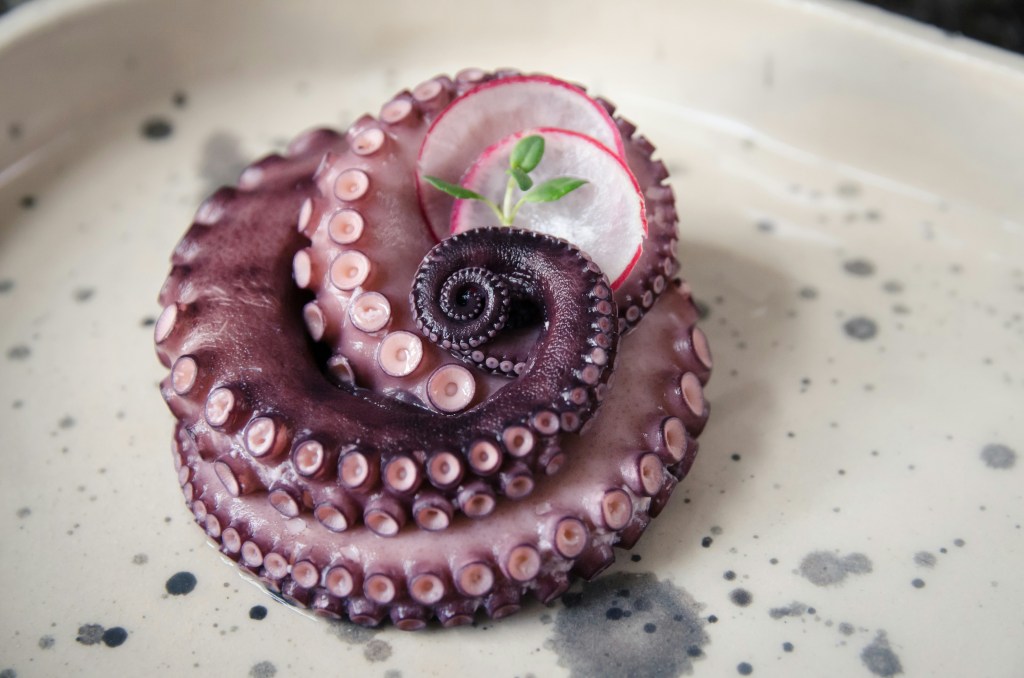
Bryan is a chef by profession and in previous seasons we had spoken of this passion of his, how he felt like God had given him a particular delight in making amazing food and serving others in this way. We had even spoken before of how these things might be reflected in the New Heavens and New Earth. How might a chef occupy himself in the new creation? I decided to turn the conversation back toward this topic and to ask Bryan about the first thing he would do in the New Jerusalem after spending time with Jesus face to face. I couldn’t help but laugh at his answer.

“Fresh octopus! I’m going to cook the freshest and most amazing octopus.” Bryan’s blue eyes gleamed and his head shook as he said it. “There’s nothing like it.”

Why not? Who’s to say the New Heavens and New Earth won’t have fresh octopus for those the king has called to be the chefs of his kingdom? And if it can be stunningly delicious in this age, then just imagine the festival of flavors to come with it in the next. I told Bryan that I would gladly take a break from perusing the New Jerusalem library’s history section to join him for this particular seafood of the resurrection.

Just a couple weeks later Bryan was out of the hospital and back home. This past month he’s been able to attend our home group again and we’ve been able to talk about what he remembers about his time in the hospital. He can’t recall most of it, including our conversation about fresh octopus in the resurrection. But he did have a good laugh when I told him about what his answer had been to my question.

The doctors are stunned. Bryan’s body naturally should not have healed in the time that it did. It seems that God responded to the countless prayers being made on his behalf by allowing his healing to take place at 1.5 or 2x speed.

We who are Christians should be overjoyed by this, but we should not be surprised by it. As Lewis points out in his book, Miracles, the creator has certain rights over his creation which means he is free to alter the speed, scale, or direction of the processes he has created whenever he wants to. So water becomes wine instantly, rather than this needing the many months normally required. Storms are calmed at a word, rather than slowly dissipating as the weather system moves on. And the broken bodies of bike-riding deacons heal themselves at rates that confound modern medicine.

One day death itself will move in reverse direction and dry bones will put on flesh and come alive. On that day, it is said that there will be a feast. As for me and Bryan, we’ll be keeping an eye out for a particular dish – freshly prepared octopus.

To support our family as we head back to the field, click here.

For my list of recommended books and travel gear, click here.

*Names have been changed for privacy

Photos are from Unsplash.com

A Visit to Curious Kebab

If there is one restaurant that my family misses the most from Central Asia, it would be Curious Kebab. The name of the restaurant comes from the first name of its owner, his name being a local language term that I’m here translating as highly curious. But its semantic range also includes concepts such as excited, passionate, highly anticipating, etc. All of these possible definitions would be appropriate when describing how my family feels about this particular culinary establishment. We – and the others we’ve converted – feel that it’s the tastiest kebab spot in the whole country – if not the world.

If you were to visit me in the city we last lived in, and we were to set up a lunch meeting, I would definitely suggest we go to Curious Kebab together. Here’s what that would be like.

First, I would send you the pin for our old stone house on the northern edge of the bazaar. Neighborhood street names and house numbers are a fairly new thing, so most locals don’t use them and they’re not yet integrated into things like Google Maps. It’s better to just send a pin. Once you’ve arrived, I’ll come out of our courtyard gate and undo the chains strung up on our street, the neighborhood’s vain attempt to keep bazaar shoppers from taking over all our street parking. Once we’ve got you parked, ideally underneath the excellent shade of a sabahbah tree to protect your car from the heat, we’ll head downhill on foot toward the center of the bazaar.

We’ll most likely take Soapmakers Street, since that’s the quickest route, about an eight-minute walk. These days there’s no longer any soap being made here. Instead, the street is full of shops that sell birds, makers and sellers of traditional clothing and shoes, hardware shops, a smattering of tea houses full of old men, and hole-in-the-wall restaurants. We’ll also pass a small hotel where we once had a short-term team stay. They’ve got a pet falcon in the lobby and very affordable prices, but all their rooms do have burns in the carpet from hookah use and are squatty-potty only.

Soapmakers Street is mostly trafficked by men and has narrow, uneven sidewalks. So, if there are women in our group or small kids, or if we need more protection from the sun or rain, we’ll instead walk down a different street a few blocks to the West, which I’ll call Juicemaker Street. This street is full of small fruit juice cafes, pharmacies, and shops that sell women’s clothing or jewelry. If anyone needs some gut strengthening before our kebab lunch, we might stop for a cup of fresh pomegranate juice. Most of the pedestrians on this main artery of the bazaar are women – about half with heads covered and half not – and the sidewalks are broad, even, and mostly shaded, which makes for a more relaxed experience for any ladies or kids in our group.

The arteries of the bazaar are set up roughly like a spider web, with the main roads leading down toward the old center. At the center of the bazaar is an impressive old colonial administrative building with statues and gardens. This faces the center of the intersection, where there’s a small covered pagoda of sorts which has been used in the past by traffic police but also used by dictatorial governments to hang dissidents. This center area of the bazaar is typically bustling with shoppers and sellers, traffic moving more slowly than the pedestrians, and the sounds of street musicians playing traditional melodies. If there are protestors, this is usually their destination, with the security police and their tear gas hard on their heels. But most days it’s a happy and energetic place, humming away under a massive painting of the mustachioed sheikh who led an uprising against the colonizers.

Just off of this intersection, there’s a small network of alleys, right at the corner of Soapmakers Street and the street named after the legendary blacksmith tied to our people’s origin myth. A small fruit and veggie sellers area congests the opening to this alley, so we would weave through the carts piled up with produce and duck into the first alley. After passing a dry cleaner and some shops selling CDs and electronic gadgets, we’d come upon another alley flanked by a bakery on the right and a tea shop on the left. A few paces up this tiled alley brings us to Curious Kebab.

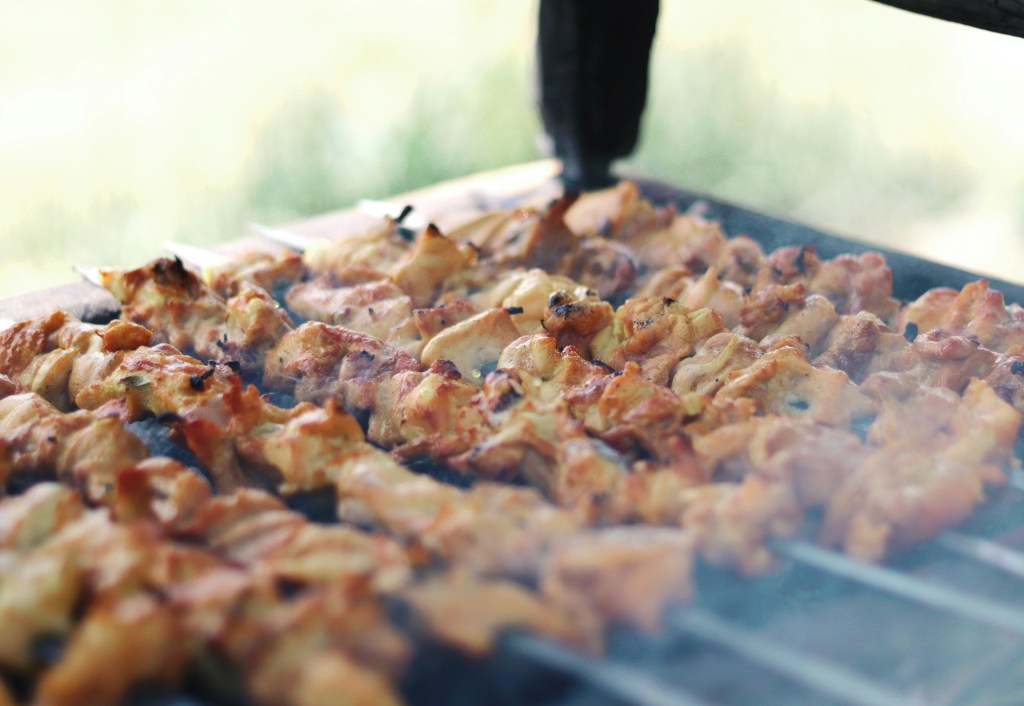
Curious Kebab has its kitchen grill area visible through large glass windows that we can see as we approach. The windows display rows of sword-like skewers with ground lamb pressed on them and narrower skewers of chicken or beef chunks. There are also skewers lined up of bright red tomatoes. We can also see the furnace grill built into the back wall where the meat is cooked. We can see the small crew of two or three who work in this area, chopping vegetables, preparing the meat, and turning over skewers on the grill. This is usually where the man himself, Mr. Curious, will spot us.

“My American donkeys!” he will likely holler upon spotting us. Then he’ll come out, laughing, and give us fist bumps with his mincemeat-splattered hands.

This is a running joke between Mr. Curious and me and my friends. Our Central Asian people group finds donkeys downright hilarious and also somewhat disgraceful. The term donkey can be used both as a terrible insult and as an affectionate term, depending on how you are using it and for whom. To tell my best friend he’s a male donkey means I think he is brave and fearless – a Chad in contemporary internet parlance. But call someone a donkey, son of a donkey, and you better be ready for a fight. Mr. Curious, to have fun with all of this, has decorated Curious Kebab with pictures and artwork of donkeys on every wall. Somewhere along the line he started referring to us repeat foreign customers as his American donkeys. Because his eyes light up when he says this, and because he calls himself a donkey as well, it’s clear that for him this is meant as a backhanded term of endearment.

Mr. Curious, after greeting us warmly in his British-accented English, will insist that we go inside and find a spot to sit down. Inside the two small adjoining rooms that make up the restaurant, we’ll look for an open table and crowd around it. Because Curious Kebab makes excellent kebab and is only open for lunch, it’s almost always packed. We’ll need to wave down the server and tell him what we want. I highly recommend the spicy garlic kebab, a skewer of minced lamb meat with garlic and green jalapeño in it. It’s not very spicy by the standards of other cultures but does have a little bit of kick to it. This is the kebab that I and others claim to be the best in the country.

Mr. Curious worked in restaurants in the UK for over a decade and thus became one of the only local chefs willing to use garlic in his grilling, something that gives his kebabs their distinct flavor. This, and the fact that he only uses local sheep, specifically, the special lump of fat they have above their tails that other breeds of sheep don’t have. This fat is mixed in with the kebab meat and gives it a rich, buttery flavor. If you’d rather have chunks of chicken or beef (or liver) you can’t go wrong there either. Even when it comes to these, Mr. Curious’ special marinade sets them apart in terms of tenderness and flavor.

After ordering, a teenage boy will come by and ask if we would like to order any yogurt water to drink with our meal. If you order one, it will arrive in a personal silvery bowl for you to sip it from. Another server will bring fresh flatbread to our table and give each of us a plate of sliced radishes, lemons, onions, and garden herbs. After about ten minutes, our grilled meat will be ready and we’ll be set to eat. We will likely be the only ones in the restaurant that day to bow our heads and thank God for the food, so we’ll probably get a few curious looks as we do this. The other patrons of the restaurant are locals, but from all over the socioeconomic spectrum. Important-looking men in suits eat here, but so do builders, singers, and teachers. Each one seems to glance at the others a little warily, seemingly worried that their favorite hole-in-the-wall might be getting a little too well-known.

The kebab will be delivered on the plate and already off the skewer. But if you ordered chunks of meat it will come still on the skewer, so you’ll need to grab a piece of flatbread and use it to slide the steaming meat off of the skewer and onto your plate. Most locals will then proceed to enjoy their meal by tearing off a soft piece of the flatbread and using it to scoop some meat into their mouths. I like to mix in some onions or herbs into this bread bite as well. The result is fantastic.

During the meal we can speak with a measure of freedom about ministry stuff, though we’ll need to be careful in case there are English speakers eating nearby. But mostly the other patrons seem more interested in guzzling down their delicious lunch than in trying to figure out what the foreigners are talking about. Still, depending on our surroundings we may be able to talk with great freedom or need to wait until we’re somewhere more private to talk about “M” (missions) stuff.

After we’ve enjoyed our meal, Mr. Curious or one of the servers will come by and ask if we’d like to finish off the meal with the customary small glass of black sugary chai. If your stomach can handle anything more at this point, then I always recommend finishing a meal with chai. Another teenage boy will bring it by from the nearby tea house and we can enjoy it either at our table or at a small seating area out in the alley.

Mr. Curious might come by and talk some more once the lunch rush slows down. He likes to share about his philosophy of life, how he doesn’t believe it’s worth it to kill yourself for money. How he could make a killing if he kept Curious Kebab open for dinner also, but he’d rather spend time with his young family and his friends and enjoy a good drink. It’s all very Ecclesiastes. Mr. Curious is one of those locals who I pray to have a chance to talk more with. There are certain things about his bearing and his conversation that make me wonder where he stands spiritually. He’s tasted success working in high-end restaurants in London and turned away from it. He works hard but is not mastered by work, instead preferring to leverage work for things like spending time with his kids. His lifestyle and sense of humor also seem to indicate he’s not really that impressed with Islam but more likely to be of that breed of local men who saw through its hypocrisy a long time ago. If I’m honest, he reminds me of my friend Hama in the early days. One of these days, either myself or one of my colleagues will get to talk with him more about Jesus.

At this point, the meal is finished. We’ll head up to the counter to tally up our bill and Mr. Curious will tell us at least once that he doesn’t want us to pay. But we’ll insist and hand over the money to either him or one of the other grillers. Then, we’ll walk back out into the bazaar, either to explore its many alleys or to wander back up Soapmakers Street to my place.

The bazaar is humming, the tea glasses clinking, the smell of baking bread, roasting meat, and the gutter funk all mixing in the air. You are now one of the privileged few foreigners who have eaten at Curious Kebab, certainly the best kebab in the city – and possibly, one of the best kebabs in the world.

To support our family as we head back to the field, click here.

For my list of recommended books and travel gear, click here.

Photos are from Unsplash.com

A Freezer Full of Pork Sausage

There was a season early on in our marriage where we were very broke. At the time we were doing ministry with Muslim refugees in Louisville, KY. We were seeking to make ends meet through a combination of free rent (since we lived in a refugee resettlement apartment complex and put on community events for the residents), part-time support from Christian friends given through NAMB, and sales of looseleaf Central Asian chai. Needless to say, things were tight.

One of our partner churches was a very small church in the rural midwest. There were around twenty members, and most of them would have also been struggling to get by. I remember one prayer meeting where a man confessed, in tears, that he had been bitter about eating only deer meat. He couldn’t afford to buy meat from the grocery store, so his family had to rely on what he shot for their protein. The man asked for prayer that he would be grateful for the deer meat that God had provided them.

The financial support from this church wasn’t much, but it meant all the more knowing that they were giving to us out of their poverty, in a way that reminded me of how the Macedonians had given to Paul. There is a danger of falling into an entitlement mindset when we live off the giving off other believers. Churches like this keep me awake to the wonder of Christian generosity.

One winter, we drove out to spend the weekend with them and the pastor told us that they had recently butchered some pigs and, from them, made a bunch of pork sausage. I didn’t grow up in the rural US, but I did grow up in Melanesia, where pig meat is the most prized and expensive of all meats. Anytime you found out you were going to eat pig, this was cause for celebration. Here was a link between the residents of the midwestern cornfields and the mountain peoples of my childhood. Though here it would not be slow-cooked by hot rocks in a pit in the ground, but fried up in a cast iron skillet.

Truthfully, on that trip I had felt a little disappointed that the church hadn’t been able to give a bit more in the way of funding. Though, of course, I was happy to find out they were planning on sending some pork sausage home with us. I could not have predicted just how much they were planning to send.

When it was time to load up our car, the pastor filled up an entire cooler’s worth of freshly-made pork sausage and fresh deer meat. As I recall, the cooler was very heavy as I stashed it next to our son’s carseat in the back of our little ’95 Honda Civic. We said thank you over and over for this lavish gift and the pastor and his wife just waved us off, smiling and downplaying it all.

This gift proved to be extra helpful because this was a season where our apartment was constantly full of guests, many of them Muslims. We were committed to opening our home throughout the week to host our refugee friends for lunches, dinners, and late night chai and sweets. These meals gave them a small taste of the community they missed so much and also led to spiritual conversations. But, of course, all of this meant we were regularly emptying out our fridge, freezer, and cupboards in order to feed everyone.

Now, however, we had a freezer full of meat that we couldn’t serve to most of our guests. Muslims are forbidden to eat pork. And we would never dare serve pork as even part of a meal when we were hosting Muslims, since they would find it to be so offensive and disgusting. Yet we had pounds and pounds of pork sausage in our freezer. This meant that my family had meat just for us that lasted for several months. Like Elijah and the widow’s oil, the pork sausage seemed like it would never run out. Throughout one of the most difficult financial seasons for our family, we had abundant meat to eat – and that of the most delicious kind.

In seasons of support-raising, like this one, I am reminded of the sweet provision that came from our friends in that little rural church. My wife and I have brought up the pork sausage many times over the years as an example of God’s kind and unexpected provision. He really will take care of us, whether that’s by hunting deer, monthly support, or even a freezer full of pork sausage.

Therefore do not be anxious, saying, ‘What shall we eat?’ or ‘What shall we drink?’ or ‘What shall we wear?’ For the Gentiles seek after all these things, and your heavenly Father knows that you need them all. But seek first the kingdom of God and his righteousness, and all these things will be added to you.

Matthew 6:31-33, ESV

If you have been helped or encouraged by the content on this blog, would you consider supporting this writing and our family while we serve in Central Asia? You can give here through the blog or contact me to find out how to give through our organization. 

Two international churches in our region are in need of pastors, one needs a lead pastor and one an associate pastor. Our kids’ TCK school is also in need of a math and a science teacher for middle school and high school. If you have a good lead, shoot me a note here.

Blogs are not set up well for finding older posts, so I’ve added an alphabetized index of all the story and essay posts I’ve written so far. You can peruse that here.

Photos are from Unsplash.com

Eleven Expressions of Gastronomic Humility

“Can you guess the secret ingredient in this white sauce?” my wife asked our kids as we finished eating our dinner of rice pasta.

Different kids guessed various foods that mom had snuck into dishes in the past.

“Nope. Out of guesses? It was cauliflower. Orange cauliflower.”

My daughter, who had been enjoying her pasta, immediately pushed her plate away from her, noodles unfinished. “Blech!”

“Hey, now,” I said, “you were enjoying it until you knew what was in it. Do you see the power your mind can have over your tastebuds? Your tastebuds liked it, but because you’ve decided in your mind that cauliflower is gross, you stopped being able to enjoy it.”

“It’s important that we regularly try new forms of food that we don’t like,” I continued, switching into teachable moment mode. “You might be surprised at how much you can enjoy food in one form even when you don’t like it in another. I really don’t like green peas or celery. But I really enjoy green pea soup (especially with bacon in it) and cream of celery soup.”

“Mom, do you think you could hide food that we don’t like in our dinners once a week? So that we could trick our brains into liking it?” said one of our sons, playing the compliant child and overcompensating for his sister.

My wife shook her head and wisely refused to commit to some kind weekly system for this. My daughter, to her credit, started finishing her pasta.

Keeping up with our kids’ ever-shifting food preferences, on top of their health issues, has been a difficult dynamic of this season. We talk a lot about food at this stage of our family life. This is partially because we have lived cross-culturally and have had the privilege of enjoying foods from many different cultures – an experience that may explain why we have one child who wants to grow up to be a chef.

But we also talk about food a lot because we have a lot of food issues spread across our family, including type-1 diabetes, gluten intolerance, dairy intolerance, stomachs that can’t eat after 7:30 pm without throwing up later in bed, and stomachs that can only handle a very limited amount of oily or rich food without triggering Montezuma’s revenge. Finally, we end up talking about food a lot because we are somewhat of a foodie family. We really like food, sometimes too much so. Hot drinks, sweets, crunchy chips, or fancy restaurant food can all too easily become a place our family retreats to for comfort or refuge.

“I think it comes down to humility,” I said to my wife later that night, as we processed the dinner cauliflower conversation. “Just like we want to enter a discussion open to there being some aspect of truth or wisdom that we might be missing, we also want to partially doubt ourselves when it comes to foods that we think we don’t enjoy. It may be that we try something again and something has changed. Or that there’s a new way to eat it, or some new way to pair it, that transforms a food from gross to delicious. We want to stay open to that. In this way, there can be a kind of posture of humility when it comes to food.”

“Could you call that gastronomic humility?” she asked.

“I guess we could,” I laughed, “Gastrumility? Gastro-humility?”

The more we talked and the more I’ve since thought about it, there really is an important link between humility and a wise posture toward food as Christians. What follows are eleven expressions of this kind of gastronomic humility. I’m sure this list is not exhaustive, but these are principles and practices that have been helpful for our family as we wrestle with faithful living and parenting in this area.

  1. We confess that our food is a good gift provided by God and others. We are not entitled to our food. Rather, it is generously given to us by a kind God who is careful to feed his sparrows as well as children. This kind provision is mediated. Many have labored to grow or raise the food, process it, sell it, and prepare it. This should make us thankful and joyful when it comes time to eat, and those who continue to pause to give thanks before we eat. (Matt 6:11, 6:26, Acts 27:35)
  2. We try new foods and new forms of foods we don’t like. When we make a practice of trying new foods, we admit that our preferences are not final nor fixed, but fickle things that can flex and change with time and experience. There is real wisdom in the saying, “Don’t knock it ’til you’ve tried it.” An openness to new foods and new forms of foods correlates to a more joyful life, since the spectrum of God’s good creation that we can enjoy is larger. (Gen 1:31, 1 Cor 10:26)
  3. We eat within the boundaries given to our particular bodies. We acknowledge the health limitations that God has allowed for our particular bodies as a result of the fall. As we find these boundaries (often the hard way), we embrace humility by honoring them, even though we grieve that this is not the way things were supposed to be. In this way, we are good stewards of the imperfect bodies we have been given. We also learn to recognize the areas where we are free to partake and others are not, and instead of grumbling, give thanks for them. (Gen 1:29, 1 Tim 5:23, Phil 2:14-15)
  4. We confess that food is inherently good, even if our own bodies react negatively to it. The fact that my body rejects rich melted cheese does not mean that rich melted cheese is inherently bad or unclean. Rather, God has created every food to be good when it is enjoyed in the proper amounts and ways. I may find that even within these boundaries, the brokenness of my body means I am not free to enjoy it. But this does not then make the food itself bad. I will not let myself call something bad or unclean that God calls good, but seek to accurately name the brokenness in my own body (and sometimes in the ways a good food has been processed destructively). (Gen 1:31, Acts 10:15)
  5. We feast and we fast. Following the commands and examples of the Scriptures, we see that God is honored both by his people sometimes feasting, and sometimes fasting. Both can be holy, both can be beneficial, both should be present in the life of a believer (Matt 6:16, John 2:1-11).
  6. We do not judge those who do not eat certain foods, neither do we unduly admire them. The Bible is clear that some Christians will abstain from certain foods because of their conscience, and that it’s wrong of those who partake to then disdain them. This would also apply to those who abstain from certain foods because of strong opinions about health. We should guard against feeling superior to them. On the other hand, this abstention should not mean that we put them on a pedestal or treat them as if they are living on some higher plane of the Christian life (Rom 14:13-23).
  7. We do not boast or find our identity in the foods we don’t like or can’t eat. Our dietary restrictions and preferences are not meant to be a central part of our identity or our conversation. They do not make us more special nor usually more interesting in conversation. They are the result of the fall and human limitation. While we should feel free to acknowledge and name them, they are cause for sober conversation and even lament, not celebration. If I don’t like green peas or can’t process rich melted cheese, that means I am missing out on good things that others are able to enjoy. The way I speak of these things should reflect this and the fact that food and drink is not central to the kingdom of God. (Rom 14:17)
  8. We are careful with foods that tempt us toward gluttony or addiction. We should notice which foods tempt us to push past the boundaries of wise and healthy consumption, and which foods we want to turn to when we are sad, tired, or anxious. We will need to exercise caution with how we eat these foods and may need to consider abstaining entirely or for a season. (Prov 23:20, 1 Cor 6:12, Phil 3:19)
  9. We use food as a way to love others. God has created food as a central part of human relationships. Jesus models this for us in how he intentionally ate food with sinners and tax collectors. Giving and receiving hospitality is an important way to love others and an important picture of the peace we have with God. Food is good in and of itself, but it’s also to be used to win the lost, help the needy, and bless the saints. (Mark 2:16, 1 Pet 4:9, 1 Cor 9:22)
  10. We strive to glorify God and serve others by enjoying as great a variety of his foods as possible. God made a world full of countless combinations of foods, flavors, and spices. These are put here for our joy and for his glory. There’s also a huge variety of how different human individuals and cultures partake of these vast riches. With an intentional, flexible, omnivorous posture, we put ourselves in a better position to enjoy diverse foods with others and to give God glory for each and every flavor we encounter. (1 Cor 10:26, 1 Cor 9:22)
  11. We look forward to the perfected foods and stomachs of the resurrection. Foods and stomachs are flawed in this age – good, yet broken in many ways. We use this knowledge to actively anticipate the world to come, where we will be given resurrected taste buds and stomachs and will be able to enjoy the full range of God’s good food and drink. In this way, each of our limitations now can be a means of strengthening our longing in the coming resurrection, where we will feast will Jesus. (1 Cor 15:35-53, Is 25:6-8)

Consider these eleven expressions of gastro-humility. Are there others that need to be added to this list? A proper posture toward food is such a difficult thing to find. And judging by the amount of New Testament passages dealing with food, it was difficult for the New Testament believers also. Thankfully, into this tricky discussion the Scriptures give us a ballast, a solid and clear compass we can come back to over and over again, even when we disagree with other believers about what to about food:

“So, whether you eat or drink, or whatever you do, do all to the glory of God.” (1 Cor 10:31)

To support our family as we head back to the field, click here.

For my list of recommended books and travel gear, click here.

Photos are from Unsplash.com