If You Don’t Evangelize at Home, You Won’t Overseas?

In this post I hope to offer a qualification to a good general principle. I have often heard it said that if you don’t share the gospel in your home culture, you won’t share it in a foreign culture either. There is no sanctification by aviation, it is said. I largely agree with this sentiment. Whether you live on mission at home is a very good indication of whether you will live on mission overseas or not.

However, I have also spent many years of my life living in places where it’s actually easier to share the gospel than it is in the secular West. Frankly, the Western church needs to know that it’s hard to share the gospel where they live compared to many other parts of the world. It’s not just that we all struggle with fear of man. Western culture itself has built-in societal mechanisms to shut down conversation with others about religious things. Many other cultures don’t do that to the same extent. Sure, the government won’t get you in trouble for sharing the gospel in the West. But believe it or not, it’s actually easier to share the gospel in a context where the people are hungry for it, but the government will arrest you. In the West, the government may be fine with it, but the people are prone to be offended.

Now, this doesn’t mean that Christians in the West should excuse themselves from sharing the gospel. But open admissions of difficulty are often helpful in and of themselves. They help us adequately prepare for the task at hand. Yes, it’s tough. So what do we need to do to account for the toughness?

But the fact that it is often harder in the West might also mean that some need to go overseas in order to get training in how to evangelize. Common experience dictates that trainees need to begin with tasks that are more attainable as they work their way up to more difficult tasks. This provides them an opportunity to gain experience and confidence as they progress toward greater challenges. In this vein we start kids off with pool noodles as they work their way toward swimming on their own and we train teenagers to drive in parking lots or country roads before they get on the highway.

For some in the category of trainee, newer disciple, or even veteran believer who has never shared the gospel regularly, dropping them into a foreign context just might be the most helpful thing for their growth in evangelism.

Some foreign cultures are very comfortable speaking openly about religious things. In our corner of Central Asia, the first things many want to know about are our views on Trump and our views on Islam. It’s as if the Western rule of “no politics or religion in small talk” has been flipped on its head. This makes our overseas context a wonderful place to practice and grow as an evangelist. When we or our visitors are spending time with locals, there tend to be many softballs thrown inviting a gospel presentation and lots of room to make mistakes. I know that our setting is not unique in this regard.

Foreign cultures can also be helpful training grounds for evangelism because we are often freer from the fear of man when speaking through linguistic and cultural barriers. In our home culture we feel how awkward a certain direct question about sin or death might be. In another culture, we initially don’t feel this. We instead feel greater freedom to be as blunt as we should be, blissfully ignorant as we are of how awkward that kind of a question was. This can be helpful as we come to see the good fruit that can come from direct gospel conversation, regardless of the awkwardness or strangeness of it. Greater gospel sharing leads to both greater willingness to do the awkward thing and a greater ability to make gospel conversations natural.

A particular intentionality toward spiritual things also tends to accompany us when we are in a foreign context. Whether it’s a one-week trip or a one-year term, the constant strangeness of our surroundings reminds us of the purpose of our presence in said foreign land. We are here to share the gospel. We have a limited time to do it. This kind of intentionality naturally leads towards more actual gospel proclamation. We think about it more. We pray about it more. So we share more. In our home cultures we can be in danger of a certain spiritual forgetfulness. Because everything feels so familiar we can forget that we ourselves are spiritual strangers and sojourners, placed here for a particular mission.

If you don’t share the gospel at home, you won’t share it overseas. This is a trustworthy statement. At the same time, some may need to go overseas in order to learn the confidence, craft, and intentionality required to share the gospel regularly back at home. This argues in favor of short term and mid term mission assignments to locations where this kind of growth can take place. Not sure how this kind of a trip can take place? Well, myself and hundreds of other missionaries would be overjoyed to help your church find the right kind of setting for a short-term trip that helps your people grow in evangelism (once the post-pandemic world returns to greater normalcy in travel, that is).

Helping timid evangelists grow in their craft and confidence may not seem to make a huge impact on the work of long term missionaries. But it would be a worthwhile investment in the saints of partner churches nonetheless. We can’t always trace the Spirit’s plans. It may be that a timid believer finds his evangelistic gifting while on a short term trip overseas. Coming back home, he is then helped to live a more faithful evangelistic lifestyle. A coworker he then leads to faith ends up overseas long-term himself, leading to breakthrough in an unreached people group. Stranger things have happened in the advance of the kingdom.

Let us strive to share the gospel faithfully no matter where we live. “Woe to me if I do not share the gospel!” (1 Cor 9:16). Yet let us also keep our eyes open to those places that can be strategic training grounds for Timothy-types who might need a season overseas as solid preparation for living faithfully back home.


Some Will Walk Away Because We’re Not Conservative Enough

[1] Now the Spirit expressly says that in later times some will depart from the faith by devoting themselves to deceitful spirits and teachings of demons, [2] through the insincerity of liars whose consciences are seared, [3] who forbid marriage and require abstinence from foods that God created to be received with thanksgiving by those who believe and know the truth. [4] For everything created by God is good, and nothing is to be rejected if it is received with thanksgiving, [5] for it is made holy by the word of God and prayer. (1 Timothy 4:1-5 ESV)

We’ve been studying through 1st Timothy as a team during our digital team meetings. I highly recommend working through books of scripture with your church-planting team. As always, you will find the word of God stirring your affections for the gospel as well as emphasizing things that we might otherwise neglect. When the application lens is not only personal, but also with a view toward facilitating cross-cultural church plants, these studies can make for fascinating and helpful discussion. They can also alert us to dangers coming our way that the church has been facing from the beginning, as this passage does here.

Paul here highlights a certain stream of false teaching, one that is ultimately demonic, but which is facilitated through false teachers. This brand of false teaching is more conservative than the gospel. Specifically, it forbids certain created things (marriage, foods) and by the way it does so it denies the goodness of God’s creation. This is likely some brand of asceticism, that philosophical plague that has unceasingly dogged the church, teaching or implying that physical matter is really evil and that only the spiritual is good. In asceticism, the “truly devoted” Christians will give up these lesser physical things to try to reach a higher plane of spiritual existence or enlightenment. Paul points out that some will actually walk away from faith in the gospel to go down this more conservative road, when instead they should have acknowledged the goodness and freedom of God’s creation – where everything can be made holy by thanksgiving, the word, and prayer.

Some will walk away because Christians who live by the gospel are not conservative or radical enough for them. While individual Christians may gouge out an eye if they stumble in certain ways (e.g. alcohol or meat sacrificed to idols), that’s not enough for these who are falling away. They demand a different posture from the believing community toward certain created things and a new law forbidding them altogether. In doing so, they depart from true Christianity.

In our corner of Central Asia, we usually have local believers accusing us of being too conservative. Having cast off the restrictions of Islam, many struggle to understand and embrace the high moral standards the free gospel of grace calls us to live by. The momentum of the pendulum swings hard in the direction of licentiousness. They are shocked to find out that Jesus forbids sex outside of monogamous marriage, that the Bible forbids drunkenness and lying, and that we are called to give our money generously to the church. Isn’t God all about love and grace? What’s with all these restrictions? This isn’t Islam, after all!

And yet we are helped to anticipate others falling away in the other direction. Islam and Central Asian culture have very strong categories for the clean and the unclean. Matter is in a sense divided between good matter and bad matter. Pork and alcohol are two of the better known unclean substances. But if you dig a little deeper, you discover an underlying struggle to categorize all of life as clean or unclean. Religious call-in shows are full of old women calling in to get the mullah’s advice on the minutiae of whether doing something in a certain way is actually clean or unclean. And Islamic teaching often emphasizes the uncleanness of physical bodies – especially the uncleanness of the female body.

For some who profess faith, it will be a scandalous idea that one is not made spiritually unclean by pork, alcohol, praying without washing, menstruation, lovemaking, wearing nail polish, having cats and dogs as pets, or a hundred other things. Some will make it through this struggle. The Holy Spirit says that others will not. They will sadly go on to make new laws, forbidding good created gifts in such a way as to spit on God’s handiwork. It is good for us to be aware of this so that we are not shocked when it happens.

As one of my teammates pointed out, we tend to despise certain kinds of matter if they are connected to areas that we personally struggle with. So, my Western family is tempted to feel like some foods or technology are inherently bad because we have struggled with self-control or brokenness in these areas. But in spite of what we feel, the eternal word of God teaches us that everything created is good and can be made holy through thanksgiving, the word, and prayer.

Some will fall away because we are not conservative enough. But we will keep on proclaiming and living by faith in the tension of our own fallenness and the goodness of creation. We may forbid things for ourselves based on our weaknesses, but we will not do so in a way that communicates that substance itself is somehow evil and wrong for all believers. True believers, regardless of their background, come to embrace this gospel freedom and will not be among those who ultimately walk away.

Photo by Antonio Barroro on Unsplash

A Time to Let the Left Hand Know What the Right is Doing

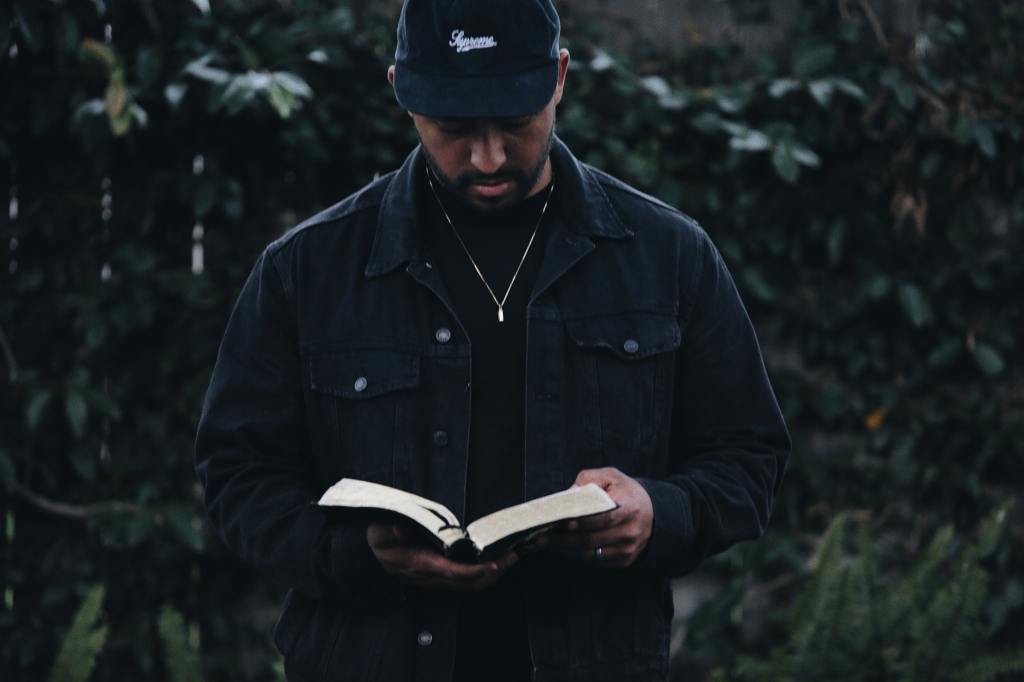
“Brother, if I ever become a follower of Jesus, I’m going to be a much stronger follower than you are.”

Ouch. My friend *Hama was sharing with me what he was learning as a first-time reader of the gospel of Matthew.

“May it be, my friend! But what do you mean?” I asked.

“Well, I would study the Bible every day and I would pray every day so that I could be close to my God,” Hama said.

“But Hama, I do those things almost everyday.”

“You do?!” Hama turned in surprise.

I laughed, “Yes I don’t do it perfectly, but for years now I have sought to begin my day by an hour or so of reading my Bible and praying.”

“Why didn’t you tell me?”

I wasn’t quite sure how to respond. How had I failed to mention my own spiritual disciplines to Hama in the months that we had been friends? I chewed on this question and on the fact that my closest local friend had been assuming the worst about me. This wouldn’t be the last time I experienced this dynamic while working with Central Asian seekers or new believers.

A few years later I was working with refugees in the US. As we sought to have a few join our local church who were professing believers, we kept encountering the same kind of assumptions. The default belief of some of these refugees was that members of the church who were dating were regularly sleeping together before marriage. Others believed that that the pastors who were getting paid by the church were not themselves giving any money to the church. Another time I encountered the belief that the reason we counted the number of people in services was because of some financial scheme. I often wondered, how are they not picking up on what is really happening here?

Later in Central Asia I would find the disturbing assumptions that the missionaries were obligated to pay all the rent for the owner of the home where the house church met. Many even believed that we were paid a certain bonus for each baptism that took place (mine was rumored to be $25,000 per head!). Scores of my friends probably still assume that I work for the CIA in some fashion.

Why would my friends assume these things, even after coming to faith? Part of it is due to their own cultural and worldview formation. They have grown up in the real, fallen world. Central Asia and the Middle East have a strong religious veneer, but underneath the facade everyone has experienced the powerful forces of love of money, sexual immorality, lust for power, and every other manner of sin. They have learned to assume these things are going on as the normal way the world functions.

But I also came to see that I was from a church culture where many of these areas of obedience were kept in the category of open secret. We Western evangelicals tend to assume that others can somehow see our obedience in areas such as spiritual disciplines, sexual purity, and money, without us ever having to tell them directly (with the exception of an accountability partner). And many of us have learned to pick up on very subtle clues or have rightly given one another the benefit of the doubt. If the public teaching is explicit in these areas, then to casually ask someone about their giving to the church or whether they slept together with their fiance before marriage would seem forward and awkward, even in a healthy Western church.

We also know that temptations to pride are real. This keeps us from speaking openly about our obedience, out of fear of seeming prideful or giving ground for pride to grow. Let another praise you, and not your own mouth (Prov 27:2). We don’t want to let our left hand know what our right hand is doing (Matt 6:3). These things are biblical. So we keep quiet about our giving, about the victories of sexual purity, about the ways we’ve been faithful to seek the Lord for years.

There is much good in our allergy to phariseeism. But there is also danger, danger to new believers. It is imperative that we speak openly about our secret obedience with those who are unchurched and new in the faith. They need to hear that we are actually obeying the seemingly-impossible commands of Jesus. They also need to hear from a role model on how we have obeyed the commands of scripture in a practical manner.

I’ve heard it said that children are wonderful observers and terrible interpreters. I believe this is true of many cross-cultural relationships and new believers as well. Many are prone to misunderstand why certain things are happening in the life of the church. Pagan motives will be projected onto believers by those who have been raised by pagandom. It’s our job as their disciplers to be frank with them about many things regarding ourselves – things we might not bring up to other mature believers from our culture for the sake of fighting pride.

Yes, I seek to spend time daily in praying and in the word. This has gone on for years. This is what it looks like for me…

Yes, I give generously to my church. This is what percentage I give at… Here are the other ways we are giving to the poor as well.

Yes, my wife and I were virgins when we got married. This is not impossible. Here’s how we fought for purity…

Yes, I drank alcohol in moderation and never got drunk. This is not impossible. Here’s what that looked like for me…

Yes, all the pastors at my church give money back to the church, even if they are paid by the church.

No, I don’t work for the CIA or for any other government.

No, I don’t get any money for baptizing people! This is a lie.

We will serve new believers and believers from other cultures if we would be more open with them about our secret obedience. But what about not letting the left hand know what the right is doing? The principle of this command is that we should not publicly trumpet our obedience for the sake of the praise of men. It’s all about the motive of the heart. Therefore, if it’s for the sake of equipping a new believer, I am free to take my financial giving out of the realm of open secret and into the realm of frank discussion.

Let’s not assume new believers are able to somehow intuit our secret obedience. They need role models. And let us not assume that they know the “why” of what we do. Let’s make it plain for them. No question about Christian morality should be off-limits. On a personal note, let’s also be gracious when our friends seem to assume the worst about us, our believing friends, or our church. After all, we are part of the kingdom of God – a kingdom that cannot be understood without new eyes and a new heart. Even after receiving these, we all need the grace of frank discussion with a friend… and lots of time.

Photo by Jp Valery on Unsplash