Who Stepped in The Baptism Cake?

Manuel* was ready to be baptized. And since it was late Spring, the church opted to plan a baptism picnic. From where we were living, a short trip into the mountains would take us to a nice lake area created by a large dam. This is a favorite picnic area for locals since the lake and the river proceeding from the dam mean opportunities for swimming and even the occasional rental jet-ski. Hence why it can also be a good fit for baptisms. Some readers may recall that this is the same area where once, during the worst dust storm in decades, we had to buy our kids marijuana-themed underpants.

Beforehand, the women had divided the food responsibilities amongst themselves. My wife was assigned the unenviable task of bringing what in the local language is called the “sweety,” i.e. the cake. Now, locals tend to prefer cakes that look like they are on their way to prom but taste like cardboard. We Westerners don’t care as much about how fancy the cake looks, but we like it to have lots of delicious icing, which locals say makes it way too sweet. This is a bit confusing to us since they like to eat baklava with Coke, which we find way too sweet. In any case, turns out the happy middle ground is sweet-ish desserts like banana bread, carrot cake, and other breads/cakes of this genre. So, my wife had made a carrot cake of this variety (with no icing) in a large glass casserole dish. It was stashed in the back of our family’s Kia SUV, along with some other food and picnic supplies.

As usual, we all met up at a gas station on the edge of town in order to buy any needed supplies and to rearrange the food and passengers in whatever vehicles we had. In all of the mixing and matching, Patty* and her teenage daughter ended up with us, and this somehow meant that our two young kids were asked to clamber up into our vehicle through the back hatch of the SUV. This had them climbing over the food. So, of course, one of them stepped directly in the middle of the baptism cake. The cake had been covered in a layer of plastic wrap, but the imprint of a little foot in the middle of the cake was unmistakable. Oh well, we thought, we’ll deal with that later. It was now almost lunch time and we still had an hour’s drive ahead of us.

To find a good baptism location, we’d need to consider several factors. First, the water would need to be deep enough, slow enough, and easy enough to get in and out of. Second, the spot would need to be both private enough and public enough for a Christian baptism in a context of moderate Islamic persecution. Third, its picnic potential would need to satisfy the majority of the locals – who by then we’d learned love to argue ad nauseam about the pros and cons of various picnic locations. American men pride themselves on their superior opinions about barbecuing, road trip methodology, thermostat settings, and the like. Central Asian men pride themselves on their superior opinions about being able to find the perfect picnic spot.

The first location that we drove to was a picnic house of sorts right up alongside the river. It had been vouched for by Mr. Talent* as an ideal location. Next to the small house, there was a large covered cement veranda for the picnic meal, complete with metal stairs that led down into the current. But one look over the railing down at the fast-moving water had Manuel shaking his head. Like most locals, Manuel was not a great swimmer – and that current was fast and strong, freezing, several feet deep, and running over slick rocks. Even though I had grown up swimming in the rivers of Melanesia, I also wasn’t confident that it would be safe to put a big man like Manuel under the water in a place like that.

Much debate ensued with Mr. Talent vigorously defending his chosen location. At last, we all decided to pile back in the vehicles to go to a spot that Frank* claimed had nice and slow-flowing water and lots of greenery. By now it was past lunchtime. Another fifteen minutes of driving brought us to the picnic spot that Frank suggested. It seemed to have been some kind of smaller river created by an overflow pipe from the dam. It also seemed like it had been very popular this season because it was trashed. Watermelon rinds, flies, sunflower seed shells, and evidence of hookah smoking were everywhere. The water itself was slow enough, but it was quite dirty, even stagnant. The whole place smelled of rotten eggs, plus there was no longer any good ground for our picnic mats that had not yet been trampled into mud. Once again, heated debate ensued.

By this time, Patty was starving. Patty, a foodie and quite the impressive chef herself, decided that it was no longer logical for her and her daughter to wait for these men to make up their minds. She needed to eat something. So, she opened up the back of our vehicle to start rummaging through the food. This is when Patty made a noise and held up the cake to show it to us. To our great frustration, we saw that there were now two little footprints in the baptism cake. We assumed this would make the cake inedible, but while we lectured our offspring about watching where they were stepping, Patty simply grabbed a disposable fork and started eating the cake directly from the dish – though carefully avoiding the areas with the little footprints.

At some point, Manuel spoke up, telling the crowd of haggling and gesticulating men that he had a spot that he knew at the upper part of the lake which would do just fine, at least for the baptism. Everyone seemed good to defer to the actual person getting baptized, so a decision was made that a smaller group of us men would drive up to this spot. Once we were finished the dunking we would all meet back at the original location that Mr. Talent had chosen. The women greeted this news with nonplussed expressions. The kids were starting to lose it, it was getting hot, and all of us were getting hungry. Patty and her daughter, for their part, were hiding behind our vehicle, making good work of the baptism cake.

Thankfully, this third baptism location seemed like it would work. The water of the lake was warm, still, and deep enough. The only issue was the depth of the mud. As you stepped into the water, your feet sank down into many inches of brown muck which sent little chocolate clouds billowing up around you. I double-checked with Manuel that this really was okay. But he insisted that this would do just fine. So, one of the local brothers and I waded out and flanked Manuel in waste-deep water. We asked him the baptism questions, then, based on his profession of faith, together put him under the water in the name of the Father, the Son, and the Holy Spirit. He came up out of that muddy water beaming with joy. I was reminded that, imperfect though our day had been, baptism is still an amazing thing.

We were a happy vehicle driving back down to the picnic house, where we knew hours of drinking chai, eating skewered meat, singing worship songs, and fellowshipping awaited us. To my great amazement, when we arrived, my wife and Patty were passing out little cubes of baptism cake. I raised my eyebrows and gave my wife a questioning look.

“There was a little bit left between the footprints and what Patty had scarfed down,” she said, “so we just cut around those parts.”

I stared down suspiciously at my little chunk of “sweety” that had been through so much already that day.

“Just eat it,” my wife said with a sly smile. “Nobody has to know.”

So I did. I ate my little piece of baptism cake. And it was downright tasty.

We will be fully funded and headed back to the field when 42 more friends become monthly or annual supporters. If you would like to join our support team, reach out here. Many thanks!

For my list of recommended books and travel gear, click here.

Photos are from Unsplash.com

*Names have been changed for security

The Psalms’ Quiet Case For Musical Diversity

“But do we have any precedent in the Bible for incorporating diverse styles of worship?”

The question was an unexpected one. One reason plural leadership is so good is because invariably one elder will come up with a question no one else is thinking of. The rest of us were just assuming that it was right and good to expand our church’s styles of musical worship to better reflect our diverse congregation. It seemed to fit with the Revelation 7:9 vision and with the fact that the New Testament advocates generally for Psalms, hymns, and spiritual songs (Col 3:16), but otherwise seems to leave the details of musical worship up to the wisdom of the local churches – assemblies which were no longer just Jewish, but were fast becoming also Greek, Roman, Scythian, Persian, etc.

The question got me thinking. How much of a case is there in the Bible for the practice of incorporating diverse styles of music in the regular worship of our churches? After percolating on this for a number of years, I’ve become more and more convinced that a quiet but convincing biblical case can be built that God delights in receiving worship in the many musical styles of the world, just as he delights in receiving worship in the many languages and cultures of the world. And that this case can be built from the hymnal of Israel and the early church – the Psalms. This case is built on the history and context of the Psalms, as well as on the nature of music itself.

When it comes to its nature, music is much like language or culture; namely, like a cloud. Music does not sit still. It cannot. It’s always slowly changing and moving, shifting and developing in ways that clearly reflect where it’s been yet defy even the most skillful predictions of where it’s going next. With music, just add time and you will inevitably get substantive changes in method and style. Seeking to ‘freeze’ a musical tradition as that which truly represents a people is just as futile as trying to ‘freeze’ a language. You can protest all you like, but they will go on changing. They are clouds, after all, not mountains. Their nature is a moving one.

This is where the history and the context of the Psalms come in. We are told that Moses is the author of Psalm 90, which would make it the earliest psalm that we have. Moses was likely living and writing around 1400 BC. Of course, the most famous psalmist is King David, writing 400 years after Moses, around 1000 BC. Yet other psalms are attributed to Hezekiah (Ps 46-48), who was living around 700 BC, 300 years after David. The latest psalm seems to be Psalm 137, “By the rivers of Babylon,” which clearly speaks of the Judean exile to Babylon which took place in the 500s. That means there’s a span of roughly 900 years between the writing of the earliest and the latest Psalm.

That’s a lot of time for a given musical tradition to undergo all kinds of natural internal development. Were you to time travel, you’d likely recognize some elements of the music of the Judean exiles all the way back in the music of Moses. But Moses – were he to travel with you to Babylon – would probably be a little offended at what had become of his beloved Hebrew musical tradition. This is because the changes would have been considerable, perhaps as great as if he were encountering the music of a foreign nation.

Add to this the fact that musical style, again, like language and culture, does not exist in a vacuum. Musical styles borrow from one another, just as languages borrow vocab from their neighbors. Instruments and melodies get adopted from one culture to another at perhaps an even faster rate than words since music itself has a quality that seems able to transcend other natural differences. This is why it’s sometimes been labeled “the universal language.” This means that whatever musical traditions Abraham’s household brought with them from Ur probably picked up Canaanite/Hittite influences in the several generations that passed until Joseph’s time. After this, 400 years of Egyptian sojourn and slavery would have made its own significant imprint on the musical style of the Hebrews by the time Moses got to writing the first psalm. Once back in the promised land, another 400 years of musical mingling in Canaan brings us to the time of David. And the centuries of monarchy would have had their own cross-pollination. Finally, it’s not far-fetched to assume that Jewish music would have been influenced dramatically during the exile. Just remember what happened to the Hebrew language.

So, when the Psalter is finally finished in its current form, post-exile, the Psalms represent roughly 1,000 years of the natural diversity that emerges within one musical tradition – as well as the added diversity of external influence from at least Mesopotamian, Canaanite, and Egyptian musical styles. The finalized Psalter, before its melodies were lost, would not have been a ‘pure’ representation of the Jewish ethnic musical style. Instead, it would have been a collection of songs that represented a Jewish synthesis, one representing a long absorption of melodies and styles from many centuries, geographies, and cultures.

Perhaps a Jew in exile singing the Psalms of David would feel similar to how we feel when singing O Come O Come Emmanuel, one of the oldest melodies that we still sing in Evangelical churches. The song’s lyrics are in fact much older, but the earliest record of its current melody comes from France, about 600 years ago. Hum the melody of this song to yourself and notice how it seems to be from a different world. That’s because it is from a different world. It may be a familiar part of our Western European Christian tradition, but every time we sing it we are singing a song from a very different time and culture. For an even older tune, listen to a song from 1700 years ago, Phos Hilaron. Then compare these old melodies with the music of today. Even if you cut out the warp-speed mutations that happened to music in the 20th century, it’s stunning how diverse music can be in one religious tradition.

What’s my point? Essentially, the Psalms are evidence that the songbook of the people of God was one that originally contained a rich diversity of musical styles. We can know this because of the nature of music and because of the history and context of the Psalms themselves. Apparently, God ordained that his people, for centuries, sing diverse melodies, some of which would not have felt like the stirring tunes of their particular generation, but rather the music of other peoples and other centuries. In this, we have a quiet case for using diverse musical styles in our churches.

This really matters, though we don’t typically feel how much it matters until we are ourselves a minority worshipping in the melodies of other cultures and lands. One of our African American pastors recently stood up and shared, in tears, how much it ministered to his soul that our church choir had sung a song from the black gospel tradition when the Anglo-Irish melodies of our reformed circles are our more standard fare. Back in Central Asia, we once took the melody from one of the most requested local worship songs and wrote new English lyrics to it so that it could be sung in the international church where we were members. Since then it has become a favorite song of the church’s many members who are from a Muslim background. We should want to serve the diverse members of our churches with melodies that help the words reach their souls – and those are often melodies from the musical traditions that they grew up with.

This is why it can be so hard for the majority culture of a given church to incorporate diverse musical styles in its worship. Because the melodies the church typically sings are from their culture and tradition, the majority already feel the sweet union of the words and the melodies down in their bones. It can take a while for them to realize that for those from other musical traditions, that double encouragement is not necessarily taking place. But in the Psalms there seems to be precedent for both – singing the melodies that feel like the songs of your people and singing the melodies that feel like you are being transported to a foreign land.

Here it must be said that it is indeed possible to be edified by singing the songs of another people, another culture, another century. It takes time and growth, yes, but it can happen, and it is healthy to learn how to be fed with melodies from the distant past as well as with others that just don’t hit your heart in that way (yet). Keep singing them and meditating on the truth they contain. You may be surprised at what happens to you as those foreign-seeming melodies slowly inch closer and closer to your heart. Just as a deep view of church history and a broad view of the global church serve to strengthen the believer’s head, so equivalent Christian music may serve to expand his heart.

Do we have any precedent in the Bible for incorporating diverse styles of worship in our services? I say yes, and not just in the New Testament. Even in the Old, we see that one style and culture of music is not sufficient for the worship and delight of God. Instead, he quietly included 1,000 years of musical diversity in his Psalter long before he sent the New Testament Church out to write and sing new hymns and spiritual songs to the ends of the earth. The New Testament posture toward musical worship that we’ll see in full bloom in heaven (and even now is flourishing) had its first budding in the Psalter. In it we can see the shoots of both freedom and tradition, service to others as well as room for our own souls to drink deep.

So then, sing to the lord a new song, sing to the Lord, all the earth (Ps 96)! Sing an old song too. And while you’re at it, for the sake of that refugee in your service, sing a foreign one as well.

We will be fully funded and headed back to the field when 34 more friends become monthly or annual supporters. If you would like to join our support team, reach out here. Many thanks!

For my list of recommended books and travel gear, click here.

Photos are from Unsplash.com

The Queen of Snakes

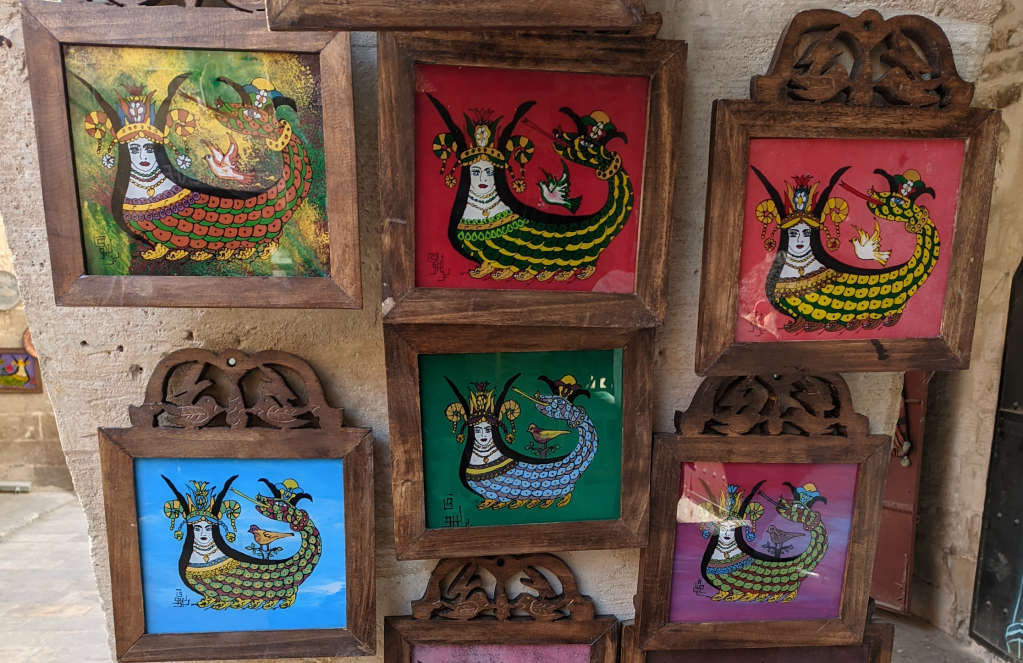
The first time I remember noticing her was when visiting local museums. The exhibits that showed what the inside of local houses used to look like regularly featured wooden chests. Inside these colorfully painted chests were usually blankets and cushions for guests. But on the outside of the chests were mirror fragments – and a painting of a strange woman-snake hybrid. I’ve also seen her hung up on walls as part of a tapestry or framed painting. In the local languages, she is called the Queen of Snakes. And I’m beginning to suspect that she has played a dark role in the historical beliefs of our people group.

The Queen of Snakes was never quite prominent enough for me to pay her much attention. Far more prominent were the evil eye pendants that seemed to show up everywhere. But listening to the Haunted Cosmos podcast got me thinking more deeply about the folk mythology of our people. Turns out there are some disturbing similarities between the Queen of Snakes and the strategies the enemy has used to deceive the nations from the very beginning. First, the story.

The tale of the Queen of Snakes often begins with a young man who is hunting for honey in caves. While exploring deep in a cave, he comes across a massive snake-like creature that has the body and head of a snake on one end and the torso and head of a woman on the other. He is terrified, but the creature tells him that she is not evil, but benevolent. She says that she is able to give him secret knowledge. The young man decides to stay with her and they eventually fall in love. After a long season of happiness, the young man must return to the city. But the Queen of Snakes warns him to tell no one about her, and that living with her has changed him. Now, if his skin gets wet, it will appear as the scaly skin of a snake.

After the young man returns to the city, the king becomes deathly ill. His viziers tell him that the only thing that can save him now is if he can eat the flesh of the mythical Queen of Snakes. No one, however, knows how to find her. But they do know that water can expose anyone who has been in her presence. So, the soldiers of the king go around pouring water on all the citizens of the city. Eventually, they find the young man when his skin betrays him. Under torture, he reveals the location of the Queen of Snakes.

The king’s men then bring the Queen of Snakes to the city. Right before they kill and cook her so that the king can eat her flesh and live, she gives a warning. She says that anyone who eats her head will be poisoned and will die. But if anyone eats her tail (presumably the snake head, but some allege it’s the other way around), they will live. The king, of course, orders that the Queen of Snakes be killed and cooked so that he can eat the tail. The young man, despairing in the death of his lover, eats flesh from the head. But it was a trick. In reality, the tail contained the poison while the head contained secret knowledge from time immemorial. The king dies, but the young man becomes the wisest man in the land and a great sheikh.

Okay, so this is a weird and creepy story. But is that all it is? How has the story of the Queen of Snakes affected the day-to-day spiritual practices of our people group? Well, more research here is needed. But this is what I’ve been able to figure out so far.

First, the image of the Queen of Snakes is believed to bring good luck and protection in general. This follows the theme from the story that she was a source of hidden wisdom. More specifically, the Snake Queen’s image has been used as a talisman to ward off sickness. This makes sense given the power of the Queen of Snakes in the story to provide healing. But the image of the Queen of Snakes has also been used to promote fertility. A picture of her is a very important part of a woman’s dowry – and that picture is then hung in the bridal chamber. In summary, the grandparents of my Central Asian friends believe that the talisman of this chimera provides protection, good fortune, wisdom, and fertility. And they want to make sure that this image is looking down on the marriage bed.

Yep, this sounds Satanic. First, there’s the twisting of the image of the serpent so that what is naturally repulsive and the enemy of the woman is instead believed to be a benevolent being. The most common position on the internet regarding the Snake Queen has her functioning as a symbol and even a patron saint of sorts for the women of our region. Second, there’s the whole theme of secret knowledge that this being promises. A friendly serpent being that offers hidden knowledge gives off some pretty serious Genesis 3 vibes.

But this is not the only way in which the lore around this creature is attempting to usurp power that belongs to God alone. The Queen of Snakes is also held up as giver and restorer of life. She gives fertility and she gives healing. And how does she do this? Well, in the story you have to eat her flesh. Some versions of the story even have successive serpentine offspring incarnating the Queen of Snakes after each of her deaths, meaning that she also possesses the key to new birth and immortality.

Now, in a disturbing – though honestly predictable – twist, the image of the Queen of Snakes has been adopted by LGBTQ activists in our region to promote their agenda.

Once we are back on the ground I need to do more research to see how this demonic element of folk religion is actually functioning among our people group. I need to ask my friends and their sisters, “What do you believe about the Queen of Snakes – and what did your grandma believe such that she put pictures of her up in even the most intimate parts of the home?” But even from the little bit that I know already, certain steps for local believers seem clear.

First, get rid of any Queen of Snakes images that you might have in your house. Sure, it might make your great aunt upset if you burn that talisman painting she gave you, but you really should chuck it – even if it’s only out of an abundance of caution. Yes, the presence of the Holy Spirit protects believers, but this shouldn’t make us cocky. In the mysteries of the spiritual realm, sometimes even objects can be used by the enemy to cause some serious trouble. You may be immune, but Christian history and common sense would indicate that you really don’t want something like that in your house while you’ve got kids who haven’t yet come to faith. Take dominion over your space, and just like Hama and Tara who took down their Islamic paraphernalia during the saga of plastic Jesus, get rid of the snake woman too.

Second, no longer believe and speak of the Queen of Snakes as some benevolent pro-woman character that’s a positive part of your heritage. All the evidence indicates that there’s at least some level of demonic deception involved in this creature. Christians will need a new posture toward this part of their traditional folk art.

Third, proclaim that the things the Queen of Snakes claims power to do are the territory of God alone. He alone is protector, healer, giver of children, and source of true wisdom. In all of these areas, the Queen of Snakes was a liar, a deceiver, and a usurper.

Finally, celebrate the victory that Christ has accomplished over not just Islam, but also over all the dark things of folk religion that clutter up the metaphorical basement of your worldview. Christ “disarmed the rulers and authorities and put them to open shame, by triumphing over them in him” (Col 2:15). When Jesus on the cross crushed the head of the serpent’s seed, he also crushed the power of the Queen of Snakes. Through the open proclamation of that good news in your language, she will no longer able to deceive you, your grandma, or your future bride. And that is very good news.

We will be fully funded and headed back to the field when 43 more friends become monthly or annual supporters. If you would like to join our support team, reach out here. Many thanks!

For my list of recommended books and travel gear, click here.

Photo by Wikimedia Commons

Indigenous Church or International Church?

This video from the Great Commission Council seeks to clarify the difference between an indigenous church and an international church. For many contexts around the world, it shouldn’t be an either/or, but a both/and. Healthy international churches and indigenous churches can work together to see a city reached. The difference is that one ministers in the indigenous language and culture and the other ministers in a globally or regionally dominant language and culture (such as English).

It is of crucial importance that both kinds of assemblies aim to fulfill the New Testament’s vision for a local church. International churches need to watch out for how transience and a “lowest common denominator for the sake of unity” posture can keep them from becoming healthy churches that exhibit all twelve needed characteristics. Indigenous churches likewise need to watch out for how local culture will be a barrier to their growth into full maturity.

We will be fully funded and headed back to the field when 43 more friends become monthly or annual supporters. If you would like to join our support team, reach out here. Many thanks!

For my list of recommended books and travel gear, click here.

How Do You Know Me?

When an outsider unexpectedly knows the culture and language, Central Asian locals tend to respond with astonishment. But not only astonishment. There’s also delight. The kind of delight that comes from being truly seen by someone when you least expect it. In fact, most people can’t help but respond in this shocked and happy way. After all, God delights to be known. And as those made in his image, some part of our core simply lights up when we are unexpectedly recognized, surprisingly understood, really known by another. And when that other is an outsider, a foreigner, then this can create quite the opening.

I’ve not always known what to make of this dynamic, but I’ve experienced it countless times. In fact, I’ve relied on the power of this kind of encounter over and over again in order to enter into relationships or spiritual conversations with others. I love this approach because the other person tends to feel so honored when I can drop one of their people’s proverbs, when I have heard of their people’s story, when I actually know something, anything, about the things they hold dear. Often, this builds such goodwill (especially with marginalized peoples) that an openness to friendship is soon to follow after. But is there anywhere in the Bible where we see this kind of missionary dynamic taking place? Do we have any precedent for “honor-shocking” others through knowledge of them that we are not supposed to naturally have?

This week I was reminded of Jesus’ calling of Nathaniel in John 1. Philip brings a skeptical Nathanael to Jesus, and their unusual interaction goes like this:

[47] Jesus saw Nathanael coming toward him and said of him, “Behold, an Israelite indeed, in whom there is no deceit!” [48] Nathanael said to him, “How do you know me?” Jesus answered him, “Before Philip called you, when you were under the fig tree, I saw you.” [49] Nathanael answered him, “Rabbi, you are the Son of God! You are the King of Israel!” [50] Jesus answered him, “Because I said to you, ‘I saw you under the fig tree,’ do you believe? You will see greater things than these.” [51] And he said to him, “Truly, truly, I say to you, you will see heaven opened, and the angels of God ascending and descending on the Son of Man.” (John 1:47-51, ESV)

Jesus is able to miraculously know Nathanael, that he is “an Israelite indeed, in whom there is no deceit.” Nathaniel is taken aback by this, as we can see from his response, “How do you know me?” This Jesus knew Nathanael’s character when he shouldn’t have naturally been able to do so. He somehow knows that Nathanael is a true Israelite, one who has no time for pretend Messiahs, one who is genuinely seeking the kingdom of God. A proud man might get puffed up by being complimented like this in the presence of others. But Nathanael seems to be a grounded believer, a man who is humble and therefore simply honest about what he is and what he is not. When Jesus pegs him accurately like this, he has not puffed him up with pride, he has caught his attention.

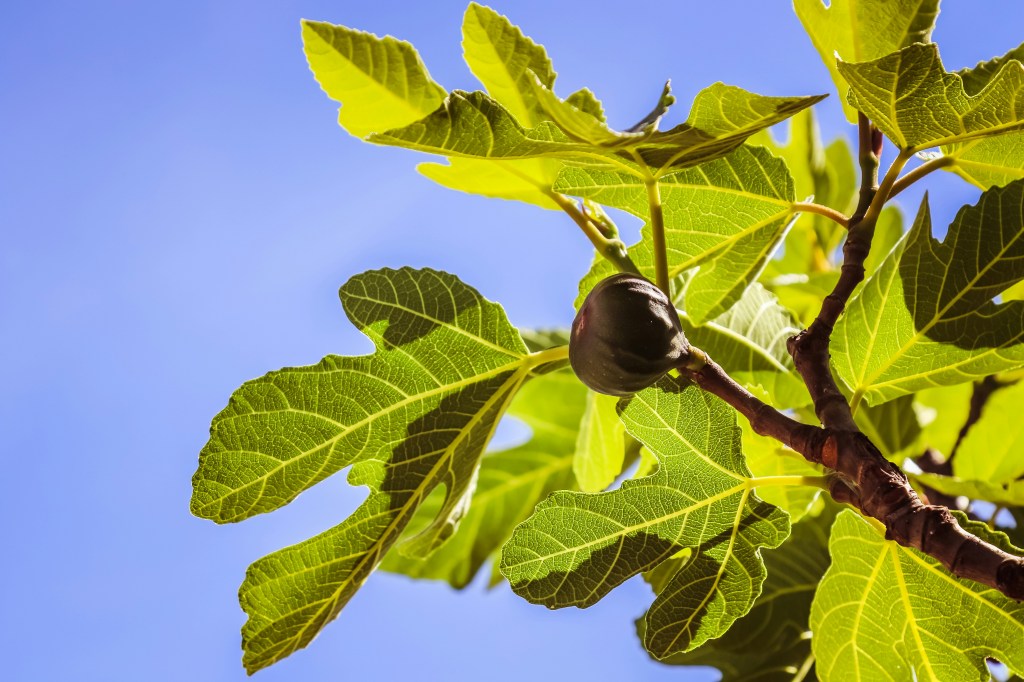
But there’s more. Jesus drops another bomb. “Before Philip called you, when you were under the fig tree, I saw you.” This is all the proof that formerly skeptical Nathanael needs. He’s suddenly undone. Jesus – impossibly – saw him when he was sitting under the fig tree, even before Philip came to recruit him. We are not given any information about what was happening under that fig tree. Perhaps he was praying, pouring out his heart to God. Perhaps he was discouraged, watching some preening Pharisees or a troop of Roman soldiers harassing his countrymen. We simply don’t know. But when he is not only known by Jesus but also seen by him from afar, that is enough for Nathanael. He knows that he has found the true Messiah.

I love Jesus’ response. Essentially, “If you believed with a little sign like that, then just wait, it’s going to get way more convincing.”

Now, in terms of takeaways, our primary response to this text should be to join Nathanael in amazement and faith. Jesus knows and sees his people in a miraculous way that proves that he is the true Messiah, the Son of God we have all been waiting for. What amazing good news. Everyone in this life may fail to know and see us as we desire to be known and seen. But our savior satisfies this deep craving of our souls.

This is primarily a Christological text, not a missionary one. However, that does not mean it has no application for missional Christians today. Jesus is our example. And just as a Christian doctor can employ natural medicine to point the lost to Jesus the Great Physician, so a missionary can employ natural curiosity and study of a people in order to point the lost to the one who knows them infinitely better than they know themselves. Our ability to know and see the lost may not be miraculous, it may be far downstream from that of Jesus, but that doesn’t mean it is not spiritual. If it is motivated by the gospel and by love, then it is still a sign – albeit a small one – that those employing it have found the true Messiah.

Another way to think of the power of deeply knowing and seeing a people is to compare it to the New Testament gift of prophecy. Paul’s logic in 1st Corinthians 14 is that if prophecy was functioning accurately in Corinth, then unbelievers would enter, have the secrets of their hearts disclosed, and fall down proclaiming that God was truly among them. As with Jesus and Nathanael in John 1, knowledge of a person that is more than natural leads to a heart undone, to the recognition that God is truly involved here.

Great. So Jesus and Early Church Christians can miraculously know the secrets of others’ hearts. How does that help normal Christians and missionaries like us 2,000 years later? Well, as it turns out, even Christians and missionaries who do not have (or even believe in) the gift of prophecy can still achieve a certain kind of supernatural sight and knowledge – and thereby witness the power of honor-shocking the lost by knowing them more than you should. This ability is not supernatural in the means by which it is carried out – curiosity, questions, study, testing. No, these are the same tools also used by pagan students of culture and anthropologists. But it is supernatural because of its source – the love and faith that drive this kind of hunger to truly see and know a people that others might not even know exist.

I remember being a college freshman in Minneapolis, involved in some English conversation practice with Somali refugees. As one of my students, Uncle Abdi, shuffled in from the downtown winter wasteland and into the warm lobby, I decided to try to say good morning to him in Somali – “Subakh wanaagsaan!” It’s hard to describe the qualitative change that came over that older refugee’s face. His eyes lit up, he broke out in a huge grin, and he came over to give me one of the warmest handshakes I’ve ever received. All because this scrawny white kid made a bungled attempt to learn a greeting of his people. Even in that tiny gesture, Uncle Abdi felt seen and known. And if he’d had enough English for me to get into spiritual conversation with him, I’m confident he would have let me share more than he would have otherwise.

Sometimes we reformed types get confused and think that a passion to study culture and contextualize well is somehow opposed to bold proclamation of the gospel. “We don’t contextualize, we preach the gospel!” as I once heard it put. After many years now of observing the reactions of friends like Uncle Abdi, I’ve come to believe that going deep in language and culture is one of the boldest moves we can make in preaching the gospel. When you start the relationship by demonstrating sight and knowledge of a people or person that you should not naturally have, you are doing something that is downright powerful in the spiritual realm. Like an artillery bombardment that precedes an infantry charge, truly knowing and seeing someone can clear a path for you to bring in the message that will then overrun the defenses.

Faithful evangelism and the deep study of language and culture need not be enemies. Instead, we can commit ourselves to a lovingly deep study of our people, knowing that this sight and knowledge is often the means the Spirit uses to grab their attention. “How do you know that about me/us? Nobody knows that. Nobody takes the time to see us like that. No foreigner knows that insider idiom. What has made you invest so much to learn about us like this?” The answer, of course, can take the conversation right to Jesus.

Yes, sometimes this can backfire. There is the occasional person who simply freaks out, believing that you work for the CIA because you are way too informed. Others get alarmed because they want to keep you in the dark about certain things and now they know that’s not going to be as easy as they had hoped. Some dominant people groups or those heavily influenced by ‘woke’ ideologies have arrived at the point where they feel like you’re being condescending if you too eagerly seek to learn all about them. Wisdom is needed to know when and how to do this well. But for most peoples of the world, and especially for those who have been oppressed or marginalized, they are going to feel nothing but honored by these kinds of efforts.

As with Jesus, truly knowing and seeing someone is often just the beginning when it comes to powerfully commending the gospel. Just wait until they encounter the community of the local church! That being said, it can be a very powerful way to start.

“How Do You Know Me?”

When the friends and neighbors of Christians and missionaries start asking this question of Nathanael’s more often, we’ll know that we are on the right track. Our king truly sees and knows those he seeks. When we seek to know and see others as he does, even if all we have are natural tools empowered by love, then we are bound to find more out there who are like Nathaniel – Israelites indeed.

We will be fully funded and headed back to the field when 44 more friends become monthly or annual supporters. If you would like to join our support team, reach out here. Many thanks!

For my list of recommended books and travel gear, click here.

Photos are from Unsplash.com

A Visit to Curious Kebab

If there is one restaurant that my family misses the most from Central Asia, it would be Curious Kebab. The name of the restaurant comes from the first name of its owner, his name being a local language term that I’m here translating as highly curious. But its semantic range also includes concepts such as excited, passionate, highly anticipating, etc. All of these possible definitions would be appropriate when describing how my family feels about this particular culinary establishment. We – and the others we’ve converted – feel that it’s the tastiest kebab spot in the whole country – if not the world.

If you were to visit me in the city we last lived in, and we were to set up a lunch meeting, I would definitely suggest we go to Curious Kebab together. Here’s what that would be like.

First, I would send you the pin for our old stone house on the northern edge of the bazaar. Neighborhood street names and house numbers are a fairly new thing, so most locals don’t use them and they’re not yet integrated into things like Google Maps. It’s better to just send a pin. Once you’ve arrived, I’ll come out of our courtyard gate and undo the chains strung up on our street, the neighborhood’s vain attempt to keep bazaar shoppers from taking over all our street parking. Once we’ve got you parked, ideally underneath the excellent shade of a sabahbah tree to protect your car from the heat, we’ll head downhill on foot toward the center of the bazaar.

We’ll most likely take Soapmakers Street, since that’s the quickest route, about an eight-minute walk. These days there’s no longer any soap being made here. Instead, the street is full of shops that sell birds, makers and sellers of traditional clothing and shoes, hardware shops, a smattering of tea houses full of old men, and hole-in-the-wall restaurants. We’ll also pass a small hotel where we once had a short-term team stay. They’ve got a pet falcon in the lobby and very affordable prices, but all their rooms do have burns in the carpet from hookah use and are squatty-potty only.

Soapmakers Street is mostly trafficked by men and has narrow, uneven sidewalks. So, if there are women in our group or small kids, or if we need more protection from the sun or rain, we’ll instead walk down a different street a few blocks to the West, which I’ll call Juicemaker Street. This street is full of small fruit juice cafes, pharmacies, and shops that sell women’s clothing or jewelry. If anyone needs some gut strengthening before our kebab lunch, we might stop for a cup of fresh pomegranate juice. Most of the pedestrians on this main artery of the bazaar are women – about half with heads covered and half not – and the sidewalks are broad, even, and mostly shaded, which makes for a more relaxed experience for any ladies or kids in our group.

The arteries of the bazaar are set up roughly like a spider web, with the main roads leading down toward the old center. At the center of the bazaar is an impressive old colonial administrative building with statues and gardens. This faces the center of the intersection, where there’s a small covered pagoda of sorts which has been used in the past by traffic police but also used by dictatorial governments to hang dissidents. This center area of the bazaar is typically bustling with shoppers and sellers, traffic moving more slowly than the pedestrians, and the sounds of street musicians playing traditional melodies. If there are protestors, this is usually their destination, with the security police and their tear gas hard on their heels. But most days it’s a happy and energetic place, humming away under a massive painting of the mustachioed sheikh who led an uprising against the colonizers.

Just off of this intersection, there’s a small network of alleys, right at the corner of Soapmakers Street and the street named after the legendary blacksmith tied to our people’s origin myth. A small fruit and veggie sellers area congests the opening to this alley, so we would weave through the carts piled up with produce and duck into the first alley. After passing a dry cleaner and some shops selling CDs and electronic gadgets, we’d come upon another alley flanked by a bakery on the right and a tea shop on the left. A few paces up this tiled alley brings us to Curious Kebab.

Curious Kebab has its kitchen grill area visible through large glass windows that we can see as we approach. The windows display rows of sword-like skewers with ground lamb pressed on them and narrower skewers of chicken or beef chunks. There are also skewers lined up of bright red tomatoes. We can also see the furnace grill built into the back wall where the meat is cooked. We can see the small crew of two or three who work in this area, chopping vegetables, preparing the meat, and turning over skewers on the grill. This is usually where the man himself, Mr. Curious, will spot us.

“My American donkeys!” he will likely holler upon spotting us. Then he’ll come out, laughing, and give us fist bumps with his mincemeat-splattered hands.

This is a running joke between Mr. Curious and me and my friends. Our Central Asian people group finds donkeys downright hilarious and also somewhat disgraceful. The term donkey can be used both as a terrible insult and as an affectionate term, depending on how you are using it and for whom. To tell my best friend he’s a male donkey means I think he is brave and fearless – a Chad in contemporary internet parlance. But call someone a donkey, son of a donkey, and you better be ready for a fight. Mr. Curious, to have fun with all of this, has decorated Curious Kebab with pictures and artwork of donkeys on every wall. Somewhere along the line he started referring to us repeat foreign customers as his American donkeys. Because his eyes light up when he says this, and because he calls himself a donkey as well, it’s clear that for him this is meant as a backhanded term of endearment.

Mr. Curious, after greeting us warmly in his British-accented English, will insist that we go inside and find a spot to sit down. Inside the two small adjoining rooms that make up the restaurant, we’ll look for an open table and crowd around it. Because Curious Kebab makes excellent kebab and is only open for lunch, it’s almost always packed. We’ll need to wave down the server and tell him what we want. I highly recommend the spicy garlic kebab, a skewer of minced lamb meat with garlic and green jalapeño in it. It’s not very spicy by the standards of other cultures but does have a little bit of kick to it. This is the kebab that I and others claim to be the best in the country.

Mr. Curious worked in restaurants in the UK for over a decade and thus became one of the only local chefs willing to use garlic in his grilling, something that gives his kebabs their distinct flavor. This, and the fact that he only uses local sheep, specifically, the special lump of fat they have above their tails that other breeds of sheep don’t have. This fat is mixed in with the kebab meat and gives it a rich, buttery flavor. If you’d rather have chunks of chicken or beef (or liver) you can’t go wrong there either. Even when it comes to these, Mr. Curious’ special marinade sets them apart in terms of tenderness and flavor.

After ordering, a teenage boy will come by and ask if we would like to order any yogurt water to drink with our meal. If you order one, it will arrive in a personal silvery bowl for you to sip it from. Another server will bring fresh flatbread to our table and give each of us a plate of sliced radishes, lemons, onions, and garden herbs. After about ten minutes, our grilled meat will be ready and we’ll be set to eat. We will likely be the only ones in the restaurant that day to bow our heads and thank God for the food, so we’ll probably get a few curious looks as we do this. The other patrons of the restaurant are locals, but from all over the socioeconomic spectrum. Important-looking men in suits eat here, but so do builders, singers, and teachers. Each one seems to glance at the others a little warily, seemingly worried that their favorite hole-in-the-wall might be getting a little too well-known.

The kebab will be delivered on the plate and already off the skewer. But if you ordered chunks of meat it will come still on the skewer, so you’ll need to grab a piece of flatbread and use it to slide the steaming meat off of the skewer and onto your plate. Most locals will then proceed to enjoy their meal by tearing off a soft piece of the flatbread and using it to scoop some meat into their mouths. I like to mix in some onions or herbs into this bread bite as well. The result is fantastic.

During the meal we can speak with a measure of freedom about ministry stuff, though we’ll need to be careful in case there are English speakers eating nearby. But mostly the other patrons seem more interested in guzzling down their delicious lunch than in trying to figure out what the foreigners are talking about. Still, depending on our surroundings we may be able to talk with great freedom or need to wait until we’re somewhere more private to talk about “M” (missions) stuff.

After we’ve enjoyed our meal, Mr. Curious or one of the servers will come by and ask if we’d like to finish off the meal with the customary small glass of black sugary chai. If your stomach can handle anything more at this point, then I always recommend finishing a meal with chai. Another teenage boy will bring it by from the nearby tea house and we can enjoy it either at our table or at a small seating area out in the alley.

Mr. Curious might come by and talk some more once the lunch rush slows down. He likes to share about his philosophy of life, how he doesn’t believe it’s worth it to kill yourself for money. How he could make a killing if he kept Curious Kebab open for dinner also, but he’d rather spend time with his young family and his friends and enjoy a good drink. It’s all very Ecclesiastes. Mr. Curious is one of those locals who I pray to have a chance to talk more with. There are certain things about his bearing and his conversation that make me wonder where he stands spiritually. He’s tasted success working in high-end restaurants in London and turned away from it. He works hard but is not mastered by work, instead preferring to leverage work for things like spending time with his kids. His lifestyle and sense of humor also seem to indicate he’s not really that impressed with Islam but more likely to be of that breed of local men who saw through its hypocrisy a long time ago. If I’m honest, he reminds me of my friend Hama in the early days. One of these days, either myself or one of my colleagues will get to talk with him more about Jesus.

At this point, the meal is finished. We’ll head up to the counter to tally up our bill and Mr. Curious will tell us at least once that he doesn’t want us to pay. But we’ll insist and hand over the money to either him or one of the other grillers. Then, we’ll walk back out into the bazaar, either to explore its many alleys or to wander back up Soapmakers Street to my place.

The bazaar is humming, the tea glasses clinking, the smell of baking bread, roasting meat, and the gutter funk all mixing in the air. You are now one of the privileged few foreigners who have eaten at Curious Kebab, certainly the best kebab in the city – and possibly, one of the best kebabs in the world.

To support our family as we head back to the field, click here.

For my list of recommended books and travel gear, click here.

Photos are from Unsplash.com

Of Pilgrim’s Progress and Honor Killings

Have your church’s discipleship classes ever focused on what it means to be a faithful Christian patron? Or on how to restore a household’s honor when a daughter has brought shame on the family through sexual impropriety? Or on how to shape the future destiny of your child, including whether buried umbilical cords have any influence on this?

For most, if not all of my readers, the answer would be no. But I’ll bet your church has had classes or studies on the Bible’s view of gender and sexuality, how Christians should engage in politics, and how Christians should think about retirement.

It’s no surprise that the first topics I listed haven’t featured in the classes your church has offered or in the Christian books you’ve read. They’re simply not pressing issues for the Church in the West – if they are even on the radar at all. And there’s nothing wrong with that. It’s merely a reflection of the particular slice of history and culture where Western Christians find themselves. But Western Christians are living in a time and culture where there’s widespread gender confusion, Christian participation and influence in elections, and individualistic retirement planning. Accordingly, our Christian resources reflect these issues.

When we move back to Central Asia this summer, my new role will be focused on creating and translating solid resources in our people group’s languages. The aim is for these resources to be both robustly biblical and deeply contextual, and in this way to serve local believers, their leaders, and the missionaries who are working among them. We now have a full or partial Bible in several of our languages, and there also are a good number of evangelistic resources both in print and online. What is lacking is content that focuses on building up the church.

In general, I’ve been chewing on two broad categories of resources: global vs. local. There are resources that every Christian in every age and culture needs. These would be universal or global resources. For example, resources in systematic or biblical theology that help Christians to understand what the Bible teaches about God, about the gospel, about the Church, and about God’s plan of redemption throughout the ages. There are also the universally-relevant areas of practical theology that help Christians apply the Bible to things like parenting, marriage, and work. These resources are, to a large extent, timeless, even if the examples and applications used might be more culture-specific.

Think of how impactful the Westminster catechism has been on global Christianity. Or, the broad appeal a book like Pilgrim’s Progress has had over the centuries and around the world. It’s been easy for Christians for four centuries to identify with Christian and his journey toward the Celestial City and the many common struggles that he faces, such as sin, doubt, complacency, despair, and death.

Every people group needs these kinds of global resources. But every people also needs local resources, resources that take aim at the unique strengths, weaknesses, and questions of a given culture. These resources greatly serve believers because their applications are so specific to the world of their target audience.

Our focus people group is very strong in hospitality. But their hospitality is done from the wrong motives – and only extended to those who are existing or possible patrons or clients. This means that local believers need resources that will explicitly point out how biblical hospitality should be done from a gospel motivation and extended toward even those who cannot repay the hospitality through some kind of future loyalty or other service. We have some great resources in the West that lay out a practical theology of hospitality. But how many of them will engage this activity through the lens of a society that relies on hospitality to build its patronage network and social safety net?

Our focus people group also oppresses women in some very dark ways. The oppression of women may be a global issue, but our local believers need resources that will argue directly against its local forms, such as female circumcision of babies, wife-beating on the marriage night to establish a husband’s authority, and honor killings as a response to sexual misconduct. Translated Western resources on biblical manhood and womanhood will cover the principles that oppose practices like these but will not address the practices themselves directly.

The need is to pursue both kinds of resources at the same time. All local churches need universal resources that teach them timeless doctrine and universal principles of Christian conduct. But all local churches also need local resources that will help them wrestle with the particular spirit of their age.

Sometimes these resources end up doing both very well. Augustine’s City of God, for example, was written to argue that it was not Christianity’s fault that Rome had been sacked by the barbarians. This was a particular question hotly debated in the late Roman world. But in doing this, Augustine went on to write about the theology of the City of God and the City of Man and how they are entangled and in conflict in all societies in this age. Augustine’s understanding of the spiritual city of God and its peculiar relationship with the City of Man still serves me very well in early 21st-century America, even though I am so far removed from Augustine’s culture and world.

I think this should be the goal of all serious Christian resources. We cannot escape culture-specific applications in the resources we create. In fact, we must get specific for the sake of our audience. But we can try to write, record, or film in such a way that the biblical exposition and reasoning we employ might also apply to audiences on the other side of the world – or in some future century. You never know how a faithful book written in past centuries might be the key to unlocking the future church’s way forward in some seemingly unrelated controversy.

God’s truth is universal, there’s nothing new under the sun, and yet every generation of believers is also unique. So, we will aim for both – universal and local. And trust that if a resource serves the church well for a decade, then that is good. And if it serves it well for 1,500 years, then that is good as well.

To support our family as we head back to the field, click here.

For my list of recommended books and travel gear, click here.

Photos are from Unsplash.com

A Saying for Those Living Under a Rock

Have you been sleeping in the ear of a bull?

-Local Oral Tradition

Tonight I was enjoying some fish and chips at a downtown Indianapolis plaza while recovering from a long day of support-raising training. Suddenly, I found myself recruited by strangers to join a team for the Taylor Swift trivia competition about to begin in the plaza. I warned my three enthusiastic new friends that I was one of the worst people they could possibly find for knowing pop music trivia. When it comes to superstars like Taylor Swift, I have very much been living under a rock. Or, as my Central Asian friends say, sleeping in the ear of a bull. And I am okay with that. There are Central Asian idioms to learn, after all.

Alas, the Swifties recruited me anyway. Funnily enough, I did help them get the answer right to the first song Swift ever learned on her guitar. But this was only because anyone who was a teenager beginning to learn the guitar in the 2000s was bound to quickly learn Kiss Me by Sixpence None the Richer. It was easy, catchy, and made you sound much better than you were. This deduction shocked us all by actually being correct and left my much younger teammates (who had been stumped by the question) thoroughly impressed. I also helped them spell the name of Zayn Malik, not because I know anything about him as an artist, but simply because I’ve had Muslim friends named Zayn or Malik. You really never know when two utterly isolated fields of knowledge are going to suddenly intersect.

Anyway, back to Central Asia. “Have you been sleeping in the ear of a bull?” is the kind of idiom someone would throw out when a person is ignorant of something that has become common knowledge to seemingly everyone else. In English, we would say things like “Where have you been?” or “How could you not know that?” or “Have you been living under a rock?” Imagine someone in the US not knowing that America is facing the slow-motion train wreck of Trump vs. Biden 2.0, for example.

My unbelieving Central Asian friends might use this saying when they’re insisting that it’s really the US who controls groups like ISIS as part of its grand puppet master strategy for the Middle East. And my believing local friends might use it when foreign Christians reveal that we don’t really understand what Jesus is talking about with the whole wineskins thing. Their common experience with using goat skins for liquids that ferment makes Jesus’ parable about the kingdom needing new goatskins super straightforward, something everyone surely knows – unless they’ve been asleep under a rock, that is, or in the ear of a bull.

To support our family as we head back to the field, click here.

For my list of recommended books and travel gear, click here.

Photos are from Unsplash.com

A Proverb on the Power of Spouses

Treat your wife poorly, she’ll turn into vinegar.

Treat your wife well, she’ll turn into wine.

Regional Oral Tradition

This proverb from a neighboring people group speaks of the power that spouses have to shape one another, for good or ill. While this saying focuses specifically on husbands, its wisdom could apply to both husbands and wives as a very straightforward marital application of you reap what you sow. Yes, spouses are always responsible for responding in godly ways, even if they receive poor treatment from their partner. But this truth does not mean we should ignore the amazing power husbands and wives have in making those responses to behavior easier or harder. A cruel husband or wife can absolutely turn their spouse into a sour, bitter, vinegary person. Every culture can attest to this.

Like the biblical proverbs, this cultural saying is a principle, not a promise. There are always exceptions out there, like Hosea, but they are the exceptions that prove the rule. In general, men who treat their wives well will, over time, see them blossom and flourish. Psalm 128 richly describes this kind of marriage, also using a wine-related simile:

Blessed is everyone who fears the LORD, who walks in his ways!… Your wife will be like a fruitful vine within your house;

Psalm 128:1,3

When someone gives their spouse steady, unconditional affection, this is an amazing force to be reckoned with. Believers have a massive advantage here because we not only know what it is to be shown this kind of unconditional affection, but we’ve also been indwelt by the Holy Spirit, who enables us to miraculously live like this with others. He helps us to love our enemies, and even our spouses – including on those days when they seem like our enemies.

Vinegar or wine – our marriages are fermenting into one or the other. This is a helpful image to keep in mind as we seek to love our spouses well.

To support our family as we head back to the field, click here.

For my list of recommended books and travel gear, click here.

Photos are from Unsplash.com

Stubborn Barriers and the Gospel’s Global Spread

What are the common barriers that keep the gospel from spreading from one group of humans to another? How can one group have a strong presence of believers and churches and yet live side by side with other groups that are completely unreached? The answer to this question is not as simple as it might seem.

The modern missionary movement mainly used geographic and political lenses when they sought to evangelize the world. William Carey’s An Enquiry into the Obligations of Christians to Use Means for the Conversion of the Heathen featured a list of the world’s countries, their population sizes, religions, and other statistics. Mission agencies followed suit until the late 1900s, focusing mainly on countries and political boundaries when they sought to organize their missions strategy. This is not without biblical precedent. In the book of Acts, we see that Paul’s missionary strategy is focused on the cities and provinces of the Roman Empire. Paul and Luke are using a geographic lens when they seek to apply the Great Commission (along with a very broad ethnic lens of Jew vs. Gentile). Paul’s ambition is to preach to the Gentiles in places where no one else has yet laid a foundation (Rom 15:14-24).

Political and geographic borders and systems can absolutely provide barriers to the gospel. Consider the great contrast of the two Koreas. South Korea, one of the most Christian nations on earth, neighbors North Korea, one of the most unreached. With the same language, ethnicity, and historically the same culture, what is the barrier? The DMZ and the North’s communist/cult of personality government that seeks to stamp out Christianity.

However, the nation-state lens of modern missions was insufficient to recognize other massive barriers to the gospel. 20th-century missiologists like Donald McGavran and Ralph Winter demonstrated that this political and geographic lens meant that there were thousands of “hidden peoples” who were completely overlooked because of the ethnic, linguistic, or cultural barriers that existed even within countries. A missions agency might consider a country reached because of a strong presence of Christianity among the majority ethnicity, but with their nation-state lens fail to see that the minority ethnicities were completely without a witness.

Starting in the late ’70s, this led to a paradigm shift in missions, where agencies adopted the primary lens of unreached people group (UPG). This ethnolinguistic lens also has biblical precedent, with a strong thread of God’s heart for all peoples (panta ta ethne) evident throughout the Bible. We see this focus on ethnicity and language in passages like Psalm 67:4, Isaiah 66:18, Daniel 7:14, and most famously, Rev 7:9, “a great multitude that no one could number, from every nation, from all tribes and peoples and languages…”

This lens seeks to recognize three other significant barriers to the gospel: ethnicity, language, and culture. It recognizes that humanity typically divides up into groups that identify as distinct from others around them along significant ethnic, language, or cultural lines. Sometimes ethnicity is the main barrier, where the same language is used and similar cultures exist, but neighboring people groups struggle to influence one another because of longstanding ethnic tensions. This is the case with many ethnic Christian groups in the Middle East and their Muslim neighbors, all of whom are fluent in Arabic.

Other situations show that focusing on ethnicity alone is not enough. Our own central Asian people group share a common ethnic identity with neighboring groups, but their languages are not mutually intelligible. In this case, language is the primary barrier, not ethnicity or culture. A missions agency might see the church take off in one of the dozen or so language groups of this ethnicity and consider their job done. In reality, this language barrier is going to prevent the spread of the gospel to the other segments of this ethnicity unless there is a very intentional effort.

Yet other situations show that culture can be the primary barrier. This is where things can get really murky, yet an honest appraisal of how humanity actually functions shows that this is often the case. Cultural differences provide significant barriers to the gospel. This is where socio-economic, religious, and even generational differences come into play – and evil things like caste. For evidence near at hand, consider how hard it is for middle-class churches to reach the poor and working class, and vice versa. It is very difficult for any of our churches in the West to truly impact subcultures different from ours that live within our own cities and towns, and this is with a shared history of Christianity. How much more might cultural differences prevent gospel impact among groups that have no Christian heritage? Even here there is biblical precedent for acknowledging this barrier. Many of the Jew-Gentile issues that Paul deals with in his letters are not just issues of religious background and conscience, they are issues of differing systems of culture and meaning – head coverings being one example.

The key is to recognize that multiple barriers exist to the spread of the gospel from one group of humans to another. These barriers might be political, geographic, ethnic, linguistic, or cultural. The Bible acknowledges all of them. That means we don’t have to lock ourselves into only one lens; rather, we should make use of all of the lenses the Bible gives us when we are seeking to discern why the gospel might be making inroads in one group and not among others.

Once we’ve recognized the primary barrier or barriers, then we are in a good place to discern if they are significant enough to warrant a separate church planting focus or not. Typically, I believe that geography and language do warrant separate approaches, while ethnicity and culture need to be taken on a more case-by-case basis. This needs a post of its own, but in brief, we must remember that the New Testament church brought Jew and Gentile, Greek and Barbarian together into the same churches, messy and scandalous though that effort was. The splintering of missions strategy into hyper-specialized church planting efforts can often reinforce natural human divisions, rather than overcome them.

Deep divisions cut through lost humanity, cutting off whole countries, peoples, languages, and cultures from the good news of salvation through Jesus. Yet the Bible shows us that these can and will be overcome. To play our part in this we will need to take these barriers seriously, on the one hand, even as we trust that the simple gospel is powerful to conquer each and every one of them. We must work hard to understand and undermine these barriers, though our faith must not be in our ability to figure them out.

Carey understood “the Obligations of Christians to Use Means in the Conversion of the Heathen,” even as his faith was in the sovereign power of God to save the nations. May we follow in his footsteps – til every barrier falls.

As of the publishing of this post, we’ve raised 24% of our family’s support needs to return to the field! Some are giving directly through the blog, here. Others are giving through our non-profit. Both are very helpful, whether monthly or one-time gifts. We would be honored for you to partner with us in this way and help us bring in the remaining 76%. Write us for more info about how to give or with any questions you might have.

For my list of recommended books and travel gear, click here.

Photos are from Unsplash.com