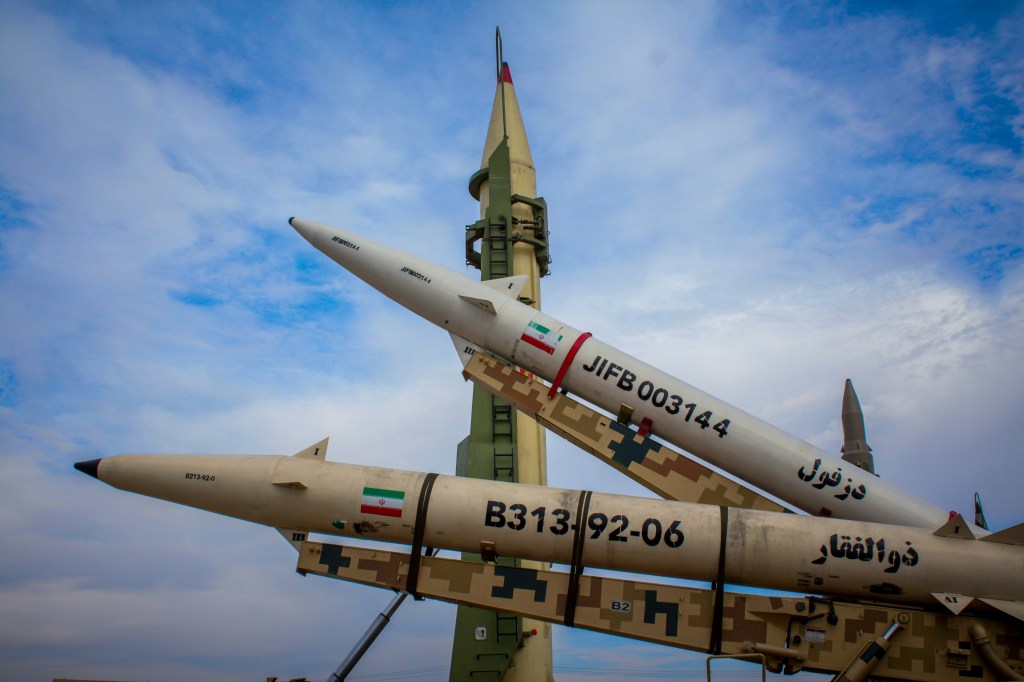
We’ve never been this close to a war before. We’ve had near brushes with terrorism, yes, and we’ve been through our fair share of unpredictable geopolitical crises. But thirteen consecutive days of missiles and drones being (mostly) intercepted and exploding in the skies around our city? This is a qualitatively new experience.
We are learning some interesting things. Here are a few of them:
The sound of certain incoming or intercepted missiles is just like that of a normal low-flying plane being suddenly interrupted by a distant firework.
Other weapons, such as ballistic missiles or C-RAM air defense systems, sound a lot scarier.
The smell of missiles and drones intercepted nearby is just like that of fireworks or cheap firecrackers.
The line between wide-eyed curiosity and genuine fear is a fine one, crossed at different places for different individuals, and often unpredictable even for oneself.
X (formerly Twitter) is a powerful resource for both real-time security updates (I’m talking even seconds after an explosion is heard) as well as lots of misleading photoshopped or AI images.
Having contacts with access to detailed intelligence and analysis is far more helpful than relying on official government communication.
Knowing the local language and having lots of local friends is priceless when it comes to risk assessment and situational awareness.
Iranians, God bless them, when backed into a corner, will not respond the way Westerners expect them to. One of my best friends back in the West is an Iranian, so I have seen this on an interpersonal level, and am now seeing it play out on the international level. Exhibit A: None of us would have ever expected our friends in Dubai to receive so many more attacks than we have here.
Humor is important for processing times like this. We may or may not have used AI to insert Godzilla into one fake photoshopped image that claimed to show our city going up in flames, then sent it to a certain subset of friends that we knew would appreciate it.
It’s good to have an internal room without windows set up with mattresses and 72 hours of water and food, just in case.
It’s also important to make sure that if the boys play with Legos in said safe room, they clean them up. During an attack in the predawn darkness the other day, I heard my wife call out, “Gah! The only thing worse than a drone attack is stepping on Legos during a drone attack!”
It’s far too easy to get lost in doom-scrolling for hours during crises like these, and to lose sight of important daily disciplines. It is stunning how the brain can turn to mush and motivation utterly evaporate when wars and rumors of wars take over our social media feeds.
Community, especially Christian community, is utterly essential. Wise precautions sometimes need to be taken, but nothing comforts and encourages the heart in wartime like gathering with other believers to sit under the word, pray, laugh, and lament together. Isolation leads to trauma. Face-to-face community leads to courage and resilience.
1st Peter is a great book to preach during times like this. This is what the local language church just started preaching through at the beginning of the war, having planned beforehand to do so – something that was very obviously God’s timing. Last week, we started hearing the ‘fireworks’ in the distance while the pastor was preaching an overview of the book and expounding chapter 4 verse 8, “Beloved, do not be surprised at the fiery trial when it comes upon you to test you, as though something strange were happening to you.” After half a dozen muted explosions, the congregation was getting nervous. Wisely, the pastor paused to acknowledge what was happening and to pray. Then, he got back to the sermon. The congregation calmed down, then leaned into the remarkably applicable texts we were hearing. For our context, this was a good way to respond. Civilian infrastructure has not yet been targeted in our city, so we were just as safe sitting in the church gathering as anywhere else we could have gone. And if some stray crashing drone had somehow found us there, then what better way to go? After the sermon, we took communion and sang together. I, for one, was deeply thankful that we had chosen to gather.
Last lesson for now: There is an interesting place that is neither feeling compelled to stay nor compelled to go, but simply feeling free – free to stay and serve until something big changes or the war comes to an end. That’s where we currently find ourselves. We hope to steward this season and freedom well, as long or as short as it may be.
May God grant peace and a swift and just end to this war. And may its end result in greater access for the gospel. Pray with us to that end.
If you have been helped or encouraged by the content on this blog, would you consider supporting this writing and our family while we serve in Central Asia? You can give here through the blog or contact me to find out how to give through our organization.
One of the international churches in our region is looking for an associate pastor and our kids’ TCK school is also in need of teachers for the 2026-2027 schoolyear. If you have a good lead, shoot me a note here.
Blogs are not set up well for finding older posts, so I’ve added an alphabetized index of all the story and essay posts I’ve written so far. You can peruse that here
For my list of recommended books and travel gear, click here.
Photo from Unsplash






 Entrusted to the Dirt
