Things Not to Do in Minefields

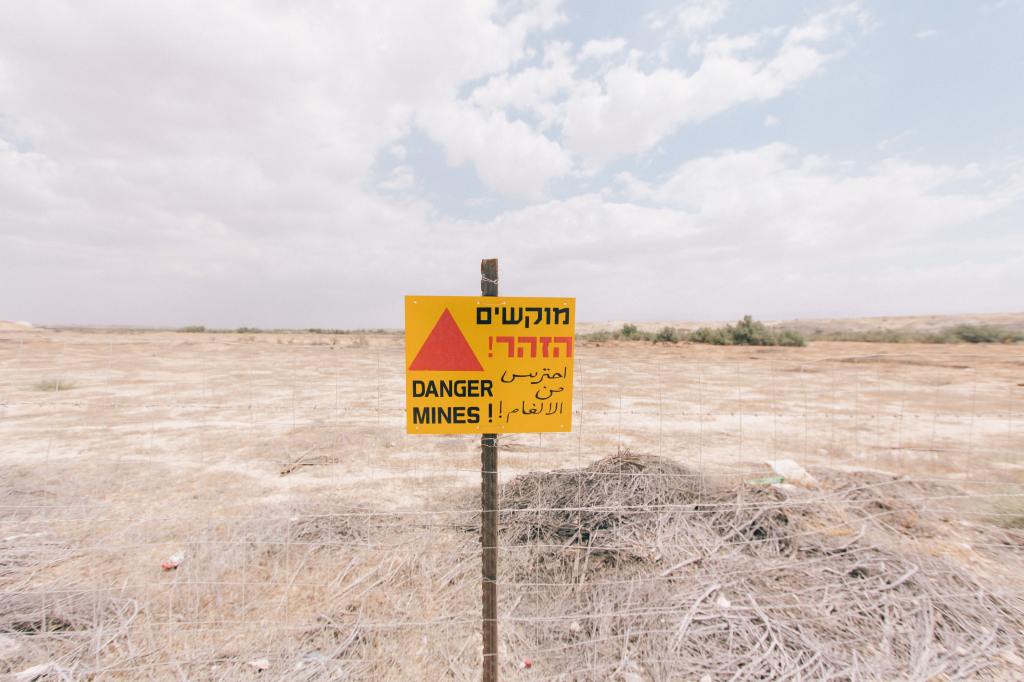
During my college gap year in the Middle East, I worked to secure a grant for a landmine removal organization. Part of this process included visiting a remote village where this organization was painstakingly working to remove mines that had been placed decades earlier.

One of the terrible things about landmines is how easy they are to deploy, yet how difficult they are to remove. There are still more landmines than people in that particular country, though many of them were placed decades ago. At the time of our visit to the village area, we were told that not a week went by that an animal or person didn’t get maimed or killed by stepping on a mine in the broader region. The mines were mostly American, Italian, and Chinese-made, a sad testimony to the global weapons trade. And though villagers often knew where the minefields were, sometimes mines could be washed down a hillside during heavy rains and end up on a path that had been previously safe.

We were given a very important tip that day for traversing territory where there might be mines: Follow the livestock trails. If walking through a field or on a mountainside in an area that has historically been mined, the safest bet is to look for the well-worn trails taken by goats, sheep, and their shepherds. In that part of the world, these trails are very distinct, interweaving on dry mountainsides in a web that comes to resemble a kind of net pattern. Just in case you ever find yourself in this kind of territory, look for these animal trails. It just may save your limbs or life.

It was a sobering day trip, yet also encouraging to see the common grace, painstaking work being done by international and local organizations to make mined areas safe again, one field at a time. It’s not a cause that gets a lot of press, but the world needs more people and organizations committed to mine removal. It’s dangerous and slow work, but vitally necessary.

This particular day trip wasn’t without a dose of humor, however. About an hour into the initial drive, a colleague’s vehicle pulled off to the side of the road. It was the SUV directly in front of mine. Greg*, a short mustachioed colleague, had apparently had too much coffee to drink. He began wandering off into a field to “drain the radiator”, as they say in a certain Kentucky idiom. At that point in the drive, none of us foreigners really knew where we were. We simply assumed we were still in safe territory.

Greg found a spot in the field comfortably far away and began to relieve himself. Suddenly, the lead vehicle in the convoy screeched to a halt a ways up the road. The driver and copilot of that vehicle, local employees of the mine removal group, began running back toward us, waving their hands and shouting something.

We all strained to make out what they were saying and doing, since they were a good distance from us. Finally, we heard it.

“Mines! Mines! Mines!”

Suddenly, we all started waving our arms and yelling at Greg as well, “Greg! You can’t pee there! It’s a minefield! Get back, Greg! Mines, Greg, mines!”

Poor Greg was caught between the will of his bladder and his will to survive. He began hopping sideways and backwards, earnestly trying to get out of that field while still preserving some dignity and fumbling to get his trousers fastened.

After a few nail-biting moments, Greg made it safely back to the road. The sprinting and yelling locals stopped and hunched over, hands on their knees, breathing hard and shaking their heads, perhaps regretting signing up for this little outing.

For our part, our crew of expats sat stunned for a minute, then burst out in peals of laughter, slapping Greg on the shoulder and shaking our heads as well. Since he was safe, we were free to laugh about the whole incident. And for months, we didn’t let him live it down.

There are many nuggets of wisdom I have picked up over the years while working in foreign contexts. Some are quite eloquent and inspiring. Others, well, they are a little more down to earth and practical, blatantly obvious, and yet still need to be said. This one is definitely the latter. Friends…. Don’t pee in minefields.

Photo by Robert Bye on Unsplash

*Names changed for security (and dignity!)
An Independent Christian Community

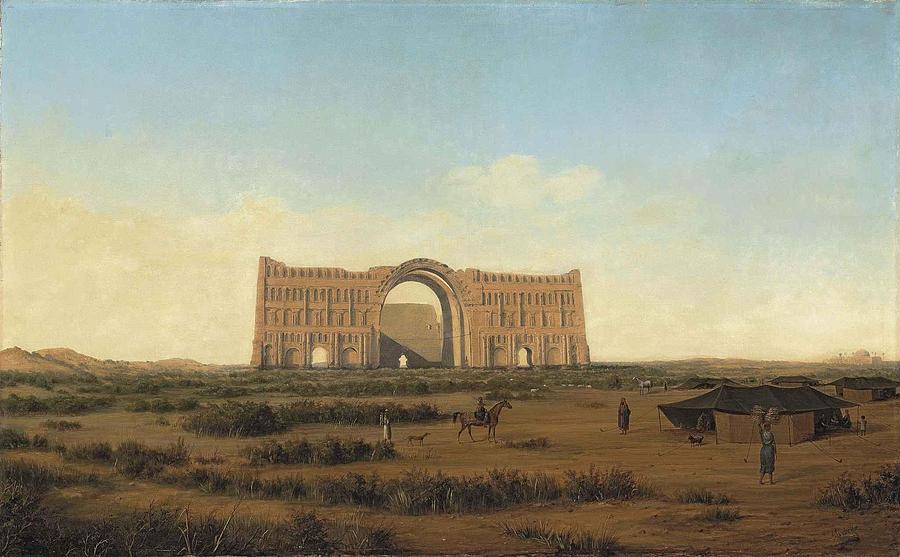
The acts [of Mar Mari] represent an obvious attempt to portray the Christianization of the Nestorian heartland as the work of an apostle. They cannot be taken at face value, although the historian J. M. Fiey believes that the church of Kokhe was in fact founded at the time of Mari. On account of the description of Mari’s chapel and the fact that, between 79 – 116, the Tigris altered its course, he concludes that Mari must have laid the cornerstone before 79/116. However, the first historically certain bishop of Seleucia-Ctesiphon was Papa, who served from c. 290 to 315 and died in 327. We can be assured that, beginning in the second century, there existed in Seleucia-Ctesiphon an independent Christian community, which showed evidence of an episcopalian structure in the third century. Already around 315 Bishop Papa tried to gain primacy over the other dioceses of the Church and to impose on them disciplined administration. Although Papa himself failed to achieve this, the other bishops soon accepted that the bishop of the capital should take over the administrative leadership of the Church. In any case, it is certain that the diocese of Seleucia-Ctesiphon – that is – the nascent church of the East – was never subordinated to Antioch.

Baumer, The Church of the East, p. 20

A few key points to note from this excerpt:

  1. There is a possibility that this Christian chapel near Baghdad (Seleucia-Ctesiphon) was built between the years 79-116. This would be one of the earliest Christian worship structures that we know of anywhere in the world.
  2. The eventual movement toward centralization and hierarchy that occurred in the churches of the Greco-Roman world was mirrored by those in the Parthian empire, and the church of the capital city here also claimed primacy.
  3. The church of Seleucia-Ctesiphon was never subordinated to Antioch – nor to Rome. This is a point for early local/city church autonomy. In fact, it was hundreds of years before these more autonomous relationships of ancient churches gave way to the centralized hierarchy now practiced – and claimed as apostolic – by the older Christian communions.

Photo by Wikimedia Commons.

That Are Not of This Fold

Yesterday I got to preach to our small local church plant on John 10:16 – “And I have other sheep that are not of this fold. I must bring them also, and they will listen to my voice. So there will be one flock, one shepherd.”

We simply walked phrase by phrase through this verse, seeking to understand, wrestle with the importance, illustrate, and apply each line. The phrase that got the most audible reactions was “that are not of this fold.”

I shared with the attendees that Jesus was here communicating to the Jews that the people of God would be gathered from unexpected peoples and places – namely, the gentile nations. “Not of this fold” meant not of ethnic Israel. One of the great mysteries revealed in the New Testament is that God had chosen a holy spiritual nation, comprised of those from every nation, tribe, and tongue. Ethnic Israel wasn’t the ultimate Israel.

This part wasn’t very provocative. After all, my listeners were Central Asians, not first century Jews. However, we then discussed why this point is important for us today. We, like Jesus’ initial Jewish followers, tend to believe that there are certain types of people who believe, and certain types of people who really don’t. Those similar to us almost always fall into the category of “likely open to belief.” And groups we are naturally opposed to often end up in the category of “unlikely to believe.”

This has a practical effect on our evangelism. We end up sharing with those we have pre-filtered, and we remain tight-lipped with others. But what has occurred is that our own experience and cultural categories (or prejudice?) have become the filter, rather than the gospel message itself. Given the logic of Jesus in this passage, this is a mistake.

“If we see a person in Western clothes, young, and educated, we are likely to believe they’d be open to a spiritual conversation about the gospel,” I said to the group. “But if we see someone with a big Islamic beard and their pants cut short in the Salafi style, then we are likely to avoid speaking with them about Jesus, right?”

“Oh, for sure!” the group responded.

“And what do we do with the elderly, the tribal, the illiterate, members of enemy people groups, or our own relatives? Do we avoid sharing with groups like these also?”

“Yup, all of them!” the group responded. People were shaking their heads and laughing, but they were being very open and honest and genuinely wrestling with this difficult point of application.

“Friends,” I continued, “I think we need to repent. And seek to share the gospel even with those who seem like the type very unlikely to respond. Jesus has other sheep that are not of this fold.”

It was not lost on me that our small circle of local believers represented those that many in the West would categorize as “not the kind that believes in Jesus,” as I used to. All of the local believers present grew up as Central Asian Muslims. Their passports and physical features are of the sort that qualify them to get extra “random” screenings in Western airports. And yet here they were, now believing, wrestling with the same kind of temptation as they thought about categories of people they really didn’t believe could follow Jesus. It reminded me of the time a local brother was wrestling with “the man on the island” problem. “Brother,” we told him. “You literally are the man on the island!”

But I am just as guilty as any of these local followers in this regard. Too often I also have held back from sharing with that Salafi-looking man, that elderly local, or that secular Westerner. I have used my own filters instead of using the gospel message itself as the filter.

Thank God that the voice of the good Shepherd effectively calls those from among groups we are tempted to avoid. Thank God for his grace toward us weak evangelists with our own faulty assumptions.

The good shepherd has been calling his sheep from other, unexpected, folds for 2,000 years now. My own Anglo-Saxon and Celtic genes are evidence of this. The hardest to reach demographics and people groups have and will continue to surrender a remnant at the power of the shepherd’s voice. The flock – in all its unexpected diversity – will be complete. “And there will be one flock, one shepherd.”

Photo by Samuel Toh on Unsplash

Riddles of Hands

At our post-service lunch of beans, rice, and flatbread today, a group of us men got into sharing riddles. I don’t know that many riddles, but I did manage to submit a few to the group, including one translated from my childhood readings of The Hobbit: “A box without hinges, key, or a lid, yet inside golden treasure is hid.

Hint: the answer is something that comes from chickens and is fried for breakfast.

One local rhyming riddle was new for me:

What has a ceiling above and a basement beneath, one shepherd, and four sheep?

The answer was a hand, as held out flat and horizontally. The ceiling – the back of the hand. The basement – the palm. The four sheep? Fingers. And the shepherd? The thumb.

This led to a session of discussing the local names for each of the fingers. I find them honestly hilarious and quirky.

The pinky finger: the lil’ guy

The ring finger: the lil’ guy’s brother

The middle finger: the tall-bodied one

The pointer finger: the sauce taster

The thumb: the lice killer

The sauce taster and lice killer? Ha! Why not?

Photo by Andrik Langfield on Unsplash

To support our family as we head back to the field, click here.

For my list of recommended books and travel gear, click here.

A Song On Everything We’ve Ever Wanted

I listened to this song yesterday on my headphones while prayer walking the bazaar. “No, random Central Asian man, no I’m not I’m not crying, I’m just a foreigner who’s got some, err, dust in his eyes… nothing to see here… (sniffle)”

I’ve bolded the lyrics below that I especially like.

When the day has run its course
You are the goodness
Oh, my sweetest Friend
You are the Avalanche
That falls upon us; in the end
You are my reward
Where all the years have failed us
Oh, my sweetest Friend
You are the House around us
You are the goodness; in the end

And everything I ever wanted
It is found in You
And everything I ever wanted
It is found in You

Of all the strong and able
You are the kindest
Oh, my sweetest Friend
You are the Avalanche
That falls upon us; in the end

And everything I ever wanted
It is found in You
And everything I ever wanted
It is found in You

My One, my Constant
My King, and Brother
My home, is ever
Where Your heart hovers
My One, my Constant
My King, and Brother
My home, is ever
Where Your heart hovers

When the day has run its course
You are the goodness
You are my reward
You are the goodness
When the day has run its course
You are the goodness
You are my reward
You are the goodness

When the day has run its course
You are the goodness
When the day has run its course
You are the goodness

-"The Goodness" by John Mark McMillan

Another Take on a Character Proverb

Travel and business are a gold appraisal tool.

Local Oral Tradition

I’ve posted another version of this proverb in the past, but I believe that this version is the older one. In the local culture, they used to appraise gold by scratching it with a special device. The appraiser was able to tell the quality of the gold from the scratch made in its surface. In this proverb, the gold represents a person’s character. So in essence, travel and business, like a gold appraisal tool, reveal a person’s character.

As one who has traveled for my entire life, I testify that the travel part is certainly true. When a trip is long enough (and it doesn’t have to be that long), people are unable to keep up appearances. Sooner or later, they will get tired or stressed or sick or inconvenienced in some way. And at that point, character will spill out.

Every time we travel internationally, I am reminded of the difference the new birth makes in when it comes to simple kindness. In the dehumanizing environment of a crowded airplane, most want to protect at all costs the few rights and the small space they still have. Those who are kind to families with small children or to the sick or the elderly stand out. And often, turns out the kind and sacrificial ones are those who know Jesus.

In an age where we often lament the lack of difference between the Church and the world, I am happy to say that travel truly can reveal the reality of the new birth – and that it is a golden, wonderful thing.

Photo by Jingming Pan on Unsplash

River Cliffs and Reformed Theology

The two of us walked, single file, through the coffee gardens. We were seventeen years old, barefoot, wearing swim trunks, and with inflated tire inner-tubes slung over our shoulders. The coffee cherries were ripening and we occasionally reached out, plucked one, and popped it in our mouths. The clear jelly between the red skin and the green coffee bean itself was deliciously sweet. Then the slippery bean itself could be pinched between forefinger and thumb, and launched at distant targets with surprising accuracy.

Tall sprawling trees spaced at regular intervals provided speckled shade for the short coffee trees below. We followed our dirt path naturally, having trekked it hundreds of times since we were in elementary school. We were, once again, on our way to inner-tube down the river. The horseshoe twists and turns of the main river of our Melanesian valley were such that we could walk ten minutes down trails on one side to a particular cliff to begin our trip, leisurely float down the river bends for forty five minutes, then get out at a different spot only five minutes from the compound where we lived. The trip included two sand bars, several set of rapids, two cliffs for jumping, whirlpools, deadwater, and the occasional abandoned raft made of banana tree stalks. One time we saw the carcass of a massive dead python. Thankfully, we never saw a live one.

Sometimes lots of missionaries and missionary kids would all take a big inner-tube trip together. Other times, groups of guys would go to make campfires on the sandbars and roast hot dogs, or challenge each other in “mud wars,” where soft clay harvested from the river banks was shaped into small round projectiles that splattered with satisfaction on your opponent’s torso (At which point he was temporarily “dead” and had to make his way back to wash in the river, hollering “I am a new man!!!” as he emerged from the water to enter the fray again.)

This particular sunny day it was just me and my close friend, *Calvin, going to float, talk, and perhaps pick up some hot fried skon flour balls on the way home. A simple river trip on a nice afternoon, like so many others. But our minds were not merely carefree that day, enjoying the familiar stroll through the coffee and banana gardens. Instead, they were chewing on some deep questions of the faith.

Calvin and I had been working out regularly together and while doing so, listening to John Piper sermons. Calvin had also been secretly devouring commentaries in our mission school library. While raised in dispensationalist circles, the two of us were beginning to wrestle earnestly with the claims of what was still a scary term for us: Calvinism. We were still in the early stages of our theological journeys, very much looking into something that we were sure couldn’t be true, but which had a much stronger case than we had ever realized.

The adult missionaries we spoke to about this particular theology generally discouraged us from looking into it. This of course only added fuel to the fire. We began to try to hash it out on our own, armed with CD sermons, library commentaries stealthily checked out, and our friendship. This river trip was one of many similar discussions we had during those final two years of high school.

This particular river trip stands out to me though. I remember it as a bit of a turning point, not because my convictions necessary changed that day, but because I admitted something out loud to myself for the first time. Something not contrary to, but consistent with, the God I knew from the Bible and my own experience – that if God is who he says he is, then in a contest of wills, He is the one who must ultimately win.

We had arrived at the small cliff that marked the point we embarked on our inner-tube journey, usually by jumping off of said cliff twenty feet into the river below. We sat down on the edge to survey the water, making sure we couldn’t spot any trees that had been pulled in during rains that might pose a hidden danger under the water. One of our schoolmates had a leg impaled one time jumping off this very cliff.

“So what do you think about irresistible grace?” I asked Calvin, as we scanned the brown water.

“Well, it seems like it would fit with passages like Romans 9 and Paul’s story, right? But I’m not sure, what about the passages that talk about people rejecting God? Doesn’t that count as resisting?”

“Yeah, like what Stephen says to the Jews before they kill him. They always resist the Spirit. How can you really name a point irresistible if there’s such clear examples of people in the Bible actually resisting?”

“Though actually,” Calvin countered, “As I remember, I don’t think it means we can’t ever resist, I think it might mean God will break that resistance for the ones he’s chosen.”

“Oh. But what does that mean, then our resistance isn’t real? That it’s a sham?”

“No, of course not, that would mean we couldn’t be responsible for unbelief, right?”

“Right…”

We sat in silence at the top of the small cliff, legs dangled over. I popped in one last coffee cherry I had saved, and spat out the skin.

“I dunno though,” I continued. “Something tells me that if my will and God’s will gets into a contest, God should be the one who wins. God should win. I don’t know how exactly that’s right with free will and all, but that’s what seems right in this universe. He should win in any contest against a little human like me… shouldn’t he?”

We sat and looked out over the river and the banana gardens on the other side of it. The question lingered. The cicadas hummed their rhythms in the trees.

We both sensed it was time to get moving. We spun our T-shirts and tied them around our foreheads like bandanas, preparing for the cliff jump. Throwing our inner-tubes off the cliff we made a running start for the edge, hollering as we jumped off, and plunged into the chocolately-brown jungle water below.

I didn’t realize it as I hit the water that day, but the Calvins had led me to admit an important point. God wins. He overcomes our resistance whenever he wants to. My mind wasn’t ready to concede that fully yet, but deep down inside, I knew it.

*this is his real name, and a fitting one for the topic of our discussion that day

Photo by Andres Hernandez on Unsplash

The End of the Green Martyrdom

So the wished-for extremes of the Green Martyrdom were largely – and quickly – abandoned in favor of monasticism, a movement which, though it could support and even nurture oddity and eccentricity, subjected such tendencies to a social contract. Since Ireland had no cities, these monastic establishments grew rapidly into the first population centers, hubs of unprecedented prosperity, art, and learning.

Cahill, How the Irish Saved Civilization

Photo by Boudewijn Huysmans on Unsplash

When You Step Out of the Wind

We once stayed on the coast of the Black Sea on the return journey to our corner of Central Asia. After a stormy night, I ventured out for a late morning prayer walk once the rain had stopped. The downpour may have ceased, but the wind and the waves crashed in relentlessly toward the land.

This constant and steady shove of the sea winds led to me walking tilted to one side. But I didn’t really notice this until I passed one of the enclosed bus stops that periodically lined the road. As soon as I stepped behind the shelter of the bus stop, the pressure disappeared and I almost lost my footing and tumbled into the benches. I regained my posture, laughed at myself, and continued on out into the wind again. I paid attention to see if this would happen at the next bus stop. It did, I recovered slightly better this time, and I began to enjoy this unexpected pattern of this particular walk. Walk, lean, lean, stumble and correct, lean again. It was quite surprising how disorienting it was to step out of the wind and into the safety of the shelter.

This little seaside walk reminded me of what it’s like to step out of a high-stress missions environment – or really any high-stress environment. When the pressure is constant, you adjust and gradually cease to notice it. Then you step out – take a vacation, go on furlough, etc. – and boom, you find yourself quickly reeling as the pressure is removed.

“I feel like I’ve been sleeping for weeks and weeks,” one friend told me after leaving a particularly dangerous part of Central Asia. “We didn’t really realize how much stress we had until we got out,” another recently said. Others might feel numb after stepping out of their context, or they might get sick. Feelings of calling and spiritual affections might go strangely haywire. We sometimes get headaches that seem connected to the collapse of the stress and the schedule. Or, after a hard year and a 16-hour flight with small children we might simply feel like chucking it all and going to live like hermits in the woods somewhere.

What’s important to notice is that this sudden disorientation is normal. Though it doesn’t always happen, it happens enough to represent a real pattern. Missionaries stepping out of their context of service will likely face some kind of a disorienting and reorienting period, often due to the removal of the pressures of said context and the effects of reverse culture shock.

It’s important that the missionaries themselves don’t get freaked out by this. And that those receiving them keep the possibility of this kind of adjustment period on their radar as well. Right after return to the home country might not be the best time for a debrief – or at least not the main debrief. It also might not be the best time for lots of scheduled ministry engagements.

Time to get one’s bearings is important, time to let more the temporary feelings dissipate and to let the deeper affections rise again to the surface. Quick decisions about the future should probably be avoided. Instead, what is needed is sleep, steady friendship, time to reconnect with Jesus, and some plain old time to think (preferably while sipping on some good tea or coffee). If coming from high-communication cultures, colleagues may need to cover for their teammates who need to go dark for a while.

We are currently in the midst of a week like this ourselves. After a busy couple weeks of traveling (eight different beds in twenty one days), yesterday I was feeling pretty pessimistic about lots of things. Today? Things are seeming a lot more grounded and good. Nothing really about our circumstances has changed. We just got some extra sleep, some restful time in nature, and some good time to pray. A few more days of this, and we might be ready to step back into the wind, as it were.

If you step out of a high-pressure ministry context, prepare for a bit of a jolt. This is normal. And it is itself an important part of realizing how to live sustainably and sacrificially in that particular context.

Photo by Jens Johnsson on Unsplash

Consistent With A Cosmic Air Burst

Sooner or later, archaeology tends to validate the biblical record. Take this research being done in the lower Jordan valley, the area of Genesis’ description of Sodom and Gomorrah’s destruction. Archaeologists have found evidence in a layer of soil of a cosmic air burst from around 3,650 years ago. A cosmic air burst is when a meteor explodes while still in the atmosphere, which can cause devastation on the ground resembling a nuclear bomb, such as occurred in the Tunguska Event in 1908 Siberia. The research on the site in Jordan goes on to describe cataclysmic temperatures, in excess of 2,000 degrees Celsius:

In addition to the debris one would expect from destruction via warfare and earthquakes, they found pottery shards with outer surfaces melted into glass, “bubbled” mudbrick and partially melted building material, all indications of an anomalously high-temperature event, much hotter than anything the technology of the time could produce.

Not also was there a fiery disaster from the sky spelling the end of the cities in the area, there’s also a connection with salt:

The airburst, according to the paper, may also explain the “anomalously high concentrations of salt” found in the destruction layer — an average of 4% in the sediment and as high as 25% in some samples.

The salt was thrown up due to the high impact pressures,” Kennett said of the meteor that likely fragmented upon contact with Earth’s atmosphere.

If this is indeed archaeological evidence of the destruction of Sodom and Gomorrah, then we now have a little more information about what kind of means God used in this particular judgment: a meteor, exploding before it hits the ground. If so, it’s not that we now say that God wasn’t really actively carrying out a judgement of sin, since we now have some evidence that it was a meteor – something that naturally occurs. Nor do we have to reject this kind of evidence, insisting that God’s judgements in history must be purely “miraculous.” Rather, here we see an example of how God can sovereignly judge through natural means. A meteor – set on its cosmic track countless years beforehand – explodes above the lower Jordan valley at the appointed time, when the outcry against cities’ sin has reached its full pitch, and just after Lot and his family are rescued. And thus God’s sovereign action in history and the (super)natural workings of the universe are seen once again to go hand in hand.

“All the observations stated in Genesis are consistent with a cosmic airburst,” says the quoted professor. Yes, we may not always see how, but the record of scripture and the record of the soil will ultimately align. The archaeologists may be surprised. But we shouldn’t be.

Photo by Vincentiu Solomon on Unsplash