This proverb is used when a local is overthinking or anxious about things that are just not that big of a deal. It might also be used for someone perceived to be a bit of a drama queen or troublemaker. There are enough real problems, the local logic goes, so don’t go making a dilemma when one’s not really there. Pretend something is a problem long enough and it just may become one. It’s not far in meaning from another local proverb, “He makes a fly into a bull.”
The practice of tightly tying a strip of cloth or band around the head to treat headaches seems to be quite widespread. I remember elderly villagers doing this when I was a boy in Melanesia. It’s also practiced in our area of Central Asia. Last week we were watching Little Women, a story based in New England in the period of the Civil War, and the mother made mention of this same practice. To be practiced in such diverse contexts it must be effective – as long as there’s a real headache there to treat, that is.
I took a moment to register Darius’* response. This was different.
“His sister told me they had two villages,” he continued, “and from what you’re saying this is one of them. We need to go and find our brother.”
Harry*, a long-time believer, had disappeared again – which usually meant something bad had happened, some kind of threat of violence from his family or tribe on account of his faith. Whenever this happened to Harry in the past, the other local believers wouldn’t dare to get involved. Hence why Darius’ response was so different.
“Good. Mark* and I have already agreed to go. Last time Harry asked us to stay away when stuff like this happened, but staying away left him isolated and things did not go well. This time needs to be different. We would be glad to have you with us.”
I called Mark, the other expat serving with me as temporary pastor of our little church plant.
“Mr. Talent* is coming also,” Mark told me.
Another surprise. Mr. Talent, although a former soldier, had not been willing to get involved in past persecution interventions -“I can’t risk it with how well-known my dad is.” But it seemed as if things had changed for these two local men we’d been pouring into. Character was apparently growing. A readiness to risk for their brother in the faith was now there. This, in a culture where you might risk for your blood relatives, but almost never for your non-related friends. I’ve written in the past about some questions that can expose character, even across culture. One of them was, “Do they run when the wolf comes?” Wolves, in the form of Harry’s angry relatives, had potentially been spotted. And Darius and Mr. Talent were feeling some holy protectiveness. Praise God.
However, that didn’t exactly mean that we knew what we were doing. The principle was clear. In a communal, honor-shame culture, Harry’s tribe needed to know that he was not alone. He had people who would come looking for him, both locals and foreigners. This, we hoped, would give them pause if they thought about harming Harry further, maybe even convince them to hand him over if they were holding him somewhere. But the plan was what missionaries elsewhere have called “build the plane as you fly it.” We would go to Headless village, ask around to try to find Harry’s violent uncle, and try to somehow find Harry himself. If he was wounded, we would try to get him out of there. I had brought some first aid packs with me.
The uncle was the key to finding out what happened to Harry. After Harry had gone dark for several days, Mark had gone by his house to check on him. His mother and sister, distraught, told him that three days previous Harry’s uncle had shown up demanding that Harry accompany him to the village for some work on his house there. After that, Harry had been out of contact with everyone. He never came back to the house. No calls got through to his mobile phone. This was the same uncle who had lived with Harry’s family since Harry’s father’s death many years ago, living off their income and regularly beating them. Only recently had Harry been able to kick his uncle out of the house, an episode which also resulted in the uncle coming back when Harry wasn’t home and seizing some of Harry’s Christian books from his bedroom. Harry had been optimistic his very lost uncle might read some of the books and have a heart change. In hindsight it looks more like he was strengthening his hand for revenge.
Darius and I met at my house and then drove together to meet up with Mr. Talent and Mark. I was surprised to see Ray* with them also. Ray is a friend and pastor in the US who was in town for a few days after having preached at our retreat the week before. Had he volunteered to come with us on this risky outing? Or had he been “volun-told” to come so that we could have at least one mysterious American with us who couldn’t speak the local language – thereby raising some potentially helpful doubts in the minds of the villagers about what exactly our connections were? I’m still not sure which one it was, but I was grateful he joined us.
I’m calling the village Headless village because it is one of the main settlements of the tribe named The Headless Ones. These warlike nomads had settled in our area a couple centuries ago and still maintained a reputation for always being ready to fight – and having a lot of guns. Their neighborhood in our city – where Harry and his family lived – was one of the few where the local police would not allow foreigners like us to live. Given the warlike nature of this tribe, I wasn’t sure if our collective anxiety was sufficient or not quite enough. Mr. Talent and Darius certainly believed that we could find ourselves in a very dangerous situation with armed tribesmen very quickly and that we needed a wise approach.
“We’ll go to the village white-beard,” they agreed. “We’ll start with him and ask if he knows the uncle, explain Harry’s disappearance, and have him come with us as a mediator. That should provide some protection if the uncle gets angry at us.”
Right, I thought to myself, how is it that I’m always forgetting the importance of working through authority figures in this culture?
The first trick was finding the village white-beard, a social elder sort of position which every village apparently has. Unfortunately, it was now dark, so it took a little while to locate his house. When we did, we walked across a field of dry tilled earth and took counsel together about how to frame the situation in a true, but non-inflammatory way.
“Harry has been a language tutor for many of us foreigners. We can share that info and express concern that he has disappeared without notice,” Mark proposed.
“And don’t forget to mention that he’s also worked for the UN and other international organizations. That name alone should carry some weight, and help us in our purpose of convincing the tribe that Harry is not alone, but has some connections,” I added. “We need them to know that he has a lot of respect in some circles that they might not be aware of.”
We agreed who our spokesman would be and walked up to the village white-beard’s gate. A little boy spotted us and ran inside to get his father, the village white-beard. He came to greet us in the dark, wearing the traditional outfit of parachute pants fastened with a cloth belt around the mid-stomach, underneath which is tucked a collared shirt and traditional style jacket. A traditional turban and cap were on his head. He was a man in his 50s with a grey mustache, and seemed to have a friendly look about him. So far, so good.
Mr. Talent and Mark led the introductions and the purpose of the visit. The village white-beard ordered the boy to run inside and fetch us some water. We had forgotten to translate much of this initial part for poor Ray, who at this point assumed things were going poorly and the boy was sent to get a weapon. He was very relieved when he emerged with a tray of glasses and passed them around. Remembering the need to cue Ray in to what was going on, I told him to take a swig, toss the rest on the soil, then put the empty cup back on the tray. Locals don’t sip. They chug, chuck, and then give the glass back immediately.
“Is it safe to drink?” Ray asked.
“Maybe, maybe not. But we should anyway for the sake of honor,” I responded with a grimacing smile, raising my glass and taking a swig.
We seemed to be in luck. The village elder said he knew a man by the name of the uncle, with a nephew named Harry. He called him and put him on speaker phone. We held our breath.
“Is this Ali* the son of Bakir*?”
“Yes, respected one, please go ahead.”
“Ali the son of Bakir, with a nephew named Harry?”
“Yes, upon my eyes, that’s me, and who are you, honorable sir?”
“It’s me, elder brother Omar.*” This was followed by a long string of respectable pleasantries between the two of them.
“It seems your nephew has disappeared and there’s a group of his respected friends here asking about him and saying they aren’t sure if he’s safe or not.”
“Oh? That’s strange. He’s safe alright. He’s right here with me.”
We leaned in. Was he telling the truth? Was Harry really there with him and safe?
“Well, put him on if it’s no trouble.”
“Upon both of my eyes. Here he is.”
“Hello?” a younger voice rang out from the speaker phone. “This is Harry, who exactly is looking for me?”
At this point we all looked at one another in surprise and alarm. The names were right, but the voice was definitely not Harry’s.
“That’s not Harry’s voice!” we whispered to the village elder. “That’s somebody else.”
“Huh?” said the white-beard to us, “Where exactly does this Harry live?”
“In the city, in the neighborhood of the Headless tribe. He’s an engineer.”
The white-beard scrunched his brow and leaned into the speaker phone, running these details by Uncle Ali and the alternate Harry. He shook his head and looked up at us.
“You’ve got the wrong Ali and Harry. I remember now this Harry you are speaking of. Engineer in the city, connected to our tribe, not from this village. Not actually a member of our tribe. They’re really from another village up on the mountain. You’re mistaken to think that they have a house here.”
This thoroughly confused us. Up until now we had been convinced that we had the right village, based on putting the pieces together from the intel we had. But his sister had said something about them having two villages. And Harry had always been a little opaque about his background details. Maybe this was an ancestral village with no recent ties? Had we come to the wrong one? …Or was the village lying together because they were all in on it?
“They’re lying, I can tell,” whispered Mr. Talent to us.
“I’m not sure they’re the ones lying,” said Darius, with a look of suspicion and disappointment. “Harry told all of us many times that he was part of the Headless tribe. They’re all saying he’s not.”
“Let’s call Harry’s brother,” someone suggested. Not knowing if they had been in on it or not, we hadn’t wanted Harry’s immediate family to know we were coming to the village, in case they might alert the uncle before we got there. Harry’s brother lived in Europe and wasn’t really involved much with the family, but he was back temporarily on a visit. He picked up and started talking with Darius on speaker phone.
“Harry? Ha! He’s fine! He’s just traveling and in a neighboring country right now. Why is everyone so concerned about his safety?… He’s safe, I assure you… Are we part of the Headless tribe? No, we’re not. Did Harry tell you that?… No, we are from another village up on the mountain, though all our neighbors are Headless… My uncle’s not involved in any of this, who told you he was?… No, Harry is just traveling, I’m sure he’ll reach out to you soon. Haha.”
Mark and I exchanged confused looks. That same brother had been there earlier in the day when Harry’s sister and mother had tearfully described the uncle’s appearance and Harry’s disappearance. Why had the story now changed?
After some further conversation with the white-beard, our group decided to head back to the city. It really did seem as if Headless village was not involved in Harry’s disappearance. The tension that had built up as we anticipated a confrontation gave way to disappointment that our efforts had seemingly been in vain. At least if the village had been involved, and they had successfully duped us, then they now knew that Harry had some friends who would come asking awkward questions. Hopefully the ripples of our visit would make it’s way back to the violent uncle through the grapevine, alerting him to this as well. That could create some options that weren’t there previously.
The others headed home while Darius and I drove back toward my house, trying to make sense of the situation. We decided to swing by Harry’s neighborhood so that Darius could talk to Harry’s mom and sister. No one was home. We called the brother again and decided to meet him at a mall on the other side of town. Somebody, or multiple parties, had to be lying.
When we met up with Harry’s brother to try to figure out what was going on, it only muddied the picture even further. He kept claiming that Harry was just traveling for fun and contradicting things he had said to Mark earlier in the day. At this point it was too late to visit the other village up on the mountain, but we talked about making another surprise village investigation in the coming days.
We never did head to the village on the mountain. The next day we got some messages from Harry. He was on a bus, already in another country. He said he was safe, but something bad had happened and he wasn’t ready to talk about it yet. He needed to find somewhere quiet to rest. He was not willing to answer our questions. He was sorry he had left without telling us. Over the last couple months we’ve continued to get brief, sporadic messages from Harry as he was smuggled through several European countries to his final destination. He still hasn’t told us what happened. Nor have we been able to put all of the pieces together.
My best guess is that Harry’s uncle had really showed up that day and taken him to the village on the mountain. While there, he had made some kind threat or attack that terrified Harry, causing him to go dark for several days and make a run for it without even coming back home to get any of his things. Faced with another threat of persecution, Harry had relapsed to his old pattern – isolate and disappear. This time it seems he may be gone for good. His family had initially told us the truth only to walk it back later, perhaps out of fear of blowback from the uncle.
Harry’s sudden departure was a very discouraging development for our church plant and our team. He had only recently began helping to preach again after a period of restoration for having abandoned the church in a previous season. After years of coaching to next time include the body in your suffering and not go it alone, none of this counsel was heeded. Darius in particular was cut deep by his departure and the possibility of at least some deception and self-interest that was wrapped up in it. “We were ready to get killed for him, but maybe he was just trying to get to Europe and saw his chance and took it, just like all the others.”
We felt it keenly too. After several years of rebuilding, we had hoped that Darius and Harry would soon be ready to be elders-in-training. But every time we get to this point, our potential leaders tend to implode. Darius’ tone about the possibility of leadership has also changed because of what happfened with Harry, casting doubt on if he has the 1st Timothy 3:1 desire to be an elder someday. Facing an extended time away from the field ourselves, we were now set to leave our teammates with much less help than we had expected.
So much ministry in Central Asia happens in fits and starts. Costly losses are accompanied by a subtle flash of change and growth. I am grieved over whatever happened to Harry – and how he chose to respond to it. But I am also truly encouraged by the signs of growth that emerged in Darius and Mr. Talent. They really did put themselves in a dangerous position by going to an unknown village – known for its violence no less – in hopes of tracking down a persecuted believer. And though it didn’t turn out how we had hoped, the spiritual courage they showed was real. And a sign that even in the greatest setbacks, God is still at work to grow his people. These brothers had the courage to go to Headless village – a new spiritual instinct that was radically counter-cultural. It’s a beginning. One that someday just may lead to them speaking before kings.
Patronage is one area of foreign cultures that is hardest for us Westerners to comprehend. Sometimes described as patron-client systems, this is a global and historical way to structure society when you can’t rely on impersonal institutions. If Westerners need to borrow money to buy a house or a car, they get a loan from the bank. If they need a job, they submit a resume to a company. Impersonal institutions help us acquire some of our most important resources for succeeding in life. A patronage system instead relies on important people to get these needs met.
In the West, we sometimes hear that it’s not what you know, it’s who you know. What this means for us is that relationships are still important, as a sort of lubricant that makes the institutions run more smoothly. In a contest of two equal resumes (or CVs), the resume of the person who is already known will win, because relational experience has been thrown in as the tie breaker. In places like Central Asia, resumes are almost meaningless. Far superior candidates are passed over for the unqualified relative or loyal client whose uncle or patron heads up the company. In patronage systems, who you know really is everything.
The basic logic of a patronage system is that society is set up like a pyramid, with patrons on top and clients on the bottom. To get ahead, members of society look to secure patrons, individuals higher up in the pyramid than they are. The client will offer their loyalty, services, and public praise to the patron who will in turn secure the material goods or connections that the client is looking for.
If you’ve ever seen The Godfather, the character Don Carleone spells this out explicitly. After agreeing to order a hit on a man who has shamed his new client’s daughter, he clarifies that this relationship is one of mutual obligation. “Someday – and that day may never come – I’ll call upon you to do a service for me. But until that day, accept this justice as gift on my daughter’s wedding day.” Don Carleone offers a favor of power and influence and the client is thereby indebted to offer any services which might be in his power to offer his patron in the future.
In the past in Central Asia, this could look like an important chief granting land, seed, a horse, and a rifle to a villager. The expectation would be that that villager would give the patron a portion of the crops, that he would fight for him when conflict arose with other tribes, and that he would in every way become his loyal man. Central Asian culture being what it is, this also would mean the client must regularly visit the patron in order to drink his tea and thereby honor him. The peasant was client to the chief, who was client to the regional governor, who was client the emir or king, who was himself client to the emperor or caliph. A current manifestation of Central Asian patronage might look like a politician giving cars or monthly salaries to individuals in order to ensure their votes and support come election time. Or a working class woman bringing food regularly to the family of a university professor to ensure that her son gets into university – while that same professor is indebted to a patron higher up for his job.
There are at least two types of patrons, the powerful individual and the one who connects you to the powerful individual. This latter person is sometimes called a broker. He may not be able to get you the job, but he’s got the ear of the guy who can. Individuals who are on an equivalent level in society with one another are either rivals or “friends,” equals who are in a positive relationship of helping one another out, perhaps sharing the same patron above them.
The mutual obligations of patron-client relationships are the sort of thing continually taught and modeled to kids by their parents and broader society as they grow up, in a sort of “how to invest and get ahead” informal mentoring. These obligations are then (unlike the quote from The Godfather) usually implied rather than spelled out. Patron-client realities are something everyone in society is just supposed to understand. This is what makes this aspect of culture such a minefield for Western missionaries, who arrive completely ignorant of how a patronage society works.
Westerners often look askance at a patron-client society as one in which unequal access to powerful individuals replaces a more just system of merit and equal opportunity. This critique is not always wrong. But remember that most of these societies do not have dependable impersonal institutions to rely on, such as insurance companies. So, your extended family serves as your insurance policy, and beyond that, your network of patrons and clients. Westerners often assume that everyone in their new society can depend on impersonal institutions as they can back home, not realizing that things like banks and government entities are often merely shells which actually contain an internal patronage system. Westerners come from a society which assumes that everyone should be equals, whether “friends,” rivals, or strangers. So a Central Asian may befriend a Westerner in hopes of finding a broker or a patron, only to have the Westerner treat him as an equal “friend” with no strong mutual obligations. Confusion and frustration results.
Patronage causes some big problems for missionaries and for the establishment of healthy churches in our region. For starters, the Western missionary is viewed as a potential patron with lots of wealth and connections. This brings a flood of relationships that are trying to get a leg up on the societal ladder, but which the missionary might mistake for purely friendship or spiritual interest. Missionaries hiring locals is another minefield. Far from the limited contractual relationship between employers and employees that we are used to, employers in Central Asia are patrons responsible for much more than the unsuspecting Westerner knows. Many warm relationships blow up when the Westerner ends the employment of a local. It’s even more dangerous for how locals might come to understand the local church, as a place where their loyalty and services are given in return for the patron-pastor’s providing them with their physical and spiritual goods. But viewing the pastor as patron or broker merely recasts the church in the image of a fallen patronage society.
After living these past seven years in a patronage society, I’m only now beginning to see the through the fog of it all a little bit. Since so much of this kind of a system is meant to be intuited rather than explicitly taught, I’ve had to find scholars who have studied these kind of systems in order to make sense of the patronage sea I’ve been swimming in. One of these helpful guides is a New Testament scholar who wasn’t writing with my context in mind at all, but instead doing historical context work on the Jewish and Greco-Roman cultural world of the first century. David A. DeSilva’s book, Honor, Patronage, Kinship, and Purity, has proved to be a very helpful resource for better understanding how patronage still functions among our focus people group. Even my framing of patronage in this post relies heavily on language that that DeSilva uses to describe New Testament culture. Turns out much of the culture of the societies in the Bible has hung on in parts of our region – not entirely surprising given how the mountains tend to preserve things and Islam itself arose in and is compatible with a patronage culture.
The wonderful surprise I found, with DeSilva’s help, is that the New Testament authors model how to transform a patronage culture. I’d like to go into more detail of how this is done in future posts, so for now I’ll content myself with a preview. In short, the New Testament authors didn’t reject patronage, but they did radically redefine it. God is held up as our true patron, the generous patron of all humanity, yes, but the specific patron of believers to whom he freely gives gifts of salvation and new life. Jesus is presented as our true broker – or mediator, in first century language – who mediates creation, redemption, and continual access for us with God the Father. Believers are now all “friends” with one another, regardless of socioeconomic status, who share the same patron and are to work for one another’s good and honor, without rivalry. All of this results in a certain posture of gratitude and service toward God the Father and Jesus Christ which taps into the logic and motivations of a patronage system: what client could ever betray such a generous and trustworthy (faithful) patron? To do so would be unspeakably shameful. Instead, God is worthy of our eternal loyalty, public praise, and joyful service – for our patron has even more glorious gifts yet in store for us, namely resurrection.
This is how the New Testament authors transformed the patronage cultures of the early churches. To make sense out of patronage cultures, and to faithfully engage them ourselves, we need to follow their lead. Given that so many of the unreached people groups of the world are patronage cultures, how amazing that the New Testament authors can serve as such direct models of faithful engagement. My guides for understanding and engaging patronage were there all along, right under my nose.
We are in need of regular reminders to make war on our sin. My kids and I have been enjoying this particular song’s challenge to do just that, wrapped in its catchy Indie Rock style. A serious message and music that grabs you – one of my favorite combinations. “You can’t kill your demons if you make ’em your home.”
Growing up overseas is bound to leave a mark on kids’ behaviors, assumptions, and worldviews. Any return trip to the passport country is a fun time to notice how these changes have filtered down into everyday life. I remember as a child being mesmerized by these strange creatures called squirrels and being shocked to learn that pasta was in fact not grown on a farm somewhere. Now as parents, we find ourselves doing our best to help our kids fill in their TCK gaps while also enjoying what they have absorbed as simply “normal.” Here are some recent examples.
“Who keeps throwing their TP in the trash can? You can flush it in this country.” Yes, this is a very practical one. In many countries overseas the plumbing can’t handle toilet paper, so a small trash can is where you stick it instead. Apparently, our kids have been trained well on this front, so it’s taking a while to convince them that it really is OK to send it flushing.
“Dad, are you drinking the tap water in this hotel?” Again, many other countries don’t have tap water that is safe or wise to drink. Hotels in our area of Central Asia usually have signs near the bathroom sink that warn guests in several languages, including bad English, that the water is not for drinking. But yes, with the exception of a few cities whose water infrastructure has recently tanked, we can safely drink the tap water in the US.
“Is our power out?” “No, buddy, the power doesn’t go out in this country.” One way to tell that someone has been in Central Asia for a while is to observe how they don’t even flinch when the electricity goes off. Or to notice how they keep waiting and waiting for it to be cut even in countries where it’s on 24/7.
“Guys, you always have to wear a seat belt here. Or we’ll get in trouble with the police. Or die.” Seat belt and car seat laws and customs are a lot more relaxed in some other parts of the world. Yet every time we return to the US it seems like the age for required booster seats has been raised yet again. This one, though obviously necessary for safety and not being illegal, is a tough one for the kids to adjust to with happy hearts.
“Don’t take candy from random men on the street in this country.” With the possible exception of small towns, we generally have our kids switch their behavior from the Central Asian norm, where it is quite common for sweet older men to give candy to random cute kids in public. And maybe a kiss on the cheek.
“Kids, people here don’t say goodbye that many times. One or two solid goodbyes are enough.” Here our offspring have ingested Central Asian culture, where goodbyes consist of a blast of honorable words. Whether in person or on the phone, it should sound a lot more like, “Goodbye! Bye! God be with you! Bye now! Goodbye! Safe travels! Bye! Farewell! Byyyyeee! … (followed by a goodbye honk of the car horn whenever possible).”
“They have bacon at this restaurant too?!” “Yes, son, bacon is available almost everywhere here… it’s wonderful, isn’t it?” One month in, the kids still haven’t gotten over the ubiquity of pork and bacon in the states. Truthfully, neither has their dad. We assume that sooner or later this will feel normal. For now, we’ll keep savoring the availability of this sweet forbidden meat.
Codex was used originally to distinguish a book, as we know it today, from its ancestor, the scroll. By Patrick’s time the codex had almost universally displaced the scroll, because a codex was so much easier to dip into and peruse than a cumbersome scroll, which had the distinct disadvantage of snapping back into a roll the moment one became too absorbed absorbed in the text. The pages of most books were of mottled parchment, that is, dried sheepskin, which was universally available – and nowhere more abundant than in Ireland, whose bright green fields still host each April and explosion of new white lambs. Vellum, or calfskin, which was more uniformly white when dried, was used more sparingly for the most honored texts… It is interesting to consider that the shape of the modern book, taller than wide, was determined by the dimensions of a sheepskin, which could most economically be cut into double pages that yield our modern book shape when folded.
Today I met up with my dear friend, Reza*, a believer from an unengaged people group who came to faith as a refugee in the US. He shared with me a part of his story that I had never heard before.
“I was recently reading in the Old Testament,” he told me as we sat at a sunny table in a local Louisville coffeeshop. The Black Lives Matter and rainbow pride flag stickers were visible on the glass door just over his shoulder.
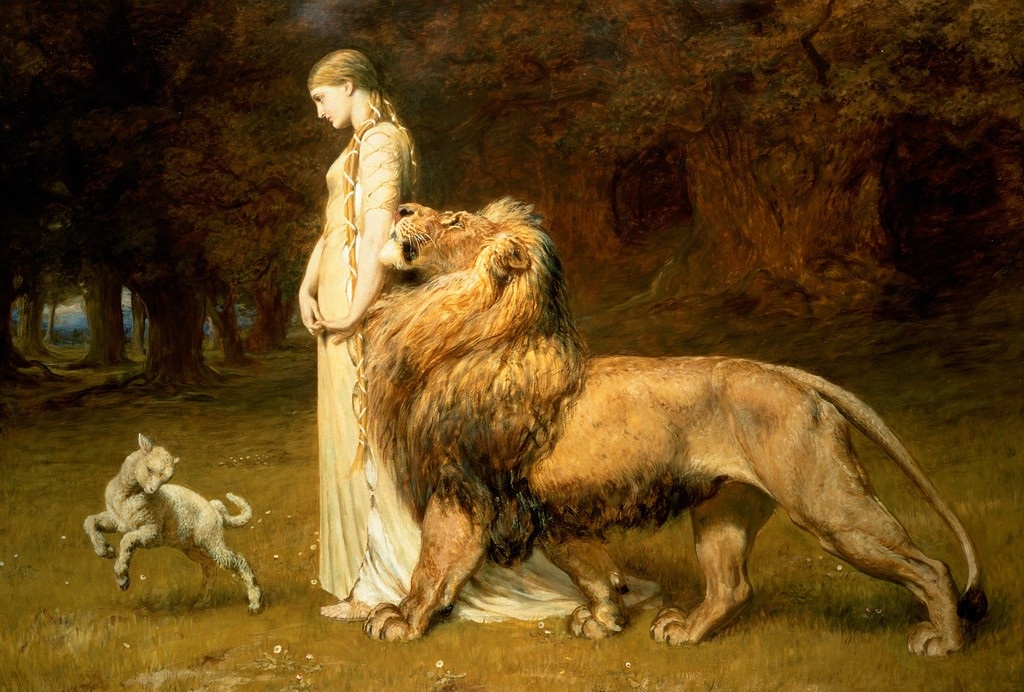
“And I read the part about the lion and the lamb and the leopard and the goat lying down together.”
“And a little child shall lead them…” I added. “That’s Isaiah.”
“That’s right, yes, it was Isaiah. I hadn’t read this part of the Bible before, but it helped me make sense of the dream I had right around when I believed.”
“How so?”
“Well, a part of my dream had to do with all these kinds of animals being at peace with one another, like leopards and goats, just like Isaiah describes. In my dream I was telling people about how good this was, but until recently I didn’t know this was an image from the Bible.”
I smiled as Reza described this discovery to me, then told him what I was smiling about.
“I’ve had a good number of friends tell me just what you are telling me now. That imagery or language in a dream they had from around the time they believed later proved to be from the Bible. None of them had read that part of the Bible before they had the dream.”
“Really?”
“My friend Adam* dreamed about Jesus giving him a white stone with something written on it. He hadn’t read Revelation 2 yet, where Jesus says that to the one who conquers he’ll give a white stone, with a new name written on it.
“Then there’s Henry*,” I continued, who had Jesus speak to him in his mother tongue and call him, ‘My son,’ before telling him, ‘It is the glory of God to conceal things.’ This is a sentence from Proverbs 25, which Henry had never read. It blew his mind when we showed him the verse, word for word what he had heard in his dream.
“Or my friend Hama*, who leaned over to me the first time we took communion and told me that he’d done this before. I told him that no, this was definitely his first time. ‘No,’ he pushed back, ‘I did this with Jesus, in a dream, the night you told me you thought I was already a believer in Jesus. He gave me some bread to eat and something red to drink.'”
Including Reza, these four close friends of mine, all believers still persevering in their faith, had independently experienced a very similar thing. As new or almost-believers they’d had dreams in which they saw or heard specific language and imagery – only to later have the hair on the back of their neck stand up as they realized it was a clear quote or allusion to a passage of scripture as yet unknown to them. The effect, of course, was a sober excitement that God really was at work in their lives – and a deepened amazement at God’s word.
“You know, it’s a little weird to talk about this stuff with believers here,” Reza admitted. “It freaks some people out.”
I nodded, “Yeah, a lot of our Western churches either say things like this don’t really happen, or they make it the center of everything and get obsessed with it.”
“And then people feel pressure to fake it,” said Reza, shaking his head.
One of the baristas with bright blue hair and piercings cleaned the glass door behind Reza as we squinted in the bright afternoon sunshine. An American guy was sitting at a table close behind me. I hoped he was listening in on our conversation, since he would easily be able to hear Reza’s confident, accented voice. Reza always manages to leave secular Westerners a little confused and tongue-tied as he winsomely and boldly shares his faith in Christ. Iranian refugees who choose to follow Jesus and become faithful Baptists don’t exactly fit the cultural narrative.
After a short pause, I continued,
“One of the things I appreciate about Middle Eastern and Central Asian churches is that things like dreams are neither ignored nor obsessed over. They are common enough in the testimonies of solid believers to be held in a more balanced way. It’s interesting, actually. Western Christians, even evangelicals, used to have spiritual dreams and write about them. A little-known fact is that the history of the Southern Baptist Convention is itself connected to a dream about Jesus. A pastor named Shubal Stearns moved from the north to South Carolina to plant churches, specifically because he had a dream where he claimed Jesus told him to. His work led to the formation of the Sandy Creek Association, which is kind of where it all began for the history of the SBC.”
Reza and I continued to talk for a good while longer, ranging over topics that the progressive coffee-sipping patrons around us likely found bizarre, and hopefully interesting. It’s hard for me in some ways, being back in the states for this season. But I love spending time face-to-face again with this brother.
Reza is a member of a SBC church, though one of the minority of churches in that denomination which happen to be continuationist in theology. Yet even then he finds it hard to be open with American Christians about some of his experiences. Most SBC churches would be cessationist, and leaders such as Al Mohler (SBC) and John Macarthur (Nondenominational Baptist) have publicly said they don’t believe God uses dreams in a supernatural or revelatory way. Personally, I would very much like to get these men in the room with the many (often Reformed) Baptist missionaries working with Muslims overseas who come across credible accounts of spiritual dreams on a regular basis. It is one thing to dismiss third or fourth-hand accounts. It is quite another to see your close friend who has been an enemy of Christ shaking in front of you because you are showing him a Bible verse for the first time, one which Jesus quoted to him in a dream. Or to grapple with the accounts of your very own church’s missionary, whom you have affirmed and sent out and you implicitly trust. Better yet, let’s get leaders like these to take a missions sabbatical, where they can be six months on the ground in places like Central Asia and hearing and seeing things first-hand.
Experience does not dictate theology. But experience can reveal blindspots in our theology, places where our categories have been off, or places where we have been unknowingly operating out of tradition, cultural assumptions, or our own experience or lack thereof. Consider a Christian who dismisses the reality of depression as an unbiblical category and the kind of change in his theological lenses that takes place when his own wife descends into a long and dark postpartum depression. Or how simplistic theologies of suffering undergo trial by fire when we ourselves face the deepest kinds of pain. Young singles’ theologies of marriage and parenting often begin with great gusto, only to be torn down and rebuilt as the years pass and their families grow. Many a missionary has quietly dismissed the demonic and spiritual warfare only to find their theologies in these areas in need of some renovation when they move overseas.
I think this is what is going on with Western conservative evangelicals trying to make sense out of Muslims or former Muslims having dreams about Jesus or about God’s word. Because of our own psychologized environment and very modern non-dreaming experience in the West (for comparison, read about Patrick or Caedmon), we begin as skeptics and struggle to have a category for spiritual dreams – unless we are forced to work through the issue because our own Muslim neighbors are coming to faith and having spiritual dreams and literally risking their necks to follow Jesus. At this point we find ourselves in a comparable position to the man born blind in John 9, putting the theological pieces together as we try to make sense of something very surprising and supernatural which we have just experienced, but which the leaders in our community say isn’t really happening or isn’t really something from God.
This blog post is not the place to spell out a robust theology of dreams, even if I were able to do so this evening (which I am not, though if anyone needs a PhD thesis, I think a serious Reformed attempt at making sense of dreams in church history and the global church is needed). But in summary, the canon of Scripture is closed. God does not reveal to nor inspire believers in this age as he did for the apostles and prophets of old (Heb 1:1-2, Rev 22:18). Instead, we have the inerrant and sufficient apex of God’s revelation in the Bible itself (2 Pet 1:19). The Holy Spirit illuminates God’s written revelation for us to understand it and grants us wisdom to faithfully apply it to the questions and experiences of our age (John 16:13-14, Eph 1:17). Yet he also actively leads and encourages us in ways that always uphold the unique place of God’s inspired word – and bring it to bear on our unique life situations (Rom 8:14, Gal 5:25). It is in the Holy Spirit’s ministry of the personal piercing of our hearts with God’s word and wisdom that I would place contemporary spiritual dreams (John 16:7-10).
Believers do not feel that the sufficiency of God’s word is threatened when they are in their waking minds and biblical language or imagery arrests them and stirs their affections anew, providing specific encouragement or guidance. Why would we be so afraid or surprised that this might occasionally happen in our sleeping minds, or in the sleeping minds of those the Spirit is in the process of calling to salvation? Why have we roped off the dreaming neurons and synapses of the brain as qualitatively different (i.e. miraculous and revelatory in an inspired sense) in the way that we have when we at the same time claim that the waking brain is a natural and providential process? It seems our categories might need some tweaking, if only for the sake of consistency. Is the Spirit not indwelling and working in the mind asleep as he is in the mind awake?
All throughout scripture we see that God uses dreams in the lives of his people (Gen 31:11, 1 Kings 3:5, Matt 2:19). Dreams of encouragement and guidance are one category of spiritual dream that are clearly happening in the life of Paul, for example (Acts 16:9, Acts 18:9). Peter tells us that these are the last days, when it is promised that all who call upon the name of the Lord will be saved – and that some men will dream dreams (Acts 2:17). Dreams, however, are not to be relied upon, but tested (Jude 8, 1 John 4:1, 1 Thes 5:21). If in line with the truth, they are to be accepted as spiritual and good, as just another part of the Spirit’s active ministry in the lives God’s people. We need a nuanced approach to this topic that threads the needle right, recognizing that dreams can be abused and that they can also be spiritual and helpful.
While I am a qualified continuationist*, I’m not altogether sure that Muslims having dreams about Jesus or about biblical language or imagery need be a Shibboleth between cessationists and continuationists. In fact, on the mission field the acceptance of legitimate spiritual dreams by missionaries in both camps already exists, not unlike the agreement in both camps that God still supernaturally heals sometimes when we pray for the sick. It is in what we could call the supernaturalist overlap between cessationists and continuationists that I would place the reality of these dreams. Further, I would argue that both camps already hold to a greater ongoing revelatory miracle happening daily – the new birth (2 Cor 4:6). The new birth is a greater revelatory miracle which in no way threatens a closed canon. If then the Spirit works in this greater supernatural way on a daily basis, why not in the lesser way of giving occasional spiritual dreams?
I always appreciate the chance to wrestle with areas where the historical or global church help us to see our particular blindspots and cultural/generational assumptions, places where we find ourselves strangely out of step with those who have gone before us or with our evangelical brothers and sisters around the world. Spiritual dreams are one of these places. I for one believe we need some more conversation regarding these dreams in order to account for the disparity that is currently there between the regular spiritual experience of those from a Muslim background and their brothers and sisters in the West.
At the very least, we need to listen to our fellow believers, like Reza, and try not to get freaked out by their testimonies if they include a dream about Jesus.
*By qualified continuationist, I mean that I am a continuationist by conviction, but that I find in the scriptures, in church history, and in my own experience that seasons of the more miraculous gifts and miracles ebb and flow inconsistently according to God’s sovereign and mysterious plan. There are periods like those of Moses and Elijah/Elisha and the generation of the apostles when they seem to come in downpours, then long periods, not unlike a cloudless Middle Eastern summer, where the showers stop and the ordinary means of grace are all that is provided by the Spirit. Because he is the sovereign Spirit and free to give or not give at his good pleasure, I don’t resonate with the pressure some continuationists put on themselves for these things to function weekly in every era, nor the critique by some cessationists that the gifts among contemporary reformed continuationists seem too quiet, small, and ordinary to be legitimate. I’m not sure exactly what to call this position, but perhaps something like punctuated continuationism would be getting close to the mark.
But whence came this curious difference between them? He found that he could point to no single feature wherein the difference resided, yet it was impossible to ignore. One could try — Ransom has tried a hundred times — to put it into words. He has said that Malacandra was like rhythm and Perelandra like melody. He has said that Malacandra affected him like a quantitative, Perelandra like an accentual, metre.
[W]hat Ransom saw at that moment was the real meaning of gender. Everyone must sometimes have wondered why in nearly all tongues certain inanimate objects are masculine and others feminine. What is masculine about a mountain or feminine about certain trees? Ransom has cured me of believing that this is a purely morphological phenomenon, depending on the form of the word. Still less is gender an imaginative extension of sex. Our ancestors did not make mountains masculine because they projected male characteristics into them. The real process is the reverse. Gender is a reality, and a more fundamental reality than sex.
Lewis, Perelandra, pp. 171-72
This portion of C.S. Lewis’ space trilogy is quoted in a helpful new article by Colin Smothers on Desiring God, “Was C.S. Lewis an Egalitarian?” Like Smothers, I have found Lewis’ fiction to be very persuasive regarding the goodness of complementarity between men and women – that the equal value of men and women is in fact more beautifully displayed in harmonious difference rather than in flat uniformity. And that this good eternal contrast should be displayed in society, the family, and the church. As I think back to what has made me a convictional complementarian, after God’s word, Lewis’ fiction would be one of my top influences. If you’ve never read his space trilogy, The Great Divorce, or Narnia books with this lens, it’s well worth the effort. The key here is that Lewis is not a man imprisoned by the blindspots of his particular time. But as a self-proclaimed “dinosaur” immersed in ancient mythology and languages, he is one of those gifted to see through his culture and to see things more permanent.
Why would fiction, of all genres, be so convincing? Sometimes that which offends our personal culture-shaped logic still resonates deep down when we see it in narrative. Pay attention to which themes keep showing up in our favorite films and stories. These are the things we really know to be true, regardless of what our editorials and think pieces say. The sacrifice of one hero saves the many. Humanity really is worth saving, in spite of our deep brokenness. Troubled characters can make a fateful choice which irredeemably confirms their nature to be evil, and thus their death is just and cause for celebration. Sin must be atoned for. Men and women are deeply different from one another.
It’s hard to argue logically – or biblically – for complementarity in a way that resonates as beautiful in our current Western cultural moment. But stories and narrative can still very much show it to be beautiful in a way that speaks to our consciences and to the eternity in our hearts. Storytellers are therefore a crucial part of the culture wars, one aspect that we conservatives tend to neglect. This is likely one reason why Lewis and Tolkien are everywhere right now. Though long dead, they are some of our few really effective storytellers.
The point which Lewis communicates through his stories that has lodged so deeply in me is summarized by the line, “Our ancestors did not make mountains masculine because they projected male characteristics into them. The real process is the reverse. Gender is a reality, and a more fundamental one than sex.” In my own words, gender is an eternal reality that must exist in the nature of God himself, because it is displayed throughout all creation. Yes, it shows up – downstream as it were – in human sex and gender, but like Lewis says, it appears in countless languages also – both in their very structure and as they attempt to describe reality.
This point resonated so deeply with me when I came across it in Lewis because we also find this to be true as we survey human cultures throughout history and around the world. The reality of masculinity and femininity are universally recognized by the thousands of diverse human cultures that have colored this planet. There has never been a neuter society. Even allowing for great diversity in its expression, the principle of fundamental difference between manhood and womanhood – and the dance of cooperation and competition between them – is always there. Once again, the book of human culture is telling us something about the nature of the universe and about God himself. The reality of binary gender is bleeding through the pages of human culture absolutely everywhere we look.
This is one reason many of the arguments for egalitarianism feel so shallow to me. They present as overly-dependent on critiquing stereotypes from 1950s America. Forget the 1950s. Why would we need to ground complementarianism in such a narrow slice of time and culture? If it is indeed true, then our questions must go much deeper and broader. Why have the tribal and religious institutions of Melanesia and Central Asia been male-led from time immemorial? Why did the ancient Persians recognize the man as the leader of his home? Why have indigenous societies overwhelmingly structured themselves so that the woman’s primary sphere is the the home and the man’s primary sphere is outside the home? Why did the myth of the Amazons exist for the ancient Greeks, serving as a legendary inverse society? Why do so many writers throughout history find the difference in roles between men and women to be honorable, and we find them so distasteful? Have we honestly wrestled with why are we the global and historical oddballs when it comes to how we feel about this topic, and why we are so proud of that?
In spite of the egalitarian air that we breathe in the West, we shouldn’t settle for simple responses that chalk it up to The Patriarchy or the results of the fall. Differences in role and manhood and womanhood are clearly visible before the fall in Genesis 1 and 2, as they should be if they are indeed reflecting deeper eternal realities of gender. The New Testament continues to affirm the differences in roles even as it deepens our understanding of our spiritual equality. Yes, male domineering leadership over women is very real and very universal since sin and the curse perverted these differences and twisted the dance into a cold war (with periodic open combat). But the answer is not to attempt to be the first neuter society in the history of humanity. Nor to remake the church or the home into the image of a fictional universe where masculinity and femininity are temporary, fading things imposed by culture.
Instead, we need to lean in and listen to writers like Lewis who seek to understand the eternal beauty of masculinity and femininity. This will help us place the biblical commands for male and female roles in their proper context. We need some bigger backdrops for this discussion – the breadth of human history and culture, the universe, even the nature of God himself.
To support our family as we head back to the field, click here.
For my list of recommended books and travel gear, click here.
Money dishonestly gained will either go to the physician or be lost in the end.
Local Oral Tradition
This local proverb speaks of the end result of money gained unjustly. It claims that such money will ultimately be spent on doctor’s bills – implying cursed health – or that it will simply be lost. Either way, it amounts to nothing, or to worse than nothing – to a net loss. The logic is simple: stolen treasure may appeal in the short-term, but in the long-run it is a curse. Don’t go down that road.
In this way this local wisdom tradition echoes Solomon in Proverbs 1:19, “Such are the ways of everyone who is greedy for unjust gain; it takes away the life of its possessors.”
A recent situation in our city saw a trusted local believer deceive his mentors, convincing them to give him money to flee the country because his family was forcing him to marry a Muslim girl. Instead, he pocketed the cash, willingly married the girl, and told the group he wouldn’t be coming around anymore. If this brother doesn’t truly repent (if he is indeed a brother), then he will sooner or later find out the truth of these proverbs. The several thousand dollars he swindled will end up costing him dearly, much more than he could have ever predicted.
“So what would you say are the main differences between Islam and Christianity?” asked Hamid*, taking a bite of the cheesecake we were sharing. One welcome development over the past decade has been a tremendous increase in the availability and quality of cheesecake in our Central Asian city.
Hamid, Darius*, and I had gathered at a nice local cafe in order to field Hamid’s many questions. A new teacher of history and comparative religion at an elite local high school, Hamid often found himself at a loss when students asked detailed questions about Christianity. His personal studies on the internet yielded some clarity – as well as a lot more questions.
Darius and Hamid were good friends, and Darius had shared the gospel with him several times. Though neither of us were sure to what extent Hamid’s questions were for his students or actually to satisfy his own curiosity. But we didn’t find it necessary to press. In an honor-shame culture, this sort of “I have a friend who” framing of a conversation allows seekers to explore hard questions as they weigh the risk of admitting that they themselves are having potentially explosive doubts. If the questions were for Hamid himself, then that’s great. And if they’re only for his students? Still great. At the very least, the truth shared now might serve to create in Hamid’s mind what locals call a “brain-worm” that could lead to more searching down the road.
“I mean, other than what you have already described about salvation by faith instead of by good deeds,” Hamid went on to clarify. “I think I understand that point.”
I sipped my hot drink and mulled on how to respond. We had already discussed the key difference Hamid had mentioned, Islam and Christianity’s mutually-exclusive answers to how a person can be saved. I decided to proceed in a slightly different way than I normally would.
“Well, let’s frame the differences in light of three central tenets of Islam’s worldview: the oneness of God (tawhid), prophethood, and the last day.”
Darius and Hamid leaned in. The three aspects of Islamic teaching that I mentioned are so central to Muslims’ worldviews that they are what a certain historical American document might call self-evident – so obvious to locals that they feel that no logical and honest person can ever deny them.
“When we speak of tawhid, or the oneness of God, Islam teaches a simple unity. There is only one God and he exists eternally as one person. However, the Bible teaches something that contradicts this understanding of God’s nature. It teaches that God is actually a complex unity. Yes, there is only one God, but he exists eternally as three persons – Father, Son, and Holy Spirit. These three persons, or three distinct consciousnesses, are equally divine, and completely one in their nature, essence, and will – yet they have distinct roles and they have real relationships of love and communication and glory with one another. In this way, the God of the Bible is totally different from the God of the Qur’an. You would agree that a disagreement about the very nature of God is about as big a disagreement as you can have, right?”
Here Hamid and Darius nodded their heads. Hamid and I had previously spoken of the Trinity while on a picnic together, where he had asked a great question, one which I had never heard before, “Do the members of the Trinity ever compete with one another?” “In only one respect that I can think of,” I had responded after a while, “In giving one another glory.”
“OK, so the Trinity is a big difference,” Hamid continued, “But why do you say there’s a difference in prophethood? Aren’t prophets just men sent by God with a book, preaching God’s message to their people?”
Here I decided to be a little more blunt than usual.
“Well, the writer of the Qur’an, for his own purposes, took Mohammad’s story and did a copy-paste over the story of all the other prophets. So, yes, in Islam all the prophets seem to follow the same script. They are spoken of as basically-sinless holy men who are sent by God to their own people with the message of God’s oneness and the coming judgment of the last day. The message is often communicated to the prophet directly via an angel or some kind of verbal revelation. Many of the prophet’s people reject their message and go on to suffer the consequences. The formula is very simple and is repeated over and over, whether the Qur’an is talking about Moses, Lot, or others. God is claimed to have sent countless prophets to their own peoples in this same formula until sending Mohammad as the final ‘seal’ of the prophets, with a message for all humanity and an incorruptable book. This is why Muslims think that the Injil is one book, given to Jesus, later corrupted, and why most are unaware that there are actually four Injils (gospels), none written by Jesus himself, and unaware that they are only one part of the twenty seven books of the New Testament.
“The prophets in the Bible are very different from prophets according to Islam. They are presented as sometimes very sinful men, chosen by God’s grace to display and communicate God’s message to his people. Yes, this message involves coming judgement and turning from idols to follow the one true God. But it centers around God’s covenant faithfulness toward sinners – including the sinful prophets themselves whose failures demonstrate that we need someone who is more than a prophet. Prophets also receive many different kinds of revelation, whether seemingly more ‘spiritual’ like angels, dreams, or visions, or whether seemingly more ‘natural,’ like doing historical research or writing proverbs. Some prophets write multiple books. Other prophets don’t write any books at all. For many of our books of the Bible we don’t even know who the author was!
“The difference in prophethood between Islam and Christianity is a big one. When it comes to Jesus, rather than him being the final prophet in a long line of sinless men, each with their own people and book, Jesus is the Word of God and the Son of God himself, the only sinless one after many flawed and sinful prophets, whose coming is the climax of God’s revelation to men. All the earlier prophets point to him positively through their inspired writings and faithful deeds, as well as negatively through their sin and failure – kind of like shadows or signs that point us to the real thing.”
“OK,” nodded Hamid, “That’s prophethood. So how is the understanding of the last day different?”
“Well this one connects again to how a person is saved. In Islam, a person is judged based on a scale which weighs their good or bad deeds. The heavier side determines their eternal destiny, though no one can ever know for sure since God’s mercy is presented as unpredictable and mysterious. So in Islam, the last day motivates people to obey based out of fear that their scale will condemn them, or that God may condemn them for some other reason, simply because he is God. There is no certainty about that day of judgment, and a lot of fear.”
Here Hamid nodded his head. Whatever internet Islamic scholars may say, this is very much what Central Asian Muslims on the street believe and live by. Fear is necessary because it keeps us from sinning which will (hopefully) keep us from hell. God can be won over by just enough good deeds (hopefully) – unless he plays a divine joker card and sends some of the undeserving to heaven and others to hell, simply because he’s God and he’s beyond our understanding.
“However,” I continued, “the key for the last day, according to the Bible, is that we are known by God and by Jesus. That we have a relationship with him based on faith in his promises. And that all our good deeds on that day stand as evidence that he knows us already and we know him. They’re not the basis for our acceptance, done out of fear, but the evidence of it, done out of love and gratitude. The last day for a true believer is not something with an uncertain outcome, but a time when we are promised acceptance and welcome by God, who never breaks his promises.”
Hamid sat thoughtfully, “Thank you,” he said, turning to me. “These differences are much clearer for me now.”
I sat back, grateful that some of that I had shared had been understood, maybe even accepted. Believe it or not, convincing local friends that Christianity and Islam really do fundamentally disagree with one another is one of the most stubbornly-difficult tasks we face when we seek to do evangelism. It was interesting to use the Islamic worldview of oneness-prophethood-judgment as a familiar framework for illustrating these crucial differences. Like the scale vs. sacrifice approach, it might be a way to present gospel truth in a concrete fashion Muslims are better able to understand.
We had been talking for a while by this point and I though we had probably given Hamid enough food for thought for one evening. The cheesecake was gone. Likely, he would want to switch topics to something a little lighter.
“OK, then!” Hamid said as he rubbed his hands together. “Next question. Explain to me the different branches of Christianity – and how to keep them all straight. Google was no help on this one.”







 Entrusted to the Dirt
