A couple weeks ago the fall rains began. Overnight, the bazaar was transformed. Out came the carts selling cool weather snacks – large reddish beans seasoned with sour spice, turnips boiled in pomegranate molasses, fried flat bread with green onion mixed in. Suddenly, umbrellas, puffy coats, and space heaters appeared everywhere, bursting from shops which only a few weeks ago had been hanging up canvases to protect from the sun’s heat.
The high desert climate of our corner of Central Asia shifts quickly every year from too hot to quite chilly. We joke that we live in a four season climate of sorts – if you can say that an Autumn that lasts three weeks actually counts. It’s the return of the rain and the moisture in the air that accounts for this sudden drop in temperature and change of atmosphere. In the six months of sunny skies you almost forget what a cloudy day feels like. Then suddenly, mid October with its pregnant clouds comes upon you like a friend you had almost forgotten about, but whose reappearance brings with them almost a sense of waking from a dream. In the words of Theoden king of Rohan, delivered from Saruman’s spells, “I know your face…” The smell of the rain on the dusty stones is particularly potent in this regard.
The locals still live much more connected to the rhythms of the seasons and the skies than we do in the West. Thus, it’s the shift in the weather, not a date on the calendar, that seems to create the societal cues that everyone knows how to interpret. The rains have come. So harvest the pomegranates, prune the shade trees, make the cold weather stews, get out the kerosene heaters.
This past week I was driving around the cloudy city with Mr. Talent*, attempting to pay my various bills before we left for our medical leave. I remarked that the roads and the city itself were much calmer than usual, especially for a Thursday, the last work day of the week. I asked Mr. Talent why that might be. He thought for a minute before answering.
“I have five different friends who were unavailable today because their mothers commandeered them to help lay out the carpeting.”
Every year locals lay out a thin tan wall-to-wall carpet in their homes when the weather is cold, putting it away again when it gets hot again so that they can walk on the cooler tile.
“I bet that’s why the city is so quiet,” he continued. “The mothers knew today was the day to lay out the carpet.”
“That is fascinating,” I responded. “Look at the power of mothers. When they want to, they can change the atmosphere of an entire city.”
Mr. Talent laughed, and nodded his head.
If our theory was correct, it’s even more remarkable in that none of these mothers would have coordinated with one another to set a date for this big annual project. They would have independently intuited that it needed to be this Thursday.
“It is time, my son. No going out with your buddies to waste time smoking hookah this Thursday. I feel it in my bones. Time to do the carpets.”
The dutiful Central Asian sons of course comply, knowing the futility of protesting when mom is sensing the seasonal cues.
From its earliest manifestations literacy had a decorative aspect. How could it be otherwise, since implicit in all pictograms, hieroglyphics, and letters is some cultural esthetic, some answer to the question, What is most beautiful? The Meso-american answer lies in looped and bulbous rock carvings, the Chinese answer in vibrantly minimalist brush strokes, the ancient Egyptian answer in stately picture puzzles. Even alphabets, those most abstract and frozen forms of communication, embody an esthetic, which changes depending on the the culture of its user. How unlike one another the carved, unyielding Roman alphabet of Augustus’s triumphal arches and the idiosyncratically homely Romano-Germanic alphabet of Gutenberg’s Bible.
For their part, the Irish combined the stately letters of the Greek and Roman alphabets with the talismanic, spellbinding simplicity of Ogham to produce initial capitals and headings that rivet one’s eyes to the page and hold the reader in awe.
Cahill, How the Irish Saved Civilization, p. 165
Here is an interesting thought. Our alphabets and scripts are actually clues to what we find beautiful.
We don’t need anyone coming to the mission field – nor leaving – as Christian individualists. By Christian individualists, I mean those who decide on massive life/ministry decisions without a healthy involvement of their church, mentors, family, and believing community. The problem with Christian individualism – especially when it comes to missions or ministry – is that it baptizes lone ranger decisions with the nigh-untouchable “God is calling me to…”
Thankfully, many sending churches and organizations have realized the danger of Christian individualists going to the mission field. The occasional Bruschko may end up working out, but the more likely scenario is a missionary who goes abroad while still unqualified, unfit, or at least woefully unprepared. This can cause untold damage to missionary teams, local believers, and the reputation of the gospel itself.
There is a trend of missionary-sending processes that increase the involvement of the local church. This is a very healthy development, one which pushes back against a previous tendency to outsource the assessment process to missions agencies. In fact, a healthy local church should be the primary place where a prospective missionary is assessed, affirmed, and sent. The church members and the leadership should be able to wholeheartedly vouch that the candidate’s character, knowledge, skills, and affections align with that of a qualified missionary-in-training. Individuals who do not meet these standards should be kindly redirected toward a different timeline or a different vocation.
Praise God, there is somewhat of a consensus – in reformed evangelicalism at least – on the need to not go to the field as individualists. This is a remarkably good thing given the militant individualism of Western culture. The difficulty of someone actually getting to the mission field without some degree of church and pastoral backing testifies to how the Western sending church is pushing back against its own culture with biblical wisdom.
However, we seem to have a blindspot when it comes to those who leave the field. Often this decision to leave is made with barely a fraction of the counsel, input, and testing that went into the decision to go in the first place. Sadly, many who come to the field, sent by their community, leave the field as Christian individualists. When wresting with leaving, they think and pray in private and then unexpectedly drop the bomb that God is calling them to leave the field, much to the dismay of their local friends and colleagues. Often, even if counsel is sought, the decision has already been made.
Several things make these dynamics understandable. Sometimes missionaries are simply too beat up or too burnt out to feel like they can handle the inevitable disappointment and pushback that comes when they float the idea of leaving. It can feel safer, or at least more bearable, to process privately and then try to go out quickly and quietly.
Leaving the mission field also means moving from a vocation that requires higher qualification, back to a lifestyle that does not require that same level of assessment. Leaving the role of a cross-cultural church planter to return to that of a church member in one’s native culture is a step back in terms of the leadership standards one must be held to – though basic standards of Christian faithfulness remain the same. So it makes sense that leaving would not naturally result in the same kind of robust processes and conversations.
Yet there’s also a lot of shame attached to the thought and reality of leaving the field. Does this mean failure? Are we leaving when just a little more pushing would have resulted in things changing? How can we let our colleagues down when they are already overwhelmed with life and ministry? How can I make sense of this to the local believers? I’m convinced that this sense of shame keeps the conversations from happening as openly as they might otherwise.
So the pattern repeats itself. Family after family announce their departure, rather than allowing it to be a decision which is not made until robust counsel has been sought and weighed. We revert to our enculturated individualism, and in our Christianese we tell ourselves and others that God has called us to a new chapter. Perhaps he has. But why have we not confirmed that calling in the same manner as we have in the past? What does that discrepancy mean? What have we been so afraid of?
I write this post in a season where we are very much wrestling with our family’s future on the field. Medical conditions have continued to pile up for our family, and in several weeks we will be returning to the US for yet another medical leave – one which may last quite a while. Will we be able to find the diagnoses and healing we need in order to be back on the field in a healthy place in six months? Or ever? We’ve not yet experienced this level of uncertainty regarding our future ministry in Central Asia. And it’s very sobering.
We are, however, trying to live out our convictions on this point of not living like Christian individualists. We have attempted to invite many into this process with us, so that they might pray for us and give us their counsel. If there is anything we are missing, we want to hear it. We will wait to make any big decisions until we can do so in the light and wisdom of many counselors. At the same time, I feel more than ever the pull of wanting to privately make a decision on our own, to protect myself from the uncertainty and the emotions of my friends’ responses. It is a very strong pull, even with my cross-cultural upbringing that slightly tempers my individualism.
Practically, I do have the spur of having advocated publicly for healthier departures from the mission field – and that means I now have the chance to eat my own words. This is a gracious thing on the hard days.
Our coworkers, leadership, local friends, and family have all been very kind counselors as we’ve tried to process this upcoming leave and its possible implications. Similar to confession of sin, I’m so glad we’ve been open about this. Whatever God wants us to do, we are hopeful that when clarity comes, it will come with the assurance that God’s people are actively speaking into the hard decision to leave, or the hard decision to stay.
Perhaps this is an area where churches and organizations can develop helpful structures and processes. Given the rate of attrition from the mission field, I wonder if an intentional and robust process which helps struggling workers wrestle with their desires to leave the field might not help clarify those who should indeed leave, and those whose calling has not changed, worn out though they are – some kind of a track that is the inverse of those used for mobilization, i.e. “So You Wanna Stop Being a Missionary?” I wonder if something like this could offer some protection from the dangers of subjectivism that come from being prone toward Christian individualism. Even after years of discipleship, we can be so adept at reverting to our human culture and playing cards that make our decisions almost unapproachable.
I believe we need to continue strengthening our commitment to not have any come to the mission field as Christian individualists, but rather with the backing of a healthy sending church and sending org. I also believe we need to awaken a commitment to not leave the field like Christian individualists, but as those with a spiritual family – churches, colleagues, and local brothers and sisters.
If leave we must, this won’t make it necessarily easier. But it will make it healthier. We would still grieve, but it would be good grieving, with less regret and less shame.
Pray for families like ours facing uncertainty on the field. Even in the midst of the strangeness of these conversations, pray that we would honor Jesus – and also honor his bride.
This proverb appeared last week as Darius* was over at our place, helping me with sermon checking, right around the time where I tried to make a point saying “that doesn’t mean it’s destiny!” and instead said, “That doesn’t mean it’s anut!”
Yes, if you ever preach in another language, I highly recommend checking your sermons beforehand to catch these foot-in-mouth sentences. It just may save your life – or at least your face.
Anyway, around this point Darius offered me some of the cookies my wife had set out for him. Then he started laughing and told me that he was offering me my own oil for my own mustache. As is usually the case when I hear a local proverb for the first time, I responded with a “What?”
This proverb is apparently used when a guest offers the host food or drink that actually belong to the host. Or other similar situations where a person is offered assistance by means of his own resources. It’s the sort of ironic hospitality situation that locals get a kick out of because usually such grandiose and over the top offers of hospitality are made. Another equivalent saying is, “I would like to invite you… for falafel!” Falafel being the very cheapest sandwich you can purchase in the bazaar. Delicious, yes, but costing the host practically nothing. Hence the joke.
Mustaches are a traditional sign of manhood in this culture that carry a respect of their own. And apparently oiling your mustache was/is a thing, though I have not gone deep enough yet into the local facial hair culture – or my Western peers’ for that matter – to know much about mustache oil. I either need to spend some more time with some old men in the tea houses or do more reading on the Art of Manliness website.
Some proverbs are used for tactful rebukes. And this one may be useful in that way, given the right situation. But I anticipate it being much more useful for the art of relationship building and the kind of banter that communicates friendship and trust are indeed growing – growing as surely as a Central Asian man’s mustache.
Our mountainous corner of Central Asia is extremely language-diverse. The language my family has learned is the mother tongue for only about a quarter of our focus people group. Other colleagues are learning another of the major language/dialects, one which goes by the same overall name as ours, but is about as different as English is from German. Together, we can speak the mother tongues of maybe two-thirds of the locals of this region. The other one-third is made up of a linguistic stew of a dozen or so minority languages/dialects, mostly belonging to UUPGs.
A UUPG is an unengaged unreached people group. This means not only does this people group not have an indigenous church, but there are no organizations that have personnel actually learning their language and culture and attempting to plant churches among them.
There are reasons these groups remain unengaged. Some of them are hidden, barely even showing up on the radar of obscure linguists and anthropologists, let alone Christians and their sending organizations. We have local gypsy groups, for example, that no one has any solid data on. Other groups are known, but so little research has been done that it’s unclear if they warrant a specific focus or if they can be reached through a majority language strategy. Still others are known as distinct ethnic and linguistic groups warranting their own church planting teams, but they live in dangerous or politically inaccessible places for Westerners. Again, there are reasons why these groups remain unengaged.
Yesterday I met with some members of a Bible translation team. They have begun publishing newly translated books of scripture for one of our UUPG groups, which makes us very excited, not only because we have long prayed for this group, but also because we have open positions for a new team to at last come and engage this mountain people. We don’t have any takers yet on these positions, but having a few books of the Bible available in their language now and some job positions open is an encouraging start. Potential takers will be able to begin their work with some of the Word of God already available! This is no small thing. However, once again, there are reasons we’ve had no applicants for these positions.
Anyone who desires to engage these groups will be faced with an extremely challenging task. First, they will have to learn at least two new languages, the majority trade language the minority group uses in the marketplace and government offices as well as the mother tongue. They may be the first outsiders to ever attempt to learn said language. It may be only an oral language and not yet be written down or have its own alphabet. Most of these groups live in dangerous border areas which present difficulties for residential work, such as the ability to get a visa and the ability to have a work identity in the community that provides access and makes sense. Most also live in small towns and villages, a fishbowl type of setting where everyone will be aware of the presence of foreigners from day one – and where most are much more devout in their Islam or minority faiths.
As I mentioned above, foreign Christians living among these groups will need an identity that provides legitimacy and access. At the very least, they will need to open up a branch of an existing NGO or business, or they may need to build this kind of a platform from scratch. And then run it as they are also full-time learning language. Oh yes, and these are areas without any local or international churches or even other residential Christians. So the team will need to be able to thrive spiritually by themselves abiding in Jesus and by covenanting together as a healthy house church, perhaps made up of only the team for a long season. Homeschool or online school will be a must for any school-age kids, even if they are able to attend local school for the sake of language and relationships.
These areas are less developed, meaning spotty electricity and water supply. This exacerbates the blistering hot summers and the very cold winters. Decent medical care will be at least a couple hours drive away. Good medical care will be a couple hours drive and then a flight to another country. This will hit home when one of your kids has an appendicitis scare, as our daughter did this week.
In all likelihood, after one or two terms of residential work, once the mother tongue is learned and some have come to faith, the team will get run out of town by the local religious leaders. At that point they’ll need to relocate to one of the bigger cities of our region and continue their work in the homeland from a distance and with whatever displaced population of their focus group lives in the city. Par for the course with our regional people groups, group implosions, betrayal, false conversions, and heartbreaking apostasy await – a long string of deep disappointment with locals they had hoped would be future leaders.
Sounding impossible yet? Not so fast. We know that Jesus has his sheep, even among these unengaged groups. They will hear his voice (John 10:16). The harvest is ripe (John 4:35). All we lack are some laborers, some seemingly-crazy trailblazers who embrace the shame of a foolhardy task for the joy set before them, knowing that the kingdom is unstoppable and the mouths of all scoffers will one day be shut as even the most unlikely bow the knee to king Jesus. These groups will have churches among them, sooner or later. God will not use dreams and visions alone. These only ever precede and accompany his workers. He will use his chosen means, his Church and his Word, his proclaiming people.
Perhaps you feel a strange burning in your chest as you read of these impossible tasks. Maybe instead of balking at the unlikelihood of success, you feel overtaken by an unusual confidence, perhaps even a jealousy for God’s glory among these forgotten peoples. Pay attention to those desires if they keep surfacing and if they align with gifting and opportunity. If they do, talk it over with your pastors and your closest believing friends. You may be called to be a trailblazer. We are sure praying that some of you will be.
My friend Reza* is one of only a handful of believers we know about from one of these UUPGs. What a joy it was to see one of the very first from this people group born again, knowing that he is a forerunner of many to come. What a joy it has been to get to share the gospel in the trade language with those from other UUPG groups, knowing that someday others will share the gospel with them in their mother tongue, and perhaps even give them a gospel of Luke or an entire Bible. They will demonstrate for these groups – some a half million strong – the powerful truth that God knows their oppressed minority language and even will speak to them through it.
This is a call for trailblazers. A few are called to this hard and wonderful work. A great many will be called to the crucial work of sending and supporting them. May God show us which one he is calling each one of us to.
The year before I got married was the only time I lived on campus at the Southern Baptist Theological Seminary during my studies there. Two single men from my church had an opening for a roommate, and it proved to be a great opportunity for fellowship as well as saving some money for marriage.
At the time, a group of us were attempting to get a Bible study going among Iranian refugees in Louisville. My roommates agreed that we could host the first one. The only problem was that the individual buildings on campus didn’t have separate addresses. This meant that we could only give the main campus address to our Iranian friends for them to navigate their way there. The plan was for them to call us once they arrived somewhere on campus and for us to direct them to our hall.
I was excited for this Bible study to begin, and while we waited I prepped some chai in the coffee maker and fried up some chicken. Soon, a couple of the attendees arrived. We waited to get started until another new friend, Reza*, had arrived. He seemed to be taking longer than he should. Maybe he had gotten lost?
My cell phone rang from a number I didn’t recognize.
“Hello?”
“Hi, this is campus po-lees,” began the thick Kentucky accent. “Are you A.W.?”
“I am. Is everything OK?” I replied, suddenly nervous.
“Well… I got an Eye-rain-eeun here who says he’s comin’ to your place, but I caught him parkin’ in the president’s parking spot.”
I bit my lip so as not to laugh. Anyone who’s been around SBTS knows that the campus police and staff are very serious about guarding Dr. Mohler’s official spaces, parking or otherwise. Of the hundreds of parking spots on campus, how had Reza managed to park in the only one reserved for the seminary president of all people? I shook my head as the guard continued.
“When I approached him, he took off runnin’! But I caught him and he’s tellin’ me a story I’m not sure I believe. You got some kind of Eye-rain-eeun Bible study goin’ on here like he says?”
“Uh, yes sir, we do. You can let him go and send him over to Fuller hall.”
“Alright, then… well, tell him next time not to park in the president’s spot. Have a good day,” the officer concluded, sounding not quite convinced by our story.
Reza arrived, looking relieved and a little winded. We all had a good laugh as he described what happened.
“I just followed the address on the GPS and it took me right there! I didn’t know that was the president’s special spot!”
“But Reza, why did you run from the campus police?”
“I’m a Middle-Easterner and an Iranian! When the police are coming after us, we have learned to run!” To be fair, Reza’s father had been imprisoned in Iran and Reza had himself to flee the country while still in high school.
We all sat down, passed out the chai, and began our time in the word. We ended up in Romans 5 that day, discussing how in Adam, all die, but in Christ, all can be justified. I distinctly remember when our point landed home for Reza.
“So you’re telling me that I am part of the wrong human family, one that is condemned, and I have to join a completely new human family?”
He seemed very surprised and somewhat incredulous.
“Yes, that’s exactly it!” we replied. “You have to become part of a new humanity, to be born spiritually into a new family by believing in Jesus.”
That day may have been the first time Reza had ever clearly understood the claims of the gospel. Unfortunately, that particular Bible study group soon after fell apart as one attendee claimed that another attendee was a spy – a common reason for group implosion among this particular demographic. However, Reza and I continued our friendship. He later came to faith and is still one of my best friends in the whole world.
The next day I was walking down the hallway on the way to class when I overheard one of the missions professors asking a colleague, “Did you hear about the Iranian who parked in Mohler’s parking space?”
I smiled, quietly enjoying the small disruption our little outreach had caused. From the few brief interactions I’ve had with Dr. Mohler over the years, I’m sure that if he did hear of it, he would have smiled as well.
*Names changed for security
To support our family as we head back to the field, click here.
For my list of recommended books and travel gear, click here.
This is one of our new favorite songs as a family. Listen to that harmonica!
If you saw a lion trying to hurt someone you love
You’d find him with your hand or shoot him with a gun
If you saw a robber trying to break into your home
You’d hit him on the head with a hammer or a phone

We take care of our bodies
We take care of our things
But what about these hearts
That we’ve given to the king

Don’t let the enemy in

If you heard a fox telling you a lie
You would not believe him
cuz you’d know that he was sly
If you saw a serpent biting at your heals
You’d crush him with your foot
cuz he’s only come to steal

We take care of our bodies
We take care of our things
But what about these hearts
That we’ve given to the king

Don’t let the enemy in

If you met man who had a kingdom and a treasure
And he gave it all to you just for your good and for your pleasure
In it there was peace and joy and freedom from your strife
Wouldn’t you receive it and guard it with your life

You know this really happened
You’ve been given every blessing
Don’t believe the devil’s lies
No matter what he’s dressed in

Don’t let the enemy in

I won’t let the enemy in
“You don’t have to point out what’s wrong with our religion. Deep down, we know more than you ever could regarding the dark things in Islam.”
This comment years ago from a Middle Eastern friend has always stuck with me. Over time, it has proven to be sound advice, wisdom that has been borne out in countless relationships with Muslims who are coming from honor-shame cultures.
I’ve never had a personality that naturally goes hard after polemics, which is the practice of highlighting the weaknesses and errors of other religions and worldviews as a method of thereby getting to the gospel. But when locals outright deny, brush under the rug, or just plain don’t know about the the scandalous or dark parts of their holy books or prophet’s life, it is awfully tempting to start attacking these foundations of their belief, even for me.
I am not saying there is never a time to do polemics. After all, Paul says that we “destroy arguments and every lofty opinion raised against the knowledge of God” (2 Cor 10:5). There will be times when we follow the Spirit’s leading into saying something true that makes our hearers very angry – let’s not forget about the example of Stephen in Acts 7. And sometimes a direct assault will land home and result in further questions. But let’s also remember the story of the Samaritan woman in John 4, where Jesus doesn’t take the bait of entering into religious controversy in order that he might more effectively speak to the heart of his hearer. Many times, arguments about controversies are mere talking points or smokescreens meant to deflect from the real heart issues going on.
The main issue I’ve faced with polemical approaches is that they risk triggering a defensive response, where someone is overtaken by the sense that they are duty-bound to protect their community’s honor from the attacks of an outsider, whether they internally side with their community or not. Westerners might feel this way if the attacks aren’t perceived to be fair and balanced. Those coming from honor-shame cultures often feel this fire to defend simply because there is an attack at all – fair or not. This means that someone who might otherwise listen to the gospel can go into fight mode if I start “dishonoring” the creed and traditions of his people – and then the chance to get to the gospel can be lost.
This is where my friend’s comment has proved to be so helpful. By sharing what he did, he let me know that things in Islam’s sources and history like child brides, slavery, wife-beating, the killing of Jews and infidels, the hypocrisy of the religious establishment, and the jihad-gained wealth of Muhammad and his companions are not only known to many locals, but can even keep them up at night. Many Muslims are already wrestling with these things, albeit quietly.
Since this is the case, I don’t have to go to these risky places of conversation early on in my relationship with my Muslim friend. When I share with him about Jesus or we study the Bible together, often he is automatically comparing what he hears with what Islam has taught him. And our conversation can keep on going since no open attacks on honor have yet taken place. Instead, a thousand indirect attacks are taking place and are mounting through the simple explanation and illustration of gospel truth.
Taking a look at how husbands are called to love their wives in Ephesians 5 or how Jesus calls us to love our enemies in Matthew 5 holds up a powerful contrast for a Muslim friend. He must then wrestle with this contrast that his mind is now faced with, the stark difference between texts like these and his own. In this way, polemics are in a sense happening, but indirectly, as a kind of open secret. We both know what is going on, but without verbally acknowledging it we have room in an honor-shame culture to skip the usually-required defense.
In fact, it’s not uncommon for this kind of beginning to eventually lead to an explicit discussion of Muhammad, the Qur’an, or those seventy virgins promised in the Islamic conception of paradise. But the respectful long approach to these topics and the relational credibility established by that point often mean a very different kind of conversation – one where my friend lets me know he’s ready by asking my thoughts on these topics, where he is free to share his own doubts and questions, and where I can say direct things, knowing that they will be heard in love.
There is also a big difference in this area between ourselves and local believers. We’ve found that local believers are able to engage in helpful polemics much more quickly than we are, because they are not viewed as outsiders. This seems to mean that the honor-shame defense mechanism doesn’t trigger in quite the same way for them as it does for us foreigners. This can go too far as new believers from a Muslim background do tend to go overboard with polemics – and at times forget to talk about Jesus. But it generally holds true that they have more of a chance than we do of having their attacks actually heard.
Now, when we’re on a visit and someone publicly goes after the reliability of the Bible, I want to still be ready to respond back with a defense and questions of my own. The door to a kind of “challenge-riposte” conversation has been opened by a local, and to not defend and counter would be viewed as dishonorable. However, even in this kind of context I will hold back on the most controversial topics, knowing that, unfortunately, those from honor-shame cultures can dish the attacks out, but they struggle to take it back without losing their heads. Alas, every culture has its weaknesses.
However, our usual approach to polemics is to go light and indirect, the equivalent of giving a man some roast lamb before we try to take his poorly-cooked rice away. Once faced with the choice, he will want to choose the lamb. But if rice is all he has, he will fight for that bowl of starch with all that he has. Instead, set the lamb down, let him smell and taste it, and then attempt the rice away. This kind of contrast – and timing – can make all the difference.
These various waves of immigration of Christian refugees help account for the fact that, although at the start of the seventh century Christians constituted nearly half the population of the Iranian Empire, about 75 per cent of these were Nestorians, 20 percent Miaphysite Jacobites and 5 per cent Melkites faithful to Chalcedon.
In retrospect, three factors contributed to the rapid success of the missionary efforts in the east: First, significant Jewish exile communities were living in Mesopotamia. Second, Aramaic served as the lingua franca from Antioch to Central Asia, enabling Aramaic-speaking missionaries to communicate easily with both Jews and non-Jewish merchants and members of the upper classes. Third, the close-meshed net formed by the various routes of the Silk Road eased the spread of the new religions. Although the Roman-Parthian border was generally tightly maintained, traders or missionaries disguised as traders could cross it unhindered. In fact, the missionizing of Mesopotamia, which moved from Edessa to Nisibis, Arbil, Seleucia-Ctesephon and Maishan, followed the land routes of the Silk Road. The sea routes then enabled the expansion of missionary activity to the islands of Kharg and Socotra, as well as – presumably – South India.
Baumer, The Church of the East, p. 25
I was just sharing with a local believer the other day that it was only as recent as the 1500s that the number of Christians in Europe outnumbered the number of Christians outside it. In line with this, Baumer here shares a remarkable statistic, that while never having government control, Christians in the Zoroastrian Persian (Sassanian) empire at one point made up nearly half the population.
Also, take note that business as mission is not a novel concept at all, but a tried and true method of the early church as they sought to bring the gospel to the Middle East and Central Asia.
A wish for the days of homemade naan
In a thousand homes, a pilgrim only one
Now for all, "Pilgrimmy pilgrim" is claimed
But pilgrims they're not, nor their bread e'en homemade

-Local Oral Tradition
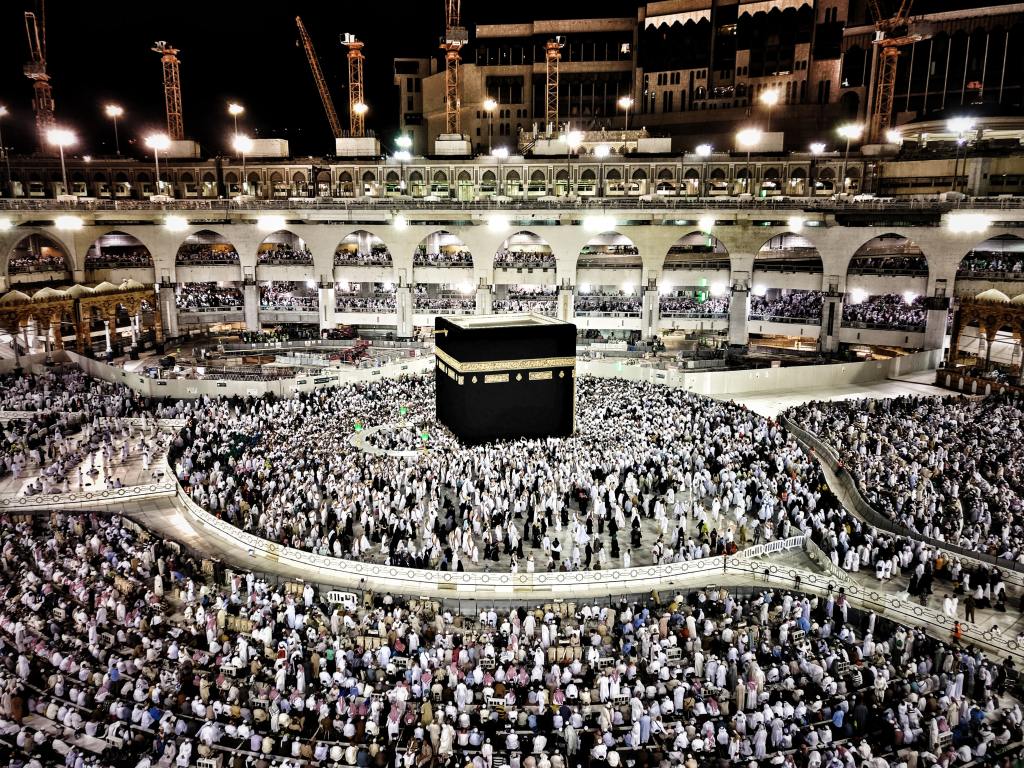
This local poet’s verse takes aim at the many in his day who went on pilgrimage, hajj, to Mecca, only to return proud and useless. His logic is that at least back in the day they were useful and contributed something! But now they all claim the respect due to one who has gone on pilgrimage, the deference due to a Hajji, but none of them actually live like true spiritual pilgrims. And in their pride they have lost even the practical good they used to contribute to the community, here represented by making homemade bread.
I’ve heard many stories of locals known as crooks and swindlers who have made the expensive trip to Mecca only to return twice the sons of hell that they already were. Now they could wrap their corruption in the veneer of a false penitent who has supposedly pleased God. Locals tell these stories and frown, sensing in their conscience the way their society is being played by this monopoly of the religious establishment, wondering aloud why all this money spent on this required pilgrimage to the land of their conquerors does not instead go toward serving the local poor. Would this not be a more true and just way to honor God?
They are not wrong.
Go and learn what this means: ‘I desire mercy, and not sacrifice.’ For I came not to call the righteous, but sinners.


 Entrusted to the Dirt