This Central Asian proverb speaks to what many in seasons of suffering have experienced – that suffering reveals who our truest friends really are. When the good times end and the trials have come, we find out who is still able to be a companion, even in the darkness. And who was there only for the proverbial melons. We have an equivalent English proverb that gets at the same idea: “a friend in need is a friend indeed.”
Very few people naturally know how to be a good friend in suffering. It seems to be something we must learn, often as we suffer and grieve ourselves and thereby grow in the unique wisdom of those who mourn. We also learn how to do this as we experience responses to our suffering that are not so helpful.
I am trying to learn to not pivot so quickly to the sovereignty of God in the midst of pain. I’ve learned there is a cheap way to turn to this glorious doctrine that can keep us from lamenting as we need to, whether for our own pain or for others. It can function as a deflecting mechanism of sorts because I am afraid of what will happen if I am truly open to the pain. I find it instructive that Jesus does not plainly tell Mary and Martha in John 11 what he is up to, that he allowed Lazarus to die because he is purposefully bringing about his resurrection from the dead. Instead, he hears their tortured questions, reminds them of who he is, and then weeps with them. It seems that even a death of a mere four days must be mourned before it is appropriate to start putting the pieces together. The faithful friendship of Jesus is revealed not only by his bringing Lazarus back from the dead, but also by his choosing to weep with his family first. “See how he loved him!” (John 11:36).
Many of us can grow in being better friends in suffering. Our own suffering will inevitably teach us how to do this. But we can also learn by listening well to those who are currently in seasons of grief and pain, or those who are reflecting on what they needed during their own dark season. Often, the desire to be a good friend is there. It’s a part of our new nature as believers to want to be this kind of friend for others. But we can often lack the practical know-how of how to actually weep with those who weep (Western culture is a terrible tutor when it comes to how to grieve). Our fear of saying the wrong thing can cause us to not send that note or make that call. When in doubt, we should take the risk and err on the side of extending comfort, imperfect though it may be – especially since so many agree that it’s not the words in the midst of suffering that mean the most, but our presence and mere willingness to enter into the sadness.
This Central Asian proverb echoes the eternal wisdom of God’s word also. Proverbs 17:17 – “A friend loves at all times, and a brother is born for adversity.”
When adversity inevitably comes to those around us, may we be revealed to be good and true friends. And may God provide these kinds of friends for us in our suffering as well.
Eating out just hasn’t felt worth it these past couple months that we’ve been back in the US. While restaurants in the states are open again, most are understaffed and alarmingly expensive. The lack of staff usually means pretty poor service, and even the quality of food usually strikes us as not what it used to be. Hearing others in the US voice similar sentiments means it’s not just those of us who have been living overseas who notice these differences. The food service industry is creaking, trying to lurch back to what it was before the pandemic. There is this sense that – convenience though it is – we can’t count it like we used to.
Food service is not the only system struggling to regain its pre-pandemic efficiency. International air travel has still not recovered either. We’ve never had the kind of travel difficulties that we’ve experienced over this past year. Even business behemoths like Amazon seem past their, ahem, prime. More seriously, crime has also skyrocketed in many American cities, with the understanding in some places that if you are the victim of certain crimes, you are on your own.
The strange thing about all this for highly-educated millennials like us is that we’ve hardly ever known the systems around us to get worse, perhaps with the exception of our elected government. By and large, we’ve only known the infrastructure and services offered in the West to (eventually) get faster, more efficient, and more user-friendly. This was also the worldview of our parents’ generation. Progress in the systems we rely on for life necessities or conveniences has been assumed. The pandemic and its aftermath have challenged this assumption and, whether temporary or long-term, the systems around us are showing their weakness.
Systems don’t last forever. The prophecy of the twelve eagles was right – Rome would fall. The Roman legions would leave places like Britain in 409 and never come back. Which meant the structures of empire that the Romanized residents of Londinium (London) relied upon would have slowly but surely broken down. A thousand years later the Portuguese would successfully sail to India – thereby causing the economic collapse of the Central Asian silk road. Trade routes that were kept safe by the wealth and power of regional regimes would become frequented by violent robbers and be slowly abandoned by the caravans. Empires rise. Empires decline. At some point a certain generation realizes that things are breaking faster than they can be repaired, and life is likely going to get a lot worse before it someday gets better.
As the systems of West have begun to creak, we’ve had an opportunity to get a glimpse of what it might be like to live in a declining empire, what it’s like to have things regress, as it were. We’re nowhere near what someone like Augustine would have experienced as the Vandals laid siege to his city during the last year of his life. Bad food service, late packages, and lost luggage are not nearly the same thing as barbarians at the gate. But if we stop and pay attention, we might be able to identify just a little more with all those communities throughout history that have known what it’s like to have their faith in their systems shaken. This is not all bad.
Who among us in the West has not at times believed the myth of our society’s unceasing progress and influence? It’s only human to believe that the way things are is the way they are going to be – certainly for our lifetimes, if not for much longer. But a shockwave through society’s systems can function much like a personal health scare. It can awaken us to our own transience. Our lives are like a vapor (James 4:14). So are our civilizations. Like Ozymandius, all the great boasts of this world will one day end up the equivalent of a monument buried in sand, abandoned and forgotten. Remembering our transience fosters humility. And our God gives grace to the humble (James 4:6).
Creaking systems can also foster a hunger for better ones, those that cannot be shaken (Heb 12:27). It’s no mistake that Augustine writes The City of God in the twilight of the Roman Empire, and in light of the first sack of Rome. When the temporary systems (the City of Man) that we live in get shaken, believers are forced to cling to our true home, our eternal one (the city of God). Just as all the transitions of a refugee’s or a TCK’s upbringing can cause him to hope more tangibly in an eternal home, so the church collectively can come to believe more deeply in the steadfast kingdom of God when their own societies of sojourn are coming undone.
Shall we grieve for our Babylons when their time has come? Yes. The losses are real, if indeed we sought the good of the city where we sojourned. And yet there is also hope and a renewed clarity that must intermingle with the grieving. We knew all along our common grace systems were eventually going to fail. But we also knew that their creaking and their failure would also (ultimately) serve as the prelude to the eternal story of the New Jerusalem.
Finally, these things also help us identify with the Church global and historical. When we ourselves wrestle in faith to trust God in the breakdown of our systems, we learn better how to pray for Christians who live in failed states or economies, for those whose societies experience a great deal more instability and turmoil than ours have. We are reminded that we should have been primarily identifying with them all along, rather than with our temporary fellow citizens and partisans.
When the city of man begins to creak and groan we may naturally feel a good deal of fear or disorientation. I don’t think there’s any way around this. But this creaking is also an opportunity for humility, for renewed faith in the New Jerusalem, and for identification with the historical and global Church. In this way, no matter if the cracks get worse or if they get patched, we will be able to maintain hope, to serve our brothers and sisters and even the perishing, and to point to what is coming.
For here we have no lasting city, but we seek the city that is to come.
“Mvmt II – Begin and Never Cease” by The Oh Hellos
There is something wonderful about The Oh Hellos’ raucous folk sound. This is one of my favorite songs on our family’s Christmas playlist. It’s right to have slow, contemplative songs about the first coming of our king. It’s also right to have songs that make you want to get up and dance for wonder and joy. This is very much the latter.
It’s been about nine years that I’ve been suffering from periodic anxiety attacks. Apparently, many third-culture kids experience some kind of health or mental health collapse in their mid-twenties, which some researchers in the TCK counseling community are saying is due to years of unprocessed grief and the built up stress of so many goodbyes, transitions, and losses. In my case, this pattern fits my story almost too well. I literally collapsed one morning as a 25-year-old while doing an evangelism training, passing out just a couple minutes after I had taken the stage. This started a long pattern of anxiety attacks connected to speaking in public and eventually, to anxiety attacks in many kinds of high pressure conversations.
It’s been a long road trying to pursue healing from this struggle. Certain years have been better than others. I’ve learned to recognize the occurrence or even the hints of the beginnings of these attacks as a warning light of sorts – a signal that I am pushing beyond my God-given limits in unwise ways. I’ve also been learning of the importance of digging into my story to better understand why things like conflict conversations and the possibility of public humiliation are so terrifying to my sympathetic nervous system, the part responsible for our fight, flight, or freeze emergency responses. These things always have a context. And we often can’t skillfully apply gospel truth to our deepest struggles unless we understand that context.
2021 was very stressful year for our family. Unexpected leadership transitions on the field meant some major reshuffling was needed in order to stabilize two of our teams. It also meant that another move was needed for our family, causing us to pack up our house in the desert city we were serving and to move back into the mountains, to the city where we had spent our first term. As is the case with most leadership transitions, there was some pretty serious conflict which ensued during this season on top of everything else. By the fall of 2021 I was in a pretty weak place, finding even doing public introductions to be an exhausting battle.
We were attending some training in the US and one of the trainers was also a trauma counselor who offered to meet with any of us that needed it. My wife and I quickly signed up for a slot, particularly wanting some insight into our struggles with anxiety. I described my long-term struggle with the counselor, and was met with a surprising response.
“First thing I would tell you is this: No caffeine or sugar for forty days, lots of water, lots of celery. We need to flush all that cortisol out and after that see what kind of effect that has.”
“Really?” I responded, “You think coffee could be affecting my anxiety?”
“How many cups do you drink a day?”
“Three or four.”
The counselor raised his eyebrows and gave me a “You should be able to put the pieces together here” look. Apparently, caffeine can interact significantly with cortisol, the body’s stress hormone, and make struggles like anxiety much worse. I thought back to the season when my anxiety attacks had started. Sure enough, in those years I transitioned from a free social drinker of chai and coffee into a lifestyle that was dependent on several cups of strong coffee a day. It was easy to do, given the fantastic coffee scene of Louisville, Kentucky. Many a ministry meeting took place in award-winning coffee shops like Sunergos and Quills. Much dark chai was drunk and spilled with our Middle Eastern refugee friends. I’m also not a very big guy, thinly built and weighing in at an average of 150 pounds/68 kilos. It makes sense that body type would also impact caffeine’s affect on the nerves. This is made worse if, like me in that season, one is not exercising regularly and in general ignoring that they are an embodied being with limits.
This bit about caffeine was one of the more practical pieces of counsel I had received, and I excitedly decided to start right away. The next day of the intense training I abstained from all coffee and sugar – and suffered an awful migraine. Right, I thought to myself, better figure out a way to do this gradually. I found a plan to cut caffeine out by a quarter of a cup every three days and proceeded at that pace, thankfully migraine-free. After several weeks I found myself spending entire days without any caffeine, and ready to see if it was actually going to help.
The short answer is yes, it helped tremendously. While I never got as serious about the no-sugar or lots of celery parts, the no-caffeine advice proved to make a dramatic reduction in my anxiety. It’s not that anxiety stopped surfacing, it’s that it was much less likely to tip over into the cold-sensations-up-the-back-of-the-head, heart-pounding, language-blurring, head fog arena of anxiety attacks. This bought me more room to focus on relevant truth vs. lies in situations where I was feeling anxious. It also eventually meant anxiety was no longer so close to the surface, right up in my throat as it were. There was more margin to endure hard things before the the anxiety started.
I was also surprised by how my body’s energy levels adjusted. It was as if if the high peaks and deep ravines of energy in my caffeine-infused days gave way to much more gentle hills and shallow valleys. Sure, I wasn’t feeling the same kind of creative, energized high that I would get after a good homemade pour-over – or if I was out in the bazaar, a punch-you-in-the-face bitter Central Asian Americano. But the upside was less crushing fatigue. Energy was more balanced all around. I also started sleeping better. And waking up was not nearly as hard as I thought it would be.
I was worried about the gut effects of quitting coffee, since I’ve found it so helpful over the years as a way to supplement my weak stomach – something I learned from missionaries in China. A good cup of black coffee meant I could eat a greasy kabab in the bazaar and on a good day not suffer the consequences. But turns out decaf is almost as good as caffeinated coffee for providing these kinds of medicinal benefits. And yes, thankfully we live in a day where good decaf does indeed exist. I’ve enjoyed the aptly titled No Fun Jo for any who might be curious.
My Western and Central Asian friends responded in shock when I told them I was quitting caffeine. “Every time I see you, you have a caffeinated drink in your hand,” was how one colleague put it. Some openly doubted that I could do it, which provided some helpful challenge motivation when I was freshly mourning the loss of my delicious dark beverage. I was, however, never able to completely quit all caffeine entirely. I still lived in Central Asia, which meant that periodically I was honor-bound to drink that cup of thick black chai for the sake of my host. But for the most part I went a full nine months with almost no caffeine before I started experimenting with carefully adding some back in.
Truth be told, I missed the creativity and motivation boost that came from a good cup of coffee. For knocking out some needed admin work or writing up another blog post, there is something good and helpful about a healthy dose of caffeine. I think this is likely why God has given us so much caffeine in so many different kinds of plants and drinks around world. It’s a good gift for workers and creators, when it can be used wisely. While in Central Asia, this meant in the last six months I’ve gotten back to having one cup in the late morning or midday. Here in the US, with this country’s early morning culture and increased coffee options, I’ve been enjoying a half-caf* mid morning and another one midday. So far this has not seemed to have any negative impact on my anxiety.
On the spiritual side, it has been good to experience coffee again as something which can serve and equip, rather than something which I am bound to. “‘All things are lawful for me,’ but not all things are helpful. ‘All things are lawful for me,’ but I will not be dominated by anything'” (1 Cor 6:12). This time around, I hope to better navigate my use of caffeine such that I don’t have to become so dependent on it again. Even if I didn’t have the anxiety attacks, it would have been beneficial to fast from caffeine for a season for the sake of rightly-ordered affections.
What about public speaking and conflict conversations that previously led to anxiety attacks? Over the past year I have noticed a significant increase in my resilience in these settings. While not completely free of the initial waves of panic, in many of these challenging settings I’ve been able roll these waves of fear back and carry on with a high degree of freedom. Even conversations where I have been under attack and several high pressure public speaking situations have gone well. I don’t doubt that the counseling, journaling, prayer, exercise, and other aspects of pursuing healing in this area are also proving helpful. But the most immediate and dramatic change in my struggles with anxiety came from this very earthy kind of spirituality – that of quitting caffeine.
We are such complex creatures, with the body, the soul, and the mind intermingling in mysterious and surprising ways. We need to be careful that we are not so spiritually-minded that we miss the importance of the body when it comes to areas of deep struggle in our lives. Paul tells Timothy to no longer drink only water, but to drink it mixed with wine for the sake of his stomach (1 Tim 5:23). Wise Christian leaders have said that sometimes the most spiritual thing you can do is take a nap. For me, it was an act of practical spirituality to cut caffeine for a good long season.
I likely still have a long road ahead of me regarding battling anxiety – an area in which physical suffering and spiritual sin can overlap in confounding ways. Anxiety can be entered into as an act of sinful distrust in God’s provision. Anxiety attacks, however, seem to fall much more in the realm of suffering, when an experience of past suffering gets stuck in our bodies, reemerging to hijack us in situations which one part of the mind reads as dangerous. But whether suffering or sin, I rejoice that complete freedom is one day coming. In the resurrection we will only know courage, love, and freedom, and anxiety will be a distant memory. The coffee will be flowing, and we will drink it in perfect self-control and freedom.
So I sip my second and last half-caf of the day, and believe again that day is coming.
*A half-caf is a simply half caffeinated coffee and half decaf. It provides a gentler boost than a full cup, which can be helpful if the drinker is more sensitive to caffeine’s effects.
We had the hardest time getting local believers to gather for a house church service. Sure, they would meet (somewhat) regularly for one-on-one Bible studies with us. But meet in a group with other locals? Not happening. Our first year on the field was full of conversations with our team and locals about this frustrating reality that would have to change if a new local church was ever going to be birthed.
However, when we invited a group of individual local believers to a picnic or a party, they would come. We also had several come on a weekly basis to an English-language study of Tim Keller’s The Prodigal God. This evidence showed us that locals would indeed show up and be exposed to others when they wanted to. But there was something about an invitation to church, to sing, pray, and study the Bible in a group with other locals that kept them from being willing to actually attend. True to an honor-shame culture, many would commit, only to back out last minute or simply fail to show at all. Most of it seemed to boil down to the fact that they didn’t trust the other locals, but believed they were mostly spies, frauds, or just bad unknown people. We were also pretty sure that a lack of experience in the joys of gathering as Christians meant that their spiritual appetites for gathering were barely existent. Their lack of appetite kept them from gathering, and not gathering kept their appetites from developing. They were stuck, and many a team meeting was spent arguing about how to get our local friends unstuck.
These dynamics and disappointments caused many missionaries to give up attempting to gather mixed groups at all. Instead, they felt that the only way churches would ever be planted among our people group were if we were content to gather only those who were part of a natural household network together. This “oikos” network of family members and close friends would have some level of familial trust for one another, therefore they would likely be more willing to gather and do something risky like study the Bible and sing songs to Jesus.
But we had several problems with this oikos-centered model. First, there was precious little fruit to be shown for a decade of oikos-promoting work among our people group. Even if we were going to be purely pragmatic, the oikos approach simply wasn’t working either. Second, we knew a sizeable network of believers who were alone in their faith in their network of friends and relatives. Some had even tried to gather a group of friends and relatives to study and had been rebuffed or threatened. When it came to the household-only strategy, they were actually prevented from gathering with others by some of the foreigners because the only other believers in the city were not part of their natural network. Most seriously, we believed that the nature of the church is that of a new household of faith, where those from disconnected and enemy households and networks are visibly part of a new family with one another. Especially in a culture so prone to division, treachery, and racism, we wanted the church to be a picture of a new humanity – and that from the very beginning.
Our locals are very concrete in their thinking. Yet all of our conversations with them about church were still in the realm of the hypothetical – inviting them to partake in something they had never seen. So we wanted to find some way for them to experience church without having to call it that. Christmas provided the perfect opportunity.
As in most of the non-Western world, Christmas as a secular holiday is making major inroads into our area of Central Asia. Locals are fascinated by this winter holiday with its celebrations of lights, gifts, and music. Some vaguely know that it’s connected to the birth of Jesus, but most think it’s basically a way to celebrate the new year. Yet every time we had invited a local to something Christmas-related, they not only came, but eagerly came. Some of our teammates had learned how to leverage Christmas-time hospitality so that family after family would hear the gospel as they munched on sugar cookies and listened to a description of tree ornaments that together told the story of Jesus.
A plan was hatched. We would invite all of the isolated local believers that we knew to a Christmas party. Along with eating a festive meal together, we would also include a time of singing, teaching from the Word, and prayer. Since this would be their first Christmas party, they wouldn’t know that we were smuggling elements of a basic church service into it. This would give them a chance to taste and see the goodness of corporate worship, which might make some then willing to keep gathering with us in a similar way.
We divided up the responsibilities for the party. Mark*, the only one at that point able to teach in the local language, would teach on the magi from Matthew 3. I would help with some songs in the local language, my wife would make some coconut curry, Mark’s wife would prep the sugar cookies and chai, all of us would pester our friends about coming.
The day of the Christmas party came, a bright, chilly December day. The team all sat around in Mark’s dining room, wondering if anyone would show up. The dull crackle of the propane space heaters filled the air whenever the conversation fell silent. Suddenly, we heard the door bell. We looked out the window and saw Harry’s* head peeking over the gate. Yes! We would have at least one guest. Harry was one of our language tutors from a very conservative family and had come to faith a couple of years before. After a few minutes Hamid* appeared, one of our English students and also a newish believer. Then came Joseph*, an English-language scholar who lived isolated in a city three hours to the south. Then Maria*, a single woman from a neighboring country. Finally, my close friends Hama* and Tara* arrived, and close behind them a brand new believer named Marlin*, one of the members of our Prodigal God study group.
Lunch was a hit. Apparently coconut curry is a good choice for a Christmas meal with Central Asians (though mild, not spicy). We dipped freshly baked local pita loaves into it and had fun cutting up over the meal. Hama could always bring some welcome laughs to any gathering, although true to holiday meals in our own country, Hamid kept wanting to corner people and bring up politics.
Eventually it was time for the “service.” We moved to the living room and Mark opened up Matthew 3 and taught on the coming of the wisemen. Like other Central Asian languages, ours still has a word for magi, a linguistic descendant of the once-dominant Zoroastrianism of our area and the broader Persian world. The tallest mountain looming over our city is even named after a magi. So this topic easily held the attention of our local friends, drawing a connection between their ancestors and the birth story of Jesus. Mark finished up his lesson by tying it all to the gospel, and we sang some songs together in the local language, including one from Psalm 133 that celebrates the goodness of brothers dwelling together in unity:
Together, toge-e-ther,
Lai lai lai, lai lai lai, lai lai lai lai
Behold how good and how wonderful it is
When we dwell in unity together
After this it was time for prayer and for passing out the chai and cookies. Our wives made the rounds, passing out the caffeine and sweets to grateful replies of, “May your hands be blessed,” and responding with, “May it be to the health of your soul.”
“This was great,” Marlin said, munching on a Christmas tree-shaped cookie. “Why can’t we do this more often?”
We tried not to choke on our chai when Marlin said this. The irony was rich. We had been inviting them to do this adnauseam.
“We do this every week,” responded Mark.
“You do?”
“Yes, every week we get together and learn from God’s word, we sing, we pray, and we eat together. Just like this. It’s called church.”
We waited to see how the locals would respond. While we couldn’t read some of them, several were leaning in, processing what Mark had just said. They seemed excited, like a boy who had beforehand been deathly afraid to try the waterslide, only to afterward admit that it was actually quite fun.
Mark decided to go for it. “Let’s do this again, then. Next week. Right here, just like we did today. Who’s in?”
Almost all of the locals agreed that they would like to come back. We could hardly believe it. We had smuggled in a basic church service in the guise of a Christmas party… and it had actually worked.
Today, six years later, a small church exists in Central Asia as a direct outcome of that Christmas party. Of the original guests, only Hamid is still there, having recently come back and reconciled after a long absence. Hama and Tara and Harry have fled the country due to persecution. Marlin no longer professes faith. Joseph is still living in relative isolation in the south. Maria’s family were outed as actual spies. Mark and his family are still on the ground, and every year when Christmas comes around he teaches on the magi, from Matthew chapter 3.
God uses many things to get new churches started. Church history has seen it happen from revivals, forced displacements, and power encounters. Our sending church was started when a bunch of German Catholic immigrants met in a brewery to sit under the preaching of seminary students.
Our little church in Central Asia? Birthed by a Christmas party.
If you have been helped or encouraged by the content on this blog, would you consider supporting this writing and our family while we serve in Central Asia? You can give here through the blog or contact me to find out how to give through our organization.
Two international churches in our region are in need of pastors, one needs a lead pastor and one an associate pastor. Our kids’ TCK school is also in need of a math and a science teacher for middle school and high school. If you have a good lead, shoot me a note here.
Blogs are not set up well for finding older posts, so I’ve added an alphabetized index of all the story and essay posts I’ve written so far. You can peruse that here.
…More reliable is the reference by the Metropolitan of Merv, Ishodad, that in 425 a priest from India named David translated the Letter to the Romans into Persian.
A century later an Egyptian sailor, writing under the pseudonym Cosmas Indicopleustes, published an anti-Ptolemaic polemic entitled “Topographia christiana’, which described the world not as a sphere but as a disk. The value of the book, addressed to the Nestorian patriarch Mar Aba, lies in its description of the Christian communities he encountered during his voyage of 522/525 to Ethiopia, India, and Sri Lanka. ‘Even in Taprobane [Sri Lanka] there is a church of Christians, with clergy and believers.’ He added later, ‘The island has a church of Persian Christians and a priest who is appointed by Persia.’ Regarding India, we learn that there were also Christians in the region of Malé [Malabar], where pepper grows.’ And in ‘in Calliana [the city of Quilon] there is moreover a bishop, who is appointed from Persia; likewise on the island of the Dioscorides [Socotra] in the Indian Ocean’. There ‘the inhabitants speak Greek; there are clergy who receive their ordination in Persia and are sent to the island, and a multitude of Christians.’
Baumer, The Church of the East, pp. 28-29
Could this early translation of Romans – likely from Aramaic into Persian – represent the first time it was put into this important Central Asian language? That would mean it was finally passing out of the official language of the Church of the East (Syriac/Aramaic) and into the language of the more eastern marketplaces. Interesting that it may have been the far-flung communities of Persian-speakers in places like India and Sri Lanka that finally brought this about. David the Priest, like many Bible translators throughout history, may have found himself frustrated that God’s word in the “Christian” language was proving inaccessible to the Persian merchants and traders he was ministering to.
Notice also how Christian communities were present in the 500s even in now-unreached places like the island of Socotra, home of the Dragon Blood tree. Islam and Hinduism may have dominated communities around the Indian Ocean, like Socotra, for the last millennium, but some of these same places were outposts of ancient Christianity. Like those in our corner of Central Asia, the locals likely have no idea about this ancient Christian past. Sharing this kind of history with local first-generation believers can be a deep encouragement to their faith. God had not left their ancestors without a witness, and now the gospel has made its unstoppable return.
A good friend recently got married and I was invited to his bachelor party, which in true Kentucky style consisted of shooting clay pigeons with shotguns (“shootin’ skeet”), grilling meat, and a very large bonfire. While eating our steak and porkchops, the rest of us there – all married – were asked to share some marital wisdom with the groom-to-be.
Now in my second decade of marriage, I thought back to my days as a newlywed, a sweet time which was also full of a lot of youthful idealism and pressure. As a young husband, I wanted to do this Christian marriage thing right. As a couple who felt called to missions among the unreached, I wanted us to discipline and focus everything about our lifestyle toward that end. I desired for us to be an example of a sacrificial, Jesus-centered marriage. These desires were not bad. In fact, I would say they were God-given. However, they were also paired with a rushed time-line, anxiety, and pressure. During this newlywed period I was missing what should have been a major emphasis of that time – helping my new bride to simply rest securely in my love for her.
Like many young believing husbands, I felt that shepherding my wife meant noticing weaknesses, projecting their supposed impact on our future, and offering correction and leadership accordingly. What I didn’t realize was just how much pressure on herself and anxiety my bride had brought into the marriage on her own – questions deep down in her soul such as, “Am I really a good enough wife?”, “Is he going to keep on loving me even when he knows my quirks and weaknesses?”, and “Does he enjoy ministry more than he enjoys spending time with me?”
Meanwhile, I was over here shooting down my wife’s desires to get some more clarity on her health issues by cutting bread out of her diet because I was worried about how that would impact our ability to show or receive hospitality from Muslims. Or concerned that her disappointment that most nights were spent on ministry relationships meant that we might not be very effective missionaries someday. I very much felt that we needed to get things like this right – and pronto – so that we could effectively minister together in the path to which God had called us.
I remember getting counsel from one of our pastors during our second year of marriage, talking about our frequent disagreements about how many nights per week should be reserved to simply spend time together vs. ministering to others. “It’s been like this our whole marriage,” I lamented at one point. “Brother,” he responded, “you’ve been married for a year and a half. Don’t say whole marriage like that. You’re still very much in the early days.” This comment began to wake me up to the arbitrary timeline for achieving “optimal marriage” that I was operating by.
Another moment of clarity took place that same year during a work trip to Chattanooga, Tennessee. The organization I worked for had put us up in a grungy extended stay hotel. We didn’t know a soul in Chattanooga. So, for the next two weeks when I wasn’t out canvassing the city, my wife, myself, and our newborn son were in the hotel room together, hanging out, eating snacks, and watching Downton Abbey. I was caught off guard at the end of the two weeks when my wife expressed her surprise at how happy I had seemed to just spend time with her and our son. “Of course,” I responded, “I’d always rather spend time with you than with anyone else.” “You really mean that, don’t you?” was her earnest, hopeful response. Though I thought I’d expressed this to her before, I realized that she had not really felt that this was true until we were cooped up together for those weeks in that small and gnarly hotel room.
Situations like these made me progressively more aware of shepherding emphasis I should have been embracing as a new husband – that of helping my wife simply rest securely in my love for her. There were deep fears and anxieties that she was wrestling with as a new wife, wondering if my love for her was works-oriented, dependent on her performance. Instead, I needed to model covenant love for her, the kind that not only told her but also showed her that my love was steady and not going anywhere – regardless of performance, conflict, or weakness.
In this season I began to visualize a beautiful, though small, flowering plant. The wrong kind of focused messing with the plant would eventually kill it. Instead, it needed stability, dependable sunlight, regular watering, and it would blossom. My nit-picking and projecting on the future were preventing the kind of relational safety that would actually lead to growth. The gospel logic of “accepted, therefore free to grow” was beginning to work its way into how I sought to shepherd my wife.
Husbands, love your wives, as Christ loved the church (Eph 5:25). I knew these words well, and swore by them. Yet my approach early on was overly focused on “fixing” my wife, rather than letting her bask in the warmth and rest of covenant love. I was skipping over the foundation of true covenant, the kind of steadfast love that constitutes Christ-like shepherding and eventually makes for the deepest change and unity.
All of this, in summarized form, is what I shared with my friend during his bachelor party. For any soon-to-be or new husbands out there, this would be my counsel to you as well. Take it slow when it comes to attempting to lead your wife by addressing sins and weaknesses. You have lots of time. And it takes time to wisely discern which things are worth addressing and which concerns are actually a reflection of your own immaturities. Release the pressure you are both likely feeling and instead lead by helping your wife to simply rest in Christ’s love and your love for her. Help her to know in her very bones that this love for her is steadfast, no matter what. As Christ has welcomed you into his rest, so welcome her. Do this, trusting God with your futures – and then sit back and watch her bloom.
My kids had plain Greek yogurt for breakfast this morning. Later, my wife told me that our son complained about that other American yogurt while eating. “It’s so gross,” were apparently his exact words.
“Well,” my wife responded. “A lot of Americans might think you’re the strange one for enjoying thick yogurt without any flavoring or sugar in it.”
I smiled when she told me this later in the morning. “Well, except for all the Americans who now eat Chobani. That’s why it’s so popular, because it’s so different from the runny, sugary stuff that used to be the main kind sold here.
We were standing in the kitchen and she held the Greek yogurt container up to our noses.
“Smell this. Isn’t it wonderful? I miss it.”
I took a deep breath, enjoying the sour, rich aroma. “We will have new stomachs, my love, in the resurrection. And we will eat lots of amazing, resurrected yogurt.”
Something has happened to our digestive systems over the last decade, so we can’t handle much dairy anymore, no matter where it comes from.
In spite of this, I always smile to see how many inroads Chobani yogurt and its Greek yogurt competitors have made into the grocery stores and culture of my passport country. What most don’t recognize is that this represents a quiet Central Asian* culinary invasion.
Greek yogurt isn’t really Greek. It would be more accurate to call it Kurdish, Turkish, or Armenian. Even the name of the company that popularized “Greek” yogurt gives this away. Choban is the Turkish and Azerbaijani word for shepherd. It’s one of many related variants of the same word in the region. Kurds say shivan or shwan. Persians say shiban and Tajiks say chupon. So, Chobani yogurt means shepherd yogurt, or, in a direct translation, shepherd-y or shepherd-ish yogurt.
The founder of Chobani, Hamdi Ulukaya, is a Kurd from southeast Turkey, who comes from a family of villagers and nomads who made and sold yogurt from their herds. He immigrated to the US in the mid 90’s, and like many from that region, was disappointed by the runny, sugary stuff that Americans called yogurt. Eventually, he purchased a shut-down Kraft factory and began selling denser, more natural yogurt to Americans. It got traction, and today Chobani has around twenty percent of the US market.
Calling it Greek was a shrewd marketing move. Hamdi says there was already a small category of yogurt which was called Greek in New York, but it’s also true that Middle Eastern and Central Asian restaurants and food brands regularly rely on terms like Greek and Mediterranean in order to market themselves effectively for Western customers. Occasionally you’ll find a Mediterranean restaurant that is actually run by Greeks, but more often than not it’s guys from Iraq or Syria. Truth be told, had Hamdi called it Kurdish yogurt, it’s a lot less likely it would have taken off in the way it has.
Hamdi brought with him not only a superior yogurt savvy, but also some sound wisdom from his Central Asian village roots. From the beginning, he opted to pay his factory workers good wages. He gives his employees stock in the company. He actively hires refugees and immigrants alongside of locals. His people-centered approach to business is a rebuke to much of American capitalism – and an example to Christians of how to hold on to your core principles even when your business takes off and grows exponentially. Check out this interview for more of Hamdi’s encouraging story.
Central Asian yogurt’s takeover of America illustrates the benefits that come when different cultural streams mix. Each stream can reintroduce its strengths to the other, in a reminder of sorts of things mostly forgotten. Central Asians teach us what good yogurt is. We teach them what good coffee is. They remind us about the importance of hospitality. We remind them of the importance of transparency.
Perhaps this is one reason God has cultural diversity baked into human history. We too easily forget his wisdom, not only personally, but also collectively. We are in need of other human groups to show us our group’s blindspots and to help us balance our weaknesses. This is an important way the global church can serve local bodies of believers, wherever they might be. By mixing our streams we can more effectively build local church gospel cultures – not uniform, but harmonious, a diversity of expression that grows out of a solid universal core of creed and principle.
The next time you see Chobani or Greek yogurt, think of Central Asia. And if you want to go all the way, eat it with some flatbread, eggs fried in an ungodly amount of oil, olives, honey, walnuts, and extremely sweet tea.
*Here I define Central Asia culturally, rather than geographically, as the collection of cultures in Asia that are Turkish or Persian-related.
This proverb is used when a local is overthinking or anxious about things that are just not that big of a deal. It might also be used for someone perceived to be a bit of a drama queen or troublemaker. There are enough real problems, the local logic goes, so don’t go making a dilemma when one’s not really there. Pretend something is a problem long enough and it just may become one. It’s not far in meaning from another local proverb, “He makes a fly into a bull.”
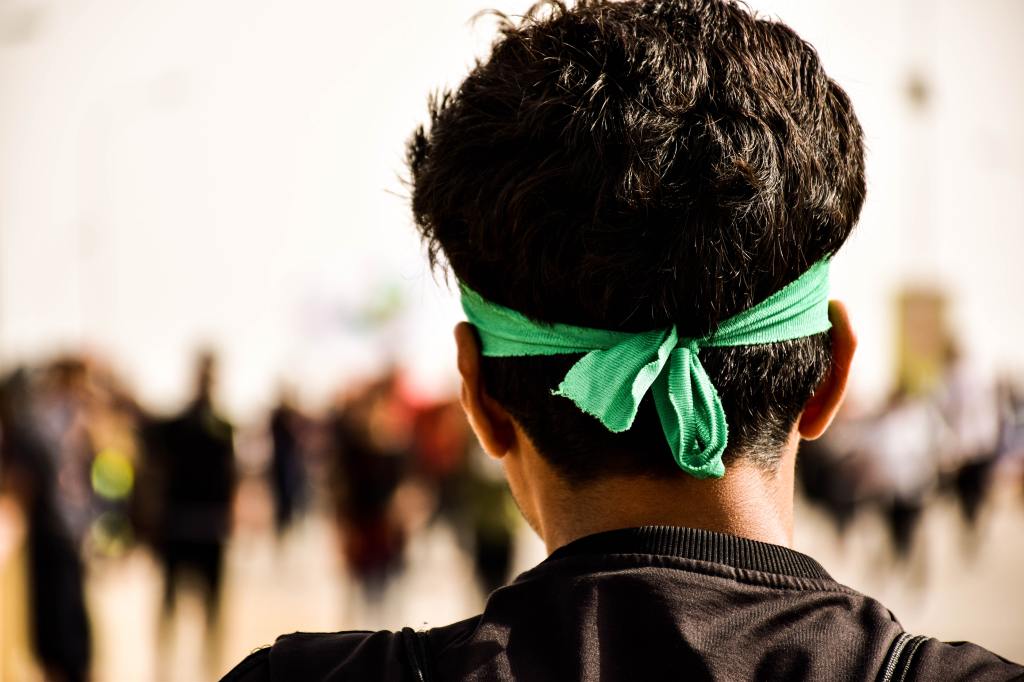
The practice of tightly tying a strip of cloth or band around the head to treat headaches seems to be quite widespread. I remember elderly villagers doing this when I was a boy in Melanesia. It’s also practiced in our area of Central Asia. Last week we were watching Little Women, a story based in New England in the period of the Civil War, and the mother made mention of this same practice. To be practiced in such diverse contexts it must be effective – as long as there’s a real headache there to treat, that is.
I took a moment to register Darius’* response. This was different.
“His sister told me they had two villages,” he continued, “and from what you’re saying this is one of them. We need to go and find our brother.”
Harry*, a long-time believer, had disappeared again – which usually meant something bad had happened, some kind of threat of violence from his family or tribe on account of his faith. Whenever this happened to Harry in the past, the other local believers wouldn’t dare to get involved. Hence why Darius’ response was so different.
“Good. Mark* and I have already agreed to go. Last time Harry asked us to stay away when stuff like this happened, but staying away left him isolated and things did not go well. This time needs to be different. We would be glad to have you with us.”
I called Mark, the other expat serving with me as temporary pastor of our little church plant.
“Mr. Talent* is coming also,” Mark told me.
Another surprise. Mr. Talent, although a former soldier, had not been willing to get involved in past persecution interventions -“I can’t risk it with how well-known my dad is.” But it seemed as if things had changed for these two local men we’d been pouring into. Character was apparently growing. A readiness to risk for their brother in the faith was now there. This, in a culture where you might risk for your blood relatives, but almost never for your non-related friends. I’ve written in the past about some questions that can expose character, even across culture. One of them was, “Do they run when the wolf comes?” Wolves, in the form of Harry’s angry relatives, had potentially been spotted. And Darius and Mr. Talent were feeling some holy protectiveness. Praise God.
However, that didn’t exactly mean that we knew what we were doing. The principle was clear. In a communal, honor-shame culture, Harry’s tribe needed to know that he was not alone. He had people who would come looking for him, both locals and foreigners. This, we hoped, would give them pause if they thought about harming Harry further, maybe even convince them to hand him over if they were holding him somewhere. But the plan was what missionaries elsewhere have called “build the plane as you fly it.” We would go to Headless village, ask around to try to find Harry’s violent uncle, and try to somehow find Harry himself. If he was wounded, we would try to get him out of there. I had brought some first aid packs with me.
The uncle was the key to finding out what happened to Harry. After Harry had gone dark for several days, Mark had gone by his house to check on him. His mother and sister, distraught, told him that three days previous Harry’s uncle had shown up demanding that Harry accompany him to the village for some work on his house there. After that, Harry had been out of contact with everyone. He never came back to the house. No calls got through to his mobile phone. This was the same uncle who had lived with Harry’s family since Harry’s father’s death many years ago, living off their income and regularly beating them. Only recently had Harry been able to kick his uncle out of the house, an episode which also resulted in the uncle coming back when Harry wasn’t home and seizing some of Harry’s Christian books from his bedroom. Harry had been optimistic his very lost uncle might read some of the books and have a heart change. In hindsight it looks more like he was strengthening his hand for revenge.
Darius and I met at my house and then drove together to meet up with Mr. Talent and Mark. I was surprised to see Ray* with them also. Ray is a friend and pastor in the US who was in town for a few days after having preached at our retreat the week before. Had he volunteered to come with us on this risky outing? Or had he been “volun-told” to come so that we could have at least one mysterious American with us who couldn’t speak the local language – thereby raising some potentially helpful doubts in the minds of the villagers about what exactly our connections were? I’m still not sure which one it was, but I was grateful he joined us.
I’m calling the village Headless village because it is one of the main settlements of the tribe named The Headless Ones. These warlike nomads had settled in our area a couple centuries ago and still maintained a reputation for always being ready to fight – and having a lot of guns. Their neighborhood in our city – where Harry and his family lived – was one of the few where the local police would not allow foreigners like us to live. Given the warlike nature of this tribe, I wasn’t sure if our collective anxiety was sufficient or not quite enough. Mr. Talent and Darius certainly believed that we could find ourselves in a very dangerous situation with armed tribesmen very quickly and that we needed a wise approach.
“We’ll go to the village white-beard,” they agreed. “We’ll start with him and ask if he knows the uncle, explain Harry’s disappearance, and have him come with us as a mediator. That should provide some protection if the uncle gets angry at us.”
Right, I thought to myself, how is it that I’m always forgetting the importance of working through authority figures in this culture?
The first trick was finding the village white-beard, a social elder sort of position which every village apparently has. Unfortunately, it was now dark, so it took a little while to locate his house. When we did, we walked across a field of dry tilled earth and took counsel together about how to frame the situation in a true, but non-inflammatory way.
“Harry has been a language tutor for many of us foreigners. We can share that info and express concern that he has disappeared without notice,” Mark proposed.
“And don’t forget to mention that he’s also worked for the UN and other international organizations. That name alone should carry some weight, and help us in our purpose of convincing the tribe that Harry is not alone, but has some connections,” I added. “We need them to know that he has a lot of respect in some circles that they might not be aware of.”
We agreed who our spokesman would be and walked up to the village white-beard’s gate. A little boy spotted us and ran inside to get his father, the village white-beard. He came to greet us in the dark, wearing the traditional outfit of parachute pants fastened with a cloth belt around the mid-stomach, underneath which is tucked a collared shirt and traditional style jacket. A traditional turban and cap were on his head. He was a man in his 50s with a grey mustache, and seemed to have a friendly look about him. So far, so good.
Mr. Talent and Mark led the introductions and the purpose of the visit. The village white-beard ordered the boy to run inside and fetch us some water. We had forgotten to translate much of this initial part for poor Ray, who at this point assumed things were going poorly and the boy was sent to get a weapon. He was very relieved when he emerged with a tray of glasses and passed them around. Remembering the need to cue Ray in to what was going on, I told him to take a swig, toss the rest on the soil, then put the empty cup back on the tray. Locals don’t sip. They chug, chuck, and then give the glass back immediately.
“Is it safe to drink?” Ray asked.
“Maybe, maybe not. But we should anyway for the sake of honor,” I responded with a grimacing smile, raising my glass and taking a swig.
We seemed to be in luck. The village elder said he knew a man by the name of the uncle, with a nephew named Harry. He called him and put him on speaker phone. We held our breath.
“Is this Ali* the son of Bakir*?”
“Yes, respected one, please go ahead.”
“Ali the son of Bakir, with a nephew named Harry?”
“Yes, upon my eyes, that’s me, and who are you, honorable sir?”
“It’s me, elder brother Omar.*” This was followed by a long string of respectable pleasantries between the two of them.
“It seems your nephew has disappeared and there’s a group of his respected friends here asking about him and saying they aren’t sure if he’s safe or not.”
“Oh? That’s strange. He’s safe alright. He’s right here with me.”
We leaned in. Was he telling the truth? Was Harry really there with him and safe?
“Well, put him on if it’s no trouble.”
“Upon both of my eyes. Here he is.”
“Hello?” a younger voice rang out from the speaker phone. “This is Harry, who exactly is looking for me?”
At this point we all looked at one another in surprise and alarm. The names were right, but the voice was definitely not Harry’s.
“That’s not Harry’s voice!” we whispered to the village elder. “That’s somebody else.”
“Huh?” said the white-beard to us, “Where exactly does this Harry live?”
“In the city, in the neighborhood of the Headless tribe. He’s an engineer.”
The white-beard scrunched his brow and leaned into the speaker phone, running these details by Uncle Ali and the alternate Harry. He shook his head and looked up at us.
“You’ve got the wrong Ali and Harry. I remember now this Harry you are speaking of. Engineer in the city, connected to our tribe, not from this village. Not actually a member of our tribe. They’re really from another village up on the mountain. You’re mistaken to think that they have a house here.”
This thoroughly confused us. Up until now we had been convinced that we had the right village, based on putting the pieces together from the intel we had. But his sister had said something about them having two villages. And Harry had always been a little opaque about his background details. Maybe this was an ancestral village with no recent ties? Had we come to the wrong one? …Or was the village lying together because they were all in on it?
“They’re lying, I can tell,” whispered Mr. Talent to us.
“I’m not sure they’re the ones lying,” said Darius, with a look of suspicion and disappointment. “Harry told all of us many times that he was part of the Headless tribe. They’re all saying he’s not.”
“Let’s call Harry’s brother,” someone suggested. Not knowing if they had been in on it or not, we hadn’t wanted Harry’s immediate family to know we were coming to the village, in case they might alert the uncle before we got there. Harry’s brother lived in Europe and wasn’t really involved much with the family, but he was back temporarily on a visit. He picked up and started talking with Darius on speaker phone.
“Harry? Ha! He’s fine! He’s just traveling and in a neighboring country right now. Why is everyone so concerned about his safety?… He’s safe, I assure you… Are we part of the Headless tribe? No, we’re not. Did Harry tell you that?… No, we are from another village up on the mountain, though all our neighbors are Headless… My uncle’s not involved in any of this, who told you he was?… No, Harry is just traveling, I’m sure he’ll reach out to you soon. Haha.”
Mark and I exchanged confused looks. That same brother had been there earlier in the day when Harry’s sister and mother had tearfully described the uncle’s appearance and Harry’s disappearance. Why had the story now changed?
After some further conversation with the white-beard, our group decided to head back to the city. It really did seem as if Headless village was not involved in Harry’s disappearance. The tension that had built up as we anticipated a confrontation gave way to disappointment that our efforts had seemingly been in vain. At least if the village had been involved, and they had successfully duped us, then they now knew that Harry had some friends who would come asking awkward questions. Hopefully the ripples of our visit would make it’s way back to the violent uncle through the grapevine, alerting him to this as well. That could create some options that weren’t there previously.
The others headed home while Darius and I drove back toward my house, trying to make sense of the situation. We decided to swing by Harry’s neighborhood so that Darius could talk to Harry’s mom and sister. No one was home. We called the brother again and decided to meet him at a mall on the other side of town. Somebody, or multiple parties, had to be lying.
When we met up with Harry’s brother to try to figure out what was going on, it only muddied the picture even further. He kept claiming that Harry was just traveling for fun and contradicting things he had said to Mark earlier in the day. At this point it was too late to visit the other village up on the mountain, but we talked about making another surprise village investigation in the coming days.
We never did head to the village on the mountain. The next day we got some messages from Harry. He was on a bus, already in another country. He said he was safe, but something bad had happened and he wasn’t ready to talk about it yet. He needed to find somewhere quiet to rest. He was not willing to answer our questions. He was sorry he had left without telling us. Over the last couple months we’ve continued to get brief, sporadic messages from Harry as he was smuggled through several European countries to his final destination. He still hasn’t told us what happened. Nor have we been able to put all of the pieces together.
My best guess is that Harry’s uncle had really showed up that day and taken him to the village on the mountain. While there, he had made some kind threat or attack that terrified Harry, causing him to go dark for several days and make a run for it without even coming back home to get any of his things. Faced with another threat of persecution, Harry had relapsed to his old pattern – isolate and disappear. This time it seems he may be gone for good. His family had initially told us the truth only to walk it back later, perhaps out of fear of blowback from the uncle.
Harry’s sudden departure was a very discouraging development for our church plant and our team. He had only recently began helping to preach again after a period of restoration for having abandoned the church in a previous season. After years of coaching to next time include the body in your suffering and not go it alone, none of this counsel was heeded. Darius in particular was cut deep by his departure and the possibility of at least some deception and self-interest that was wrapped up in it. “We were ready to get killed for him, but maybe he was just trying to get to Europe and saw his chance and took it, just like all the others.”
We felt it keenly too. After several years of rebuilding, we had hoped that Darius and Harry would soon be ready to be elders-in-training. But every time we get to this point, our potential leaders tend to implode. Darius’ tone about the possibility of leadership has also changed because of what happfened with Harry, casting doubt on if he has the 1st Timothy 3:1 desire to be an elder someday. Facing an extended time away from the field ourselves, we were now set to leave our teammates with much less help than we had expected.
So much ministry in Central Asia happens in fits and starts. Costly losses are accompanied by a subtle flash of change and growth. I am grieved over whatever happened to Harry – and how he chose to respond to it. But I am also truly encouraged by the signs of growth that emerged in Darius and Mr. Talent. They really did put themselves in a dangerous position by going to an unknown village – known for its violence no less – in hopes of tracking down a persecuted believer. And though it didn’t turn out how we had hoped, the spiritual courage they showed was real. And a sign that even in the greatest setbacks, God is still at work to grow his people. These brothers had the courage to go to Headless village – a new spiritual instinct that was radically counter-cultural. It’s a beginning. One that someday just may lead to them speaking before kings.








 Entrusted to the Dirt