Two Types of Language Learners

Language learning. It’s the 500-pound gorilla that first term missionaries everywhere must learn to dance with. Though often, this experience feels less like a dance and more like our metaphorical gorilla is simply sitting on your head.

I had the advantage of growing up a bilingual TCK, which does help. The shift from two to three languages seems to be easier for the brain than the shift from one to two – something about the mind having already learned once to express reality in an alternative system of thought/speech forms makes it that much easier to do it again. A second or third language gives your brain additional categories, more hooks on which to hang the grammatical concepts or vocab of whatever language you’re learning next. For example, my high school Spanish got me familiar with verb conjugation based on person and number, a category that served me well when I started learning our local Central Asian tongue. But no matter how much experience you have with languages, it always takes a lot of time and hard work to master another one – and this often requires two to five years. Therefore, anything that makes it somewhat easier is extremely valuable.

I’m no trained linguist, but as a language-learning practitioner (and one who has worked closely with many others) I’ve observed two main kinds of language learners, two main patterns of wiring when it comes to learning an additional tongue. There may be technical terms for these language learning styles out there, but for the purposes of this post I’ll call them the Analytical and the Intuitive language learning styles. Essentially, every language-learner I’ve engaged with on this topic seems to fall into one of these two camps, creating something like a 50/50 divide.

These styles or preferences differ from one another in how they relate to the structure – the grammar – of the language. The mind of an Analytical learner craves and needs understanding of the language’s structure very early on, often proving unable to absorb vocab and dialogue without it. If required to learn and reproduce phrases without this structure, the mind of an Analytical learner protests and complains – “How am I supposed to learn this if I don’t understand what these parts of speeches’ roles are, what they are doing in the sentence, the rules that govern them, and how it all fits together?!” An Analytical learner needs a map of the language, a blueprint of sorts, and only when they have this can they begin to truly learn the individual parts. It’s as if the mind then relaxes and is free to learn because it now knows where to place the hitherto-disjointed pieces. These pieces are then no longer felt to be disembodied and random, but part of a logical system, part of a whole.

The mind of an Intuitive learner functions in the complete opposite way. An intuitive learner’s mind cannot take in or understand the language’s structure, its grammar, without a large foundation of listening, phrases, and dialogue. If presented with grammar lessons at the beginning of language learning, their mind will tend to reject the information, since it feels like it has nothing concrete on which to hang these abstract rules and systems. These learners crave jumping in headfirst and using the language, getting conversational with practical, everyday language. Only after a solid season of this will their brains start to desire and accept the Why behind the words and phrases they have been hearing and using. They need to feel out the rules first, and only directly study them later. Rather than needing a map, these learners need to go and explore the streets on foot as it were. After they have done this they will then be able to rightly orient themselves with the big picture.

All human beings learn their first language as Intuitive learners. Our brains naturally absorb the structure of our mother tongue by constant observation and trial and error. We absorb the rules naturally and indirectly. Then, once we are in school, we are directly and explicitly taught the structure of our language. We approach grammar study in school in an Analytical way. This means that for everyone who has studied grammar in school, we all have at least some experience learning our own language in both styles. But whether because of brain plasticity or something genetic, around half of us develop an Analytical learning preference, while the other half continues to prefer Intuitive learning.

How do we know which wiring fits us? Even without learning another language, there may be some clues that you already have. First, how did (and do) you feel about studying the grammar of your own language? Does this feel good to your mind, or more akin to the angst of getting a cavity filled – necessary, but definitely not enjoyable? Does “seeing” the invisible structure of your language bring you joy or make you want to go to sleep? If grammatical concepts make your mind tingle pleasantly, chances are you are an Analytical learner. If you’d really rather get back to what you feel is the real language, then you’re probably Intuitively-wired.

These categories tend to flow over into other areas of learning as well. A friend who works as a chef told me this week that he has always loved learning the why, the science, behind what is happening in cooking. Knowing this makes him feel more free and equipped to create and enjoy cooking food. This means there is a very good chance that my friend would be an Analytical language learner. Get that man some grammar early on, and he will feel so much more free and equipped to persevere in language learning. Paying attention to how you prefer learning in other areas is another clue to how God has wired your brain to learn language.

Why are these categories are so important to understand? Because enjoyment and perseverance in language learning are on the line here, and this because language learning programs tend to favor one style or another. Put a language learner in a program that favors the other kind of mind, and they will very quickly want to pull their hair out, and/or quit. Put a learner in a program that fits with their respective Intuitive or Analytical style, and greatly increase their chances of actually learning that language. Too often learners are handicapped by the wrong approach, and mistakenly come away thinking they are not really gifted to learn language at all.

Several dynamics mean that language learners continue to get placed in programs that lead to deep frustration. The first issue is simple ignorance of these learning preferences. The learner, teacher, or facilitator might not know that these variations exist, so how can they know which style the student best aligns with? Second, it is a lamentable human tendency to project our own wiring onto others. So, if we successfully learned a language in a certain way, we naturally feel that everyone else should be able to learn in this same way also. We might even go on to publish and distribute our favored method, making big claims about the universality of our approach. And this leads to the third issue, that of methodological rigidity. Just as missionaries might latch onto a silver-bullet church-planting strategy, so they tend to latch onto a language learning methodology as the way to do it, rather than a way. Here the same common sense logic applies to both church planting and language learning – it’s a very hard job and people are very diverse, so we should want to keep all of our healthy options on the table. Sadly, many new missionaries on the field are locked into a language learning approach that is given the weight of law, when it should really only be treated as a helpful option, one that very well may need to be tweaked or even discarded.

My wife and I are wired as Intuitive language learners. This meant that we wanted to jump in right away into collecting phrases and doing conversational practice. I remember having some grammar lessons in the US before going to Central Asia, but almost nothing from those lessons was retained by my brain. Instead, six months into an Intuitive learning approach (GPA), I suddenly found my mind unexpectedly hungry for some rules for things like the way that near/far and singular/plural demonstratives were acting in my new adopted language. A grammar summary from a teammate on the logic of how to say “these bananas, those bananas, this banana, etc.,” made all the difference here. And even though we found ourselves in a learning program that mostly fit our style, we were also crucially allowed a great degree of flexibility to pursue more Analytical lessons as needed. And we made generous use of this freedom, changing up our program significantly every few months. I believe that this flexibility is what allowed us to reach the advanced level of language in the time frame that we did. Because for us, flexibility to pivot when needed meant we were able to continue (mostly) enjoying the language learning process.

And yet many of our colleagues have found the same programs we used, the same lightly-structured approach favoring Intuitive learning, to be positively life-sucking. They dream of having an official language school, where an Analytical approach to the language could result, for them, in greater freedom and joy in language learning. And I wish the same for them, because God has apparently wired our minds differently. Why should they be compelled to learn in the same way that I did? No indeed, get those folks some grammar, and fast! But please don’t make me study it until I’m ready. In this way we may all learn to get that 500-pound gorilla off our heads, and perhaps even begin to dance with it.

Photo by Patrice Audet on Unsplash

Murdered in His Own Baptistery

Since Christianity was, by 381/392 at the latest, the state religion of the Roman Empire, conciliar [council] decisions served as civil laws, as soon as the emperor ratified them. Local bishops were the first to perceive this, as they were obligated to uphold the opinions declared orthodox by the councils. Opposition to conciliar pronouncements led to civil sanctions; dissenting bishops were sent into exile and replaced with orthodox ones. However, since the bishops often had at their disposal a strong following, dismissal by force could not be carried out immediately, for the threat of revolt was too great. This was all the truer when, in the traditional hotbeds of unrest in the patriarchs of Alexandria and Antioch, anti-Byzantine nationalistic reflex arose. During the tumult of that time there were many casualties, and in the case of the Melkite patriarch of Alexandria, Proterios, even murder: an angry mob killed the unfortunate patriarch in 457 in the baptistery of his cathedral. Other prominent victims were Flavian, the deposed archbishop of Constantinople, who was so badly injured by monks and soldiers at the so-called ‘Robber Synod’ of 449 that he died of his wounds three days later; and Bishop Severian of Scythopolis, who was murdered in 451 on the return from Chalcedon. For these reasons, in the large cities communities often remained divided, each with their own clergy and their own churches. Although a canon law assigned only one bishop per city, for a time Antioch had four vying for power! It was in this patriarchate that the battles between Miaphysites, Dyophysites and Melkites loyal to the emperor raged most fiercely.

However, the intensity of these theological disputes – unimaginable to us in the twenty-first century – cannot be explained just on the basis of political circumstances. As W. Klein has aptly stated, at that time ‘dogma was not yet the specialized science of a few theologians, but rather the stuff of everyday conversation, and it resembled modern disputes over party politics.’

Baumer, The Church of the East, pp. 37-38

Notice the knock-on effects of an earlier period of Christian nationalism. Local bishops forced to uphold the official state doctrine, or risk civil sanction or exile. Backing for other rival doctrines fueled by anti-nationalist sentiments. The physical assault and murder of church leaders, whose pronouncements were now just as political as they were spiritual.

Those now calling for a return to Christian nationalism would do well to chew on the times in the past where it has indeed been tried, and so often led to the corruption of the church and the loss of its spiritual power. There is a better option, what Baptists have called the spirituality of the kingdom of God.

Photo via Wikimedia Commons

Mr. Talent’s Surprise

Mr. Talent* had been on Mark* and me for a long time about going on an outing with him. A soldier with a retired four-star general for a father, our local friend kept laughing and telling us he had a surprise for us. Even though we weren’t quite sure what to make of all this, Mark and I knew that going would mean a lot to Mr. Talent, a new believer at the time. So, after a considerable amount of nagging, we finally got it on the calendar.

The day began by driving out of the city into a valley to the north, past the military academy where Mr. Talent had studied instead of going to university. Shortly after passing the academy, we pulled off the road for an early lunch at a large restaurant.

“Alright, I wanted you to try the kebabs at this place. They are exceptional! … and well-price too.” he said as our vehicle crunched into the gravel parking lot. There were many other military-looking men walking in or already seated at the tables. The thick black mustaches of the seated men were bouncing as they chewed, and they repeatedly made half-standing movement, raising their right hands to greet other men they knew who were entering. Several men did this for Mr. Talent, and he responded in kind with his right hand raised toward each of them, phrases such as “My lord, my soul, my elder brother,” effortlessly flowing off his tongue in rapid-fire succession.

“Aha,” I thought to myself, “This must be his surprise.” After all, Mr. Talent and Mark shared a mutual passion for excellent food, especially local kebab. Mark had even structured Mr. Talent’s early discipleship around a weekly local restaurant crawl. Study a chapter of John during the week. Meet up at a new restaurant each week to discuss it. Not a bad strategy, as far as discipleship plans go. Together they were becoming quite the authority on the local restaurant scene. Mr. Talent must have wanted to introduce us to one of his favorite places outside the city, a regular haunt of his academy days.

But Mr. Talent knew what I was thinking as we sat down and sipped the customary appetizer of creamy mushroom soup. “Just so you know, this is not my surprise. Just wait, you’ll see. It’s going to be fun.”

As was my custom when eating out with Mark and Mr. Talent, I let them pick my entree for me. When accompanying two such food aficionados, I had learned the benefits of trusting their expertise. And once again I wasn’t disappointed. The spicy kebab they ordered for me was indeed delicious – a rich and savory mixture of ground lamb, spices, and hot green peppers. I sprinkled the kebab with some salty and sour spice ate it in the local fashion, by pinching a bit of meat in a small piece of hot flatbread, and shoving both together into my mouth.

Over lunch we discussed Mr. Talent’s reading of the book of John and fielded some of his questions about theology and Christian living. He hadn’t been a believer for that long, but he was growing, realizing more and more of what it practically meant to be part of a tiny minority of Jesus-followers in a society dominated by Islam. I was glad to see his passion growing, and his willingness to speak about it so openly with us in a public setting.

Eventually we drank our respective cups of post-meal chai, rose to wash the kebab smell off our hands, fought over who would pay the bill (Mr. Talent forcefully insisting on paying the whole thing), and made our way back out to the car.

After a short drive through the foothills, Mr. Talent seemed to find the place he was looking for. We pulled off the side of the road into a yellow field flanked by low brown hills, Mr. Talent looking at us with a mischievous grin.

“Now for my surprise!”

He moved to the back of his car and opened up the trunk, pulling out an AK-47 and several empty glass bottles.

“Surprise! Ever shot one of these before? We are going to do some target practice,” he laughed, enjoying our uncertain expressions.

“Don’t worry!” he continued, “I used to come out here all the time to practice shooting. No one will bother us. I wanted to see if your aim is as bad as I think it is. Ha!”

I didn’t grow up with guns, but the adventurous part of me didn’t want to pass up the opportunity to try shooting a Kalashnikov, the most popular rifle in the world – favorite of terrorists and freedom fighters everywhere. Allegedly, you can even predict conflict in a given region solely by the price of an AK-47 on the black market.

Mr. Talent walked twenty paces or so into the field, setting up one of the green glass bottles on a small stump.

“That should do it,” he said, as he walked back to us. “And make sure someone films each of us shooting. I need proof to show your wives!”

So we began, each shooting several rounds in turn, attempting to hit the little glass bottle. It proved to be much harder than Mark and I were expecting. I had heard once that AK-47’s are notorious for the bullet following an unpredictable curving path after it’s shot, but even accounting for that, something seemed to be off. Even Mr. Talent – a trained soldier – was not hitting the bottle. And while I have little faith in my marksmanship, I felt that this time around I was shooting even worse than usual. We moved the target considerably closer, but continued to fail to make contact. We had almost used all our bullets when Mr. Talent finally hit the first bottle, glass shards shattering in a bright satisfying sound.

“There it is!” he shouted, “But I think something must really be off with this rifle’s sight. I knew you guys would be bad, but I’m never this bad of a shot. Yes, must be the sight… maybe my brother messed with it. Okay, one last shot for each of us!”

We had just finished our final shots (missing again) when we noticed two vehicles pulling off the road and driving toward us across the dusty field. I noticed, suddenly alarmed, that each was a tan military Land Cruiser truck, their beds full of armed soldiers. They pulled to a stop close to us, sending dust clouds wafting past us. All the soldiers hopped out of the truck. Their commander, wearing sunglasses, walked over to us.

“You are to come with us to the local security station. Nearby villagers reported a bunch of illegal shooting coming from this field. Clearly, we have found the culprits.” He said this looking unimpressed, staring at Mr. Talent, the AK-47 still in his hands.”

Mr. Talent was incredulous. “I have shot here many times in the past. What do you mean, illegal shooting? Since when did this become illegal? Was it that house far away over there? I’ll show them illegal shooting!”

“Sir, it became illegal when terrorists nearly took over our country a couple years ago, remember? Many laws about firearms have been tightened since then,” the commander said, still looking nonplussed.

“But I’m a soldier! Look at my ID. Surely it’s not a problem for me to do target practice in an empty area like this? With respect, what are we coming to in this country?”

The officer continued to hold his ground, and Mr. Talent kept getting more and more animated. “Do you know who my father is? This is shameful, I tell you! And I have these Americans here with me and all. Shameful!”

I grimaced, not sure how these armed men would respond to Mr. Talent playing his various cards. And would the mention of Americans help, or make our situation worse? At least we could all plead ignorance and hope that they would go easy on us. Though unavoidable, finding out for the first time about a law by breaking it is not one of my favorite cross-cultural experiences, though it has happened many, many times.

The officer was finished listening to Mr. Talent’s protestations. He held up a hand, indicating that he had had enough. “Get in your car now and follow us to the station. We’ll figure out there what to do with you.”

So we piled back in our vehicle and followed the trucks of armed men down the road to a small cement building, painted orange-ish tan. The country’s and regional flags flew from its flat rooftop. In its driveway was another tan Land Cruiser, this one with a mounted machine gun in its bed.

We were escorted inside. Mark and I sat in the reception room, a typical room of uncomfortable gaudy couches that lined the walls and faced the large desk of the station’s commanding officer. Mr. Talent was ushered into a back room, already back at his animated references to his father and insistence that we had done no wrong.

Soon the commanding officer of the security station walked in. He was a heavyset man, a veteran of past guerilla campaigns against the former dictator. He wore a suspicious look, and I wondered if he was a little worried that his men had arrested some CIA agents. Mark, built like a linebacker, can sometimes give this impression. But I am far too skinny and history-nerd looking for most to worry too much about if I’m a spy or not – unless they’re the sort that say, “Well, that’s just what a good spy would look like, isn’t it? Unassuming, just what you wouldn’t expect, eh?”

The commander looked back and forth at Mark and me, trying to put the pieces together. Eventually we started talking, beginning in English according to the speak-English-to-the-men-with-guns security practice most of us had adopted by that point. But the commander’s English was atrocious, so we quickly switched to the local language. This helped things a great deal as we were able to explain ourselves more fully. And soon the commander seemed more at ease, complementing our knowledge of the language, ordering chai for us, and adopting the posture of a man who has to rebuke some teenagers, but doesn’t really want to because he quietly finds their prank amusing.

“We can’t have people randomly shooting guns anymore. It frightens the villagers, you know. What with the close call we had with those terrorists. They thought you were radical Islamists! Good thing they couldn’t tell from a distance you were Americans either. Definitely would have reported you as CIA. Either way, dangerous for you.”

Mark and I nodded empathetically, trying to look appropriately sobered by our misdeeds.

“Where did you learn your English, sir? It’s very good.” said Mark. I’m pretty sure I impulsively shot him a look of confusion and surprise. The commander’s English was many things, but it was definitely not very good. Mark was apparently trying to butter him up in hopes of making our release quicker. The commander, for his part, looked charmed, and started going on about the inadequacies of his English education. I had never seen Mark, the straight-talking linebacker, adopt this tactic before, and made a note to tease him about it later.

Soon another soldier came in the room and handed a phone to the commander. It was Mr. Talent’s father, the four star general. We listened in on the commander’s side of the conversation.

“Peace to you, respected one. Is your son Mr. Talent? … He is, huh? … Well, you know he was illegally shooting guns in a village field… yes… with some Americans too… yes… We rounded them up… Not the same since the terrorists came, no, new laws and such… I see… well, I suppose because of our long friendship… yes, understood… kids these days… yes, of course, I am at your service… We’ll release them right way… Yes, my elder brother… my lord… respected one… God be with you, God protect you, you are my eyes, goodbye, goodbye, farewell, goodbye, bye now.

The commander finished his long chain of phone farewell pleasantries and hung up, motioning for the soldier to bring Mr. Talent back into our room. Mr. Talent’s dad had indeed bailed us out, leveraging his prestige to get us a welcome exception. Everyone was relaxed now and even exchanging contact info. The commander was asking about English classes and the soldiers wanted to get some selfies with us.

“You are all free to go now,” the commander said, “Is there anything else we can do for you?”

“Well, sir,” I asked, smiling, “I wonder if it would be OK to have your men handcuff us just for a minute, just so we can get a picture. You know, for the wives. If we really did get arrested today then we should go all the way, you know, make it official with photographic proof and all. Might make for some fun reactions.”

The soldiers laughed, thinking this was a great idea. But then someone mentioned how this kind of thing tends to end up on Facebook and Instagram, and might then lead to awkward conversations with superiors, and ultimately they decided against it.

“It was worth an ask,” I shrugged, grinning at Mark and Mr. Talent.

We said our warm farewells to the soldiers and the commander, and promised to visit again if we were ever in the neighborhood. Then we headed off down the valley for some mountain roads that Mr. Talent wanted to show us.

“So,” I said once we were back in the car. “That was some surprise, brother. I knew it would be exciting, but getting arrested! You have outdone yourself.”

Mr. Talent laughed. “Oh no! Don’t say that! That was not my surprise. Don’t think that will always happen if you accept my invitations – getting arrested, ha! No, I plan fun stuff! I’m a fun guy! That was… well, thankfully my dad bailed us out… if not… well, anyway, what a shame though, what are we coming to around here? Can’t even shoot a gun in an empty field anymore…”

And with that we sped off into the mountains. We had avoided getting arrested for illegal shooting. Now, I quickly realized, the next step of surviving Mr. Talent’s surprise was going to be avoiding puking kebab all over his nice car. The man was driving like he was in a Formula One race, whipping around hairpin turns and gunning the acceleration.

“OK,” I thought to myself, clamping my eyes shut. “Maybe I’ll wait a while before taking Mr. Talent up on any more of his surprises.”

*Names changed for security

Photo by vin on Unsplash

The Honorable, Shameful Service of True Leaders

My local friends in Central Asia really believe in authority. We could generalize and say that most Eastern cultures lean this way. They view society as hierarchical and they understand each tier of authority going up the social pyramid to be both necessary and worthy of great respect. They can teach us a lot about honoring authority. However, they also hold very strongly to the view that some kinds of tasks or service are not only below a leader’s dignity, but even shameful for him. Leadership is to be honored and supplied with its privileges. However, leaders are not to bring shame on themselves or their community by stooping to do the dirtiest, most menial jobs. Humble service is for those on the bottom, not those on the top.

My Western culture, on the other hand, is thick with anti-authoritarian feeling. Authority and hierarchy are often viewed through the crude lens of oppressor/oppressed. Westerners want to believe that the true nature of society is flat and egalitarian. Hierarchical leadership is to be done away with when possible, and only tolerated when necessary. The real thing, the West feels, is for us all to treat one another as equals and for no one to feel that they are above the most basic, even dirty, work. In Western society, we express these values by sometimes mocking our leaders (keeps them in their place) and by often glamorizing the work of the little guy. Even in the Church, the teaching of mutual service can be wielded in such a way as to deny the goodness of authority.

Interestingly, in John 13, Jesus honors authority while also transforming that authority through humble service. In doing so, he holds two things together that we tend to drive apart.

[12] When he had washed their feet and put on his outer garments and resumed his place, he said to them, “Do you understand what I have done to you? [13] You call me Teacher and Lord, and you are right, for so I am. [14] If I then, your Lord and Teacher, have washed your feet, you also ought to wash one another’s feet. [15] For I have given you an example, that you also should do just as I have done to you. [16] Truly, truly, I say to you, a servant is not greater than his master, nor is a messenger greater than the one who sent him.

John 13:12-16

Notice how Jesus says in verse 13 that his disciples are right to call him teacher and Lord. Jesus, by washing his disciples’ feet, is not doing away with the hierarchical relationship that exists between himself and his disciples. They are right to honor and respect him as their leader, and he does not want them to lose sight of this. However, he has just done something positively scandalous for a Jewish religious leader of the first century – he has washed his disciples’ feet. This was a job not only reserved for slaves, but for gentile slaves. Jesus, the respected authority, humbled (even shamed?) himself and did one of the dirtiest, most dishonorable tasks of all. Then in verses 14 and 15 he tells his disciples that he wants them to serve one another in this same way. Here Jesus models and commands something that breaks the leadership paradigms of all fallen cultures: servant leadership.

This passage serves up a rebuke to both the East and the West. The East is rebuked for its penchant to privilege leaders so that they exist to be served, rather than to serve. Pride and entitlement in leaders is called out, but interestingly, not their role. This is where the West then gets rebuked. Leaders and their roles are still to be respected. The values of humble servant leadership do not negate the reality or the goodness of a world full of hierarchies. Jesus does not support some eventual Christian future where the priesthood of all believers means leadership is no longer necessary nor honored.

The balance that Jesus models so well for us is one in which leaders are honored, but they respond to this honoring by embracing sacrificial and costly service. This service in turn generates more respect, and that respect spurs on more lowly service, in a dance of sorts of mutual submission. Ancient Roman patrons were known not to address their clients as such, but as “friends,” meaning equals. But Christian leaders are called to go even further than this, not merely using different titles to communicate that they are gracious patrons, but embracing work that actually puts them lower than their followers.

What might this kind of lowering look like? In the West, it might mean staff pastors sometimes helping out with different tasks that are commonly delegated to the interns or to volunteers, similar to how in Andrew Peterson’s Wingfeather Saga, the high king of Anniera was known to often go out and work the totato fields alongside the farmers. In Central Asia, it might mean a pastor refusing the seat of honor, and instead sitting closer to the door, or helping to clear the dishes from the floor after a meal is finished. Yes, the leaders of the church need to be free from waiting tables in order to focus on the ministry of the word and prayer, but this shouldn’t mean a complete separation from the kinds of service that would be our equivalent to foot washing.

“For I have given you an example, that you also should do just as I have done for you” (Jn 13:15)

True leaders should be honored while also engaging in service that is viewed as below them – yes, as even shameful.

Photo by Danique Tersmette on Unsplash

A Proverb on the Self-Sufficient Laborer

One flower doesn’t bring spring.

Regional Oral Tradition

This proverb is spoken to the person who tries to accomplish too much on his own. Such a laborer is under a delusion that his isolated efforts can bring about the needed results. But just as one flower cannot by its own appearing bring about spring, humans cannot truly achieve great and meaningful things without a community supporting them and laboring alongside them.

It is a proverb quite appropriate for Westerners, who fall into this self-sufficient way of thinking far more than those from Central Asia. But ultimately every culture must face the short-sighted nature of individualistic labor. We are simply not strong nor talented enough to effect great change on our own. And those who cut ties with others, charging off into the world to do great things by themself will one day realize they have simply run out of fuel. I’m reminded of the English proverb, “many hands make light work” and the popular African proverb, “If you want to go fast, go alone; If you want to go far, go together.” The Preacher of Ecclesiastes writes on this same theme, “Two are better than one, because they have a good reward for their toil. For if they fall, one will lift up his fellow. But woe to him who is alone when he falls and has not another to lift him up! Again, if two lie together, they keep warm, but how can one keep warm alone? And though a man might prevail against one who is alone, two will withstand him—a threefold cord is not quickly broken” (Ecclesiastes 4:9-12).

It is not good for us to be alone. Not even in our labor.

Photo by Zhen Hu on Unsplash

Strongmen vs. The Structures of a Healthy Church

When modern dictators fall the societies they ruled tend to flounder and splinter. This is because they have previously been gutted. A dictator, in order to increase and maintain his power, needs to systematically weaken all other institutions of civil society that might serve as independent centers of power and organization. So he goes after religious institutions, the media, voluntary societies, other branches of government, etc. He will often permit a shell of these institutions to continue, but will appoint loyal cronies to head them up so that they no longer pose any legitimate challenge. The longer this goes on, the more a society is gutted of healthy systems and structures that it could use to organize and unify itself once the dictator is removed. Like some kind of ravenous fungus, a strongman consumes and replaces healthy systems and institutions as he feeds off his people, slowly choking the organizational life out of society.

This explains why certain Middle Eastern countries have done so poorly since the removal of their dictators in recent decades. During long decades of dictatorship, true civil society was turned into a zombie of its former self or driven underground. Often, the only network of institutions strong enough to endure the long stranglehold has been the conservative mosques, buttressed as they are by their religious ideology. Thus, when a dictator of a Muslim country falls, the West’s hopes for the emergence of a unifying liberal coalition are disappointed again and again. They liberals can’t seem to organize effectively, and it’s no wonder. All the institutions of the liberals and moderates were practically destroyed ages ago. Into this power vacuum then steps the Islamist fundamentalists, the only ones placed to organize and take over the uprising – even if said uprising began as a majority liberal movement.

An interesting parallel exists here between these political realities and the state of many churches in the Middle East and Central Asia – indeed, anywhere in the world where the culture tends to reward domineering leaders. As in society as a whole, a strongman over the church tends to take the rightful place of other legitimate systems and structures. Look at the few churches that exist in these areas, and you will notice a curious absence of things like healthy membership, responsible giving and finances, congregational accountability and discipline, and plurality of leadership. Instead of covenanted members, belonging to the church is equated with those who are loyal to the strongman. Instead of transparent finances, the pastor controls all the money. In the place of congregational discipline for its own members, you have the favor or displeasure of the leader. And there is no healthy plurality, just one charismatic, domineering personality that leaves no room for any legitimate pushback or accountability.

If we return to my preferred napkin diagram of a healthy church (described in a previous post), we see that a strongman completely replaces all of the characteristics of a healthy church that we would see in stage two, in what I’ve called an organized church.

Now, this diagram is simply a tool I’ve used to quickly summarize the characteristics of a healthy church as they relate to the typical stages a church plant goes through. Not all of the characteristics are rigidly sequential, but I would contend that the three stages of Formative, Organized, and Sending are a common pattern in how church plants develop – and, for our purposes today, that there is a qualitative difference between what is present in a formative church and what is there in an organized church. That difference lies in the intentional organization and systematization of what had previously been a gathering of believers functioning more organically.

A bible study that has really taken off might gather regularly for fellowship, worship, teaching, prayer, and discipleship. They might share the gospel regularly with their friends and neighbors. All of these things are biblical and good. And while they can be organized into systems, they don’t have to be organized in order to be done well. They don’t demand careful planning and organization. They can exist in an organic fashion for a very long time with only basic plans put in place. The same cannot really be said for the characteristics in stage two. These require careful thought and planning and implementation if they are to even exist in a church plant. And they will not ever exist in a healthy way without great intentionality that leads to the birth of good systems. In fact, to simply wing the structures of stage two is to play with deadly fire that will burn many.

This required intentionality and creation of systems and structures explains why the elements of the organized church stage are absent or so underdeveloped in many house churches. These characteristics are complicated and time-consuming to figure out and it’s simply easier to keep punting their development until some future date. Often, there is a great deal of ignorance about how to actually begin to teach and then roll out things like membership, plural leadership, and discipline. This is why groups like 9 Marks focus so heavily on reviving both the knowledge and the practical details of good ecclesiology for the Church. Even those committed to these things in principle can often botch the implementation. I’ve often heard it said that the number one mistake of reformed church planters and church revitalizers is appointing elders too quickly.

However, this is so far assuming that the church planters, missionaries, and members want to see these systems developed. But often, past experience and current methodology commitments mean that the preference is for things to stay organic and natural (And this often has roots in Westerners’ own cultural moment of being post-institutional). Stage two will just happen naturally, it is claimed, as the Spirit eventually gets around to leading the locals into how to be a biblical church. Missionaries can live in a fantasy where the kinds of intentionality and organization required in their own culture for the church to function well are actually considered bad, or at least not really necessary in the more pristine cultures of foreign lands. Some even view focusing on the characteristics of stage two as bad for church multiplication, the kind of thing that leads to the terrible “I” word that is alleged to kill movements of the Spirit, institutionalization.

When you pair these Western postures with cultures already prone to domineering leadership, you get a lethal cocktail. The missionaries aren’t interested in pushing for organized church characteristics in their church plants. They want things to stay organic and rapidly multiplying. Locals, never having before known the power of a spiritual family organized in a healthy way, default to how their families, mosques, and government are run – strongman rule. Soon, a strongman does emerge who then goes on to make the church his own little fiefdom. The missionaries become perplexed and discouraged at what has happened, and either fall in line themselves or are eventually run off when the strongman feels they are a threat to his monopoly. The end result is a sick church, one without biblical membership, giving, leadership, or discipline. Biblical mission, often the final characteristic to be developed, will also never happen through this kind of church where a spiritual dictator has settled down to feed on the sheep.

If we do not plant churches with a willingness ourselves to lead in the development of stage two characteristics, we do a great disservice to the local believers we are claiming to serve. Like a society naively asked to go vote after decades of dictator rule, we set them up for failure. A power vacuum will always be filled. And in strongman societies, little dictators spring out of the ground like so many narcissus flowers in the Central Asian fields of spring. Local churches all over the world desperately need systems of healthy giving, leadership, discipline, and membership. How will they know what these structures look like if we do not intentionally teach and model them? Or do we really believe that these systems will somehow contaminate indigenous churches more so than the inevitable strongman who will take over in their absence?

Should stage two characteristics of a healthy church be contextualized? Absolutely. And yet here we must not let the perfect become the enemy of the good. An imperfect effort to contextualize a system of membership is far better than never initiating formal membership because we are afraid of some kind of Western contamination taking place. Covenants can be modified for the pressing needs of specific contexts. Membership lists and vows can be oral rather than written and signed. Leadership can be chosen and honored in ways that are locally sensitive. The Scriptures provide ample room to carefully apply the principles of church organization to a given culture. “All things should be done decently and in order,” (1 Cor 14:40) does not mean you should simply copy/paste the systems of First Baptist Church back home. But it does mean we should give serious attention to the right ordering (organizing) of the church. As Paul said to one church planting team member, “This is why I left you in Crete, so that you might put what remained into order, and appoint elders in every town as I directed you” (Titus 1:5). What was asked of Titus in his cross-cultural setting is still asked of us today.

Strongmen will never coexist peacefully with healthy systems that can hold them to account. They will always seek to prevent their emergence or to choke the life out of them if they are present. On the other hand, the best way to prevent the people of God being ruled by these domineering men is to order the church wisely, even if this involves great intentionality and careful organization. Protecting the church means organizing it so that it might fully display the glory of God – not only in its organic love and obedience, but also in its wise systems and structures.

Photo by Rob on Unsplash

Seven Days on Crab Island

Sunrise over the island.

In the summer before 12th grade, a group of us high school friends decided to camp out on a small uninhabited island for one week. This island was just off the coast of the Melanesian mainland and was reachable by a short ride on a banana boat, which is a narrow fiberglass boat propelled by a rear outboard motor, and usually featuring a few planks for seating. The family of one of my classmates – who was also a trip member – lived in the nearby coastal town, and they had agreed to arrange the transport for us.

The seven of us who had decided to come agreed ahead of time to bring no food with us, other than a one kilogram bag of rice for each person. The plan was to live off the land, supplementing our rice with only what we could catch or find on the island, or in the surrounding ocean. We didn’t have very much experience hunting for our protein like this, but we were sure it couldn’t be that hard. We brought plenty of fresh water, however, along with hammocks to sleep in and supplies for island camping such as machetes, homemade spear guns, fishing line, and camping pots.

Our crew of brave campers numbered seven. Five of us missionary kids (MKs) were from the same class, just about enter our senior year (we were three Americans, one Canadian, and one Belgian). Calvin, my close friend and theological inquiry partner-in-crime, was one of these. One of my older brothers also accompanied us, since he was back in Melanesia visiting us for the summer. The final member of our crew was Philip, a local orphan who had practically been adopted by my family when I was in junior high. Philip did not go to our MK school, but worked and lived at the gas station across the street as he saved up money to try to return to school (which he later did, with great distinction). During these years, Philip was a regular fixture in our home and joined us for many adventures, including the Easter camp fiasco where I ended up unknowingly dating several local girls at once. A generous soul and hard worker, Philip also had a quiet playful side to him, and had decided to bring a dreadlocks wig with him in his pack, just for kicks. He seemed to have found this in a tote we had of costumes and dress-up clothing.

The drive down from the highlands took about five hours. After an hour and a half we were stopped by other drivers and warned of a criminal roadblock just up ahead. Deciding to try and run it (what could go wrong?), my brother drove up the hill as fast as he could, up toward the crest of the slope, where just beyond the robbers were said to lurk, allegedly with bows and arrows and a couple home-made shotguns. Thankfully, we never saw any sign of the criminals as we nervously flew over the summit and around the curves in our Nissan Patrol SUV. Perhaps we were going too fast and they opted to hide out for an easier victim? We didn’t stop to find out. After two more hours we reached the pass, where by a series of slow hairpin turns we descended several thousand feet in a matter of minutes, leaving the cooler highlands weather for the heavy humidity of the tropical lowlands. An hour of driving through sugarcane fields brought us to another set of smaller mountains, and just on the other side was our destination, a lovely coastal town that had once served as a Japanese base during World War II.

We spent some time buying supplies in town and enjoyed some fast food, our last kitchen-cooked meal for a while, and were off to the island by early afternoon. One of the adult missionaries, the dad of one of the campers, accompanied us to the dock and to the island drop-off. As our banana boat sped over the waves we passed other similar craft that carried village fishermen, the occasional wooden outrigger canoe, and several larger islands on our right. Before long we saw it, a small, flat island with a dense cover of palm and coconut trees and a sandy lagoon facing the mainland. Under the transparent water, coral reefs spread out in their dull purple clusters, flecked with bright colors here and there from darting fish or waving anemones.

In all, the island was probably several acres in size, a place too small for a village. Its only structure was a thatched-roof, open-walled hut close to the lagoon. This pavilion of sorts would become our campsite. It was sheltered from the strong sea breezes, which we thought would make for better sleep since our hammock sides wouldn’t be whipping around loudly. And it would have, had it not been for the mosquitoes. These attacked certain members of our group so intensely that they even overwhelmed my brother’s anti-malarial meds, meaning he later traveled back to the US with a bad case of malaria.

A short walk through the palm trunks and dry leaves led to the back side of the island, which looked out on the endless Pacific. Large trees grew out horizontally over the water, giving shade to the shoreline of razor-sharp coral rock. There was no sand on this side of the island, just rock that was ceaselessly beaten by the incoming waves into little sharp craters and ridges that bordered tidal pools. Back here the sea breeze was always blowing, swaying the palms as it smashed wave after wave against the coral rock.

We set up camp and decided to get hunting. Unfortunately, we found fishing with our homemade spear guns quite a bit harder than we’d expected. Even when we could get close to a fish, they would often casually slip aside a centimeter just as the spear shot toward them, seeming to mock us as we swam past them to try to save our spear from getting lost in the depths. I remember one clown fish in particular that liked to look straight at me as I repeatedly tried and failed to shoot him. I eventually gave up and left him to gloat in his smug little orange and white way. That first afternoon we caught nothing, but we comforted ourselves with the knowledge that at least crab meat would be easier to come by once the darkness came.

Darkness fell, our stomachs rumbled, and five of us set out with flashlights and our metal spear-darts, which had proven pretty useless for securing us any fish. But Calvin and I had learned how to hunt crab from a previous trip the year before. At night, hundreds of crabs will emerge from their little caves in the rocky shoreline and come into the island interior to hunt. As they move, they rustle the dry leaves on the island floor. So, lights off we would walk slowly into the trees, waiting for any rustling noise. When we heard one, we would quickly shine a flashlight at it. And if it was a crab that was moving, the light would paralyze it. We could then simply walk up to it, assess if it were big enough to eat, and then skewer it on a spear. Within a half hour we had two spears’ worth of skewered crab, most still moving, some about the size of a palm, but most sadly a good deal smaller.

Returning to camp, we found an unpleasant surprise. The two who had not come with us to hunt crab (an American and the Belgian) were sitting by the fire, eating hot beef stew out of cans. They looked a little guilty as we approached with the still-clawing spoils of our hunt.

“I thought we agreed to not bring any food other than one kilo of rice per person?” we asked, confronting them.

“Well,” spoke up the Belgian, “We decided we didn’t want to do that, since our parents didn’t think it was wise, so we brought ourselves some food.”

The rest of us were hardly satisfied by this response, and somehow felt this would be a damper on the whole trip. But what was to be done? Frowning, some got to work boiling rice and others tore off crab legs to be boiled in a separate pot.

The end result of the crab boil left much to be desired. The legs were so small that it took quite a long time to finagle the meat out of the little armored appendages. And then once it was in your mouth it wasn’t even enough to chew. Still, it had good flavor. However, our appetites passed long before we had even a portion of what we’d normally eat. When we were finished we sat around a pile of mangled crab parts, shooting glances at our two renegade friends who were now eating chocolate bars and drinking tea, looking very satisfied that that they had made the right decision. This might be a long week, we thought to ourselves. Still, it was only the beginning, and we had barely begun to explore our various food options on what we were sure was an island of plenty.

We had a decent night’s sleep and woke up, as planned, to go watch the sunrise on the back side of the island. This morning practice became one of my favorite parts of the trip. Every morning we would all manage to roll out of our hammocks just a few minutes before the sun came up. We would then shuffle through the small palm forest to the ocean-facing side of the island, and watch the sun come up out of the Pacific ocean. The wind seemed to pick up and shift as the hint of a red disk crept out, becoming an orange orb just barely kissing the horizon. Then it launched up into the sky, growing smaller with increased height, brighter and more yellow. We never spoke while we sat and watched this island sunrise. There seemed no need to.

After this, we would split up with our Bibles and find secluded places around the island to read and pray. I picked the fat trunk of a tree that grew out horizontally over the water before it arched up into a crown of broad and glossy green leaves. The trunk was huge, wide enough for me to sit comfortably cross-legged on it. It faced East, so I could continue watching the sunrise as I read my Bible, prayed, and chewed on the day’s devotional from My Utmost For His Highest. As far as idyllic places to have a quiet time, I don’t think I’ve ever found one that tops that tree leaning out over the waves, stretching out toward the morning sun.

Breakfast, however, was an increasingly sad affair as the trip went on. There was cold leftover rice, perhaps some cold crab meat if you could be bothered to pick at the shells, but not much else – at least until we scored some coconuts. Green coconuts, the ones still on the tree, are not good for eating. They are good for drinking, if you fancy some clear warm liquid that tastes somewhat fermented, mildly sweet with just a hint of old sock. But at this drinking stage the coconut flesh is mushy and not ready to eat. No, the good coconuts for eating are those that fall from the tree and hit the forest floor with a thud.

As the week went on, Philip took to sitting in the camp with a dazed look on his face and the dreadlocks wig on his head, head cocked for any cracking and thudding noises that might indicate a dry coconut had fallen. When he heard a thud in the jungle, he would bolt up, grab a machete, and run into the trees shouting, “Dry one! Dry one! Dry one!” When it actually was a dry coconut, the camp would be filled with much rejoicing at Philip’s return and we’d eagerly pull off the thick bark, crack the inner nut itself, and distribute the sweet flesh, broken into triangle-shaped portions. Fresh coconut made a good breakfast. Though coconut boiled in rice didn’t really work out. Coconut roasted on the fire turned out to be a wonderful surprise, tasting of butter and toasted marshmallow.

As far as other edible fruits on the island, we only managed to find one unripe papaya, which we ate anyway. And while our two friends continue to eat their meals in what seemed ever-growing extravagance (canned fruit in syrup?), we sought out other sources of meat. Fishing continued to prove elusive, though I did manage to spear a small bottom-feeding fish the size of a banana which had a large underbite full of sharp teeth. He had been lounging on the sand, quite still, and I mercilessly shot him from a very near distance above. Nevertheless, after all the clown fish mockery, this felt like a great victory.

Then there were the eels. The island crabs liked to lounge in the warm tidal pools of the late afternoon, and muscular brown eels liked to hunt them there. The eels would ride in on a wave, plopping into a tidal pool and begin their hunt. If there were no crabs there for the taking, the eel would leap and slither over the rocks to the nearest pool, and keep hunting. Armed with machetes and our short metal spears, we learned to spot these eels on the hunt, rushing one when spotted and attempting to pin it down with a machete while others tried to spear it. Eel skin is amazingly slippery and tough, and they wriggled and writhed something awful, but we managed to eventually get a couple. We then proceeded to chop them into segments that resembled sushi. Our pot of boiled eel caused much excitement in the camp, although the experience of eating it was rather anticlimactic. Very mushy, very fishy, and lots of little bones.

Ultimately, our best haul of protein came from some locals that visited the island to fish, felt sorry for us, and left us with five big plump reef fish. This was four days in or so, and it was a Godsend.

Other than hunting for food, we spent our days snorkeling in the lagoon, finding brightly colored starfish, reading in our hammocks, and goofing off with our cameras. We had brought a video camera with us and used it to make a mock preview for a scary movie, based on our island experience. “Stay out of the water,” the trailer began, with a shot of my brother swimming into the lagoon and suddenly being pulled under. “Stay out of the jungle,” it continued, with shots of Calvin running scared among the coconut trees, looking over his shoulder. “Stay out of the dark,” it went on, as a dry coconut resembling a head was rolled into a circle of firelight and MKs went scurrying and screaming. A montage of several other cliche thriller scenes followed, with the final shot being of Philip, in his dreadlocks wig, emerging out of the darkness to take a swing at the camera with his machete. Alas, this visionary film never made it to a public viewing.

The only actual creepy thing we experienced happened late one night as we sat around the fire. In the midst of the rhythmic sounds of the waves, somebody heard the sound of a human cough come from down near the beach. As we were all sitting around the campfire, it couldn’t have been one of us. A nervous search in the dark didn’t yield any results, and we all tried to reassure ourselves the one who heard it must have been mistaken. It wasn’t quite as easy falling asleep that night.

However, apart from the creepiness of that one night, most of our nights there were wonderful. I remember laying out on the beach, staring up together at the night sky, where the southern cross and countless other stars shone brilliantly, and the pinkish-purple band of the milky way was visible to the naked eye. It was one of the clearest night skies I have ever seen. But it wasn’t the only thing shining. The waves themselves would flash with a neon green color when they crashed, evidence of tiny bioluminescent algae that had flowed into the lagoon. It was too good to pass up the chance to swim in glowing sea water, and soon we had all jumped in, laughing and splashing around in the lagoon, hardly able to believe we got to experience such beauty. As I recall, the conversation that night turned easily toward spiritual things. How could it not when we were surrounded by such lights and colors of creation?

At last, the final morning of our island stay dawned. We were very crusty by this point. Layers of sunscreen, sunburn, bug spray, salt, and dirt had left splotchy patterns on our backs – maps of strange continents as it were. There was a thick crust of salt on all of our scalps. Saltwater dips can be refreshing, but they don’t necessarily leave you clean. So we were looking forward to some hot showers – and some good, hot food.

The five of us who went through with the food challenge had made it. We had survived on rice and what we could wrest from the island alone, with only a little bit of help. Hungry and sugar-starved though we were, it felt good to have done it. For boys trying to become men, it was an experience that built some tenacity and gritty creativity. And now we knew of the glories of fresh coconut roasted on the fire, and the not-quite-glories of boiled eel and island crab.

And though our bodies had been somewhat deprived, our souls left that island full. Consecutive mornings of communing with God as the sun rose over the ocean. Days and nights spent talking with brothers in Christ about things that truly mattered as the ocean wind blew and the stars shone. It was a week I am still very grateful for having experienced. For I was not just alone with God in a beautiful place, but alone there together with this group of friends. Such places of easy communion with God and with others are not always easy to come by. A week like the one we spent on Crab Island drove home to us the privilege of being raised on the mission field, one not earned by us at all, but enjoyed because of the sacrifices of others.

At last the banana boat and my friend’s dad pulled into the harbor. We took some final pictures, clambered aboard, and started bouncing away on the waves. One of the moms had sent a cooler of ice-cold Cokes, (manufactured in that country with cane sugar and thus superior to the US flavor). I cracked open one of them and took a sip of sweet bliss. After having no sugar for the entire week, it tasted incredible. Calvin was giddy with the anticipation of hotel pizza for supper. My brother sat next to me on the side of the boat, happy and thoughtful, not yet aware of the malaria pumping through his veins. Philip still had on his dreadlocks wig, now blowing in the wind as if he were some farsighted Melanesian pirate.

The sky was a rich blue and cottony clouds floated past us as we made our way through the spray of the waves. Behind us Crab Island slowly drifted out of sight.

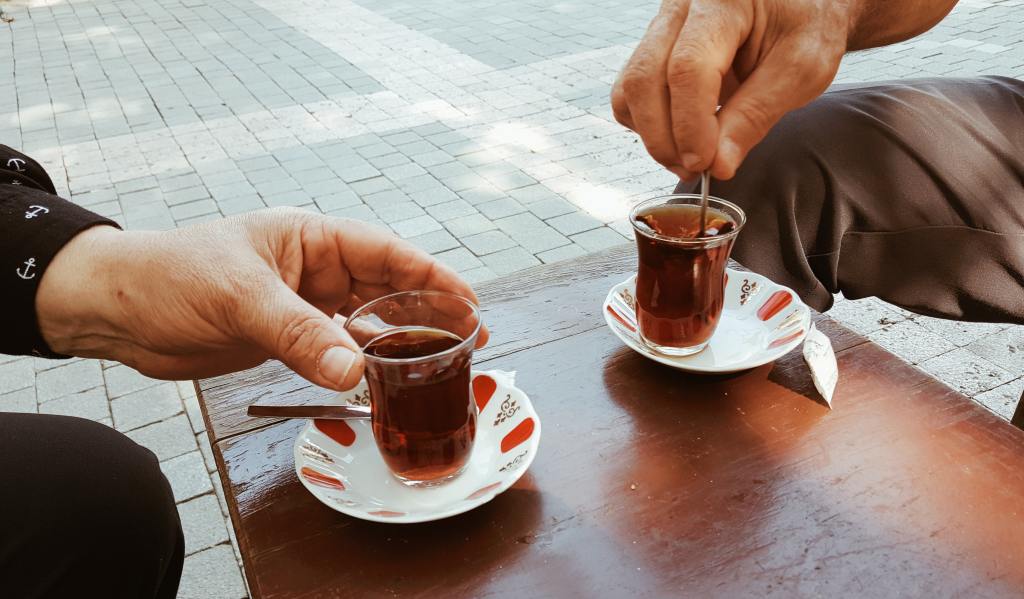
Drinking Hot Tea in the Desert Actually Cools You Down

I was twenty, sitting in a tea house in a far-flung desert town. It was summer, so the temperature hovered around 120 degrees (48 C) in the dusty bazaar. My friend suggested that we stop for some tea as he gave me a tour of the marketplace of his hometown, famous for its castle, its hard workers, and its heat. “Welcome to hell,” another local friend had quipped earlier as we drove into town, wiping the sweat off his brow.

Always one to prefer heat to cold, I had been eager to see if the summer weather in this town was as bad as everyone made it out to be. Rising early our first morning, shortly after sunrise, I had stepped out of the house and into the sunlight. Immediately, I was hit by a rush of blasting, hot wind, and oppressive radiant heat, as if the entire sky were a giant hair dryer aimed right at me. Mind you, it was only 6:30 am. I quickly stepped back into the protective shade of the cement house. If I had ever doubted before why so many desert cultures wore so much protective fabric, now I understood. At a certain level of heat, you do whatever you can to keep the sun’s rays off your skin, even if it means going around covered in many folds of cloth.

As we later made our way through the bazaar and then found our seats at the tea house, I was beginning to adjust somewhat to the constant feelings of living in an oven and clothing always soggy from sweat. I gratefully received a bottle of cold water alongside my scalding black chai. I chugged the water eagerly.

“Are you hot, my son?” asked a mustachioed older man, sitting across from me and smiling in his turban and flowy local robes.

“Yes, I’ve been told about the summer heat here, but now I see how true it is!” I responded, gulping.

“You know how we stay cool?” he asked me, raising his small steaming chai cup and saucer. “We drink this all day!” he said, laughing.

I looked at him, a little puzzled, wondering if he was joking or serious. He picked up on my expression and explained further.

“We drink the hot chai and it makes us sweat. And our sweat cools us down. That is how it works,” he said, seemingly satisfied that he had just handed down an important life lesson to this young foreigner.

I could tell he believed what he was telling me, but I wasn’t sure if I believed him or not. My love for local chai was intense, and so I was willing to drink it all year round, even in the fever heat of summer. But surely hot chai doesn’t actually cool you down in the desert. Maybe it was just a trick of the mind, a placebo of sorts that these desert men had learned to tell themselves in order to justify downing so many cups of sugary caffeinated goodness seasoned with cardamom and cinnamon. The logical thing to believe is that hot drinks raise your core body temperature and cold drinks cool it down. I left our interaction mostly sure that I was right and the locals mistaken. But a part of me has always wondered if there was something to what the old man was saying.

Then this week I came across an article in The Smithsonian that would make the old desert man crack a big smile, exposing all of the teeth he’s missing because of his chai habit. Turns out that a hot drink on a hot day really does cool you down. And this has now been scientifically verified with the help of a bunch of scientists and cyclists. Somehow, the cooling effect of the sweat produced by a hot drink on a hot dry day is actually greater than the warming effect the drink has on the body, making it a net win for a cooling effect. The article gets into the likely biological process for those interested.

So now I know. Hot drinks warm you up in the winter. They also cool you down in summer. How strange and wonderful. No wonder I like them so much.

There is one big caveat in all of this, however. In order for a hot drink to cool you down, you must be in an area of dry heat, not one of humidity. Since a humid environment prevents sweat from evaporating, the hot drink will actually raise your body temp, not decrease it. But as long as you are in some kind of desert or low-humidity setting (and able to sweat), the trick should work.

All of this reminded me of what a tricky thing it is to interact with local lore and tradition. By default, we want to dismiss local knowledge that seems bizarre to us as superstition or old wives tales. But quite often there is something to it after all. Not in every case, but often enough that we ought to reserve judgment on local claims until we’ve looked into them somewhat. As Tolkien wrote in The Lord of the Rings, “Pay heed to the tales of old wives. It may well be that they alone keep in memory what it was once needful for the wise to know.” Oral tradition should not be dismissed out of hand, simply because it initially strikes us as absurd.

A missionary friend in Cameroon shared with me this past week about a volcanic lake in that country. At some point in the 80s, large amounts of toxic gas were released from the lake, killing all who lived in the villages around its shores. However, all of those villages had been founded and populated by newcomers to the area. The long-time residents did not live close to the lake, since they had an oral tradition that it was spiritually deadly to dwell too close to the water. Apparently, this lake is prone to this kind of toxic gas release every 150 years or so, meaning that the indigenous villagers had an oral tradition that preserved a deadly historical event from the distant past, although it had become clothed in their animistic worldview.

I remember another story from my childhood in Melanesia, where a village pastor, eager to prove the local traditions wrong, had decided to cook and eat a bird locally believed to be poisonous and used in witchcraft. The pastor ate the bird – and almost died as a result. Turns out this black and orange bird is the only poisonous bird known in all of nature. Local oral tradition wins again.

Why do we so often assume that local tradition is untrustworthy and bogus? Because sometimes it really is, and it keeps locals in bondage to empty and dangerous lies. Consider the Middle Eastern and Central Asian belief in patrogenesis, the idea that offspring one hundred percent comes from the father, and the mother is merely a carrier, a vessel. All kinds of bad stuff have come from this cultural belief, including laws that disadvantage the mother when it comes to custody of her children – even if the man is abusive. Or, the cultural belief that the honor of the extended family is most dependent upon the sexual purity of the women in the household, resulting in honor killings that almost exclusively target erring female family members. In Melanesia, tribes until recently believed that if your enemy was strong in something, you could kill them and eat their corresponding body part for that ability, thereby getting stronger in that ability yourself. This local tradition led to widespread cannibalism and all of the dark effects associated with it.

However, what often happens is that Christians of the reformed camp approach culture with eyes only for these cultural lies. We often have a default posture of Christ-against-culture when it comes to local knowledge and traditions. We know that all cultures, like all people, are fallen and under the curse of sin. We know that this affects every aspect of a person, and every aspect of the culture – that total depravity is not just individual, but corporate as well. The mirror that once reflected the image of God so well has been shattered, and gross distortion has resulted. And yet a shattered mirror has not ceased reflecting entirely. No, if you lean in close and focus on small individual shards, a somewhat accurate, limited reflection can sometimes be found. The fact that the fall has damaged every aspect of a culture does not mean that the image of God is no longer present at all, shining out – sometimes dim, sometimes bright – through the distortion. Just as the restoration of the image of God in believers will not be perfected until the age to come, so the utter loss of that image in unbelievers and their cultures will not be complete until that same coming age.

This means that we cannot approach the culture of an unreached people group only prepared for the gospel to begin rejecting and discarding local beliefs and culture. We must be prepared for much of this, but not only this. We must also be ready to discover local beliefs and customs that fit quite well with a biblical worldview – that at times fit even better than those of our own culture. In these cases, the local cultural practice or belief is to be retained, but filled with a new motive, that of the glory of God and love for neighbor.

Few contemporary missionaries are at much risk of the kind of overt cultural pride present in the colonial era. In fact, we are more often at risk of the opposite, an unbiblical open denigration of our own cultures as we seek to embrace the local one. But pride is a slippery thing, and if our only setting is Christ-against-culture, then we will find ourselves prematurely scoffing at local wisdom that will eventually prove to be just that – wisdom. And scoffers don’t win trust. Those who sneer at local methods of chai drinking are less likely to find a hearing when it comes to the bigger questions of life and death and eternity.

Such is the challenge of engaging local lore and tradition. You may find lies straight from the pit of hell. Or, you may find truth that has been marvelously preserved, against all odds. We must learn to anticipate both and to humble ourselves when we get it wrong. We should listen carefully to the old men of the desert, ready both to learn and to stubbornly upend the traditions of ancestors when needed. We are tasked with this great untangling, with the laborious task of seeking to glue the shattered mirror back together. It will take a long time and countless conversations. And hopefully, lots of cups of chai. Even when it’s hot outside.

To support our family as we head back to the field, click here.

For my list of recommended books and travel gear, click here.

Photo by Zeynep Sümer on Unsplash

The Justifications of Polygamists

“Now that I have have this comprehensive power of attorney for you, I can legally get you a second wife – even without you knowing. Better watch out, when you come back from out of the country you may have a second wife, ha!”

Mr. Talent* conveniently dropped this news after several of us on the team had finished the POA process with him, meaning that he could now hold this over each of our heads. Thankfully, being a believer, Mr. Talent understands now that polygamy is a sin, despite his joking. Even before coming to faith, his first marriage had been difficult and had fallen apart, and he is also of the local demographic that would resonate with the ancestral proverb that “a man with two wives has a liver full of holes,” i.e. become a polygamist and embrace a life of pain.

And yet polygamy continues in our corner of Central Asia as a relatively normal thing among a sizeable minority of the population. Why does it still happen when polygamy is technically illegal in our area and when the culture itself has proverbs that speak to its danger? For something that is so foreign to us in the West (at least for now), it’s helpful to understand the justifications used by other societies for polygamy so that we can more skillfully oppose it with biblical truth.

The overwhelming majority of locals in our area are Muslims, and this means that a religious motivation is ready at hand for anyone who desires to marry an additional wife – even if this religious reason serves as a thin veneer for the true motivation. After all, the founding figure of Islam, Muhammad, had around twelve wives (there’s some disagreement about the actual number, and our local imams say thirteen). Being the supposed prophet and founder, Muhammad is held up as the ideal Muslim. So if a Muslim man wants to live like the prophet, and thereby be blessed, he will traditionally consider polygamy as a logical way to do this. However, only the prophet is allowed a dozen wives. Normal Muslims are limited to four.

Justifications in Islam for this polygamy in Muhammad’s life vary, but the most common one that I’ve heard is that it was an act of social justice, since so many wives had become widows in the holy wars that led to Islam’s founding. This doesn’t explain why Muhammad married seven-year-old Aisha, his favorite wife. Nor does it explain why he took his adopted son’s wife to be his own, conveniently receiving a divine revelation declaring adoption an un-Islamic concept in order to make it seem like he was not actually marrying his son’s wife (thereby making adoption among most Muslims a shameful thing to this day). But I digress, the logic for this first reason for polygamy among Muslims skirts these issues and simply maintains that Allah has blessed polygamy in the life of the prophet, and thereby in the life of faithful Muslims who commit to caring for each wife equally.

This Islamic sanctioning of polygamy means it often takes place in spite of the laws of the country where the couple resides – laws often viewed as Western and infidel-influenced. Polygamy is illegal only in the region of the country where we’ve been residing, but it is legal in other regions. So, local men who desire an additional wife will travel down south and work things out there, often with a wink from their local Islamic authorities, who are supposed to be abiding by the law and not encouraging polygamy at all. This dynamic is also present among some Islamic refugees in the West, where a man might fill out his paperwork as having one wife and one “sister” in order to bring both his wives with him to the West. He’ll set up two households in his new country, and live as a polygamist under the radar.

Another very common reason for polygamy among the Muslims in our area is infertility. Similar to stories of the Old Testament patriarchs, a man will often take a second wife if his first wife has proven unable to conceive after a given length of time. This is because children, and male heirs specifically, are so highly prized in the culture. We knew a village family in this situation, where a new wife had recently been acquired because the first wife seemed to be infertile. Again, similar to the stories of Rachel or Hannah, the public shame the first wife experiences in this kind of situation is almost unbearable. The presence of the second wife would serve as an excruciating daily reminder of her shame and and failure. If the medical issue resides with the man, he may keep taking on new wives, blaming each one in turn for what is actually his biological problem. Thankfully, modern medicine is making this kind of situation less common, as long as the man isn’t too proud to accept what the doctors are saying.

Surprisingly, it can sometimes be the first wife who pushes for the husband to take a second. This is because the first wife is often given a promotion of sorts when a second wife is taken on. The veteran wife will often get to hand off the more difficult housework and cooking to the second wife. Or the first and second wives give the hard labor to the third, etc. This could be viewed as compensation of sorts for the embarrassment of the husband taking on another wife, but can also be pursued in a sadly practical way for a marriage that’s unhealthy anyway. If the relationship is already cold and practical, why not get some help around the house? Similarly, one of my wife’s close friends desires her husband to take on a second wife primarily so that she can be free of his sexual demands. Having an additional wife might even provide some relational connection for a lonely wife who is disliked by her husband and his extended family. Just as the wives of a polygamist can often be bitter rivals, they can also become friends who support one another when both are stuck in the same situation, married to a bad man.

Polygamy can also be pursued by extended families in order to increase the standing of each. A poorer family might want one of their daughters to marry a wealthy or powerful patron. The patron’s standing as a holy, powerful, and apparently desirable man is thus increased, and the family of the girl gets a boost in honor and the brideprice money, which would be considerably more in this situation than if she were the sole wife of a man with less status. For example, one aged mullah in our country recently took on a third wife who is thirty-four years his junior. This kind of family status arrangement is likely what is going on here.

A final category of justification for polygamy is often simply the whims and desires of the man. If he is unhappy with how things are going sexually, or in terms of the cooking, or even if he just wants to flaunt his power as the domestic strongman, he might take on another wife. The first wife (or wives) cannot stop him from doing this, though in their own ways they can make him pay for it, hence the proverb about having a liver full of holes. Sadly, much polygamy takes place for no other reason than an already-married man takes a liking to another woman he has seen and decides that he simply must have her. I had to cut off contact with one village friend because he kept calling me, insisting that I translate for him as he flirted with a migrant worker, trying make her his second wife without the knowledge of the rest of his family.

The Bible is not silent on polygamy, though the case made against it is an indirect one. The first polygamist we see in Genesis is Lamech, a domineering and violent man. Then, in the stories of the patriarchs, both Abraham and Jacob become polygamists because of sin – Abraham’s doubting God’s promise and Laban’s deception of the inebriated Jacob. What ensues is a terrific mess, with rival wives, warring children, and men who must repeatedly eat the bitter fruit of their polygamous households. The kings of Israel are then expressly forbidden from taking on many wives in the style of the harems of the other nations, and we see the destruction of polygamy in both David’s and Solomon’s stories, even turning their hearts away from God. As the Old Testament period winds on, it becomes clear that God shows grace to polygamous households in spite of the institution, not because of it. The narratives of scripture are all consistent in their painting polygamy in a negative, worldly light.

At last, in the New Testament, Jesus calls the religious leaders back to God’s creation pattern for marriage – a man shall leave his father and mother and hold fast to his wife, and they shall become one flesh. Two become one, just like Adam and Eve in the beginning. In this passage as well as Paul’s insistence upon leaders being one-women men, monogamy is clearly assumed and polygamy thereby understood to be out of bounds. It may have been tolerated under the Old Covenant, but the New Covenant has come, where Christ has one holy bride, not multiple. And this relationship now serves as the pattern for all Christian marriages.

Whatever the justifications of polygamists, God’s word has come to silence them with its indirect yet forceful case. To have multiple wives is to lie about the nature of God’s covenant-keeping love, to lie about the nature of God himself. Believers in Christ are to live in such a way that their marriages are imperfect yet genuine metaphors of Christ and the Church – and as in the recent Western order, to influence society such that the injustice of polygamy is no longer tolerated.

For polygamy is unjust, both to the women whose dignity and agency are violated in polygamous marriage, as well as to poorer and younger and even average men, for whom marriage in a polygamous society becomes less and less attainable. A case could even be made that polygamous societies lead to greater violent conflict, as there is a clear connection in history between nations with a shortage of brides and nations that try to conquer their neighbors. And polygamous societies will always lead to many more available single men than available single women. How can it be otherwise when having multiple wives becomes a status symbol of the religious, the wealthy, and the powerful?

The justifications of polygamists are mixed. Some are good desires, such as the desire to have children, or to get some relief from the never-ending household labor. Christians can recognize the good in these desires and point toward better ways to pursue these goals and to respond when they are denied. Other, selfish, desires that lead to polygamy are to be rejected outright. Hence, knowing what the underlying motivation is for taking on another wife will be key to responding both biblically and skillfully. Why skillfully? Because in polygamous societies, you are the crazy one who thinks that monogamy is the only way to go. For them, polygamy is simply normal, perhaps even good, the way the world is. Helping locals to turn against their own polygamous heritage will be no easy task, but speaking to their underlying motivations will only help in this effort. I’ve laid out here the main motivations for polygamy in our context, but other polygamous contexts will bring with them their own unique justifications that will require understanding and appropriate response.

Polygamy has been around an awfully long time, and no doubt it will continue to pop up various human societies into the future. As it decreases in Central Asia, it may stage a comeback in the post-Christian West. The Church will need to confront it wherever it finds polygamy, lovingly but boldly calling men and women to a faithful monogamy that points back to Eden, and forward to the coming marriage supper of the Lamb.

To support our family as we head back to the field, click here.

For my list of recommended books and travel gear, click here.

*Names changed for security

Photo by zelle duda on Unsplash