A Freezer Full of Pork Sausage

There was a season early on in our marriage where we were very broke. At the time we were doing ministry with Muslim refugees in Louisville, KY. We were seeking to make ends meet through a combination of free rent (since we lived in a refugee resettlement apartment complex and put on community events for the residents), part-time support from Christian friends given through NAMB, and sales of looseleaf Central Asian chai. Needless to say, things were tight.

One of our partner churches was a very small church in the rural midwest. There were around twenty members, and most of them would have also been struggling to get by. I remember one prayer meeting where a man confessed, in tears, that he had been bitter about eating only deer meat. He couldn’t afford to buy meat from the grocery store, so his family had to rely on what he shot for their protein. The man asked for prayer that he would be grateful for the deer meat that God had provided them.

The financial support from this church wasn’t much, but it meant all the more knowing that they were giving to us out of their poverty, in a way that reminded me of how the Macedonians had given to Paul. There is a danger of falling into an entitlement mindset when we live off the giving off other believers. Churches like this keep me awake to the wonder of Christian generosity.

One winter, we drove out to spend the weekend with them and the pastor told us that they had recently butchered some pigs and, from them, made a bunch of pork sausage. I didn’t grow up in the rural US, but I did grow up in Melanesia, where pig meat is the most prized and expensive of all meats. Anytime you found out you were going to eat pig, this was cause for celebration. Here was a link between the residents of the midwestern cornfields and the mountain peoples of my childhood. Though here it would not be slow-cooked by hot rocks in a pit in the ground, but fried up in a cast iron skillet.

Truthfully, on that trip I had felt a little disappointed that the church hadn’t been able to give a bit more in the way of funding. Though, of course, I was happy to find out they were planning on sending some pork sausage home with us. I could not have predicted just how much they were planning to send.

When it was time to load up our car, the pastor filled up an entire cooler’s worth of freshly-made pork sausage and fresh deer meat. As I recall, the cooler was very heavy as I stashed it next to our son’s carseat in the back of our little ’95 Honda Civic. We said thank you over and over for this lavish gift and the pastor and his wife just waved us off, smiling and downplaying it all.

This gift proved to be extra helpful because this was a season where our apartment was constantly full of guests, many of them Muslims. We were committed to opening our home throughout the week to host our refugee friends for lunches, dinners, and late night chai and sweets. These meals gave them a small taste of the community they missed so much and also led to spiritual conversations. But, of course, all of this meant we were regularly emptying out our fridge, freezer, and cupboards in order to feed everyone.

Now, however, we had a freezer full of meat that we couldn’t serve to most of our guests. Muslims are forbidden to eat pork. And we would never dare serve pork as even part of a meal when we were hosting Muslims, since they would find it to be so offensive and disgusting. Yet we had pounds and pounds of pork sausage in our freezer. This meant that my family had meat just for us that lasted for several months. Like Elijah and the widow’s oil, the pork sausage seemed like it would never run out. Throughout one of the most difficult financial seasons for our family, we had abundant meat to eat – and that of the most delicious kind.

In seasons of support-raising, like this one, I am reminded of the sweet provision that came from our friends in that little rural church. My wife and I have brought up the pork sausage many times over the years as an example of God’s kind and unexpected provision. He really will take care of us, whether that’s by hunting deer, monthly support, or even a freezer full of pork sausage.

Therefore do not be anxious, saying, ‘What shall we eat?’ or ‘What shall we drink?’ or ‘What shall we wear?’ For the Gentiles seek after all these things, and your heavenly Father knows that you need them all. But seek first the kingdom of God and his righteousness, and all these things will be added to you.

Matthew 6:31-33, ESV

If you have been helped or encouraged by the content on this blog, would you consider supporting this writing and our family while we serve in Central Asia? You can give here through the blog or contact me to find out how to give through our organization. 

Two international churches in our region are in need of pastors, one needs a lead pastor and one an associate pastor. Our kids’ TCK school is also in need of a math and a science teacher for middle school and high school. If you have a good lead, shoot me a note here.

Blogs are not set up well for finding older posts, so I’ve added an alphabetized index of all the story and essay posts I’ve written so far. You can peruse that here.

Photos are from Unsplash.com

Three Things Missionaries Should Be Able to Talk About in Their Sleep

Every trade has certain areas of knowledge that a respectable worker in that trade should be able to teach on the spot. These areas of knowledge would be the fundamentals of that kind of work, the basic frameworks, principles, and formulas that lead to good work being done in that field. Imagine an electrician being unable to easily respond to a question about how electricity works, or a doctor who’s not able to provide an overview of the body’s main systems. We rightly expect that professionals should be able to respond to impromptu questions about the core of their respective fields – and that they would even be able to do this in their sleep. If they can’t, we are right to question the quality of their work.

Three things every church planting missionary should be able to teach on the spot are 1) What is the gospel?, 2) What is a true believer, and 3) What is a healthy church?

If a missionary is not able to provide a biblical summary on the spot for each of these fundamental questions, then how are the locals – with the added difficulties of different language, culture, and background religion – ever going to grasp these concepts as clearly as they need to? I’m not arguing against long sermon series, bible studies, books, or seminars on each of these topics. These are absolutely needed. Mainstream missiology might discount the importance of this kind of deep teaching, but it will continue to be essential for effective frontier church planting, just as it’s always been in the past.

We reformed-healthy-church types, however, sometimes provide the theological treatise and forget to equip our teams and disciples with the practical tools needed to both remember and then faithfully summarize that truth with anyone, anywhere, and at any time. We might differ with missionaries who espouse movement methodology, but they have understood one principle extremely well – if you can’t put your ecclesiology on a napkin, your disciples are highly unlikely to be able to remember it and pass it on to others.

Over the years, here are the three basic frameworks that I’ve used to summarize the Bible’s teaching on 1) What is the gospel?, 2) What is a true believer? And 3) What is a healthy church? All of these are borrowed from others, sometimes with a slight reworking here or there.

First, what is the gospel? Here, I’ve long used the four word summary of God, Man, Christ, Response to summarize the heart of the good news.

God is the holy and good creator. Man, created good, rebelled and is now cursed with death and hell. Christ is the God-become-man who was the perfect sacrifice for our sins on the cross and who rose from the dead, conquering death, and who now reigns forever. Anyone who responds to this message with repentance for their sins and faith in Jesus will be saved now and for all eternity. I’ve written previously on how we’ve used this 4-word framework as a regular part of our church plant’s services, with encouraging results.

Second, what is a true believer? Here I’ve used a simple two-point framework. A true believer is someone who 1) confesses the gospel message and their faith in it, and 2) shows evidence in their life of the new birth.

A true believer must confess with his mouth that Christ is Lord (Rom 10:9). So, if someone tells me they believe the gospel, but they can’t tell me what the gospel is (even in the basic spiritual language of baby believers), then I’m not ready to say true faith is present. An accurate verbal confession must be present, though verbal confession is not enough. They must also believe it in their heart. And since we can’t see their heart, we must look for clear evidence of the new birth, evidence of the Holy Spirit’s transforming work in their life (The book of 1st John is a great place to explore this). When both are present, even in seed or sapling form, then I’m ready to affirm that person’s faith and to start discussing baptism.

Third, what is a healthy church? Here, I’ve leaned heavily on the IMB’s 12 characteristics of a healthy church framework, which itself seems to have leaned on the 9 Marks framework. The problem is it’s very hard to remember 12 characteristics. So, as a new team leader a number of years ago I worked to try and find an acronym that would be unique/absurd enough to remember. The best I could do was “5 ships get a mop.” The five ships are Discipleship, Worship, Leadership, Membership, Fellowship. And GET A MOP stands for Giving, Evangelism, Teaching/Preaching, Accountability/Discipline, Mission, Ordinances, and Prayer.

This framework for remembering the characteristics of a healthy church is the most cumbersome of the three, but I have seen teams effectively trained in it and able to then reproduce it with others. This involved a good long season of running through this framework in each team meeting, until the team members were sick of it – which meant they now knew it well enough to write in on a napkin when their local friend asked them what a church was supposed to be like. What I’ve not done yet for this framework is find a way to make it memorable not just in English, but in our local language.

Each of these frameworks is a practical tool for ministry. If I’m interacting with a Muslim or with a local who thinks the gospel is “do more good than bad,” then I can rely on the four words gospel summary in that conversation with them. If a local thinks he is a Christian, but has merely made a shift of mental and emotional allegiance because he hates Islam, I can use the two points of the true believer framework to help him see he’s not yet a true Christian. If I’m sitting down with a first-generation local pastor who has never seen a healthy church, I can bring up the 12 characteristics of a healthy church and ask him how he envisions applying the Bible’s vision for the local church in his own congregation.

But they’re not just convenient tools. They are trustworthy summaries of the rich biblical teaching on each of these topics, which believers should be hearing taught in the normal life of the church. In this way, they can serve local believers in their struggle for the truth just like that peculiar hand gesture of the ancient church served them – pointer finger and middle finger extended to acknowledge the two natures of Christ, thumb, ring, and pinky finger touching to confess the Trinity (see photo above). We should learn from the ancient church that truths that are constantly under attack and at risk of misunderstanding or twisting call for faithful, reproducible ways of holding onto them.

These tools themselves are meant to serve the saints so that they are better equipped to remember and share the inspired Word of God. That means these tools are not themselves the main thing, but rather merely a pointer to the main thing. Therefore, we shouldn’t hold too rigidly to any of these tools or frameworks. The point is, like a good tradesman, to be able to remember and give a helpful answer on the spot for the core areas of knowledge in your field. These three frameworks, or other solid ones that you might come up with, serve to do that for the particular labor of church planters and missionaries – a field where eternity itself is at stake.

These kinds of tools also equip us to serve all believers, regardless of their literacy level. Many of the unreached and unengaged people groups of the world – not to mention many of the poor and working class in the West – are primarily oral in their abilities and preferences. Or they’re only functionally literate, meaning they can read and write when needed, but they don’t choose to do so for pleasure. When we train believers in memorable oral frameworks, we equip all the saints, regardless of their literacy level.

Test yourself. Could you, right now, summarize for a friend the message of the gospel? The difference between a true Christian and a false one? Those elements that characterize a healthy church? If you find yourself unsure of your ability to do this, consider memorizing one of these frameworks, or other good equivalents. Doing so will not only lead to greater clarity in your own mind, but also equip you to lead others also into a better understanding of these fundamental truths.

All Christians should desire fluency in these topics. But missionaries especially need to be “skilled master-builders” when it comes to the gospel, conversion, and the local church (1 Cor 3:10). After all, if they do not have mastery in these central truths, they will not be able to entrust them to local believers. We can guard the gospel and right doctrine by making sure those we send, those we train, and we ourselves know these three things deeply – deep enough to be able to talk about them in our sleep.

To support our family as we head back to the field, click here.

For my list of recommended books and travel gear, click here.

Photo from Wikimedia Commons.

Those Old Causes of Language Succession

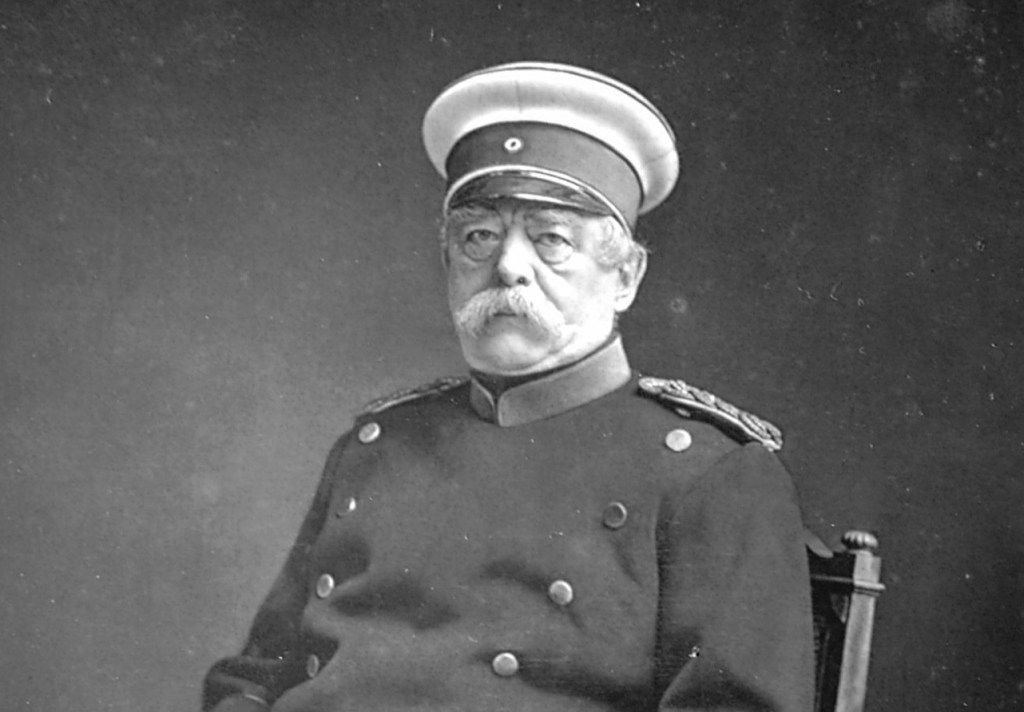
Asked in 1898 to choose a single defining event in recent history, the German chancellor Bismarck replied, ‘North America speaks English’. He was right, as the twentieth century showed. Twice the major powers of North America stepped in to determine the outcome of struggles that started in Europe, each time on the side of the English-speaking forces. Even more, the twentieth century’s technological revolutions in communications, telephones, films, car ownership, television, computing and the internet, were led overwhelmingly from English-speaking America, projecting its language across the world, to parts untouched even by the British Empire. It seems almost as if a world language revolution is following on, borne by the new media.

But though the spread of a language is seldom reversible, it is never secure. Even a language as broadly based as English is in the twenty-first century cannot be immune. It is still threatened by those old causes of language succession: changes in population growth, patterns of trade and cultural prestige. For all the recent technical mastery of English, nothing guarantees long-term pre-eminence in publishing, broadcasting or the World Wide Web. Technology, like the jungle, is neutral.

Ostler, Empires of the Word, xxi

One of the surprises found in the language history of the US is that because of immigration, German once stood a decent chance of taking over as the dominant language. To this day, the most common ethnic heritage of Americans is not English, but German. I wonder if the chancellor’s remark betrayed an awareness that masses of the German-speaking community were in fact being absorbed into another one – and that shifting allegiances would follow such a realignment.

To support our family as we head back to the field, click here.

For my list of recommended books and travel gear, click here.

Photo from Wikimedia Commons

The No Man’s Land of Cross-Cultural Friendships

Sometimes, friends from another culture experiment with violating the norms of their culture around you. It’s as if your foreignness creates a little bubble where they can safely break certain cultural laws of behavior and decorum. This is usually all fine and well – but only if you know it’s happening. When you don’t know it’s happening or don’t see it coming, it gets downright confusing, as nobody knows which rules are still in effect.

Why is your local friend not fighting you when you offer to pay for their lunch? Arguing over the bill is the respectable thing to do. Is that male student making casual eye contact during conversation with your wife because he is being inappropriate, or because he finds it refreshing that foreign women will actually talk to him like his sisters will? Did that person really just accept your honorable yet hypothetical offer to buy them a very expensive plane ticket? How did they miss the cues of what is, after all, their culture, not yours?

Our local friends can see when we are doing our best to become acceptable outsiders in their culture. But because we can never fully become cultural insiders, they must meet us part-way, which means altering some of their behavior for our sakes. One principle of cross-cultural relationships is that whenever genuine relationship is present, cultural adaptation is always flowing both ways, whether this is recognized or not. We become like our friends, and it’s always been this way.

Sometimes, however, your friends jump at the chance to do things differently, and when they do that without explaining what’s going on, you can get caught quite flat-footed. Here, I am reminded of a local friend who came to stay with us one summer. Last-minute hosting for a night or two is very normal in the traditional culture of the area. But local wisdom says that guests are like fish – after three days they start to stink. This friend stayed for nine nights, and all indications were that he intended to keep staying. Exhausted, we eventually planned a trip out of town so that we had a mutually face-saving way to kick him out.

Another example of this happened right after our youngest was born. My wife had made the brave choice to give birth in-country, and the experience was, shall we say, mixed. Because the umbilical cord was around our son’s neck, the doctors decided a C-section was necessary. When administering the anesthesia into her spine, however, they poked too many holes in the spinal cord lining. This meant that a lot of my wife’s spinal cord fluid escaped, leaving her bedridden for a week and with a tremendous headache and pain whenever she viewed light, or tried to sit up or walk around.

The upside of giving birth in-country was the care we received from the believing foreigners and locals. Our fridge quickly ran out of space for all the food we were given, and many local friends came for the congratulatory post-birth visits, which typically last 15-20 minutes. Local culture is practical in this way, respecting the family by visiting, but also giving a nod to the fact that moms who have just given birth aren’t in much shape to host. In our case, my wife was bedridden in a darkened room and in no shape for even much conversation, so I did my best to serve chai and sweets to the guests, show off the newborn in between feedings and diaper changes, make conversation, corral our kids, toggle the house electricity as it came and went, and make regular trips back to the bedroom to see if my wife needed more pain meds. Not for the last time, I thought to myself how utterly practical the extended family model of living is, where these responsibilities would be spread out among various relatives, and not all fall on one parent.

Most of our friends gave their gifts, read the room, and after twenty minutes or so announced they had to be going, politely refusing my multiple offers for them to stay longer. One couple, however, got caught in the foggy no man’s land of cross-cultural relationships I have described above. When I protested their departure – “But it’s still so early!” – they looked at one another, smiled, and then sat back down. Oh no, I thought to myself, it’s happened again. The wires of our different cultures have crossed. Three hours later, they were still there.

When midnight came, I was utterly at a loss for how to communicate that it would be super helpful if they left. I really didn’t want to offend them. The husband was a new believer with a very sensitive and emotional personality. His wife, not yet a believer, was literally a sniper in the local armed forces. So, I just kept the chai and sunflower seeds flowing and became an expert in how my wife was supposed to eat a gnarly flour/sugar/oil paste that locals swear by for a post-birth recovery diet. After all the visits, we had ended up with a massive bowl of the stuff in our fridge.

Sometime after midnight, our guests stood up again and announced they really needed to be going. This time, I couldn’t bring myself to honorably protest. Instead, I squeaked out something open to interpretation like, “Wow, what a time we’ve had, eh?” and we proceeded to say goodbye dozens of times as we shuffled out the door, through the courtyard, and to the outer gate.

I went back inside and saw that there would still be about 20 minutes of electricity before it would shut off for the night.

“Are they gone?” my wife groaned when I went back to check on her.

“Yes, they just left,” I said.

“Wow, they are… sweet… but what happened? Why did they stay for four hours?”

I just shrugged, “I have no idea…”

“Hey,” I smiled, “want some of that yummy paste stuff?”

My wife made a gagging face, laughed, regretted laughing, and proceeded to settle down for a couple hours of sleep before our son’s next feeding.

If you have cross-cultural friendships, look out for the no man’s land, when because of contact with you, your friends begin unexpectedly experimenting with their own rules. When this happens, the normal rules go out the window – and you may find yourself very much in the fog.

To support our family as we head back to the field, click here.

For my list of recommended books and travel gear, click here.

Photos are from Unsplash.com

House Churches Won’t Organize, Big Churches Won’t Multiply

When it comes to the contentious issue of whether to plant house churches or “big” churches, we’ve long advocated for both. True, our particular corner of Central Asia needs both because of its own issues – half our locals are afraid of family persecution and feel they can’t risk getting caught in a public church service, the other half are afraid of government persecution and feel they can’t risk getting caught in an illegal house meeting. But though these particular issues might be unique to our region, I would advocate that most contexts around the world would be helped to have both kinds of churches operating in a complementary relationship. There are tremendous strengths as well as weaknesses to house churches. The same goes for “big” churches, churches that meet in their own facility or another third space.

To account for these accompanying weaknesses, wise intentionality is needed so that churches can mature and become truly healthy. This intentionality will look a little different for each, due to the particular size cultures of these two main types of churches. In short, house churches will need intentional organizing and big churches will need intentional multiplying. Left to themselves, most house churches will naturally multiply, but will not naturally organize. And most big churches will naturally organize, but not naturally multiply.

Here it may be helpful to refer to a tool we’ve used in our ministry in the past, the 12 characteristics of a healthy church, broken down into three typical stages.

This diagram is simply a visual summary of what the Bible teaches about the local church’s necessary components. It also demonstrates the typical three-stage order in which these components tend to develop – and the two places of common roadblocks. Many house churches do not progress from stage one (Formative church) to stage two (Organized church). Many big churches do not progress from stage two to stage three (Sending church). When you consider what is most natural given their different size cultures, these roadblocks make a lot of sense.

House churches don’t have difficulty feeling the need to multiply. It becomes painfully clear to most present when a house group has grown too large for its space. There’s no more room to sit, the hallways are clogged, there’s no place for members to park their cars, the children are overrunning the meetings, the neighbors are complaining. House churches do have difficulty, however, in organizing. The small size of their group means that those present don’t often feel the need for intentional systems of giving, leadership, covenant membership, and accountability and discipline. The sense is that if these things are necessary, then they can happen organically, by group consensus.

This is why house churches need wise leadership that calls them to organize. By failing to intentionally organize, house churches miss out on the spiritual power that comes from biblical church order as well as leave themselves vulnerable to attack. Each of the characteristics in the organized church stage can sometimes happen organically. But wise organization means they will happen – and in a thought-out biblical way. When the church faithfully applies scripture to its own structure, when it does what the church is meant to do, spiritual power follows.

On the other hand, house churches that don’t organize are leaving themselves vulnerable to strongman, domineering leadership. If the church is not intentional about things like plural leadership, membership, giving, and discipline, the most likely outcome is that one man will fill that vacuum. He will be the sole leader. He will control the money. Membership and discipline will be simply whoever is in his good graces or not.

In addition to these points, organizing well means better relationships with any big churches that are in the area, who are often suspicious of house churches and their aversion to organize in ways that signal trustworthiness. This is very true in Central Asia and the Middle East, but it’s a dynamic present in the West as well.

Big churches, on the other hand, need wise leaders who will call them to multiply. Organizing happens more readily because big churches have met the size threshold where members and leaders naturally sense the need for better systems and structures. One hairy members meeting is all that is required for this revelation to occur. But because of the size culture of big churches, the most natural thing to do is not to multiply, but to simply keep growing. Without the physical stimulus provided by an overly-packed house, big churches will not naturally feel the need and the goodness of multiplying. Instead, as the church grows, the needs grow, and the felt sense that more people are needed to fill important roles.

Even in big churches that do believe the importance of multiplying through church planting, many will not know how to do this. So, intentional efforts will need to be made to teach and model what it looks like to raise up qualified leaders and send them out. When this happens well, the church will know the costly joy of sending away their best. Counterintuitively, this “loss,” this self-giving of multiplying makes a church healthier, as well as more obedient to the great commission. On the other hand, when church multiplication is not done, the church risks growing inward and stagnating.

It’s important to realize that house churches can organize just as faithfully as big churches. Big church advocates tend to doubt this. And big churches can multiply just as faithfully as house churches. House church advocates, in turn, doubt this. The actual organization and multiplication can and should look different, reflecting the different needs and abilities of these different models. But the principles underneath these forms should be the same. The key conviction here is that the local church can be fully expressed in both models. It’s not about the model, it’s about the intentionality of the leadership and members to pursue a biblical ecclesiology.

On the ground, many house churches won’t organize and many big churches won’t multiply. We need to be those able to help them do so, and thereby help them step into the fulness of the Bible’s vision for the local church.

To support our family as we head back to the field, click here.

For my list of recommended books and travel gear, click here.

Photos are from Unsplash.com

A Song on Mature Wilderness Faith

“Manna (After All These Years)” by Chris Renzema

There are several themes from this song that hit home. I have at times been disappointed that there haven’t been more “burning bush” experiences in my life, like the ones that happened when I was younger. I have also looked back and been tempted to doubt if certain experiences of God’s power and immanence really happened or not, or if I have simply deceived myself. And I have known seasons where the “manna” doesn’t taste as sweet as I remember. But there is a mature faith and a steady hope in this song that I also resonate with and desire more of.

But I still believe you’re here in the waiting

‘Cus after all these years I still love you

‘Cus even when I’ve lost my taste for manna

It comes from heaven all the same

A mature wilderness faith believes that God’s acts of goodness in the past really did happen, but it doesn’t demand that they keep happening in the same way in order for God to still be good. It acknowledges seasons of spiritual dryness, where God seems distant and the things of faith don’t seem as sweet as they used to. But it keeps partaking of the means of grace nonetheless, knowing that God is sovereign over all of our seasons – and that mature love means faithful obedience and active hope, even when the heavens seem silent.

Be sure to listen for how the guitar and horns come in just before the 3:00 mark.

To support our family as we head back to the field, click here.

For my list of recommended books and travel gear, click here.

While We Eat Wittenberg Falafel

He agreed to meet with us to study the Bible. Now to see if he really means it.

Ali* is a friend from an unengaged people group. Reza* first introduced us to him when he was a newer refugee in the US. In the years since then, we’ve hung out and discussed the gospel in the US, hung out and discussed the gospel when he moved back to Central Asia, and hung out and discussed the gospel again now that he’s moved back to the US. We laugh about how we keep following one another from one side of the world to the other. But much more than I have, a whole network of believing friends have spent time with Ali and shared the gospel with him.

Ali is one of those confusing unbelievers who doesn’t seem to be drawn to the message of the gospel – nor to be particularly offended by it. His loosely-Islamic live-life-to-the-fullest beliefs don’t seem to have budged in the years since I’ve known him. But he’s clearly drawn to Christian friendship and Christian community. He’s a happy, generous, charming, loyal friend, the kind of guy sure to liven up any gathering. To know Ali is to know that he would give you the shirt off his back if needed – or round up his relatives to bust you out of jail.

All this means I find myself now at a loss when it comes to how to talk to him about spiritual things. My words and the words of so many friends just haven’t seemed effective. Neither has a rich exposure to Christian community. I still try to intersperse my conversation with truth, putting out spiritual hooks as it were, but I find myself surprisingly unsure of how and when to press. This means I’m grateful for other believing friends who do feel free to open up direct gospel conversation with Ali when we are together.

Last night, Reza, Ali, and myself got together at a local Middle Eastern cafe and restaurant. Turns out it was a place Reza had not been to since his days an unbeliever. This environment had him reflecting and talking about the craziness of his life back then and the difference that the grace of God has made since. I finished up my falafel sandwich and nodded gratefully as Reza directed the conversation to Jesus and to what his claims mean for Ali.

As Reza and Ali sparred back and forth in their happy and direct way, politely passing the hookah hose to each other in turn, I felt myself more and more able to enter into the conversation, attempting to play wingman as Reza led. The goodness of this was not lost on me. Here was a friend I had led to faith and taught to share the gospel, who was now years later showing me the way.

There were three points in the conversation where Ali seemed to be internalizing what we were saying in a different way. First, in agreeing that Jesus is the only sinless prophet, and that his birth and life is utterly unique. Second, in perhaps understanding for the first time our claim that as God-man, Jesus was able to die because of his humanity, even though God cannot die. Third, in hearing a metaphor for imputation in which a country’s president honors the son of a war hero for the sacrifice his father has made for the country, even though the son has done nothing other than exist in relationship to his father. This final illustration seemed to help him understand Reza’s biblical argument that we could be accepted by God based on our relationship with Jesus’ as our sacrifice and advocate.

I don’t know if last night’s conversation indeed shifted anything within Ali or not. However, I was encouraged to hear him reference previous in-depth conversations about the gospel, some from years past. He does remember those, I found myself saying internally. Ali’s manner is such that I am tempted to feel that all the truth and love that he’s been exposed to simply bounces off and is soon dismissed or forgotten.

At the very end of the conversation, Reza pivoted toward the importance of actually reading the Bible, rather than just talking about things. I shared with Ali how things had shifted for Reza when we moved from regular debate into regular study of the book of Matthew. As we spiraled around the idea of the three of us meeting to do this, it seemed like Ali actually agreed. There’s always a Central Asian Insh’allah (God willing) noncommittal dynamic when making plans with friends from this part of the world. So the proof will be when Reza and I make a plan and send a concrete invitation.

But it seems as if Ali has agreed to study the Bible with us. After a good long while of feeling like our words have been utterly powerless, I am excited to expose him directly to the words that are like “fire, like a hammer that shatters a rock” (Jer 23:29). I want my jovial friend to know true joy. But for that to happen, we’ll need more power to break through his spiritual blindness. To paraphrase Luther, in the end, all we can do is expose him to the Word, keep eating falafel with friends, and pray the word has its effect. In the end, the Word does everything.

I simply taught, preached, and wrote God’s Word; otherwise I did nothing. And while I slept, or drank Wittenberg beer with my friends Philipp and Amsdorf, the Word so greatly weakened the papacy that no prince or emperor ever inflicted such losses upon it. I did nothing; the Word did everything.

Martin Luther

To support our family as we head back to the field, click here.

For my list of recommended books and travel gear, click here.

*names changed for security

Photos are from Unsplash.com

Eleven Expressions of Gastronomic Humility

“Can you guess the secret ingredient in this white sauce?” my wife asked our kids as we finished eating our dinner of rice pasta.

Different kids guessed various foods that mom had snuck into dishes in the past.

“Nope. Out of guesses? It was cauliflower. Orange cauliflower.”

My daughter, who had been enjoying her pasta, immediately pushed her plate away from her, noodles unfinished. “Blech!”

“Hey, now,” I said, “you were enjoying it until you knew what was in it. Do you see the power your mind can have over your tastebuds? Your tastebuds liked it, but because you’ve decided in your mind that cauliflower is gross, you stopped being able to enjoy it.”

“It’s important that we regularly try new forms of food that we don’t like,” I continued, switching into teachable moment mode. “You might be surprised at how much you can enjoy food in one form even when you don’t like it in another. I really don’t like green peas or celery. But I really enjoy green pea soup (especially with bacon in it) and cream of celery soup.”

“Mom, do you think you could hide food that we don’t like in our dinners once a week? So that we could trick our brains into liking it?” said one of our sons, playing the compliant child and overcompensating for his sister.

My wife shook her head and wisely refused to commit to some kind weekly system for this. My daughter, to her credit, started finishing her pasta.

Keeping up with our kids’ ever-shifting food preferences, on top of their health issues, has been a difficult dynamic of this season. We talk a lot about food at this stage of our family life. This is partially because we have lived cross-culturally and have had the privilege of enjoying foods from many different cultures – an experience that may explain why we have one child who wants to grow up to be a chef.

But we also talk about food a lot because we have a lot of food issues spread across our family, including type-1 diabetes, gluten intolerance, dairy intolerance, stomachs that can’t eat after 7:30 pm without throwing up later in bed, and stomachs that can only handle a very limited amount of oily or rich food without triggering Montezuma’s revenge. Finally, we end up talking about food a lot because we are somewhat of a foodie family. We really like food, sometimes too much so. Hot drinks, sweets, crunchy chips, or fancy restaurant food can all too easily become a place our family retreats to for comfort or refuge.

“I think it comes down to humility,” I said to my wife later that night, as we processed the dinner cauliflower conversation. “Just like we want to enter a discussion open to there being some aspect of truth or wisdom that we might be missing, we also want to partially doubt ourselves when it comes to foods that we think we don’t enjoy. It may be that we try something again and something has changed. Or that there’s a new way to eat it, or some new way to pair it, that transforms a food from gross to delicious. We want to stay open to that. In this way, there can be a kind of posture of humility when it comes to food.”

“Could you call that gastronomic humility?” she asked.

“I guess we could,” I laughed, “Gastrumility? Gastro-humility?”

The more we talked and the more I’ve since thought about it, there really is an important link between humility and a wise posture toward food as Christians. What follows are eleven expressions of this kind of gastronomic humility. I’m sure this list is not exhaustive, but these are principles and practices that have been helpful for our family as we wrestle with faithful living and parenting in this area.

  1. We confess that our food is a good gift provided by God and others. We are not entitled to our food. Rather, it is generously given to us by a kind God who is careful to feed his sparrows as well as children. This kind provision is mediated. Many have labored to grow or raise the food, process it, sell it, and prepare it. This should make us thankful and joyful when it comes time to eat, and those who continue to pause to give thanks before we eat. (Matt 6:11, 6:26, Acts 27:35)
  2. We try new foods and new forms of foods we don’t like. When we make a practice of trying new foods, we admit that our preferences are not final nor fixed, but fickle things that can flex and change with time and experience. There is real wisdom in the saying, “Don’t knock it ’til you’ve tried it.” An openness to new foods and new forms of foods correlates to a more joyful life, since the spectrum of God’s good creation that we can enjoy is larger. (Gen 1:31, 1 Cor 10:26)
  3. We eat within the boundaries given to our particular bodies. We acknowledge the health limitations that God has allowed for our particular bodies as a result of the fall. As we find these boundaries (often the hard way), we embrace humility by honoring them, even though we grieve that this is not the way things were supposed to be. In this way, we are good stewards of the imperfect bodies we have been given. We also learn to recognize the areas where we are free to partake and others are not, and instead of grumbling, give thanks for them. (Gen 1:29, 1 Tim 5:23, Phil 2:14-15)
  4. We confess that food is inherently good, even if our own bodies react negatively to it. The fact that my body rejects rich melted cheese does not mean that rich melted cheese is inherently bad or unclean. Rather, God has created every food to be good when it is enjoyed in the proper amounts and ways. I may find that even within these boundaries, the brokenness of my body means I am not free to enjoy it. But this does not then make the food itself bad. I will not let myself call something bad or unclean that God calls good, but seek to accurately name the brokenness in my own body (and sometimes in the ways a good food has been processed destructively). (Gen 1:31, Acts 10:15)
  5. We feast and we fast. Following the commands and examples of the Scriptures, we see that God is honored both by his people sometimes feasting, and sometimes fasting. Both can be holy, both can be beneficial, both should be present in the life of a believer (Matt 6:16, John 2:1-11).
  6. We do not judge those who do not eat certain foods, neither do we unduly admire them. The Bible is clear that some Christians will abstain from certain foods because of their conscience, and that it’s wrong of those who partake to then disdain them. This would also apply to those who abstain from certain foods because of strong opinions about health. We should guard against feeling superior to them. On the other hand, this abstention should not mean that we put them on a pedestal or treat them as if they are living on some higher plane of the Christian life (Rom 14:13-23).
  7. We do not boast or find our identity in the foods we don’t like or can’t eat. Our dietary restrictions and preferences are not meant to be a central part of our identity or our conversation. They do not make us more special nor usually more interesting in conversation. They are the result of the fall and human limitation. While we should feel free to acknowledge and name them, they are cause for sober conversation and even lament, not celebration. If I don’t like green peas or can’t process rich melted cheese, that means I am missing out on good things that others are able to enjoy. The way I speak of these things should reflect this and the fact that food and drink is not central to the kingdom of God. (Rom 14:17)
  8. We are careful with foods that tempt us toward gluttony or addiction. We should notice which foods tempt us to push past the boundaries of wise and healthy consumption, and which foods we want to turn to when we are sad, tired, or anxious. We will need to exercise caution with how we eat these foods and may need to consider abstaining entirely or for a season. (Prov 23:20, 1 Cor 6:12, Phil 3:19)
  9. We use food as a way to love others. God has created food as a central part of human relationships. Jesus models this for us in how he intentionally ate food with sinners and tax collectors. Giving and receiving hospitality is an important way to love others and an important picture of the peace we have with God. Food is good in and of itself, but it’s also to be used to win the lost, help the needy, and bless the saints. (Mark 2:16, 1 Pet 4:9, 1 Cor 9:22)
  10. We strive to glorify God and serve others by enjoying as great a variety of his foods as possible. God made a world full of countless combinations of foods, flavors, and spices. These are put here for our joy and for his glory. There’s also a huge variety of how different human individuals and cultures partake of these vast riches. With an intentional, flexible, omnivorous posture, we put ourselves in a better position to enjoy diverse foods with others and to give God glory for each and every flavor we encounter. (1 Cor 10:26, 1 Cor 9:22)
  11. We look forward to the perfected foods and stomachs of the resurrection. Foods and stomachs are flawed in this age – good, yet broken in many ways. We use this knowledge to actively anticipate the world to come, where we will be given resurrected taste buds and stomachs and will be able to enjoy the full range of God’s good food and drink. In this way, each of our limitations now can be a means of strengthening our longing in the coming resurrection, where we will feast will Jesus. (1 Cor 15:35-53, Is 25:6-8)

Consider these eleven expressions of gastro-humility. Are there others that need to be added to this list? A proper posture toward food is such a difficult thing to find. And judging by the amount of New Testament passages dealing with food, it was difficult for the New Testament believers also. Thankfully, into this tricky discussion the Scriptures give us a ballast, a solid and clear compass we can come back to over and over again, even when we disagree with other believers about what to about food:

“So, whether you eat or drink, or whatever you do, do all to the glory of God.” (1 Cor 10:31)

To support our family as we head back to the field, click here.

For my list of recommended books and travel gear, click here.

Photos are from Unsplash.com

A Proverb on Bygones

Don’t go after yesterday’s hat.

Local Oral Tradition

This local proverb is roughly the equivalent of “Let bygones be bygones” and perhaps “Don’t beat a dead horse.” Its main point is that it’s foolish to bring up problems from the past that have already been addressed. To do so is a great way to stir up trouble unnecessarily.

Why does the proverb use the imagery of going after a hat? On this front, I’m not completely sure. It may be referring to the impossibility of wearing the traditional headgear the exact same way as yesterday, since this involves a skull cap with a scarf wrapped into a turban around it. Or it may simply mean that if you lost your hat, it’s not worth investing much to find it. Just move on and get another one. I can say that wearing hats was until recently very important in local culture when it came to honor and respectability. And not just locally. When you look at photos from the first half of the 20th century, even in the West, almost everyone is wearing hats.

The disappearance of hats or turbans as an expected part of respectable daily clothing is something I’ve never heard discussed. But something clearly happened. For hundreds and hundreds of years almost everyone wears them everyday. Then somewhere in the mid 20th century, they stop. Maybe the increasing availability of indoor plumbing meant that hair was able to be made presentable much more easily, and therefore hats were no longer as necessary? In this theory, styled hair is the new hat. Or, perhaps the disappearance of hats is a reflection of the global workforce and even domestic life moving more and more indoors and out of the sun. It’s one of the great unsolved mysteries of history, and something that a time traveler from a hundred years ago would find most peculiar about our present time.

Anyway, back to the meaning of the proverb. Bringing up problems from the past that have already been covered or resolved is a kind of destruction. Solomon agrees, “Whoever covers an offense seeks love, but he who repeats a matter separates close friends” (Prov 17:9). This is the kind of foolishness or malice that is powerful enough to ruin even close friendships.

There is a great deal of wisdom required in knowing when to cover an offense, and when it’s necessary to explicitly address the sin and pursue clear apologies and forgiveness. But either way, after we have decided to cover it in love or have had the reconciliation conversation, then wisdom would have us to truly release it – and no longer go after yesterday’s hat.

To support our family as we head back to the field, click here.

For my list of recommended books and travel gear, click here.

Photo by Wikimedia Commons.

The Night of the Cane Toads

It was good to be a missionary kid in Melanesia the 90’s and 2000’s. Internet existed, but it was dial-up, pre-social media, and not yet in our pockets. This meant we had the chance to be a bit more creative with our boredom. One way that we did this was by doing our part to maintain a strong culture of pranks among the teenagers on the missionary base.

I have fond memories of toilet-papering different missionary’s houses, launching water balloons at the high school seniors giving rides to girls on their motor bikes, lobbing stink bombs and cough bombs into living rooms full of movie watchers, and causing other (mostly) harmless mayhem of this variety.

On a typical Friday night, many of the junior-highers and high-schoolers, whether base kids or dorm kids, would be out milling around, playing dodgeball, riding motorbikes, or hanging out in small groups. But some nights, especially during breaks when the dorm kids went back to the tribal areas, it seemed like everyone had already made plans, and no one was coming out. The base was dark, quiet, and lonely. One might wander around hoping to find someone to talk to, only to encounter the shadowy local security guards with their bows and arrows, or the ever-present cane toads who would stage a nightly mass invasion of our soccer field and basketball courts.

One quiet Friday night like this, I was out sitting on a cement wall with a couple other boys from my class and two girls. The girls cheerfully announced that they would have to go soon, because a group of them had secured the privilege of using the only hot tub on the base. We couldn’t believe it. Only one house at the far western edge of the base had a jacuzzi, set up under a covered balcony outside. And since this was the only hot tub on the base, perhaps in the entire province, it was a big deal if anyone ever got to use it. Apparently, five or six of the girls from our class had made arrangements, some kind of girls’ night – and we were definitely not invited.

As I recall, they seemed to enjoy flaunting this to some extent, which didn’t do much for the mood of those few of us who would be left by ourselves on a boring Friday night. So, after the girls left, I had the thought of pranking this girls’ night, thereby killing two birds with one stone. We’d find something fun with which to occupy ourselves, and we’d also get some revenge on our female classmates for their ill-advised flaunting.

But what to do for a prank? We knew where they would be and roughly what time they would be there. What sort of prank would rise above the common ones, and go down in the annals of MK prankery as truly worthy? Slowly, an idea formed in my mind. Maybe we could “recruit” the cane toads in our cause.

Cane toads, if you’ve never seen them, are a large, brownish yellow, invasive species of toad that have taken over Australia and Melanesia. They are appropriately warty (being toads) and as I mentioned above, they would emerge at night and hop all around the open lawns and sports areas of our school, looking for bugs to eat. It was all too easy to catch one, or if needed, a whole bucket of them. One just had to watch out for the poison glands, and the toad pee.

We agreed on a plan. We would collect an entire bucket of toads, sneak up on the hot tub, and while our classmates were enjoying themselves without a care in the world – dump the entire bucket of gnarled amphibians into the jacuzzi with them. It would be a lightning sneak attack followed by us immediately melting away into the darkness.

The three of us boys commandeered a large yellow plastic bucket from somewhere and went down to the basketball courts to collect our little coconspirators. It didn’t take long to fill up the entire bucket and soon it was full of a wriggling and hopping mass of cane toads – maybe around twenty of them. They had peed on us quite a few times, but we brushed this off as simply the cost of victory.

Casually and unobtrusively, we made our way all the way across the base, waving at the few people we passed and trying not to smirk when they looked askance at the moving contents of our bucket. Soon we were at the edge of a small field, just across from which stood the gate of the target house, and just beyond that, the wooden lattice that shielded the hot tub. It was perfect. The lattice would block our approach, meaning the girls would have no idea we were sneaking up on them until the very last second.

We snuck across the field and opened the metal gate as silently as possible. The hinges creaked and we froze, considering whether to abort the mission. But it seemed to go unnoticed. We could hear laughter and see movement behind the lattice. Now was the time to strike. We snuck as close as we dared to the lattice – and then we attacked. With a movement that took only a few seconds, we bolted around the side of the lattice, dumped the bucket of toads into the frothing waters of the hot tub, and then sprinted back into the darkness.

As we ran as fast as we could down the dirt roads, we wondered why there wasn’t any screaming. There had been some initial shrieks of alarm as we had shot into view, dumped the bucket, and took off. But after that, there wasn’t the kind of reaction we were expecting. I later found out that we had dumped the bucket so quickly that the girls hadn’t been able to tell what was in the bucket. Some thought it was just some brown leaves. However, soon they started to see and feel big brown-legged things – many of them – moving around in the foamy water. And then the screaming started.

We were halfway across the base when we heard the blood-curdling screams, and lots of them. Feelings of satisfaction and victory mingled with those of alarm as we realized that that level of screaming would probably trigger some kind of response from security. Still, we laughed as we ran. The night of the cane toads would be one those girls would never forget.

We later found out that all but one of the girls had leaped out of the hot tub in terror once they realized it had become the equivalent of the second plague of Egypt. One of the girls, however, who had grown up in a tribal village, stayed in the hot tub and began matter-of-factly plucking the slowly boiling toads out of the jacuzzi. At some point they had all been removed, hopping off into the nearby field, with only a few who had become casualties of the conflict. The girls then got back to enjoying their evening. And of course, plotting their revenge.

For our part, we greatly enjoyed boasting about our triumph for weeks to come and telling the story over and over again. We knew they would try to get us back, but really, what could they do?

One afternoon I came home and noticed that my mom was acting suspiciously. Mildly concerned, I turned down the hallway toward my room and was suddenly greeted by a cane toad, sitting in the middle of the hallway, looking at me condescendingly. I knew this probably meant something bad, so I hurried to my room and flung the door open. Rather than my normal bedroom with its usual high school boy decorations and trappings, I was instead greeted by a suffocating amount of pink – pink everywhere. The walls and the surfaces had been absolutely covered in hearts, girly decorations, and Precious Moments paraphernalia. And in the midst of the barbie-style devastation were two more cane toads. The girls had gotten their revenge, and not only had they recruited toads. They had gone so low as to recruit my very own mother. Touché.

It took an awfully long time to get all that pink out of my bedroom and to return it to its proper masculine state. But even as I cleaned and fumed and plotted how to escalate this vendetta, I remembered the quality of the shrieks after we had successfully completed our mission, and I still felt that it had been worth it. Yes, the night of the cane toads had been most definitely worth it.

To support our family as we head back to the field, click here.

For my list of recommended books and travel gear, click here.