Lessons Learned From a Wolf Attack

Some of the most painful lessons of ministry are learned when a wolf in sheep’s clothing infiltrates your church. We had a wolf once, a local man I’ll call Ahab*, and it has taken me years to know how to write about it. The things we learned from exposing him, trying to counter him, and then responding to the carnage he caused have been forever branded on my soul. Wolf attacks leave scars, along with tragic losses among the true sheep. Pray that you never have to fight off a wolf in sheep’s clothing, but if you do, may these lessons we learned from dealing with Ahab help you to spot and deal with your own wolves with both wisdom and courage.

Wolves make excellent first impressions

The first time Ahab and his family visited our new church plant, we were thrilled. Here was a local believing husband and wife who also had believing teenage children – a true rarity in our corner of Central Asia. They were veteran believers, having come to faith nine years previous at a house church I had attended with Adam*, and later were members of another church when they’d lived in a different city. Ahab presented as a humble, happy, and wise middle-aged man from a more traditional background. But the most encouraging thing of all was how well he knew his Bible. To this day I’m not sure I’ve met another local man as well-versed in the scriptures as Ahab is. In spiritual conversation, Ahab demonstrated a deep knowledge of the Word. He had a thoughtful, serious personality, but he was also very fatherly, especially with small children. Our kids adored him with his affectionate greetings and gifts of cookies and pomegranate flowers.

Ahab’s sheep costume was (almost) flawless. Wolves will indeed show up wearing very convincing disguises (Matt 7:15).

Wolves come with mixed reputations

As soon as another missionary heard that Ahab and his family were attending our group, he warned us about him, telling us that Ahab and his wife had in previous years recanted their faith and returned to Islam, in order to receive financial gain. Apparently, there were pictures of them embracing a Qur’an next a smiling Islamic leader that proved this. This missionary also said that the family’s relationship with the Christians in their previous city had broken down completely and they had deceived and burned lots of people. The problem with this intel was that that generation of local believers was positively shot through with division and broken relationships and we also didn’t trust this missionary’s theological discernment. He had recently written off male-female roles in ministry as something that didn’t really matter, among other theological and ministry positions that felt so, well, “evangellyfish.” And we were newly partnering with another missionary who seemed to have more of a theological spine. He had been recently investing in Ahab’s family – and claiming to see evidence of true repentance and growth.

Our mistake here was assuming that a lack of theological likemindedness meant a lack of character discernment on the part of this other missionary – and that better alignment with our new partner meant he was correctly discerning Ahab’s character. These assumptions were dead wrong.

A wolf’s character cannot be hidden indefinitely. Their predatory heart will periodically emerge in predatory actions (Matt 7:16). This means that, like Ahab, wolves will tend to have a controversial past.

Wolves get deeply involved in the ministry and show great potential

We confronted Ahab about these claims of past apostasy and you couldn’t ask for a more (seemingly) humble and genuinely repentant response than the one he gave us. He admitted that the apostasy was true, but short-lived, and claimed to have already repented to everyone of this dark season in their life, and that he was willing to do whatever it took to demonstrate that repentance to us. Given our biases about the missionaries involved, we took Ahab at his word and pressed forward, encouraged.

Ahab soon became deeply invested in our house church. His family were the most faithful and some of the most engaged attendees. They introduced Frank and Patty to our group and even led them to faith. We were so encouraged to finally have some local believers who were committed to gathering weekly with the saints. Ahab soon offered his own home for our house church services and we quickly took him up on his offer. Our team leader was on furlough and pushing us to get the church meetings out of our own homes and into locals’ as soon as possible. This was viewed as one key toward reproducibility. So, all parties involved were thrilled when we moved the weekly service into Ahab’s home. It didn’t take long for Ahab to begin helping us with leading the prayer time and for us to invite him to join our weekly sermon-prep study with Harry*, the other local brother showing leadership potential. This was a weekly gathering that served as a place to invest in men who could be future leaders of the church.

Wolves tend to have a solid season of deep investment in the local church. This is how they build trust and gain influence.

Wolves are unpredictably harsh and judgmental

Every once in a while, Ahab would lash out in harsh and judgmental language when speaking of other local believers, pastors, or missionaries. These statements seemed inconsistent with his measured, wise speech that we typically observed. The tone of these outbursts seemed like it didn’t match the level of the offense nor the grace of the gospel that Ahab professed to be walking in. We took note of this, but viewed it as a discipleship issue that we’d need to help him with over time. In hindsight, it was evidence of secret sin brewing.

Like Judas lashing out at the woman’s gift of pure nard (John 12:5), wolves will sometimes let their true character show via harsh and surprisingly judgmental takes on other believers. This is evidence that there are some very bad things going on in their hearts.

Wolves are followed by lots of smoke, but expertly hide the fire

Ahab and his family’s mixed reputation seemed to follow them like a cloud of gnats they could never quite get rid of. Regularly, we’d hear serious concerns expressed by other missionaries or local believers that just didn’t seem to match what we were seeing with our own eyes. Ahab was one of our promising leaders in training, and nothing that we had witnessed ourselves gave us any solid evidence for the claims being regularly made by those outside of our church plant. But the claims just kept on coming. Surely, Ahab couldn’t be deceiving us so effectively. It must be the other missionaries and believers from other local groups. After all, they were unclear and squishy when it came to the gospel, true conversion, and healthy church, so they must have been confused about Ahab also.

As the wisdom of our forbears says, where there’s smoke, there’s fire. Wolves can’t hide all the smoke they generate, but for a time they can expertly conceal the fire from those that they are focused on deceiving. Wise gospel laborers will keep an eye on men whose lives generate an unusual amount of proverbial smoke.

Wolves secretly divide the flock and the leadership for personal gain

“Is Ahab a good man?”

“Yes, he is a faithful member of our church. Why do you ask this?”

“Well, he approached me this week and told me to keep my distance from all you foreigners. He told me not to trust you, but to trust him. Listen, I left Islam to get away from this kind of petty division. If Christianity is no different, then I don’t think I want to be involved with you all.”

This conversation over dinner with a new believer was a turning point for me and my wife. We had been hearing of a lot of smoke, but here at last was something solid, and very concerning. Ahab had allegedly approached a promising new believer in secret and sought to sow division in the church. This new believer didn’t seem to have any advantage in mentioning this to us, but rather to be honestly asking about something that concerned him. Soon other evidence emerged that Ahab was secretly building personal loyalty with other new believers in the church, creating a faction of sorts. He seemed to be doing this by telling the new believers that we foreigners (and me in particular) were receiving fabulous amounts of money for baptisms and that we were withholding funds that were sent for local believers. He was making promises to the other locals that he knew how to get them access to ministry salaries, Christian conferences, and visas to Western countries.

As I looked into things, I learned that Ahab was also involved in slandering me to the other two missionaries who formed our three man church plant leadership until we could raise up local elders. To my great alarm, Ahab’s whispers that I was secretly out for power and control were being somewhat entertained by my gospel colaborers. Ahab’s desire in all of this was to be eventually in charge of the church so that he could receive a good ministry salary from groups in the West, along with funds he could use to set up a patronage network within the church.

When wolves feel secure in their position, they will begin to sow division among the saints and even among the leadership. They are very good at sniffing out existing tensions and then exploiting these (Titus 3:9-11). Their end goal in all these things is their own personal gain.

Wolves are gifted at twisting reality

There were several times that seemingly concrete charges were brought against Ahab. But whenever we would bring up these concerns, Ahab was able to expertly sow doubt in the informant, in the data itself, or even in our own experiences. After this season, I would learn that this kind of behavior has come to be called gaslighting in the West. A gaslighter is able to make you doubt that something really happened, and even able to make you doubt your own senses. We would go into face-to-face meetings with Ahab with clarity and conviction and come away feeling like we weren’t sure anymore what was really true or real. After Ahab had later been exposed, one local brother called him “an artist of lies.” In a culture given to lots of pervasive deception, this was quite the title. After upending reality, Ahab was then able to insert his own narratives into the confusion, with great effect. I remember meeting with my team leader and Harry, desperately trying to unravel the narrative Ahab was pushing on them about me. These two godly men knew me much better than they knew Ahab, and yet he was almost effective in convincing them that in the end, I was the real problem in this whole situation – and the true manipulator. It was terrifying.

Like the serpent in Genesis 3, wolves are able to create doubts about things that once seemed so simple and so clear, about reality itself.

Wolves turn good faith exhortations against those who make them

I remember meeting with Ahab and pleading with him from my heart to turn away from his divisiveness, that the church might not survive what he was doing. I poured out my heart to this man I thought was a brother, sharing very personal things with him and even areas where I had failed or could have done better. I was pulling out all of the stops to try to pull him back from the brink. While his response to me in person was good, he immediately took many of the things I had told him and weaponized them with others. Sometimes this happened even on the same day. I would gave him pearls, truths from God’s word and things from my heart, but he not only despised these, but then used them to attack. As each leader and local believer began to realize what Ahab was up to, he’d proceed to do this with them as well. We had trusted him with our hearts and he was now adeptly using all of this as ammunition to undermine us.

Wolves can be like the swine that Jesus describes in Matthew 7:6, who take precious truths and good-faith exhortations and instead of repenting, use them against you.

When exposed, wolves go on the attack

Humble men respond gently and reasonably when accusations are made against them. Wolves, when accused – or even as soon as they sense someone is beginning to suspect them – go on the attack. This stage is dangerous, but helpful. At last, the true nature of the wolf is being revealed to the broader community. In our church plant, Ahab started by attacking me. My grasp of the local language was stronger, so that meant I was spotting things sooner than my fellow leaders. Ahab picked up on the change in my posture toward him and did what he could to turn the others against me. There was a period where even the other leaders sided with him, but one by one their honest questions and desire to pursue things with fairness meant that Ahab turned on them as well. When this happened, it was like a spell was broken. All of the cobwebs of deceit that had been sewn were suddenly dissolved as the sheep turned on its erstwhile friends – and revealed its fangs.

When wolves in sheep’s clothing are recognized for what they are, they will not run. They will attack. In this attack stage, they will seek to cash in on whatever schemes of division, personal loyalty, and personal gain they have been working on.

Westerners are at a disadvantage when dealing with wolves

Ahab ran circles around us. The other missionaries and I were often caught flat-footed, unable to respond proactively to Ahab, instead reacting as he always seemed one step ahead of us. There are several reasons why I believe this to be the case. First, Westerners operate from a trustworthy-unless-proven-otherwise mindset in their relationships. We are extremely optimistic (some would say naive) in our approach to trusting others. This often works out well for us as that trust extended becomes the thing that actually inspires and creates trustworthiness in the other. But when we are dealing with a wolf, they are easily able to take advantage of this default posture of trust – and to turn it to their advantage. Because of our own cultural background, we just don’t have much experience dealing shrewdly with deceptive and manipulative people.

Second, Western missionaries will often default to trusting a local believer over a Western colleague because of the Western cultural guilt we can carry, plus the emphasis in much of missiology that the locals are always right and foreigners are unwitting contaminators and colonialists. This definitely proved true in our situation, and teammates later apologized to me for their default assumption that in cross-cultural conflict, somehow it is always the Westerner who has screwed things up. Finally, we receive little theological preparation for dealing with those the Bible calls wolves, pigs, dogs, and divisive men – even though these opponents of the gospel feature heavily in the New Testament’s description of ministry.

Wolves and other gifted deceivers are able to take advantage of individuals – and cultures – that operate from a default of extending trust. Westerners especially need to be aware of this and seek to grow in wise defense.

Wolves must be dealt with more swiftly and firmly than other types of sinners

One reason we were so stuck in our response to Ahab is that we didn’t agree on how the Bible would have us respond to someone like him. My teammates and I were at least on the same page that some form of church discipline was needed, but our missionary partner surprised us by saying that he didn’t believe that church discipline would be effective in the local culture. I learned from this experience that even among theological conservatives, it’s important to find out beforehand who is and who isn’t willing to exercise church discipline when the Bible calls for it. If, like we did, you find this out in the midst of dealing with a wolf, then its too late.

I’ve heard it said that some reformed churches have broken church discipline down into an extended process with dozens of steps, often stretched out over months or years. This can be a faithful application of passages like Matthew 18, where the sin is private and interpersonal. But there are other church discipline passages in the New Testament that call for much quicker action. These cases would involve situations such as public scandalous sin (1 Cor 5) and that of the man who sows division (Titus 3:9-11). Because of the danger of great harm to the church, these situations need firm and quick responses from the church’s leadership and members. Someone sowing division and slander in the body needs a quick, united, and firm rebuke. If they don’t repent and change after a first and second warning, then they need a quick excommunication. The danger to the body is simply too great as wolves are able to use extra time to turn the sheep and undershepherds against one another.

When division, deception, or manipulation is exposed in the body, these call for united and quick action. If these things indicate the presence of a wolf, then this swift and firm action is even more crucial.

Wolves cause tragic damage to the flock

We eventually learned that Ahab had begun receiving a secret ministry salary from another evangelical group in our region for having a church in his house. “The workman is worthy of his wages” was the justification for the deceptive claims he’d made to this group that he was the pastor of a separate church. When this emerged, we finally had unity among us leaders to move the church out of his house. When we announced this move at the end of a service (and still in such a way to try to help Ahab save face), Ahab publicly responded by announcing the formation of a new church. Several of the new believers then indicated that they’d already agreed to join Ahab in this breakaway group. They had been seduced by his promises of salaries, conferences, and visas.

Of these local believers, many then proceeded to fall away and to this day are still not gathering with any church, nor growing in their faith. The local brother who first shared with me about Ahab’s secret division is one of these. He washed his hands of us, and to this day is an isolated baby believer. The house church had grown to the point where 20-30 locals were gathering with us on a weekly basis. After this implosion, only 6 continued to gather with us as we changed our location and extracted ourselves from the wolf’s house. Our partnership with the other conservative missionary didn’t survive this season either. Amazingly, even though his eyes were now opened he decided to keep working with Ahab’s family – until he too was irreparably burned by him a couple of years later.

Wolves will seek to devour the flock (Acts 20:29). And the damage they cause can last for generations.

Wolves are inevitable as the gospel advances

Our natural impulse after everything imploded was to use the benefit of hindsight to blame ourselves. There were so many places where we should have, could have, would have done things differently could we go back in time. But one of the truths that comforted me in the wake of the Ahab mess was that wolves are promised as a part of faithful New Testament ministry. Even Jesus had a wolf among his closest followers. Perhaps not every local church will have to fend off a wolf, but many will. When sheep are being gathered and fed, sooner or later, wolves will come around looking to fill their stomachs. When this happens, we can fall back on the fact that we have not only been warned, but the Word of God even equips us to fight off the predators that would seek to devour the flock.

Wolves are inevitable as the gospel advances. Jesus had Judas, the believers in Ephesus had their own fierce wolves emerge after Paul was gone (Acts 20:29). Many of us will face our own “Ahabs.” Wise believers will seek to prepare for this common danger to the church – and act when the wolves are exposed.

God turns even wolf attacks for good

It took a long time to heal from what happened with Ahab. My wife and I had nightmares about the man for about two years afterward. Many of the local believers were scattered, but some eventually came back, now sobered and on the lookout for other “artists of lies” who might try to divide with promises of worldly gain. Our relationships with the other missionaries involved were largely strengthened by the horrible ordeal we’d gone through together, even though apologies needed to be said and trust cautiously built again. And we learned vital lessons that will hopefully serve us and others in many other contexts. In short, God was faithful to use for good what the enemy intended for evil. The costs were real. But so were the ways in which God’s grace and faithfulness shone throughout and after that whole season.

God can even turn wolf attacks into opportunities for the display of his power and glory (Rom 8:28, 2 Cor 8:9). I see this now in part in everything that happened with Ahab, and I look forward to seeing it more fully in the light of eternity.

To support our family as we head back to the field, click here.

For my list of recommended books and travel gear, click here.

*Names have been chaged for security

Photos are from Unsplash.com

In Praise of the Mission House

Omar Bradley, an American general in WWII, once said, “Amateurs talk strategy; professionals talk logistics.” This maxim of warfare also proves true when it comes to global missions.

Solid logistics – or the lack thereof – make all the difference in the end. Think of Napoleon’s failed invasion of Russia or the Union’s ultimate defeat of the Confederacy in the American Civil War. Frontline personnel, no matter how gifted and strategic they are, simply cannot win a war unless their supply chains hold up. And no global missionary can succeed without a large network of senders, supporters, and helpers working behind the scenes on their behalf. As William Carey said to Andrew Fuller, “I will go down into the pit, if you will hold the ropes.”

A missionary’s network of partner churches provides the prayer, relationship, and funding vitally needed so that cross-cultural workers can do what they do. But there is another crucial and utterly practical area where missionaries are also dependent on their senders: transitional housing. Yes, missionaries need your prayers, but almost every time they come “home” they also need your help in finding a place where they can sleep, shower, and once again enjoy the freedom of cooking bacon while wearing shorts without the possibility of mortifying their neighbors. Thankfully, there is a strong tradition of the US Church doing this very thing and investing in housing for missionaries. Other sending countries may also be strong in this, but my experience limits me here to addressing the US context.

I remember hearing once in Central Asia that a neighboring country had 700 safe houses in our city for the use of their spies. This was an alarming statistic. Similarly, most pagan Americans would be shocked to hear that all across the United States a massive network of houses for visiting missionaries exists, largely under the radar of the general population. I’ve come to realize just how hidden and odd this staple of the missionary experience is for unbelieving Americans as I’ve tried to explain our housing situation to some of my unbelieving countrymen.

There are many worthy things to focus on when it comes to global missions, but I do feel that the humble mission house is not celebrated nearly enough. So, I wanted to write a little bit about why they are so helpful for missionaries and for the churches that host them. And if you are reading this post and your church doesn’t have a mission house, then I want you and your pastors to think and pray and plan about getting one. It may end up being one of the most significant investments in missions you ever make.

First, mission houses are a financial blessing to missionaries who would otherwise be hard-pressed to afford housing on their ministry income. For over a year now, my family and I have been living in stateside missionary housing. The first was a traditional mission house owned by a large First Baptist Church in our area. The second has been an empty parsonage that we are helping to inaugurate as a new mission house for a nearby rural congregation. Together, the provision of these houses has saved us tens of thousands of dollars of rent that we would otherwise need to come up with. In this Icarus-like housing and rental economy, this mostly free housing has been an extremely generous and helpful gift. Different churches have different expectations regarding rent, but the two that we’ve been at only have us paying for utilities. Perhaps your church budget can’t currently support another missionary. But if you have an empty parsonage, then you have on-hand a very significant means of financial support.

Mission houses can also be a blessing of rest for missionaries. Because my family doesn’t own a house in the US, the housing provided for us meant that we had one less thing to figure out when we came back to the US for a long season of medical work and uncertainty about our future on the field. Local churches gave us places where we could stay in relative privacy, and this in turn meant we could prioritize the medical appointments, the counseling, and the rest and recovery that was needed after seven hard years on the field.

Sometimes, it works out for missionaries to go to the field and to retain some kind of housing in their home country. But this is by far the exception. Most missionaries will need to divest themselves of any property as a part of their transition to the mission field. When they do this, they are putting themselves in a tricky place when it comes to their visits back to the homeland, which might be anywhere from a few weeks to a few years long. Living with family or friends can be a good stop-gap measure, but that kind of situation is usually not super restful for either party – at least not for those of us from the modern West who have been raised to rest most effectively in nuclear family-only contexts.

Third, mission houses are a blessing of presence for the missionaries. These houses are often close or right next to the churches that own them, meaning the missionaries have easy access to a body of believers that worship in their heart language. And this presence of a nearby church body might be coming after years of the only other Christians around being new and immature indigenous believers or overworked missionary colleagues. In contrast, churches of Christians like these who have remained stable and rooted in the home country can be a wonderful source of wisdom and refreshment for worn-out and spiritually-depressed missionaries. We shouldn’t underestimate the power of a body of normal, faithful believers when it comes to manifesting the presence of Christ to a tired missionary family. There are many ways they might do this, from pig roasts and potlucks to timely words of wisdom or passionate singing. Mission houses make it easier for missionaries to be in the presence of hospitable local churches. And when it comes to healing, there’s no better place for a Christian to be.

Mission houses are a financial blessing, a blessing of rest, and a blessing of presence for missionaries. But how do they bless and serve the churches that own them, those that have to foot the bill for these houses’ roof replacements, flooded basements, and blocked-up pipes?

First, mission houses are a blessing of joy to the host churches. Jesus tells us that it is more blessed (i.e. joy-inducing) to give than to receive (Acts 20:35). God has so wired the new heart such that Christians are rewarded with spiritual joy when they host gospel workers in a manner worthy of God (3rd John 1:6). This is just as true on a corporate, church level as it is for individual believers. This joy also comes from the many ways in which church members get to exercise their gifts of hospitality and service in the ongoing care of their own mission house and the rhythms of hosting missionaries in it.

Second, mission houses are a blessing of presence to the churches, just as they are for missionaries. If a local church has a mission house, then its congregation has an increased opportunity to spend face-to-face time with international missionaries. This is true even if the church is hosting missionaries who are sent out from a different church in the area. There is a good and healthy sense of mutual obligation that emerges between a host church and its missionary guests, such that most missionaries will be eager to get to know the members of the church and to try to encourage them as they have opportunity.

When access like this exists, mission houses can then also become a blessing of mobilization and equipping for local churches. When it comes to mobilization, few things are more influential for raising up future missionaries than face to face conversation and relationship with those who are already missionaries. Any church that desires to see some of their children one day sent to the nations should do whatever they can to get what some call RLMs (real live missionaries) in front of their people as often as possible. Mission houses are a great way to do this. These opportunities can then also lead to equipping, as missionaries are often able to serve the church in things like preaching or evangelism and discipleship training.

These are some of the main reasons why I believe we should celebrate mission houses, and key ways in which these practical structures of service can be a blessing both to missionaries and to the churches that partner with them. As I said earlier, the US church has historically been strong in providing this kind of resource. But changes in the real estate market and the culture of US churches mean this crucial resource may become more and more rare, even as there’s already a shortage for the current need. This means that we need a new generation of churches and missionary senders to embrace this humble and traditional part of the missionary’s supply lines.

Because my parents were missionaries and now my own family serves overseas, I have probably spent 3-5 years of my life living in mission houses or their equivalents. Some of them have been fancy and stylish. Some have been pretty run down and should have gotten rid of that shag carpet decades ago. All of them have been a solid blessing, places of refuge, welcome, and rest in the midst of our nomadic ministry lifestyle. And each of them communicated to us the genuine love of the churches that kept them going.

If your church doesn’t have a mission house, then let me challenge you and your church to pray and scheme about one day investing in one. Mission houses are an investment in the supply lines and practical infrastructure of global mission, and thereby in the care and ultimately victory of the Church’s missionaries. This also makes them a brick-and-mortar investment in the nations. They’re not just a simple roof and four walls, but instead, houses that can change the world.

To support our family as we head back to the field, click here.

For my list of recommended books and travel gear, click here.

Photos are from Unsplash.com

Other Worlds Unknown

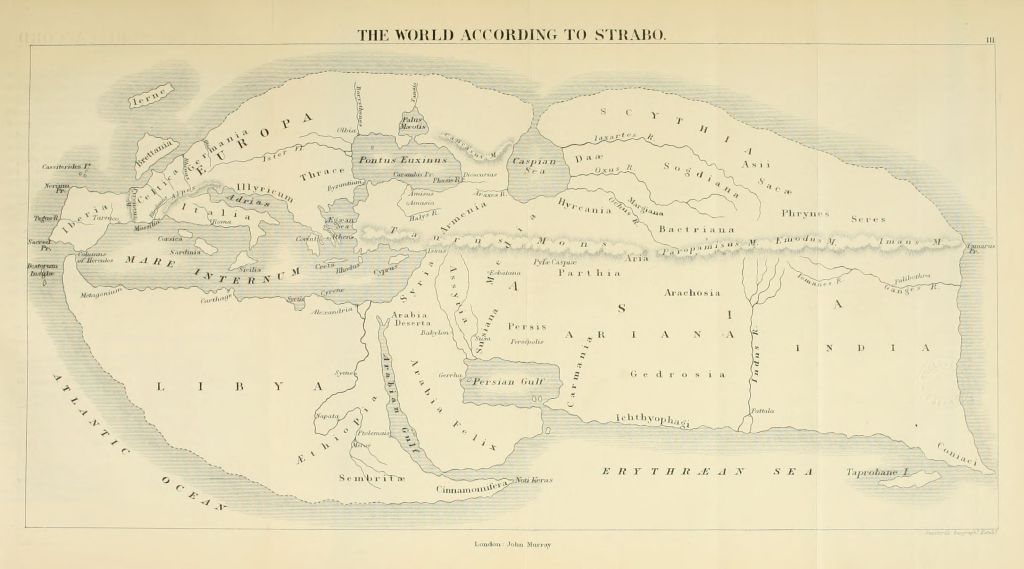
But unknown to the disciples, a fellow Asian of their own time, a Greek geographer from Pontus in Asia Minor, had recently capped a lifetime of study with the most successful attempt in the early history of Greek science to outline the bounds of the inhabited earth. It is true that none of the apostles would ever read Strabo. Even the scientists of that century tended to ignore him. But Strabo’s Geography, appearing about A.D. 20, presented to the world of the apostolic church a better picture of the planet than its people had ever before possessed.

Its basic shape was startlingly modern, for the Greeks knew much that the Middle Ages forgot. Strabo’s world was no flat-sided cube. It was a globe, with arctic and temperate zones, in size about twenty-five thousand miles around at the circumference. True he knew only the three continents – Asia, Europe, and Africa – but with remarkable prescience he conceded that there might be continents or other worlds unknown to him, for he remarked that the only land masses he could describe were too small for the size of the round world his astronomical measurements convinced him existed.

Moffett, A History of Christianity in Asia, vol. I, p. 4

They say that Paul never met Strabo and was therefore unaware of his work. But just imagine the conversation that might have taken place if they had met – and if Paul had gotten ahold of this map.

To support our family as we head back to the field, click here.

For my list of recommended books and travel gear, click here.

Photo from Wikimedia Commons.

When Carsick, Be Sure to Look Behind You

When I was a young child, my family lived in one of the highlands provinces of our Melanesian country. Most of my parents’ colleagues lived one province over from us, near the central town of another mountain valley, the same one where I would spend my middle and high school years. There was one paved road between these two areas, known as the Highlands Highway. The drive from where we were living to the location of my parents’ quarterly meetings with their broader team took about two and a half hours and dropped the traveler’s elevation by about 1,500 ft.

The Highlands Highway is a storied piece of road for a reason. It winds around sharp ridges covered in misty mountain rainforest, over rivers that roar out of steep cuts in the mountainsides, and through valleys populated by enemy tribal groups regularly involved in blood feuds. On a given trip you might encounter a tribal, criminal, or police roadblock, a portion of the road missing because of a landslide, or a free-for-all as local villagers help themselves to the goods contained inside a tractor-trailer that has broken down or tipped over. Almost always, someone in your vehicle is going to get sick.

It was the morning of December 26th, the early ’90s, and I was a happy three-year-old sporting rubber boots and a curly mullet. I was happy because it was the day after Christmas and we had all received big plush teddy bears as gifts. These were hanging out in the back seat of our white ’80s Toyota Hilux pickup with my two older brothers. I was sitting on my mom’s lap in the front passenger seat, presumably enjoying the drive – until the hairpin turns started churning up my stomach.

My mom, ever practical in times like this, told me to stick my head out the window to throw up if I was feeling sick. My dad just kept on driving as I stuck my head out into the chilly wind, hoping that the wave of nausea would pass. It didn’t, and I began losing my breakfast. In later years, my brothers and I discovered that we all have distinct styles of throwing up. They would chuckle at mine, claiming that it’s like someone just turns on and turns off a faucet. The good side of this is that once I’m done, I’m done, and I can return to whatever I was doing previously with minimal bother. “You just threw up? You carry it well, brother,” as a fellow pastor would one day tell me. So, this particular bout of carsickness should have been over and done without too much of a story.

However, what my mom and I didn’t know was that one of my big brothers, the middle one, already had his head stuck out the back window. He may have been on the lookout for the local children who wait at the side of the road, selling small wreaths made of mountain flowers and ferns. Well, to his horror, he was suddenly hit in the face with his little brother’s vomit. So, he did what any six-year-old with a bad gag reflex would do in this situation. He pulled his head back into the cab and threw up all over the back seat, all over the new teddy bears. Our oldest brother, witnessing this carnage, couldn’t contain himself either and added to the horror by also vomiting all over the back seat.

What followed must have involved a lot of yelling as my dad rushed to find a spot to pull over and my mom tried in futility to contain the chain reaction happening among her children. Sadly, the teddy bears did not survive this experience. I assume they were left on the side of the highlands highway, perhaps to be carried off by some jungle animal.

The last thing I remember is driving into the main market of our destination town, a large area teeming with local people there to buy and sell garden produce. I was sitting in the back seat with my brothers – all three of us wearing nothing but our whitey-tighties, our underwear. We must have either been parked or were stuck in bad traffic because we were at a standstill and surrounded by lots of highlanders staring and smiling. The locals tended to stare as it was, but this time we especially felt it, like we were in one of those dreams where you are wearing no pants, but this time it’s come true in real life. I remember really wishing that we had tinted windows.

Now, we are not usually in full control of ourselves when we are about to throw up. But I did learn that day that if you are in a moving vehicle and about to lose your breakfast, it’s best to look behind you. If you do, you just might spare your brother from a rather traumatizing experience, spare your parents from one of the worst clean-up jobs they’ve ever been handed – and spare your new teddy bears also.

To support our family as we head back to the field, click here.

For my list of recommended books and travel gear, click here.

What About Students Interested in Missions?

As we’ve been visiting different partner churches, we’ve met a number of high school or college students who feel that God may be calling them to serve on the mission field. Many of them have asked our advice about what they should be doing to further discern and to prepare for this kind of ministry. We’ve loved the zeal that we’ve encountered in these students, but as the book of Proverbs says, “desire without knowledge is not good” (Prov 19:2). So, here is some practical advice to accompany the good desires that many students have to serve Jesus on the mission field.

First, tell your pastors and ask them to mentor and guide you. In our individualistic culture, it’s often our default to wrestle with a missions calling on our own and then to begin shopping for various missions organizations and programs – all without ever talking to our spiritual shepherds about it. But any genuine missions calling should be one that is affirmed by your local church and its leaders. The healthiest way to wrestle with desires for mission and to prepare for service is to do so in regular conversation with your pastors, and ideally, while fulfilling whatever kind of requirements they have developed for future missionaries. This kind of a track might be more or less formal depending on the size and culture of your church – and your request might be what causes them to develop one – but good pastors should be able to put aspiring missionaries on some kind of pathway that includes work on the character, knowledge, affections, and skills that qualified missionaries need to possess. Let your pastors know your desires for future missions service as soon as possible, even as early as your membership interview. And if you’re not yet a member of a healthy church, then join one ASAP.

Second, focus on growing in godly character. Be steady and faithful in the regular spiritual disciplines that make for a growing disciple who may one day become a leader. Be regularly in the word and prayer, giving generously, attending and serving your church faithfully, fighting sin, and obeying Jesus wherever you can. The character of a missionary is the foundation of everything else. And character grows slowly, like an oak tree, so be willing to wait as long as necessary for your mentors and pastors to affirm that it is indeed present – even if this leads to a timeline much longer than you were hoping for.

Along with character, pursue the knowledge you will need as a missionary. You need to know your Bible inside and out, so dig deep into the study of the Bible and theology in whatever avenues are available to you – books, classes, podcasts, sermons, blogs, eat it up wherever you can get it. You need to know with second-nature clarity what the gospel is, what a true believer is, and what a healthy church is. Knowledge of the Bible is far more important than knowledge of missions. That being said, knowledge of missions is an important second. To gain knowledge that will serve you as a missionary, read missionary biographies, listen to missions podcasts, pick the brains of visiting missionaries, and read books, articles, and blogs about issues in missions and about the various peoples of the world. You never know when knowledge of certain events in missions history or a basic understanding of a missions controversy or cultural differences might be the key that unlocks wisdom in a given situation – so soak up as much as you can. Knowledge can grow quickly, so watch out that pride doesn’t also grow with it as your knowledge will often outpace your character.

One often overlooked aspect of missions preparation is the need to foster the right affections. This starts with a passion for God’s glory, his word, and his church, but it extends into a passion for the lost peoples and places of the world. Notice how Paul in Romans 15 has a holy ambition to preach Christ where he hasn’t yet been named. Affection is one of the trickier aspects to focus on. How do you grow the affections, the emotions? Well, the Bible says that your heart will follow your money. So, give your hard-earned student job money to missions. Jesus says that if you do this, your heart will follow. In addition to this, make a plan to fast and pray regularly for the nations and for missionaries, on your own and also with others. Then practically, make friends with lost people from other cultures and language groups. As you invest time in relationships with lost friends who are refugees, immigrants, students, or migrant workers, your believing heart will be stirred to see them come to faith. So, friendships with internationals are another key to fostering the affections needed for a future missionary.

Relationships with those from other language and culture groups are also key to developing the skills you will need as an aspiring missionary. Just like any skill, it takes many hours of practice to learn the subtle art of noticing, learning, adopting, and then leveraging differences in language and culture. You will be forced to do a good measure of how to do this overseas, but do yourself a huge favor by developing cross-cultural friendships now and beginning the long and slow process of training your mind and body to navigate the maze of how different kinds of humans equate form with meaning. How do you find these relationships? A few practical suggestions would be to choose to become a patron of businesses run by internationals – groceries, barbers, cafes, restaurants. Also consider ways you can volunteer as an English tutor in your community, something constantly in demand. And consider how you might be able to host internationals for meals and hangout times. Simple genuine hospitality can bless lonely internationals and lead to strong friendships.

In addition to cross-cultural skill, you will also need ministry skill. Learn to share the gospel, to study, to teach, to preach, to disciple, to risk, to strategize, and to fail with courage and trust in the sovereignty of God. Learn how to navigate conflict with other believers and the what and why of your typical responses to conflict. Learn also to endure suffering patiently, and what your particular responses to suffering are and where they come from. Know your weaknesses and learn to appreciate and celebrate the different giftings of other believers. Much of this practical knowledge can only come through opening ourselves up to wise counselors who can help us see things about ourselves that we can’t otherwise see. And speaking of seeing, it’s going to be very hard for you to reproduce something you have never seen, so if you want to be part of planting healthy churches overseas, then you need some experience of being in a healthy church where you are now. Likewise, if you want to plant churches, then consider being part of church planting where you are currently located.

You also need to work a real world job before becoming a missionary, whether that’s full-time or part-time or ministry work in your home country. This is important for several reasons. One, effective missionaries have to work hard at their task. This is no career for those who want to take it easy. It’s helpful to have real-world work experience as a standard by which to compare how hard you are pushing in the less concrete world of missionary work. Two, effective missionaries will have seasons where they need to know how to submit and follow the lead of others. This is much easier if you’ve already had a boss or two and have some experience doing what you’re told. Three, working marketplace jobs can keep missionaries from getting entitled when it comes to their financial support. When you remember and can still feel how hard it is to make a day’s wage, you are going to be more humble and grateful when you are supported by the money earned by other Christians. For current students (who are part of Gen Z), we are seeing that this willingness and experience in working hard is something that is very important. Work-life balance is important, but so is a willingness to sacrifice when needed.

Finally, consider serving overseas in a mid-term capacity before you go career. Mid-term is a category between short-term and long-term, somewhere around three months to two years long. The benefit of serving mid-term is that you are on the ground long enough to outlast the honeymoon phase and hopefully also the “I hate everything here” phase that often follows. You need to experience the grounding that comes from being able to be honest about a place, a people, and a culture. There will be good things, there will be evil things, and there will be things that are fun or that simply annoy you. When you have come back down to earth and can see things more clearly like this you are in a much better place to gauge whether or not God has indeed wired and called you to be a missionary. Plus you also will have the perspective of other missionaries and local believers to lean on. I love mid-term missionaries because they make some of the best long-term missionaries, but they also make some of the best senders and supporters. If God calls them to stay in their home country after their term of service ends, then they will have been overseas long enough for that experience to color their work and ministry for the rest of their lives. If I had it my way, every pastor would serve as a mid-term missionary before they plug into long-term service in a local church.

So, if you are a student who feels like the Spirit is stirring your heart toward missions, pay attention to those desires. And consider how you can accompany desire with the things mentioned here – character, knowledge, affections, skill, local church membership, real world work, and mid-term service. You don’t have to wait around to see if your desires will pan out or not someday. You can actively work to test them and to invest in a possible future missionary ministry wherever you currently are.

To support our family as we head back to the field, click here.

For my list of recommended books and travel gear, click here.

Photos are from Unsplash.com

A Song for Those who Watch for the Morning

“Watchman” by Josh Garrels

I was excited to hear this new song by Josh Garrels. “Watchman” is yet another song that speaks of faithfully waiting even when others fall away, of a stubborn hope that keeps on scanning for the dawn even when the night is darker and longer than we had thought it would be. Praise God for artists like Josh Garrels and Chris Renzema. Those who don’t deconstruct – but instead cling to Jesus – are truly creating some beautiful work.

Here are the lyrics:

If I’m fully honest
I’m waiting on Your promise
Even through the trauma that swept my friends away
The darkness is upon us
The death of saints and psalmists
But I will sing my song for You anyway

Because You’re all I have Lord, You are the way
And I’ll always love You, and I will wait
Like a watchman, at the gate
Waiting for morning, to break

I can feel the winds are changing
Getting further down the range and
Truth is looking stranger than the lies
Because it’s simple and it’s holy
It’s better than they told me
Jesus You’re my only guiding light

And You’re all I have Lord, you are the way
And I’ll alway love You, and I will wait
Like a watchman, at the gate
Waiting for morning to break
Waiting to hear You say

Come on, enter in to my rest
And lay your head upon my chest
For I have called you friend
Because you kept your lamp burning through the night
And you made your garments pure and white
By my good sacrifice
Yeah, singing now my kingdom is with man
So come up to my table and
Raise up this glass with Me
Oh, singing no more tears and no more pain
I’m making all things new again
Just like I promised you
Sing alleluia all the way
And I’ll always love You
And I will wait
Like a watchman at the gate
Lord, I’m a watchman at the gate
I’m waiting for morning to break
Keep my lamp burning
Stay awake

To support our family as we head back to the field, click here.

For my list of recommended books and travel gear, click here.

The Man on the Island, the Man in the Mirror

We expect it in the West, but it’s a curious thing when believers from unreached people groups wrestle with the classic “man on the island” question. You know the one – “But if a good man stranded on an island dies with no chance to hear the gospel, does he still go to hell?” 

On the one hand, it makes sense that they would wrestle with this issue, especially if they are among the first generation to come to faith from their people. It’s not just some of their ancestors, but potentially all of them who have died and now inhabit a Christless eternity. Every parent, grandparent, great-grandparent, and renowned member of the family tree died with no witness to the gospel message and is now beyond hope. The costs of the exclusivity of Christ land differently when you haven’t come from a Christian heritage at all. 

On the other hand, it’s somewhat ironic when these individuals struggle with this question. Because they in some sense are that man on the island, and they have now been unexpectedly reached with the gospel. As members of unreached or unengaged people groups, they previously had no access to the gospel. They were cut off culturally, linguistically, or even geographically from the truth. And then one day they weren’t. 

I remember a new believer in Central Asia posing his question about a hypothetical man in India, which to him must have felt like the remote ends of the earth. I smiled, knowing that many in the West might pose the same question, but place their hypothetical man in the very region where we were sitting having our discussion. I wanted to take my friend by the shoulders and say, “Brother, you are the man you are asking about. And look what happened to you!” 

Ultimately, everyone struggles at some point with the exclusivity of Christ, no matter their language, culture, people group, or relative remoteness. This means that disciple-makers need to be ready to give an answer to this common question, whether they are mentoring Gen Z believers in the American Midwest or a tribal patriarch in Southeast Asia. 

A good way to begin that answer is with a call to look in the mirror. Any believer asking this question was also at one point truly “without hope and without God” (Eph 2:12). Yet because Jesus has other sheep that are not of this fold, and those sheep hear his voice, they were sought out and enabled to hear the voice of the shepherd (John 10:16). Jesus’ sheep are scattered throughout the world and cut off from the truth, yes. But the shepherd will find each and every one of them, just as he found the particular believer asking the question. 

There is a second angle by which those struggling with this question can be called to look in the mirror. Often, the emotional weight of the question is based on the assumption that there are people out there who are better than the question asker. “I’ve got this holy uncle,” as it was once put to me. But in the real world, there are no holy uncles. When we look in the mirror, the person who looks back is someone who is deserving of hell because of their sin. And everyone else in the world, when they look in the mirror and their conscience is honest, feels that same truth down in their bones. We all intrinsically know that we have sinned and fallen short of the glory of God (Rom 2:15). Yet we are easily deceived into thinking others are not like us. The classic response to the man on the island objection holds up; namely, the question doesn’t work. There are no good men. Only sinners, just like us. 

We must ultimately call the one struggling with this question to look from the mirror to The Book. The Bible clearly commands that we take the gospel to the ends of the earth (Matt 28:18-20). From the very beginning, Jesus has tasked his Church with proclaiming the good news, without which salvation is impossible (John 3:18). We are clearly called to do whatever we can to get the gospel to every man who is on an island (1 Cor 9:22). The logic of scripture is clear – unless they follow Jesus, “the way, the truth, the life,” they are lost (John 14:6). If there were some kind of exception to this rule based on never hearing the message, then it completely clashes with the emphasis of Jesus and the Apostles and their global mission. If sinners can be saved by never having the chance to hear the gospel, then the Great Commission makes no sense. 

Further, the logic of the scriptures is not that we are first condemned for rejecting the gospel, but that we are condemned for rejecting the light we have. According to Romans, the man on the island has the law of God in some way written upon his heart (Rom 2:11-16). He has a conscience. He has access to creation, which preaches to him daily that there is a creator who is worthy of his worship (Rom 1:18-23). He himself is a witness to this truth, being made in the image of God, and even his pagan ancestors passed down to him fragments of truth that have clung on in his fallen culture (Acts 17:23). Yet universally, each of these witnesses, whether a small or great light, is suppressed by each and every human heart (Rom 1:18). That’s why we are universally condemned, whether growing up on an island alone or with the strongest possible Christian heritage. Hell awaits in either case, unless God miraculously intervenes and causes the sinner to hear the gospel and love the light, rather than suppress it.

How can it be right and just that after 2,000 years, some people’s ancestors were granted access to the gospel while others weren’t? This doesn’t seem fair. Here, we must hold on to the mystery of how God has scattered his chosen sheep throughout time and history. There is much in this mystery of election to which we are not yet given access (Rom 11:32-36). Yet we also need to remember that what we know of church history is only a very small picture of everything that has transpired. As with history in general, the vast majority of records have been destroyed, lost, or were never made in the first place. And yet what has been discovered is far more global in scope than most Christians are aware of. The ancient church didn’t just preach the gospel in the Roman empire, but also far beyond it. Ancient and medieval Christianity stretched from Ireland to Korea, to Ethiopia, India, the Arabian peninsula, and on up to Scandinavia. There are even old claims of Irish missionary monks striking out for North America in their one-man coracle boats.

Far more people groups than we might expect do indeed have a Christian heritage, or at least a period in history when their ancestors were exposed to gospel preaching. In fact, for many of the unreached people groups of the 10/40 window, the churches planted represent a renewed witness rather than the first one in history. As one mission leader said when in Uzbekistan visiting the tomb of Tamerlane, the great exterminator of Central Asian Christianity, “You’re dead, and we’re back.” Even now, medieval Christian graveyards are being discovered in far-flung places like Kazakhstan, demonstrating that the Church throughout the ages took its Great Commission mandate seriously. Certainly, eternity will present some fascinating missions history that has never been told here on Earth. In this, there is a degree of comfort for the believer who feels that until his generation God had left his people without a witness. 

The exclusivity of Christ and the man on the island are questions that all believers are likely to wrestle with, regardless of their background. Fallen human logic simply struggles to understand the wisdom of the sovereign God. Yet there is a wealth of answers in the mirror, in the Scriptures, and even in church history that help us equip the struggling believer with solid truth. This is truth that grounds, but even more, truth that lifts our eyes to wrestle with what it will take to reach those islands – to reach the ends of the earth. 

Better get the coracles ready. 

To support our family as we head back to the field, click here.

For my list of recommended books and travel gear, click here.

A form of this article is scheduled to be published soon at Immanuelnetwork.org

Photos are from Unsplash.com

Working For the Hippy Mafia

There are a number of stories from my life that could go under a category called “How in the hand-holding picnic line dances of Central Asia did I end up here?” In spite of my heartfelt desire to pursue wise risk, I have periodically found myself in situations where those decisions instead led to circumstances somewhat dangerous, or at least absurd. For instance, one time I ended up working for an organization that turned out to be involved in international money laundering and harboring wanted fugitives. Believe it or not, they accomplished these crimes by recycling used clothes and shoes.

When I was finishing up university and heading into marriage, I was looking for more flexible work that would pay well. One day I was scanning the nonprofit jobs section of the (admittedly hit-or-miss) website, Craigslist when I came across a curious posting. An environmental organization was looking for drivers who could find new sites for their clothing and shoe donation bins. The gig was simple. Contractor drivers would travel around their part of the country asking local businesses if they would be willing to host one of these tall metal bins on their property as a service to the community and as a way to contribute to sustainable development projects in India and Africa. For each site you secure, you’d get paid $125, a sum which at that point equaled ten hours of my other work at a furniture warehouse. And I would get to set my own schedule – a very appealing thing to a flexibility-loving individual like me.

Interested in seeing if this was all legit, I applied, explaining in my email that while I was not necessarily an environmentalist myself, I was a Christian who did believe in the wisdom of creation stewardship and sound development projects overseas. I also had one year of experience in relief and development work in the Middle East. Apparently, this was enough to land me the job. I met the woman who would become my boss for an interview at the same coffee shop where my wife and I had hosted our engagement party. She was a mysterious figure in her sixties, of Danish ethnicity. She offered me the role after a relatively brief conversation. Given that she was married to a woman and also a card-carrying member of the pseudo-religious climate apocalypse culture, I found it curious that she didn’t seem too concerned about the fact that I was not only a conservative Christian, but a student at a Southern Baptist Bible college to boot. Not for the last time, I thanked God that humans really are remarkably inconsistent creatures.

I soon began my job and took to it right away. I had the freedom to drive around and stop at every gas station and corner store in a two-hour radius of my city and ask if they’d like to host a clothes and shoe recycling bin on their property. Even though I didn’t fully buy into the philosophy behind my new employers’ work, I could get behind the substance of it – keeping Americans’ excess clothing, shoes, books, etc., out of landfills and redirecting them toward more productive places. I was told that some of the best quality items would be donated in the US, the second tier items would be resold overseas, and others beyond redemption would be shredded so they could be used in other products, like the insulation inside car doors. The money from the items resold was said to go toward projects in India and Africa, such as farming methods that were better for soil, used less water, and led to better crop yields. Again, this is all stuff a Christian can support who understands that though this world is temporary, it’s still ours to steward responsibly.

In fact, the conversations I had with coworkers in this season became a good chance to sharpen my beliefs when it came to creation care. I came to see that when individuals, companies, and governments abuse the natural ecosystems around them, it’s almost always the poor who suffer. Given the strong biblical concern for the poor, we do well to care about commonsense protection of clean air, water, and soil. Globally and historically, when we treat the natural world out of a posture of “it’s all going to burn anyway,” we often thereby poison the orphan and widow. For a Christian, that should be something that’s very concerning. If you doubt what I’m saying here, just visit places like China in the winter and try not to breathe in the soupy-thick air pollution. Sadly, the workers in those cities will lose around five years of their lives from simply breathing in that poisoned air.

As I drove around rural Kentucky, I also spent a lot of time thinking about the wisdom of learning from God’s creation logic when it comes to many of the renewable cycles baked into natural ecosystems. I remember learning about the “waste is food” principle present in nature and chewing on how we could better emulate this wisdom of God’s creation in our societies. I remember talking about this with one of my pastors and bringing up our reliance on fossil fuels as something I felt was unnatural to the created order. He, however, told me not to forget that everything on our green earth is in fact dependent on a giant star of burning gas. Good point. Fossil fuel energy is a natural part of the created order, just something that we need to keep learning how to use as God has.

Ultimately, I came away from this season of working for pagan environmentalists having a more thought-out biblical theology of creation care. And for that I’m grateful. This can be a blindspot in American evangelicalism, and even more so now that it is so highly politicized. But there’s something to Lewis’ and Tolkien’s instinct to stick up for the trees in their writings. In the end, the heart of evil is to tear up and ruin creation, while God desires to see it gardened into an even more beautiful and productive version of itself. Our theology should somehow reflect these realities. Even as we seek to share the gospel and reach the nations, Christians should in their own small way plant gardens in Babylon – not out of some kind of apocalyptic panic, but as a nod toward Eden lost, and toward the coming resurrected Earth.

I also learned curious things about people and cultures while doing this job. The businesses most likely to say yes to this opportunity to host a free donation bin were those run by internationals, or by very liberal Americans. Gas stations run by South Asians and smoke shops run by white hippies were promising places to stop. But conservative Americans (many of them seemingly Christians) tended to bristle when I made my spiel. This was curious because when it came to other jobs I had worked where tipping was involved, these dynamics tended to be reversed. The conservatives tipped (gave) generously if you demonstrated you were willing to work hard, but they were not interested in anything that smacked of a handout. The fact that this was all free and easy and helped farmers in Africa seemed to make them even more suspicious. Then again, perhaps they were right to raise an eyebrow at this whole operation.

I had just successfully recruited one of my close friends to join me when some very strange revelations came to light. He and I were on a paid weekend trip to Atlanta where we attended a bunch of trainings/hype sessions with a number of other NGOs and companies that all seemed strangely intertwined with our org. Curiously, all of them were also headed up by someone from Denmark, people who had gone to university with our boss back in the 1960s. The whole vibe was like one big family reunion, though these were alleged to be independent organizations and companies involved in the used clothes market. Into this unusual context, my friend was forwarded some very concerning investigative articles.

Apparently, there was a reason all of the groups present at this weekend’s event in Atlanta seemed related. They were. They had all descended from a leftist professor in 1960s Denmark and his cadre of loyal students. Allegedly, when their radical movement was banned from Denmark, they went international, starting a network of companies, non-profits, and schools in multiple countries. They really were committed to environmentalism of some sort, and some project sites really existed in Africa and India. But they were also committed to money laundering. Some of the funds from the donations had illegally gone toward paying for a condo in Florida, where the founder of the movement had hidden for some years as he tried to elude Interpol. If this were true, then who knew where the funds from the bins we had placed were actually going? A few months previously, I had been asked to open up the city of Chattanooga, Tennessee. I had placed dozens and dozens of bins all over that metro area, work that could result in a substantial amount of money from all of the donations received.

My believing friend and I grew more and more alarmed as we read page after page of investigative reporting that accused our employer of some very egregious things. Even if this network of inbred entities was still operating legally in the US, things were beginning to feel awfully dodgy. There wasn’t yet the kind of fire that led to legal action, but there was a lot of smoke. And even worse, just the week before our organization had asked the two of us to represent them to our city council.

This is the point where the question dropped: How in the world had we ended up here? The two of us were preparing for gospel ministry. We were busy students, just trying to work hard and be faithful and save money to take care of young families. Now we were unwitting employees of money launderers. We knew that we didn’t have the time nor the connections to do the work required to verify or discount the many accusations present if anyone simply googled the name of our employer. So, we prayed – and then decided it was time to bail. Now that our eyes were opened to see we’d been working for some kind of shadowy hippy mafia, we were conscience-bound to get out, and that as fast as possible.

Our boss was very upset at us for quitting – and for asking questions. “I don’t dig into your strange religious background, do I?!” But she ultimately resigned herself to our position that we were in no place to prove or disprove the things we had heard, and that meant we needed to bow out. My friend and I explained that we wanted to someday be men who were above reproach. And this meant not working for groups allegedly involved in setting up recycling fronts for money laundering.

Many years later, I still see the tall green bins scattered around our city here in the US. They are looking quite faded and beat up these days, but their presence means the organization must still be functioning. Somehow, they must still be legal, still under a cloud of accusations, yes, but continuing to hustle nonetheless.

If there is a lesson to this strange tale it might be to stay away from job offers on Craigslist. Or, don’t be afraid to trust God and bail if you find out your employers are doing illegal things. Or, if you are in need of donating your used clothes in the US, then stay away from the tall metal bins you might see planted around your city. They are awfully convenient, and they claim to be helping the planet. But as far as I can tell, they belong to some kind of hippy mafia, people who want to use your old clothes and shoes for dodgy, and even wicked, ends. (My old shoes? Really, Evil? Really??)

Yes, let’s seek to grow in caring for creation. We are God’s redeemed gardeners, after all. But I’m sure that we can find a better way to do this than by donating to the hippy mafia.

To support our family as we head back to the field, click here.

For my list of recommended books and travel gear, click here.

Photos are from Unsplash.com

A Proverb on the Power of Spouses

Treat your wife poorly, she’ll turn into vinegar.

Treat your wife well, she’ll turn into wine.

Regional Oral Tradition

This proverb from a neighboring people group speaks of the power that spouses have to shape one another, for good or ill. While this saying focuses specifically on husbands, its wisdom could apply to both husbands and wives as a very straightforward marital application of you reap what you sow. Yes, spouses are always responsible for responding in godly ways, even if they receive poor treatment from their partner. But this truth does not mean we should ignore the amazing power husbands and wives have in making those responses to behavior easier or harder. A cruel husband or wife can absolutely turn their spouse into a sour, bitter, vinegary person. Every culture can attest to this.

Like the biblical proverbs, this cultural saying is a principle, not a promise. There are always exceptions out there, like Hosea, but they are the exceptions that prove the rule. In general, men who treat their wives well will, over time, see them blossom and flourish. Psalm 128 richly describes this kind of marriage, also using a wine-related simile:

Blessed is everyone who fears the LORD, who walks in his ways!… Your wife will be like a fruitful vine within your house;

Psalm 128:1,3

When someone gives their spouse steady, unconditional affection, this is an amazing force to be reckoned with. Believers have a massive advantage here because we not only know what it is to be shown this kind of unconditional affection, but we’ve also been indwelt by the Holy Spirit, who enables us to miraculously live like this with others. He helps us to love our enemies, and even our spouses – including on those days when they seem like our enemies.

Vinegar or wine – our marriages are fermenting into one or the other. This is a helpful image to keep in mind as we seek to love our spouses well.

To support our family as we head back to the field, click here.

For my list of recommended books and travel gear, click here.

Photos are from Unsplash.com

Underneath a Resistance to Pray

“When I was a young man and still a Muslim, they used to force me to memorize the prayers. And they made me regularly lead the mosque prayer time. I hated it.”

Samir* shuddered as he told us this, clearly not enjoying the sensations this memory brought with it.

Samir grew up as an Indian Muslim in East Africa, his family part of the large Indian diaspora there. Now, he’s a new member of our small group here in Kentucky. A few weeks ago, the men in the group were sharing our testimonies with one another when Samir confessed his struggle to pray publicly.

“To this day, I don’t really like to pray in public… I appreciate you guys’ helping me to grow in this.”

It was a humble and genuine confession, the sort of thing that many more mature Christians might hold back. The fact that Samir had shared this made me instantly trust him more.

“Brother, it’s not just you,” Reza* chimed in. “Maybe it’s a former Muslim thing. I have a similar struggle. Is that why I saw you praying off a notecard a few weeks ago?”

Reza was referring to a prayer meeting for one of our group leaders who ended up in the ICU after a terrible bike accident. Samir had contributed a two-sentence prayer to this time that I had found actually quite encouraging, mainly because of its unusual brevity and simplicity.

“Ha, yes,” Samir responded with a shrug. “Even that was really hard for me, but that’s what I could do.”

“It was great, brother,” Reza said. “And I’ve never thought about it before now, but that’s probably why public prayer is so hard for me as well.”

Reza shook his head, his gaze distant in self-reflection. The tentacles of Islam can take a lifetime to find and shake off.

Yet here were two believing men from a Muslim background openly recognizing what was underneath their resistance to praying in front of others. For both of them, it came down to past suffering, seasons of religious control and manipulation, and the resulting scars on their hearts – scars which they still struggled with, even though Christian prayer is so radically different from the Islamic Salat.

This knowledge means that both of these believers are now better equipped to respond to this resistance to obedience. It means they can now take a more targeted approach to the problem, applying biblical truth more like a sniper rifle, and less like a shotgun. And those others of us present are now also better equipped to encourage them – “Brother, you are utterly free to pray or not pray in public. God welcomes your words as a kind father, delighting to hear from you. And the Spirit gently helps all of us to pray when we don’t know how.”

This is the power of digging into our personal stories when it comes to growth in sanctification and obedience. I imagine these are the kinds of insights that make a counselor’s day.

Encouraged by my brothers, I also shared that night about some recently discovered roots of my own reluctance in prayer. For me, it’s not so much a resistance to pray in public, but a resistance to pray in crisis. I have long noticed in me an instinct toward anger when asked to pray when some crisis situation has suddenly emerged. It’s only recently that I think I’ve been helped to recognize where that comes from.

The morning my dad died my brothers and I were moved away from the porch and windows, where we would have seen my dad fighting for his life in the yard. A missionary aunt herded us into the living room and led us in prayer – prayers that God said no to. In the decades since, It seems that I have ingested a narrative that goes something like, “Don’t pray in the midst of a crisis moment. It doesn’t do anything. Do what you can in the moment. Pray later, when God is actually paying attention again.”

Instead of a reluctance to pray that comes from experiencing spiritual manipulation, mine is more tied to a deep spiritual disappointment – the idea that God doesn’t really listen when things are at their worst. To do what I don’t want to do, to turn to prayer when I’m in a desperate situation, I will need to apply biblical truth that addresses that particular area of unbelief. I will need truth and passages that speak of God’s nearness to his children in crisis.

That same week I encountered a similar thought from my daughter. I had asked my kids at bedtime what was stopping them from praying on their own. My daughter shared that every time she puts on a new insulin pump, she prays that God will not allow it to hurt. But every time it still hurts. This sense of being ignored by God and praying ineffectual prayers keeps her from risking prayer to God at other times.

I was so glad that she shared this with me because then we were able to speak about the nature of God’s promises when it comes to prayer. And as with Samir, Reza, and myself, this means I now know what is going on underneath the surface. With this insight, I can better care for her heart, even as I challenge her to be courageous and to keep on praying.

This cluster of conversations about resistance to prayer reminds me of the vital importance of believers acting as “soul doctors” for one another. We must help one another to see what so often we cannot see ourselves, as a counselor did for me, as Samir did for Reza, as I hope to do for my daughter.

Whenever there is internal resistance to follow Jesus in a given area, this comes from somewhere specific. Yes, it broadly comes from a sinful nature, the presence of the sinful flesh, the effects of the world and Satan. But within these broader categories, there are very specific roots in our stories – roots which, when exposed, can make all the difference.

To support our family as we head back to the field, click here.

For my list of recommended books and travel gear, click here.

Photos are from Unsplash.com

*Names changed for security