The past careers of languages are as diverse as the worlds that each language has created for its speakers. They have suffered very different fates: some (like Sanskrit or Aramaic) growing to have speaker populations distributed across vast tracts, but ultimately shrinking to insignificance; others (such as the languages of the Caucasus or Papua) twinkling steadily in inaccessible refuges; others still yielding up their speakers to quite different traditions (as in so many parts of North and South America, Africa and Australia). Some (such as Egyptian and Chinese) maintained their speakers and their traditions for thousands of years in a single territory, defying all invaders; others (such as Greek and Latin) spread by military invasion, but ultimately lost ground to new invaders.
Often enough, one tradition has piggybacked on another, ultimately supplanting it. One big language parasitises another, and in a ‘coup de main’ takes over the channels built up over generations. This is a common trick as empires succeed one another, in every time and continent: Persia’s Aramaic made good use of the networks established for Lydian in seventh-century Asia Minor; in the sixteenth century, Spanish usurped the languages of the Aztecs and Incas, using them to rule in Mexico and Peru; and in the early days of British India, English and Urdu gained access to power structures built in Persian. But the timescale on which these changing fortunes have been played out is astonishingly varied: a single decade may set the pattern for a thousand years to follow, as when Alexander took over the eastern Mediterranean from the Persians: or a particular trend may assert itself little by little, mile by mile, village by village, over thousands of years: just so did Chinese percolate in East Asia.
– Ostler, Empires of the Word, pp. 11-12
A few thoughts:
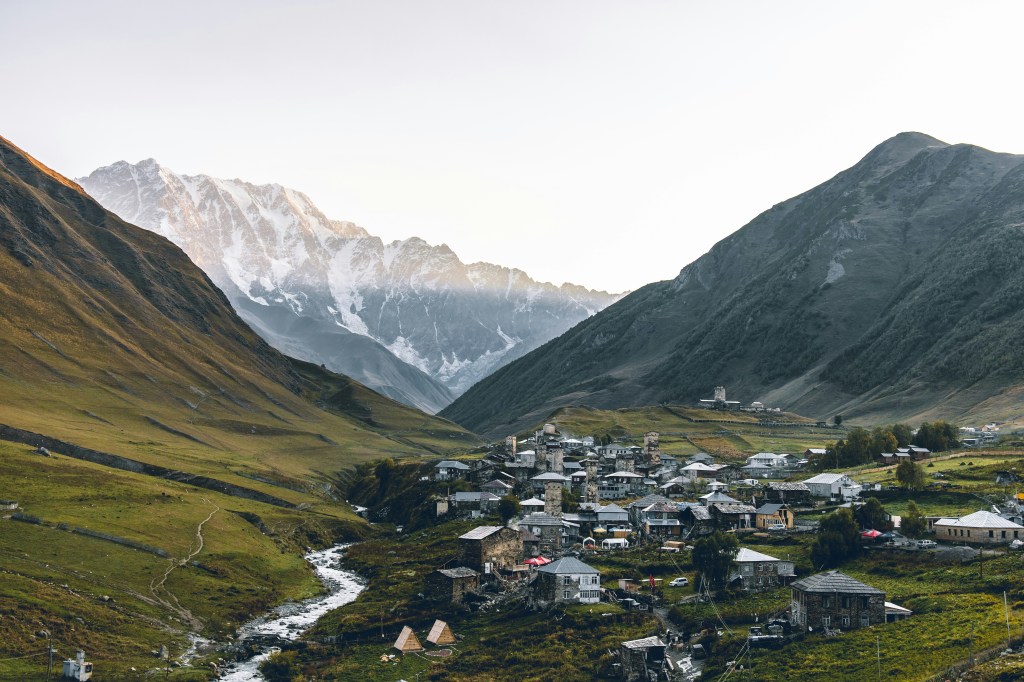
The Central Asian language we have learned is a mountain language, one of those “twinkling steadily in inaccessible refuges.” This is how it survived as successive larger and more powerful languages of empires washed over one another down on the plains. Never underestimate the power of mountains to preserve languages and cultures.
‘Coup de main’ means a surprise attack or a quick, forceful military action, “blow with the hand” in French. Had to look this up just now since Ostler didn’t provide a translation or footnote. It’s curious how many authors still assume their English readers don’t need the translations of French terms like this one. This is probably from our own language history where French was viewed as the language of the educated elite during the period of Middle English, a tradition that still leaves traces like this here and there.
It is remarkable and unpredictable how quickly a language’s fortunes can change in a given area. In our region, the past several decades have seen the “backward” language of the mountains and nomads become more dominant in our area than the three massive surrounding languages. This is largely because of accidents of American foreign policy in our people group’s favor. This surprising takeover has happened even while little pockets of the languages of ancient empires still barely manage to hold on among minorities. And all the while the internet and globalization mean that English is making massive inroads into each of these language communities. Thirty five years ago this picture would have seemed impossible.
To support our family as we head back to the field, click here.
For my list of recommended books and travel gear, click here.
If there is one restaurant that my family misses the most from Central Asia, it would be Curious Kebab. The name of the restaurant comes from the first name of its owner, his name being a local language term that I’m here translating as highly curious. But its semantic range also includes concepts such as excited, passionate, highly anticipating, etc. All of these possible definitions would be appropriate when describing how my family feels about this particular culinary establishment. We – and the others we’ve converted – feel that it’s the tastiest kebab spot in the whole country – if not the world.
If you were to visit me in the city we last lived in, and we were to set up a lunch meeting, I would definitely suggest we go to Curious Kebab together. Here’s what that would be like.
First, I would send you the pin for our old stone house on the northern edge of the bazaar. Neighborhood street names and house numbers are a fairly new thing, so most locals don’t use them and they’re not yet integrated into things like Google Maps. It’s better to just send a pin. Once you’ve arrived, I’ll come out of our courtyard gate and undo the chains strung up on our street, the neighborhood’s vain attempt to keep bazaar shoppers from taking over all our street parking. Once we’ve got you parked, ideally underneath the excellent shade of a sabahbah tree to protect your car from the heat, we’ll head downhill on foot toward the center of the bazaar.
We’ll most likely take Soapmakers Street, since that’s the quickest route, about an eight-minute walk. These days there’s no longer any soap being made here. Instead, the street is full of shops that sell birds, makers and sellers of traditional clothing and shoes, hardware shops, a smattering of tea houses full of old men, and hole-in-the-wall restaurants. We’ll also pass a small hotel where we once had a short-term team stay. They’ve got a pet falcon in the lobby and very affordable prices, but all their rooms do have burns in the carpet from hookah use and are squatty-potty only.
Soapmakers Street is mostly trafficked by men and has narrow, uneven sidewalks. So, if there are women in our group or small kids, or if we need more protection from the sun or rain, we’ll instead walk down a different street a few blocks to the West, which I’ll call Juicemaker Street. This street is full of small fruit juice cafes, pharmacies, and shops that sell women’s clothing or jewelry. If anyone needs some gut strengthening before our kebab lunch, we might stop for a cup of fresh pomegranate juice. Most of the pedestrians on this main artery of the bazaar are women – about half with heads covered and half not – and the sidewalks are broad, even, and mostly shaded, which makes for a more relaxed experience for any ladies or kids in our group.
The arteries of the bazaar are set up roughly like a spider web, with the main roads leading down toward the old center. At the center of the bazaar is an impressive old colonial administrative building with statues and gardens. This faces the center of the intersection, where there’s a small covered pagoda of sorts which has been used in the past by traffic police but also used by dictatorial governments to hang dissidents. This center area of the bazaar is typically bustling with shoppers and sellers, traffic moving more slowly than the pedestrians, and the sounds of street musicians playing traditional melodies. If there are protestors, this is usually their destination, with the security police and their tear gas hard on their heels. But most days it’s a happy and energetic place, humming away under a massive painting of the mustachioed sheikh who led an uprising against the colonizers.
Just off of this intersection, there’s a small network of alleys, right at the corner of Soapmakers Street and the street named after the legendary blacksmith tied to our people’s origin myth. A small fruit and veggie sellers area congests the opening to this alley, so we would weave through the carts piled up with produce and duck into the first alley. After passing a dry cleaner and some shops selling CDs and electronic gadgets, we’d come upon another alley flanked by a bakery on the right and a tea shop on the left. A few paces up this tiled alley brings us to Curious Kebab.
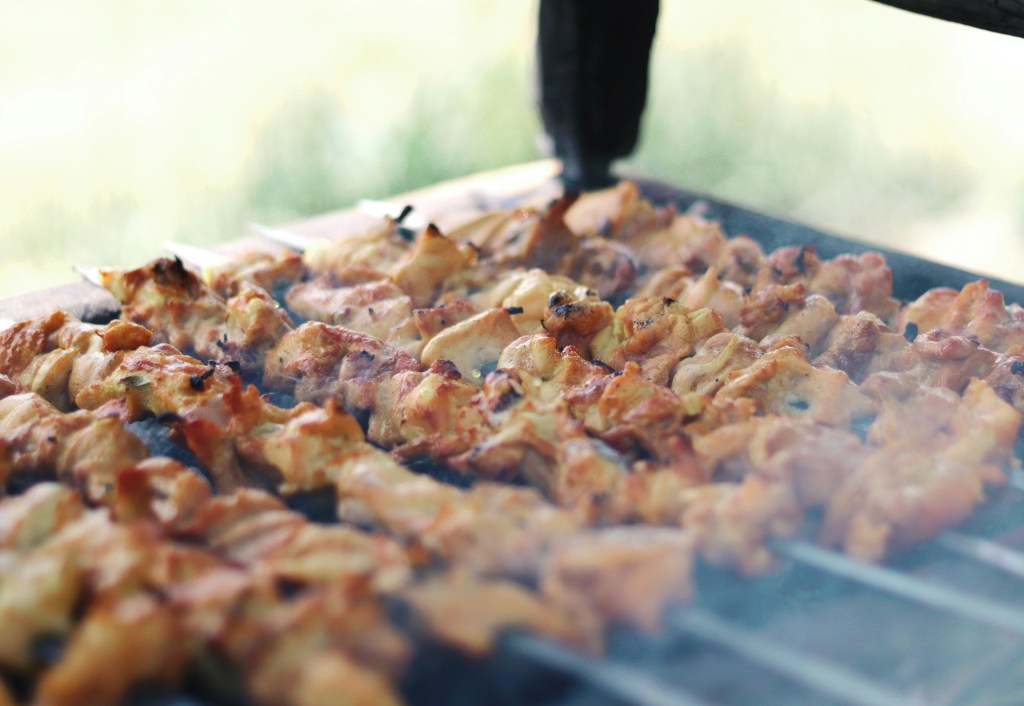
Curious Kebab has its kitchen grill area visible through large glass windows that we can see as we approach. The windows display rows of sword-like skewers with ground lamb pressed on them and narrower skewers of chicken or beef chunks. There are also skewers lined up of bright red tomatoes. We can also see the furnace grill built into the back wall where the meat is cooked. We can see the small crew of two or three who work in this area, chopping vegetables, preparing the meat, and turning over skewers on the grill. This is usually where the man himself, Mr. Curious, will spot us.
“My American donkeys!” he will likely holler upon spotting us. Then he’ll come out, laughing, and give us fist bumps with his mincemeat-splattered hands.
This is a running joke between Mr. Curious and me and my friends. Our Central Asian people group finds donkeys downright hilarious and also somewhat disgraceful. The term donkey can be used both as a terrible insult and as an affectionate term, depending on how you are using it and for whom. To tell my best friend he’s a male donkey means I think he is brave and fearless – a Chad in contemporary internet parlance. But call someone a donkey, son of a donkey, and you better be ready for a fight. Mr. Curious, to have fun with all of this, has decorated Curious Kebab with pictures and artwork of donkeys on every wall. Somewhere along the line he started referring to us repeat foreign customers as his American donkeys. Because his eyes light up when he says this, and because he calls himself a donkey as well, it’s clear that for him this is meant as a backhanded term of endearment.
Mr. Curious, after greeting us warmly in his British-accented English, will insist that we go inside and find a spot to sit down. Inside the two small adjoining rooms that make up the restaurant, we’ll look for an open table and crowd around it. Because Curious Kebab makes excellent kebab and is only open for lunch, it’s almost always packed. We’ll need to wave down the server and tell him what we want. I highly recommend the spicy garlic kebab, a skewer of minced lamb meat with garlic and green jalapeño in it. It’s not very spicy by the standards of other cultures but does have a little bit of kick to it. This is the kebab that I and others claim to be the best in the country.
Mr. Curious worked in restaurants in the UK for over a decade and thus became one of the only local chefs willing to use garlic in his grilling, something that gives his kebabs their distinct flavor. This, and the fact that he only uses local sheep, specifically, the special lump of fat they have above their tails that other breeds of sheep don’t have. This fat is mixed in with the kebab meat and gives it a rich, buttery flavor. If you’d rather have chunks of chicken or beef (or liver) you can’t go wrong there either. Even when it comes to these, Mr. Curious’ special marinade sets them apart in terms of tenderness and flavor.
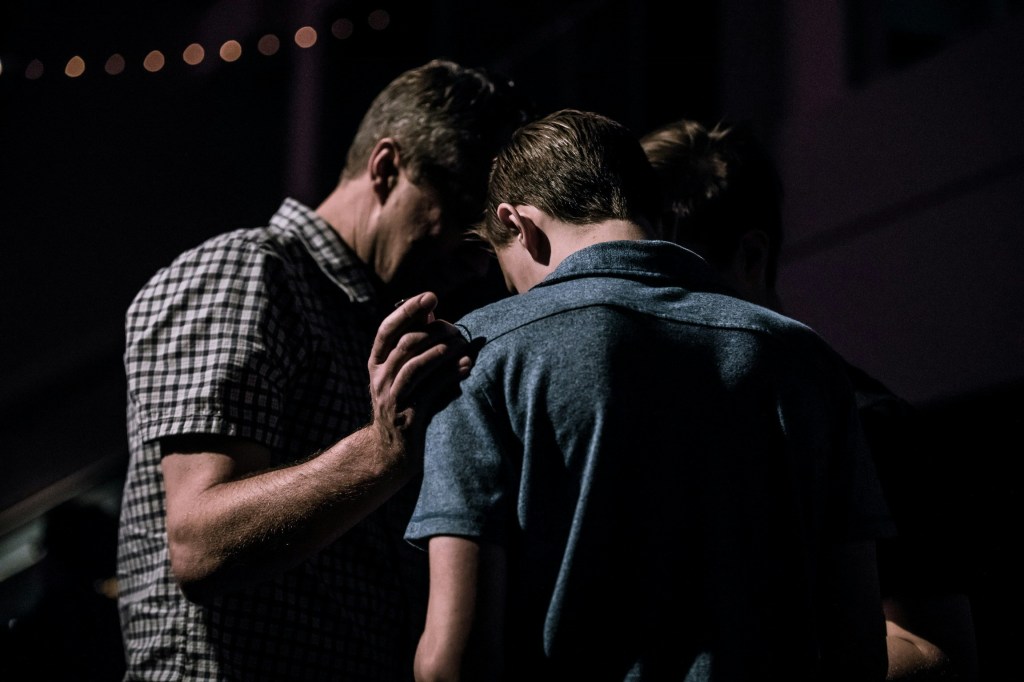
After ordering, a teenage boy will come by and ask if we would like to order any yogurt water to drink with our meal. If you order one, it will arrive in a personal silvery bowl for you to sip it from. Another server will bring fresh flatbread to our table and give each of us a plate of sliced radishes, lemons, onions, and garden herbs. After about ten minutes, our grilled meat will be ready and we’ll be set to eat. We will likely be the only ones in the restaurant that day to bow our heads and thank God for the food, so we’ll probably get a few curious looks as we do this. The other patrons of the restaurant are locals, but from all over the socioeconomic spectrum. Important-looking men in suits eat here, but so do builders, singers, and teachers. Each one seems to glance at the others a little warily, seemingly worried that their favorite hole-in-the-wall might be getting a little too well-known.
The kebab will be delivered on the plate and already off the skewer. But if you ordered chunks of meat it will come still on the skewer, so you’ll need to grab a piece of flatbread and use it to slide the steaming meat off of the skewer and onto your plate. Most locals will then proceed to enjoy their meal by tearing off a soft piece of the flatbread and using it to scoop some meat into their mouths. I like to mix in some onions or herbs into this bread bite as well. The result is fantastic.
During the meal we can speak with a measure of freedom about ministry stuff, though we’ll need to be careful in case there are English speakers eating nearby. But mostly the other patrons seem more interested in guzzling down their delicious lunch than in trying to figure out what the foreigners are talking about. Still, depending on our surroundings we may be able to talk with great freedom or need to wait until we’re somewhere more private to talk about “M” (missions) stuff.
After we’ve enjoyed our meal, Mr. Curious or one of the servers will come by and ask if we’d like to finish off the meal with the customary small glass of black sugary chai. If your stomach can handle anything more at this point, then I always recommend finishing a meal with chai. Another teenage boy will bring it by from the nearby tea house and we can enjoy it either at our table or at a small seating area out in the alley.
Mr. Curious might come by and talk some more once the lunch rush slows down. He likes to share about his philosophy of life, how he doesn’t believe it’s worth it to kill yourself for money. How he could make a killing if he kept Curious Kebab open for dinner also, but he’d rather spend time with his young family and his friends and enjoy a good drink. It’s all very Ecclesiastes. Mr. Curious is one of those locals who I pray to have a chance to talk more with. There are certain things about his bearing and his conversation that make me wonder where he stands spiritually. He’s tasted success working in high-end restaurants in London and turned away from it. He works hard but is not mastered by work, instead preferring to leverage work for things like spending time with his kids. His lifestyle and sense of humor also seem to indicate he’s not really that impressed with Islam but more likely to be of that breed of local men who saw through its hypocrisy a long time ago. If I’m honest, he reminds me of my friend Hama in the early days. One of these days, either myself or one of my colleagues will get to talk with him more about Jesus.
At this point, the meal is finished. We’ll head up to the counter to tally up our bill and Mr. Curious will tell us at least once that he doesn’t want us to pay. But we’ll insist and hand over the money to either him or one of the other grillers. Then, we’ll walk back out into the bazaar, either to explore its many alleys or to wander back up Soapmakers Street to my place.
The bazaar is humming, the tea glasses clinking, the smell of baking bread, roasting meat, and the gutter funk all mixing in the air. You are now one of the privileged few foreigners who have eaten at Curious Kebab, certainly the best kebab in the city – and possibly, one of the best kebabs in the world.
To support our family as we head back to the field, click here.
For my list of recommended books and travel gear, click here.
The Achilles heel of the church planting efforts in our corner of Central Asia has been the absence of faithful and qualified local leaders. Many missionaries have handed over leadership too quickly and men who might have eventually become faithful pastors instead fell into “puffed up conceit and the condemnation of the devil” (1st Tim 3:6). Other local men grew impatient and seized power, position, and ministry money before they were ready. All too often, promising leaders that long-term missionaries were faithfully discipling got lured away when an outside organization showed up looking to hire a local to head up their imported formulas for disciple-making movements. Persecution and burnout have also played their role in running off local leaders.
Were you to diagram it, you’d see four stages local believing men go through. First, there’s the new believer stage. This is the stage with the highest numbers. Next is the maturing disciple stage. A good number make it from stage one to stage two. Then, you have the potential leader stage. There’s a smaller number of men in this stage, but they are very encouraging men of vision and potential. But the fourth stage is that of a qualified and faithful leader. Almost no one has passed that last threshold.
This week Darius* was voted in as the first local elder of our church back in Central Asia. According to one of our colleagues there, the local believers were engaged, asked thoughtful questions of the elder candidates, then prayed hard for the two new pastors after voting them in. Darius and one of our other teammates have been in an elder-in-training season for about a year and a half, a development partially prompted by my family’s unexpected departure from the field. Now they are the very first elders to be tested and voted in congregationally. It’s taken seven and a half years for this to happen, seven and a half years for us to at last see a local man raised up for pastoral ministry.
This church was birthed at a Christmas party in December of 2016. Frustrated that none of the isolated local believers were willing to attend the house church services we were offering in their language, we experimented by inviting them to a Christmas party – one that involved teaching from the word, worship songs, and some prayer. Some of the very same believers who refused to come to a house church service told us how much they had enjoyed the teaching, songs, and prayer at the Christmas party. We invited them back for another gathering the week after – and at some point broke the news to them that what they were enjoying were in fact the basic elements of church. Once they had tasted it, they weren’t nearly as reticent to come back.
But that first group didn’t exactly result in a church. Hama and Tara soon fled the country. One man lived too far away to attend more than quarterly and another proved not to be a believer. We had a very explosive falling out with Hamid after we held firm on the exclusivity of Christ, so as far as we knew he was gone for good. Only a single gal who would later turn out to be the daughter of a spy and Harry would gather with us somewhat regularly – and Harry inconsistently because of pressure from his violent and conservative tribe. Six months into every other week producing no local attendees, and we almost pulled the plug on the whole thing.
Thankfully, we just barely decided on continuing to meet, believing that if the locals didn’t know how to gather in a steady, weekly fashion, then we’d just have to model for them what that looks like. Every week we’d all text and call our own small networks of isolated local believers and seekers we were studying the Bible with. And every week our team would wait anxiously, chai and sunflower seeds set out and ready, hoping for maybe two or three locals to show up this week.
The turning point came when Ahab’s family started attending regularly. Finally, we gained some momentum and averaged about six to ten locals joining us every week in Ahab’s house, where we had moved the meeting. Unfortunately, as I’ve recently written about, Ahab proved to be a very dangerous wolf in sheep’s clothing. Yet God was still working even as that danger lurked. During that season Mr. Talent and Patty and Frank came to faith and went under the water on a freezing January day. By spring 2018, we were seeing several dozen locals gathering every week, Harry and Ahab were seen as potential elders-in-training, and we thought we were in the clear – a church was being born before our eyes.
Then Ahab almost blew it all up. We extracted the church from his house and moved the meetings into the international church building. Only five or six of the believers stuck with us, but we were encouraged that there was still any church left at all. It was in this season of damage control that we met Darius and he came to faith and was baptized. He was, amazingly, captivated by the beauty of the church – the traumatized group of local believers and foreigners who had just barely survived a wolf attack.
This was when my family transitioned to the States for a season and then back to a different city in Central Asia. But during the two years that we were gone, the church continued to grow under the leadership of our colleagues, in spite of serious opposition. During this time, it was raided once by the security police and then later experienced another implosion due to another attendee who was some kind of spy from the militant regime to our East. Harry had been appointed a formal elder in training in this season and we had high hopes that he would be our first local leader. Sadly, this implosion and its relational fallout led to his leaving the church for the next year and a half.
When we eventually moved back to help this church in 2021, the church had once again entered a period of steady growth. Alan and others came to faith and Adam was rescued from his crippling schizophrenia. Our team realized that it was time to go official. We had been a church with informal membership and other structures for a few years by that point. Now it was time to step into the fulness of the Bible’s vision for a local church. And that meant formalizing membership and drafting a Central Asian church covenant. Shortly before we once again left in late 2022, the church had covenanted together and was openly committed to pursuing all twelve characteristics of a healthy church.
One of those characteristics is biblical leadership. This means seeing local elders and deacons raised up who are qualified according to passages like 1st Timothy 3 and Titus 1. A few other men and I have functioned as temporary lowercase-A-apostolic elders for this church body up until now. But the goal was always to work ourselves out of a job. It just took much longer than we thought it would. I once heard a local pastor in a neighboring country say that in their context it took about seven years for a man who has come to faith from a Muslim background to be discipled and mature enough to lead in the church. So far this fits with our experience as well.
For several years we had been hoping that Darius would be the first local pastor of our church. But just like every other man who makes it into the potential leader phase, the attacks came – potent and often. He was approached by other organizations asking him why his church wasn’t making him a leader yet, why they weren’t paying him a ministry salary yet, and why he didn’t consider aligning with someone else who would recognize his clear leadership gifts. It was a hard fight, but Darius resisted these enticements one after another. He also hung in there through numerous bouts of cross-cultural conflict with us, his mentors. By God’s grace, he was able to see our heart for him, that we would be delighted for him to lead – but only at the right time and in the right way. And unlike so many other potential leaders, Darius chose the harder and healthier path, the path of humility (1 Pet 5:6).
My family’s departure in late 2022 sped things up a little bit, as it left only one teammate pastoring a still messy and growing church on his own. We knew this was going to be too much, so the plan was hatched to bring Darius and another newer teammate into official elder-in-training roles. The past year and a half have demonstrated that God has indeed given these brothers the knowledge, the gifts, and especially the character to be spiritual shepherds. This was joyfully and soberly affirmed this week by the members of the church.
It took seven and a half years for the first qualified local pastor to be raised up. But we truly believe that this is one of the most important keys to seeing healthy local churches planted that endure – and that go on to reach their own people and others with the gospel. So, even though seven and a half years has been quite the messy and costly investment, it has been, without a doubt, entirely worth it.
Darius is the first. May countless others come after him.
To support our family as we head back to the field, click here.
For my list of recommended books and travel gear, click here.
I preached at a partner church this week on Daniel 7:1-14. The worship pastor did an excellent job of choosing songs with rich connections to that passage. This was one of them. CityAlight is probably not new to many of you, but I continue to appreciate their particular and consistent blend of good music, rich lyrics, and melodies that can be both sung congregationally as well as blasted on a family road trip.
The universal and eternal rule of the Ancient of Days (that he gives to the Son of Man) means we can have a posture of trust, confidence, and mission as the beastly kingdoms of this age rise and fall. It also means that we have a solid anchor and hope for our core longings for “glory, honor, and immortality,” (Rom 2:7).
These truths lead to a people characterized by worship.
To support our family as we head back to the field, click here.
For my list of recommended books and travel gear, click here.
Have your church’s discipleship classes ever focused on what it means to be a faithful Christian patron? Or on how to restore a household’s honor when a daughter has brought shame on the family through sexual impropriety? Or on how to shape the future destiny of your child, including whether buried umbilical cords have any influence on this?
For most, if not all of my readers, the answer would be no. But I’ll bet your church has had classes or studies on the Bible’s view of gender and sexuality, how Christians should engage in politics, and how Christians should think about retirement.
It’s no surprise that the first topics I listed haven’t featured in the classes your church has offered or in the Christian books you’ve read. They’re simply not pressing issues for the Church in the West – if they are even on the radar at all. And there’s nothing wrong with that. It’s merely a reflection of the particular slice of history and culture where Western Christians find themselves. But Western Christians are living in a time and culture where there’s widespread gender confusion, Christian participation and influence in elections, and individualistic retirement planning. Accordingly, our Christian resources reflect these issues.
When we move back to Central Asia this summer, my new role will be focused on creating and translating solid resources in our people group’s languages. The aim is for these resources to be both robustly biblical and deeply contextual, and in this way to serve local believers, their leaders, and the missionaries who are working among them. We now have a full or partial Bible in several of our languages, and there also are a good number of evangelistic resources both in print and online. What is lacking is content that focuses on building up the church.
In general, I’ve been chewing on two broad categories of resources: global vs. local. There are resources that every Christian in every age and culture needs. These would be universal or global resources. For example, resources in systematic or biblical theology that help Christians to understand what the Bible teaches about God, about the gospel, about the Church, and about God’s plan of redemption throughout the ages. There are also the universally-relevant areas of practical theology that help Christians apply the Bible to things like parenting, marriage, and work. These resources are, to a large extent, timeless, even if the examples and applications used might be more culture-specific.
Think of how impactful the Westminster catechism has been on global Christianity. Or, the broad appeal a book like Pilgrim’s Progress has had over the centuries and around the world. It’s been easy for Christians for four centuries to identify with Christian and his journey toward the Celestial City and the many common struggles that he faces, such as sin, doubt, complacency, despair, and death.
Every people group needs these kinds of global resources. But every people also needs local resources, resources that take aim at the unique strengths, weaknesses, and questions of a given culture. These resources greatly serve believers because their applications are so specific to the world of their target audience.
Our focus people group is very strong in hospitality. But their hospitality is done from the wrong motives – and only extended to those who are existing or possible patrons or clients. This means that local believers need resources that will explicitly point out how biblical hospitality should be done from a gospel motivation and extended toward even those who cannot repay the hospitality through some kind of future loyalty or other service. We have some great resources in the West that lay out a practical theology of hospitality. But how many of them will engage this activity through the lens of a society that relies on hospitality to build its patronage network and social safety net?
Our focus people group also oppresses women in some very dark ways. The oppression of women may be a global issue, but our local believers need resources that will argue directly against its local forms, such as female circumcision of babies, wife-beating on the marriage night to establish a husband’s authority, and honor killings as a response to sexual misconduct. Translated Western resources on biblical manhood and womanhood will cover the principles that oppose practices like these but will not address the practices themselves directly.
The need is to pursue both kinds of resources at the same time. All local churches need universal resources that teach them timeless doctrine and universal principles of Christian conduct. But all local churches also need local resources that will help them wrestle with the particular spirit of their age.
Sometimes these resources end up doing both very well. Augustine’s City of God, for example, was written to argue that it was not Christianity’s fault that Rome had been sacked by the barbarians. This was a particular question hotly debated in the late Roman world. But in doing this, Augustine went on to write about the theology of the City of God and the City of Man and how they are entangled and in conflict in all societies in this age. Augustine’s understanding of the spiritual city of God and its peculiar relationship with the City of Man still serves me very well in early 21st-century America, even though I am so far removed from Augustine’s culture and world.
I think this should be the goal of all serious Christian resources. We cannot escape culture-specific applications in the resources we create. In fact, we must get specific for the sake of our audience. But we can try to write, record, or film in such a way that the biblical exposition and reasoning we employ might also apply to audiences on the other side of the world – or in some future century. You never know how a faithful book written in past centuries might be the key to unlocking the future church’s way forward in some seemingly unrelated controversy.
God’s truth is universal, there’s nothing new under the sun, and yet every generation of believers is also unique. So, we will aim for both – universal and local. And trust that if a resource serves the church well for a decade, then that is good. And if it serves it well for 1,500 years, then that is good as well.
To support our family as we head back to the field, click here.
For my list of recommended books and travel gear, click here.
“A.W.? How are ya? Daniel* here. Listen, I’ve got a job offer I want you to consider. Can you come by my office for some tea?”
Daniel was the middle-aged British manager of a five-star hotel in our Central Asian city. He had recently come to faith while attending the international church. I didn’t really know him very well, but I loved his story. It was just like God to bring this British man all the way to our corner of Central Asia for a hotel job so that he could hear the gospel and be born again.
I was not looking for a new job. I was happy and busy working as an English teacher while also engaged in cross-cultural church planting. But I was always on the lookout for good jobs for local believers or for other foreign believers who might move to our city in order to be Christian tentmakers.
After I arrived at the hotel, Daniel greeted me enthusiastically and offered me a chair and a cup of tea. Then he began to explain the situation.
“Right. So our hotel has a close partnership with the UN, given that their office is right next door.”
He indicated out his window to the unmarked building which was nestled into the hillside next to the hotel. So that’s where the UN offices are. I took note, thinking that I might need to visit them at some point if things got bad for certain local believers – something that did eventually prove necessary.
“Their foreign staff live here at the hotel during their six-month assignments. And we take good care of them. So they trust me and occasionally ask for my help with some of their internal workings.”
I nodded, sipping my Earl Grey and wondering where all this was going.
“Well, last month one of the vice presidents for the UN came to visit the UN office here. Problem was, someone dropped the ball at the local office so no driver was sent to pick up this VP – who then had to wait hours before finally being picked up. Well, as you can imagine, she was positively livid and gave the foreign and local staff quite the talking to. Do you know how the UN staff operate?”
I shook my head. In spite of seasons of doing relief and development work, I’d never been directly connected to the UN.
“Well, there’s a complete turnover of the foreign staff every six months. This means that just as the new foreign staff are learning how things are done, they are shipped off to another part of the world. Terrible way to run an organization if you ask me.”
I nodded in agreement.
“So it’s the local long-term staff who really know what’s needed, but of course, they’re the ones without any power to make decisions. Meanwhile, the foreign staff don’t even have time to get their heads on straight. Anyway, after the VP left our city, it was decided among the higher-ups that this type of mistake must never happen again.”
Daniel gave me a look as if he wasn’t sure if I’d believe what he was about to say next.
“They’ve created a new position for a long-term foreign employee to organize their airport pickups – and they’re going to pay this person $10,000 – $12,000 a month. Can you believe that?”
I sat back in my chair. “Wow, why would they pay that much?”
David threw up his hands. “It’s the UN. Who knows? Either way, that VP must have been very angry. But listen, they want me to send them recommendations for this job. It’s fantastic pay, of course. But the work is very very simple. They want someone to stay on top of the UN airport arrivals and oversee a team of local drivers so that all visitors are picked up and dropped off in a timely fashion. And that’s all they want them to do. They seem to be very serious on this point because they kept telling me that whoever they hire needs to completely ignore everything going on with projects and cases and such.”
“They’re even going to test people on this front during the interview,” Daniel continued, “which is why I wanted to meet with you. When you sit down with them they’ll ask you about your interest in the UN’s projects in the city. But you have to act like you know nothing and care nothing about any of it. ‘I don’t really care about food for refugees’ and all that. They’ll probably stage a phone call interruption and then ask you afterward what you overheard in the conversation. You’ll need to ignore it or pretend to ignore it. They’ll use it as a test. They told me if anyone shows the slightest bit of interest in anything other than airport pickups and drop-offs, they’ll absolutely not get hired. Once hired and the driving schedule is set, you’ll have most of the day to read, watch telly, take a nap, whatever. Just don’t poke your nose in anything else going on in the office, and you’ll be all set.”
On hearing this condition, I knew this kind of setup would never work for me, even if I had been interested. I would be way too curious about the different projects going on and way too bored if all I had to do was make sure the airport runs were happening on schedule. But what about solid believing friends back in the US still trying to pay down their student loans? Could be a Godsend for them. Maybe they could use all the extra time to learn the local language and build solid relationships with the local staff?
“It has to be a foreigner? They’re not open to hiring a local?”
He shook his head. “Has to be a foreigner.”
Listen,” Daniel continued, “I wanted to tell you in case you were interested. Or if not, maybe you could give me some good leads. They are really hoping I can help them find someone reliable.”
I thanked Daniel and told him I’d keep in touch if I had some friends who were interested. He promised to keep me updated.
“Just don’t forget,” he told me as I stood to say goodbye. “If you go for the interview, play dumb and uninterested in everything else UN-related – but don’t let them know I told you that,” he said with a wink.
I stood up to go. “See you in church this weekend?”
“Wouldn’t miss it for the world.”
The actual interview process kept getting delayed over the following months, much to the disappointment of those back in the States I’d texted about the job. In the end, it was too good to last. Someone with some sense and power in the UN must have found out about this wildly overpaid new position and shut it down. Good for them. When local staff were only being paid $500 a month to work for the UN, paying a foreigner $12,000 a month to merely arrange airport pickups would have been a stunning example of resource mismanagement – even if we had been able to leverage it for other believers.
Bizarre situations like this remind me that at the end of the day, secular organizations – including the UN – are just collections of people – and people are nothing if not flawed and inconsistent. People make mistakes, get angry, overreact, underpay some people, wildly overpay others, and yet somehow still manage to do important work. A couple of years later, UN lawyers were key in keeping Patty and Frank from getting deported back to the country they’d originally fled from. God can certainly use large international bureaucracies like the UN for his purposes. And they can also be bloated, foolish, and corrupt. They’re not quite the evil entities anti-globalist Christians make them out to be. But neither are they exactly agents of light like my Central Asian friends expect them to be. Rather, they’re somewhere in between.
That means they can at times be leveraged for the kingdom. A well-placed believer working on UN refugee cases in our part of the world can make all the difference for a Christian family needing to flee the country or fight deportation. I’d bet that even a believer organizing airport runs could make a difference.
Who knows? God brought Daniel all the way to Central Asia to be a hotel manager so that he could save him. He just might bring you over so you could do wildly overpaid airport runs. If you were faithful to use that money for the kingdom, then that could be a pretty great story in itself.
To support our family as we head back to the field, click here.
For my list of recommended books and travel gear, click here.
Tonight I was enjoying some fish and chips at a downtown Indianapolis plaza while recovering from a long day of support-raising training. Suddenly, I found myself recruited by strangers to join a team for the Taylor Swift trivia competition about to begin in the plaza. I warned my three enthusiastic new friends that I was one of the worst people they could possibly find for knowing pop music trivia. When it comes to superstars like Taylor Swift, I have very much been living under a rock. Or, as my Central Asian friends say, sleeping in the ear of a bull. And I am okay with that. There are Central Asian idioms to learn, after all.
Alas, the Swifties recruited me anyway. Funnily enough, I did help them get the answer right to the first song Swift ever learned on her guitar. But this was only because anyone who was a teenager beginning to learn the guitar in the 2000s was bound to quickly learn Kiss Me by Sixpence None the Richer. It was easy, catchy, and made you sound much better than you were. This deduction shocked us all by actually being correct and left my much younger teammates (who had been stumped by the question) thoroughly impressed. I also helped them spell the name of Zayn Malik, not because I know anything about him as an artist, but simply because I’ve had Muslim friends named Zayn or Malik. You really never know when two utterly isolated fields of knowledge are going to suddenly intersect.
Anyway, back to Central Asia. “Have you been sleeping in the ear of a bull?” is the kind of idiom someone would throw out when a person is ignorant of something that has become common knowledge to seemingly everyone else. In English, we would say things like “Where have you been?” or “How could you not know that?” or “Have you been living under a rock?” Imagine someone in the US not knowing that America is facing the slow-motion train wreck of Trump vs. Biden 2.0, for example.
My unbelieving Central Asian friends might use this saying when they’re insisting that it’s really the US who controls groups like ISIS as part of its grand puppet master strategy for the Middle East. And my believing local friends might use it when foreign Christians reveal that we don’t really understand what Jesus is talking about with the whole wineskins thing. Their common experience with using goat skins for liquids that ferment makes Jesus’ parable about the kingdom needing new goatskins super straightforward, something everyone surely knows – unless they’ve been asleep under a rock, that is, or in the ear of a bull.
To support our family as we head back to the field, click here.
For my list of recommended books and travel gear, click here.
It’s good for us to remember that affirming the humanity of Jesus is just as important as affirming his divinity. Not only the life of Jesus, but even his titles teach us that he is The Godman – fully human, fully divine.
Like many Christians, when I was growing up I assumed that the title Son of Man emphasized Christ’s humanity and the title Son of God emphasized his divinity. I was very surprised to later learn that I had it somewhat backward. While both titles can teach us of Christ’s humanity and his divinity, Son of God emphasizes Christ’s humanity, telling us that Jesus is the true Adam, the true heir of David, the true Israel – all three of whom are called God’s son in the Scriptures. And Son of Man emphasizes Christ’s divinity by linking Christ directly to the Daniel 7 Son of Man who comes on the clouds of heaven, is worshipped by all the nations, and rules an eternal kingdom. All of those descriptives are shouting in OT imagery and language that this figure in Daniel’s dream is, in fact, divine.
Yet even though Son of Man’s primary emphasis is Christ’s divinity, it truly does have a secondary emphasis that this figure is also human. When the original audience read Daniel’s dream account, they would have understood his “and behold, with the clouds of heaven there came one like a son of man” to mean essentially, “get this, someone who looked like a man came on the clouds.” Son of Man at this time was a phrase that meant human, son of Adam, not all that different from how Aslan uses it when addressing the Pevensies.
The events of Daniel 7 confirm this. What’s going on in the rest of the dream is that Daniel is shown four earthly kingdoms represented as four violent beasts. He is then shown how God, the Ancient of Days, judges them. Then this is where the Son of Man comes in. Whereas the four violent kingdoms are described as like a bipedal wing-clipped lion, like a lopsided bear, like a flying leopard with four heads, and like a mystery monster beast with iron teeth, this next figure is – mercifully – like a man. A Son of Man comes and is given dominion over the beasts. Sounds a lot like the creation account.
This connection to creation and the phrase, Son of Man, is made explicitly in Psalm 8.
	[3] When I look at your heavens, the work of your fingers,
		the moon and the stars, which you have set in place,
	[4] what is man that you are mindful of him,
		and the son of man that you care for him?

	[5] Yet you have made him a little lower than the heavenly beings
		and crowned him with glory and honor.
	[6] You have given him dominion over the works of your hands;
		you have put all things under his feet,
	[7] all sheep and oxen,
		and also the beasts of the field,
	[8] the birds of the heavens, and the fish of the sea,
		whatever passes along the paths of the seas. (ESV)
Just as Adam and the Son of Adam/Son of Man were given dominion over the beasts of the field in Genesis and Psalm 8, so the heavenly Son of Man in Daniel 7 is given dominion over and against the kingdoms of the earth that have become beastly. A contemporary reader of Daniel who knew their Psalms and their Torah would have been picking up on these connections. Son of Man communicates human at least, but a human as he’s meant to be. Perhaps the original audience wondered if this figure in Daniel’s dream might somehow be a new Adam.
There’s also a good possibility that readers of Daniel were also readers of Ezekiel since their ministries were happening at roughly the same time. Anyone who’s ever read Ezekiel can’t help but notice the dozens and dozens of times that God addresses Ezekiel as Son of Man. As a prophet, Ezekiel is sent into exile with his people. He suffers with his people and his acted-out punishment is even viewed as being for his people (Ez 4:4-6). Jim Hamilton* says of Ezekiel, “The role which the prophet has assumed among his people is one of representative, intercessor, and substitute.” It is possible that these kinds of roles of the exiled prophet might also be assigned to the heavenly Son of Man by Daniel. If so, then his identity is to be understood as a man who enters into the suffering of his people and bears their punishment with and for them.
The divine imagery of Daniel 7 can’t be missed. The Son of Man is clearly somehow God, even though he is also somehow distinct from the Ancient of Days. This is why the Sanhedrin freak out when Jesus applies this passage to himself. Yet the Adam and Ezekiel connections are there in Daniel 7 also, secondarily emphasizing the Son of Man’s humanity. In this way, the title Son of Man means divine and it also means human.
The result is a wonderful mystery that must have had the original readers engaging in quite the theological chin-scratching. There’s only one God. Yet this Son of Man figure is clearly divine. And yet he’s also distinct from the Ancient of Days and clearly some kind of human. How??? To echo a question from future centuries, “Who is this Son of Man?”
What a privilege to live in a time when we know exactly who he is.
*Hamilton, With the Clouds of Heaven, p. 150
To support our family as we head back to the field, click here.
For my list of recommended books and travel gear, click here.
Someone must have been praying for us. It was 2 am and I was strangely and suddenly wide awake. The house was silent and cold, so I rolled over to go back to sleep.
Suddenly, I heard the slam of the national electricity turning on and hitting our breaker box. Normally this would be followed by the cheerful chirp of our electric heater unit turning on. It used too many amps to run on the neighborhood generator and so was wired to only work when the limitless government power came on. But this time there was a distinct popping and fizzing noise. There could only be one explanation. Electrical fire.
We can’t predict how we’ll respond in crisis moments like this. When we’re suddenly faced with an emergency we are at the mercy of reflex, reaction, whatever random prep we may have received for said crisis, and the sovereignty of God. Somehow, I had the presence of mind to spring out of bed and into action. I sprinted to our little half kitchen next to the house’s light shaft (a feature in many local homes built to provide more natural light given all the power outages).
On top of the fridge, we had a little imported fire extinguisher covered in Persian script. I grabbed it, pulled the pin as I ran to the breaker box, and let it blast all over the small multicolored fire coming out of our wall. This was the first time I discovered just how messy fire extinguishers are. As the extinguisher sputtered out its final hiss, half the house had been covered with yellowish-grey dust. Yet the fire wasn’t completely out.
I peered into the breaker box and saw small flames still flickering in the innards behind the breakers. Plastic melted and oozed and the little flames flickered and threatened to grow larger again. Suddenly a random bit of trivia came into my mind. Somewhere in the distant past, perhaps while scrolling Facebook circa 2007, I had read that you could use cooking flour to put out kitchen fires. Well, I figured, if it works for cooking fires, it just might work for electrical fires too.
I quickly moved back to the kitchen and rummaged around in the darkness in the cabinet where we kept the flour. But how to get the flour into the intestines of our electrical box? It would need to be propelled somehow. I reached over to the dish drainer and snatched a spoon.
Our electricity was somehow still working and we didn’t dare try to touch the melted and smoking breakers now to turn it off, so we flipped on a couple of lights so that we could see what we were dealing with. We saw a large black scorch mark surrounding the breaker box and trailing up the formerly white plaster wall. I also saw the spoon I had grabbed – it was a little blue plastic toddler spoon.
Suddenly doubting the quality of my tools, I scooped the little spoon down into the flour bag, bit my tongue in concentration, and tried to accurately fling powder through into the gaps between the breakers and wires and back into the little flames in the innards. It was a messy job, but before long I had emptied the small bag of flour and the flames were finally out.
I looked over at my wife, smiling. It had worked. She was crossing her arms and judging me for some reason. Was it the spoon?
“You had to use the expensive American flour instead of the cheap local stuff?”
For the first time, I looked at the flour bag itself. Sure enough, I had grabbed the expensive American import flour, the kind my wife and a teammate had been so excited to find in the local grocery store and which she was probably saving for birthday cakes. The flour that wasn’t resting on the mangled wires like so much dirty snow was in a little pile at the base of the wall.
“Oops… well… the house didn’t burn down!” I said, making my point by smiling and pointing the toddler spoon at her. We stood there in our bedheads, bare feet, and pajamas, looking around through the dusty air, surveying the damage. It certainly could have been much worse. The unlikely trio of the Iranian fire extinguisher, the American flour, and the toddler spoon had successfully extinguished the fire before it had spread to anything else.
Of all the things most likely to kill us while living in Central Asia, I’d rank the electricity as number one. This was in fact the first of several electrical fires we’d have in the following years.
The causes of these fires came in layers. There was the issue of the inconsistent and aging government electricity supply. There were the supplemental neighborhood generators with their fluctuating voltage and parallel wiring systems that electricians often mixed up with the government wires. Then there were the locals who would hook up illegal power cables wherever they wanted like so many strands of a spider web, usually an attempt to get out of paying a bill. The quality of the hardware was lamentable – cheap wires, breakers, conductors, and wall sockets that melted and fried often enough for the missionaries to learn to rank them by most to least likely to burn up during a power surge. Finally, there was the construction of the houses themselves, where rebar inside of cement touched electrical wires and somehow caused even things like tile floors to conduct electrical current.
One American electrician came over on a short-term team and spent a whole three days trying to figure out why our house had live walls and floors and mysteriously dead outlets. In the end, he threw his hands up in defeat. Even now I can remember the feeling of sticking my hand into the washing machine and feeling a small current coming through the soggy clothes. One of our colleagues was even thrown across his roof as he tried to repair his swamp cooler (Praise God, he was okay).
When people hear about our corner of Central Asia they want to ask us about the dangers posed by wars, terrorism, crime, and persecution. They’d never guess that all of these dangers are not really that bad compared to that posed by the dodgy electricity.
Future missionaries, take heed. Learn some electrical skills while you can. Keep fire extinguishers on hand wherever you’re living in the world. And when all else fails, pull out the flour.
Just try not to use the fancy American kind.
***Update: I’ve been advised by someone who has been trained as a firefighter: Do NOT use flour to try to put out a fire like I did or you may experience a flour fireball. Instead, use baking soda/ bicarbonate of soda/ sodium bicarbonate or even salt or dirt as a safer option. Apparently flour can’t burst into flame if it’s not compact enough. Yikes!
To support our family as we head back to the field, click here.
For my list of recommended books and travel gear, click here.
This video from the Great Commission Council speaks about the importance of correctly interpreting Matthew 24:14 for global missions. This verse in context is a promise of the unstoppable gospel of the kingdom, not a call to try to speed up Christ’s return by discovering and implementing new and rapid methodologies.
Are the coming of Christ and the gospel’s preaching to all the nations connected? Yes, but we need to be careful how we understand that connection. My kids want to use this verse to say that it’s not really possible that Jesus could come back tomorrow. But given Jesus’ parables, we know that we must be ready for Jesus to could return at any point and we must be ready for his return to be much delayed. See the series How to Wait for Jesus by Don Carson.
Some missionaries want to use this verse to emphasize speed over depth when it comes to global church planting. But God’s work must be done in God’s way, even if the data and research don’t seem to show that we are making enough impact. Like this definition video says, the promise of Matthew 24:14 helps us to keep trusting that faithful work will somehow result in the fulfillment of this promise, even if we can’t yet see how that is possible. Such is the nature of the kingdom.
A small motley crew of Jewish fishermen, zealots, and tax collectors preaching an offensive message couldn’t possibly saturate the entire Roman and Persian empires within a few generations. And yet that’s exactly what happened.
To support our family as we head back to the field, click here.
For my list of recommended books and travel gear, click here.





 Entrusted to the Dirt