The first time I heard this song it immediately caught my attention. Part of it is the dissonance. The fun and upbeat sound of the song clashes with the seriousness of the lyrics. But those sobering lines also caught my attention for another reason. They reminded me of the destructive effect the truth of the gospel has on the earthly lives of my Central Asian friends who come to faith. By earthly standards, once they come to faith, most are signing up for the complete implosion of their lives – at least for a good many years to come. In the West, few talk about this reality of conversion.
Rosaria Butterfield would be one exception to this. In her powerful memoir of coming to faith out of a LGBTQ background, The Secret Thoughts of an Unlikely Convert, she writes, “In the pages that follow, I share what happened in my private world through what Christians politely call conversion. This word–conversion–is simply too tame and too refined to capture the train wreck that I experienced incoming face-to-face with the living God.”
By the way, if you’ve never read Butterfield’s book, I can’t think of a better way to kick off America’s Pride Month. She’s an excellent writer. I am due for a rereading myself.
While this “train wreck” aspect of the truth is particularly true of those becoming Christians by apostatizing from religions like Islam or the West’s cult of sexuality, it’s something that all Christians eventually know in some measure. The gospel comes after our idols. And the love of God means he will do whatever it takes to rid us of whatever spiritual venom is still running through our veins and to grow us into “the measure of the stature of the fulness of Christ” (Eph 4:13). It can get painful.
The truth will set us free,
But not before it rips your chest out
And not before it puts your back against the wall
There’s a painful coalition
A cardiac collision involved
The truth might set you free
But first it’s gonna set fire to your house
It takes what you’ve been trusting
And breaks it down to nothing at all
That's how it sets you free
To support our family as we head back to the field, click here.
For my list of recommended books and travel gear, click here.
When you live in an area of high desert, wise cultivators of the land learn how to slow the water down. Our corner of Central Asia gets just as much rain as London, but it’s concentrated in two main periods of rainfall, our equivalent of the early rains and the late rains mentioned in the Old Testament. This means that most of the abundant rainwater is lost in runoff and not available during the long periods of dryness.
The more parched and eroded the land is – often due to poor management or abandonment – the worse it gets at retaining the water. But when humans (or beavers in other climes) simply slow the water down with things like small dams, a local ecosystem is transformed. More water remains in the ground, meaning plants stay green longer into the dry summer. Plants grow and develop deeper roots, and thus retain more of the nutrient-rich soil. This in turn leads to even more plant growth, which attracts animals. Quite literally, the desert blooms. If you go on YouTube and search for permaculture projects in Arizona, the Sahel, or the Middle East, you can see some amazing examples of this.
We saw our own example in the traditional courtyard of our previous house in Central Asia. We had a well on the property, so we were able to begin regular watering of the fruit trees and bushes that lined the courtyard walls. We slowly planted more and more herbs and small trees in this border area and eventually planted grass in the center yard areas as well. In spite of the intense heat, the plants flourished now that they had regular access to water and weeding. Olives, pomegranates, figs, loquats, grape vines, rosemary, lavender, roses, tequila plants, and lavender all grew happily. And the animal life followed. By the end, our courtyard was home to scurrying geckos, croaking toads, chirping crickets, scampering mice, and cooing pigeons. Our house was surrounded by cement city, but our courtyard was a little green oasis. In its old stone walls, it had dirt, water, and humans who sought to cultivate the land. So it came to life.
Those living in Central Asia and the Middle East have long known the importance of using water effectively. Persians built underground water tunnels to their cities and royal gardens, patches of cultivated green where our word for paradise finds its origins. Assyrian emperors like Sennacherib built aqueducts to bring the waters of the mountains to Nineveh to water his palace gardens (likely the true location of the famed hanging gardens of “Babylon”). For centuries, careful systems of irrigation kept the fertile crescent, well, fertile. When particularly brutal conquerors came through and slaughtered local populations, as the Mongols did, the land itself “died” a little more as these careful water management systems broke down. Modern wars, agriculture, and mismanagement have made these regions some of the most water-endangered places on the planet.
But the water is still there, in the rain and in the mountain streams. So, much of the land could be resurrected if the government and the locals simply prioritized wise ways to slow the water down. To this day, I don’t understand why the rainwater collection tanks which were standard for my childhood homes in Melanesia are not used in our part of Central Asia. Or, why policies like those of Bermuda roofs are not adopted to mandate roof construction so that more of the precious rain can be collected? Wells we have aplenty, but they are systematically exhausting the groundwater reservoirs. And we have some large dams, mainly for hydroelectricity, but very few of the smaller rock dams or other permaculture practices are used that can make one valley sustainably green, while the next valley over is parched and brown.
Among the countless good works that missionaries in our region could do to commend the gospel message, there is much room for Christians who know how to make the desert bloom. Our locals love their land and delight in their little patches of greenery in a way I’ve seldom seen in the West, so this could be the kind of platform work that locals highly value – and one that buys considerable space for controversial gospel work. Despite my description of our previous courtyard, I am not a natural green thumb or farmer. For me not to kill it, it needs to be simple and hardy. Hence the rosemary and tequila plants. But I know there are many skilled farmer-types out there, some who perhaps have never thought about how a love for the soil and a love for the nations can come together.
However, I recently learned that slowing the water down is not the wise thing to do in every context. In some regions, to care for the land you need to speed the water up. I learned this while visiting some friends who are church planters in Eastern Kentucky, where they have too much water. There, to have land that you can cultivate, you need to get yourself some very effective drainage. Otherwise, the ground is simply waterlogged clay. Rather than dams, they need ditches, and lots of them. In Eastern Kentucky, wisdom calls for speeding up the water.
In all of this, I am reminded of the different emphases of different seasons and places of ministry. I have written long and often about the need to slow down when it comes to missions and church planting in Central Asia. Spiritually speaking, it is a desert. To resurrect the church in these regions we need to take the time to learn the language and culture, to invest years on end in discipleship and character development in order to see qualified leaders raised up. In the harsh summer sun of Islam and persecution, rapid church planting and movement methodology have led to churches that quickly bloom and just as quickly wither like the grass on the traditional mud rooftops. Instead, we need churches that are like olive and oak trees. Yes, they are slow-growing. But they are hardy – and they can last and steadily multiply for a thousand years.
But this does not mean that there is never a time and a place for speed in missions and church planting. Any student of church history will know that there really are seasons of remarkable spiritual awakening. Even in my own parent’s story, I hear an echo of this. They were missionaries in Melanesia and were supposed to be church planters. But they never planted any churches because the churches were planting themselves. Instead, they invested in eight different churches over a short period, providing interim leadership until a local pastor could be found. Relatively speaking, they moved fast. They still sought to disciple believers faithfully, but the pace of ministry there was simply running at a faster rate than we have seen in Central Asia.
That being said, one key mistake of contemporary missions is the assumption that we can reverse engineer movements of the Spirit and replicate them anywhere on the mission field. It’s Finney all over again, “Revival is a work of man” and all that. But the other ditch is to live as if revival or awakening might never break out in our ministry context. The steady wisdom of most ministry contexts says to slow the water down. But wisdom also says that this might not always be the case. What if you find yourself in a metaphorical Eastern Kentucky?
Just because man-made revivalism is out there doesn’t mean that we should discount the possibility of genuine revival – or a genuine movement. When the Spirit is truly moving, when it’s a time of spiritual deluge, we should have a category for moving faster than we would otherwise be comfortable with. I imagine the disciples were a little uncomfortable with what they were required to do when they had 3,000 or 5,000 a day becoming believers during and just after Pentecost. “Jesus spent three and half slow years with us, are we really ready to vouch for this pilgrim from Cyrene who only just heard the good news of the kingdom for the first time this week?”
Yet another time to move fast is when it’s clear that a given person or church is already saturated with the truth. When this is the case, it’s no longer time to sit and soak. Instead, it’s time to get up and start pouring out. For some of our Western churches that are awash in rich resources and mature disciples, the need of the hour is to start asking questions like, “What would it take for us to send a church planter out every year?”
We need to rightly discern the context and the season of ministry in which we find ourselves. Much of the world is the spiritual equivalent of desert. We need to figure out how to slow the water down. But other places and seasons may call for an unusual burst of speed, for helping the water to move even more quickly. The key here is to not presume that we can somehow produce this latter season, yet always to keep faith alive that we could see a season or two like this if we continue in faithfulness.
As for me and the literal land, don’t be surprised if you find me someday building some small rock dams across the stream of a desert valley. Even for those of us who are not wired to be gardeners, there’s something ancient that lingers from that old great-grandpa Adam. Deep down in our bones, we are made to make the desert bloom.
To support our family as we head back to the field, click here.
For my list of recommended books and travel gear, click here.
How can we in the West justify our embarrassing riches of good books in light of the global theological famine?
I remember first wrestling with this question as an undergrad student at Southern Seminary. Financially speaking, I was a broke college student. But when it came to my personal theological library, when it came to my riches measured in books, I was fast becoming a millionaire.
In addition to the many good books I was required to own for classes and those that I chose to acquire, I also had easy access to a great bookstore on campus and a massive theological library. And I lived in a city that was positively chock-full of other bookstores and public libraries.
Having grown up in Melanesia and having already served a year among the unreached in Central Asia, I knew that this was not normal for most Christians around the world and throughout history. At the time, the believers I knew in Central Asia had less than ten Christian books available to them in their language. I knew that most pastors around the world served without what we could consider the most basic tools of pastoral ministry – access to good commentaries and books on theology and Christian living.
I wondered if we were engaging in some kind of gluttony, living as we were in a continual feast of the printed word when so many of our brothers and sisters around the world were starving. Were we guilty for our continual accumulation, for our full bookshelves lined with authors like Calvin, Hoekema, Augustine, Piper, Lewis, Dever, Goldsworthy, Keller, Stott, and so many others?
Ultimately, the Bible’s instructions for the rich in this present age provided the answer. Essentially, it is not wrong to be a rich Christian. But it is wrong to be a rich Christian who is not generous, who does not seek to leverage their relative wealth to love others.
As for the rich in this present age, charge them not to be haughty, nor to set their hopes on the uncertainty of riches, but on God, who richly provides us with everything to enjoy. They are to do good, to be rich in good works, to be generous and ready to share, thus storing up treasure for themselves as a good foundation for the future, so that they may take hold of that which is truly life.
-1 Timothy 6:17–19
According to this passage and others, those of us who were rich in Christian books are to not take pride in them, to not set our hopes on them (but instead on God), and to be generous and ready to share our book wealth with others. The presence of wealth is not unChristian, but the presence of idolatry is – and the absence of generosity.
There may be some Christians out there whose hope and pride are so bound up in their theological libraries that they need to give it all away. But just as with monetary wealth, for most of us, this is not the best way to love others. Most Christians are not called to “sell all we have and give to the poor,” but rather to steward our wealth through sacrificial giving. Vows of poverty are worthless if they are not for the sake of love (1 Cor 13). Love is the determining factor in whether or not we keep or give away our wealth. Even itinerant Paul owned a personal library of parchments (2 Tim 4:13).
Can you love and serve your family, your friends, and your church by keeping your books? Then keep them, and with a good conscience. But also, remember those who are starving. An active involvement in helping those in famine is an important way that we can continue to feast with a good conscience.
These conversations back in college eventually led some of my friends to set up a bookshelf in our campus bookstore where students and others could donate books for Bible colleges in other countries. Other efforts, such as the ESV’s Global Study Bible were also taking off in those years. I’ve always loved seeing the Western church get serious about resourcing the global church with printed gold.
For me, this passion has never fully gone away, as even my new role in Central Asia is going to focus on translating and creating good articles, books, and other resources for local-language churches. I am also reminded of these things as I once again sort through my books and try to decide which I will haul with me to the other side of the world, which I will store, and which I will give away.
Are you also rich in books in this present age? Want to know of a good opportunity to be generous with that particular kind of wealth? Today I read of the opportunity to send 30,000 good books for a groundbreaking African theological library. Central Africa Baptist University has been gifted a shipping container that can hold 30,000 books. These books will help establish the Paul Kasonga Theological Library, a vital resource for a continent awash in the prosperity gospel.
We can send our gently-used theology books to help stock this library or give funds directly for them to purchase the books they need. What a great opportunity for us who are so wealthy in books to be “generous and ready to share.”
We are not the first generation of Christians to be so book wealthy when much of the world lives in theological famine. The Irish Christians of the early Middle Ages faced a similar predicament. Their answer was a missionary one. Once considered the ends of the earth, they now possessed the vast majority of the books, libraries, and scholars of the Western Christian world. So, they left their shores and brought Christianity and its books back to a Europe overrun with paganism and illiteracy. In the process, they forever changed the future of Christianity and even Western civilization.
When it comes to our own fabulous wealth of good books, may we be like those old Irish monks. We are rich in books in this present age. Let’s leverage those riches.
To support our family as we head back to the field, click here.
For my list of recommended books and travel gear, click here.
This local proverb speaks about necessary mess. Valuable work brings certain costs and messes with it. This saying refers to someone who wants the reward of catching a fish, but without the unpleasant wetness that tends to come along with it. “Getting your hands dirty,” and “You can’t make an omelet without breaking a few eggs” are close English equivalents to this idea. Or, simply, “No pain, no gain.”
This proverb would be used when someone is excited about a certain outcome but then balks at the cost required to achieve it. We’ve all seen it. Someone is totally with us as we cast vision and talk about the amazing potential of a certain work. But then we talk about what it actually takes to get there, how long it’s going to take – and we’ve lost them.
Proverbs like this are important for reminding us about the nature of reality. We are prone to illusions that we can easily gain wealth, influence, or ministry success without much hard work. But we live in a post-fall world. By and large, good fruit only comes through painful toil and sweat equity, by getting our feet wet. This applies to fruit in both the natural and spiritual realms. Starting a business is very hard. So is planting a church. Anyone who says otherwise is selling something.
Solomon also speaks of necessary mess – and how it can be evidence of good work being done. “Where there are no oxen, the manger is clean, but abundant crops come by the strength of the ox” (Prov 14:4). The logic is clear. If you want abundant crops, you need oxen. And oxen make messes.
Clean mangers and silver bullet ministry methods may sound great. But the kind of fruit that counts is costly – and yes, often very messy too.
To support our family as we head back to the field, click here.
For my list of recommended books and travel gear, click here.
This proverb comes from Virgil’s Aeneid, referring to that infamous Trojan horse incident. I’m sure this proverb was true enough once, at least back in the day when Greeks were a dominant power in the Mediterranean world. Even now, when a military power leads with a gift, it’s wise to think twice before receiving it. You never know how that gift (or development loan) might be turned against your people – or at least what strings may be attached. This is just as true of today’s global powers as it was 2,500 years ago.
When it comes to missions, it could also be said, “Beware of missionaries wielding proverbs.” This is because, as we’ve come to see, local proverbs can be a great way to smuggle biblical truth past the defensive walls that might exist in the local pagan worldview. The difference is the intent of the incursion. The Greeks snuck in to conquer. We sneak in to serve.
As we’ve been sharing in front of different groups about heading back to Central Asia, I’ve repeatedly told the story of how finding a local proverb on trust greatly helped our team overseas. You see, the local believers in our corner of Central Asia have major trust issues. “We don’t trust any locals we didn’t grow up with” is the typical position. Local believers will hold firm on this, even when it comes to interacting with others who profess Christ. Often an introduction of one local believer to another will later be followed by each separately approaching us, quietly warning us not to trust the person we just introduced them to because they are likely a “bad” person. This dynamic makes church planting and even small group Bible study formation next to impossible, unless it’s made up of people who grew up together.
In these areas, the worldview of our people group is very rigid and binary. People are either good or bad, trustworthy or not. If you grew up with them or somehow otherwise know in great detail that they come from a “good” and trustworthy extended family, you can trust them. Otherwise, you can never trust them. Trustworthiness is something you either have or don’t have. It’s not understood as something that can be granted or lost in degrees or something that can be incrementally built. At least this is how most locals think and behave in their day-to-day lives.
However, this is where a local proverb has proved so incredibly helpful. “Travel and business are a gold appraisal tool.” Paraphrased, this means “Through travel and business a person’s character is revealed.” In this proverb, we see the ancestral wisdom of our people saying you can come to trust someone by going on a long trip with them or by going into business with them. When we started using this proverb in response to a local believer insisting he’d never trust another local believer, the conversations noticeably changed.
Before, it was like we hit a wall, a locked gate. But when we used this proverb by way of appeal, it was like we were somehow smuggled in behind the defenses – and were then able to turn the conversation to how the Bible speaks of trustworthiness. As the local believer then scratched their chin and admitted, “We do say that, don’t we?” we could tell them that the Bible’s questions for ‘trustworthy or not’ sound like, “Does someone confess the gospel? Does their life exhibit the fruit of the Spirit? Are they a member of a healthy church?” In this way, this local proverb became our Trojan Horse by which we smuggled in biblical categories that were otherwise being rejected out of hand. Today, a local church exists of believers who did not grow up together – yet who have come to trust one another (at least the core members, anyway).
This miracle is, of course, a work of the Spirit. And yet the Spirit uses means. And one of the surprising means that he used was a proverb that our local friends knew and believed, but which they were mostly forgetting about in favor of a more prominent idea. We had somehow stumbled on a place of inconsistency in the local culture where one area of inherited wisdom contradicted another area of inherited wisdom. When in response to “Don’t trust anyone you didn’t grow up with,” we countered with “Travel and business builds trust,” this seemed to produce a worldview short-circuit of sorts. These crossed wires created just enough space to shift the conversation into the creation of new, biblical categories.
It doesn’t always work, of course. Cultural beliefs and habits go deep, even if you’ve got some punchy proverbs on your side. But for me, this story illustrates the potential of this kind of work. We’ve not really ever laid out an organized biblical theology of trust and trustworthiness for local believers. We’ve only made very initial attempts to do this, somehow gaining far more ground from this lone proverb and brief references to Scripture than we ever thought we could. Imagine what might result if we were to lay out for local believers, on the one hand, a detailed picture of what their culture believes about trust; and then on the other hand, the big picture of what the Bible has to say. Then after comparing and contrasting, thanking God for the overlap and lamenting the deficiencies, we break it all down into new, biblically-faithful proverbs that they can carry with them and use in their daily lives.
All of this reminds me of Paul in Acts 17 and Titus 1. In both places, he uses the pagan poet Epimenides of Crete to illustrate and create space for his difficult biblical message. The line “For we are indeed his offspring” is used to prepare Paul’s Athenian audience for his point that God is not an idol, but a living being who demands repentance. And “Cretans are always liars, evil beasts, lazy gluttons” is used to strengthen Titus’ hand in shutting down all the insubordinate, empty, and deceitful talk going on among the churches in Crete. Some Areopagites would be helped to hear Paul because he appealed to a poet they respected from a nearby nation. And hopefully, some Cretans might likewise hear Paul/Titus referencing the same man, their native poet, and stop being such blockheads.
Even Jesus appeals to local oral tradition when it agrees with and supports his teaching. “For here the saying holds true, ‘One sows and another reaps.’ I sent you to reap that for which you did not labor. Others have labored, and you have entered into their labor.” (John 4:37-38)
The takeaway from all of this is that there will often be some local wisdom that is on our side – sayings or proverbs or poets that can function as Trojan horses for gospel servants who hope to get in behind the defenses and gain a hearing for biblical truth. We have found proverbs like “travel and business” to be immensely helpful in gaining a hearing for biblical truth. Perhaps even deeper and more thorough work in these directions could yield even more encouraging fruit.
Beware missionaries wielding proverbs? Well, if you are a servant of the enemy, then yes. Whether proverbs, poets, or otherwise, it seems that God has planted Trojan horses like these that can get through even the thickest of walls.
To support our family as we head back to the field, click here.
For my list of recommended books and travel gear, click here.
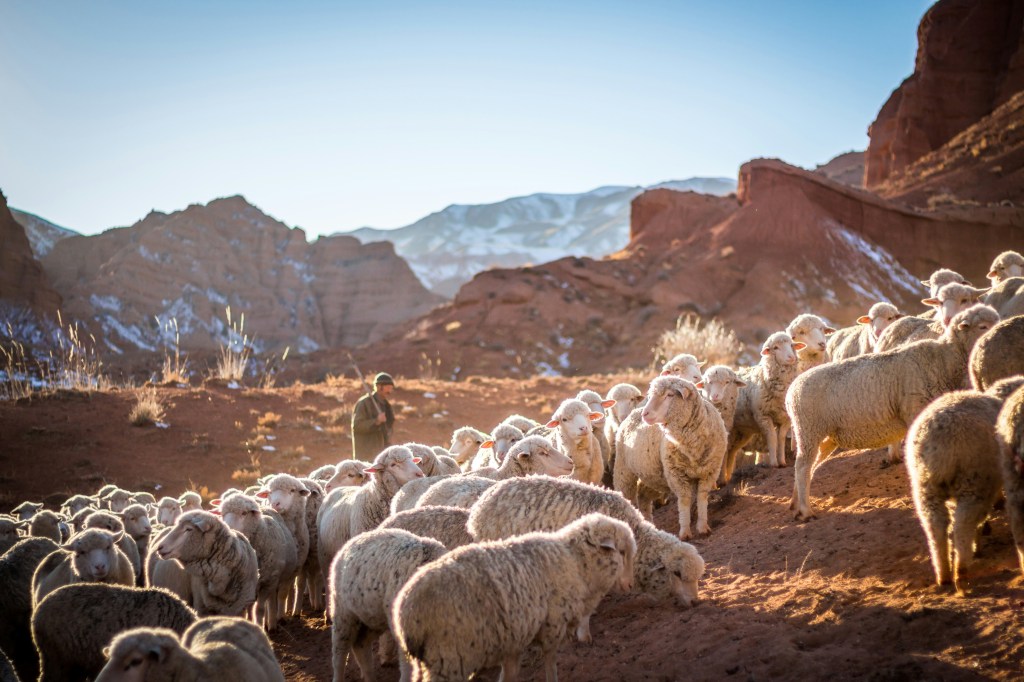
The sovereignty of Jesus is so complete that even wolf attacks ultimately serve the church. Of course, for the king who turned the enemy’s greatest weapon, death, against him, this is par for the course. Wolves aim to serve themselves by causing great carnage, “tearing the prey, shedding blood, destroying lives to get dishonest gain” (Ez 22:27). But in the end, even they serve the advance of the Church.
What is one way that they do this? By exposing who is a true shepherd – and who is a hired hand.
I am the good shepherd. The good shepherd lays down his life for the sheep. He who is a hired hand and not a shepherd, who does not own the sheep, sees the wolf coming and leaves the sheep and flees, and the wolf snatches them and scatters them. He flees because he is a hired hand and cares nothing for the sheep.
-John 10:11–13
Jesus tells us here that his willingness to lay his life down for his sheep is the proof that he is the Good Shepherd. He cares so much for the sheep that he is not only willing but will in fact give up his life for them. This differentiates Jesus from the other self-serving religious leaders who run when faced with wolves because they don’t truly love the sheep, but themselves. Even when the wolves in sheep’s clothing (Judas, the authorities, and Satan through them) attack Jesus, he will not flee. He will face the wolf, even though it means losing his life.
Pastors of the Church, undershepherds, are called to walk in the footsteps of this Good Shepherd.
… shepherd the flock of God that is among you, exercising oversight, not under compulsion, but willingly, as God would have you; not for shameful gain, but eagerly; not domineering over those in your charge, but being examples to the flock. And when the chief Shepherd appears, you will receive the unfading crown of glory.
-1 Peter 5:2–4
This means that just as wolves served to differentiate the Good Shepherd from the hired hands, so they also now expose who is a true undershepherd and who is, at the end of the day, merely in it for personal gain.
The first time I realized this I was trying to respond to a tough question from a believing Iranian refugee who was visiting our church in Kentucky. He had questions about the fact that we had a number of pastors on staff who were paid full-time salaries.
“How do I know that they’re not just in it for the money? We have a lot of problems with this and the religious leaders in our culture.”
I had recently been teaching on evangelism from John chapter 10, so the Good Shepherd passage was fresh in my mind during this conversation. But the unexpected question shone the light on an aspect of the passage I had never noticed before. (Sidenote: I love it when this happens. Unexpected questions so often serve to be a goldmine for new insights into the Word.)
“Well, you’ll see that they’re not just in it for the money when things get hard, when the church gets attacked. True pastors will stay and defend the flock, like Jesus the Good Shepherd. Men who are just in it for the money will run. So, you just need to stick around long enough to see what they do when the church comes under attack.”
I stood by this answer, confident that our pastors were the kind of men who would indeed lay down their lives for the sheep if necessary. I didn’t know that in just a few years, I’d have to face a wolf attack myself. And I’d have to wrestle with whether I would stand my ground or run like a kid who’s really only watching these bleaters for the pocket money.
In addition to learning a lot about the nature of wolves during Ahab’s* sneak attack on our church plant, I was also learning about the nature of leaders. My own heart as a leader was being put to the test. Was I a hired hand? Would I stand and fight rather than seek to save my own skin? What about my fellow leaders, would they run? We had suddenly found ourselves in a crucible that would expose us, one way or the other.
I will say this. Everyone who is a Christian leader should strive and pray to be like the Good Shepherd when the wolf comes. We should all pray that on that day we will not turn out to be hired hands. And we should also strive to not be alone but to have a few others with us who will stand back to back, encouraging us to stand our ground, swinging their staffs into the teeth of the predator when it lunges, and pulling it off of us when it’s got its jaws clamped around our thigh.
My fellow leaders and I were caught unprepared when we faced our own wolf. But by the grace of God, eventually, when the deceptions cleared away and the fangs came out, most of us somehow managed to stand our ground and fight. We were tested – and found to not be hired hands, but undershepherds who cared enough for the sheep to at least go down swinging. God is good.
There is a particular kind of trust that develops when you’ve seen a man stand his ground against a wolf. The natural impulse of a believer is to move toward those who defended the sheep even when it was costly. This must be because they remind us of the Chief Shepherd. I do not delight in the carnage of a wolf attack. I get no high from the thrill of a predator suddenly revealed. But I do love seeing a true shepherd’s heart revealed. And the kind of camaraderie that follows when you know you have a brother who will walk with you through the very jaws of death.
Wolves, it turns out, have a particular ministry of exposure. They appeared and exposed the true nature of Jesus. And when they appear in our churches they will in turn expose our own hearts and those of our leaders. This is part of their purpose, seemingly part of why they are allowed to threaten the people of God.
They may think they are out to kill and fill their bellies. But the word of God is clear – even wolves will serve their purpose. Even wolves must the Church.
To support our family as we head back to the field, click here.
For my list of recommended books and travel gear, click here.
This is a very helpful piece from the Great Commission Council on how sending churches and missionaries can better support single missionaries.
Why an article about caring for the single missionary? After all, saints in the church are defined not by marital status, but by their identity as immortal image-bearers of God (Genesis 1:27) and sinners redeemed by Christ for his glory. Since their primary identity is not in being single, why must churches and sending agencies pay particular attention to the needs of single missionaries as a demographic?
Singles represent approximately one-third of missionaries on the field; of these, the majority are women. This means that approximately a quarter of all missionaries are single women. Since God continues to give single missionaries to the church, supporting these workers well is essential to the flourishing of our brothers and sisters and the Church’s mission.
Every missionary and field context is different, but the experience of overseas service has implications in the lives of single missionaries which differ from those who are married. These implications are less visible, so leaders in their local church and mission agency must give careful attention to them, ask good questions, and listen well. Leaders do well to understand the unique experience of single missionaries because doing so serves the church in significant ways.
Read the whole article here and learn about the unique realities singles face on the field, the hindrances to their care, and what it can look like when it’s done well.
I’ve written in the past about some of the reasons why I love having singles on our missionary teams. The church – and the church planting team – is simply stronger and more gifted when Aquilas and Priscillas are working alongside Timothys and Silases.
To support our family as we head back to the field, click here.
For my list of recommended books and travel gear, click here.
In recent months we have been witnesses to a quiet miracle. One of the deacons of our home church almost died when a car hit him while he was riding his bike to work. But God has not only brought him back from the brink of death but also stunned the doctors with the speed of his recovery.
Initially, things didn’t look good. Bryan* suffered dozens of fractures, brain swelling, and lots of internal bleeding. For several weeks it wasn’t clear if he was going to pull through. Bryan was one of the co-leaders of the home group we’ve been a part of during this season, so we had a close-up perspective of how everything was developing.
First, I must say that it is times like this when you truly witness the power of the local church. Our church immediately rallied to provide meals, childcare, and other help for Bryan’s family. The meal schedule was completely filled up for weeks on end within just a couple of hours of it being sent out. And brothers and sisters from the church regularly came by to visit and encourage Bryan and his wife, who was spending most days by her husband’s side in the ICU. Those who doubt the love and power of a local church need to see it in action when there’s some kind of emergency like this.
I was able to visit the ICU several days after the accident. Bryan was mostly under sedation, had a trach in his throat, and was covered in bandages, bruises, dried blood, and splints. At that point he was showing some response to male voices, so his wife encouraged those of us visiting to talk with him and to sing a hymn. I didn’t notice any response during that first visit, but we prayed hard that he would soon be able to breathe on his own as well as fight off the pneumonia that was getting worse. His wife, for her part, was remarkably steady and joyful, clearly being sustained by the prayers of God’s people.
The next time I visited was about a week and a half later. He still had the trach in his throat and looked largely in the same condition, but he was a little more alert. He was off and on able to make eye contact, squeeze hands, and give a thumbs-up. It was heartening to have even this level of basic communication with him again. Amazingly, it seemed like he had pulled through and was going to make it. But he would need many weeks, if not months, of slow recovery.
I came back to see Bryan again one week later. I was stunned. It was his first day sitting up in a recliner chair next to his bed. And he was fully and remarkably conversant, even though it was clear that his injuries were affecting his memory somewhat. Sometimes he would ask the same question he had asked earlier, or get confused about certain details. But the two of us spoke in depth for about an hour and a half. Most of the time was Bryan telling me how encouraged he was by God’s goodness toward him and his family.
Bryan is a chef by profession and in previous seasons we had spoken of this passion of his, how he felt like God had given him a particular delight in making amazing food and serving others in this way. We had even spoken before of how these things might be reflected in the New Heavens and New Earth. How might a chef occupy himself in the new creation? I decided to turn the conversation back toward this topic and to ask Bryan about the first thing he would do in the New Jerusalem after spending time with Jesus face to face. I couldn’t help but laugh at his answer.
“Fresh octopus! I’m going to cook the freshest and most amazing octopus.” Bryan’s blue eyes gleamed and his head shook as he said it. “There’s nothing like it.”
Why not? Who’s to say the New Heavens and New Earth won’t have fresh octopus for those the king has called to be the chefs of his kingdom? And if it can be stunningly delicious in this age, then just imagine the festival of flavors to come with it in the next. I told Bryan that I would gladly take a break from perusing the New Jerusalem library’s history section to join him for this particular seafood of the resurrection.
Just a couple weeks later Bryan was out of the hospital and back home. This past month he’s been able to attend our home group again and we’ve been able to talk about what he remembers about his time in the hospital. He can’t recall most of it, including our conversation about fresh octopus in the resurrection. But he did have a good laugh when I told him about what his answer had been to my question.
The doctors are stunned. Bryan’s body naturally should not have healed in the time that it did. It seems that God responded to the countless prayers being made on his behalf by allowing his healing to take place at 1.5 or 2x speed.
We who are Christians should be overjoyed by this, but we should not be surprised by it. As Lewis points out in his book, Miracles, the creator has certain rights over his creation which means he is free to alter the speed, scale, or direction of the processes he has created whenever he wants to. So water becomes wine instantly, rather than this needing the many months normally required. Storms are calmed at a word, rather than slowly dissipating as the weather system moves on. And the broken bodies of bike-riding deacons heal themselves at rates that confound modern medicine.
One day death itself will move in reverse direction and dry bones will put on flesh and come alive. On that day, it is said that there will be a feast. As for me and Bryan, we’ll be keeping an eye out for a particular dish – freshly prepared octopus.
To support our family as we head back to the field, click here.
For my list of recommended books and travel gear, click here.
They would never see it coming. No class would sneak off for their senior trip during the festive and lucrative Independence Day celebration. Yet that was exactly our plan, at least the first part of it. There were layers to our sneakiness. We would indeed skip out on Independence Day, but then we’d also pass the whole thing off as what was known as a fake senior sneak. Once everyone was convinced it wasn’t the real thing and that we were just spending the night somewhere nearby, we’d get on a plane and be gone for real. It was, in the language of Dune, “a feint within a feint within a feint.”
At our missionary kid school in Melanesia, the senior sneak was a proud annual tradition. Eleventh graders would work hard all year long hosting skate nights, cafe and restaurant nights, selling frozen burger patties, and doing other fundraisers in order to afford one secret and epic senior trip. Since we were living in Melanesia, the options were either to leave our school in the highlands to fly to one of the tropical coastal cities or even to take a trip to Australia. My class opted to stay in-country and go to a beautiful area none of us had ever been to, one famous not only for its peaceful and beautiful beaches but also for a historic WWII naval battle that took place nearby.
We planned to sneak during our school’s Independence Day festival because that was the one day no one would ever suspect. During the festival, each class set up booths and games to raise money for their class projects – picture fundraising activities like grease poles, dunking booths, and fake wedding booths where you could pay to have two very embarrassed classmates “married.” I remember one year cracking up as two mortified students were ceremoniously dressed up in ridiculous costumes and my older brother (the “reverend” that year) pronounced them man and wife, followed by a mournful tune on his trombone.
Anyway, the assumption would be that we’d need to work on Independence Day in order to raise more funds for our class trip. But we must have done a good job in our junior year’s work because these funds weren’t necessary for us to pull off a combined fake sneak and real sneak in one.
Our parade float was the first thing that gave any clue of our intentions that morning. Our float vehicle was a pickup truck. But instead of members of our class riding it in float-themed costumes, the truck bed had a bunch of life-sized cardboard cutouts waving out at the crowd. Each cardboard stand-in was wearing one of our class shirts and had the face of someone from our class glued onto it, grinning mischievously. On the sides and the back of the truck were large signs that read simply, “We Snuck!”
Layer one. The crowd saw the float going around and chuckled. “Clever! But surely they wouldn’t sneak, today of all days.” Slowly, the crowd realized that there were no twelfth graders anywhere. “Did they actually sneak?” By that time we, along with our class advisors, had been smuggled out of the base in big vans, heads down and giggling, trying to make sure that no one who just happened to be on the wrong side of the base that morning would spot our getaway.
Layer two. Once we escaped unnoticed, our destination was the one nice hotel in the nearby provincial capital town, named after the national bird. We would spend the day at “The Bird,” swimming at the pool and enjoying burgers and milkshakes. Meanwhile, our co-conspirators back at the base would spread the word that the seniors had been spotted at the hotel, clearly enjoying an overnight fake sneak. Everyone would laugh and assume that we would be back on base the next morning. But we had packed our bags for an entire week.
Layer three. The next morning, rather than drive back to the base, we drove to the airport and boarded a small Dash 8 plane to make our way to the nation’s capital city. We’d spend a day and a night there. While there, we visited a gold refinery, toured the one TV station in the whole country, and had dinner at a posh seaside restaurant. I remember ordering a massive mud crab for dinner, just for kicks. Its bright red color matched my gaudy red button-up and red lens sunglasses. Alas, the things we do when we are seventeen.
Layer four. The next morning we boarded another small plane to travel to our final destination. I was class president and I was thoroughly pleased at how well we had tricked everyone. Surely, how we snuck would long be spoken of in our school lore. The plans had gone off without a hitch and I for one didn’t think that there were any surprises left.
We were all settled into our seats but the plane seemed to be waiting for one last passenger. Someone stepped onto the plane. It was another American high school kid. That’sstrange, I thought to myself. He looked oddly familiar. Suddenly I jumped up, realizing who it was. He came down the aisle, beaming, and we gave one another a huge bear hug – and then we cried a little.
It was one of my best friends. His family had left unexpectedly during our junior year, his dad suddenly caught in ministry-ending scandal. When they had left we’d all wept together at the airport, not thinking we’d see each other for years to come. It was terrible. Another close friend was unexpectedly gone, our friendship cut off by some of the hardest of circumstances.
Somehow, our class advisors had managed to be even sneakier than we were. They had arranged for him to come all the way from the States to join us for our senior trip. Now he would get to be with us during the trip we’d worked so hard for together.
It was one of the best surprises of my life.
To support our family as we head back to the field, click here.
For my list of recommended books and travel gear, click here.
One advantage of being based in Louisville, KY, is that we are only a day’s drive away from 3/4 of those who live in the US. I heard once that this was one reason for the T4G conferences being held here.
I’ve been chewing on this fact of geography as we’ve been knee-deep in support raising to return to Central Asia this August. Currently, an amazing network of friends from different seasons of life and ministry has brought us to just under 50%.
But at this point, it doesn’t seem like we’re going to be able to make our goal with only our current network of relationships. This means we’ll need to find several dozen new partners who are open to partnering with us on a monthly or annual basis.
One way this could happen is if some of you, the readers of this blog, are willing to meet up face to face or via video call to explore partnership in both gospel and treasure. It’s one thing to know someone only through their pen name and their writing and stories that have to stay strategically vague for security reasons. But it’s another thing to know someone face to face and in the kinds of life and ministry details that can’t be published on the internet. This would also give me the chance to get to know many of you who have been so kind as to regularly read about my family’s work and many misadventures.
Yes, we’d have to vet you just a little bit to make sure you’re not some kind of Salafi on a mission to expose missionary bloggers. But once we established that you do indeed love Jesus and are not a misguided pharisaical short-pant wearer desperately in need of a patient Christian friend, then I could meet up with many of you who are based in the continental US. Think roughly between Oklahoma City and New York. Of course, when it comes to video calls, these can happen regardless of state or country. It’s as easy as figuring out the timezone differences.
The work we are going back to do is that of resource creation for the local church. We want to create and translate resources that are both robustly biblical and that also communicate deeply to the heart, mind, and culture of those from our region. We have the Bible now, the most important resource, but we don’t yet have Christian resources in our local languages about everyday topics like biblical parenting and giving to your local church. Nor do we have anything yet that helps Christians take on deeply ingrained evils like wife-beating, female circumcision, and honor killings. We want to research, translate, write, record, and distribute the kinds of resources that are going to build up the fledgling churches in our region – and equip the local believers, missionaries, and leaders who are fighting for every millimeter of growth in a very difficult place.
Want to be part of this work of stocking the spiritual arsenal of brothers I’ve written about like Darius*, Mr. Talent, and Alan? Want to help us find the metaphorical basement of the culture and get to shining some much-needed light down there? We’d love to have your help in this.
If this is something you (or your church) would be open to, send an email here and we can work to find a time to meet up.
I’m truly thankful for everyone who reads this blog, whether you’re able to partner with us financially or not. It’s been an honor to pass on stories and essays that dive into things like missions, wisdom, history, and resurrection. No writer or missionary can succeed without the backing of many, many friends. As they say in another part of Central Asia, “One flower doesn’t bring the spring.”
Finally, would you pray even as you read this post that God would provide the support we need to return this August? He is most certainly able to do this. For Him, it’s not an airplane at all.
Grateful for each of you,
A.W. Workman
*Names have been changed for security
For my list of recommended books and travel gear, click here.






 Entrusted to the Dirt
