“In America, it seems that they use pets to try and fill their spiritual void.”
I nodded in agreement when I heard this observation. Well put. Once again, it seemed that my worldview was closer to that of a Muslim than to liberal Christians in the US, some of whom have begun offering baptism services for pets in recent years.
This past month I had the chance to hear the observations of a local imam who had recently visited the US for the first time. In our corner of Central Asia, an imam is a trained Islamic leader who has an official role of teaching and leading prayers, usually connected to a specific mosque. This is in contrast to a mullah, who is also a trained Islamic teacher but who might not have a current ‘pastorate’ as it were. This particular imam had a number of observations about life in the US, which he had organized into lists of strengths and weaknesses.
Here are his main points. You may find, as I did, a remarkable degree of agreement, along with a few important points of disagreement.
The Strengths of American Society
Amazing Religious Freedom. The imam said that even though he had traveled to dozens of Islamic countries, he had never experienced the degree of religious freedom that he saw in the US. He was amazed by this, especially since religious freedom (or so he claimed) is an Islamic value. He felt that the US is a good model for other nations in the degree of religious liberty that is normal for all groups, including religious minorities.
Respect for Others’ Space. This one made me chuckle a little bit. “In America, people aren’t always staring and getting into one another’s business!” This imam found the ability to be in public and to be left more or less alone very refreshing. This is one aspect of American society that my wife also finds very refreshing when we go back to the US for visits.
Respect for Nature. Here, the imam was referencing the abundant efforts made in American society to protect wildlife and wisely steward the natural creatures and resources of the land. We take this for granted in the West, but this kind of posture toward nature is the minority position here in Central Asia and in other parts of the world as well.
Respect for the Unique Strengths of Groups and Individuals. During the imam’s trip to the US, he felt like he saw many examples of the US government as well as other organizations recognizing, valuing, and capitalizing on the unique strengths that individuals and different societal groups bring to the table. It was good to hear that at least some of the talk about valuing diversity is not just talk, but actually real enough to stand out to outsiders.
Respect for Law. “When we landed in Chicago. Everyone stayed in their seats until the fasten seatbelt sign turned off. But when we landed in the Middle East, those very same foreign passengers ignored the rules and stood up to get their bags as soon as we touched down! This shows how strong the respect for law is in the US.” I have to agree. Airport and airplane etiquette is a great place to observe the differences between cultures that have a deep respect for law and rules and those that treat them more like optional guidelines.
Freedom to Disagree with the Government. Here, the visiting imam was encouraged to see that many American citizens that he interacted with deeply disagreed with US government policy on different points. The fact that they could do this with no consequences really stood out to the imam as a powerful thing.
An Openness to Criticism and Feedback. “Americans are able to receive criticism and feedback as a positive thing and to learn from it.” While we know that this is not always the case in the US, the imam’s observations on this front make a lot of sense given the culture that he is coming from. Here in Central Asia, adults are extremely likely to take offense at even feedback that is meant to be constructive and to encourage growth.
The Weaknesses of American Society
Radical Freedom that Is Causing Damage. “Freedom is good, but the way people are using it in the US is deeply destructive to society.” In particular, the imam was shocked by the extent to which American society seems overrun by drug and alcohol problems and sexual insanity. One friend once characterized American culture now as “celebrating the freedom to self-destruct.” Like John Adams once said, “Our constitution was made only for a moral and religious people. It is wholly inadequate to the government of any other.” What the visiting imam observed is the results of the American people becoming largely an immoral and irreligious people.
Too Easy to Get Guns. During his visit, the imam was alarmed by how easy it seemed for criminals to get guns in the US. I don’t have strong convictions either way on gun issues. I’ve lived in both safe and dangerous places with all kinds of differing firearm laws such that it seems like there’s something else going on in society other than the gun laws that makes the difference. But the imam’s observation here makes sense since your likelihood of getting mugged on the street increases dramatically in the US compared to our area of Central Asia.
Too Busy and Weak Relationally. “People have no time for one another. This is because there is not enough Islam in America, which prioritizes deep relationships.” While I don’t agree with the imam’s suggested cure, I do agree with him on the diagnosis. American society is deeply lonely and relationally-starved.
A Mercenary Foreign Policy. “The American government too often partners with the strong at the expense of the weak.” Here, the imam was referencing the current conflict between Israel and Gaza. And while that situation is far too complicated and controversial to dive into here, in general, I agree with the critique. In our area of Central Asia, US foreign policy has often felt like the Winston Churchill quote, “Americans can always be counted on to do the right thing, after they have exhausted all other possibilities.” Don’t get me wrong. I am very thankful for the real good that has been done in our region by the US. I just wish it didn’t feel like it so often happens by accident.
Materialistic. Here, the imam was commenting on how focused American society seems with acquiring and consuming. Strong agreement with this critique.
Trying to Replace Religion with Pets. This final observation is the one I referenced at the beginning of this post. And what an interesting idea it is. It’s clear that Americans are using pets as substitutes for friends and even children. But could they be using pets as a substitute for God? Perhaps. It’s an idea worth chewing on.
In general, I don’t really trust imams and mullahs. Too often, they represent the pharisaical class here in Central Asia. But in listening to the observations of this particular imam, I found some surprising common ground. His observations of US society were largely sound and insightful.
That doesn’t mean we’re now allies. But it can mean gratitude for some shared common grace perspectives. “So it’s not just us, but you see that as well? Man, that’s refreshing to hear.” And it might also mean fruitful conversation – especially when it comes to topics like religious liberty. The imam might not know it yet, but that amazing freedom of religion that he so appreciated in the US has deeply biblical roots. After all, it wasn’t Islam that laid the groundwork for freedom of conscience in so many countries. It was protestant Christians, and specifically, evangelical missionaries.
If you have been helped or encouraged by the content on this blog, would you consider supporting this writing and our family while we serve in Central Asia? You can do so here.
For my list of recommended books and travel gear, click here.
I love it when a chorus hits like this one does. Give it a listen and you’ll see what I mean.
When it comes to the lyrics, it’s good to hear to a song that reminds us that the Trinity is not just a doctrine we believe, but an actual relationship that we experience. Every true believer should be able to speak of actual encounters with the living God – and how this has indeed changed them forever.
Chorus lyrics:
I've encountered the Spirit
Felt the love of the Father
Found my life in the Savior
And it changed me forever
And I've encountered the goodness
Felt the truth and the power
Oh I've been saved by Jesus
And I will praise Him forever
If you have been helped or encouraged by the content on this blog, would you consider supporting this writing and our family while we serve in Central Asia? You can do so here.
For my list of recommended books and travel gear, click here.
In 1799, Ward and Marshman arrived as teammates for William Carey. They quickly formed a local church together in the city of Serampore. Later, when Krishna Pal became the first local believer, he also joined this small church plant, eventually serving there as a deacon. The instinct of this pioneer missionary team was, first, that they themselves needed to be part of a local church even while they labored hard to reach the locals. No local church yet existed, so they formed one. Notice that they did not wait until a local came to faith to form a church. Nor did they set up some kind of parachurch structure for themselves for weekly worship while retaining their church memberships back in England.
Fast forward to today. A missionary team from Latin America serves in our region of Central Asia. Before they were kicked out and moved to our current city, they served several years in a difficult and conservative town up in the mountains. During their time there, they asked their organization to send them a Spanish-speaking pastor who would live in their city and provide pastoral care for their families. This team, like those in Serampore 225 years ago, instinctually pursued a local church structure for themselves (an in-person pastor, though not a full fledged church), even while they labored hard to reach the locals and plant churches among them.
I point out the instincts of these Serampore and Latino teams because they are not the instincts of your average Western missionary on the field today. Rather than forming a local church for themselves or joining one, the most common approach of today’s Western missionary is to bypass local church in favor of what I’ll call Weekly Missionary Chapel.
The Blindspot
What is Weekly Missionary Chapel? Essentially, it is when a missionary team or missionaries from partner teams gather weekly to fellowship, pray, worship, and engage God’s word together through teaching, preaching, or group discussion. These missionaries most often retain their membership in their sending churches back home, so Weekly Missionary Chapel provides a vital place for their weekly in-person Christian encouragement. It is flexible, efficient, simple to pull off, easily reproducible, and can be done as long as necessary while missionaries remain on the field.
Sounds great, right? What could be wrong with busy missionaries gathering weekly for something encouraging and so quintessentially Christian like this? I myself had seasons of deep encouragement as a single on the field in this very kind of context. Well, as our locals say when they have to be the bearers of bad news, “chuffed by a pot of grape leaves ‘astuffed.” I’m convinced that the dominance of Weekly Missionary Chapel as a model for missionaries is actually doing a good deal of harm – and that it is one of the greatest blindspots of Western missionaries today.
This is, perhaps, a surprising claim. But what follows are nine dangers that I and a minority of other concerned missionaries see when our friends on the field bypass the local church in favor of Weekly Missionary Chapel.
1 – Weekly Missionary Chapel does not constitute a biblical church, even if it sometimes feels like one. Though Christians may differ on what exactly constitutes a local church according to the Bible, serious believers should agree that 1) there is a line somewhere that separates a group Bible study from a legit church, and 2) that line should be determined by the Bible. Missionaries are not always required to wrestle with the Bible’s ecclesiological minimum (the point at which the minimum ingredients are in place for a group to cross the line whereby it can biblically be called a church), but they should be. Especially if they are church planters. How are we going to start something healthy for the locals if we can’t even define it and name it according to the Bible ourselves?
Instead, far too many missionaries use the house churches of the New Testament to cover for the fact that they really can’t really define what a church is. “We do team worship because they did church in homes in the New Testament.” Don’t get me wrong, I’m fully convinced that contemporary house churches can be biblical churches. But to do this, they need to do more than gather weekly for fellowship, prayer, worship, and time in the Word. Rather, Christians have long held (and I agree) that the New Testament requires the right administration of the Lord’s Supper and Baptism to qualify as a local church, as well as some kind of sacred mutual identity, commitment, and accountability to one another (often summarized as covenant and membership).
There are central things that constitute the minimum for a group to be a church, and to be called such. It might not be a healthy or mature church yet, but once it has these core ingredients it can now appropriately make the linguistic shift from group to church. It might not have elders yet, it may not have missions yet, it may not have organized systems of giving or membership or discipline. But I believe it can legitimately be called a church if it has the characteristics of the newborn church in Acts 2 – word, prayer, fellowship, baptism, Lord’s supper, evangelism, discipleship, caring for members’ needs, and the necessary inside-outside distinction required to be and continue as an actual spiritual family – “the Lord added to their number day by day” (Acts 2:41-47).
Weekly Missionary Chapel, on the other hand, does not have some of the basic Acts 2 ingredients, the bare minimum necessary components to count as a local church. In particular, these weekly gatherings on the mission field often lack the Lord’s supper and baptism. And they almost always lack the sacred self-identity/mutual commitment piece. In fact, many are intentionally aiming not to be a local church.
When Weekly Missionary Chapel replaces the local church for missionaries, it’s not unlike a couple that decides to live together without getting married. Quite a few of the functions and benefits of marriage are there, but without the sacred commitment that comes along with real marriage as recognized by God. Something very important and honorable has been skipped. Sadly, Weekly Missionary Chapel is the kind of blindspot that causes the same evangelicals who plead with their relatives to get married rather than cohabitate to then themselves do something similar with the bride of Christ in their own mission field community.
This first danger is important to point out because there is no class of Christian who is justified in remaining voluntarily separate from the local church (Heb 10:25). But when missionaries attend Weekly Missionary Chapel long-term rather than forming or joining an actual local church, they are doing just that – ignoring a form of weekly obedience required of all believers everywhere, regardless of calling, gifting, or ministry. When it comes to the need to be united to the local church, missionaries often act like we are an exception to the rule. We are not. Whenever possible, we need to be joined to an actual local church. If one doesn’t exist, then, like William Carey and his team, we need to do that most basic of missionary activities and form one.
2 – Weekly Missionary Chapel does not model what locals should do. Whenever possible, missionaries should be visible examples for locals of faithful Christian living. This includes both how we live as individuals as well as how we live in community. But when missionaries sidestep the local church in favor of Weekly Missionary Chapel they find themselves in the awkward position of modeling one thing for the locals even while they try to train them to do something else.
Every aspect of biblical church missing from a given Weekly Missionary Chapel is another aspect of Christian life that the locals will not see modeled by their missionary mentors – if they are allowed to see anything at all (see more on this below). Without seeing it lived out, it’s far more difficult for locals to obey what they are being taught from the word. This is true even if the locals trust the missionaries so much that they are willing to do what they say, but not what they do.
The Bible is clear. Ministry by example is the norm for faithfulness to transfer from one generation of disciples to the next (Phil 3:17). If missionaries want the locals to be faithful members of local churches that then go on to plant other churches, then they should be modeling this themselves.
This modeling principle is so fundamental to missions that it’s hard to understand how this disconnect exists for so many missionaries. But exist it does, hence why I use ‘blindspot’ for this issue. Again, here it seems that we missionaries feel that we are in a special category and that we don’t need to consistently model on the field what we teach – at least when it comes to church.
3 – Weekly Missionary Chapel does not provide adequate pastoral care. In most Weekly Missionary Chapels, there is no team of pastors or elders. Instead, different missionaries share the leadership responsibilities for the different activities that take place. While a missionary may sign up to preach a sermon or to lead worship, or be part of a planning team, none of them view themselves or are viewed by others as the spiritual shepherds of the other missionaries who participate. If the team leader is put in that role, then this is another problem, one we’ll address below. In Weekly Missionary Chapel, the missionaries involved don’t tend to wrestle with the weight of having to give an account for souls entrusted to them. Instead, everyone participates as an individual believer. Yes, there is often voluntary spiritual care for one another that takes place, but there’s also plenty of room to stay out of messy investment in other expats because after all, “we didn’t come here for the foreigners.”
In addition to this, many missionaries are not wired and gifted to be pastors. Missionaries tend to be evangelists, visionaries, strategic thinkers, risk-takers, pioneers, and starters. These are amazing gifts, but they are not the gifts of a steady, long-term shepherd whose eyes are first for the sheep entrusted to him and only after that for the lost sheep scattered out on the mountainsides. Missionaries committed to Weekly Missionary Chapel usually have their eyes primarily on those lost sheep and not the other foreigners they worship with. This can change, and missionaries can at times serve as faithful pastors to one another, but it requires an intentional commitment and formal organization that most missionaries would rather not be burdened by. They feel that have enough ministry on their hands without this added load.
But what about getting pastoral care from the sending church? Missionaries might tell themselves that they can get adequate pastoral care via the internet from their pastors back home, but this is wishful thinking. While helpful as a backup, pastoring through a computer screen will never compare to the kind of life-on-life shepherding possible from a man who is called and gifted to pastor God’s people. Video calls are an amazing technology, but they should not replace face-to-face spiritual family.
Missionaries are still Christians. And Christians need to live under the care of pastors whenever possible. Missionaries show that they instinctively know this by submitting again to the leadership of in-person pastors whenever they’re on furlough, even if they tend to live differently while on the field. Once again, we missionaries assume that because this access to face-to-face pastoral care is sometimes not possible for us (in pioneer church planting situations or high security areas, for example), we have now become exceptions where we should avoid it even in the many places where it is possible. And even if we are willing to become temporary pastors for locals on the field, rare is the missionary who will be willing to do this for other foreigners.
4 – Weekly Missionary Chapel excludes outsiders along unbiblical lines. If you want to make many a missionary squirm, ask them if your local friend who is studying the Bible with you can participate in team worship this week. This is because many Weekly Missionary Chapels are closed meetings open only to a specific missionary team. In this case, membership in a team has become the qualification for the weekly gathering with God’s people. Others might be open only to those who work for the same NGO or who are part of a group of partner teams. Often, the stated or unstated rule is that this is a gathering only for the missionaries, not for the locals.
What exactly is the biblical basis for excluding other believers (or genuine seekers) from the weekly gathering of believers based on team, occupation, or ethnicity? If the answer is that Weekly Missionary Chapel is not a local church, then we are back to point one. Why are these missionaries not obeying Jesus by being part of a local church? If it is meant to be a church, then there must be a mechanism for welcoming in outsiders, even in the most security-sensitive areas. A church that will not welcome in other believers or genuine seekers is a mutant thing, like some kind of body grown in on itself. The New Testament knows of no such gatherings (1 Cor 14:23-24). But the mission field is full of them.
But what about the language differences and the need for locals to form their own churches? Language is indeed a valid reason to form separate churches. But often, Weekly Missionary Chapels remain a missionary-only affair long after those missionaries are proficient in the local tongue. What is the reason for this? It’s not language. And while the end goal is indeed for locals to form their own churches, then why if one does not exist is it the common default to leave the local isolated while the foreigners have their own encouraging weekly get-together without them? As our locals say, there’s a hair in that yogurt, something is off here.
5 – Weekly Missionary Chapel reinforces blindspots and lopsided gifting. I really enjoy hanging out with other missionaries because we have so much in common. Few people can understand where I’m coming from like another missionary. But that’s also the same reason why I don’t want to be in a church only made up of other missionaries, whenever possible. We think similarly, we live similarly, we even dress similarly (If you doubt this last point you need to start paying better attention in international airports. There is a demographic ‘uniform’ of sorts and once you see it you can’t unsee it).
The fact is, when I am in a room made up of only other missionaries, that is a room of lopsided gifting and shared blindspots. We may all love evangelism, but that might also mean we’re all weak in the kinds of gifts that make a good deacon. For every overlap in our strengths, there’s a corresponding overlap in our weaknesses. A normal local church balances out the gifts of the body (1 Cor 12). But a church made up of only missionaries is like a hand with 5 thumbs – something unnatural.
There is a reason so many missionaries on the field have no issues with doing Weekly Missionary Chapel for years on end without ever joining or forming a local church together. We all think alike. And this means we are handicapped in our ability to see our shared blindspots, let alone challenge them. Missionaries are great at seeing the blindspots of their home culture and the culture they’ve come to serve. But we have a very hard time seeing the blindspots of our own missionary culture. For our own spiritual health, then, we need to be members of local churches with those who are not like us.
6 – Weekly Missionary Chapel creates unhealthy systems of accountability. Say a missionary is having a tense disagreement with his team leader about a missions strategy decision. That is a team/work issue. But what happens when the team leader is also functioning as the undefined spiritual authority of the Weekly Missionary Chapel and seeks to make it a spiritual church-ish issue also? And what if the missionary has retained his membership in his sending church back home and his pastors back there disagree with the team leader’s call?
It’s easy to see how quickly the complex lines of authority that every missionary deals with get even more muddled when there is not a healthy distinction between team and church, employment and church membership. Weekly Missionary Chapel departs from the clearer lines of spiritual authority that are present when a believer is a member of a local church. It introduces vague and therefore unhealthy overlapping systems of accountability between missionaries on the field.
This all means that missionaries and organizations on the field are prone to overstep their spiritual authority – and to do so in inconsistent and unpredictable ways – because Weekly Missionary Chapel creates a vacuum of clear spiritual leadership. By refusing to become an actual local church, the Weekly Missionary Chapel has set itself up for lots of messy and muddled conflicts.
7 – Weekly Missionary Chapel leads to conflict on the field. Building on the previous point, Weekly Missionary Chapel contributes to the stunning amount of hurtful conflicts between missionaries on the field. I continue to be amazed at the kinds of fallings-out that missionaries have with one another. Part of this is spiritual warfare – but part of it is also a structural issue.
By opting for Weekly Missionary Chapel, missionaries are trying to be everything for one another. And no matter how healthy our little team or network of missionaries is, it’s not a strong enough structure to take that kind of pressure. Missionaries are coworkers with one another and professionally accountable and dependent on one another. But we are often also one another’s functional family and friend group while on the field. We do holidays and birthdays together and are ‘aunts’ and ‘uncles’ for one another’s kids. Add to this that we are often colleagues working together at a platform – English teaching or medical professionals, for example. Then we want to add that we should be church for one another, but without the strength of any kind of covenant commitment. This is a recipe for disaster.
A stronger, clearer, and frankly, larger structure is needed to handle the enormous amounts of pressure and stress that missionaries live with. When missionaries join local churches, then this broader and more diverse community can help bear their burdens far better than a Weekly Missionary Chapel. Many of us missionaries know the value of friendships with other missionaries who are not with our own organization, how this kind of relationship can be a vital pressure-release valve. What we don’t realize is that the local church can do an even better job of this. Weekly Missionary Chapel, on the other hand, cannot take the pressure. With its overwhelming degree of overlap and its lack of covenant commitment to one another, it’s simply not strong enough. The conflicts of an intense life-on-life ‘marriage’ of sorts are there, but none of the promises. No wonder messy break-ups keep happening.
8 – Weekly Missionary Chapel prioritizes short-term efficiency over long-term effectiveness. There are times when our choices as Westerners expose our underlying worldview and culture, when we bend over to do some heavy lifting and the metaphorical underpants start showing. This is very much the case when Western missionaries choose Weekly Missionary Chapel over joining or forming a local church. Western missionaries are nothing if not goal-oriented, efficiency-loving, time-saving, project-accomplishing ninjas. This is why we’re so busy. It’s also why so many locals on the field feel like they are our projects, rather than our friends. This cultural wiring comes with some real upsides, but the downsides and blindspots are very real also.
Sadly, this mission-driven part of our wiring sometimes causes us to bypass crucially important things when we feel they take up too much time. This is often what is going on with Weekly Missionary Chapel. Missionaries have an enormous task on their hands that includes language learning, local relationships, government red tape, and the messiness of trying to plant local churches. Their time is precious. So, in order to protect their effectiveness to reach their goals, they cut out meaningful membership in a local church. Weekly Missionary Chapel, on the other hand, asks very little of the missionary. It feels like a far more efficient structure in a season where there’s not enough time and relational capacity to go around.
Weekly Missionary Chapel promises to protect the missionary’s laser-focus on his task by not asking him to be a part of members meetings, by not asking him to build relationships with other believers not connected to his goal, and by not asking him to serve in children’s church. The assumption is that these are all good things for normal Christians, but for the missionary they are distractions keeping him back from his higher calling.
The problem is many missionaries don’t understand that the slower path of meaningful investment in a local church while on the field actually leads to greater long-term effectiveness. We will be more effective long-term because we are not bypassing the Lord’s means of grace for his people, the weekly assembly full of diverse brothers and sisters. We will be more effective long-term because we will be modeling and living that faithfulness is not just about the end, but about themeans as well. We will be more effective because our posture will be one of continually honoring the bride of Christ, even when it’s costly. And we will be more effective because God will always honor that investment in his bride in unexpected and delightful ways.
Right now my family is building a friendship with a family from Zimbabwe that are members at the international church. They are here because the husband is an accountant and we’ve hit it off in part because our kids are becoming such good friends. At this point, I have no idea how investing in this friendship will come back around to help our work with Central Asians. But I trust that, somehow, it will. It would not be unlike God at all to use my African brother the accountant to unlock the key to breakthrough here.
9 – Weekly Missionary Chapel is often cloaked in a false belief that Westerners contaminate Indigenous churches.I’ve written about this in detail before, so here I’ll just summarize. Many missionaries feel they should not do church with the locals because by their very presence they will contaminate everything and ruin the possibility of contextual multiplying churches. In fact, these fears are an over-reaction that comes out of our unique position as Westerners in a post-Colonial world. It sounds and feels humble, but this posture actually prevents the Westerner from doing the kind of direct ministry by example that is so needed by his local friends – and that is commanded in the Bible.
We need to watch out for how our fears and the right goal of planting indigenous multiplying churches can serve as a smokescreen for sidestepping the local church.
The Lord Will Provide
Like Carey, Ward, and Marshman in 1899, our instinct should be to form or join a local church as soon as we can on the mission field. The choice of so many to do Weekly Missionary Chapel instead is not a neutral decision. It’s causing harm, both to missionaries and to the locals they are seeking to reach. It’s time we raise the alarm and help the global missionary community be able to see this pervasive blindspot.
Weekly Missionary Chapel may not be a local church, but it can very easily become one. All it requires is some biblical clarity, some intentionality, and some investment. Yes, investment is necessary, both on the front end and for the long-term, whether forming a new church out of our missionary team or joining a local church that already exists. But don’t be afraid of that. God will provide whatever resources you feel you don’t have so that you are able to honor and invest in his church.
Dear brothers and sisters on the mission field, you have risked so much for the sake of Jesus’ name among the nations. Now, do it again. Leave the seemingly-safe investment in Weekly Missionary Chapel and instead risk again by starting or joining a local church. Trust the great rewarder with whatever costs you incur. And then see what he does for those who risk for his bride.
If you have been helped or encouraged by the content on this blog, would you consider supporting this writing and our family while we serve in Central Asia? You can do so here.
For my list of recommended books and travel gear, click here.
Today we were voted back in as members of the international church here in Caravan City. What a joy it was to be officially joined again to this body of believers after almost four years away.
Like many international churches, our new/old church family is quite diverse. We have over twenty nationalities represented in the membership, coming from a very broad range of socioeconomic situations. Among the most impoverished of our members would be the migrant workers who come from Southeast Asia, South Asia, and Africa. Many work grueling hours for low pay, enduring slave-like treatment from local employers, paying higher visa fees and navigating more government red tape and corruption than we do, all while living a continent away from their spouses and children whom they work so hard to support.
I have often been thankful for the chance to be in covenant with these brothers and sisters. Their situation is so different from that of us Western missionaries. It’s also quite different from that of the local believers. When I hear of their faithfulness I am often taken aback – and reminded of things that I might otherwise miss were I only in fellowship with Western missionaries and Central Asians. Some missionaries here might feel that church relationships with migrant workers are a distraction from the work they have been sent to do. But I have often found it instead to be an unexpected source of encouragement and perspective.
This week, I was in conversation with another missionary here about patronage expectations from local believers. He asked my thoughts about the many local believers who say they don’t attend church because they can’t afford the taxi fare, instead hinting that the church leaders should cover the transportation costs for them.
I told him that we’ve often heard the same thing, but that locals will indeed pay taxi fare without grumbling for the weekly gatherings they prioritize. This was something we observed early on as we experimented with weekly English groups. At the time, our believing local friends would sacrifice to attend these groups in order to improve their English. But they wouldn’t show up for a house church meeting. At the end of the day, paying the taxi fare to come to church wasn’t an issue of means, but an issue of priorities and discipleship.
“But maybe the church could offer some kind of partial help,” I offered, “where if they pay the fare to the church meeting, then the church can help with the taxi fare back to their homes afterward. That way locals would still have some skin in the game.”
“That might work,” said my friend, “But then you have the example of the Pakistani brothers.”
“Why? What do they do?”
“They pool their money to afford a group taxi ride to church every week. But they don’t have enough to afford a ride back. They just come to the service in faith that God will provide them with rides afterward. To my knowledge, he always has.”
“No kidding!” I responded, “Well, in that case, I change my mind. We should not do the half-and-half thing, unless we do it for everyone. Instead, the local believers need to hear how these Pakistani brothers are prioritizing the weekly gathering like this. What an example.”
I was convicted and encouraged to hear of the faith of these migrant brothers. Even more so because this was the same week where our own vehicle purchase was being finalized. To tell the truth, neither myself as a Western believer nor my believing Central Asian friends would have considered this kind of transportation plan actually feasible or wise. But now we were confronted with some faithful South Asian brothers who have been doing it week in and week out for years.
It seems that sometimes the faithful poor are quietly the richest in faith among us. Blessed are you who are poor, for yours is the kingdom of God (Luke 6:20).
Now, I don’t believe that the rest of us should suddenly sell our vehicles, cut our incomes, and do as the Pakistanis do. Rather, scripture would call us to watch out for pride, to not put our trust in our transportation riches, and to instead trust God and be generous, ready to share our vehicles and taxi money to bless the body (1 Tim 6:17-19).
But I think the example of these brothers does mean that we should be convicted about how far we are willing to go to honor the bride of Christ. After all, if we are supposed to be willing to obey to the point of shedding blood, then that surely means we should be relatively radical in what we’re willing to do to obediently gather with God’s people (Heb 2:4, 10:25).
Yes, even if that might mean a very long and dusty walk home afterward. How interesting though that it has not yet meant this for our Pakistani brothers, even though they risk it week in, week out. For now, God seems to enjoy rewarding them with rides back home after church. And what a sweet weekly reminder of God’s provision this must be for these resource-strapped men.
But eternity is coming, and along with it all of God’s perfectly poetic rewards. And I, for one, will not be surprised if these migrant brothers end up with some of the nicest ‘rides’ in all of New Jerusalem.
If you have been helped or encouraged by the content on this blog, would you consider supporting this writing and our family while we serve in Central Asia? You can do so here.
God provided the needed teacher for our kids’ school. Praise Him!
For my list of recommended books and travel gear, click here.
“What’s the infinitive form of that verb?” I asked my local friend.
“Aha! You are smart to look for the infinitives. Once you know the infinitives of our language then the magic has been emptied.”
“Come again?”
This conversation is how I learned this new saying this past week. Essentially, this local idiom can be used for any situation where something previously incomprehensible now suddenly makes sense because you’ve found the key to understanding it. It would be equivalent to our English ‘pulling back the curtain,’ something being ‘unraveled,’ or ‘lifting the veil.’ This idiom seems to reference the universal “so that’s how!” exclamation of understanding when you find out how a magic trick is really done.
My friend was using this idiom to communicate that once a foreigner learns the infinitives of the local language’s verbs, then the whole system of verbs and their many perplexing forms will make so much more sense. Finding keys like this that bring order to a foreign language (or culture) that initially feels like chaos is usually a moment of significant breakthrough for a weary learner. Every language has its own logic, its own keys. Find them and it will be demystified and suddenly logical and accessible. Its ‘magic’ of inaccessible mystery may be emptied, but the magic of getting to understand and use the language well will have just begun.
If you have been helped or encouraged by the content on this blog, would you consider supporting this writing and our family while we serve in Central Asia? You can do so here.
Our kids’ Christian school here in Central Asia has an immediate need for a teacher for the combined 2nd and 3rd grade class. An education degree and some experience are required, but the position is salaried, not requiring support raising. If interested, reach out here!
For my list of recommended books and travel gear, click here.
“I cannot go on. You must leave me…. A.W., you know the way. Lead them to the summit. Follow the painted rocks. I… must… go back!”
The four of us stood there in the 1 a.m. fog, listening to our guide deliver his dramatic monologue as he slumped down on a wet clump of alpine grass.
Even though this local man and security guard at our missionary compound had climbed this mountain a dozen times in the past, he had suddenly been hit with severe altitude sickness. To be fair, we were almost ten thousand feet higher than the green valley full of coffee gardens where we lived and where our MK school was located. Still, we were surprised that this veteran guide would come down with altitude sickness and the rest of us would be fine. Typically, the local highlanders would beat us in almost any form of physical endurance.
(Side note: Here’s a principle that you can bank on. Mountain peoples, whether in Melanesia, Central Asia, or anywhere else, are almost always remarkably tough.)
We stood there and considered our plight. We had come so far. It had been a risky idea from the start, attempting to hike the highest mountain in the country during rainy season. But one member of our group was a classmate whose family had unexpectedly moved back to the US a year previously. He had flown all the way back to Melanesia, in part to do this hike. So, both in his honor and also because the rest of us wanted another crack at the mountain before graduation, we had made the attempt.
Up to this point, it had been tough going. Dirt roads melted into knee-deep mud and landslides had rendered portions of the road that led to the base of the mountain almost impassible for the vehicles we had hitched rides in. We’d only just barely made it through, courtesy of a Land Cruiser that appeared at just the right moment. “That’s the first vehicle to get through in over two weeks,” we’d been told. Then, our several hour hike on foot up to the base camp had been a long, wet, sloshy, and cheerless affair.
Because of all this, two of our classmates had decided to remain at base camp and not attempt the middle of the night climb to the summit. They assured us they would be content with some sleep and a slow morning at the stunning alpine lake next to the base camp. But four of us opted to get only a few hours of sleep and then press on to the top. It was me, Ross*, the one who had come back from the US to visit, Will*, our Canadian classmate who liked to hike in the bright red long johns of his homeland, and Van*, our young Belgian soccer coach who was a pretty cool guy even if he would sometimes lose patience and holler at our team, “Fife yea ollds in Belgium play betta socca zan you guyss!”
To be fair to Van, this critique was probably true.
“What do you think, A.W.?” asked one of the guys, “Do you remember the path?”
“Well,” I answered, “It was three and a half years ago. And it was the middle of the night, just like now. But like he said, the trail is marked by painted rocks, so we should be able to follow them up without too much trouble. I’m up for if you guys are!”
“Let’s do it!” the group agreed.
Oh, the boundless optimism of adventurous and idealistic eighteen-year-olds. The world was our oyster. Or, at least it was our beef cracker and tea biscuit, hardy local snacks that we carried an abundance of in our packs. Van, to his credit, did not use his role as the only grown man among us to tell us that we would not be allowed to make the attempt.
Having made our decision, we left our guide to stagger back down to base camp and began plodding slowly uphill again through the tufts of mountain grass and stubby palm things that looked like they belonged in a book about dinosaurs. No more rainforest up here, just strange and mysterious grassland gradually fading into rock.
Initially, spotting the rocks that marked the trail didn’t prove too difficult. Although, it had probably been as far back as the 1970s that someone had splashed these small boulders with white paint. Still, on my previous hike as a ninth-grader, we’d been able to spot them in the starlight. One crucial difference was that tonight there were no stars.
Not long after we separated from our guide, the fog rolled in even thicker. Suddenly, we could only see about ten feet in front of us – and the rocks that marked the trail were placed maybe thirty to forty feet apart.
To make matters worse, the fog also took away our ability to orient via sound. Normally, the roaring waterfall down at base camp provided a constant point of reference. You might not always know the exact way forward but if you were moving toward the distant sound of falling water, then you at least knew you were going in the wrong direction. Now, the waterfall echoed at us from all directions.
Undaunted, we trekked on. We eventually realized that we had lost the main trail altogether. But since by this point we were mostly trekking over rock, we figured we might as well keep going up, hoping to come across the trail later on. We continued on like this for several hours, our eyes and ears playing tricks on us. Is that the same or a different cliff there? A potential dropoff there? A painted rock! Nope, just white lichen. As hopeful confidence faded to uncertainty and then to frustration, we began to identify with Frodo and Sam, endlessly walking circles in the Emyn Muil, “Because we’ve been here before. We’re going in circles!”
We finally lost hope of finding the main trail when we came across large pieces of old metal scattered over the slope we were climbing. We quickly realized what this was. Way back in WWII, an American bomber had tragically crashed on this mountainside while doing a flight celebrating America’s victory over Japan. Large pieces of the aircraft remain scattered on the mountain to this day. But the part of the mountain the bomber is on is not the part of the mountain that leads up toward the summit. Somehow, we had ended up way off track.
Disheartened and exhausted, we turned around and started making our way back down the slope. Sometime around 5 am, we reached a grassy area and plopped down for a little bit of sleep and sustenance. There was no sense continuing on in darkness when the summit was out of reach. The dawn’s light would make the descent easier. Whatever adrenaline we’d had left was now long gone, killed off when we saw the bomber and realized just how far we had wandered in the fog.
I remember reclining, pack on, against the wet slope, munching on an Arnott’s tea biscuit. I could see a dropoff not far below me. But in the fog, there was no way of knowing if it was only a few feet high to the bottom or hundreds of feet. And I was so tired that I felt a curious lack of fear at this potential threat. I drifted off to the sound of a thousand waterfalls, steadily humming at me from all directions.
It’s quite impressive that the human body can actually sleep in such conditions. But sleep we did, waking up strangely refreshed in spite of the cold and wet all around us. That little bit of sleep and the fog beginning to clear brought with them a remarkable lifting of the spirits. Our crew of four groggy hikers passed around some more tea biscuits as well as some hot tea mixed with milk powder and cane sugar we had brought in our thermoses. Then we proceeded to have an extremely enjoyable descent down the mountain – even though the daylight revealed that at many points we’d been much closer to plummeting to our deaths than we’d ever realized.
Perhaps it was a little bit like feeling well again after a long sickness, when simply feeling normal is so new and different that normal actually feels amazing. But there was something about the ability to see again and to hear the direction that blasted waterfall. Or, perhaps we were just a bit tipsy from exhaustion and altitude. Whatever it was, I remember having a lot of fun hiking down the mountainside with these friends. And with the pressure of summiting no longer on us, we took the time to slow down and notice the beauty all around us. In fact, the picture at the top of this post is from one of the many lovely wildflowers lining the path of our descent that morning.
When we got back to base camp, our better-rested friends greeted us with cheers, even after they found out we had failed to reach the top. They were cooking breakfast, doing their devotions by the lake, and drying off soggy clothes by the fireside. We happily joined them in these activities, with Will proceeding to accidentally melt his shoes on the fire. This was an unfortunate and undeserved development for my hardy Canadian friend, but least he hadn’t burnt a hole in his legendary red long johns. We also spent some time comforting our guide, who was feeling a bit embarrassed at how everything had gone down.
Looking back, there are a couple of lessons I’ve drawn from this particular misadventure. First, it’s of absolute importance to be able to orient so that you know where you’re going. I actually used this story as an introduction to a lecture I gave on the importance of vision at one of our regional retreats a few years ago. I was presenting our vision as a group of teams working with the same people group, which was, “To see networks of healthy churches among the _______ (our people group), raising up their own qualified leaders and sending out their own cross-cultural workers.” I told this story of my friends and me getting lost on our hike to illustrate what happens when you do not have fixed points of reference to guide your way. As in hiking, so in missions. A lack of clear vision sends many a poor missionary wandering off trail in the metaphorical fog.
Second, this particular hike reminds me that anything worth doing is also worth failing at. Failure can be, in fact, a good thing depending on the reasons you made the attempt in the first place and the sort of experience you get out of it. We had gone on this particular hike as a way to encourage our friend who was struggling deeply with his family’s move back to the US. We had also gone to do something hard, to summit the highest mountain in the country during rainy season. We’d gone to be more fully alive by experiencing the beauty of God’s creation and having an adventure with our friends. These were all good reasons to do something risky.
True, we had failed to summit. But we had made it to the mountain in spite of serious obstacles. We had pressed on, even when our guide turned back. We had stumbled upon the wreckage of a WWII bomber in a rocky wasteland 14,000 feet high. We had munched on midnight tea biscuits with the fog dripping off our frigid noses while scaling cliff trails worthy of Central Asia’s nimblest donkeys and mountain goats. It had been a hike to remember. Perhaps even more so because we had failed.
Failure can be good, necessary even. “Do I have the freedom to fail?” is a question I’ve learned to ask my various supervisors over the years. God has made me a risk-taker. And the gospel work in Central Asia is a lot like a foggy and rocky mountain range where we know where we want to go but it’s often not clear at all how to get there. This means much failure is likely necessary in order to find the paths that actually wind toward the summit. And when failure does happen, it doesn’t always mean that the attempt was wrong-headed from the start. I’d go as far as to say that faithfulness sometimes means failing – at least failing as seen from our perspective.
Looking back, I’m grateful we had the chutzpah to keep going even without a guide. Would my middle-aged self make the same decision I did as a high school senior? I’m not sure. I have tasted the costs of failure so much more since then. But is there still a part of me that wants to charge off into the fog in hopes of finding a summit that we know is out there somewhere? Yes. Most definitely – especially if I have a crew of friends willing to take that risk together (and maybe some tea biscuits).
If you have been helped or encouraged by the content on this blog, would you consider supporting this writing and our family while we serve in Central Asia? You can do so here.
Our kids’ Christian school here in Central Asia has an immediate need for a teacher for the combined 2nd and 3rd grade class. An education degree and some experience is required, but the position is salaried, not requiring support raising. If interested, reach out here!
For my list of recommended books and travel gear, click here.
We were in a discussion with some other believers about the sovereignty of God in salvation when one of them said,
“But if God is completely sovereign over salvation, then wouldn’t that mean I’d stop praying for others’ salvation or sharing the gospel? If it’s all up to him then it seems like I wouldn’t obey like I should.”
The believer that made this comment seemed genuinely worried, afraid even, that if salvation is ultimately up to God’s free choice and will, then they would not have the motivation they needed to obey faithfully when it came to their unbelieving friends and family.
What jumped out at me was how similar this logic is to that of Muslims when we tell them that we are completely saved by faith in the sacrifice of Christ, and not by our own merit. Muslims tend to respond by saying, “Well, if that were true, then I would just live a sinful life because there would be no motive powerful enough to compel my obedience. We need to be afraid of not being good enough on the last day so that we will do what is right and not do what is wrong.”
In this kind of evangelistic conversation with a Muslim friend, I’d normally try to help them understand how grateful love and the new birth are actually more powerful forces for obedience than fear. The free son will, in the end, always do more than the slave. But I’ve seldom thought that this conversation I’ve had hundreds of times might also apply to my Christian friends who struggle with the doctrines of grace.
Muslims are afraid of God’s free grace in justification because they feel like it would lead to an immoral “let’s sin that grace might increase” lifestyle. Our Christian friend, on the other hand, is afraid of God’s free grace in election for similar reasons. Both are nervous that if it’s ultimately up to God’s effort and not human effort, then they will not live as they should.
Even though our Muslim friends are not regenerate and our Christian friend is, both are falling into a similar error – the belief that God’s grace undermines human obedience rather than empowering it. Both are convinced, afraid even, of what they would do (or not do) were they to believe that salvation is in God’s hands. For the Muslim, this error is completely consistent with the rest of their doctrine. For the Christian, it is a curious inconsistency. Having begun by grace through faith, they feel they must now continue (at least in their evangelism and evangelistic prayers) by some other principle. Alas, the human heart is deeply afraid of the implications of a God who saves. We are much more comfortable when it depends, at least in part, on ourselves.
These fearful implications go in two directions. One, the heart is afraid of itself, as we’ve already been discussing. But two, as my wife so helpfully pointed out in our conversation, the heart is also afraid of trusting God with that much power. To believe that he is absolutely sovereign is to risk believing that he will in fact use that power in good and just ways. It is to risk trusting him with our suffering, with our mistakes and others’, and with our prayers for unbelieving family and friends that go unanswered for decades.
I remember my own struggle in high school and college to surrender to the doctrines of grace. At one point, I realized that I believed that God was sovereign in everything except for the will of individuals. I have long chalked that up to pride, that my heart still wanted one tiny piece of credit in my salvation. God did everything, yes, but once he had perfectly set the stage I chose to follow Jesus. No doubt, there was some pride in my struggle. But I wonder if there was fear also. Fear of a God that is utterly sovereign. Fear of my own flesh’s response to a truth this radical.
It seems we would be wise to look for fear underneath a Christian’s resistance to the doctrine of God’s sovereignty in salvation. Perhaps behind a combative response is a heart that is simply scared to trust that God is truly good. Is he good enough to really love us even if he doesn’t need us? Is he good enough to honor and use our decisions and actions even if everything is also, somehow, ordained? Is he good if he can save my parents but he doesn’t?
Scripture is clear and consistent regarding the good character of God. But it’s also clear about the wiles of the human heart, making fears about our propensity to abuse truths about God’s sovereignty not completely unwarranted. Hyper-Calvinists really were and are a thing. I have a grandparent who dismisses their own sin by appealing to God’s sovereignty. But the Bible anticipates and answers these objections. “Are we to continue in sin that grace may abound? By no means!” (Rom 6:1-2).
Paul shows us that the way out of this error is to embrace that the gospel doesn’t just make us clean, it also makes us new (Rom 6:3-14). And that new nature means that obedient fruit now naturally sprouts out of us just as certainly as green and purple clusters weigh down Central Asian olive trees in Autumn. The new nature that keeps us from sinning that grace may increase is the same new nature that will also empower obedience.
We don’t need to be afraid that we will obey less if God is sovereign over salvation. The great secret is that we actually end up obeying more once we find out it’s not up to us in the end. There is mystery here, for sure. But what should become increasingly clear to us is that fear is only effective for short-term obedience. For obedience in the long-term, freedom is a much deeper source of power. That freedom is the reason we need not be afraid of God’s sovereignty in salvation.
The free son will, after all, always do more than the slave.
The Lord has provided all the funds we need for our vehicle and our first year on the field! Thank you to all of you who have prayed for us, encouraged us, and given to us during these past nine months of support raising!
Our kids’ Christian school here in Central Asia has an immediate need for a teacher for the combined 2nd and 3rd grade class. An education degree and some experience is required, but the position is salaried, not requiring support raising. If interested, reach out here!
For my list of recommended books and travel gear, click here.
This helpful article from the Great Commission Council focuses on something that happens far more than you might expect – good churches sending unqualified missionaries to the mission field. As the article points out, when this happens it usually means the local church has not understood that it, not the mission agency, has the primary responsibility and authority to assess prospective missionaries. Rather than outsourcing this critical role to the agency, the sending church should focus on assessing potential missionaries in three categories: 1) Character, 2) Clear vision of biblical ministry, and 3) Preparedness for the mission field.
A young couple, fairly new to the church and largely unknown, asked to meet with the elders. Much to the elders’ surprise, the couple informed them that they were going to be missionaries. They had applied to a mission agency and were assessed and approved by that agency to leave for the field pending the agreement of their home church to be designated as their sending church. With a simple sign-off from the elders, the church could send some of their own to labor for the gospel among the nations. Sounds exciting!
Wisely, the elders pushed pause. They could sense that this couple loved Jesus and cared deeply for the nations. Yet, the elders had no reason to believe the couple was gifted for ministry. The elders had seen no evidence of them sharing the gospel with a non-believer, and they certainly couldn’t identify any fruit from such labors. The elders also couldn’t identify anyone in a discipleship relationship with either of them. Though they didn’t seem disqualified, there was nothing the elders had seen that would indicate this couple was called to the missionary task and equipped for it. The elders reasoned that in a year or so, they could reassess the couple for missionary service.
The sad reality is that the most unusual thing about the story above is the elders’ questioning the process…
The Lord has provided all the funds we need for our vehicle and our first year on the field! Thank you to all of you who have prayed for us, encouraged us, and given to us during these past nine months of support raising!
Our kids’ Christian school here in Central Asia has an immediate need for a teacher for the combined 2nd and 3rd grade class. An education degree and some experience is required, but the position is salaried, not requiring support raising. If interested, reach out here!
For my list of recommended books and travel gear, click here.
One month into our return to Central Asia and we’re still able to see some of those things that are quite different from living in the US. This ability will not last forever. Day by day our senses register everything around us the new normal and we stop noticing the differences almost altogether. That is, until some member of a short-term team points them out to us.
One of the things that has jumped out at me recently is the variety of things that block the streets here in our corner of Central Asia that you’d be hard-pressed to ever encounter on a major road in an American community. But for our new/old location of Caravan City, these things are actually quite normal. So, without further ado, I present The Things That Block the Streets.
Winter kerosene distribution. The other day I was driving to the park when I noticed that the road up ahead was completely blocked by a crowd of men waiting with pickup trucks, motorcycle carts, and metal barrels. Eventually, when a large smelly tanker pulled up, I realized what was going on. The crowd was waiting for the annual government kerosene distribution. For several decades now, many local families have relied on the government to provide them with one barrel of fuel for their kerosene heaters that is meant to last them through the coming winter. This is viewed locally almost like a human right, especially for those who are poor or working class, something that no legitimate government should ever ignore. After all, in an oil-rich country, why should anyone not be able to afford some basic kerosene heating? It’s important enough to the civil servants and the citizens that the routes of daily commuters are of no concern when it’s time to distribute this year’s winter fuel. Time until road is open: an hour or two.
Funeral tents. Countless times we’ve been driving through neighborhood streets when we make a turn and are suddenly faced by a large black tent that spans the width of the street, packed on the inside with stackable plastic chairs. This means someone who lived on that street has just passed away. For several days, the street now belongs to the funeral tent and its constant traffic of friends, neighbors, and relatives coming to sit and pay their respects and listen to a Mullah-for-hire occasionally chant the Qur’an. You are welcome to enter the tent on foot and participate in the funeral ritual, but there is no way your car is getting through. Time until road is open: three or four days.
Election time vehicle parade mobs. Our region’s parliament is holding elections soon and I narrowly avoided getting sucked into one of these metal mobs just the other night. You’ve probably seen images or videos of Trump vehicle convoys in the US. Well, put that on steroids. And instead of a single line of pickup trucks, picture instead a multitude of all kinds of vehicles, with people hanging out the window, waving flags, and honking horns, taking up the entire width of the street. Sometimes they camp out in one spot as they celebrate and try to outdo the other vehicle parades in their enthusiasm. One year we got stuck in one of these for two hours. Time until road is open: fifteen minutes to two hours.
Spontaneous lane creation. Lanes painted on the road are optional recommendations here. Especially when traffic is heavy, three lanes may suddenly turn into six as all the local drivers try to inch ahead with margins that make any Western visitors deeply distraught. This usually works out, amazingly, without anyone’s car scraping along the side of someone else’s. But occasionally the locals do get just a little too aggressive in their spontaneous lane creation and the whole thing ends up one big traffic knot. Thankfully, locals – who really are quite gifted drivers in tight spaces – can usually undo this knot without too much trouble. Time until road is open: five to fifteen minutes.
Herds of sheep, goats, cows, or geese. This one is more common on the outskirts of the city or while driving through smaller towns or village areas. Turns out shepherds and cowherds are quite patient people, which is no doubt a good characteristic for their line of work. But this also means they’re in no hurry to get their livestock across the road and happy to let their herd saunter past the growing line of vehicles on either side. Time until road is open: two to five minutes.
Protests. Government not paying your salary on time? Receiving even less electricity than usual? Take to the streets! This is more common in Poet City or in village areas than here in Caravan City, where the locals are more submissive. And of all the things that block the streets, this one is the most dangerous. Not because the protestors themselves are violent – but because the government response might be. It’s not uncommon for tear gas canisters and even bullets to begin flying when a decent-sized protest is blocking the road, so our policy has long been to stay as far away from protests as possible. Time until road is open: depends on how quickly the trucks full of men with AK-47s arrive, but usually an hour or so.
We’ve learned that there is no wisdom in fighting against these things that block the streets. These blockages and delays are simply part of what it means to be a driver in our corner of Central Asia. The best response is to relax, trust God, and to try to find a way around. Or, to turn off your engine and settle in for a good conversation. Who knows? You may even have time to get out of your car, drink a quick shot of chai, and buy some sunflower seeds for munching while you continue to wait in your vehicle. You may have planned your day and your route like a Westerner, but you are in Central Asia now. The things that block the road come with the territory. Rest in God’s plan to make you more patient and maybe even more Central Asian. And eat those sunflower seeds. Seriously, the seeds really do help.
If you would like to help us purchase a vehicle for our family as we serve in Central Asia (only 2k currently needed!), you can reach out here.
Our kids’ Christian school here in Central Asia has an immediate need for a teacher for the combined 2nd and 3rd grade class. An education degree and some experience is required, but the position is salaried, not requiring support raising. If interested, reach out here!
For my list of recommended books and travel gear, click here.
Sometimes the way the Son sets you free is by first sending you to prison. This is what happened to Red*, a Central Asian friend whose path keeps intersecting with mine in ways both curious and unpredictable. Finding out that he is now born again, a new man, has been one of the best surprises of our return so far.
The first time I met Red I was perusing a bookshop in the heart of the bazaar. This was back in Poet City*, during our first term. I was scanning the shelves when a young bespectacled man approached me, maybe seventeen or eighteen years old. He asked, in English, if I was a foreigner. I responded in the local language that yes, I was. He was delighted I could speak his language and introduced himself as Red, telling me that he lived an hour and a half to the east, in one of the most conservative cities in our region.
Red told me that he led a weekly philosophy group with some of his peers and that he wanted me to come and visit the group sometime. I was fascinated. This was the same city that had lost 500 of its young men a few years earlier. They had been radicalized by an extremely violent terrorist group and had gone off to die in Jihad. What was going on with Red and these other students such that rather than go along with the dominant religious culture of their city, they instead gathered to discuss philosophy? Chances were, some of them were genuinely searching for the truth. We exchanged numbers and I fully intended to visit Red’s group. But for some reason, I never made it out to visit those high school students. Recalling this when we were preparing for our first furlough, it felt like I had missed something that I had been supposed to pursue.
For our second term, we were asked to relocate to the Caravan City*, three hours away, where we planned to form a church planting partnership with the international church. And who should approach me after the very first service we attended? Red, of all people. It had been a couple of years since our bookshop encounter, but we recognized one another right away. I was thrilled to see him attending this solid, gospel-preaching church. Red explained to me that he was now going to university in Caravan City and that he had developed a deep love for Jesus – an affection fostered by his discovery, of all things, of “Positive, Encouraging!” American Christian Radio online.
Inwardly, I chuckled at myself. I was not a huge fan of mainstream American Christian radio music. I felt most of the songs were too shallow, too individualistic, too generic, and too “Jesus is my boyfriend.” This kind of disillusionment with Christian pop worship music had even led me to give up on Christian music outside of church settings for about a decade. But just like action figure Jesus or the song, I Have Decided to Follow Jesus, God seemed to enjoy taking parts of American Christian culture that made me cringe and using them to draw Central Asians to himself.
Red was not yet a believer. But he was clearly drawn to Jesus and also to the church community. Though he would often attend the English-language service over the next six months, he didn’t seem interested in attending our local language Bible study. This trend was not uncommon among young men, but it did make it harder to tell if they were genuinely drawn to Jesus versus English and friendships with Americans. Then the Covid lockdowns came, universities shut down, and Red was stuck back in his hometown. It was at this point that he asked me if we could study the Bible together over the Internet. I happily agreed.
Normally, I start in the Book of Matthew with my Muslim friends. Matthew’s concrete language, regular takedowns of pharisaical religion, and slow and steady case for Jesus’ divinity have meant multiple Central Asian friends have come to faith somewhere in the middle of the book. But, remembering that Red was drawn to philosophy, I decided to read the book of John with him. For the next couple of months, we walked through the first half of John together. It seemed like Red’s mind and heart were being engaged by the Word, but it was still not clear that he understood the gospel.
After a short period, our video call Bible studies came to an end. I can’t recall exactly why, but it was right around when my family was suddenly plunged into crisis when my daughter got terribly sick from what we soon learned was new-onset diabetes. By God’s grace, her life was spared. But this meant the next six months were spent, first, in trying to get out of the country at a time when international air travel was almost completely shut down, and then, trying to figure out in the US if we could stabilize enough to come back.
When we finally did return in the fall of 2020, Red had a unique proposition for me. What if we started an English-language radio station together? Red’s father was the owner of dozens of radio towers in our region. Because of this, he had a good relationship with one of the major media networks here. His son had inherited his father’s knack for all things radio, and so with a few good words from Dad, Red had been invited to pitch a new English-language radio station, focused on the youth of our region.
The pitch had gone well, in part due to the executives’ surprise at this cocky 20-year-old who didn’t seem fazed at all to be interviewing with some of the more powerful media men in the country – including the network CEO, the president’s cousin. Red was very confident in his vision for this new English radio station and in his own abilities to form a solid team. In this, he was not wrong. He was extremely smart, a visionary, and able to form a great team. But Red had no idea how to manage his team or how to break down his vision into a practical plan. As a fellow visionary-type myself (at the time trying to lead my own deeply divided team), I could relate. Unfortunately, this weakness as a manager would ultimately spell the doom of Red’s grand radio plans.
I was brought onto the team to do short, engaging content on the history of our region. Because our locals really value concrete, visual proof of competence, I showed up to the next interview in my nicest teacher jacket, carrying a huge stack of history books. When the president’s cousin and the other radio executives asked me what I was doing with all these books, I was able to tell them that they were full of fascinating stories about their past that none of them had ever heard before. Holding up my chai cup as an example, I shared with them how the American revolutionaries’ boycott of British tea eventually led to tea becoming the reigning hot beverage in our region, replacing coffee. The British needed a market for all their excess tea now that the American market was closed, so they pivoted hard to Central Asia. “And that’s why you drink chai so much,” I concluded. Apparently, my little demonstration had the intended effect and I was officially dubbed a history expert fit for national radio.
In the following weeks, we made it as far as visiting a fancy new tower under construction to give our input on the blueprints for our new studio. This step made it seem like it was really going to happen.
There were six of us on the team: Red, myself, a local who had grown up in Canada and was now a gifted trilingual DJ, and several other young men and women who were in charge of running other fun or educational shows. Since I was in my early 30s, I was the old experienced guy among this crew of 20-somethings. I was hoping to leverage my ‘old man’ status to help hold the team together since serious signs of dysfunction were already showing.
Good questions about timing, expectations, and compensation were dismissed by Red as people not being optimistic enough or not truly understanding the vision. Consistently, Red was able to describe the end goal, but not what we needed to do to practically get there. And though he was brilliant in some ways, he was also very young and often unreliable. He might go dark for days at a time, leaving the rest of us to text each other to figure out what was actually happening. When the team found out he had merely been preoccupied with a new girlfriend, for example, tempers flared.
In the end, the new radio station never came to fruition. There was no clear announcement, just longer and longer periods of silence from Red until eventually the rest of us concluded that the thing must have been killed for some reason behind the scenes. The others moved on to other projects. My family found ourselves suddenly asked to move back to Poet City. And the whole radio thing became a strange unfinished story that only came out unexpectedly with friends. “Weren’t you supposed to be doing history stuff on the radio? Whatever happened to that?”
That was the last I heard of Red – until this month, that is. Upon our return to Caravan City, I learned that not only had Red been around, but he was now a beloved new believer. He had recently moved back to Poet City and everyone in the church here seemed to miss his presence. Could this be the same Red that I knew? This past week he visited Caravan City again and shared with me what happened.
Last year, Red had traveled to another country in our region. There, for some reason, he took a selfie in front of the Mexican embassy. Apparently, this is a big no-no. Red was arrested and ended up in prison for two whole months before being extradited back to his home country. While this all sounds like overkill to me, it must have been some kind of providential overkill. This is because while in prison, Red came to the end of himself. For the first time, he knew himself to be a sinner. He came under conviction for his different addictions, for his womanizing, for his pride. His Bible came alive to him as he read it for hours every day in his cell. And for the first time, he experienced the indwelling presence of the Holy Spirit.
“The Bible is so clear and rich to me now,” he told me. “I could never understand it when we would read it before. But now I feel like I can finally understand it and like I could study it forever.”
Red’s physical demeanor even seemed different to me. True, he had aged a bit. There were now hints of grey showing up in his beard and hair. But he also seemed more at peace than he had before, humble even. He told me excitedly about how he’s hoping to get baptized soon and trying to figure all that out now that he’s going to be joining the international church in Poet City. Because he’s been discipled as a new believer here in Caravan City, the two churches may end up doing a baptism picnic together to celebrate.
Red and I hugged as we said goodbye and laughed about all the ways we keep running into one another over the years, from the bookshop to our season as prospective radio hosts, to the brotherhood we now finally share together. If our future paths are anything like what our past paths have been, then I’m sure I’ll see him again soon.
I now see that same fancy tower where our radio studio was supposed to be every time I look out my bedroom window. It’s a good reminder to pray for Red. In years past, we had prayed a lot for Red to be set free. For that to happen, God had to first send him to prison. An unexpected means of answering prayer? Yes. But Red, for his part, doesn’t seem to mind at all.
If you would like to help us purchase a vehicle for our family as we serve in Central Asia (only 3k currently needed), you can reach out here.
Our kids’ Christian school here in Central Asia has an immediate need for a teacher for the combined 2nd and 3rd grade class. An education degree and some experience is required, but the position is salaried, not requiring support raising. If interested, reach out here!
For my list of recommended books and travel gear, click here.
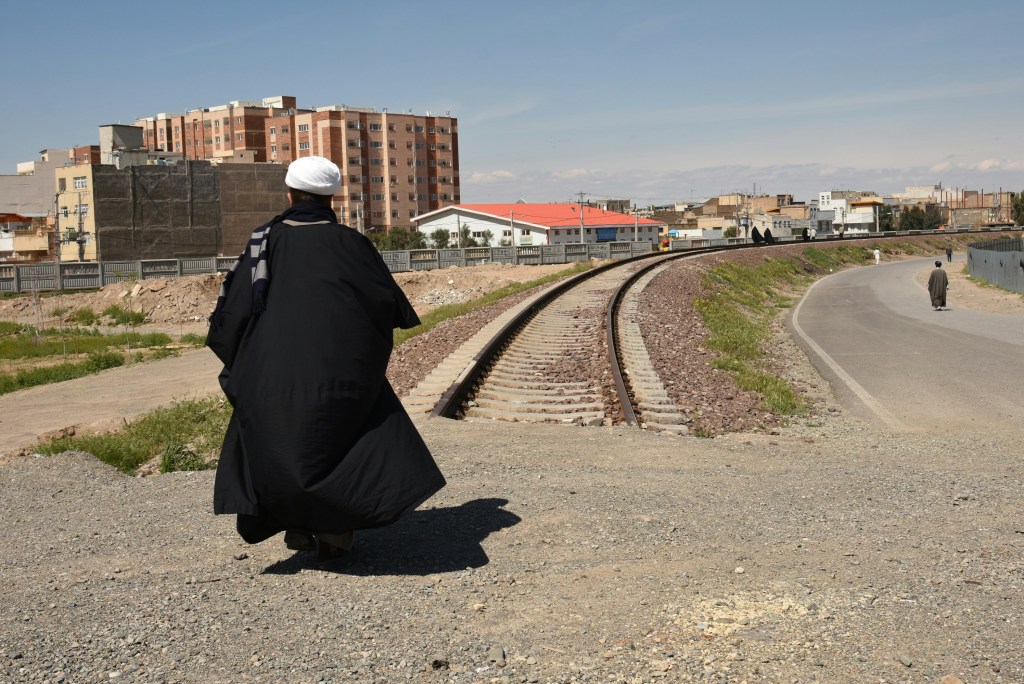

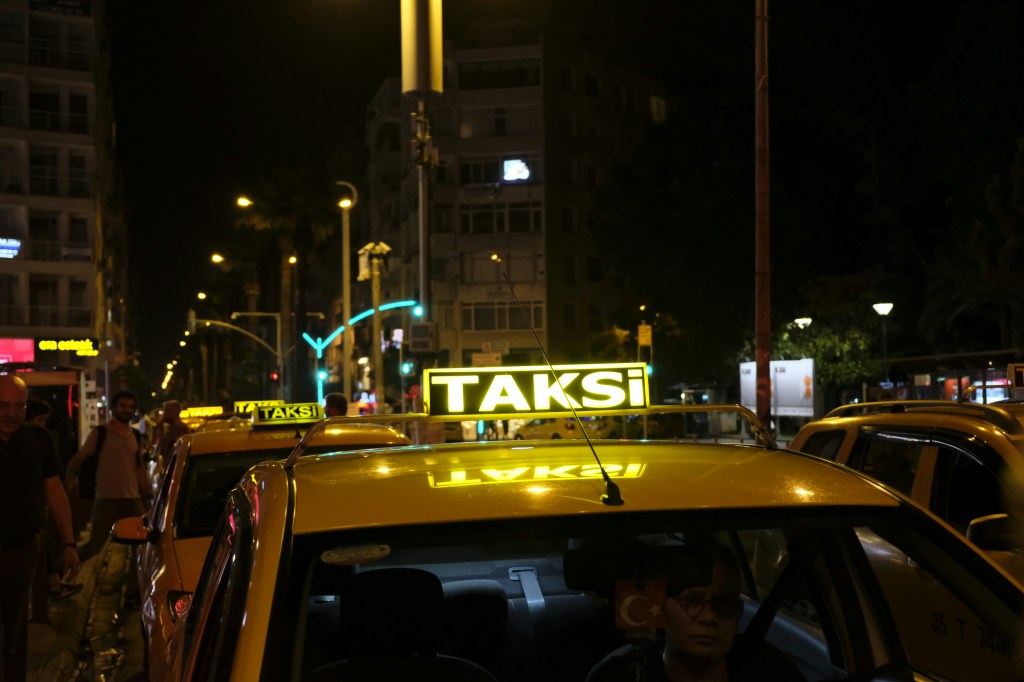





 Entrusted to the Dirt