Mullah Mahmoud Mullah Salim* had left us downright speechless – quite the feat considering the rest of us had stayed up all night arguing.
The setting was that I’d been invited to spend the night in the university dormitory. But instead of getting any sleep, a group of local students and I had stayed up, engaged in rigorous but friendly debate about the claims of Islam vs. the claims of the gospel. The most vocal and passionate of these students, Job and Robert*, were from a rural area about an hour and a half northwest of Poet City.
I had recently learned a new way to share the gospel with Muslims, one that focused on telling a sequence of stories about Old Testament prophets and their sacrifices. This story set built and built until the climax where John the Baptist sees Jesus and cries out, “Behold the lamb of God who takes away the sins of the world!” In this way, I pressed the case that all the true prophets agreed that Jesus had to die as the final sacrifice and rise from the dead in order for there to be forgiveness of sins.
This was a new line of reasoning for these young Muslim men, one they had never encountered before. I could tell that a lot of them were struggling to answer the logic that came from hearing story after story, many of which Islam shared, that clearly pointed to Jesus being God’s promised sacrifice. The Qur’an says that its message agrees with the previous holy books. So why did it seem there was such central disagreement when it came to this theme of salvation by sacrifice alone?
But Job and Robert, in particular, weren’t going to give in. Robert’s father was a mullah, an Islamic preacher, so he knew his Islamic orthodoxy and apologetics very well.
“I will never let Jesus be the sacrifice for my sins! I will be the sacrifice for my own sins!” he eventually proclaimed.
It was sobering to hear Robert say this after a whole night of debate, but at least he was rejecting the gospel from a place of clarity. Far too often, our unbelieving friends reject the gospel without actually understanding what we’re trying to say.
At some point before sunrise, Job had called a mullah friend that he knew from back home. After he had woken him up and explained the situation to him, he had somehow convinced him to get on a bus and come to our city. This man, I was assured, would be able to show me the errors of my thinking.
The sun was up and shining by the time Mullah Mahmoud Mullah Salim arrived, looking a bit sick from his early morning bus ride but otherwise ready to jump into the fray. The students then asked me to explain my case to the good mullah. I did so, once again laying out the sequence of the eight or so stories that built the case for Jesus’ being God’s one true sacrifice for the sins of the world. Then, we waited for his response.
“Everything you have said is true, according to the Holy Qur’an,” Mullah Mahmoud said when I was done, much to everyone’s surprise, including mine.
“It is?” I said, somewhat confused.
“But… but Islam teaches that Jesus didn’t die on the cross!” Job protested.
“Wrong!” said Mullah Mahmoud. Then, he broke off into a nasal melodic chant:
“Dh qaala llaahu yaa ‘Iesaa innii mutawaffeeka wa raafi’uka ilayya wa mutahhiruka minal ladheena kafaruu, wa jaa’ilul ladheenat taba’ooka fawqal ladheena kafaruu ilaa yawmil qiyaamah; thumma ilayya marji’ukum fa ahkumu baynakum feemaa kuntum feehi takhtalifuun!”
It’s always bothered me when local Muslims quote the Qur’an in Arabic during religious conversations. I understand why they do it, since Islam teaches that Qur’anic translations into local languages don’t actually count as the word of Allah (they call them commentaries instead). But since so few locals actually know classical Arabic, this often just seems a tactic designed to shut down any objections from the plebes who don’t speak the alleged ‘language of paradise.’
As usual, the rest of us just sat there while the Mullah did his recitation, waiting for him to get to the point and explain things in a language the rest of us could understand.
Enjoying a dramatic pause, Mullah Mahmoud, at last, went on to explain. He had just quoted Surat Ali ‘Imran 3:55.
In English, it can be translated as, “Remember when Allah said, “O Jesus! I will take you and raise you up to Myself. I will deliver you from those who disbelieve, and elevate your followers above the disbelievers until the Day of Judgment. Then to Me you will all return, and I will settle all your disputes.”
However, the mullah contended, there is a translation issue in the Arabic word mutawaffeeka. In Qur’anic Arabic, he contended, it means, “I will cause you to die.” Not “I will take you.”
“Jesus the Messiah died on the cross!” the mullah proclaimed triumphantly.
This is what left the rest of us stunned and quite unsure of what to say next. The poor, sleep-deprived university students looked somewhat gutted. They had argued all night long, brought in the backup they had thought would deal the final blow against the Christian message, only to have the mullah agreeing with the Christian!”
“Of course,” he added, clearing his throat, “that doesn’t mean he’s the Son of God or anything. Just that he did die on the cross and then ascended to paradise. There’s always been a stream of sound Muslim scholars who have believed this way.”
Job was clearly surprised and perplexed at what his friend had done. Robert looked like he had discovered a traitor in the ranks, and a leader at that. I, for my part, got the good mullah’s phone number. If he really believed that Jesus died on the cross, then we needed to be friends.
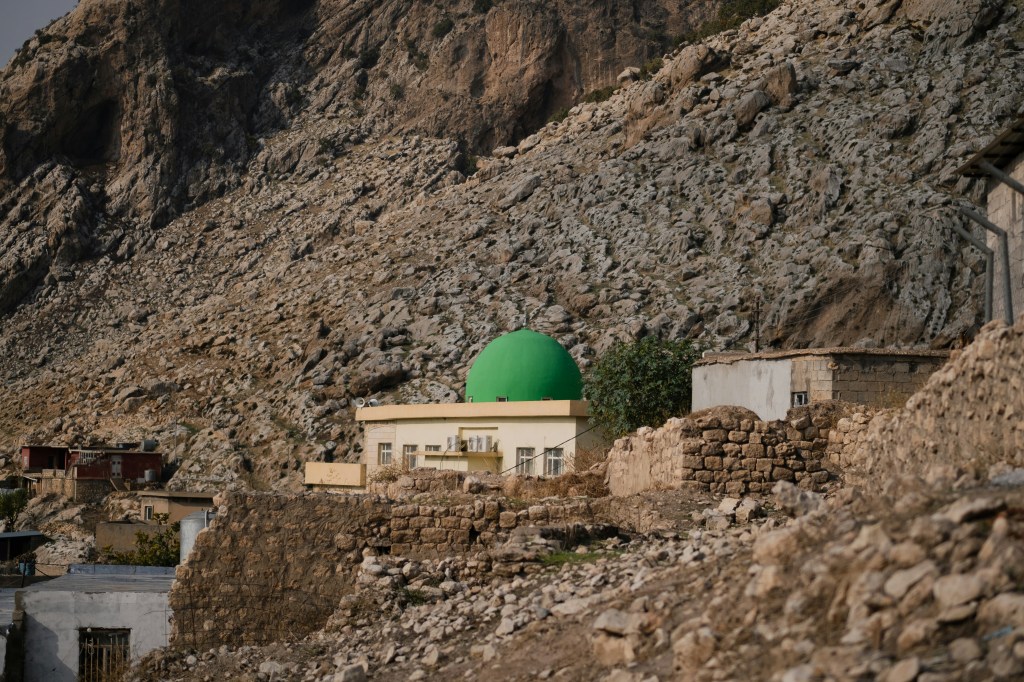
This was the beginning of one of the oddest friendships I would have during that first year on the field as a single. Mullah Mahmoud Mullah Salim was tall and lanky young mullah, with large ears, a pointy chin, and wide, energetic eyes. He had a broad toothy smile that contrasted with his short dark beard. He, like his father before him (hence the two Mullahs in his full name), was in charge of the small mosque in a village so small it was named Matches, i.e. as small as a matchbox. When Mullah Mahmoud sat down cross-legged on the floor, his process of folding up his long pointy limbs resembled the migratory storks native to his area that built huge nests on top of the electricity towers, birds the local language has colorfully named the ‘leggy pilgrims.’
But Mullah Mahmoud was an odd bird in other ways as well. I soon learned that he loved to craft flowery lines of over-the-top poetic affection – and to quote them to me in our conversations.
“You are my brother! And your mother is my aunt! And you are in the garden of my heart! And I will put a chair in that garden and you will sit there! And there will be flowers! And little butterflies will fly around you! Ahahaha-ha!”
Now, our people group are known for their highly verbal culture of respect. They say all kinds of things to one another in daily interactions that seem odd or over-the-top to Westerners. But Mullah Mahmoud was taking things to another level of weird (though thankfully, still platonic as far as I could tell). I’ll often try to respond back to my Central Asian with a few appropriate phrases like “You are a respectable one,” or “You are my big brother,” etc. But when Mullah Mahmoud would go on one of his flowery monologues I would often find myself pretty much unable to respond at all,
“Um… thanks? So then…”
This never seemed to deter him, however, so over time, I came to dread the long flowery calls from Mullah Mahmoud more and more. But I kept the friendship going, one, to be polite, but two, because Mullah Mahmoud was genuinely open to serious Bible study.
I don’t think he’d ever known a true Christian before, so when he would visit he was fascinated to sit down with me and my teammates and to pore over the Bible together. First, we got him a Bible in his native language. Then he asked for one in English as well, and then later one in Arabic. We were more than happy to oblige.
During one visit, we pulled an all-nighter of our own, staying up until the dawn answering question after question by taking him to various passages of scripture.
“This message of the good news is so beautiful, so amazing. That God become a man like this to save us from our sins…” I remember him saying this as we sat at the kitchen table, sipping tea in the early morning sunlight.
For several months, Mullah Mahmoud seemed like he might be getting close to genuine faith. He was careful not to show this when we were having discussions together with other Muslims, such as when we visited Job and his relatives together, who lived just a couple villages down the road from the mullah. Instead, he would even publicly attack Christianity and the Bible. This initially surprised me, but I learned that in an honor-shame context it’s not uncommon for someone who is genuinely open to only reveal that in private, while in public they maintain a robustly pro-Islam appearance. For a mullah with public religious responsibilities, this was even more understandable.
However, a day came when the questions began to shift, moving away from questions of substance toward pointing out alleged contradictions in the Biblical text like the number of Solomon’s chariot stables. This seemed to be evidence that Mullah Mahmoud had started listening to Islamic apologists like Zakr Naik, figures that excel in taking Bible verses out of context and in keeping Muslims fixated on tangential things and distracted from considering the more important questions at stake.
Before I went back to the US, I visited Mullah Mahmoud and stayed with him for a couple nights at his home in Matches village. On this visit, I remember pressing him hard when we were alone on the fact that he had gone back to maintaining that the Bible had been changed. I insisted that if he truly believed this, then he was admitting he held that men were stronger than God, that some group of Jews or Christians somewhere could somehow altar the eternal word of God which God has promised multiple times to protect forever. His response was to claim that the ‘true Bible’ had actually been preserved by God, but must have hidden in a mosque in Yemen or somewhere like that.
In the face of silly arguments like that, it was clear to me that the window of genuine openness had closed. I was sad that this odd friend of mine would, after months of serious study, settle for the status quo instead of eternal life. Yes, had he followed Jesus his life would have been completely upended, perhaps even forfeit. His wife would probably have left him. The villagers of his area would at least run him out if not try to kill him, such would be the threat they’d feel from an Islamic leader that becomes a Christian. It’s likely that Mullah Mahmoud Mullah Salim had counted the cost, and found it to be simply too high.
But as far as I know, he never went back on his earlier belief that Jesus had indeed died on the cross. And he never got rid of his Bibles in three different languages. This means that the Word of God is sitting there in little Matches village, like a spiritual time bomb waiting to go off, either in Mullah Mahmoud’s heart or in someone else’s.
It’s never worked out to reconnect with him. Part of me is not sure I can bear enduring the awful poetic phone calls were we to get back in touch. And part of me is not sure of revisiting a high-intensity relationship where so much sowing seemed to demonstrate, in the end, shallow soil. There are so many others who have not yet the chance to hear the good news.
So, for now, I’ve put Mullah Mahmoud Mullah Salim in the category of “If God wants us back in touch, he’ll providentially cause our paths to cross.” Over the years I’ve found this to be a helpful category to have for complicated past relationships where good investment didn’t necessarily lead to good fruit.
But I will never forget the bomb that Mullah Mahmoud dropped that morning in that university dorm room. An Islamic mullah who actually believed that Jesus really did die on the cross. What an unexpected thing to find in the wild. And what a good reminder that sometimes the most unlikely of people might, in fact, be those closest to the kingdom.
If you have been helped or encouraged by the content on this blog, would you consider supporting this writing and our family while we serve in Central Asia? You can give here through the blog or contact me to find out how to give through our organization.
One of the international churches in our region is looking for an associate pastor and our kids’ TCK school is also in need of teachers for the 2026-2027 schoolyear. If you have a good lead, shoot me a note here.
Blogs are not set up well for finding older posts, so I’ve added an alphabetized index of all the story and essay posts I’ve written so far. You can peruse that here
For my list of recommended books and travel gear, click here.
*Names have been changed for security
Photo from Unsplash

 Entrusted to the Dirt