Sometimes the missionary community is very concerned about something that, in the end, is simply not that big of a deal. I’m becoming more and more convinced that the foreigners-to-locals ratio in church plants and ministry groups on the mission field is one of these things being given undue weight.
The logic of this concern initially makes a lot of sense. The idea is that if locals are outnumbered by foreigners, then locals will sense that this gathering does not really belong to them, and they will not take the ownership needed for true long-term indigeneity. If too many foreigners are there, the thinking goes, it will somehow contaminate or undermine even the spiritual power of a particular gathering.
Hence, missionaries (at least in our corner of Central Asia) bring up this ratio quite often when discussing whether or not they or others should be a part of a particular church service or Bible study. Just this week, I had a friend tell me he’d like to come to an evangelistic discussion we’ve started hosting at our home, but only if there weren’t already too many foreigners.
But here’s the issue with this assumption about ratios. Too many foreigners only seems to be a problem if those foreigners present keep on using English and letting Western culture dictate the rules of the gathering. Yes, of course, if that is happening, then many locals will intuit that this gathering is a foreign thing, and it will likely only serve the minority of locals who already want to put on Western culture and use English. This may be a fine start for an international, English-speaking church. But this sort of gathering will, in all likelihood, fail to be very effective with the majority of locals and fail to ever transition to a truly indigenous group.
But what happens when the foreigners in a gathering like this are committed to using the local language and following the local culture as much as possible? And if they constantly vision cast for a day when that church or gathering will be majority-local and local-led? In that case, a large ratio of foreigners doesn’t seem to negatively affect a long-term trajectory toward indigeneity. In fact, it may even be a help toward this end.
Our church plant in Poet City had a foreign majority at most of its gatherings for the first five years or so of its existence. This was true even though, from the very beginning, we were all committed to learning the local language and culture and seeking to model faithfulness to Jesus within these local expressions. For years, we were somewhat disheartened and concerned about the fact that so many church meetings had more Americans in the room than Central Asians.
What we didn’t realize was that we were simply providing the needed core around which local believers would eventually be able to stabilize and mature. Then, a couple of years ago, some kind of threshold was passed, perhaps related to a large enough contingent of mature local members and our first local elder. Now, the locals in every service easily outnumber the foreigners by a large majority.
Because of the serious spiritual instability of our locals who come to faith out of a Muslim background, as well as their deep need to see faithfulness concretely modeled over the long term, I might even go as far as to say it was an advantage to have our previous church plant be majority-foreigner for so long. This seemingly less-likely path toward indigeneity has, in the end, gotten closer to its goal than other attempts that tried to protect indigeneity by not allowing other foreigners to take part.
Many missionaries would have looked at that church five or six years ago and doubted that it was really on its way toward becoming an indigenous church. There were simply too many foreigners present. But visit one of their services today, and it becomes clear that this body has matured to the point where it will keep faithfully humming along, even if no foreigners are present anymore. In fact, this summer, that very thing took place.
Is this merely anecdotal evidence? Well, I find it curious that instead of focusing on ethnic ratios, the Bible seems more concerned about the use of a common language (and translation when needed) when it comes to church plant order and health (1 Cor 14). Nowhere are we commanded to make sure that Jews remain a small minority, for example, in the churches in Gentile regions, or vice versa. Instead, believers are pointed to Paul’s example of becoming all things to all men (1 Cor 9:19-23), instructed to love one another in similar ways (1 Cor 13), and told to make sure everyone in the service can understand what is going on (1 Cor 14). Our assumption that the ethnic optics of the room are what really matter seems to be out of touch with the New Testament here. We should ask ourselves where these beliefs about the visuals are coming from.
Who cares if the room looks majority White Westerner for a while? Are locals being edified in their mother tongue? Are they coming to faith and growing in spiritual maturity? Are the foreigners seeking to model and mentor how to navigate the local culture as Christians, and pursuing genuine spiritual friendships with the local believers? These are the kinds of factors that make the difference, not policing some kind of optics ratio.
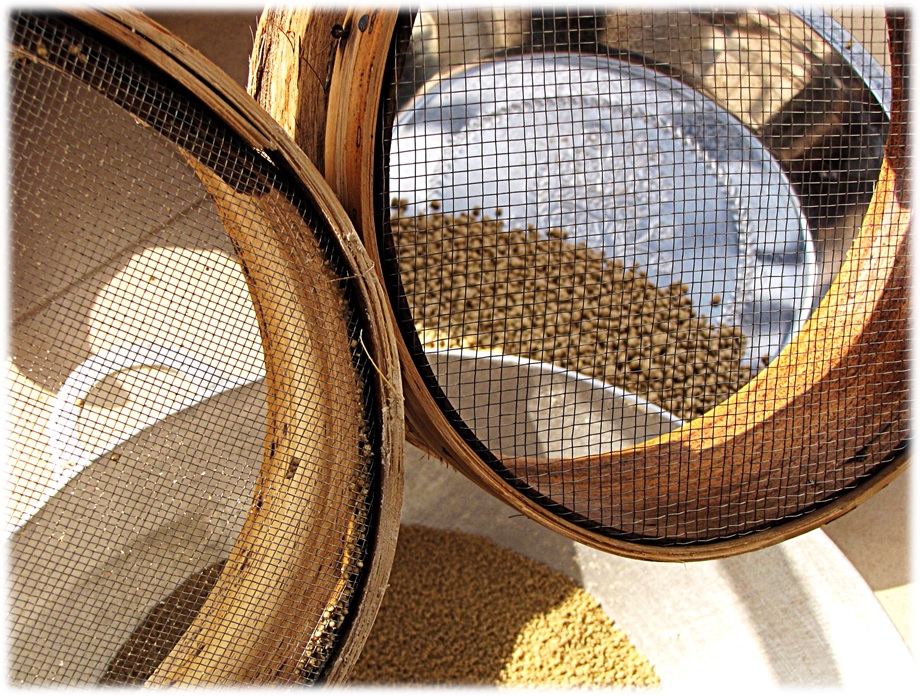
Is there wisdom in gauging whether a majority of foreign Christians is undermining future indigeneity? Yes, of course. But I would contend that the real issue is not the mere presence of foreigners, but rather what kind of posture those missionaries are taking. Our locals say, “You can’t block out the sun with a sieve.” Faithful spiritual work will, in time, bear good fruit, even if that work is done by those who are visually different from the locals. The superficial optics of a room where there are more foreigners than locals might feel quite significant, but in the end, it’s more like a thin sieve. The light will get through.
Friends, let’s stop worrying so much about the percentage of foreigners in local church plants and ministries on the mission field. This is a concern that is given far too much weight in our missionary conversations about strategy and tactics. Instead, let’s focus on all foreigners involved serving the locals by putting on the local language and culture. Let’s strive to model biblical faithfulness, authority, and friendship, and see, in the end, what might grow from this.
It may look odd, or even awkward, for a while. “Why are we all operating in the local language and culture when only two locals came today?” However, let’s not forget that all of us mature adults were once awkward and gangly teenagers. We know that looking or feeling odd for a season is no indicator that maturity isn’t coming.
In fact, it’s a sign that maturity is on its way.
If you have been helped or encouraged by the content on this blog, would you consider supporting this writing and our family while we serve in Central Asia? You can give here through the blog or contact me to find out how to give through our organization.
Two international churches in our region are in need of pastors, one needs a lead pastor and one an associate pastor. Our kids’ TCK school is also in need of a math and a science teacher for middle school and high school. If you have a good lead, shoot me a note here.
Blogs are not set up well for finding older posts, so I’ve added an alphabetized index of all the story and essay posts I’ve written so far. You can peruse that here
For my list of recommended books and travel gear, click here.
Photo from Wikimedia Commons
 Entrusted to the Dirt
